EP0464221B1 - Procede pour produire de la pate a papier - Google Patents
Procede pour produire de la pate a papier Download PDFInfo
- Publication number
- EP0464221B1 EP0464221B1 EP91902749A EP91902749A EP0464221B1 EP 0464221 B1 EP0464221 B1 EP 0464221B1 EP 91902749 A EP91902749 A EP 91902749A EP 91902749 A EP91902749 A EP 91902749A EP 0464221 B1 EP0464221 B1 EP 0464221B1
- Authority
- EP
- European Patent Office
- Prior art keywords
- pulp
- microorganism
- lignin
- wood chips
- producing
- Prior art date
- Legal status (The legal status is an assumption and is not a legal conclusion. Google has not performed a legal analysis and makes no representation as to the accuracy of the status listed.)
- Expired - Lifetime
Links
- 238000000034 method Methods 0.000 title claims abstract description 36
- 244000005700 microbiome Species 0.000 claims abstract description 42
- 229920005610 lignin Polymers 0.000 claims abstract description 39
- 238000011282 treatment Methods 0.000 claims abstract description 31
- 230000000813 microbial effect Effects 0.000 claims abstract description 19
- 230000015556 catabolic process Effects 0.000 claims abstract description 17
- 238000006731 degradation reaction Methods 0.000 claims abstract description 17
- 239000000126 substance Substances 0.000 claims abstract description 16
- 229920002678 cellulose Polymers 0.000 claims abstract description 14
- 239000001913 cellulose Substances 0.000 claims abstract description 14
- OKTJSMMVPCPJKN-UHFFFAOYSA-N Carbon Chemical compound [C] OKTJSMMVPCPJKN-UHFFFAOYSA-N 0.000 claims abstract description 13
- 229910052799 carbon Inorganic materials 0.000 claims abstract description 13
- 239000003112 inhibitor Substances 0.000 claims abstract description 10
- 235000015097 nutrients Nutrition 0.000 claims abstract description 9
- 238000004537 pulping Methods 0.000 claims abstract description 9
- 239000002023 wood Substances 0.000 claims description 26
- 238000004061 bleaching Methods 0.000 claims description 22
- 239000001963 growth medium Substances 0.000 claims description 19
- 238000007670 refining Methods 0.000 claims description 13
- 230000000593 degrading effect Effects 0.000 claims description 6
- 238000004519 manufacturing process Methods 0.000 claims description 6
- 239000002994 raw material Substances 0.000 abstract 1
- 239000002609 medium Substances 0.000 description 28
- 229920001817 Agar Polymers 0.000 description 18
- 239000008272 agar Substances 0.000 description 18
- 229920001131 Pulp (paper) Polymers 0.000 description 17
- 239000008103 glucose Substances 0.000 description 10
- 230000000694 effects Effects 0.000 description 5
- XLYOFNOQVPJJNP-UHFFFAOYSA-N water Substances O XLYOFNOQVPJJNP-UHFFFAOYSA-N 0.000 description 5
- 230000008021 deposition Effects 0.000 description 4
- 238000005516 engineering process Methods 0.000 description 4
- 238000000855 fermentation Methods 0.000 description 4
- 230000004151 fermentation Effects 0.000 description 4
- 238000011218 seed culture Methods 0.000 description 4
- 238000005273 aeration Methods 0.000 description 3
- 239000002655 kraft paper Substances 0.000 description 3
- 230000001954 sterilising effect Effects 0.000 description 3
- 238000004659 sterilization and disinfection Methods 0.000 description 3
- 244000166124 Eucalyptus globulus Species 0.000 description 2
- 240000000731 Fagus sylvatica Species 0.000 description 2
- 235000010099 Fagus sylvatica Nutrition 0.000 description 2
- WQZGKKKJIJFFOK-GASJEMHNSA-N Glucose Natural products OC[C@H]1OC(O)[C@H](O)[C@@H](O)[C@@H]1O WQZGKKKJIJFFOK-GASJEMHNSA-N 0.000 description 2
- 241000235395 Mucor Species 0.000 description 2
- 239000006159 Sabouraud's agar Substances 0.000 description 2
- 240000004808 Saccharomyces cerevisiae Species 0.000 description 2
- 102000003425 Tyrosinase Human genes 0.000 description 2
- 108060008724 Tyrosinase Proteins 0.000 description 2
- 238000007796 conventional method Methods 0.000 description 2
- 239000012225 czapek media Substances 0.000 description 2
- 230000001747 exhibiting effect Effects 0.000 description 2
- 230000000877 morphologic effect Effects 0.000 description 2
- 238000006395 oxidase reaction Methods 0.000 description 2
- 239000000123 paper Substances 0.000 description 2
- 230000001766 physiological effect Effects 0.000 description 2
- 239000011148 porous material Substances 0.000 description 2
- 239000000843 powder Substances 0.000 description 2
- 241000221198 Basidiomycota Species 0.000 description 1
- 244000274847 Betula papyrifera Species 0.000 description 1
- 235000009113 Betula papyrifera Nutrition 0.000 description 1
- 235000009109 Betula pendula Nutrition 0.000 description 1
- 235000010928 Betula populifolia Nutrition 0.000 description 1
- 235000002992 Betula pubescens Nutrition 0.000 description 1
- ZAMOUSCENKQFHK-UHFFFAOYSA-N Chlorine atom Chemical compound [Cl] ZAMOUSCENKQFHK-UHFFFAOYSA-N 0.000 description 1
- 102000004190 Enzymes Human genes 0.000 description 1
- 108090000790 Enzymes Proteins 0.000 description 1
- 241000233866 Fungi Species 0.000 description 1
- 241000222393 Phanerochaete chrysosporium Species 0.000 description 1
- 241001062031 Porodisculus pendulus Species 0.000 description 1
- LFVGISIMTYGQHF-UHFFFAOYSA-N ammonium dihydrogen phosphate Chemical compound [NH4+].OP(O)([O-])=O LFVGISIMTYGQHF-UHFFFAOYSA-N 0.000 description 1
- 230000033228 biological regulation Effects 0.000 description 1
- 239000007844 bleaching agent Substances 0.000 description 1
- 239000000460 chlorine Substances 0.000 description 1
- 229910052801 chlorine Inorganic materials 0.000 description 1
- 238000012258 culturing Methods 0.000 description 1
- 235000013399 edible fruits Nutrition 0.000 description 1
- 238000011081 inoculation Methods 0.000 description 1
- 239000000203 mixture Substances 0.000 description 1
- 230000035772 mutation Effects 0.000 description 1
- 229910017464 nitrogen compound Inorganic materials 0.000 description 1
- 150000002830 nitrogen compounds Chemical class 0.000 description 1
- 239000001965 potato dextrose agar Substances 0.000 description 1
- 238000006467 substitution reaction Methods 0.000 description 1
- 235000000346 sugar Nutrition 0.000 description 1
- 150000008163 sugars Chemical class 0.000 description 1
- 230000001629 suppression Effects 0.000 description 1
- 239000000725 suspension Substances 0.000 description 1
Images
Classifications
-
- D—TEXTILES; PAPER
- D21—PAPER-MAKING; PRODUCTION OF CELLULOSE
- D21C—PRODUCTION OF CELLULOSE BY REMOVING NON-CELLULOSE SUBSTANCES FROM CELLULOSE-CONTAINING MATERIALS; REGENERATION OF PULPING LIQUORS; APPARATUS THEREFOR
- D21C5/00—Other processes for obtaining cellulose, e.g. cooking cotton linters ; Processes characterised by the choice of cellulose-containing starting materials
- D21C5/005—Treatment of cellulose-containing material with microorganisms or enzymes
Definitions
- This invention relates to methods for producing pulp, comprising microbial treatment, in either or both of pulping process and bleaching process, using a microorganism which grows well in a culture medium containing lignin as a single carbon source.
- the present invention relates to methods for producing pulp, comprising microbial treatment substantially without adding nutrients and without adding inhibitors of cellulose degradation at any one stage of the process of producing pulp.
- the present invention enables to produce pulp in good quality, by microbial treatment using a microorganism which grows well in a culture medium containing lignin as a single carbon source at a process for producing pulp, thereby suppressing cellulose degradation to the minimum.
- the present invention enables pulping or bleaching, substantially without adding nutrients and without adding inhibitors of cellulose degradation, for example glucose, at a process of producing pulp, by using a microorganism with excellent lignin-degrading activity and a high selectivity, whereby the present invention can provide economical and industrial methods for producing pulp in remarkably energy-saving manner.
- cellulose degradation for example glucose
- the JP-A 46903/1975 proposes a method for producing cellulose pulp, comprising degradation of lignin under the condition to substantially degrade lignin, by using a microorganism having a production potential of a lignin-degrading enzyme.
- the method has never been put to industrial use, because the degree of lignin degradation is so low due to the extremely low lignin-degrading activity of the microorganism used, and because the addition of sugars and nitrogen compounds is required added due to the suppression of cellulose assimilation by the microorganism.
- the present inventors have investigated intensively in order to develop a method for pulping or bleaching with microbial treatment, without causing cellulose degradation and adding a nutrient and inhibitor of cellulose degradation. Consequently, they have achieved the object in accordance with the present invention.
- a microorganism which grows well in a culture medium containing lignin as a single carbon source that realizes pulping and bleaching of wood chips, pulp after refining and unbleached pulp, substantially without adding nutrients and without adding inhibitors of cellulose degradation, in the economical and tremendously energy-saving manner.
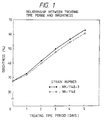
- Fig. 1 shows the increase in brightness (%) after the microbial treatment for 1 to 5 days in Example 5.
- the microorganism to be used in the present invention is from a microbial strain, well grown by inoculation and culture in a culture medium containing lignin as a single carbon source.
- the culture medium there may be prepared an agar medium to which is added as a single carbon source, about 1 to 10% of lignin, preferably 2 to 4% of lignin.
- An isolating source collected from a natural source is dispersed at an appropriate concentration in the culture medium, and cultured at 25 to 35 °C, to collect a colony exhibiting a good growth, which is to be an effective microorganism to be used in the present invention.
- the present inventors have previously isolated the strains NK-1148 (FERM BP-1859) and NK-729W (FERM BP-1860), which are among the microorganisms very effective for the present invention.
- EP-A-0 295 063 discloses that these strains are excellent in lignin-degrading activity and high degrading selectivity.
- NK-1148 strain (FERM BP-1859) The mycological characteristics of NK-1148 strain (FERM BP-1859) are shown as follows.
- the microorganism to be used in the present invention may be NK-1148 strain or NK-729W strain isolated by the present inventors, and there may be used a selectively isolated strain growing well using lignin as a single carbon source, obtained with or without mutation of these two strains, or a strain growing well using lignin as a single carbon source and having been isolated from nature.
- the microorganism growing well using lignin as a single carbon source represents, for example, a microorganism capable of bleaching an unbleached kraft pulp up to a brightness of 45 % or more, preferably 50 % or more, more preferably 60 % or more, with no reduction in the strength of the pulp.
- the microorganism to be used in the present invention can be cultured in any one of a culture medium containing lignin as a single carbon source, a general culture medium for basidiomycetes and fungi without containing lignin, and a culture medium containing wood powder, wood chips and pulp.
- the type of pulp is generally classified in the following three.
- the present invention is to produce individual pulp corresponding mechanical pulp (the degree of lignin degradation below 35 %), semichemical pulp (the degree of lignin degradation of not less than 35% to less than 75 %), and chemical pulp (the degree of lignin degradation of riot less than 75%), by replacing a part or the entire part of the chemical treatment or mechanical treatment in the processes of producing pulp i.e., 1 to 3 , with the microbial treatment of the present invention.
- the microorganism growing well in the culture medium containing lignin as a single carbon source there may be used the microorganism growing well in the culture medium containing lignin as a single carbon source.
- the microorganism can selectively degrade the lignin component in wood and uses the wood lignin as a nutrient. It is therefore possible to carry out the aforementioned microbial treatment without adding an inhibitor of cellulose degradation.
- the degree of the chemical treatment to a light degree and the refining treatment to a light degree in the processes A to F is appropriately determined by a predetermined lignin content, depending on the type of the unbleached pulp including mechanical pulp, semichemical pulp and chemical pulp, or in any type of the pulp.
- the microorganism to be used in the present invention has a far greater lignin-degrading activity than the lignin-degrading microorganisms conventionally known.
- the present invention enables the substitution of all stages of the chemical treatment and the refining in the conventional processes of producing mechanical pulp, semichemical pulp and chemical pulp, with the microbial treatment, along with the marked decrease in the degree of the chemical treatment and the refining.
- the process of producing pulp in accordance with the present invention can decrease the amount of chemicals, and is appropriate for production of high-quality pulp in energy-saving manner.
- Intensely colored lignin generally remains in unbleached chemical pulp and unbleached semichemical pulp. In case of using these unbleached pulp for papers for the use requiring a higher brightness, therefore, the pulp is transferred to the bleaching process to remove the remaining lignin, to increase the brightness.
- unbleached pulp is treated with the microorganism growing well in a culture medium containing lignin as a single carbon source, to degrade and remove the remaining lignin in the unbleached pulp, for the bleaching of the unbleached pulp.
- the unbleached pulp may be any one of the unbleached chemical pulp and unbleached semichemical pulp by conventional methods, and the unbleached pulp corresponding to chemical pulp and those corresponding to semichemical pulp, produced with the microbial treatment of the present invention.
- the bleaching of the present invention may be applied to the unbleached mechanical pulp by the conventional methods, and the unbleached pulp corresponding to mechanical pulp produced through the microbial treatment of the present invention.
- the present bleaching is effectively applied to the unbleached pulp corresponding to unbleached chemical and semichemical pulp, from the standpoint of pollution control.
- the bleaching process may be carried out entirely as the bleaching with the use of the microorganism, but a combination of the present bleaching with other bleaching methods may be also possible.
- the bleaching of the present invention can achieve a high standard of safety due to its microbial treatment.
- Pulping and/or bleaching can be carried out through by adding the cultured microorganism to about 1/10000 to 10/100 of wood chips or pulp, and culturing the mixture at about 20 to 35 °C for 3 to 90 days, without adding any nutrient or inhibitor of cellulose degradation to wood chips or various pulp.
- the resulting mycelia are suspended in water.
- the culture medium containing 2.0 % of milled wood lignin from white birch, 0.2 % of NH4H2PO4 and 1.6 % of agar is heated and sterilized at 120 °C for 15 minutes, which is then aseptically divided by 20 ml each into petri dishes (90 ml in diameter).
- the mycelia in suspension were added to the culture medium and cultured at 28 °C for two weeks, to isolate a strain exhibiting good growth, which was defined an isolated strain A.
- the isolated strain A was designated as NK-1148-3 strain and has been deposited in Fermentation Research Institure, Agency of Industrial Science and Technology, under the accession number of FERM BP-3220.
- the isolated strain NK-1148-3 obtained in Example 1 was inoculated into the culture medium containing 1.2 % of potato-dextrose broth commercially available (DIFCO Co., Ltd.) after sterilization at 120 °C for 15 minutes, and cultured at 28 °C for a week, which was used as a seed culture.
- DIFCO Co., Ltd. potato-dextrose broth commercially available
- NK-1148 strain and the isolated strain NK-1148-3, obtained in Example 1 were separately inoculated into each culture medium mixed with 10 kg of an unbleached pulp (eucalyptus) and 25 l of water, which medium had been treated and sterilized in advance at 120 °C for 15 minutes, and cultured under aeration at 28 °C for two weeks. The resulting cultures were individually used as a seed culture.
- a unbleached kraft pulp (eucalyptus) was mixed with 25 l of water and sterilized at 120 °C for 15 minutes, to which were separately added 1 kg of each of the seed cultures obtained in Example 4, together with 0.5 kg of glucose, and mixed for culture under, and cultured under aeration at 28 °C for 1 to 5 days, leading to the production of a bleached kraft pulp.
- the enhancement of the brightness during the microbial treatment period for 1 to 5 days is shown in Fig. 1. Reference on the microorganisms under deposition, according to the Regulation, Provision 13.2.
Landscapes
- Life Sciences & Earth Sciences (AREA)
- Chemical & Material Sciences (AREA)
- Biochemistry (AREA)
- Microbiology (AREA)
- Paper (AREA)
- Micro-Organisms Or Cultivation Processes Thereof (AREA)
Abstract
Claims (9)
- Procédé de production de pâte à partir de bois, avec un microorganisme, comprenant un traitement microbien, que ce soit dans un procédé de trituration ou dans un procédé de blanchiment suivant un procédé de trituration, ou dans les deux, à l'aide d'un microorganisme qui se développe bien dans un milieu de culture contenant de la lignine comme source de carbone unique, caractérisé en ce que l'on n'ajoute pas d'inhibiteur de décomposition de la cellulose et que l'on n'ajoute pas non plus de nutriment, ou que l'on n'en ajoute qu'en petites quantités.
- Procédé selon la revendication 1, permettant de produire une pâte non blanchie, comprenant la décomposition d'au moins une partie de la lignine présente dans les copeaux de bois à l'aide du microorganisme.
- Procédé selon la revendication 1, permettant de produire une pâte non blanchie, comprenant le raffinage léger de copeaux de bois pour produire une pâte et la décomposition d'au moins une partie de la lignine présente dans la pâte obtenue à l'aide du microorganisme.
- Procédé selon la revendication 1, permettant de produire une pâte non blanchie, comprenant le traitement léger de copeaux de bois avec un produit chimique et la décomposition d'au moins une partie de la lignine présente dans les copeaux de bois résultants à l'aide du microorganisme.
- Procédé selon la revendication 1, permettant de produire une pâte non blanchie, comprenant le raffinage léger de copeaux de bois pour produire une pâte, le traitement léger de la pâte obtenue avec un produit chimique, et la décomposition d'au moins une partie de la lignine présente dans la pâte résultante à l'aide du microorganisme.
- Procédé selon la revendication 1, permettant de produire une pâte non blanchie, comprenant le traitement léger de copeaux de bois avec un produit chimique, le raffinage des copeaux de bois résultants pour produire une pâte et la décomposition d'au moins une partie de la lignine présente dans la pâte résultante à l'aide du microorganisme.
- Procédé selon l'une quelconque des revendications 2 à 6, dans lequel la pâte non blanchie est aussi traitée avec un produit chimique et/ou raffinée après le traitement microbien.
- Procédé selon la revendication 1, permettant de produire une pâte non blanchie, comprenant la réalisation d'au moins une partie du traitement de blanchiment de la pâte non blanchie dans un procédé de blanchiment, à l'aide du microorganisme.
- Procédé selon l'une quelconque des revendications 1 à 8, dans lequel le microorganisme est NK-1148 ou NK-729W, ou un mutant de ces derniers.
Applications Claiming Priority (5)
| Application Number | Priority Date | Filing Date | Title |
|---|---|---|---|
| JP8379/90 | 1990-01-19 | ||
| JP837990A JPH03220388A (ja) | 1990-01-19 | 1990-01-19 | パルプの製造法 |
| JP837890A JPH03213591A (ja) | 1990-01-19 | 1990-01-19 | 微生物によるパルプの製造法 |
| JP8378/90 | 1990-01-19 | ||
| PCT/JP1991/000048 WO1991010773A1 (fr) | 1990-01-19 | 1991-01-18 | Procede pour produire de la pate a papier |
Publications (3)
| Publication Number | Publication Date |
|---|---|
| EP0464221A1 EP0464221A1 (fr) | 1992-01-08 |
| EP0464221A4 EP0464221A4 (en) | 1993-02-03 |
| EP0464221B1 true EP0464221B1 (fr) | 1995-07-26 |
Family
ID=26342891
Family Applications (1)
| Application Number | Title | Priority Date | Filing Date |
|---|---|---|---|
| EP91902749A Expired - Lifetime EP0464221B1 (fr) | 1990-01-19 | 1991-01-18 | Procede pour produire de la pate a papier |
Country Status (4)
| Country | Link |
|---|---|
| EP (1) | EP0464221B1 (fr) |
| CA (1) | CA2049069A1 (fr) |
| FI (1) | FI914357A7 (fr) |
| WO (1) | WO1991010773A1 (fr) |
Families Citing this family (1)
| Publication number | Priority date | Publication date | Assignee | Title |
|---|---|---|---|---|
| FR2756571B1 (fr) * | 1996-12-02 | 1999-02-19 | Creca | Procede microbiologique de traitement de surface d'un materiau, films et supports obtenus au moyen dudit materiau |
Family Cites Families (12)
| Publication number | Priority date | Publication date | Assignee | Title |
|---|---|---|---|---|
| SE411463B (sv) * | 1973-04-16 | 1979-12-27 | Svenska Traeforskningsinst | Forfarande for framstellning av cellulosamassa medelst mikroorganismer |
| GB1560021A (en) * | 1976-10-20 | 1980-01-30 | Gen Electric | Biological degradation of lignocellulose |
| GB1560022A (en) * | 1976-10-20 | 1980-01-30 | Gen Electric | Biological pre-treatment of lignocellulose to remove lignin |
| JPS58180692A (ja) * | 1982-04-10 | 1983-10-22 | 高橋 勝昭 | パルプ材の脱リグニン方法 |
| SE460363B (sv) * | 1984-09-19 | 1989-10-02 | Svenska Traeforskningsinst | Foerfarande foer frambringande av cellulasloesa stammar av vitroetesvampar |
| FR2574427B1 (fr) * | 1984-12-12 | 1987-08-07 | Agronomique Inst Nat Rech | Micro-organismes de souche phanerochaete chrysosporium et leur utilisation |
| JPS63500632A (ja) * | 1985-07-15 | 1988-03-10 | レプリゲン・コ−ポレ−ション | 新規なリグニン分解酵素 |
| US4690895A (en) * | 1985-07-15 | 1987-09-01 | Repligen Corporation | Use of rLDM™ 1-6 and other ligninolytic enzymes in the bleaching of kraft pulp |
| JP2568522B2 (ja) * | 1986-10-07 | 1997-01-08 | 新王子製紙株式会社 | 微生物のリグノセルロ−ス物質への接種方法 |
| JPS63249789A (ja) * | 1987-04-03 | 1988-10-17 | 工業技術院長 | 木材チツプの生化学的パルフ化処理装置 |
| CA1321158C (fr) * | 1987-06-09 | 1993-08-10 | Tomoaki Nishida | Bacterie decomposant la lignine, a grandes activite et selectivite |
| ZA894239B (en) * | 1988-06-08 | 1990-03-28 | Int Paper Co | Enzymatic delignification of lignocellulosic material |
-
1991
- 1991-01-18 FI FI914357A patent/FI914357A7/fi not_active Application Discontinuation
- 1991-01-18 CA CA002049069A patent/CA2049069A1/fr not_active Abandoned
- 1991-01-18 EP EP91902749A patent/EP0464221B1/fr not_active Expired - Lifetime
- 1991-01-18 WO PCT/JP1991/000048 patent/WO1991010773A1/fr not_active Ceased
Also Published As
| Publication number | Publication date |
|---|---|
| EP0464221A1 (fr) | 1992-01-08 |
| WO1991010773A1 (fr) | 1991-07-25 |
| FI914357A0 (fi) | 1991-09-17 |
| EP0464221A4 (en) | 1993-02-03 |
| CA2049069A1 (fr) | 1991-07-20 |
| FI914357A7 (fi) | 1991-09-17 |
Similar Documents
| Publication | Publication Date | Title |
|---|---|---|
| Kantelinen et al. | Production of lignin peroxidase and laccase by Phlebia radiata | |
| Johnsrud et al. | Cross-breeding of selected and mutated homokaryotic strains of Phanerochaete chrysosporium K-3: new cellulase deficient strains with increased ability to degrade lignin | |
| EP0754257B1 (fr) | Amelioration du rendement du procede biologique de reduction en pate | |
| Palma et al. | Influence of aeration and agitation rate on the xylanase activity from Penicillium janthinellum | |
| CA2019411A1 (fr) | Delignification enzymatique de substances ligno-cellulosiques | |
| CA1266014A (fr) | Blanchiment biologique direct de la pate kraft a l'aide d'un champignon coriolus versicolor | |
| Martin et al. | A study of the decolourization of straw soda-pulping effluents by rametes versicolor | |
| Linko et al. | Continuous production of lignin peroxidase by Phanerochaete chrysosporium | |
| US5460697A (en) | Method of pulping wood chips with a fungi using sulfite salt-treated wood chips | |
| Janshekar et al. | Bioalteration of kraft pine lignin by Phanerochaete chrysosporium | |
| US4634670A (en) | Process for the preparation of cellulase | |
| EP0464221B1 (fr) | Procede pour produire de la pate a papier | |
| EP0799304B1 (fr) | Bacterie d'origine bacterienne a activite xylanase | |
| AU644623B2 (en) | Process for producing pulp | |
| Dahot | Cultivation of Penicillium expansum on rice husk powder for protease production | |
| NZ239830A (en) | Method for pulping and/or bleaching paper using a microorganism which grows well in a culture medium containing lignin as a single carbon source | |
| JP3425453B2 (ja) | パルプ漂白微生物及びそれを用いたパルプの漂白方法 | |
| JPH03220388A (ja) | パルプの製造法 | |
| Pukahuta et al. | Combination of laccase, xylanase and cellulase in lignocellulose degradation by white rot fungi, Lentinus polychrous Lev. and L. squarrosulus Mont. | |
| JPH03213591A (ja) | 微生物によるパルプの製造法 | |
| CA2041859A1 (fr) | Methode de production d'une solution enzymatique riche en xylanase et pauvre en cellulase | |
| CA1321158C (fr) | Bacterie decomposant la lignine, a grandes activite et selectivite | |
| JP3262646B2 (ja) | パルプの漂白方法 | |
| WO2003080812A1 (fr) | Nouvelle moisissure lignilolytique et son utilisation dans le pretraitement du bois | |
| US6379948B1 (en) | Microbe SKB-1152 strain, and method of bleaching pulp therewith |
Legal Events
| Date | Code | Title | Description |
|---|---|---|---|
| PUAI | Public reference made under article 153(3) epc to a published international application that has entered the european phase |
Free format text: ORIGINAL CODE: 0009012 |
|
| 17P | Request for examination filed |
Effective date: 19911016 |
|
| AK | Designated contracting states |
Kind code of ref document: A1 Designated state(s): FR GB SE |
|
| RIN1 | Information on inventor provided before grant (corrected) |
Inventor name: KONDO, RYUICHIRO Inventor name: SAKAI, KOKKI Inventor name: TAKAHARA, YOSHIMASA Inventor name: KASHINO, YOSHINORI Inventor name: NISHIDA, TOMOAKI |
|
| A4 | Supplementary search report drawn up and despatched | ||
| AK | Designated contracting states |
Kind code of ref document: A4 Designated state(s): FR GB SE |
|
| 17Q | First examination report despatched |
Effective date: 19931029 |
|
| GRAA | (expected) grant |
Free format text: ORIGINAL CODE: 0009210 |
|
| AK | Designated contracting states |
Kind code of ref document: B1 Designated state(s): FR GB SE |
|
| PG25 | Lapsed in a contracting state [announced via postgrant information from national office to epo] |
Ref country code: FR Effective date: 19950726 |
|
| EN | Fr: translation not filed | ||
| PG25 | Lapsed in a contracting state [announced via postgrant information from national office to epo] |
Ref country code: GB Effective date: 19960118 |
|
| PG25 | Lapsed in a contracting state [announced via postgrant information from national office to epo] |
Ref country code: SE Effective date: 19960119 |
|
| PLBE | No opposition filed within time limit |
Free format text: ORIGINAL CODE: 0009261 |
|
| STAA | Information on the status of an ep patent application or granted ep patent |
Free format text: STATUS: NO OPPOSITION FILED WITHIN TIME LIMIT |
|
| 26N | No opposition filed | ||
| GBPC | Gb: european patent ceased through non-payment of renewal fee |
Effective date: 19960118 |
|
| EUG | Se: european patent has lapsed |
Ref document number: 91902749.0 |