EP0465333B1 - Verfahren und Anlage zum Aufhärten eines Werkstückes aus einer metallischen Legierung unter niedrigem Druck - Google Patents
Verfahren und Anlage zum Aufhärten eines Werkstückes aus einer metallischen Legierung unter niedrigem Druck Download PDFInfo
- Publication number
- EP0465333B1 EP0465333B1 EP91401792A EP91401792A EP0465333B1 EP 0465333 B1 EP0465333 B1 EP 0465333B1 EP 91401792 A EP91401792 A EP 91401792A EP 91401792 A EP91401792 A EP 91401792A EP 0465333 B1 EP0465333 B1 EP 0465333B1
- Authority
- EP
- European Patent Office
- Prior art keywords
- hpa
- pressure
- vacuum
- breaking
- ethylene
- Prior art date
- Legal status (The legal status is an assumption and is not a legal conclusion. Google has not performed a legal analysis and makes no representation as to the accuracy of the status listed.)
- Expired - Lifetime
Links
- 238000000034 method Methods 0.000 title claims description 30
- 229910001092 metal group alloy Inorganic materials 0.000 title claims description 7
- 238000009434 installation Methods 0.000 title claims description 5
- VGGSQFUCUMXWEO-UHFFFAOYSA-N Ethene Chemical compound C=C VGGSQFUCUMXWEO-UHFFFAOYSA-N 0.000 claims abstract description 27
- 239000005977 Ethylene Substances 0.000 claims abstract description 24
- 239000001257 hydrogen Substances 0.000 claims abstract description 23
- 229910052739 hydrogen Inorganic materials 0.000 claims abstract description 23
- UFHFLCQGNIYNRP-UHFFFAOYSA-N Hydrogen Chemical compound [H][H] UFHFLCQGNIYNRP-UHFFFAOYSA-N 0.000 claims abstract description 19
- 239000007789 gas Substances 0.000 claims abstract description 18
- 239000000203 mixture Substances 0.000 claims abstract description 10
- 150000002431 hydrogen Chemical class 0.000 claims abstract description 6
- 239000000446 fuel Substances 0.000 claims abstract description 4
- 238000005086 pumping Methods 0.000 claims abstract description 3
- IJGRMHOSHXDMSA-UHFFFAOYSA-N Atomic nitrogen Chemical compound N#N IJGRMHOSHXDMSA-UHFFFAOYSA-N 0.000 claims description 38
- 238000009792 diffusion process Methods 0.000 claims description 22
- 229910000831 Steel Inorganic materials 0.000 claims description 20
- 229910052799 carbon Inorganic materials 0.000 claims description 20
- 239000010959 steel Substances 0.000 claims description 20
- OKTJSMMVPCPJKN-UHFFFAOYSA-N Carbon Chemical compound [C] OKTJSMMVPCPJKN-UHFFFAOYSA-N 0.000 claims description 18
- 229910052757 nitrogen Inorganic materials 0.000 claims description 18
- 239000002737 fuel gas Substances 0.000 claims description 16
- 229910052751 metal Inorganic materials 0.000 claims description 13
- 239000002184 metal Substances 0.000 claims description 13
- 238000011282 treatment Methods 0.000 claims description 12
- 238000005255 carburizing Methods 0.000 claims description 7
- 238000010438 heat treatment Methods 0.000 claims description 5
- 229930195733 hydrocarbon Natural products 0.000 claims description 4
- 150000002430 hydrocarbons Chemical class 0.000 claims description 4
- 229910000601 superalloy Inorganic materials 0.000 claims description 3
- 230000000295 complement effect Effects 0.000 claims description 2
- 150000002739 metals Chemical class 0.000 claims description 2
- 238000003763 carbonization Methods 0.000 claims 13
- 238000001816 cooling Methods 0.000 claims 3
- 238000010348 incorporation Methods 0.000 claims 1
- 239000000523 sample Substances 0.000 claims 1
- LFQSCWFLJHTTHZ-UHFFFAOYSA-N Ethanol Chemical compound CCO LFQSCWFLJHTTHZ-UHFFFAOYSA-N 0.000 description 4
- 229910045601 alloy Inorganic materials 0.000 description 4
- 239000000956 alloy Substances 0.000 description 4
- VNWKTOKETHGBQD-UHFFFAOYSA-N methane Chemical compound C VNWKTOKETHGBQD-UHFFFAOYSA-N 0.000 description 4
- QTBSBXVTEAMEQO-UHFFFAOYSA-N Acetic acid Chemical compound CC(O)=O QTBSBXVTEAMEQO-UHFFFAOYSA-N 0.000 description 3
- VEXZGXHMUGYJMC-UHFFFAOYSA-N Hydrochloric acid Chemical compound Cl VEXZGXHMUGYJMC-UHFFFAOYSA-N 0.000 description 2
- ATUOYWHBWRKTHZ-UHFFFAOYSA-N Propane Chemical compound CCC ATUOYWHBWRKTHZ-UHFFFAOYSA-N 0.000 description 2
- QAOWNCQODCNURD-UHFFFAOYSA-N Sulfuric acid Chemical compound OS(O)(=O)=O QAOWNCQODCNURD-UHFFFAOYSA-N 0.000 description 2
- 239000006185 dispersion Substances 0.000 description 2
- 235000019441 ethanol Nutrition 0.000 description 2
- 238000005272 metallurgy Methods 0.000 description 2
- KMUONIBRACKNSN-UHFFFAOYSA-N potassium dichromate Chemical compound [K+].[K+].[O-][Cr](=O)(=O)O[Cr]([O-])(=O)=O KMUONIBRACKNSN-UHFFFAOYSA-N 0.000 description 2
- 239000004215 Carbon black (E152) Substances 0.000 description 1
- UDHXJZHVNHGCEC-UHFFFAOYSA-N Chlorophacinone Chemical compound C1=CC(Cl)=CC=C1C(C=1C=CC=CC=1)C(=O)C1C(=O)C2=CC=CC=C2C1=O UDHXJZHVNHGCEC-UHFFFAOYSA-N 0.000 description 1
- 241000872198 Serjania polyphylla Species 0.000 description 1
- 238000010521 absorption reaction Methods 0.000 description 1
- 239000004568 cement Substances 0.000 description 1
- 239000003153 chemical reaction reagent Substances 0.000 description 1
- 229910017052 cobalt Inorganic materials 0.000 description 1
- 239000010941 cobalt Substances 0.000 description 1
- GUTLYIVDDKVIGB-UHFFFAOYSA-N cobalt atom Chemical compound [Co] GUTLYIVDDKVIGB-UHFFFAOYSA-N 0.000 description 1
- GRYLNZFGIOXLOG-DYCDLGHISA-N deuterio nitrate Chemical compound [2H]O[N+]([O-])=O GRYLNZFGIOXLOG-DYCDLGHISA-N 0.000 description 1
- 238000010586 diagram Methods 0.000 description 1
- SOCTUWSJJQCPFX-UHFFFAOYSA-N dichromate(2-) Chemical compound [O-][Cr](=O)(=O)O[Cr]([O-])(=O)=O SOCTUWSJJQCPFX-UHFFFAOYSA-N 0.000 description 1
- 230000000694 effects Effects 0.000 description 1
- 230000008030 elimination Effects 0.000 description 1
- 238000003379 elimination reaction Methods 0.000 description 1
- 230000007717 exclusion Effects 0.000 description 1
- 238000001595 flow curve Methods 0.000 description 1
- 238000000265 homogenisation Methods 0.000 description 1
- 150000002500 ions Chemical class 0.000 description 1
- 239000000463 material Substances 0.000 description 1
- 238000001000 micrograph Methods 0.000 description 1
- OXNIZHLAWKMVMX-UHFFFAOYSA-N picric acid Chemical compound OC1=C([N+]([O-])=O)C=C([N+]([O-])=O)C=C1[N+]([O-])=O OXNIZHLAWKMVMX-UHFFFAOYSA-N 0.000 description 1
- 239000001294 propane Substances 0.000 description 1
- 230000010349 pulsation Effects 0.000 description 1
- 238000005070 sampling Methods 0.000 description 1
- 239000000779 smoke Substances 0.000 description 1
- XLYOFNOQVPJJNP-UHFFFAOYSA-N water Substances O XLYOFNOQVPJJNP-UHFFFAOYSA-N 0.000 description 1
Images






Classifications
-
- C—CHEMISTRY; METALLURGY
- C23—COATING METALLIC MATERIAL; COATING MATERIAL WITH METALLIC MATERIAL; CHEMICAL SURFACE TREATMENT; DIFFUSION TREATMENT OF METALLIC MATERIAL; COATING BY VACUUM EVAPORATION, BY SPUTTERING, BY ION IMPLANTATION OR BY CHEMICAL VAPOUR DEPOSITION, IN GENERAL; INHIBITING CORROSION OF METALLIC MATERIAL OR INCRUSTATION IN GENERAL
- C23C—COATING METALLIC MATERIAL; COATING MATERIAL WITH METALLIC MATERIAL; SURFACE TREATMENT OF METALLIC MATERIAL BY DIFFUSION INTO THE SURFACE, BY CHEMICAL CONVERSION OR SUBSTITUTION; COATING BY VACUUM EVAPORATION, BY SPUTTERING, BY ION IMPLANTATION OR BY CHEMICAL VAPOUR DEPOSITION, IN GENERAL
- C23C8/00—Solid state diffusion of only non-metal elements into metallic material surfaces; Chemical surface treatment of metallic material by reaction of the surface with a reactive gas, leaving reaction products of surface material in the coating, e.g. conversion coatings, passivation of metals
- C23C8/06—Solid state diffusion of only non-metal elements into metallic material surfaces; Chemical surface treatment of metallic material by reaction of the surface with a reactive gas, leaving reaction products of surface material in the coating, e.g. conversion coatings, passivation of metals using gases
- C23C8/08—Solid state diffusion of only non-metal elements into metallic material surfaces; Chemical surface treatment of metallic material by reaction of the surface with a reactive gas, leaving reaction products of surface material in the coating, e.g. conversion coatings, passivation of metals using gases only one element being applied
- C23C8/20—Carburising
- C23C8/22—Carburising of ferrous surfaces
Definitions
- the present invention relates to a low pressure carburizing process applied to metal alloy parts and more particularly steel as well as to an installation allowing the implementation of this process.
- Case hardening is a common practice in metallurgy when it comes to hardening metal parts on the surface to a certain depth to the exclusion of their internal parts which, themselves, must retain a certain flexibility so as not to break inadvertently.
- the carbon is incorporated by gas carburizing.
- Low pressure carburizing processes are also known which have certain advantages compared to processes operating at atmospheric pressure as described on p. 47 and 48 of the document Advanced Materials & Processes, 137 (3), March 1990, p. 41-48.
- a methane-based fuel gas is also used.
- This gas has the drawback of dissociating, producing a lot of carbon which turns to black with smoke and hinders cementation by fouling the treated parts as well as the furnace.
- the aim of the present invention is to eliminate such drawbacks by implementing a carburizing process under a pressure below atmospheric pressure in which a fuel mixture consisting solely of hydrogen and ethylene is used, at a rate of 2 to 60% of ethylene by volume and the oven is heated between about 820 ° C and about 1100 ° C depending on the nature of the metals constituting the parts and according to the desired content and depth of the carbon on the surface pieces.
- the method according to the invention is particularly well suited to the treatment of parts used in advanced industries and the automotive industry such as bearings, gears, slides, cams, piston pins, etc.
- This device described in the case of a double vacuum oven and claimed in claim 12, is also applicable in a cold wall oven.
- compositions of metal alloys subjected to case hardening AFNOR standard Percent by weight VS Or Cr Mo W V Co Steel 16 NCD 13 0.16 3.2 1 0.25 Steel 14 NC 12 0.14 3 0.75 Steel Z 15 CN 17.03 0.15 3 17 Steel Z 20 WC 10 0.20 3 10 Steel Z 38 CDV 5 0.38 5 1.3 0.4 Alloy KC 20 WN 0.10 10 20 15 Complement
- Figure 1a is shown the carbon profile of a piece cemented according to Example 1, we can thus observe the percentage of carbon incorporated as a function of the depth P.
- FIG. 1b is shown the microhardness HV 0.5 kg as a function of the depth for parts treated according to example 1.
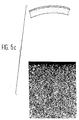
- Figure 1c is shown a section of a cylindrical part 10 cemented on the surface according to Example 1 after attack at the nital 2% and respective magnification of 2 and 500 times showing the great regularity on the macrographic picture and the homogeneity of structure on the micrograph.
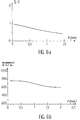
- Examples 2 to 7 are illustrated by figures drawn up in an identical manner to the figures of Example 1.
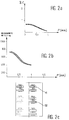
- FIG. 2c shows the arrangement in exploded view over three stages in the tank of the oven of blind bores 11 and open bores 12. Remarkable results have been obtained using tubes of 85 mm in length, with an external diameter of 14 mm. and a bore diameter of 8 mm.
- FIG. 2a represents the dispersion band of the carbon profiles obtained on all of the parts shown in 2c.
- FIG. 2b represents the dispersion band of the microhardness profiles obtained on all of the parts shown in 2c.
- FIG. 2d a section of a tubular piece 20 case-hardened on the surface, at the periphery and in the bore, according to Example 2 after attack at the nital 2% and respective magnification of 2 and 500 times showing the great regularity and the homogeneity of the cemented layer.
- the assembly represented in FIG. 8 comprises the tank 3 and the internal device, as well as the cover 5.
- Gas inlet pipes 7, 8, 9 pass through the cover and open respectively to the first I, second II and third III stages of the tank in at least three outlets per stage regularly distributed such as 21, 22 and 23 for stage II in particular.
- thermocouples installed on each floor are permanently connected to a microcomputer not shown which ensures the smooth running of all the operations of the installation.
- Each stage has a perforated tray on which the articles to be cemented rest.
- the gases circulate through the load in the direction of the two exhausts, one main at the top of the tank, the other derived at the bottom of the tank following the path indicated by the arrows to be finally sucked at the top of the cover by a large pipe 26 connected to a circulation pump 28.
- a relative flow curve as a percentage of the cementing gas is shown to the right of the furnace.
- the installation shown in FIG. 9 comprises a so-called double vacuum oven 50 in the sense that a vacuum is established both in the tank 55 and in the annular space 56 surrounding the tank.
- the cementing gases arrive via lines 51 for hydrogen and 52 for ethylene and are directed to several stages where they are regularly distributed.
- the gas is circulated in the tank as described in FIG. 8.
- the gases are then directed to the pumping unit 62 by a line 59 with a sampling branch to a gas analyzer 60 in connection with a microcomputer.
- Two other lines, 53 for nitrogen, 54 and 57 for air, emerge respectively at the top of the tank 55 and of the space 56.
- the various data such as temperatures, pressure, flow rates and gas composition are gathered by a acquirer connected to a microcomputer 61.
- Charging of the tank containing the parts to be treated then takes place and the first austenitization phase is carried out by heating to different temperatures depending on the case, and to a maximum vacuum of 10 ⁇ 2 hPa.
- the vacuum is broken by introducing hydrogen until a pressure of 500 hPa is obtained.
- Carbon enrichment is carried out by introduction of ethylene at a pressure generally close to 30 hPa and then diffusion at an absolute pressure less than or equal to 10 ⁇ 1 hPa.
- the vacuum is then broken with nitrogen at atmospheric pressure and then a job treatment is carried out which makes it possible to obtain the desired final characteristics for the case-hardened parts.
- the vacuum with hydrogen is broken and a second carbon enrichment is carried out followed by a diffusion which precedes the vacuum breaking with nitrogen at pressure atmospheric.
- the implementation of the method is carried out under the supervision of a microcomputer to which all the technical parameters programmed are supplied such as grades of steels, temperatures of the various places of the furnace, pressure in the enclosure, durations of the enrichment and diffusion sequences, general flow of gases on each stage, composition of gases and adjustment in according to the analysis of the exit gases.
Landscapes
- Chemical & Material Sciences (AREA)
- Organic Chemistry (AREA)
- Engineering & Computer Science (AREA)
- Materials Engineering (AREA)
- Mechanical Engineering (AREA)
- Metallurgy (AREA)
- Chemical Kinetics & Catalysis (AREA)
- Solid-Phase Diffusion Into Metallic Material Surfaces (AREA)
- Pressure Welding/Diffusion-Bonding (AREA)
- Filling Or Discharging Of Gas Storage Vessels (AREA)
- Muffle Furnaces And Rotary Kilns (AREA)
- Forging (AREA)
- Heat Treatment Of Articles (AREA)
- Cooling, Air Intake And Gas Exhaust, And Fuel Tank Arrangements In Propulsion Units (AREA)
Claims (12)
- Verfahren, unter einem niedrigerem Druck als dem Atmosphärendruck, zum Aufhärten von Werkstücken aus einer metallischen Legierung, besonders aus Stahl, in welchem man in einem Ofen die Werkstücke aus metallischer Legierung behandelt, indem man sie dem Einwirken einer Mischung von Aufkohlungsmitteln unterzieht auf der Basis von gasförmigen Kohlenwasserstoffen,
dadurch gekennzeichnet,
daß man eine Mischung aus Aufkohlungsmitteln verwendet, die sich einzig aus Wasserstoff und Ethylen zu 2 bis 60 Volumenprozent Ethylen zusammensetzt und daß man den Ofen zwischen ungefähr 820°C und ungefähr 1100°C erwärmt, gemäß der Natur der Metalle, welche die Werkstücke bilden, und der gewünschten Tiefe der Einlagerung des Kohlenstoffs. - Verfahren zum Aufhärten gemäß Anspruch 1, dadurch gekennzeichnet, daß es die folgenden Abschnitte umfaßt:a) Vorevakuierung der Wanne des Ofens bis zu einem Druck von 10⁻¹ hPa, um die Luft zu beseitigen,b) Wiederauffüllen der Wanne durch gereinigten Stickstoff unter Atmosphärendruck,c) Besetzen der Wanne, welche die metallischen Werkstücke enthält,d) die Wanne unter Vakuum setzten bei 10⁻² hPa,e) Erwärmen bis zur Temperatur der Austenitisierung und halten bei dieser Temperatur für die Homogenisierung der Werkstücke,f) Einführen von Wasserstoff bis zu 500 hPa,g) Anreicherung mit Kohlenstoff durch Einführung eines Gases von Aufkohlungsmitteln auf der Basis von Ethylen unter einem Druck von 10 bis 100 hPa entsprechend den Fällen,h) Diffusion unter Vakuum bei 10⁻¹ hPa,i) Einführung von Stickstoff zum Ziehen des Ofeninhalts.
- Verfahren zum Aufhärten gemäß Anspruch 2, in welchem die metallischen Werkstücke aus Stahl 16 NCD 13 sind, dadurch gekennzeichnet, daß es die fünf folgenden Abschnitte umfaßt:1) Austenitisierung unter Vakuum während einer halben Stunde bei 980°C,2) Zerstören des Vakuums bei 980°C mit Wasserstoff bis zum Erhalten eines Drucks von 500 hPa,3) Anreicherung mit Kohlenstoff bei 980°C durch Einwirken eines Gases von Aufkohlungsmitteln auf der Basis von Ethylen während 2 Stunden bei einem Druck von 35 hPa,4) Diffusion bei 980°C während 3 Stunden 30 min bei einem Druck kleiner oder gleich 10⁻¹ hPa,5) Zerstören des Vakuums mit Stickstoff unter Atmosphärendruckgefolgt von einer Behandlung zum Einsatz bei 825°C und das Aufhärten wird auf eine Tiefe von 1,80 mm ausgeführt, wobei man den angestrebten Prozentsatz an Kohlenstoff in Abhängigkeit von der Tiefe erhält.
- Verfahren zum Aufhärten gemäß Anspruch 2, in welchem die metallischen Werkstücke aus Stahl 14 NC 12 sind, dadurch gekennzeichnet, daß es die folgenden fünf Abschnitte umfaßt:1) Austenitisierung unter Vakuum während einer halben Stunde bei 880°C,2) Zerstören des Vakuums bei 880°C mit Wasserstoff, bis zum Erhalten eines Drucks von 500 hPa,3) Anreicherung mit Kohlenstoff bei 880°C durch Einwirken eines Gases von Aufkohlungsmitteln auf der Basis von Ethylen während 1 Stunde 25 min bei einem Druck von 30 hPa,4) Diffusion bei 880°C während 0 Stunden 20 min bei einem Druck kleiner oder gleich 10⁻¹ hPa,5) Zerstören des Vakuums mit Stickstoff unter Atmosphärendruckgefolgt von einer Behandlung zum Einsatz bei 825°C und das Aufhärten wird auf eine Tiefe von 0,55 mm ausgeführt, wobei man den angestrebten Prozentsatz an Kohlenstoff in Abhängigkeit von der Tiefe erhält.
- Verfahren zum Aufhärten gemäß Anspruch 2, in welchem die metallischen Werkstücke aus Stahl 16 NCD 13 sind, dadurch gekennzeichnet, daß es die folgenden fünf Abschnitte umfaßt:1) Austenitisierung unter Vakuum während 30 Minuten bei 820°C,2) Zerstören des Vakuums bei 820°C mit Wasserstoff, bis zum Erhalten eines Drucks von 500 hPa,3) Anreicherung mit Kohlenstoff bei 820°C durch Einwirken eines Gases von Aufkohlungsmitteln auf der Basis von Ethylen während 1 Stunde bei einem Druck von 25 hPa,4) (ohne) Diffusion,5) Zerstören des Vakuums mit Stickstoff unter Atmosphärendruckgefolgt von einer Behandlung zum Einsatz bei 820°C und das Aufhärten wird auf eine Tiefe von 0,25 mm ausgeführt, wobei man den angestrebten Prozentsatz an Kohlenstoff in Abhängigkeit von der Tiefe erhält.
- Verfahren zum Aufhärten gemäß Anspruch 2, in welchem die metallischen Werkstücke aus einer Superlegierung sind auf der Basis von Co: KC 20 WN, dadurch gekennzeichnet, daß es die folgenden fünf Abschnitte umfaßt:1) Austenitisierung unter Vakuum während 30 Minuten bei 1100°C,2) Zerstören des Vakuums mit Wasserstoff bei 1100°C, bis zum Erhalten eines Drucks von 500 hPa,3) Anreicherung mit Kohlenstoff bei 1100°C durch Einwirken eines Gases von Aufkohlungsmitteln auf der Basis von Ethylen während 4 Stunden bei einem Druck von 40 hPa,4) Diffusion bei 1100°C während 2 Stunden bei einem Druck kleiner oder gleich 10⁻¹ hPa,5) Zerstören des Vakuums mit Stickstoff unter Atmosphärendruckdas Aufhärten wird auf eine Gesamttiefe von 0,8 mm ausgeführt.
- Verfahren zum Aufhärten gemäß Anspruch 1, dadurch gekennzeichnet, daß es die folgenden Abschnitte umfaßt:a) Vorevakuierung der Wanne des Ofens bis zu einem Druck von 10⁻¹ hPa, um die Luft zu beseitigen,b) Wiederauffüllen der Wanne durch gereinigten Stickstoff unter Atmosphärendruck,c) Besetzen der Wanne, welche die metallischen Werkstücke enthält,d) die Wanne unter Vakuum setzten bei 10⁻² hPa,e) Erwärmen bis zur Temperatur der Austenitisierung und halten bei dieser Temperatur für die Homogenisierung der Werkstücke,f) Einführen von Wasserstoff bis zu 500 hPa,g) Anreicherung mit Kohlenstoff durch Einführung eines Gases von Aufkohlungsmitteln auf der Basis von Ethylen unter einem Druck von 10 bis 100 hPa entsprechend den Fällen,h) Diffusion unter Vakuum bei 10⁻¹ hPa,i) Zerstören des Vakuums mit Wasserstoff,j) Anreicherung mit Kohlenstoff durch Einführung eines Gases von Aufkohlungsmitteln auf der Basis von Ethylen unter einem Druck von 10 bis 100 hPa,k) Zerstören des Vakuums mit Stickstoff unter Atmosphärendruck.
- Verfahren gemäß Anspruch 7, dadurch gekennzeichnet, daß es einen zusätzlichen Abschnitt zur Diffusion zwischen den Abschnitten j) und k) umfaßt.
- Verfahren zum Aufhärten gemäß Anspruch 8, in welchem die metallischen Werkstücke aus Stahl Z 15 CN 17.03 sind, dadurch gekennzeichnet, daß es die folgenden acht Abschnitte umfaßt:1) Austenitisierung unter Vakuum während 30 Minuten bei 1020°C und Wiederabkühlen im Ofen bis auf 980°C,2) Zerstören des Vakuums mit Wasserstoff bei 980°C bis zum Erhalten eines Drucks von 500 hPa,3) Anreicherung mit Kohlenstoff bei 980°C durch Einwirken eines Gases von Aufkohlungsmitteln auf der Basis von Ethylen während 45 Minuten bei einem Druck von 35 hPa,4) Diffusion bei 980°C während 10 Minuten bei einem Druck kleiner oder gleich 10⁻¹ hPa,5) Zerstören des Vakuums mit Wasserstoff bei 980°C bis zum Druck von 500 hPa,6) Anreicherung von Kohlenstoff bei 980°C durch Einwirken eines Gases von Aufkohlungsmitteln auf der Basis von Ethylen während 6 Stunden und 45 Minuten bei einem Druck von 35 hPa,7) Diffusion bei 980°C während 4 Stunden und 45 Minuten bei einem Druck kleiner oder gleich 10⁻¹ hPa8) Zerstören des Vakuums mit Stickstoff unter Atmosphärendruckgefolgt von einer Behandlung zur Anwendung bei 1020°C und das Aufhärten ist auf eine Tiefe von 1 mm ausgeführt, wobei man den angestrebten Prozentsatz Kohlenstoff in Abhängigkeit von der Tiefe erhält.
- Verfahren zum Aufhärten gemäß Anspruch 7, in welchem die metallischen Werkstücke aus Stahl Z 20 WC 10 sind, dadurch gekennzeichnet, daß es die folgenden sieben Abschnitte umfaßt:1) Austenitisierung unter Vakuum während 30 Minuten bei 1010°C und Wiederabkühlen im Ofen bis auf 940°C,2) Zerstören des Vakuums mit Wasserstoff bei 940°C bis zum Erhalten eines Drucks von 500 hPa,3) Anreicherung von Kohlenstoff bei 940°C durch Einwirken eines Gases von Aufkohlungsmitteln auf der Basis von Ethylen während 45 Minuten bei einem Druck von 30 hPa,4) Diffusion bei 940°C während 10 Minuten bei einem Druck kleiner oder gleich 10⁻¹ hPa,5) Zerstören des Vakuums mit Wasserstoff bei 940°C bis zum Erhalten eines Drucks von 500 hPa,6) Anreicherung von Kohlenstoff bei 940°C durch Einwirken eines Gases von Aufkohlungsmitteln auf der Basis von Ethylen während 1 Stunde und 15 Minuten,7) Zerstören des Vakuums mit Stickstoff unter Atmosphärendruckgefolgt von einer Behandlung zur Anwendung bei 1100°C und das Aufhärten ist auf eine Tiefe von 1 mm ausgeführt, wobei man den angestrebten Prozentsatz Kohlenstoff in Abhängigkeit von der Tiefe erhält.
- Verfahren zum Aufhärten gemäß Anspruch 8, in welchem die metallischen Werkstücke aus Stahl Z 38 CDV 5 sind, dadurch gekennzeichnet, daß es die folgenden acht Abschnitte umfaßt:1) Austenitisierung unter Vakuum während 30 Minuten bei 1010°C und Wiederabkühlen im Ofen bis auf 960°C,2) Zerstören des Vakuums mit Wasserstoff bei 960°C bis zum Erhalten eines Drucks von 500 hPa,3) Anreicherung von Kohlenstoff bei 960°C durch Einwirken eines Gases von Aufkohlungsmitteln auf der Basis von Ethylen während 30 Minuten bei einem Druck von 30 hPa,4) Diffusion bei 960°C während 10 Minuten bei einem Druck kleiner oder gleich 10⁻¹ hPa,5) Zerstören des Vakuums mit Wasserstoff bei 960°C bis zum Erhalten eines Drucks von 500 hPa,6) Anreicherung mit Kohlenstoff bei 960°C durch Einwirken eines Gases von Aufkohlungsmitteln auf der Basis von Ethylen während 1 Stunde,7) Diffusion bei 960°C bei einem Druck kleiner oder gleich 10⁻¹ hPa8) Zerstören des Vakuums mit Stickstoff unter Atmosphärendruckgefolgt von einer Behandlung zur Anwendung bei 990°C und das Aufhärten ist auf eine Tiefe von 1 mm ausgeführt, wobei man den angestrebten Prozentsatz Kohlenstoff in Abhängigkeit von der Tiefe erhält.
- Einrichtung für die Aufhärtung metallischer Legierungen, dadurch gekennzeichnet, daß sie im wesentlichen:- einen Ofen (50) umfaßt, bei sogenanntem Doppelvakuum, gebildet aus einer Wanne (55) mit ihrer inneren Vorrichtung zum Verteilen des Aufhärtungsgases, einem ringförmigen Raum (56) der die Wanne umfaßt und einen Deckel, der von Leitungen der Pumpe und zum eintritt von Wasserstoff (51) und Ethylen (52) durchdrungen wird, welche in verschiedenen Höhen der Wanne an mehreren regelmäßig verteilten Stellen einmünden,- Thermoelemente (TC) und andere Sonden umfaßt, die über den Druck den Durchsatz und die Zusammensetzung des Gases an verschiedenen Stellen des Ofens in Verbindung mit einem Erfasser der gegebenen Größen informieren, welcher selbst mit einem Mikrocomputer (61) verbunden ist,- mehrere Höhen zum Aufnehmen der aufzuhärtenden Werkstücke umfaßt, mit gelochten Platten, um eine frei Zirkulation des Gases zu ermöglichen.
Applications Claiming Priority (2)
| Application Number | Priority Date | Filing Date | Title |
|---|---|---|---|
| FR9008330 | 1990-07-02 | ||
| FR9008330A FR2663953B1 (fr) | 1990-07-02 | 1990-07-02 | Procede et installation de cementation de pieces en alliage metallique a basse pression. |
Publications (2)
| Publication Number | Publication Date |
|---|---|
| EP0465333A1 EP0465333A1 (de) | 1992-01-08 |
| EP0465333B1 true EP0465333B1 (de) | 1995-03-01 |
Family
ID=9398230
Family Applications (1)
| Application Number | Title | Priority Date | Filing Date |
|---|---|---|---|
| EP91401792A Expired - Lifetime EP0465333B1 (de) | 1990-07-02 | 1991-07-01 | Verfahren und Anlage zum Aufhärten eines Werkstückes aus einer metallischen Legierung unter niedrigem Druck |
Country Status (7)
| Country | Link |
|---|---|
| US (1) | US5205873A (de) |
| EP (1) | EP0465333B1 (de) |
| AT (1) | ATE119214T1 (de) |
| CA (1) | CA2046052C (de) |
| DE (1) | DE69107708T2 (de) |
| ES (1) | ES2071251T3 (de) |
| FR (1) | FR2663953B1 (de) |
Cited By (1)
| Publication number | Priority date | Publication date | Assignee | Title |
|---|---|---|---|---|
| US9212416B2 (en) | 2009-08-07 | 2015-12-15 | Swagelok Company | Low temperature carburization under soft vacuum |
Families Citing this family (22)
| Publication number | Priority date | Publication date | Assignee | Title |
|---|---|---|---|---|
| CN1145714C (zh) * | 1995-03-29 | 2004-04-14 | 株式会社日本H | 真空渗碳方法、设备及渗碳制品 |
| FR2763604B1 (fr) * | 1997-05-23 | 1999-07-02 | Innovatique Sa | Procede pour la formation, par un traitement thermochimique sans plasma, d'une couche superficielle presentant une durete elevee |
| US6187111B1 (en) | 1998-03-05 | 2001-02-13 | Nachi-Fujikoshi Corp. | Vacuum carburizing method |
| JP2000336469A (ja) * | 1999-05-28 | 2000-12-05 | Nachi Fujikoshi Corp | 真空浸炭方法及び装置 |
| FR2813892B1 (fr) * | 2000-09-13 | 2003-09-26 | Peugeot Citroen Automobiles Sa | Procede de traitement thermique d'aciers d'outillages hypoeutectoides |
| FR2827875B1 (fr) * | 2001-07-24 | 2006-09-15 | Ascometal Sa | Acier pour pieces mecaniques, et pieces mecaniques cementees ou carbonitrurees realisees a partir de cet acier |
| US7033446B2 (en) * | 2001-07-27 | 2006-04-25 | Surface Combustion, Inc. | Vacuum carburizing with unsaturated aromatic hydrocarbons |
| US6991687B2 (en) * | 2001-07-27 | 2006-01-31 | Surface Combustion, Inc. | Vacuum carburizing with napthene hydrocarbons |
| WO2003048405A1 (fr) * | 2001-11-30 | 2003-06-12 | Koyo Thermo Systems Co., Ltd. | Dispositif et procede pour traitement thermique sous vide |
| DE10209382B4 (de) * | 2002-03-02 | 2011-04-07 | Robert Bosch Gmbh | Verfahren zur Aufkohlung von Bauteilen |
| DE10235131A1 (de) * | 2002-08-01 | 2004-02-19 | Ipsen International Gmbh | Verfahren und Vorrichtung zum Schwärzen von Bauteilen |
| PL204747B1 (pl) * | 2002-10-31 | 2010-02-26 | Politechnika & Lstrok Odzka | Sposób nawęglania wyrobów stalowych w podciśnieniu |
| DE10254846B4 (de) * | 2002-11-25 | 2011-06-16 | Robert Bosch Gmbh | Verfahren zum Einsatzhärten von Bauteilen aus Warmarbeitsstählen mittels Unterdruckaufkohlung |
| US7431777B1 (en) * | 2003-05-20 | 2008-10-07 | Exxonmobil Research And Engineering Company | Composition gradient cermets and reactive heat treatment process for preparing same |
| JP5246745B2 (ja) * | 2005-02-26 | 2013-07-24 | ゼネラル・エレクトリック・カンパニイ | 拡散アルミナイド被覆ニッケル基超合金の基材安定化法 |
| US7823341B2 (en) * | 2005-08-04 | 2010-11-02 | Ceslab, Inc. | Height-adjustable, structurally suspended slabs for a structural foundation |
| US20070068601A1 (en) * | 2005-09-26 | 2007-03-29 | Jones William R | Process for treating steel alloys |
| US7514035B2 (en) * | 2005-09-26 | 2009-04-07 | Jones William R | Versatile high velocity integral vacuum furnace |
| US20080120843A1 (en) * | 2006-11-06 | 2008-05-29 | Gm Global Technology Operations, Inc. | Method for manufacturing low distortion carburized gears |
| US8425691B2 (en) | 2010-07-21 | 2013-04-23 | Kenneth H. Moyer | Stainless steel carburization process |
| WO2013109415A1 (en) | 2012-01-20 | 2013-07-25 | Swagelok Company | Concurrent flow of activating gas in low temperature carburization |
| PL422596A1 (pl) | 2017-08-21 | 2019-02-25 | Seco/Warwick Spółka Akcyjna | Sposób nawęglania podciśnieniowego (LPC) elementów wykonanych ze stopów żelaza i innych metali |
Family Cites Families (6)
| Publication number | Priority date | Publication date | Assignee | Title |
|---|---|---|---|---|
| US4108693A (en) * | 1974-12-19 | 1978-08-22 | L'air Liquide, Societe Anonyme Pour L'etude Et L'exploitation Des Procedes Georges Claude | Method for the heat-treatment of steel and for the control of said treatment |
| GB1559690A (en) * | 1976-11-10 | 1980-01-23 | British Steel Corp | Treatment of steel products |
| US4152177A (en) * | 1977-02-03 | 1979-05-01 | General Motors Corporation | Method of gas carburizing |
| SU668978A1 (ru) * | 1977-06-02 | 1979-06-28 | Предприятие П/Я А-7697 | Способ цементации стальных деталей |
| US4386973A (en) * | 1981-05-08 | 1983-06-07 | General Signal Corporation | Vacuum carburizing steel |
| US4836684A (en) * | 1988-02-18 | 1989-06-06 | Ultrasonic Power Corporation | Ultrasonic cleaning apparatus with phase diversifier |
-
1990
- 1990-07-02 FR FR9008330A patent/FR2663953B1/fr not_active Expired - Fee Related
-
1991
- 1991-07-01 EP EP91401792A patent/EP0465333B1/de not_active Expired - Lifetime
- 1991-07-01 ES ES91401792T patent/ES2071251T3/es not_active Expired - Lifetime
- 1991-07-01 DE DE69107708T patent/DE69107708T2/de not_active Expired - Fee Related
- 1991-07-01 AT AT91401792T patent/ATE119214T1/de not_active IP Right Cessation
- 1991-07-01 US US07/724,134 patent/US5205873A/en not_active Expired - Lifetime
- 1991-07-02 CA CA002046052A patent/CA2046052C/fr not_active Expired - Fee Related
Non-Patent Citations (1)
| Title |
|---|
| METALL TRANS B 13 B JUNE 82 pp. 267-273 * |
Cited By (1)
| Publication number | Priority date | Publication date | Assignee | Title |
|---|---|---|---|---|
| US9212416B2 (en) | 2009-08-07 | 2015-12-15 | Swagelok Company | Low temperature carburization under soft vacuum |
Also Published As
| Publication number | Publication date |
|---|---|
| CA2046052A1 (fr) | 1992-01-03 |
| FR2663953B1 (fr) | 1993-07-09 |
| ES2071251T3 (es) | 1995-06-16 |
| DE69107708T2 (de) | 1995-09-21 |
| EP0465333A1 (de) | 1992-01-08 |
| CA2046052C (fr) | 2001-10-30 |
| ATE119214T1 (de) | 1995-03-15 |
| DE69107708D1 (de) | 1995-04-06 |
| US5205873A (en) | 1993-04-27 |
| FR2663953A1 (fr) | 1992-01-03 |
Similar Documents
| Publication | Publication Date | Title |
|---|---|---|
| CA2046052C (fr) | Procede et installation de cementation de pieces en alliage metallique a basse pression | |
| JP6378189B2 (ja) | 鋼部材の窒化処理方法 | |
| US4294630A (en) | Method and apparatus for the continuous furnace brazing and soft-nitriding treatments of iron articles | |
| JP4041602B2 (ja) | 鋼部品の減圧浸炭方法 | |
| FR3028530A1 (fr) | Procede et installation de carbonitruration de piece(s) en acier sous basse pression et haute temperature | |
| EP2986750A1 (de) | Thermochemisches behandlungsverfahren mit einer einzigen nitrierungsphase vor der aufkohlung | |
| JPH0790541A (ja) | ガス複合浸透改質方法及び装置 | |
| US4236942A (en) | Method for the gaseous nitriding of ferrous-based components | |
| EP1080243A1 (de) | Verfahren zum niederdrück-nitrocarburieren metallischer werkstücke | |
| JP5548920B2 (ja) | エッジ部を有するワークの浸炭方法 | |
| Jacobs et al. | Plasma Carburiiing: Theory; Industrial Benefits and Practices | |
| JP2007262505A (ja) | 鋼部材の熱処理方法 | |
| CN111868292B (zh) | 真空渗碳处理方法以及渗碳部件的制造方法 | |
| US5605580A (en) | Carburization process | |
| JP2008260994A (ja) | 浸炭製品の製造方法 | |
| JP5558296B2 (ja) | ガス軟窒化処理方法 | |
| JPS63759Y2 (de) | ||
| KR102494316B1 (ko) | 침탄원료의 저감 및 입계산화의 저감을 위한 가스침탄방법 | |
| JPS6033188B2 (ja) | 金属熱処理設備 | |
| JPH0312140B2 (de) | ||
| JPS5881963A (ja) | 真空浸炭方法 | |
| JPH06248416A (ja) | ガス複合浸透改質方法 | |
| US5194096A (en) | Carburizing treatment of a steel with reduction of the hydrogen content in the carburized layer | |
| Loeser et al. | Low pressure carburizing of large transmission parts | |
| Edenhofer et al. | Vacuum heat processing |
Legal Events
| Date | Code | Title | Description |
|---|---|---|---|
| PUAI | Public reference made under article 153(3) epc to a published international application that has entered the european phase |
Free format text: ORIGINAL CODE: 0009012 |
|
| AK | Designated contracting states |
Kind code of ref document: A1 Designated state(s): AT BE CH DE DK ES GB GR IT LI LU NL SE |
|
| 17P | Request for examination filed |
Effective date: 19920611 |
|
| 17Q | First examination report despatched |
Effective date: 19930614 |
|
| GRAA | (expected) grant |
Free format text: ORIGINAL CODE: 0009210 |
|
| AK | Designated contracting states |
Kind code of ref document: B1 Designated state(s): AT BE CH DE DK ES GB GR IT LI LU NL SE |
|
| PG25 | Lapsed in a contracting state [announced via postgrant information from national office to epo] |
Ref country code: DK Effective date: 19950301 Ref country code: GR Free format text: LAPSE BECAUSE OF FAILURE TO SUBMIT A TRANSLATION OF THE DESCRIPTION OR TO PAY THE FEE WITHIN THE PRESCRIBED TIME-LIMIT Effective date: 19950301 |
|
| REF | Corresponds to: |
Ref document number: 119214 Country of ref document: AT Date of ref document: 19950315 Kind code of ref document: T |
|
| REF | Corresponds to: |
Ref document number: 69107708 Country of ref document: DE Date of ref document: 19950406 |
|
| ITF | It: translation for a ep patent filed | ||
| PG25 | Lapsed in a contracting state [announced via postgrant information from national office to epo] |
Ref country code: SE Effective date: 19950601 |
|
| GBT | Gb: translation of ep patent filed (gb section 77(6)(a)/1977) |
Effective date: 19950512 |
|
| REG | Reference to a national code |
Ref country code: ES Ref legal event code: FG2A Ref document number: 2071251 Country of ref document: ES Kind code of ref document: T3 |
|
| PLBE | No opposition filed within time limit |
Free format text: ORIGINAL CODE: 0009261 |
|
| STAA | Information on the status of an ep patent application or granted ep patent |
Free format text: STATUS: NO OPPOSITION FILED WITHIN TIME LIMIT |
|
| 26N | No opposition filed | ||
| REG | Reference to a national code |
Ref country code: GB Ref legal event code: IF02 |
|
| PGFP | Annual fee paid to national office [announced via postgrant information from national office to epo] |
Ref country code: CH Payment date: 20080616 Year of fee payment: 18 |
|
| PGFP | Annual fee paid to national office [announced via postgrant information from national office to epo] |
Ref country code: LU Payment date: 20080728 Year of fee payment: 18 Ref country code: DE Payment date: 20080715 Year of fee payment: 18 Ref country code: ES Payment date: 20080718 Year of fee payment: 18 |
|
| PGFP | Annual fee paid to national office [announced via postgrant information from national office to epo] |
Ref country code: NL Payment date: 20080624 Year of fee payment: 18 Ref country code: IT Payment date: 20080726 Year of fee payment: 18 Ref country code: AT Payment date: 20080623 Year of fee payment: 18 |
|
| PGFP | Annual fee paid to national office [announced via postgrant information from national office to epo] |
Ref country code: GB Payment date: 20080711 Year of fee payment: 18 |
|
| PGFP | Annual fee paid to national office [announced via postgrant information from national office to epo] |
Ref country code: BE Payment date: 20080814 Year of fee payment: 18 |
|
| BERE | Be: lapsed |
Owner name: ACIERIES *AUBERT ET *DUVAL Effective date: 20090731 |
|
| REG | Reference to a national code |
Ref country code: CH Ref legal event code: PL |
|
| GBPC | Gb: european patent ceased through non-payment of renewal fee |
Effective date: 20090701 |
|
| NLV4 | Nl: lapsed or anulled due to non-payment of the annual fee |
Effective date: 20100201 |
|
| PG25 | Lapsed in a contracting state [announced via postgrant information from national office to epo] |
Ref country code: LI Free format text: LAPSE BECAUSE OF NON-PAYMENT OF DUE FEES Effective date: 20090731 Ref country code: CH Free format text: LAPSE BECAUSE OF NON-PAYMENT OF DUE FEES Effective date: 20090731 |
|
| PG25 | Lapsed in a contracting state [announced via postgrant information from national office to epo] |
Ref country code: GB Free format text: LAPSE BECAUSE OF NON-PAYMENT OF DUE FEES Effective date: 20090701 |
|
| PG25 | Lapsed in a contracting state [announced via postgrant information from national office to epo] |
Ref country code: DE Free format text: LAPSE BECAUSE OF NON-PAYMENT OF DUE FEES Effective date: 20100202 Ref country code: BE Free format text: LAPSE BECAUSE OF NON-PAYMENT OF DUE FEES Effective date: 20090731 Ref country code: AT Free format text: LAPSE BECAUSE OF NON-PAYMENT OF DUE FEES Effective date: 20090701 |
|
| REG | Reference to a national code |
Ref country code: ES Ref legal event code: FD2A Effective date: 20090702 |
|
| PG25 | Lapsed in a contracting state [announced via postgrant information from national office to epo] |
Ref country code: ES Free format text: LAPSE BECAUSE OF NON-PAYMENT OF DUE FEES Effective date: 20090702 |
|
| PG25 | Lapsed in a contracting state [announced via postgrant information from national office to epo] |
Ref country code: IT Free format text: LAPSE BECAUSE OF NON-PAYMENT OF DUE FEES Effective date: 20090701 |
|
| PG25 | Lapsed in a contracting state [announced via postgrant information from national office to epo] |
Ref country code: LU Free format text: LAPSE BECAUSE OF NON-PAYMENT OF DUE FEES Effective date: 20090701 |
|
| PG25 | Lapsed in a contracting state [announced via postgrant information from national office to epo] |
Ref country code: NL Free format text: LAPSE BECAUSE OF NON-PAYMENT OF DUE FEES Effective date: 20100201 |