EP0465344A1 - Flüssigkristallinverbindungen - Google Patents
Flüssigkristallinverbindungen Download PDFInfo
- Publication number
- EP0465344A1 EP0465344A1 EP91401807A EP91401807A EP0465344A1 EP 0465344 A1 EP0465344 A1 EP 0465344A1 EP 91401807 A EP91401807 A EP 91401807A EP 91401807 A EP91401807 A EP 91401807A EP 0465344 A1 EP0465344 A1 EP 0465344A1
- Authority
- EP
- European Patent Office
- Prior art keywords
- liquid crystal
- trifluoro
- give
- carboxylic acid
- crystal compound
- Prior art date
- Legal status (The legal status is an assumption and is not a legal conclusion. Google has not performed a legal analysis and makes no representation as to the accuracy of the status listed.)
- Granted
Links
- 0 N*(*(c(cc1)ccc1-c(cc1)ccc1Nc(cc1)cc(cc2)c1cc2O)=O)N Chemical compound N*(*(c(cc1)ccc1-c(cc1)ccc1Nc(cc1)cc(cc2)c1cc2O)=O)N 0.000 description 3
- YGYNBBAUIYTWBF-UHFFFAOYSA-N Cc1ccc(cc(C)cc2)c2c1 Chemical compound Cc1ccc(cc(C)cc2)c2c1 YGYNBBAUIYTWBF-UHFFFAOYSA-N 0.000 description 1
Images



Classifications
-
- C—CHEMISTRY; METALLURGY
- C09—DYES; PAINTS; POLISHES; NATURAL RESINS; ADHESIVES; COMPOSITIONS NOT OTHERWISE PROVIDED FOR; APPLICATIONS OF MATERIALS NOT OTHERWISE PROVIDED FOR
- C09K—MATERIALS FOR MISCELLANEOUS APPLICATIONS, NOT PROVIDED FOR ELSEWHERE
- C09K19/00—Liquid crystal materials
- C09K19/02—Liquid crystal materials characterised by optical, electrical or physical properties of the components, in general
- C09K19/0266—Antiferroelectrics
-
- C—CHEMISTRY; METALLURGY
- C07—ORGANIC CHEMISTRY
- C07C—ACYCLIC OR CARBOCYCLIC COMPOUNDS
- C07C69/00—Esters of carboxylic acids; Esters of carbonic or haloformic acids
- C07C69/76—Esters of carboxylic acids having a carboxyl group bound to a carbon atom of a six-membered aromatic ring
- C07C69/84—Esters of carboxylic acids having a carboxyl group bound to a carbon atom of a six-membered aromatic ring of monocyclic hydroxy carboxylic acids, the hydroxy groups and the carboxyl groups of which are bound to carbon atoms of a six-membered aromatic ring
- C07C69/90—Esters of carboxylic acids having a carboxyl group bound to a carbon atom of a six-membered aromatic ring of monocyclic hydroxy carboxylic acids, the hydroxy groups and the carboxyl groups of which are bound to carbon atoms of a six-membered aromatic ring with esterified hydroxyl and carboxyl groups
-
- C—CHEMISTRY; METALLURGY
- C07—ORGANIC CHEMISTRY
- C07C—ACYCLIC OR CARBOCYCLIC COMPOUNDS
- C07C69/00—Esters of carboxylic acids; Esters of carbonic or haloformic acids
- C07C69/76—Esters of carboxylic acids having a carboxyl group bound to a carbon atom of a six-membered aromatic ring
- C07C69/84—Esters of carboxylic acids having a carboxyl group bound to a carbon atom of a six-membered aromatic ring of monocyclic hydroxy carboxylic acids, the hydroxy groups and the carboxyl groups of which are bound to carbon atoms of a six-membered aromatic ring
- C07C69/92—Esters of carboxylic acids having a carboxyl group bound to a carbon atom of a six-membered aromatic ring of monocyclic hydroxy carboxylic acids, the hydroxy groups and the carboxyl groups of which are bound to carbon atoms of a six-membered aromatic ring with etherified hydroxyl groups
-
- C—CHEMISTRY; METALLURGY
- C07—ORGANIC CHEMISTRY
- C07C—ACYCLIC OR CARBOCYCLIC COMPOUNDS
- C07C69/00—Esters of carboxylic acids; Esters of carbonic or haloformic acids
- C07C69/76—Esters of carboxylic acids having a carboxyl group bound to a carbon atom of a six-membered aromatic ring
- C07C69/94—Esters of carboxylic acids having a carboxyl group bound to a carbon atom of a six-membered aromatic ring of polycyclic hydroxy carboxylic acids, the hydroxy groups and the carboxyl groups of which are bound to carbon atoms of six-membered aromatic rings
-
- C—CHEMISTRY; METALLURGY
- C09—DYES; PAINTS; POLISHES; NATURAL RESINS; ADHESIVES; COMPOSITIONS NOT OTHERWISE PROVIDED FOR; APPLICATIONS OF MATERIALS NOT OTHERWISE PROVIDED FOR
- C09K—MATERIALS FOR MISCELLANEOUS APPLICATIONS, NOT PROVIDED FOR ELSEWHERE
- C09K19/00—Liquid crystal materials
- C09K19/04—Liquid crystal materials characterised by the chemical structure of the liquid crystal components, e.g. by a specific unit
- C09K19/06—Non-steroidal liquid crystal compounds
- C09K19/32—Non-steroidal liquid crystal compounds containing condensed ring systems, i.e. fused, bridged or spiro ring systems
- C09K19/322—Compounds containing a naphthalene ring or a completely or partially hydrogenated naphthalene ring
Definitions
- the present invention is to provide an antiferroelectric liquid crystal compound having a naphthalene skeleton, and the liquid crystal compound relates to liquid crystal compounds used for display devices or electrooptical devices which take advantage of the response to electric field.
- the present invention relates to an antiferroelectric liquid crystal compound exhibiting tristable molecular alignments.
- the liquid crystal compound is used for display devices or electrooptical devices which take advantage of the response to electric field.
- nematic liquid crystals such as those of DSM, TN, G-H or STN types have been developed and put to practical use. These electrooptical devices using the nematic liquid crystals have a defect of a very slow response in the range from several milliseconds to several ten milliseconds and thus are limited in their applications.
- the slow response of devices utilizing a nematic liquid crystal is attributed to the fact that the torque for moving molecules is based on the anisotropy of dielectric constant and thus the power is not strong.
- a typical example includes a device in which the helical structure is released by the force of wall faces and the two molecular alignments parallel to the wall faces is changed by the polarity of an applied electric field (see, for example, Japanese Patent Laid-Open Publication No. 107216/1981).
- the aforementioned device is composed on the assumption of the presence of a compound which exhibits such an ideal bistable states as is shown by a field response wave pattern in Fig. 1.
- bistable liquid crystals synthesized hitherto show a field response wave pattern in Fig. 2 but not a field response wave pattern in Fig. 1. It is the present state that if a device which exhibits a response wave pattern as shown in Fig.
- a bistable state liquid crystal having been synthesized is hard to form a monodomain structure as an ideal molecular alignment in the stage of a S*c phase at no electric field, and it causes disclination (defect) or twist which is the disturbance of the molecular alignment. It is thus difficult to realize the aforementioned ideal bistable alignment in a large area.
- the bistable state liquid crystal hitherto synthesized has no memory effect, since it cannot exhibit a hysteresis as shown in Fig. 1 but exhibits only a hysteresis as shown in Fig. 2. Thus, it is necessary to impress continuously a voltage at v3 in Fig. 2 or to apply a high frequency in order to maintain a stable response in the S*c phase in the liquid crystal, and it cannot avoid a large energy loss.
- the object of the present invention is to provide a novel liquid crystal compound which can be used in the liquid crystal electrooptical device described in Japanese Patent Laid-Open Publication No. 153322/1990 and takes advantage of the tristable states, characterized in that the liquid crystal compound realizes a stable molecular alignment having a distinct light-dark contrast depending on applied electric field, generates a distinct threshold property and a distinct hysteresis as shown in Fig. 3, realizes easily dynamic drive and is capable of a high speed response.
- the object of the present invention consists in providing a novel ferroelectric liquid crystal having quite new tristable states which is distinguished from a ferroelectric liquid crystal exhibiting a chiral smectic phase or a chiral smectic C phase (S*c phase) as the conventional bistable states.
- the term "having tristable states” means that in a liquid crystal electrooptical device comprising an antiferroelectric liquid crystal inserted between the first electrode plate and the second electrode plate arranged at a predetermined distance from the first electrode plate, characterized in that the device is constituted so that the voltage for forming electric field is applied to the first and second electrode plates, and, on applying the voltage in the shape of a triangular wave as shown in Fig. 4-A,the antiferroelectric liquid crystal has the first stable state of the molecular alignment at no electric field (at 2 in Fig. 4-D), the second stable state different from the first stable state for the one direction of the electric field on applying the electric field (at 1 in Fig.
- the novel tristable state antiferroelectric liquid crystal exhibits an epoch-making effect as a liquid crystal display in comparison with the conventional nematic liquid crystals.
- the tristable state antiferroelectric liquid crystal is required only a simple display of a matrix type.
- the conventional type was produced by a complicated process, so that an image plane was difficult to be made in a large size and the production cost was expensive.
- the tristable antiferroelectric liquid crystal the production process is simple and epoch-making, so that it is possible to make the image plane in a large size and to control the production cost at an inexpensive level.
- the object of the present invention is to provide a novel liquid crystal having the tristable antiferroelectricity.
- the present invention first relates to a liquid crystal compound represented by the formula (I): wherein R1 represents an alkyl group having 5 - 18 carbon atoms,
- R2 represents an alkyl group having 6 - 16 carbon atoms
- X represents a group -O-
- Y represents a group
- A represents a group
- the present invention secondary relates to a liquid crystal compound which is able to exhibit optically tristable states and has the formula (I):
- R1 , R2, X, Y and A are defined above.
- the present invention thirdly relates to a liquid crystal compound which is able to exhibit optionally tristable states and has the formula (II); wherein R2 and A is defined above, R3 represents an alkyl group having 10 - 16 carbon atoms and X represents a group -O- or
- the present invention fourthly relates to a liquid crystal compound which is able to exhibit optically tristable states and has the formula (III):
- R2 and R3 have the same meanings as above.
- the present invention fifthly relates to a liquid crystal compound which is able to exhibit optically tristable states and has the formula (IV):
- R2 and R3 are defined as above.
- the present invention sixthly relates to a liquid crystal compound which is able to exhibit optically tristable states and has the formula (V): wherein R2 and R3 are defined above.
- the present invention seventhly relates to a liquid crystal compound which is able to exhibit optically tristable states and has the formula (VI): wherein R2 and R3 are defined above.
- [A] 4-Benzyloxybenzoic acid chloride and an optically active 1,1,1-trifluoro-2-alkanol were allowed to react to give 1,1,1-trifluoro-2-alkyl 4-benzyloxybenzoate, which was subjected to hydrogenolysis to give 1,1,1-trifluoro-2-alkyl 4-hydroxybenzoate.
- An alkyl bromide and 2-hydroxynaphthalene-6-carboxylic acid methyl ester were allowed to react in the presence of potassium carbonate in a solvent such as dimethylformamide and then subjected to hydrolysis with an aqueous sodium hydroxide.
- the hydrolyzed product was allowed to react with 1,1,1-trifluoro-2-alkyl 4-hydroxybenzoate in the presence of dicyclohexylcarbodiimide to give 6-alkyloxynaphthalene-2-carboxylic acid 4-(1,1,1-trifluoro-2-alkyloxycarbonyl)phenyl ester.
- DDC Dicyclohexylcarbodiimide.
- 2,6-Naphthalenedicarboxylic acid chloride and an alkyl alcohol were allowed to react to give 2-alkyloxycarbonylnaphthalene-6-carboxylic acid chloride.
- the acid chloride was allowed to react with 1,1,1-trifluoro-2-alkyl 4′-hydroxybiphenyl-4-carboxylate to give 2-alkyloxycarbonylnaphthalene-6-carboxylic acid 4-(1,1,1-trifluoro-2-alkyloxycarbonyl)biphenyl ester.
- reaction mixture was warmed to room temperature and allowed to react overnight.
- the reaction solution was poured into ice-water and extracted with methylene chloride.
- the methylene chloride phase was washed with dilute hydrochloric acid, water, IN aqueous sodium hydroxide solution and water in this sequence and dried over anhydrous magnesium sulfate.
- the solvent was removed to give a crude product, which was subjected to column chromatography on silica gel with toluene and further recrystallized from ethanol to give 1.84 g of the desired product.
- the compound obtained in (1) was dissolved in 15 ml of ethanol and subjected to hydrogenolysis in the presence of 0.36 g of 10 % Pd on carbon under a hydrogen atmosphere to give 1.43 g of the desired compound.
- Decyl monobromide (7 g), methyl 2-hydroxynaphthalene 6-carboxylate (2 g) and anhydrous potassium carbonate (4 g) were added to 100 ml of dimethylformamide. After stirring the mixture at 130°C for 2 hours, it was poured into water. Dilute hydrochloric acid was added to neutralize the solution, which was then extracted with diethyl ether. The residue obtained by removing the solvent was added to a solution comprising 3.3 g of sodium hydroxide, 10 ml of water and 50 ml of ethanol, and the mixture was refluxed for about one day. Dilute hydrochloric acid was added to neutralize the mixture, which was concentrated by removing the solvent. Solid products deposited were collected and recrystallized from a mixed solvent of water-ethanol to give 2.4 g of the desired product.
- phase transition temperatures (°C) observed with a microscope equipped with a hot stage was as follows: wherein S* (3) represents a liquid crystal phase where the liquid crystal compound shows optically tristable states.
- S* (3) represents a liquid crystal phase where the liquid crystal compound shows optically tristable states.
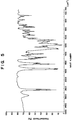
- the infrared spectrum (KBr) of the desired product is shown in Fig. 5.
- the product and benzyl chloride (4.7 g) were dissolved in 60 ml of DMF, and the solution was allowed to react in the presence of 20 g of anhydrous potassium carbonate under refluxing for 6 hours.
- the reaction solution was poured into water, and the crystals deposited were collected by filtration and further washed sufficiently with a large quantity of water until the washing liquor exhibits neutral.
- reaction solution was poured into water, and the organic phase recovered by repeating extractions with methylene chloride was washed with 3N hydrochloric acid, water, IN sodium carbonate solution and water in this sequence to neutralize, then dried over anhydrous magnesium sulfate and removed the solvent under reduced pressure.
- the residue was further subjected to column chromatography on silica gel with an eluent of n-hexane and ethyl acetate to give 2.8 g of 1-trifluoromethylheptyl 4′-benzyloxybiphenyl-4-carboxylate.
- n-Octanol 0.5 g
- naphthalene-2,6-dicarboxylic acid dichloride 0.6 g
- triethylamine 0.27 g
- dimethylaminopyridine 50 ml
- the solution was stirred at room temperature for a day.
- the solvent was removed by distillation to give 1 g of a residual product containing the desired product.
- 1,1,1-Trifluoro-2-octyl 4′-hydroxybiphenyl-4-carboxylate (0.65 g) obtained in (1) of Example 2 and triethylamine (0.23 g) were dissolved in 50 ml of methylene chloride.
- dimethylaminopyridine (0.05 g) was added to the solution above, and the mixture was stirred for a day.
- the solution was washed with dilute sulfuric acid and water in this sequence, and the organic layer was collected and dried over anhydrous magnesium sulfate.
- Decyl monobromide (7 g), 2-hydroxy-6-methylcarbonyloxynaphthalene (2 g) and anhydrous potassium carbonate (4 g) were added to 100 ml of dimethylformamide. After stirring at 130°C for 2 hours, the reaction solution was poured into water. Dilute hydrochloric acid was added to neutralize the solution, which was extracted with diethyl ether. The residue obtained from the diethyl ether layer by removing the solvent by distillation was added to a solution comprising 3.3 g of sodium hydroxide, 10 ml of water and 50 ml of ethanol, and the mixture was heated under refluxing for a day. Dilute hydrochloric acid was added to neutralize the solution, which was concentrated by removing the solvent by distillation. Solid products deposited were collected and recrystallized from a mixed solvent of water-ethanol to give 2.4 g of the desired product.
- Sx is a phase of a higher order having a response to electric field.
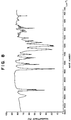
- the infrared spectrum (KBr) of the desired product is shown in Fig. 7.
- All of the novel liquid crystals of the present invention exhibit tristable states when in S* (3) phase and have a wide range of applications such as a display device or a switching device using the tristable states.
Landscapes
- Chemical & Material Sciences (AREA)
- Organic Chemistry (AREA)
- Crystallography & Structural Chemistry (AREA)
- Engineering & Computer Science (AREA)
- Materials Engineering (AREA)
- Organic Low-Molecular-Weight Compounds And Preparation Thereof (AREA)
- Liquid Crystal Substances (AREA)
Applications Claiming Priority (2)
| Application Number | Priority Date | Filing Date | Title |
|---|---|---|---|
| JP178336/90 | 1990-07-05 | ||
| JP2178336A JP2918303B2 (ja) | 1990-07-05 | 1990-07-05 | 光学的三安定状態で駆動する液晶素子 |
Publications (2)
| Publication Number | Publication Date |
|---|---|
| EP0465344A1 true EP0465344A1 (de) | 1992-01-08 |
| EP0465344B1 EP0465344B1 (de) | 1996-09-04 |
Family
ID=16046710
Family Applications (1)
| Application Number | Title | Priority Date | Filing Date |
|---|---|---|---|
| EP19910401807 Expired - Lifetime EP0465344B1 (de) | 1990-07-05 | 1991-07-02 | Flüssigkristallinverbindungen |
Country Status (3)
| Country | Link |
|---|---|
| EP (1) | EP0465344B1 (de) |
| JP (1) | JP2918303B2 (de) |
| DE (1) | DE69121810T2 (de) |
Families Citing this family (1)
| Publication number | Priority date | Publication date | Assignee | Title |
|---|---|---|---|---|
| JP2812552B2 (ja) * | 1990-11-29 | 1998-10-22 | 三井化学株式会社 | カルボン酸エステル化合物、液晶化合物および液晶組成物 |
Citations (2)
| Publication number | Priority date | Publication date | Assignee | Title |
|---|---|---|---|---|
| EP0339987A2 (de) * | 1988-04-28 | 1989-11-02 | Showa Shell Sekiyu Kabushiki Kaisha | Flüssigkristall-Verbindungen mit Naphthalennucleus |
| EP0341922A2 (de) * | 1988-05-12 | 1989-11-15 | Mitsui Petrochemical Industries, Ltd. | Naphthalen-Verbindung und dieselbe enthaltende flüssigkristalline Zusammensetzung |
-
1990
- 1990-07-05 JP JP2178336A patent/JP2918303B2/ja not_active Expired - Lifetime
-
1991
- 1991-07-02 DE DE1991621810 patent/DE69121810T2/de not_active Expired - Fee Related
- 1991-07-02 EP EP19910401807 patent/EP0465344B1/de not_active Expired - Lifetime
Patent Citations (2)
| Publication number | Priority date | Publication date | Assignee | Title |
|---|---|---|---|---|
| EP0339987A2 (de) * | 1988-04-28 | 1989-11-02 | Showa Shell Sekiyu Kabushiki Kaisha | Flüssigkristall-Verbindungen mit Naphthalennucleus |
| EP0341922A2 (de) * | 1988-05-12 | 1989-11-15 | Mitsui Petrochemical Industries, Ltd. | Naphthalen-Verbindung und dieselbe enthaltende flüssigkristalline Zusammensetzung |
Also Published As
| Publication number | Publication date |
|---|---|
| EP0465344B1 (de) | 1996-09-04 |
| JPH0469363A (ja) | 1992-03-04 |
| DE69121810T2 (de) | 1997-01-16 |
| DE69121810D1 (de) | 1996-10-10 |
| JP2918303B2 (ja) | 1999-07-12 |
Similar Documents
| Publication | Publication Date | Title |
|---|---|---|
| EP0339987B1 (de) | Flüssigkristall-Verbindungen mit Naphthalennucleus | |
| EP0637624B1 (de) | Antiferroelektrische Flüssigkristallverbindung | |
| US5184847A (en) | Liquid crystal compounds | |
| US5723069A (en) | Anti-ferroelectric liquid crystal compound and anti-ferroelectric liquid crystal composition | |
| EP0885876B1 (de) | Schwalbenschwanzförmige Flüssigkristallverbindung | |
| US4710585A (en) | Liquid crystal compound | |
| EP0350330B1 (de) | Flüssigkristallverbindungen | |
| EP0435240B1 (de) | Flüssigkristalline Verbindung | |
| US5340498A (en) | Anti-ferroelectric liquid crystal and liquid crystal display device | |
| EP0465344A1 (de) | Flüssigkristallinverbindungen | |
| US5310500A (en) | Liquid crystal compounds | |
| EP0418604A1 (de) | Flüssigkristall-Verbindung | |
| EP0445037A2 (de) | Flüssigkristallverbindung | |
| EP0425366B1 (de) | Flüssigkristalline Verbindung | |
| JP3165473B2 (ja) | チオフェン環を有する光学活性化合物 | |
| EP0413989B1 (de) | Flüssigkristall-Verbindungen | |
| EP0466573B1 (de) | Flüssigkristallzusammensetzungen | |
| EP0402233B1 (de) | Flüssigkristallverbindungen | |
| EP0469975B1 (de) | Flüssigkristalline Verbindung | |
| EP0468882B1 (de) | Flüssigkristallverbindung | |
| JP2796722B2 (ja) | 光学素子用液晶 | |
| US5055225A (en) | Alkyl thiobenzoate derivative, production of same and liquid crystal display element | |
| EP0354355A1 (de) | Optisch aktive Verbindung und Flüssigkristall-Zusammensetzung | |
| EP0978504B1 (de) | Antiferroelektrische Flüssigkristallverbindung | |
| JP2858427B2 (ja) | 液晶化合物 |
Legal Events
| Date | Code | Title | Description |
|---|---|---|---|
| PUAI | Public reference made under article 153(3) epc to a published international application that has entered the european phase |
Free format text: ORIGINAL CODE: 0009012 |
|
| AK | Designated contracting states |
Kind code of ref document: A1 Designated state(s): DE FR GB |
|
| 17P | Request for examination filed |
Effective date: 19920617 |
|
| 17Q | First examination report despatched |
Effective date: 19930924 |
|
| GRAH | Despatch of communication of intention to grant a patent |
Free format text: ORIGINAL CODE: EPIDOS IGRA |
|
| GRAH | Despatch of communication of intention to grant a patent |
Free format text: ORIGINAL CODE: EPIDOS IGRA |
|
| GRAA | (expected) grant |
Free format text: ORIGINAL CODE: 0009210 |
|
| AK | Designated contracting states |
Kind code of ref document: B1 Designated state(s): DE FR GB |
|
| REF | Corresponds to: |
Ref document number: 69121810 Country of ref document: DE Date of ref document: 19961010 |
|
| ET | Fr: translation filed | ||
| PLBE | No opposition filed within time limit |
Free format text: ORIGINAL CODE: 0009261 |
|
| STAA | Information on the status of an ep patent application or granted ep patent |
Free format text: STATUS: NO OPPOSITION FILED WITHIN TIME LIMIT |
|
| 26N | No opposition filed | ||
| PGFP | Annual fee paid to national office [announced via postgrant information from national office to epo] |
Ref country code: DE Payment date: 20010625 Year of fee payment: 11 |
|
| PGFP | Annual fee paid to national office [announced via postgrant information from national office to epo] |
Ref country code: GB Payment date: 20010627 Year of fee payment: 11 |
|
| PGFP | Annual fee paid to national office [announced via postgrant information from national office to epo] |
Ref country code: FR Payment date: 20010712 Year of fee payment: 11 |
|
| REG | Reference to a national code |
Ref country code: GB Ref legal event code: IF02 |
|
| PG25 | Lapsed in a contracting state [announced via postgrant information from national office to epo] |
Ref country code: GB Free format text: LAPSE BECAUSE OF NON-PAYMENT OF DUE FEES Effective date: 20020702 |
|
| PG25 | Lapsed in a contracting state [announced via postgrant information from national office to epo] |
Ref country code: DE Free format text: LAPSE BECAUSE OF NON-PAYMENT OF DUE FEES Effective date: 20030201 |
|
| GBPC | Gb: european patent ceased through non-payment of renewal fee |
Effective date: 20020702 |
|
| PG25 | Lapsed in a contracting state [announced via postgrant information from national office to epo] |
Ref country code: FR Free format text: LAPSE BECAUSE OF NON-PAYMENT OF DUE FEES Effective date: 20030331 |
|
| REG | Reference to a national code |
Ref country code: FR Ref legal event code: ST |