EP0465562B2 - Revetement absorbant des lasers infrarouges proches et son procede d'utilisation en mise en images et tirage en couleurs - Google Patents
Revetement absorbant des lasers infrarouges proches et son procede d'utilisation en mise en images et tirage en couleurs Download PDFInfo
- Publication number
- EP0465562B2 EP0465562B2 EP90905861A EP90905861A EP0465562B2 EP 0465562 B2 EP0465562 B2 EP 0465562B2 EP 90905861 A EP90905861 A EP 90905861A EP 90905861 A EP90905861 A EP 90905861A EP 0465562 B2 EP0465562 B2 EP 0465562B2
- Authority
- EP
- European Patent Office
- Prior art keywords
- ablation
- transfer
- imaging medium
- topcoat
- imaging
- Prior art date
- Legal status (The legal status is an assumption and is not a legal conclusion. Google has not performed a legal analysis and makes no representation as to the accuracy of the status listed.)
- Expired - Lifetime
Links
- 238000003384 imaging method Methods 0.000 title claims abstract description 98
- 238000000034 method Methods 0.000 title claims description 62
- 238000000576 coating method Methods 0.000 title description 19
- 239000011248 coating agent Substances 0.000 title description 17
- 239000000463 material Substances 0.000 claims abstract description 62
- 239000011230 binding agent Substances 0.000 claims abstract description 57
- 238000002679 ablation Methods 0.000 claims abstract description 29
- 238000000354 decomposition reaction Methods 0.000 claims abstract description 18
- 230000005855 radiation Effects 0.000 claims abstract description 14
- 238000012546 transfer Methods 0.000 claims description 60
- 239000002253 acid Substances 0.000 claims description 20
- 239000004417 polycarbonate Substances 0.000 claims description 19
- 229920000515 polycarbonate Polymers 0.000 claims description 18
- 239000000020 Nitrocellulose Substances 0.000 claims description 17
- 229920001220 nitrocellulos Polymers 0.000 claims description 17
- 229920002635 polyurethane Polymers 0.000 claims description 15
- 239000004814 polyurethane Substances 0.000 claims description 15
- 125000004435 hydrogen atom Chemical group [H]* 0.000 claims description 13
- 239000000758 substrate Substances 0.000 claims description 13
- 230000001235 sensitizing effect Effects 0.000 claims description 12
- -1 aromatic amine radical cation Chemical class 0.000 claims description 10
- 230000015572 biosynthetic process Effects 0.000 claims description 10
- 230000008520 organization Effects 0.000 claims description 10
- 229920000728 polyester Polymers 0.000 claims description 9
- 230000000694 effects Effects 0.000 claims description 8
- 239000000203 mixture Substances 0.000 claims description 6
- 239000011247 coating layer Substances 0.000 claims description 5
- 239000003086 colorant Substances 0.000 claims description 5
- 239000000123 paper Substances 0.000 claims description 5
- 229920006324 polyoxymethylene Polymers 0.000 claims description 5
- 150000003254 radicals Chemical class 0.000 claims description 5
- 229930182556 Polyacetal Natural products 0.000 claims description 4
- 229920001710 Polyorthoester Polymers 0.000 claims description 4
- 125000003118 aryl group Chemical group 0.000 claims description 4
- 239000000049 pigment Substances 0.000 claims description 4
- 239000011358 absorbing material Substances 0.000 claims description 3
- 229910052782 aluminium Inorganic materials 0.000 claims description 3
- XAGFODPZIPBFFR-UHFFFAOYSA-N aluminium Chemical compound [Al] XAGFODPZIPBFFR-UHFFFAOYSA-N 0.000 claims description 3
- 150000001412 amines Chemical class 0.000 claims description 3
- 239000011521 glass Substances 0.000 claims description 3
- 229930195733 hydrocarbon Natural products 0.000 claims description 3
- 150000002430 hydrocarbons Chemical class 0.000 claims description 3
- 239000002745 poly(ortho ester) Substances 0.000 claims description 3
- 238000001149 thermolysis Methods 0.000 claims description 3
- 150000003573 thiols Chemical class 0.000 claims description 3
- 230000001678 irradiating effect Effects 0.000 claims description 2
- 239000002985 plastic film Substances 0.000 claims description 2
- 229920001228 polyisocyanate Polymers 0.000 claims description 2
- 239000005056 polyisocyanate Substances 0.000 claims description 2
- 238000007171 acid catalysis Methods 0.000 claims 3
- 239000004215 Carbon black (E152) Substances 0.000 claims 2
- LFQSCWFLJHTTHZ-UHFFFAOYSA-N Ethanol Chemical compound CCO LFQSCWFLJHTTHZ-UHFFFAOYSA-N 0.000 claims 2
- ISWSIDIOOBJBQZ-UHFFFAOYSA-N Phenol Chemical compound OC1=CC=CC=C1 ISWSIDIOOBJBQZ-UHFFFAOYSA-N 0.000 claims 2
- 239000010408 film Substances 0.000 claims 2
- 230000000977 initiatory effect Effects 0.000 claims 2
- 229910052751 metal Inorganic materials 0.000 claims 2
- 239000002184 metal Substances 0.000 claims 2
- 230000001443 photoexcitation Effects 0.000 claims 2
- 239000004033 plastic Substances 0.000 claims 2
- 229920003023 plastic Polymers 0.000 claims 2
- 229910052710 silicon Inorganic materials 0.000 claims 2
- 239000010703 silicon Substances 0.000 claims 2
- 230000003595 spectral effect Effects 0.000 claims 2
- 239000000853 adhesive Substances 0.000 claims 1
- 230000001070 adhesive effect Effects 0.000 claims 1
- 150000001450 anions Chemical class 0.000 claims 1
- 239000003795 chemical substances by application Substances 0.000 claims 1
- 150000001875 compounds Chemical class 0.000 claims 1
- 125000005442 diisocyanate group Chemical group 0.000 claims 1
- 239000004744 fabric Substances 0.000 claims 1
- 230000000873 masking effect Effects 0.000 claims 1
- 230000001737 promoting effect Effects 0.000 claims 1
- 238000004513 sizing Methods 0.000 claims 1
- 239000007789 gas Substances 0.000 abstract description 3
- 230000002745 absorbent Effects 0.000 abstract 1
- 239000002250 absorbent Substances 0.000 abstract 1
- 229920000642 polymer Polymers 0.000 description 23
- 239000000976 ink Substances 0.000 description 12
- 230000008569 process Effects 0.000 description 12
- 239000002904 solvent Substances 0.000 description 12
- CSCPPACGZOOCGX-UHFFFAOYSA-N Acetone Chemical compound CC(C)=O CSCPPACGZOOCGX-UHFFFAOYSA-N 0.000 description 9
- YMWUJEATGCHHMB-UHFFFAOYSA-N Dichloromethane Chemical compound ClCCl YMWUJEATGCHHMB-UHFFFAOYSA-N 0.000 description 9
- 239000010410 layer Substances 0.000 description 9
- IHJUECRFYCQBMW-UHFFFAOYSA-N 2,5-dimethylhex-3-yne-2,5-diol Chemical compound CC(C)(O)C#CC(C)(C)O IHJUECRFYCQBMW-UHFFFAOYSA-N 0.000 description 8
- 150000002009 diols Chemical group 0.000 description 8
- JLZIIHMTTRXXIN-UHFFFAOYSA-N 2-(2-hydroxy-4-methoxybenzoyl)benzoic acid Chemical compound OC1=CC(OC)=CC=C1C(=O)C1=CC=CC=C1C(O)=O JLZIIHMTTRXXIN-UHFFFAOYSA-N 0.000 description 7
- 239000006096 absorbing agent Substances 0.000 description 6
- 239000007787 solid Substances 0.000 description 6
- 238000005979 thermal decomposition reaction Methods 0.000 description 6
- 239000000654 additive Substances 0.000 description 5
- 239000008199 coating composition Substances 0.000 description 5
- 239000000386 donor Substances 0.000 description 5
- 229920005862 polyol Chemical group 0.000 description 5
- 150000003077 polyols Chemical group 0.000 description 5
- 150000007513 acids Chemical class 0.000 description 4
- 125000001797 benzyl group Chemical group [H]C1=C([H])C([H])=C(C([H])=C1[H])C([H])([H])* 0.000 description 4
- IISBACLAFKSPIT-UHFFFAOYSA-N bisphenol A Chemical compound C=1C=C(O)C=CC=1C(C)(C)C1=CC=C(O)C=C1 IISBACLAFKSPIT-UHFFFAOYSA-N 0.000 description 4
- 229920001577 copolymer Polymers 0.000 description 4
- 239000006185 dispersion Substances 0.000 description 4
- 239000000975 dye Substances 0.000 description 4
- 230000000704 physical effect Effects 0.000 description 4
- UOCLXMDMGBRAIB-UHFFFAOYSA-N 1,1,1-trichloroethane Chemical compound CC(Cl)(Cl)Cl UOCLXMDMGBRAIB-UHFFFAOYSA-N 0.000 description 3
- ZWEHNKRNPOVVGH-UHFFFAOYSA-N 2-Butanone Chemical compound CCC(C)=O ZWEHNKRNPOVVGH-UHFFFAOYSA-N 0.000 description 3
- OKTJSMMVPCPJKN-UHFFFAOYSA-N Carbon Chemical compound [C] OKTJSMMVPCPJKN-UHFFFAOYSA-N 0.000 description 3
- HEDRZPFGACZZDS-UHFFFAOYSA-N Chloroform Chemical compound ClC(Cl)Cl HEDRZPFGACZZDS-UHFFFAOYSA-N 0.000 description 3
- 239000001856 Ethyl cellulose Substances 0.000 description 3
- ZZSNKZQZMQGXPY-UHFFFAOYSA-N Ethyl cellulose Chemical compound CCOCC1OC(OC)C(OCC)C(OCC)C1OC1C(O)C(O)C(OC)C(CO)O1 ZZSNKZQZMQGXPY-UHFFFAOYSA-N 0.000 description 3
- MUBZPKHOEPUJKR-UHFFFAOYSA-N Oxalic acid Chemical compound OC(=O)C(O)=O MUBZPKHOEPUJKR-UHFFFAOYSA-N 0.000 description 3
- 238000007792 addition Methods 0.000 description 3
- 125000000217 alkyl group Chemical group 0.000 description 3
- 238000000113 differential scanning calorimetry Methods 0.000 description 3
- OOYIOIOOWUGAHD-UHFFFAOYSA-L disodium;2',4',5',7'-tetrabromo-4,5,6,7-tetrachloro-3-oxospiro[2-benzofuran-1,9'-xanthene]-3',6'-diolate Chemical compound [Na+].[Na+].O1C(=O)C(C(=C(Cl)C(Cl)=C2Cl)Cl)=C2C21C1=CC(Br)=C([O-])C(Br)=C1OC1=C(Br)C([O-])=C(Br)C=C21 OOYIOIOOWUGAHD-UHFFFAOYSA-L 0.000 description 3
- 229920001249 ethyl cellulose Polymers 0.000 description 3
- 235000019325 ethyl cellulose Nutrition 0.000 description 3
- 239000012467 final product Substances 0.000 description 3
- 229910002804 graphite Inorganic materials 0.000 description 3
- 239000010439 graphite Substances 0.000 description 3
- 230000003287 optical effect Effects 0.000 description 3
- 239000000047 product Substances 0.000 description 3
- 238000000926 separation method Methods 0.000 description 3
- 239000000126 substance Substances 0.000 description 3
- 238000003786 synthesis reaction Methods 0.000 description 3
- SYRBOMODLUADBZ-RNIAWFEPSA-N 1-[(E)-[(E)-(2-hydroxynaphthalen-1-yl)methylidenehydrazinylidene]methyl]naphthalen-2-ol Chemical compound N(\N=C\C1=C(C=CC2=CC=CC=C12)O)=C/C1=C(C=CC2=CC=CC=C12)O SYRBOMODLUADBZ-RNIAWFEPSA-N 0.000 description 2
- ZWNMRZQYWRLGMM-UHFFFAOYSA-N 2,5-dimethylhexane-2,5-diol Chemical compound CC(C)(O)CCC(C)(C)O ZWNMRZQYWRLGMM-UHFFFAOYSA-N 0.000 description 2
- IJGRMHOSHXDMSA-UHFFFAOYSA-N Atomic nitrogen Chemical compound N#N IJGRMHOSHXDMSA-UHFFFAOYSA-N 0.000 description 2
- OFOBLEOULBTSOW-UHFFFAOYSA-N Propanedioic acid Natural products OC(=O)CC(O)=O OFOBLEOULBTSOW-UHFFFAOYSA-N 0.000 description 2
- PPBRXRYQALVLMV-UHFFFAOYSA-N Styrene Chemical compound C=CC1=CC=CC=C1 PPBRXRYQALVLMV-UHFFFAOYSA-N 0.000 description 2
- 238000002835 absorbance Methods 0.000 description 2
- 229920000402 bisphenol A polycarbonate polymer Polymers 0.000 description 2
- 238000009835 boiling Methods 0.000 description 2
- 239000006229 carbon black Substances 0.000 description 2
- 229960001701 chloroform Drugs 0.000 description 2
- 238000011068 loading method Methods 0.000 description 2
- 230000007935 neutral effect Effects 0.000 description 2
- 230000001590 oxidative effect Effects 0.000 description 2
- XNLICIUVMPYHGG-UHFFFAOYSA-N pentan-2-one Chemical compound CCCC(C)=O XNLICIUVMPYHGG-UHFFFAOYSA-N 0.000 description 2
- IVDFJHOHABJVEH-UHFFFAOYSA-N pinacol Chemical compound CC(C)(O)C(C)(C)O IVDFJHOHABJVEH-UHFFFAOYSA-N 0.000 description 2
- 229920006267 polyester film Polymers 0.000 description 2
- 230000009467 reduction Effects 0.000 description 2
- 239000011347 resin Substances 0.000 description 2
- 229920005989 resin Polymers 0.000 description 2
- 150000003509 tertiary alcohols Chemical class 0.000 description 2
- VZGDMQKNWNREIO-UHFFFAOYSA-N tetrachloromethane Chemical compound ClC(Cl)(Cl)Cl VZGDMQKNWNREIO-UHFFFAOYSA-N 0.000 description 2
- DMYOHQBLOZMDLP-UHFFFAOYSA-N 1-[2-(2-hydroxy-3-piperidin-1-ylpropoxy)phenyl]-3-phenylpropan-1-one Chemical compound C1CCCCN1CC(O)COC1=CC=CC=C1C(=O)CCC1=CC=CC=C1 DMYOHQBLOZMDLP-UHFFFAOYSA-N 0.000 description 1
- UPMLOUAZCHDJJD-UHFFFAOYSA-N 4,4'-Diphenylmethane Diisocyanate Chemical compound C1=CC(N=C=O)=CC=C1CC1=CC=C(N=C=O)C=C1 UPMLOUAZCHDJJD-UHFFFAOYSA-N 0.000 description 1
- 239000004925 Acrylic resin Substances 0.000 description 1
- 229920000178 Acrylic resin Polymers 0.000 description 1
- 229910017048 AsF6 Inorganic materials 0.000 description 1
- XZMCDFZZKTWFGF-UHFFFAOYSA-N Cyanamide Chemical compound NC#N XZMCDFZZKTWFGF-UHFFFAOYSA-N 0.000 description 1
- SECXISVLQFMRJM-UHFFFAOYSA-N N-Methylpyrrolidone Chemical compound CN1CCCC1=O SECXISVLQFMRJM-UHFFFAOYSA-N 0.000 description 1
- 239000004793 Polystyrene Substances 0.000 description 1
- 229920001328 Polyvinylidene chloride Polymers 0.000 description 1
- XUIMIQQOPSSXEZ-UHFFFAOYSA-N Silicon Chemical compound [Si] XUIMIQQOPSSXEZ-UHFFFAOYSA-N 0.000 description 1
- 229920001079 Thiokol (polymer) Polymers 0.000 description 1
- BZHJMEDXRYGGRV-UHFFFAOYSA-N Vinyl chloride Chemical compound ClC=C BZHJMEDXRYGGRV-UHFFFAOYSA-N 0.000 description 1
- UKLDJPRMSDWDSL-UHFFFAOYSA-L [dibutyl(dodecanoyloxy)stannyl] dodecanoate Chemical compound CCCCCCCCCCCC(=O)O[Sn](CCCC)(CCCC)OC(=O)CCCCCCCCCCC UKLDJPRMSDWDSL-UHFFFAOYSA-L 0.000 description 1
- 238000010521 absorption reaction Methods 0.000 description 1
- 230000000996 additive effect Effects 0.000 description 1
- 239000002318 adhesion promoter Substances 0.000 description 1
- 230000002411 adverse Effects 0.000 description 1
- 150000001298 alcohols Chemical class 0.000 description 1
- 230000003321 amplification Effects 0.000 description 1
- 150000004984 aromatic diamines Chemical class 0.000 description 1
- 230000005540 biological transmission Effects 0.000 description 1
- 229920001400 block copolymer Polymers 0.000 description 1
- 229950005499 carbon tetrachloride Drugs 0.000 description 1
- 229920002678 cellulose Polymers 0.000 description 1
- 239000001913 cellulose Substances 0.000 description 1
- 229920006217 cellulose acetate butyrate Polymers 0.000 description 1
- 230000008859 change Effects 0.000 description 1
- 150000008280 chlorinated hydrocarbons Chemical class 0.000 description 1
- 229910001914 chlorine tetroxide Inorganic materials 0.000 description 1
- 238000003776 cleavage reaction Methods 0.000 description 1
- 238000007334 copolymerization reaction Methods 0.000 description 1
- YSRSBDQINUMTIF-UHFFFAOYSA-N decane-1,2-diol Chemical compound CCCCCCCCC(O)CO YSRSBDQINUMTIF-UHFFFAOYSA-N 0.000 description 1
- 230000007812 deficiency Effects 0.000 description 1
- 230000001419 dependent effect Effects 0.000 description 1
- 239000012975 dibutyltin dilaurate Substances 0.000 description 1
- 238000005516 engineering process Methods 0.000 description 1
- 230000008020 evaporation Effects 0.000 description 1
- 238000001704 evaporation Methods 0.000 description 1
- 230000005281 excited state Effects 0.000 description 1
- 238000007765 extrusion coating Methods 0.000 description 1
- 239000012634 fragment Substances 0.000 description 1
- 238000007756 gravure coating Methods 0.000 description 1
- 230000005283 ground state Effects 0.000 description 1
- 125000001475 halogen functional group Chemical group 0.000 description 1
- 239000001257 hydrogen Substances 0.000 description 1
- 150000002431 hydrogen Chemical group 0.000 description 1
- 229910052739 hydrogen Inorganic materials 0.000 description 1
- 239000000852 hydrogen donor Substances 0.000 description 1
- 150000002440 hydroxy compounds Chemical class 0.000 description 1
- 150000002576 ketones Chemical class 0.000 description 1
- 239000007788 liquid Substances 0.000 description 1
- 238000004519 manufacturing process Methods 0.000 description 1
- 238000005259 measurement Methods 0.000 description 1
- 230000007246 mechanism Effects 0.000 description 1
- 238000002844 melting Methods 0.000 description 1
- 230000008018 melting Effects 0.000 description 1
- 229940032007 methylethyl ketone Drugs 0.000 description 1
- 238000012986 modification Methods 0.000 description 1
- 230000004048 modification Effects 0.000 description 1
- 125000000449 nitro group Chemical group [O-][N+](*)=O 0.000 description 1
- 229910052757 nitrogen Inorganic materials 0.000 description 1
- 238000003199 nucleic acid amplification method Methods 0.000 description 1
- 239000011368 organic material Substances 0.000 description 1
- 235000006408 oxalic acid Nutrition 0.000 description 1
- VLTRZXGMWDSKGL-UHFFFAOYSA-M perchlorate Chemical compound [O-]Cl(=O)(=O)=O VLTRZXGMWDSKGL-UHFFFAOYSA-M 0.000 description 1
- 239000005011 phenolic resin Substances 0.000 description 1
- 229920001568 phenolic resin Polymers 0.000 description 1
- 150000002989 phenols Chemical class 0.000 description 1
- 239000004014 plasticizer Substances 0.000 description 1
- 229920003214 poly(methacrylonitrile) Polymers 0.000 description 1
- 229920003229 poly(methyl methacrylate) Polymers 0.000 description 1
- 229920001692 polycarbonate urethane Polymers 0.000 description 1
- 238000006116 polymerization reaction Methods 0.000 description 1
- 229920000193 polymethacrylate Polymers 0.000 description 1
- 239000004926 polymethyl methacrylate Substances 0.000 description 1
- 229920002223 polystyrene Polymers 0.000 description 1
- 239000004800 polyvinyl chloride Substances 0.000 description 1
- 229920000915 polyvinyl chloride Polymers 0.000 description 1
- 239000005033 polyvinylidene chloride Substances 0.000 description 1
- 238000001556 precipitation Methods 0.000 description 1
- 238000011160 research Methods 0.000 description 1
- 238000007763 reverse roll coating Methods 0.000 description 1
- 150000003839 salts Chemical class 0.000 description 1
- 230000007017 scission Effects 0.000 description 1
- 150000003333 secondary alcohols Chemical class 0.000 description 1
- 239000002195 soluble material Substances 0.000 description 1
- 238000003756 stirring Methods 0.000 description 1
- 238000000859 sublimation Methods 0.000 description 1
- 230000008022 sublimation Effects 0.000 description 1
- 238000006467 substitution reaction Methods 0.000 description 1
- 239000004094 surface-active agent Substances 0.000 description 1
- 239000012780 transparent material Substances 0.000 description 1
- ITMCEJHCFYSIIV-UHFFFAOYSA-M triflate Chemical compound [O-]S(=O)(=O)C(F)(F)F ITMCEJHCFYSIIV-UHFFFAOYSA-M 0.000 description 1
- XLYOFNOQVPJJNP-UHFFFAOYSA-N water Substances O XLYOFNOQVPJJNP-UHFFFAOYSA-N 0.000 description 1
Images

Classifications
-
- B—PERFORMING OPERATIONS; TRANSPORTING
- B41—PRINTING; LINING MACHINES; TYPEWRITERS; STAMPS
- B41M—PRINTING, DUPLICATING, MARKING, OR COPYING PROCESSES; COLOUR PRINTING
- B41M5/00—Duplicating or marking methods; Sheet materials for use therein
- B41M5/26—Thermography ; Marking by high energetic means, e.g. laser otherwise than by burning, and characterised by the material used
- B41M5/40—Thermography ; Marking by high energetic means, e.g. laser otherwise than by burning, and characterised by the material used characterised by the base backcoat, intermediate, or covering layers, e.g. for thermal transfer dye-donor or dye-receiver sheets; Heat, radiation filtering or absorbing means or layers; combined with other image registration layers or compositions; Special originals for reproduction by thermography
- B41M5/46—Thermography ; Marking by high energetic means, e.g. laser otherwise than by burning, and characterised by the material used characterised by the base backcoat, intermediate, or covering layers, e.g. for thermal transfer dye-donor or dye-receiver sheets; Heat, radiation filtering or absorbing means or layers; combined with other image registration layers or compositions; Special originals for reproduction by thermography characterised by the light-to-heat converting means; characterised by the heat or radiation filtering or absorbing means or layers
- B41M5/465—Infrared radiation-absorbing materials, e.g. dyes, metals, silicates, C black
-
- B—PERFORMING OPERATIONS; TRANSPORTING
- B41—PRINTING; LINING MACHINES; TYPEWRITERS; STAMPS
- B41M—PRINTING, DUPLICATING, MARKING, OR COPYING PROCESSES; COLOUR PRINTING
- B41M5/00—Duplicating or marking methods; Sheet materials for use therein
- B41M5/24—Ablative recording, e.g. by burning marks; Spark recording
-
- B—PERFORMING OPERATIONS; TRANSPORTING
- B41—PRINTING; LINING MACHINES; TYPEWRITERS; STAMPS
- B41M—PRINTING, DUPLICATING, MARKING, OR COPYING PROCESSES; COLOUR PRINTING
- B41M5/00—Duplicating or marking methods; Sheet materials for use therein
- B41M5/26—Thermography ; Marking by high energetic means, e.g. laser otherwise than by burning, and characterised by the material used
- B41M5/382—Contact thermal transfer or sublimation processes
- B41M5/392—Additives, other than colour forming substances, dyes or pigments, e.g. sensitisers, transfer promoting agents
- B41M5/395—Macromolecular additives, e.g. binders
-
- G—PHYSICS
- G03—PHOTOGRAPHY; CINEMATOGRAPHY; ANALOGOUS TECHNIQUES USING WAVES OTHER THAN OPTICAL WAVES; ELECTROGRAPHY; HOLOGRAPHY
- G03F—PHOTOMECHANICAL PRODUCTION OF TEXTURED OR PATTERNED SURFACES, e.g. FOR PRINTING, FOR PROCESSING OF SEMICONDUCTOR DEVICES; MATERIALS THEREFOR; ORIGINALS THEREFOR; APPARATUS SPECIALLY ADAPTED THEREFOR
- G03F3/00—Colour separation; Correction of tonal value
- G03F3/10—Checking the colour or tonal value of separation negatives or positives
- G03F3/108—Checking the colour or tonal value of separation negatives or positives using a non-impact printing method, e.g. ink jet, using duplicating or marking methods covered by B41M5/00, e.g. by ablation or by thermographic means
Definitions
- the present invention relates to a laser imaging material which includes a near infrared laser absorbing coating composition and color imaging and proofing methods using the material.
- the laser induced ablative imaging of a material having an imaging layer thereon is known in the art.
- Ablative imaging is a material transfer process in which laser radiation causes rapid local changes in the imaging layer thereby causing the loss of material, for example, ejecting material from the layer.
- Ablation as described herein is distinguished from other material transfer techniques in that some degree of a chemical (i.e., bond breaking) rather than a completely physical (i.e., melt/flow, evaporation, sublimation) change causes the transfer and in that an essentially complete transfer of material rather than partial transfer occurs.
- one or more of the components in the imaging layer must effectively absorb laser light.
- short wavelengths i.e., less than 300 nm
- many organic materials are strongly absorbing. Therefore, 193 nm and 248 nm eximer lasers are commonly used in laboratory research into the photoablation of polymers.
- the absorbers are usually dispersed in a commercially available polymeric binder including a self oxidizing binder such as nitrocellulose, or a non-self oxidizing binder such as ethylcellulose, acrylic resins, polymethylmethacrylate, polymethacrylate, polystyrene, phenolic resins, polyvinylchloride, vinyl chloride/vinyl acetate copolymers, cellulose acetate butyrate, and the like.
- a self oxidizing binder such as nitrocellulose
- a non-self oxidizing binder such as ethylcellulose, acrylic resins, polymethylmethacrylate, polymethacrylate, polystyrene, phenolic resins, polyvinylchloride, vinyl chloride/vinyl acetate copolymers, cellulose acetate butyrate, and the like.
- a self oxidizing binder such as nitrocellulose
- a non-self oxidizing binder such as ethy
- the resulting films are useful only when a black image is desired.
- the imaged film, the receiver sheet or both may be of interest to the final product.
- a laser in commercial practice is a Nd:YAG laser emitting light at 1064 nm employed in the imaging hardware of a Crosfield Datrax 765.
- IR near infrared
- the present invention relates to a method for transferring a contrasting pattern of intelligence from an ablation-transfer imaging medium to a receptor element in contiguous registration therewith, said ablation-transfer imaging medium comprising a support substrate and a laser radiation-ablative topcoat essentially coextensive therewith, said essentially coextensive topcoat comprising an effective ablative-transfer effecting amount of a non-black body, non-imaging sensitizer that absorbs near infrared radiation at a rate sufficient to effect the image-wise ablation mass transfer of said topcoat, and said laser radiation-ablative topcoat including at least one decomposable binder and an imaging amount of a non-black body, non-ablation sensitizing contrast imaging material contained therein, which method comprises imagewise photoirradiating said ablation-transfer imaging medium according to such pattern of intelligence with near infrared radiation at an intensity sufficient to effect the ablation mass transfer of the volume of the imagewise-exposed area of the laser radiation-
- the coating or coated layer used in the present invention comprises at least one sensitizer which absorbs at the wavelength of the desired laser output in the near infrared region of 760 nm to 3,000 nm, and at least one decomposable binder.
- the at least one sensitizer is present in an amount effective to allow the rapid partial decomposition of the at least one binder when the at least one sensitizer interacts with laser light.
- the decomposable binder comprises those polymeric materials which undergo rapid acid catalyzed decomposition, preferably at temperatures less than 200°C.
- the coating may also, optionally, contain materials which are non-absorbing at the wavelength of the desired laser output and/or non-decomposing as well as optimal amounts of commercially available binders which are not decomposable binders in the imaging process.
- the coating comprises at least one near infrared sensitizer, at least one decomposable binder, and at least one hydrogen atom donating material.
- an ablation-transfer imaging medium which comprises a support substrate and a non-laser radiation-reflecting, laser radiation-ablative topcoat essentially coextensive therewith, said essentially coextensive topcoat comprising an effective ablative-transfer effecting amount of a non-black body, non-imaging sensitizer that absorbs but does not reflect near infrared radiation at a rate sufficient to effect the imagewise ablation mass transfer of said topcoat, and said imaging radiation-ablative topcoat including at least one decomposable binder and an imaging amount of a non-black body, non-ablation sensitizing contrast imaging material contained therein.
- an organization adopted for transferring a contrasting pattern of intelligence from an ablation-transfer imaging medium to a receptor element comprising (1) an ablation-transfer imaging medium which comprises a support substrate and a non-laser radiation-reflecting, laser radiation-ablative topcoat essentially coextensive therewith, said essentially coextensive topcoat comprising an effective ablative-transfer effecting amount of a non-black body, non-imaging sensitizer that absorbs but does not reflect near infrared radiation at a rate sufficient to effect the imagewise ablation mass transfer of said topcoat, and said laser radiation-ablative topcoat including at least one decomposable binder and an imaging amount of a non-black body, non-ablation sensitizing contrast imaging material contained therein, and (2) a receptor element in contiguous registration therewith.
- a system for transferring a contrasting pattern of intelligence from an ablation-transfer imaging medium to a receptor element comprising the organization as defined above and means for selectively irradiating one face surface of said ablation-transfer imaging medium with a beam of laser radiation corresponding to said pattern of intelligence.
- the coating composition comprises a solution or dispersion containing at least one near infrared sensitizer and a decomposable binder.
- the absorbing sensitizers which can be used in the present invention include any material which can absorb at a desired wavelength for a particular near infrared laser output and which preferably can initiate acid formation.
- a desired wavelength for a particular near infrared laser output and which preferably can initiate acid formation.
- substituted aromatic diamine dication-type sensitizers absorbing at 1064 nm and having counterions derived from strong acids are preferred. Examples of such sensitizers are: where
- sensitizers include the series of near infrared absorbers which go by the trade name Cyasorb IR 165, 126 and 99 from American Cyanamid as well as those IR absorbers described in U.S. Patent 4,656,121 which is incorporated herein by reference.
- sensitizers which can be employed include any cation radical and dication radical salts of strong acids which absorb strongly at the desired laser output wavelength. While an output wavelength of 1064 nm is preferred in certain color imaging and proofing applications, any wavelength can be employed where sufficient power is present to be effective for the desired application.
- the decomposable binders according to the present invention are those polymeric materials which undergo rapid acid catalyzed decomposition, preferably at temperatures less than about 200°C, and most preferably at temperatures less than about 100°C.
- decomposable binders for use in this invention are those binders which decompose rapidly to give significant amounts of gases and volatile fragments at temperatures less than about 200°C and undergo significant reduction of decomposition temperature in the presence of small amounts of acids. Most desirable is the lowering of the decomposition temperature to less than about 100°C.
- polymers examples include nitrocellulose, polycarbonates, and materials of the type described in J.M.J. Frechet, F. Bouchard, F.M. Houlihan, B. Kryczke, E. Eichler, J. Imaging Science ; 30(2) 59-64 (1986), and related materials which are described in detail in the balance of this disclosure.
- binders include polycarbonates having the structure: where B comprises or other groups capable of generating a tertiary carbonium ion upon thermolysis and of producing gain or amplification in the decomposition of the polymer by eliminating a proton from the carbonium ion.
- the present invention preferably employs an acid catalyzed thermal decomposition, as generally described by JMJ Frechet, et al, Journal of Imaging Science , 30(2)59(1986).
- an acid catalyzed thermal decomposition as generally described by JMJ Frechet, et al, Journal of Imaging Science , 30(2)59(1986).
- Bisphenol A polycarbonate decomposes at temperatures greater than 300°C.
- Non tertiary diols and polyols may be polymerized in combination with tertiary diols to improve the physical properties of the polymer.
- A may be the same as B or chosen from those dihydroxy aromatic or poly hydroxy compounds capable of polymerization to a polycarbonate. are preferred.
- polyurethanes of the following general structure can also be employed: where B is as described above and A is chosen from those aromatic or aliphatic diisocyanate or polyisocyanates capable of copolymerization with the above tertiary diols to give a polyurethane. are preferred.
- polyurethanes containing certain tertiary alcohol structural units can decompose at less than about 200°C by cleavage in a mechanism analogous to that of Frechet's polycarbonates as illustrated below:
- the present invention preferably employs an acid catalyzed thermal decomposition with polyurethanes.
- non-tertiary diols and polyols may be polymerized in combination with the tertiary diols to improve the physical properties of polymer.
- Example 1 The synthesis of these polyurethanes is shown within Example 1, infra .
- polyesters of the following general structure may be employed: where B is described above.
- Polyorthoesters and polyacetals with analogous general structures may also be employed.
- non-tertiary diols and polyols may be polymerized in combination with B to improve the physical properties of the polymer.
- Small amounts (e.g., less than about 10%) of other compatible di- and polyacids may be polymerized in combination with malonic and oxalic acid to improve the physical properties of the polymer.
- Block copolymers containing polycarbonate, polyurethane, and/or polyester units as described above, as well as containing analogous polyorthoester and polyacetal units, may also be employed.
- nitrocellulose with low viscosity
- SS nitrocellulose being particularly preferred.
- Other examples of nitrocellulose which can be employed are described on pages 329-336 in Cellulose and Its Derivatives by Ister and Flegien which is incorporated herein by reference.
- nitrocellulose can be added in the form of nitrocellulose containing printing inks which are compatible with the solvent used to dissolve the sensitizer.
- Examples of such compositions include solvent based gravure inks and process printing inks.
- the nitrocellulose can be used alone or can be employed with other decomposable binders.
- the binder employed ideally is soluble within the same solvent which dissolves the near infrared absorbing sensitizer.
- dispersions may be used in appropriate circumstances when a mutual solvent cannot be found.
- the coating composition may also contain other materials which are non-absorbing at the desired laser emission wavelengths and/or non-decomposing and do not adversely affect the absorbance of the coating at the laser wavelength. These materials are chosen dependant upon the function of the final product to be produced. These materials may play a part in the imaging chemistry or may be inert.
- substances believed capable of donating H ⁇ (hydrogen atom) to the excited state of the sensitizer are included in the coating compositions, thereby increasing acid formation.
- Such materials include alcohols, thiols, phenols, amines, and hydrocarbons.
- Particularly preferred are low molecular weight secondary and tertiary alcohols, diols and polyols such as 1,2-decanediol, pinacol, 2,5-dimethylhexane-2,5 diol, 2,5-dimethyl-3-hexyne-2,5-diol and combinations of these.
- Addition of the hydrogen atom donors to the coating surprisingly enables the reduction of the amount of costly near IR absorber(s) from about 50% by weight based on solids to about 5 to about 15% by weight based on solids.
- nitrocellulose when nitrocellulose is employed as the polymeric binder, the use of an additional hydrogen atom donor material is not required because the desired hydrogen donors are already present within the resin. Such additional material may be nonetheless added if desired.
- these additives can include visible or UV absorbing materials particularly those commonly used in the printing industry such as C.I. Blue 15, C.I. Yellow 17, C.I. Magenta 57, C.I. Black 7 or actual solvent based printing inks such as those available from American Inks and Coatings Co., plasticizers, surfactants, adhesion promoters and the like. Particularly preferred are dyes such as Morfast Brown 100, Morfast Violet 1001, Morfast Blue 105, Morfast Yellow 101, and Morfast Red 104 due to their high tinctorial strength (Morfast is a trademark of Morton Thiokol for a series of liquid dyes).
- nitrocellulose is employed as the binder, the previously discussed nitrocellulose containing printing inks are preferred.
- the sensitizer and decomposable binder are present in amounts sufficient to allow rapid partial decomposition of the binder to gaseous and non-gaseous products when the sensitizer interacts with laser light.
- the decomposable binder is present in an amount of about 50 to about 95% by weight of dry solids while the sensitizer is present in an amount of about 5 to about 50% by weight of dry solids.
- the additives can be present in an amount of about 0.5 to about 50% by weight of dry solids while the hydrogen atom donor can be present in an amount of about 1 to about 10% by weight of dry solids.
- a solution or dispersion which contains solvent, the near infrared absorbing sensitizer, the decomposable binder and, optionally, the hydrogen atom donor and/or additives.
- the components of the wet coating are present in amounts of about 0.2 to about 5% by weight of the absorbing sensitizer, about 0.5 to about 20% by weight of the decomposable binder and, optionally, about 0.5 to about 2% by weight of a hydrogen atom donor and/or about 2 to about 20% by weight of the additives, with the remainder being solvent.
- the solvent employed in the present invention includes those solvents which dissolve both the binders and preferably the near IR sensitizers.
- solvents include chlorinated hydrocarbons, such as methylene chloride, 1,1,1-trichlorethane, chloroform, carbon tetrachloride, trichloromethane and the like; ketones such as acetone, methyl ethylketone, methyl propylketone and higher boiling analogues whose boiling points do not exceed the thermal decomposition thresholds of the binder resin, or mixtures thereof.
- the solution or dispersion After the solution or dispersion is made, it is coated onto the support film by methods which are well-known in the art such as Meyer rod coating, gravure coating, reverse roll coating or extrusion coating. Because they are well known in the art, they are not further explained here.
- the support films employed can be either near infrared transparent support films or near infrared non-transparent support films.
- Transparent support films which can be employed by the present invention include polyesters, polycarbonates and any base which does not dissolve in the coating solvents employed, with polyesters being preferred.
- non-transparent support includes any non-transparent base which would not dissolve in the coating solvents employed.
- These supports can include aluminum supports, such as used in printing plates, glass substrates, and silicon chips.
- the coating is preferably employed in the amount of about 0.1 to about 0.5 grams dry wt/ft 2 and absorbance at 1064 nm of not less than 0.125.
- the laser imaging materials of the present invention can be advantageously employed in a color imaging and proofing method.
- a receptor sheet is positioned and firmly held as in a vacuum frame relative to the above described laser imaging material in such a manner that it is effective in receiving materials which have been ablated from the surface of the imaging material.
- FIG 1 illustrates the use of near infrared transparent supports in the method of the present invention.
- laser beam, 4 contacts the material which comprises the laser transparent support, 1, the laser abatable coating, 2, and the receiver sheet, 3, on the back or support side of the material.
- Figure 2 illustrates an alternative embodiment of the present invention wherein the material uses a near infrared nontransparent support 5.
- the receiver sheet, 3, is made of near infrared transparent material and the laser beam contacts the material on the front or receiver sheet side of the material.
- laser radiation at the desired wavelength is introduced onto the absorbing layer so as to cause rapid partial decomposition of the binder(s) to gaseous products.
- the rapid expansion of the heated gases causes ablation of the coating layer to the receptor sheet thus producing an imaged color film or intermediate master, 6, (i.e., the laser donor imaging material) and a color print or proof, 7, (i.e., the receptor sheet).
- the receptor sheet employed can include those which are well-known in the art of proofing such as newsprint, coated or uncoated papers of all shades and color, opaque filled, and opaque coated plastic sheets with the printing stock to be employed in the particular color proofing application being preferred. It can also include those which are known in the art of color hard copy printing such as transparent and opaque films and various coated and uncoated papers.
- the decomposable binder and sensitizer are transparent in the visible range, materials such as UV, visible and near IR absorbing dyes and/or pigments can be added to the coating. This also allows the material to be used in applications such as color printing and proofing, which prior ablative materials simply could not address.
- TDI 2.4-Toluene diisocyanate
- Example 2 The above solution was made substituting a combination of 0.76g Morfast Red 104 and 0.04 g Morfast Brown Violet 1001 in place of Morfast Yellow in Example 2.
- the films were imaged using a magenta separation film master as above with the yellow print on newsprint from Example 2 used as receptor sheet to produce a two color print along with an imaged magenta film.
- Example 2 The above solution was made substituting a combination of 0.4g Morfast Blue 105 and 0.4g Morfast Brown 100 in place of Morfast Yellow in Example 2.
- the films were imaged onto the above two color print receptor sheet from Example 3 using a cyan film master to give a three color print along with an imaged cyan film.
- the above solution was made substituting a combination of Morfast Brown 100 and Morfast Blue 105 and Morfast Red 104 (total weight of 1.06g in place of Morfast Yellow in Example 2) color balanced to give a neutral black film.
- the films were imaged using a black separation master onto the three color print receptor sheet from Example 4 to give a full color print suitable for color proofing along with an imaged neutral black film.
- the American Ink gravure inks include nitrocellulose which is the decomposable binder. Films are imaged as described in Examples 2 through 5 to give full color prints along with individual imaged monocolor and black films.
- the dried films are imaged at 0.11 J/cm 2 on a Crosfield Datrax 765 to give a color print on a receptor sheet and imaged monocolor or black films.
- the thickness of the dry coating can be adjusted to vary the optical density to a desired level. Optical density differences between the imaged and unimaged areas ranging from 0.5 to 2.0 are typically achieved for the imaged films (transmission density) and for the receptor sheets (reflectance density) when measured using the appropriate color filters on the densitometers.
Landscapes
- Physics & Mathematics (AREA)
- Optics & Photonics (AREA)
- General Physics & Mathematics (AREA)
- Thermal Transfer Or Thermal Recording In General (AREA)
- Heat Sensitive Colour Forming Recording (AREA)
- Non-Silver Salt Photosensitive Materials And Non-Silver Salt Photography (AREA)
- Optical Filters (AREA)
Claims (61)
- Procédé pour transférer un modèle de contraste d'information à partir d'un support de formation d'images à transfert ablatif sur un élément récepteur en enregistrement contigu avec celui-ci, ledit support de formation d'images à transfert ablatif comprenant un substrat porteur et une couche supérieure ablative par rayonnement laser essentiellement de même étendue, ladite couche supérieure essentiellement de même étendue comprenant un sensibilisateur non formateur d'images, qui n'est pas un corps noir, en quantité permettant d'effectuer le transfert ablatif, lequel sensibilisateur absorbe le rayonnement proche infrarouge à une vitesse suffisante pour effectuer le transfert de masse ablatif selon l'image de ladite couche supérieure, ladite couche supérieure ablative au rayonnement laser contenant au moins un liant susceptible d'être décomposé et une quantité d'une substance de contraste de formation d'images qui n'est pas sensibilisante pour l'ablation et qui n'est pas un corps noir, ce procédé comprenant le photo-éclairement selon une image de ce support de formation d'images à transfert ablatif selon ledit modèle d'information, avec le rayonnement proche infrarouge à une intensité suffisante pour réaliser le transfert de masse ablatif du volume de la surface exposée selon une image de la couche supérieure ablative au rayonnement laser du support de formation d'images sur l'élément récepteur, comprenant le transfert de masse sur ledit élément récepteur de la substance de contraste de formation d'images qui n'est pas sensibilisante pour l'ablation, de sorte que ladite substance de contraste de formation d'images transférée y dessine ledit modèle d'information.
- Procédé selon la revendication 1, dans lequel ledit sensibilisateur amorce la formation d'un acide lors de sa photo-excitation.
- Procédé selon la revendication 1, dans lequel ledit sensibilisateur est essentiellement incolore dans la région du spectre visible.
- Procédé selon la revendication 1, dans lequel ledit au moins un liant susceptible d'être décomposé comprend d'environ 50 % à 95 % en poids de ladite couche de finition essentiellement de même étendue.
- Procédé selon la revendication 1, dans lequel ledit substrat porteur dudit support de formation d'images comprend du verre, un polyester ou un polycarbonate.
- Procédé selon la revendication 1, dans lequel ledit substrat porteur dudit support de formation d'images comprend de l'aluminium ou du silicium.
- Procédé selon la revendication 1, comprenant l'éclairement par un laser selon une image dudit support de formation d'images à transfert ablatif, au moyen d'un laser Nd:YAG.
- Procédé selon la revendication 1, comprenant l'éclairement par un laser selon une image dudit support de formation d'images à transfert ablatif, au moyen d'une diode laser.
- Procédé selon la revendication 1, dans lequel ledit support de formation d'images est amené au contact direct face à face, en registre, avec ledit élément récepteur.
- Procédé selon la revendication 9, dans lequel ledit élément récepteur comprend un papier journal, un papier, une matière plastique, un film ou un métal.
- Procédé selon la revendication 1, comprenant le transfert d'un motif de masquage de l'information sur ledit élément récepteur.
- Procédé selon la revendication 1, comprenant le transfert d'une épreuve couleur sur ledit élément récepteur.
- Procédé selon la revendication 12, dans lequel ledit élément récepteur comprend du papier.
- Procédé selon la revendication 12, dans lequel ledit élément récepteur comprend une feuille de matière plastique.
- Procédé selon la revendication 12, mis en oeuvre en employant successivement un élément récepteur courant, et plusieurs supports de formation d'images à transfert ablatif, dont les couches de finition ablatives respectives contiennent différents colorants de formation d'images à contraste, et comprenant le transfert d'une épreuve polychrome sur ledit élément récepteur courant.
- Procédé selon la revendication 1, dans lequel ledit substrat porteur dudit support de formation d'images est transparent aux rayonnements laser dans le proche infrarouge.
- Procédé selon la revendication 1, dans lequel ledit substrat porteur dudit support de formation d'images est opaque aux rayonnements laser, dans le proche infrarouge.
- Procédé selon la revendication 1, dans lequel ledit sensibilisateur comprend un cation d'un radical aminé aromatique.
- Procédé selon la revendication 1, dans lequel ledit sensibilisateur comprend un radical cationique et un anion d'un acide fort.
- Procédé selon la revendication 1, dans lequel ledit sensibilisateur est soluble dans ledit au moins un liant susceptible d'être décomposé.
- Procédé selon la revendication 1, dans lequel ledit au moins un liant susceptible d'être décomposé est susceptible d'être décomposé par catalyse acide.
- Procédé selon la revendication 21, dans lequel ledit au moins un liant susceptible d'être décomposé est adapté pour une décomposition catalysée par un acide à une température inférieure à environ 200°C, mesurée dans des conditions d'équilibre.
- Procédé selon la revendication 22, dans lequel ledit au moins un liant susceptible d'être décomposé comprend une nitrocellulose, un polycarbonate, un polyuréthanne, un polyester, un polyorthoester ou un polyacétal.
- Procédé selon la revendication 21, dans lequel ledit au moins un liant susceptible d'être décomposé est adapté pour une décomposition catalysée par un acide à une température inférieure à environ 100°C, mesurée dans des conditions d'équilibre.
- Procédé selon la revendication 21, dans lequel ladite couche de finition essentiellement de même étendue comprend, en outre, une quantité améliorant l'ablation d'au moins un donneur d'atome d'hydrogène, favorisant la formation d'acide effectuant la décomposition catalysée par un acide dudit au moins un liant susceptible d'être décompose.
- Procédé selon la revendication 25, dans lequel ledit au moins un donneur d'atome d'hydrogène comprend un alcool, un thiol, un phénol, une amine ou un hydrocarbure.
- Procédé selon la revendication 23, dans lequel ledit au moins un liant susceptible d'être décomposé comprend une nitrocellulose.
- Procédé selon la revendication 23, dans lequel ledit au moins un liant susceptible d'être décomposé comprend un polycarbonate.
- Procédé selon la revendication 28, dans lequel ledit polycarbonate comprend des motifs structurels récurrents de formule :dans laquelle B est un radical divalent produisant un ion carbonium tertiaire par thermolyse, et A peut être identique à B, ou est le résidu divalent d'un composé dihydroxylé ou polyhydroxylé aromatique, formant un polycarbonate.

- Procédé selon la revendication 29, dans lequel ladite formule B représente un des radicaux divalents suivants :


- Procédé selon la revendication 23, dans lequel ledit au moins un liant susceptible d'être décomposé comprend un polyuréthanne.
- Procédé selon la revendication 31, dans lequel ledit polyuréthanne comprend des motifs structurels récurrents de formule :dans laquelle B est un radical divalent, produisant un ion carbonium tertiaire par thermolyse, et A est un résidu divalent d'un diisocyanate ou polyisocyanate formant un polyuréthanne.

- Procédé selon la revendication 32, dans lequel ladite formule B représente un des radicaux divalents suivants :
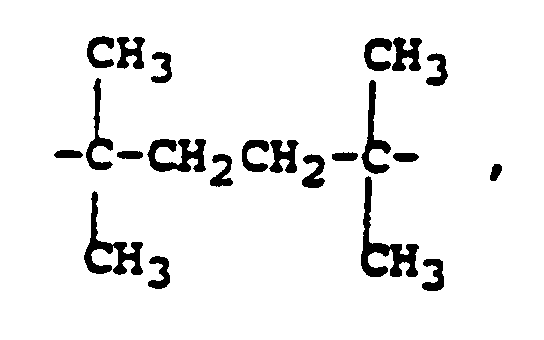
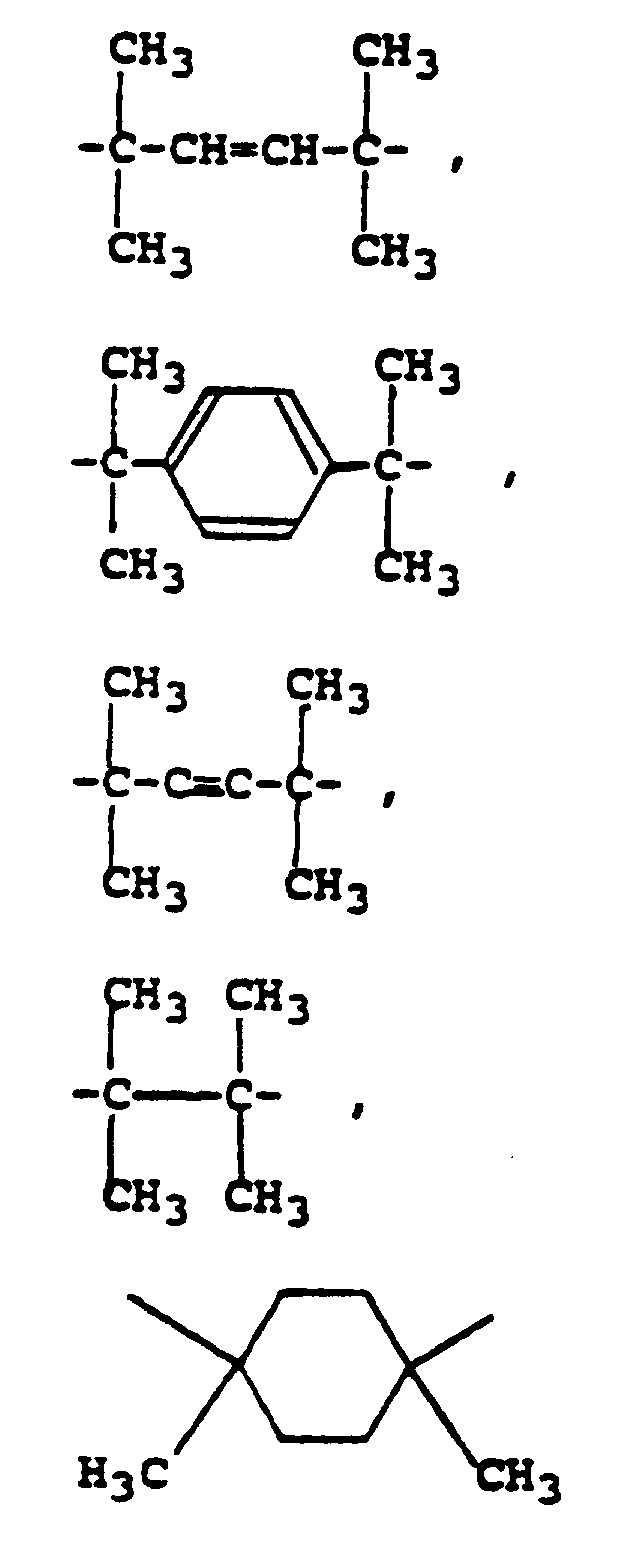
- Procédé selon la revendication 23, dans lequel ledit au moins un liant susceptible d'être décomposé comprend un polyester.
- Procédé selon la revendication 1, dans lequel ladite substance de contraste formatrice d'images, qui n'est pas sensibilisante pour l'ablation et qui n'est pas un corps noir, comprend un colorant, une substance absorbant les ultraviolets ou les infrarouges, une matière polymère ou un mélange de celles-ci.
- Procédé selon la revendication 35, dans lequel ladite substance de contraste formatrice d'images, qui n'est pas sensibilisante pour l'ablation et qui n'est pas un corps noir, comprend un colorant ou un pigment jaune, magenta ou cyan.
- Procédé selon la revendication 1, dans lequel ledit sensibilisateur comprend d'environ 5 % à 50 % en poids de ladite couche de finition essentiellement de même étendue.
- Support de formation d'images à transfert ablatif, qui comprend un substrat porteur et une couche de finition essentiellement de même étendue, ablative au rayonnement laser, ne réfléchissant pas ce rayonnement laser, ladite couche de finition essentiellement de même étendue, comprenant une quantité efficace pour réaliser le transfert ablatif d'un sensibilisateur non formateur d'images mais qui n'est pas un corps noir, qui absorbe mais qui ne réfléchit pas le rayonnement proche infrarouge à une vitesse suffisante pour effectuer le transfert de masse ablatif selon l'image de ladite couche de finition, celle-ci contenant au moins un liant susceptible d'être décomposé et une quantité formatrice d'images d'une substance de contraste qui n'est pas sensibilisante pour l'ablation.
- Support de formation d'images à transfert ablatif selon la revendication 38, dans lequel ledit au moins un liant susceptible d'être décomposé est susceptible d'être décomposé par catalyse acide.
- Support de formation d'images à transfert ablatif selon la revendication 39, dans lequel ladite couche de finition essentiellement de même étendue comprend, en outre, au moins un donneur d'atome d'hydrogène, favorisant la formation d'acide pour ladite décomposition catalysée par un acide.
- Support de formation d'images à transfert ablatif selon la revendication 38, dans lequel ledit au moins un liant susceptible d'être décomposé comprend une nitrocellulose, un polycarbonate, un polyuréthanne, un polyester, un polyorthoester ou un polyacétal.
- Support de formation d'images à transfert ablatif selon la revendication 40, dans lequel ledit au moins un donneur d'atome d'hydrogène comprend un alcool, un thiol, un phénol, une amine ou un hydrocarbure.
- Support de formation d'images à transfert ablatif selon la revendication 38, dans lequel ledit sensibilisateur amorce la formation d'un acide, lors de sa photo-excitation.
- Support de formation d'images à transfert ablatif selon la revendication 38, dans lequel ledit sensibilisateur est essentiellement incolore, dans la région du spectre visible.
- Support de formation d'images à transfert ablatif selon la revendication 41, dans lequel ledit au moins un liant susceptible d'être décomposé comprend une nitrocellulose.
- Support de formation d'images à transfert ablatif selon la revendication 41, dans lequel ledit au moins un liant susceptible d'être décomposé comprend un polycarbonate.
- Support de formation d'images à transfert ablatif selon la revendication 41, dans lequel ledit au moins un liant susceptible d'être décomposé comprend un polyuréthanne.
- Support de formation d'images à transfert ablatif selon la revendication 38, dans lequel ladite substance de contraste formatrice d'images, qui n'est pas sensibilisante pour l'ablation, comprend un colorant, une substance absorbant les ultraviolets ou les infrarouges, une matière polymère ou un mélange de celles-ci.
- Support de formation d'images à transfert ablatif selon la revendication 38, dans lequel ladite substance de contraste formatrice d'images, qui n'est pas sensibilisante pour l'ablation, comprend un colorant ou un pigment jaune, magenta ou cyan.
- Support de formation d'images à transfert ablatif selon la revendication 38, dans lequel ledit au moins un liant susceptible d'être décomposé comprend d'environ 50 % à 95 % en poids de ladite couche de finition, essentiellement de même étendue.
- Support de formation d'images à transfert ablatif selon la revendication 50, dans lequel ledit sensibilisateur comprend d'environ 5 % à 50 % en poids de ladite couche de finition essentiellement de même étendue.
- Support de formation d'images à transfert ablatif selon la revendication 38, dans lequel ledit substrat porteur du support comprend du verre, un polyester ou un polycarbonate.
- Support de formation d'images à transfert ablatif selon la revendication 38, dans lequel ledit substrat porteur du support comprend de l'aluminium ou du silicium.
- Organisation adoptée pour transférer un modèle contrastant d'information d'un support de formation d'images à transfert ablatif, sur un élément récepteur, comprenant (1) un support de formation d'images à transfert ablatif qui comprend un substrat porteur et une couche de finition ablative par rayonnement laser, ne réfléchissant pas le rayonnement laser, essentiellement de même étendue que le support, ladite couche supérieure comprenant une quantité efficace pour réaliser le transfert ablatif d'un sensibilisateur non formateur d'images, qui n'est pas un corps noir, qui absorbe mais qui ne réfléchit pas le rayonnement proche infrarouge à une vitesse suffisante pour effectuer le transfert de masse ablatif selon l'image de ladite couche supérieure, celle-ci contenant au moins un liant susceptible d'être décomposé et une quantité formatrice d'images d'une substance de contraste qui n'est pas sensibilisante pour l'ablation et qui n'est pas un corps noir, et (2) un élément récepteur, en registre contigu avec ce support.
- Organisation selon la revendication 54, dans laquelle ledit au moins un liant susceptible d'être décomposé est susceptible d'être décomposé par catalyse acide.
- Organisation selon la revendication 55, dans laquelle la couche de finition essentiellement de même étendue du support de formation d'images à transfert ablatif comprend, en outre, une quantité favorisant l'ablation d'au moins un donneur d'atome d'hydrogène, favorisant la formation d'acide effectuant ladite décomposition catalysée par un acide dudit au moins un liant susceptible d'être décompose.
- Organisation selon la revendication 54, dans laquelle ledit support de formation d'images à transfert ablatif est amené au contact direct face à face, en registre, avec ledit élément récepteur.
- Organisation selon la revendication 54, dans laquelle ledit élément récepteur comprend un papier journal, un papier, une matière plastique, un film, un métal ou un tissu.
- Organisation selon la revendication 54, dans laquelle ledit élément récepteur comprend une plaque d'impression photosensible.
- Organisation selon la revendication 54, dans laquelle ledit élément récepteur porte une couche de revêtement, faite d'adhésif ou d'agent d'encollage.
- Système pour transférer un modèle contrastant d'information d'un support de formation d'images à transfert ablatif sur un élément récepteur, comprenant l'organisation selon la revendication 54 et un moyen pour éclairer sélectivement une des faces du support de formation d'images à transfert ablatif avec le faisceau d'un rayonnement laser, correspondant audit modèle d'information.
Applications Claiming Priority (5)
| Application Number | Priority Date | Filing Date | Title |
|---|---|---|---|
| US33049789A | 1989-03-30 | 1989-03-30 | |
| US330497 | 1989-03-30 | ||
| US49764890A | 1990-03-23 | 1990-03-23 | |
| US497648 | 1990-03-23 | ||
| PCT/US1990/001635 WO1990012342A1 (fr) | 1989-03-30 | 1990-03-30 | Revetement absorbant des lasers infrarouges proches et son procede d'utilisation en mise en images et tirage en couleurs |
Publications (4)
| Publication Number | Publication Date |
|---|---|
| EP0465562A1 EP0465562A1 (fr) | 1992-01-15 |
| EP0465562A4 EP0465562A4 (en) | 1992-04-08 |
| EP0465562B1 EP0465562B1 (fr) | 1997-03-05 |
| EP0465562B2 true EP0465562B2 (fr) | 2000-01-12 |
Family
ID=26987303
Family Applications (1)
| Application Number | Title | Priority Date | Filing Date |
|---|---|---|---|
| EP90905861A Expired - Lifetime EP0465562B2 (fr) | 1989-03-30 | 1990-03-30 | Revetement absorbant des lasers infrarouges proches et son procede d'utilisation en mise en images et tirage en couleurs |
Country Status (9)
| Country | Link |
|---|---|
| EP (1) | EP0465562B2 (fr) |
| JP (1) | JP3213311B2 (fr) |
| AT (1) | ATE149429T1 (fr) |
| AU (2) | AU652340B2 (fr) |
| CA (1) | CA2049362C (fr) |
| DE (1) | DE69030083T3 (fr) |
| DK (1) | DK0465562T4 (fr) |
| ES (1) | ES2097758T5 (fr) |
| WO (1) | WO1990012342A1 (fr) |
Families Citing this family (40)
| Publication number | Priority date | Publication date | Assignee | Title |
|---|---|---|---|---|
| US5400147A (en) * | 1992-04-10 | 1995-03-21 | Eastman Kodak Company | Method and apparatus for halftone reproduction of continuous tone radiographic images |
| GB9214304D0 (en) | 1992-07-06 | 1992-08-19 | Du Pont Uk | Improvements in or relating to image formation |
| US5719009A (en) * | 1992-08-07 | 1998-02-17 | E. I. Du Pont De Nemours And Company | Laser ablatable photosensitive elements utilized to make flexographic printing plates |
| US5262275A (en) | 1992-08-07 | 1993-11-16 | E. I. Du Pont De Nemours And Company | Flexographic printing element having an IR ablatable layer and process for making a flexographic printing plate |
| US5278023A (en) * | 1992-11-16 | 1994-01-11 | Minnesota Mining And Manufacturing Company | Propellant-containing thermal transfer donor elements |
| GB9225724D0 (en) | 1992-12-09 | 1993-02-03 | Minnesota Mining & Mfg | Transfer imaging elements |
| US6916596B2 (en) | 1993-06-25 | 2005-07-12 | Michael Wen-Chein Yang | Laser imaged printing plates |
| DE4339010C2 (de) * | 1993-06-25 | 2000-05-18 | Pt Sub Inc | Photohärtbares Erzeugnis für Druckplatten |
| GB9322705D0 (en) * | 1993-11-04 | 1993-12-22 | Minnesota Mining & Mfg | Lithographic printing plates |
| US6461787B2 (en) | 1993-12-02 | 2002-10-08 | Minnesota Mining And Manufacturing Company | Transfer imaging elements |
| US5780200A (en) * | 1994-04-19 | 1998-07-14 | Daicel Chemical Industries, Ltd. | Printing plate materials and method of producing the same |
| US5693447A (en) | 1995-02-17 | 1997-12-02 | Konica Corporation | Image forming material, method of preparing the same and image forming method employing the same |
| GB9617416D0 (en) * | 1996-08-20 | 1996-10-02 | Minnesota Mining & Mfg | Thermal bleaching of infrared dyes |
| GB9508031D0 (en) * | 1995-04-20 | 1995-06-07 | Minnesota Mining & Mfg | UV-absorbing media bleachable by IR-radiation |
| US6238837B1 (en) | 1995-05-01 | 2001-05-29 | E.I. Du Pont De Nemours And Company | Flexographic element having an infrared ablatable layer |
| US6143470A (en) * | 1995-06-23 | 2000-11-07 | Nguyen; My T. | Digital laser imagable lithographic printing plates |
| US5766819A (en) * | 1995-11-29 | 1998-06-16 | E. I. Dupont De Nemours And Company | Donor elements, assemblages, and associated processes with flexible ejection layer(s) for laser-induced thermal transfer |
| US6031556A (en) * | 1996-07-29 | 2000-02-29 | Eastman Kodak Company | Overcoat for thermal imaging process |
| US5814430A (en) * | 1996-09-23 | 1998-09-29 | Agfa-Gevaert, N.V. | Method for the formation of an improved heat mode image |
| EP0831364B1 (fr) * | 1996-09-23 | 2003-12-17 | Agfa-Gevaert | Procédé pour la formation d'une image par voie thermique |
| US6143451A (en) * | 1996-11-26 | 2000-11-07 | E. I. Du Pont De Nemours And Company | Imaged laserable assemblages and associated processes with high speed and durable image-transfer characteristics for laser-induced thermal transfer |
| DE19729067A1 (de) | 1997-07-08 | 1999-01-14 | Agfa Gevaert Ag | Infrarot-bebilderbares Aufzeichnungsmaterial und daraus hergestellte Offsetdruckplatte |
| US5840463A (en) * | 1997-07-14 | 1998-11-24 | E. I. Du Pont De Nemours And Company | Photosensitive donor element assemblages and associated process for laser-induced thermal transfer |
| US5856061A (en) * | 1997-08-14 | 1999-01-05 | Minnesota Mining And Manufacturing Company | Production of color proofs and printing plates |
| EP1017570B1 (fr) * | 1997-09-02 | 2004-08-25 | Kodak Polychrome Graphics LLC | Donneurs de noir, utiles dans un transfert thermique adresse par laser |
| DE19739299A1 (de) * | 1997-09-08 | 1999-03-11 | Agfa Gevaert Ag | Weißlicht-unempfindliches, thermisch bebilderbares Material und Verfahren zur Herstellung von Druckformen für den Offsetdruck |
| JPH11123871A (ja) | 1997-10-22 | 1999-05-11 | Konica Corp | 画像形成材料及びその製造方法と画像形成装置 |
| GB0127896D0 (en) | 2001-11-21 | 2002-01-16 | Eastman Kodak Co | Solid particle dispersions and their use in the preparation of laser thermal media |
| JP2007506586A (ja) | 2003-09-26 | 2007-03-22 | コダック ポリクロウム グラフィクス リミティド ライアビリティ カンパニー | 熱画像形成用受容要素のためのビグアニド漂白剤 |
| US7229726B2 (en) | 2003-12-02 | 2007-06-12 | E. I. Du Pont De Nemours And Company | Thermal imaging process and products made therefrom |
| US8142987B2 (en) | 2004-04-10 | 2012-03-27 | Eastman Kodak Company | Method of producing a relief image for printing |
| US6855474B1 (en) | 2004-05-03 | 2005-02-15 | Kodak Polychrome Graphics Llc | Laser thermal color donors with improved aging characteristics |
| US7317577B2 (en) | 2004-05-14 | 2008-01-08 | Eastman Kodak Company | Methods for producing a black matrix on a lenticular lens |
| US8796583B2 (en) | 2004-09-17 | 2014-08-05 | Eastman Kodak Company | Method of forming a structured surface using ablatable radiation sensitive material |
| JP4914788B2 (ja) * | 2006-09-01 | 2012-04-11 | 富士フイルム株式会社 | レーザー彫刻型フレキソ印刷版原版 |
| WO2010087742A1 (fr) * | 2009-01-28 | 2010-08-05 | Nexam Chemical Ab | Polycarbonate acétylénique aromatique |
| GB201009847D0 (en) | 2010-06-11 | 2010-07-21 | Dzp Technologies Ltd | Deposition method, apparatus, printed object and uses |
| DE102012017010A1 (de) | 2012-08-28 | 2012-10-31 | Heidelberger Druckmaschinen Ag | Immonium-Absorber für Druckfarben und Lacke |
| EP3530478B1 (fr) * | 2016-10-19 | 2021-06-30 | Canon Kabushiki Kaisha | Feuille pour enregistrement par transfert thermique |
| WO2021024832A1 (fr) * | 2019-08-02 | 2021-02-11 | 三菱瓦斯化学株式会社 | Résine de polycarbonate |
Family Cites Families (12)
| Publication number | Priority date | Publication date | Assignee | Title |
|---|---|---|---|---|
| DE2040665C3 (de) * | 1970-08-17 | 1979-01-04 | Agfa-Gevaert Ag, 5090 Leverkusen | Verfahren zur Herstellung farbiger Papierbilder und Vorrichtung zur Durchführung des Verfahrens |
| DE2043140C3 (de) * | 1970-08-31 | 1981-06-19 | Agfa-Gevaert Ag, 5090 Leverkusen | Verfahren zur Herstellung einer Flachdruckform und Vorrichtung zur Durchführung des Verfahrens |
| US3964389A (en) * | 1974-01-17 | 1976-06-22 | Scott Paper Company | Printing plate by laser transfer |
| US4501808A (en) * | 1982-08-30 | 1985-02-26 | Canon Kabushiki Kaisha | Recording medium and process employing a photosensitive organic film |
| DE3373585D1 (en) * | 1982-12-31 | 1987-10-15 | Minnesota Mining & Mfg | Recording medium for optical data storage |
| JPS59174830A (ja) * | 1983-03-25 | 1984-10-03 | Fuji Photo Film Co Ltd | 熱現像感光材料 |
| US4700001A (en) * | 1983-12-16 | 1987-10-13 | Fuji Xerox Co., Ltd. | Novel squarylium compound and photoreceptor containing same |
| JPS60255491A (ja) * | 1984-06-01 | 1985-12-17 | Daicel Chem Ind Ltd | レ−ザ−記録用フイルム |
| US4629670A (en) * | 1984-06-12 | 1986-12-16 | Canon Kabushiki Kaisha | Photoconductive film of azulenium salt and electrophotographic photosensitive member |
| JPS61109056A (ja) * | 1984-11-01 | 1986-05-27 | Mitsubishi Chem Ind Ltd | 積層型電子写真感光体 |
| US4634652A (en) * | 1985-07-25 | 1987-01-06 | American Hoechst Corporation | Overlay light-sensitive proofing film with transparent aluminum oxide and transparent magnesium fluoride layers therein |
| JPH0654394B2 (ja) * | 1986-11-14 | 1994-07-20 | 富士写真フイルム株式会社 | 光導電性組成物 |
-
1990
- 1990-03-30 WO PCT/US1990/001635 patent/WO1990012342A1/fr not_active Ceased
- 1990-03-30 DK DK90905861T patent/DK0465562T4/da active
- 1990-03-30 JP JP50555290A patent/JP3213311B2/ja not_active Expired - Lifetime
- 1990-03-30 DE DE69030083T patent/DE69030083T3/de not_active Expired - Lifetime
- 1990-03-30 AU AU53558/90A patent/AU652340B2/en not_active Ceased
- 1990-03-30 AT AT90905861T patent/ATE149429T1/de not_active IP Right Cessation
- 1990-03-30 ES ES90905861T patent/ES2097758T5/es not_active Expired - Lifetime
- 1990-03-30 CA CA002049362A patent/CA2049362C/fr not_active Expired - Lifetime
- 1990-03-30 EP EP90905861A patent/EP0465562B2/fr not_active Expired - Lifetime
-
1994
- 1994-11-25 AU AU79038/94A patent/AU682224B2/en not_active Ceased
Also Published As
| Publication number | Publication date |
|---|---|
| JPH04506709A (ja) | 1992-11-19 |
| DE69030083D1 (de) | 1997-04-10 |
| DK0465562T3 (da) | 1997-08-18 |
| AU652340B2 (en) | 1994-08-25 |
| CA2049362A1 (fr) | 1990-10-01 |
| AU7903894A (en) | 1995-02-23 |
| CA2049362C (fr) | 2001-07-03 |
| WO1990012342A1 (fr) | 1990-10-18 |
| DE69030083T3 (de) | 2002-03-14 |
| JP3213311B2 (ja) | 2001-10-02 |
| EP0465562A1 (fr) | 1992-01-15 |
| DE69030083T2 (de) | 1997-06-12 |
| EP0465562B1 (fr) | 1997-03-05 |
| ES2097758T5 (es) | 2000-06-01 |
| AU5355890A (en) | 1990-11-05 |
| ATE149429T1 (de) | 1997-03-15 |
| EP0465562A4 (en) | 1992-04-08 |
| DK0465562T4 (da) | 2000-04-17 |
| ES2097758T3 (es) | 1997-04-16 |
| AU682224B2 (en) | 1997-09-25 |
Similar Documents
| Publication | Publication Date | Title |
|---|---|---|
| EP0465562B2 (fr) | Revetement absorbant des lasers infrarouges proches et son procede d'utilisation en mise en images et tirage en couleurs | |
| US5156938A (en) | Ablation-transfer imaging/recording | |
| EP0615860B1 (fr) | Transfert thermique de colorants par laser utilisant des substrats enduits par métaux noires | |
| US5278023A (en) | Propellant-containing thermal transfer donor elements | |
| EP0552251B2 (fr) | Imagerie/enregistrement par ablation-transfert perfectionnes | |
| US6171766B1 (en) | Laser absorbable photobleachable compositions | |
| US5401618A (en) | Infrared-absorbing cyanine dyes for laser ablative imaging | |
| CA2018040A1 (fr) | Colorants a base de bis(chalcogenopyrylo)polymethine absorbant les infrarouges pour element donneur de colorant, utilise dans le transfert thermique de colorant avec induction au laser | |
| CA2018038A1 (fr) | Colorants a base de bis(aminoaryl)polymethine absorbant les infrarouges pour element donneur de colorant, utilise dans le transfert thermique de colorant avec induction au laser | |
| CA2135657A1 (fr) | Substances pour produire des images en couleurs structurees et applications de ces substances | |
| EP1017570B1 (fr) | Donneurs de noir, utiles dans un transfert thermique adresse par laser | |
| US5219823A (en) | Stabilizers for cyanine IR dyes in donor element for laser-induced thermal dye transfer | |
| US5891602A (en) | Dye donor binder for laser-induced thermal dye transfer | |
| US6537720B1 (en) | Ablation-transfer imaging/recording | |
| US5358923A (en) | Color sheet and color transfer method using the same | |
| EP1680281A1 (fr) | Transfert de la couche de finition protectrice vers une image de transfert de colorant thermique | |
| CA2018235A1 (fr) | Colorant de polymethine a pont indene absorbant dans l'infrarouge pour l'element donneur de colorant utilise dans le transfert thermique de colorant induit par le laser | |
| US5219822A (en) | Non-volatile tertiary amines in donor for laser-induced thermal dye transfer | |
| EP0568267B1 (fr) | Matériaux pour le transfert par la chaleur | |
| GB2348291A (en) | Polymeric absorber for laser-colorant transfer |
Legal Events
| Date | Code | Title | Description |
|---|---|---|---|
| PUAI | Public reference made under article 153(3) epc to a published international application that has entered the european phase |
Free format text: ORIGINAL CODE: 0009012 |
|
| 17P | Request for examination filed |
Effective date: 19910927 |
|
| AK | Designated contracting states |
Kind code of ref document: A1 Designated state(s): AT BE CH DE DK ES FR GB IT LI LU NL SE |
|
| RIN1 | Information on inventor provided before grant (corrected) |
Inventor name: FOLEY, DIANE, M. Inventor name: BENNETT, EVERETT, W. Inventor name: SLIFKIN, SAM, C. |
|
| A4 | Supplementary search report drawn up and despatched |
Effective date: 19920220 |
|
| AK | Designated contracting states |
Kind code of ref document: A4 Designated state(s): AT BE CH DE DK ES FR GB IT LI LU NL SE |
|
| RAP1 | Party data changed (applicant data changed or rights of an application transferred) |
Owner name: GRAPHICS TECHNOLOGY INTERNATIONAL INC. |
|
| 17Q | First examination report despatched |
Effective date: 19940411 |
|
| RAP1 | Party data changed (applicant data changed or rights of an application transferred) |
Owner name: REXHAM GRAPHICS, INC. |
|
| RAP1 | Party data changed (applicant data changed or rights of an application transferred) |
Owner name: REXHAM GRAPHICS INC. |
|
| GRAG | Despatch of communication of intention to grant |
Free format text: ORIGINAL CODE: EPIDOS AGRA |
|
| GRAH | Despatch of communication of intention to grant a patent |
Free format text: ORIGINAL CODE: EPIDOS IGRA |
|
| GRAH | Despatch of communication of intention to grant a patent |
Free format text: ORIGINAL CODE: EPIDOS IGRA |
|
| GRAA | (expected) grant |
Free format text: ORIGINAL CODE: 0009210 |
|
| AK | Designated contracting states |
Kind code of ref document: B1 Designated state(s): AT BE CH DE DK ES FR GB IT LI LU NL SE |
|
| REF | Corresponds to: |
Ref document number: 149429 Country of ref document: AT Date of ref document: 19970315 Kind code of ref document: T |
|
| ITF | It: translation for a ep patent filed | ||
| REG | Reference to a national code |
Ref country code: CH Ref legal event code: NV Representative=s name: E. BLUM & CO. PATENTANWAELTE Ref country code: CH Ref legal event code: EP |
|
| REF | Corresponds to: |
Ref document number: 69030083 Country of ref document: DE Date of ref document: 19970410 |
|
| REG | Reference to a national code |
Ref country code: ES Ref legal event code: FG2A Ref document number: 2097758 Country of ref document: ES Kind code of ref document: T3 |
|
| ET | Fr: translation filed | ||
| REG | Reference to a national code |
Ref country code: DK Ref legal event code: T3 |
|
| PLBQ | Unpublished change to opponent data |
Free format text: ORIGINAL CODE: EPIDOS OPPO |
|
| PLBI | Opposition filed |
Free format text: ORIGINAL CODE: 0009260 |
|
| PLBF | Reply of patent proprietor to notice(s) of opposition |
Free format text: ORIGINAL CODE: EPIDOS OBSO |
|
| 26 | Opposition filed |
Opponent name: IMATION CORP Effective date: 19971205 |
|
| NLR1 | Nl: opposition has been filed with the epo |
Opponent name: IMATION CORP |
|
| PLBF | Reply of patent proprietor to notice(s) of opposition |
Free format text: ORIGINAL CODE: EPIDOS OBSO |
|
| REG | Reference to a national code |
Ref country code: CH Ref legal event code: PUE Owner name: REXHAM GRAPHICS INC. TRANSFER- POLAROID CORPORATIO |
|
| REG | Reference to a national code |
Ref country code: FR Ref legal event code: TP |
|
| NLS | Nl: assignments of ep-patents |
Owner name: POLAROID CORPORATION |
|
| REG | Reference to a national code |
Ref country code: GB Ref legal event code: 732E |
|
| REG | Reference to a national code |
Ref country code: ES Ref legal event code: PC2A |
|
| RAP2 | Party data changed (patent owner data changed or rights of a patent transferred) |
Owner name: POLAROID CORPORATION |
|
| PLAW | Interlocutory decision in opposition |
Free format text: ORIGINAL CODE: EPIDOS IDOP |
|
| NLT2 | Nl: modifications (of names), taken from the european patent patent bulletin |
Owner name: POLAROID CORPORATION |
|
| PLAW | Interlocutory decision in opposition |
Free format text: ORIGINAL CODE: EPIDOS IDOP |
|
| PUAH | Patent maintained in amended form |
Free format text: ORIGINAL CODE: 0009272 |
|
| STAA | Information on the status of an ep patent application or granted ep patent |
Free format text: STATUS: PATENT MAINTAINED AS AMENDED |
|
| 27A | Patent maintained in amended form |
Effective date: 20000112 |
|
| AK | Designated contracting states |
Kind code of ref document: B2 Designated state(s): AT BE CH DE DK ES FR GB IT LI LU NL SE |
|
| ITF | It: translation for a ep patent filed | ||
| REG | Reference to a national code |
Ref country code: CH Ref legal event code: AEN Free format text: AUFRECHTERHALTUNG DES PATENTES IN GEAENDERTER FORM |
|
| NLR2 | Nl: decision of opposition | ||
| REG | Reference to a national code |
Ref country code: DK Ref legal event code: T4 |
|
| ET3 | Fr: translation filed ** decision concerning opposition | ||
| NLR3 | Nl: receipt of modified translations in the netherlands language after an opposition procedure | ||
| REG | Reference to a national code |
Ref country code: ES Ref legal event code: DC2A Kind code of ref document: T5 Effective date: 20000412 |
|
| REG | Reference to a national code |
Ref country code: CH Ref legal event code: PUE Owner name: POLAROID CORPORATION TRANSFER- PGI GRAPHICS IMAGIN |
|
| REG | Reference to a national code |
Ref country code: FR Ref legal event code: TP |
|
| NLS | Nl: assignments of ep-patents |
Owner name: PGI GRAPHICS IMAGING LLC |
|
| REG | Reference to a national code |
Ref country code: ES Ref legal event code: PC2A |
|
| REG | Reference to a national code |
Ref country code: GB Ref legal event code: 732E |
|
| REG | Reference to a national code |
Ref country code: GB Ref legal event code: IF02 |
|
| PGFP | Annual fee paid to national office [announced via postgrant information from national office to epo] |
Ref country code: LU Payment date: 20020610 Year of fee payment: 13 |
|
| PGFP | Annual fee paid to national office [announced via postgrant information from national office to epo] |
Ref country code: SE Payment date: 20030317 Year of fee payment: 14 |
|
| PGFP | Annual fee paid to national office [announced via postgrant information from national office to epo] |
Ref country code: AT Payment date: 20030318 Year of fee payment: 14 |
|
| PGFP | Annual fee paid to national office [announced via postgrant information from national office to epo] |
Ref country code: CH Payment date: 20030319 Year of fee payment: 14 |
|
| PGFP | Annual fee paid to national office [announced via postgrant information from national office to epo] |
Ref country code: DK Payment date: 20030325 Year of fee payment: 14 |
|
| PG25 | Lapsed in a contracting state [announced via postgrant information from national office to epo] |
Ref country code: LU Free format text: LAPSE BECAUSE OF NON-PAYMENT OF DUE FEES Effective date: 20030330 |
|
| PG25 | Lapsed in a contracting state [announced via postgrant information from national office to epo] |
Ref country code: AT Free format text: LAPSE BECAUSE OF NON-PAYMENT OF DUE FEES Effective date: 20040330 |
|
| PG25 | Lapsed in a contracting state [announced via postgrant information from national office to epo] |
Ref country code: SE Free format text: LAPSE BECAUSE OF NON-PAYMENT OF DUE FEES Effective date: 20040331 Ref country code: DK Free format text: LAPSE BECAUSE OF NON-PAYMENT OF DUE FEES Effective date: 20040331 Ref country code: CH Free format text: LAPSE BECAUSE OF NON-PAYMENT OF DUE FEES Effective date: 20040331 Ref country code: LI Free format text: LAPSE BECAUSE OF NON-PAYMENT OF DUE FEES Effective date: 20040331 |
|
| EUG | Se: european patent has lapsed | ||
| REG | Reference to a national code |
Ref country code: CH Ref legal event code: PL |
|
| PG25 | Lapsed in a contracting state [announced via postgrant information from national office to epo] |
Ref country code: IT Free format text: LAPSE BECAUSE OF NON-PAYMENT OF DUE FEES;WARNING: LAPSES OF ITALIAN PATENTS WITH EFFECTIVE DATE BEFORE 2007 MAY HAVE OCCURRED AT ANY TIME BEFORE 2007. THE CORRECT EFFECTIVE DATE MAY BE DIFFERENT FROM THE ONE RECORDED. Effective date: 20050330 |
|
| PGFP | Annual fee paid to national office [announced via postgrant information from national office to epo] |
Ref country code: ES Payment date: 20080328 Year of fee payment: 19 |
|
| PGFP | Annual fee paid to national office [announced via postgrant information from national office to epo] |
Ref country code: NL Payment date: 20080318 Year of fee payment: 19 |
|
| PGFP | Annual fee paid to national office [announced via postgrant information from national office to epo] |
Ref country code: FR Payment date: 20080314 Year of fee payment: 19 |
|
| PGFP | Annual fee paid to national office [announced via postgrant information from national office to epo] |
Ref country code: GB Payment date: 20090325 Year of fee payment: 20 |
|
| PGFP | Annual fee paid to national office [announced via postgrant information from national office to epo] |
Ref country code: DE Payment date: 20090320 Year of fee payment: 20 |
|
| PGFP | Annual fee paid to national office [announced via postgrant information from national office to epo] |
Ref country code: BE Payment date: 20090430 Year of fee payment: 20 |
|
| NLV4 | Nl: lapsed or anulled due to non-payment of the annual fee |
Effective date: 20091001 |
|
| REG | Reference to a national code |
Ref country code: FR Ref legal event code: ST Effective date: 20091130 |
|
| PG25 | Lapsed in a contracting state [announced via postgrant information from national office to epo] |
Ref country code: NL Free format text: LAPSE BECAUSE OF NON-PAYMENT OF DUE FEES Effective date: 20091001 |
|
| BE20 | Be: patent expired |
Owner name: *PGI GRAPHICS IMAGING LLC Effective date: 20100330 |
|
| REG | Reference to a national code |
Ref country code: GB Ref legal event code: PE20 Expiry date: 20100329 |
|
| PG25 | Lapsed in a contracting state [announced via postgrant information from national office to epo] |
Ref country code: FR Free format text: LAPSE BECAUSE OF NON-PAYMENT OF DUE FEES Effective date: 20091123 |
|
| REG | Reference to a national code |
Ref country code: ES Ref legal event code: FD2A Effective date: 20090331 |
|
| PG25 | Lapsed in a contracting state [announced via postgrant information from national office to epo] |
Ref country code: GB Free format text: LAPSE BECAUSE OF EXPIRATION OF PROTECTION Effective date: 20100329 |
|
| PG25 | Lapsed in a contracting state [announced via postgrant information from national office to epo] |
Ref country code: ES Free format text: LAPSE BECAUSE OF NON-PAYMENT OF DUE FEES Effective date: 20090331 |
|
| PG25 | Lapsed in a contracting state [announced via postgrant information from national office to epo] |
Ref country code: DE Free format text: LAPSE BECAUSE OF EXPIRATION OF PROTECTION Effective date: 20100330 |