EP0466094A2 - Electrophotographic photosensitive member - Google Patents
Electrophotographic photosensitive member Download PDFInfo
- Publication number
- EP0466094A2 EP0466094A2 EP91111402A EP91111402A EP0466094A2 EP 0466094 A2 EP0466094 A2 EP 0466094A2 EP 91111402 A EP91111402 A EP 91111402A EP 91111402 A EP91111402 A EP 91111402A EP 0466094 A2 EP0466094 A2 EP 0466094A2
- Authority
- EP
- European Patent Office
- Prior art keywords
- substituted
- group
- unsubstituted
- ring group
- aromatic ring
- Prior art date
- Legal status (The legal status is an assumption and is not a legal conclusion. Google has not performed a legal analysis and makes no representation as to the accuracy of the status listed.)
- Granted
Links
Images

Classifications
-
- G—PHYSICS
- G03—PHOTOGRAPHY; CINEMATOGRAPHY; ANALOGOUS TECHNIQUES USING WAVES OTHER THAN OPTICAL WAVES; ELECTROGRAPHY; HOLOGRAPHY
- G03G—ELECTROGRAPHY; ELECTROPHOTOGRAPHY; MAGNETOGRAPHY
- G03G5/00—Recording-members for original recording by exposure, e.g. to light, to heat or to electrons; Manufacture thereof; Selection of materials therefor
- G03G5/02—Charge-receiving layers
- G03G5/04—Photoconductive layers; Charge-generation layers or charge-transporting layers; Additives therefor; Binders therefor
- G03G5/06—Photoconductive layers; Charge-generation layers or charge-transporting layers; Additives therefor; Binders therefor characterised by the photoconductive material being organic
- G03G5/0664—Dyes
- G03G5/0666—Dyes containing a methine or polymethine group
- G03G5/0672—Dyes containing a methine or polymethine group containing two or more methine or polymethine groups
-
- G—PHYSICS
- G03—PHOTOGRAPHY; CINEMATOGRAPHY; ANALOGOUS TECHNIQUES USING WAVES OTHER THAN OPTICAL WAVES; ELECTROGRAPHY; HOLOGRAPHY
- G03G—ELECTROGRAPHY; ELECTROPHOTOGRAPHY; MAGNETOGRAPHY
- G03G5/00—Recording-members for original recording by exposure, e.g. to light, to heat or to electrons; Manufacture thereof; Selection of materials therefor
- G03G5/02—Charge-receiving layers
- G03G5/04—Photoconductive layers; Charge-generation layers or charge-transporting layers; Additives therefor; Binders therefor
- G03G5/06—Photoconductive layers; Charge-generation layers or charge-transporting layers; Additives therefor; Binders therefor characterised by the photoconductive material being organic
- G03G5/0601—Acyclic or carbocyclic compounds
- G03G5/0605—Carbocyclic compounds
-
- G—PHYSICS
- G03—PHOTOGRAPHY; CINEMATOGRAPHY; ANALOGOUS TECHNIQUES USING WAVES OTHER THAN OPTICAL WAVES; ELECTROGRAPHY; HOLOGRAPHY
- G03G—ELECTROGRAPHY; ELECTROPHOTOGRAPHY; MAGNETOGRAPHY
- G03G5/00—Recording-members for original recording by exposure, e.g. to light, to heat or to electrons; Manufacture thereof; Selection of materials therefor
- G03G5/02—Charge-receiving layers
- G03G5/04—Photoconductive layers; Charge-generation layers or charge-transporting layers; Additives therefor; Binders therefor
- G03G5/06—Photoconductive layers; Charge-generation layers or charge-transporting layers; Additives therefor; Binders therefor characterised by the photoconductive material being organic
- G03G5/0601—Acyclic or carbocyclic compounds
- G03G5/0605—Carbocyclic compounds
- G03G5/0607—Carbocyclic compounds containing at least one non-six-membered ring
-
- G—PHYSICS
- G03—PHOTOGRAPHY; CINEMATOGRAPHY; ANALOGOUS TECHNIQUES USING WAVES OTHER THAN OPTICAL WAVES; ELECTROGRAPHY; HOLOGRAPHY
- G03G—ELECTROGRAPHY; ELECTROPHOTOGRAPHY; MAGNETOGRAPHY
- G03G5/00—Recording-members for original recording by exposure, e.g. to light, to heat or to electrons; Manufacture thereof; Selection of materials therefor
- G03G5/02—Charge-receiving layers
- G03G5/04—Photoconductive layers; Charge-generation layers or charge-transporting layers; Additives therefor; Binders therefor
- G03G5/06—Photoconductive layers; Charge-generation layers or charge-transporting layers; Additives therefor; Binders therefor characterised by the photoconductive material being organic
- G03G5/0601—Acyclic or carbocyclic compounds
- G03G5/0612—Acyclic or carbocyclic compounds containing nitrogen
-
- G—PHYSICS
- G03—PHOTOGRAPHY; CINEMATOGRAPHY; ANALOGOUS TECHNIQUES USING WAVES OTHER THAN OPTICAL WAVES; ELECTROGRAPHY; HOLOGRAPHY
- G03G—ELECTROGRAPHY; ELECTROPHOTOGRAPHY; MAGNETOGRAPHY
- G03G5/00—Recording-members for original recording by exposure, e.g. to light, to heat or to electrons; Manufacture thereof; Selection of materials therefor
- G03G5/02—Charge-receiving layers
- G03G5/04—Photoconductive layers; Charge-generation layers or charge-transporting layers; Additives therefor; Binders therefor
- G03G5/06—Photoconductive layers; Charge-generation layers or charge-transporting layers; Additives therefor; Binders therefor characterised by the photoconductive material being organic
- G03G5/0622—Heterocyclic compounds
- G03G5/0624—Heterocyclic compounds containing one hetero ring
- G03G5/0627—Heterocyclic compounds containing one hetero ring being five-membered
- G03G5/0629—Heterocyclic compounds containing one hetero ring being five-membered containing one hetero atom
-
- G—PHYSICS
- G03—PHOTOGRAPHY; CINEMATOGRAPHY; ANALOGOUS TECHNIQUES USING WAVES OTHER THAN OPTICAL WAVES; ELECTROGRAPHY; HOLOGRAPHY
- G03G—ELECTROGRAPHY; ELECTROPHOTOGRAPHY; MAGNETOGRAPHY
- G03G5/00—Recording-members for original recording by exposure, e.g. to light, to heat or to electrons; Manufacture thereof; Selection of materials therefor
- G03G5/02—Charge-receiving layers
- G03G5/04—Photoconductive layers; Charge-generation layers or charge-transporting layers; Additives therefor; Binders therefor
- G03G5/06—Photoconductive layers; Charge-generation layers or charge-transporting layers; Additives therefor; Binders therefor characterised by the photoconductive material being organic
- G03G5/0622—Heterocyclic compounds
- G03G5/0644—Heterocyclic compounds containing two or more hetero rings
- G03G5/0646—Heterocyclic compounds containing two or more hetero rings in the same ring system
- G03G5/0648—Heterocyclic compounds containing two or more hetero rings in the same ring system containing two relevant rings
-
- G—PHYSICS
- G03—PHOTOGRAPHY; CINEMATOGRAPHY; ANALOGOUS TECHNIQUES USING WAVES OTHER THAN OPTICAL WAVES; ELECTROGRAPHY; HOLOGRAPHY
- G03G—ELECTROGRAPHY; ELECTROPHOTOGRAPHY; MAGNETOGRAPHY
- G03G5/00—Recording-members for original recording by exposure, e.g. to light, to heat or to electrons; Manufacture thereof; Selection of materials therefor
- G03G5/02—Charge-receiving layers
- G03G5/04—Photoconductive layers; Charge-generation layers or charge-transporting layers; Additives therefor; Binders therefor
- G03G5/06—Photoconductive layers; Charge-generation layers or charge-transporting layers; Additives therefor; Binders therefor characterised by the photoconductive material being organic
- G03G5/0622—Heterocyclic compounds
- G03G5/0644—Heterocyclic compounds containing two or more hetero rings
- G03G5/0646—Heterocyclic compounds containing two or more hetero rings in the same ring system
- G03G5/065—Heterocyclic compounds containing two or more hetero rings in the same ring system containing three relevant rings
-
- G—PHYSICS
- G03—PHOTOGRAPHY; CINEMATOGRAPHY; ANALOGOUS TECHNIQUES USING WAVES OTHER THAN OPTICAL WAVES; ELECTROGRAPHY; HOLOGRAPHY
- G03G—ELECTROGRAPHY; ELECTROPHOTOGRAPHY; MAGNETOGRAPHY
- G03G5/00—Recording-members for original recording by exposure, e.g. to light, to heat or to electrons; Manufacture thereof; Selection of materials therefor
- G03G5/02—Charge-receiving layers
- G03G5/04—Photoconductive layers; Charge-generation layers or charge-transporting layers; Additives therefor; Binders therefor
- G03G5/06—Photoconductive layers; Charge-generation layers or charge-transporting layers; Additives therefor; Binders therefor characterised by the photoconductive material being organic
- G03G5/0622—Heterocyclic compounds
- G03G5/0644—Heterocyclic compounds containing two or more hetero rings
- G03G5/0661—Heterocyclic compounds containing two or more hetero rings in different ring systems, each system containing at least one hetero ring
-
- G—PHYSICS
- G03—PHOTOGRAPHY; CINEMATOGRAPHY; ANALOGOUS TECHNIQUES USING WAVES OTHER THAN OPTICAL WAVES; ELECTROGRAPHY; HOLOGRAPHY
- G03G—ELECTROGRAPHY; ELECTROPHOTOGRAPHY; MAGNETOGRAPHY
- G03G5/00—Recording-members for original recording by exposure, e.g. to light, to heat or to electrons; Manufacture thereof; Selection of materials therefor
- G03G5/02—Charge-receiving layers
- G03G5/04—Photoconductive layers; Charge-generation layers or charge-transporting layers; Additives therefor; Binders therefor
- G03G5/06—Photoconductive layers; Charge-generation layers or charge-transporting layers; Additives therefor; Binders therefor characterised by the photoconductive material being organic
- G03G5/0664—Dyes
- G03G5/0666—Dyes containing a methine or polymethine group
- G03G5/0668—Dyes containing a methine or polymethine group containing only one methine or polymethine group
-
- G—PHYSICS
- G03—PHOTOGRAPHY; CINEMATOGRAPHY; ANALOGOUS TECHNIQUES USING WAVES OTHER THAN OPTICAL WAVES; ELECTROGRAPHY; HOLOGRAPHY
- G03G—ELECTROGRAPHY; ELECTROPHOTOGRAPHY; MAGNETOGRAPHY
- G03G5/00—Recording-members for original recording by exposure, e.g. to light, to heat or to electrons; Manufacture thereof; Selection of materials therefor
- G03G5/02—Charge-receiving layers
- G03G5/04—Photoconductive layers; Charge-generation layers or charge-transporting layers; Additives therefor; Binders therefor
- G03G5/06—Photoconductive layers; Charge-generation layers or charge-transporting layers; Additives therefor; Binders therefor characterised by the photoconductive material being organic
- G03G5/0664—Dyes
- G03G5/0666—Dyes containing a methine or polymethine group
- G03G5/0668—Dyes containing a methine or polymethine group containing only one methine or polymethine group
- G03G5/067—Dyes containing a methine or polymethine group containing only one methine or polymethine group containing hetero rings
-
- G—PHYSICS
- G03—PHOTOGRAPHY; CINEMATOGRAPHY; ANALOGOUS TECHNIQUES USING WAVES OTHER THAN OPTICAL WAVES; ELECTROGRAPHY; HOLOGRAPHY
- G03G—ELECTROGRAPHY; ELECTROPHOTOGRAPHY; MAGNETOGRAPHY
- G03G5/00—Recording-members for original recording by exposure, e.g. to light, to heat or to electrons; Manufacture thereof; Selection of materials therefor
- G03G5/02—Charge-receiving layers
- G03G5/04—Photoconductive layers; Charge-generation layers or charge-transporting layers; Additives therefor; Binders therefor
- G03G5/06—Photoconductive layers; Charge-generation layers or charge-transporting layers; Additives therefor; Binders therefor characterised by the photoconductive material being organic
- G03G5/0664—Dyes
- G03G5/0666—Dyes containing a methine or polymethine group
- G03G5/0672—Dyes containing a methine or polymethine group containing two or more methine or polymethine groups
- G03G5/0674—Dyes containing a methine or polymethine group containing two or more methine or polymethine groups containing hetero rings
Definitions
- An organic electrophotographic photosensitive member containing an organic photoconductive compound as the main component has many advantages, and for example, it is free from drawbacks of an inorganic photosensitive member regarding film-forming properties, plasticity and manufacturing cost. Therefore, in recent years, much attention is paid to the organic electrophotographic photosensitive member, and many techniques concerning the same have been suggested and some of them have been put into practice.
- an electrophotographic photosensitive member mainly comprising a photoconductive polymer typified by poly(N-vinylcarbazole) or a charge transfer complex made from a Lewis acid such as 2,4,7-trinitro-9-fluorenone.
- the relatively thin charge-generating layer is used as an upper layer, and when the member is repeatedly used, the surface of the photosensitive member is severely damaged by abrasion.
- this protective layer is an insulating layer, and therefore when the protective layer is repeatedly used, its potential is not stable, so that stable characteristics of the member cannot be maintained.
- Japanese Patent Application Laid-Open No. Hei 2-97953 suggests an electrophotographic photosensitive member having a charge-generating layer comprising a positive hole-transporting charge-generating material and a small amount of dicyanovinyl compound having a specific constitution.
- the reduction potentials can be measured in the following procedure.
- a sample is dissolved in the electrolyte of the 0.1 N-(n-Bu)4N + ClO 4 - acetonitrile solution so as to be a concentration of about 5-10 mmol%.
- voltage is applied to this sample solution and is then changed linearly from a higher potential (0 V) to a lower potential (-1.5 V), and at this time, current changes are measured to obtain a current-voltage curve.
- the value of a potential at the peak (the maximum potential) of current values on this current-voltage curve is regarded as the reduction potential in the present invention.
- the solution was stirred for 30 minutes as it was, and it was further heated and stirred at 50-60 C for 3 hours on a water bath. After standing for cooling, the solution was poured into water, and the precipitated crystals were collected by filtration, washed with methanol, and then recrystallized from a mixed solvent of toluene and DMF, thereby obtaining 5.95 g of the desired compound. Its yield was 45.6%.
- the usable compounds in the present invention which can be typified by the above-mentioned compounds have high ability for enhancing the mobility of positive holes.
- the compounds are preferably employed for positive charges; in the type (2), the compounds are preferably employed for negative charges; and in the types (3) and (4), the compounds can be employed either for positive charges or for negative charges.
- the constitution of the electrophotographic photosensitive member of the present invention is not limited to the above-mentioned fundamental constitutions.
- any charge-generating substance can be used, so long as it has charge-generating ability.
- Examples of the charge-generating substance are as follows.
- the layer containing the charge-transporting substance that is, a charge-transporting layer can be formed by combining the compound which can be used in the present invention with a suitable binder resin.
- the compounds regarding the present invention can be used singly or in combination of two or more thereof, and another charge-transporting substance may further be used in combination.
- this layer is formed by dispersing or dissolved the above-mentioned charge-generating substance and the compound which can be used in the present invention in the above-mentioned suitable binder to prepare a coating liquid, applying the coating liquid on a support, and then drying the same.
- the thickness of the layer is preferably in the range of from 5 to 40 am, more preferably from 10 to 30 am.
- the electrophotographic apparatus can comprise an integral apparatus unit consisting of some of constitutional members such as the above-mentioned photosensitive member, developing means, cleaning means and the like, and this unit may be adapted to be detachable from the main apparatus.
- the electrostatic charging means, the developing means and the cleaning means can be combined with the photosensitive member to form a unit which can be optionally detached from the main apparatus with the aid of a guiding means such as rails extending from the main apparatus.
- the apparatus unit may be associated with the electrostatic charging means and/or the developing means.
- the charging characteristics of the thus prepared electrophotographic photosensitive member were evaluated by subjecting this member to corona discharge under +6 KV in accordance with a static mode by the use of an electrostatic copying-paper tester (model EPA-8100, made by Kawaguchi Denki K.K.), allowing it to stand in the dark for 1 hour, and then exposing it to the light having an illuminance of 20 lux.
- an electrostatic copying-paper tester model EPA-8100, made by Kawaguchi Denki K.K.
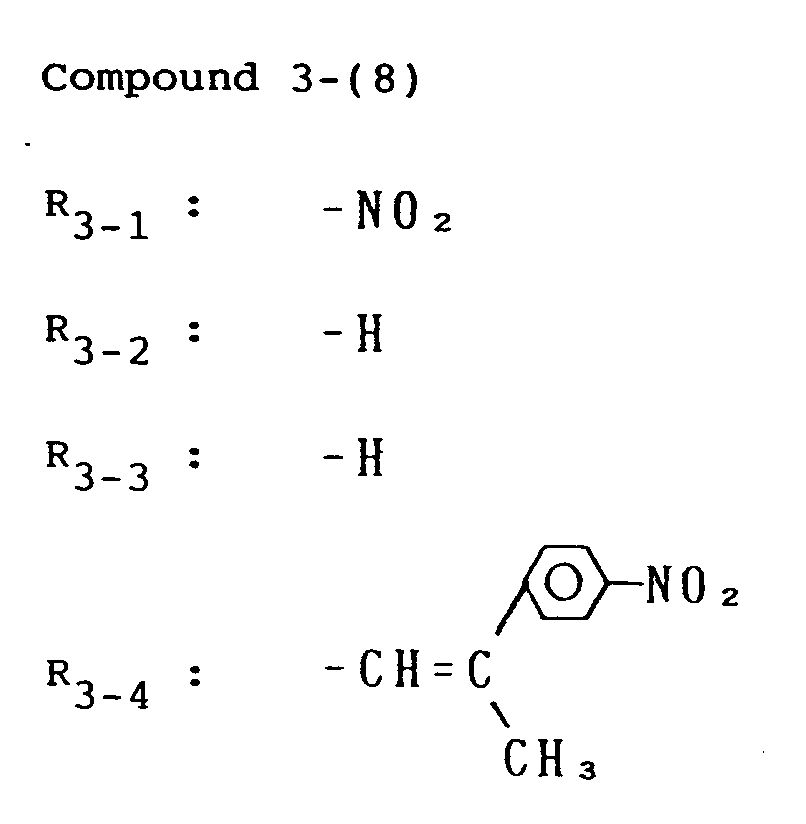
- Example 11 The same procedure as in Example 11 was effected except that a charge-transporting substance was Compound Example 3-(8) and the weight average molecular weight of a polycarbonate resin was 80,000, thereby obtaining an electrophotographic photosensitive member. In this case, the thickness of a charge-transporting layer was 20 ⁇ m.
- Example 11 The same procedure as in Example 11 was effected except that the weight average molecular weight of a polyvinylbutyral resin was 80,000, a dispersing time was 10 hours, a charge-transporting substance was Compound Example 4-(4), and the weight average molecular weight of a polycarbonate resin was 50,000, whereby an electrophotographic photosensitive member was prepared. In this case, the thickness of a charge-transporting layer was 19 ⁇ m.
- Example 11 The same procedure as in Example 11 was effected except that a charge-transporting substance was Compound Example 14-(28), thereby preparing an electrophotographic photosensitive member.
- the thickness of a charge-generating layer was 0.3 ⁇ m.
- the thus prepared photosensitive member was evaluated in the same manner as in Example 11.
- Example 11 The same procedure as in Example 11 was effected except that the butyralation degree and the weight average molecular weight of a polyvinylbutyral resin were 68 mol% and 35,000, respectively, a charge-transporting substance was Compound Example 15-(8), and the weight average molecular weight of a polycarbonate resin was 25,000, thereby preparing an electrophotographic photosensitive member.
- the thickness of a charge-generating layer was 0.2 ⁇ m, and that of a charge-transporting layer was 18 ⁇ m.
- the thus prepared photosensitive member was evaluated in the same manner as in Example 11.
- Example 164 The same procedure as in Example 164 was effected except that the weight average molecular weight of an N-methoxymethylated nylon 6 resin was 100,000, the weight average molecular weight of a polyvinylbutyral resin was 150,000, a charge-transporting substance was Compound Example 4-(18), and the weight average molecular weight of a polymethyl methacrylate resin was 100,000, thereby preparing an electrophotographic photosensitive member.
- the thickness of a charge-generating layer was 0.4 ⁇ m and that of a charge-transporting layer was 16 ⁇ m.
- Example 164 The same procedure as in Example 164 was effected except that the weight average molecular weight of an N-methoxymethylated nylon 6 resin was 100,000, the weight average molecular weight of an alcohol-soluble copolymerized nylon resin was 50,000, its amount was 7 g, the amount of a polyvinylbutyral resin was 0.4 g, a charge-transporting substance was Compound Example 11-(18), and its amount was 13 g, thereby preparing an electrophotographic photosensitive member. In this case, the thickness of a charge-transporting layer was 17 ⁇ m.
- Example 164 The same procedure as in Example 164 was effected except that the weight average molecular weight of an alcohol-soluble copolymerized nylon resin was 50,000, its amount was 6 g, the weight average molecular weight of a polyvinylbutyral resin was 80,000, a charge-transporting substance was Compound Example 12-(78), and the amount of a polymethyl methacrylate resin was 15 g, thereby preparing an electrophotographic photosensitive member.
- the thickness of a charge-generating layer was 0.3 ⁇ m and that of a charge-transporting layer was 19 am.
- the thus prepared photosensitive member was evaluated in the same manner as in Example 177 except that 3,000 sheets were copied.
- Example 179 7 g of oxytitaniumphthalocyanine used in Example 179 was added to a solution prepared by dissolving 4 g of a polyvinylbenzal resin (benzalation degree 78 mol%, weight average molecular weight 100,000) in 100 g of cyclohexanone, and they were then dispersed in a ball mill for 48 hours. The resultant dispersion, after diluted, was applied onto an aluminum sheet by a Meyer bar, followed by drying at 90 C for 30 minutes, whereby a charge-generating layer having a thickness of 0.20 ⁇ m was formed thereon.
- a polyvinylbenzal resin (benzalation degree 78 mol%, weight average molecular weight 100,000)
- Example 180 The same procedure as in Example 180 was effected except that the weight average molecular weight of a polyvinylbenzal resin was 120,000, a dispersing time was 20 hours, a drying time for a charge-generating layer was 1 hour, and a charge-transporting substance was Compound Example 3-(76), thereby preparing an electrophotographic photosensitive member.
- the thickness of a charge-generating layer was 0.4 ⁇ m.
- the thus prepared photosensitive member was evaluated in the same manner as in Example 165.
- Example 180 The same procedure as in Example 180 was effected except that a dispersing time was 20 hours and a charge-transporting substance was Compound Example 4-(29), thereby preparing an electrophotographic photosensitive member. In this case, the thickness of a charge-generating layer was 0.3 am.
- the thus prepared photosensitive member was evaluated in the same manner as in Example 166.
- Example 180 The same procedure as in Example 180 was effected except that a dispersing time was 20 hours, a charge-transporting substance was Compound Example 5-(73), and the amount of a polycarbonate resin was 3.5 g, thereby preparing an electrophotographic photosensitive member.
- Example 180 The same procedure as in Example 180 was effected except that the weight average molecular weight of a polyvinylbenzal resin was 80,000, a dispersing time was 20 hours, and a charge-transporting substance was Compound Example 6-(108), thereby preparing an electrophotographic photosensitive member.
- the thus prepared photosensitive member was evaluated in the same manner as in Example 169.
- the thus prepared photosensitive member was evaluated in the same manner as in Example 172.
- the thus prepared photosensitive member was evaluated in the same manner as in Example 173.
- Example 180 The same procedure as in Example 180 was effected except that a charge-transporting substance was Compound Example 15-(83), the weight average molecular weight of a polycarbonate resin was 50,000, 70 g of chlorobenzene/N,N-dimethylformamide (1 part by weight/1 part by weight) was used as a solvent for a charge-transporting layer, a drying temperature and a drying time for the charge-transporting layer were 130°C and 2 hours, respectively, thereby preparing an electrophotographic photosensitive member. In this case, the thickness of a charge-generating layer was 0.1 ⁇ m.
- Example 179 2 g of oxytitaniumphthalocyanine used in Example 179 was added to a solution prepared by dissolving 1 g of a polyvinylbenzal resin (benzalation degree 70 mol%, weight average molecular weight 100,000) in 40 g of cyclohexanone, and they were then dispersed in a ball mill for 48 hours.
- a polyvinylbenzal resin (benzalation degree 70 mol%, weight average molecular weight 100,000) in 40 g of cyclohexanone
- An aluminum substrate was coated with a 5% methanol solution of an alcohol-soluble copolymerized nylon resin (weight average molecular weight 50,000), so that a subbing layer having a dry thickness of 0.5 ⁇ m was formed thereon.
- Compound Example 2-(67) which was a charge-transporting substance and 7 g of a polycarbonate resin (weight average molecular weight 50,000) were dissolved in 50 g of a chlorobenzene (70 parts by weight)/dichloromethane (30 parts by weight) solution, and the solution was then added to the previously prepared dispersion, followed by further dispersing for 25 hours by the sand mill.
- the dispersion was applied onto the previously formed subbing layer by a Meyer bar and dried so that a dry thickness might be 18 ⁇ m.
- the thus prepared photosensitive member was evaluated in the same manner as in Example 11.
- Example 196 The same procedure as in Example 196 was effected except that a charge-transporting substance was Compound Example 3-(73), thereby preparing an electrophotographic photosensitive member.
- the thickness of a subbing layer was 1.0 am.
- the thus prepared photosensitive member was evaluated in the same manner as in Example 196.
- Example 196 The same procedure as in Example 196 was effected except that a charge-transporting substance was Compound Example 4-(26), thereby preparing an electrophotographic photosensitive member. Afterward, evaluation was made for this member.
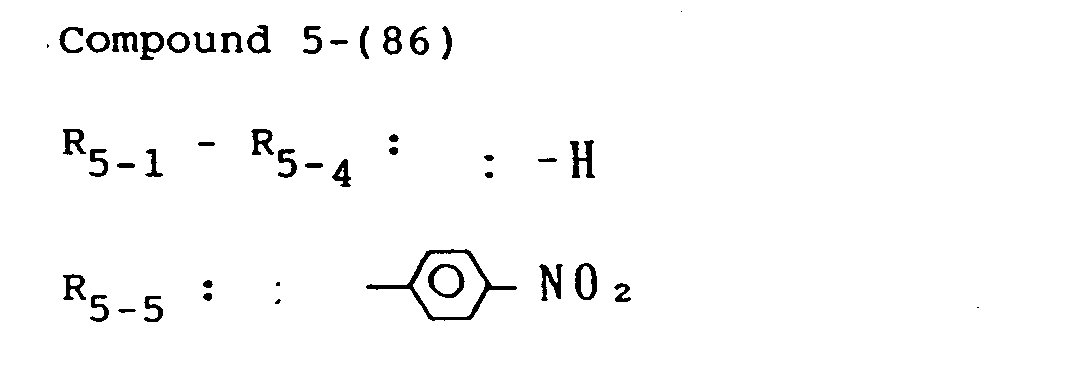
- Example 196 The same procedure as in Example 196 was effected except that the weight average molecular weight of an alcohol-soluble copolymerized nylon resin was 80,000, a charge-transporting substance was Compound Example 5-(86), and a dispersing time was 24 hours, thereby preparing an electrophotographic photosensitive member. In this case, the thickness of a subbing layer was 1.0 am.
- the thus prepared photosensitive member was evaluated in the same manner as in Example 196.
- Example 196 The same procedure as in Example 196 was effected except that the weight average molecular weight of an alcohol-soluble copolymerized nylon resin was 80,000, a charge-transporting substance was Compound Example 7-(82), and a dispersing time was 10 hours, thereby preparing an electrophotographic photosensitive member. Afterward, evaluation was made for this member.
- Example 196 The same procedure as in Example 196 was effected except that the weight average molecular weight of an alcohol-soluble copolymerized nylon resin was 100,000 and a charge-transporting substance was Compound Example 8-(81), thereby preparing an electrophotographic photosensitive member. In this case, the thickness of a subbing layer was 1.0 am.
- the thus prepared photosensitive member was evaluated in the same manner as in Example 196.
- Example 196 The same procedure as in Example 196 was effected except that a charge-transporting substance was Compound Example 9-(55) and a dispersing time was 48 hours, thereby preparing an electrophotographic photosensitive member. In this case, the thickness of a subbing layer was 0.8 am.
- the thus prepared photosensitive member was evaluated in the same manner as in Example 196.
- Example 196 The same procedure as in Example 196 was effected except that the weight average molecular weight of an alcohol-soluble copolymerized nylon resin was 70,000 and a charge-transporting substance was Compound Example 10-(55), thereby preparing an electrophotographic photosensitive member. In this case, the thickness of a subbing layer was 1.0 am.
- the thus prepared photosensitive member was evaluated in the same manner as in Example 196.
- Example 196 The same procedure as in Example 196 was effected except that a charge-transporting substance was Compound Example 11-(35) and the amount of a polycarbonate resin was 10 g, thereby preparing an electrophotographic photosensitive member. Afterward, evaluation was made for this member.
- Example 196 The same procedure as in Example 196 was effected except that a charge-transporting substance was Compound Example 12-(67) and the weight average molecular weight of a polycarbonate resin was 80,000, thereby preparing an electrophotographic photosensitive member. In this case, the thickness of a subbing layer was 0.2 ⁇ m.
- Example 196 The same procedure as in Example 196 was effected except that a charge-transporting substance was Compound Example 14-(68), thereby preparing an electrophotographic photosensitive member.
- a charge-transporting substance was Compound Example 14-(68), thereby preparing an electrophotographic photosensitive member.
- the thickness of a subbing layer was 1.0 am.
- Example 196 The same procedure as in Example 196 was effected except that the weight average molecular weight of an alcohol-soluble copolymerized nylon resin was 80,000, a charge-transporting substance was Compound Example 15-(71), the weight average molecular weight of a polycarbonate resin was 35,000, its amount was 10 g, and a dispersing time was 20 hours, thereby preparing an electrophotographic photosensitive member.
- the thickness of a subbing layer was 1.0 ⁇ m and that of the photosensitive member was 19 ⁇ m.
- the thus prepared photosensitive member was evaluated in the same manner as in Example 196.
- This coating liquid after diluted, was applied onto the above-mentioned charge-transporting layer by the Meyer bar so that the dry thickness of a charge-generating layer might be 0.5 ⁇ m, whereby the charge-generating layer was formed.
- the charging characteristics of the thus prepared electrophotographic photosensitive member were evaluated in the same manner as in Example 1 except that corona charging was carried out under -5 KV.
- Example 210 The same procedure as in Example 210 was effected except that a charge-transporting substance was Compound Example 16-(70), the amount of a polycarbonate resin was 9 g, the amount of monochlorobenzene was 90 g, the butyralization degree of a polyvinylbutyral resin was 70 mol%, the amount of cyclohexanone was 45 ml, and a dispersing time was 20 hours, thereby preparing an electrophotographic photosensitive member.
- the thickness of a charge-transporting layer was 15 ⁇ m and that of a charge-generating layer was 0.4 ⁇ m.
- a disazo pigment represented by the formula was dispersed in 50 ml of a solution prepared by dissolving 1.5 g of a polyvinylbutyral resin (butyralization degree 80 mol%) in 50 ml of cyclohexanone for 20 hours by means of a sand mill to obtain a coating liquid.
- This coating liquid after diluted, was applied onto the above-mentioned charge-transporting layer by the Meyer bar so that the dry thickness of a charge-generating layer might be 0.5 am, whereby the charge-generating layer was formed.
- Example 212 The same procedure as in Example 212 was effected except that a charge-transporting substance was Compound Example 3-(6), the weight average molecular weight of a polycarbonate resin was 100,000, and the amount of a polyvinylbutyral resin was 1 g, thereby preparing an electrophotographic photosensitive member. In this case, the thickness of a charge-transporting layer was 18 ⁇ m.
- the thus prepared photosensitive member was evaluated in the same manner as in Example 210.
- Example 212 The same procedure as in Example 212 was effected except that a charge-transporting substance was Compound Example 4-(33) and a dispersing time was 50 hours, thereby preparing an electrophotographic photosensitive member. In this case, the thickness of a charge-generating layer was 0.3 am.
- the thus prepared photosensitive member was evaluated in the same manner as in Example 210.
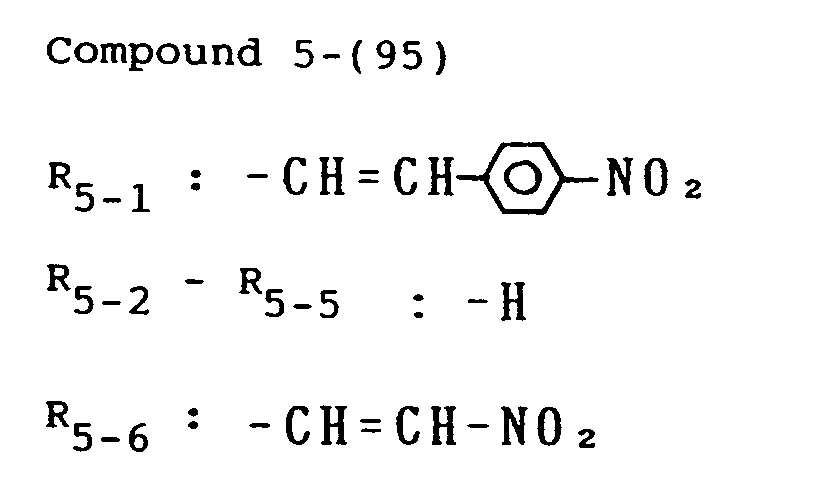
- Example 212 The same procedure as in Example 212 was effected except that a charge-transporting substance was Compound Example 5-(95), its amount was 3 g, and the weight average molecular weight of a polycarbonate resin was 50,000, thereby preparing an electrophotographic photosensitive member.
- the thickness of a charge-transporting layer was 20 ⁇ m and that of a charge-generating layer was 0.6 am.
- the thus prepared photosensitive member was evaluated in the same manner as in Example 210.
- Example 212 The same procedure as in Example 212 was effected except that a charge-transporting substance was Compound Example 6-(15), thereby preparing an electrophotographic photosensitive member.
- a charge-transporting substance was Compound Example 6-(15), thereby preparing an electrophotographic photosensitive member.
- the thickness of a charge-transporting layer was 18 ⁇ m and that of a charge-generating layer was 0.3 am.
- the thus prepared photosensitive member was evaluated in the same manner as in Example 210.
- Example 212 The same procedure as in Example 212 was effected except that a charge-transporting substance was Compound Example 7-(79), the weight average molecular weight of a polycarbonate resin was 70,000, and its amount was 6 g, thereby preparing an electrophotographic photosensitive member. In this case, the thickness of a charge-transporting layer was 20 am.
- the thus prepared photosensitive member was evaluated in the same manner as in Example 210.
- Example 212 The same procedure as in Example 212 was effected except that a charge-transporting substance was Compound Example 8-(50), the amount of a polycarbonate resin was 6 g, the butyralation degree of a polyvinylbutyral resin was 75 mol%, and its amount was 0.9 g, thereby preparing an electrophotographic photosensitive member.
- the thickness of a charge-transporting layer was 20 ⁇ m and that of a charge-generating layer was 0.4 ⁇ m.
- the thus prepared photosensitive member was evaluated in the same manner as in Example 210.
- the thus prepared photosensitive member was evaluated in the same manner as in Example 210.
- Example 212 The same procedure as in Example 212 was effected except that a charge-transporting substance was Compound Example 10-(49), the weight average molecular weight of a polycarbonate resin was 50,000, and the amount of a polyvinylbutyral resin was 2 g, thereby preparing an electrophotographic photosensitive member.
- the thickness of a charge-transporting layer was 17 ⁇ m and that of a charge-generating layer was 0.7 ⁇ m.
- the thus prepared photosensitive member was evaluated in the same manner as in Example 210.
- Example 212 The same procedure as in Example 212 was effected except that a charge-transporting substance was Compound Example 11-(31), the weight average molecular weight of a polycarbonate resin was 50,000, and its amount was 7 g, thereby preparing an electrophotographic photosensitive member.
- a charge-transporting substance was Compound Example 11-(31)
- the weight average molecular weight of a polycarbonate resin was 50,000
- its amount was 7 g
- Example 212 The same procedure as in Example 212 was effected except that a charge-transporting substance was Compound Example 12-(77), thereby preparing an electrophotographic photosensitive member. In this case, the thickness of a charge-generating layer was 0.3 am.
- the thus prepared photosensitive member was evaluated in the same manner as in Example 210.
- Example 212 The same procedure as in Example 212 was effected except that a charge-transporting substance was Compound Example 13-(69), the weight average molecular weight of a polycarbonate resin was 100,000, and the amount of a bisazo pigment was 3 g, thereby preparing an electrophotographic photosensitive member.
- the thickness of a charge-transporting layer was 18 ⁇ m and that of a charge-generating layer was 0.3 ⁇ m.
- the thus prepared photosensitive member was evaluated in the same manner as in Example 210.
- Example 212 The same procedure as in Example 212 was effected except that a charge-transporting substance was Compound Example 14-(75), thereby preparing an electrophotographic photosensitive member.
- the thickness of a charge-transporting layer was 20 ⁇ m.
- the thus prepared photosensitive member was evaluated in the same manner as in Example 210.
- Example 212 The same procedure as in Example 212 was effected except that a charge-transporting substance was Compound Example 15-(90), the weight average molecular weight of a polycarbonate resin was 35,000, and the amount of a polyvinylbutyral resin was 1 g, thereby preparing an electrophotographic photosensitive member.
- the thickness of a charge-transporting layer was 14 ⁇ m and that of a charge-generating layer was 0.3 ⁇ m.
- the thus prepared photosensitive member was evaluated in the same manner as in Example 210.
- An aluminum substrate was coated with a 5% methanol solution of an alcohol-soluble copolymerized nylon resin (weight average molecular weight 80,000), so that a subbing layer having a dry thickness of 1 ⁇ m was formed thereon.
- Example 212 4 g of a pigment used in Example 212 was dispersed in 45 ml of tetrahydrofuran by means of a sand mill.
- Compound Example 1-(30) which was a charge-transporting substance and 10 g of a polycarbonate resin (weight average molecular weight 25,000) were dissolved in 50 g of a monochlorobenzene (60 parts by weight)/dichloromethane (40 parts by weight) solution, and the solution was then added to the previously prepared dispersion, followed by further dispersing for 3 hours by the sand mill.
- the dispersion was applied onto the previously formed subbing layer by a Meyer bar and dried so that a dry thickness might be 17 ⁇ m.
Landscapes
- Physics & Mathematics (AREA)
- General Physics & Mathematics (AREA)
- Photoreceptors In Electrophotography (AREA)
- Indole Compounds (AREA)
Abstract
Description
- The present invention relates to an electrophotographic photosensitive member having improved electrophotographic characteristics, and more specifically it relates to an electrophotographic photosensitive member having a photosensitive layer containing a compound with a specific structure.
- An organic electrophotographic photosensitive member containing an organic photoconductive compound as the main component has many advantages, and for example, it is free from drawbacks of an inorganic photosensitive member regarding film-forming properties, plasticity and manufacturing cost. Therefore, in recent years, much attention is paid to the organic electrophotographic photosensitive member, and many techniques concerning the same have been suggested and some of them have been put into practice.
- As such an organic photosensitive member, there has been suggested an electrophotographic photosensitive member mainly comprising a photoconductive polymer typified by poly(N-vinylcarbazole) or a charge transfer complex made from a Lewis acid such as 2,4,7-trinitro-9-fluorenone.
- This kind of organic photoconductive polymer is more excellent in lightweight properties and film-forming properties as compared with an inorganic photoconductive polymer, but the former is inferior to the latter in sensitivity, durability, stability to environmental change. For this reason, the organic photoconductive polymer is not always satisfactory.
- Afterward, the electrophotographic photosensitive member of a separate-function type, which comprises different substances each bearing a charge-generating function or a charge-transporting function, has brought about improvements in sensitivity and durability which has been disadvantages of conventional organic photosensitive members. Such a separate-function type of photosensitive member is advantageous because the substances for the charge-generating substance and the charge-transporting substance can be selected respectively from a wide range of substances, which allows easier production of the electrophotographic photosensitive member having a desired properties.
- As the charge-generating substance, there have been known azo pigments, polycyclic quinone pigments, cyanine dyes, squaric acid dyes and pyrylium salt dyes. Above all, the azo pigments are preferable because of strong light resistance, high charge-generating ability and the relatively easy synthesis of materials and the like, and many kinds thereof have been suggested and put into practice.
- Examples of the known charge-transporting substance include pyrazolines in Japanese Patent Publication No. 52-4188, hydrazones in Japanese Patent Publication No. 55-42380 and Japanese Patent Application Laid-open No. 55-52063, triphenylamines in Japanese Patent Publication No. 58-32372 and Japanese Patent Application Laid-open No. 61-132955, and stilbenes in Japanese Patent Application Laid-open Nos. 54-151955 and 58-198043.
- The charge-transporting substance can be classified into hole-transporting type and electron-transporting type, but the above-mentioned charge-transporting substances and most of charge-transporting substances used in the organic electrophotographic photosensitive members which have been put into practice so far are of the hole-transporting type. In many cases of the photosensitive members each comprising the charge-transporting substance with hole-transporting ability, each photosensitive member has a conductive support, a charge-generating layer and a charge-transporting layer in this order, and in this case, the polarity of the charge which moves to the photosensitive member is negative. When the polarity of the charge is negative, ozone generates at the time of charging and causes the photosensitive member to be chemically modified inconveniently. Thus, this kind of photosensitive member is inferior to inorganic photosensitive members such as a-Se and a-Si in durability disadvantageously.
- As measures against the deterioration of the photosensitive member with ozone generated at the time of charging, there have been suggested an electrophotographic photosensitive member having a conductive support, a charge-transporting layer and a charge-generating layer in this order, and an electrophotographic photosensitive member in which a protective layer is disposed on a photosensitive layer, for example, in Japanese Patent Application Laid-open Nos. 61-75355 and 54-58445.
- However, in the electrophotographic photosensitive member having such a layer constitution, the relatively thin charge-generating layer is used as an upper layer, and when the member is repeatedly used, the surface of the photosensitive member is severely damaged by abrasion. In the photosensitive member provided with the protective layer for the purpose of solving this problem, this protective layer is an insulating layer, and therefore when the protective layer is repeatedly used, its potential is not stable, so that stable characteristics of the member cannot be maintained.
- In view of the foregoing, it is expected to invent an organic electrophotographic photosensitive member which has a conductive support, a charge-generating layer and a charge-transporting layer in this order and which can be used in a condition that a positive pole is charged. However, in order to realize this expectation, a charge-transporting substance having electron-transporting ability is required. Suggested examples of the charge-transporting substance having the electron-transporting ability include 2,4,7-trinitro-9-fluorenone (TNF), dicyanomethylenefluorene carboxylate in Japanese Patent Application Laid-open No. 61-148159, anthraquinodimethane in Japanese Patent Application Laid-open Nos. 63-70257, 63-72664 and 63-104061, 1,4-naphthoquinone in Japanese Patent Application Laid-open No. 63-85749, and diphenyl- dicyanoethylene in Japanese Patent Application Laid-open Nos. 63-174993. Japanese Patent Application Laid-Open No. Hei 2-97953 suggests an electrophotographic photosensitive member having a charge-generating layer comprising a positive hole-transporting charge-generating material and a small amount of dicyanovinyl compound having a specific constitution.
- However, to fill the present demand of a high-quality image, an electrophotographic photosensitive member has been investigated which can sufficiently meet requirements such as sensitivity, potential properties, cost and the compatibility of the charge-transporting substance with an organic solvent or a binder.
- An object of the present invention is to provide an electrophotographic photosensitive member having a photosensitive layer containing a charge-transporting substance with a novel structure.
- Another object of the present invention is to provide an electrophotographic photosensitive member which has a high sensitivity and which can maintain stable and excellent electrophotographic characteristics, even when repeatedly used.
- That is, the first aspect of the present invention is directed to an electrophotographic photosensitive member comprising an electroconductive support and a photosensitive layer on the electroconductive support, and the photosensitive layer contains, as a charge-transporting substance, a compound represented by the formula (1)

- The second aspect of the present invention is directed to an electrophotographic photosensitive member comprising an electroconductive support and a photosensitive layer on the electroconductive support, and the photosensitive layer contains a compound selected from the group consisting of a compound having a partial structure represented by the formula


-
- Fig. 1 illustrates an outline of the constitution of an electrophotographic photosensitive apparatus employing an electrophotographic photosensitive member of the present invention.
- Fig. 2 illustrates an example of the block diagram of a facsimile device employing the electrophotographic photosensitive member of the present invention.
- An electrophotographic photosensitive member of the present invention has a photosensitive layer containing a compound represented by-the formula (1), (4) or (15) and a compound having a partial structure represented by the formula


- Preferable examples of a compound from which A in the formula (1) is derived will be enumerated together with reduction potentials (Ered), but they are not restrictive.


- The reduction potentials can be measured in the following procedure.
- A saturated calomel electrode is selected as a reference electrode, and a 0.1 N-(n-Bu)4N+ + CIO4- acetonitrile solution is used. A potential at a working electrode is swept by a potential sweeper, and a peak position on the resultant current-potential curve is regarded as a value of reduction potential.
- Specifically, a sample is dissolved in the electrolyte of the 0.1 N-(n-Bu)4N + ClO4- acetonitrile solution so as to be a concentration of about 5-10 mmol%. Afterward, voltage is applied to this sample solution and is then changed linearly from a higher potential (0 V) to a lower potential (-1.5 V), and at this time, current changes are measured to obtain a current-voltage curve. The value of a potential at the peak (the maximum potential) of current values on this current-voltage curve is regarded as the reduction potential in the present invention.
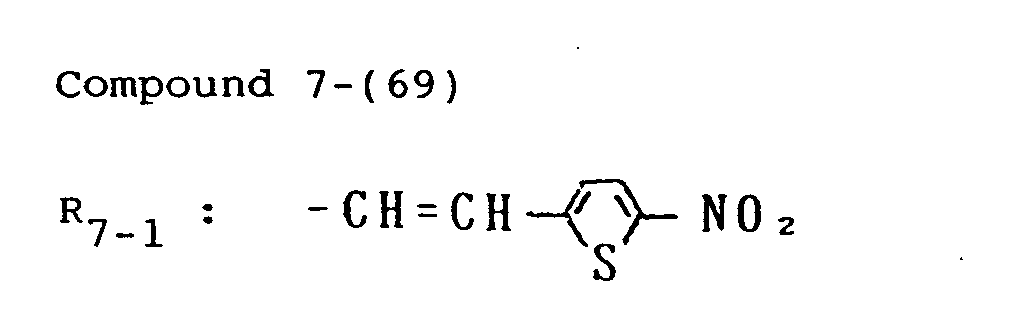
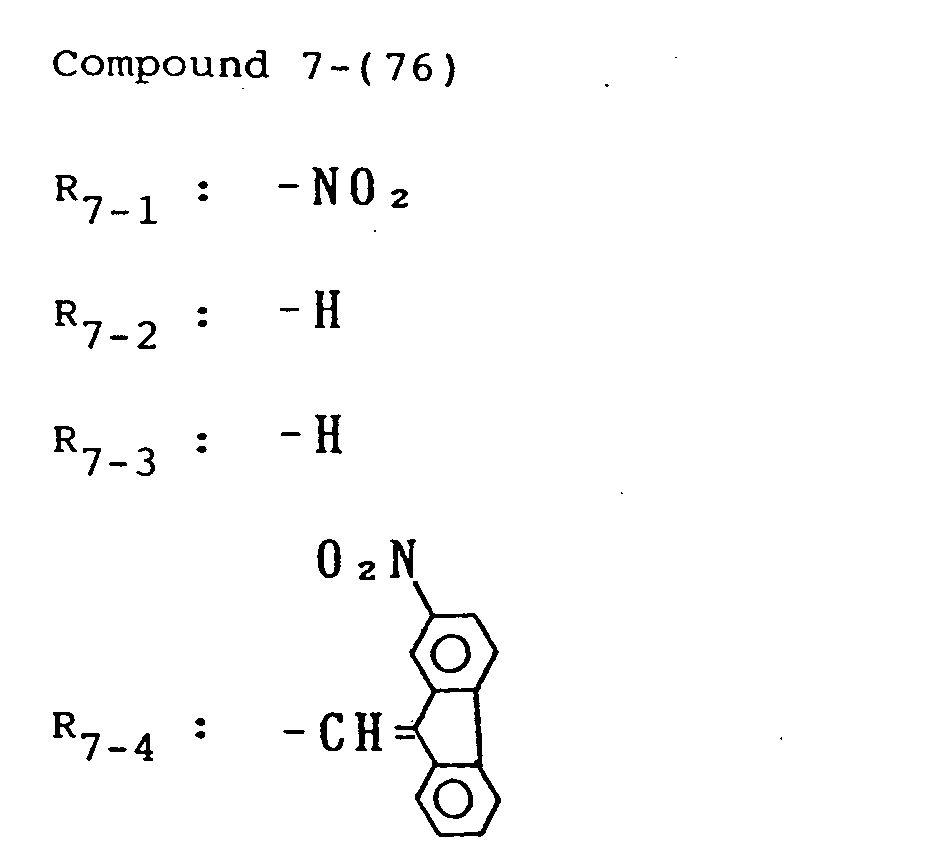
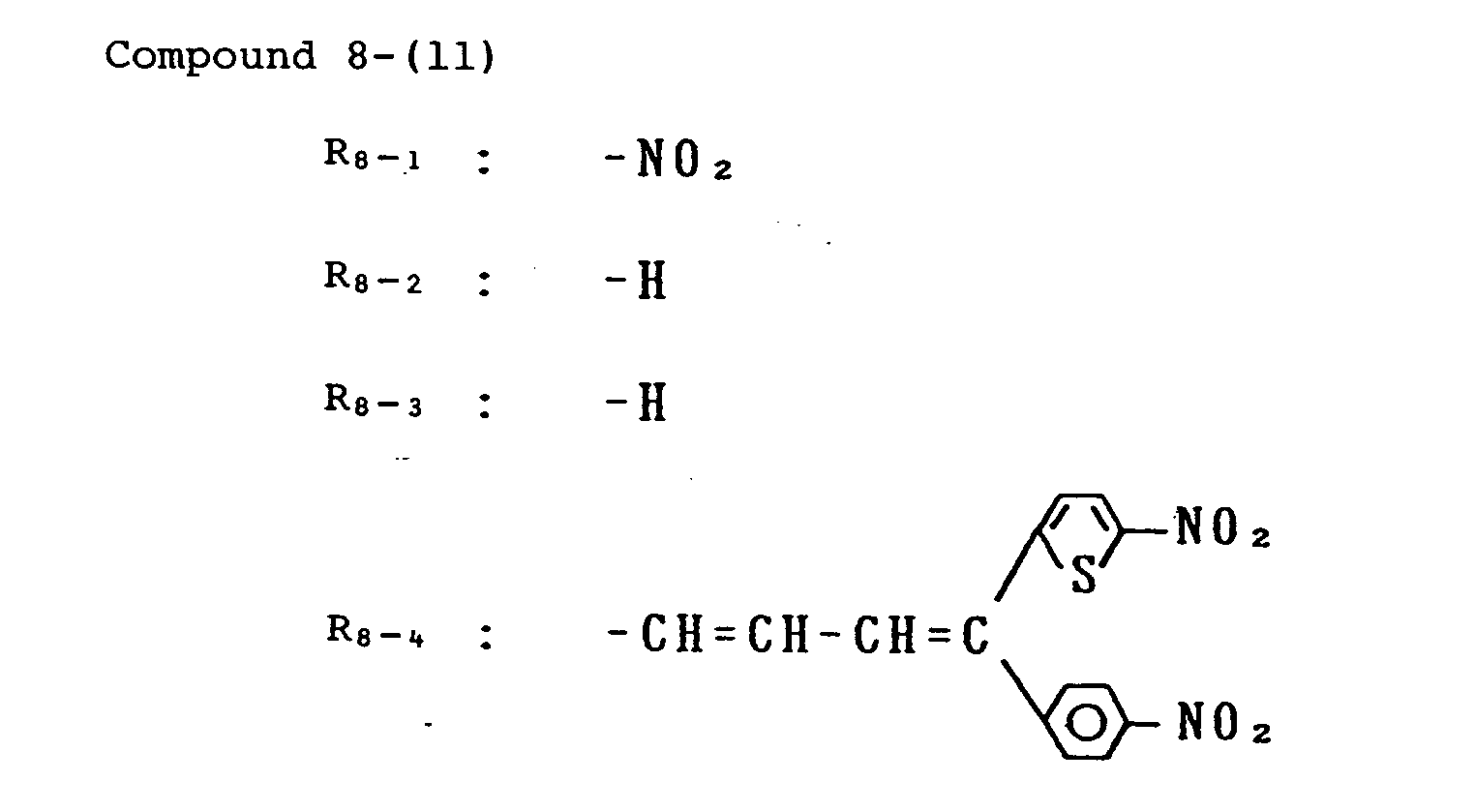
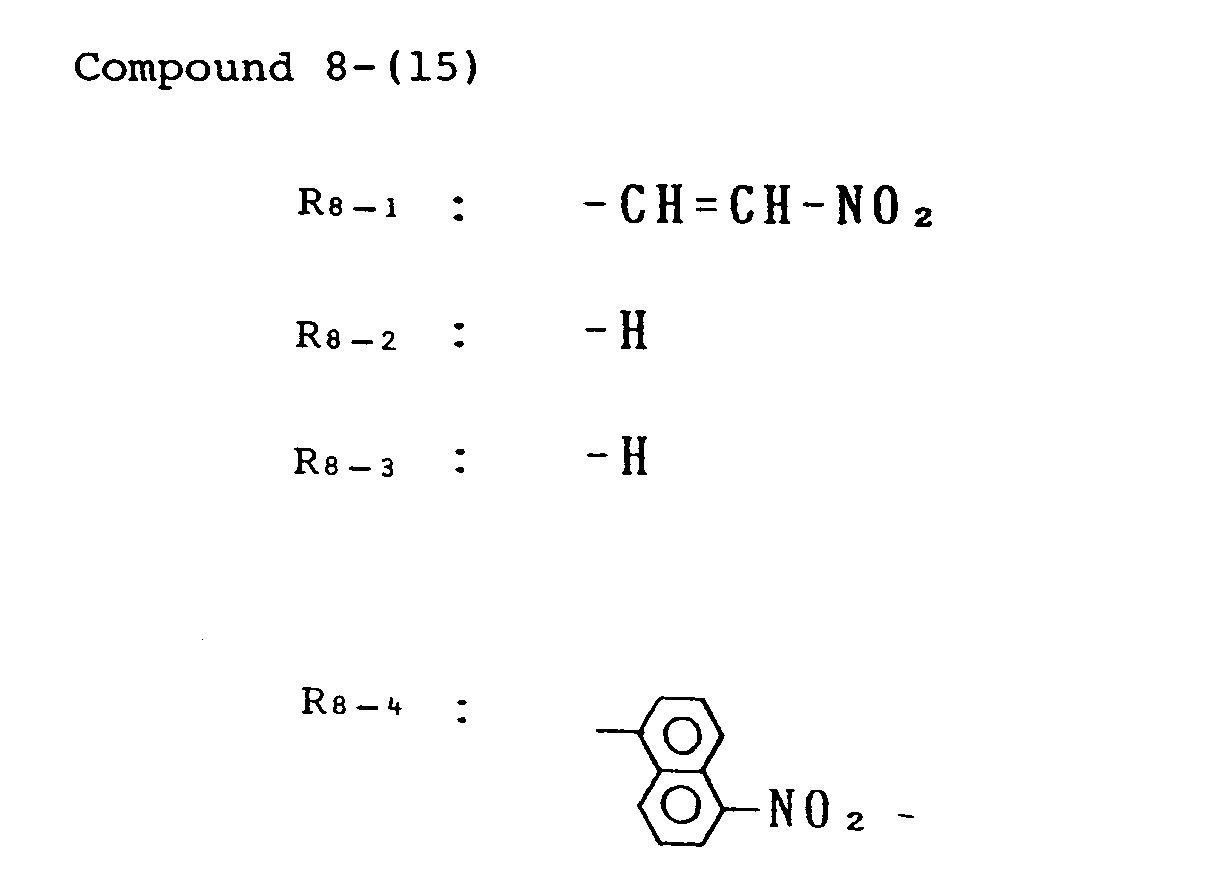
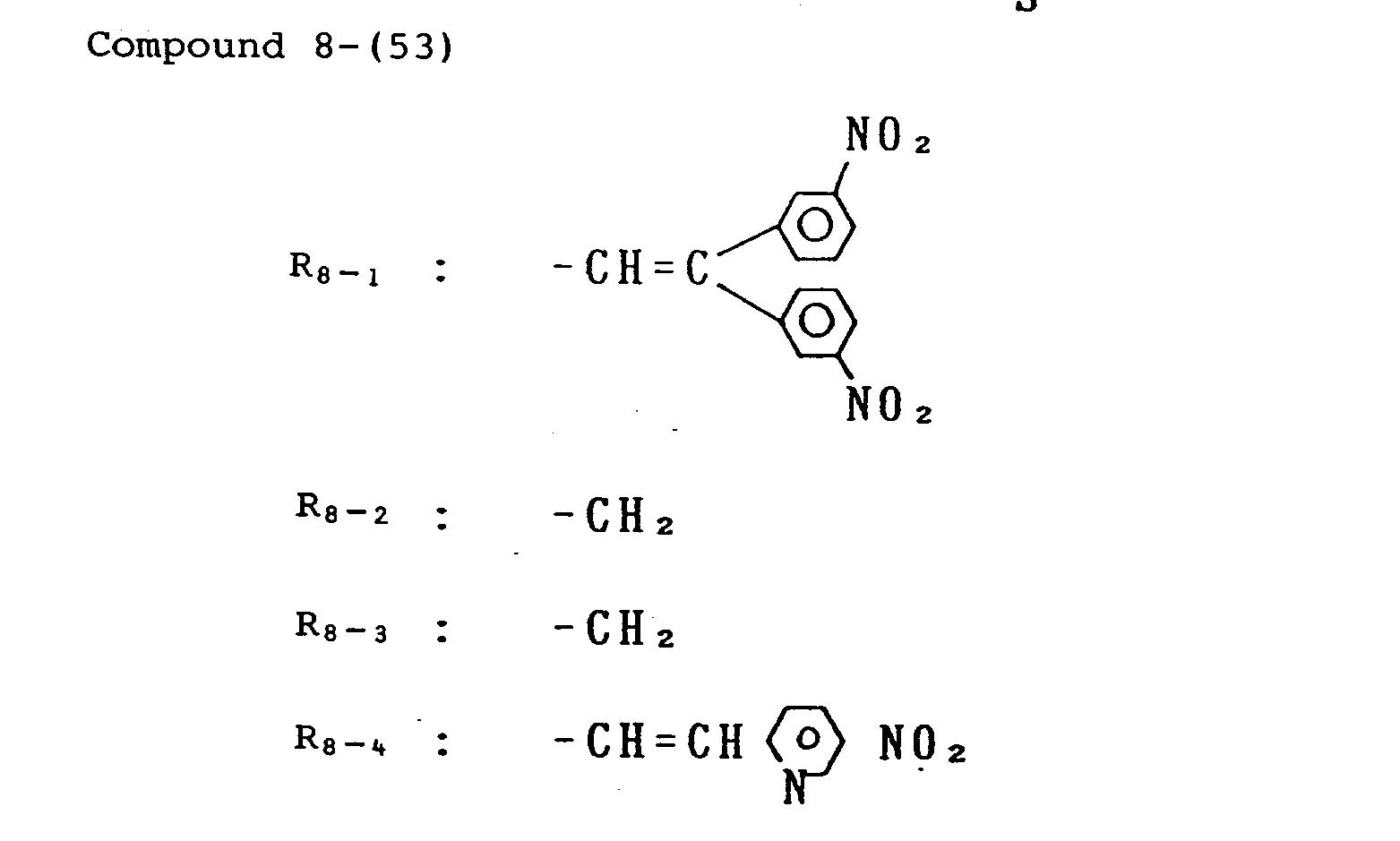
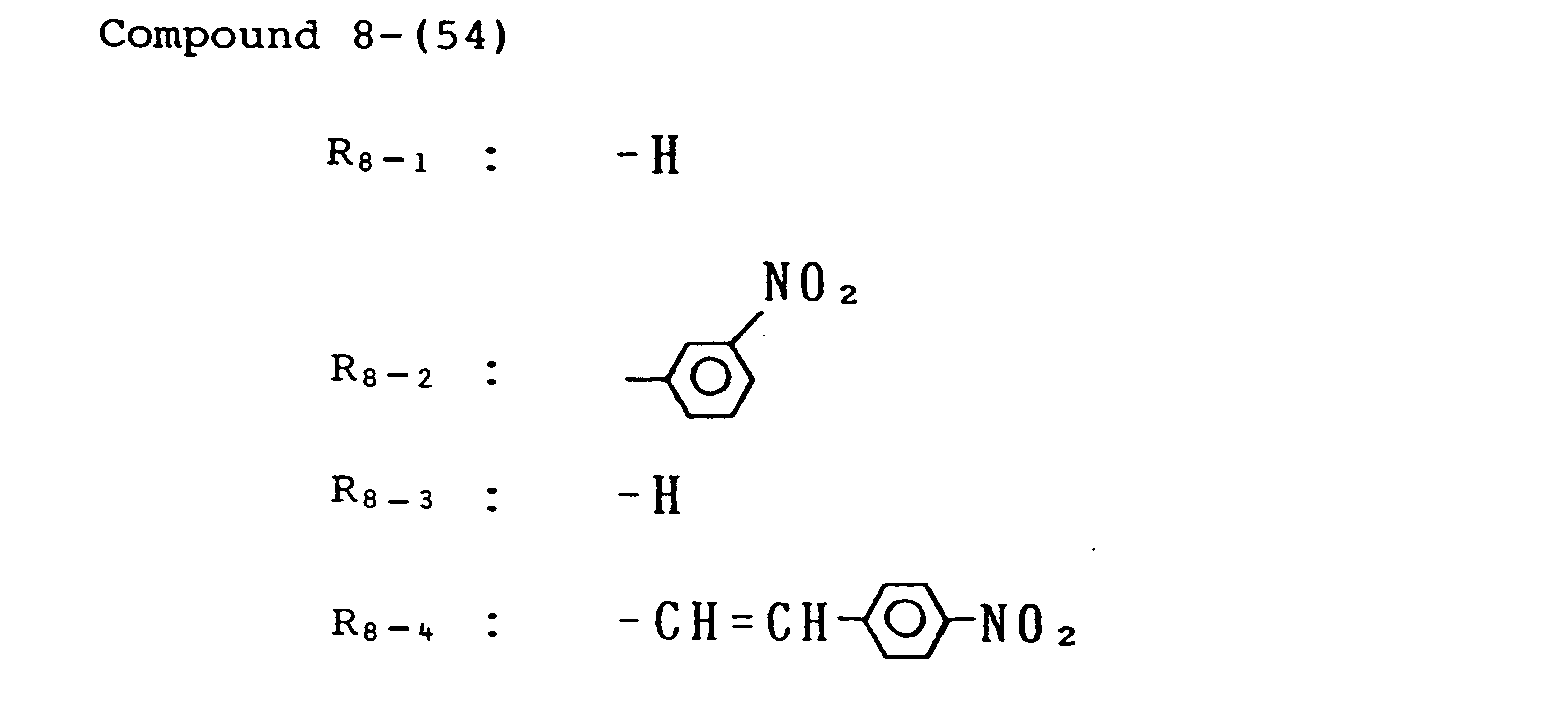
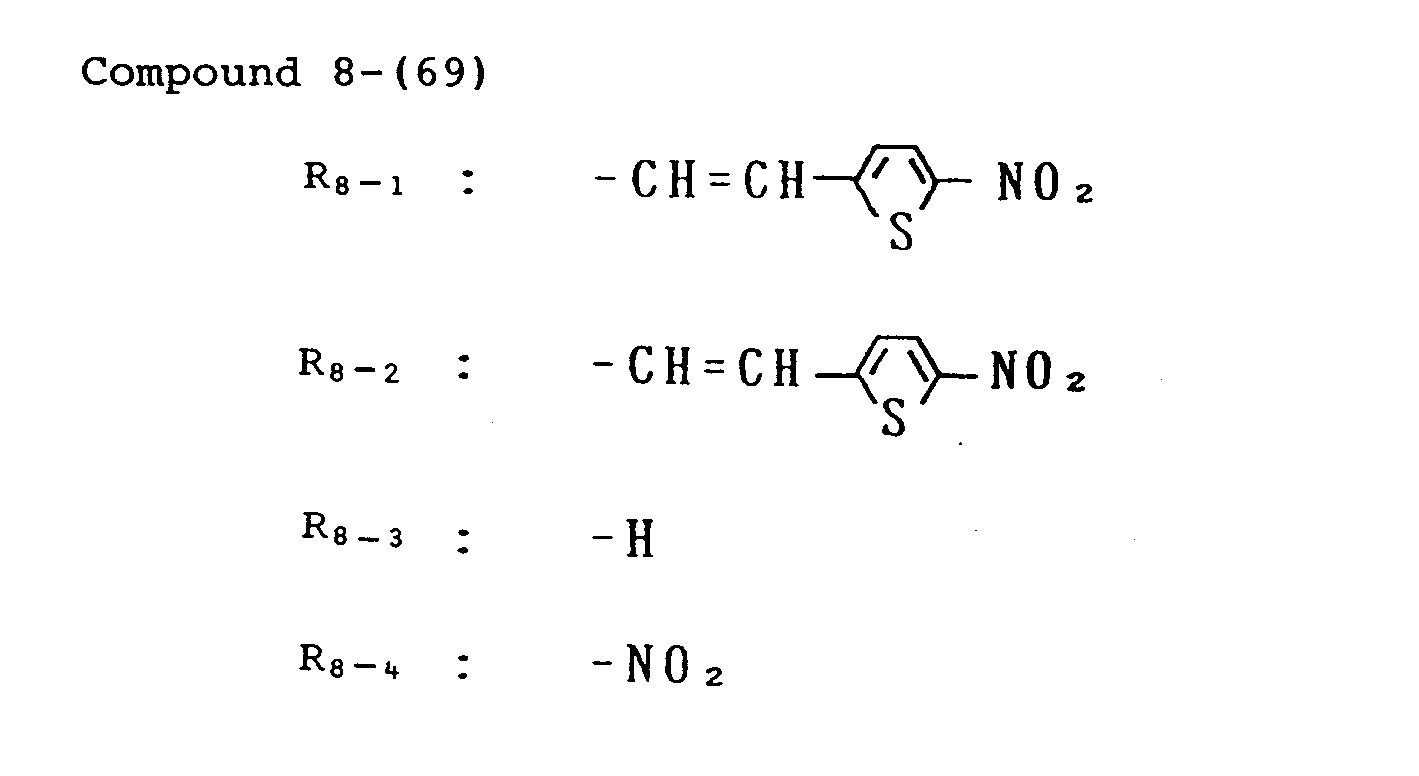
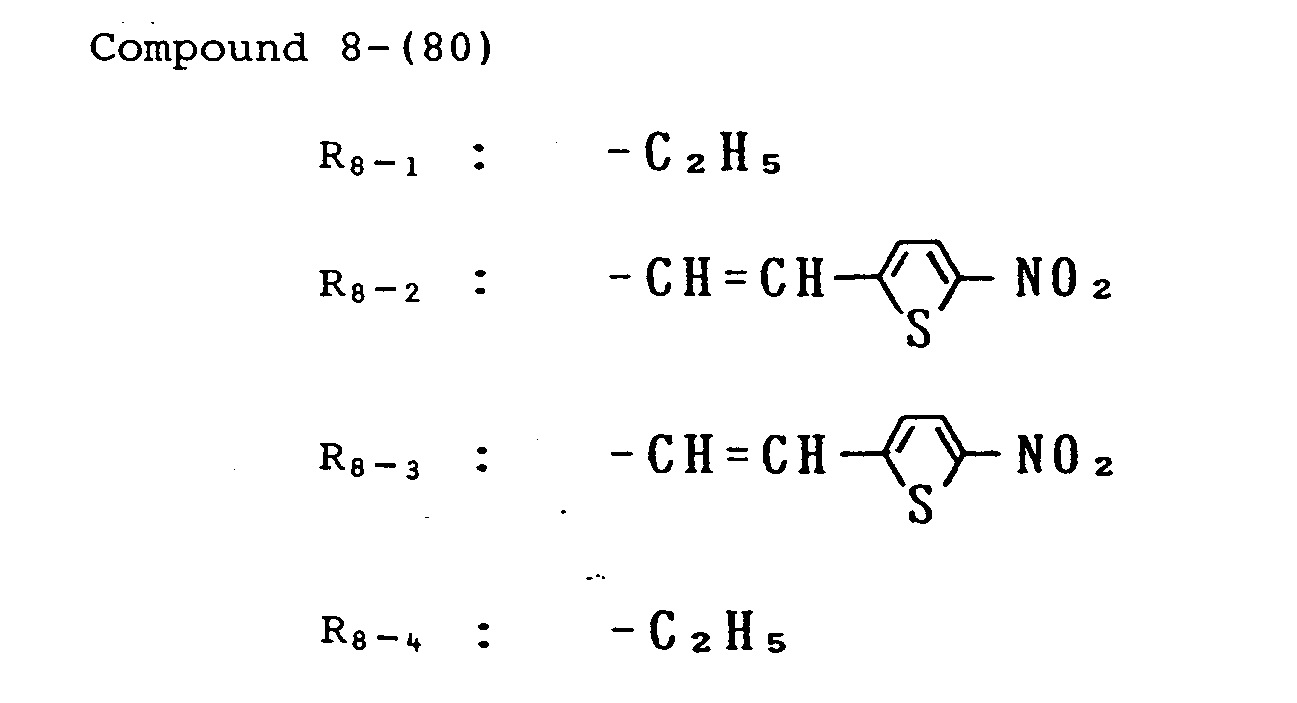
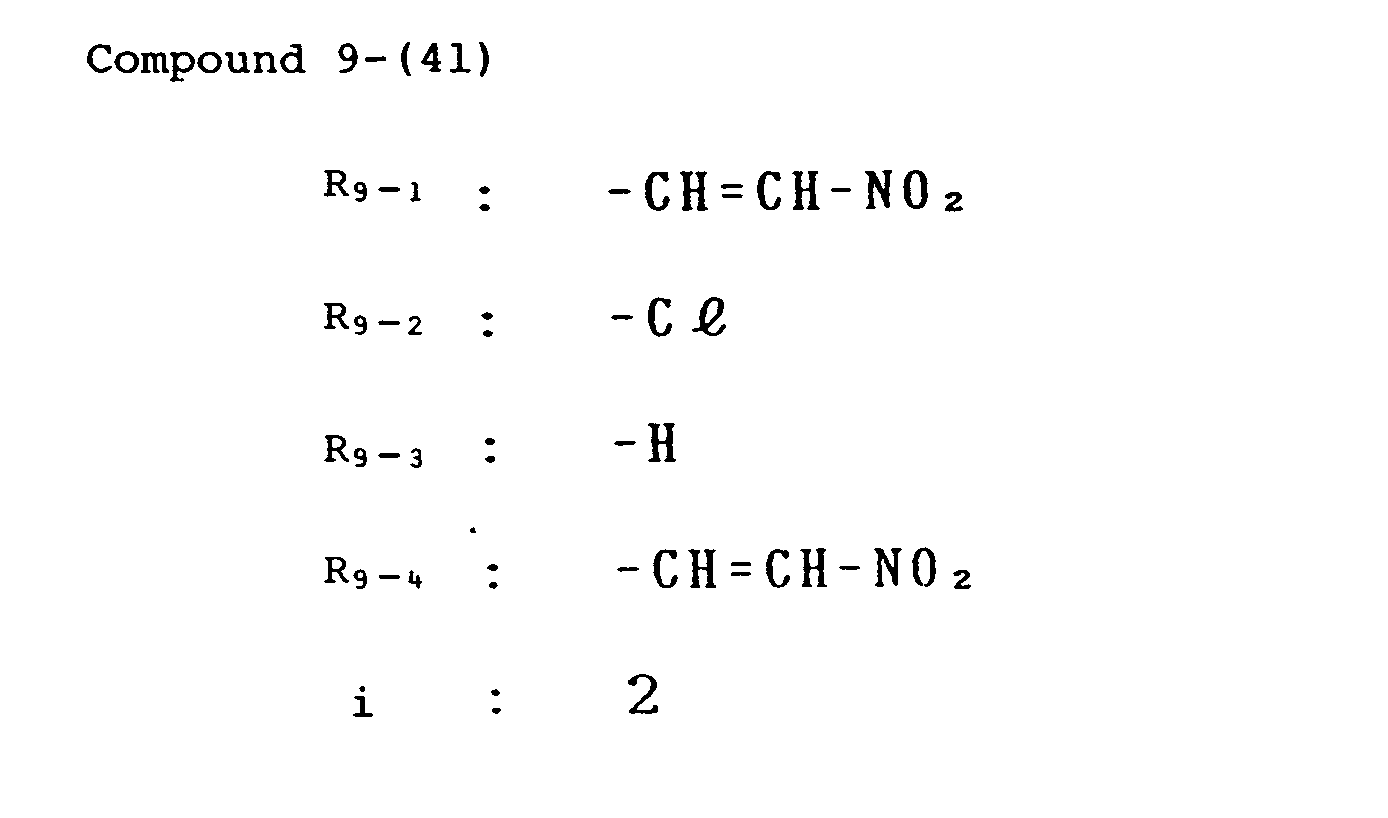
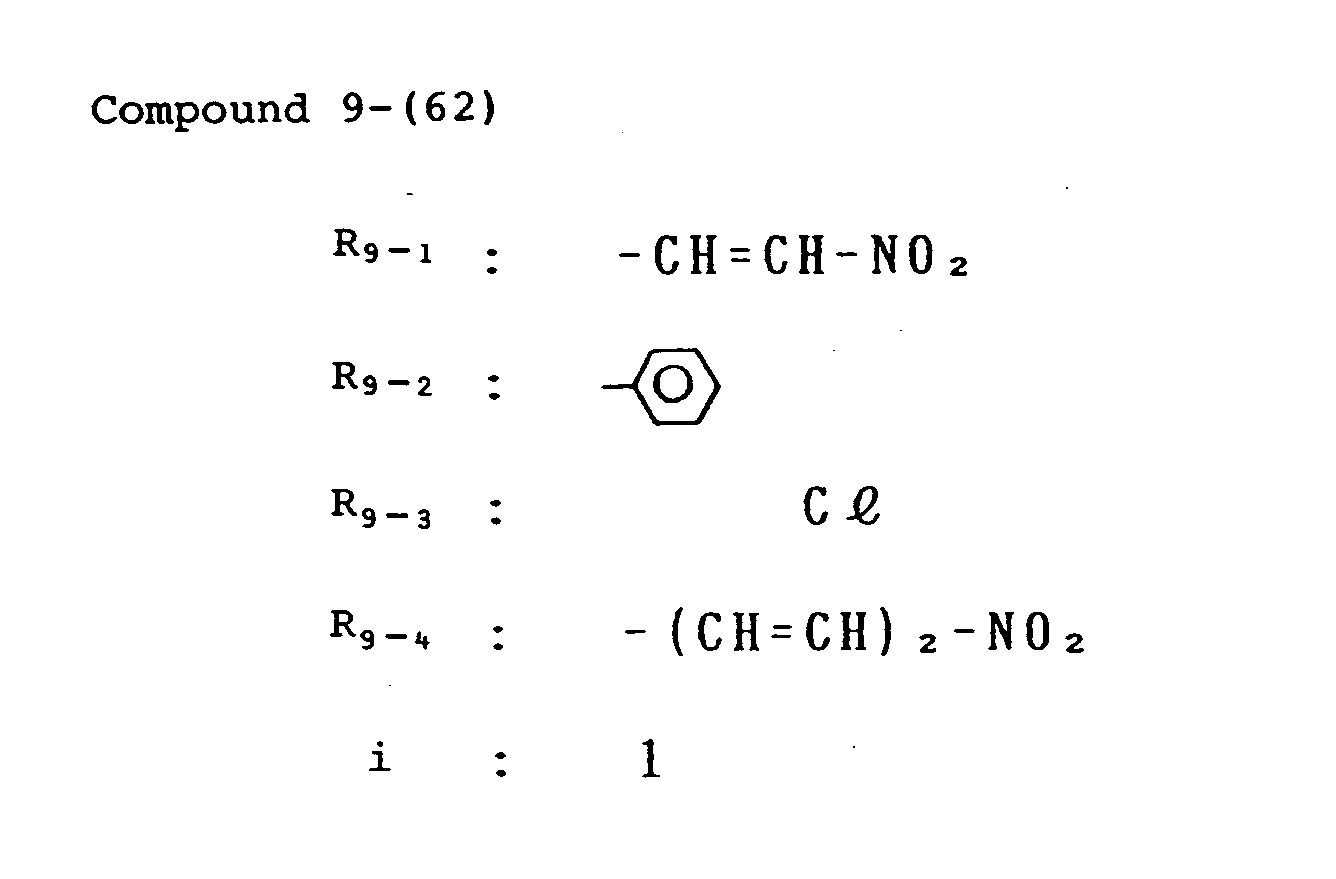
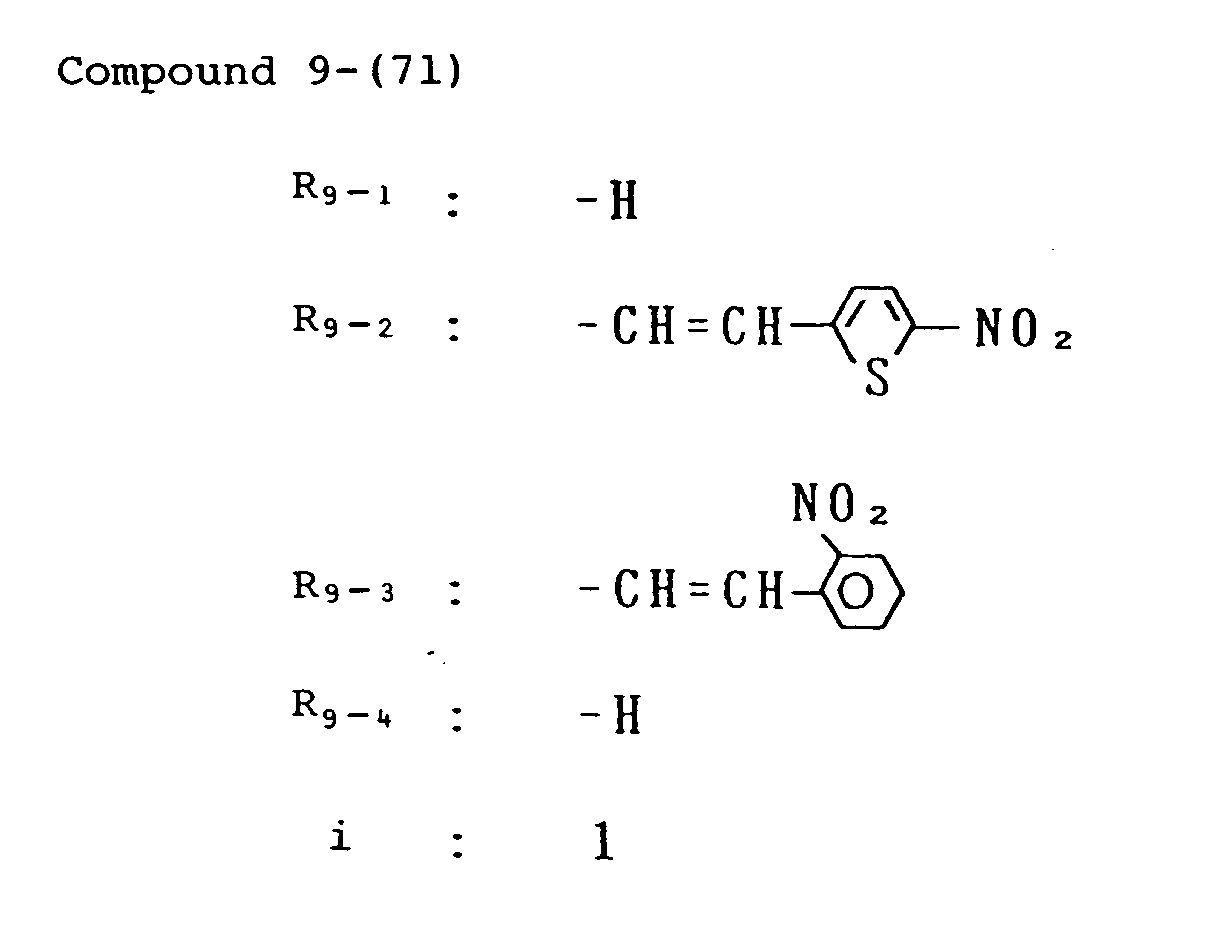
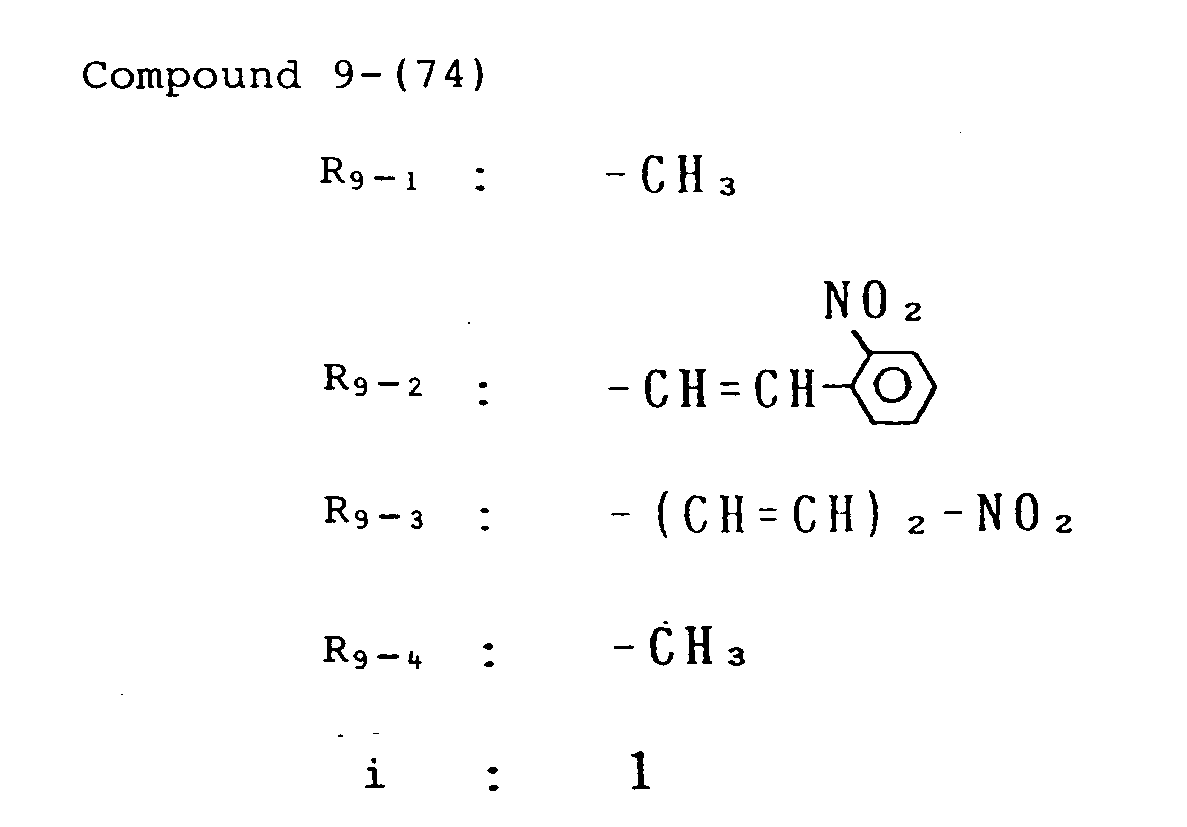
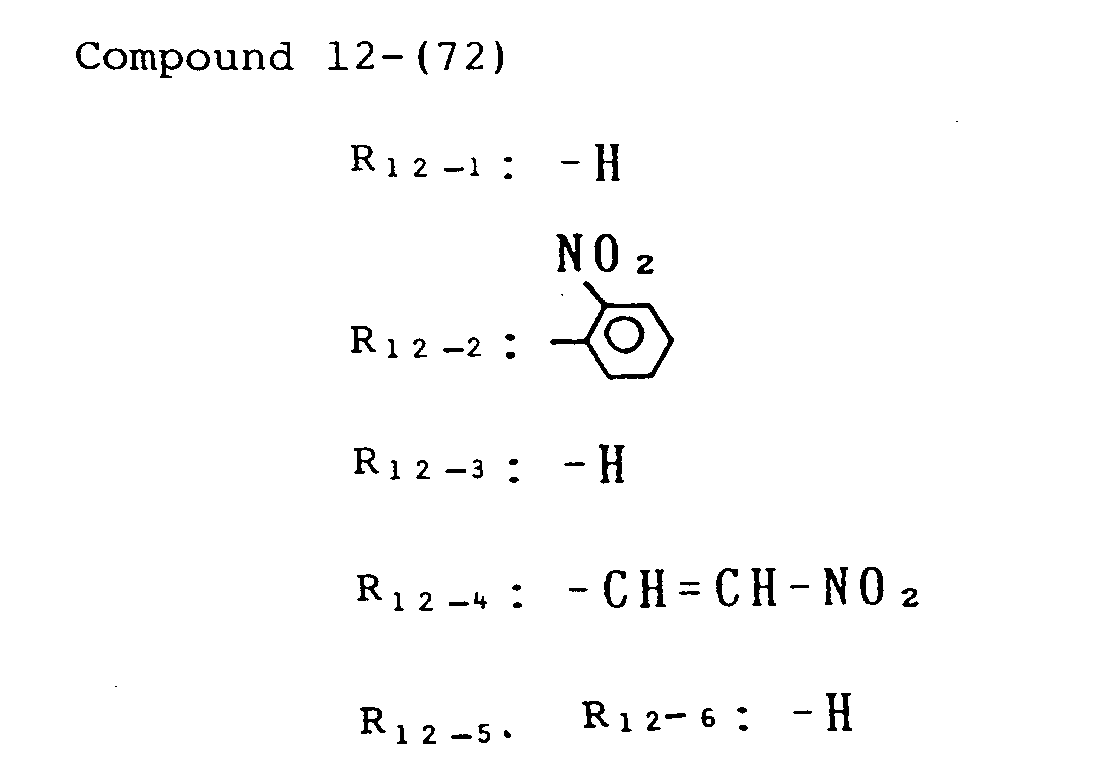
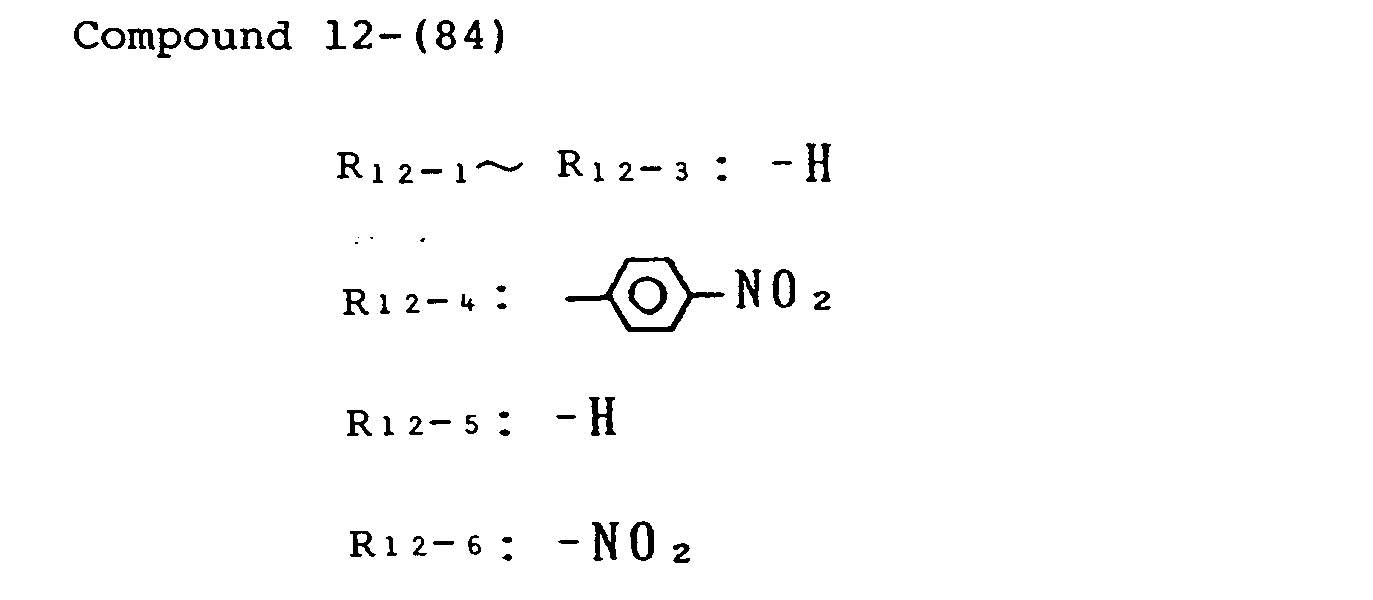
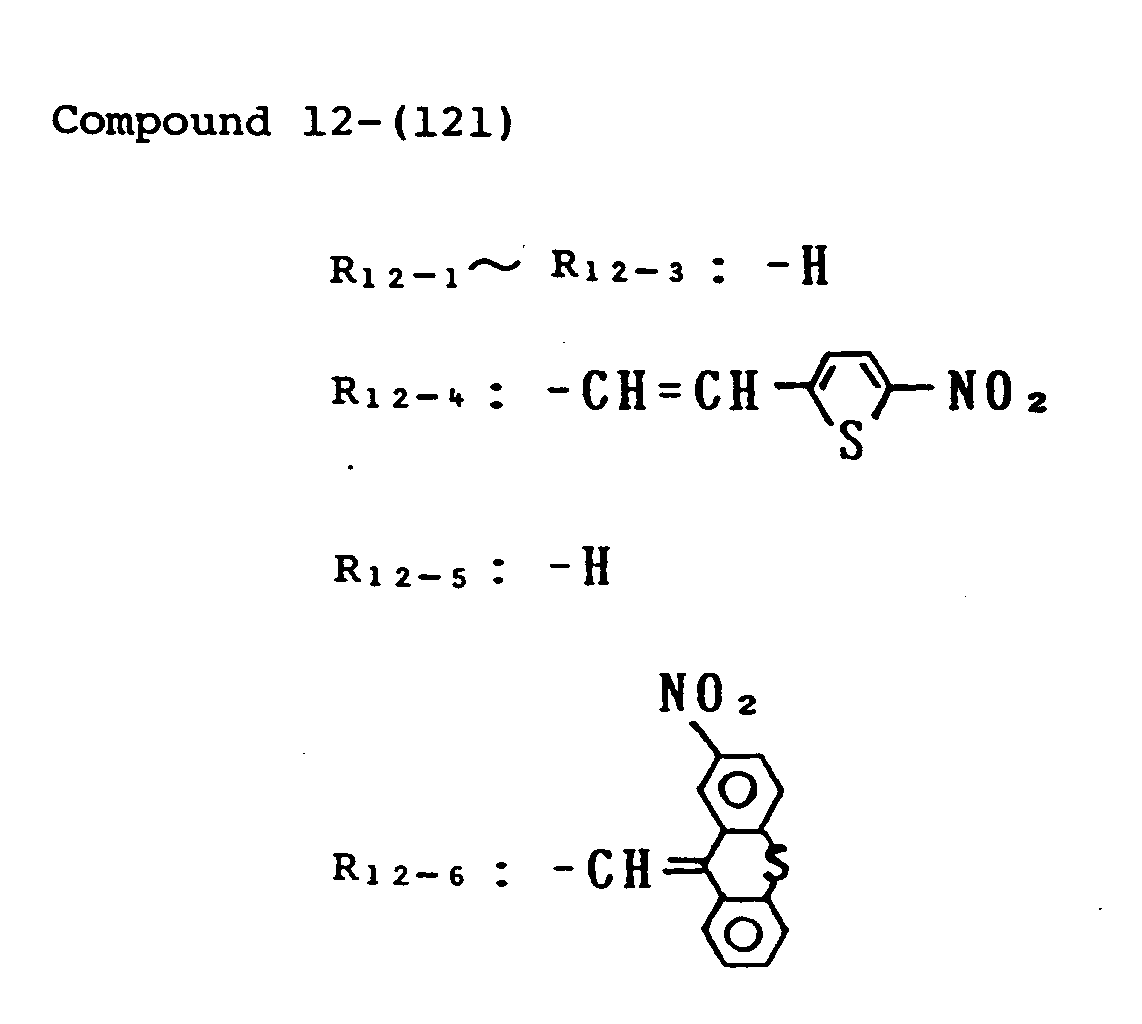
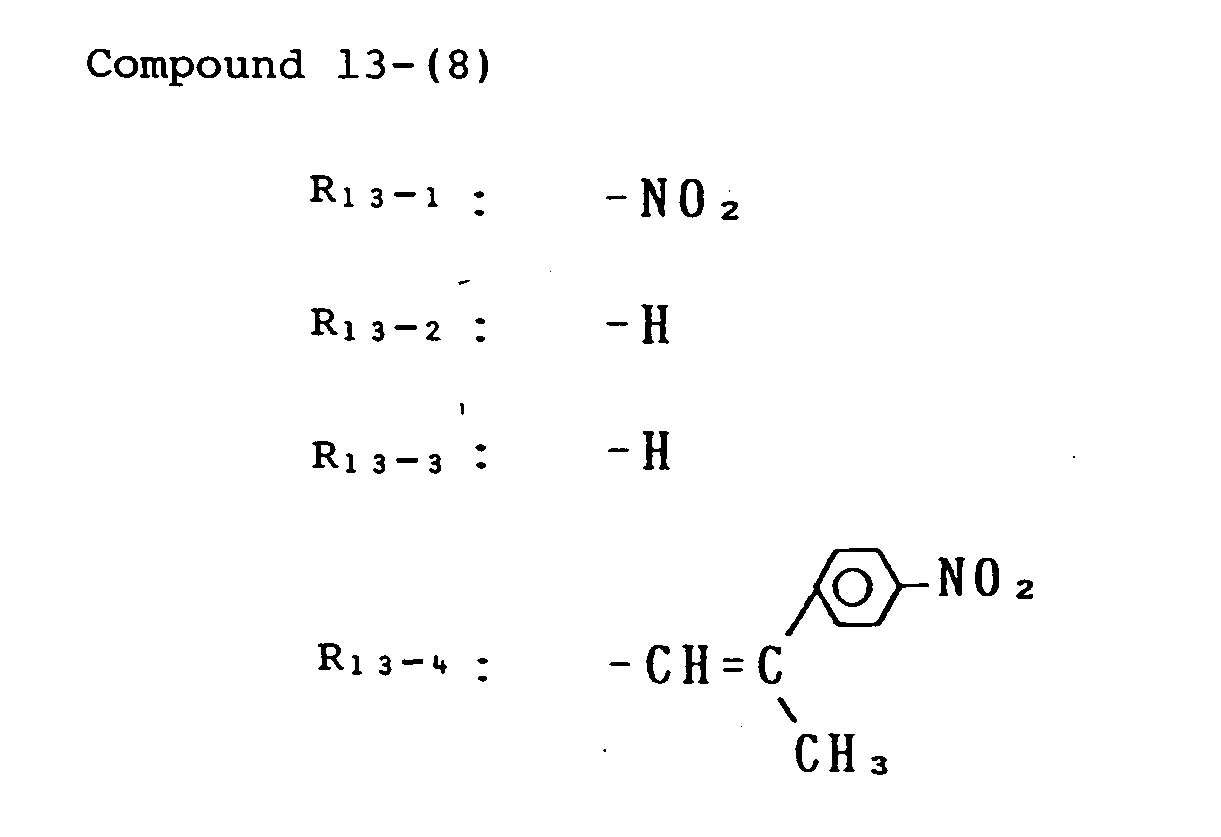
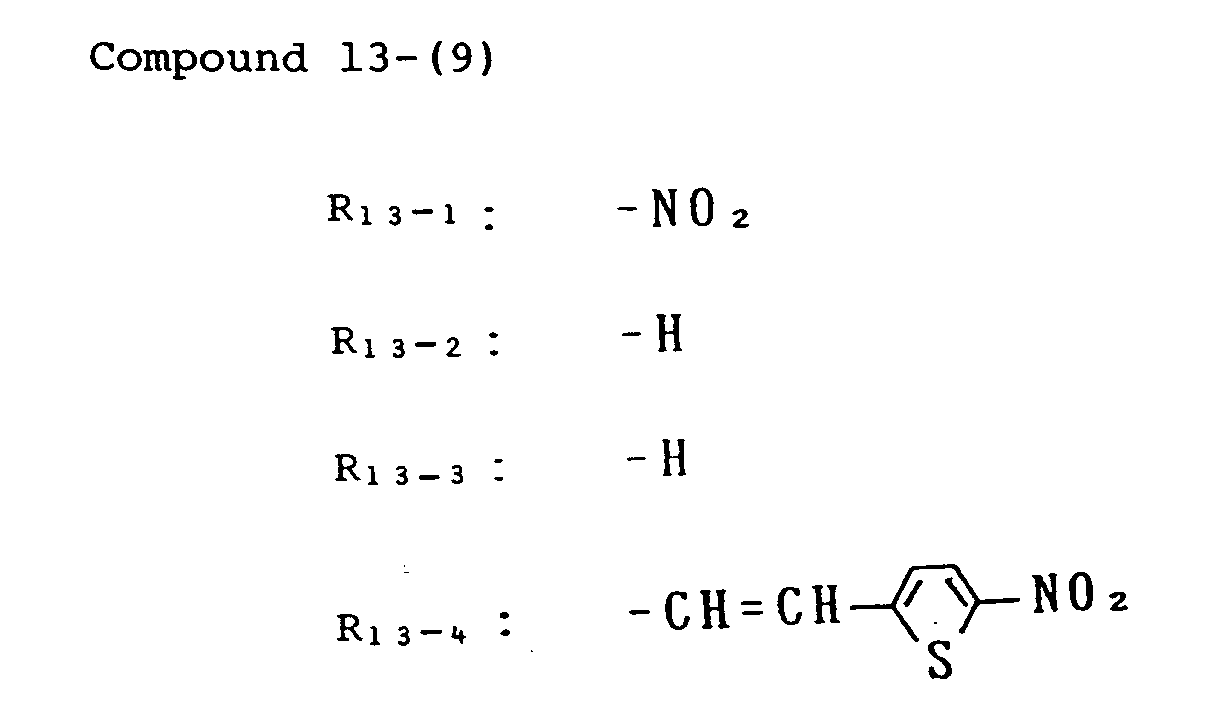
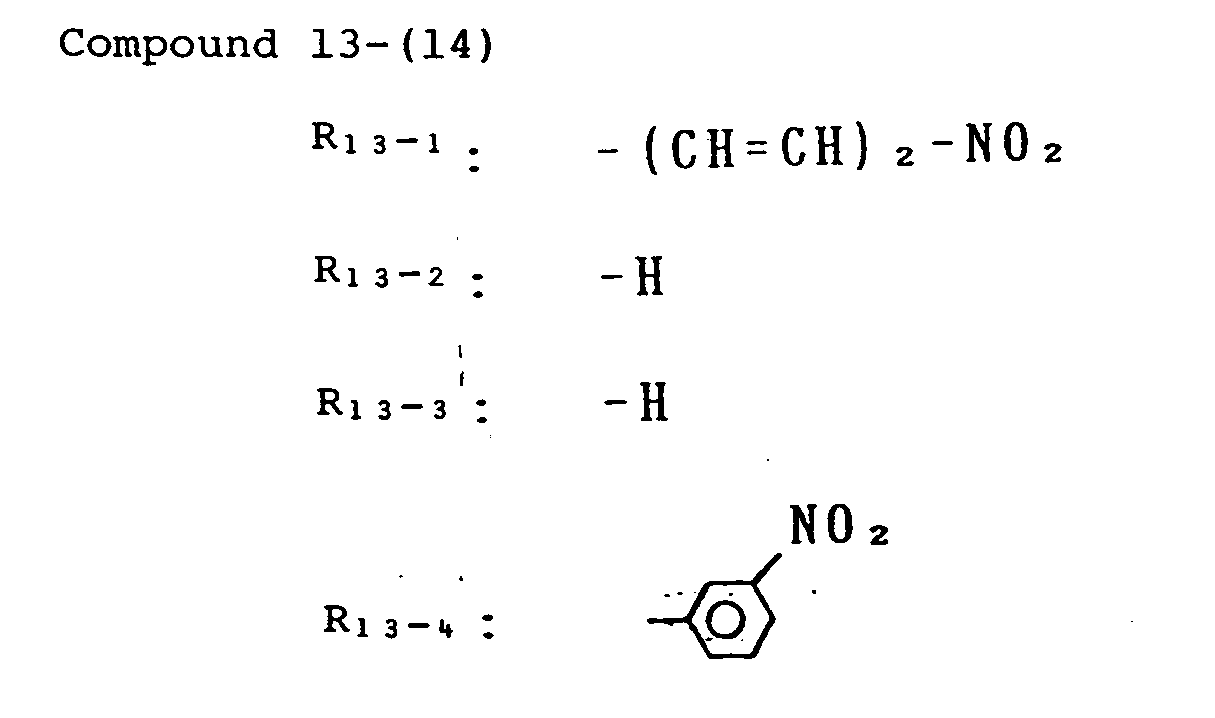
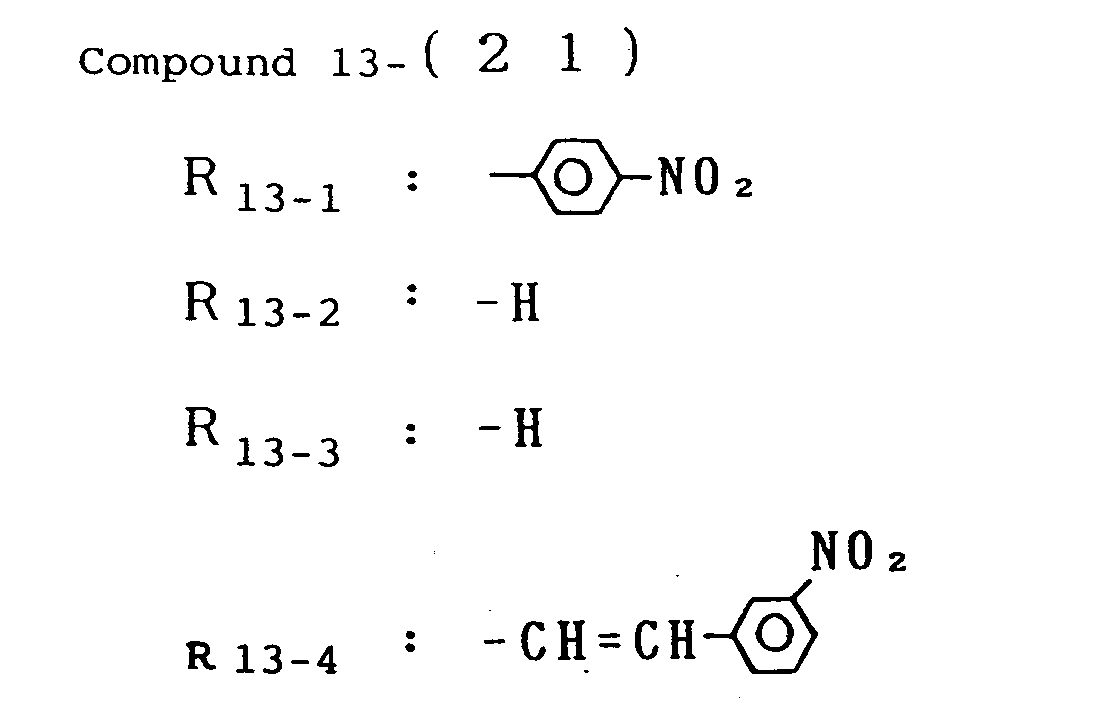
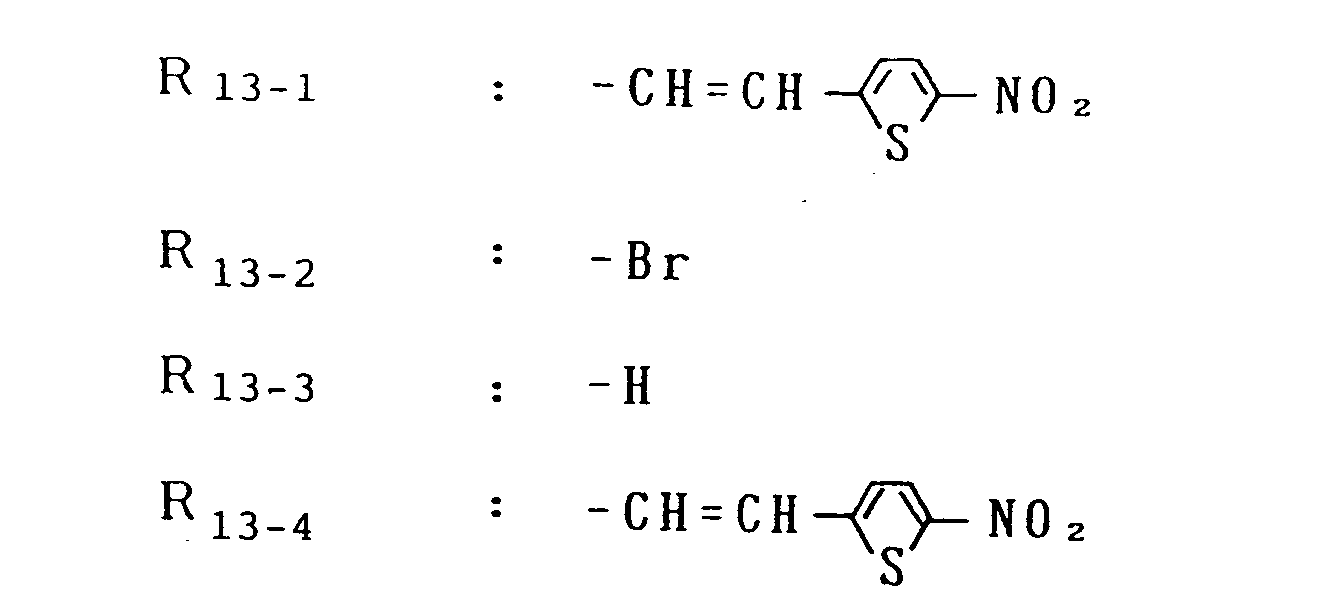
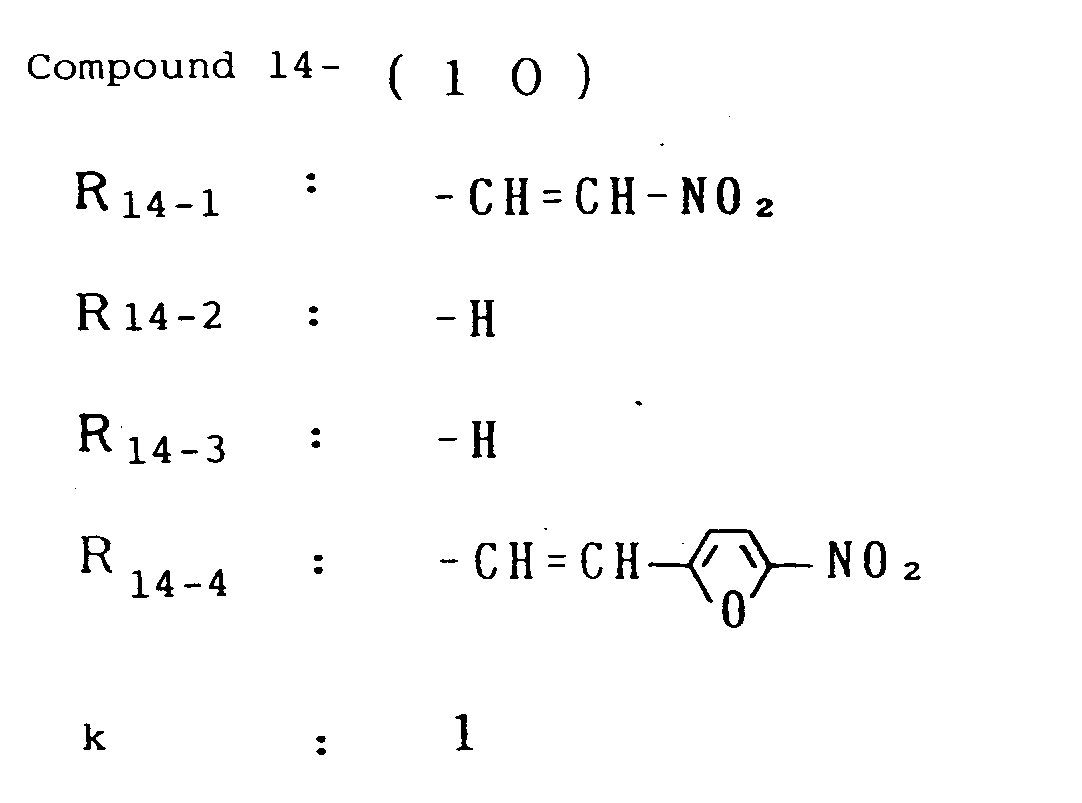
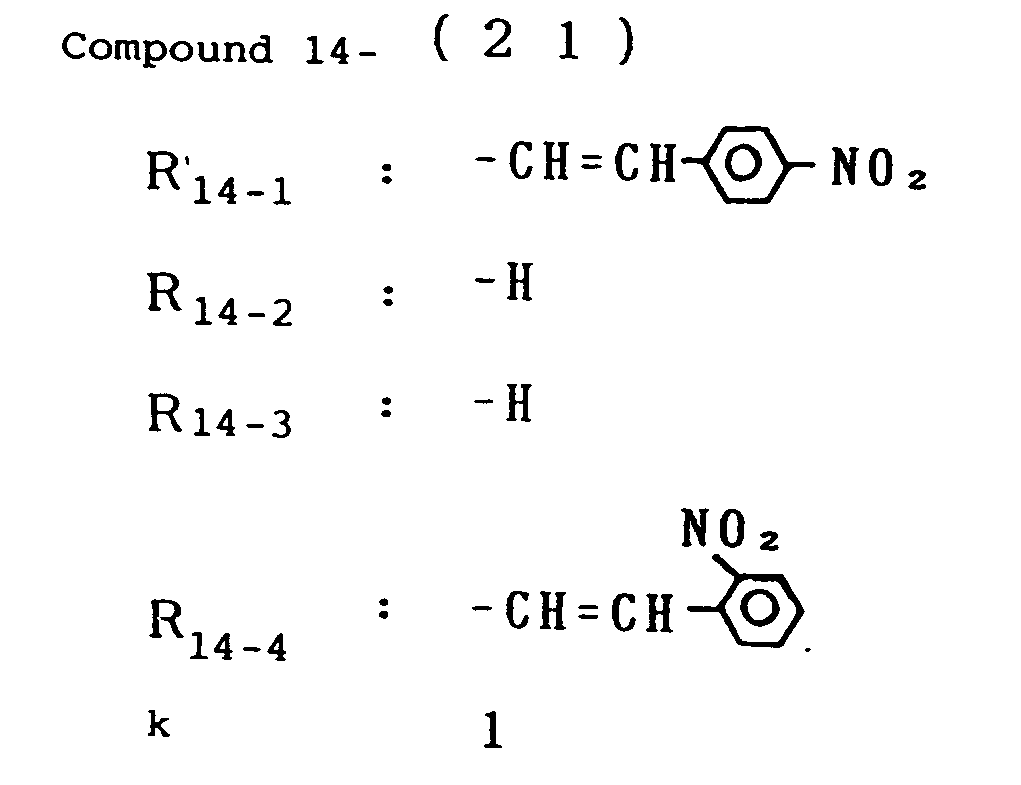
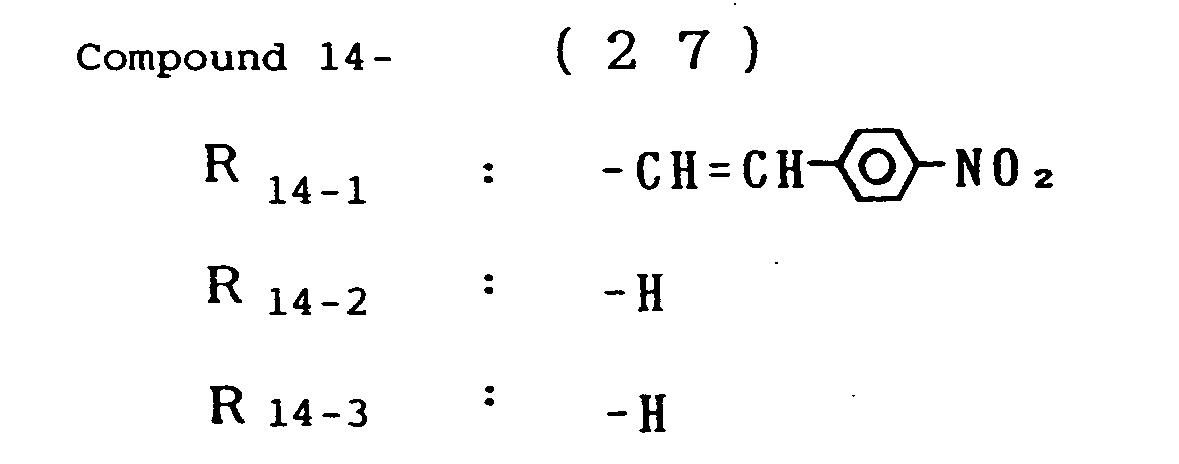
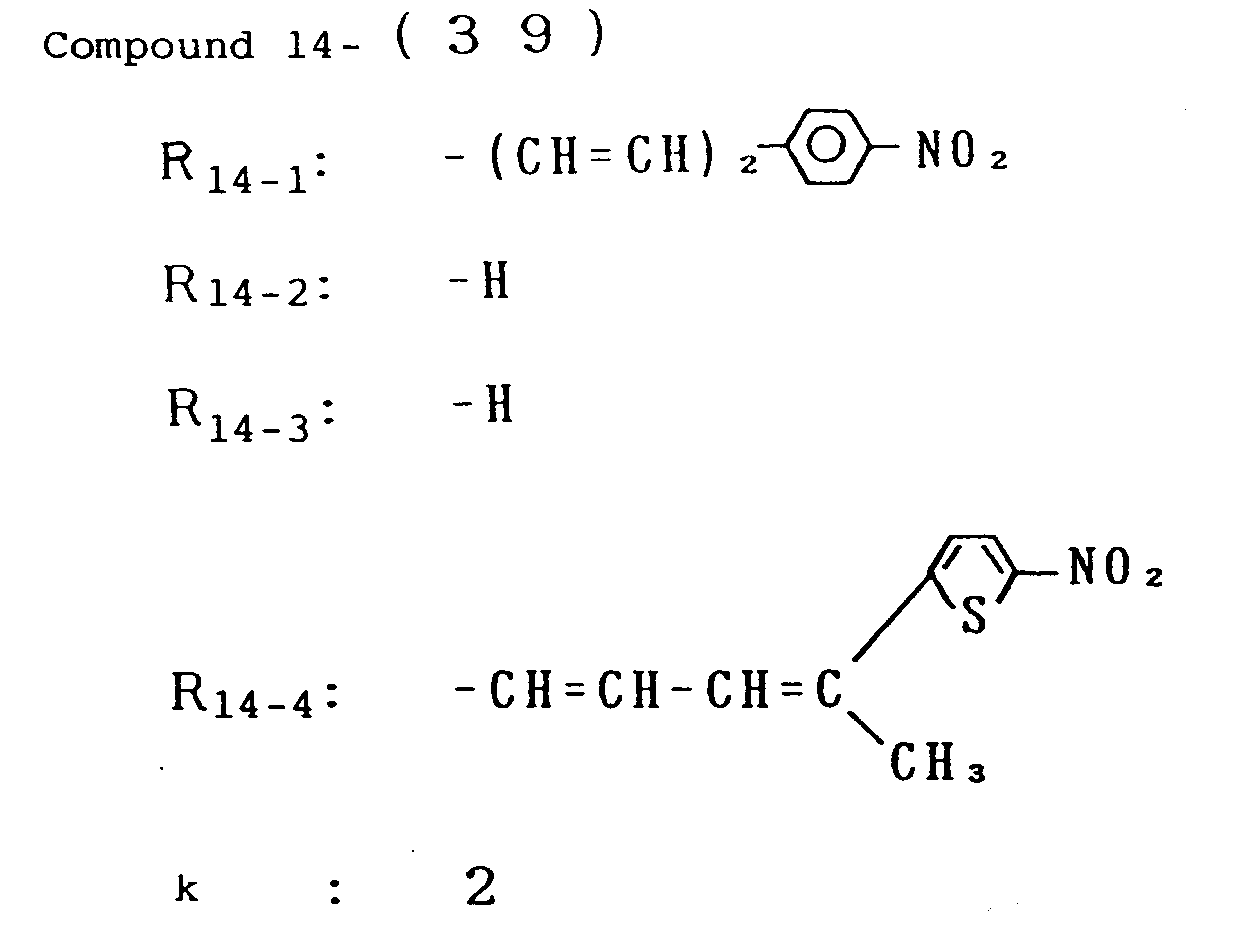
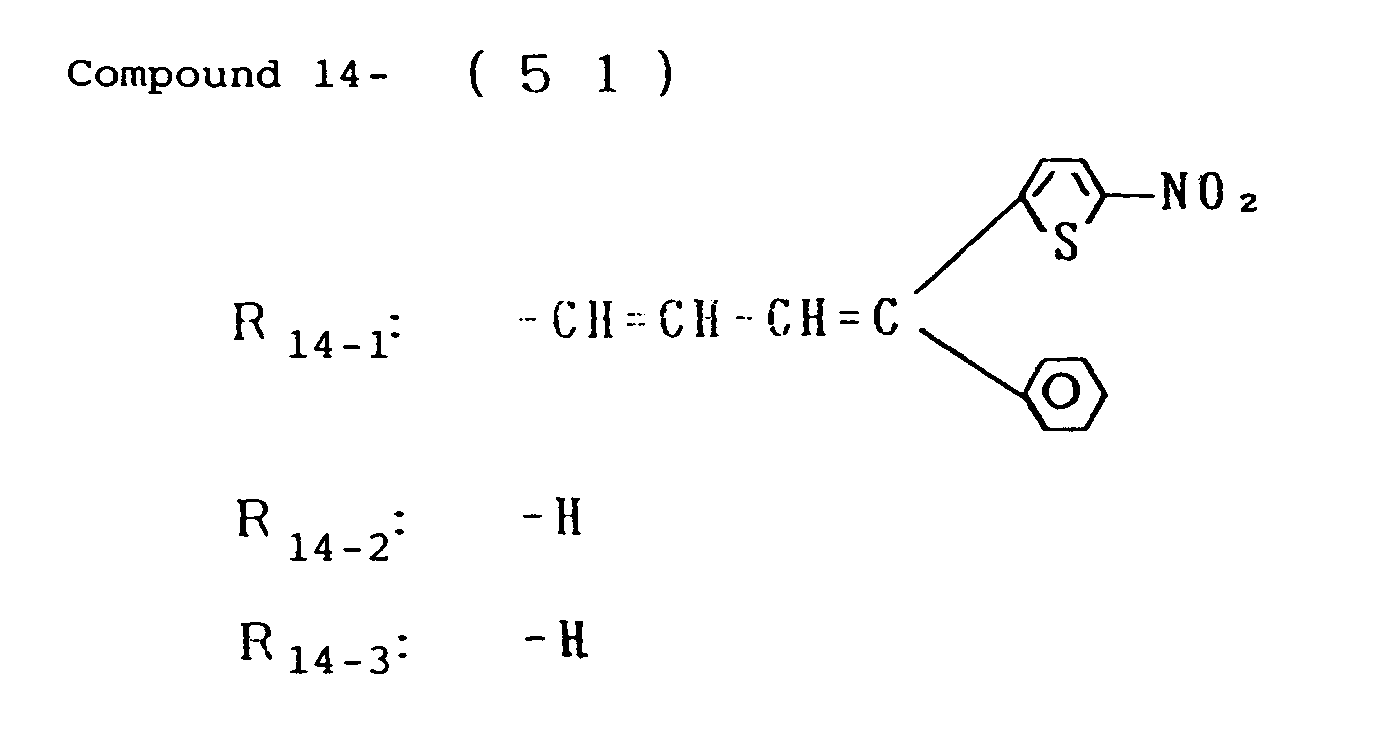
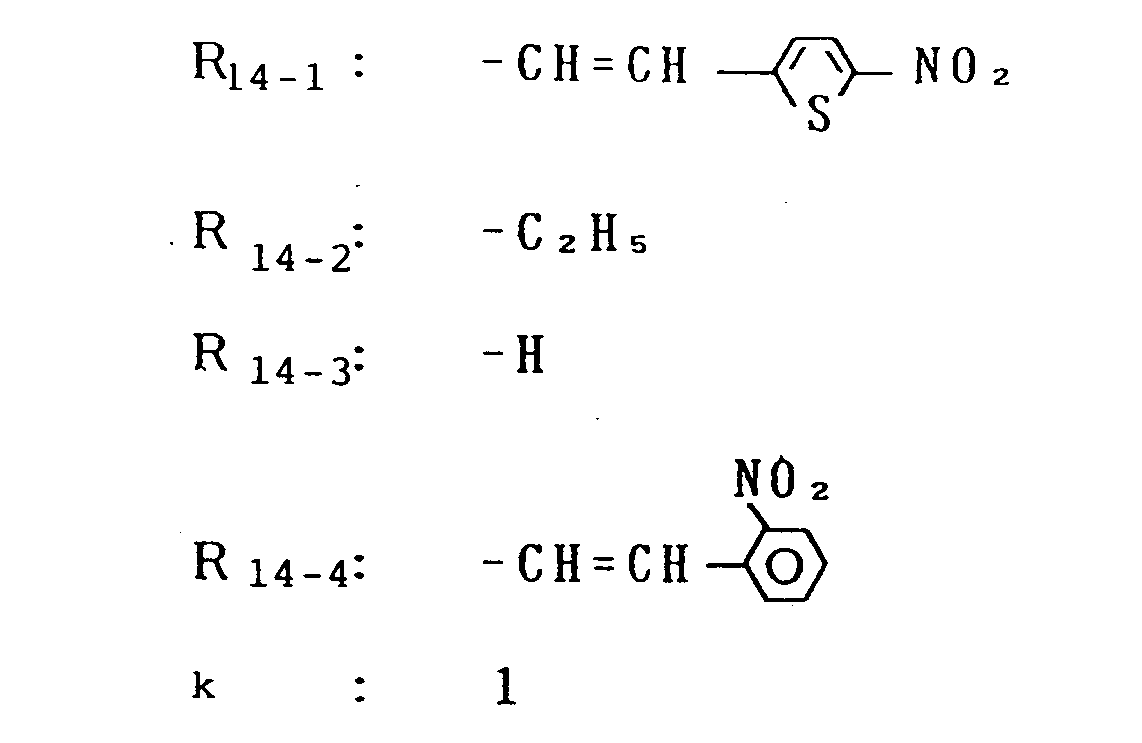
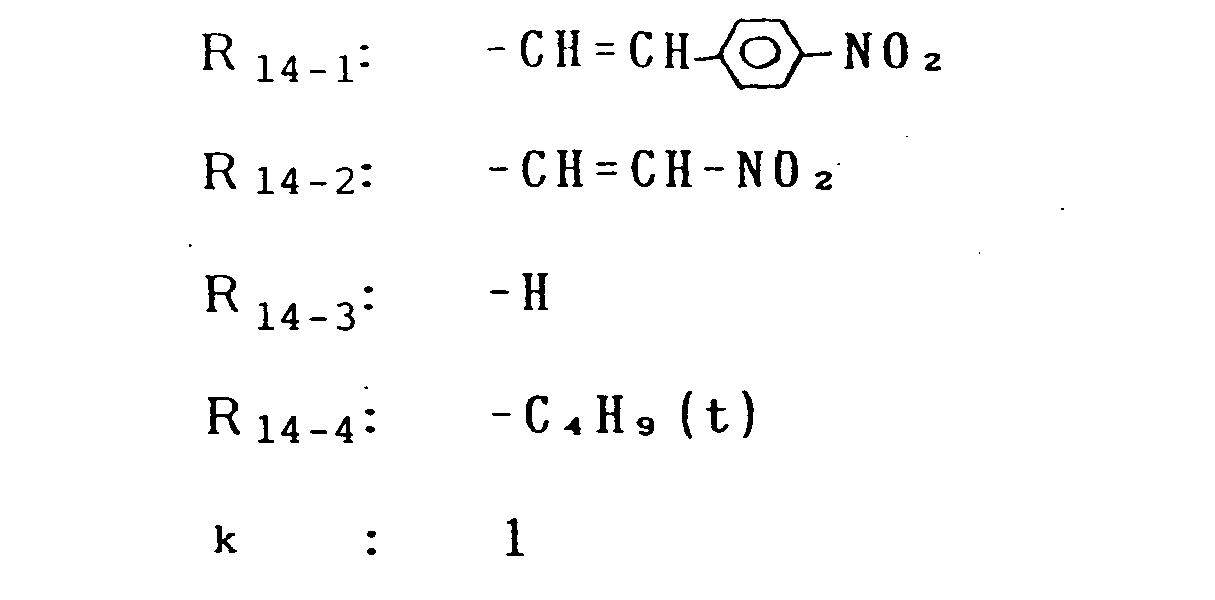
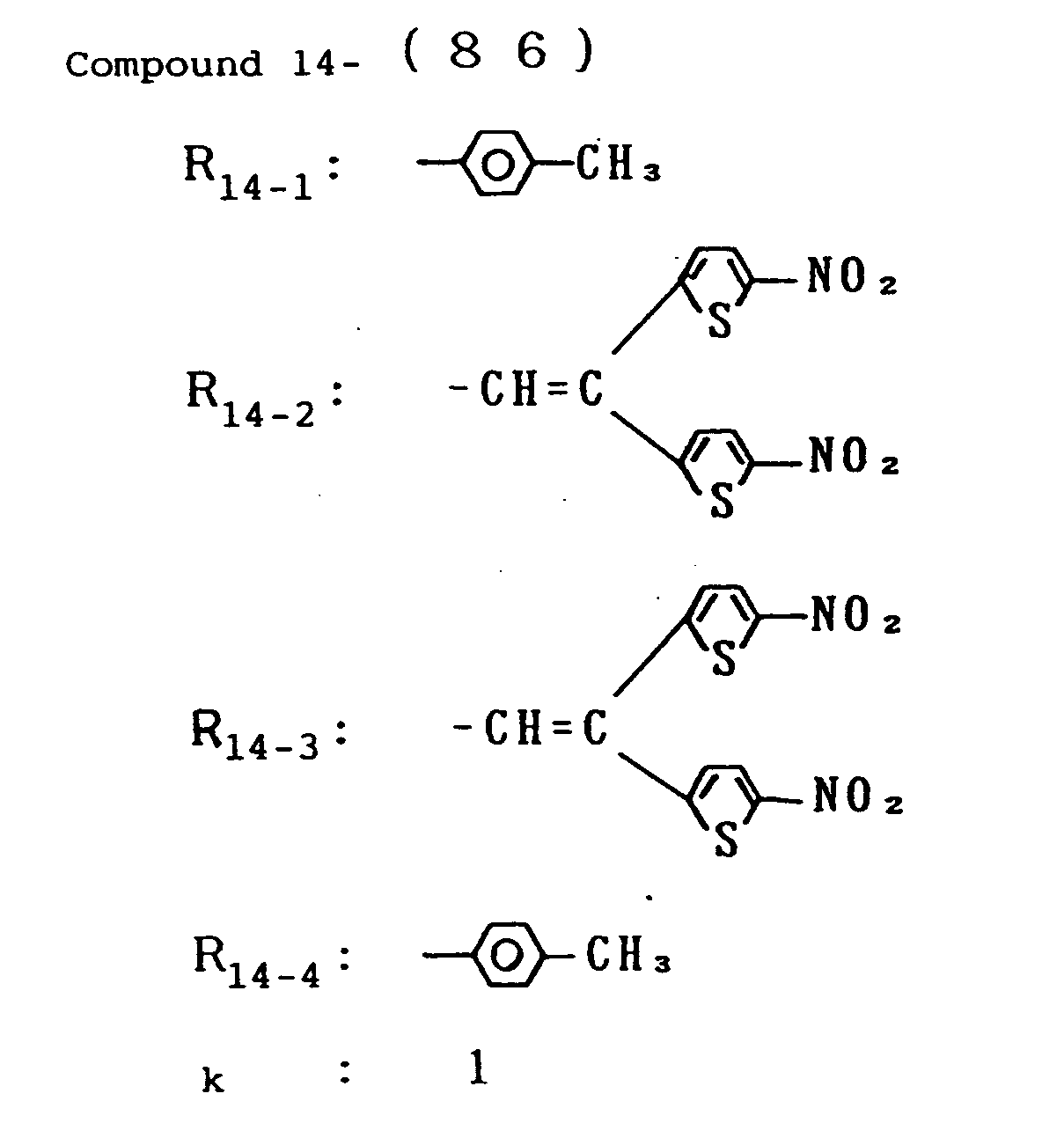
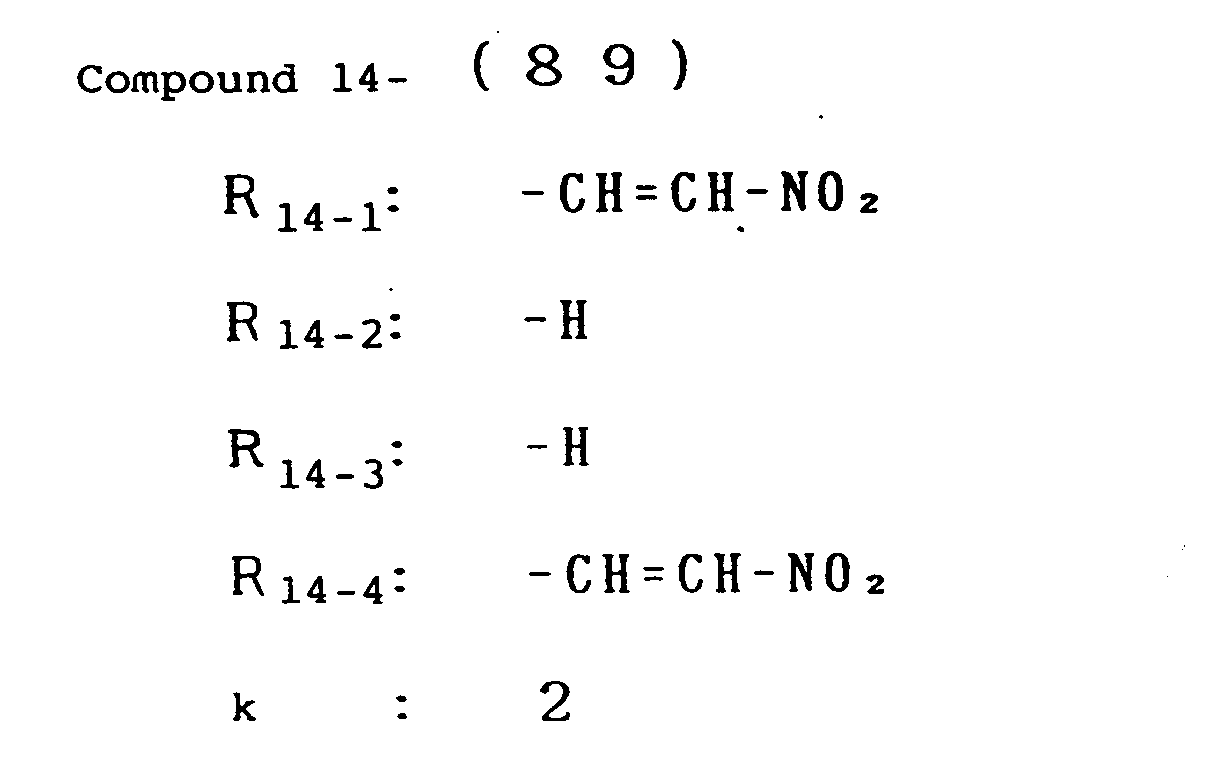
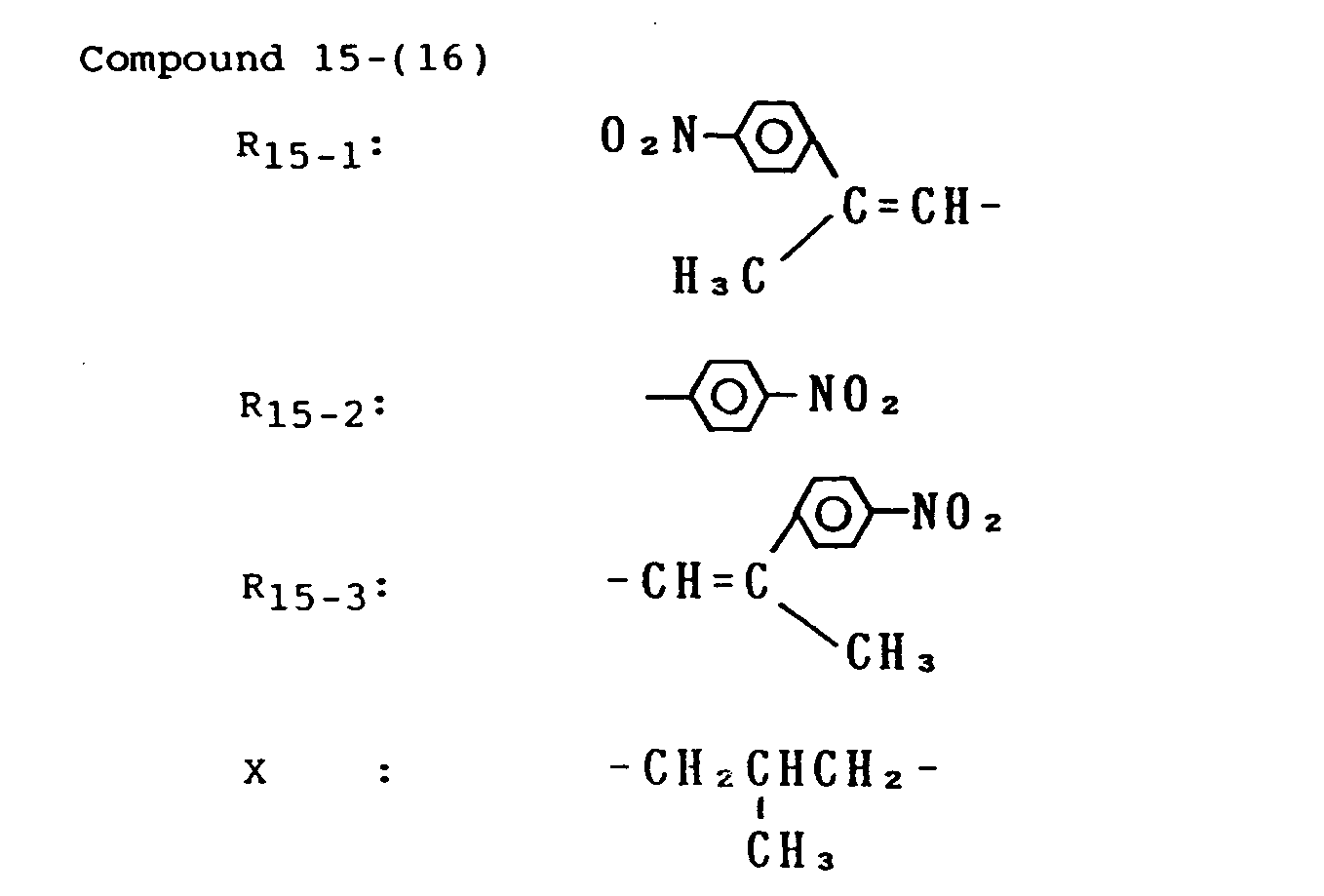
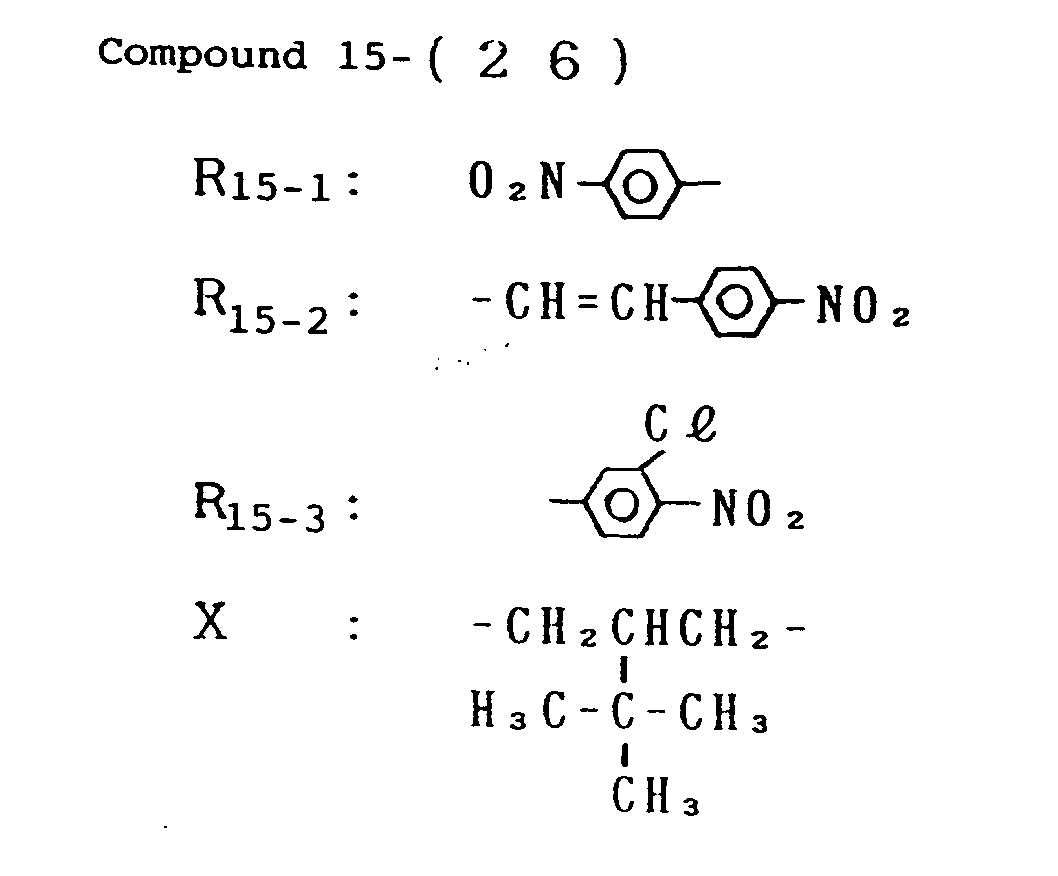
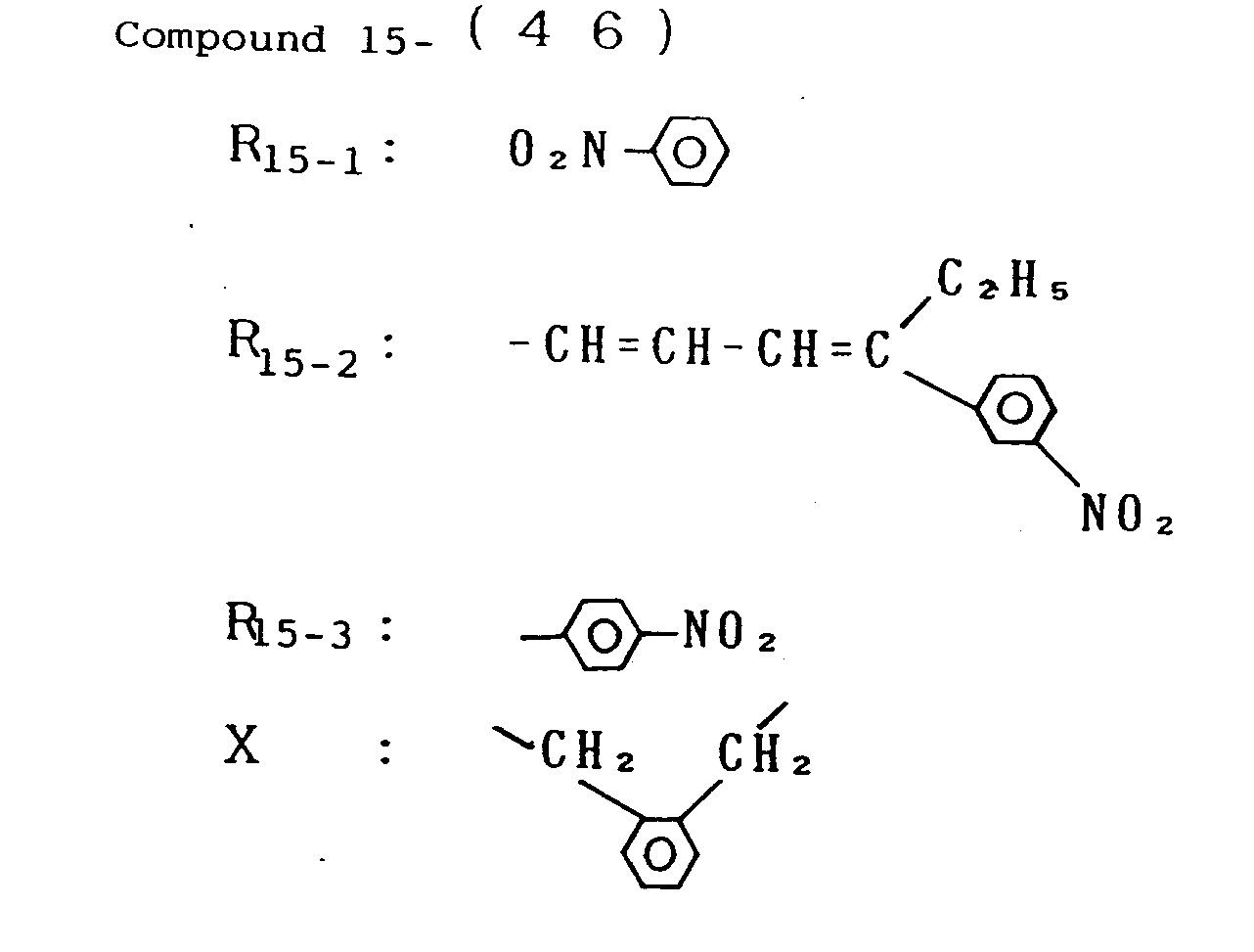
- Preferable examples of compounds which can be used in the present invention include compounds having structures represented by the following formulae (2), (3), (5), (6), (7), (8), (9), (10), (11), (12), (13) and (14), but they are not restrictive.


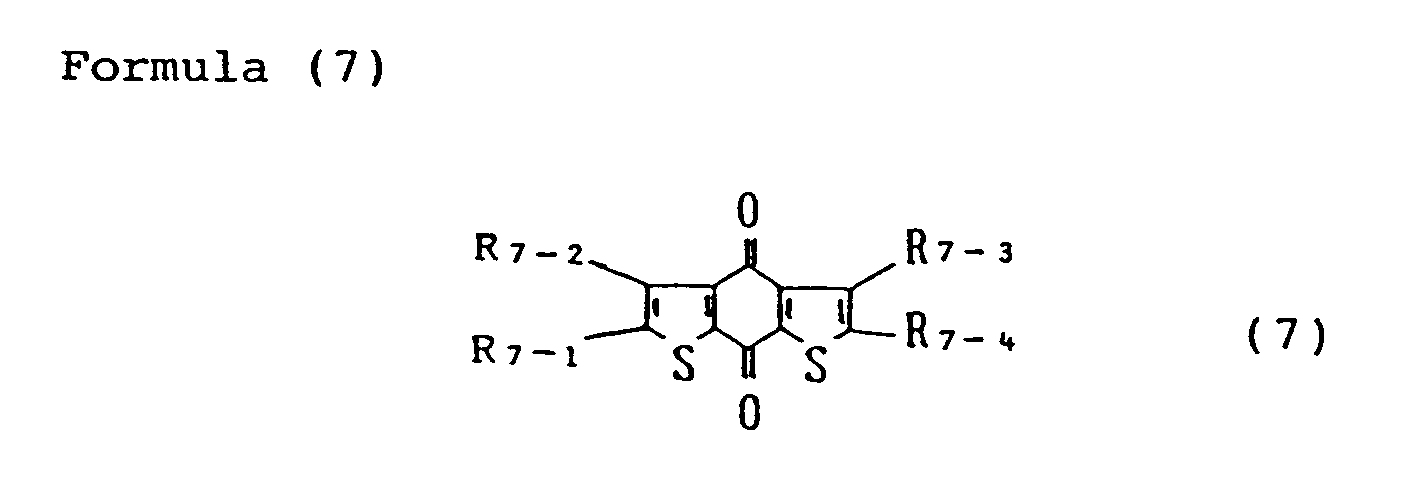


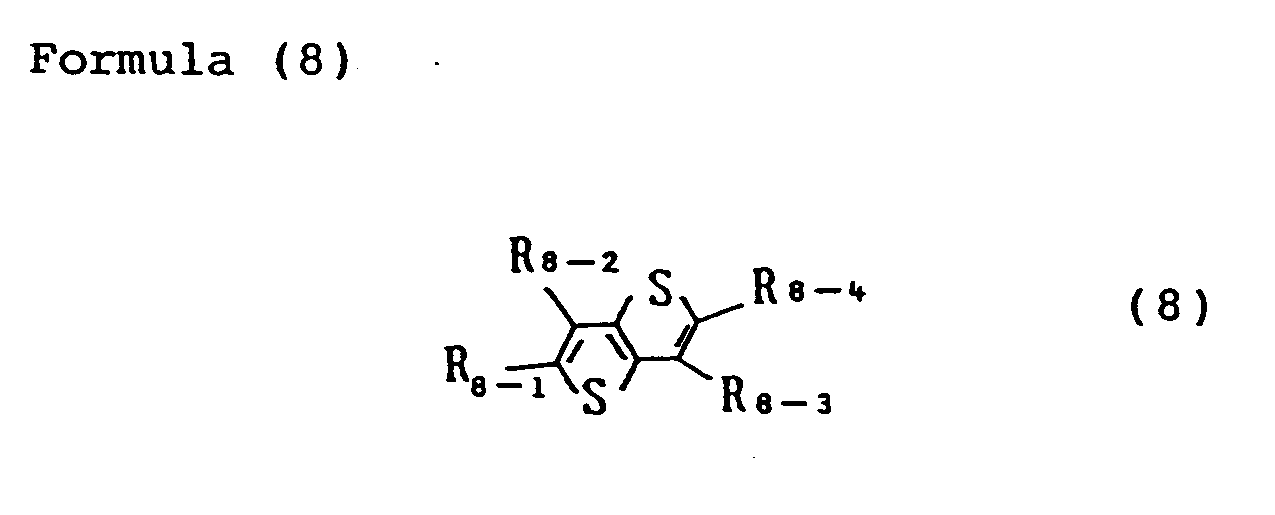


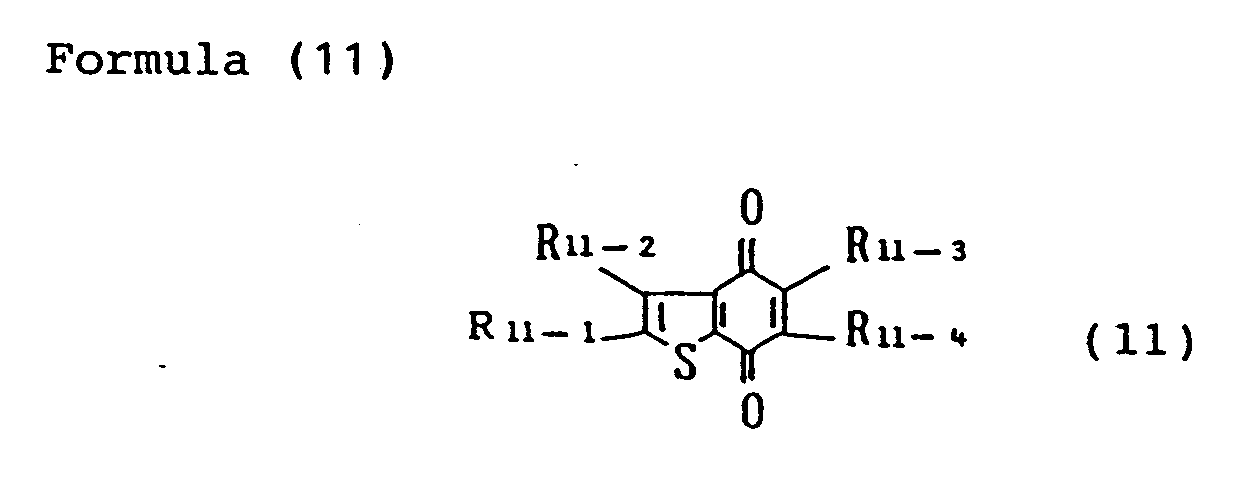


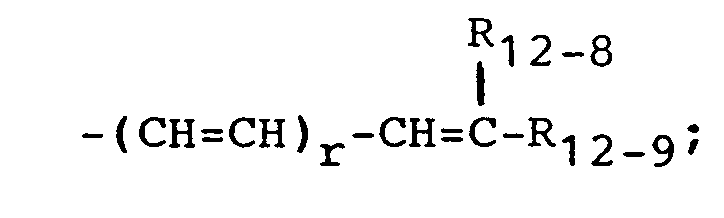


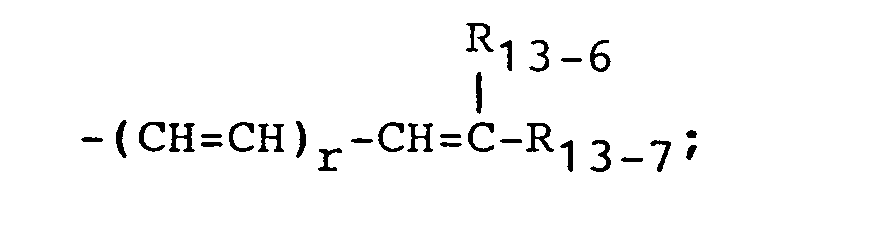
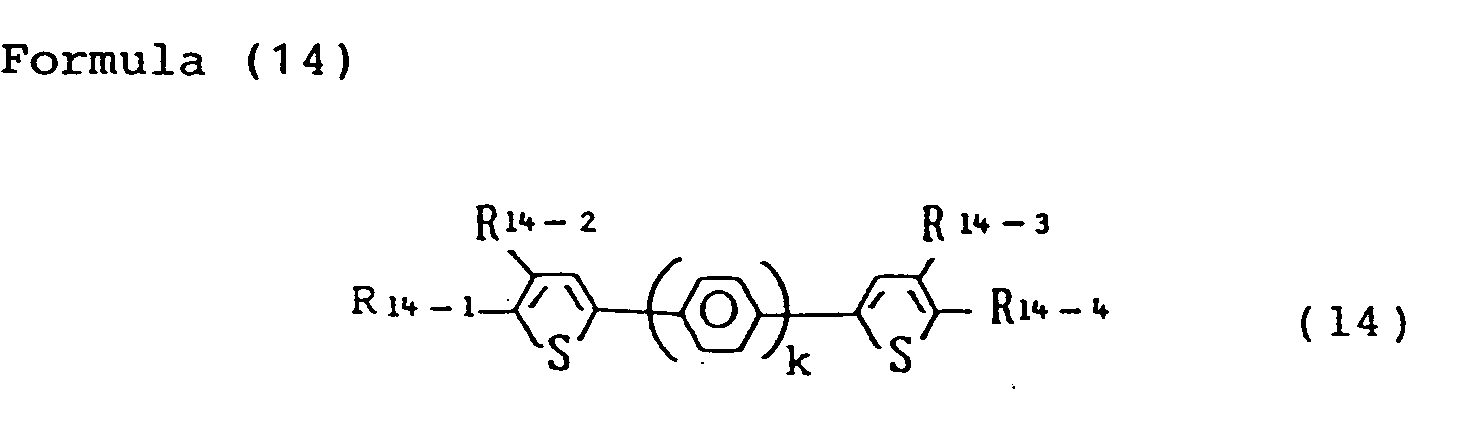


- In the compounds which can be used in the present invention, examples of the halogen atom include a fluorine atom, a chlorine atom and a bromine atom; examples of the alkyl group include methyl, ethyl, propyl and butyl groups; examples of the aralkyl group include benzyl, phenethyl and naphthylmethyl groups; examples of the aromatic ring group include phenyl and naphthyl groups; and examples of the heterocyclic ring group include thienyl, pyridyl and furil groups.
- Furthermore, examples of the substituents which the above-mentioned compounds may have include alkyl groups such as methyl and ethyl groups, halogen atoms such as fluorine and chlorine atoms, a cyano group and a nitro group.
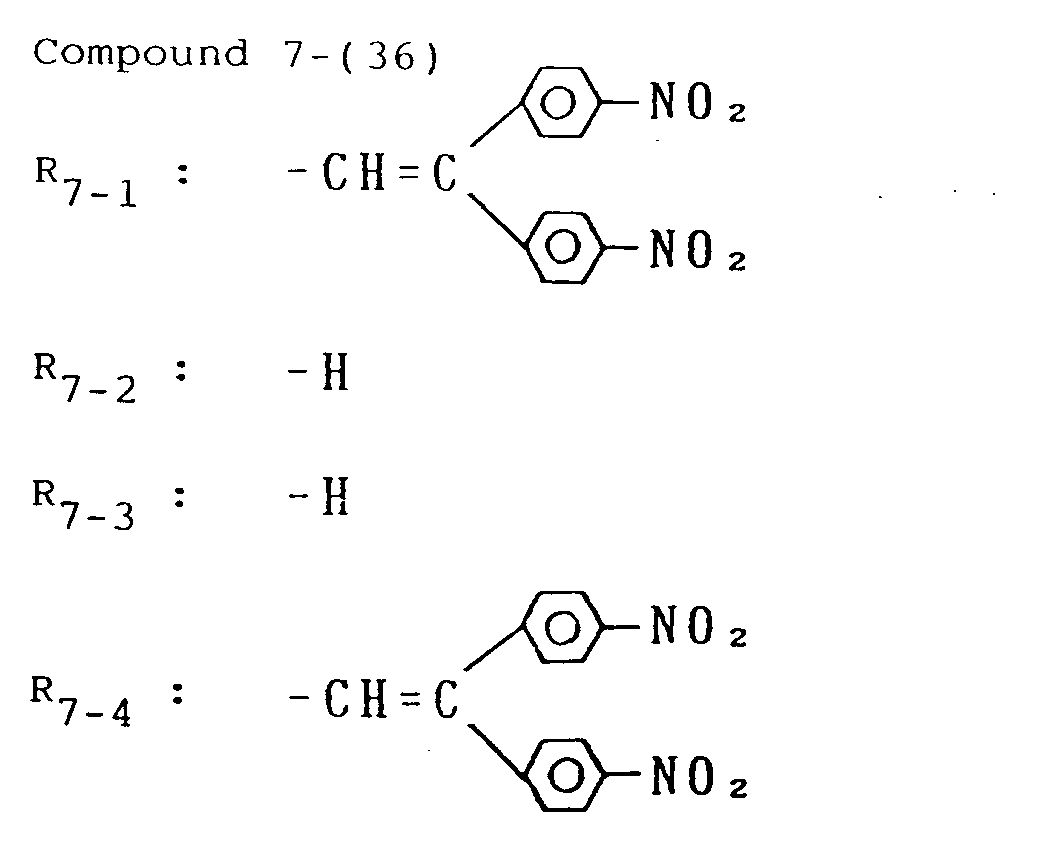
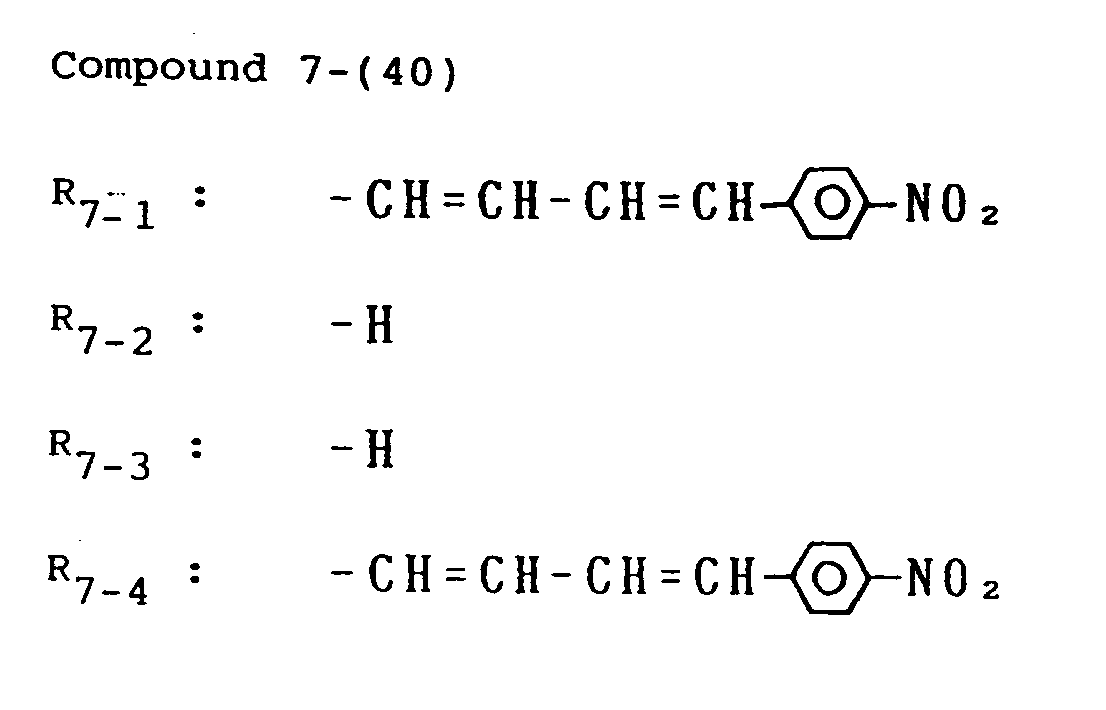
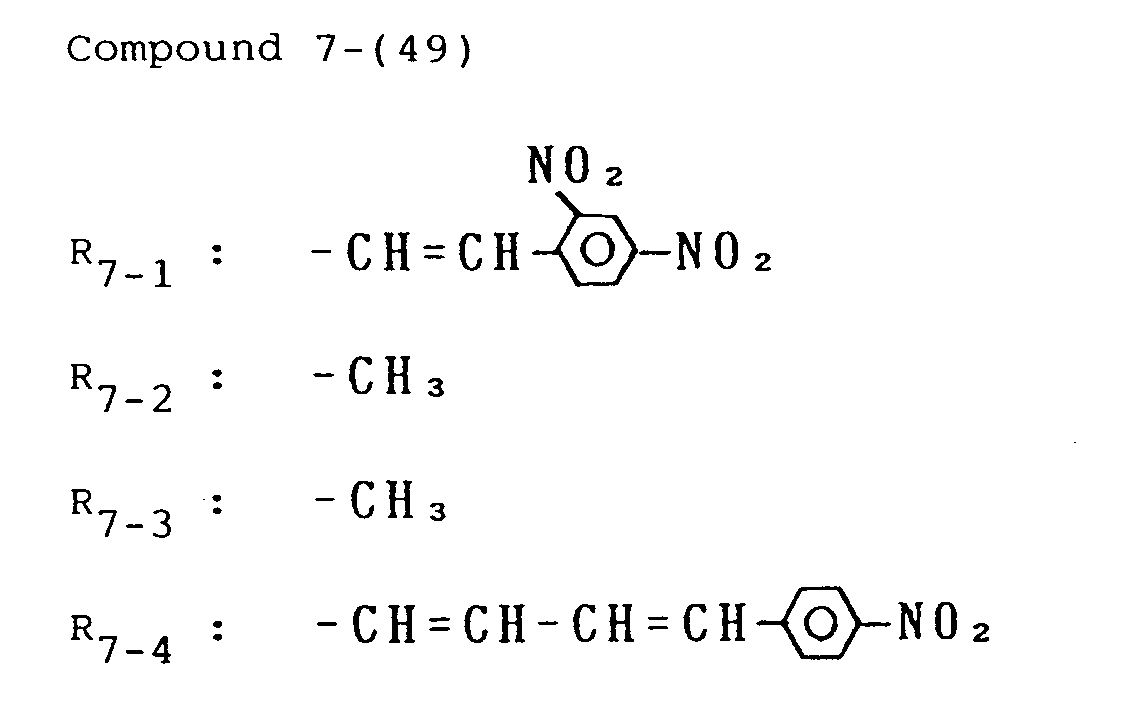
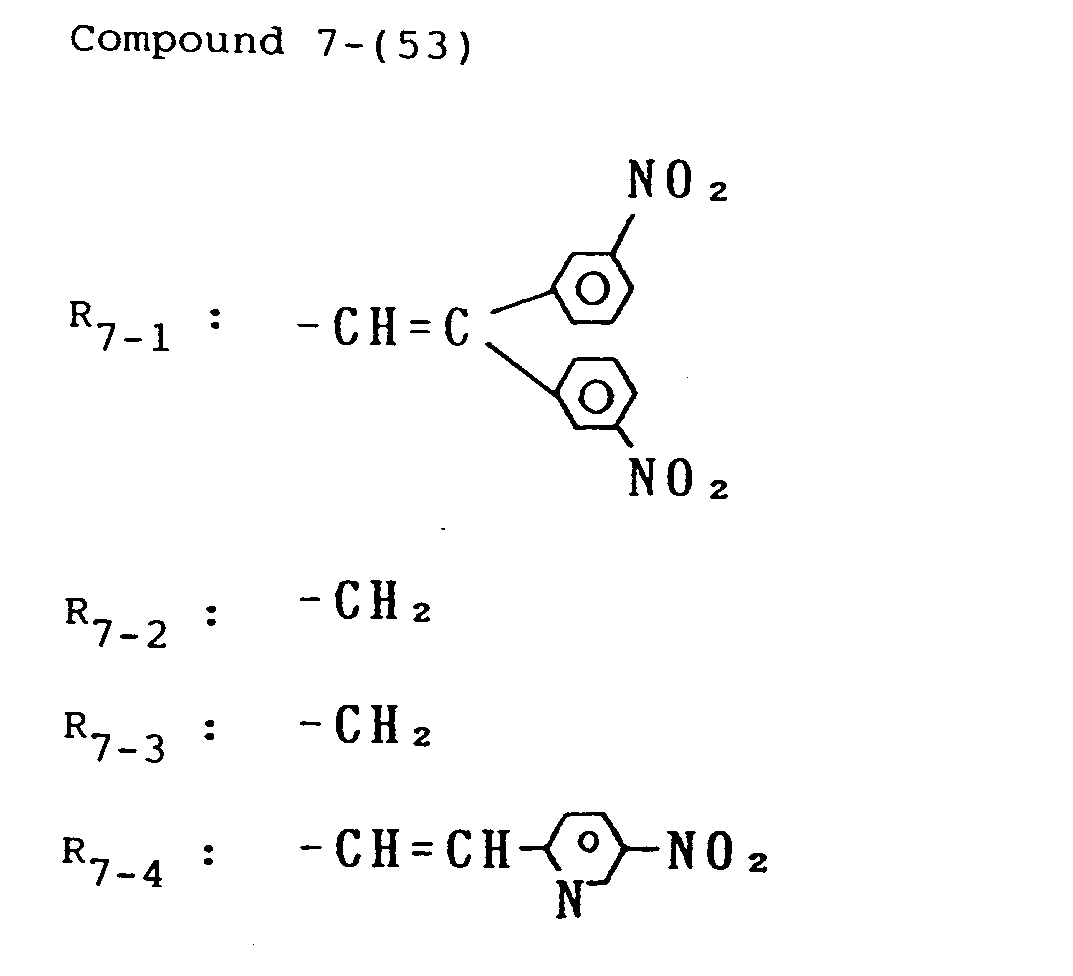
- The Compounds represented by Formula (1) are specifically exemplified below, which are intended to be illustrative and not limiting.
-


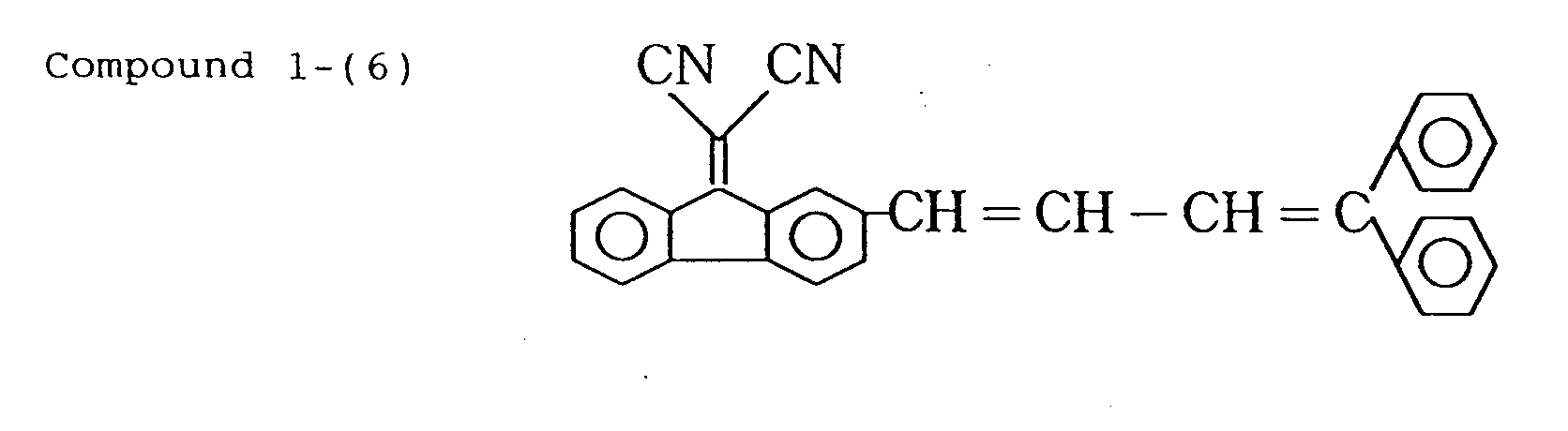


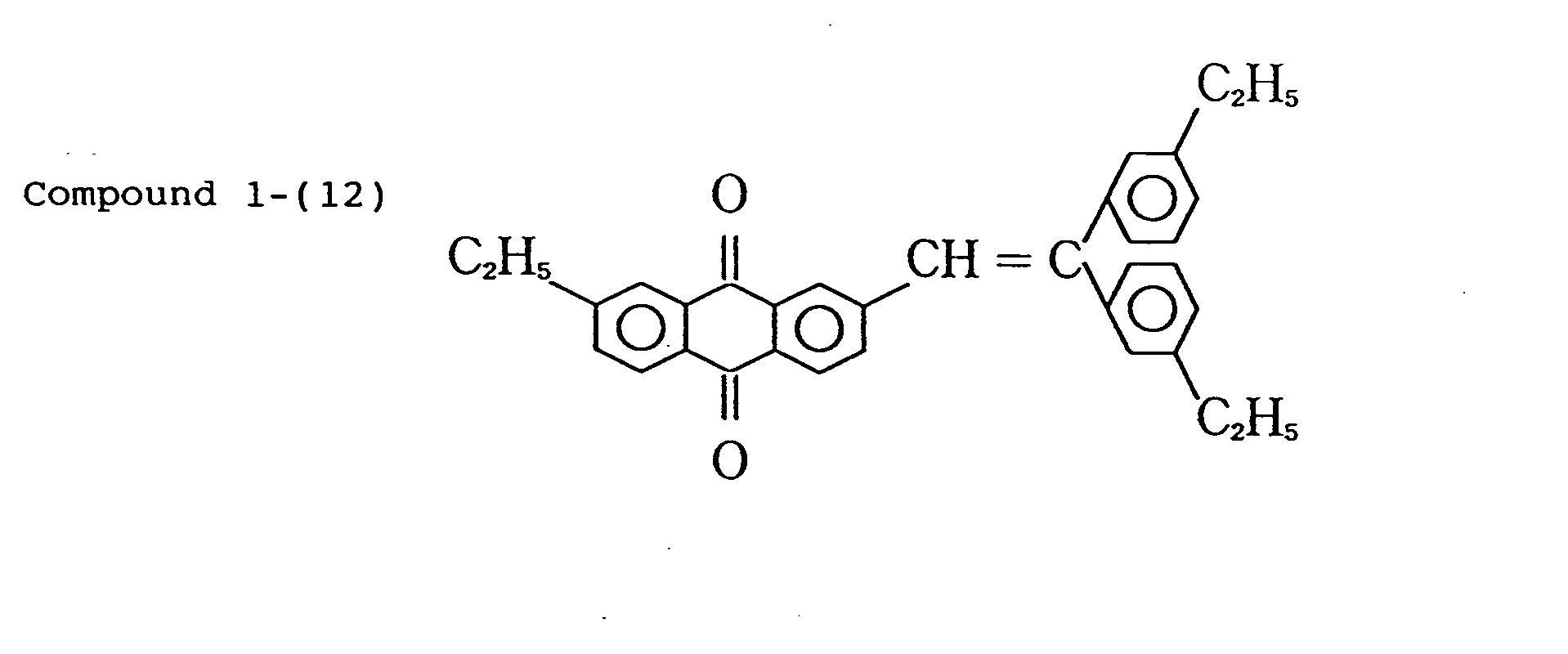


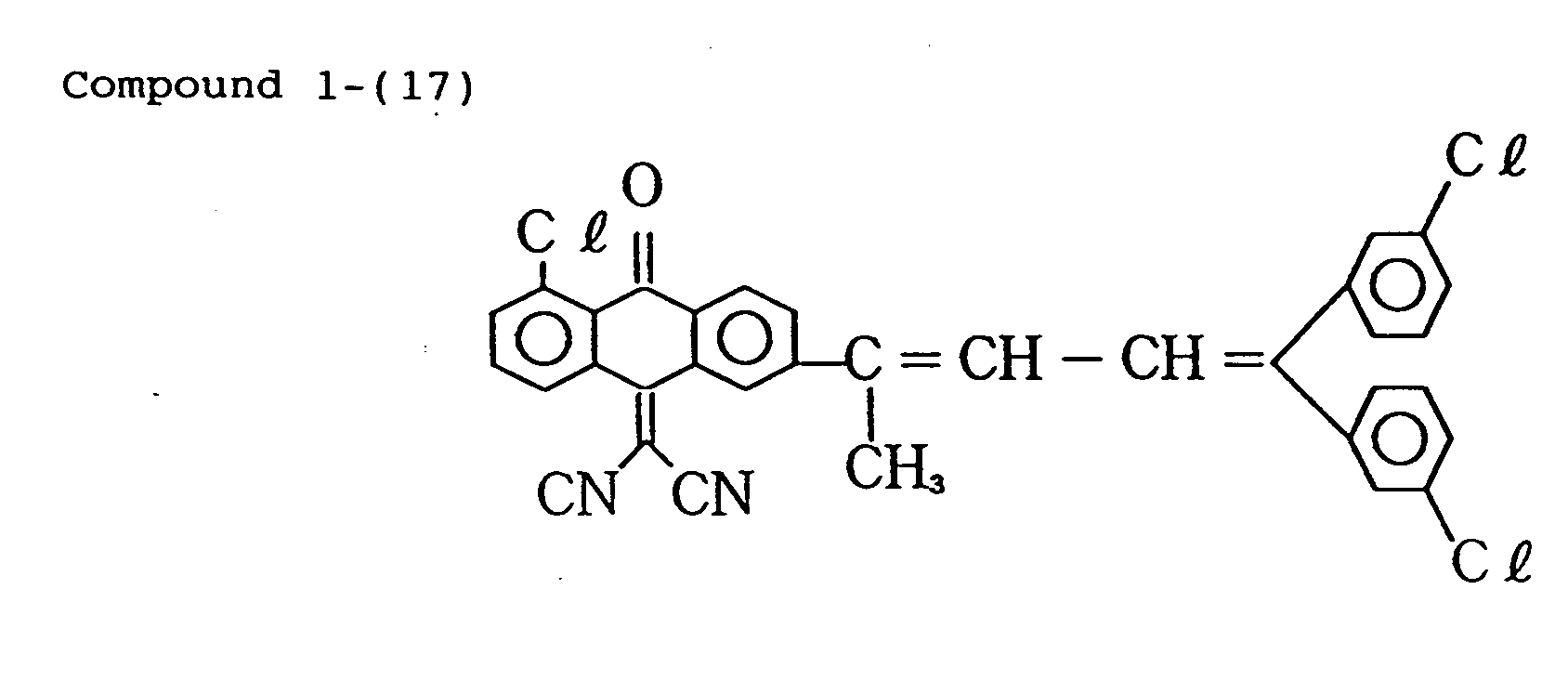


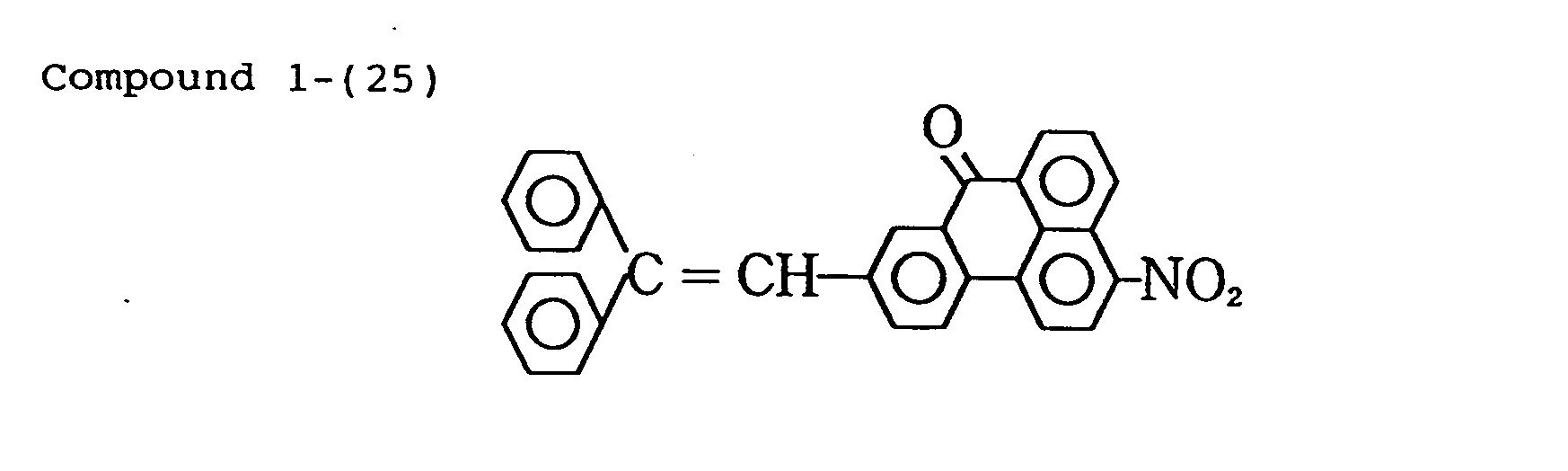


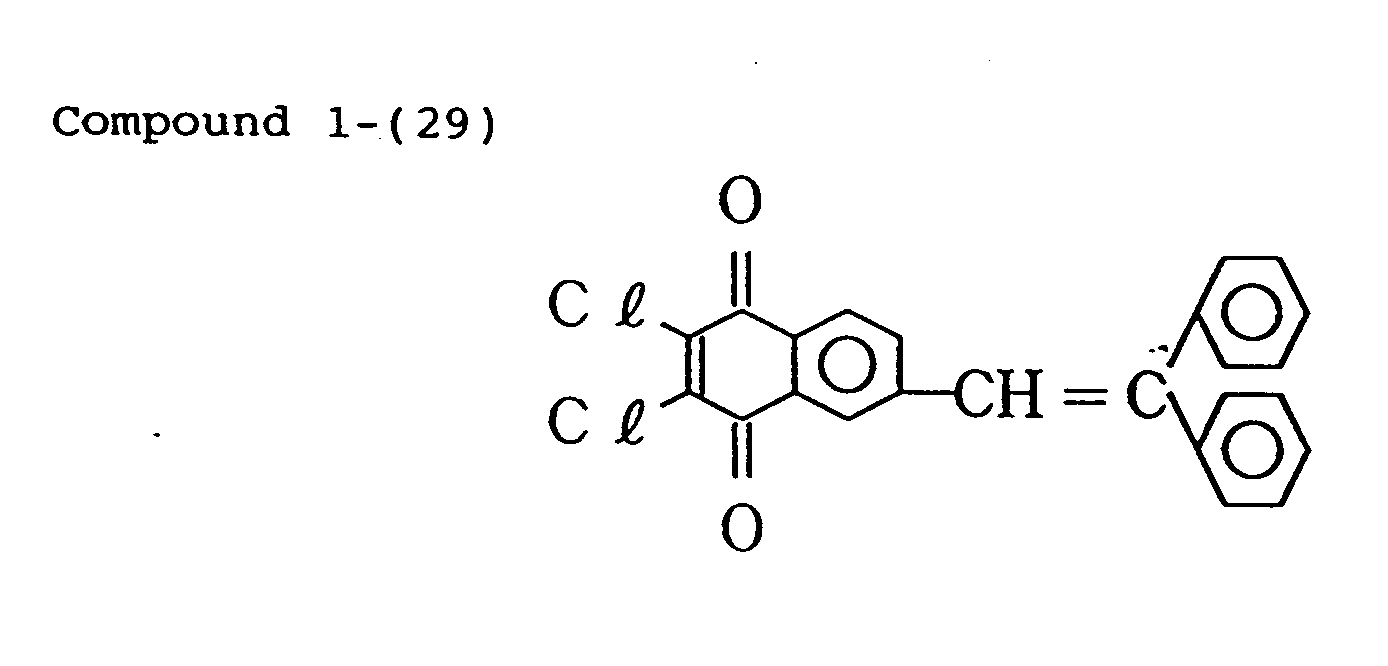

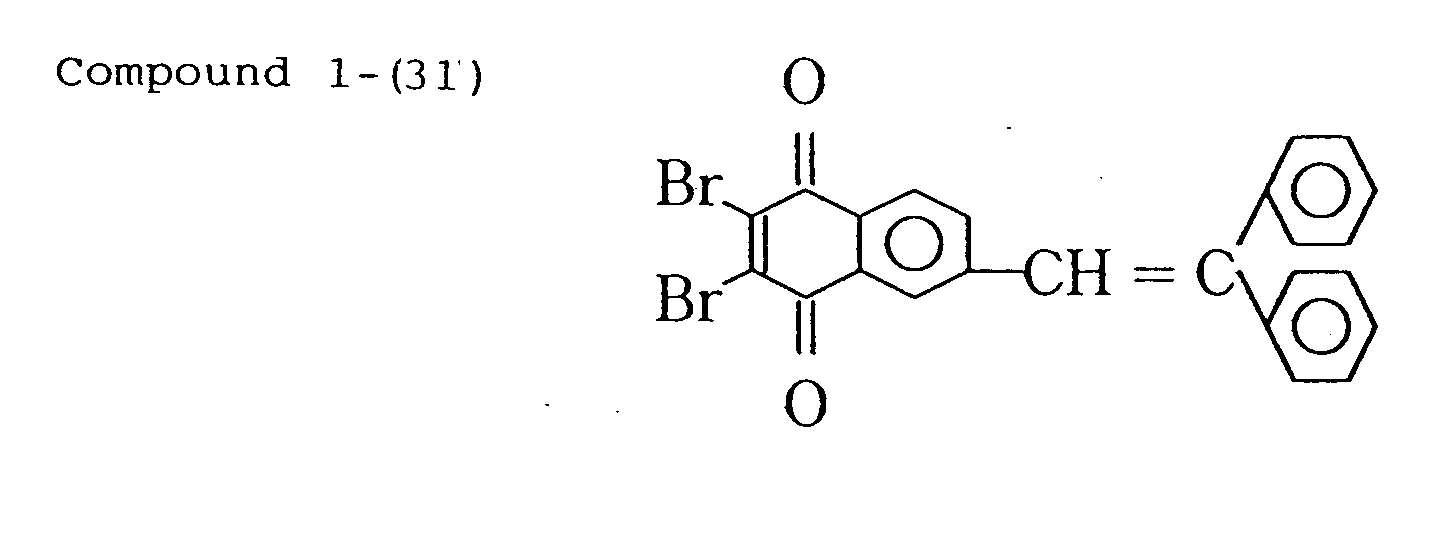


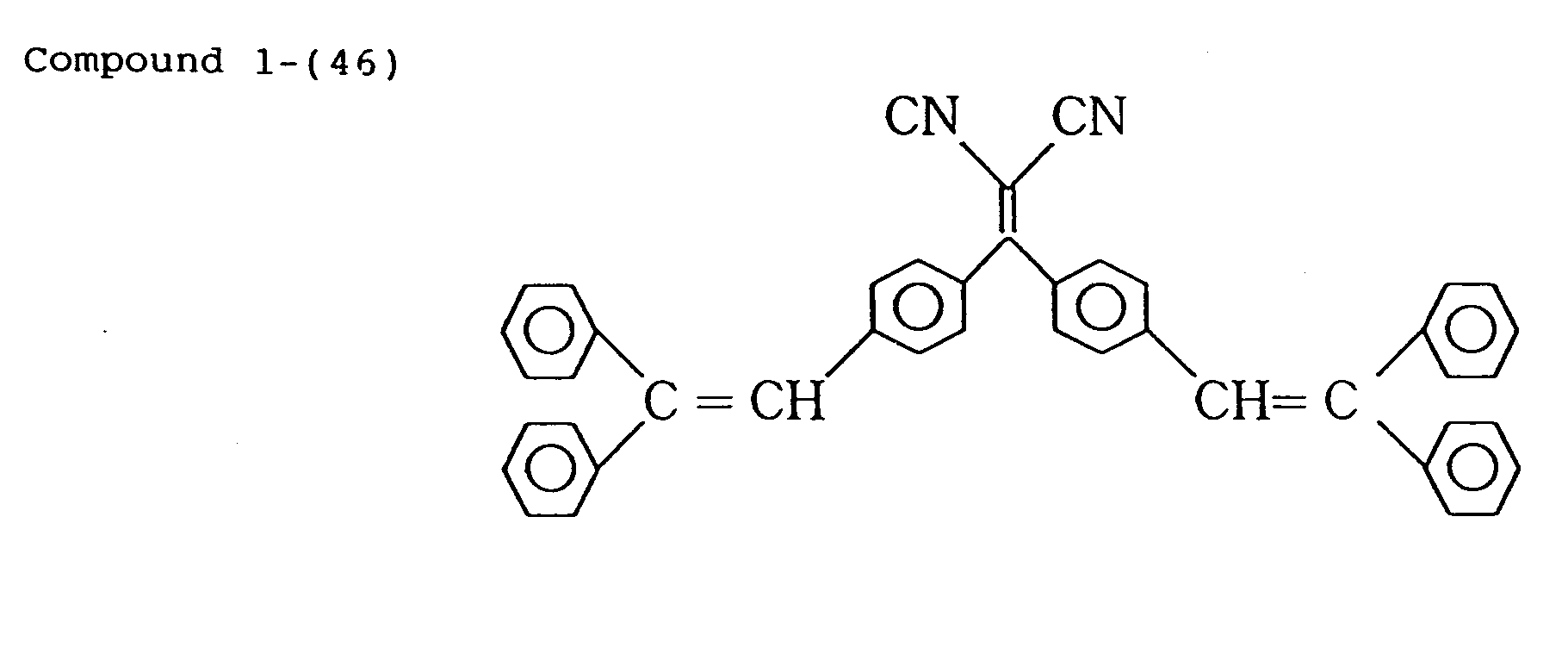


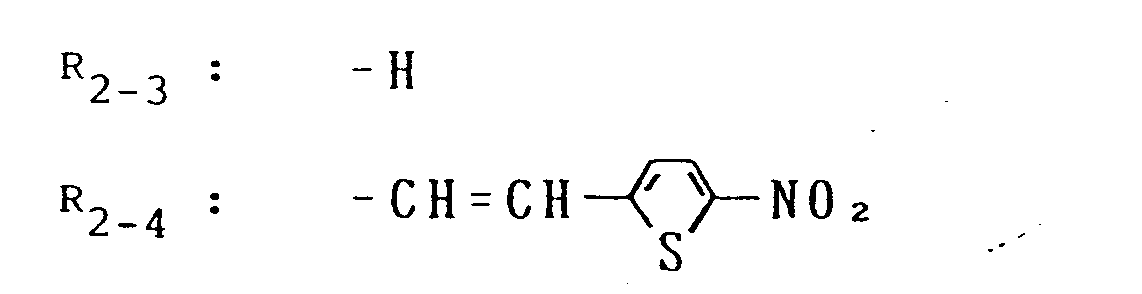
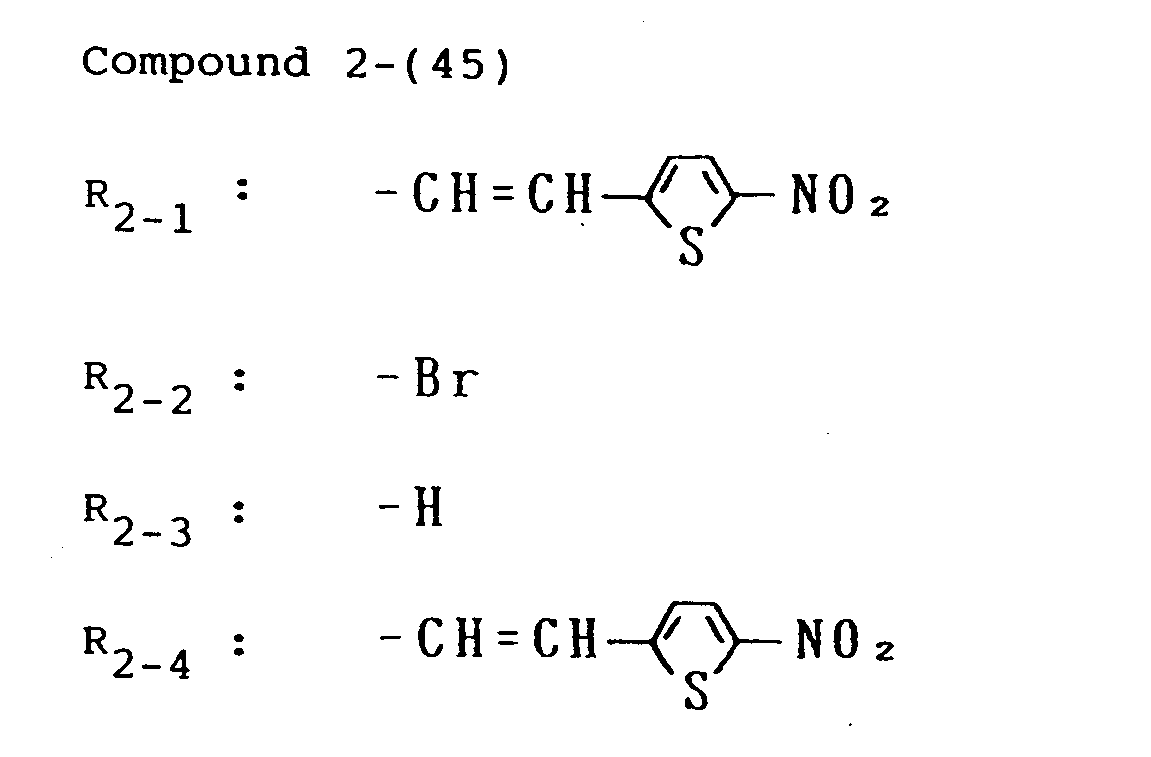
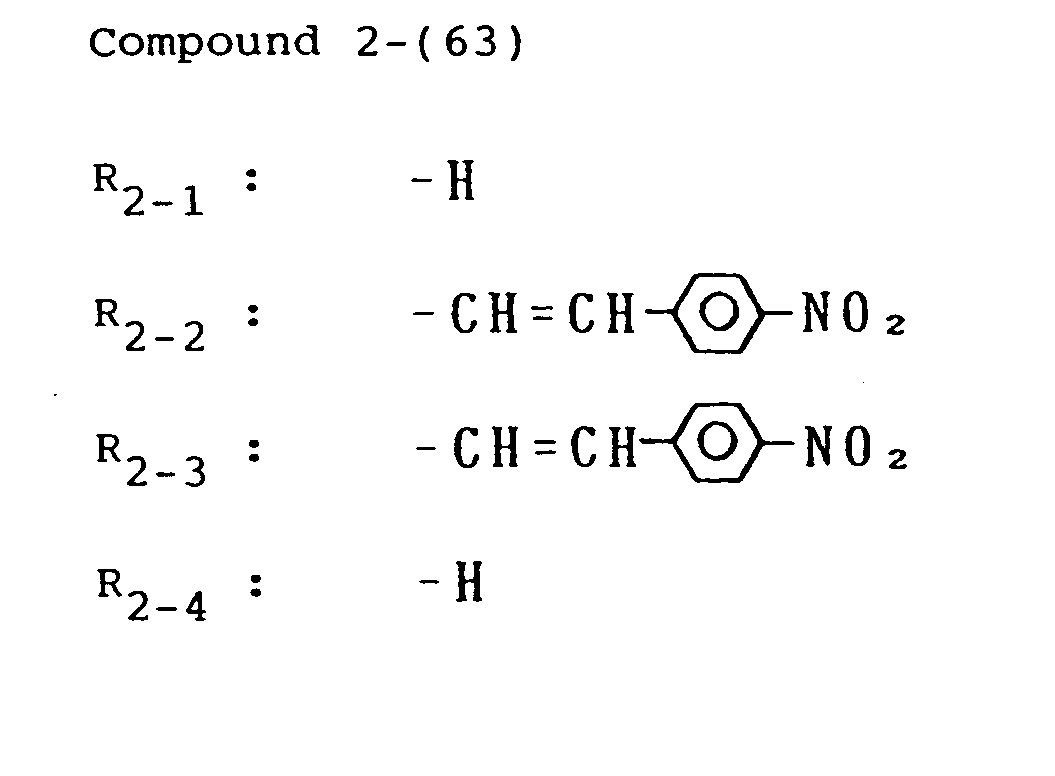
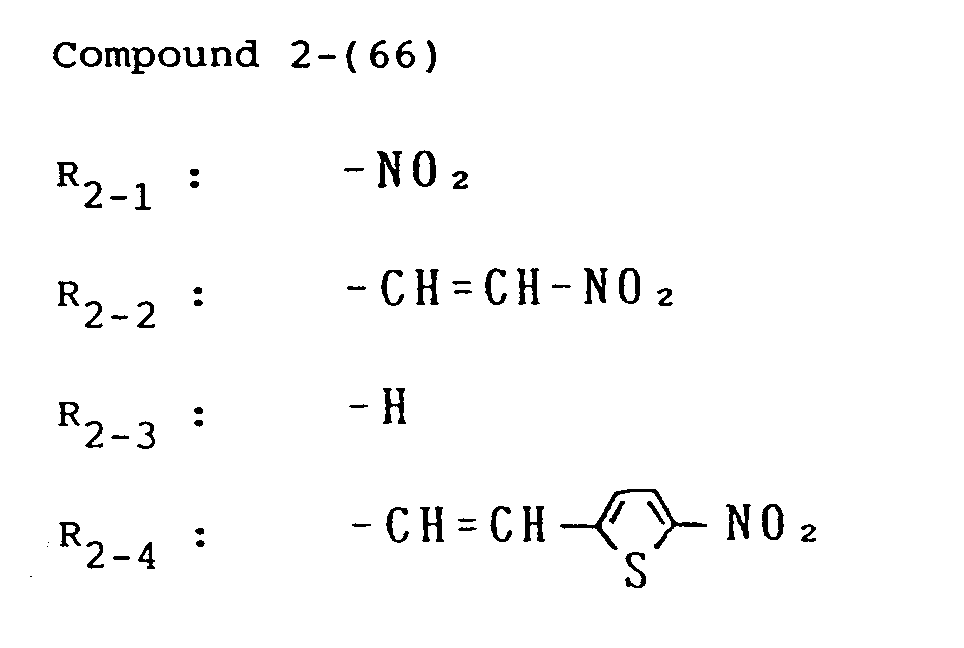
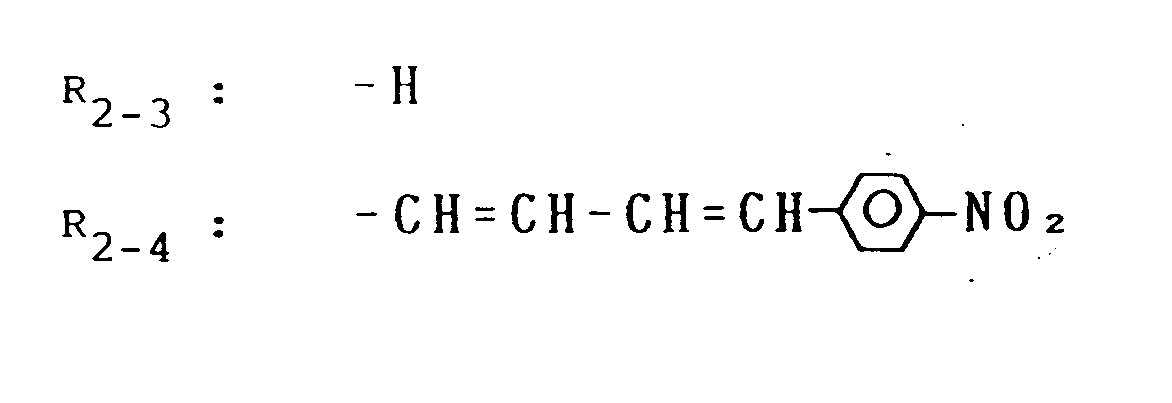
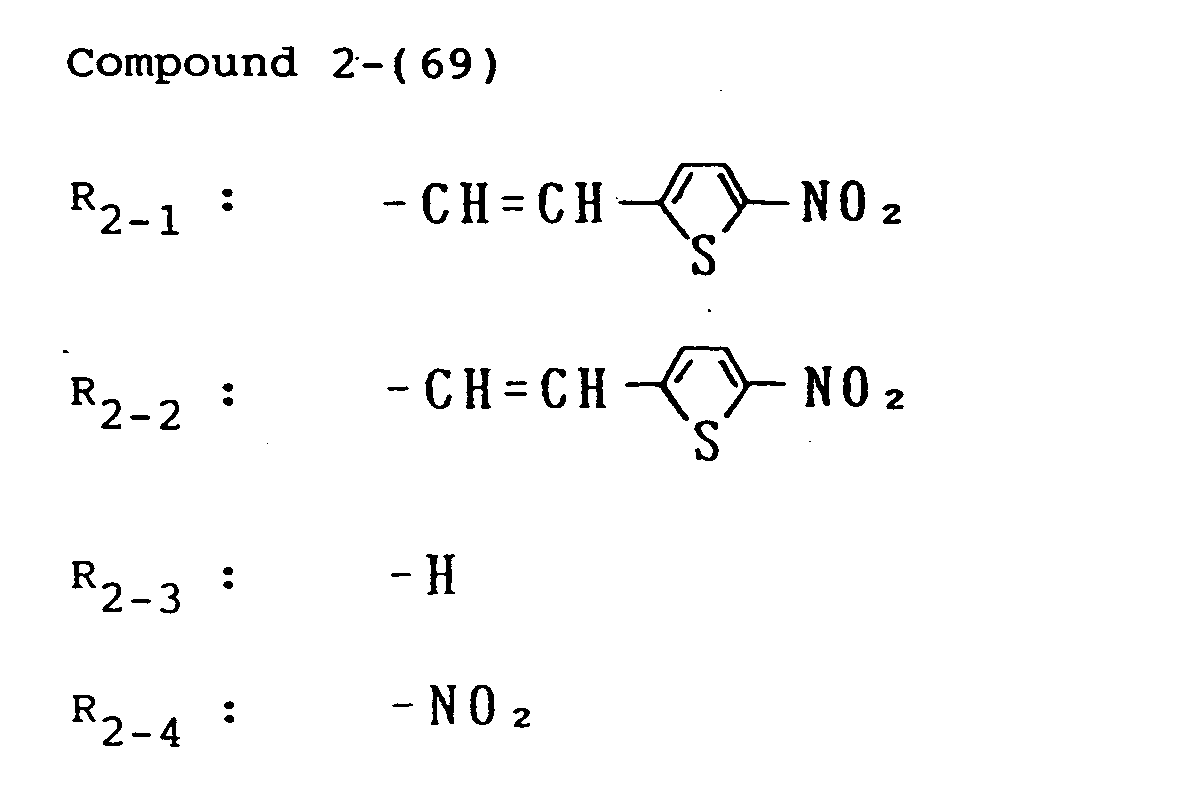
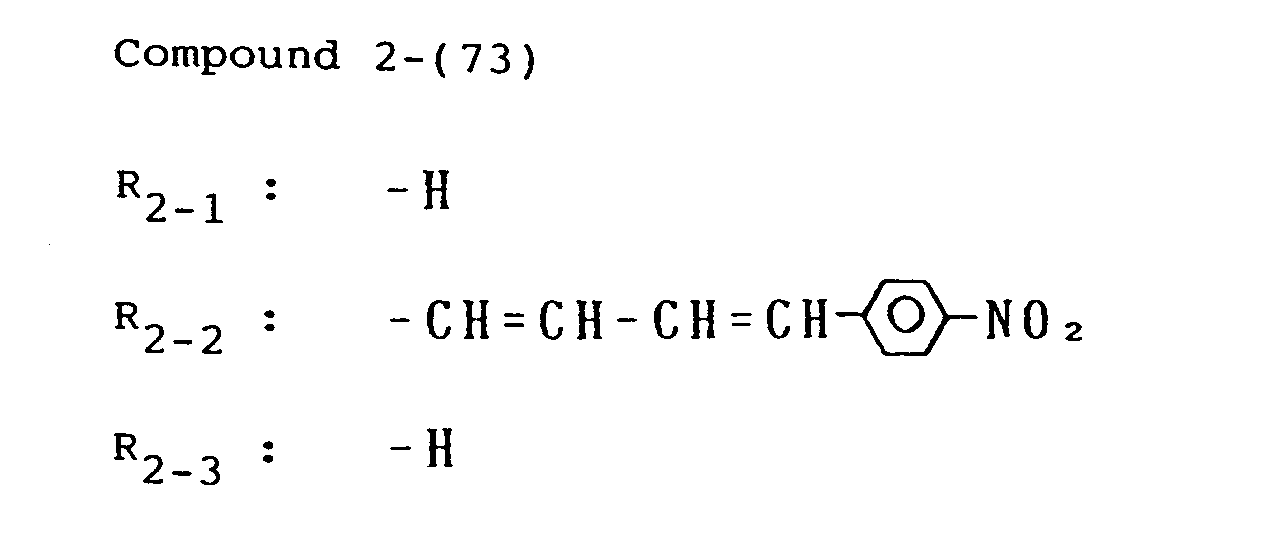
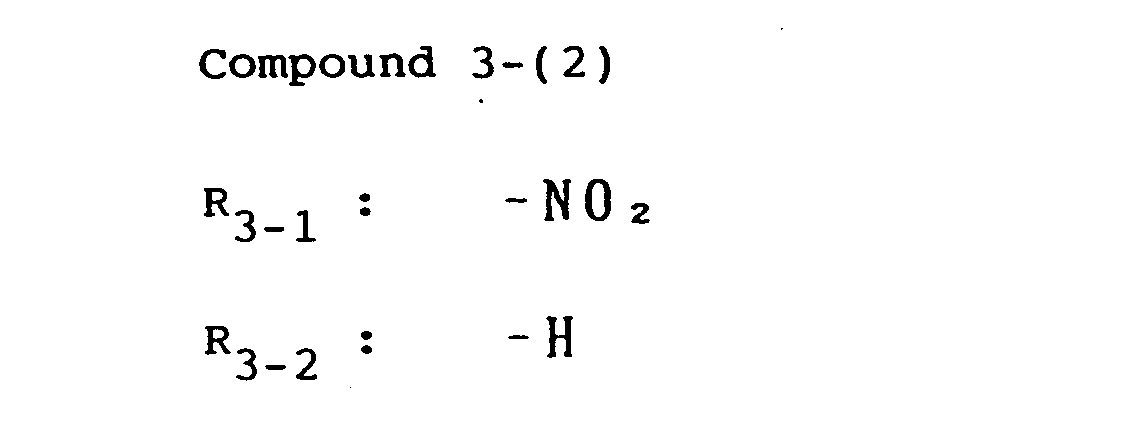
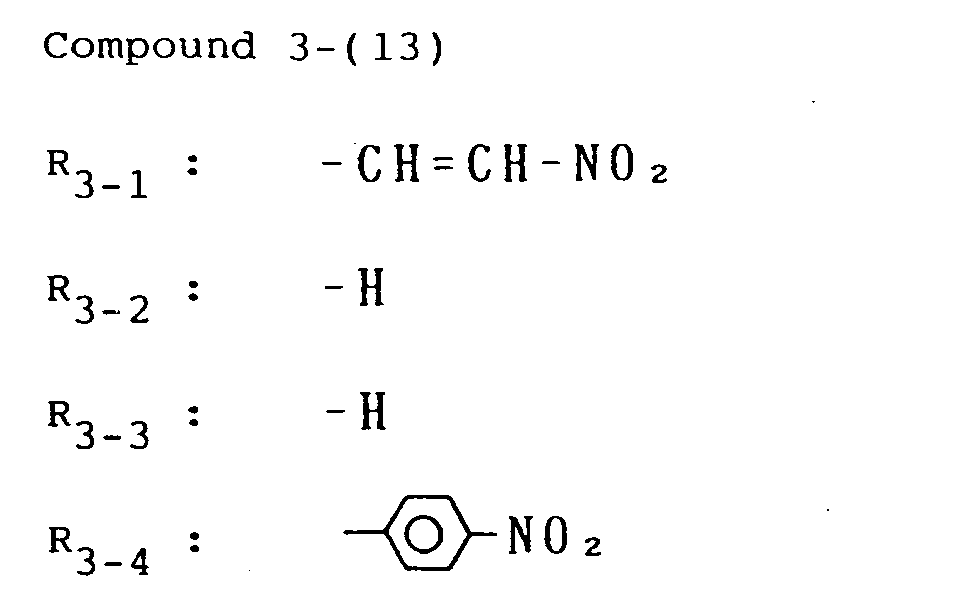
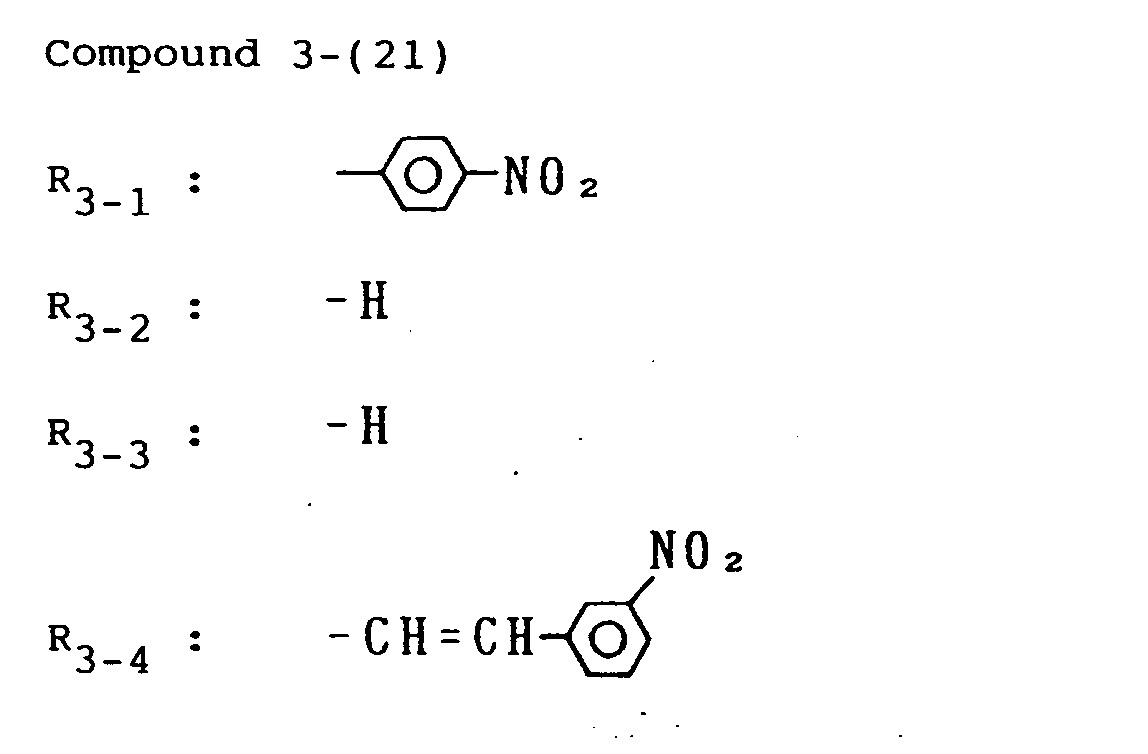
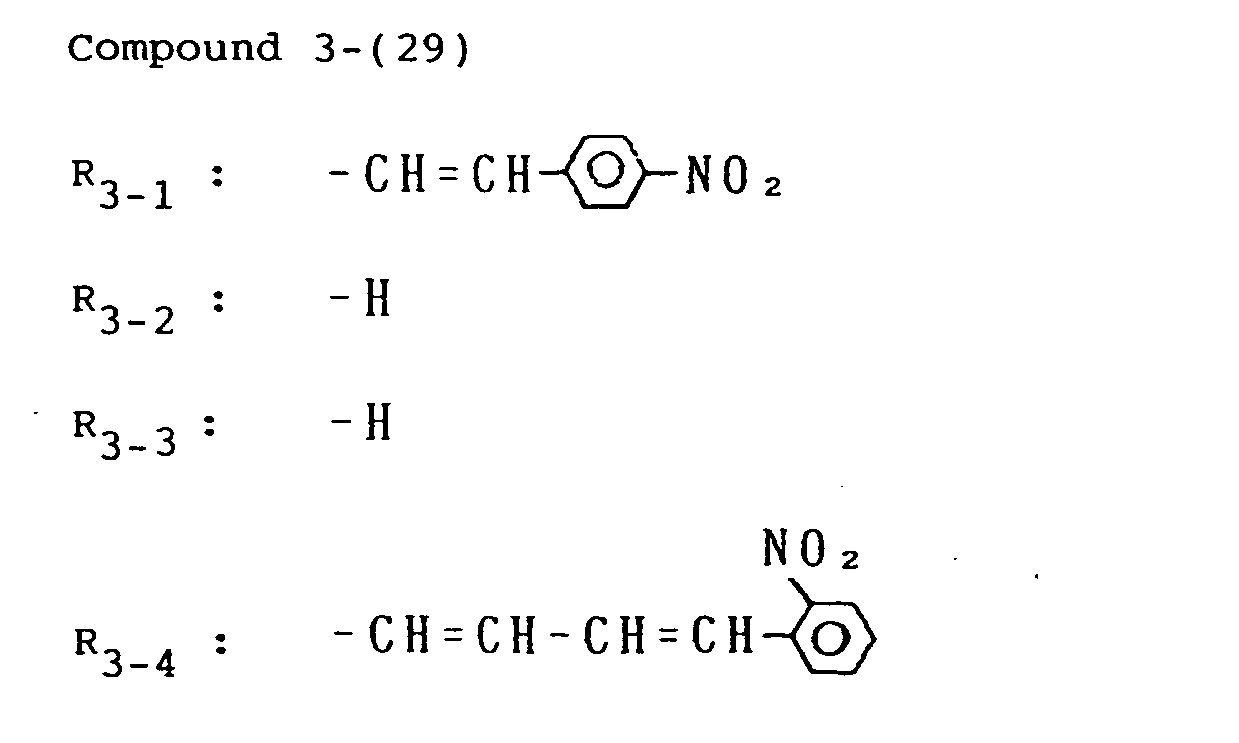
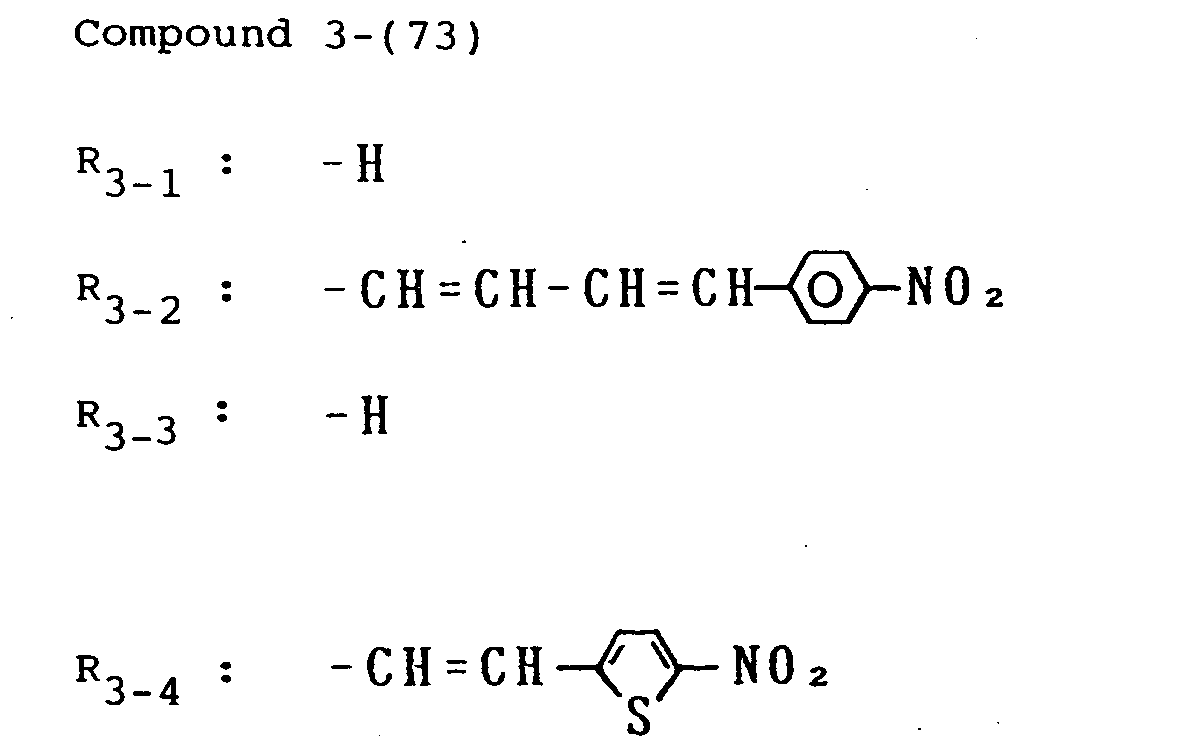
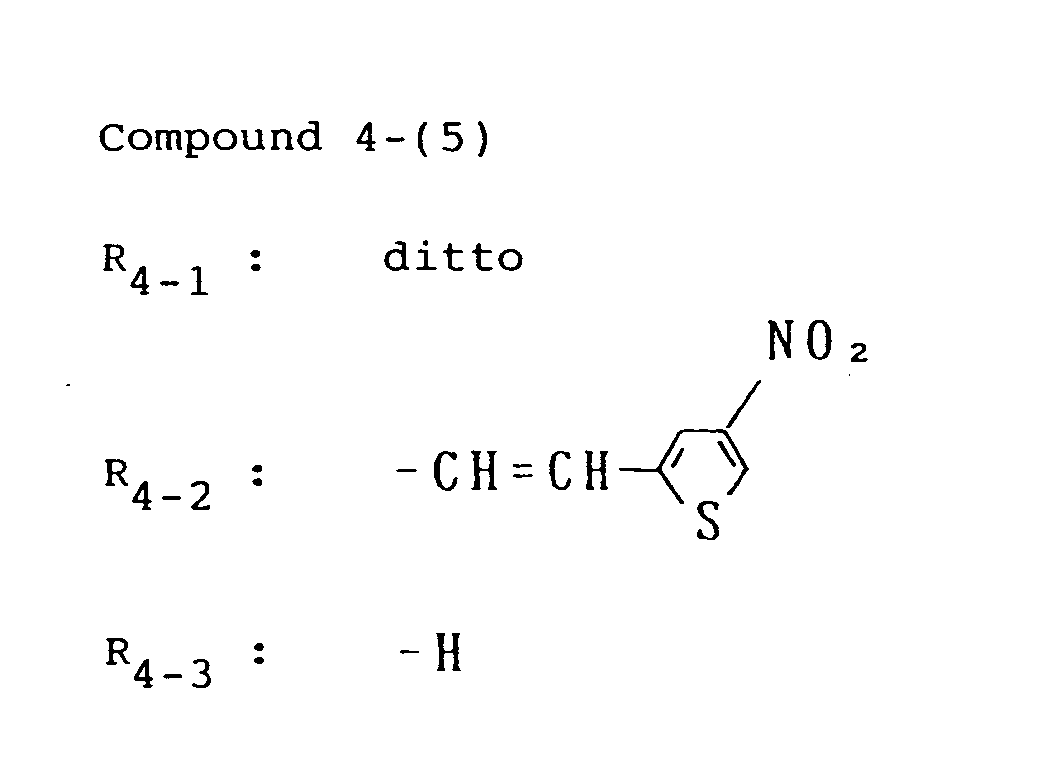
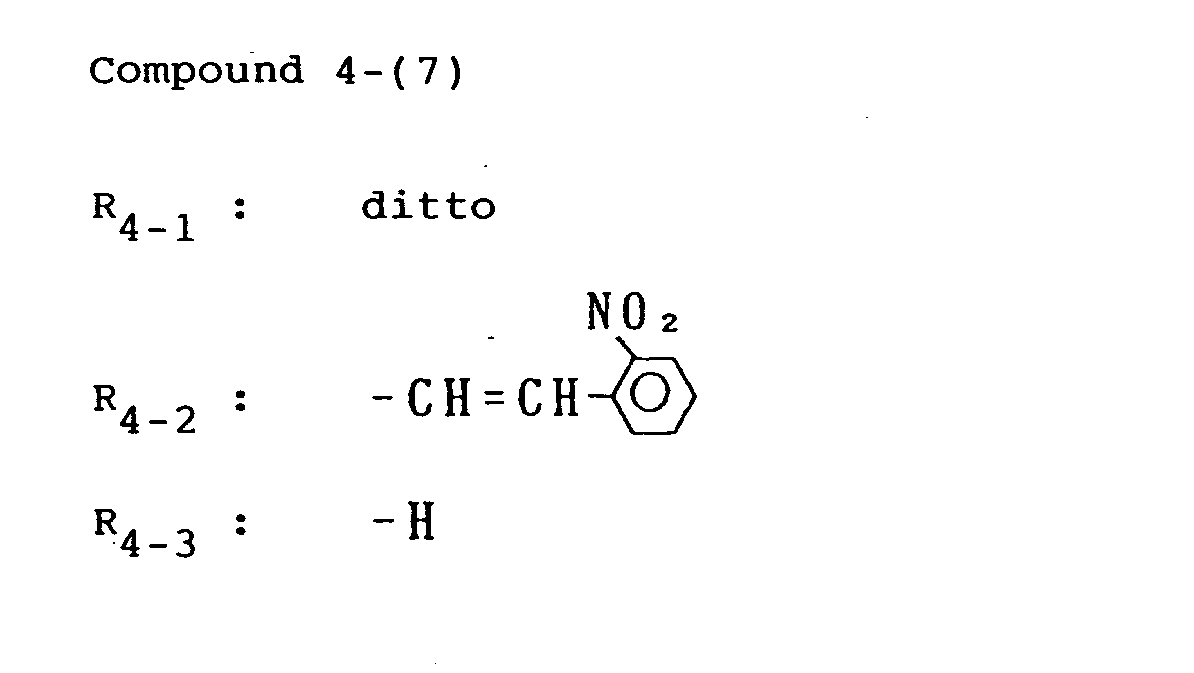
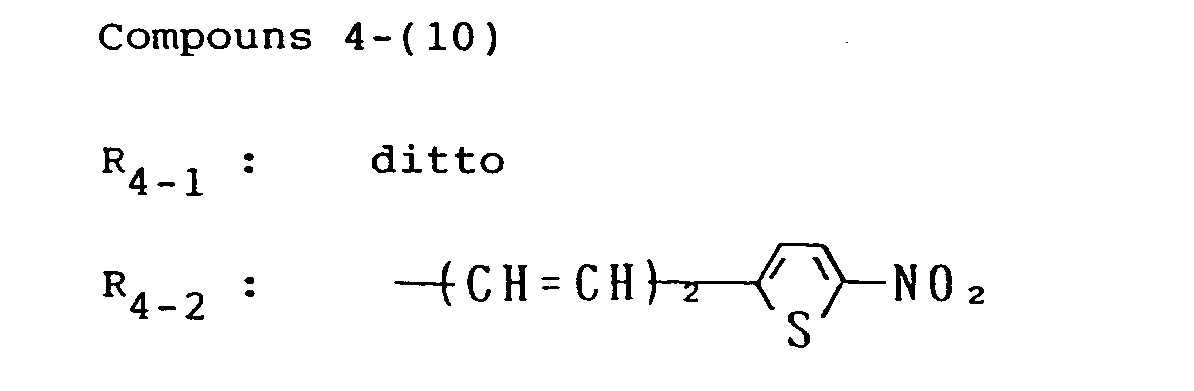
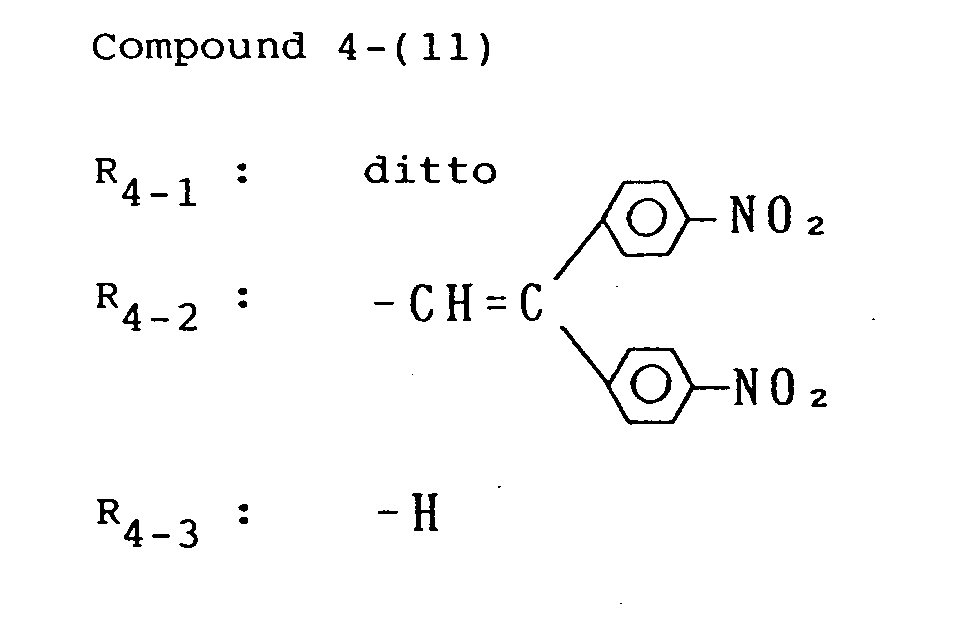
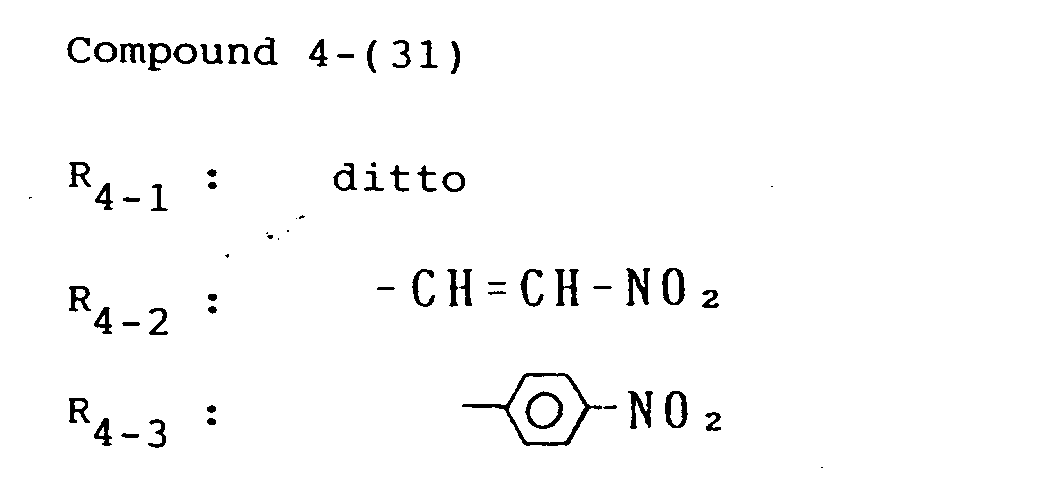
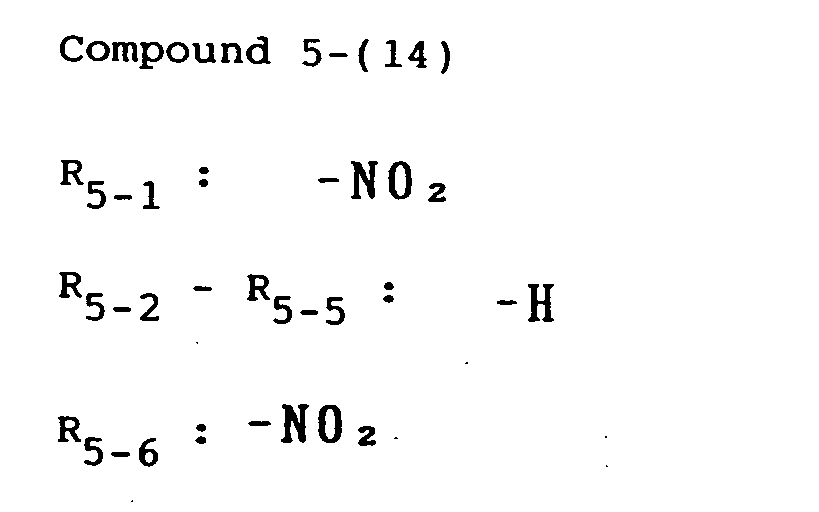
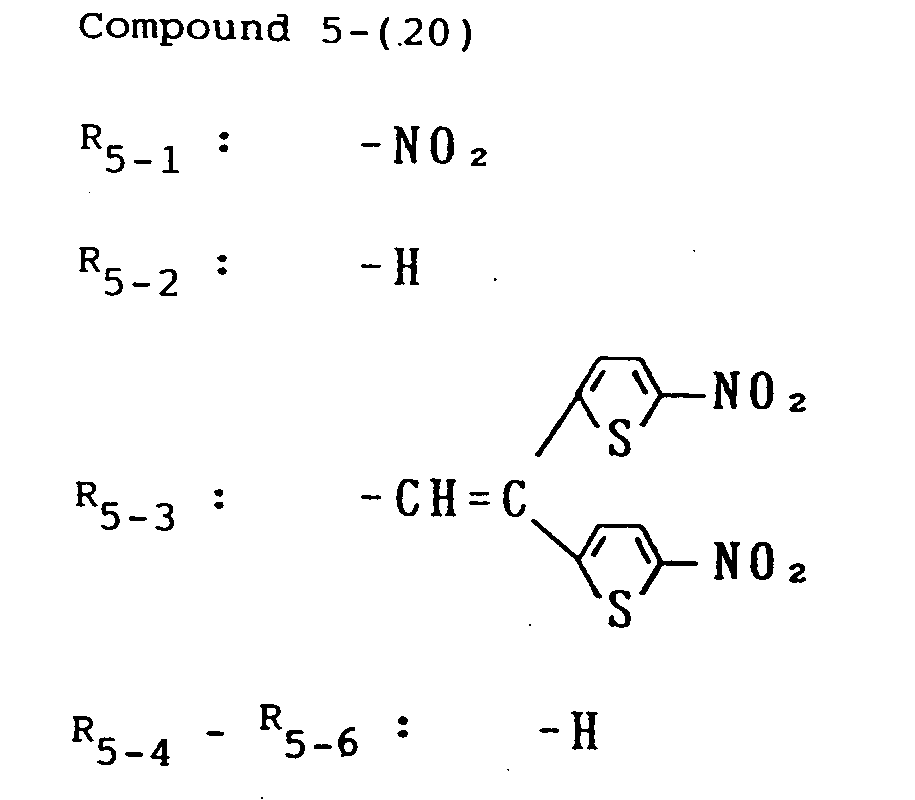
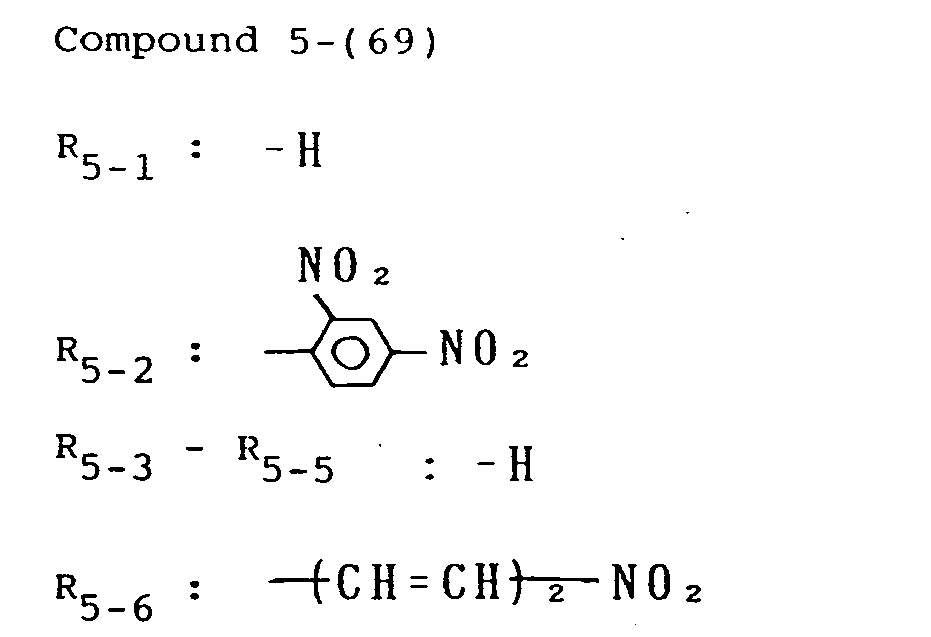
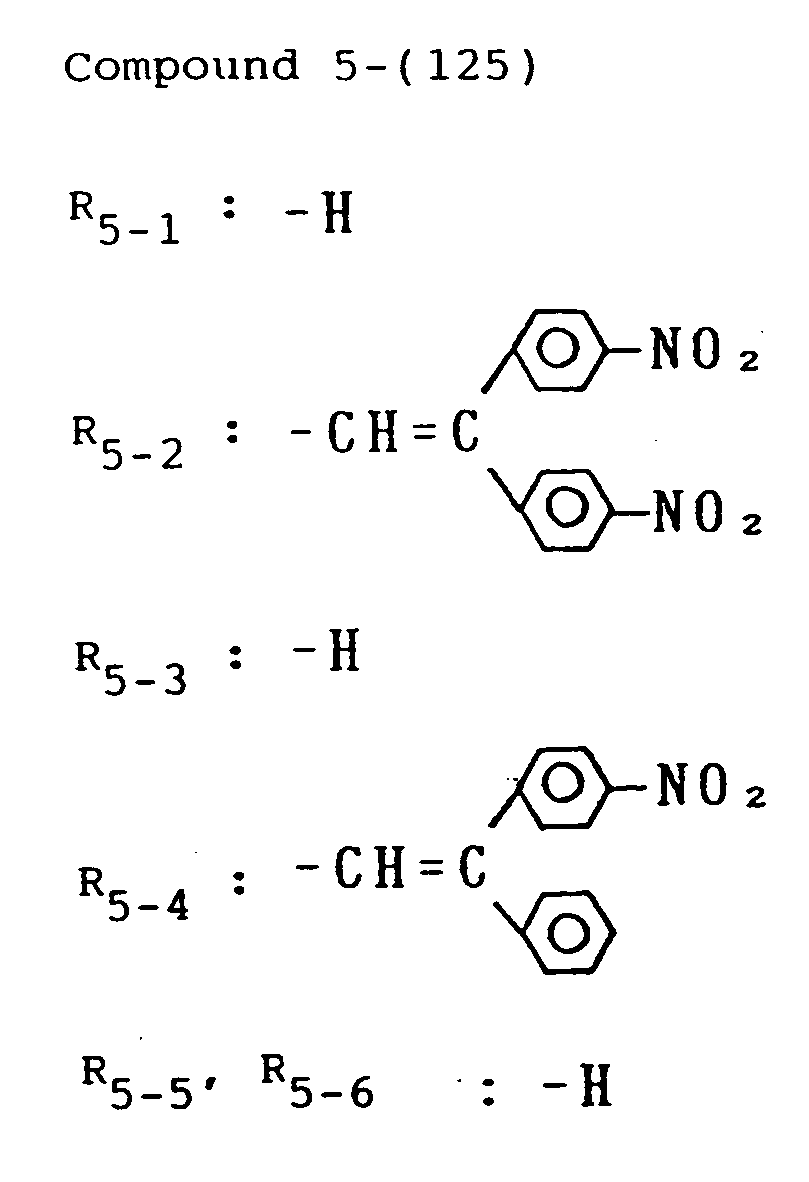
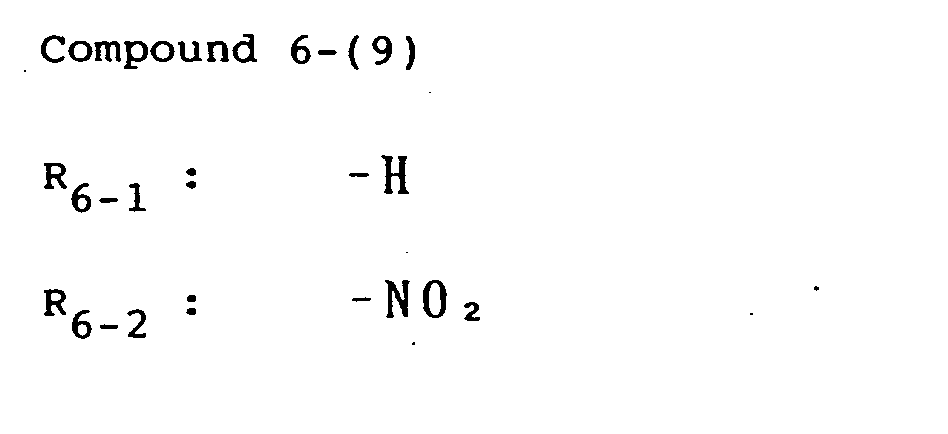
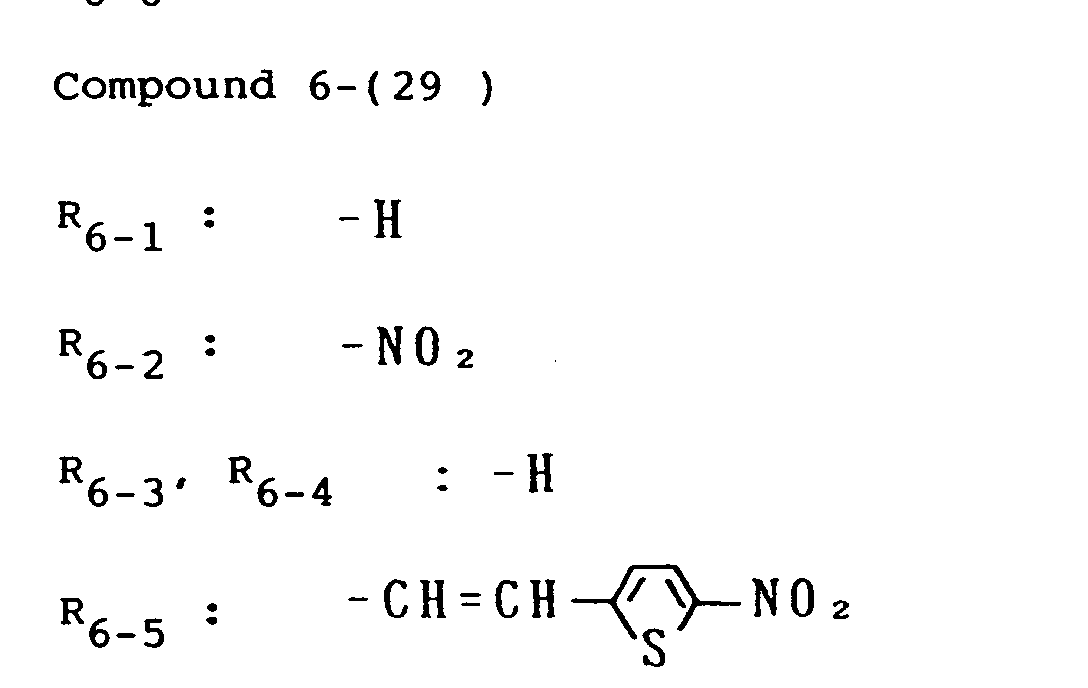
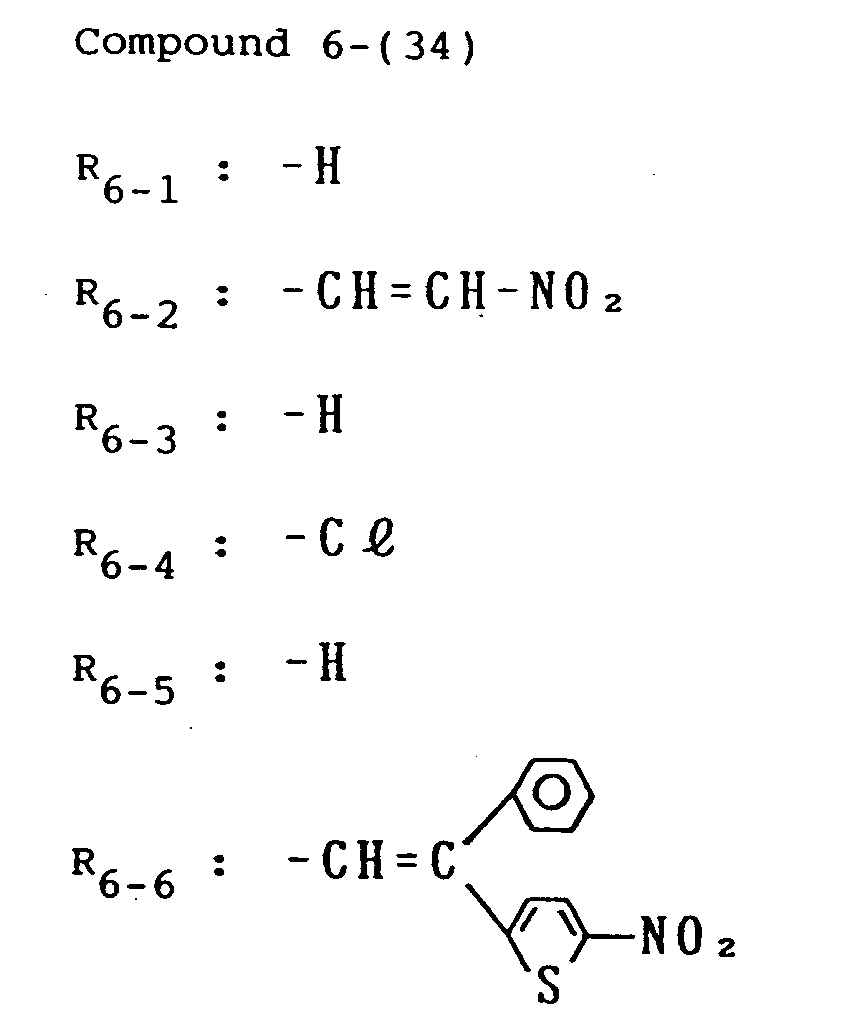
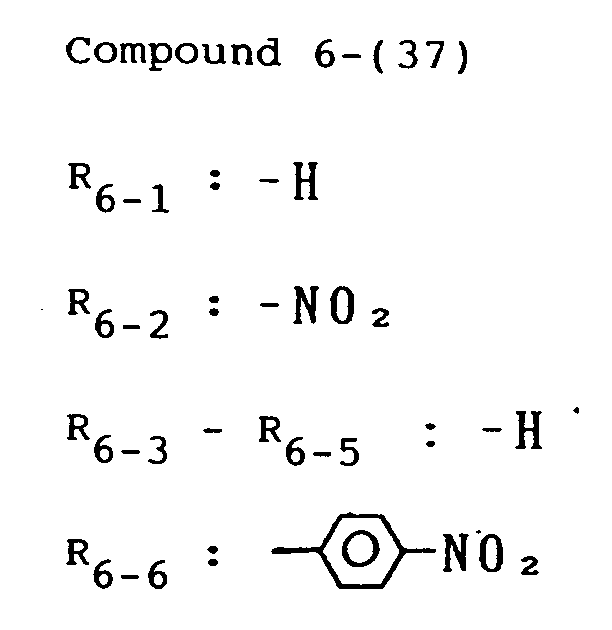
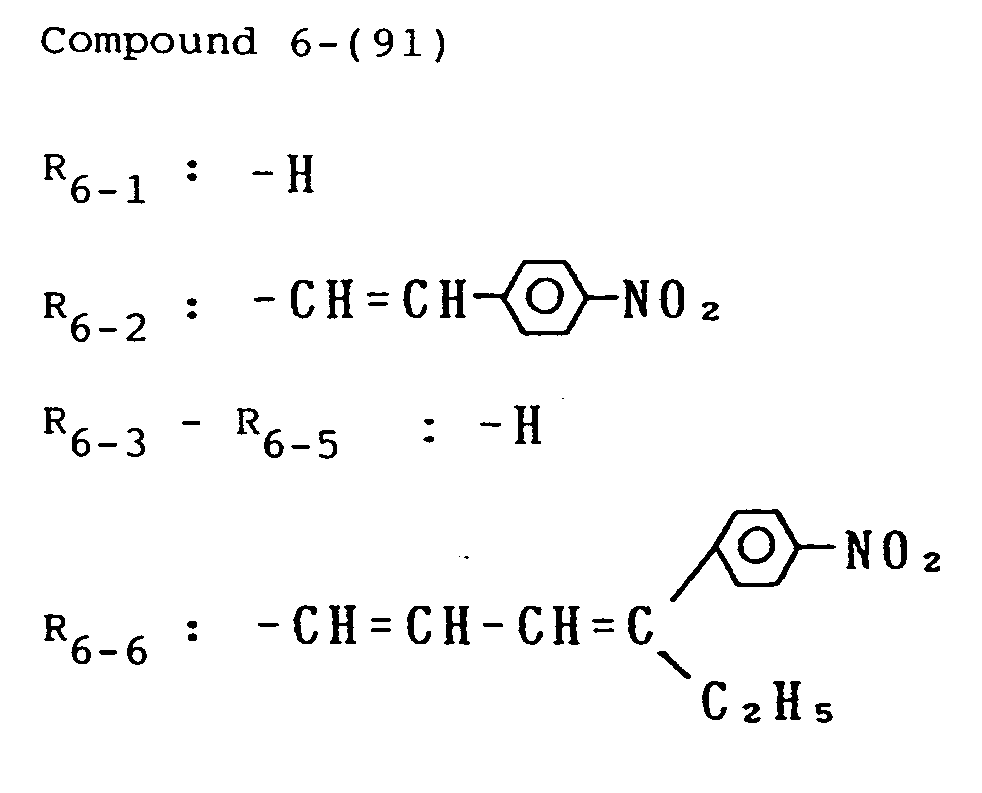
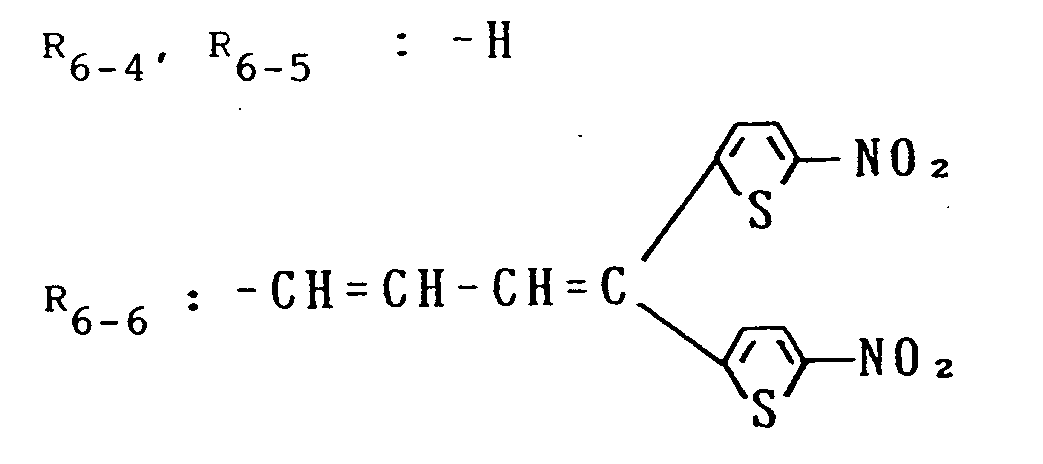
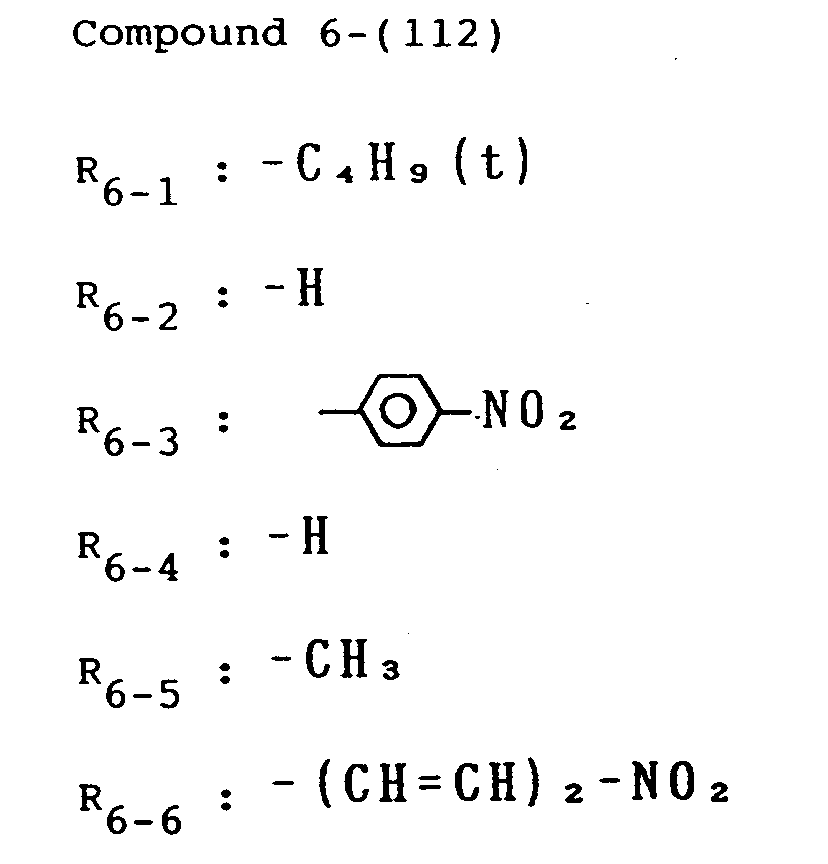
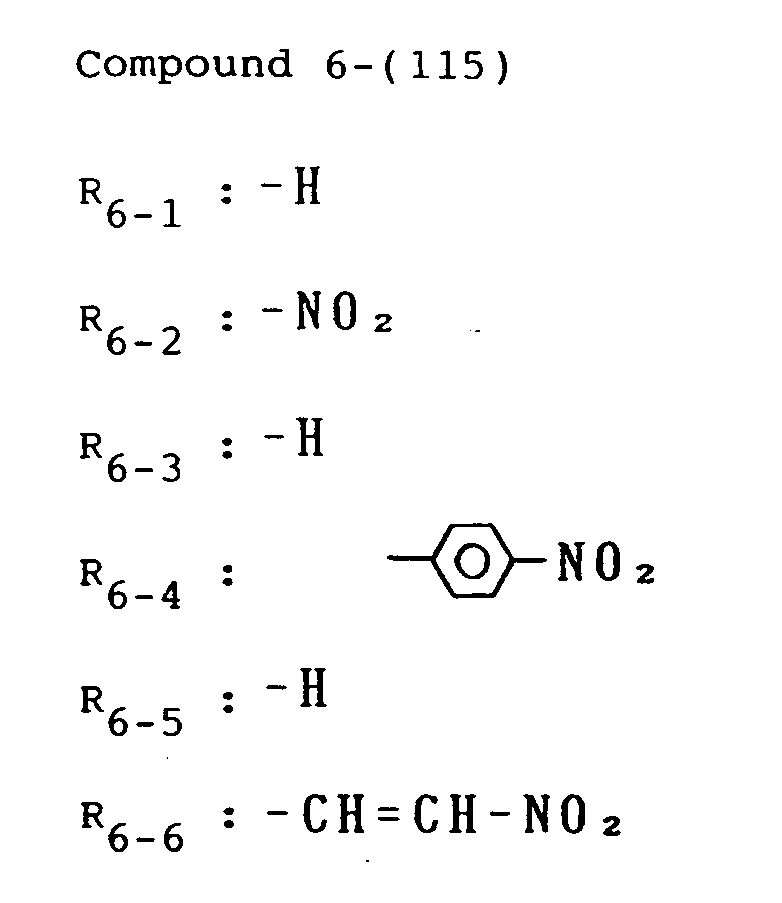
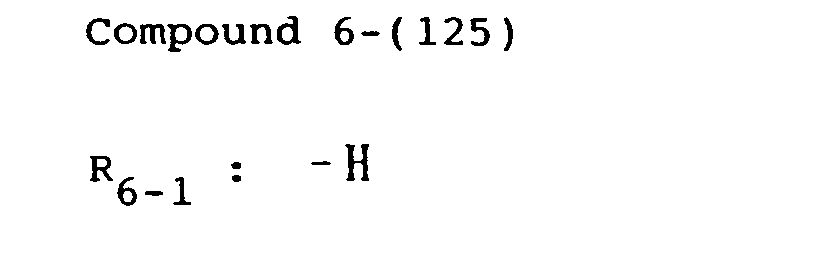
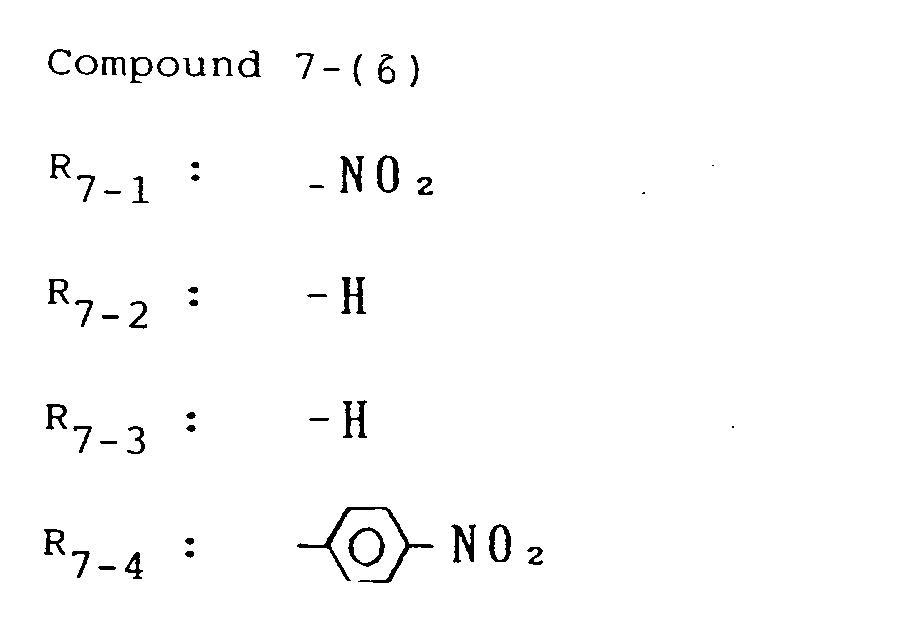
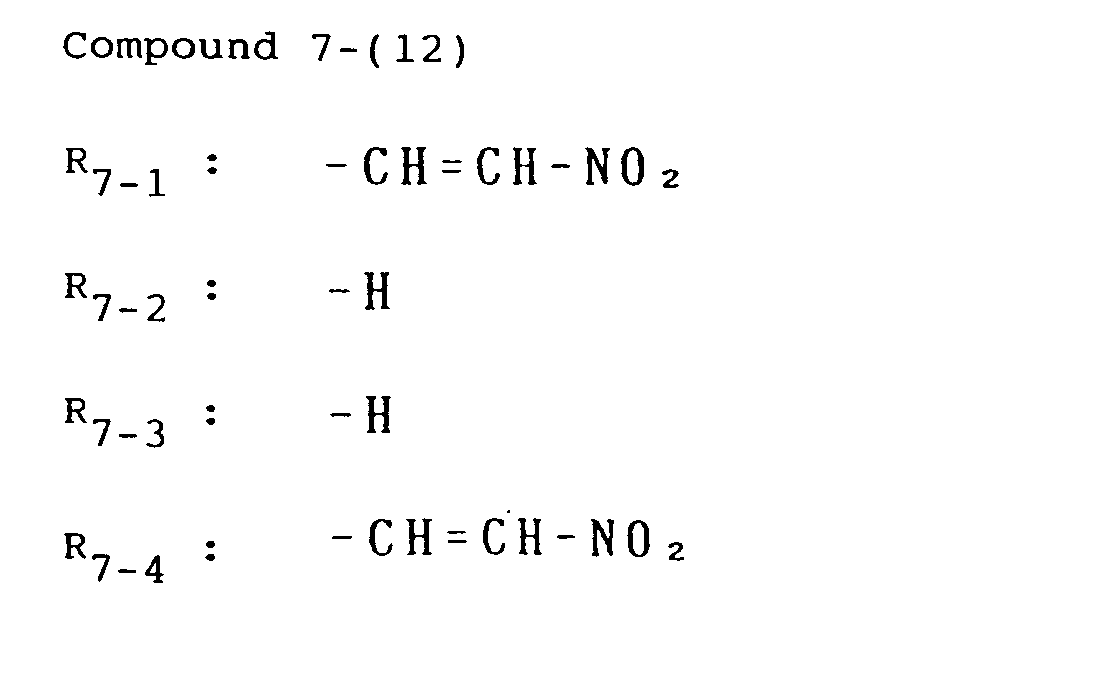
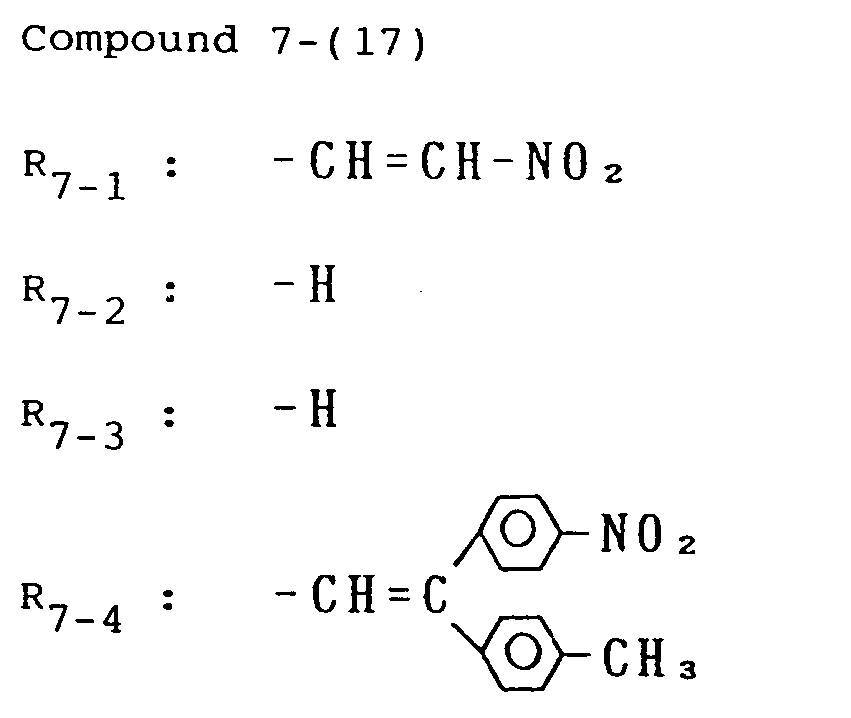
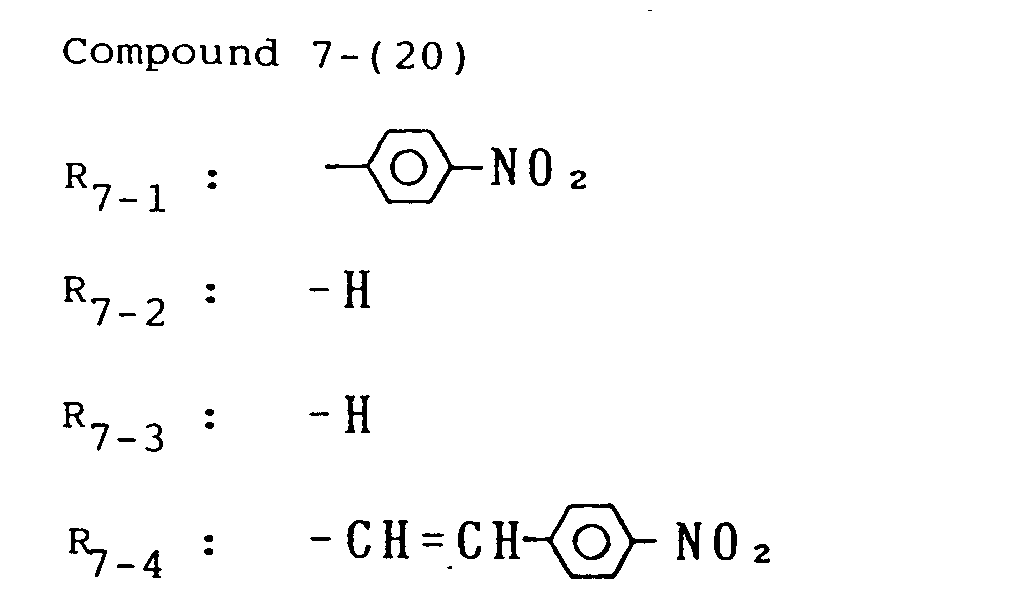
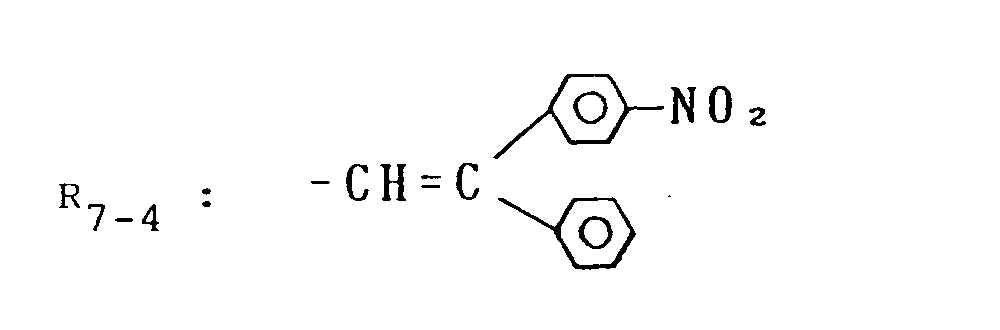
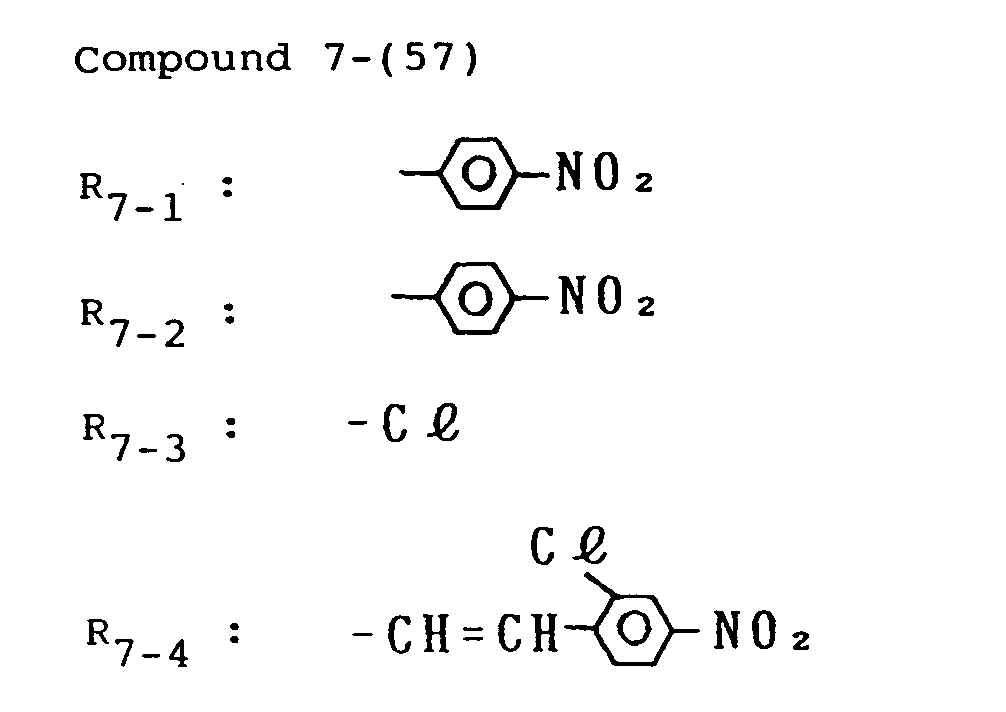
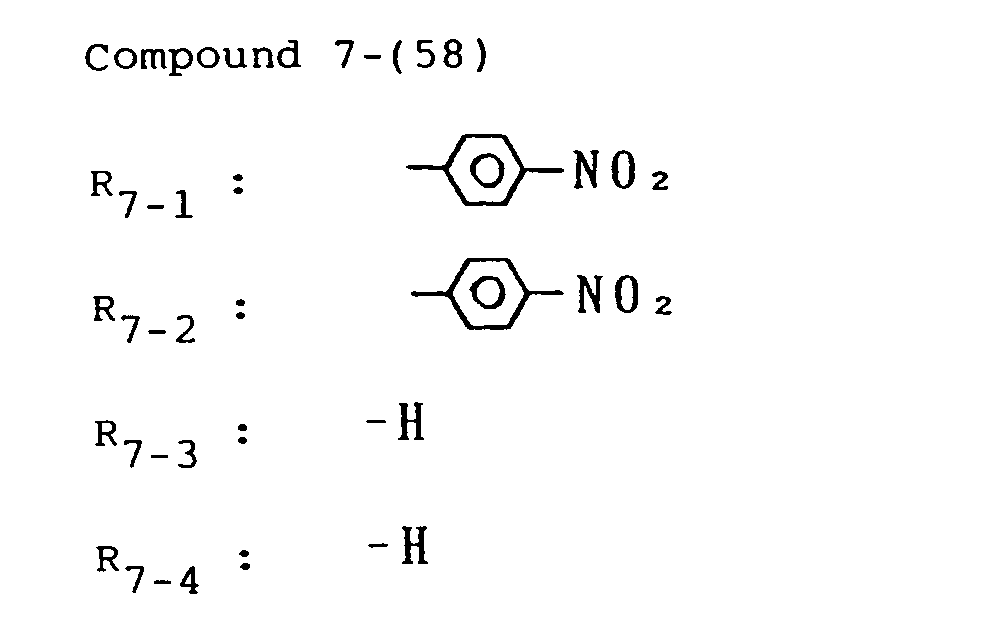
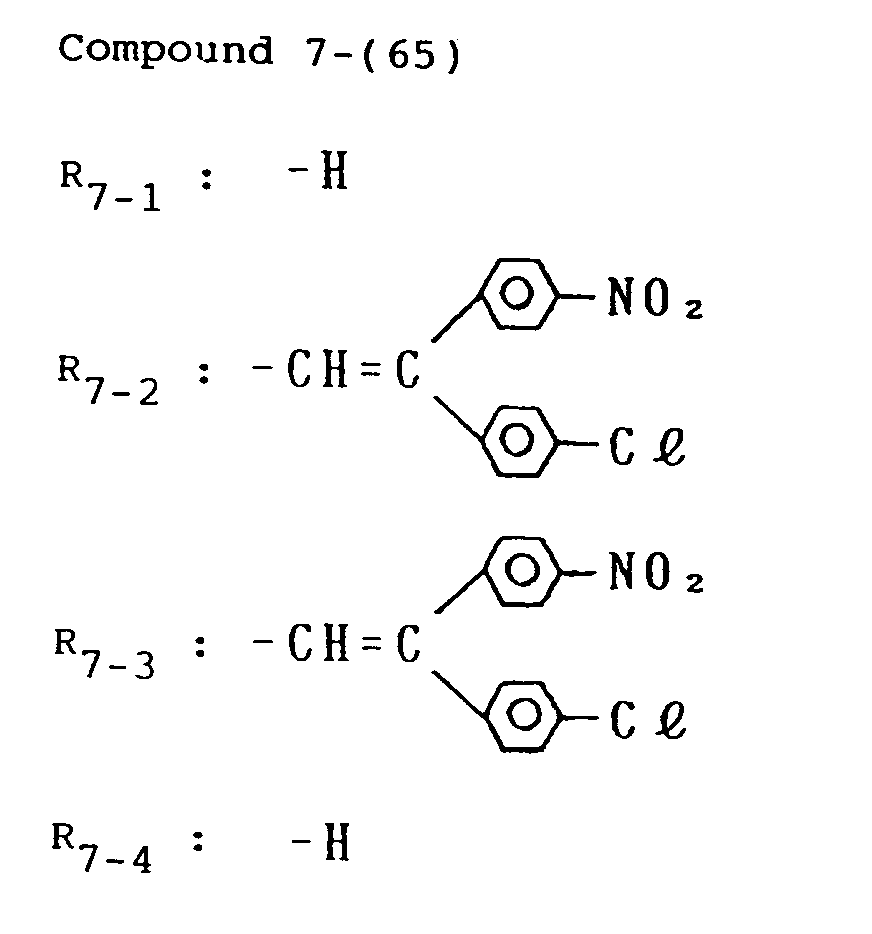
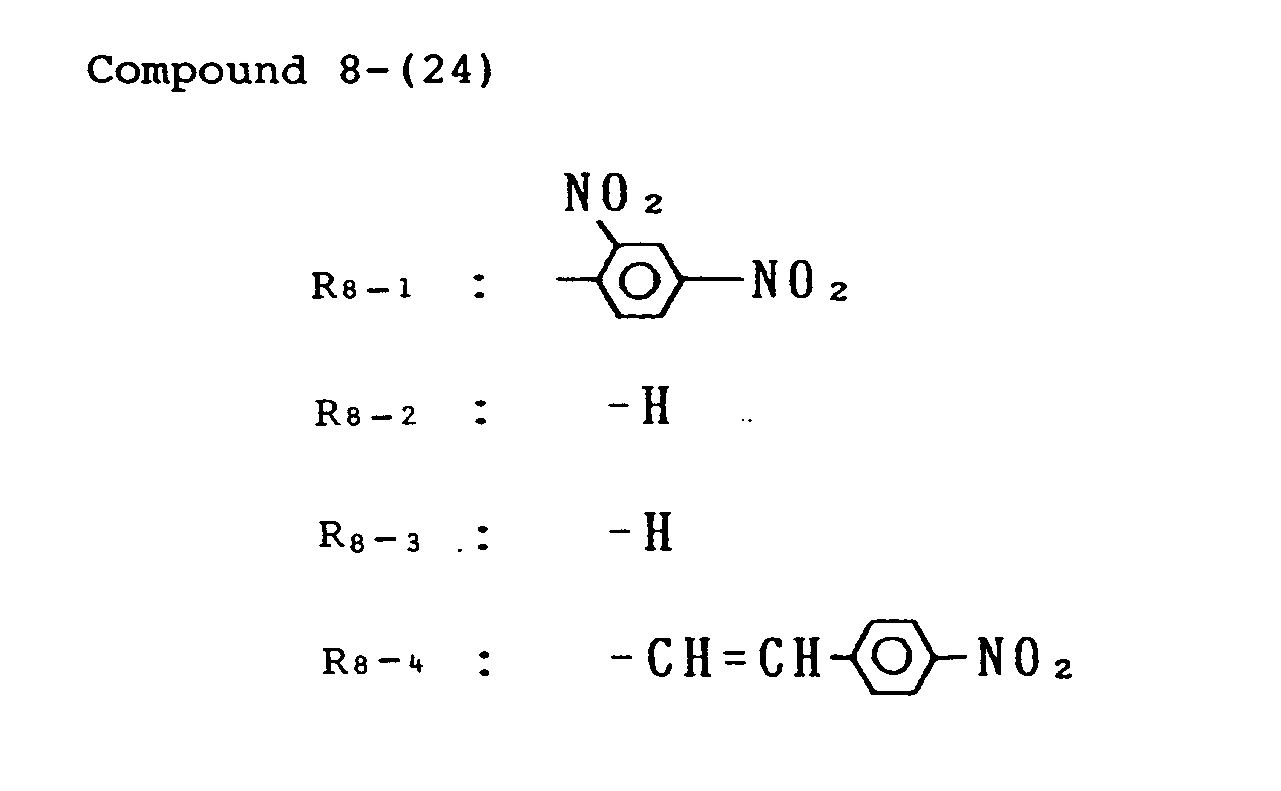
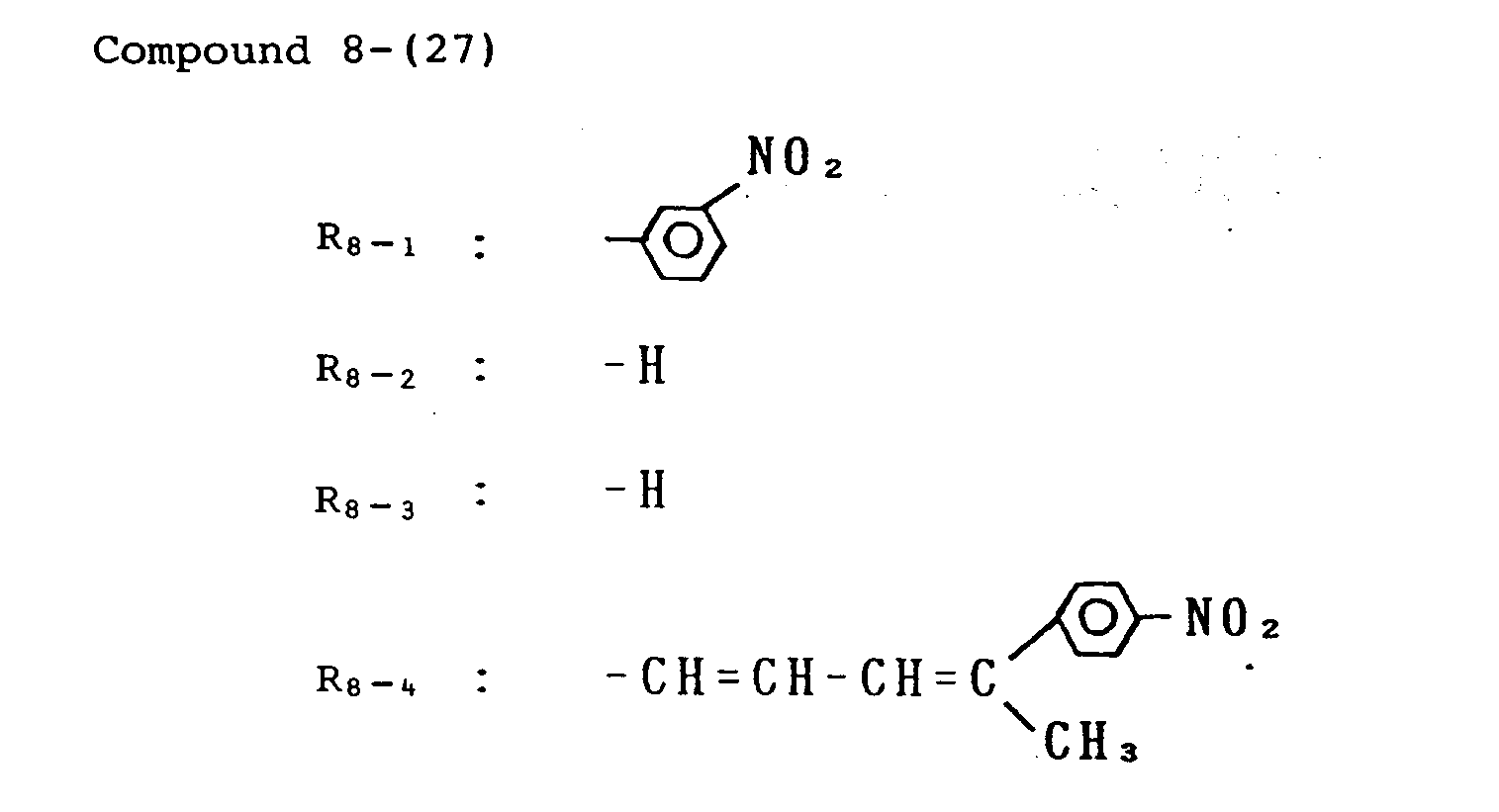
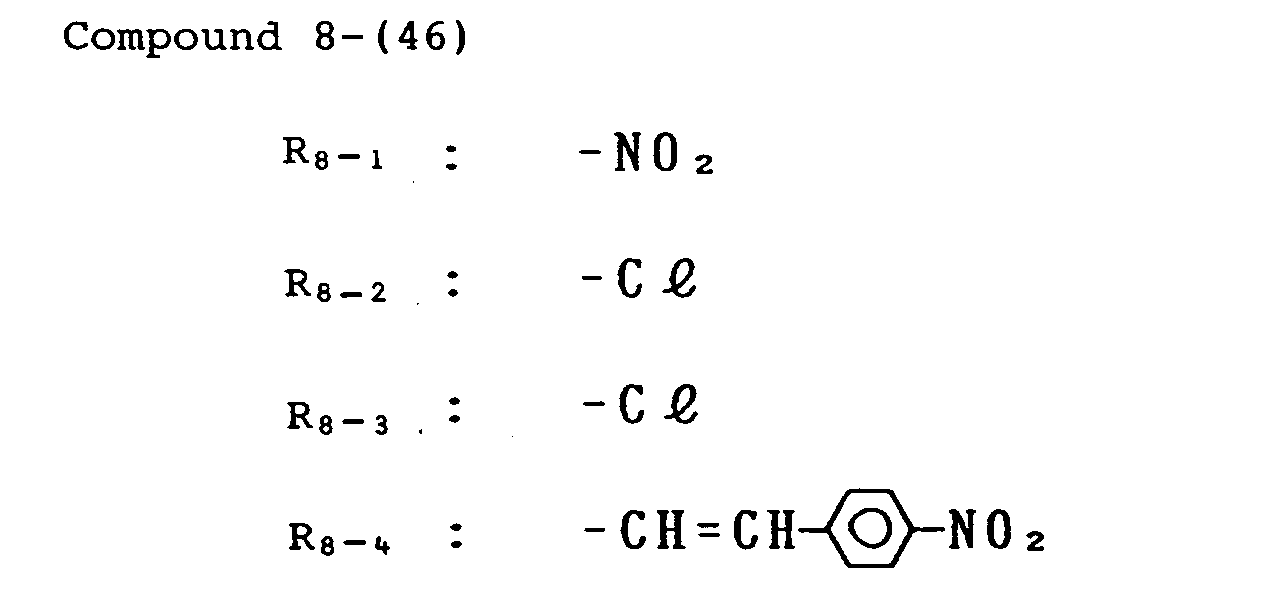
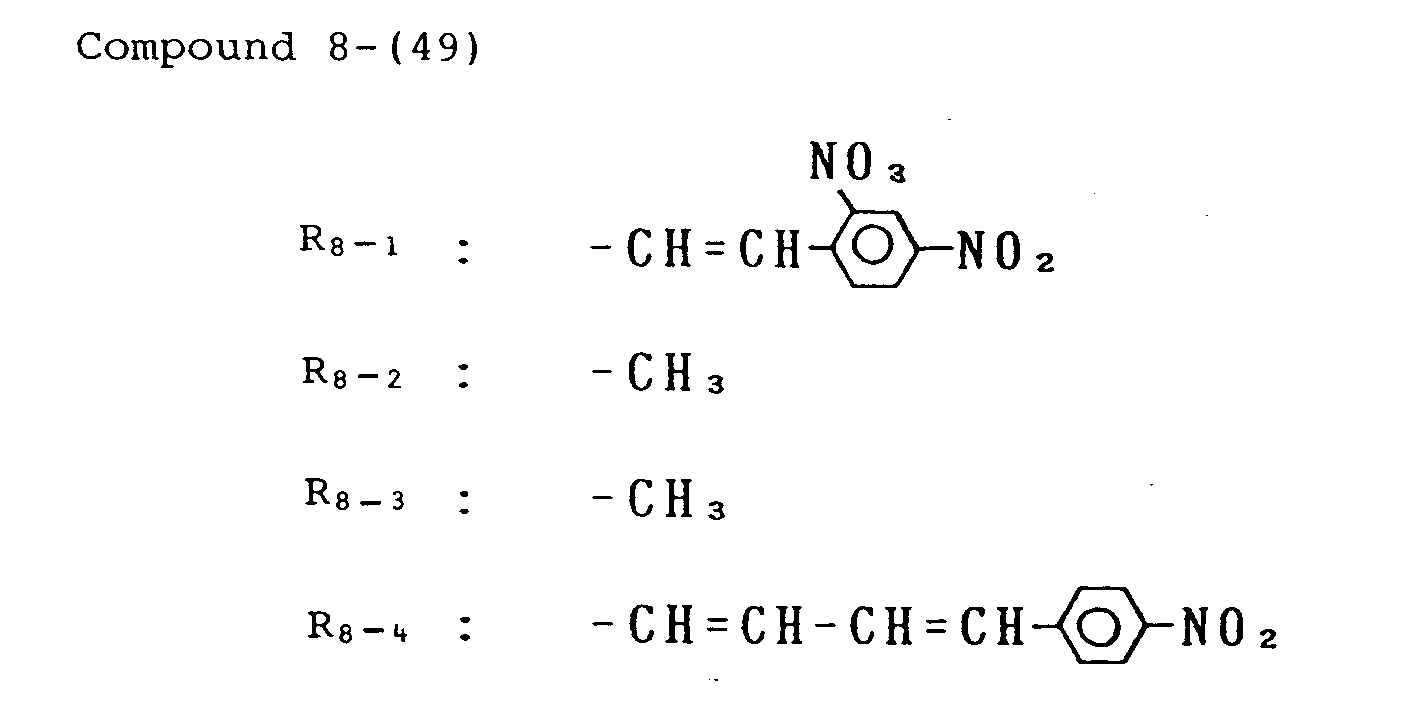
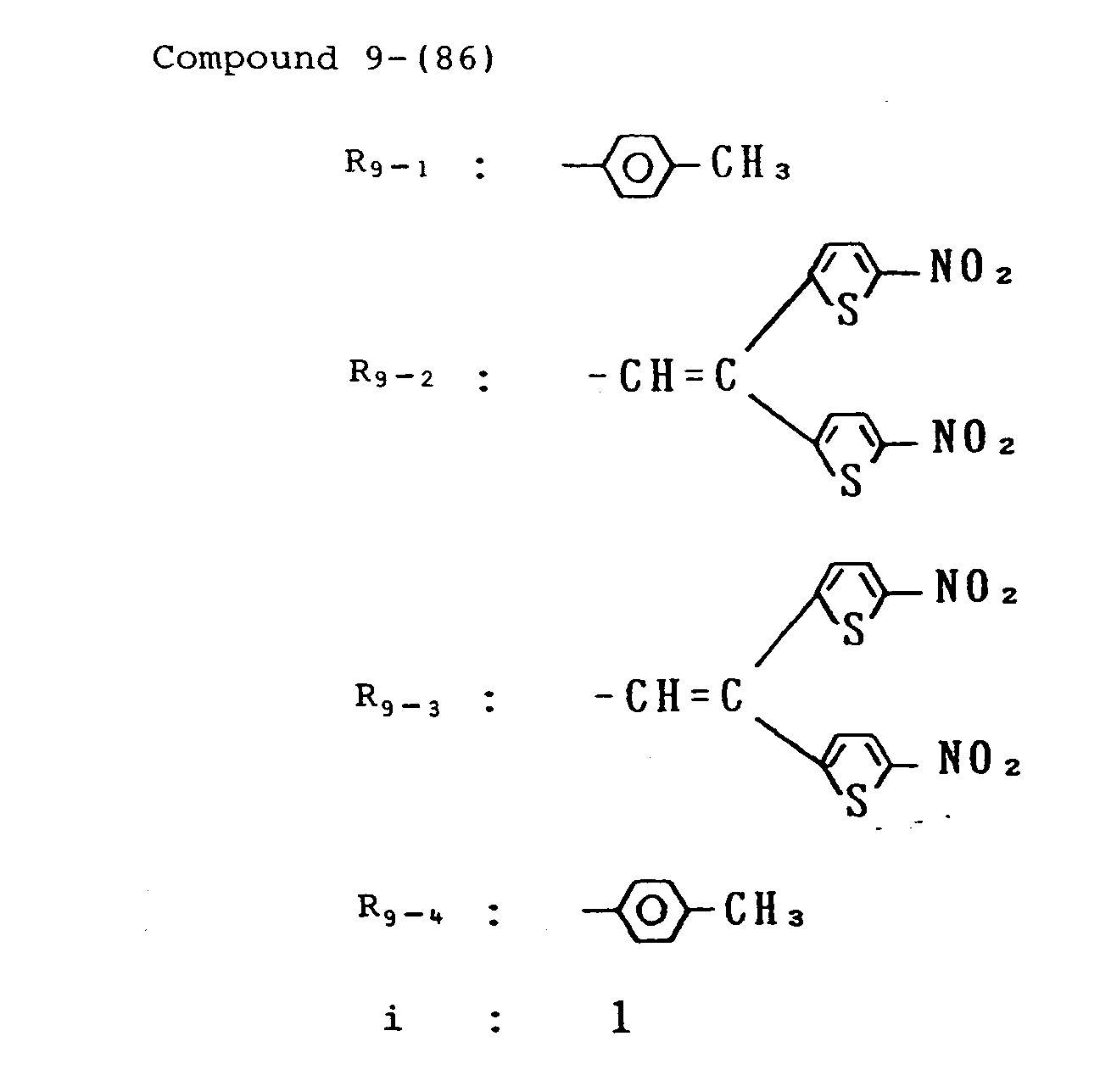
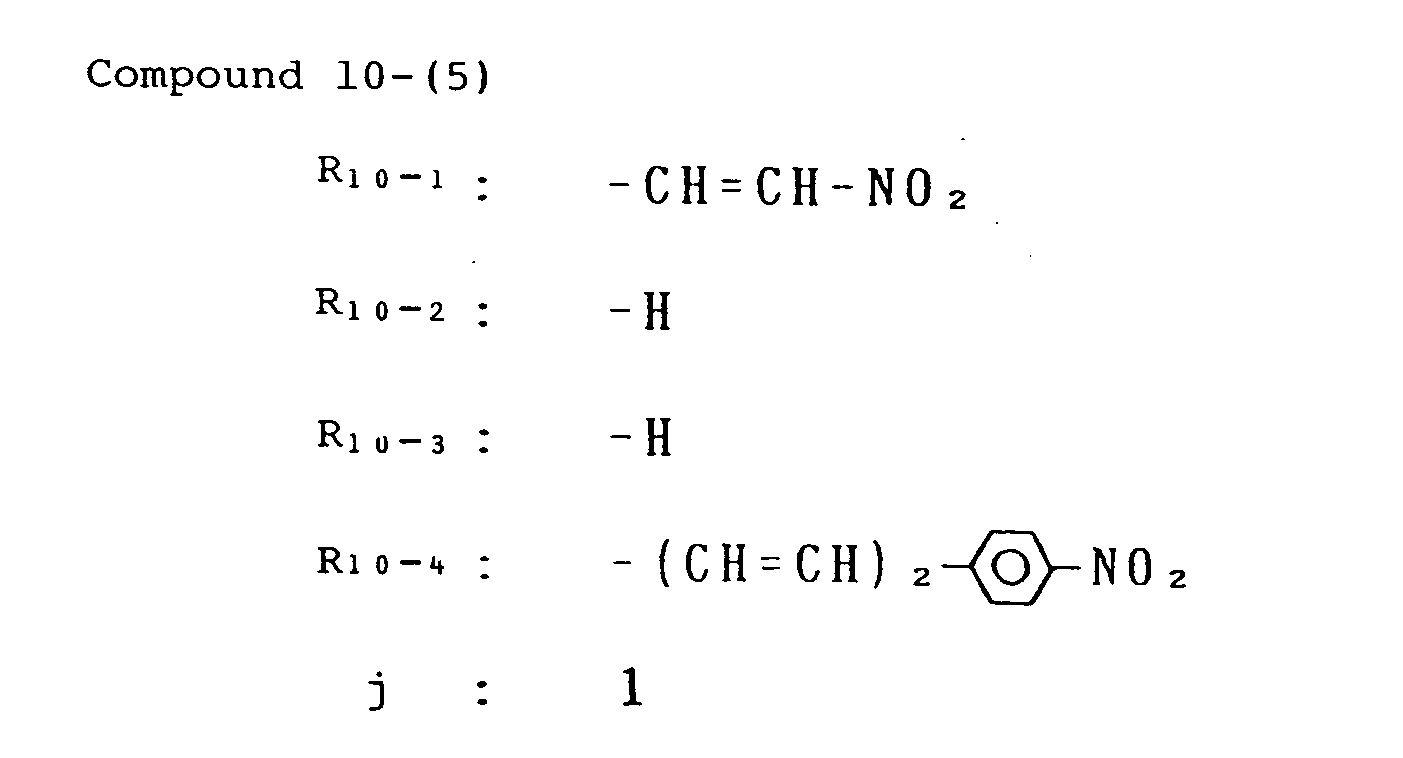
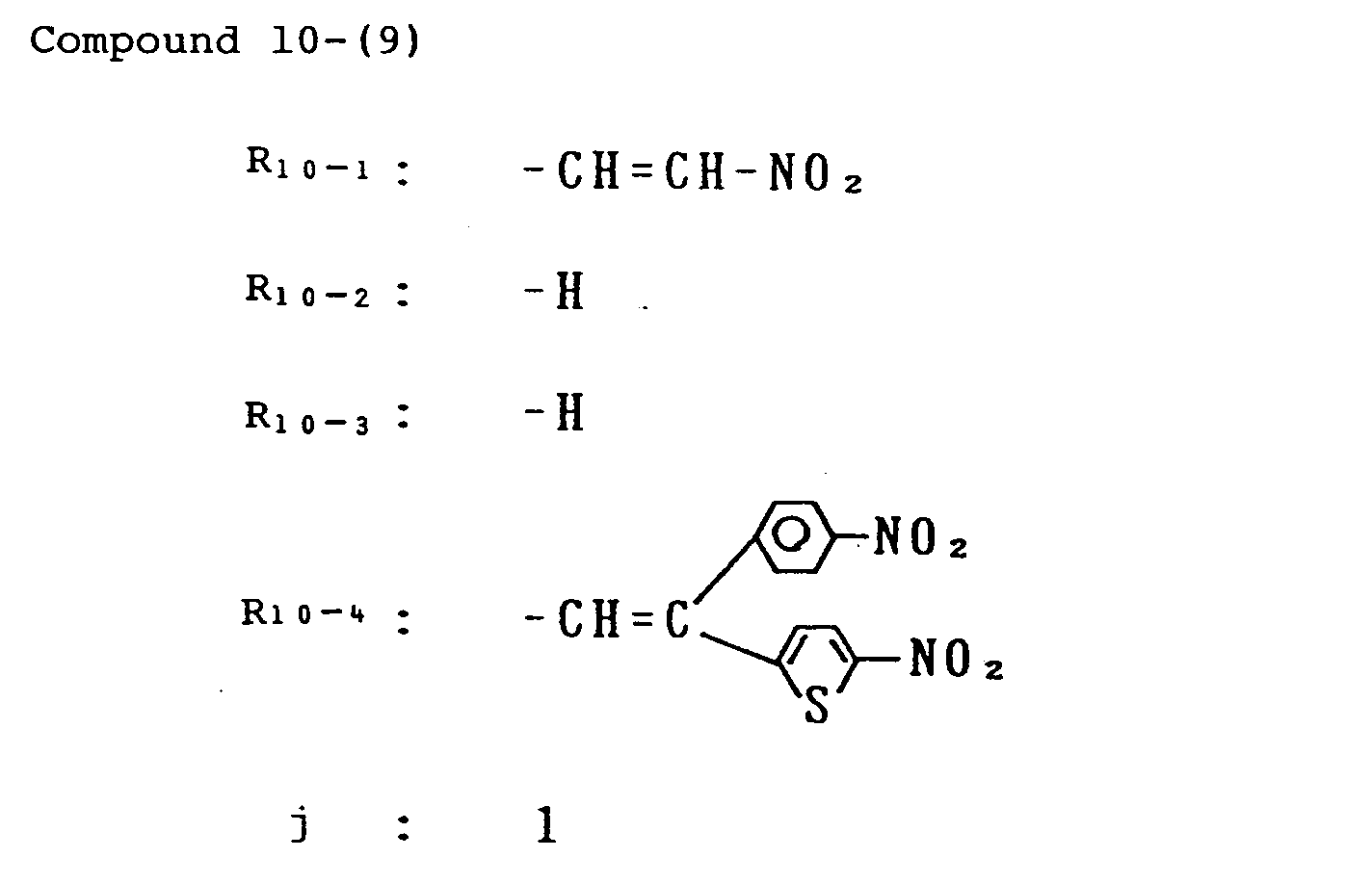
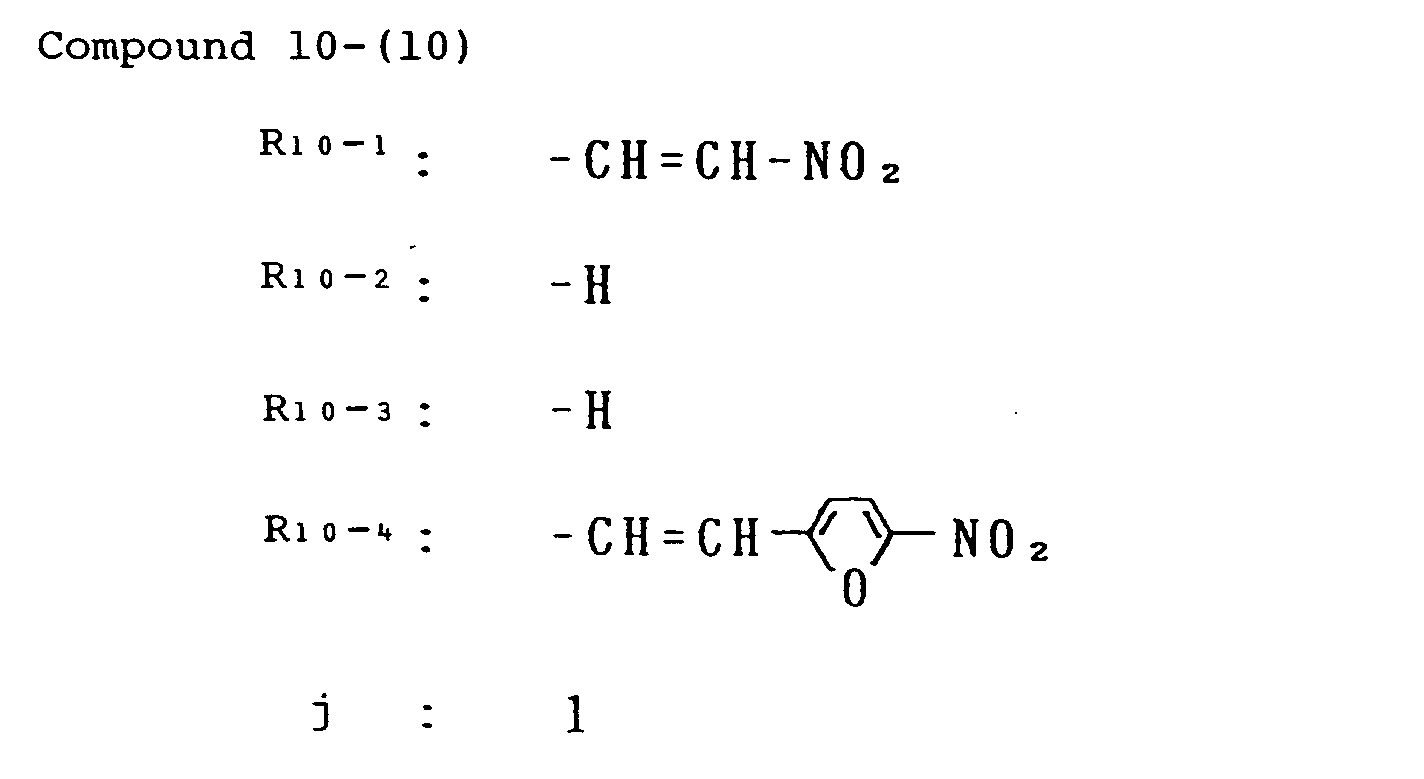
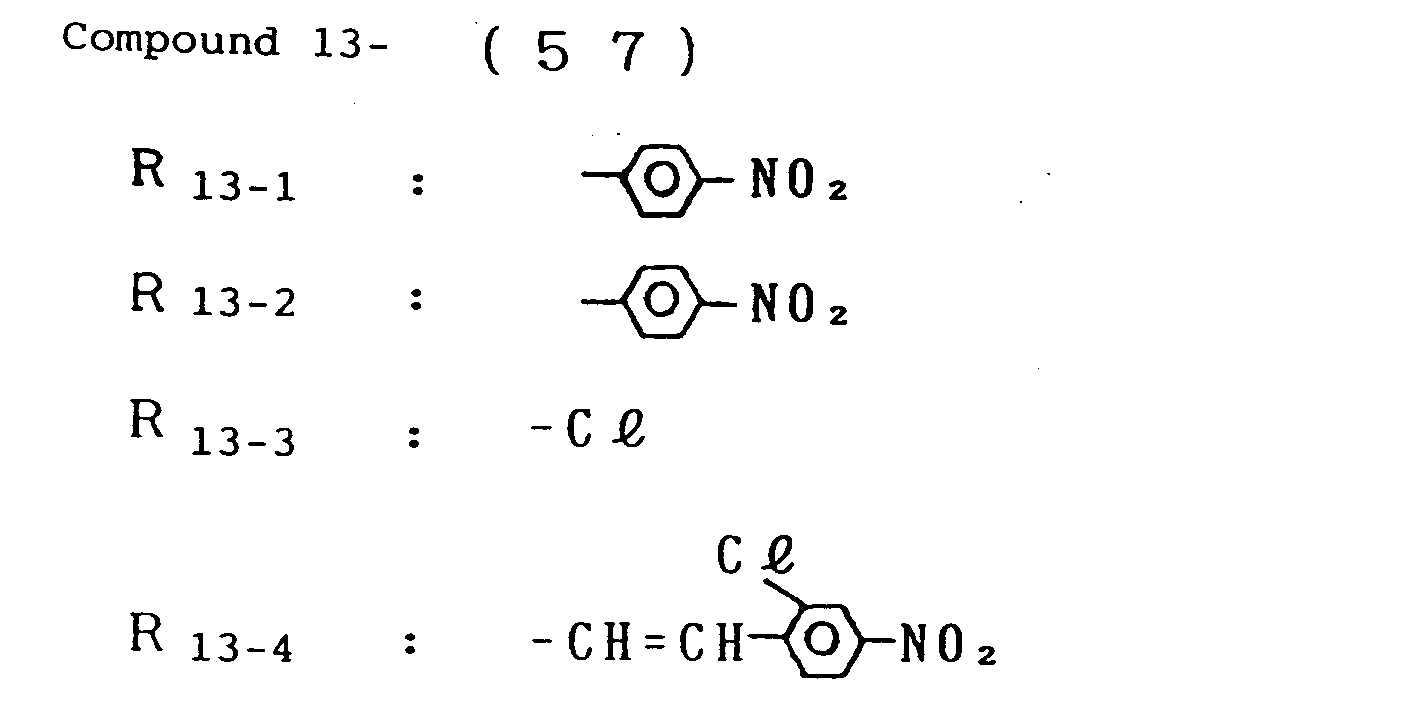
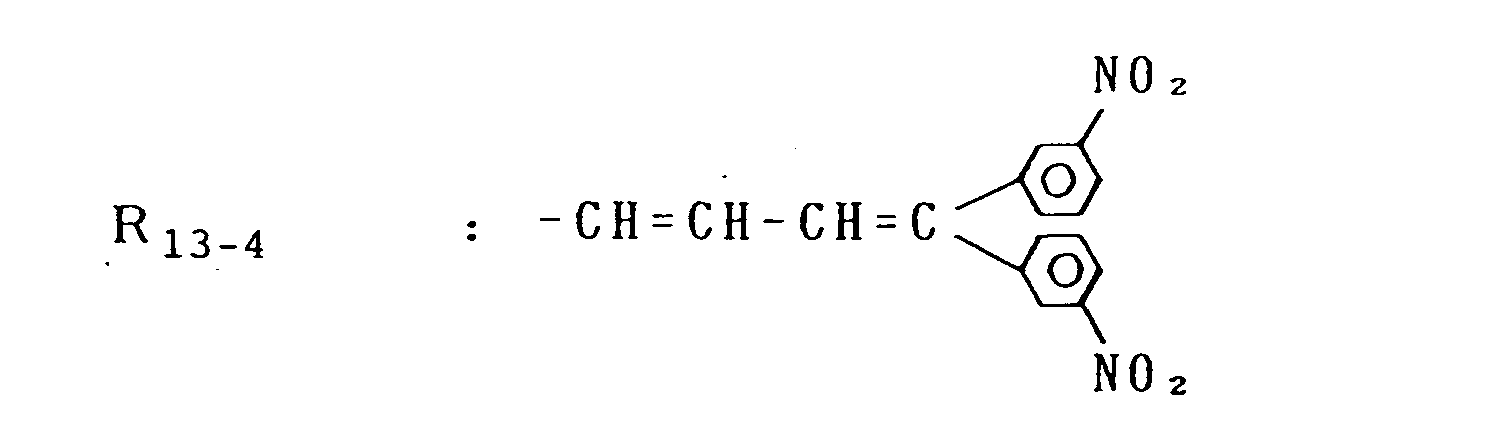
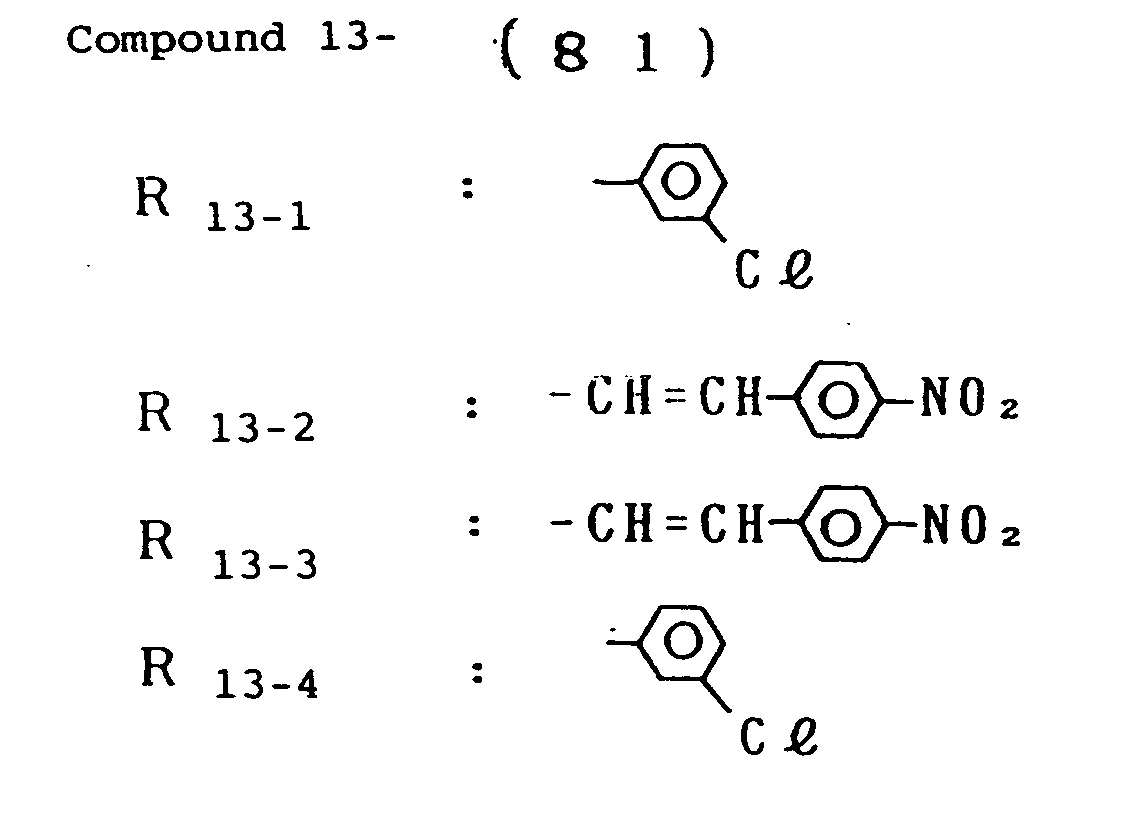
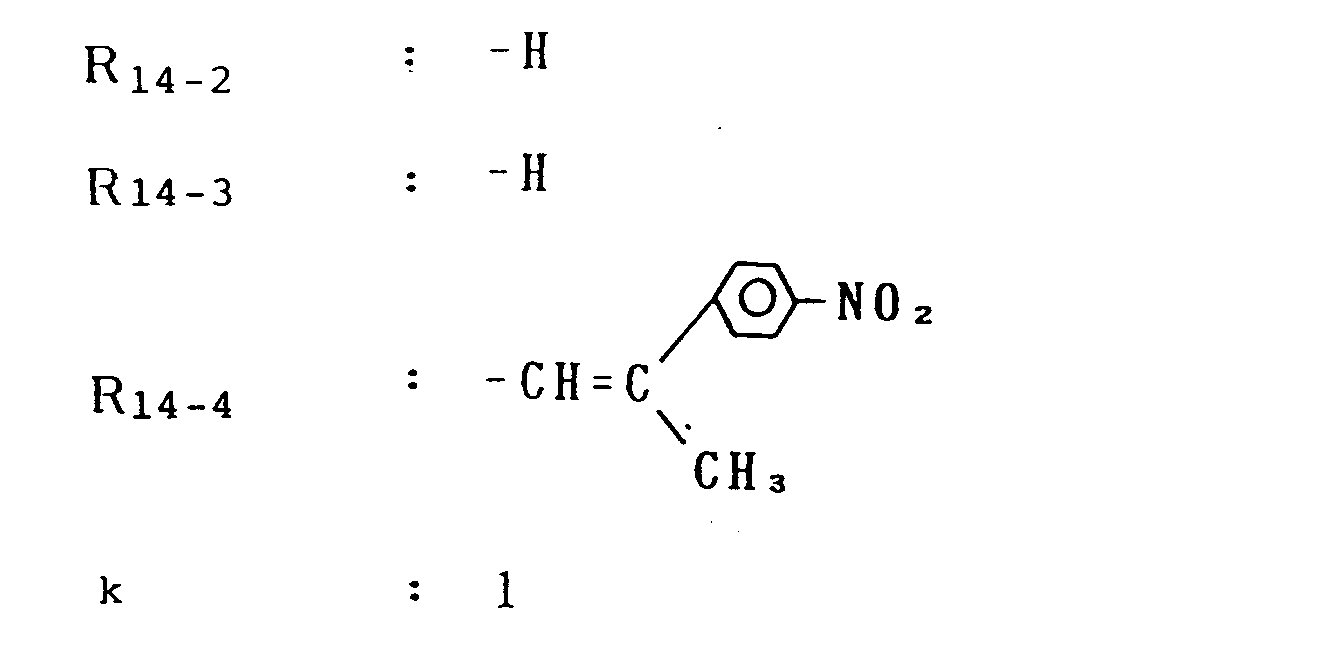
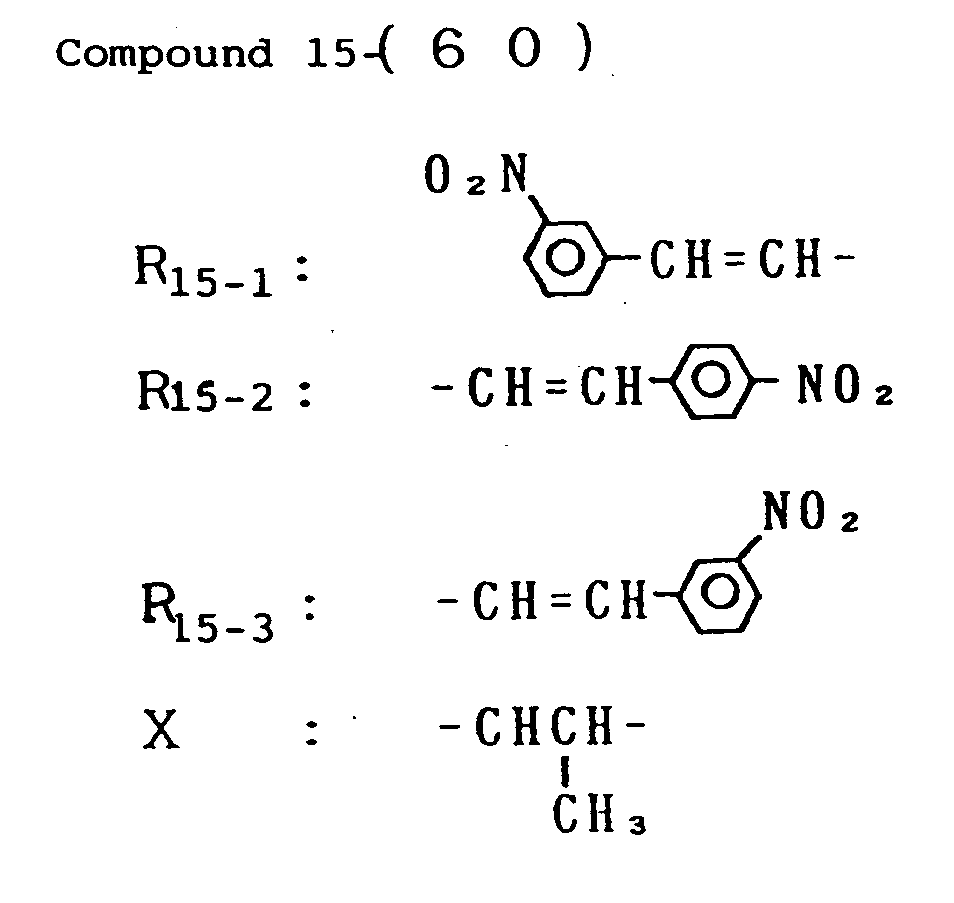
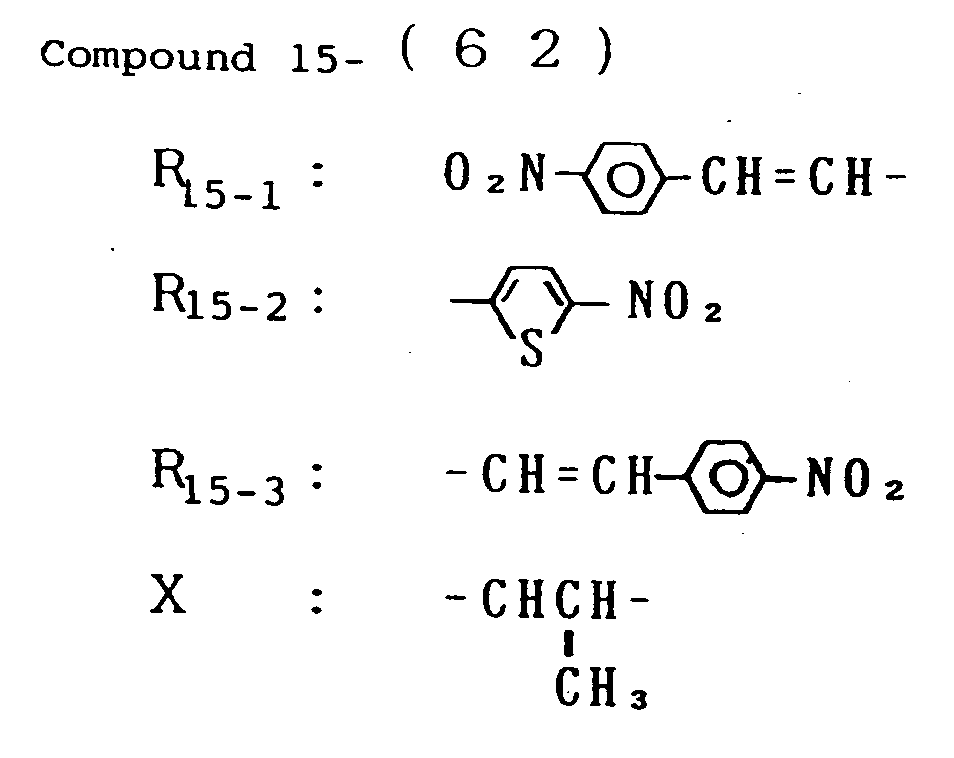
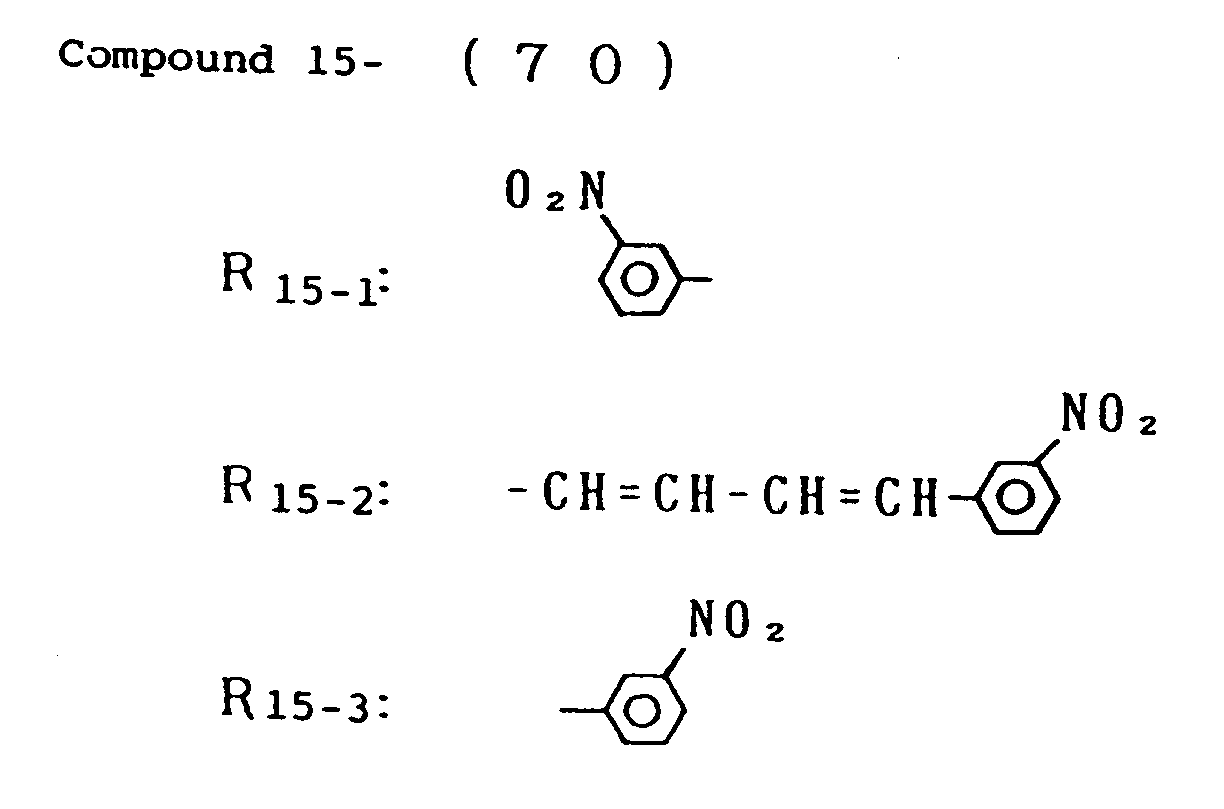
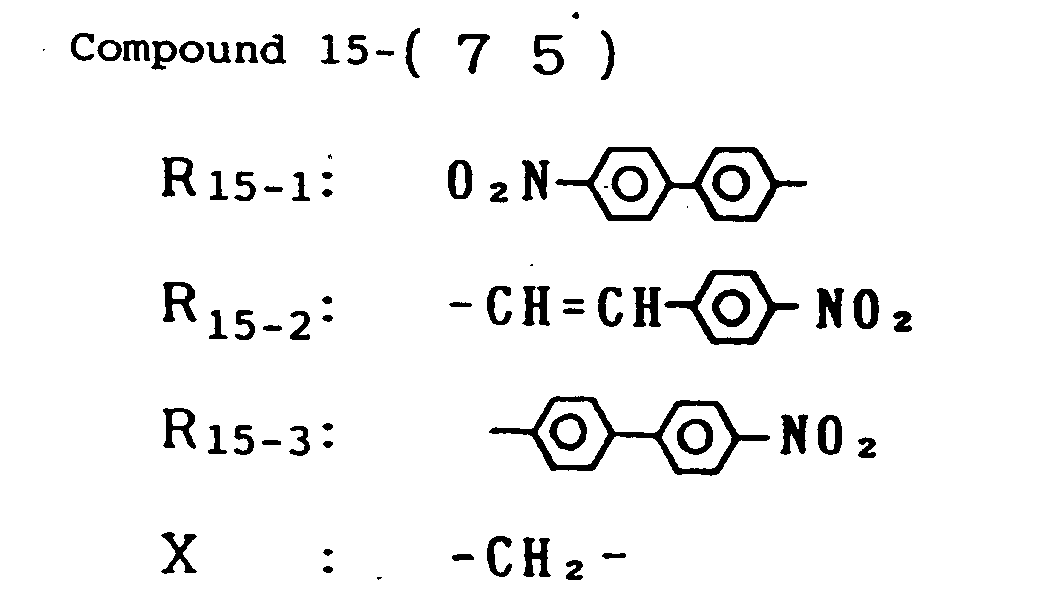
- The Compounds represented by Formulas (2) - (16) are specifically exemplified below, but they are not limited thereto.
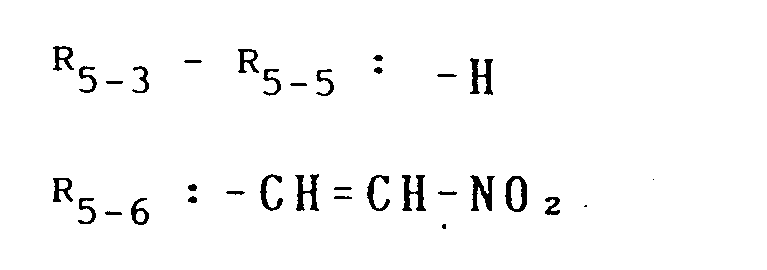
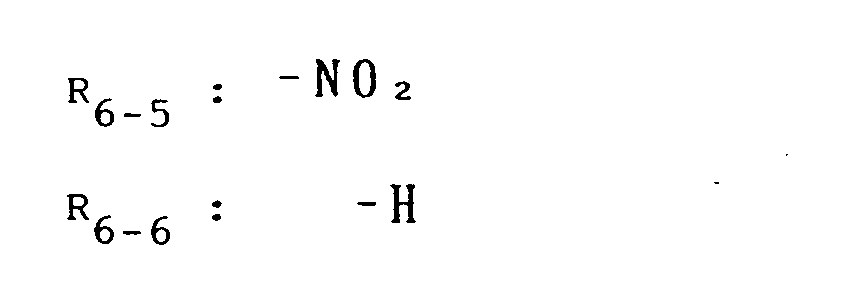
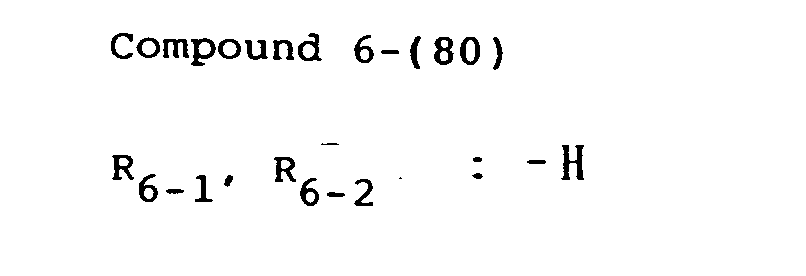
- Referring to a way of showing specific compounds, a basic constitution common to those specific compounds is first indicated and then they are defined by specifying variable portions in the basic constitution.
-


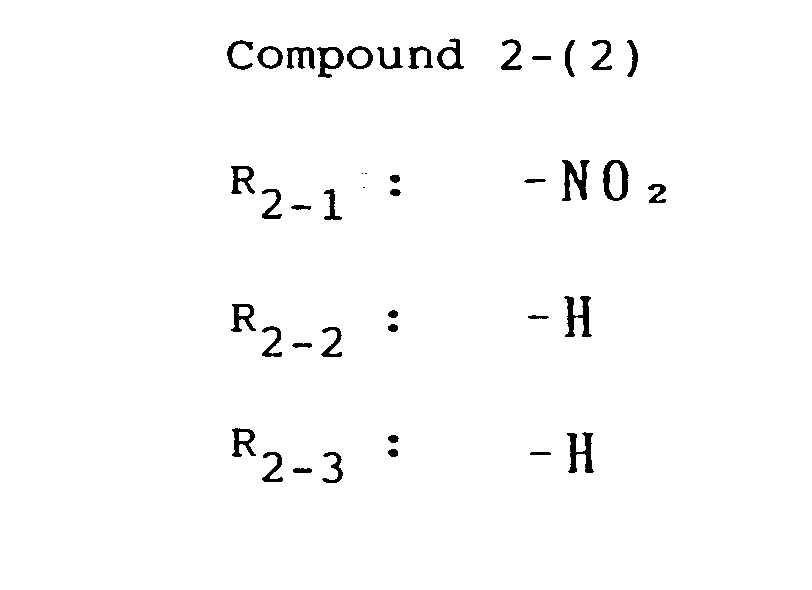



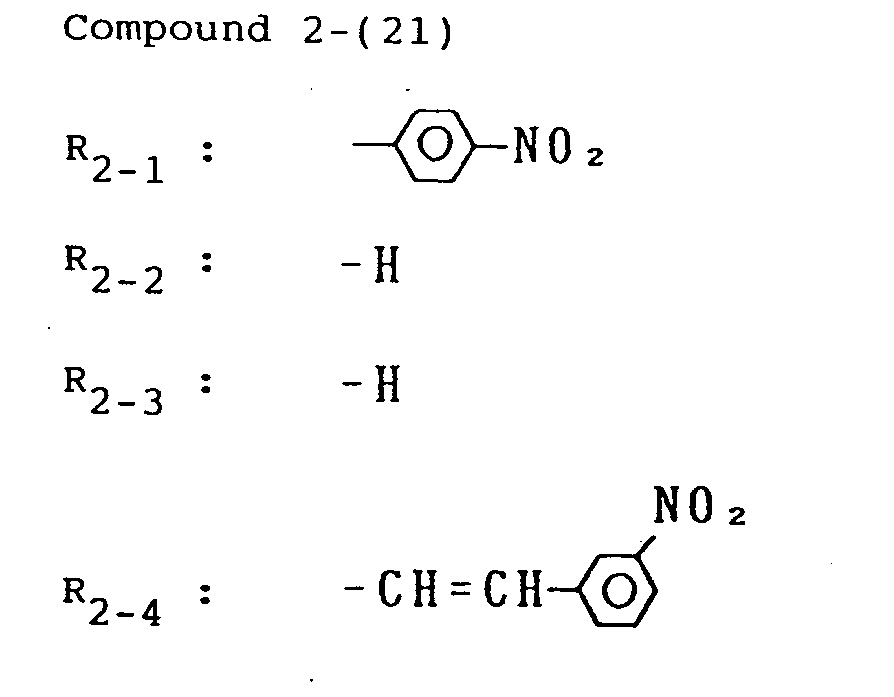


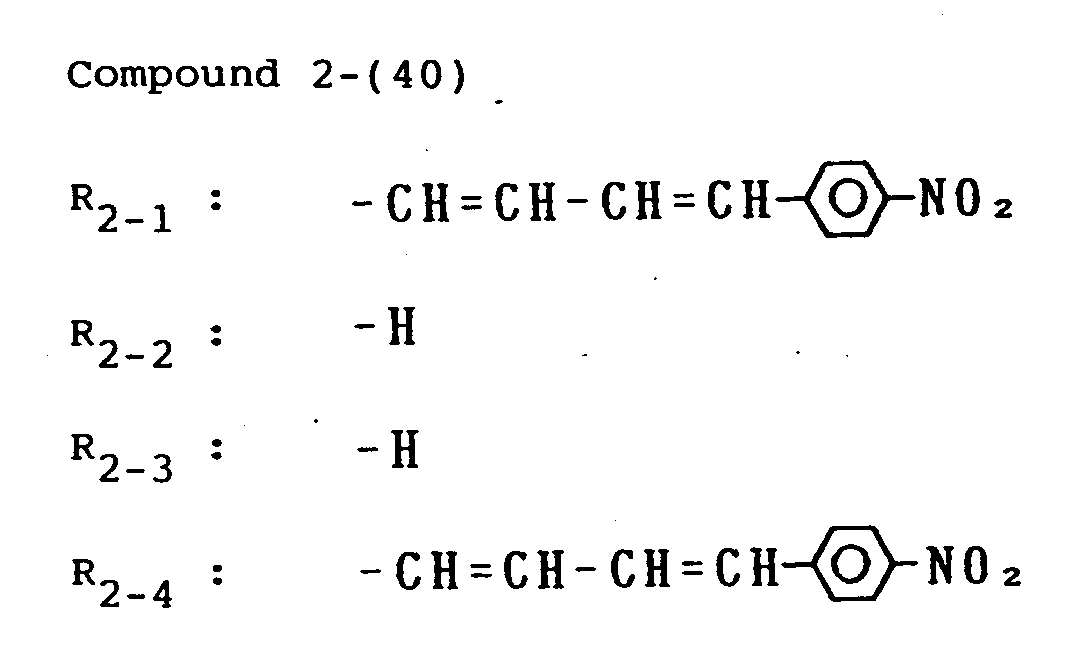














-



















-












-














-























-













































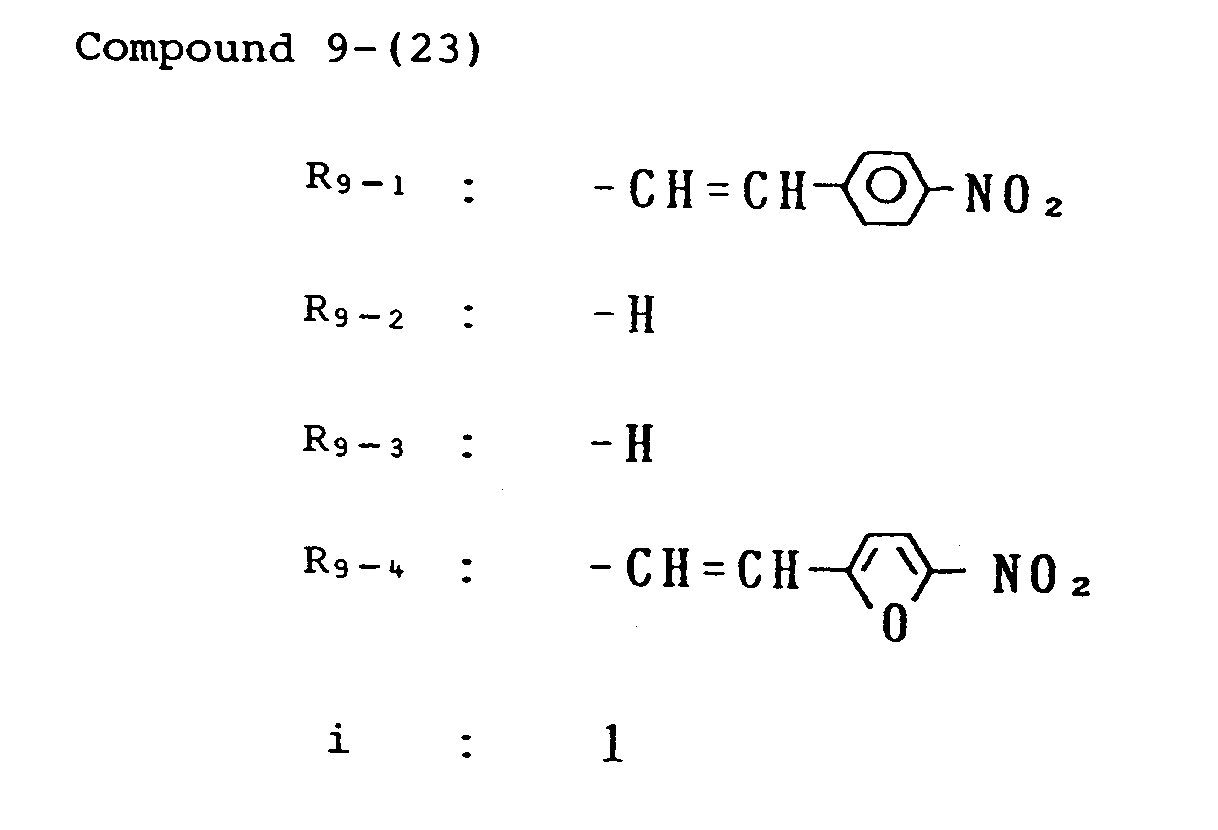


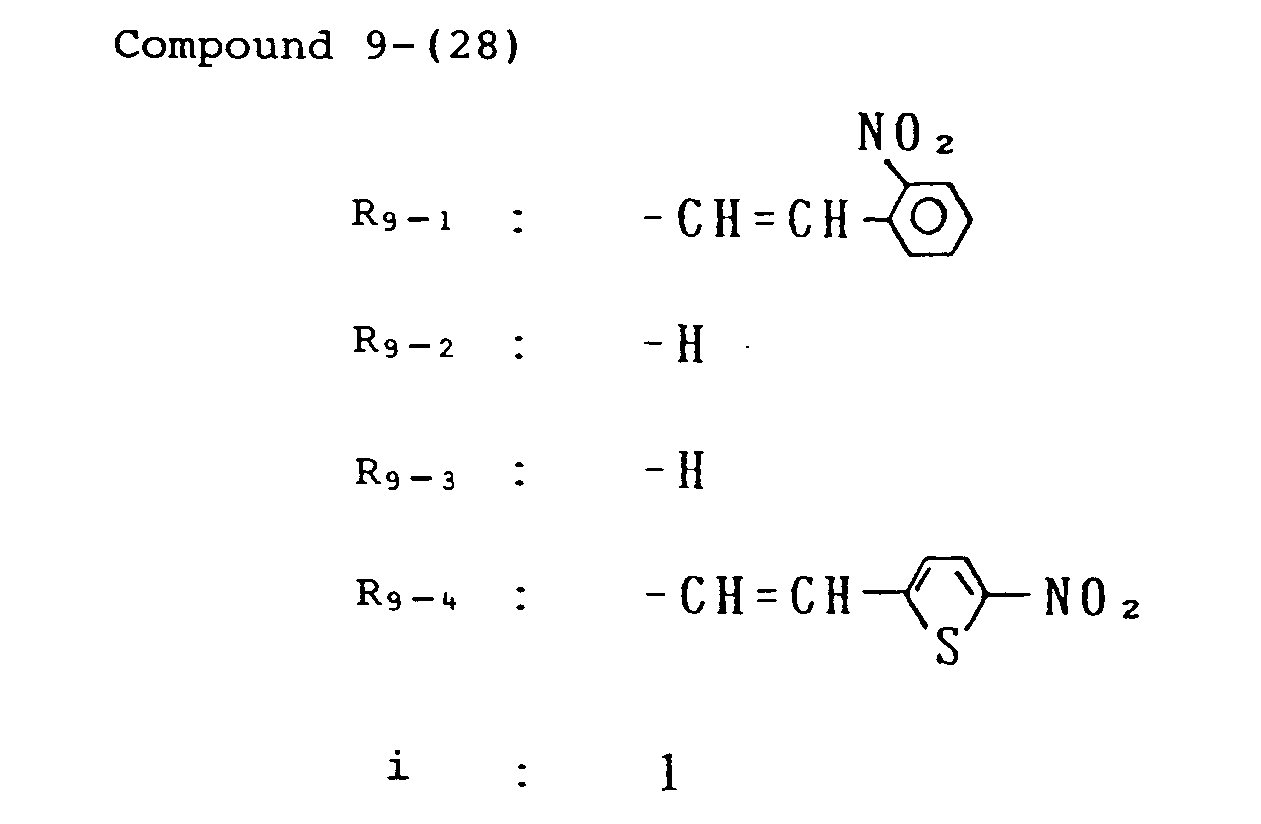
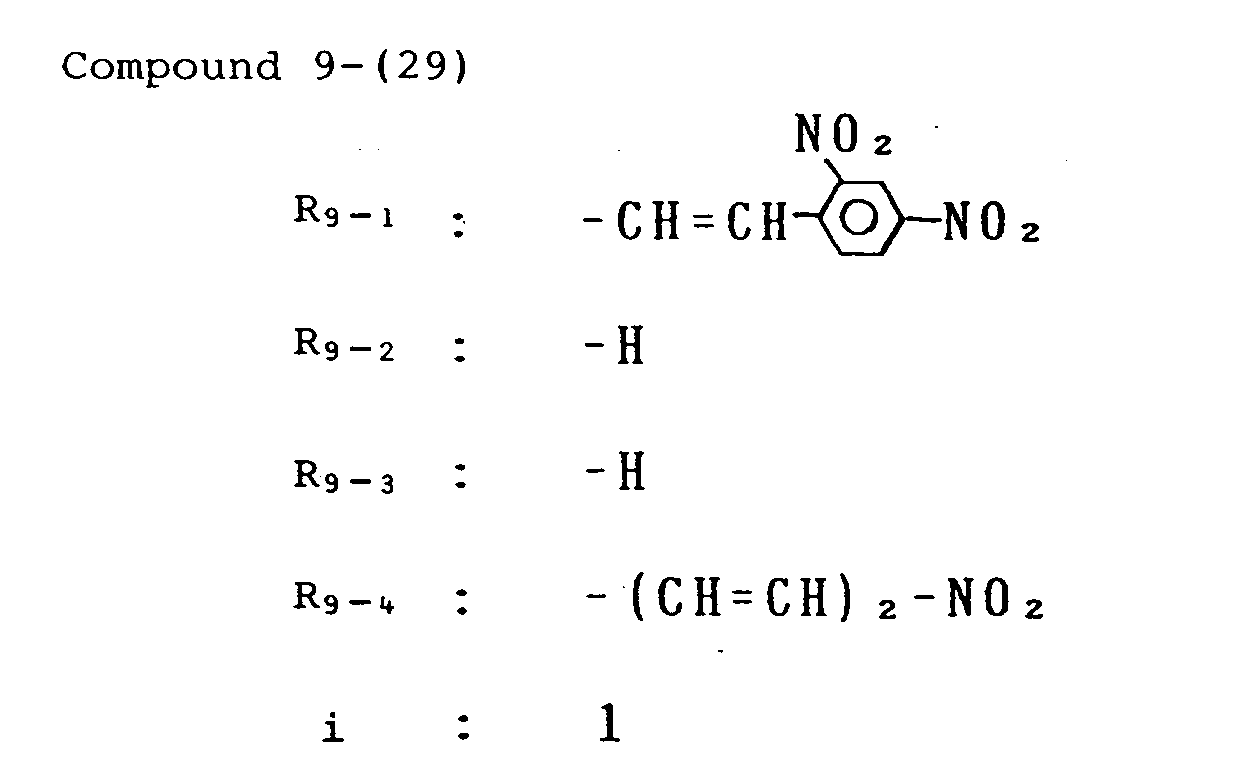


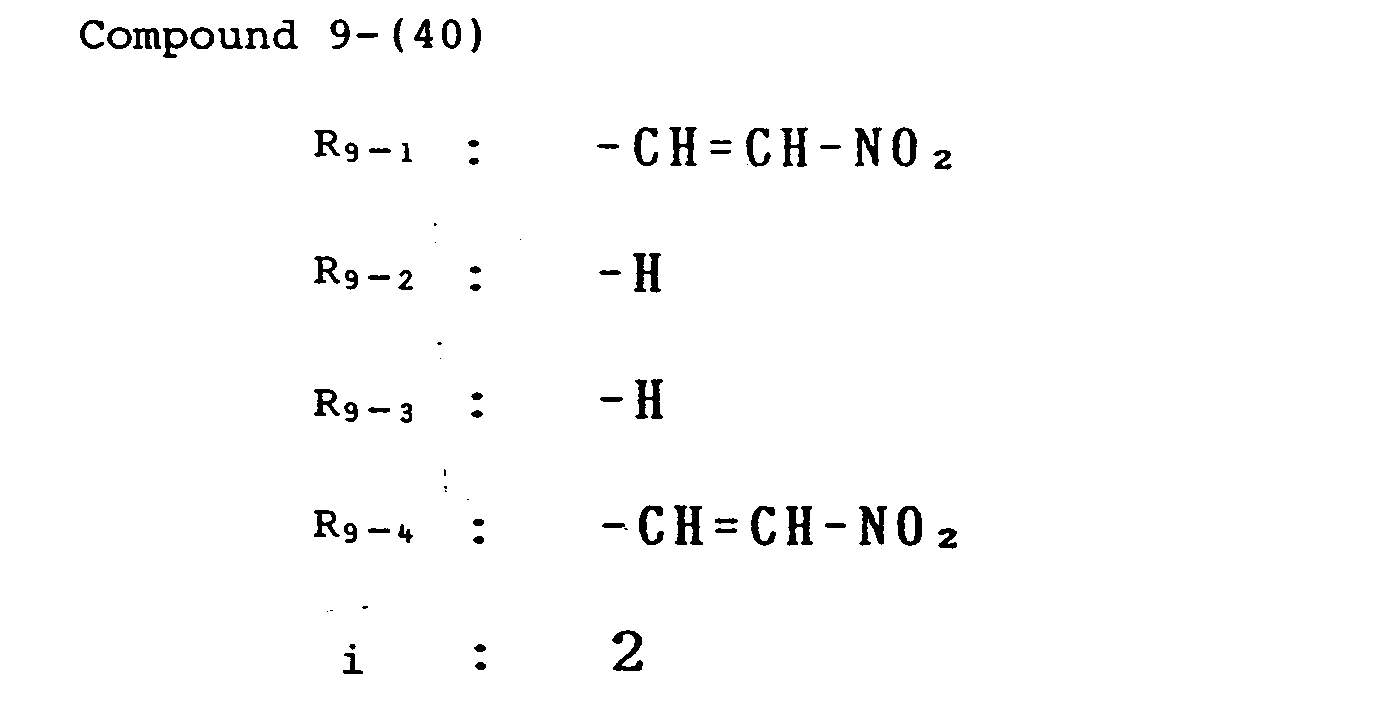














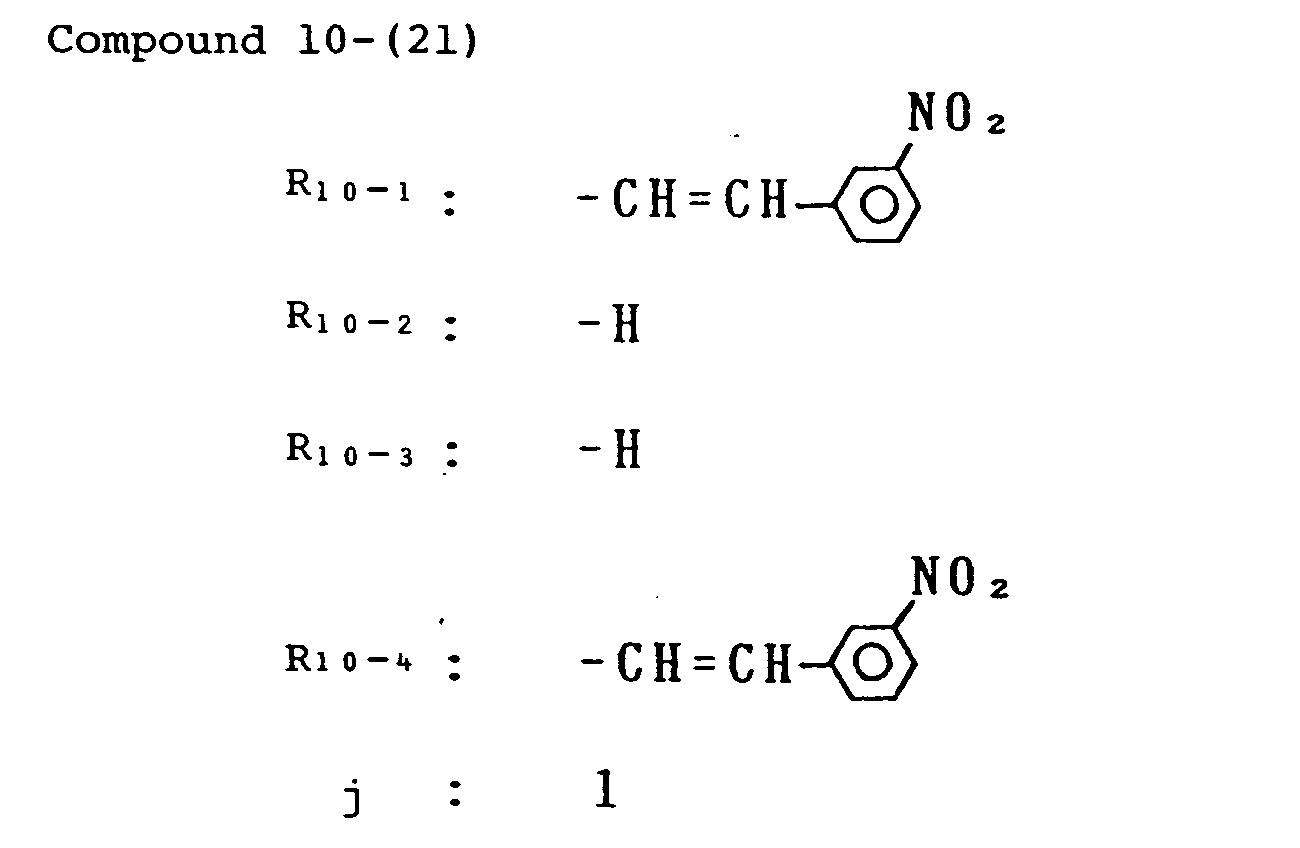
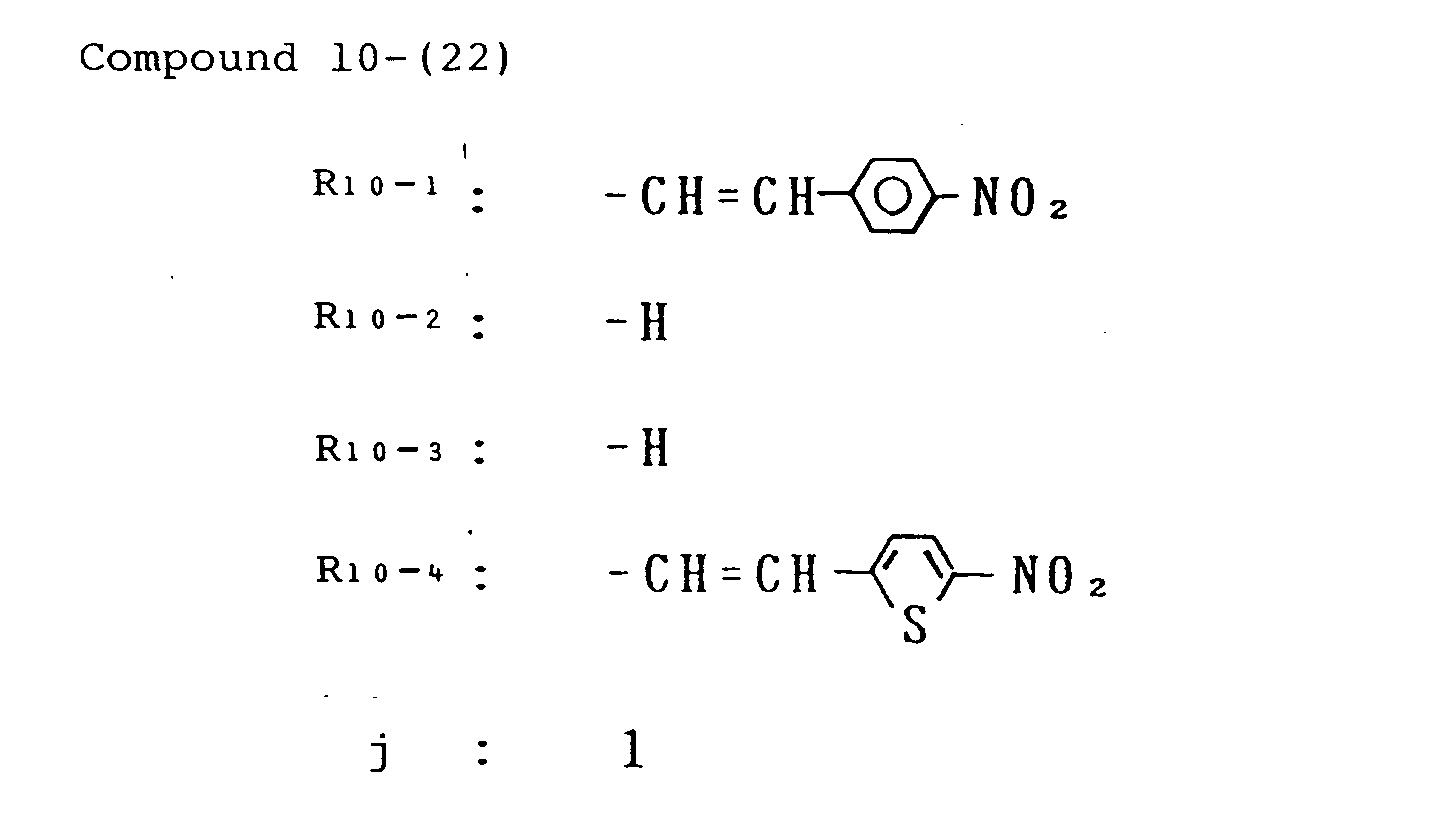


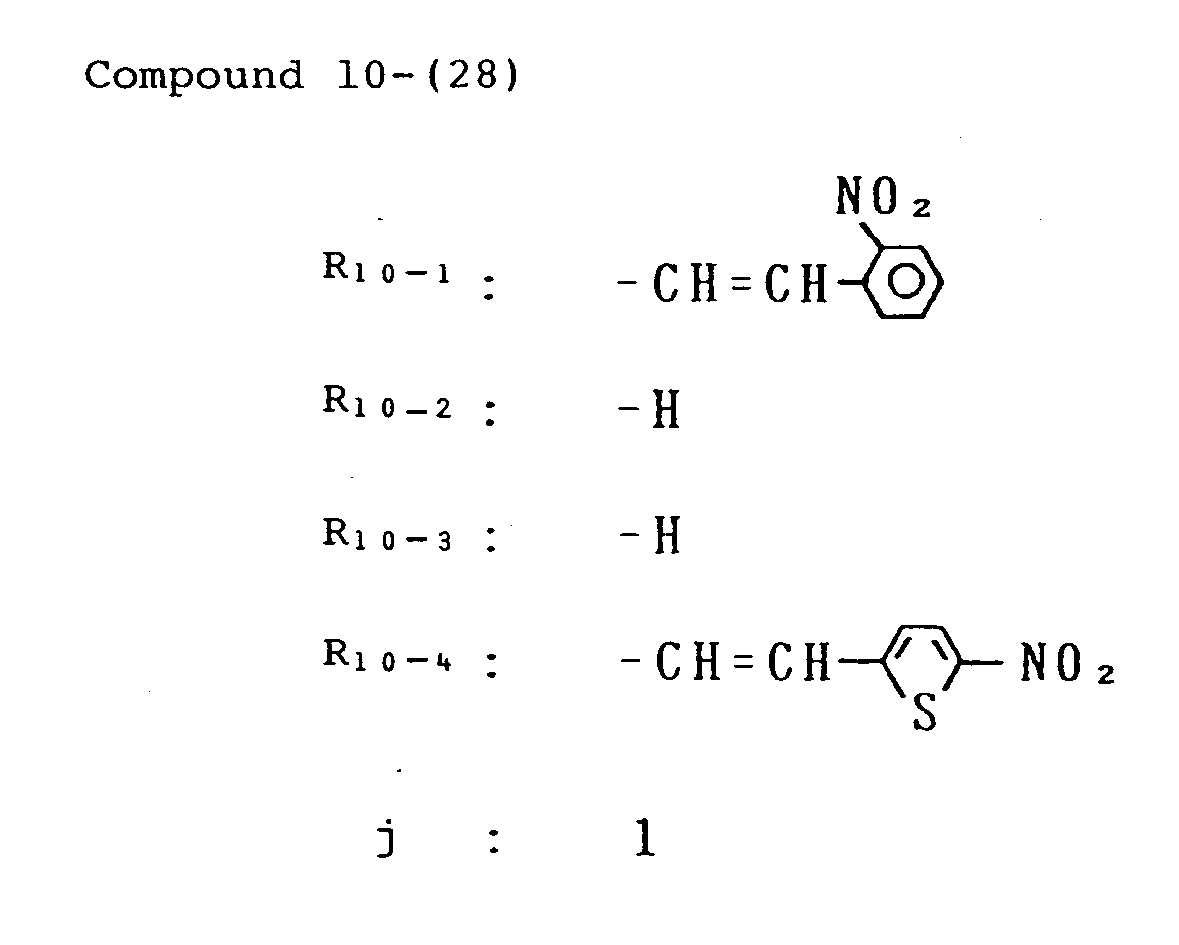

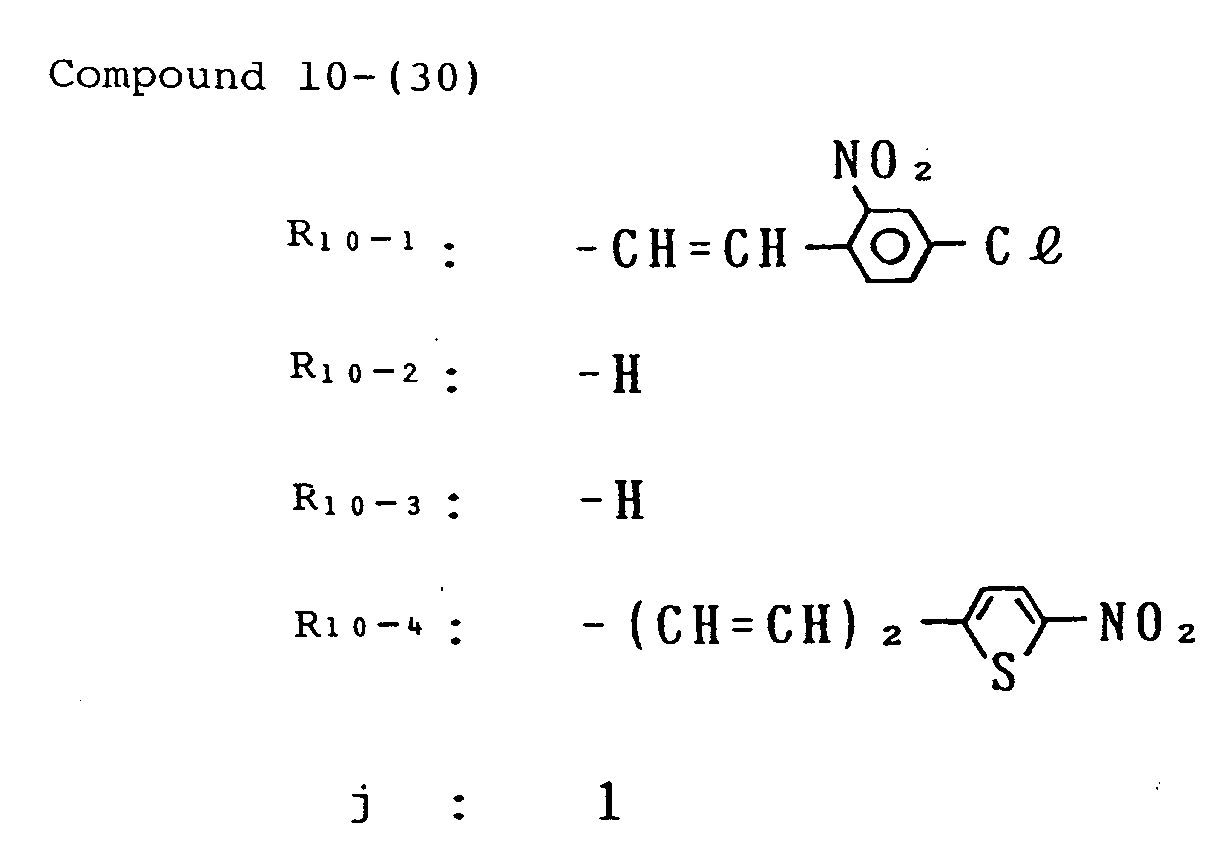


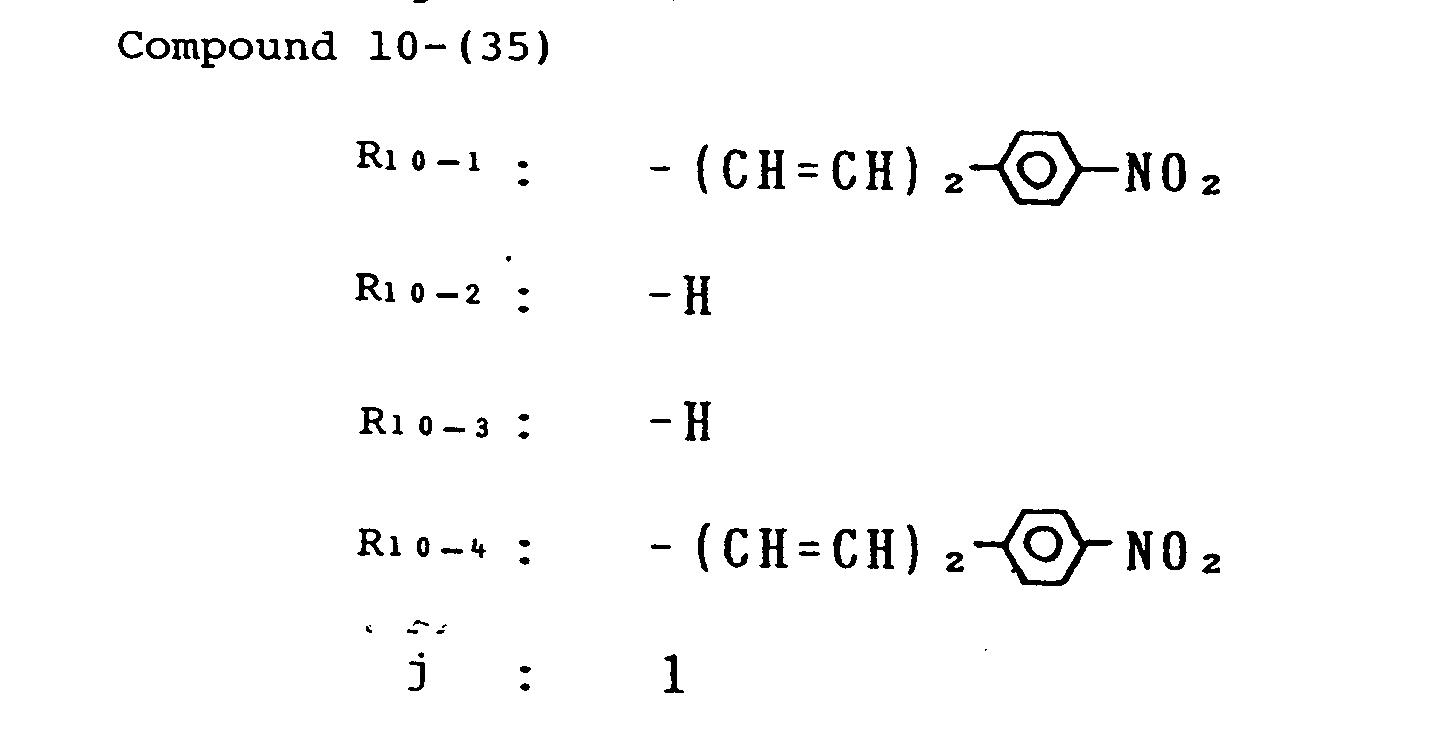


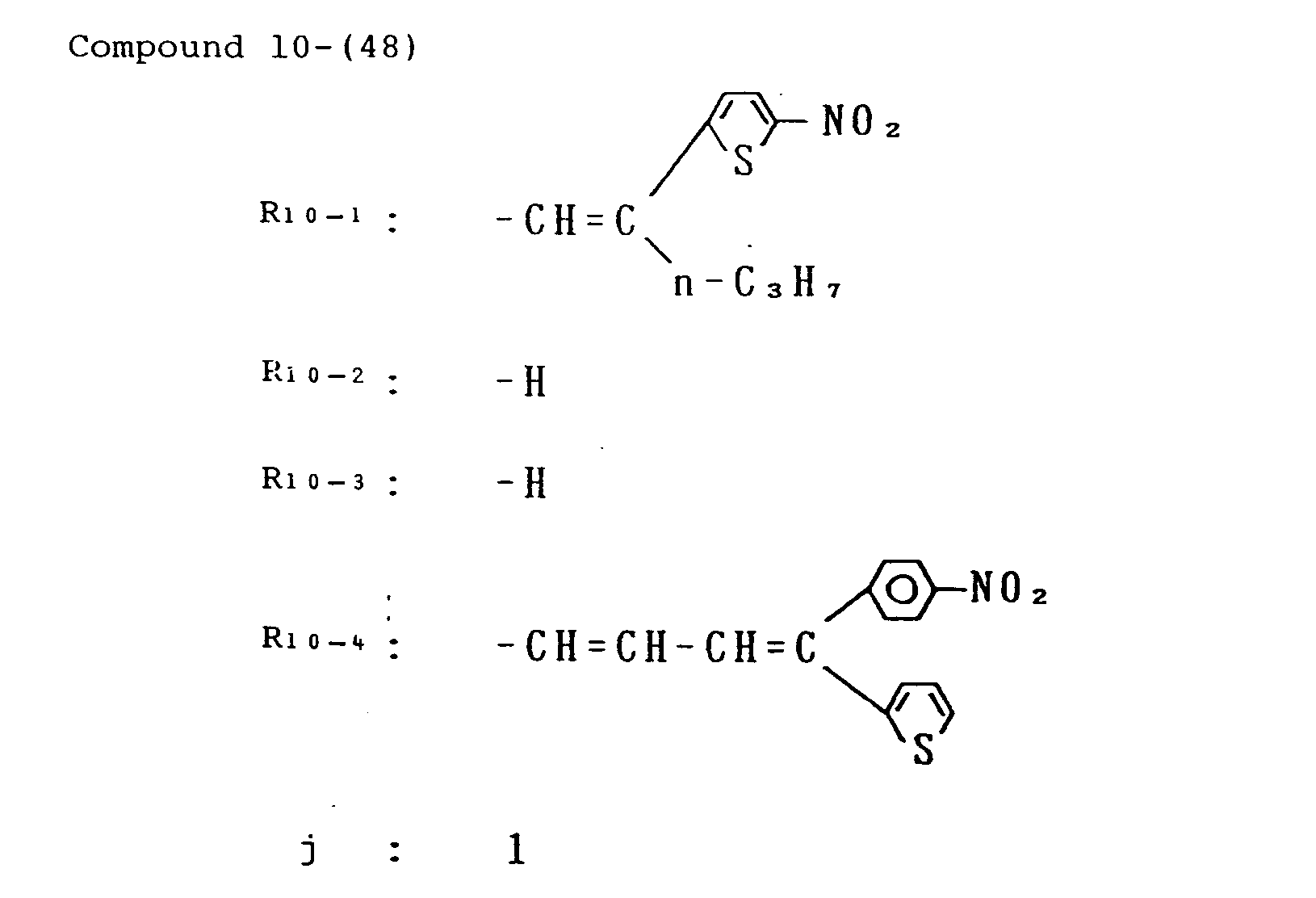


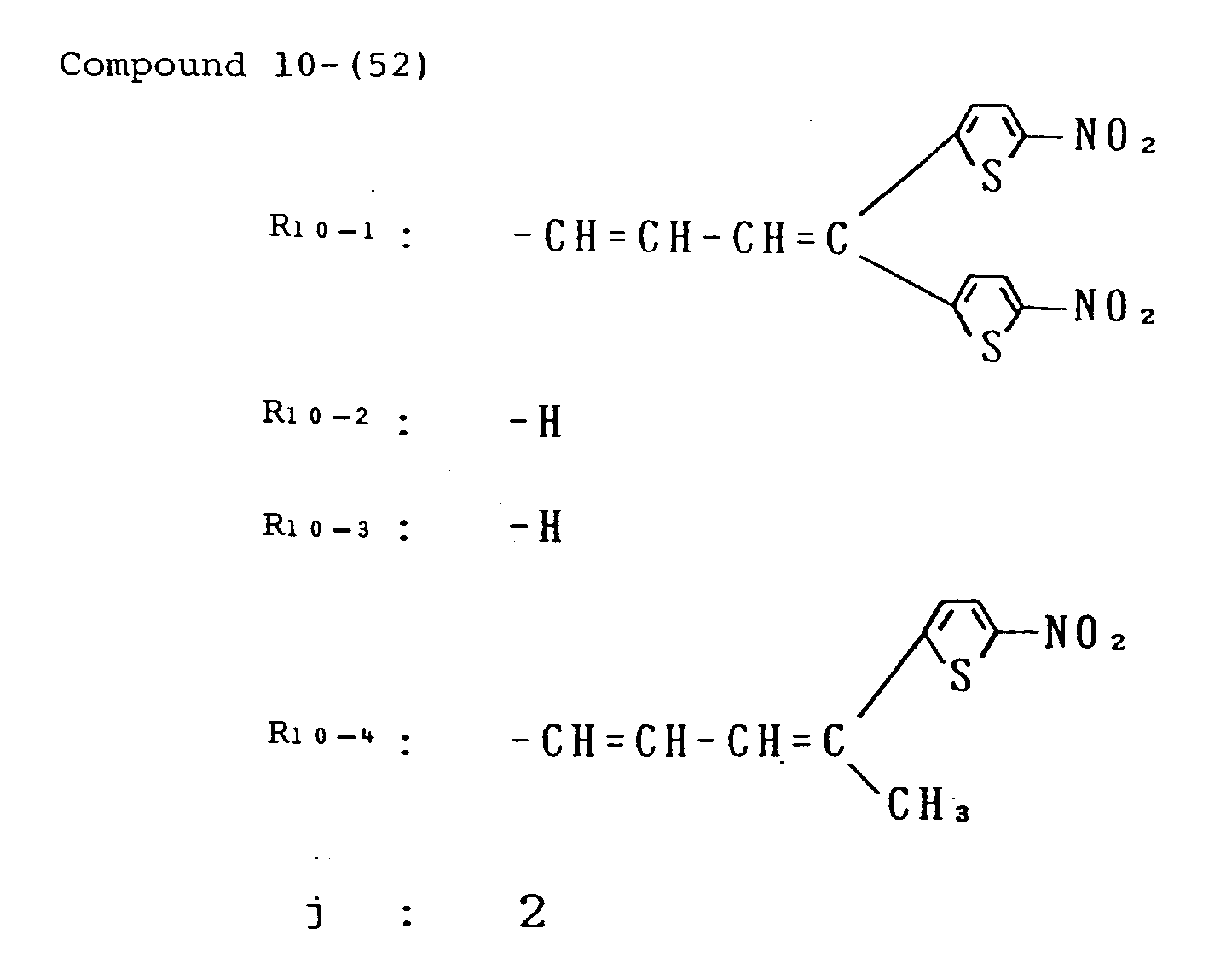
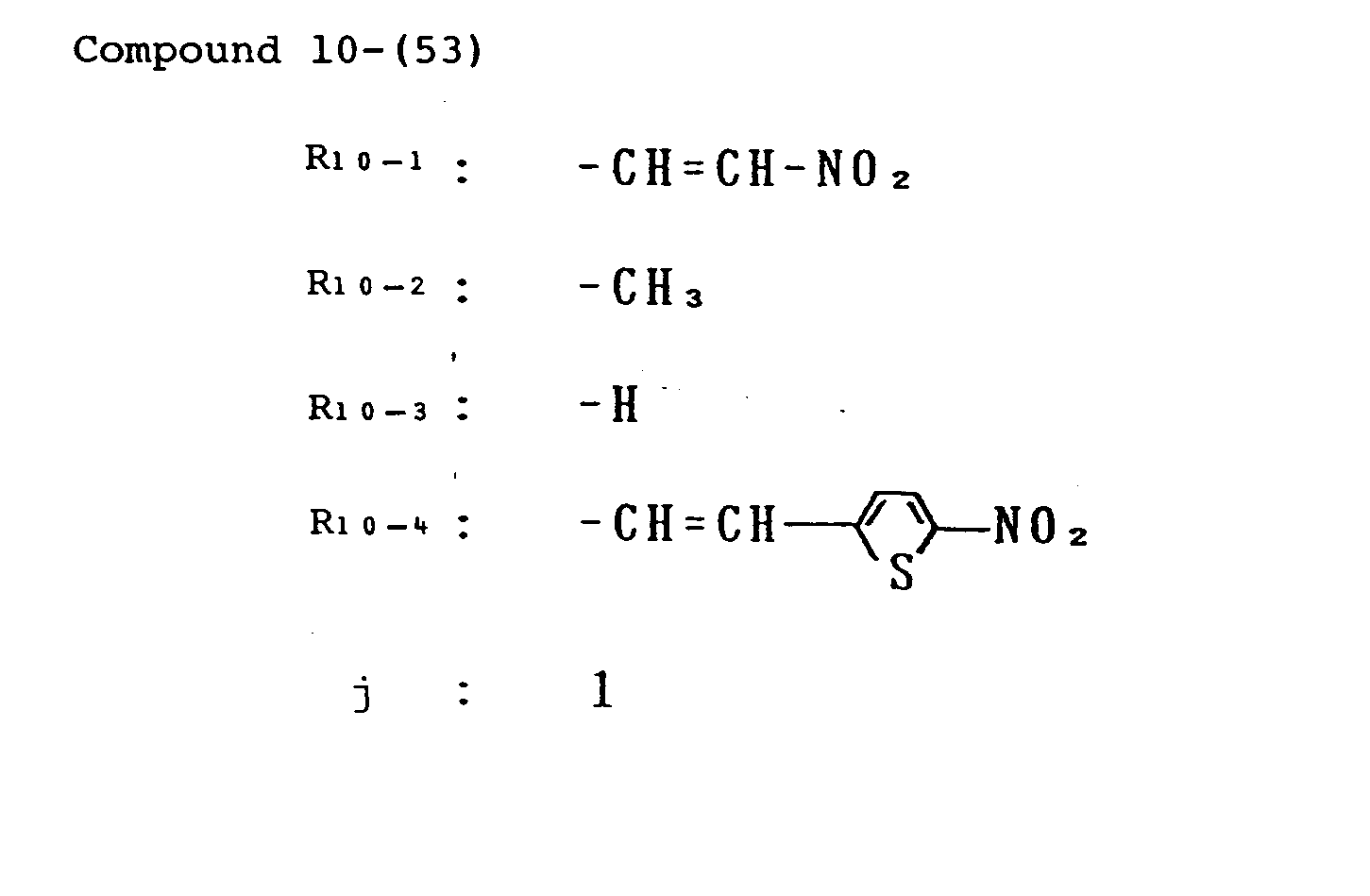


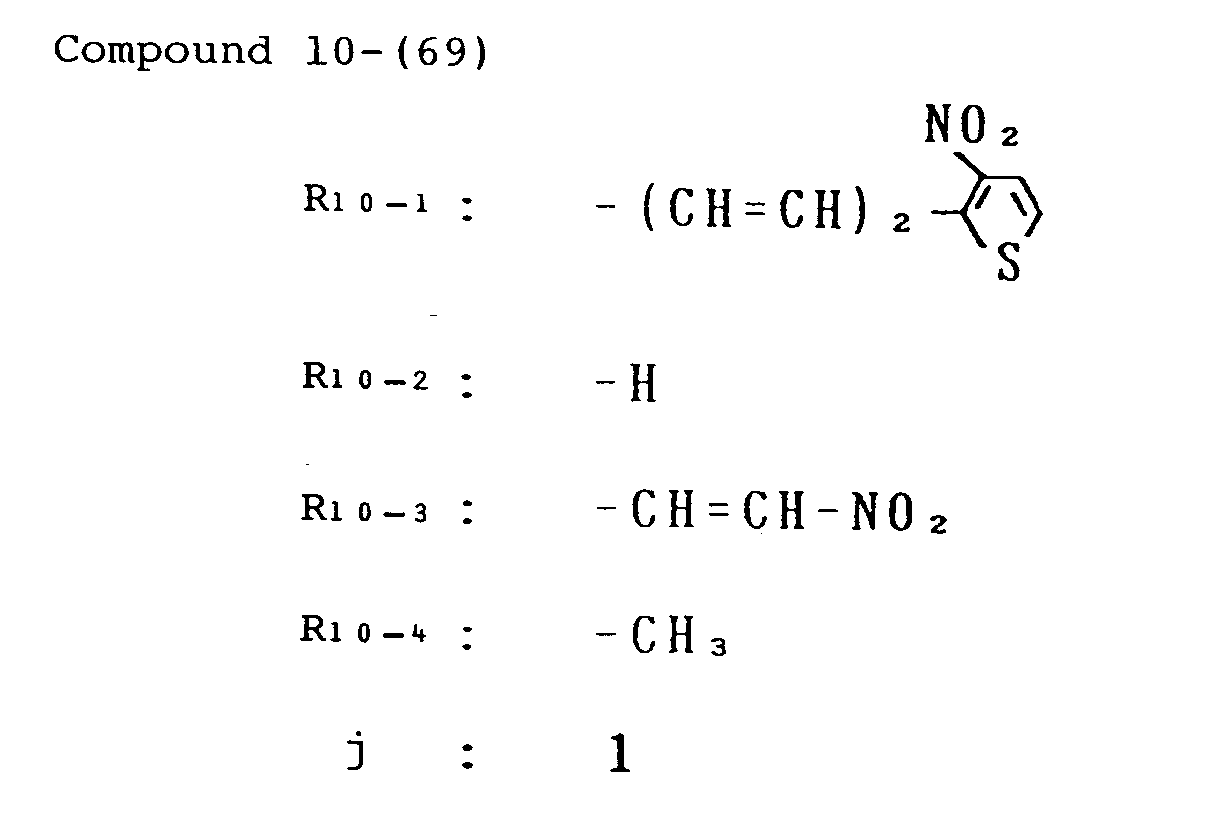


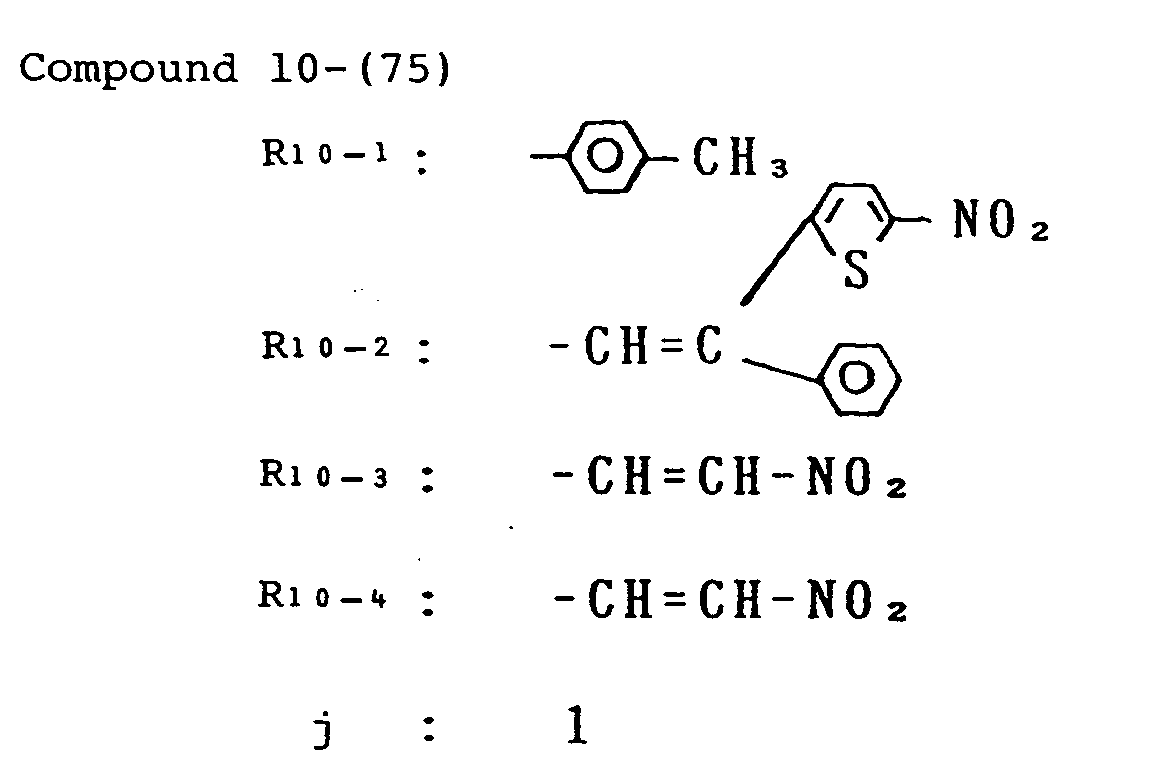


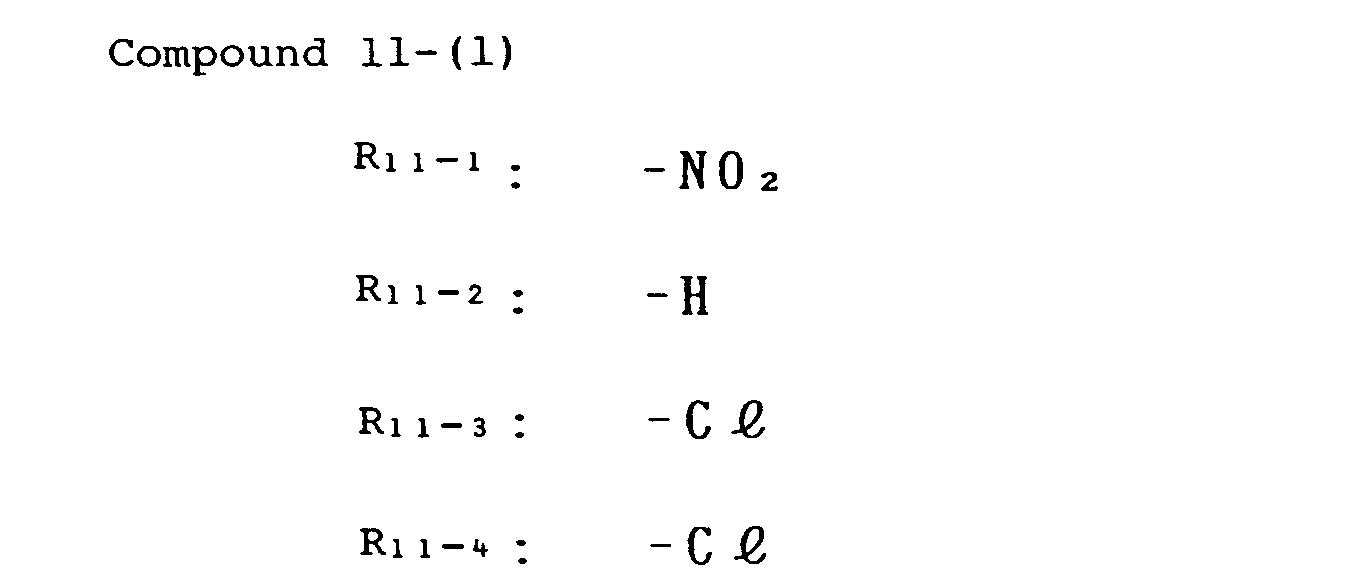


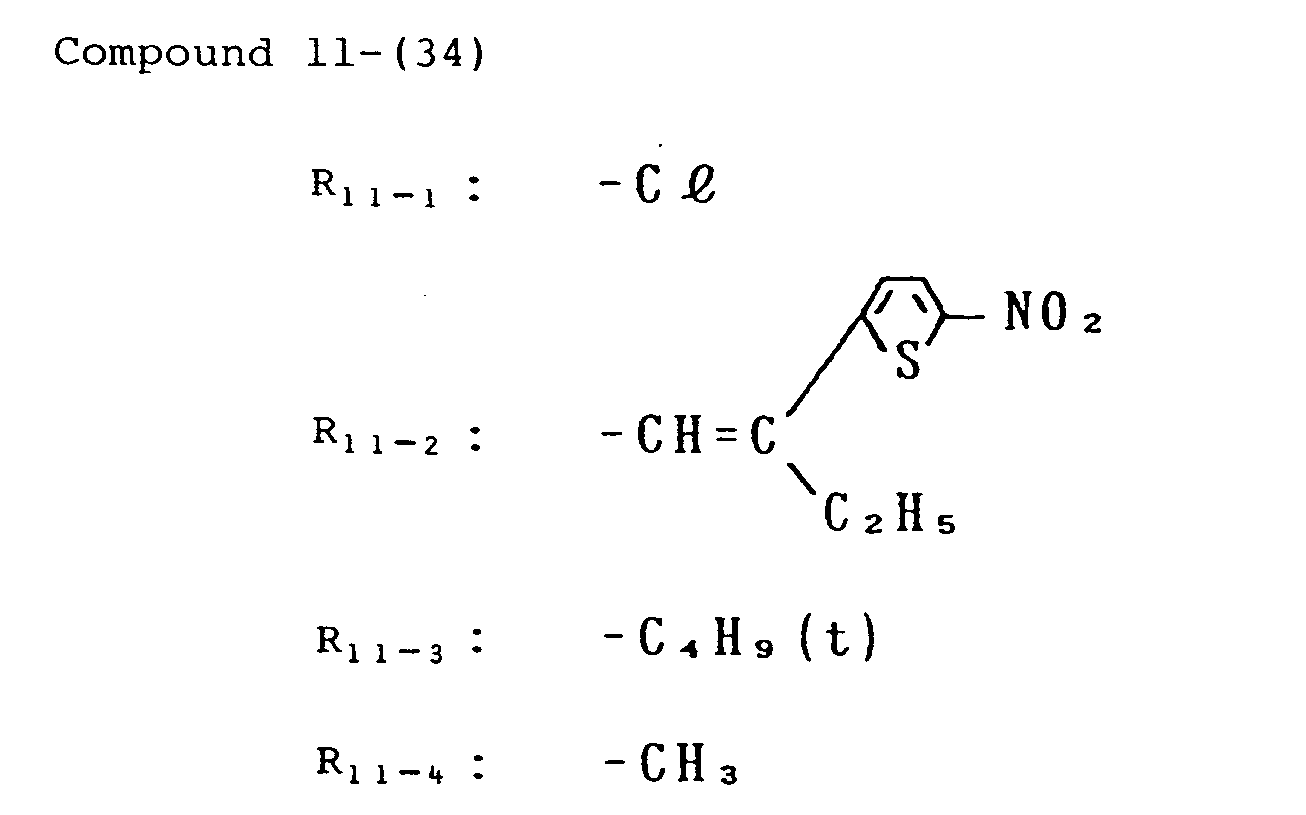


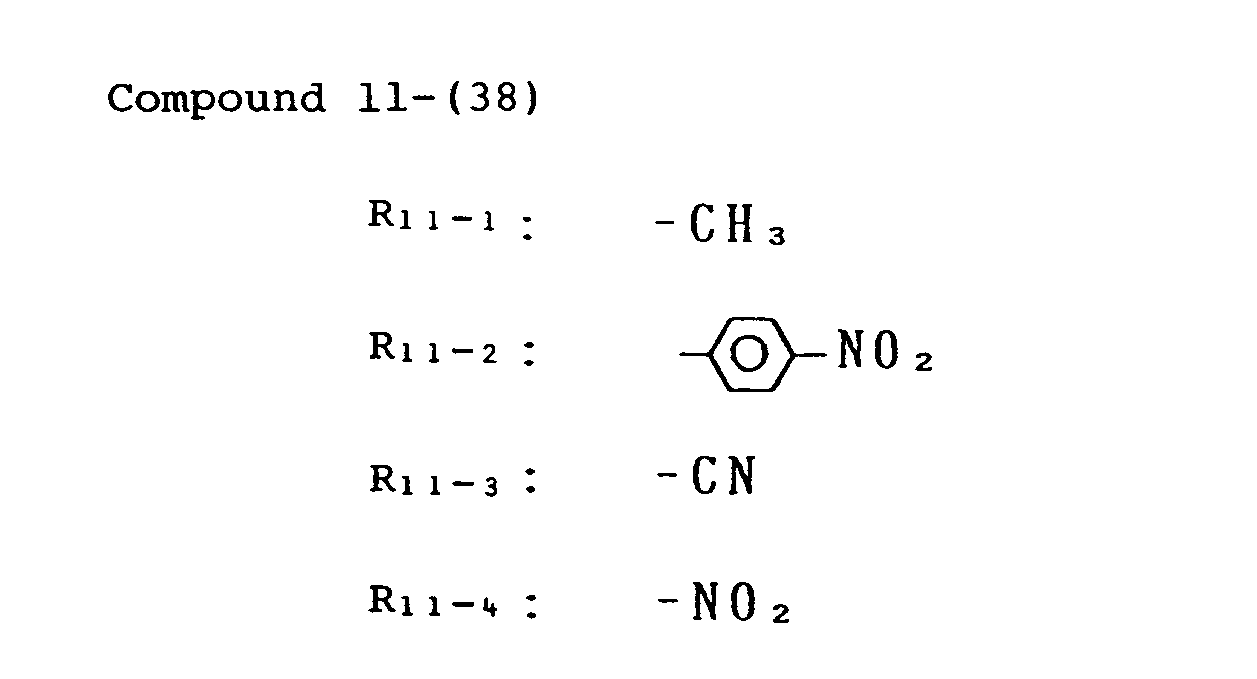


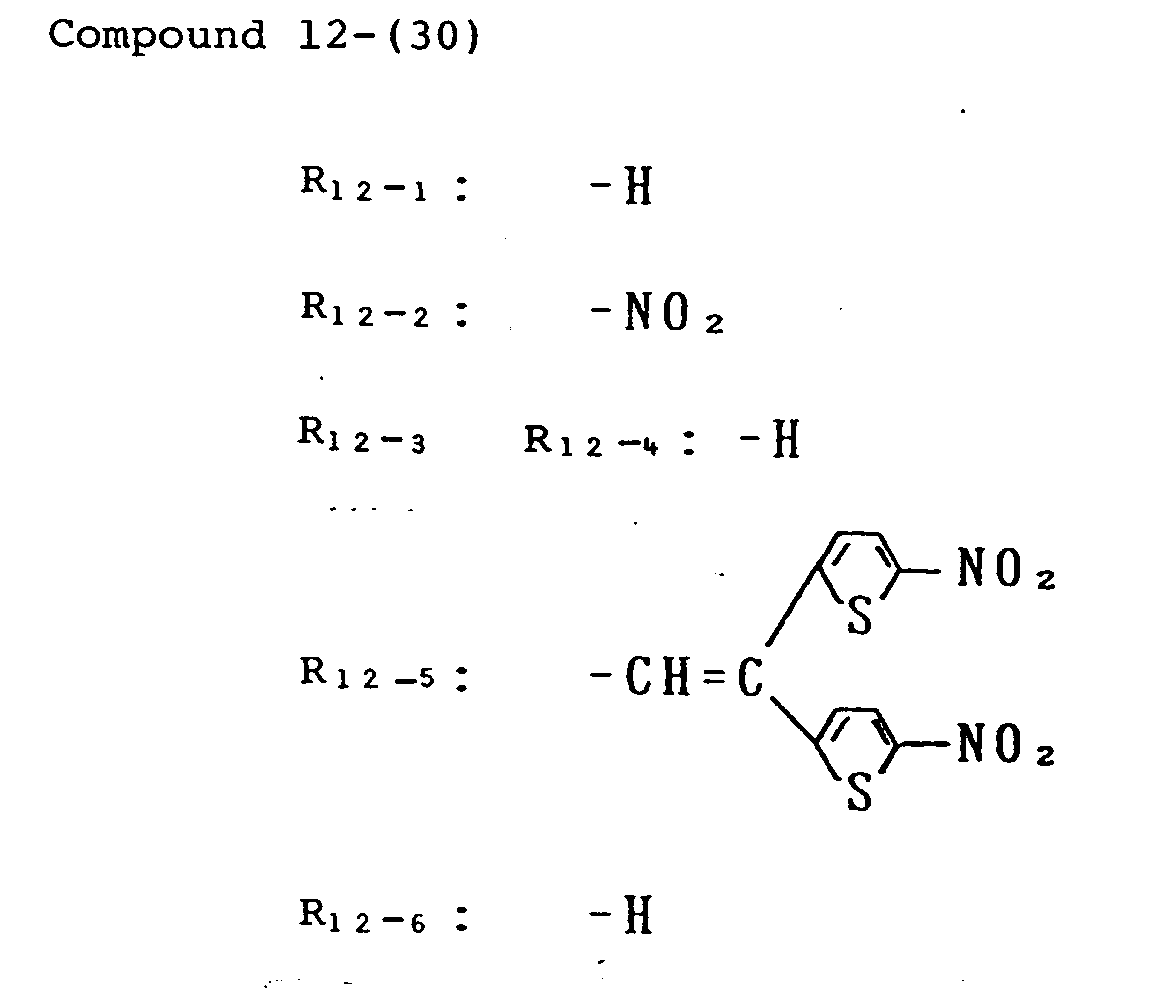

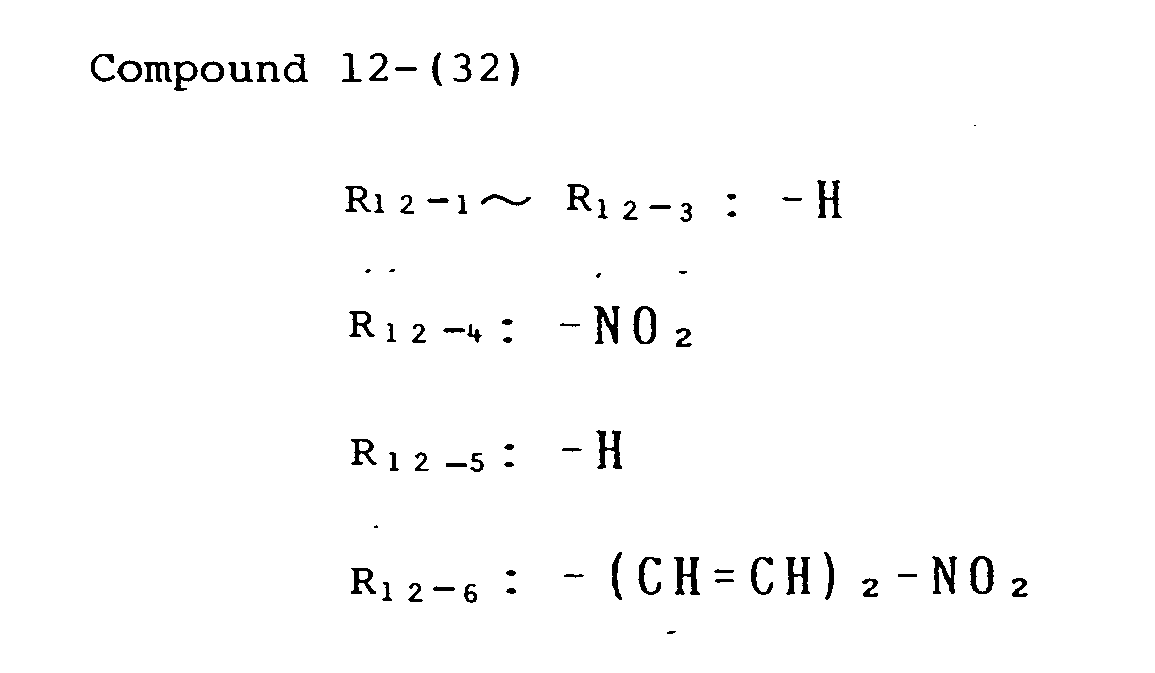


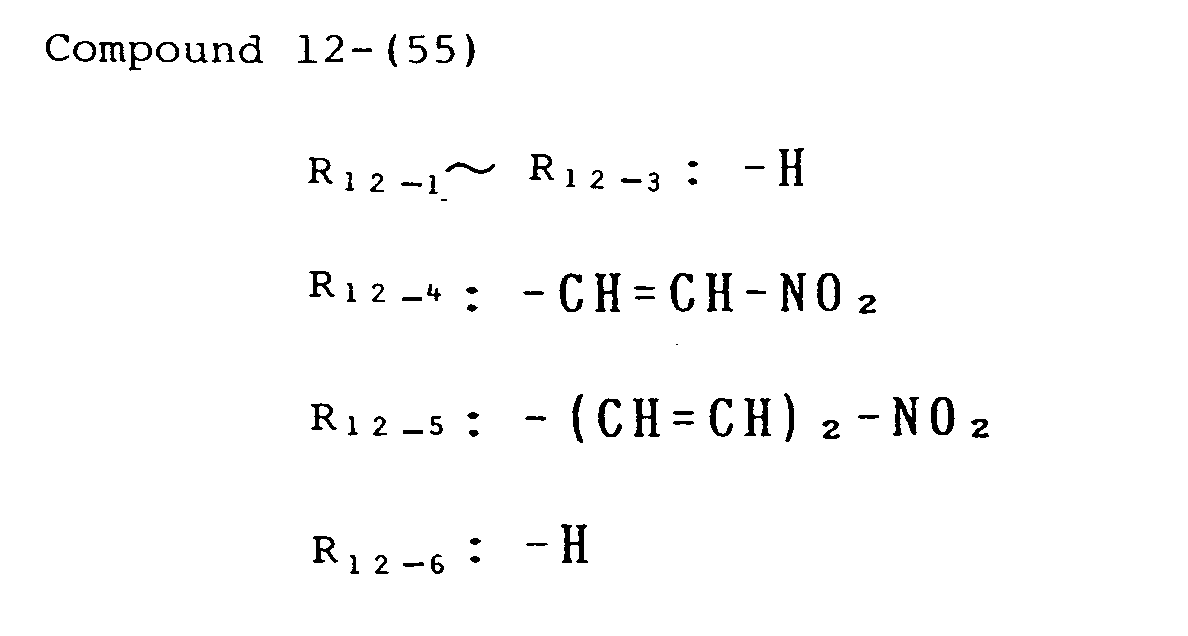






















-






















-


















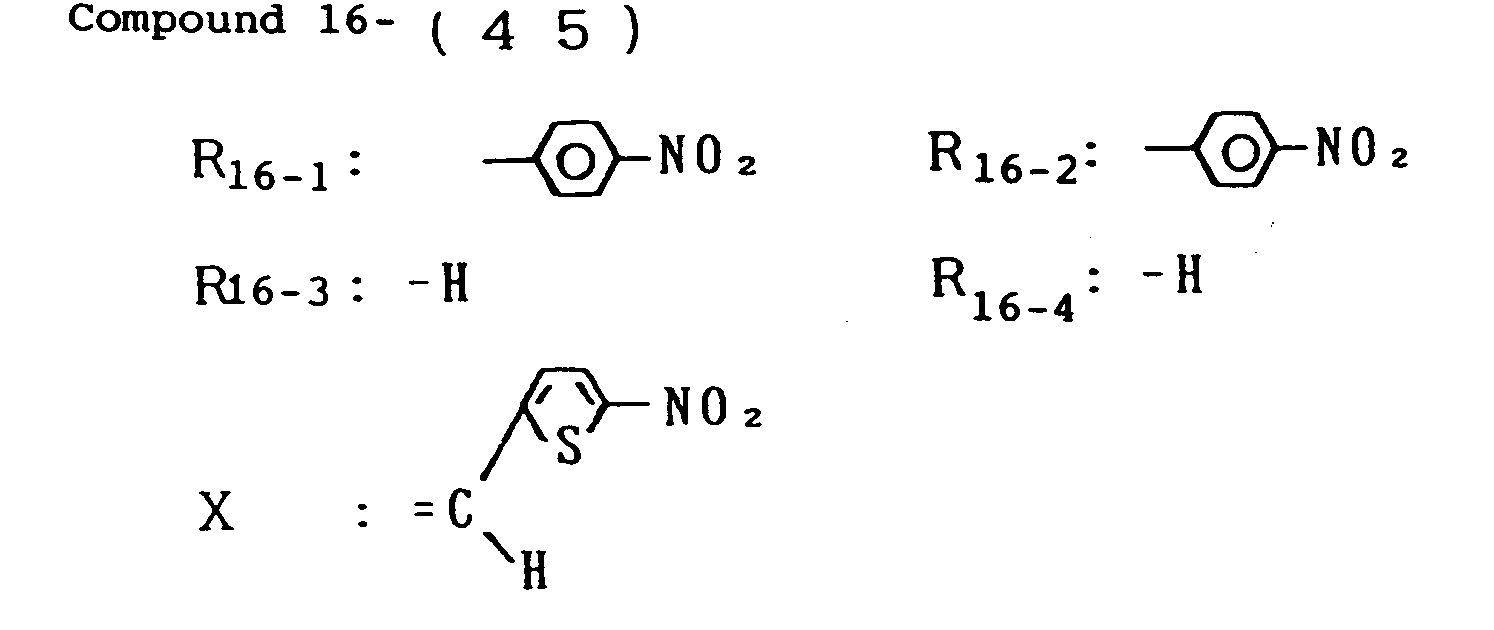

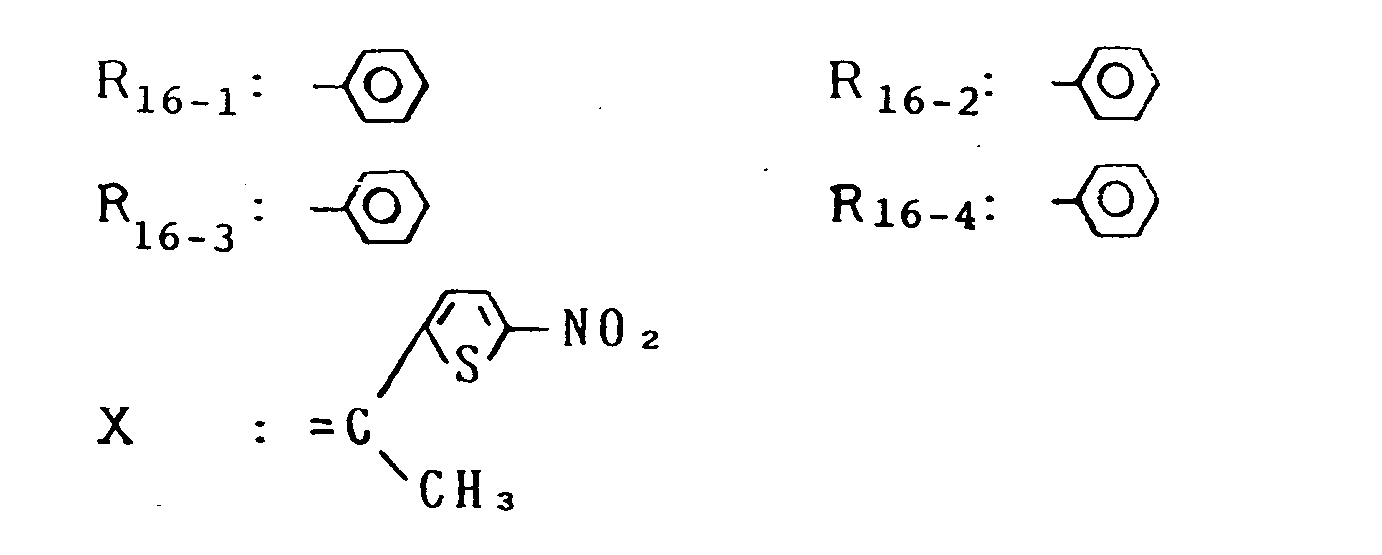


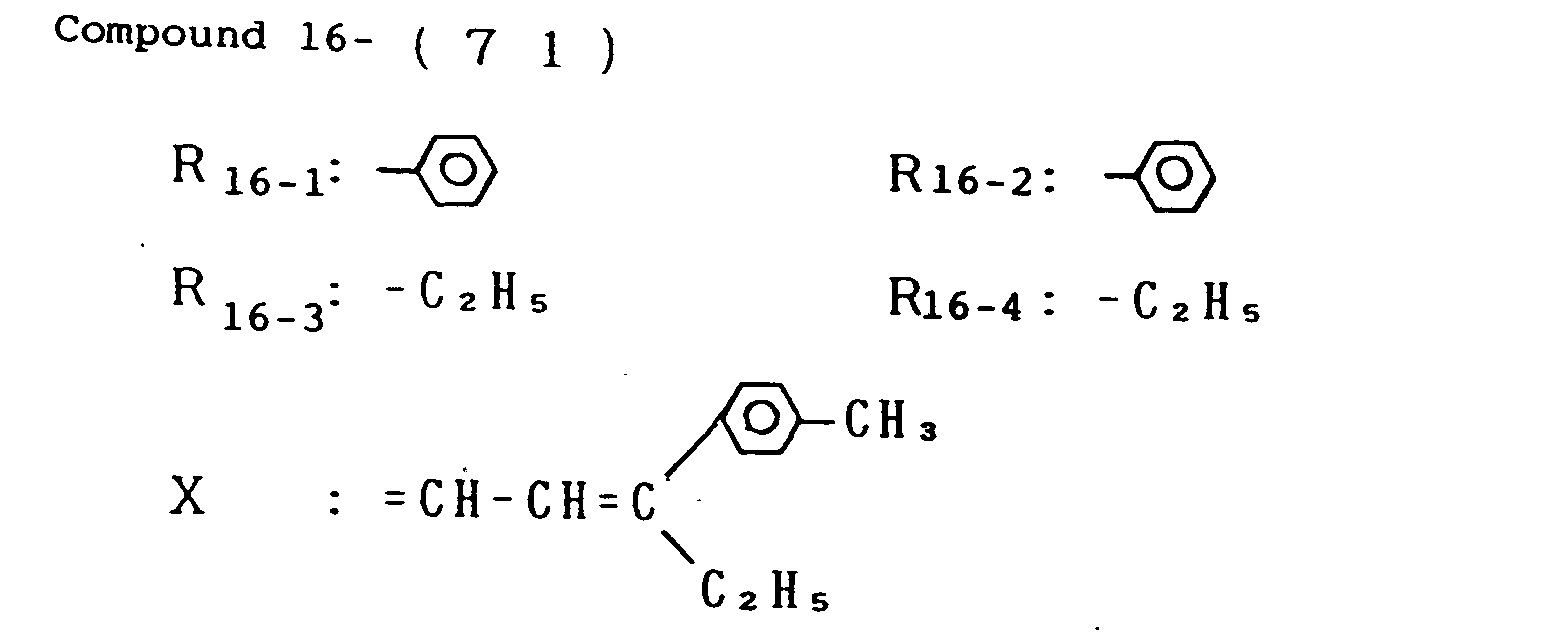


- Next, synthesis examples of the compounds which can be used in the present invention will be described.
- 5 g of dimethyl diphenylmethylsulfonate and 3.5 g of 7-nitrofluorenone-2-aldehyde were dissolved in 60 ml of N,N-dimethylformamide (DFM), and 1.77 g of sodium methoxide was slowly added thereto at room temperature. After completion of the addition, the solution was stirred at room temperature for 1 hour as it was, and it was further stirred for 3 hours, while heated up to 50 C on a water bath. After standing for cooling, the solution was poured into water, and the precipitated crystals were collected by filtration and then recrystallized twice from a mixed solvent of toluene and methyl ethyl ketone, thereby obtaining 1.9 g of the desired compound. Its yield was 37.2%.
- 0.81 g (14.9 mmols) of sodium methylate was added to 40 ml of DMF, and a solution of 3.90 g (14.27 mmols) of diethyl p-nitrobenzylphosphonate and 10 ml of DMF were slowly added dropwise thereto. After completion of the addition, the solution was stirred for 15 minutes as it was, and a solution of 2.04 g (13.0 mmols) of 5-nitro-2-thiophenecarboxyaldehyde and 8 ml of DMF was then slowly added dropwise thereto at 25° C or less. After completion of the addition, the solution was stirred for 30 minutes as it was, and it was further heated and stirred at 40-50 C for 2 hours on a water bath. After standing for cooling, the solution was poured into 300 ml of an aqueous saturated sodium chloride solution, followed by extraction with toluene. The resultant organic layer was then washed water and then dried over anhydrous sodium sulfate. After the removal of the solvent under reduced pressure, separation/purification was carried out through a silica gel column to obtain 2.45 g of the desired compound. Its yield was 68%.
- 0.76 g (14.0 mmols) of sodium methylate was added to 15 ml of DMF, and a solution of 3.25 g (11.9 mmols) of diethyl m-nitrobenzylphosphonate and 20 ml of DMF were slowly added dropwise thereto at 20-25 C. After completion of the addition, the solution was stirred for 15 minutes as it was, and a solution of 2.0 g (7.0 mmols) of

- The resultant crude crystals were further washed with methanol and then recrystallized several times from a mixed solvent of toluene and ethyl acetate, thereby obtaining 1.24 g of the desired compound. Its yield was 44%.
- 0.63 g (11.7 mmols) of sodium methylate was added to 15 ml of DMF, and a solution of 2.8 g (10.2 mmols) of diethyl o-nitrobenzylphosphate and 15 ml of DMF were slowly added dropwise thereto at 20-25 C. After completion of the addition, the solution was stirred for 15 minutes as it was, and a solution of 1.5 g (6.4 mmols) of

- The resultant crude crystals were further washed with methanol and then recrystallized several times from a mixed solvent of toluene and ethyl acetate, thereby obtaining 1.6 g of the desired compound. Its yield was 71 %.
- 0.68 g (12.6 mmols) of sodium methylate was added to 10 ml of DMF, and a solution of 3.0 g (11.0 mmols) of diethyl p-nitrobenzylphosphonate and 10 ml of DMF were slowly added dropwise thereto at 20-25 C. After completion of the addition, the solution was stirred for 15 minutes as it was, and a solution of 2.0 g (7.0 mmols) of
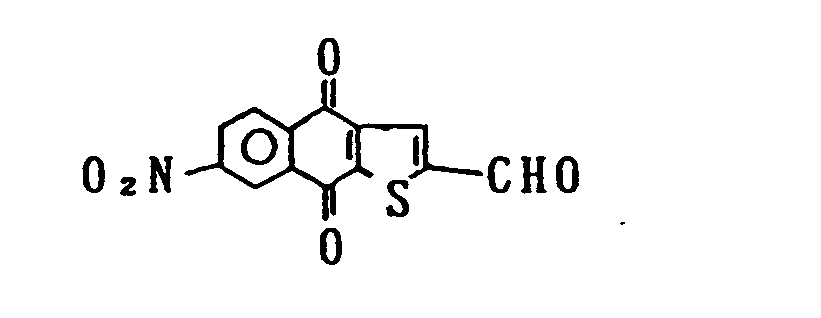
- The resultant crude crystals were further washed with acetone and then recrystallized several times from a mixed solvent of toluene and DMF to obtain 1.17 g of the desired compound. Its yield was 41%.
- 1.70 g (31.5 mmols) of sodium methylate was added to 15 ml of DMF, and a solution of 8.08 g (29.6 mmols) of diethyl o-nitrobenzylphosphonate and 15 ml of DMF were slowly added dropwise thereto at 20-25°C. After completion of the addition, the solution was stirred for 15 minutes as it was, and a solution of 5.0 g (17.4 mmols) of

- After standing for cooling, the solution was poured into 350 ml of methanol, and the precipitated crystals were then collected by filtration. The resultant crude crystals were further washed with methanol and then recrystallized several times from a mixed solvent of toluene and ethyl acetate, thereby obtaining 4.62 g of the desired compound. Its yield was 68%.
- 0.73 g (13.5 mmols) of sodium methylate was added to 10 ml of DMF, and a solution of 3.35 g (12.3 mmols) of diethyl o-nitrobenzylphosphonate and 15 ml of DMF were slowly added dropwise thereto at 20-25°C. After completion of the addition, the solution was stirred for 30 minutes as it was, and a solution of 2.0 g (6.8 mmols) of

- The resultant crude crystals were further washed with methanol and then recrystallized several times from a mixed solvent of toluene and ethyl acetate, thereby obtaining 1.19 g of the desired compound. Its yield was 42.4%.
- 1.0 g (18.5 mmols) of sodium methylate was added to 15 ml of DMF, and a solution of 4.36 g (16.0 mmols) of diethyl m-nitrobenzylphosphonate and 20 ml of DMF were slowly added dropwise thereto at 20-25 C. After completion of the addition, the solution was stirred for 20 minutes as it was, and a solution of 2.0 g (9.4 mmols) of

- The resultant crude crystals were further washed with methanol and then recrystallized several times from a mixed solvent of toluene and ethyl acetate, thereby obtaining 1.2 g of the desired compound. Its yield was 38.5%.
- 2.6 g (48.1 mmols) of sodium methylate was added to 15 ml of DMF, and a solution of 11.0 g (40.3 mmols) of diethyl m-nitrobenzylphosphonate and 30 ml of DMF were slowly added dropwise thereto at 20-25 C. After completion of the addition, the solution was stirred for 30 minutes as it was, and a solution of 3.0 g (13.5 mmols) of

- After standing for cooling, the solution was poured into 250 ml of methanol, and the precipitated crystals were then collected by filtration. The resultant crude crystals were further washed with methanol and then recrystallized several times from a mixed solvent of toluene and ethyl acetate, thereby obtaining 4.2 g of the desired compound. Its yield was 67.6%.
- 1.4 g (25.9 mmols) of sodium methylate was added to 15 ml of DMF, and a solution of 6.2 g (22.7 mmols) of diethyl m-nitrobenzylphosphonate and 30 ml of DMF were slowly added dropwise thereto at 20-25 C. After completion of the addition, the solution was stirred for 20 minutes as it was, and a solution of 2.0 g (8.1 mmols) of

- After standing for cooling, the solution was poured into 500 ml of methanol, and the precipitated crystals were then collected by filtration. The resultant crude crystals were further washed with methanol and then recrystallized several times from a mixed solvent of toluene and ethyl acetate to obtain 1.87 g of the desired compound. Its yield was 47.4%.
- 1.25 g (23.1 mmols) of sodium methylate was added to 15 ml of DMF, and a solution of 4.71 g (17.2 mmols) of diethyl p-nitrobenzylphosphonate and 15 ml of DMF were slowly added dropwise thereto at 20-25°C. After completion of the addition, the solution was stirred for 30 minutes as it was, and a solution of 3.0 g (11.5 mmols) of

- After standing for cooling, the solution was poured into 300 ml of methanol, and the precipitated crystals were then collected by filtration. The resultant crude crystals were further washed with methanol and then recrystallized several times from a mixed solvent of toluene and ethyl acetate, thereby obtaining 1.66 g of the desired compound. Its yield was 38%.
- 0.84 g (15.5 mmols) of sodium methylate was added to 20 ml of DMF, and a solution of 3.79 g (13.9 mmols) of diethyl p-nitrobenzylphosphonate and 15 ml of DMF were slowly added dropwise thereto at 20-25°C. After completion of the addition, the solution was stirred for 10 minutes as it was, and a solution of 2.0 g (7.7 mmols) of

- The resultant crude crystals were further washed with acetone and then recrystallized several times from a mixed solvent of toluene and DMF, thereby obtaining 1.49 g of the desired compound. Its yield was 51%.
- 0.62 g (11.5 mmols) of sodium methylate was added to 10 ml of DMF, and a solution of 2.6 g (9.5 mmols) of diethyl o-nitrobenzylphosphonate and 15 ml of DMF were slowly added dropwise thereto at 20-25 C. After completion of the addition, the solution was stirred for 10 minutes as it was, and a solution of 1.5 g (5.7 mmols) of

- The resultant crude crystals were further washed with methanol and then recrystallized several times from a mixed solvent of toluene and ethyl acetate, thereby obtaining 1.1 g of the desired compound. Its yield was 50%.
- 3.6 g (66.6 mmols) of sodium methylate was added to 30 ml of DMF, and a solution of 13.2 g (48.3 mmols) of diethyl p-nitrobenzylphosphonate and 45 ml of DMF were slowly added dropwise thereto at 20-25 C. After completion of the addition, the solution was stirred for 30 minutes as it was, and a solution of 5.0 g (16.8 mmols) of

- After standing for cooling, the solution was poured into 500 ml of methanol, and the precipitated crystals were then collected by filtration. The resultant crude crystals were further washed with methanol and then recrystallized several times from a mixed solvent of toluene and ethyl acetate, thereby obtaining 4.3 g of the desired compound. Its yield was 47.7%.
- 0.57 g (10.6 mmols) of sodium methylate was added to 20 ml of DMF, and a solution of 2.45 g (9.0 mmols) of diethyl m-nitrobenzylphosphonate and 10 ml of DMF were slowly added dropwise thereto at 20-25°C. After completion of the addition, the solution was stirred for 30 minutes as it was, and a solution of 2.0 g (5.3 mmols) of

- After standing for cooling, the solution was poured into 300 ml of methanol, and the precipitated crystals were then collected by filtration. The resultant crude crystals were further washed with methanol and then recrystallized several times from a mixed solvent of toluene and ethyl acetate to obtain 1.1 g of the desired compound. Its yield was 41.9%.
- 2.66 g (49.2 mmols) of sodium methylate was added to 40 ml of DMF, and a solution of 12.22 g (44.7 mmols) of diethyl p-nitrobenzylphosphonate and 40 ml of DMF were slowly added dropwise thereto at about 20 C. After completion of the addition, the solution was stirred for 15 minutes as it was, and a solution of 8.95 g (34.4 mmols) of 2,5-dimethyl-3,4-diphenylcyclopentadienone and 50 ml of DMF were then slowly added dropwise thereto at 25 C or less. After completion of the addition, the solution was stirred for 30 minutes as it was, and it was further heated and stirred at 50-60 C for 3 hours on a water bath. After standing for cooling, the solution was poured into water, and the precipitated crystals were collected by filtration, washed with methanol, and then recrystallized from a mixed solvent of toluene and DMF, thereby obtaining 5.95 g of the desired compound. Its yield was 45.6%.
- The other compounds can also be synthesized in similar manners, but these synthesis methods are not restrictive.
- The electrophotographic photosensitive member of the present invention comprises an electroconductive support and a photosensitive layer laid on the electroconductive support. Constitutional examples of the photosensitive layer include the following types (1), (2), (3) and (4). Each constitution of these types will be shown with the expression of a lower layer/an upper layer.
- (1) Layer containing a charge-generating substance/layer containing a charge transporting substance,
- (2) layer containing a charge-transporting substance/layer containing a charge-generating substance,
- (3) layer containing a charge-generating substance and a charge transporting substance, and
- (4) layer containing a charge-generating substance/layer containing a charge-generating substance and a charge transporting substance.
- The usable compounds in the present invention which can be typified by the above-mentioned compounds have high ability for enhancing the mobility of positive holes. In the type (1) of photosensitive layer, the compounds are preferably employed for positive charges; in the type (2), the compounds are preferably employed for negative charges; and in the types (3) and (4), the compounds can be employed either for positive charges or for negative charges.
- Naturally, the constitution of the electrophotographic photosensitive member of the present invention is not limited to the above-mentioned fundamental constitutions.
- The particularly preferable type of the photosensitive layers of the present invention is the above-mentioned type (1), and thus this type will be described in more detail.
- In the present invention, any charge-generating substance can be used, so long as it has charge-generating ability. Examples of the charge-generating substance are as follows.
- (1) Azo pigments such as monoazo, bisazo and trisazo,
- (2) phthalocyanine pigments such as metal phthalocyanine and non-metal phthalocyanine,
- (3) indigo pigments such as indigo and thioindigo,
- (4) perylene pigments such as perylenic anhydride and perylenic imide,
- (5) polycyclic quinone pigments such as anthraquinone and pyrenequinone,
- (6) squarilium dyes,
- (7) pyrylium salts and thiopyrylium salts,
- (8) triphenylmethane dyes, and
- (9) inorganic substances such as selenium and amorphous silicon.
- Such a charge-generating substance may be used singly or in combination of two or more thereof.
- A layer containing the charge-generating substance, that is, a charge-generating layer can be formed by dispersing the charge-generating substance in a suitable binder, and then applying the resultant dispersion on an electroconductive support. The charge-generating layer can also be obtained by forming a thin film on an electroconductive support by a dry method such as vapor deposition, sputtering, CVD and the like.
- The above-mentioned binder may be selected from a great variety of binder resins, and examples of the binder resins include polycarbonates, polyesters, polyarylates, butyral resins, polystyrenes, poly- vinylacetals, diallyl phthalate resins, acrylic resins, methacrylic resins, vinyl acetate resins, phenolic resins, silicon resins, polysulfones, styrene-butadiene copolymers, alkid resins, epoxy resins, urea resins and vinyl chloride-vinyl acetate copolymers. However, the above-mentioned binder is not limited thereto.
- These resins may be used singly or in combination of two or more thereof.
- The resin is contained in the charge-generating layer preferably in an amount of not more than 80% by weight, more preferably not more than 40% by weight based on the total layer weight.
- The film thickness of the charge-generating layer is preferably not more than 5 am, more preferably in the range of from 0.01 to 2 µm.
- The charge-generating layer may further contain a sensitizing agent.
- The layer containing the charge-transporting substance, that is, a charge-transporting layer can be formed by combining the compound which can be used in the present invention with a suitable binder resin. In this case, the compounds regarding the present invention can be used singly or in combination of two or more thereof, and another charge-transporting substance may further be used in combination.
- Examples of the binder resin for the charge-transporting layer include photoconductive polymers such as polyvinylcarbazoles and polyvinylanthracenes in addition to the above-mentioned substances used as the binder for the charge-generating layer.
- The blend ratio of the compound which can be used in the present invention to the binder resin is such that the amount of the fluorene is from 10 to 500 parts by weight with respect to 100 parts by weight of the binder.
- The thickness of the charge-transporting layer is preferably in the range of from 5 to 40 am, more preferably from 10 to 30 am.
- The charge-transporting layer can additionally contain an antioxidant, an ultraviolet absorbing agent or a plasticizer, if necessary.
- In the case where the photosensitive layer has the constitution type (3) mentioned above, that is, in the case of the single layer, this layer is formed by dispersing or dissolved the above-mentioned charge-generating substance and the compound which can be used in the present invention in the above-mentioned suitable binder to prepare a coating liquid, applying the coating liquid on a support, and then drying the same. The thickness of the layer is preferably in the range of from 5 to 40 am, more preferably from 10 to 30 am.
- In the present invention, a layer having a barrier function and an adhesive function, i.e., the so-called subbing layer can be provided between the electroconductive support and the photosensitive layer.
- Examples of the material for the subbing layer include polyvinyl alcohol, polyethylene oxide, ethyl cellulose, methyl cellulose, casein, polyamide, glue and gelatin.
- The subbing layer can be formed by dissolving the above-mentioned material in a suitable solvent, and then applying the resultant solution on an electroconductive support. The thickness of the subbing layer is preferably 5 µm or less, more preferably in the range of from 0.2 to 3.0 µm.
- Furthermore, in the present invention, for protecting the photosensitive layer from various external mechanical and electrical forces, a resin layer or another resin layer containing an electroconductive substance dispersed therein may be provided on the photosensitive layer.
- The above-mentioned various layers can be formed on the electroconductive support by coating technique such as immersion coating, spray coating, spinner coating, roller coating, Meyer-bar coating or blade coating by the use of a suitable solvent.
- Examples of the electroconductive support in the present invention include the following types.
- (1) A metal such as aluminum, an aluminum alloy, stainless steel or copper in a plate shape or a drum shape.
- (2) A non-electroconductive support such as a glass, a resin or a paper, or an electroconductive support mentioned in the previous item (1) on which a metal such as aluminum, palladium, rhodium, gold or platinum is vapor-deposited or laminated in the form of a coating film.
- (3) A non-electroconductive support such as a glass, a resin or a paper, or an electroconductive support mentioned in the previous item (1) on which an electroconductive polymer, or an electroconductive compound such as tin oxide or indium oxide is vapor-deposited or applied.
- The electrophotographic photosensitive member of the present invention is useful not only for electrophotographic copying machines but also for a variety of application fields of electrophotography such as facsimiles, leaser printers, CRT printers and electrophotographic engraving systems.
- Fig. 1 shows a schematic embodiment of a usual transfer type electrophotographic apparatus employing the electrophotographic photosensitive member of the present invention.
- In Fig. 1, a drum type photosensitive member 1 serves as an image carrier and is rotated around an axis 1 a in an arrow direction at a predetermined peripheral speed. The photosensitive member 1 is uniformly charged with positive or negative predetermined potential on the peripheral surface thereof by an electrostatic charging means 2 during the rotation thereof, and an
exposure part 3 of the member 1 is then exposed to image-exposure light L (e.g., slit exposure, laser beam-scanning exposure or the like) by an image-exposure means (not shown), whereby an electrostatic latent image corresponding to the exposed image is sequentially formed on the peripheral surface of the photosensitive member 1. - The electrostatic latent image is developed with a toner by a developing
means 4, and the toner- developed image is sequentially transferred by a transfer means 5 onto the surface of a transfer material P which is fed from a paper feeder (not shown) between the photosensitive member 1 and the transfer means 5 synchronizing with the rotation of the photosensitive member 1. - The transfer material P which has received the transferred image is separated from the surface of the photosensitive member, introduced into an image fixing means 8 to fix the image, and then discharged from the copying machine as a copy.
- After the transfer of the image, the surface of the photosensitive member 1 is cleaned with a cleaning means 6 to remove the residual untransferred toner, and the member 1 is then subjected to an electrostatic charge eliminating treatment by an exposure means 7 so as to be repeatedly used for image formation.
- As the uniformly charging means for the photosensitive member 1, a corona charging apparatus is usually widely used. Furthermore, also as the transfer means 5, the corona charging apparatus is usually widely used. The electrophotographic apparatus can comprise an integral apparatus unit consisting of some of constitutional members such as the above-mentioned photosensitive member, developing means, cleaning means and the like, and this unit may be adapted to be detachable from the main apparatus. For example, at least one of the electrostatic charging means, the developing means and the cleaning means can be combined with the photosensitive member to form a unit which can be optionally detached from the main apparatus with the aid of a guiding means such as rails extending from the main apparatus. In this case, the apparatus unit may be associated with the electrostatic charging means and/or the developing means.
- In the case where the electrophotographic apparatus is used as a copying machine or a printer, the optical image exposure light L is projected onto the photosensitive member as the reflected light or transmitted light from an original copy, or alternatively the signalized information is read out from an original copy by a sensor and then followed by scanning with a leaser beam, driving an LED array, or driving a liquid crystal shutter array in accordance with the signal, and the exposure light is projected onto the photosensitive member.
- In the case where the electrophotographic apparatus is used as a printer of a facsimile device, the optical image exposure light L functions as an exposure for printing the received data. Fig. 2 is a block diagram of one example in this case.
- A
controller 11 controls animage reading part 10 and aprinter 19. The whole of thecontroller 11 is controlled by aCPU 17. The readout data from the image reading part is transmitted through a transmittingcircuit 13 to the partner communication station. The data received from the partner communication station is transmitted through a receivingcircuit 12 to aprinter 19. The predetermined amount of the image data is stored in an image memory. Aprinter controller 18 controls theprinter 19.Numeral 14 denotes a telephone set. - The image received through the circuit 15 (the image information from a remote terminal connected through the circuit) is demodulated by the receiving
circuit 12, treated to decode the image information in theCPU 17, and then successively stored in animage memory 16. When at least one page of the image has been stored in theimage memory 16, the image is recorded in such a manner that theCPU 17 reads out the one page of the image information from theimage memory 16, and then sends out the decoded one page of the information to theprinter controller 18. On receiving the one page of the information from theCPU 17, thisprinter controller 18 controls theprinter 19 to record the image information. - Incidentally, the
CPU 17 receives the following page of the information, while the recording is conducted by theprinter 19. - The receiving and recording of the images are carried out in the above-mentioned manner.
- 4 g of oxytitaniumphthalocyanine obtained in accordance with a preparation example disclosed in Japanese Patent Application Laid-open No. 61-239248 (USP 4,728,592) was dispersed in a solution obtained by dissolving 2 g of a polybutyral resin (butyralization degree 70 mol%, weight average molecular weight 50,000) in 90 ml of cyclohexanone for 20 hours by means of a sand mill, thereby preparing a coating liquid.
- This coating liquid, after diluted, was applied onto an aluminum sheet by a Meyer bar so that the thickness of a dry layer might be 0.2 µm, to form a charge-generating layer.
- Next, 5 g of Compound Example 1-(9) which was a charge-transporting substance and 5 g of a polycarbonate resin (weight average molecular weight 40,000) were dissolved in 40 g of a mixture of monochlorobenzene (50 parts by weight) and N,N-dimethylformamide (50 parts by weight), and the resultant solution was applied onto the above-mentioned charge-generating layer by the Meyer bar to form a charge-transforming layer having a dry thickness of 15 µm, whereby an electrophotographic photosensitive member was prepared.
- The charging characteristics of the thus prepared electrophotographic photosensitive member were evaluated by subjecting this member to corona discharge under +6 KV in accordance with a static mode by the use of an electrostatic copying-paper tester (model EPA-8100, made by Kawaguchi Denki K.K.), allowing it to stand in the dark for 1 hour, and then exposing it to the light having an illuminance of 20 lux.
- As the charging characteristics, there were measured a surface potential (Vo), a potential (V1) after dark decay by standing for 1 second in the dark, an exposure (E1/2) necessary to decay V1 to 1/2, and a potential after irradiation of a light volume of 100 Lux.sec, i.e., a remaining potential (VR).
- Furthermore, for the purpose of evaluating the durability of the previously prepared electrophotographic photosensitive member, this member was attached onto the photosensitive drum of a copying machine (a remodeled type of NP-6650, made by Canon K.K.), and 1,000 sheets were copied by the machine. In this case, a light-portion potential (VL) and a dark-portion potential (VD) were measured for the copies at an early stage and the copies after 1,000 sheets were copied. Here, Vα and VL at the early stage were set so as to be +650 V and + 150 V, respectively. The results are shown in Table 1.

- The same procedure as in Example 1 was effected except that Compound Example 1-(9) of a charge-transporting substance was replaced with each of Compound Examples 1-(3), 1-(6), 1-(10), 1-(11), 1-(13), 1-(21), 1-(29), 1-(36) and 1-(43), to prepare electrophotographic photosensitive members, and these members were then evaluated.
- The results are shown in Table 2.
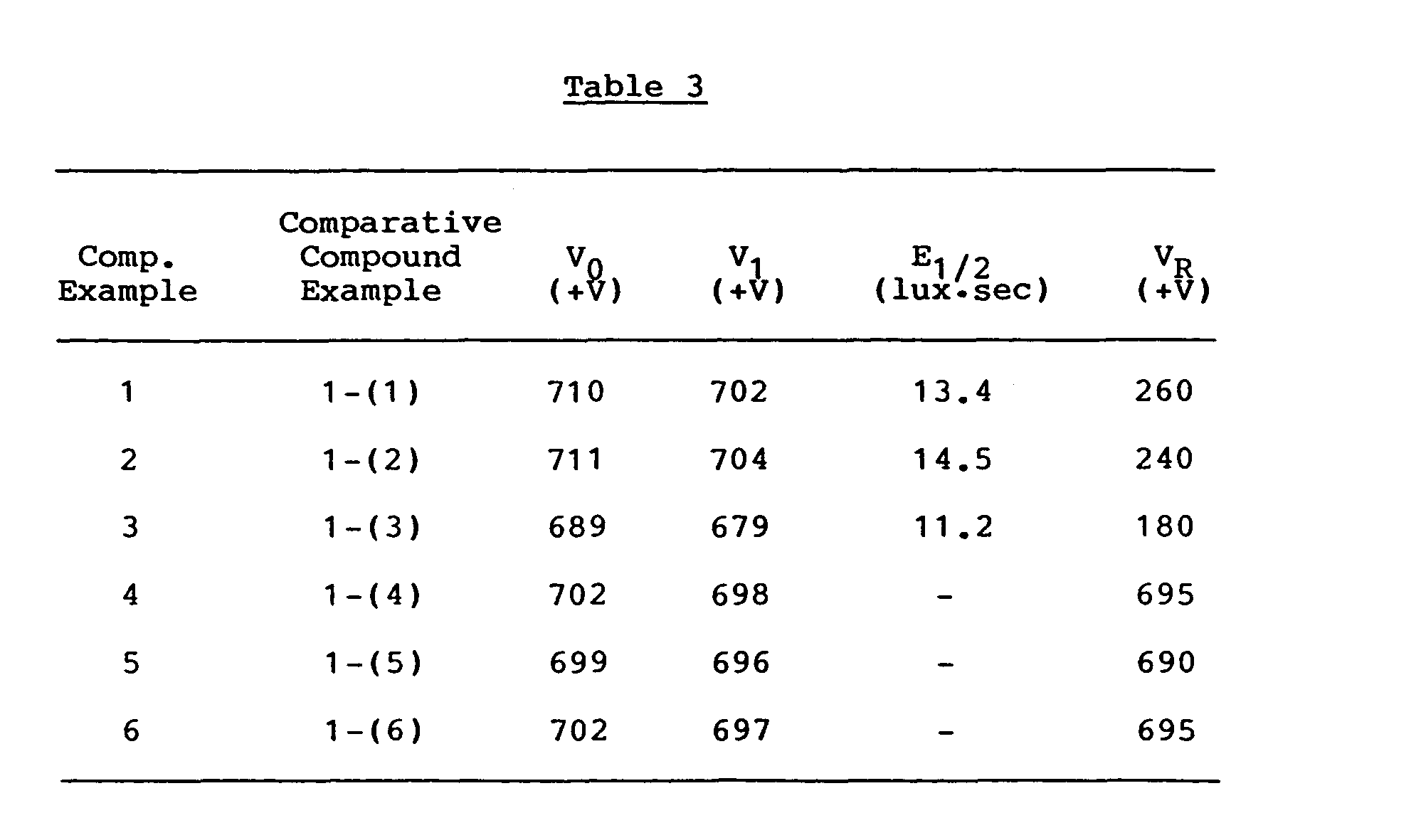
- The same procedure as in the above-mentioned examples was effected except that the following compounds were used as charge-transporting substances, thereby preparing electrophotographic photosensitive members, and these members were then evaluated.
- The results are shown in Table 3.
-

-

-

-


-


-



- The same procedure as in Example 1 was effected except that the weight average molecular weight of a polyvinylbutyral resin was 40,000, the amount of cyclohexane was 95 ml, a dispersing time was 24 hours, a charge-transporting substance was Comparative Example 2-(4), the weight average molecular weight of a polycarbonate resin was 35,000, its amount was 6 g, and 100 g of chlorobenzene was used as a solvent for a charge-transporting layer, whereby an electrophotographic photosensitive member was prepared. In this case, the thickness of a charge-generating layer was 0.4 µm and that of the charge-transporting layer was 17 µm.
- The thus prepared photosensitive member was evaluated in the same manner as in Example 1 except that 2,000 sheets were copied.
- The results are shown in Table 4.

- The same procedure as in Example 11 was effected except that Compound Example 2-(4) of a charge-transporting substance was replaced with each of Compound Examples 2-(1), 2-(11), 2-(12), 2-(22), 2-(23), 2-(37), 2-(45), 2-(70) and 2-(61), to prepare electrophotographic photosensitive members, and these members were then evaluated.
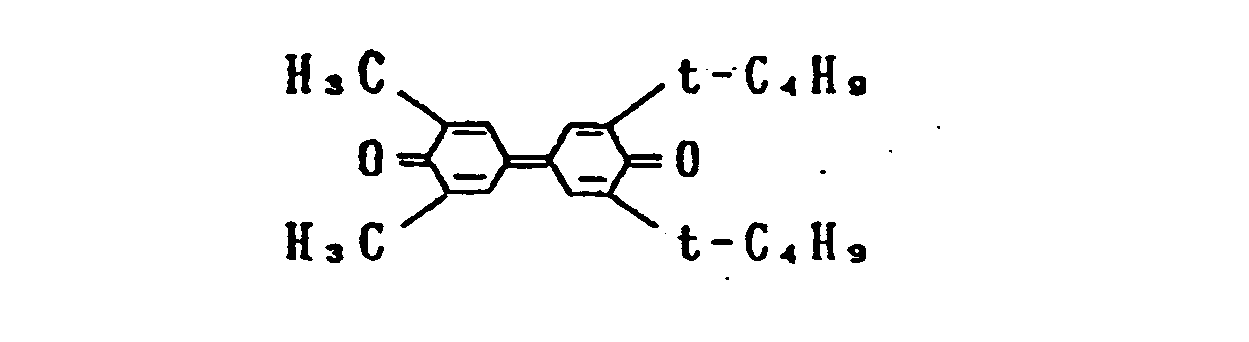
- For comparison, the same procedure as in the above-mentioned examples was effected except that the following comparative compounds were used as charge-transporting materials, thereby obtaining electrophotographic photosensitive members, and these members were then evaluated.
- The results are shown in Table 5.
-
-

-

-


- The same procedure as in Example 11 was effected except that a charge-transporting substance was Compound Example 3-(8) and the weight average molecular weight of a polycarbonate resin was 80,000, thereby obtaining an electrophotographic photosensitive member. In this case, the thickness of a charge-transporting layer was 20 µm.
- The thus obtained photosensitive member was then evaluated in the same manner as in Example 11.
- The results are shown in Table 6.


- The same-procedure as in Example 21 was effected except that Compound Example 3-(8) of a charge-transporting substance was replaced with each of Compound Examples 3-(3), 3-(15), 3-(29), 3-(33), 3-(45), 3-(58), 3-(60), 3-(69) and 3-(78), to prepare electrophotographic photosensitive members, and these members were then evaluated.
- For comparison, the same procedure as in the above-mentioned examples was effected except that the following comparative compounds were used as charge-transporting materials, thereby obtaining electrophotographic photosensitive members, and these members were then evaluated.
- The results are shown in Table 7.
-

-


- The same procedure as in Example 11 was effected except that the weight average molecular weight of a polyvinylbutyral resin was 80,000, a dispersing time was 10 hours, a charge-transporting substance was Compound Example 4-(4), and the weight average molecular weight of a polycarbonate resin was 50,000, whereby an electrophotographic photosensitive member was prepared. In this case, the thickness of a charge-transporting layer was 19 µm.
- The thus prepared photosensitive member was evaluated in the same manner as in Example 11.
- The results are shown in Table 8.

- The same procedure as in Example 31 was effected except that Compound Example 4-(4) of a charge-transporting substance was replaced with each of Compound Examples 4-(3), 4-(8), 4-(9), 4-(13), 4-(18), 4-(21), 4-(27), 4-(29) and 4-(37), to prepare electrophotographic photosensitive members, and these members were then evaluated.
- For comparison, the same procedure as in the above-mentioned examples was effected except that the following comparative compounds were used as charge-transporting materials, thereby obtaining electrophotographic photosensitive members, and these members were then evaluated.
- The results are shown in Table 9.
-

-


- The same procedure as in Example 11 was effected except that the weight average molecular weight of a polyvinylbutyral resin was 100,000, a dispersing time was 10 hours, and a charge-transporting substance was Compound Example 5-(48), thereby preparing an electrophotographic photosensitive member. In this case, the thickness of a charge-generating layer was 0.2 µm, and that of a charge-transporting layer was 20 µm.
- The thus prepared photosensitive member was evaluated in the same manner as in Example 11.
- The results are shown in Table 10.

- The same procedure as in Example 41 was effected except that Compound Example 5-(48) of a charge-transporting substance was replaced with each of Compound Examples 5-(7), 5-(12), 5-(19), 5-(23), 5-(29), 5-(66), 5-(85), 5-(111) and 5-(114), to prepare electrophotographic photosensitive members, and these members were then evaluated.
- For comparison, the same procedure as in the above-mentioned examples was effected except that the following comparative compounds were used as charge-transporting materials, thereby obtaining electrophotographic photosensitive members, and these members were then evaluated.
- The results are shown in Table 11.
-

-

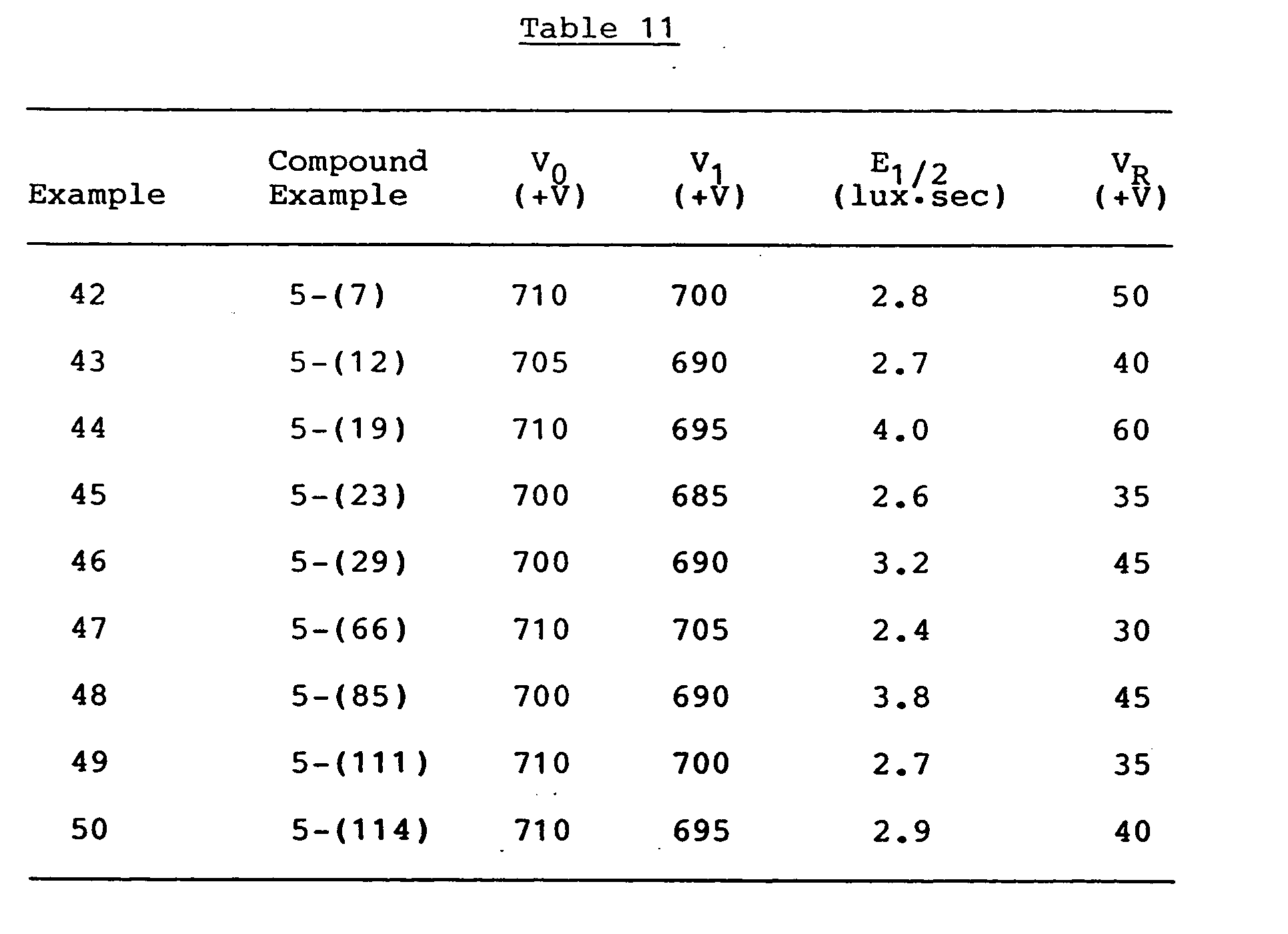


- The same procedure as in Example 11 was effected except that a charge-transporting substance was Compound Example 6-(91), its amount was 6 g, and the weight average molecular weight of a polycarbonate resin was 50,000, thereby preparing an electrophotographic photosensitive member. In this case, the thickness of a charge-generating layer was 0.2 µm, and that of a charge-transporting layer was 19 µm.
- The thus prepared photosensitive member was evaluated in the same manner as in Example 11.
- The results are shown in Table 12.
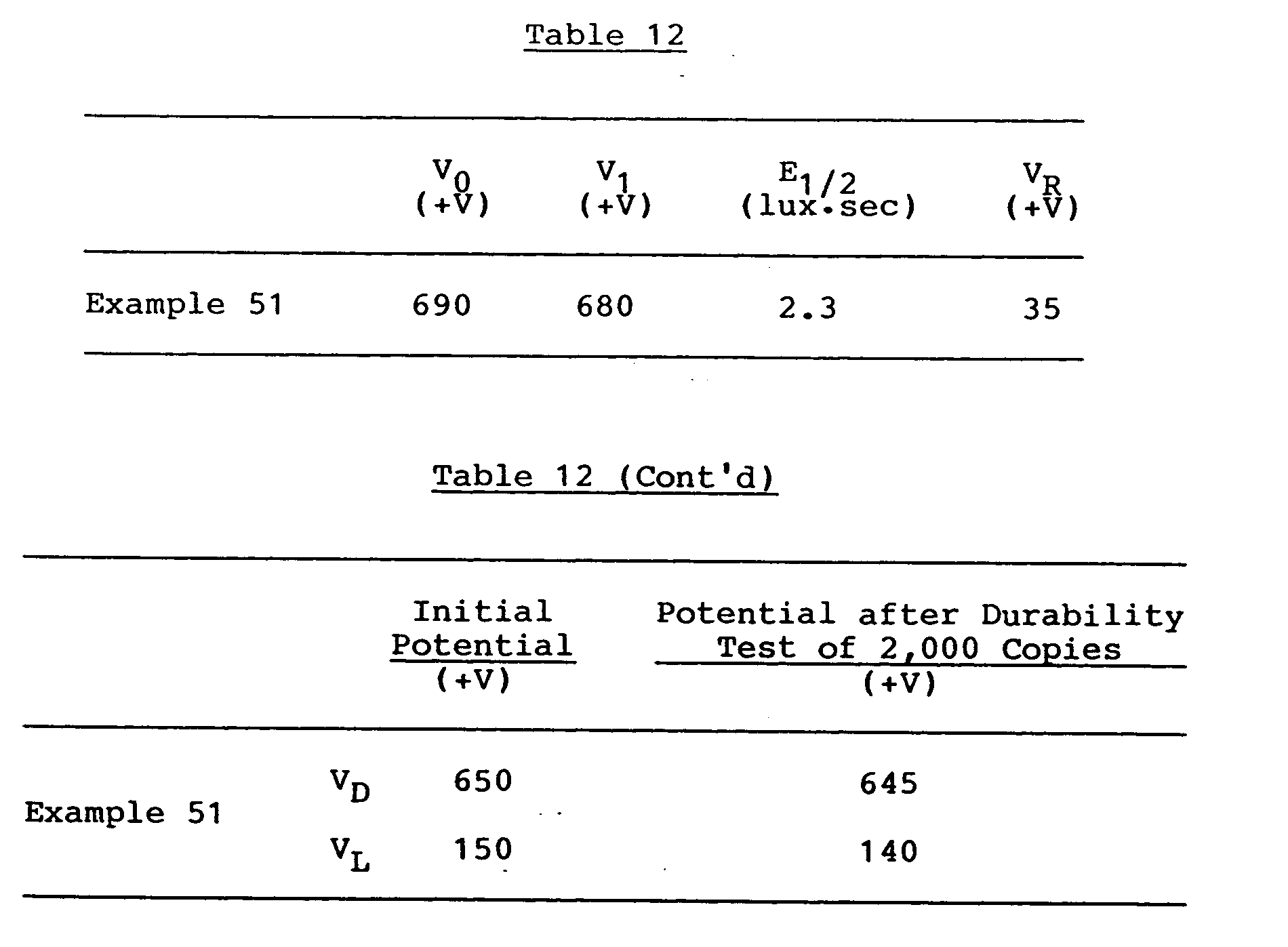
- The same procedure as in Example 51 was effected except that Compound Example 6-(91) of a charge-transporting substance was replaced with each of Compound Examples 6-(5), 6-(27), 6-(39), 6-(49), 6-(60), 6-(65), 6-(70), 6-(77) and 6-(82), to prepare electrophotographic photosensitive members, and these members were then evaluated.
- For comparison, the same procedure as in the above-mentioned examples was effected except that the following comparative compounds were used as charge-transporting materials, thereby obtaining electrophotographic photosensitive members, and these members were then evaluated.
- The results are shown in Table 13.
-

-


- The same procedure as in Example 11 was effected except that the weight average molecular weight of a polyvinylbutyral resin was 50,000, a dispersing time was 20 hours, a charge-transporting substance was Compound Example 7-(3), and the weight average molecular weight of a polycarbonate resin was 50,000, thereby preparing an electrophotographic photosensitive member. In this case, the thickness of a charge-generating layer was 0.3 µm, and that of a charge-transporting layer was 18 µm.
- The thus prepared photosensitive member was evaluated in the same manner as in Example 11.
- The results are shown in Table 14.


- The same procedure as in Example 61 was effected except that Compound Example 7-(3) of a charge-transporting substance was replaced with each of Compound Examples 7-(5), 7-(13), 7-(26), 7-(32), 7-(48), 7-(59), 7-(68), 7-(78) and 7-(84), to prepare electrophotographic photosensitive members, and these members were then evaluated.
- For comparison, the same procedure as in the above-mentioned examples was effected except that the following comparative compounds were used as charge-transporting materials, thereby obtaining electrophotographic photosensitive members, and these members were then evaluated.
- The results are shown in Table 15.
-
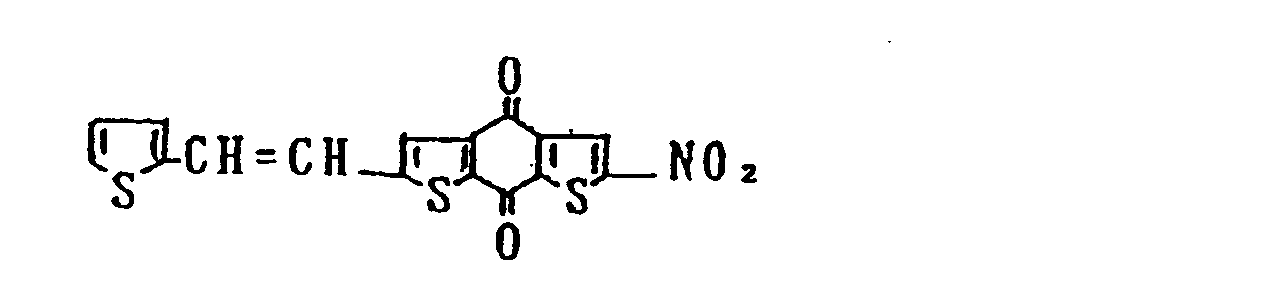
-


- The same procedure as in Example 11 was effected except that the weight average molecular weight of a polyvinylbutyral resin was 30,000, a charge-transporting substance was Compound Example 8-(11), and the weight average molecular weight of a polycarbonate resin was 55,000, thereby preparing an electrophotographic photosensitive member. In this case, the thickness of a charge-generating layer was 0.3 µm.
- The thus prepared photosensitive member was evaluated in the same manner as in Example 11.
- The results are shown in Table 16.


- The same procedure as in Example 71 was effected except that Compound Example 8-(11) of a charge-transporting substance was replaced with each of Compound Examples 8-(9), 8-(14), 8-(21), 8-(26), 8-(30), 8-(61), 8-(63), 8-(66) and 8-(69), to prepare electrophotographic photosensitive members, and these members were then evaluated.
- For comparison, the same procedure as in the above-mentioned examples was effected except that the following comparative compounds were used as charge-transporting materials, thereby obtaining electrophotographic photosensitive members, and these members were then evaluated.
- The results are shown in Table 17.
-

-


- The same procedure as in Example 11 was effected except that the weight average molecular weight of a polyvinylbutyral resin was 50,000, a dispersing time was 20 hours, a charge-transporting substance was Compound Example 9-(6), and the weight average molecular weight of a polycarbonate resin was 60,000, thereby preparing an electrophotographic photosensitive member. In this case, the thickness of a charge-generating layer was 0.5 µm, and that of a charge-transporting layer was 19 µm.
- The thus prepared photosensitive member was evaluated in the same manner as in Example 11.
- The results are shown in Table 18.

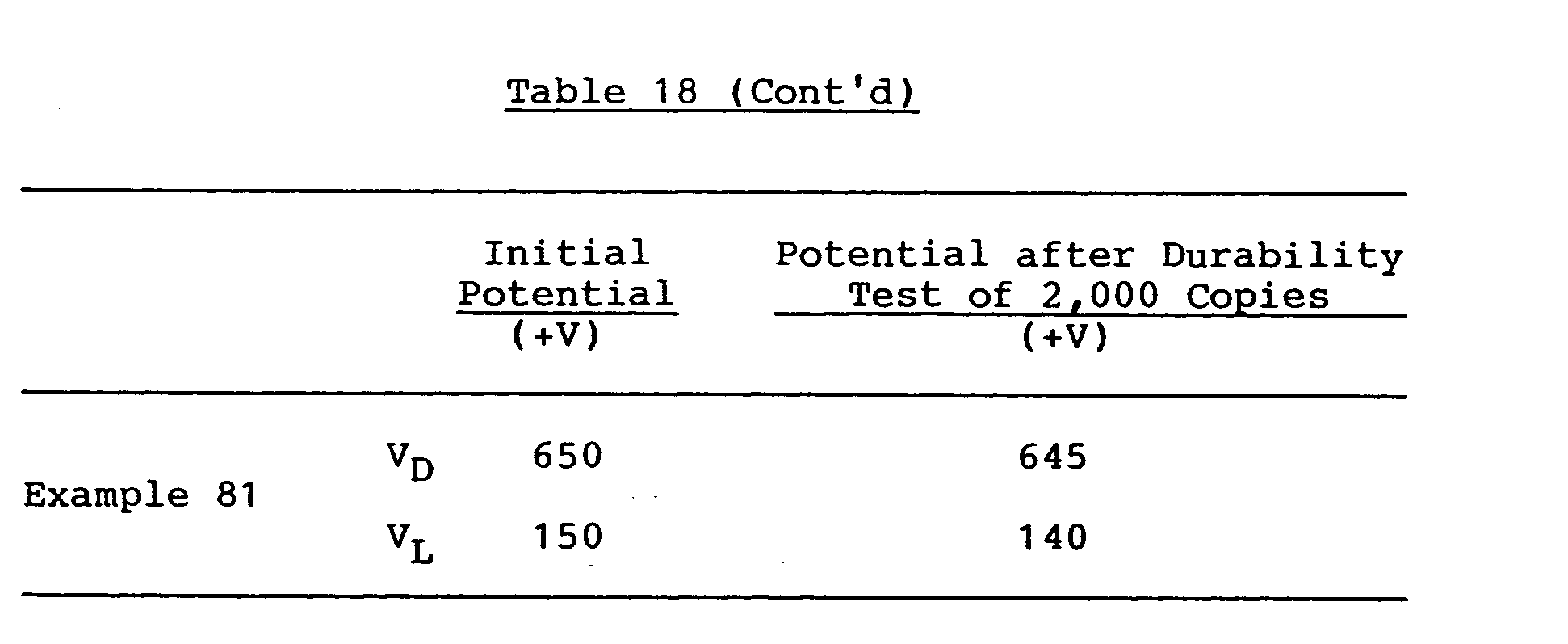
- The same procedure as in Example 81 was effected except that Compound Example 9-(6) of a charge-transporting substance was replaced with each of Compound Examples 9-(5), 9-(23), 9-(29), 9-(35), 9-(57), 9-(71), 9-(76), 9-(85) and 9-(91), to prepare electrophotographic photosensitive members, and these members were then evaluated.
- For comparison, the same procedure as in the above-mentioned examples was effected except that the following comparative compounds were used as charge-transporting materials, thereby obtaining electrophotographic photosensitive members, and these members were then evaluated.
- The results are shown in Table 19.
-

-


- The same procedure as in Example 11 was effected except that the amount of oxytitaniumphthalocyanine was 6 g, and a charge-transporting substance was Compound Example 10-(6), thereby preparing an electrophotographic photosensitive member. In this case, the thickness of a charge-generating layer was 0.3 µm.
- The thus prepared photosensitive member was evaluated in the same manner as in Example 11.
- The results are shown in Table 20.


- The same procedure as in Example 91 was effected except that Compound Example 10-(6) of a charge-transporting substance was replaced with each of Compound Examples 10-(1), 10-(8), 10-(13), 10-(19), 10-(27), 10-(39), 10-(55), 10-(73) and 10-(89), to prepare electrophotographic photosensitive members, and these members were then evaluated.
- For comparison, the same procedure as in the above-mentioned examples was effected except that the following comparative compounds were used as charge-transporting materials, thereby obtaining electrophotographic photosensitive members, and these members were then evaluated.
- The results are shown in Table 21.
-

-

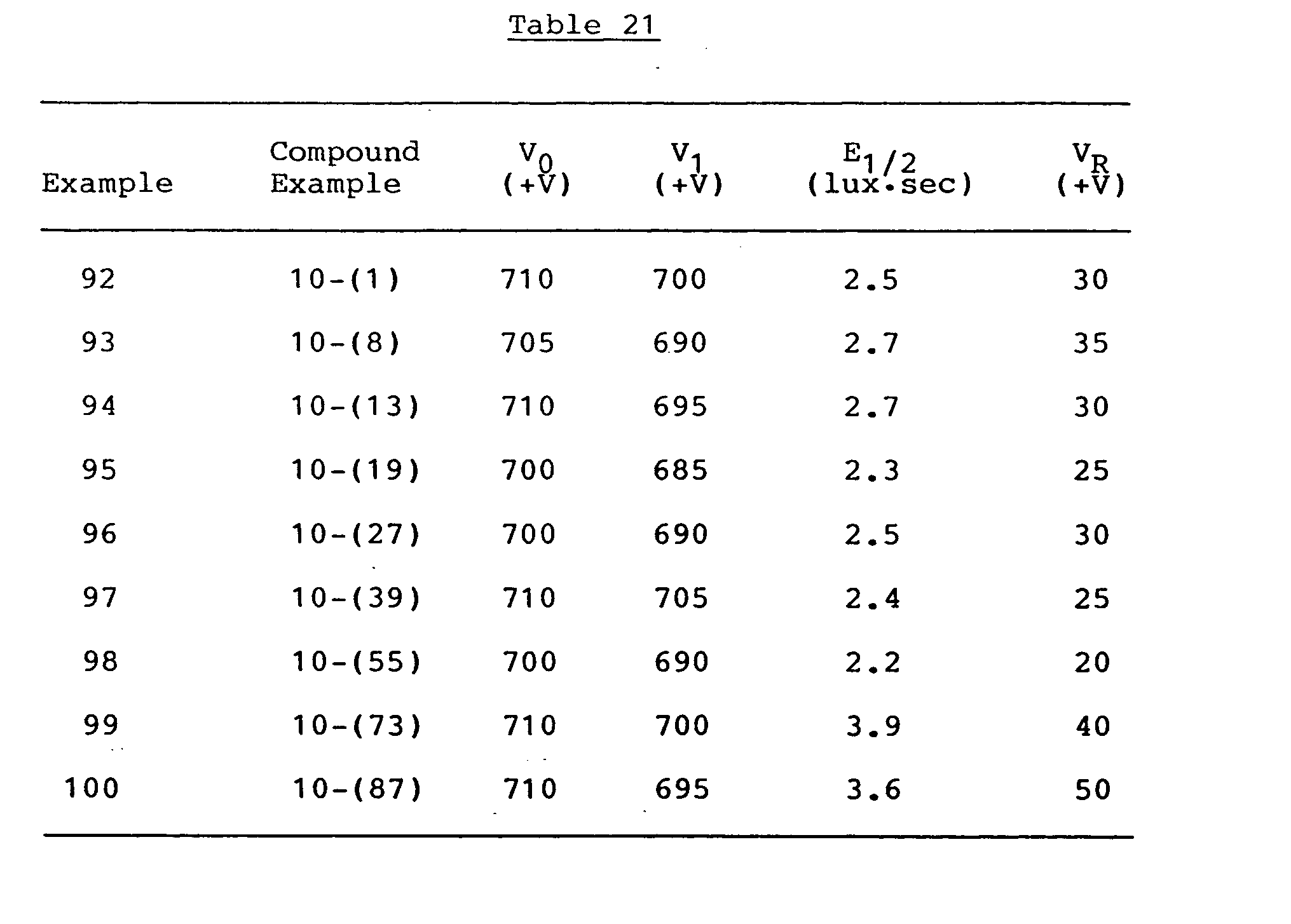
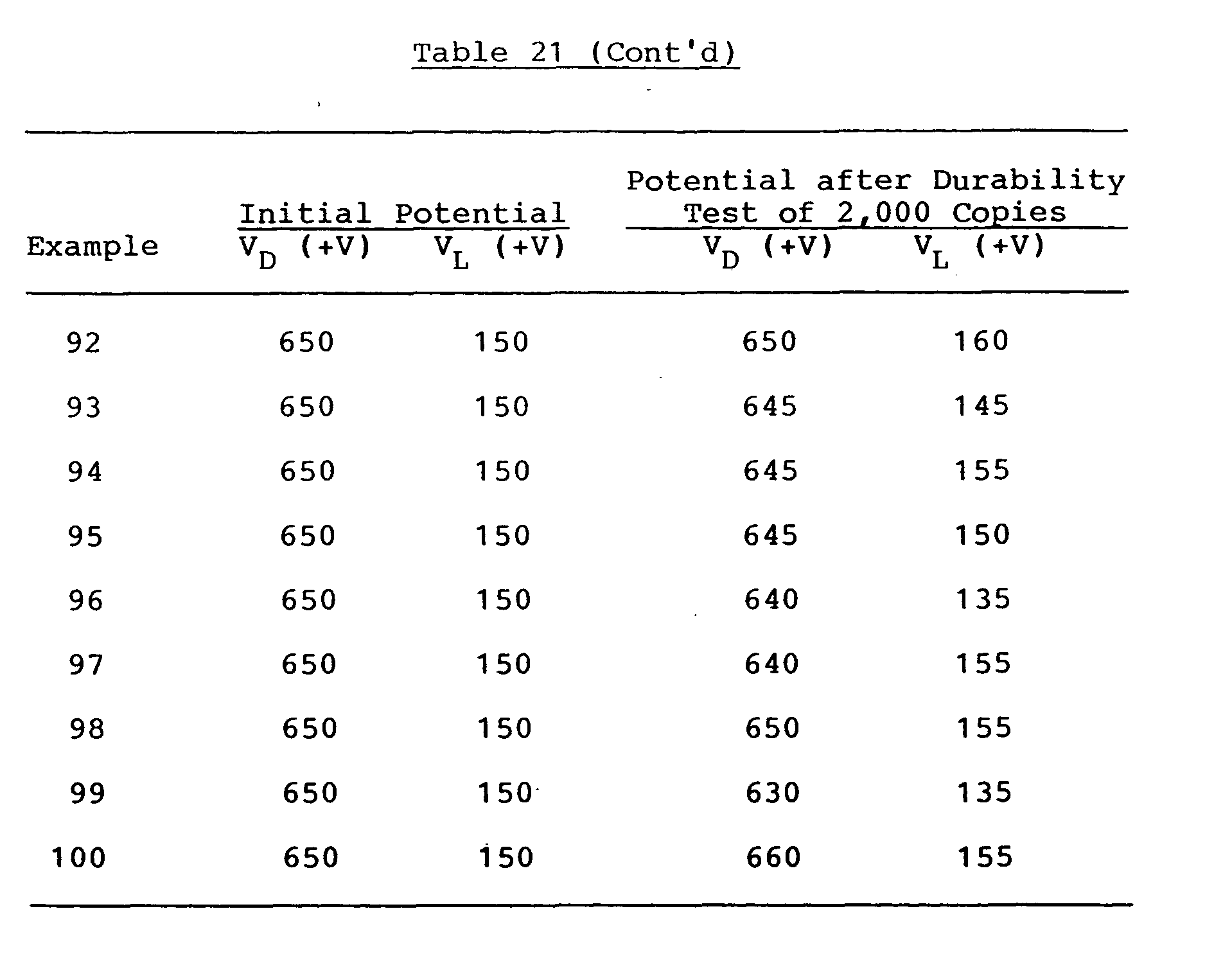


- The same procedure as in Example 11 was effected except that the weight average molecular weight of a polyvinylbutyral resin was 80,000, a charge-transporting substance was Compound Example 11-(2), and the weight average molecular weight of a polycarbonate resin was 50,000, thereby preparing an electrophotographic photosensitive member. In this case, the thickness of a charge-generating layer was 0.5 µm, and that of a charge-transporting layer was 19 µm.
- The thus prepared photosensitive member was evaluated in the same manner as in Example 11.
- The results are shown in Table 22.


- The same procedure as in Example 101 was effected except that Compound Example 11-(2) of a charge-transporting substance was replaced with each of Compound Examples 11-(3), 11-(5), 11-(9), 11-(11), 11-(14), 11-(17), 11-(24), 11-(27) and 11-(30), to prepare electrophotographic photosensitive members, and these members were then evaluated.
- For comparison, the same procedure as in the above-mentioned examples was effected except that the following comparative compounds were used as charge-transporting materials, thereby obtaining electrophotographic photosensitive members, and these members were then evaluated.
- The results are shown in Table 23.
-
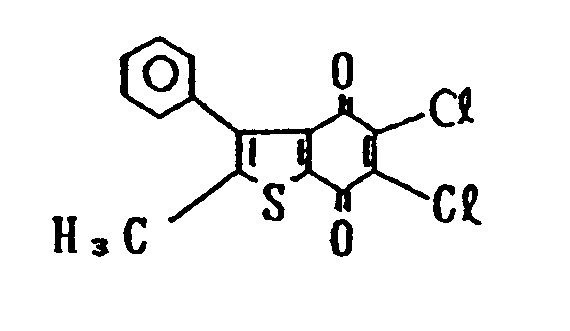
-

-


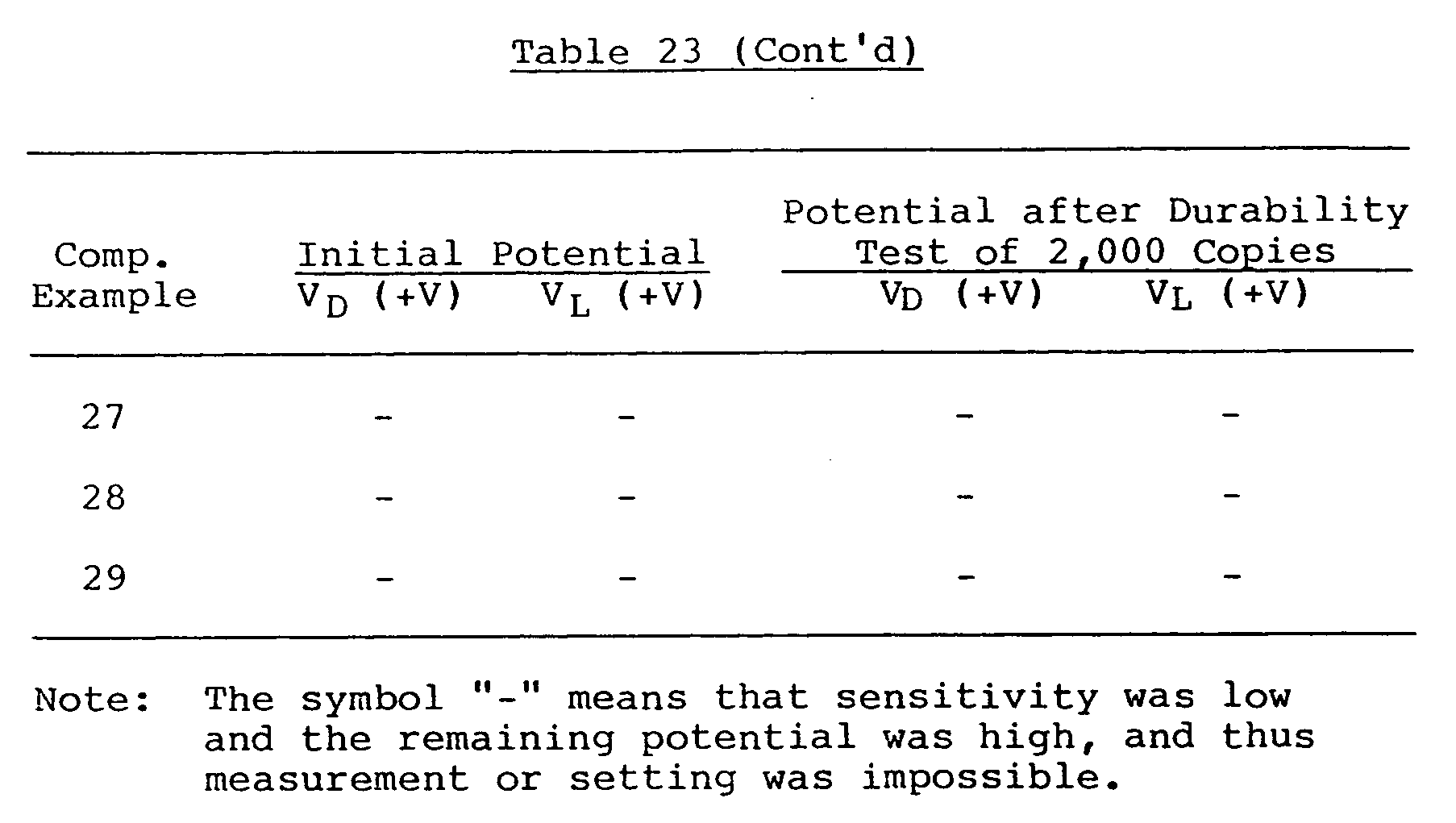
- The same procedure as in Example 11 was effected except that the butyralation degree and the weight average molecular weight of a polyvinylbutyral resin were 68 mol% and 80,000, respectively, the amount of cyclohexanone was 90 ml, a charge-transporting substance was Compound Example 12-(3), and the weight average molecular weight of a polycarbonate resin was 50,000, thereby preparing an electrophotographic photosensitive member. In this case, the thickness of a charge-generating layer was 0.3 µm, and that of a charge-transporting layer was 18 µm.
- The thus prepared photosensitive member was evaluated in the same manner as in Example 11.
- The results are shown in Table 24.


- The same procedure as in Example 111 was effected except that Compound Example 12-(3) of a charge-transporting substance was replaced with each of Compound Examples 12-(7), 12-(9), 12-(20), 12-(24), 12-(34), 12-(45), 12-(66), 12-(99) and 12-(104), to prepare electrophotographic photosensitive members, and these members were then evaluated.
- For comparison, the same procedure as in the above-mentioned examples was effected except that the following comparative compounds were used as charge-transporting materials, thereby obtaining electrophotographic photosensitive members, and these members were then evaluated.
- The results are shown in Table 25.
-

-


- The same procedure as in Example 11 was effected except that the butyralation degree and the weight average molecular weight of a polyvinylbutyral resin were 74 mol% and 60,000, respectively, a charge-transporting substance was Compound Example 13-(4), and the weight average molecular weight of a polycarbonate resin was 100,000, thereby preparing an electrophotographic photosensitive member. In this case, the thickness of a charge-generating layer was 0.2 µm, and that of a charge-transporting layer was 20 µm.
- The thus prepared photosensitive member was evaluated in the same manner as in Example 11.
- The results are shown in Table 26.

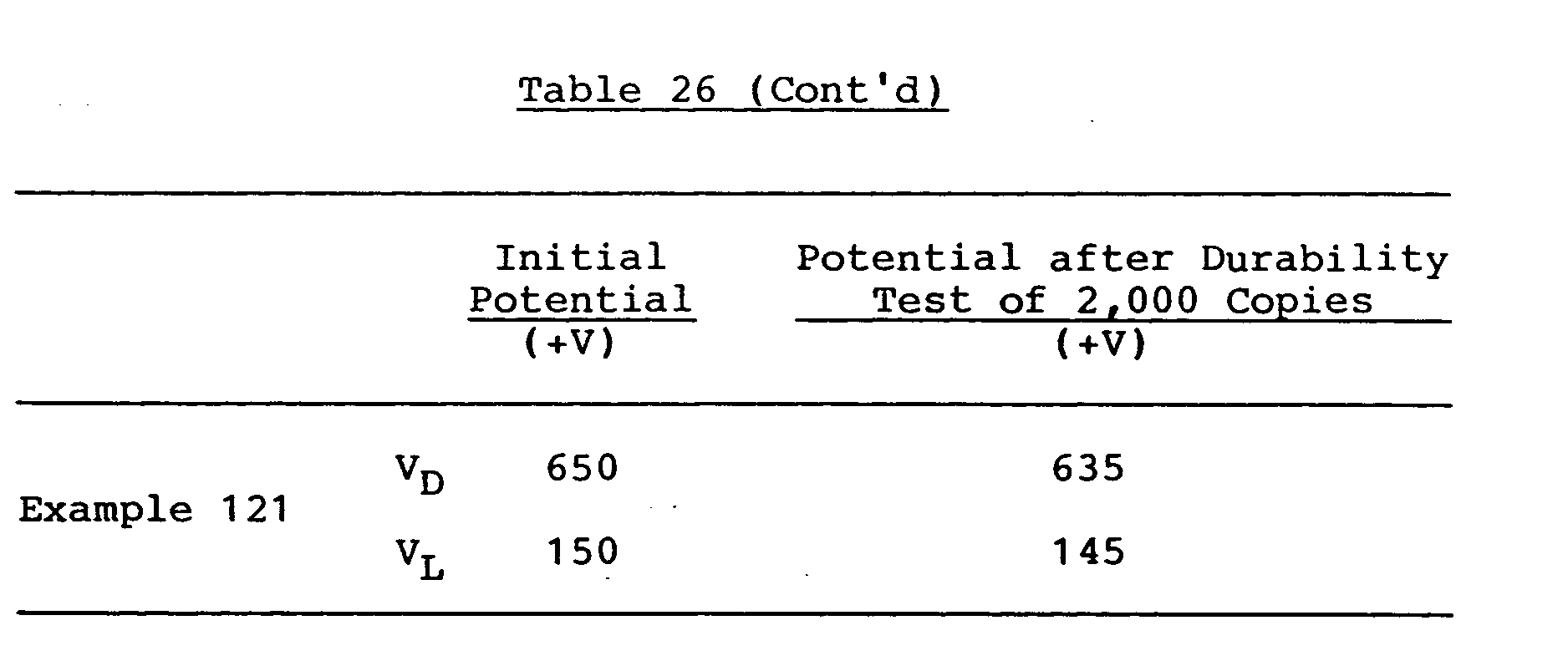
- The same procedure as in Example 121 was effected except that Compound Example 13-(4) of a charge-transporting substance was replaced with each of Compound Examples 13-(9), 13-(11), 13-(15), 13-(25), 13-(50), 13-(52), 13-(57), 13-(61) and 13-(65), to prepare electrophotographic photosensitive members, and these members were then evaluated.
- For comparison, the same procedure as in the above-mentioned examples was effected except that the following comparative compounds were used as charge-transporting materials, thereby obtaining electrophotographic photosensitive members, and these members were then evaluated.
- The results are shown in Table 27.
-

-
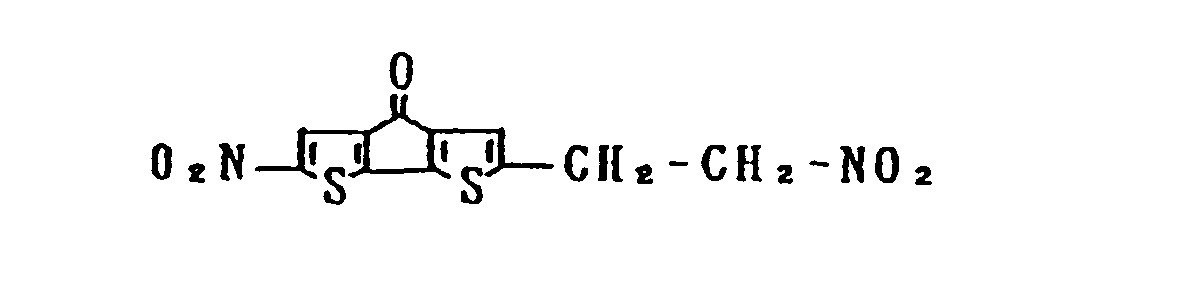


- The same procedure as in Example 11 was effected except that a charge-transporting substance was Compound Example 14-(28), thereby preparing an electrophotographic photosensitive member. In this case, the thickness of a charge-generating layer was 0.3 µm.
- The thus prepared photosensitive member was evaluated in the same manner as in Example 11.
- The results are shown in Table 28.
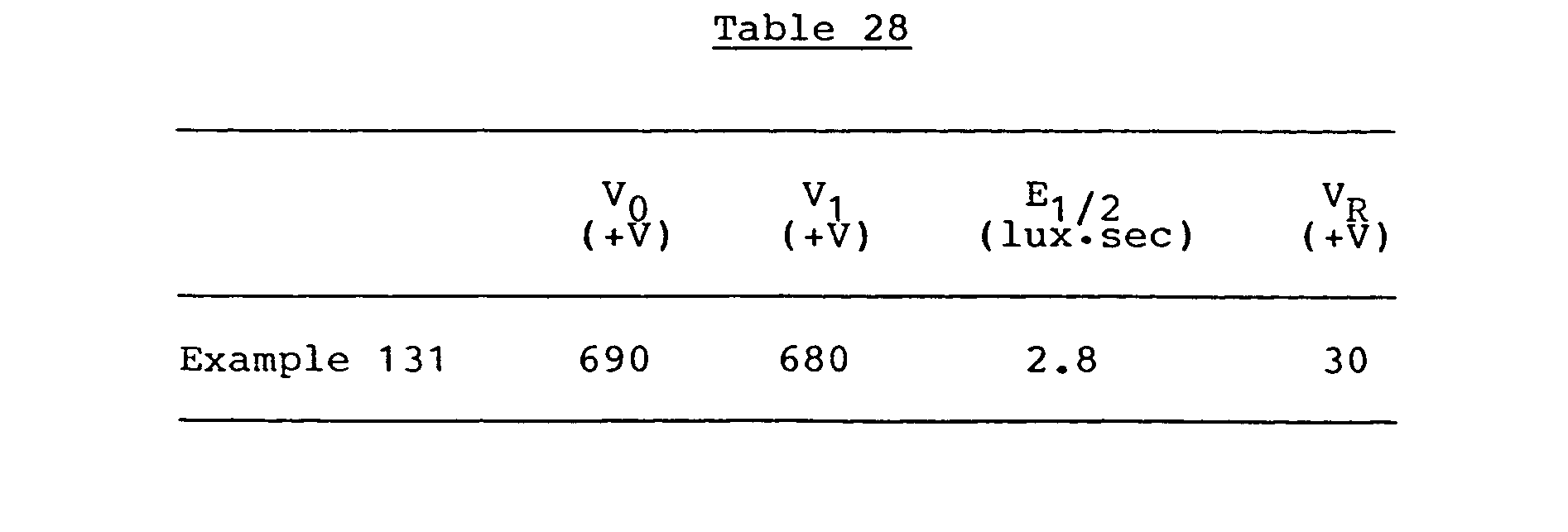

- The same procedure as in Example 131 was effected except that Compound Example 14-(28) of a charge-transporting substance was replaced each of with Compound Examples 14-(9), 14-(22), 14-(33), 14-(42), 14-(49), 14-(53), 14-(59), 14-(74) and 14-(89), to prepare electrophotographic photosensitive members, and these members were then evaluated.
- For comparison, the same procedure as in the above-mentioned examples was effected except that the following comparative compounds were used as charge-transporting materials, thereby obtaining electrophotographic photosensitive members, and these members were then evaluated.
- The results are shown in Table 29.
-

-

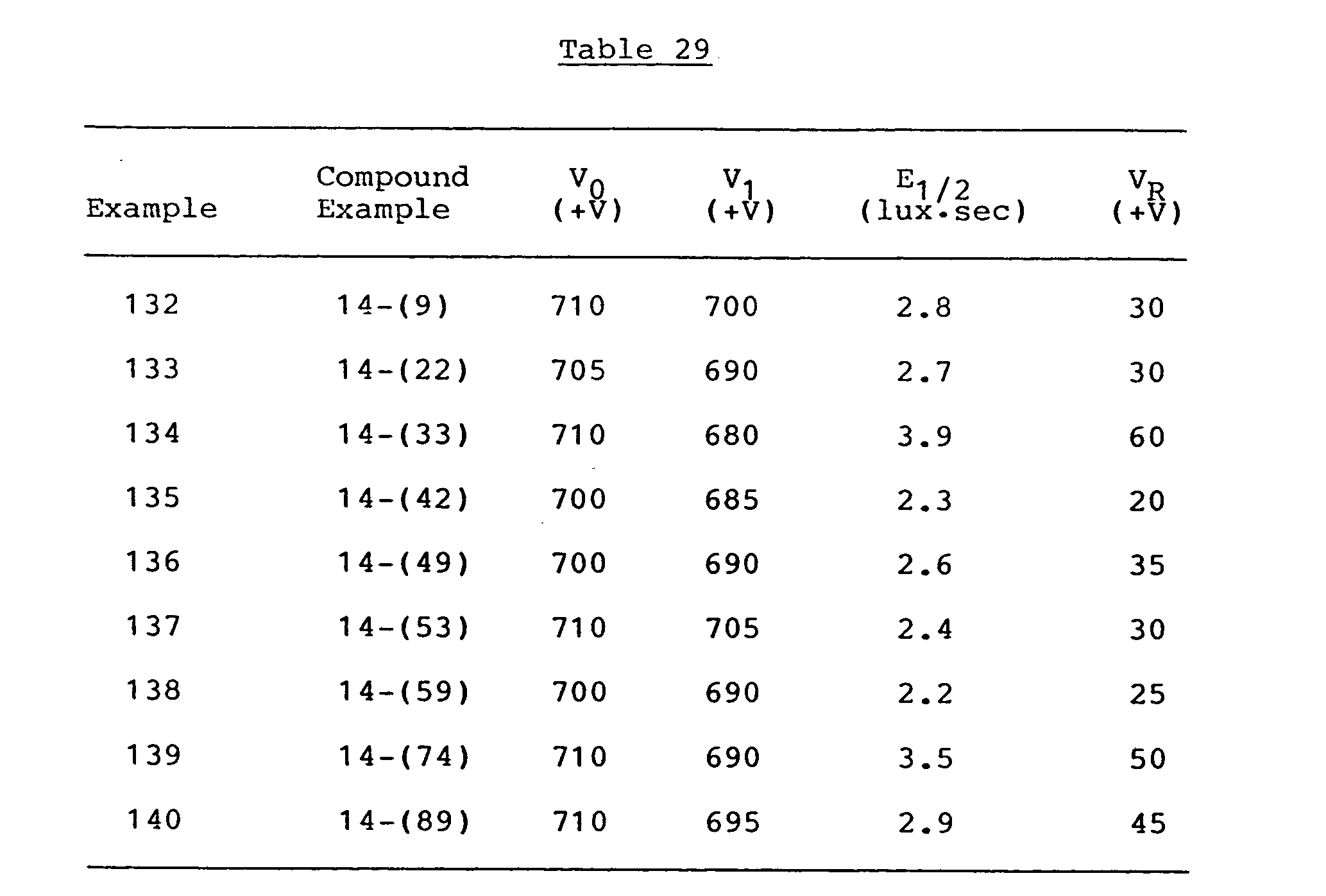


- The same procedure as in Example 11 was effected except that the butyralation degree and the weight average molecular weight of a polyvinylbutyral resin were 68 mol% and 35,000, respectively, a charge-transporting substance was Compound Example 15-(8), and the weight average molecular weight of a polycarbonate resin was 25,000, thereby preparing an electrophotographic photosensitive member. In this case, the thickness of a charge-generating layer was 0.2 µm, and that of a charge-transporting layer was 18 µm.
- The thus prepared photosensitive member was evaluated in the same manner as in Example 11.
- The results are shown in Table 30.
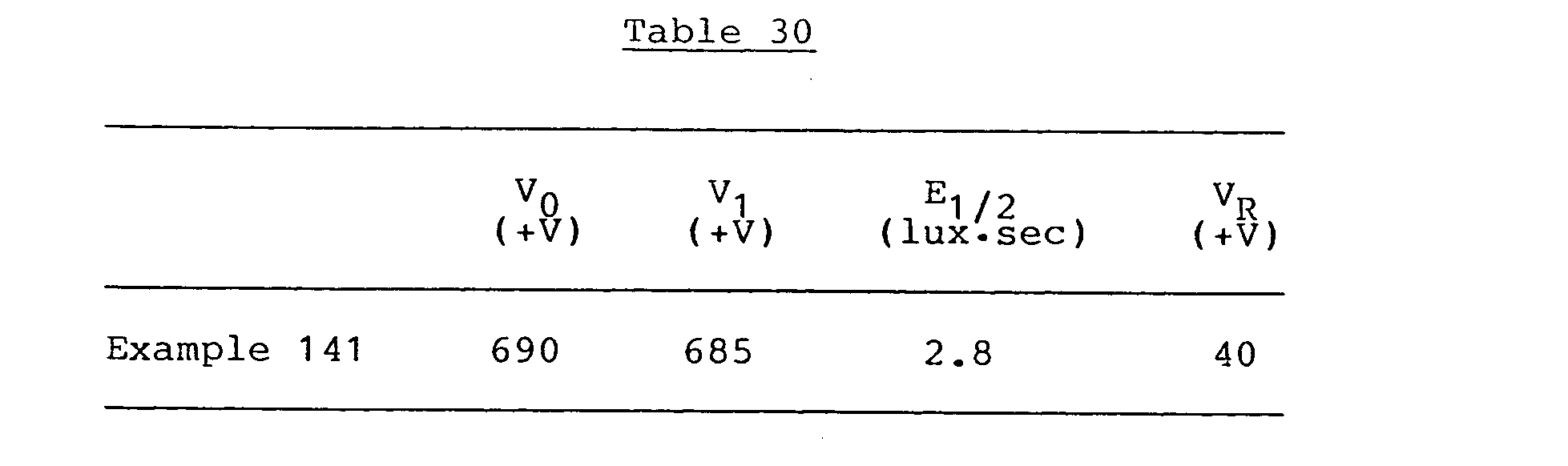

- The same procedure as in Example 141 was effected except that Compound Example 15-(8) of a charge-transporting substance was replaced with each of Compound Examples 15-(2), 15-(5), 15-(16), 15-(21), 15-(28), 15-(31), 15-(44), 15-(57) and 15-(86), to prepare electrophotographic photosensitive members, and these members were then evaluated.
- For comparison, the same procedure as in the above-mentioned examples was effected except that the following comparative compounds were used as charge-transporting materials, thereby obtaining electrophotographic photosensitive members, and these members were then evaluated.
- The results are shown in Table 31.
-

-

-


- The same procedure as in Example 11 was effected except that the weight average molecular weight of a polyvinylbutyral resin was 60,000, the amount of cyclohexanone was 90 ml, a dispersing time was 20 hours, a charge-transporting substance was Compound Example 16-(44), its amount was 10 g, the weight average molecular weight of a polycarbonate resin was 65,000, its amount 10 g, and 80 g of a mixture of chlorobenzene (70 parts by weight) and N,N-dimethylformamide (50 parts by weight) was used as a solvent for the charge-transporting layer, thereby preparing an electrophotographic photosensitive member. In this case, the thickness of a charge-generating layer was 0.2 µm, and that of a charge-transporting layer was 16 µm.
- The thus prepared photosensitive member was evaluated in the same manner as in Example 11.
- The results are shown in Table 32.


- The same procedure as in Example 151 was effected except that Compound Example 16-(44) of a charge-transporting substance was replaced with each of Compound Examples 16-(5), 16-(9), 16-(15), 16-(23), 16-(34), 16-(43), 16-(45), 16-(50), 16-(57), 16-(65) and 16-(75), to prepare electrophotographic photosensitive members, and these members were then evaluated.
- For comparison, the same procedure as in the above-mentioned examples was effected except that the following comparative compounds were used as charge-transporting materials, thereby obtaining electrophotographic photosensitive members, and these members were then evaluated.
- The results are shown in Table 33.
-

-

-


- An aluminum sheet was coated by a Meyer bar with a solution which was prepared by dissolving 5 g of an N-methoxymethylated nylon 6 resin (weight average molecular weight 150,000) and 5 g of an alcohol-soluble copolymerized nylon resin (weight average molecular weight 100,000) in 90 g of methanol, whereby a subbing layer having a dry thickness of 1 µm was formed on the aluminum sheet.
- Next, 1 g of a charge-generating substance represented by the formula
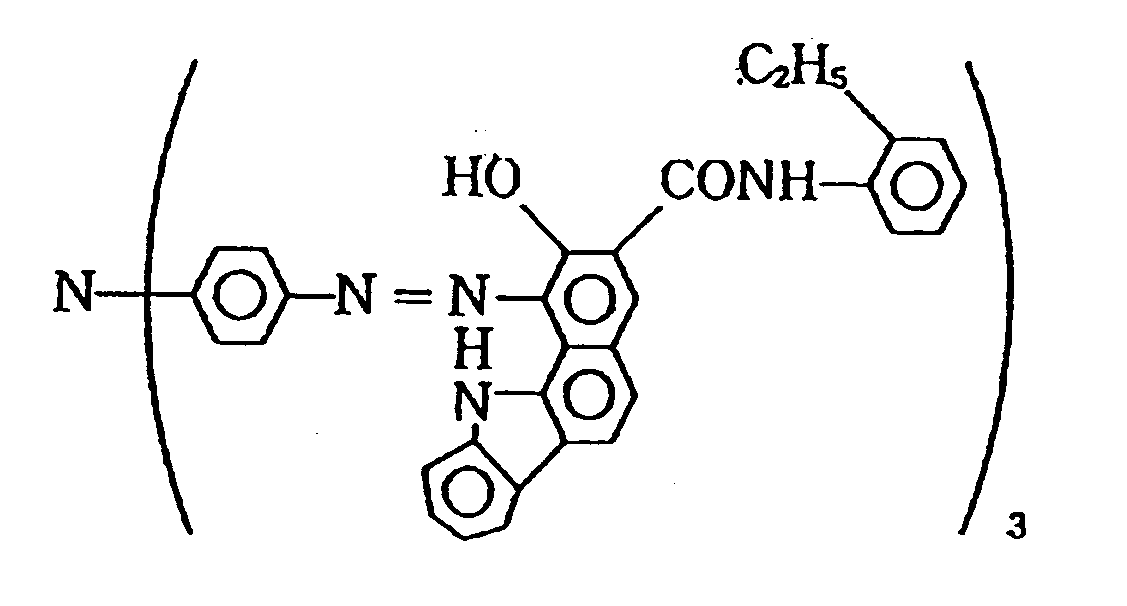
- Next, 10 g of Compound Example 1-(38) which was a charge-transporting substance and 15 g of a polymethyl methacrylate resin (weight average molecular weight 70,000) were dissolved in 100 g of monochlorobenzene, and the resultant solution was applied onto the previously formed charge-generating layer by blade coating to form a charge-transporting layer having a dry layer thickness of 14 µm thereon.
- The thus prepared photosensitive member was then subjected to corona discharge under + 6 KV, and at this time, a surface potential (Vo) was measured. Furthermore, this photosensitive member was allowed to stand in the dark for 1 second, and after the dark decay, a surface potential (Vi) was measured. Sensitivity was evaluated by measuring an exposure (E1/2) necessary to decay V1 to 1/2. Further, for remaining potential, a potential where a laser light volume of 100 µJ/cm2 was projected was measured. A light source which was used in this case was a ternary semiconductor laser comprising gallium, aluminum and arsenic (
output 5 mW; oscillation wave length 780 nm). - Next, the above-mentioned photosensitive member was set on a remodeled type of NP-9330 made by Canon K.K. which was a reversal development system digital copying machine equipped with the same semiconductor laser as mentioned above, and an actual image forming test was carried out. Setting was made so that a surface potential after primary charging might be +600 V and so that a surface potential after image exposure might be + 100 V (exposure 2.0 µJ/cm2), and letters and images were visually evaluated at an early stage of the copying and after 1,000 sheets were copied.
- The results are shown in Table 34.
- The same procedure as in Example 163 was effected except that the weight average molecular weight of an N-methoxymethylated nylon 6 resin was 200,000, the weight average molecular weight of an alcohol-soluble copolymerized nylon resin was 80,000, the amount of methanol was 100 g, the weight average molecular weight of a polyvinylbutyral resin was 100,000, its amount was 0.7 g, a dispersing time was 20 hours, a charge-transporting substance was Compound Example 2-(18), the weight average molecular weight of a polymethyl methacrylate resin was 80,000, and its amount was 10 g, whereby an electrophotographic photosensitive member was prepared. In this case, the thickness of a charge-generating layer was 0.2 µm and that of a charge-transporting layer was 13 µm.
- The thus prepared photosensitive member was evaluated in the same manner as in Example 163 except that 5,000 sheets were copied.
- The results are shown in Table 34.
- The same procedure as in Example 164 was effected except that the weight average molecular weight of an N-methoxymethylated nylon 6 resin was 100,000, the amount of a polyvinylbutyral resin was 1 g, a charge-transporting substance was Compound Example 3-(16), and the weight average molecular weight of a polymethyl methacrylate resin was 40,000, whereby an electrophotographic photosensitive member was prepared. In this case, the thickness of a subbing layer was 0.5 am, that of a charge-generating layer was 0.3 am, and that of a charge-transporting layer was 16 µm.
- Images and potential characteristics of the photosensitive member thus prepared was evaluated in the same manner as in Example 164 except that exposure was 3.8 µJ/cm2.
- The results are shown in Table 34.
- The same procedure as in Example 164 was effected except that the weight average molecular weight of an N-methoxymethylated nylon 6 resin was 100,000, the weight average molecular weight of a polyvinylbutyral resin was 150,000, a charge-transporting substance was Compound Example 4-(18), and the weight average molecular weight of a polymethyl methacrylate resin was 100,000, thereby preparing an electrophotographic photosensitive member. In this case, the thickness of a charge-generating layer was 0.4 µm and that of a charge-transporting layer was 16 µm.
- The thus prepared photosensitive member was evaluated in the same manner as in Example 164 except that an exposure at the time of an image evaluation was 3.2 µJ/cm2.
- The results are shown in Table 34.
- The same procedure as in Example 164 was effected except that the weight average molecular weight of an N-methoxymethylated nylon 6 resin was 150,000, the weight average molecular weight of an alcohol-soluble copolymerized resin was 100,000, the weight average molecular weight of a polyvinylbutyral resin was 80,000, its amount was 0.4 g, and a charge-transporting substance was Compound Example 5-(61), thereby preparing an electrophotographic photosensitive member. In this case, the thickness of a subbing layer was 0.8 Urn, that of a charge-generating layer was 0.3 am, and that of a charge-transporting layer was 16 µm.
- The thus prepared photosensitive member was evaluated in the same manner as in Example 166. The results are shown in Table 34.
- The same procedure as in Example 164 was effected except that the weight average molecular weight of an N-methoxymethylated nylon 6 resin was 100,000, its amount was 3 g, a dispersing time was 10 hours, and a charge-transporting substance was Compound Example 6-(121), thereby preparing an electrophotographic photosensitive member. In this case, the thickness of a charge-transporting layer was 18 µm.
- The thus prepared photosensitive member was evaluated in the same manner as in Example 166.
- The results are shown in Table 34.
- The same procedure as in Example 164 was effected except that the amount of a polyvinylbutyral resin was 0.5 g and a charge-transporting substance was Compound Example 7-(20), thereby preparing an electrophotographic photosensitive member. In this case, the thickness of a subbing layer was 0.8 am, that of a charge-generating layer was 0.3 am, and that of a charge-transporting layer was 16 µm.
- The thus prepared photosensitive member was evaluated in the same manner as in Example 164 except that an exposure at the time of an image evaluation was 3.9 µJ/cm2 and 2,000 sheets were copied.
- The results are shown in Table 34.
- The same procedure as in Example 164 was effected except that the weight average molecular weight of an N-methoxymethylated nylon 6 resin was 150,000, the weight average molecular weight of an alcohol-soluble copolymerized nylon resin was 50,000, the amount of a charge-generating substance was 2 g, the weight average molecular weight of a polyvinylbutyral resin was 150,000, a dispersing time was 10 hours, a charge-transporting substance was Compound Example 8-(18), and the weight average molecular weight of a polymethyl methacrylate resin was 50,000, thereby preparing an electrophotographic photosensitive member. In this case, the thickness of a charge-transporting layer was 16 µm.
- The thus prepared photosensitive member was evaluated in the same manner as in Example 164 except that an exposure at the time of an image evaluation was 3.0 µJ/cm2.
- The results are shown in Table 34.
- The same procedure as in Example 164 was effected except that the weight average molecular weight of an N-methoxymethylated nylon 6 resin was 150,000 and a charge-transporting substance was Compound Example 9-(11), thereby preparing an electrophotographic photosensitive member. In this case, the thickness of a subbing layer was 0.5 am, that of a charge-generating layer was 0.3 µm, and that of a charge-transporting layer was 16 µm.
- The thus prepared photosensitive member was evaluated in the same manner as in Example 170.
- The results are shown in Table 34.
- The same procedure as in Example 164 was effected except that the amount of a polyvinylbutyral resin was 0.4 g, a charge-transporting substance was Compound Example 10-(89), and the amount of a polymethyl methacrylate resin was 13 g, thereby preparing an electrophotographic photosensitive member. In this case, the thickness of a charge-generating layer was 0.3 µm and that of a charge-transporting layer was 16 µm.
- The thus prepared photosensitive member was evaluated in the same manner as in Example 164 except that an exposure at the time of an image evaluation was 2.5 µJ/cm2.
- The results are shown in Table 34.
- The same procedure as in Example 164 was effected except that the weight average molecular weight of an N-methoxymethylated nylon 6 resin was 100,000, the weight average molecular weight of an alcohol-soluble copolymerized nylon resin was 50,000, its amount was 7 g, the amount of a polyvinylbutyral resin was 0.4 g, a charge-transporting substance was Compound Example 11-(18), and its amount was 13 g, thereby preparing an electrophotographic photosensitive member. In this case, the thickness of a charge-transporting layer was 17 µm.
- The thus prepared photosensitive member was evaluated in the same manner as in Example 164 except that an exposure at the time of an image evaluation was 2.6 µJ/cm2.
- The results are shown in Table 34.
- The same procedure as in Example 164 was effected except that the weight average molecular weight of an alcohol-soluble copolymerized nylon resin was 50,000, its amount was 6 g, the weight average molecular weight of a polyvinylbutyral resin was 80,000, a charge-transporting substance was Compound Example 12-(78), and the amount of a polymethyl methacrylate resin was 15 g, thereby preparing an electrophotographic photosensitive member. In this case, the thickness of a charge-generating layer was 0.3 µm and that of a charge-transporting layer was 19 am.
- The thus prepared photosensitive member was evaluated in the same manner as in Example 164 except that an exposure at the time of an image evaluation was 4.1 µJ/cm2.
- The results are shown in Table 34.
- The same procedure as in Example 164 was effected except that the weight average molecular weight of an N-methoxymethylated nylon 6 resin was 100,000, the weight average molecular weight of an alcohol-soluble copolymerized nylon resin was 50,000, the weight average molecular weight of a polyvinylbutyral resin was 150,000, a dispersing time was 10 hours, a charge-transporting substance was Compound Example 13-(26), the weight average molecular weight of a polymethyl methacrylate resin was 50,000, and its amount was 15 g, thereby preparing an electrophotographic photosensitive member. In this case, the thickness of a charge-generating layer was 0.3 µm and that of a charge-transporting layer was 18 am.
- The thus prepared photosensitive member was evaluated in the same manner as in Example 164 except that an exposure at the time of an image evaluation was 4.5 µJ/cm2.
- The results are shown in Table 34.
- The same procedure as in Example 164 was effected except that a charge-transporting substance was Compound Example 14-(19) and the amount of a polymethyl methacrylate resin was 12 g, thereby preparing an electrophotographic photosensitive member. In this case, the thickness of a charge-transporting layer was 14 µm.
- The thus prepared photosensitive member was evaluated in the same manner as in Example 164 except that an exposure at the time of an image evaluation was 2.5 µJ/cm2, and 3,000 sheets were copied.
- The results are shown in Table 34.
- The same procedure as in Example 164 was effected except that the weight average molecular weight of an N-methoxymethylated nylon 6 resin was 100,000, the weight average molecular weight of a polyvinylbutyral resin was 50,000, its amount was 0.6 g, the amount of dioxane was 60 g, a charge-transporting substance was Compound Example 15-(14), and the weight average molecular weight of a polymethyl methacrylate resin was 60,000, whereby an electrophotographic photosensitive member was prepared. In this case, the thickness of a charge-generating layer was 0.1 am.
- The thus prepared photosensitive member was evaluated in the same manner as in Example 164 except that an exposure at the time of an image evaluation was 2.0 µJ/cm2.
- The results are shown in Table 34.
- The same procedure as in Example 164 was effected except that the weight average molecular weight of an alcohol-soluble copolymerized nylon resin was 100,000, the amount of methanol was 80 g, the weight average molecular weight of a polyvinylbutyral resin was 70,000, its amount was 0.6 g, the amount of dioxane was 55 g, a dispersing time was 24 hours, a charge-transporting substance was Compound Example 16-(67), the weight average molecular weight of a polymethyl methacrylate resin was 100,000, and its amount was 9.5 g, thereby preparing an electrophotographic photosensitive member. In this case, the thickness of a charge-transporting layer was 18 µm.
- The thus prepared photosensitive member was evaluated in the same manner as in Example 177 except that 3,000 sheets were copied.
- The results are shown in Table 34.


- 5 g of oxytitaniumphthalocyanine obtained in accordance with a preparation example disclosed in Japanese Patent Application Laid-open No. 62-67094 (USP 4,664,997) was added to a solution prepared by dissolving 3 g of a polyvinylbenzal resin (benzalation degree 75 mol%, weight average molecular weight 150,000) in 100 g of cyclohexanone, and they were then dispersed in a ball mill for 10 hours. The resultant dispersion, after diluted, was applied onto an aluminum sheet by a Meyer bar, followed by drying at 80°C for 30 minutes, whereby a charge-generating layer having a thickness of 0.1 µm was formed thereon.
- Next, 4 g of Compound Example 1-(40) which was a charge-transporting substance and 5 g of a bisphenol Z type polycarbonate resin (weight average molecular weight 35,000) were dissolved in 40 g of monochlorobenzene, and the resultant solution was then applied onto the previously formed charge-generating layer by the Meyer bar, followed by drying at 120°C for 1 hour, thereby forming a charge-transporting layer having a thickness of 12 µm. The thus prepared photosensitive member was evaluated in the same manner as in Example 163.
- The results are shown in Table 35.
- 7 g of oxytitaniumphthalocyanine used in Example 179 was added to a solution prepared by dissolving 4 g of a polyvinylbenzal resin (benzalation degree 78 mol%, weight average molecular weight 100,000) in 100 g of cyclohexanone, and they were then dispersed in a ball mill for 48 hours. The resultant dispersion, after diluted, was applied onto an aluminum sheet by a Meyer bar, followed by drying at 90 C for 30 minutes, whereby a charge-generating layer having a thickness of 0.20 µm was formed thereon.
- Next, 5 g of Compound Example 2-(73) which was a charge-transporting substance and 5 g of a bisphenol Z type polycarbonate resin (weight average molecular weight 100,000) were dissolved in 80 g of chlorobenzene, and the resultant solution was then applied onto the previously formed charge-generating layer by the Meyer bar, followed by drying at 140° C for 1 hour, thereby forming a charge-transporting layer having a thickness of 20 am.
- The thus prepared photosensitive member was evaluated in the same manner as in Example 164.
- The results are shown in Table 35.
- The same procedure as in Example 180 was effected except that the weight average molecular weight of a polyvinylbenzal resin was 120,000, a dispersing time was 20 hours, a drying time for a charge-generating layer was 1 hour, and a charge-transporting substance was Compound Example 3-(76), thereby preparing an electrophotographic photosensitive member. In this case, the thickness of a charge-generating layer was 0.4 µm.
- The thus prepared photosensitive member was evaluated in the same manner as in Example 165.
- The results are shown in Table 35.
- The same procedure as in Example 180 was effected except that a dispersing time was 20 hours and a charge-transporting substance was Compound Example 4-(29), thereby preparing an electrophotographic photosensitive member. In this case, the thickness of a charge-generating layer was 0.3 am.
- The thus prepared photosensitive member was evaluated in the same manner as in Example 166.
- The results are shown in Table 35.
- The same procedure as in Example 180 was effected except that a dispersing time was 20 hours, a charge-transporting substance was Compound Example 5-(73), and the amount of a polycarbonate resin was 3.5 g, thereby preparing an electrophotographic photosensitive member.
- The thus prepared photosensitive member was evaluated in the same manner as in Example 167.
- The results are shown in Table 35.
- The same procedure as in Example 180 was effected except that the weight average molecular weight of a polyvinylbenzal resin was 80,000, a dispersing time was 20 hours, and a charge-transporting substance was Compound Example 6-(108), thereby preparing an electrophotographic photosensitive member.
- The thus prepared photosensitive member was evaluated in the same manner as in Example 168.
- The results are shown in Table 35.
- The same procedure as in Example 180 was effected except that the amount of oxytitaniumphthalocyanine was 8 g, the weight average molecular weight of a polyvinylbenzal resin was 50,000, a dispersing time was 20 hours, a charge-transporting substance was Compound Example 7-(62), the amount of a polycarbonate resin was 7 g, and a drying time for a charge-transporting layer was 30 minutes, thereby preparing an electrophotographic photosensitive member.
- The thus prepared photosensitive member was evaluated in the same manner as in Example 169.
- The results are shown in Table 35.
- The same procedure as in Example 180 was effected except that a charge-transporting substance was Compound Example 8-(77) and the amount of a polycarbonate resin was 6 g, thereby preparing an electrophotographic photosensitive member. In this case, the thickness of a charge-transporting layer was 19 am.
- The thus prepared photosensitive member was evaluated in the same manner as in Example 170.
- The results are shown in Table 35.
- The same procedure as in Example 180 was effected except that a charge-transporting substance was Compound Example 9-(47) and the amount of a polycarbonate resin was 7 g, thereby preparing an electrophotographic photosensitive member. In this case, the thickness of a charge-generating layer was 0.3 am.
- The thus prepared photosensitive member was evaluated in the same manner as in Example 171.
- The results are shown in Table 35.
- The same procedure as in Example 180 was effected except that a dispersing time was 40 hours, a charge-transporting substance was Compound Example 10-(68), the weight average molecular weight of a polycarbonate resin was 80,000, and its amount was 6 g, thereby preparing an electrophotographic photosensitive member. In this case, the thickness of a charge-generating layer was 0.4 µm and that of a charge-transporting layer was 18 µm.
- The thus prepared photosensitive member was evaluated in the same manner as in Example 172.
- The results are shown in Table 35.
- The same procedure as in Example 180 was effected except that the amount of a polyvinylbenzal resin was 7 g, a dispersing time was 20 hours, a charge-transporting substance was Compound Example 11-(20), and the amount of a polycarbonate resin was 7 g, thereby preparing an electrophotographic photosensitive member. In this case, the thickness of a charge-generating layer was 0.3 µm.
- The thus prepared photosensitive member was evaluated in the same manner as in Example 173.
- The results are shown in Table 35.
- The same procedure as in Example 180 was effected except that a charge-transporting substance was Compound Example 12-(100), thereby preparing an electrophotographic photosensitive member.
- The thus prepared photosensitive member was evaluated in the same manner as in Example 174.
- The results are shown in Table 35.
- The same procedure as in Example 180 was effected except that the amount of oxytitaniumphthalocyanine was 8 g, the weight average molecular weight of a polyvinylbenzal resin was 80,000, a drying temperature for a charge-generating layer was 120°C, a charge-transporting substance was Compound Example 13-(62), the amount of a polycarbonate resin was 7 g, and a drying time for a charge-transporting layer was 30 minutes, thereby preparing an electrophotographic photosensitive member.
- The thus prepared photosensitive member was evaluated in the same manner as in Example 175.
- The results are shown in Table 35.
- The same procedure as in Example 180 was effected except that the weight average molecular weight of a polyvinylbenzal resin was 50,000, a dispersing time was 24 hours, a charge-transporting substance was Compound Example 14-(73), thereby preparing an electrophotographic photosensitive member.
- The thus prepared photosensitive member was evaluated in the same manner as in Example 176.
- The results are shown in Table 35.
- The same procedure as in Example 180 was effected except that a charge-transporting substance was Compound Example 15-(83), the weight average molecular weight of a polycarbonate resin was 50,000, 70 g of chlorobenzene/N,N-dimethylformamide (1 part by weight/1 part by weight) was used as a solvent for a charge-transporting layer, a drying temperature and a drying time for the charge-transporting layer were 130°C and 2 hours, respectively, thereby preparing an electrophotographic photosensitive member. In this case, the thickness of a charge-generating layer was 0.1 µm.
- The thus prepared photosensitive member was evaluated in the same manner as in Example 178.
- The results are shown in Table 35.
- 2 g of oxytitaniumphthalocyanine used in Example 179 was added to a solution prepared by dissolving 1 g of a polyvinylbenzal resin (benzalation degree 70 mol%, weight average molecular weight 100,000) in 40 g of cyclohexanone, and they were then dispersed in a ball mill for 48 hours.
- The resultant dispersion, after diluted, was applied onto an aluminum sheet by a Meyer bar, followed by drying at 80 C for 1 hour, whereby a charge-generating layer having a thickness of 0.1 µm was formed thereon.
- Next, 5 g of Compound Example 16-(66) which was a charge-transporting substance and 4.5 g of a bisphenol Z type polycarbonate resin (weight average molecular weight 35,000) were dissolved in 40 g of a chlorobenzene (80 parts by weight)/N,N-dimethylformamide (20 parts by weight) solution, and the solution was then applied onto the previously formed charge-generating layer by the Meyer bar, followed by drying at 130° C for 2 hours, thereby forming a charge-transporting layer having a thickness of 17 µm.
- The thus prepared photosensitive member was evaluated in the same manner as in Example 179.
- The results are shown in Table 35.


- 2 g of a dye represented by the formula
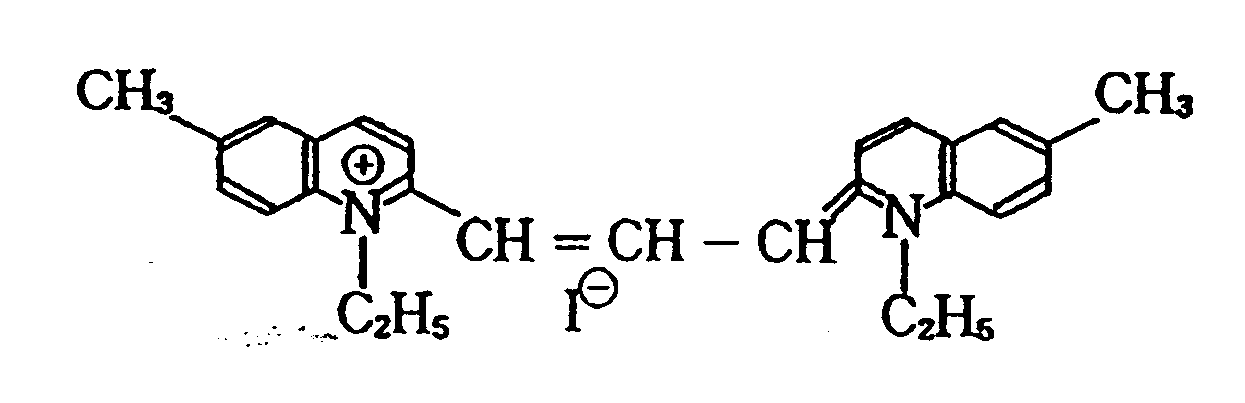
- The thus prepared photosensitive member was evaluated in the same manner as in Example 1.
- The results are shown in Table 36.
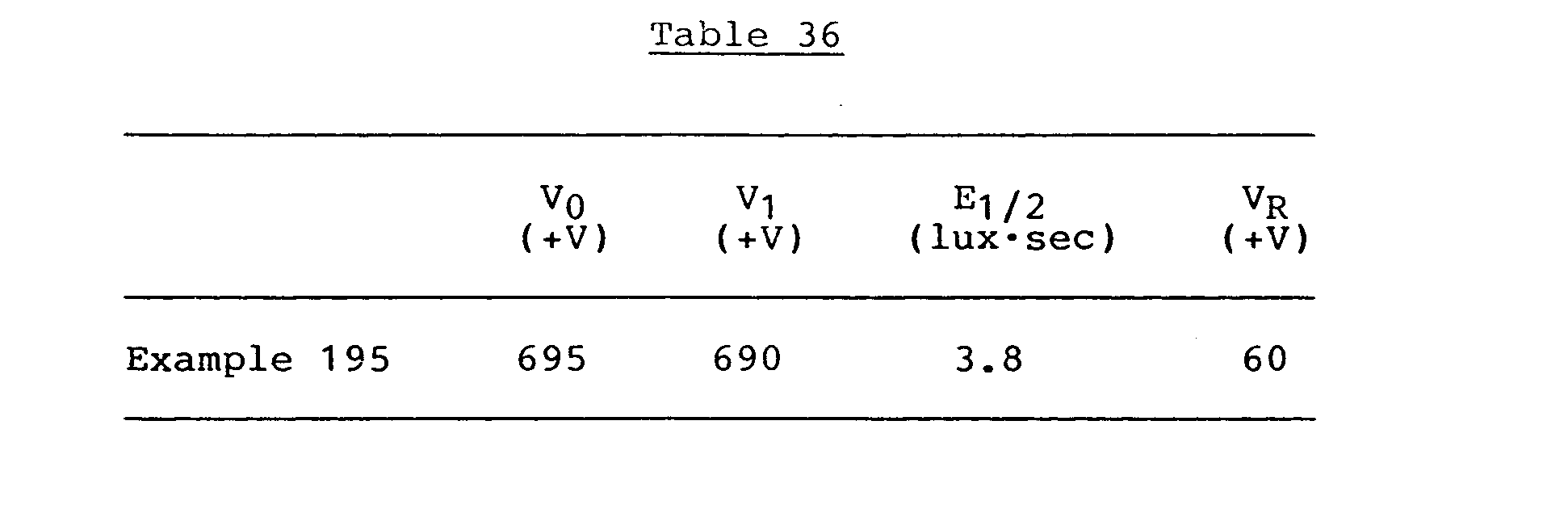

- An aluminum substrate was coated with a 5% methanol solution of an alcohol-soluble copolymerized nylon resin (weight average molecular weight 50,000), so that a subbing layer having a dry thickness of 0.5 µm was formed thereon.
- Next, 5 g of a pigment represented by the formula

- Afterward, 5 g of Compound Example 2-(67) which was a charge-transporting substance and 7 g of a polycarbonate resin (weight average molecular weight 50,000) were dissolved in 50 g of a chlorobenzene (70 parts by weight)/dichloromethane (30 parts by weight) solution, and the solution was then added to the previously prepared dispersion, followed by further dispersing for 25 hours by the sand mill.
- The dispersion was applied onto the previously formed subbing layer by a Meyer bar and dried so that a dry thickness might be 18 µm.
- The thus prepared photosensitive member was evaluated in the same manner as in Example 11.
- The results are shown in Table 37.
- The same procedure as in Example 196 was effected except that a charge-transporting substance was Compound Example 3-(73), thereby preparing an electrophotographic photosensitive member. In this case, the thickness of a subbing layer was 1.0 am.
- The thus prepared photosensitive member was evaluated in the same manner as in Example 196.
- The results are shown in Table 37.
- The same procedure as in Example 196 was effected except that a charge-transporting substance was Compound Example 4-(26), thereby preparing an electrophotographic photosensitive member. Afterward, evaluation was made for this member.
- The results are shown in Table 37.
- The same procedure as in Example 196 was effected except that the weight average molecular weight of an alcohol-soluble copolymerized nylon resin was 80,000, a charge-transporting substance was Compound Example 5-(86), and a dispersing time was 24 hours, thereby preparing an electrophotographic photosensitive member. In this case, the thickness of a subbing layer was 1.0 am.
- The thus prepared photosensitive member was evaluated in the same manner as in Example 196.
- The results are shown in Table 37.
- The same procedure as in Example 196 was effected except that a charge-transporting substance was Compound Example 6-(67), thereby preparing an electrophotographic photosensitive member. Afterward, evaluation was made for this member.
- The results are shown in Table 37.
- The same procedure as in Example 196 was effected except that the weight average molecular weight of an alcohol-soluble copolymerized nylon resin was 80,000, a charge-transporting substance was Compound Example 7-(82), and a dispersing time was 10 hours, thereby preparing an electrophotographic photosensitive member. Afterward, evaluation was made for this member.
- The results are shown in Table 37.
- The same procedure as in Example 196 was effected except that the weight average molecular weight of an alcohol-soluble copolymerized nylon resin was 100,000 and a charge-transporting substance was Compound Example 8-(81), thereby preparing an electrophotographic photosensitive member. In this case, the thickness of a subbing layer was 1.0 am.
- The thus prepared photosensitive member was evaluated in the same manner as in Example 196.
- The same procedure as in Example 196 was effected except that a charge-transporting substance was Compound Example 9-(55) and a dispersing time was 48 hours, thereby preparing an electrophotographic photosensitive member. In this case, the thickness of a subbing layer was 0.8 am.
- The thus prepared photosensitive member was evaluated in the same manner as in Example 196.
- The results are shown in Table 37.
- The same procedure as in Example 196 was effected except that the weight average molecular weight of an alcohol-soluble copolymerized nylon resin was 70,000 and a charge-transporting substance was Compound Example 10-(55), thereby preparing an electrophotographic photosensitive member. In this case, the thickness of a subbing layer was 1.0 am.
- The thus prepared photosensitive member was evaluated in the same manner as in Example 196.
- The results are shown in Table 37.
- The same procedure as in Example 196 was effected except that a charge-transporting substance was Compound Example 11-(35) and the amount of a polycarbonate resin was 10 g, thereby preparing an electrophotographic photosensitive member. Afterward, evaluation was made for this member.
- The results are shown in Table 37.
- The same procedure as in Example 196 was effected except that a charge-transporting substance was Compound Example 12-(67) and the weight average molecular weight of a polycarbonate resin was 80,000, thereby preparing an electrophotographic photosensitive member. In this case, the thickness of a subbing layer was 0.2 µm.
- The thus prepared photosensitive member was evaluated in the same manner as in Example 196.
- The results are shown in Table 37.
- The same procedure as in Example 196 was effected except that a charge-transporting substance was Compound Example 13-(67), the weight average molecular weight of a polycarbonate resin was 80,000, and a dispersing time was 15 hours, thereby preparing an electrophotographic photosensitive member. Afterward, evaluation was made for this member.
- The results are shown in Table 37.
- The same procedure as in Example 196 was effected except that a charge-transporting substance was Compound Example 14-(68), thereby preparing an electrophotographic photosensitive member. In this case, the thickness of a subbing layer was 1.0 am.
- The thus prepared photosensitive member was evaluated in the same manner as in Example 196.
- The results are shown in Table 37.
- The same procedure as in Example 196 was effected except that the weight average molecular weight of an alcohol-soluble copolymerized nylon resin was 80,000, a charge-transporting substance was Compound Example 15-(71), the weight average molecular weight of a polycarbonate resin was 35,000, its amount was 10 g, and a dispersing time was 20 hours, thereby preparing an electrophotographic photosensitive member. In this case, the thickness of a subbing layer was 1.0 µm and that of the photosensitive member was 19 µm.
- The thus prepared photosensitive member was evaluated in the same manner as in Example 196.
- The results are shown in Table 37.

- 10 g of Compound Example 1-(37) which was a charge-transporting substance and 10 g of a polycarbonate resin (weight average molecular weight 30,000) were dissolved in 120 g of monochlorobenzene, and the resultant solution was applied onto an aluminum sheet by a Meyer bar to form a charge-transporting layer having a dry thickness of 12 µm.
- Next, 2 g of a pigment used in Example 196 was dispersed in a solution prepared by dissolving 1 g of a butyral resin (butyralization degree 75 mol%) in 40 ml of cyclohexanone for 15 hours by means of a sand mill to obtain a coating liquid.
- This coating liquid, after diluted, was applied onto the above-mentioned charge-transporting layer by the Meyer bar so that the dry thickness of a charge-generating layer might be 0.5 µm, whereby the charge-generating layer was formed.
- The charging characteristics of the thus prepared electrophotographic photosensitive member were evaluated in the same manner as in Example 1 except that corona charging was carried out under -5 KV.
- The results are as follows. Vo = -675 V; V1 = -660 V; E1/2 = 3.9 lux*sec; VR = -80 V
- The same procedure as in Example 210 was effected except that a charge-transporting substance was Compound Example 16-(70), the amount of a polycarbonate resin was 9 g, the amount of monochlorobenzene was 90 g, the butyralization degree of a polyvinylbutyral resin was 70 mol%, the amount of cyclohexanone was 45 ml, and a dispersing time was 20 hours, thereby preparing an electrophotographic photosensitive member. In this case, the thickness of a charge-transporting layer was 15 µm and that of a charge-generating layer was 0.4 µm.
- The thus prepared photosensitive member was evaluated in the same manner as in Example 210.
- The results are as follows: VR = -60V; Vo = -680 V; V1 = -675 V; E1/2 = 3.7 lux*sec
- 5 g of Compound Example 2-(77) which was a charge-transporting substance and 5 g of a polycarbonate resin (weight average molecular weight 80,000) were dissolved in 70 g of chlorobenzene, and the resultant solution was applied onto an aluminum sheet by a Meyer bar to form a charge-transporting layer having a dry thickness of 15 µm.
- Next, 2 g of a disazo pigment represented by the formula

- The charging characteristics of the thus prepared electrophotographic photosensitive member were evaluated in the same manner as in Example 210.
- The results are shown in Table 38.
- The same procedure as in Example 212 was effected except that a charge-transporting substance was Compound Example 3-(6), the weight average molecular weight of a polycarbonate resin was 100,000, and the amount of a polyvinylbutyral resin was 1 g, thereby preparing an electrophotographic photosensitive member. In this case, the thickness of a charge-transporting layer was 18 µm.
- The thus prepared photosensitive member was evaluated in the same manner as in Example 210.
- The results are shown in Table 38.
- The same procedure as in Example 212 was effected except that a charge-transporting substance was Compound Example 4-(33) and a dispersing time was 50 hours, thereby preparing an electrophotographic photosensitive member. In this case, the thickness of a charge-generating layer was 0.3 am.
- The thus prepared photosensitive member was evaluated in the same manner as in Example 210.
- The results are shown in Table 38.
- The same procedure as in Example 212 was effected except that a charge-transporting substance was Compound Example 5-(95), its amount was 3 g, and the weight average molecular weight of a polycarbonate resin was 50,000, thereby preparing an electrophotographic photosensitive member. In this case, the thickness of a charge-transporting layer was 20 µm and that of a charge-generating layer was 0.6 am.
- The thus prepared photosensitive member was evaluated in the same manner as in Example 210.
- The results are shown in Table 38.
- The same procedure as in Example 212 was effected except that a charge-transporting substance was Compound Example 6-(15), thereby preparing an electrophotographic photosensitive member. In this case, the thickness of a charge-transporting layer was 18 µm and that of a charge-generating layer was 0.3 am.
- The thus prepared photosensitive member was evaluated in the same manner as in Example 210.
- The results are shown in Table 38.
- The same procedure as in Example 212 was effected except that a charge-transporting substance was Compound Example 7-(79), the weight average molecular weight of a polycarbonate resin was 70,000, and its amount was 6 g, thereby preparing an electrophotographic photosensitive member. In this case, the thickness of a charge-transporting layer was 20 am.
- The thus prepared photosensitive member was evaluated in the same manner as in Example 210.
- The results are shown in Table 38.
- The same procedure as in Example 212 was effected except that a charge-transporting substance was Compound Example 8-(50), the amount of a polycarbonate resin was 6 g, the butyralation degree of a polyvinylbutyral resin was 75 mol%, and its amount was 0.9 g, thereby preparing an electrophotographic photosensitive member. In this case, the thickness of a charge-transporting layer was 20 µm and that of a charge-generating layer was 0.4 µm.
- The thus prepared photosensitive member was evaluated in the same manner as in Example 210.
- The results are shown in Table 38.
- The same procedure as in Example 212 was effected except that a charge-transporting substance was Compound Example 9-(88) and the weight average molecular weight of a polycarbonate resin was 100,000, thereby preparing an electrophotographic photosensitive member. In this case, the thickness of a charge-transporting layer was 12 µm.
- The thus prepared photosensitive member was evaluated in the same manner as in Example 210.
- The results are shown in Table 38.
- The same procedure as in Example 212 was effected except that a charge-transporting substance was Compound Example 10-(49), the weight average molecular weight of a polycarbonate resin was 50,000, and the amount of a polyvinylbutyral resin was 2 g, thereby preparing an electrophotographic photosensitive member. In this case, the thickness of a charge-transporting layer was 17 µm and that of a charge-generating layer was 0.7 µm.
- The thus prepared photosensitive member was evaluated in the same manner as in Example 210.
- The results are shown in Table 38.
- The same procedure as in Example 212 was effected except that a charge-transporting substance was Compound Example 11-(31), the weight average molecular weight of a polycarbonate resin was 50,000, and its amount was 7 g, thereby preparing an electrophotographic photosensitive member.
- The results are shown in Table 38.
- The same procedure as in Example 212 was effected except that a charge-transporting substance was Compound Example 12-(77), thereby preparing an electrophotographic photosensitive member. In this case, the thickness of a charge-generating layer was 0.3 am.
- The thus prepared photosensitive member was evaluated in the same manner as in Example 210.
- The results are shown in Table 38.
- The same procedure as in Example 212 was effected except that a charge-transporting substance was Compound Example 13-(69), the weight average molecular weight of a polycarbonate resin was 100,000, and the amount of a bisazo pigment was 3 g, thereby preparing an electrophotographic photosensitive member. In this case, the thickness of a charge-transporting layer was 18 µm and that of a charge-generating layer was 0.3 µm.
- The thus prepared photosensitive member was evaluated in the same manner as in Example 210.
- The results are shown in Table 38.
- The same procedure as in Example 212 was effected except that a charge-transporting substance was Compound Example 14-(75), thereby preparing an electrophotographic photosensitive member. In this case, the thickness of a charge-transporting layer was 20 µm.
- The thus prepared photosensitive member was evaluated in the same manner as in Example 210.
- The results are shown in Table 38.
- The same procedure as in Example 212 was effected except that a charge-transporting substance was Compound Example 15-(90), the weight average molecular weight of a polycarbonate resin was 35,000, and the amount of a polyvinylbutyral resin was 1 g, thereby preparing an electrophotographic photosensitive member. In this case, the thickness of a charge-transporting layer was 14 µm and that of a charge-generating layer was 0.3 µm.
- The thus prepared photosensitive member was evaluated in the same manner as in Example 210.
- The results are shown in Table 38.

- An aluminum substrate was coated with a 5% methanol solution of an alcohol-soluble copolymerized nylon resin (weight average molecular weight 80,000), so that a subbing layer having a dry thickness of 1 µm was formed thereon.
- Next, 4 g of a pigment used in Example 212 was dispersed in 45 ml of tetrahydrofuran by means of a sand mill.
- Afterward, 5 g of Compound Example 1-(30) which was a charge-transporting substance and 10 g of a polycarbonate resin (weight average molecular weight 25,000) were dissolved in 50 g of a monochlorobenzene (60 parts by weight)/dichloromethane (40 parts by weight) solution, and the solution was then added to the previously prepared dispersion, followed by further dispersing for 3 hours by the sand mill.
- The dispersion was applied onto the previously formed subbing layer by a Meyer bar and dried so that a dry thickness might be 18 µm.
- The thus prepared photosensitive member was evaluated in the same manner as in Example 1.
- The results are as follows. Vo = +693V; V1 = +687 V; E1/2 = 4.2 lux*sec; VR = +75 V
- An aluminum substrate was coated with a 5% methanol solution of an alcohol-soluble copolymerized nylon resin (weight average molecular weight 100,000), so that a subbing layer having a dry thickness of 1 µm was formed thereon.
- Next, 4 g of a pigment represented by the formula

- Afterward, 5 g of Compound Example 16-(55) which was a charge-transporting substance and 5 g of a polycarbonate resin (weight average molecular weight 30,000) were dissolved in 45 g of a chlorobenzene (70 parts by weight)/dichloromethane (30 parts by weight) solution, and the solution was then added to the previously prepared dispersion, followed by further dispersing for 10 hours by the sand mill.
- The dispersion was applied onto the previously formed subbing layer by a Meyer bar and dried so that a dry thickness might be 17 µm.
- The charging characteristics of the thus prepared photosensitive member was evaluated in the same manner as in Example 1.
- The results are as follows. Vo = +695V; V1 + 690 V; E1/2 = 4.4 lux*sec ; VR = +65V
- An electrophotographic photosensitive member of the present invention has a photosensitive lazer containing a compound represented by the formula (1):

Claims (51)
- The electrophotographic photosensitive member has a high sensitivity and can maintain stable and excellent electrophotographic characteristics even when repeatedly used.
- 1. An electrophotographic photosensitive member comprising an electroconductive support and a photosensitive layer on said electroconductive support, said photosensitive layer containing, as a charge-transporting substance, a compound represented by the formula (1)

- 2. The electrophotographic photosensitive member according to Claim 1, wherein said photosensitive layer has a charge-generating layer containing a charge-generating substance and a charge-transporting layer containing a charge transporting substance.
- 3. The electrophotographic photosensitive member according to Claim 2 having said electroconductive support, said charge-generating layer and said charge-transporting layer in this order.
- 4. The electrophotographic photosensitive member according to Claim 2 having said electroconductive support, said charge-transporting layer and said charge-generating layer in this order.
- 5. The electrophotographic photosensitive member according to Claim 1, wherein said photosensitive layer is a single layer.
- 6. The electrophotographic photosensitive member according to Claim 1 having a subbing layer between said electroconductive support and said photosensitive layer.
- 7. The electrophotographic photosensitive member according to Claim 1 having said electroconductive support, said photosensitive layer and a protective layer in this order.
- 8. An electrophotographic photosensitive member comprising an electroconductive support and a photosensitive layer on said electroconductive support, said photosensitive layer containing a compound selected from the group consisting of a compound having a partial structure represented by the formula


- 9. The electrophotographic photosensitive member according to Claim 8, wherein said compound contains a compound represented by the formula (2)


- 10. The electrophotographic photosensitive member according to Claim 8, wherein said compound contains a compound represented by the formula (3)


- 11. The electrophotographic photosensitive member according to Claim 8, wherein said compound contains a compound represented by the formula (5)


- 12. The electrophotographic photosensitive member according to Claim 8, wherein said compound contains a compound represented by the formula (6)


- 13. The electrophotographic photosensitive member according to Claim 8, wherein said compound contains a compound represented by the formula (7)


- 14. The electrophotographic photosensitive member according to Claim 8, wherein said compound contains a compound represented by the formula (8)
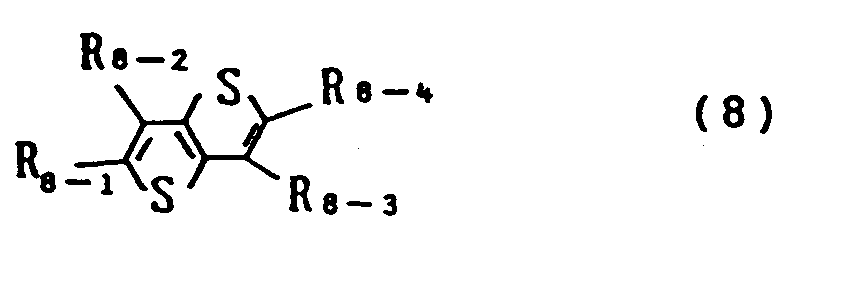


- 15. The electrophotographic photosensitive member according to Claim 8, wherein said compound contains a compound represented by the formula (9)


- 16. The electrophotographic photosensitive member according to Claim 8, wherein said compound contains a compound represented by the formula (10)


- 17. The electrophotographic photosensitive member according to Claim 8, wherein said compound contains a compound represented by the formula (11)


- 18. The electrophotographic photosensitive member according to Claim 8, wherein said compound contains a compound represented by the formula (12)


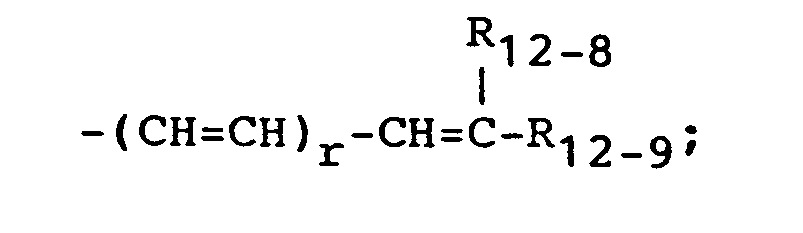
- 19. The electrophotographic photosensitive member according to Claim 8, wherein said compound contains a compound represented by the formula (13)


- 20. The electrophotographic photosensitive member according to Claim 8, wherein said compound contains a compound represented by the formula (14)


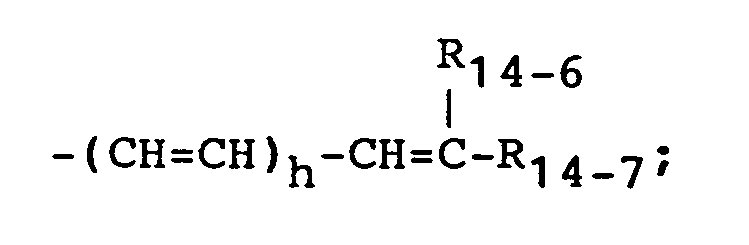
- 21. The electrophotographic photosensitive member according to Claim 8, wherein said photosensitive layer contains, as said charge-transporting substance, a compound selected from the group consisting of a compound having a partial structure represented by the formula


- 22. The electrophotographic photosensitive member according to Claim 21, wherein said photosensitive layer has a charge-generating layer containing a charge-generating substance and a charge-transporting layer containing a charge transporting substance.
- 23. The electrophotographic photosensitive member according to Claim 22 having said electroconductive support, said charge-generating layer and said charge-transporting layer in this order.
- 24. The electrophotographic photosensitive member according to Claim 22 having said electroconductive support, said charge-transporting layer and said charge-generating layer in this order.
- 25. The electrophotographic photosensitive member according to Claim 8 wherein said photosensitive layer is a single layer.
- 26. The electrophotographic photosensitive member according to Claim 8 having a subbing layer between said electroconductive support and said photosensitive layer.
- 27. The electrophotographic photosensitive member according to Claim 8 having said electroconductive support, said photosensitive layer and a protective layer in this order.
- 28. An electrophotographic apparatus comprising an electrophotographic photosensitive member, an electrostatic latent image-forming means, a means for developing the formed electrostatic latent image, and a means for transferring the developed image to a transfer material, said electrophotographic photosensitive member comprising an electroconductive support and a photosensitive layer on said electroconductive support, said photosensitive layer containing, as a charge-transporting substance, a compound represented by the formula (1)

- 29. The electrophotographic apparatus according to Claim 28, wherein said photosensitive layer has a charge-generating layer containing a charge-generating substance and a charge-transporting layer containing a charge transporting substance.
- 30. The electrophotographic apparatus according to Claim 29 having said electroconductive support, said charge-generating layer and said charge-transporting layer in this order.
- 31. The electrophotographic apparatus according to Claim 29 having said electroconductive support, said charge-transporting layer and said charge-generating layer in this order.
- 32. The electrophotographic apparatus according to Claim 28, wherein said photosensitive layer is a single layer.
- 33. An electrophotographic apparatus comprising an electrophotographic photosensitive member, an electrostatic latent image-forming means, a means for developing the formed electrostatic latent image, and a means for transferring the developed image to a transfer material, said electrophotographic photosensitive member comprising an electroconductive support and a photosensitive layer on said electroconductive support, said photosensitive layer containing a compound selected from the group consisting of a compound having a partial structure represented by the formula


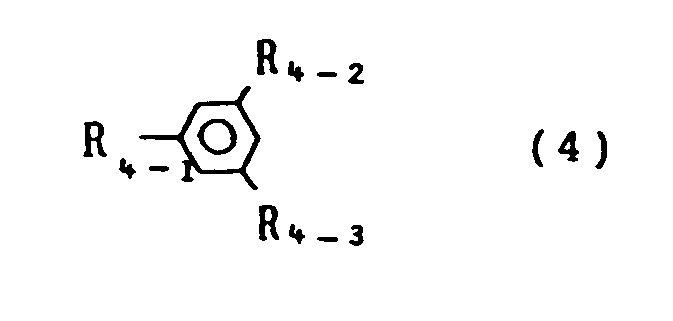


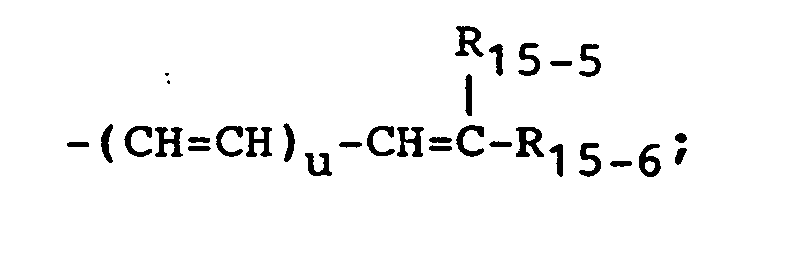


- 34. The electrophotographic apparatus according to Claim 33, wherein said compound contains a compound represented by the formula (2)


- 35. The electrophotographic apparatus according to Claim 33, wherein said compound contains a compound represented by the formula (3)


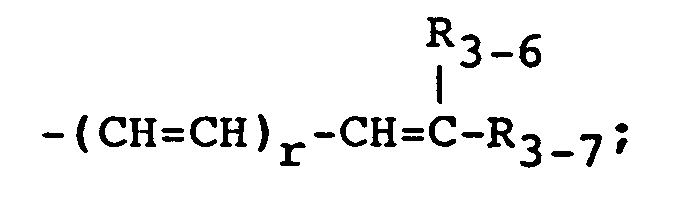
- 36. The electrophotographic apparatus according to Claim 33, wherein said compound contains a compound represented by the formula (5)


- 37. The electrophotographic apparatus according to Claim 33, wherein said compound contains a compound represented by the formula (6)


- 38. The electrophotographic apparatus according to Claim 33, wherein said compound contains a compound represented by the formula (7)


- 39. The electrophotographic apparatus according to Claim 33, wherein said compound contains a compound represented by the formula (8)


- 40. The electrophotographic apparatus according to Claim 33, wherein said compound contains a compound represented by the formula (9)
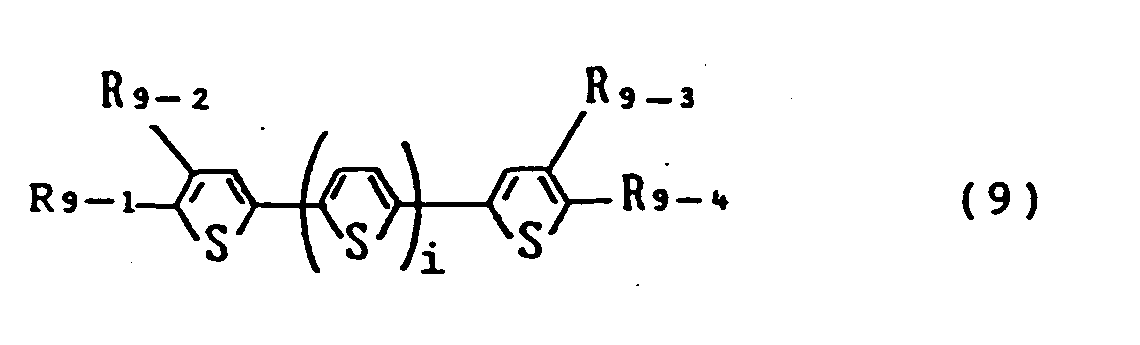


- 41. The electrophotographic apparatus according to Claim 33, wherein said compound contains a compound represented by the formula (10)

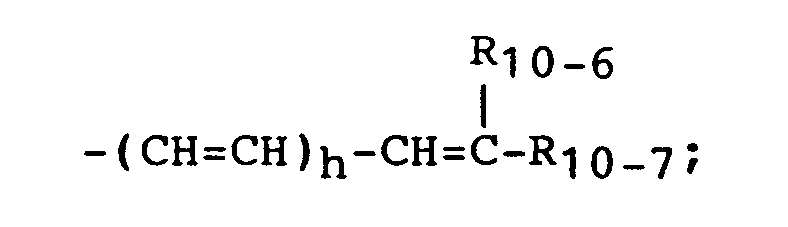

- 42. The electrophotographic apparatus according to Claim 33, wherein said compound contains a compound represented by the formula (11)


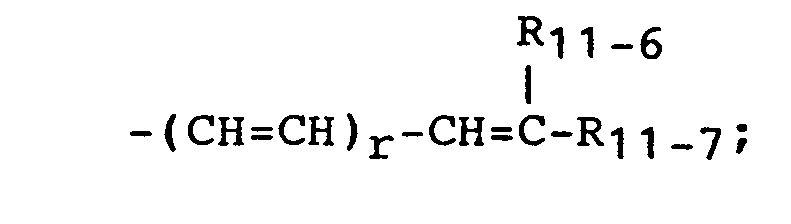
- 43. The electrophotographic apparatus according to Claim 33, wherein said compound contains a compound represented by the formula (12)


- 44. The electrophotographic apparatus according to Claim 33, wherein said compound contains a compound represented by the formula (13)


- 45. The electrophotographic apparatus according to Claim 33, wherein said compound contains a compound represented by the formula (14)


- 46. The electrophotographic apparatus according to claim 33, wherein said photosensitive layer contains, as said charge-transporting substance, a compound selected from the group consisting of a compound having a partial structure represented by the formula


- 47. The electrophotographic apparatus according to Claim 46, wherein said photosensitive layer has a charge-generating layer containing a charge-generating substance and a charge-transporting layer containing a charge transporting substance.
- 48. The electrophotographic apparatus according to Claim 47 having said electroconductive support, said charge-generating layer and said charge-transporting layer in this order.
- 49. The electrophotographic apparatus according to Claim 47 having said electroconductive support, said charge-transporting layer and said charge-generating layer in this order.
- 50. The electrophotographic apparatus according to Claim 33, wherein said photosensitive layer is a single layer.
Priority Applications (4)
| Application Number | Priority Date | Filing Date | Title |
|---|---|---|---|
| EP96116090A EP0757292B1 (en) | 1990-07-10 | 1991-07-09 | Electrophotographic photosensitive member |
| EP96116105A EP0760492B1 (en) | 1990-07-10 | 1991-07-09 | Electrophotographic photosensitive member |
| EP96116092A EP0757293B1 (en) | 1990-07-10 | 1991-07-09 | Electrophotographic photosensitive member |
| EP96116076A EP0752624B1 (en) | 1990-07-10 | 1991-07-09 | Electrophotographic photosensitive member |
Applications Claiming Priority (32)
| Application Number | Priority Date | Filing Date | Title |
|---|---|---|---|
| JP180578/90 | 1990-07-10 | ||
| JP18057890 | 1990-07-10 | ||
| JP180577/90 | 1990-07-10 | ||
| JP18057990 | 1990-07-10 | ||
| JP18057790 | 1990-07-10 | ||
| JP180579/90 | 1990-07-10 | ||
| JP181629/90 | 1990-07-11 | ||
| JP181627/90 | 1990-07-11 | ||
| JP18162990 | 1990-07-11 | ||
| JP181628/90 | 1990-07-11 | ||
| JP18163090 | 1990-07-11 | ||
| JP18162790 | 1990-07-11 | ||
| JP181630/90 | 1990-07-11 | ||
| JP18162890 | 1990-07-11 | ||
| JP18268890 | 1990-07-12 | ||
| JP18268790 | 1990-07-12 | ||
| JP182688/90 | 1990-07-12 | ||
| JP182689/90 | 1990-07-12 | ||
| JP18268990 | 1990-07-12 | ||
| JP182687/90 | 1990-07-12 | ||
| JP184185/90 | 1990-07-13 | ||
| JP18418690 | 1990-07-13 | ||
| JP184186/90 | 1990-07-13 | ||
| JP18418790 | 1990-07-13 | ||
| JP184187/90 | 1990-07-13 | ||
| JP18418590 | 1990-07-13 | ||
| JP195053/90 | 1990-07-25 | ||
| JP19505390 | 1990-07-25 | ||
| JP236998/90 | 1990-09-10 | ||
| JP23699890 | 1990-09-10 | ||
| JP273584/90 | 1990-10-11 | ||
| JP27358490 | 1990-10-11 |
Related Child Applications (4)
| Application Number | Title | Priority Date | Filing Date |
|---|---|---|---|
| EP96116105A Division EP0760492B1 (en) | 1990-07-10 | 1991-07-09 | Electrophotographic photosensitive member |
| EP96116092A Division EP0757293B1 (en) | 1990-07-10 | 1991-07-09 | Electrophotographic photosensitive member |
| EP96116076A Division EP0752624B1 (en) | 1990-07-10 | 1991-07-09 | Electrophotographic photosensitive member |
| EP96116090A Division EP0757292B1 (en) | 1990-07-10 | 1991-07-09 | Electrophotographic photosensitive member |
Publications (3)
| Publication Number | Publication Date |
|---|---|
| EP0466094A2 true EP0466094A2 (en) | 1992-01-15 |
| EP0466094A3 EP0466094A3 (en) | 1993-08-18 |
| EP0466094B1 EP0466094B1 (en) | 1999-03-24 |
Family
ID=27585741
Family Applications (5)
| Application Number | Title | Priority Date | Filing Date |
|---|---|---|---|
| EP91111402A Expired - Lifetime EP0466094B1 (en) | 1990-07-10 | 1991-07-09 | Electrophotographic photosensitive member |
| EP96116092A Expired - Lifetime EP0757293B1 (en) | 1990-07-10 | 1991-07-09 | Electrophotographic photosensitive member |
| EP96116076A Expired - Lifetime EP0752624B1 (en) | 1990-07-10 | 1991-07-09 | Electrophotographic photosensitive member |
| EP96116090A Expired - Lifetime EP0757292B1 (en) | 1990-07-10 | 1991-07-09 | Electrophotographic photosensitive member |
| EP96116105A Expired - Lifetime EP0760492B1 (en) | 1990-07-10 | 1991-07-09 | Electrophotographic photosensitive member |
Family Applications After (4)
| Application Number | Title | Priority Date | Filing Date |
|---|---|---|---|
| EP96116092A Expired - Lifetime EP0757293B1 (en) | 1990-07-10 | 1991-07-09 | Electrophotographic photosensitive member |
| EP96116076A Expired - Lifetime EP0752624B1 (en) | 1990-07-10 | 1991-07-09 | Electrophotographic photosensitive member |
| EP96116090A Expired - Lifetime EP0757292B1 (en) | 1990-07-10 | 1991-07-09 | Electrophotographic photosensitive member |
| EP96116105A Expired - Lifetime EP0760492B1 (en) | 1990-07-10 | 1991-07-09 | Electrophotographic photosensitive member |
Country Status (3)
| Country | Link |
|---|---|
| US (2) | US5484673A (en) |
| EP (5) | EP0466094B1 (en) |
| DE (5) | DE69131856T2 (en) |
Cited By (12)
| Publication number | Priority date | Publication date | Assignee | Title |
|---|---|---|---|---|
| DE4138330A1 (en) * | 1990-11-22 | 1992-05-27 | Fuji Electric Co Ltd | PHOTOLEITER FOR ELECTROPHOTOGRAPHY |
| US5866149A (en) * | 1993-12-10 | 1999-02-02 | L'oreal | Composition for making up the eyelashes and the eyebrows stabilized oxyethylenated derivatives |
| WO1999062909A3 (en) * | 1998-06-05 | 2000-03-02 | Univ North Carolina | Naphtho- and dihydrobenzo-thiophene derivatives as cytotoxic antitumor agents |
| US6046229A (en) * | 1998-01-06 | 2000-04-04 | Industrial Technology Research Institute | Polyaryl antitumor agents |
| WO2001053287A3 (en) * | 2000-01-20 | 2001-12-06 | Siemens Ag | Di(het)arylaminothiophene derivatives |
| WO2005121150A1 (en) * | 2004-06-09 | 2005-12-22 | Merck Patent Gmbh | POLYMERISABLE THIENO[3,2-b]THIOPHENES |
| EP2194987A4 (en) * | 2007-09-10 | 2011-11-30 | Boston Biomedical Inc | NEW STAT3 INHIBITORS AND NEW INHIBITORS OF CANCER STEM CELLS |
| CN108148074A (en) * | 2018-01-09 | 2018-06-12 | 中节能万润股份有限公司 | A kind of dithieno cyclopentanone compound and its preparation method and application |
| CN109824691A (en) * | 2019-03-11 | 2019-05-31 | 四川师范大学 | Liquid crystal compounds based on cyclopentadienodithiophen-4-one and their preparation |
| US10543189B2 (en) | 2013-04-09 | 2020-01-28 | Boston Biomedical, Inc. | 2-acetylnaphtho[2,3-b]furan -4,9-dione for use on treating cancer |
| US10646464B2 (en) | 2017-05-17 | 2020-05-12 | Boston Biomedical, Inc. | Methods for treating cancer |
| US11299469B2 (en) | 2016-11-29 | 2022-04-12 | Sumitomo Dainippon Pharma Oncology, Inc. | Naphthofuran derivatives, preparation, and methods of use thereof |
Families Citing this family (16)
| Publication number | Priority date | Publication date | Assignee | Title |
|---|---|---|---|---|
| US5905942A (en) | 1997-02-18 | 1999-05-18 | Lodgenet Entertainment Corporation | Multiple dwelling unit interactive audio/video distribution system |
| EP0964309B1 (en) | 1998-06-12 | 2005-12-07 | Canon Kabushiki Kaisha | Electrophotographic photosensitive member, process cartridge and electrophotographic apparatus, and process for producing the same photosensitive member |
| EP1001316B1 (en) | 1998-11-13 | 2005-10-05 | Canon Kabushiki Kaisha | Electrophotographic photosensitive member, process cartridge and electrophotographic apparatus |
| JP4227061B2 (en) * | 2004-03-30 | 2009-02-18 | シャープ株式会社 | Amine compound, electrophotographic photoreceptor using the amine compound, and image forming apparatus having the same |
| US7396622B2 (en) * | 2005-06-23 | 2008-07-08 | Canon Kabushiki Kaisha | Electrophotographic photosensitive member, process cartridge, and electrophotographic apparatus |
| KR101288657B1 (en) | 2009-01-30 | 2013-07-22 | 캐논 가부시끼가이샤 | Electrophotographic photosensitive member, process cartridge, and electrophotographic apparatus |
| JP4940370B2 (en) | 2010-06-29 | 2012-05-30 | キヤノン株式会社 | Electrophotographic photosensitive member, process cartridge, and electrophotographic apparatus |
| US9145383B2 (en) | 2012-08-10 | 2015-09-29 | Hallstar Innovations Corp. | Compositions, apparatus, systems, and methods for resolving electronic excited states |
| US9125829B2 (en) | 2012-08-17 | 2015-09-08 | Hallstar Innovations Corp. | Method of photostabilizing UV absorbers, particularly dibenzyolmethane derivatives, e.g., Avobenzone, with cyano-containing fused tricyclic compounds |
| WO2014025370A1 (en) | 2012-08-10 | 2014-02-13 | Hallstar Innovations Corp. | Tricyclic energy quencher compounds for reducing singlet oxygen generation |
| US11415913B2 (en) | 2020-05-28 | 2022-08-16 | Canon Kabushiki Kaisha | Electrophotographic member and electrophotographic image forming apparatus |
| US11372351B2 (en) | 2020-09-14 | 2022-06-28 | Canon Kabushiki Kaisha | Electrophotographic member and electrophotographic image forming apparatus |
| CN114621210A (en) * | 2020-12-10 | 2022-06-14 | 湖南超亟检测技术有限责任公司 | Preparation method and application of novel fluorescent molecular probe for detecting L-cysteine |
| JP7691305B2 (en) | 2021-08-06 | 2025-06-11 | キヤノン株式会社 | Electrophotographic photoreceptor, process cartridge and electrophotographic device |
| JP7752991B2 (en) | 2021-08-06 | 2025-10-14 | キヤノン株式会社 | electrophotographic device |
| JP7752992B2 (en) | 2021-08-06 | 2025-10-14 | キヤノン株式会社 | electrophotographic device |
Family Cites Families (37)
| Publication number | Priority date | Publication date | Assignee | Title |
|---|---|---|---|---|
| FR1310813A (en) * | 1960-11-30 | 1962-11-30 | Gevaert Photo Prod Nv | Electrophotographic material |
| US4066454A (en) * | 1973-11-19 | 1978-01-03 | Kabushiki Kaisha Ricoh | Electrophotographic light-sensitive material containing indenothiophenone or its derivative and process of preparing indenothiophenone and its derivative |
| FR2265720A1 (en) * | 1974-03-25 | 1975-10-24 | Xerox Corp | Electrophotographic image-forming layers - contg. substd. nitro- or chlorostyrenes as photogenerator |
| US4184871A (en) * | 1974-04-18 | 1980-01-22 | Mitsubishi Chemical Industries Ltd. | Photosensitive composition for electrophotography |
| US4072519A (en) * | 1975-02-10 | 1978-02-07 | Xerox Corporation | Photoconductive composition, and element |
| US4123269A (en) * | 1977-09-29 | 1978-10-31 | Xerox Corporation | Electrostatographic photosensitive device comprising hole injecting and hole transport layers |
| JPS54151955A (en) * | 1978-05-16 | 1979-11-29 | Ricoh Co Ltd | Production of 9-styrylanthracene and relative compounds |
| JPS5552063A (en) * | 1978-10-13 | 1980-04-16 | Ricoh Co Ltd | Electrophotographic receptor |
| JPS56144432A (en) * | 1980-04-14 | 1981-11-10 | Ricoh Co Ltd | Laminate type electrophotographic receptor |
| US4390608A (en) * | 1980-12-09 | 1983-06-28 | Ricoh Company, Ltd. | Layered charge generator/transport electrophotographic photoconductor uses bisazo pigment |
| JPS58198043A (en) * | 1982-05-14 | 1983-11-17 | Ricoh Co Ltd | Electrophotographic photoreceptor |
| US4599287A (en) * | 1983-11-09 | 1986-07-08 | Konishiroku Photo Industry Co., Ltd. | Positive charging photorecptor |
| JPS6175355A (en) * | 1984-09-21 | 1986-04-17 | Canon Inc | electrophotographic photoreceptor |
| US4546059A (en) * | 1984-11-08 | 1985-10-08 | Xerox Corporation | Layered photoresponsive imaging members with sulfur incorporated dicyanomethylenefluorene carboxylate compositions |
| JPS61132955A (en) * | 1984-12-01 | 1986-06-20 | Ricoh Co Ltd | Electrophotographic photoreceptor |
| JPH0629975B2 (en) * | 1985-04-16 | 1994-04-20 | 大日本インキ化学工業株式会社 | Multilayer type photoconductor for electrophotography |
| JPS62192746A (en) * | 1986-02-19 | 1987-08-24 | Canon Inc | Electrophotographic sensitive body |
| JPS6372664A (en) * | 1986-09-12 | 1988-04-02 | Fuji Xerox Co Ltd | Production of electric charge transporting material |
| JPS6370257A (en) * | 1986-09-12 | 1988-03-30 | Fuji Xerox Co Ltd | Electric charge transfer material for electrophotography |
| JPS6385749A (en) * | 1986-09-30 | 1988-04-16 | Mita Ind Co Ltd | Electrophotographic organic photosensitive body |
| JPS63104061A (en) * | 1986-10-22 | 1988-05-09 | Fuji Xerox Co Ltd | Organic electronic material |
| US4861692A (en) * | 1986-12-22 | 1989-08-29 | Fuji Electric Company, Ltd. | Electrophotographic photosensitive material containing thiophene compound |
| JPS63158556A (en) * | 1986-12-23 | 1988-07-01 | Fuji Electric Co Ltd | Electrophotographic sensitive body |
| JPS63158559A (en) * | 1986-12-23 | 1988-07-01 | Fuji Electric Co Ltd | Electrophotographic sensitive body |
| JPS63174993A (en) * | 1987-01-13 | 1988-07-19 | Fuji Xerox Co Ltd | Novel electron acceptor compound and production thereof |
| JP2545388B2 (en) * | 1987-04-27 | 1996-10-16 | キヤノン株式会社 | Electrophotographic photoreceptor |
| DE3814105C2 (en) * | 1987-04-27 | 1999-02-04 | Minolta Camera Kk | Electrophotographic recording material |
| JPS6476059A (en) * | 1987-09-18 | 1989-03-22 | Canon Kk | Electrophotographic sensitive body |
| DE3890861C2 (en) * | 1987-10-07 | 1994-10-13 | Fuji Electric Co Ltd | Electrophotographic recording material |
| JPH01152461A (en) * | 1987-12-09 | 1989-06-14 | Fuji Electric Co Ltd | Electrophotographic sensitive body |
| DE3842872A1 (en) * | 1987-12-21 | 1989-06-29 | Fuji Electric Co Ltd | PHOTOLEITER FOR ELECTROPHOTOGRAPHY |
| JPH0284657A (en) * | 1988-06-21 | 1990-03-26 | Kao Corp | Electrophotographic sensitive body |
| US5153085A (en) * | 1988-10-05 | 1992-10-06 | Fuji Xerox Co., Ltd. | Electrophotographic photosensitive member and image forming process |
| JPH02136860A (en) * | 1988-11-18 | 1990-05-25 | Ricoh Co Ltd | Electrophotographic sensitive body |
| JPH02156247A (en) * | 1988-12-09 | 1990-06-15 | Canon Inc | Electrophotographic sensitive body |
| JP2763315B2 (en) * | 1989-02-09 | 1998-06-11 | キヤノン株式会社 | Electrophotographic photoreceptor |
| JPH04119360A (en) * | 1990-09-11 | 1992-04-20 | Fuji Electric Co Ltd | Electrophotographic sensitive body |
-
1991
- 1991-07-09 EP EP91111402A patent/EP0466094B1/en not_active Expired - Lifetime
- 1991-07-09 EP EP96116092A patent/EP0757293B1/en not_active Expired - Lifetime
- 1991-07-09 DE DE69131856T patent/DE69131856T2/en not_active Expired - Fee Related
- 1991-07-09 EP EP96116076A patent/EP0752624B1/en not_active Expired - Lifetime
- 1991-07-09 DE DE69131873T patent/DE69131873T2/en not_active Expired - Fee Related
- 1991-07-09 DE DE69131033T patent/DE69131033T2/en not_active Expired - Fee Related
- 1991-07-09 DE DE69131875T patent/DE69131875T2/en not_active Expired - Fee Related
- 1991-07-09 EP EP96116090A patent/EP0757292B1/en not_active Expired - Lifetime
- 1991-07-09 EP EP96116105A patent/EP0760492B1/en not_active Expired - Lifetime
- 1991-07-09 DE DE69131874T patent/DE69131874T2/en not_active Expired - Fee Related
-
1995
- 1995-02-23 US US08/393,038 patent/US5484673A/en not_active Expired - Lifetime
- 1995-11-22 US US08/562,103 patent/US5677095A/en not_active Expired - Lifetime
Cited By (18)
| Publication number | Priority date | Publication date | Assignee | Title |
|---|---|---|---|---|
| DE4138330A1 (en) * | 1990-11-22 | 1992-05-27 | Fuji Electric Co Ltd | PHOTOLEITER FOR ELECTROPHOTOGRAPHY |
| DE4138330C2 (en) * | 1990-11-22 | 2001-12-06 | Fuji Electric Co Ltd | Electrophotographic recording material |
| US5866149A (en) * | 1993-12-10 | 1999-02-02 | L'oreal | Composition for making up the eyelashes and the eyebrows stabilized oxyethylenated derivatives |
| US6046229A (en) * | 1998-01-06 | 2000-04-04 | Industrial Technology Research Institute | Polyaryl antitumor agents |
| WO1999062909A3 (en) * | 1998-06-05 | 2000-03-02 | Univ North Carolina | Naphtho- and dihydrobenzo-thiophene derivatives as cytotoxic antitumor agents |
| US6337346B1 (en) | 1998-06-05 | 2002-01-08 | University Of North Carolina At Chapel Hill | Naphtho- and dihydrobenzo-thiophene derivatives as cytotoxic antitumor agents |
| WO2001053287A3 (en) * | 2000-01-20 | 2001-12-06 | Siemens Ag | Di(het)arylaminothiophene derivatives |
| US7700643B2 (en) | 2004-06-09 | 2010-04-20 | Merck Patent Gmbh | Polymerisable thieno[3,2-b]thiophenes |
| WO2005121150A1 (en) * | 2004-06-09 | 2005-12-22 | Merck Patent Gmbh | POLYMERISABLE THIENO[3,2-b]THIOPHENES |
| EP2194987A4 (en) * | 2007-09-10 | 2011-11-30 | Boston Biomedical Inc | NEW STAT3 INHIBITORS AND NEW INHIBITORS OF CANCER STEM CELLS |
| EP3058941A1 (en) * | 2007-09-10 | 2016-08-24 | Boston Biomedical, Inc. | Novel stat3 pathway inhibitors and cancer stem cell inhibitors |
| US10377731B2 (en) | 2007-09-10 | 2019-08-13 | Boston Biomedical, Inc. | Compositions and methods for cancer treatment |
| US10851075B2 (en) | 2007-09-10 | 2020-12-01 | Sumitomo Dainippon Pharma Oncology, Inc. | Stat3 pathway inhibitors and cancer stem cell inhibitors |
| US10543189B2 (en) | 2013-04-09 | 2020-01-28 | Boston Biomedical, Inc. | 2-acetylnaphtho[2,3-b]furan -4,9-dione for use on treating cancer |
| US11299469B2 (en) | 2016-11-29 | 2022-04-12 | Sumitomo Dainippon Pharma Oncology, Inc. | Naphthofuran derivatives, preparation, and methods of use thereof |
| US10646464B2 (en) | 2017-05-17 | 2020-05-12 | Boston Biomedical, Inc. | Methods for treating cancer |
| CN108148074A (en) * | 2018-01-09 | 2018-06-12 | 中节能万润股份有限公司 | A kind of dithieno cyclopentanone compound and its preparation method and application |
| CN109824691A (en) * | 2019-03-11 | 2019-05-31 | 四川师范大学 | Liquid crystal compounds based on cyclopentadienodithiophen-4-one and their preparation |
Also Published As
| Publication number | Publication date |
|---|---|
| EP0760492B1 (en) | 1999-12-15 |
| EP0757293B1 (en) | 1999-12-22 |
| EP0757292A1 (en) | 1997-02-05 |
| EP0752624A2 (en) | 1997-01-08 |
| EP0752624B1 (en) | 1999-12-22 |
| DE69131875D1 (en) | 2000-01-27 |
| DE69131875T2 (en) | 2000-06-15 |
| DE69131856D1 (en) | 2000-01-20 |
| US5677095A (en) | 1997-10-14 |
| EP0757292B1 (en) | 1999-12-22 |
| DE69131874D1 (en) | 2000-01-27 |
| DE69131033T2 (en) | 1999-11-18 |
| EP0752624A3 (en) | 1997-02-12 |
| US5484673A (en) | 1996-01-16 |
| DE69131856T2 (en) | 2000-06-15 |
| EP0466094A3 (en) | 1993-08-18 |
| DE69131874T2 (en) | 2000-06-15 |
| DE69131033D1 (en) | 1999-04-29 |
| EP0757293A1 (en) | 1997-02-05 |
| DE69131873T2 (en) | 2000-06-15 |
| EP0760492A1 (en) | 1997-03-05 |
| DE69131873D1 (en) | 2000-01-27 |
| EP0466094B1 (en) | 1999-03-24 |
Similar Documents
| Publication | Publication Date | Title |
|---|---|---|
| EP0466094A2 (en) | Electrophotographic photosensitive member | |
| JP2578502B2 (en) | Electrophotographic photoreceptor | |
| US4869988A (en) | Photoconductive imaging members with N,N-bis(biarylyl)aniline, or tris(biarylyl)amine charge transporting components | |
| EP0451761A1 (en) | Organic electronic material and electrophotographic photosensitive member containing it | |
| EP0823669B1 (en) | Electrophotographic photosensitive member and process cartridge and electrophotographic apparatus including same | |
| CN100510972C (en) | Photosensitive material for electrophotography and image forming device having the same | |
| US5238765A (en) | Electrophotographic photosensitive member | |
| JPH0743918A (en) | Electrophotographic photoreceptor | |
| JP2798201B2 (en) | Electrophotographic photosensitive member, electrophotographic apparatus having the same, and facsimile | |
| JPH10104861A (en) | Electrophotographic photoreceptor, process cartridge having the electrophotographic photoreceptor, and electrophotographic apparatus | |
| JP2656571B2 (en) | Tetraphenylthiophene derivative and electrophotographic photoreceptor containing the same | |
| JP2942015B2 (en) | Electrophotographic photoreceptor and electrophotographic apparatus using the same | |
| JP2654198B2 (en) | Electrophotographic photoreceptor | |
| JPH05204175A (en) | Electrophotographic sensitive body | |
| JP2001066809A (en) | Electrophotographic photosensitive member, process cartridge having electrophotographic photosensitive member, and electrophotographic apparatus | |
| JP3248627B2 (en) | Electrophotographic photoreceptor, electrophotographic apparatus and apparatus unit having the same | |
| JP3197117B2 (en) | Electrophotographic photoreceptor, apparatus unit having the same, and electrophotographic apparatus | |
| EP0232854B1 (en) | Electrophotographic photoreceptor | |
| JP2869196B2 (en) | Tetraphenylfuran derivative and electrophotographic photoreceptor containing the same | |
| JPH02183259A (en) | electrophotographic photoreceptor | |
| JPH05173341A (en) | Electrophotographic sensitive body | |
| JPH02277071A (en) | electrophotographic photoreceptor | |
| JP2798200B2 (en) | Electrophotographic photosensitive member, electrophotographic apparatus having the same, and facsimile | |
| EP0548953B1 (en) | Photoconductor for electrophotography | |
| JP2654188B2 (en) | Electrophotographic photoreceptor |
Legal Events
| Date | Code | Title | Description |
|---|---|---|---|
| PUAI | Public reference made under article 153(3) epc to a published international application that has entered the european phase |
Free format text: ORIGINAL CODE: 0009012 |
|
| AK | Designated contracting states |
Kind code of ref document: A2 Designated state(s): DE FR GB IT |
|
| PUAL | Search report despatched |
Free format text: ORIGINAL CODE: 0009013 |
|
| AK | Designated contracting states |
Kind code of ref document: A3 Designated state(s): DE FR GB IT |
|
| 17P | Request for examination filed |
Effective date: 19940104 |
|
| 17Q | First examination report despatched |
Effective date: 19960320 |
|
| GRAG | Despatch of communication of intention to grant |
Free format text: ORIGINAL CODE: EPIDOS AGRA |
|
| GRAG | Despatch of communication of intention to grant |
Free format text: ORIGINAL CODE: EPIDOS AGRA |
|
| GRAH | Despatch of communication of intention to grant a patent |
Free format text: ORIGINAL CODE: EPIDOS IGRA |
|
| GRAH | Despatch of communication of intention to grant a patent |
Free format text: ORIGINAL CODE: EPIDOS IGRA |
|
| GRAA | (expected) grant |
Free format text: ORIGINAL CODE: 0009210 |
|
| AK | Designated contracting states |
Kind code of ref document: B1 Designated state(s): DE FR GB IT |
|
| PG25 | Lapsed in a contracting state [announced via postgrant information from national office to epo] |
Ref country code: IT Free format text: LAPSE BECAUSE OF FAILURE TO SUBMIT A TRANSLATION OF THE DESCRIPTION OR TO PAY THE FEE WITHIN THE PRE;WARNING: LAPSES OF ITALIAN PATENTS WITH EFFECTIVE DATE BEFORE 2007 MAY HAVE OCCURRED AT ANY TIME BEFORE 2007. THE CORRECT EFFECTIVE DATE MAY BE DIFFERENT FROM THE ONE RECORDED.SCRIBED TIME-LIMIT Effective date: 19990324 |
|
| XX | Miscellaneous (additional remarks) |
Free format text: TEILANMELDUNG 96116076.9 EINGEREICHT AM 08/10/96. |
|
| REF | Corresponds to: |
Ref document number: 69131033 Country of ref document: DE Date of ref document: 19990429 |
|
| ET | Fr: translation filed | ||
| PLBE | No opposition filed within time limit |
Free format text: ORIGINAL CODE: 0009261 |
|
| STAA | Information on the status of an ep patent application or granted ep patent |
Free format text: STATUS: NO OPPOSITION FILED WITHIN TIME LIMIT |
|
| 26N | No opposition filed | ||
| REG | Reference to a national code |
Ref country code: GB Ref legal event code: IF02 |
|
| PGFP | Annual fee paid to national office [announced via postgrant information from national office to epo] |
Ref country code: GB Payment date: 20040707 Year of fee payment: 14 |
|
| PGFP | Annual fee paid to national office [announced via postgrant information from national office to epo] |
Ref country code: FR Payment date: 20040708 Year of fee payment: 14 |
|
| PGFP | Annual fee paid to national office [announced via postgrant information from national office to epo] |
Ref country code: DE Payment date: 20040722 Year of fee payment: 14 |
|
| PG25 | Lapsed in a contracting state [announced via postgrant information from national office to epo] |
Ref country code: GB Free format text: LAPSE BECAUSE OF NON-PAYMENT OF DUE FEES Effective date: 20050709 |
|
| PG25 | Lapsed in a contracting state [announced via postgrant information from national office to epo] |
Ref country code: DE Free format text: LAPSE BECAUSE OF NON-PAYMENT OF DUE FEES Effective date: 20060201 |
|
| GBPC | Gb: european patent ceased through non-payment of renewal fee |
Effective date: 20050709 |
|
| PG25 | Lapsed in a contracting state [announced via postgrant information from national office to epo] |
Ref country code: FR Free format text: LAPSE BECAUSE OF NON-PAYMENT OF DUE FEES Effective date: 20060331 |
|
| REG | Reference to a national code |
Ref country code: FR Ref legal event code: ST Effective date: 20060331 |