EP0467433A1 - Verwendung von Zentralwirkenden ACTH Analogen zur Herstellung von Arzneimitteln - Google Patents
Verwendung von Zentralwirkenden ACTH Analogen zur Herstellung von Arzneimitteln Download PDFInfo
- Publication number
- EP0467433A1 EP0467433A1 EP91201552A EP91201552A EP0467433A1 EP 0467433 A1 EP0467433 A1 EP 0467433A1 EP 91201552 A EP91201552 A EP 91201552A EP 91201552 A EP91201552 A EP 91201552A EP 0467433 A1 EP0467433 A1 EP 0467433A1
- Authority
- EP
- European Patent Office
- Prior art keywords
- phe
- compound
- lys
- medicament
- met0
- Prior art date
- Legal status (The legal status is an assumption and is not a legal conclusion. Google has not performed a legal analysis and makes no representation as to the accuracy of the status listed.)
- Withdrawn
Links
Images
Classifications
-
- A—HUMAN NECESSITIES
- A61—MEDICAL OR VETERINARY SCIENCE; HYGIENE
- A61K—PREPARATIONS FOR MEDICAL, DENTAL OR TOILETRY PURPOSES
- A61K38/00—Medicinal preparations containing peptides
-
- C—CHEMISTRY; METALLURGY
- C07—ORGANIC CHEMISTRY
- C07K—PEPTIDES
- C07K14/00—Peptides having more than 20 amino acids; Gastrins; Somatostatins; Melanotropins; Derivatives thereof
- C07K14/435—Peptides having more than 20 amino acids; Gastrins; Somatostatins; Melanotropins; Derivatives thereof from animals; from humans
- C07K14/665—Peptides having more than 20 amino acids; Gastrins; Somatostatins; Melanotropins; Derivatives thereof from animals; from humans derived from pro-opiomelanocortin, pro-enkephalin or pro-dynorphin
- C07K14/695—Corticotropin [ACTH]
-
- A—HUMAN NECESSITIES
- A61—MEDICAL OR VETERINARY SCIENCE; HYGIENE
- A61P—SPECIFIC THERAPEUTIC ACTIVITY OF CHEMICAL COMPOUNDS OR MEDICINAL PREPARATIONS
- A61P25/00—Drugs for disorders of the nervous system
-
- A—HUMAN NECESSITIES
- A61—MEDICAL OR VETERINARY SCIENCE; HYGIENE
- A61P—SPECIFIC THERAPEUTIC ACTIVITY OF CHEMICAL COMPOUNDS OR MEDICINAL PREPARATIONS
- A61P27/00—Drugs for disorders of the senses
- A61P27/02—Ophthalmic agents
-
- C—CHEMISTRY; METALLURGY
- C07—ORGANIC CHEMISTRY
- C07K—PEPTIDES
- C07K14/00—Peptides having more than 20 amino acids; Gastrins; Somatostatins; Melanotropins; Derivatives thereof
- C07K14/435—Peptides having more than 20 amino acids; Gastrins; Somatostatins; Melanotropins; Derivatives thereof from animals; from humans
- C07K14/665—Peptides having more than 20 amino acids; Gastrins; Somatostatins; Melanotropins; Derivatives thereof from animals; from humans derived from pro-opiomelanocortin, pro-enkephalin or pro-dynorphin
- C07K14/695—Corticotropin [ACTH]
- C07K14/6955—Corticotropin [ACTH] with at least 1 amino acid in D-form
Definitions
- This invention relates to pharmaceutical compositions generally and to the use of an ACTH analog for the manufacture of a medicament having central nervous system activity specifically.
- U.S. Patent No. 3,842,064 to Greven disclosespsychopharmacologically active peptide derivatives of adrenocorticotropic hormone ("ACTH"). Similar peptides are described in U.S. Patent Nos. 4,104,371 and 4,110,322. Such peptide derivatives have been used to study the possibility of nerve regeneration.
- ACTH adrenocorticotropic hormone
- the medicaments may be used in the treatment of an animal suffering from central nerve degeneration or damage.
- the medicaments are administered, on a regular basis, for example two to four times a day, to a animal, such as a human, believed to be suffering from a disease state susceptible to treatment by the compound.
- disease states include those wherein CNS function has degenerated either chemically or traumatically.
- EXAMPLE I A process for making the compounds is thoroughly described in EXAMPLE I.
- other compounds can be synthesized.
- suitable alcohols for making the various compounds include: 2-decanol, 3,7-dimethyl-1-octanol, 1-undecanol, 2,4-diethyl-1-heptanol, 1-dodeca-nol, 2-dodecanol, 1-tridecanol, 1-tetradecanol, 2-tetra-decanol, 1-penta-decanol, 1-hexadecanol, 2-hexadecanol, 1- heptadecanol, oleyl alcohol, and 1-octadecanol.
- Suitable amines include dibutylamine, di-sec- butylamine, diisobutylamine, N,N-diisopropylethylamine, N,N-dimethylhexylamine, N-methyl-dibutylamine, tertiaryoctylamine, diphenylamine, nonylamine, decylamine, N,N-dimethyloctylamine, 1,5-dimethylhexyl-2-ethylhexylamine, 1-methylheptyloctylamine, undecylamine, dihexylamine, dodecylamine, N,N-dimethyl- dodecylamine, 1-tetradecylamine, N-methyldioctylamine, and octadecylamine.
- An especially preferred compound for use in the medicament has the formula:
- the compounds are useful in the manufacture of medicaments having use in treating symptoms of central nerve degeneration or disease.
- the compounds are preferably administered to the patient as soon as possible after the damage occurs.
- the compounds may also be useful in the differential diagnosis of central versus peripheral nerve damage, since they do not have appreciable peripheral action, but do have appreciable central nervous regeneration activities.
- the compound may be administered to an animal displaying symptoms of nervous degeneration of unknown location. If the symptoms improve, then it is known that the disease state must have at least some central nervous character.
- the compounds' central selectivity would be especially useful in analyzing a neurotoxicity associated with a chemical compound in an animal model.
- the compounds are preferably administered subcutaneously, topically, intranasally, or locally (e.g. via an implant), although the preferred compound is active orally.
- the medicament containing the compound is preferably administered at least one- half hour before a meal.
- the medicament for subcutaneous administration will generally be a dosage unit containing between 70 and 700 nanograms of the compound dissolved in saline. However, medicaments containing fewer nanograms of the compounds may also be used, if multiple subcutaneous injections are to be administered.
- the medicament manufactured with the compounds may also be used as adjuvant therapy in the treatment of symptoms of central nervous degeneration.
- the medicament is administered with other compounds useful in ameliorating such symptoms.
- the dosage of compound administered is generally dependent on how the compound is to be administered. For example, doses of the compound: as low as 0.5 to 5.0 nanograms/kilogram body mass (ng/kg), subcutaneously, facilitated passive avoidance behaviour in Wistar rats, while doses of 250 ng/kg attenuated the passive avoidance response. Doses of 0.1 to 1.0 microgams/kilogram (tig/kg) body mass of the same compound decreased motor activity of group housed rats tested under low light conditions. Furthermore subcutaneous (1.0 to 10.0 ng/kg) or oral (10 tig/kg) administration of the preferred compound accelerated functional recovery from 6-hydroxydopamine (6-OHDA)-induced lesions in the nucleus accumbens which cause motor hypoactivity. For topical administration (e.g. to a damaged eye in the form of drops, ointments, salves or creams) dosages such as used with the subcutaneous dosage form may be used.
- 6-OHDA 6-hydroxydopamine
- the dosage forms used may be dosage forms for oral administration.
- Methods and compositions for making such dosage forms are well-known to those skilled in the art. For example, methods and compositions for making capsules, tablets and pills, containing active ingredients, are described in the standard reference, Chase et al., Remington's Pharmaceutical Sciences, (16th ed., Mack Publishing Co., Easton. PA, U.S.A., 1980) ("Remington's"), at pages 1553 through 1584. Methods of making powders, and their composition are described at pages 1535 through 1552 of the reference. Liquid dosage forms might also be used. Methods for making, and compositions of, solutions, emulsions, and suspensions are described at pages 1438 through 1462 of the text. Methods of coating pharmaceutical dosage forms, and making prolonged release pharmaceuticals are described at pages 1585-1613 of Remington's.
- Oral pharmaceutical compositions containing sufficient quantities of the compound may also contain other active compounds.
- the compounds may also be used with implantable pharmaceutical devices such as those described in US Patent 4,767,628, the contents of which are incorporated by this reference. Then the device will contain sufficient amounts of compound (e.g. 150 to 2100 ng) to slowly release the compound (e.g. for more than a month).
- implantable pharmaceutical devices such as those described in US Patent 4,767,628, the contents of which are incorporated by this reference. Then the device will contain sufficient amounts of compound (e.g. 150 to 2100 ng) to slowly release the compound (e.g. for more than a month).
- An especially preferred application of the compound is in the manufacture of ophthalmic preparations. Due to the compound's selective central nerve regenerating activity, the compound can be administered topically to a damaged eye where it is absorbed and acts locally. Methods for making ophthalmic preparations are described in Reming- ton's at pages 1498 through 1517, the contents of which are incorporated by this reference.
- the protected hexapeptide, described Example 1.A.2, was dissolved in TFA-H 2 0(9:1, V/V, 2.29 mmol in 30 ml) and 0.76 ml anisole was added. After 30 min at room temperature the solution was added dropwise to ether. The precipitate was collected by filtration and washed with ether. After drying the solid was dissolved in tertiary butanol-water (1:1, V/V) and TFA ions exchanged for acetate ions, and the solution lyophilized.
- mice Male Wistar rats were used. The animals were housed in a room in groups of 5-6 animals with free access to food and tap water. At the moment of the operation the rats weighed approximately 140 grams. One hour prior to the operation the rats received an i.p. injection of desipramine (DMI, 25 mg/kg) to prevent destruction of noradrenergic nerve cells. The rats were anaesthetized with Hypnorm R (0.08 ml/100 grams bodyweight, i.m.) and secured in a stereotaxic apparatus.
- DMI desipramine
- Stainless steel guide cannulae (outer diameter 0.6 mm) were bilaterally implanted into the rat brain, their tips ending in the nucleus accumbens (coordinates: 2.6 mm anterior to bregma, 2.7 mm lateral of the midline, 6.2 mm below the surface of the skull at the point of penetration, inserted at an angle of 12° to the midline, incisor bar at horizontal zero level).
- the cannulae served to guide the needle of a Hamilton syringe (outer diameter 0.3 mm) through which 6-OHDA (8 tig/2 ⁇ l dissolved in saline containing 0.1% ascorbic acid) was injected over a 2 min period in the nucleus accumbens. Sham lesions were produced by injections of vehicle (saline containing 0.1% ascorbic acid). After the injection the guide cannulae together with the syringe was removed and the skin was stitched.
- the animals received daily administrations of vehicle or different doses of the compound either s.c. (in 0.3 ml saline/rat) or orally (in 1.0 ml water/rat) from day 1 to day 6 after the lesion. On day 7 motor activity of the rats was assessed in the open field under bright light conditions (70 W light located 1.5 m above the testbox).
- the following drugs were used: 6-hydroxydopamine (6-OHDA) Sigma Chem. Comp.).
- the compound (“Met0 2 -Glu-His-Phe-D-Lys-Phe-O-(CH2)g-CH3") was from Organon International B.V., Oss, The Netherlands.
- s.c. administration the peptides were dissolved in saline using plastic containers on the day of use and the injection volume was 0.3 ml/rat.
- For oral administration the compound was dissolved in distilled water.
- the peptide solution was orally administered in a volume of 1 ml using an intra-gastric tube.
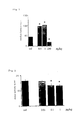
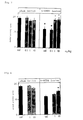
- This example shows that the compound already facilitates the avoidance response at doses of 0.5 - 5.0 ng/kg.
- An inhibition of the avoidance response was induced by 250 ng/kg doses of the compound.
- the compound decreases motor activity of group housed rats tested under low light intensity at s.c. doses of 0.1 ⁇ g/kg.
- the compound facilitates functional recovery from impaired motor activity caused by 6-OHDA lesions in the nucleus accumbens at s.c. injected doses of 1 ng/kg.
- the calculated ED 50 for the facilitation of functional recovery after a 6-OHDA lesion of the nucleus accumbens shows an effect after treatment with 10 ⁇ g/kg.
- the compound accelerates functional recovery from 6-OHDA-induced impaired motor activity after oral administration to rats.
Landscapes
- Health & Medical Sciences (AREA)
- Chemical & Material Sciences (AREA)
- Life Sciences & Earth Sciences (AREA)
- Organic Chemistry (AREA)
- Medicinal Chemistry (AREA)
- General Health & Medical Sciences (AREA)
- Public Health (AREA)
- Veterinary Medicine (AREA)
- Proteomics, Peptides & Aminoacids (AREA)
- Bioinformatics & Cheminformatics (AREA)
- Animal Behavior & Ethology (AREA)
- Engineering & Computer Science (AREA)
- Pharmacology & Pharmacy (AREA)
- General Chemical & Material Sciences (AREA)
- Biophysics (AREA)
- Chemical Kinetics & Catalysis (AREA)
- Molecular Biology (AREA)
- Genetics & Genomics (AREA)
- Toxicology (AREA)
- Zoology (AREA)
- Gastroenterology & Hepatology (AREA)
- Biochemistry (AREA)
- Nuclear Medicine, Radiotherapy & Molecular Imaging (AREA)
- Neurology (AREA)
- Neurosurgery (AREA)
- Biomedical Technology (AREA)
- Ophthalmology & Optometry (AREA)
- Immunology (AREA)
- Epidemiology (AREA)
- Medicines That Contain Protein Lipid Enzymes And Other Medicines (AREA)
- Medicines Containing Antibodies Or Antigens For Use As Internal Diagnostic Agents (AREA)
- Peptides Or Proteins (AREA)
Applications Claiming Priority (2)
| Application Number | Priority Date | Filing Date | Title |
|---|---|---|---|
| EP90201951 | 1990-07-18 | ||
| EP90201951 | 1990-07-18 |
Publications (1)
| Publication Number | Publication Date |
|---|---|
| EP0467433A1 true EP0467433A1 (de) | 1992-01-22 |
Family
ID=8205077
Family Applications (1)
| Application Number | Title | Priority Date | Filing Date |
|---|---|---|---|
| EP91201552A Withdrawn EP0467433A1 (de) | 1990-07-18 | 1991-06-19 | Verwendung von Zentralwirkenden ACTH Analogen zur Herstellung von Arzneimitteln |
Country Status (8)
| Country | Link |
|---|---|
| EP (1) | EP0467433A1 (de) |
| JP (1) | JPH04253920A (de) |
| KR (1) | KR920002163A (de) |
| AU (1) | AU8044391A (de) |
| CA (1) | CA2045714A1 (de) |
| IE (1) | IE912091A1 (de) |
| NZ (1) | NZ238987A (de) |
| ZA (1) | ZA914684B (de) |
Citations (5)
| Publication number | Priority date | Publication date | Assignee | Title |
|---|---|---|---|---|
| US3842064A (en) * | 1972-03-31 | 1974-10-15 | Akzona Inc | Psychopharmacologically active tetra-,penta-,hexa-,and hepta-peptides |
| US4104371A (en) * | 1976-07-12 | 1978-08-01 | Akzona Incorporated | Psychopharmacologically active peptides and peptide-derivatives, and the use thereof |
| US4110322A (en) * | 1976-07-12 | 1978-08-29 | Akzona Incorporated | Peptide derivatives and pharmaceutical compositions containing same |
| WO1982003388A1 (en) * | 1981-04-08 | 1982-10-14 | Gispen Willem Hendrik | Peptides with nerve-regenerating properties |
| EP0179332A2 (de) * | 1984-10-22 | 1986-04-30 | Hoechst Aktiengesellschaft | Neue ZNS-aktive Peptide mit Wirkung auf das cholinerge System |
-
1991
- 1991-06-18 ZA ZA914684A patent/ZA914684B/xx unknown
- 1991-06-18 IE IE209191A patent/IE912091A1/en unknown
- 1991-06-19 EP EP91201552A patent/EP0467433A1/de not_active Withdrawn
- 1991-06-26 CA CA002045714A patent/CA2045714A1/en not_active Abandoned
- 1991-07-15 AU AU80443/91A patent/AU8044391A/en not_active Abandoned
- 1991-07-16 KR KR1019910012093A patent/KR920002163A/ko not_active Withdrawn
- 1991-07-16 NZ NZ238987A patent/NZ238987A/en unknown
- 1991-07-18 JP JP3178368A patent/JPH04253920A/ja active Pending
Patent Citations (5)
| Publication number | Priority date | Publication date | Assignee | Title |
|---|---|---|---|---|
| US3842064A (en) * | 1972-03-31 | 1974-10-15 | Akzona Inc | Psychopharmacologically active tetra-,penta-,hexa-,and hepta-peptides |
| US4104371A (en) * | 1976-07-12 | 1978-08-01 | Akzona Incorporated | Psychopharmacologically active peptides and peptide-derivatives, and the use thereof |
| US4110322A (en) * | 1976-07-12 | 1978-08-29 | Akzona Incorporated | Peptide derivatives and pharmaceutical compositions containing same |
| WO1982003388A1 (en) * | 1981-04-08 | 1982-10-14 | Gispen Willem Hendrik | Peptides with nerve-regenerating properties |
| EP0179332A2 (de) * | 1984-10-22 | 1986-04-30 | Hoechst Aktiengesellschaft | Neue ZNS-aktive Peptide mit Wirkung auf das cholinerge System |
Non-Patent Citations (2)
| Title |
|---|
| Brain Research, Vol. 527, No. 2, 1990, pages 192-197; B. SPRUIJT et al.: "Org2766 improves performance of rats with unilateral lesions in the fimbria fornix in a spatial learning task", Abstract. * |
| Neuroendocrinology Letters, Vol. 10, No. 4, 1988, page 237; M. DIAMANT et al.: "In vitro stereoidogenic and trophic activity of ACTH and ACTH-related peptides", the whole document. * |
Also Published As
| Publication number | Publication date |
|---|---|
| AU8044391A (en) | 1992-01-23 |
| NZ238987A (en) | 1992-07-28 |
| IE912091A1 (en) | 1992-01-29 |
| ZA914684B (en) | 1992-04-29 |
| KR920002163A (ko) | 1992-02-28 |
| CA2045714A1 (en) | 1992-01-19 |
| JPH04253920A (ja) | 1992-09-09 |
Similar Documents
| Publication | Publication Date | Title |
|---|---|---|
| US6794489B2 (en) | Compositions and methods for treatment of sexual dysfunction | |
| Cador et al. | Ventral tegmental area infusion of substance P, neurotensin and enkephalin: differential effects on feeding behavior | |
| Khachaturian et al. | Anatomy of the CNS opioid systems | |
| DE69838147T2 (de) | Verbindungen und methoden zur modulierung von occludin-abhängiger gewebepermeabilität | |
| EP0067425B1 (de) | Gegebenenfalls geschützte Peptide, Verfahren zu ihrer Herstellung und diese enthaltende Arzneimittel | |
| DD156968A5 (de) | Verfahren zur herstellung von neuen angiotensin-ii antagonisierenden oktapeptidestern | |
| US11912787B2 (en) | Peptide for skin aging prevention and wrinkle reduction, and composition comprising same | |
| KR880002609B1 (ko) | 펩타이드 유도체의 제법 | |
| Wang et al. | Preparation, purification, and characterization of a reversibly lipidized desmopressin with potentiated anti-diuretic activity | |
| CA2182795C (en) | Superactive vip antagonists | |
| Reymond et al. | An inhibitory role for morphine on the release of dopamine into hypophysial portal blood and on the synthesis of dopamine in tuberoinfundibular neurons | |
| JP3878983B2 (ja) | トリ、テトラ、ペンタ、及びポリペプチド、及びその抗抑欝症剤としての治療用途 | |
| Wolterink et al. | Functional recovery after destruction of dopamine systems in the nucleus accumbens of rats. III. Further analysis of the facilitating effect of the ACTH-(4–9) analog ORG 2766 | |
| DE69938548T2 (de) | Pth2 rezeptor selektive verbindungen | |
| EP0620008B1 (de) | Verwendung von VIP und deren Analogen und Fragmenten zur Behandlung von neurodegenerativen Krankheiten | |
| IE912091A1 (en) | Use of a centrally acting atch analog in the manufacture of a¹medicament | |
| Wolterink et al. | Structural modifications of the ACHT-(4–9) analog ORG 2766 yields peptides with high biological activity | |
| Martini et al. | Hypothalamic stimulation of ACTH secretion | |
| CN101724026B (zh) | 一种黑皮素类似物及其制备方法和应用 | |
| DE60032822T2 (de) | Analoge der substanz p zur behandlung von krebs | |
| DE60018937T2 (de) | Somatostatin analoge und deren verwendung zur behandlung von krebs | |
| EP0828507A1 (de) | Verfahren zur behandlung von schmerz | |
| Allan et al. | The metabolic and pharmacokinetic disposition of mebendazole in the rat | |
| EP0028716A2 (de) | Motilitätssteigernde Peptide und deren Verwendung | |
| Verhoef et al. | Des-enkephalin-γ-endorphin: bioavailability in rats following the subcutaneous and intramuscular route of administration |
Legal Events
| Date | Code | Title | Description |
|---|---|---|---|
| PUAI | Public reference made under article 153(3) epc to a published international application that has entered the european phase |
Free format text: ORIGINAL CODE: 0009012 |
|
| AK | Designated contracting states |
Kind code of ref document: A1 Designated state(s): AT BE CH DE DK ES FR GB GR IT LI NL SE |
|
| 17P | Request for examination filed |
Effective date: 19920626 |
|
| STAA | Information on the status of an ep patent application or granted ep patent |
Free format text: STATUS: THE APPLICATION HAS BEEN WITHDRAWN |
|
| 18W | Application withdrawn |
Withdrawal date: 19931018 |