EP0467635A2 - Composition d'isolation thermique et procédé pour isoler les faisceaux et caissons de conduites - Google Patents
Composition d'isolation thermique et procédé pour isoler les faisceaux et caissons de conduites Download PDFInfo
- Publication number
- EP0467635A2 EP0467635A2 EP91306425A EP91306425A EP0467635A2 EP 0467635 A2 EP0467635 A2 EP 0467635A2 EP 91306425 A EP91306425 A EP 91306425A EP 91306425 A EP91306425 A EP 91306425A EP 0467635 A2 EP0467635 A2 EP 0467635A2
- Authority
- EP
- European Patent Office
- Prior art keywords
- rhamnose
- base fluid
- linked
- heteropolysaccharide
- glucose
- Prior art date
- Legal status (The legal status is an assumption and is not a legal conclusion. Google has not performed a legal analysis and makes no representation as to the accuracy of the status listed.)
- Withdrawn
Links
- 239000000203 mixture Substances 0.000 title claims abstract description 70
- 238000000034 method Methods 0.000 title claims abstract description 20
- 239000012530 fluid Substances 0.000 claims abstract description 87
- LYCAIKOWRPUZTN-UHFFFAOYSA-N Ethylene glycol Chemical compound OCCO LYCAIKOWRPUZTN-UHFFFAOYSA-N 0.000 claims abstract description 84
- SHZGCJCMOBCMKK-UHFFFAOYSA-N D-mannomethylose Natural products CC1OC(O)C(O)C(O)C1O SHZGCJCMOBCMKK-UHFFFAOYSA-N 0.000 claims abstract description 28
- SHZGCJCMOBCMKK-JFNONXLTSA-N L-rhamnopyranose Chemical compound C[C@@H]1OC(O)[C@H](O)[C@H](O)[C@H]1O SHZGCJCMOBCMKK-JFNONXLTSA-N 0.000 claims abstract description 28
- PNNNRSAQSRJVSB-UHFFFAOYSA-N L-rhamnose Natural products CC(O)C(O)C(O)C(O)C=O PNNNRSAQSRJVSB-UHFFFAOYSA-N 0.000 claims abstract description 28
- WQZGKKKJIJFFOK-GASJEMHNSA-N Glucose Natural products OC[C@H]1OC(O)[C@H](O)[C@@H](O)[C@@H]1O WQZGKKKJIJFFOK-GASJEMHNSA-N 0.000 claims abstract description 19
- 239000008103 glucose Substances 0.000 claims abstract description 19
- WQZGKKKJIJFFOK-VFUOTHLCSA-N beta-D-glucose Chemical compound OC[C@H]1O[C@@H](O)[C@H](O)[C@@H](O)[C@@H]1O WQZGKKKJIJFFOK-VFUOTHLCSA-N 0.000 claims abstract description 14
- WQZGKKKJIJFFOK-QTVWNMPRSA-N D-mannopyranose Chemical compound OC[C@H]1OC(O)[C@@H](O)[C@@H](O)[C@@H]1O WQZGKKKJIJFFOK-QTVWNMPRSA-N 0.000 claims abstract description 10
- 230000007935 neutral effect Effects 0.000 claims abstract description 10
- 235000000346 sugar Nutrition 0.000 claims abstract description 10
- 150000008163 sugars Chemical class 0.000 claims abstract description 10
- AEMOLEFTQBMNLQ-AQKNRBDQSA-N D-glucopyranuronic acid Chemical compound OC1O[C@H](C(O)=O)[C@@H](O)[C@H](O)[C@H]1O AEMOLEFTQBMNLQ-AQKNRBDQSA-N 0.000 claims abstract description 9
- IAJILQKETJEXLJ-UHFFFAOYSA-N Galacturonsaeure Natural products O=CC(O)C(O)C(O)C(O)C(O)=O IAJILQKETJEXLJ-UHFFFAOYSA-N 0.000 claims abstract description 9
- 150000001720 carbohydrates Chemical class 0.000 claims abstract description 9
- 235000014633 carbohydrates Nutrition 0.000 claims abstract description 9
- 229940097043 glucuronic acid Drugs 0.000 claims abstract description 9
- 229920002310 Welan gum Polymers 0.000 claims abstract description 4
- 239000011872 intimate mixture Substances 0.000 claims abstract description 3
- 230000000694 effects Effects 0.000 claims description 15
- 239000007788 liquid Substances 0.000 claims description 14
- 239000002738 chelating agent Substances 0.000 claims description 12
- KCXVZYZYPLLWCC-UHFFFAOYSA-N EDTA Chemical group OC(=O)CN(CC(O)=O)CCN(CC(O)=O)CC(O)=O KCXVZYZYPLLWCC-UHFFFAOYSA-N 0.000 claims description 9
- 238000010008 shearing Methods 0.000 claims description 8
- 238000005086 pumping Methods 0.000 claims description 7
- 239000003795 chemical substances by application Substances 0.000 claims description 5
- SXRSQZLOMIGNAQ-UHFFFAOYSA-N Glutaraldehyde Chemical group O=CCCCC=O SXRSQZLOMIGNAQ-UHFFFAOYSA-N 0.000 claims description 4
- 230000003115 biocidal effect Effects 0.000 claims description 4
- 230000002599 biostatic effect Effects 0.000 claims description 3
- 239000000872 buffer Substances 0.000 claims description 3
- 150000007530 organic bases Chemical class 0.000 claims description 3
- 239000007983 Tris buffer Substances 0.000 claims 1
- 239000003139 biocide Substances 0.000 claims 1
- 239000000499 gel Substances 0.000 abstract description 28
- 238000000518 rheometry Methods 0.000 abstract description 6
- 238000012360 testing method Methods 0.000 description 16
- XLYOFNOQVPJJNP-UHFFFAOYSA-N water Substances O XLYOFNOQVPJJNP-UHFFFAOYSA-N 0.000 description 12
- 239000007787 solid Substances 0.000 description 10
- 229920001222 biopolymer Polymers 0.000 description 9
- 239000003921 oil Substances 0.000 description 8
- 239000000126 substance Substances 0.000 description 8
- WGCNASOHLSPBMP-UHFFFAOYSA-N hydroxyacetaldehyde Natural products OCC=O WGCNASOHLSPBMP-UHFFFAOYSA-N 0.000 description 5
- 238000009413 insulation Methods 0.000 description 5
- 238000004458 analytical method Methods 0.000 description 4
- -1 carbon hydrocarbon Chemical class 0.000 description 4
- 239000010779 crude oil Substances 0.000 description 4
- 150000002500 ions Chemical class 0.000 description 4
- 238000004519 manufacturing process Methods 0.000 description 4
- 239000000047 product Substances 0.000 description 4
- 230000003068 static effect Effects 0.000 description 4
- DNIAPMSPPWPWGF-UHFFFAOYSA-N Propylene glycol Chemical compound CC(O)CO DNIAPMSPPWPWGF-UHFFFAOYSA-N 0.000 description 3
- 229910000831 Steel Inorganic materials 0.000 description 3
- MTHSVFCYNBDYFN-UHFFFAOYSA-N diethylene glycol Chemical compound OCCOCCO MTHSVFCYNBDYFN-UHFFFAOYSA-N 0.000 description 3
- 150000002334 glycols Chemical class 0.000 description 3
- 239000000463 material Substances 0.000 description 3
- 239000004033 plastic Substances 0.000 description 3
- 229920003023 plastic Polymers 0.000 description 3
- 239000010959 steel Substances 0.000 description 3
- 241000588986 Alcaligenes Species 0.000 description 2
- 239000004215 Carbon black (E152) Substances 0.000 description 2
- 239000004698 Polyethylene Substances 0.000 description 2
- 230000009286 beneficial effect Effects 0.000 description 2
- HUMNYLRZRPPJDN-UHFFFAOYSA-N benzaldehyde Chemical compound O=CC1=CC=CC=C1 HUMNYLRZRPPJDN-UHFFFAOYSA-N 0.000 description 2
- 230000000052 comparative effect Effects 0.000 description 2
- 238000006073 displacement reaction Methods 0.000 description 2
- 229930195733 hydrocarbon Natural products 0.000 description 2
- 239000011810 insulating material Substances 0.000 description 2
- 230000007774 longterm Effects 0.000 description 2
- 229910021645 metal ion Inorganic materials 0.000 description 2
- 238000013508 migration Methods 0.000 description 2
- 230000005012 migration Effects 0.000 description 2
- 238000002156 mixing Methods 0.000 description 2
- 229920001223 polyethylene glycol Polymers 0.000 description 2
- 229920001451 polypropylene glycol Polymers 0.000 description 2
- 239000000843 powder Substances 0.000 description 2
- 230000009467 reduction Effects 0.000 description 2
- 239000013535 sea water Substances 0.000 description 2
- 159000000000 sodium salts Chemical class 0.000 description 2
- 238000003860 storage Methods 0.000 description 2
- 238000012546 transfer Methods 0.000 description 2
- QXNVGIXVLWOKEQ-UHFFFAOYSA-N Disodium Chemical class [Na][Na] QXNVGIXVLWOKEQ-UHFFFAOYSA-N 0.000 description 1
- VGGSQFUCUMXWEO-UHFFFAOYSA-N Ethene Chemical compound C=C VGGSQFUCUMXWEO-UHFFFAOYSA-N 0.000 description 1
- 239000005977 Ethylene Substances 0.000 description 1
- DGAQECJNVWCQMB-PUAWFVPOSA-M Ilexoside XXIX Chemical compound C[C@@H]1CC[C@@]2(CC[C@@]3(C(=CC[C@H]4[C@]3(CC[C@@H]5[C@@]4(CC[C@@H](C5(C)C)OS(=O)(=O)[O-])C)C)[C@@H]2[C@]1(C)O)C)C(=O)O[C@H]6[C@@H]([C@H]([C@@H]([C@H](O6)CO)O)O)O.[Na+] DGAQECJNVWCQMB-PUAWFVPOSA-M 0.000 description 1
- 239000004115 Sodium Silicate Substances 0.000 description 1
- UWHCKJMYHZGTIT-UHFFFAOYSA-N Tetraethylene glycol, Natural products OCCOCCOCCOCCO UWHCKJMYHZGTIT-UHFFFAOYSA-N 0.000 description 1
- 239000002253 acid Substances 0.000 description 1
- 125000002252 acyl group Chemical group 0.000 description 1
- 150000001298 alcohols Chemical class 0.000 description 1
- 125000000129 anionic group Chemical group 0.000 description 1
- 239000012736 aqueous medium Substances 0.000 description 1
- 125000003118 aryl group Chemical group 0.000 description 1
- 125000000649 benzylidene group Chemical group [H]C(=[*])C1=C([H])C([H])=C([H])C([H])=C1[H] 0.000 description 1
- 239000011230 binding agent Substances 0.000 description 1
- 238000009835 boiling Methods 0.000 description 1
- 239000000378 calcium silicate Substances 0.000 description 1
- 229910052918 calcium silicate Inorganic materials 0.000 description 1
- OYACROKNLOSFPA-UHFFFAOYSA-N calcium;dioxido(oxo)silane Chemical compound [Ca+2].[O-][Si]([O-])=O OYACROKNLOSFPA-UHFFFAOYSA-N 0.000 description 1
- 229910052799 carbon Inorganic materials 0.000 description 1
- 230000015556 catabolic process Effects 0.000 description 1
- 230000008859 change Effects 0.000 description 1
- 239000013043 chemical agent Substances 0.000 description 1
- 238000006243 chemical reaction Methods 0.000 description 1
- 239000004927 clay Substances 0.000 description 1
- 238000004581 coalescence Methods 0.000 description 1
- 239000007859 condensation product Substances 0.000 description 1
- 229920006037 cross link polymer Polymers 0.000 description 1
- 238000004132 cross linking Methods 0.000 description 1
- 230000007423 decrease Effects 0.000 description 1
- 238000006731 degradation reaction Methods 0.000 description 1
- 238000013461 design Methods 0.000 description 1
- 238000011161 development Methods 0.000 description 1
- 239000002283 diesel fuel Substances 0.000 description 1
- SZXQTJUDPRGNJN-UHFFFAOYSA-N dipropylene glycol Chemical compound OCCCOCCCO SZXQTJUDPRGNJN-UHFFFAOYSA-N 0.000 description 1
- 238000005553 drilling Methods 0.000 description 1
- 230000001804 emulsifying effect Effects 0.000 description 1
- 238000000855 fermentation Methods 0.000 description 1
- 230000004151 fermentation Effects 0.000 description 1
- 238000009472 formulation Methods 0.000 description 1
- 238000007710 freezing Methods 0.000 description 1
- 230000008014 freezing Effects 0.000 description 1
- 239000003349 gelling agent Substances 0.000 description 1
- 239000011521 glass Substances 0.000 description 1
- 238000010438 heat treatment Methods 0.000 description 1
- 150000002430 hydrocarbons Chemical class 0.000 description 1
- 238000011065 in-situ storage Methods 0.000 description 1
- 230000000977 initiatory effect Effects 0.000 description 1
- 238000002347 injection Methods 0.000 description 1
- 239000007924 injection Substances 0.000 description 1
- 229910052500 inorganic mineral Inorganic materials 0.000 description 1
- 239000012774 insulation material Substances 0.000 description 1
- 239000012212 insulator Substances 0.000 description 1
- 230000003993 interaction Effects 0.000 description 1
- 239000003350 kerosene Substances 0.000 description 1
- 230000001050 lubricating effect Effects 0.000 description 1
- 238000005259 measurement Methods 0.000 description 1
- 229910052751 metal Inorganic materials 0.000 description 1
- 239000002184 metal Substances 0.000 description 1
- 239000011707 mineral Substances 0.000 description 1
- 231100000252 nontoxic Toxicity 0.000 description 1
- 230000003000 nontoxic effect Effects 0.000 description 1
- 239000003129 oil well Substances 0.000 description 1
- 150000002894 organic compounds Chemical class 0.000 description 1
- QNGNSVIICDLXHT-UHFFFAOYSA-N para-ethylbenzaldehyde Natural products CCC1=CC=C(C=O)C=C1 QNGNSVIICDLXHT-UHFFFAOYSA-N 0.000 description 1
- 229920001084 poly(chloroprene) Polymers 0.000 description 1
- 229920000642 polymer Polymers 0.000 description 1
- 229920001282 polysaccharide Polymers 0.000 description 1
- 239000005017 polysaccharide Substances 0.000 description 1
- 238000002360 preparation method Methods 0.000 description 1
- 238000012545 processing Methods 0.000 description 1
- 230000000750 progressive effect Effects 0.000 description 1
- 230000002035 prolonged effect Effects 0.000 description 1
- 230000002441 reversible effect Effects 0.000 description 1
- 150000003839 salts Chemical class 0.000 description 1
- 238000005070 sampling Methods 0.000 description 1
- 230000035945 sensitivity Effects 0.000 description 1
- 239000003352 sequestering agent Substances 0.000 description 1
- 239000002002 slurry Substances 0.000 description 1
- 229910052911 sodium silicate Inorganic materials 0.000 description 1
- 239000000243 solution Substances 0.000 description 1
- 239000002904 solvent Substances 0.000 description 1
- 235000010356 sorbitol Nutrition 0.000 description 1
- 125000006850 spacer group Chemical group 0.000 description 1
- 230000003019 stabilising effect Effects 0.000 description 1
- 239000004094 surface-active agent Substances 0.000 description 1
- 239000000725 suspension Substances 0.000 description 1
- 239000002937 thermal insulation foam Substances 0.000 description 1
- 230000008719 thickening Effects 0.000 description 1
- 230000009974 thixotropic effect Effects 0.000 description 1
- ZIBGPFATKBEMQZ-UHFFFAOYSA-N triethylene glycol Chemical compound OCCOCCOCCO ZIBGPFATKBEMQZ-UHFFFAOYSA-N 0.000 description 1
Images




Classifications
-
- F—MECHANICAL ENGINEERING; LIGHTING; HEATING; WEAPONS; BLASTING
- F16—ENGINEERING ELEMENTS AND UNITS; GENERAL MEASURES FOR PRODUCING AND MAINTAINING EFFECTIVE FUNCTIONING OF MACHINES OR INSTALLATIONS; THERMAL INSULATION IN GENERAL
- F16L—PIPES; JOINTS OR FITTINGS FOR PIPES; SUPPORTS FOR PIPES, CABLES OR PROTECTIVE TUBING; MEANS FOR THERMAL INSULATION IN GENERAL
- F16L59/00—Thermal insulation in general
- F16L59/02—Shape or form of insulating materials, with or without coverings integral with the insulating materials
- F16L59/028—Compositions for or methods of fixing a thermally insulating material
-
- C—CHEMISTRY; METALLURGY
- C08—ORGANIC MACROMOLECULAR COMPOUNDS; THEIR PREPARATION OR CHEMICAL WORKING-UP; COMPOSITIONS BASED THEREON
- C08K—Use of inorganic or non-macromolecular organic substances as compounding ingredients
- C08K5/00—Use of organic ingredients
- C08K5/04—Oxygen-containing compounds
- C08K5/05—Alcohols; Metal alcoholates
-
- C—CHEMISTRY; METALLURGY
- C08—ORGANIC MACROMOLECULAR COMPOUNDS; THEIR PREPARATION OR CHEMICAL WORKING-UP; COMPOSITIONS BASED THEREON
- C08K—Use of inorganic or non-macromolecular organic substances as compounding ingredients
- C08K5/00—Use of organic ingredients
- C08K5/04—Oxygen-containing compounds
- C08K5/06—Ethers; Acetals; Ketals; Ortho-esters
-
- E—FIXED CONSTRUCTIONS
- E21—EARTH OR ROCK DRILLING; MINING
- E21B—EARTH OR ROCK DRILLING; OBTAINING OIL, GAS, WATER, SOLUBLE OR MELTABLE MATERIALS OR A SLURRY OF MINERALS FROM WELLS
- E21B17/00—Drilling rods or pipes; Flexible drill strings; Kellies; Drill collars; Sucker rods; Cables; Casings; Tubings
- E21B17/01—Risers
-
- E—FIXED CONSTRUCTIONS
- E21—EARTH OR ROCK DRILLING; MINING
- E21B—EARTH OR ROCK DRILLING; OBTAINING OIL, GAS, WATER, SOLUBLE OR MELTABLE MATERIALS OR A SLURRY OF MINERALS FROM WELLS
- E21B36/00—Heating, cooling or insulating arrangements for boreholes or wells, e.g. for use in permafrost zones
- E21B36/003—Insulating arrangements
Definitions
- the present invention relates to thermally insulating compositions and more particularly, though not exclusively to thermally insulating compositions used to insulate piping and pipeline riser caissons, and a method of insulating pipeline bundles and pipeline riser caissons.
- the temperature of the oil stream In order to improve the performance of separators on, for example, oil platforms, it is important to maintain the temperature of the oil stream at a level substantially above sea temperature, typically above 30°C.
- the sea temperature is often as low as 5°C and the pipelines will often extend for several kilometres in length. If, for example, a subsea wellhead is employed, and this is located some distance from the processing platform, the oil will cool from the wellhead temperature (which is typically 8O°C) during its passage along the seabed pipeline.
- the temperature In order to prevent the temperature of the fluid travelling through the pipeline dropping below 30°C, the temperature often specified as the minimum temperature required at the inlet to the separator train, it is necessary to insulate the pipelines.
- the type of the insulating material required will depend on, amongst other things, the length of the pipeline, the sea temperature, and the wellhead temperature.
- Liquids have been used as insulators since they can be easily injected into the space between the various pipes and containment pipe, but unfortunately being liquid give rise to convection, a major contributor to heat loss.
- EP 0336493 discloses a method for the thermal insulation of pipeline bundles under water characterised in that at or near the intended location, a crude oil fraction that can be gelled with gelling chemicals suited for viscosifying the crude oil fraction, is pumped with such chemicals into the space to be insulted.
- the crude oil fraction used is preferably a kerosene fraction although other fractions of mixtures such as diesel oil may be used along with pelling chemicals for such crude oil fractions.
- These gelling chemicals include for example, condensation products, penta to hepta alcohols with an aromatic mono-aldehyde like benzaldehyde or benzylidene sorbitols.
- the S130 heteropolysaccharide is described in US 4342866 as a heteropolysaccharide prepared by fermentation of an unnamed Alcaligenes species ATCC31555. It has a chemical composition of 2.8 - 7.5% acyl groups, 11.6 - 14.9% glycuronic acid; and the neutral sugars mannose glucose and rhamnose, in the approximate molar ratio 1:2:2.
- the heteropolysaccharide is described as imparting viscosity to an aqueous medium when dissolved in water in ion concentrations and because of this, its sensitivity to shear and overall rheology it is described as being useful as a thickening, suspending, emulsifying, stabilising, lubricating, film forming or binding agent, especially in aqueous systems.
- the composition has other advantages over composition of the art.
- composition comprising an intimate mixture of a polar base fluid and a heteropolysaccharide, which is principally carbohydrate, comprising 2.8-7.5% (calculated as 0-acetyl) 0-acyl grops, 11.6-14.9% glucuronic acid, and the neutral sugars mannose, glucose and rhamnose in the approximate molar ratio 1:2:2 wherein the ratio of terminally linked rhamnose to 1,3 linked rhamnose is 1:2 and the glucose is primarily 1,3 linked.
- the polar base fluid is preferably a polar organic, such as, for example, monoethyleneglycol.
- the heteropolysaccharide is preferably a welam gum, such as, for example, the intestinaltary product BIOZAN (Biozan is a registered Trademark of Merk & Co. Inc.).
- the composition will comprise from between 1 to 10 killograms of heteropolysaccharide per metre cube of base fluid, more preferably still 4 to 7 killograms and more preferably still 5.2 to 6.2 killograms.
- composition may also comprise a chelating agent, such as, for example, EDTA, and/or a biocidal or a biostatic agent such as, for example, glutaraldehyde, and or a buffer to control pH.
- a chelating agent such as, for example, EDTA
- a biocidal or a biostatic agent such as, for example, glutaraldehyde, and or a buffer to control pH.
- a method of increasing the thermal insulating effect of a polar base fluid comprising adding a heteropolysaccharide, which is principally carbohydrate, comprising 2.8-7.5% (calculated as 0-acetyl) 0-acyl groups, 11.6-14.9% glucuronic acid, and the neutral sugars mannose, glucose and rhamnose in the approximate molar ratio 1:2:2, wherein the ratio of terminally linked rhamnose to 1,4 linked rhamnose is 1:2 and the glucose is primarily 1,3 linked, to the polar base fluid.
- a heteropolysaccharide which is principally carbohydrate, comprising 2.8-7.5% (calculated as 0-acetyl) 0-acyl groups, 11.6-14.9% glucuronic acid, and the neutral sugars mannose, glucose and rhamnose in the approximate molar ratio 1:2:2, wherein the ratio of terminally linked rhamnose to 1,4 linked rhamnose is 1:2 and the glucose is primarily 1,3 linked, to the polar base
- the polar base fluid is preferably a polar organic such as for example monoethylene glycol.
- the heteropolysaccharide acts by gelling the polar base fluid, thereby reducing any heat losses occurring as a result of convection.
- polar base fluid will primarily be determined by the amount of insulation required. Thus for example sea water might be used, though where greater thermal insulation is required a polar organic base fluid such as ethylene glycol is preferred.
- composition comprising the heteropolysaccharide and the base fluid is to thermally insulate pipelines such as sub-sea pipe-lines.
- heteropolysaccharide is produced from an Alcaligenes species, more preferably ATCC31555 and may be obtained as a intestinaltory product from Merk & Co., Inc. as Biozan. (Biozan is a registered trade mark of Mark & co., Inc.).
- the polar liquid used should be liquid at the temperature of use, typically 0 - 80°C.
- the preferred polar liquid is the organic polar liquid monoethylene glycol although other glycols may be used.
- Other suitable glycols may include the simple glycols i.e. those derived from up to a seven carbon hydrocarbon. They include for example diethylene glycol, triethylene glycol, tetraethylene glycol, propylene glycol and dipropylene glycol. Higher polyethylene and polypropylene glycols which are liquid at operational temperatures may also be used as may mixed polyethylene/polypropylene glycols and their nonoethers. More preferably the glycol is a C2 to C4 glycol.
- the amount of the heteropolysaccharide added to the base fluid may be altered to alter the gelling characteristics of the mixture. In this way a suitable dynamic viscosity can be achieved.
- the viscosity of the mixture should be controlled such that when the mixture is subjected to a shearing force it is sufficiently fluid to allow it to be pumped.
- the mixture can be used for application to subsea pipeline bundles where liquid or gaseous minerals are transported between one or more gas or liquid conducting lines and a carrier pipe surrounding them. Once in the pipe the mixture will viscosify such that convection within the mixture is substantially avoided thereby providing good thermal insulation.
- the dynamic viscosity of the mixture should be between for example 10 to 1000 PaS, and an initial viscosity of at least 500 PaS is preferred, and on shearing the viscosity should be reduced to below 100 PaS.
- the heteropolysaccharide should be used in amount of from 1 - 10 killograms per metre cube of base fluid preferably 4 to 7 killograms and more preferably still 5.2 to 6.2 killograms.
- the viscosity of the product can be altered by applying a shearing force thereto.
- a shear plate By passing the mixture through a shear plate at a speed and for a time duration sufficient to reduce the viscosity the mixtures viscosity can be altered to a level in which the mixture can be pumped to insulate subsea pipeline bundles in which a fluid is transported between one or more fluid conducting lines and a carrier pipe surrounding them.
- a method of insulating a fluid which is transported along a fluid conducting line housed within a carrier pipe comprising pumping into a space formed between the outer surface of the conducting line and the inner surface of the carrier pipe, a mixture of a heteropolysaccharide, which is principally carbohydrate, comprising 2.8-7.5% (calculated an 0-acetyl) 0-acyl groups, 11.6-14.9% glucuronic acid, and the neutral sugars mannose, glucose and rhamnose in the approximate molar ratio 1:2:2, wherein the ratio of terminally linked rhamnose to 1,4 linked rhamnose is 1:2 and the glucose is primarily 1,3 linked, and the base polar liquid.
- heteropolysaccharide and base polar liquid are mixed, and subjected to a shearing force sufficient to reduce the viscosity of the mixture by a degree sufficient to allow the mixture to be pumped into the space.
- a viscosity capable of giving a G value of five to fifteen times the G value at a rate of 0.1 rads per second is preferred.
- the mixture also comprises a chelating agent which will sequester any free metal ions which are present, thereby preventing localised gelling of the composition at the pipe surfaces.
- Concentrations of chelating agents in excess of 100 milligrams per litre and more particularly concentrations of between 1500 and 3500 milligrams per litre, more preferable 1800 to 5200 milligrams per litre are preferred.
- the preferred chelating agent is EDTA and this may be provided as for example a disodium salt, a tetra sodium salt or mixtures thereof. The tetra sodium salt is preferred.
- a biocidal or a biastatic agent can also be incorporated into the composition.
- a biocidal or biostatic agent may for example by glutaraldehyde.
- a pipeline bundle comprising a first pipe located within a second pipe and defining a space therebetween said space being filled with a composition comprising a heteropolysaccharide, which is principally carbohydrate, comprising 2.8-7.5% (calculated as 0-acetyl) 0-acyl groups. 11.6-14.9% glucuronic acid, and the neutral sugars mannose, glucose and rhamnose in the approximate molar ratio 1:2:2, wherein the ratio of terminally linked rhamnose to 1,4 linked rhamnose a 1:2 and the glucose is primarily 1,3 linked and a polar base fluid.
- heteropolysaccharides can be used effectively to viscosify a polar base fluid to an extent that convection losses are considerably reduced, and in some extents eliminated, can be demonstrated by studying a gelled polar base fluids thermal conductivity.
- a test apparatus was made of 3-inch tubing with a 1-inch tube centered inside. The apparatus was then placed in an ice bath. The 3-inch tube was filled with the base fluid, and the 1-inch tube was filled with oil. A 500 watt electric heater was placed in the 1-inch tube containing the oil. Since wattage is directly proportional to BTU/hr, the voltage and amperage were measured from a variable transformer powering the heater. The variable transformer was adjusted to keep the oil at a constant temperature. The wattage necessary was measured. Table I includes the results of these tests.
- compositions of the invention have been found to exhibit useful pseudoplastic properties, making them ideal for use as pipeline insulation since they can be readily pumped to and from the pipeline.
- the thermal insulating properties of a mixture of a gelling agent such as the hetero-polysaccharide BIOZAN and a polar base fluid such as, for example, monoethylene glycol derive from their highly viscoelastic nature. That is, the gelled mixtures whilst appearing fluid, are very much solid-like. In other words they are pseudoplastic, and on experiencing shearing forces, "thin".
- This insulating Gel is believed to be the inter-reaction of the long chains of the high molecular weight slightly anionic biopolymers derived from organic base material and the base fluid to be gelled.
- the lateral extensions of the hydrated biopolymer are believed to be spaced so as to entrap and restrain the base fluid molecules, negating substantially all random movement.
- the biopolymers At low shear rates within the base fluid, or when static, the biopolymers orientate themselves randomly, sometimes overlapping, thereby creating a very high viscosity. On initiation of "Flow” or high shear within the Gel, the biopolymers respond virtually immediately by aligning themselves in the direction of flow and deforming their laterals such that restraint upon the base fluid molecules is removed.
- This behaviour by the biopolymer is repeatable and/or reversible.
- the base fluids used should be of a stable molecular type, not subject to further frationation by application of heat within their freezing/boiling point range, and be capable of carrying a molecualr charge adequate to assist full extension of the hydrated biopolymers laterals. Where the latter is not the case it is necessary to introduce the Gel into an environment in which free, positively charged ions exist. Further, in such cases, it is necessary to introduce into the Gel mix a chelating agent in quantities designed such that the ion migration may only proceed for a given period to avoid coalescence.
- the Gel should be so designed so that on development of its rheology, and when full viscosity is reached, substantially all convection within the fluid is negated.
- the biopolymer converts the base fluid from a Newtonian to a pseudo plastic property, the Gel will at all times remain highly pumpable.
- biopolymer used is generally termed Welan Gum and marketed under the trade name of BIOZAN.
- the chelating agent used is commonly available E.T.D.A.
- water salt or fresh
- water may be gelled by the introduction of up to 1Kg of Biozan per tonne of base fluid.
- all contact steel should be properly coated or, alternatively, a high level of chelating agent introduced.
- Viscoelastic nature of the composition Viscoelastic nature of the composition .
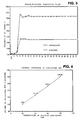
- compositions claimed are highly viscoelastic in nature. That is, they appear to be fluids (perhaps even pseudoplastic or "shear thinning") whilst in fact, they are very much solid-like.
- the degree of elasticity (or solid-like) character is indicated by the value of G′ (elastic shear modulus) while G′′ (viscous shear modulus) gives the value of the purely viscous component.
- G′ elastic shear modulus
- G′′ viscous shear modulus
- the G′ value is 10 times the viscous modulus. This indicates that what appears to be a fluid is in fact primarily a solid at "near rest" conditions.
- the figures at a frequency sweep of 0.5% are shown in Table 2.
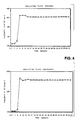
- Fig.1 is a curve of n* versus w and indicates that the material is a purely power law fluid and gives no indication of its hidden elastic nature.
- the Biozan ethylene glycol mixture is not considered to be crosslinked in the normal chemical sense of the word. That is, there is no chemical agent that causes a bond to form between chains. Rather, the origin of the solid character of these materials is believed to arise from entanglements which occur between chains. These entanglements have a statistical lifetime which gives rise to the characteristics of the elasticity present in the sample. If the entanglements last a long time and are dense, then the sample can act much like a solid.
- a Biozan/ethylene glycol mixture of the type described in Example 1 was examined for thermal conductivity, specific heat and density.
- a thin, flexible, plastic bag was filled with a quantity of the sample and placed within the test apparatus.
- the approximate in-situ dimensions were 325mm x 285mm x 54 mm.
- a glass vessel of 3 litres volumetric capacity was pre-calibrated using 2.500kg of water at ambient temperature. It was then filled to the same reference mark with a quantity of the sample.
- the density of the measured volume of ethylene glycol/biozan gel was calculated from the mass of the sample and the pre-calibrated volume of the container. The density was determined to be 1100 ⁇ 10 kg/m3.
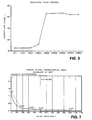
- the unsheared/sheared effect is more pronounced at the lower shear rates.
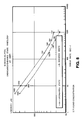
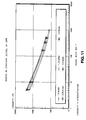
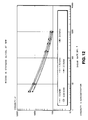
- Fig.8 which shows, for example, trial at a sheared rate of 5/11sec ⁇ 1 , the sheared state viscosity is 1500 cPS, in the unsheared state the figure is 2100 cPs, an increase of 40%.
- the respective values are 105 and 137 cPs, an increase of 30%.
- the sheared fluid viscosity will revert to unsheared state values when left static over a period of time. The effect will become noticeable after an elapsed period of around 48 hours. After this time tire rheology will start to revert to unsheared values. The effect is not progressive however, and increased periods of time do not lead to increases in the unsheared viscosity values. After periods in storage, more power will be required to start moving the fluid than is evident from the sheared state values.
- the viscosity will also vary depending on the amount of heteropolysaccharide present in the base fluid and the temperature it experiences. These effects can be seen with reference to Table 4.
- Example 2 it may be preferred to incorporate a chelating agent into the composition. This is because the compositions show increased viscosity in the presence of metal ions.
- the gelled portion of the fluid did not have the appearance of a true chemically cross-linked polymer and was fragile in nature, the fluid returning to a homogeneous state on the application of shear.
- EDTA has been used at a concentration of 200 mg/litre. It is supposed that in the mixing of the fluid for actual displacement to oilfield bundles, a concentration of about 500mg/litre (500gm/M3) EDTA (disodium salt) be used. The suggestion is based in consideration of the large metallic surface area within the bundle, plus of course, the longer time scale involved. Increased concentration of EDTA did not have any effect on the gel integrity in itself. Analysis was carried out at levels of up to 2000 mg/ litre of EDTA.
- composition is a complex fluid/solid which has the following characteristics:
- An exisiting slurry test facility at B.H.R.A. was modified for the gel trials.
- the facility consists mainly of a 4/3 Simon barman centrifugal pump and electric motor, a 2 m3 feed tank and 0.06 m3 sampling tank with diverter valve, a non-intrusive flow meter and a 5′′ I.D. x 4 m long horizontal steel pipe test section.
- a 5 psi differential pressure transducer was fitted across the test section.
- Equation (1) then becomes
- Fig.14 summarises the pertinent rheological data obtained from the viscometric tests and lists the relevant pressure drop correlations.
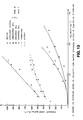
- Figure 13 compares actual pressure drop data with independent theoretical predictions obtained for water, ethylene glycol and 2 ppb gel solution.
- the water and ethylene glycol characteristic curves represent typical Newtonian fluids and as such provide a useful datum for reference. Two distinct curves have been obtained for the gel itself; one with the gel virtually unsheared thereby yielding limiting values for P.
- the data relating to the former is found to be in excellent agreement with independent pseudoplastic predictions based on the viscometric results. This confirms that during the viscometric tests, the gel has been sheared at rates which closely match those developing by pipe shear alone and which are of direct interest in this work.
- the lower values of pressure drop obtained in the second case indicate that the gel has been sheared beyond the rate which is required to establish pipe flow.
- Only the former is applicable in engineering design calculations and the appropriate pressure drop correlation is given by equation (5).
Landscapes
- Engineering & Computer Science (AREA)
- Mining & Mineral Resources (AREA)
- Geology (AREA)
- Chemical & Material Sciences (AREA)
- Life Sciences & Earth Sciences (AREA)
- Health & Medical Sciences (AREA)
- Physics & Mathematics (AREA)
- Environmental & Geological Engineering (AREA)
- General Engineering & Computer Science (AREA)
- Mechanical Engineering (AREA)
- General Life Sciences & Earth Sciences (AREA)
- Geochemistry & Mineralogy (AREA)
- Fluid Mechanics (AREA)
- Chemical Kinetics & Catalysis (AREA)
- Medicinal Chemistry (AREA)
- Polymers & Plastics (AREA)
- Organic Chemistry (AREA)
- Colloid Chemistry (AREA)
- Compositions Of Macromolecular Compounds (AREA)
Applications Claiming Priority (2)
| Application Number | Priority Date | Filing Date | Title |
|---|---|---|---|
| GB909015913A GB9015913D0 (en) | 1990-07-19 | 1990-07-19 | Thermally insulating compositions and a method of insulating pipeline bundles and pipeline riser caissons |
| GB9015913 | 1990-07-19 |
Publications (2)
| Publication Number | Publication Date |
|---|---|
| EP0467635A2 true EP0467635A2 (fr) | 1992-01-22 |
| EP0467635A3 EP0467635A3 (en) | 1992-04-01 |
Family
ID=10679358
Family Applications (1)
| Application Number | Title | Priority Date | Filing Date |
|---|---|---|---|
| EP19910306425 Withdrawn EP0467635A3 (en) | 1990-07-19 | 1991-07-16 | Thermally insulating compositions and a method of insulating pipeline bundles and pipeline riser caissons |
Country Status (4)
| Country | Link |
|---|---|
| EP (1) | EP0467635A3 (fr) |
| GB (1) | GB9015913D0 (fr) |
| IE (1) | IE912458A1 (fr) |
| NO (1) | NO912826L (fr) |
Cited By (11)
| Publication number | Priority date | Publication date | Assignee | Title |
|---|---|---|---|---|
| EP0500206A3 (en) * | 1991-01-18 | 1992-12-09 | Merck & Co. Inc. | Insulating composition |
| EP0520775A1 (fr) * | 1991-06-28 | 1992-12-30 | Monsanto Company | Solution de gomme welan dans l'éthylène glycol |
| FR2787859A1 (fr) * | 1998-12-23 | 2000-06-30 | Inst Francais Du Petrole | Riser ou colonne hybride pour le transfert de fluide |
| WO2002012776A1 (fr) | 2000-08-03 | 2002-02-14 | Stolt Offshore Sa | Faisceau de pipeline isole thermiquement |
| WO2002053869A1 (fr) | 2001-01-08 | 2002-07-11 | Stolt Offshore S.A. | Tourelle de colonne montante marine |
| WO2004009953A1 (fr) * | 2002-07-19 | 2004-01-29 | Tetra Technologies, Inc. | Fluide calorifuge |
| WO2004025076A1 (fr) * | 2002-09-12 | 2004-03-25 | Bj Services Company | Compositions d'isolation thermique et procedes d'utilisation correspondants |
| WO2004109057A3 (fr) * | 2003-06-04 | 2005-04-07 | Ythan Environmental Services L | Procede |
| GB2367315B (en) * | 2000-09-29 | 2005-04-13 | Osca Inc | Well treatment fluid |
| US7100694B2 (en) | 2001-01-08 | 2006-09-05 | Stolt Offshore S.A. | Marine riser tower |
| CN107794285A (zh) * | 2016-08-30 | 2018-03-13 | 中国石油化工股份有限公司 | 一种驱油用生物聚合物的制备方法及应用 |
Family Cites Families (3)
| Publication number | Priority date | Publication date | Assignee | Title |
|---|---|---|---|---|
| US4658898A (en) * | 1985-05-24 | 1987-04-21 | Mobil Oil Corporation | Oil reservoir permeability control using polymeric gels |
| US4717488A (en) * | 1986-04-23 | 1988-01-05 | Merck Co., Inc. | Spacer fluid |
| NL8800894A (nl) * | 1988-04-07 | 1989-11-01 | Smit Offshore Contractors | Werkwijze voor het thermisch isoleren van samengestelde pijpleidingen onder water en aldus geisoleerde pijpleiding. |
-
1990
- 1990-07-19 GB GB909015913A patent/GB9015913D0/en not_active Ceased
-
1991
- 1991-07-15 IE IE245891A patent/IE912458A1/en unknown
- 1991-07-16 EP EP19910306425 patent/EP0467635A3/en not_active Withdrawn
- 1991-07-18 NO NO91912826A patent/NO912826L/no unknown
Cited By (18)
| Publication number | Priority date | Publication date | Assignee | Title |
|---|---|---|---|---|
| AU640849B2 (en) * | 1991-01-18 | 1993-09-02 | Monsanto Company | Insulating composition |
| US5290768A (en) * | 1991-01-18 | 1994-03-01 | Merck & Co., Inc. | Welan gum-ethylene glycol insulating compositions |
| EP0500206A3 (en) * | 1991-01-18 | 1992-12-09 | Merck & Co. Inc. | Insulating composition |
| EP0520775A1 (fr) * | 1991-06-28 | 1992-12-30 | Monsanto Company | Solution de gomme welan dans l'éthylène glycol |
| AU647633B2 (en) * | 1991-06-28 | 1994-03-24 | Monsanto Company | Enhanced solubility of welan gum in ethylene glycol |
| US6869253B2 (en) | 1998-12-23 | 2005-03-22 | Institut Francais Du Petrole | Hybrid riser or pipe for fluid transfer |
| FR2787859A1 (fr) * | 1998-12-23 | 2000-06-30 | Inst Francais Du Petrole | Riser ou colonne hybride pour le transfert de fluide |
| WO2002012776A1 (fr) | 2000-08-03 | 2002-02-14 | Stolt Offshore Sa | Faisceau de pipeline isole thermiquement |
| GB2367315B (en) * | 2000-09-29 | 2005-04-13 | Osca Inc | Well treatment fluid |
| WO2002053869A1 (fr) | 2001-01-08 | 2002-07-11 | Stolt Offshore S.A. | Tourelle de colonne montante marine |
| US7100694B2 (en) | 2001-01-08 | 2006-09-05 | Stolt Offshore S.A. | Marine riser tower |
| US7104330B2 (en) | 2001-01-08 | 2006-09-12 | Stolt Offshore S.A. | Marine riser tower |
| WO2004009953A1 (fr) * | 2002-07-19 | 2004-01-29 | Tetra Technologies, Inc. | Fluide calorifuge |
| WO2004025076A1 (fr) * | 2002-09-12 | 2004-03-25 | Bj Services Company | Compositions d'isolation thermique et procedes d'utilisation correspondants |
| US7762332B2 (en) | 2002-09-12 | 2010-07-27 | Bj Services Company Llc | Method of using water-superabsorbent polymer in production tubing and pipes |
| WO2004109057A3 (fr) * | 2003-06-04 | 2005-04-07 | Ythan Environmental Services L | Procede |
| US7745379B2 (en) | 2003-06-04 | 2010-06-29 | Aubin Limited | Method of insulating a subsea structure |
| CN107794285A (zh) * | 2016-08-30 | 2018-03-13 | 中国石油化工股份有限公司 | 一种驱油用生物聚合物的制备方法及应用 |
Also Published As
| Publication number | Publication date |
|---|---|
| IE912458A1 (en) | 1992-01-29 |
| EP0467635A3 (en) | 1992-04-01 |
| NO912826L (no) | 1992-01-20 |
| GB9015913D0 (en) | 1990-09-05 |
| NO912826D0 (no) | 1991-07-18 |
Similar Documents
| Publication | Publication Date | Title |
|---|---|---|
| US10597578B2 (en) | Multifunctional foaming composition with wettability modifying, corrosion inhibitory and mineral scale inhibitory/dispersants properties for high temperature and ultra high salinity | |
| Luo et al. | Experimental research on rheological properties and proppant transport performance of GRF–CO2 fracturing fluid | |
| US9469804B2 (en) | Foaming composition with wettability modifying and corrosion inhibitory properties for high temperature and ultra-high salinity | |
| EP2964716B1 (fr) | Tensioactif viscoélastique ramifié pour acidification à haute température | |
| Mungan | Shear viscosities of ionic polyacrylamide solutions | |
| Seright et al. | Impact of gelation pH, rock permeability, and lithology on the performance of a monomer-based gel | |
| Paso et al. | Influence of n‐paraffin composition on the aging of wax‐oil gel deposits | |
| US20140221256A1 (en) | Low-temperature breaker for well fluid viscosified with a polyacrylamide | |
| Zaitoun et al. | Thin polyacrylamide gels for water control in high-permeability production wells | |
| US9796900B2 (en) | Alkaline persulfate for low-temperature breaking of polymer viscosified fluid | |
| US20140256604A1 (en) | Cationic viscoelastic surfactant with non-cationic corrosion inhibitor and organic anion for acidizing | |
| Sifferman | Flow properties of difficult-to-handle waxy crude oils | |
| IE912458A1 (en) | Thermally insulating compositions and a method of insulating¹pipeline bundles and pipeline riser caissons | |
| US3663477A (en) | Dilatant aqueous polymer solutions | |
| Imqam et al. | Green Dry Powder Friction Reducers Improve Environmental Aspects and Reduce Hydraulic Fracturing Costs | |
| EP1644609B1 (fr) | Procede d'isolation thermique de tubes | |
| Biheri et al. | Experimental Study: Determine the Impact of Temperature on Proppant Settling Velocity Utilizing HVFR and Linear Guar | |
| Ge et al. | Comparative Study of Anionic and Cationic High Viscosity Friction Reducers in High-TDS Marcellus Shale Formation Water | |
| Bataweel | Enhanced oil recovery in high salinity high temperature reservoir by chemical flooding | |
| US20240166942A1 (en) | Friction Reducers For Dissolved Solids Tolerance | |
| Am Kim et al. | Drag reduction and mechanical degradation of poly (ethylene oxide) in seawater | |
| US3434485A (en) | Transportation of viscous liquids | |
| Amroun et al. | Alteration of reservoir wettability due to asphaltene deposition in Rhourd-Nouss Sud Est Field, Algeria | |
| Suleimanov et al. | Slippage effect during gassed oil displacement | |
| WO2014158192A1 (fr) | Gonflement accéléré d'élastomères pouvant gonfler dans une huile dans un puits |
Legal Events
| Date | Code | Title | Description |
|---|---|---|---|
| PUAI | Public reference made under article 153(3) epc to a published international application that has entered the european phase |
Free format text: ORIGINAL CODE: 0009012 |
|
| AK | Designated contracting states |
Kind code of ref document: A2 Designated state(s): BE DE DK GB NL |
|
| PUAL | Search report despatched |
Free format text: ORIGINAL CODE: 0009013 |
|
| AK | Designated contracting states |
Kind code of ref document: A3 Designated state(s): BE DE DK GB NL |
|
| 17P | Request for examination filed |
Effective date: 19920505 |
|
| 17Q | First examination report despatched |
Effective date: 19930209 |
|
| STAA | Information on the status of an ep patent application or granted ep patent |
Free format text: STATUS: THE APPLICATION HAS BEEN WITHDRAWN |
|
| 18W | Application withdrawn |
Withdrawal date: 19940208 |