EP0468702A2 - Verfahren zur Reinigung von Hepatitis-A Virus-Kapsiden - Google Patents
Verfahren zur Reinigung von Hepatitis-A Virus-Kapsiden Download PDFInfo
- Publication number
- EP0468702A2 EP0468702A2 EP91306541A EP91306541A EP0468702A2 EP 0468702 A2 EP0468702 A2 EP 0468702A2 EP 91306541 A EP91306541 A EP 91306541A EP 91306541 A EP91306541 A EP 91306541A EP 0468702 A2 EP0468702 A2 EP 0468702A2
- Authority
- EP
- European Patent Office
- Prior art keywords
- hav
- capsids
- exchange chromatography
- nacl
- anion exchange
- Prior art date
- Legal status (The legal status is an assumption and is not a legal conclusion. Google has not performed a legal analysis and makes no representation as to the accuracy of the status listed.)
- Withdrawn
Links
Images

Classifications
-
- A—HUMAN NECESSITIES
- A61—MEDICAL OR VETERINARY SCIENCE; HYGIENE
- A61K—PREPARATIONS FOR MEDICAL, DENTAL OR TOILETRY PURPOSES
- A61K39/00—Medicinal preparations containing antigens or antibodies
- A61K39/12—Viral antigens
- A61K39/125—Picornaviridae, e.g. calicivirus
-
- A—HUMAN NECESSITIES
- A61—MEDICAL OR VETERINARY SCIENCE; HYGIENE
- A61K—PREPARATIONS FOR MEDICAL, DENTAL OR TOILETRY PURPOSES
- A61K39/00—Medicinal preparations containing antigens or antibodies
- A61K39/12—Viral antigens
-
- A—HUMAN NECESSITIES
- A61—MEDICAL OR VETERINARY SCIENCE; HYGIENE
- A61P—SPECIFIC THERAPEUTIC ACTIVITY OF CHEMICAL COMPOUNDS OR MEDICINAL PREPARATIONS
- A61P31/00—Antiinfectives, i.e. antibiotics, antiseptics, chemotherapeutics
- A61P31/12—Antivirals
-
- C—CHEMISTRY; METALLURGY
- C12—BIOCHEMISTRY; BEER; SPIRITS; WINE; VINEGAR; MICROBIOLOGY; ENZYMOLOGY; MUTATION OR GENETIC ENGINEERING
- C12N—MICROORGANISMS OR ENZYMES; COMPOSITIONS THEREOF; PROPAGATING, PRESERVING, OR MAINTAINING MICROORGANISMS; MUTATION OR GENETIC ENGINEERING; CULTURE MEDIA
- C12N2770/00—MICROORGANISMS OR ENZYMES; COMPOSITIONS THEREOF; PROPAGATING, PRESERVING, OR MAINTAINING MICROORGANISMS; MUTATION OR GENETIC ENGINEERING; CULTURE MEDIA ssRNA viruses positive-sense
- C12N2770/00011—Details
- C12N2770/32011—Picornaviridae
- C12N2770/32411—Hepatovirus, i.e. hepatitis A virus
- C12N2770/32434—Use of virus or viral component as vaccine, e.g. live-attenuated or inactivated virus, VLP, viral protein
-
- C—CHEMISTRY; METALLURGY
- C12—BIOCHEMISTRY; BEER; SPIRITS; WINE; VINEGAR; MICROBIOLOGY; ENZYMOLOGY; MUTATION OR GENETIC ENGINEERING
- C12N—MICROORGANISMS OR ENZYMES; COMPOSITIONS THEREOF; PROPAGATING, PRESERVING, OR MAINTAINING MICROORGANISMS; MUTATION OR GENETIC ENGINEERING; CULTURE MEDIA
- C12N2770/00—MICROORGANISMS OR ENZYMES; COMPOSITIONS THEREOF; PROPAGATING, PRESERVING, OR MAINTAINING MICROORGANISMS; MUTATION OR GENETIC ENGINEERING; CULTURE MEDIA ssRNA viruses positive-sense
- C12N2770/00011—Details
- C12N2770/32011—Picornaviridae
- C12N2770/32411—Hepatovirus, i.e. hepatitis A virus
- C12N2770/32451—Methods of production or purification of viral material
Definitions
- Hepatitis A virus is a morphologically, biochemically, and immunologically distinct picornavirus that is the etiological agent of infectious hepatitis in humans.
- Applicants have discovered methods of obtaining extremely pure HAV capsids without the use of detergents or exogenous enzymes. Furthermore, the methods disclosed herein can be readily scaled to commercial production levels. In addition, applicants have developed these methods for MRC-5 human diploid fibroblast cell culture , which are certified by the Food and Drug Administration for use in human vaccine production.
- Figure 1 electron micrograph (magnification 130,000 x) of the effluent from the first anion exchange chromatography step comprising HAV capsids (c) and 30 nm particles (p).
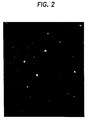
- Figure 2 electron micrograph (magnification 130,000 x) of the eluate from the second anion exchange chromatographic step comprising HAV capsids (c) substantially free of the 30 nm particles.
- the commercially adaptable purification processes of the present invention encompass the purification of any HAV capsids, whether derived from attenuated or virulent HAV, produced in any cell line or culture susceptible to infection by HAV.
- all HAV capsids whether empty (without viral nucleic acids) or complete (containing viral nucleic acids) are encompassed within the process of the present invention.
- HAV variant P18 of strain CR326F was used to infect MRC-5 cells in this invention, for merely illustrative purposes.
- P18CR326F is an attenuated HAV strain.
- Other strains and/or serotypes of HAV capsids are encompassed by this invention, including HAV strains that can be attenuated by conventional techniques.
- Other suitable cell lines for HAV propagation include Vero, FL, WI-38 and FRhK6 cells.
- any cell line such as any human diploid fibroblast cell line, can serve as a host cell for HAV provided that it is susceptible to HAV infection.
- the preferred cell line is MRC-5.
- HAV-infected cells are grown and harvested by any one or more of a variety of conventional techniques. Growth conditions, including the selection of media, depend on the requirements of the cell line employed. MRC-5 cells are anchorage dependent, therefore, attachment to a substratum is necessary, which requires detachment of the cells by physical, chemical or enzymatic means for harvesting. Other cell types useful for the purposes of this invention include those capable of anchorage independent growth, which are usually harvested by centrifugation.
- the HAV-infected cells are lysed by any one or more of a variety of techniques, including but not limited to exposure to hypotonic buffer, vortexing, freeze-thaw cycling, and sonication.
- the resulting suspension of disrupted cells, whether the cells were disrupted by any one or combination of cell lysis techniques, is hereinafter referred to as a "cell lysate".
- sonication is the preferred lysis technique for sufficiently complete lysis of HAV-infected MRC-5 cells resulting in efficient release of HAV capsids from the cell.
- lysis Any release of HAV capsids from a disrupted host cell is hereinafter referred to as "lysis".) It is thought that sonication efficiently releases HAV capsids from the subcellular pseudocrystalline state within the cell. Even more preferred is a combination of sonication and one or more other lysis techniques such as hypotonic lysis, vortexing or freeze-thaw cycling. Applicants most prefer the following steps in lysing HAV infected MRC-5 cells:
- the cell lysate is diluted with buffer and then subjected to organic extraction. Such extraction removes, among other contaminants, lipid and lipid-like substances. Accordingly, the cell lysate is diluted with any one of a variety of buffers, including phosphate buffered saline, TRIS, carbonate, bicarbonate, or acetate buffers. Since HAV capsids are probably acid stable, buffers in an acid pH range are also feasible substitutes. Applicants have discovered that the presence of MgCl2 in the buffer substantially lowers HAV capsid yields.
- the most preferable buffer is TNE (10 mM TRIS-HCl pH 7.5, 150 mM NaCl, 1 mM EDTA).
- Cell lysates diluted with buffer are then extracted by the addition of a mixture of a halogenated lower alkane, such as methylene chloride, chloroform, tetrachloroethane, or the like, and an antifoaming agent, such as isoamyl alcohol.
- a halogenated lower alkane such as methylene chloride, chloroform, tetrachloroethane, or the like
- an antifoaming agent such as isoamyl alcohol.
- lower alkane contains 1-6 carbon atoms.
- the volume-to-volume ratio of halogenated lower alkane to antifoaming agent is between approximately 15:1 and 50:1, preferably between approximately 20:1 and 30:1.
- Applicants have found that methylene chloride is superior to chloroform at this stage.
- HAV capsids are predominantly found in the aqueous phase and the aqueous/organic interface.
- the sonicate is organically extracted by the addition of an equal volume of methylene chloride: isoamyl alcohol (24:1,v/v) with vortexing for 1 minute, and is centrifuged at 3,000 rpm for 10 minutes at 20°C in an IEC centrifuge (3,000 x g) to achieve aqueous/organic phase separation.
- the aqueous phase is reserved, the organic phase discarded and the interface is reextracted with a volume of TNE buffer equal to one third of the original sample volume, followed by vortexing and centrifugation as above.
- the two aqueous phases are pooled and the volume measured, yielding HAV capsids in organically extracted cell lysates.
- the next step involves concentration with a water-soluble synthetic polymer effective to precipitate proteins.
- Applicants prefer to concentrate the organically extracted cell lysates (which contain HAV capsids) with polyethylene glycol (PEG) having a molecular weight of between approximately 2,000 daltons and 12,000 daltons.
- PEG polyethylene glycol
- NaCl is added to the cell lysate to a final concentration of between approximately 150 mM and 500 mM.
- PEG is then added to a final concentration of between approximately 2% (w/v) and 10% (w/v). It is most preferable to adjust the organically extracted cell lysate to about 500 mM NaCl, then add PEG (8000 mw) to about 4% (w/v).
- the resulting 4% PEG precipitated cell lysate is centrifuged, the supernatant is discarded and the pellet resuspended for further processing.
- the resuspended PEG pellet is preferably sonicated before the second organic extraction, described below.
- the resuspended, sonicated PEG pellet from above is extracted by the addition of a mixture of a halogenated lower alkane, such as chloroform, and an antifoaming agent, such as isoamyl alcohol.
- a halogenated lower alkane such as chloroform
- an antifoaming agent such as isoamyl alcohol.
- the volume-to-volume ratio of halogenated lower alkane to antifoaming agent is between approximately 15:1 and 50:1, preferably between about 20:1 and 30:1.
- this second organic extraction substantially enhances purity of the final HAV product. Futhermore, in contrast to the first organicextraction applicants have found that chloroform is superior to methylene chloride in the second organic extraction.
- the resuspended sonicated PEG pellet is then organically extracted by the addition of an equal volume of chloroform/isoamyl alcohol (24:1,v/v) with vigorous vortexing. This extract is then clarified by centrifugation at 4,000 g for 10 minutes at 20°C. The aqueous phase is reserved, the interface and organic phase are reextracted with a volume of TNE buffer equal to one third of the original sample volume, and both aqueous phases are combined, yielding extracted PEG pellet.
- anion exchange chromatography on a resin, gel or matrix.
- Typical anion exchange matrices include, but are not limited to, DEAE cellulose; DEAE agarose; DEAE Biogel; DEAE dextran; DEAE Sephadex; DEAE Sepharose; Aminohexyl Sepharose; Ecteola cellulose; TEAE cellulose; QAE cellulose; Mono-Q; or Benzoylated diethylaminoethyl cellulose.
- the preferred anion exchange matrix is DEAE Sepharose CL-6B (Pharmacia).
- General background information on ion exchange chromatography can be found, for example, in E. A. Peterson, "Cellulosic Ion Exchangers" in Work, T. S. et al. Laboratory Techniques in Biochemistry and Molecular Biology Volume 2, Part II, pages 223 et seq . North-Holland 1970.
- NaCl is added to the extract to a final concentration between approximately 0.3 M to 0.4 M, with 0.35 M NaCl preferred.
- the extract is then passed through DEAE Sepharose CL-6B by column chromatography.
- the HAV capsids pass through the DEAE sepharose CL-6B without becoming adsorbed to it, while contaminants including cellular nucleic acids, are adsorbed onto the DEAE Sepharose CL-6B and remain in the column.
- the effluent (containing the HAV capsids) is collected, and consists of HAV capsids substantially free from cellular nucleic acids.
- anion exchange step is the removal of cellular DNA, RNA, and other impurities, from the HAV capsids.
- anion exchange can be substituted by the addition and removal of DNAse, or by alternative treatments designed to remove DNA or other nucleic acids at this stage of the purification process.
- the effluent appears to be comprised of HAV capsids (both empty and complete) and diffuse particles of about 30 nm when observed by electron microscopy (see Figure 1).
- the effluent from the above anion exchange chromatography which contains HAV capsids is subjected to a second anion exchange chromatographic step to further remove contaminating cellular components.
- the effluent is diluted with 10 mM TRIS, 1 mM EDTA, pH 7.5, to yield a NaCl concentration between approximately 0.1 M and 0.2 M, with 0.15 M NaCl preferred.
- the diluted effluent is passed through an anion exchange matrix.
- Typical anion echange matrices include, but are not limited to: DEAE cellulose; DEAE agarose; DEAE biogel; DEAE deritran; DEAE Sephadex; DEAE Sepharose; Aminohexyl Sepharose; Ecteola cellulose; TEAE cellulose; QAE cellulose; Mono Q; or
- Benzoylated diethylaminoethyl cellulose is Benzoylated diethylaminoethyl cellulose.
- the preferred anion exchange matrix is DEAE Sepharose CL-6B (Pharmacea).
- HAV capsids adhere to the anion exchange matrix while certain remaining contaminants pass through the matrix.
- the column is washed with several column volumes of 0.15 M NaCl to further remove remaining contaminants.
- the HAV capsids are eluted from the anion exchange column using one column volume plus the original sample volume of 0.35 M NaCl.
- this second anion exchange step is the removal of particles which appear by electron microscopy to be diffuse, and about 30nm in diameter, that are believed to be composed of cellular carbohydrate (see Figure 2).
- a final step of gel filtration chromatography follows anion exchange chromatography.
- Sepharose CL-4B Pulsua
- numerous other types of gel filtration matrices can be substituted. See, for example, Fischer, L., "Gel Filtration . Chromatography," in Work, T. S. et al. Laboratory Techniques in Biochemistry and Molecular Biology Elsevier (1980).
- HAV capsids for vaccine use.
- treatment with formalin, sterile filtration and adsorption to carriers or adjuvants are the typical basic steps for preparing a formalin-inactivated vaccine.
- HAV can be inactivated by heat, pH changes, treatment with organic solvents, ultraviolet irradiation, or exposure to formalin.
- Attenuated variants or strains may be isolated by serial passage in cells, animals, or by other methods. See, for example, Provost, P.J. et al. Proc. Soc. Exp. Biol. Med. 170 ,8 (1982); and Provost, P.J. et al. J. Med. Virol. 20 , 165 (1986), for details on attenuation.
- the purification methods of the present invention are readily and easily adaptable to attenuated or virulent HAV strains.
- MRC-5 cells infected with an attenuated HAV (variant P18 of strain CR326F) were harvested by scraping the cells from the culture substratum, collecting the cells in polypropylene tubes, and freezing at -70°C, at four roller bottle equivalents of cells per tube.
- Two tubes were thawed by the addition of 3 mL of lysis buffer per tube (10 mM TRIS-HCl pH 7.5, 10 mM NaCl, 1.5 mM MgCl2) and by vigorous vortexing (10-15 seconds at setting 10 in a Vortex-Genie) and were then held on wet ice for 15 minutes.
- the lysates were twice frozen in an ethanol-dry ice bath and thawed in a 37°C water bath, and each tube was sonicated three times for 30 seconds at the maximum wattage output of a cup horn sonicator with a circulating ice water bath (Branson sonifier Cell Disrupter 185 and Ultrasonics cup horn).
- the sonicates were pooled and assayed for protein using a Bradford protein assay (BioRad) with BSA (Bovine Serum Albumin) as the protein concentration standard, and then adjusted to 3 mg protein per mL using TNE buffer (10 mM TRIS-HCl pH 7.5, 150 mM NaCl, 1 mM EDTA).
- the sonicate was organically extracted by the addition of an equal volume of methylene chloride:isoamyl alcohol (24:1,v/v) with vortexing for 1 minute and was centrifuged at 3,000 rpm for 10 minutes at 20°C in an IEC centrifuge (3,000 x g) to achieve organic/aqueous phase separation.
- the aqueous phase was reserved, the organic phase discarded and the interface was reextracted with a volume of TNE buffer equal to one third of the original sample volume, by vortexing and centrifugation as above.
- the two aqueous phases were pooled and the volume measured, yielding HAV capsids in organically extracted cell lysates.
- HAV capsids in the organically extracted cell lysates were concentrated by polyethylene glycol precipitation (PEG). Lysates were adjusted to 500 mM NaCl and then made 4% (w/v) of PEG 8000 by the addition, with vigorous vortexing, of 40% (w/v) PEG 8000 (prepared in 10 mM TRIS-HCl pH 7.5, 500 mM NaCl, 1 mM EDTA). The 4% PEG lysates were held at 4°C for 1 hour and then centrifuged at 1,500 x g for 10 minutes at 4°C in a Beckman HB-4 rotor.
- PEG polyethylene glycol precipitation
- the supernatant was removed and the PEG pellet resuspended by vigorous vortexing in 10 mL of 10 mM TRIS-HCl pH 7.5, 50 mM NaCl, 10 mM EDTA, and by sonication 3 times for 30 seconds each time at maximum wattage output in a cup horn sonicator with a circulating ice water bath as described above.
- the sonicated, resuspended PEG pellet was organically extracted by the addition of an equal volume of chloroform:isoamyl alcohol (24:1,v/v) with vigorous vortexing, and then clarified by centrifugation at 4,000 x g for 10 minutes at 20°C.
- aqueous phase was reserved, the interface and organic phase were reextracted with a volume of TNE equal to one third of the sonicated, resuspended PEG pellet volume and both aqueous phases were combined, yielding resuspended PEG pellet.
- the resuspended PEG pellet was adjusted to 0.35 M NaCl and chromatographed through two 2 mL DEAE-Sepharose CL-6B (Pharmacia) columns linked in series, at a pump flow rate of 3 mL/minute.
- the column was prepared in Kontes Flex column (1.0 x 5.0 cm) and equilibrated in 10 mM TRIS-HCl pH 7.5, 0.35 M NaCl, 1 mM EDTA. The first 15 mL of eluate, which contain the HAV capsids, were collected.
- the eluate was diluted to a NaCl concentration of 0.15 M using 10 mM TRIS, 1 mM EDTA, pH 7.5, and then chromatographed through a 2 mL DEAE-Sepharose CL-6B (Pharmacia) column at a pump flow rate of 3 mL/minute.
- the column was prepared in a Kontes Flex column (1.0 cm x 5.0 cm) and equilibrated in 10 mM TRIS, 0.15 M NaCl, 0.1 mM EDTA, pH 7.5.
- the column was washed with several column volumes of 10 mM TRIS, 0.15 M NaCl, 0.1 mM EDTA, pH 7.5.
- HAV capsids were eluted using 10 mM TRIS, 0.35 M NaCl, 1 mM EDTA, pH 7.5.
Landscapes
- Health & Medical Sciences (AREA)
- Life Sciences & Earth Sciences (AREA)
- Virology (AREA)
- Veterinary Medicine (AREA)
- Animal Behavior & Ethology (AREA)
- Chemical & Material Sciences (AREA)
- Public Health (AREA)
- General Health & Medical Sciences (AREA)
- Medicinal Chemistry (AREA)
- Pharmacology & Pharmacy (AREA)
- Immunology (AREA)
- Microbiology (AREA)
- Mycology (AREA)
- Epidemiology (AREA)
- Organic Chemistry (AREA)
- Nuclear Medicine, Radiotherapy & Molecular Imaging (AREA)
- Oncology (AREA)
- General Chemical & Material Sciences (AREA)
- Chemical Kinetics & Catalysis (AREA)
- Communicable Diseases (AREA)
- Medicines Containing Antibodies Or Antigens For Use As Internal Diagnostic Agents (AREA)
Applications Claiming Priority (2)
| Application Number | Priority Date | Filing Date | Title |
|---|---|---|---|
| US55502090A | 1990-07-18 | 1990-07-18 | |
| US555020 | 1990-07-18 |
Publications (2)
| Publication Number | Publication Date |
|---|---|
| EP0468702A2 true EP0468702A2 (de) | 1992-01-29 |
| EP0468702A3 EP0468702A3 (en) | 1992-02-05 |
Family
ID=24215654
Family Applications (1)
| Application Number | Title | Priority Date | Filing Date |
|---|---|---|---|
| EP19910306541 Withdrawn EP0468702A3 (en) | 1990-07-18 | 1991-07-18 | Novel process for purification of hepatitis-a virus capsids |
Country Status (3)
| Country | Link |
|---|---|
| EP (1) | EP0468702A3 (de) |
| JP (1) | JPH0665095A (de) |
| CA (1) | CA2047041A1 (de) |
Cited By (6)
| Publication number | Priority date | Publication date | Assignee | Title |
|---|---|---|---|---|
| EP0583142A2 (de) | 1992-08-07 | 1994-02-16 | Merck & Co. Inc. | Hepatitis-A-Virus-Impfstoffe |
| FR2696748A1 (fr) * | 1992-10-14 | 1994-04-15 | Pasteur Merieux Serums Vacc | Procédé de préparation d'antigènes et de vaccins de l'hépatite A (HAV). |
| US5559113A (en) * | 1992-01-10 | 1996-09-24 | Institut National De La Sante Et De La Recherche Medicale | Imidazole compounds and their therapeutic applications |
| US6194210B1 (en) | 1994-03-08 | 2001-02-27 | Merck & Co., Inc. | Hepatitis A virus culture process |
| USRE37303E1 (en) * | 1992-01-10 | 2001-07-31 | Institut National Del La Sante Et De La Recherche Medicale | Imidazole compounds and their therapeutic applications |
| EP0841942B2 (de) † | 1995-08-01 | 2007-12-12 | Sanofi Pasteur | Verfahren zur industriellen herstellung eines japanischen enkephalitis impfstoffes, und so erhaltener impfstoff |
Families Citing this family (1)
| Publication number | Priority date | Publication date | Assignee | Title |
|---|---|---|---|---|
| JP2024004020A (ja) * | 2022-06-28 | 2024-01-16 | Kmバイオロジクス株式会社 | A型肝炎ウイルスのクロマトグラフィー精製方法 |
Family Cites Families (3)
| Publication number | Priority date | Publication date | Assignee | Title |
|---|---|---|---|---|
| FR2398504A1 (fr) * | 1977-07-29 | 1979-02-23 | Tours Inst Virologie | Culture de virus de l'hepatite a, in vitro. application a la production d'un antigene reactif, d'immunserums specifiques et de vaccins contre l'hepatite a |
| NZ225583A (en) * | 1987-08-06 | 1991-07-26 | Merck & Co Inc | Process for purifying hepatitis a virions (hav) |
| JPH0751513B2 (ja) * | 1988-04-28 | 1995-06-05 | 国立予防衛生研究所長 | A型肝炎ワクチン |
-
1991
- 1991-07-15 CA CA002047041A patent/CA2047041A1/en not_active Abandoned
- 1991-07-18 JP JP3177934A patent/JPH0665095A/ja active Pending
- 1991-07-18 EP EP19910306541 patent/EP0468702A3/en not_active Withdrawn
Cited By (11)
| Publication number | Priority date | Publication date | Assignee | Title |
|---|---|---|---|---|
| US5559113A (en) * | 1992-01-10 | 1996-09-24 | Institut National De La Sante Et De La Recherche Medicale | Imidazole compounds and their therapeutic applications |
| US5708171A (en) * | 1992-01-10 | 1998-01-13 | Institut National De La Sante Et De La Recherche Medicale | Imidazole derivatives for pharmaceutical use |
| USRE37303E1 (en) * | 1992-01-10 | 2001-07-31 | Institut National Del La Sante Et De La Recherche Medicale | Imidazole compounds and their therapeutic applications |
| EP0583142A2 (de) | 1992-08-07 | 1994-02-16 | Merck & Co. Inc. | Hepatitis-A-Virus-Impfstoffe |
| WO1994003589A3 (en) * | 1992-08-07 | 1994-03-31 | Merck & Co Inc | Hepatitis a virus vaccine |
| EP0583142A3 (de) * | 1992-08-07 | 1994-04-13 | Merck & Co Inc | |
| FR2696748A1 (fr) * | 1992-10-14 | 1994-04-15 | Pasteur Merieux Serums Vacc | Procédé de préparation d'antigènes et de vaccins de l'hépatite A (HAV). |
| EP0593339A1 (de) | 1992-10-14 | 1994-04-20 | PASTEUR MERIEUX SERUMS ET VACCINS, Société Anonyme : | Verfahren zur Herstellung von Hepatitis Antigenen und Impfstoffen |
| US5731187A (en) * | 1992-10-14 | 1998-03-24 | Pasteur Merteux Serums Et Vaccins Societe Anonyme | Process for preparing hepatitis A (HAV) antigens and vaccines |
| US6194210B1 (en) | 1994-03-08 | 2001-02-27 | Merck & Co., Inc. | Hepatitis A virus culture process |
| EP0841942B2 (de) † | 1995-08-01 | 2007-12-12 | Sanofi Pasteur | Verfahren zur industriellen herstellung eines japanischen enkephalitis impfstoffes, und so erhaltener impfstoff |
Also Published As
| Publication number | Publication date |
|---|---|
| CA2047041A1 (en) | 1992-01-19 |
| JPH0665095A (ja) | 1994-03-08 |
| EP0468702A3 (en) | 1992-02-05 |
Similar Documents
| Publication | Publication Date | Title |
|---|---|---|
| EP0302692B1 (de) | Verfahren zur Reinigung von Hepatitis-A-Virionen | |
| Goudsmit et al. | The role of BK virus in acute respiratory tract disease and the presence of BKV DNA in tonsils | |
| Gottlieb et al. | Studies on macrophage RNA involved in antibody production. | |
| Gerlich et al. | Specificity and localization of the hepatitis B virus-associated protein kinase | |
| US5151023A (en) | Hepatitis a,b-combined adjuvanted vaccine | |
| US20140004145A1 (en) | Purification of virus like particles | |
| US5607851A (en) | Process for purifying hepatitis a virus (HAV), and vaccine compositions containing hepatitis a virus | |
| EP0118885B1 (de) | Verfahren zur Reinigung des Hepatitis-B-Virus-Oberflächenantigens | |
| Sedwick et al. | Nucleic acid of rubella virus and its replication in hamster kidney cells | |
| Schmidt et al. | Rubella complement-fixing antigens derived from the fluid and cellular phases of infected BHK-21 cells: extraction of cell-associated antigen with alkaline buffers | |
| EP0468702A2 (de) | Verfahren zur Reinigung von Hepatitis-A Virus-Kapsiden | |
| JPH03191789A (ja) | 百日咳菌からの69000ダルトンの抗原性タンパク質の精製方法 | |
| Gilead et al. | Characterization of the Tumorlike (T) Antigen Induced by Type 12 Adenovirus: I. Purification of the Antigen from Infected KB Cells and a Hamster Tumor Cell Line | |
| JPH0625069B2 (ja) | B型肝炎ワクチン製造方法 | |
| EP0120922B1 (de) | Lektin aufweisende antivirale impfstoffe für haustiere und deren herstellungsverfahren | |
| JPH06279317A (ja) | A型肝炎(hav)の抗原およびワクチンの製造方法 | |
| RO113308B1 (ro) | PROCEDEU DE PURIFICARE A ANTIGENULUI DE SUPRAFATA AL VIRUSULUI HEPATITEI B, CUPRINZAND PEPTIDA preS2 | |
| CN100467062C (zh) | 制备纯化的甲型肝炎病毒体和疫苗制剂的方法 | |
| JP2002527105A (ja) | ワクチン | |
| HK32794A (en) | Novel process for purification of hepatitis a virions | |
| RO111472B1 (ro) | Procedeu de purificare a capsidelor virusului de hepatită A | |
| US7344839B2 (en) | Virus preparations and methods | |
| Garger et al. | Use of RNA probes to detect plant RNA viruses | |
| Kalf et al. | [65] The isolation of DNA from mitochondria | |
| CN120700002A (zh) | 携带polyUC的重组寨卡病毒及其应用 |
Legal Events
| Date | Code | Title | Description |
|---|---|---|---|
| PUAI | Public reference made under article 153(3) epc to a published international application that has entered the european phase |
Free format text: ORIGINAL CODE: 0009012 |
|
| PUAL | Search report despatched |
Free format text: ORIGINAL CODE: 0009013 |
|
| AK | Designated contracting states |
Kind code of ref document: A2 Designated state(s): CH DE FR GB IT LI NL |
|
| AK | Designated contracting states |
Kind code of ref document: A3 Designated state(s): CH DE FR GB IT LI NL |
|
| 17P | Request for examination filed |
Effective date: 19920706 |
|
| STAA | Information on the status of an ep patent application or granted ep patent |
Free format text: STATUS: THE APPLICATION HAS BEEN WITHDRAWN |
|
| 18W | Application withdrawn |
Withdrawal date: 19930712 |