EP0469689A2 - Verfahren zur Herstellung eines Bisphenols - Google Patents
Verfahren zur Herstellung eines Bisphenols Download PDFInfo
- Publication number
- EP0469689A2 EP0469689A2 EP91201982A EP91201982A EP0469689A2 EP 0469689 A2 EP0469689 A2 EP 0469689A2 EP 91201982 A EP91201982 A EP 91201982A EP 91201982 A EP91201982 A EP 91201982A EP 0469689 A2 EP0469689 A2 EP 0469689A2
- Authority
- EP
- European Patent Office
- Prior art keywords
- bisphenol
- acid
- phenol
- reaction product
- product mixture
- Prior art date
- Legal status (The legal status is an assumption and is not a legal conclusion. Google has not performed a legal analysis and makes no representation as to the accuracy of the status listed.)
- Granted
Links
- IISBACLAFKSPIT-UHFFFAOYSA-N bisphenol A Chemical compound C=1C=C(O)C=CC=1C(C)(C)C1=CC=C(O)C=C1 IISBACLAFKSPIT-UHFFFAOYSA-N 0.000 title claims abstract description 71
- 229930185605 Bisphenol Natural products 0.000 title claims abstract description 30
- 238000000034 method Methods 0.000 title claims abstract description 26
- 238000004519 manufacturing process Methods 0.000 title claims description 9
- OKTJSMMVPCPJKN-UHFFFAOYSA-N Carbon Chemical compound [C] OKTJSMMVPCPJKN-UHFFFAOYSA-N 0.000 claims abstract description 41
- 229910052799 carbon Inorganic materials 0.000 claims abstract description 32
- 239000003054 catalyst Substances 0.000 claims abstract description 21
- 230000002378 acidificating effect Effects 0.000 claims abstract description 19
- 239000003463 adsorbent Substances 0.000 claims abstract description 19
- 239000003456 ion exchange resin Substances 0.000 claims abstract description 18
- 229920003303 ion-exchange polymer Polymers 0.000 claims abstract description 18
- NWUYHJFMYQTDRP-UHFFFAOYSA-N 1,2-bis(ethenyl)benzene;1-ethenyl-2-ethylbenzene;styrene Chemical compound C=CC1=CC=CC=C1.CCC1=CC=CC=C1C=C.C=CC1=CC=CC=C1C=C NWUYHJFMYQTDRP-UHFFFAOYSA-N 0.000 claims abstract description 15
- 238000006243 chemical reaction Methods 0.000 claims abstract description 15
- 150000001728 carbonyl compounds Chemical class 0.000 claims abstract description 13
- 150000002989 phenols Chemical class 0.000 claims abstract description 13
- ISWSIDIOOBJBQZ-UHFFFAOYSA-N Phenol Chemical compound OC1=CC=CC=C1 ISWSIDIOOBJBQZ-UHFFFAOYSA-N 0.000 claims description 48
- CSCPPACGZOOCGX-UHFFFAOYSA-N Acetone Chemical group CC(C)=O CSCPPACGZOOCGX-UHFFFAOYSA-N 0.000 claims description 16
- 239000007795 chemical reaction product Substances 0.000 claims description 15
- 239000000203 mixture Substances 0.000 claims description 14
- 239000012452 mother liquor Substances 0.000 claims description 6
- LSNNMFCWUKXFEE-UHFFFAOYSA-M Bisulfite Chemical compound OS([O-])=O LSNNMFCWUKXFEE-UHFFFAOYSA-M 0.000 claims description 5
- 238000002425 crystallisation Methods 0.000 claims description 5
- 230000008025 crystallization Effects 0.000 claims description 5
- 150000002576 ketones Chemical class 0.000 claims description 5
- 150000001299 aldehydes Chemical class 0.000 claims description 4
- 239000002253 acid Substances 0.000 abstract description 33
- VPWNQTHUCYMVMZ-UHFFFAOYSA-N 4,4'-sulfonyldiphenol Chemical class C1=CC(O)=CC=C1S(=O)(=O)C1=CC=C(O)C=C1 VPWNQTHUCYMVMZ-UHFFFAOYSA-N 0.000 abstract description 8
- 150000007513 acids Chemical class 0.000 abstract description 3
- 238000009833 condensation Methods 0.000 abstract description 3
- 230000005494 condensation Effects 0.000 abstract description 3
- 238000002360 preparation method Methods 0.000 abstract description 3
- 238000005336 cracking Methods 0.000 abstract description 2
- 230000002000 scavenging effect Effects 0.000 abstract description 2
- 238000000746 purification Methods 0.000 abstract 1
- 229940106691 bisphenol a Drugs 0.000 description 24
- WHOZNOZYMBRCBL-OUKQBFOZSA-N (2E)-2-Tetradecenal Chemical compound CCCCCCCCCCC\C=C\C=O WHOZNOZYMBRCBL-OUKQBFOZSA-N 0.000 description 13
- 229940044654 phenolsulfonic acid Drugs 0.000 description 13
- 239000000047 product Substances 0.000 description 12
- 239000011347 resin Substances 0.000 description 10
- 229920005989 resin Polymers 0.000 description 10
- XLYOFNOQVPJJNP-UHFFFAOYSA-N water Substances O XLYOFNOQVPJJNP-UHFFFAOYSA-N 0.000 description 8
- 150000001412 amines Chemical class 0.000 description 7
- -1 cycloaliphatic Chemical group 0.000 description 7
- 238000001179 sorption measurement Methods 0.000 description 7
- 235000019647 acidic taste Nutrition 0.000 description 5
- 239000007858 starting material Substances 0.000 description 5
- 239000006228 supernatant Substances 0.000 description 5
- WUQYBSRMWWRFQH-UHFFFAOYSA-N 2-prop-1-en-2-ylphenol Chemical compound CC(=C)C1=CC=CC=C1O WUQYBSRMWWRFQH-UHFFFAOYSA-N 0.000 description 4
- 125000003118 aryl group Chemical group 0.000 description 4
- ZWEHNKRNPOVVGH-UHFFFAOYSA-N 2-Butanone Chemical compound CCC(C)=O ZWEHNKRNPOVVGH-UHFFFAOYSA-N 0.000 description 3
- WEVYAHXRMPXWCK-UHFFFAOYSA-N Acetonitrile Chemical compound CC#N WEVYAHXRMPXWCK-UHFFFAOYSA-N 0.000 description 3
- LSDPWZHWYPCBBB-UHFFFAOYSA-N Methanethiol Chemical group SC LSDPWZHWYPCBBB-UHFFFAOYSA-N 0.000 description 3
- KWYUFKZDYYNOTN-UHFFFAOYSA-M Potassium hydroxide Chemical compound [OH-].[K+] KWYUFKZDYYNOTN-UHFFFAOYSA-M 0.000 description 3
- 239000011230 binding agent Substances 0.000 description 3
- ZTQSAGDEMFDKMZ-UHFFFAOYSA-N butyric aldehyde Natural products CCCC=O ZTQSAGDEMFDKMZ-UHFFFAOYSA-N 0.000 description 3
- 150000001875 compounds Chemical class 0.000 description 3
- 238000004811 liquid chromatography Methods 0.000 description 3
- 238000010003 thermal finishing Methods 0.000 description 3
- SUNMBRGCANLOEG-UHFFFAOYSA-N 1,3-dichloroacetone Chemical compound ClCC(=O)CCl SUNMBRGCANLOEG-UHFFFAOYSA-N 0.000 description 2
- KLAQSPUVCDBEGF-UHFFFAOYSA-N 2,3,5,6-tetramethylphenol Chemical compound CC1=CC(C)=C(C)C(O)=C1C KLAQSPUVCDBEGF-UHFFFAOYSA-N 0.000 description 2
- QQOMQLYQAXGHSU-UHFFFAOYSA-N 2,3,6-Trimethylphenol Chemical compound CC1=CC=C(C)C(O)=C1C QQOMQLYQAXGHSU-UHFFFAOYSA-N 0.000 description 2
- NXXYKOUNUYWIHA-UHFFFAOYSA-N 2,6-Dimethylphenol Chemical compound CC1=CC=CC(C)=C1O NXXYKOUNUYWIHA-UHFFFAOYSA-N 0.000 description 2
- AVVVXUXMKWPKAJ-UHFFFAOYSA-N 2-ethyl-4-methylphenol Chemical compound CCC1=CC(C)=CC=C1O AVVVXUXMKWPKAJ-UHFFFAOYSA-N 0.000 description 2
- IKEHOXWJQXIQAG-UHFFFAOYSA-N 2-tert-butyl-4-methylphenol Chemical compound CC1=CC=C(O)C(C(C)(C)C)=C1 IKEHOXWJQXIQAG-UHFFFAOYSA-N 0.000 description 2
- LPCJHUPMQKSPDC-UHFFFAOYSA-N 3,5-diethylphenol Chemical compound CCC1=CC(O)=CC(CC)=C1 LPCJHUPMQKSPDC-UHFFFAOYSA-N 0.000 description 2
- TUAMRELNJMMDMT-UHFFFAOYSA-N 3,5-xylenol Chemical compound CC1=CC(C)=CC(O)=C1 TUAMRELNJMMDMT-UHFFFAOYSA-N 0.000 description 2
- HXDOZKJGKXYMEW-UHFFFAOYSA-N 4-ethylphenol Chemical compound CCC1=CC=C(O)C=C1 HXDOZKJGKXYMEW-UHFFFAOYSA-N 0.000 description 2
- CIRRFAQIWQFQSS-UHFFFAOYSA-N 6-ethyl-o-cresol Chemical compound CCC1=CC=CC(C)=C1O CIRRFAQIWQFQSS-UHFFFAOYSA-N 0.000 description 2
- KWOLFJPFCHCOCG-UHFFFAOYSA-N Acetophenone Chemical compound CC(=O)C1=CC=CC=C1 KWOLFJPFCHCOCG-UHFFFAOYSA-N 0.000 description 2
- NBBJYMSMWIIQGU-UHFFFAOYSA-N Propionic aldehyde Chemical compound CCC=O NBBJYMSMWIIQGU-UHFFFAOYSA-N 0.000 description 2
- QAOWNCQODCNURD-UHFFFAOYSA-N Sulfuric acid Chemical compound OS(O)(=O)=O QAOWNCQODCNURD-UHFFFAOYSA-N 0.000 description 2
- 125000001931 aliphatic group Chemical group 0.000 description 2
- 239000003708 ampul Substances 0.000 description 2
- 238000004458 analytical method Methods 0.000 description 2
- HUMNYLRZRPPJDN-UHFFFAOYSA-N benzaldehyde Chemical compound O=CC1=CC=CC=C1 HUMNYLRZRPPJDN-UHFFFAOYSA-N 0.000 description 2
- LLEMOWNGBBNAJR-UHFFFAOYSA-N biphenyl-2-ol Chemical compound OC1=CC=CC=C1C1=CC=CC=C1 LLEMOWNGBBNAJR-UHFFFAOYSA-N 0.000 description 2
- 239000002802 bituminous coal Substances 0.000 description 2
- 230000015556 catabolic process Effects 0.000 description 2
- 238000005119 centrifugation Methods 0.000 description 2
- 238000006482 condensation reaction Methods 0.000 description 2
- JHIVVAPYMSGYDF-UHFFFAOYSA-N cyclohexanone Chemical compound O=C1CCCCC1 JHIVVAPYMSGYDF-UHFFFAOYSA-N 0.000 description 2
- BGTOWKSIORTVQH-UHFFFAOYSA-N cyclopentanone Chemical compound O=C1CCCC1 BGTOWKSIORTVQH-UHFFFAOYSA-N 0.000 description 2
- 238000006731 degradation reaction Methods 0.000 description 2
- 238000002474 experimental method Methods 0.000 description 2
- 238000001914 filtration Methods 0.000 description 2
- 239000012535 impurity Substances 0.000 description 2
- 229920000620 organic polymer Polymers 0.000 description 2
- 239000002245 particle Substances 0.000 description 2
- FDPIMTJIUBPUKL-UHFFFAOYSA-N pentan-3-one Chemical compound CCC(=O)CC FDPIMTJIUBPUKL-UHFFFAOYSA-N 0.000 description 2
- 239000002574 poison Substances 0.000 description 2
- 231100000614 poison Toxicity 0.000 description 2
- 238000003918 potentiometric titration Methods 0.000 description 2
- MGSRCZKZVOBKFT-UHFFFAOYSA-N thymol Chemical compound CC(C)C1=CC=C(C)C=C1O MGSRCZKZVOBKFT-UHFFFAOYSA-N 0.000 description 2
- OZXIZRZFGJZWBF-UHFFFAOYSA-N 1,3,5-trimethyl-2-(2,4,6-trimethylphenoxy)benzene Chemical compound CC1=CC(C)=CC(C)=C1OC1=C(C)C=C(C)C=C1C OZXIZRZFGJZWBF-UHFFFAOYSA-N 0.000 description 1
- GTBXZWADMKOZQJ-UHFFFAOYSA-N 1-phenanthrol Chemical compound C1=CC2=CC=CC=C2C2=C1C(O)=CC=C2 GTBXZWADMKOZQJ-UHFFFAOYSA-N 0.000 description 1
- VGVRPFIJEJYOFN-UHFFFAOYSA-N 2,3,4,6-tetrachlorophenol Chemical class OC1=C(Cl)C=C(Cl)C(Cl)=C1Cl VGVRPFIJEJYOFN-UHFFFAOYSA-N 0.000 description 1
- ICKWICRCANNIBI-UHFFFAOYSA-N 2,4-di-tert-butylphenol Chemical compound CC(C)(C)C1=CC=C(O)C(C(C)(C)C)=C1 ICKWICRCANNIBI-UHFFFAOYSA-N 0.000 description 1
- DKCPKDPYUFEZCP-UHFFFAOYSA-N 2,6-di-tert-butylphenol Chemical compound CC(C)(C)C1=CC=CC(C(C)(C)C)=C1O DKCPKDPYUFEZCP-UHFFFAOYSA-N 0.000 description 1
- JSGVZIPDZWVOGQ-UHFFFAOYSA-N 2-[bis(sulfanyl)amino]ethanol Chemical compound OCCN(S)S JSGVZIPDZWVOGQ-UHFFFAOYSA-N 0.000 description 1
- CRBJBYGJVIBWIY-UHFFFAOYSA-N 2-isopropylphenol Chemical compound CC(C)C1=CC=CC=C1O CRBJBYGJVIBWIY-UHFFFAOYSA-N 0.000 description 1
- SBPRIBXYPHEJKX-UHFFFAOYSA-N 3,5-diethyl-2-methylphenol Chemical compound CCC1=CC(O)=C(C)C(CC)=C1 SBPRIBXYPHEJKX-UHFFFAOYSA-N 0.000 description 1
- JNJMMVLVPLHOKD-UHFFFAOYSA-N 3-ethyl-2,4-dimethylphenol Chemical compound CCC1=C(C)C=CC(O)=C1C JNJMMVLVPLHOKD-UHFFFAOYSA-N 0.000 description 1
- PBEHQFUSQJKBAS-UHFFFAOYSA-N 4-[2-(4-hydroxyphenyl)propan-2-yl]phenol;phenol Chemical compound OC1=CC=CC=C1.C=1C=C(O)C=CC=1C(C)(C)C1=CC=C(O)C=C1 PBEHQFUSQJKBAS-UHFFFAOYSA-N 0.000 description 1
- SNKLPZOJLXDZCW-UHFFFAOYSA-N 4-tert-butyl-2-methylphenol Chemical compound CC1=CC(C(C)(C)C)=CC=C1O SNKLPZOJLXDZCW-UHFFFAOYSA-N 0.000 description 1
- 235000013162 Cocos nucifera Nutrition 0.000 description 1
- 244000060011 Cocos nucifera Species 0.000 description 1
- UFHFLCQGNIYNRP-UHFFFAOYSA-N Hydrogen Chemical compound [H][H] UFHFLCQGNIYNRP-UHFFFAOYSA-N 0.000 description 1
- NTIZESTWPVYFNL-UHFFFAOYSA-N Methyl isobutyl ketone Chemical compound CC(C)CC(C)=O NTIZESTWPVYFNL-UHFFFAOYSA-N 0.000 description 1
- UIHCLUNTQKBZGK-UHFFFAOYSA-N Methyl isobutyl ketone Natural products CCC(C)C(C)=O UIHCLUNTQKBZGK-UHFFFAOYSA-N 0.000 description 1
- 239000005844 Thymol Substances 0.000 description 1
- IKHGUXGNUITLKF-XPULMUKRSA-N acetaldehyde Chemical compound [14CH]([14CH3])=O IKHGUXGNUITLKF-XPULMUKRSA-N 0.000 description 1
- 230000004913 activation Effects 0.000 description 1
- 230000002411 adverse Effects 0.000 description 1
- 239000003957 anion exchange resin Substances 0.000 description 1
- 238000003556 assay Methods 0.000 description 1
- YXVFYQXJAXKLAK-UHFFFAOYSA-N biphenyl-4-ol Chemical compound C1=CC(O)=CC=C1C1=CC=CC=C1 YXVFYQXJAXKLAK-UHFFFAOYSA-N 0.000 description 1
- 210000000988 bone and bone Anatomy 0.000 description 1
- 239000006227 byproduct Substances 0.000 description 1
- 238000001354 calcination Methods 0.000 description 1
- RECUKUPTGUEGMW-UHFFFAOYSA-N carvacrol Chemical compound CC(C)C1=CC=C(C)C(O)=C1 RECUKUPTGUEGMW-UHFFFAOYSA-N 0.000 description 1
- HHTWOMMSBMNRKP-UHFFFAOYSA-N carvacrol Natural products CC(=C)C1=CC=C(C)C(O)=C1 HHTWOMMSBMNRKP-UHFFFAOYSA-N 0.000 description 1
- 235000007746 carvacrol Nutrition 0.000 description 1
- 238000006555 catalytic reaction Methods 0.000 description 1
- 125000002091 cationic group Chemical group 0.000 description 1
- 239000003245 coal Substances 0.000 description 1
- 239000000356 contaminant Substances 0.000 description 1
- 238000011109 contamination Methods 0.000 description 1
- 238000005112 continuous flow technique Methods 0.000 description 1
- 150000001896 cresols Chemical class 0.000 description 1
- 230000001186 cumulative effect Effects 0.000 description 1
- 230000003111 delayed effect Effects 0.000 description 1
- 230000002939 deleterious effect Effects 0.000 description 1
- 238000010586 diagram Methods 0.000 description 1
- 238000004821 distillation Methods 0.000 description 1
- 230000000694 effects Effects 0.000 description 1
- 239000003822 epoxy resin Substances 0.000 description 1
- 238000000895 extractive distillation Methods 0.000 description 1
- 230000002349 favourable effect Effects 0.000 description 1
- 239000000706 filtrate Substances 0.000 description 1
- 239000011521 glass Substances 0.000 description 1
- LNEPOXFFQSENCJ-UHFFFAOYSA-N haloperidol Chemical compound C1CC(O)(C=2C=CC(Cl)=CC=2)CCN1CCCC(=O)C1=CC=C(F)C=C1 LNEPOXFFQSENCJ-UHFFFAOYSA-N 0.000 description 1
- CATSNJVOTSVZJV-UHFFFAOYSA-N heptan-2-one Chemical compound CCCCCC(C)=O CATSNJVOTSVZJV-UHFFFAOYSA-N 0.000 description 1
- 229910052739 hydrogen Inorganic materials 0.000 description 1
- 239000001257 hydrogen Substances 0.000 description 1
- 125000002887 hydroxy group Chemical group [H]O* 0.000 description 1
- 238000005342 ion exchange Methods 0.000 description 1
- WYXXLXHHWYNKJF-UHFFFAOYSA-N isocarvacrol Natural products CC(C)C1=CC=C(O)C(C)=C1 WYXXLXHHWYNKJF-UHFFFAOYSA-N 0.000 description 1
- 239000012633 leachable Substances 0.000 description 1
- 239000007791 liquid phase Substances 0.000 description 1
- SHOJXDKTYKFBRD-UHFFFAOYSA-N mesityl oxide Natural products CC(C)=CC(C)=O SHOJXDKTYKFBRD-UHFFFAOYSA-N 0.000 description 1
- 229910052751 metal Inorganic materials 0.000 description 1
- 239000002184 metal Substances 0.000 description 1
- 238000002156 mixing Methods 0.000 description 1
- 150000004780 naphthols Chemical class 0.000 description 1
- WSGCRAOTEDLMFQ-UHFFFAOYSA-N nonan-5-one Chemical compound CCCCC(=O)CCCC WSGCRAOTEDLMFQ-UHFFFAOYSA-N 0.000 description 1
- 150000007524 organic acids Chemical class 0.000 description 1
- 235000005985 organic acids Nutrition 0.000 description 1
- 150000002891 organic anions Chemical group 0.000 description 1
- 235000010292 orthophenyl phenol Nutrition 0.000 description 1
- QNGNSVIICDLXHT-UHFFFAOYSA-N para-ethylbenzaldehyde Natural products CCC1=CC=C(C=O)C=C1 QNGNSVIICDLXHT-UHFFFAOYSA-N 0.000 description 1
- 239000003415 peat Substances 0.000 description 1
- 231100000572 poisoning Toxicity 0.000 description 1
- 230000000607 poisoning effect Effects 0.000 description 1
- 239000004431 polycarbonate resin Substances 0.000 description 1
- 229920005668 polycarbonate resin Polymers 0.000 description 1
- 229920000647 polyepoxide Polymers 0.000 description 1
- 239000011148 porous material Substances 0.000 description 1
- 239000000376 reactant Substances 0.000 description 1
- 238000011084 recovery Methods 0.000 description 1
- 230000035945 sensitivity Effects 0.000 description 1
- 239000002002 slurry Substances 0.000 description 1
- GCLGEJMYGQKIIW-UHFFFAOYSA-H sodium hexametaphosphate Chemical compound [Na]OP1(=O)OP(=O)(O[Na])OP(=O)(O[Na])OP(=O)(O[Na])OP(=O)(O[Na])OP(=O)(O[Na])O1 GCLGEJMYGQKIIW-UHFFFAOYSA-H 0.000 description 1
- 239000002904 solvent Substances 0.000 description 1
- 238000000638 solvent extraction Methods 0.000 description 1
- 238000013517 stratification Methods 0.000 description 1
- 239000000126 substance Substances 0.000 description 1
- 150000003460 sulfonic acids Chemical class 0.000 description 1
- 238000004227 thermal cracking Methods 0.000 description 1
- 229960000790 thymol Drugs 0.000 description 1
- HGBOYTHUEUWSSQ-UHFFFAOYSA-N valeric aldehyde Natural products CCCCC=O HGBOYTHUEUWSSQ-UHFFFAOYSA-N 0.000 description 1
- 238000005406 washing Methods 0.000 description 1
- 239000002023 wood Substances 0.000 description 1
- 150000003739 xylenols Chemical class 0.000 description 1
Images

Classifications
-
- C—CHEMISTRY; METALLURGY
- C07—ORGANIC CHEMISTRY
- C07C—ACYCLIC OR CARBOCYCLIC COMPOUNDS
- C07C39/00—Compounds having at least one hydroxy or O-metal group bound to a carbon atom of a six-membered aromatic ring
- C07C39/12—Compounds having at least one hydroxy or O-metal group bound to a carbon atom of a six-membered aromatic ring polycyclic with no unsaturation outside the aromatic rings
- C07C39/15—Compounds having at least one hydroxy or O-metal group bound to a carbon atom of a six-membered aromatic ring polycyclic with no unsaturation outside the aromatic rings with all hydroxy groups on non-condensed rings, e.g. phenylphenol
- C07C39/16—Bis-(hydroxyphenyl) alkanes; Tris-(hydroxyphenyl)alkanes
-
- C—CHEMISTRY; METALLURGY
- C07—ORGANIC CHEMISTRY
- C07C—ACYCLIC OR CARBOCYCLIC COMPOUNDS
- C07C37/00—Preparation of compounds having hydroxy or O-metal groups bound to a carbon atom of a six-membered aromatic ring
- C07C37/68—Purification; separation; Use of additives, e.g. for stabilisation
- C07C37/70—Purification; separation; Use of additives, e.g. for stabilisation by physical treatment
-
- C—CHEMISTRY; METALLURGY
- C07—ORGANIC CHEMISTRY
- C07C—ACYCLIC OR CARBOCYCLIC COMPOUNDS
- C07C37/00—Preparation of compounds having hydroxy or O-metal groups bound to a carbon atom of a six-membered aromatic ring
- C07C37/11—Preparation of compounds having hydroxy or O-metal groups bound to a carbon atom of a six-membered aromatic ring by reactions increasing the number of carbon atoms
- C07C37/20—Preparation of compounds having hydroxy or O-metal groups bound to a carbon atom of a six-membered aromatic ring by reactions increasing the number of carbon atoms using aldehydes or ketones
-
- C—CHEMISTRY; METALLURGY
- C07—ORGANIC CHEMISTRY
- C07C—ACYCLIC OR CARBOCYCLIC COMPOUNDS
- C07C37/00—Preparation of compounds having hydroxy or O-metal groups bound to a carbon atom of a six-membered aromatic ring
- C07C37/68—Purification; separation; Use of additives, e.g. for stabilisation
- C07C37/70—Purification; separation; Use of additives, e.g. for stabilisation by physical treatment
- C07C37/82—Purification; separation; Use of additives, e.g. for stabilisation by physical treatment by solid-liquid treatment; by chemisorption
-
- Y—GENERAL TAGGING OF NEW TECHNOLOGICAL DEVELOPMENTS; GENERAL TAGGING OF CROSS-SECTIONAL TECHNOLOGIES SPANNING OVER SEVERAL SECTIONS OF THE IPC; TECHNICAL SUBJECTS COVERED BY FORMER USPC CROSS-REFERENCE ART COLLECTIONS [XRACs] AND DIGESTS
- Y02—TECHNOLOGIES OR APPLICATIONS FOR MITIGATION OR ADAPTATION AGAINST CLIMATE CHANGE
- Y02P—CLIMATE CHANGE MITIGATION TECHNOLOGIES IN THE PRODUCTION OR PROCESSING OF GOODS
- Y02P20/00—Technologies relating to chemical industry
- Y02P20/50—Improvements relating to the production of bulk chemicals
- Y02P20/582—Recycling of unreacted starting or intermediate materials
Definitions
- This invention relates to the preparation of a bisphenol.
- the invention relates to improving purity and yield in a process to manufacture a bisphenol employing an acidic ion exchange resin catalyst.
- Bisphenols are used as the starting material in the manufacture of resins such as polycarbonate resins and epoxy resins. It is important that the bisphenol starting material is as pure as possible in order to avoid adverse effects on the properties of resulting resins.
- Bisphenols can be manufactured over a strongly acidic ion exchange resin catalyst by condensation of a phenol and a ketone or an aldehyde. If a sulfonated organic polymer is used as the acidic ion exchange resin catalyst, strong organic acids such as phenol sulfonic acid have been found to leach into the reaction product mixture.
- a sulfonated organic polymer is used as the acidic ion exchange resin catalyst, strong organic acids such as phenol sulfonic acid have been found to leach into the reaction product mixture.
- BPA bisphenol-A
- the product stream from the reaction zone containing BPA in solution is passed to a crystallization zone, wherein the BPA is crystallized as an adduct with phenol and the remaining solution, or "mother liquor,” is recycled to the reaction zone.
- the leached acid will remain in the separated product stream with the crystallized BPA and cause degradation of the BPA product during subsequent process steps, particularly if thermal finishing steps are involved. It has been found that the soluble acid leached from the acidic ion exchange resin acts as a catalyst for cracking of BPA during the thermal finishing step, which results in a lower product purity and a decrease in product yield.
- amine-based organic anion exchange resin In order to obtain bisphenols with higher purity, it is known to use an amine-based organic anion exchange resin to remove acidic impurities from the mother liquor.
- Such amine-based resins are expensive and inherently less stable than the catalyst resin, and their use can result in the presence of soluble amines or the reaction products of these amines with phenol in the product stream, which will decrease product quality.
- the soluble amines will in turn poison the acidic ion exchange catalyst upon recycle of unconverted reactant.
- Such amine-based organic resins are typically regenerated by aqueous base, which is also a poison for the acidic ion exchange resin catalyst.
- the present invention relates to a process for the production of a bisphenol is provided, the process comprising the steps of:
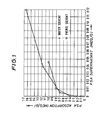
- Figure 1 is a graph of isotherms for adsorption of phenol sulfonic acid (PSA) on a carbon adsorbent.
- Figure 2 is a graph of the results of a flow demonstration of acid removed by activated carbon of Example 3.
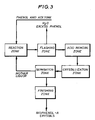
- Figure 3 is a schematic flow diagram illustrating the most preferred embodiment of the invention process.
- a high purity bisphenol can be produced in high yield by contacting a reaction product mixture containing a bisphenol with a carbon guard bed.
- the reaction product mixture is the effluent of a reaction zone wherein a carbonyl compound and a phenolic compound are allowed to react in the presence of an effective amount of an acidic ion exchange resin catalyst.
- the phenolic compounds employed as the starting material in the production of bisphenols according to the invention are any compounds containing a hydroxy group linked to a carbon of an aromatic group.
- Suitable phenolic compounds include, for example, phenols and substituted phenols, such as: phenol, cresols, xylenols, chlorophenols, thymol, carvacrol, cumenol, 2-methyl-6-ethylphenol, 2,4-dimethyl-3-ethylphenol, 4-ethylphenol, 2-ethyl-4-methylphenol, 2,3,6-trimethylphenol, 2-methyl-4-tertiary-butylphenol, 2,4- ditertiary-butylphenol, 4-methyl-2-tertiary-butylphenol, 2-tertiary-butyl-4-methylphenol, 2,3,5,6-tetramethyl- phenol, 2,6-dimethylphenol, 2,6-ditertiary-butylphenol, 3,5-dimethylphenol, 3,5-diethy
- the carbonyl compounds employed as the starting material can be any compound of the following formula: wherein R 1 can be any aliphatic, cycloaliphatic, aromatic or heterocyclic radical, and R 2 can be hydrogen or an aliphatic, cycloaliphatic, aromatic or heterocyclic radical.
- Suitable carbonyl compounds include ketones and aldehydes.
- ketones include, for example, acetone, 1,3-dichloro-acetone, dimethyl ketone, methyl ethyl ketone, diethyl ketone, dibutyl ketone, methyl isobutyl ketone, cyclohexanone, propionylphenone, methyl amyl ketone, mesityl oxide, cyclopentanone, acetophenone, and examples of suitable aldehydes include acetaldehyde, propionaldehyde, butyraldehyde and benzaldehyde.
- the specific phenolic compound and carbonyl compound employed as starting material will depend upon the specific bisphenol compound desired and may be governed to some extent by specific operating conditions employed.
- the invention process is particularly suitable for production of bisphenol-A, for which the carbonyl compound is acetone and the phenolic compound is phenol. Typically, excess phenol is used for the condensation reaction.
- the ratio of phenol to carbonyl compound is within the range of 20:1 to 2:1, generally 12:1 to 2:1.
- Acidic ion exchange resins usable in the condensation reaction of a phenolic compound and a carbonyl compound according to the present invention include essentially all known acidic ion exchange resins. Sulfonated resins are generally preferred. In particular, a sulfonated aromatic organic polymer as the ion exchange resin catalyst is quite suitable.
- the reaction is preferably executed in the presence of an added promoter for the acid-catalyzed reaction.
- Any known promoters for the acid catalyzed condensation of a phenolic compound and a carbonyl compound are suitable.
- Suitable promoters are mercaptan groups which are either free or bound to the resin.
- An alkyl mercaptan and bis-mercapto ethanolamine are examples of suitable promoters for the invention process.
- the effluent of the reaction zone is contacted with a carbon adsorbent under conditions effective to reduce the acidity of the effluent.
- a portion of the excess phenol is optionally removed by flashing prior to or after the acid removal step.
- the preferred adsorbents are any carbons that exhibit a reasonable surface area and porosity to act as a viable adsorbent in a liquid-phase system.
- the carbon adsorbent can be in any shape or form.
- the particle size is preferably within the range of about 0.4 to 2.4 mm diameter, and the surface area is preferably greater than about 50 m 2 /g.
- the pore sizes typically range from 2 to 100 nanometers.
- Preferred carbons exhibit a low ash content, or are acid washed to remove leachable metal contaminants prior to use.
- the carbon should also be prewashed with demineralized water to remove fines before use.
- Typical carbons may be derived from coal, coconuts, wood, bone char, peat, or any other suitable source of carbon.
- a carbon layer may be deposited on a suitable non-carbon carrier.
- a suitable binder may optionally be used to maintain integrity of the carbon particle.
- Activation or calcination of the carbon may optionally be employed.
- the preferred carbon is prepared from a bituminous coal, calcined with a suitable binder, and acid washed before use.
- the effluent is preferably contacted with a fixed-bed activated carbon in either an upflow or downflow configuration at a weight hourly space velocity (WHSV) within the range of 0.2 to 10, preferably 0.5 to 3. If an upflow mode is employed, the bed should not be fluidized so that back mixing and fines generation are minimized.
- WHSV in the acid scavenging zone may vary considerably within the scope of the invention depending to some extent upon the specific bisphenol products, the catalyst, the acid loss rate from the reaction and the adsorbent used, but is preferably within the range of 0.2 to 10 in order to obtain acid concentrations of less than 0.1 ppm in the effluent after treatment.
- the invention process will be specifically described in terms of its most preferred embodiment, in which acetone and an excess of phenol are contacted in a reaction zone in the presence of a sulfonated cationic exchange resin catalyst and free mercaptan to produce BPA.
- the reaction is carried out in one or a series of reactors operated at temperatures within the range of 60 to 95 C.
- the reaction effluent includes bisphenol-A, acetone, water, mercaptan, phenol, various phenolic by-products of the reaction, and acids leached from the catalyst.
- the effluent is passed through a fixed-bed carbon adsorbent to remove heavy or non-volatile acids (e.g. sulfonic acids and sulfuric acid) at temperatures within the range of 65 to 130 C.
- the acid removal step can be carried out prior to the flashing step.
- BPA can be purified and removed from the adsorbent-treated effluent by various methods. Suitable means for recovering bisphenols include one or more of such steps as, distillation, solvent extraction, stratification, extractive distillation, adsorption, crystallization, filtration, centrifugation and thermal liberation. Typically, the BPA is isolated by passing the treated reaction product stream containing BPA to a crystallization zone, where the stream is cooled to crystallize a BPA-phenol adduct or treated with water to crystallize the BPA.
- BPA isolated as a crystalline adduct is converted to BPA by thermally stripping phenol from the adduct and recrystallizing, and the water-crystallized BPA is dried. More than one such step can be employed in the finishing zone to purify BPA. Subsequently, the purified BPA is recovered.
- the acid removal step is carried out downstream of the crystallization step before recovery of the BPA.
- Bisphenols prepared by the invention process have improved purity and yield, as thermal cracking of the product is minimized or eliminated.
- the invention process provides a conveniently recyclable system without significant risk of contamination of the acidic ion exchange resin catalyst. This is advantageous particularly in a system in which the mother liquor is recycled to the reactor.
- Phenol doped with varying known concentrations of phenol sulfonic acid was contacted with an activated carbon (CALGON, TYPE CAL) prepared from a bituminous coal and calcined with a binder before acid washing with HCI.
- the activated carbon was first water washed and dried in a vacuum oven at 90°C before use.
- the ratio of phenol supernatant to carbon adsorbent was 20:1.
- the carbon/phenol mixtures were placed in a shaking water bath and allowed to equilibrate at 90°C for 36 hours. Final concentration of acid in the supernatant was determined by potentiometric titration with 0.01 or 0.1 N potassium hydroxide.
- the amount of acid adsorbed by the carbon was calculated from known initial and measured final supernatant acid concentrations, and the known ratio of supernatant to carbon. Results are shown in Figure 1.
- the Langmuir-like curvature (concave downward) is indicative of strong adsorption of the acid by carbon.
- Phenol was recirculated continuously through a 38-gram packed bed containing a sulfonic acid ion exchange resin catalyst followed by a 35-gram packed bed of the activated carbon adsorbent described above at 80 C and at a WHSV of 3.
- Effluent samples from the catalyst bed contained 0.6 ppmw phenol sulfonic acid, at steady state, as determined by liquid chromatography. No acidity was detected in the effluent from the carbon bed at any time during 38 days of continuous operation.
- a concentration of 17 ppmw PSA is calculated as the concentration of acid that would have been realized in the closed recirculation system, if acid were not removed by the carbon adsorbent.
- the deleterious impact of acid concentrations between 0.6 ppmw and 17 ppmw on bisphenol-A product quality is evident from examples 4-6.
Landscapes
- Chemical & Material Sciences (AREA)
- Organic Chemistry (AREA)
- Chemical Kinetics & Catalysis (AREA)
- Organic Low-Molecular-Weight Compounds And Preparation Thereof (AREA)
- Low-Molecular Organic Synthesis Reactions Using Catalysts (AREA)
Applications Claiming Priority (2)
| Application Number | Priority Date | Filing Date | Title |
|---|---|---|---|
| US07/560,956 US5059721A (en) | 1990-07-31 | 1990-07-31 | Process for preparing a bisphenol |
| US560956 | 1990-07-31 |
Publications (3)
| Publication Number | Publication Date |
|---|---|
| EP0469689A2 true EP0469689A2 (de) | 1992-02-05 |
| EP0469689A3 EP0469689A3 (en) | 1993-05-19 |
| EP0469689B1 EP0469689B1 (de) | 1995-09-27 |
Family
ID=24240064
Family Applications (1)
| Application Number | Title | Priority Date | Filing Date |
|---|---|---|---|
| EP91201982A Expired - Lifetime EP0469689B1 (de) | 1990-07-31 | 1991-07-30 | Verfahren zur Herstellung eines Bisphenols |
Country Status (5)
| Country | Link |
|---|---|
| US (1) | US5059721A (de) |
| EP (1) | EP0469689B1 (de) |
| JP (1) | JP2990547B2 (de) |
| KR (1) | KR100213935B1 (de) |
| DE (1) | DE69113360T2 (de) |
Cited By (3)
| Publication number | Priority date | Publication date | Assignee | Title |
|---|---|---|---|---|
| DE19840110C1 (de) * | 1998-09-03 | 2000-02-17 | Bayer Ag | Verfahren zur Herstellung von Bis(4-hydroxyaryl)alkanen |
| WO2001040156A1 (en) * | 1999-12-03 | 2001-06-07 | Mitsui Chemicals, Inc. | High-quality bisphenol a and process for producing the same |
| US6703530B2 (en) | 2002-02-28 | 2004-03-09 | General Electric Company | Chemical reactor system and process |
Families Citing this family (9)
| Publication number | Priority date | Publication date | Assignee | Title |
|---|---|---|---|---|
| US5475154A (en) * | 1994-03-10 | 1995-12-12 | Rohm And Haas Company | Method for producing high-purity bisphenols |
| US5675044A (en) * | 1996-07-01 | 1997-10-07 | General Electric Company | Process for recovery of bisphenol-A from thermoplastic polymer containing dihydric phenol units |
| US5723693A (en) * | 1996-09-13 | 1998-03-03 | The Dow Chemical Company | Process for preparing and recovering 4,4'-dihydroxy-alpha-alkylstilbene or 4,4'-dihydroxy-alpha, alpha'dialkylstilbene |
| US6052012A (en) * | 1998-06-29 | 2000-04-18 | Cisco Technology, Inc. | Method and apparatus for clock uncertainly minimization |
| JP2002053512A (ja) * | 1999-12-03 | 2002-02-19 | Mitsui Chemicals Inc | 高品質ビスフェノールaおよびその製造方法 |
| JP4140171B2 (ja) * | 2000-05-02 | 2008-08-27 | 三菱化学株式会社 | 高品位ビスフェノールa製造のためのビスフェノールaとフェノールとの結晶アダクトの製造方法 |
| US6960697B2 (en) * | 2002-03-13 | 2005-11-01 | Mitsubishi Chemical Corporation | System and method of producing bisphenol-A (BPA) |
| US20050075520A1 (en) * | 2002-03-13 | 2005-04-07 | O'young Drow Lionel | System and method of producing bisphenol-A (BPA) using two stage crystallization |
| DE102004005723A1 (de) * | 2004-02-05 | 2005-08-25 | Bayer Materialscience Ag | Herstellung von Bisphenol A mit verringertem Schwefelgehalt |
Family Cites Families (11)
| Publication number | Priority date | Publication date | Assignee | Title |
|---|---|---|---|---|
| IT971366B (it) * | 1972-11-30 | 1974-04-30 | Sir Soc Italiana Resine Spa | Procedimento per la produzione di 2 2 4 4 diidrossidifenil propano |
| US4169211A (en) * | 1972-11-30 | 1979-09-25 | Societa' Italiana Resine S.I.R. S.P.A. | Process for the production of 2,2-(4,4'-dihydroxydiphenyl)propane |
| EP0001863B1 (de) * | 1977-11-09 | 1981-07-15 | Shell Internationale Researchmaatschappij B.V. | Herstellung von Bisphenolen |
| US4160110A (en) * | 1978-04-17 | 1979-07-03 | General Electric Company | Method for stabilizing bisphenols under melt or distillation conditions |
| US4396728A (en) * | 1980-09-30 | 1983-08-02 | General Electric Company | Method and catalyst for making bisphenol |
| US4469561A (en) * | 1981-07-01 | 1984-09-04 | General Electric Company | Azeotropic recovery of BPA and phenol from aqueous effluent streams |
| US4533764A (en) * | 1984-03-29 | 1985-08-06 | The Dow Chemical Company | Purification of bisphenols by removing residual solvent |
| US4766254A (en) * | 1987-10-05 | 1988-08-23 | General Electric Company | Method for maximizing yield and purity of bisphenol A |
| PL153396B1 (en) * | 1987-10-07 | 1991-04-30 | Method of obtaining bisphenol a | |
| US4847433A (en) * | 1988-05-23 | 1989-07-11 | General Electric Company | Process for preparing bisphenol-A |
| US5008470A (en) * | 1989-11-30 | 1991-04-16 | Shell Oil Company | Process for preparing a bisphenol |
-
1990
- 1990-07-31 US US07/560,956 patent/US5059721A/en not_active Expired - Lifetime
-
1991
- 1991-07-27 KR KR1019910012979A patent/KR100213935B1/ko not_active Expired - Fee Related
- 1991-07-29 JP JP3210417A patent/JP2990547B2/ja not_active Expired - Lifetime
- 1991-07-30 EP EP91201982A patent/EP0469689B1/de not_active Expired - Lifetime
- 1991-07-30 DE DE69113360T patent/DE69113360T2/de not_active Expired - Fee Related
Cited By (3)
| Publication number | Priority date | Publication date | Assignee | Title |
|---|---|---|---|---|
| DE19840110C1 (de) * | 1998-09-03 | 2000-02-17 | Bayer Ag | Verfahren zur Herstellung von Bis(4-hydroxyaryl)alkanen |
| WO2001040156A1 (en) * | 1999-12-03 | 2001-06-07 | Mitsui Chemicals, Inc. | High-quality bisphenol a and process for producing the same |
| US6703530B2 (en) | 2002-02-28 | 2004-03-09 | General Electric Company | Chemical reactor system and process |
Also Published As
| Publication number | Publication date |
|---|---|
| US5059721A (en) | 1991-10-22 |
| KR100213935B1 (ko) | 1999-08-02 |
| EP0469689B1 (de) | 1995-09-27 |
| DE69113360D1 (de) | 1995-11-02 |
| JP2990547B2 (ja) | 1999-12-13 |
| EP0469689A3 (en) | 1993-05-19 |
| JPH04234335A (ja) | 1992-08-24 |
| KR920002503A (ko) | 1992-02-28 |
| DE69113360T2 (de) | 1996-04-04 |
Similar Documents
| Publication | Publication Date | Title |
|---|---|---|
| US5105026A (en) | Process for preparing a bisphenol | |
| EP0559372B1 (de) | Verfahren zur Herstellung eines Bisphenols | |
| US5059721A (en) | Process for preparing a bisphenol | |
| JP5395079B2 (ja) | ビスフェノールa製造プロセスにおける循還流中のメタノールの低減方法 | |
| US4766254A (en) | Method for maximizing yield and purity of bisphenol A | |
| EP0680943A1 (de) | Verfahren zur Herstellung von Bisphenol | |
| EP0343382B1 (de) | Verfahren zur Herstellung von Bisphenolen | |
| JPH06172241A (ja) | ビスフエノール類の製造法 | |
| US5008470A (en) | Process for preparing a bisphenol | |
| US4107218A (en) | Decoloration of bisphenol-A recycle stream with cation exchange resin | |
| DE102004005723A1 (de) | Herstellung von Bisphenol A mit verringertem Schwefelgehalt | |
| JP2001503377A (ja) | ビスフェノールの改良された製造方法 | |
| JP2007520503A (ja) | ビスフェノールaの製造における循環ストリームの脱水方法 | |
| US5455368A (en) | Process for separating off methanol from a mixture of dimethyl carbonate and methanol | |
| EP0358992B1 (de) | Verfahren zur Herstellung von Bisphenolen | |
| JP4874125B2 (ja) | 異性体形成の低減されたビスフェノールaの製造 | |
| GB1565667A (en) | Deculouration of bipshenol-a recycle stream with cation exchange resin | |
| EP0720976B1 (de) | Verfahren zur Herstellung eines Addukts aus einem Bisphenol mit einer Phenol-Verbindung | |
| JP2004532845A (ja) | ポリフェノール製造用触媒プロモーター | |
| KR20210040070A (ko) | 비스페놀 제조로부터의 잔류 스트림의 처리 | |
| US20050137429A1 (en) | Methods for purification of phenol | |
| JP2008504320A (ja) | ビスフェノールaの調製によるフェノール含有ストリームからフェノールを分離するためのプロセス | |
| JPH09255607A (ja) | ビスフェノールaの製造方法 | |
| JP3883314B2 (ja) | フェノールの回収方法 | |
| HK1096655A (en) | Process for the preparation of high-purity bisphenol a |
Legal Events
| Date | Code | Title | Description |
|---|---|---|---|
| PUAI | Public reference made under article 153(3) epc to a published international application that has entered the european phase |
Free format text: ORIGINAL CODE: 0009012 |
|
| AK | Designated contracting states |
Kind code of ref document: A2 Designated state(s): DE FR GB NL |
|
| PUAL | Search report despatched |
Free format text: ORIGINAL CODE: 0009013 |
|
| AK | Designated contracting states |
Kind code of ref document: A3 Designated state(s): DE FR GB NL |
|
| 17P | Request for examination filed |
Effective date: 19930921 |
|
| 17Q | First examination report despatched |
Effective date: 19941010 |
|
| GRAA | (expected) grant |
Free format text: ORIGINAL CODE: 0009210 |
|
| AK | Designated contracting states |
Kind code of ref document: B1 Designated state(s): DE FR GB NL |
|
| REF | Corresponds to: |
Ref document number: 69113360 Country of ref document: DE Date of ref document: 19951102 |
|
| ET | Fr: translation filed | ||
| PLBE | No opposition filed within time limit |
Free format text: ORIGINAL CODE: 0009261 |
|
| STAA | Information on the status of an ep patent application or granted ep patent |
Free format text: STATUS: NO OPPOSITION FILED WITHIN TIME LIMIT |
|
| 26N | No opposition filed | ||
| PGFP | Annual fee paid to national office [announced via postgrant information from national office to epo] |
Ref country code: GB Payment date: 20010724 Year of fee payment: 11 Ref country code: FR Payment date: 20010724 Year of fee payment: 11 |
|
| PGFP | Annual fee paid to national office [announced via postgrant information from national office to epo] |
Ref country code: DE Payment date: 20010725 Year of fee payment: 11 |
|
| PGFP | Annual fee paid to national office [announced via postgrant information from national office to epo] |
Ref country code: NL Payment date: 20010731 Year of fee payment: 11 |
|
| NLS | Nl: assignments of ep-patents |
Owner name: RESOLUTION RESEARCH NEDERLAND B.V. |
|
| REG | Reference to a national code |
Ref country code: GB Ref legal event code: IF02 |
|
| PG25 | Lapsed in a contracting state [announced via postgrant information from national office to epo] |
Ref country code: GB Free format text: LAPSE BECAUSE OF NON-PAYMENT OF DUE FEES Effective date: 20020730 |
|
| PG25 | Lapsed in a contracting state [announced via postgrant information from national office to epo] |
Ref country code: NL Free format text: LAPSE BECAUSE OF NON-PAYMENT OF DUE FEES Effective date: 20030201 Ref country code: DE Free format text: LAPSE BECAUSE OF NON-PAYMENT OF DUE FEES Effective date: 20030201 |
|
| GBPC | Gb: european patent ceased through non-payment of renewal fee |
Effective date: 20020730 |
|
| PG25 | Lapsed in a contracting state [announced via postgrant information from national office to epo] |
Ref country code: FR Free format text: LAPSE BECAUSE OF NON-PAYMENT OF DUE FEES Effective date: 20030331 |
|
| NLV4 | Nl: lapsed or anulled due to non-payment of the annual fee |
Effective date: 20030201 |
|
| REG | Reference to a national code |
Ref country code: FR Ref legal event code: ST |