EP0470426B1 - Dérivés de 2,2,3-triméthylcyclopentényl acétone, leur utilisation organoleptique et leur procédé de préparation - Google Patents
Dérivés de 2,2,3-triméthylcyclopentényl acétone, leur utilisation organoleptique et leur procédé de préparation Download PDFInfo
- Publication number
- EP0470426B1 EP0470426B1 EP91112278A EP91112278A EP0470426B1 EP 0470426 B1 EP0470426 B1 EP 0470426B1 EP 91112278 A EP91112278 A EP 91112278A EP 91112278 A EP91112278 A EP 91112278A EP 0470426 B1 EP0470426 B1 EP 0470426B1
- Authority
- EP
- European Patent Office
- Prior art keywords
- trimethylcyclopentenyl
- defined according
- perfume
- aroma
- compound
- Prior art date
- Legal status (The legal status is an assumption and is not a legal conclusion. Google has not performed a legal analysis and makes no representation as to the accuracy of the status listed.)
- Expired - Lifetime
Links
- ORDPBTILNUIPCZ-UHFFFAOYSA-N 1-(4,5,5-trimethylcyclopenten-1-yl)propan-2-one Chemical class CC1CC=C(CC(C)=O)C1(C)C ORDPBTILNUIPCZ-UHFFFAOYSA-N 0.000 title claims description 38
- 238000004519 manufacturing process Methods 0.000 title description 4
- 239000000203 mixture Substances 0.000 claims description 66
- 150000001875 compounds Chemical class 0.000 claims description 46
- 239000002304 perfume Substances 0.000 claims description 32
- 229920000642 polymer Polymers 0.000 claims description 27
- 239000003599 detergent Substances 0.000 claims description 21
- 239000007788 liquid Substances 0.000 claims description 15
- 238000000034 method Methods 0.000 claims description 15
- 239000002979 fabric softener Substances 0.000 claims description 13
- 125000002496 methyl group Chemical group [H]C([H])([H])* 0.000 claims description 12
- LFQSCWFLJHTTHZ-UHFFFAOYSA-N Ethanol Chemical compound CCO LFQSCWFLJHTTHZ-UHFFFAOYSA-N 0.000 claims description 10
- 125000001495 ethyl group Chemical group [H]C([H])([H])C([H])([H])* 0.000 claims description 8
- 239000001257 hydrogen Substances 0.000 claims description 8
- 229910052739 hydrogen Inorganic materials 0.000 claims description 8
- 230000003190 augmentative effect Effects 0.000 claims description 7
- 230000002708 enhancing effect Effects 0.000 claims description 7
- XLYOFNOQVPJJNP-UHFFFAOYSA-N water Substances O XLYOFNOQVPJJNP-UHFFFAOYSA-N 0.000 claims description 7
- 125000000129 anionic group Chemical group 0.000 claims description 6
- 125000002091 cationic group Chemical group 0.000 claims description 6
- 125000001449 isopropyl group Chemical group [H]C([H])([H])C([H])(*)C([H])([H])[H] 0.000 claims description 6
- 239000007787 solid Substances 0.000 claims description 6
- 125000001436 propyl group Chemical group [H]C([*])([H])C([H])([H])C([H])([H])[H] 0.000 claims description 5
- 125000002947 alkylene group Chemical group 0.000 claims description 4
- 150000002431 hydrogen Chemical group 0.000 claims description 4
- UFHFLCQGNIYNRP-UHFFFAOYSA-N Hydrogen Chemical compound [H][H] UFHFLCQGNIYNRP-UHFFFAOYSA-N 0.000 claims description 3
- 238000006243 chemical reaction Methods 0.000 description 52
- 239000000126 substance Substances 0.000 description 18
- 241000234671 Ananas Species 0.000 description 15
- 235000007119 Ananas comosus Nutrition 0.000 description 15
- OKKJLVBELUTLKV-UHFFFAOYSA-N Methanol Chemical compound OC OKKJLVBELUTLKV-UHFFFAOYSA-N 0.000 description 15
- 235000009508 confectionery Nutrition 0.000 description 14
- 239000007795 chemical reaction product Substances 0.000 description 12
- KRKNYBCHXYNGOX-UHFFFAOYSA-N citric acid Chemical compound OC(=O)CC(O)(C(O)=O)CC(O)=O KRKNYBCHXYNGOX-UHFFFAOYSA-N 0.000 description 12
- 238000000655 nuclear magnetic resonance spectrum Methods 0.000 description 12
- -1 polypropylene Polymers 0.000 description 12
- 239000000344 soap Substances 0.000 description 12
- 150000002576 ketones Chemical class 0.000 description 10
- 238000002360 preparation method Methods 0.000 description 10
- 239000000758 substrate Substances 0.000 description 10
- 239000000843 powder Substances 0.000 description 9
- WEFHSZAZNMEWKJ-KEDVMYETSA-N (6Z,8E)-undeca-6,8,10-trien-2-one (6E,8E)-undeca-6,8,10-trien-2-one (6Z,8E)-undeca-6,8,10-trien-3-one (6E,8E)-undeca-6,8,10-trien-3-one (6Z,8E)-undeca-6,8,10-trien-4-one (6E,8E)-undeca-6,8,10-trien-4-one Chemical compound CCCC(=O)C\C=C\C=C\C=C.CCCC(=O)C\C=C/C=C/C=C.CCC(=O)CC\C=C\C=C\C=C.CCC(=O)CC\C=C/C=C/C=C.CC(=O)CCC\C=C\C=C\C=C.CC(=O)CCC\C=C/C=C/C=C WEFHSZAZNMEWKJ-KEDVMYETSA-N 0.000 description 8
- RTZKZFJDLAIYFH-UHFFFAOYSA-N Diethyl ether Chemical compound CCOCC RTZKZFJDLAIYFH-UHFFFAOYSA-N 0.000 description 8
- 241000116713 Ferula gummosa Species 0.000 description 8
- 239000003205 fragrance Substances 0.000 description 8
- 239000004864 galbanum Substances 0.000 description 8
- 239000000463 material Substances 0.000 description 8
- 235000019568 aromas Nutrition 0.000 description 7
- 230000015572 biosynthetic process Effects 0.000 description 7
- 239000011248 coating agent Substances 0.000 description 7
- 238000000576 coating method Methods 0.000 description 7
- 150000002825 nitriles Chemical class 0.000 description 7
- CSCPPACGZOOCGX-UHFFFAOYSA-N Acetone Chemical compound CC(C)=O CSCPPACGZOOCGX-UHFFFAOYSA-N 0.000 description 6
- XXROGKLTLUQVRX-UHFFFAOYSA-N allyl alcohol Chemical compound OCC=C XXROGKLTLUQVRX-UHFFFAOYSA-N 0.000 description 6
- 239000002537 cosmetic Substances 0.000 description 6
- 238000010438 heat treatment Methods 0.000 description 6
- 239000004615 ingredient Substances 0.000 description 6
- PYOKUURKVVELLB-UHFFFAOYSA-N trimethyl orthoformate Chemical compound COC(OC)OC PYOKUURKVVELLB-UHFFFAOYSA-N 0.000 description 6
- 241000208152 Geranium Species 0.000 description 5
- 238000004821 distillation Methods 0.000 description 5
- 235000019441 ethanol Nutrition 0.000 description 5
- 239000000543 intermediate Substances 0.000 description 5
- KFZMGEQAYNKOFK-UHFFFAOYSA-N isopropyl alcohol Natural products CC(C)O KFZMGEQAYNKOFK-UHFFFAOYSA-N 0.000 description 5
- 239000000047 product Substances 0.000 description 5
- 238000010992 reflux Methods 0.000 description 5
- 239000003377 acid catalyst Substances 0.000 description 4
- 229920001577 copolymer Polymers 0.000 description 4
- 239000004744 fabric Substances 0.000 description 4
- 238000009472 formulation Methods 0.000 description 4
- 229920001684 low density polyethylene Polymers 0.000 description 4
- 239000004702 low-density polyethylene Substances 0.000 description 4
- 239000008188 pellet Substances 0.000 description 4
- 0 CC(CC1C(C)(C)C(C)=CC1)(*[U])[O+] Chemical compound CC(CC1C(C)(C)C(C)=CC1)(*[U])[O+] 0.000 description 3
- VEXZGXHMUGYJMC-UHFFFAOYSA-N Hydrochloric acid Chemical compound Cl VEXZGXHMUGYJMC-UHFFFAOYSA-N 0.000 description 3
- 239000004698 Polyethylene Substances 0.000 description 3
- DNIAPMSPPWPWGF-UHFFFAOYSA-N Propylene glycol Chemical compound CC(O)CO DNIAPMSPPWPWGF-UHFFFAOYSA-N 0.000 description 3
- VMHLLURERBWHNL-UHFFFAOYSA-M Sodium acetate Chemical compound [Na+].CC([O-])=O VMHLLURERBWHNL-UHFFFAOYSA-M 0.000 description 3
- 239000002253 acid Substances 0.000 description 3
- 230000000694 effects Effects 0.000 description 3
- 235000019645 odor Nutrition 0.000 description 3
- 230000003287 optical effect Effects 0.000 description 3
- 229920000573 polyethylene Polymers 0.000 description 3
- 239000001632 sodium acetate Substances 0.000 description 3
- 235000017281 sodium acetate Nutrition 0.000 description 3
- 239000002904 solvent Substances 0.000 description 3
- JOXIMZWYDAKGHI-UHFFFAOYSA-N toluene-4-sulfonic acid Chemical compound CC1=CC=C(S(O)(=O)=O)C=C1 JOXIMZWYDAKGHI-UHFFFAOYSA-N 0.000 description 3
- QGZKDVFQNNGYKY-UHFFFAOYSA-N Ammonia Chemical compound N QGZKDVFQNNGYKY-UHFFFAOYSA-N 0.000 description 2
- IJGRMHOSHXDMSA-UHFFFAOYSA-N Atomic nitrogen Chemical compound N#N IJGRMHOSHXDMSA-UHFFFAOYSA-N 0.000 description 2
- CURLTUGMZLYLDI-UHFFFAOYSA-N Carbon dioxide Chemical compound O=C=O CURLTUGMZLYLDI-UHFFFAOYSA-N 0.000 description 2
- VGGSQFUCUMXWEO-UHFFFAOYSA-N Ethene Chemical compound C=C VGGSQFUCUMXWEO-UHFFFAOYSA-N 0.000 description 2
- 239000005977 Ethylene Substances 0.000 description 2
- LYCAIKOWRPUZTN-UHFFFAOYSA-N Ethylene glycol Chemical compound OCCO LYCAIKOWRPUZTN-UHFFFAOYSA-N 0.000 description 2
- 235000008331 Pinus X rigitaeda Nutrition 0.000 description 2
- 235000011613 Pinus brutia Nutrition 0.000 description 2
- 241000018646 Pinus brutia Species 0.000 description 2
- 240000002505 Pogostemon cablin Species 0.000 description 2
- 235000011751 Pogostemon cablin Nutrition 0.000 description 2
- 239000004743 Polypropylene Substances 0.000 description 2
- WYURNTSHIVDZCO-UHFFFAOYSA-N Tetrahydrofuran Chemical compound C1CCOC1 WYURNTSHIVDZCO-UHFFFAOYSA-N 0.000 description 2
- XTXRWKRVRITETP-UHFFFAOYSA-N Vinyl acetate Chemical compound CC(=O)OC=C XTXRWKRVRITETP-UHFFFAOYSA-N 0.000 description 2
- 150000001298 alcohols Chemical class 0.000 description 2
- 235000011089 carbon dioxide Nutrition 0.000 description 2
- 239000003153 chemical reaction reagent Substances 0.000 description 2
- 238000001816 cooling Methods 0.000 description 2
- SIFCYSVSXVRFTK-UHFFFAOYSA-N cyclopentene;propan-2-one Chemical class CC(C)=O.C1CC=CC1 SIFCYSVSXVRFTK-UHFFFAOYSA-N 0.000 description 2
- 239000002781 deodorant agent Substances 0.000 description 2
- 238000001704 evaporation Methods 0.000 description 2
- 230000008020 evaporation Effects 0.000 description 2
- 239000003676 hair preparation Substances 0.000 description 2
- 238000002329 infrared spectrum Methods 0.000 description 2
- 230000005923 long-lasting effect Effects 0.000 description 2
- 238000002156 mixing Methods 0.000 description 2
- 231100000252 nontoxic Toxicity 0.000 description 2
- 230000003000 nontoxic effect Effects 0.000 description 2
- 239000012074 organic phase Substances 0.000 description 2
- 150000002902 organometallic compounds Chemical class 0.000 description 2
- 239000012071 phase Substances 0.000 description 2
- 229920001155 polypropylene Polymers 0.000 description 2
- 238000004513 sizing Methods 0.000 description 2
- 239000000243 solution Substances 0.000 description 2
- 238000003786 synthesis reaction Methods 0.000 description 2
- 239000004753 textile Substances 0.000 description 2
- NWUYHJFMYQTDRP-UHFFFAOYSA-N 1,2-bis(ethenyl)benzene;1-ethenyl-2-ethylbenzene;styrene Chemical compound C=CC1=CC=CC=C1.CCC1=CC=CC=C1C=C.C=CC1=CC=CC=C1C=C NWUYHJFMYQTDRP-UHFFFAOYSA-N 0.000 description 1
- 244000215068 Acacia senegal Species 0.000 description 1
- 108010010803 Gelatin Proteins 0.000 description 1
- 229920000084 Gum arabic Polymers 0.000 description 1
- CSNNHWWHGAXBCP-UHFFFAOYSA-L Magnesium sulfate Chemical compound [Mg+2].[O-][S+2]([O-])([O-])[O-] CSNNHWWHGAXBCP-UHFFFAOYSA-L 0.000 description 1
- AFVFQIVMOAPDHO-UHFFFAOYSA-N Methanesulfonic acid Chemical compound CS(O)(=O)=O AFVFQIVMOAPDHO-UHFFFAOYSA-N 0.000 description 1
- 244000170916 Paeonia officinalis Species 0.000 description 1
- 235000006484 Paeonia officinalis Nutrition 0.000 description 1
- 102000035195 Peptidases Human genes 0.000 description 1
- 108091005804 Peptidases Proteins 0.000 description 1
- 229920001807 Urea-formaldehyde Polymers 0.000 description 1
- 239000002250 absorbent Substances 0.000 description 1
- 230000002745 absorbent Effects 0.000 description 1
- 239000000205 acacia gum Substances 0.000 description 1
- 235000010489 acacia gum Nutrition 0.000 description 1
- 150000001299 aldehydes Chemical class 0.000 description 1
- 125000000746 allylic group Chemical group 0.000 description 1
- 229910021529 ammonia Inorganic materials 0.000 description 1
- 239000002216 antistatic agent Substances 0.000 description 1
- 239000008346 aqueous phase Substances 0.000 description 1
- 239000003788 bath preparation Substances 0.000 description 1
- OGBUMNBNEWYMNJ-UHFFFAOYSA-N batilol Chemical compound CCCCCCCCCCCCCCCCCCOCC(O)CO OGBUMNBNEWYMNJ-UHFFFAOYSA-N 0.000 description 1
- LPTWEDZIPSKWDG-UHFFFAOYSA-N benzenesulfonic acid;dodecane Chemical compound OS(=O)(=O)C1=CC=CC=C1.CCCCCCCCCCCC LPTWEDZIPSKWDG-UHFFFAOYSA-N 0.000 description 1
- 238000009835 boiling Methods 0.000 description 1
- 239000012267 brine Substances 0.000 description 1
- 125000001246 bromo group Chemical group Br* 0.000 description 1
- 239000002775 capsule Substances 0.000 description 1
- CREMABGTGYGIQB-UHFFFAOYSA-N carbon carbon Chemical compound C.C CREMABGTGYGIQB-UHFFFAOYSA-N 0.000 description 1
- 239000011203 carbon fibre reinforced carbon Substances 0.000 description 1
- 230000003197 catalytic effect Effects 0.000 description 1
- 229920001429 chelating resin Polymers 0.000 description 1
- 239000003795 chemical substances by application Substances 0.000 description 1
- 125000001309 chloro group Chemical group Cl* 0.000 description 1
- 238000005354 coacervation Methods 0.000 description 1
- 238000013270 controlled release Methods 0.000 description 1
- 239000000110 cooling liquid Substances 0.000 description 1
- 239000006071 cream Substances 0.000 description 1
- FPAFDBFIGPHWGO-UHFFFAOYSA-N dioxosilane;oxomagnesium;hydrate Chemical compound O.[Mg]=O.[Mg]=O.[Mg]=O.O=[Si]=O.O=[Si]=O.O=[Si]=O.O=[Si]=O FPAFDBFIGPHWGO-UHFFFAOYSA-N 0.000 description 1
- 238000010410 dusting Methods 0.000 description 1
- 150000002148 esters Chemical class 0.000 description 1
- 150000002170 ethers Chemical class 0.000 description 1
- 238000001914 filtration Methods 0.000 description 1
- 239000000834 fixative Substances 0.000 description 1
- 238000004508 fractional distillation Methods 0.000 description 1
- 229920000159 gelatin Polymers 0.000 description 1
- 239000008273 gelatin Substances 0.000 description 1
- 235000019322 gelatine Nutrition 0.000 description 1
- 235000011852 gelatine desserts Nutrition 0.000 description 1
- 229930195733 hydrocarbon Natural products 0.000 description 1
- 150000002430 hydrocarbons Chemical class 0.000 description 1
- WGCNASOHLSPBMP-UHFFFAOYSA-N hydroxyacetaldehyde Natural products OCC=O WGCNASOHLSPBMP-UHFFFAOYSA-N 0.000 description 1
- 239000012442 inert solvent Substances 0.000 description 1
- 229910052500 inorganic mineral Inorganic materials 0.000 description 1
- 239000003456 ion exchange resin Substances 0.000 description 1
- 229920003303 ion-exchange polymer Polymers 0.000 description 1
- 150000002596 lactones Chemical class 0.000 description 1
- 239000006210 lotion Substances 0.000 description 1
- 239000000155 melt Substances 0.000 description 1
- 238000002844 melting Methods 0.000 description 1
- 230000008018 melting Effects 0.000 description 1
- DVSDBMFJEQPWNO-UHFFFAOYSA-N methyllithium Chemical compound C[Li] DVSDBMFJEQPWNO-UHFFFAOYSA-N 0.000 description 1
- 239000011707 mineral Substances 0.000 description 1
- 235000010755 mineral Nutrition 0.000 description 1
- 239000003607 modifier Substances 0.000 description 1
- 229930014626 natural product Natural products 0.000 description 1
- 229910052757 nitrogen Inorganic materials 0.000 description 1
- 239000004745 nonwoven fabric Substances 0.000 description 1
- 239000002245 particle Substances 0.000 description 1
- 229920003023 plastic Polymers 0.000 description 1
- 239000004033 plastic Substances 0.000 description 1
- 229920001610 polycaprolactone Polymers 0.000 description 1
- ODGAOXROABLFNM-UHFFFAOYSA-N polynoxylin Chemical compound O=C.NC(N)=O ODGAOXROABLFNM-UHFFFAOYSA-N 0.000 description 1
- 239000011118 polyvinyl acetate Substances 0.000 description 1
- 229920002689 polyvinyl acetate Polymers 0.000 description 1
- ASUAYTHWZCLXAN-UHFFFAOYSA-N prenol Chemical compound CC(C)=CCO ASUAYTHWZCLXAN-UHFFFAOYSA-N 0.000 description 1
- ZDYVRSLAEXCVBX-UHFFFAOYSA-N pyridinium p-toluenesulfonate Chemical compound C1=CC=[NH+]C=C1.CC1=CC=C(S([O-])(=O)=O)C=C1 ZDYVRSLAEXCVBX-UHFFFAOYSA-N 0.000 description 1
- 239000000376 reactant Substances 0.000 description 1
- 230000001105 regulatory effect Effects 0.000 description 1
- 230000001953 sensory effect Effects 0.000 description 1
- 239000013042 solid detergent Substances 0.000 description 1
- 239000007858 starting material Substances 0.000 description 1
- 238000003756 stirring Methods 0.000 description 1
- 239000004575 stone Substances 0.000 description 1
- 230000000475 sunscreen effect Effects 0.000 description 1
- 239000000516 sunscreening agent Substances 0.000 description 1
- 239000012438 synthetic essential oil Substances 0.000 description 1
- 235000012222 talc Nutrition 0.000 description 1
- YLQBMQCUIZJEEH-UHFFFAOYSA-N tetrahydrofuran Natural products C=1C=COC=1 YLQBMQCUIZJEEH-UHFFFAOYSA-N 0.000 description 1
- 229920001169 thermoplastic Polymers 0.000 description 1
- GKASDNZWUGIAMG-UHFFFAOYSA-N triethyl orthoformate Chemical compound CCOC(OCC)OCC GKASDNZWUGIAMG-UHFFFAOYSA-N 0.000 description 1
- 238000005292 vacuum distillation Methods 0.000 description 1
- 230000000007 visual effect Effects 0.000 description 1
- 239000000341 volatile oil Substances 0.000 description 1
- 239000000230 xanthan gum Substances 0.000 description 1
- 235000010493 xanthan gum Nutrition 0.000 description 1
- 229920001285 xanthan gum Polymers 0.000 description 1
- 229940082509 xanthan gum Drugs 0.000 description 1
Images





Classifications
-
- C—CHEMISTRY; METALLURGY
- C11—ANIMAL OR VEGETABLE OILS, FATS, FATTY SUBSTANCES OR WAXES; FATTY ACIDS THEREFROM; DETERGENTS; CANDLES
- C11D—DETERGENT COMPOSITIONS; USE OF SINGLE SUBSTANCES AS DETERGENTS; SOAP OR SOAP-MAKING; RESIN SOAPS; RECOVERY OF GLYCEROL
- C11D3/00—Other compounding ingredients of detergent compositions covered in group C11D1/00
- C11D3/50—Perfumes
-
- C—CHEMISTRY; METALLURGY
- C07—ORGANIC CHEMISTRY
- C07C—ACYCLIC OR CARBOCYCLIC COMPOUNDS
- C07C43/00—Ethers; Compounds having groups, groups or groups
- C07C43/30—Compounds having groups
- C07C43/303—Compounds having groups having acetal carbon atoms bound to acyclic carbon atoms
-
- C—CHEMISTRY; METALLURGY
- C07—ORGANIC CHEMISTRY
- C07C—ACYCLIC OR CARBOCYCLIC COMPOUNDS
- C07C45/00—Preparation of compounds having >C = O groups bound only to carbon or hydrogen atoms; Preparation of chelates of such compounds
-
- C—CHEMISTRY; METALLURGY
- C07—ORGANIC CHEMISTRY
- C07C—ACYCLIC OR CARBOCYCLIC COMPOUNDS
- C07C45/00—Preparation of compounds having >C = O groups bound only to carbon or hydrogen atoms; Preparation of chelates of such compounds
- C07C45/51—Preparation of compounds having >C = O groups bound only to carbon or hydrogen atoms; Preparation of chelates of such compounds by pyrolysis, rearrangement or decomposition
- C07C45/511—Preparation of compounds having >C = O groups bound only to carbon or hydrogen atoms; Preparation of chelates of such compounds by pyrolysis, rearrangement or decomposition involving transformation of singly bound oxygen functional groups to >C = O groups
- C07C45/515—Preparation of compounds having >C = O groups bound only to carbon or hydrogen atoms; Preparation of chelates of such compounds by pyrolysis, rearrangement or decomposition involving transformation of singly bound oxygen functional groups to >C = O groups the singly bound functional group being an acetalised, ketalised hemi-acetalised, or hemi-ketalised hydroxyl group
-
- C—CHEMISTRY; METALLURGY
- C07—ORGANIC CHEMISTRY
- C07C—ACYCLIC OR CARBOCYCLIC COMPOUNDS
- C07C49/00—Ketones; Ketenes; Dimeric ketenes; Ketonic chelates
- C07C49/20—Unsaturated compounds containing keto groups bound to acyclic carbon atoms
- C07C49/21—Unsaturated compounds containing keto groups bound to acyclic carbon atoms containing rings other than six-membered aromatic rings
-
- C—CHEMISTRY; METALLURGY
- C11—ANIMAL OR VEGETABLE OILS, FATS, FATTY SUBSTANCES OR WAXES; FATTY ACIDS THEREFROM; DETERGENTS; CANDLES
- C11B—PRODUCING, e.g. BY PRESSING RAW MATERIALS OR BY EXTRACTION FROM WASTE MATERIALS, REFINING OR PRESERVING FATS, FATTY SUBSTANCES, e.g. LANOLIN, FATTY OILS OR WAXES; ESSENTIAL OILS; PERFUMES
- C11B9/00—Essential oils; Perfumes
- C11B9/0026—Essential oils; Perfumes compounds containing an alicyclic ring not condensed with another ring
- C11B9/003—Essential oils; Perfumes compounds containing an alicyclic ring not condensed with another ring the ring containing less than six carbon atoms
-
- C—CHEMISTRY; METALLURGY
- C07—ORGANIC CHEMISTRY
- C07C—ACYCLIC OR CARBOCYCLIC COMPOUNDS
- C07C2601/00—Systems containing only non-condensed rings
- C07C2601/06—Systems containing only non-condensed rings with a five-membered ring
- C07C2601/10—Systems containing only non-condensed rings with a five-membered ring the ring being unsaturated
Definitions
- 2,2,3-trimethylcyclopentenyl acetone derivatives defined according to at least one of the structures: and as well as processes for making same, intermediates used in such processes defined according to the structure: and organoleptic uses thereof, particularly uses thereof in augmenting or enhancing the aroma of perfume compositions colognes and perfumed articles.
- R3, R4, and R5 are the same or different hydrogen or methyl;
- R6 represents hydrogen, methyl, ethyl, propyl or isopropyl;
- x is 0, 1 or 2;
- R7' and R7'' represent methyl or ethyl or R7,(CH2) x and R7'' taken together represents C2-C6 alkylene).
- Trimethyl substituted cyclopentene acetone derivatives and their alcohol derivatives are known in the art of perfumery.
- trimethyl substituted cyclopentene acetone derivatives are known for other uses.
- the compound having the structure is described by Wawrzenczyk, et al. in Chem.Abstracts Vol.96, No.122285 (Abstract of Polish Patent 110257) as having a "fruity odor".
- Dardzynski, et al. describes the compound having the structure: as having a flowery odor at Chem.Abstracts Vol. 96, No. 122286a (Abstract of Polish Patent 110254).
- Wawrzenczyk, et al. describes the synthesis of the compound having the structure: at Chem.Abstracts Vol. 101:72956t (Abstract of J. Parkt.Chem. 1984 , 326(2), 213-21).
- Figure 1 is the GLC profile for the reaction product of Example II containing the compound having the structure:
- Figure 2 is the GLC profile for the reaction product of Example III containing the compounds having the structures:
- Figure 3 is the NMR spectrum for the peak indicated by reference numeral 21 of Figure 2 for the compound having the structure: prepared according to Example III.
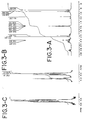
- Figures 3A, 3B and 3C represent details of enlarged sections of the NMR spectrum of Figure 3 denoted on Figure III as sections "A", "B", and "C".
- Figure 4 is the NMR spectrum for the peak indicated by reference numeral 22 on Figure 2 and is for the compound having the structure: prepared according to Example III.
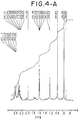
- Figures 4A, 4B and 4C represent details of enlarged sections of the NMR spectrum of Figure 4 denoted as "A", "B” and “C" on Figure 4.
- Figure 5 is the infra-red spectrum for the mixture of compounds prepared according to Example III having the structures: and Figure 6 represents a cutaway side elevation view of apparatus used in forming perfumed polymers which contain embedded therein at least one of the 2,2,3-trimethylcyclopentenyl acetone derivatives of our invention.
- Figure 7 is a front view of the apparatus of Figure 6 looking in the direction of the arrows.
- Figure 1 is the GLC profile for the reaction product of Example II (conditions:SE-30 column programmed at 150-220°C at 8°C per minute.
- the peaks indicated by reference numerals 10 and 11 are the peaks for the solvents used in the reaction.
- the peak indicated by reference numeral 12 is the peak for the compound having the structure:
- Figure 2 is the GLC profile for the reaction product of Example III (conditions:S-1 column programmed at 150-220°C at 8°C per minute.
- the peak indicated by reference numeral 21 is the peak for the compound having the structure:
- the peak indicated by reference numeral 22 is the peak for the compound having the structure:
- Figure 3 is the NMR spectrum for the peak indicated by reference numeral 21 on Figure 2.
- the section of the NMR spectrum denoted by the "A” is set forth in detail in Figure 3A.
- the section of the NMR spectrum of Figure 3 denoted by the "B” is set forth in detail in Figure 3B.
- the section of the NMR spectrum of Figure 3 denoted by the "C” is set forth in Figure 3C.
- Figure 4 is the NMR spectrum for the peak indicated by reference numeral 22 of Figure 2 for the compound having the structure:
- the polymer may be a thermoplastic polymer such as low density polyethylene or polypropylene or copolymers of ethylene and vinyl acetate or mixtures of polymers and copolymers such as copolymers of ethylene and vinyl acetate and polyethylene
- the process comprises heating the polymer or mixture of polymers to the melting point of said polymer or mixture of polymers, e.g., 250°C in the case of low density polyethylene.
- the apparatus used in producing such elements comprises a device for forming the polymer containing perfume, e.g. polyethylene or polyethylene-polyvinyl acetate or mixtures of same or polypropylene, which comprises a vat or container 212 into which the polymer taken alone or in admixture with other copolymers and the perfuming substance which is a mixture of at least one of the 2,2,3-trimethylcyclopentenyl acetone derivatives of our invention and other compatible perfumes (if desired) is placed.
- the polymer containing perfume e.g. polyethylene or polyethylene-polyvinyl acetate or mixtures of same or polypropylene
- the container is closed by means of an air-tight lid 228 and clamped to the container by bolts 265 .
- a stirrer 273 traverses the lid or cover 228 in air-tight manner and is rotatable in a suitable manner.
- a surrounding cylinder 212 having heating coils 212A which are supplied with electric current through cables 214 and 222 from rheostats or controls 216 or 220 is operated to maintain the temperature inside the container 212 such that the polymer in the container will be maintained in the molten or liquid state. It has been found advantageous to employ polymers at such a temperature that the viscosity will be in the range of 90-100 sayboldt seconds.
- the heater 218 is operated to maintain the upper portion of the container 212 within a temperature range of, for example, 220°-270°C in the case of low density polyethylene.
- the bottom portion of the container 212 is heated by means of heating coils 212A regulated through the control 220 and the control 216 connected thereto through connecting wires 222 and 214 respectively to maintain the lower portion of the container 212 within a temperature range of 220°-270°C.
- the polymer or mixture of polymers added to the container 212 is heated from 10-12 hours, whereafter the perfume composition or perfume material which contains at least one of the 2,2,3-trimethylcyclopentenyl acetone derivatives of our invention is quickly added to the melt.
- the perfume composition or perfume material which contains at least one of the 2,2,3-trimethylcyclopentenyl acetone derivatives of our invention is quickly added to the melt.
- about 10-45% by weight of the resulting mixture of the perfumery substance containing at least one of the 2,2,3-trimethylcyclopentenyl acetone derivatives of our invention is added to the polymer.
- the mixture is stirred for a few minutes, for example, 5-15 minutes and maintained within the temperature ranges indicated previously by the heating coil 212A .
- the controls 216 and 220 are connected through cables 224 and 226 to a suitable supply of electric current for supplying the power for heating purposes.
- valve "V" is opened permitting the mass to flow outwardly through conduit 232 having a multiplicity of orifices 234 adjacent to the lower side thereof.
- the outer end of the conduit 232 is closed so that the liquid polymer in intimate admixture with the composition containing at least one of the 2,2,3-trimethylcyclopentenyl acetone derivatives of our invention taken alone or taken further together with other perfume substances will continuously drop through the orifices 234 downwardly from the conduit 232 .
- the temperature of the polymer intimately admixed with the perfumery substance in the container 212 is accurately controlled so that a temperature in the range of from about 240°-250°C., for example, (in the case of low density polyethylene) will exist in the conduit 232 .
- the regulation of the temperature through the controls 216 and 220 is essential in order to insure temperature balance to provide for the continuous dripping or dropping of molten polymer intimately admixed with the perfume substance (containing at least one of the 2,2,3-trimethylcyclopentenyl acetone derivatives of our invention and, if desired, other materials compatible with one of said 2,2,3-trimethylcyclopentenyl acetone derivatives of our invention) through the orifices 234 at a rate which will insure the formation of droplets 236 which will fall downwardly onto a moving conveyor belt 238 caused to run between conveyor wheels 240 and 242 beneath the conduit 232 .
- pellets 244 which harden almost instantaneously and fall off the end of the conveyor 238 into a container 250 which is advantageously filled with water 254 or some other suitable cooling liquid 254 to insure the rapid cooling of each of the pellets 244 .
- the pellets are then collected from the container 250 and utilized for the formation of other functional products, e.g., garbage bags and the like.
- the present invention provides 2,2,3-trimethylcyclopentenyl acetone derivatives defined according to at least one of the structures: and as well as ketal intermediates defined according to the structure: wherein R3, R4, and R5 are the same or different hydrogen or methyl; R6 represents hydrogen methyl, ethyl, propyl or isopropyl; x is 0, 1 or 2; R7' and R7'' represents the same or different methyl or ethyl or R7', (CH2) x and R7'' taken together represent C2-C6 alkylene.
- the 2,2,3-trimethylcyclopentenyl acetone derivatives of our invention defined above are capable of augmenting or enhancing the aroma and/or taste of consumable materials including but not limited to perfume compositions, colognes and (perfumed articles (including but not limited to soaps, anionic, cationic, nonionic or zwitterionic detergents, fabric softener compositions, fabric softener articles, optical brighteners, perfumed polymers, hair preparations) thus fulfilling a need in the field of perfumery as well as detergent, cologne, fabric softener and cosmetic manufacturer.
- the 2,2,3-trimethylcyclopentenyl acetone derivatives of our invention are long lasting and substantive and give rise to sweet, green, fruity, pineapple, galbanum and geranium aromas with sweet, fruity, pineapple and green topnotes.
- the 2,2,3-trimethylcyclopentenyl acetone derivatives of our invention may be prepared using as a starting material the nitrile having the structure: This nitrile is reacted with an organometallic compound having the structure: wherein R6 represents hydrogen, methyl, ethyl, propyl or isopropyl; and M represents MgX or Li; and wherein X represents chloro or bromo.
- the reaction between the compounds having the structure: and the nitrile having the structure: is shown thusly:
- the intermediate having the structure: is formed and this intermediate is reacted with water in the presence of acid to produce the ketone having the structure:
- the ketone having the structure: is then reacted with a ketal-producing reagent which may be for example, a compound having the structure: (a trialkyl orthoformate such as trimethyl or triethyl orthoformate) or a compound having a structure:
- a ketal-producing reagent which may be for example, a compound having the structure: (a trialkyl orthoformate such as trimethyl or triethyl orthoformate) or a compound having a structure:
- the formation of the ketal from the ketone having the structure: is shown thusly:
- the resulting ketal is then reacted with an allylic alcohol (such as prenyl alcohol) having the structure: according to the reaction: wherein x represents 0, 1 or 2 and
- the above process is unexpected, unobvious and advantageous in that it yields a ratio of the compound having the structure: to compound having the structure: of from about 90:10 down to about 80:20.
- the compounds produced according to the foregoing process and compositions produced according to the foregoing process are as follows:
- this reaction is carried out in the presence of protonic acid (a catalytic quantity) such as paratoluene sulfonic acid or methane sulphonic acid in the presence of a compatible solvent (methyl alcohol when trimethylorthoformate is used as the reagent).
- protonic acid a catalytic quantity
- a compatible solvent methyl alcohol when trimethylorthoformate is used as the reagent.
- the mole ratio of, for example, trimethylorthoformate:ketone is preferably about 2:1 (since 2 methyl groups are needed for every ketone moity).
- the reaction is carried out at a temperature in the range of from about 10°C up to about 20°C.
- the molar concentration of acid catalyst in the reaction mass is between about 0.2% up to about 0.5% based on the other reactants.
- the actual concentration of acid catalyst may vary from about 0.02 moles per liter up to about 0.05 moles per liter.
- the reaction mass is distilled and the ketals having the structure: may be recovered and used "as is" for their perfumery properties or they may be further reacted with compounds defined according to the structure: as shown in the reaction sequence:
- the mole ratio of allylic alcohol:ketal is about 2:1 with a slight excess of ketal being used.
- the reaction is preferably carried out using a weak acid catalyst such as citric acid. When the citric acid is used, the concentration of citric acid in the reaction mass is between 0.4 and 0.6 grams per kilogram of reaction mass.
- the reaction is carried out at reflux conditions, preferably between about 90°C and 100°C.
- the reaction product is distilled from the reaction mass preferably using vacuum distillation techniques.
- the 2,2,3-trimethylcyclopentenyl acetone derivatives of our invention and one or more auxiliary perfume ingredients including, for example, alcohols, aldehydes, ketones other than the 2,2,3-trimethylcyclopentenyl acetone derivatives of our invention, terpenic hydrocarbons, nitriles, esters, lactones, ethers other than the ketals of our invention, natural essential oils and synthetic essential oils may be admixed so that the combined odors of the individual components produce a pleasant and desired fragrance particularly and preferably in the amber, cedarwood and patchouli area.
- auxiliary perfume ingredients including, for example, alcohols, aldehydes, ketones other than the 2,2,3-trimethylcyclopentenyl acetone derivatives of our invention, terpenic hydrocarbons, nitriles, esters, lactones, ethers other than the ketals of our invention, natural essential oils and synthetic essential oils may be admixed so that the combined odors of the individual
- Such perfume compositions usually contain (a) the main note or the "bouquet" or foundation stone of the composition; (b) modifiers which round off and accompany the main note; (c) fixatives which include odorous substances which lend a particular note to the perfume throughout all stages of evaporation and substances which retard evaporation; and (d) topnotes which are usually low boiling, fresh smelling materials.
- perfume compositions it is the individual components which contribute to their particular olfactory characteristics, however, the overall sensory effect of the perfume compositions will be at least the sum total of the effects of each of the ingredients.
- one or more of the 2,2,3-trimethylcyclopentenyl acetone derivatives of our invention can be used to alter, modify, or enhance the aroma characteristics of a perfume composition, for example, by utilizing or moderating the olfactory reaction contributed by another ingredient in the composition.
- perfumed articles e.g. anionic, cationic, nonionic or zwitterionic solid or liquid detergents, soaps, fabric softener compositions, drier-added fabric softener articles, optical brightener compositions, perfumed polymers and textile sizing agents
- perfume compositions containing as little as 0.05% of one or more of the 2,2,3-trimethylcyclopentenyl acetone derivatives of our invention prepared in accordance with the process set forth supra and less than 50% of one or more of the 2,2,3-trimethylcyclopentenyl acetone derivatives of our invention or even less, e.g., 0.005% can be used to impart, augment or enhance sweet, green, fruity, pineapple, galbanum and geranium aroma profiles with sweet, fruity, pineapple and green topnotes to soaps, cosmetics, solid or liquid anionic, cationic, nonionic or zwitterionic detergents, fabric softener compositions, fabric softener articles, optical brightener compositions, textile sizing compositions, perfumed polymers or other products.
- the amount employed can range up to 70% of the fragrance components and will depend on considerations of cost, nature of the end product, the effect desired on the finished product and the particular fragrance sought.
- One of more of the 2,2,3-trimethylcyclopentenyl acetone derivatives of our invention are useful (taken alone or with other ingredients) in perfume compositions as (an) olfactory component(s) in detergents and soaps, space odorants and deodorants, perfumes, colognes, toilet water, bath preparations, such as creams, deodorants, hand lotions and sun screens; powders, such as talcs, dusting powders, face powders and perfumed polymers and articles of manufacture produced from said perfumed polymers, e.g., garbage bags, children's toys.
- the range of one or more of the 2,2,3-trimethylcyclopentenyl acetone derivatives of our invention in the perfumed article is from about 0.2% by weight of one or more of the 2,2,3-trimethylcyclopentenyl acetone derivatives of our invention up to about 6% by weight of one or more of the 2,2,3-trimethylcyclopentenyl acetone derivatives of our invention based on the total weight of perfumed articles.
- the perfume or fragrance composition of our invention can contain a vehicle for one or more of the 2,2,3-trimethylcyclopentenyl acetone derivatives of our invention.
- the vehicle can be a liquid, such as a non-toxic alcohol, e.g., ethyl alcohol, a non-toxic glycol, e.g., propylene glycol.
- the carrier can also be an absorbent solid, such as a gum (e.g., gum arabic or xanthan gum) or components for encapsulating the composition (such as gelatin as by coacervation or such as, an urea formaldehyde prepolymer forming a capsule shell around a liquid perfume center.
- Our invention also relates to the utilization of control release technology for the controlled release of perfumes into gaseous environments from polymers such as mixtures of epsilon polycaprolactone polymers and polyethylene according to the disclosure of United States Letters Patent No. 4,715,981 at columns 10 , 11 and 12 of the specification, the specification for which is incorporated by reference herein.
- Examples I, II and III serve to provide a process for preparing one or more of the 2,2,3-trimethylcyclopentenyl acetone derivatives as well as the ketal intermediate which is also useful in perfumery.
- the examples following Example III are illustrative of the organoleptic utilities of one or more of the 2,2,3-trimethylcyclopentenyl acetone derivatives of our invention.
- the reaction mass is aged for a period of 3 hours.
- reaction mass is then quenched using 750 ml of 1 molar hydrochloric acid solution.
- the reaction mass now exists in two phases an organic phase and an aqueous phase.
- the organic phase is washed with 500 ml brine (saturated sodium chloride) and filtered through anhydrous magnesium sulfate. During the filtration most of the ether boils off. The reaction mass is then rushed over on a one plate distillation column yielding 398 grams of product.
- brine saturated sodium chloride
- the temperature of the ketone is lowered to 20°C and the flask is then charged with 5.52 moles (585 grams) of trimethylorthoformate.
- the resulting reaction mass is cooled to 10°C and 0.03 moles (5.7 grams) of paratoluene sulfonic acid in 500 ml methanol is added to the reaction mass while maintaining the reaction mass at 10°C.
- reaction mass is then permitted to warm to 27°C and is stirred at 27°C for a period of 6 hours.
- reaction mass 2.46 grams (0.03 moles) of sodium acetate is then added to reaction mass in order to neutralize the paratoluene sulfonic acid catalyst. The reaction mass is stirred until one phase exists.
- reaction mass is then heated to reflux (62-70°C and aged for 7 hours at reflux conditions.
- the reaction mass is then cooled to room temperature and 2.46 grams (0.03 moles) of sodium acetate is added.
- Figure 1 is the GLC profile for the reaction mass prior to distillation.
- the peak indicated by reference numeral 12 is the peak for the compound having the structure:
- the peaks indicated by reference numerals 10 and 11 are the peaks for the solvent used in the reaction.
- the reaction mass is heated to reflux with stirring (95°C) and the methyl alcohol distilled off.
- the resulting product is a mixture of compounds having the structures: and with the ratio of the compound having the structure: to the compound having the structure: being 82:15 (mole ratio) (bulked distillation fractions 5-17).
- Figure 2 is the GLC profile for the reaction product prior to distillation.
- the peak indicated by reference numeral 21 is the peak for compound having the structure:
- the peak indicated by reference numeral 22 is the peak for the compound having the structure:
- Figure 3 is the NMR spectrum for peak 21 of Figure 2 for the compound having the structure:
- Figure 4 is the NMR spectrum for peak 22 of Figure 2 for the compound having the structure:
- the compound having the structure has an galbanum, green, geranium, fruity and pineapple aroma profile.
- the mixture of compounds having the structures: and (mole ratio 82:15) has a sweet, green, fruity, pineapple and galbanum aroma profile with sweet, fruity, pineapple and green topnotes.
- pine fragrance formulation is prepared:
- Example IV The mixture of compounds having the structures: and (mole ratio 15:82) produced according to Example I, bulked distillation fractions 5-17 imparts to the pine formulation an intense and substantive sweet, green, fruity, pineapple and galbanum undertones with sweet, fruity, pineapple and green topnotes. Accordingly, the perfume composition of Example IV can be described as: "piney with sweet, green, fruity, pineapple and galbanum undertones and sweet, fruity, pineapple and green topnotes".
- Cosmetic powder compositions are prepared by mixing in a ball mill 100 grams of talcum powder with 0.25 grams of each of the substances set forth in Table II below. Each of the cosmetic powder compositions has an excellent aroma as described in Table II below:
- Concentrated liquid detergents with aromas as set forth in Table II of Example V (which detergents are prepared from Lysine salt of n-dodecyl benzene sulfonic acid as more specifically described in United States Letters Patent 3,948,818 issued on April 6, 1976, the specification for which is incorporated by reference herein) are prepared containing each of the substances set forth in Table II of Example V, supra. They are prepared by adding and homogeneously mixing the appropriate quantity of perfumery substance as set forth in Table II of Example V in liquid detergent. The detergents all possess aromas as set forth in Table II of Example V, the intensity increasing with greater concentrations of perfumery substance of Table II of Example V, supra.
- the perfume substances of Table II of Example V, supra, are incorporated into colognes at concentrations of 1.5%, 2.0%, 2.5%, 3.0% and 4.0% in 80%, 85% and 90% aqueous ethanol; and into handkerchief perfume compositions at concentrations of 10%, 15%, 20%, 25% and 30% (in 85%, 90% and 95% aqueous ethanol).
- Distinct and definite aromas as set forth in Table II of Example V are imparted to the cologne and to the handkerchief perfume compositions.
- a total of 100 grams of a detergent powder (a nonionic detergent powder containing a proteolytic enzyme prepared according to Example II of Canadian Patent 985,190 issued on March 9, 1976, the disclosure of which is incorporated by reference herein) is mixed with 0.15 grams of each of the substances set forth in Table II of Example V, supra until substantially homogeneous compositions are obtained. These compositions have excellent aromas as set forth in Table II of Example V.
- a detergent is prepared from the following ingredients according to Example II of Canadian Letters Patent 1,007,948 (the specification for which is incorporated by reference herein):
- This detergent is a "phosphate-free" detergent. A total of 100 grams of this detergent is admixed separately with 0.15 grams of each of the perfume substances of Table II of Example V, supra. The detergent samples each have excellent aromas as set forth in table II of Example V, supra.
- Example II Utilizing the procedure of Example II at column 15 of United States Letters Patent 3,632,396 (the specification for which is incorporated by reference herein), a non-woven cloth substrate useful as a drier-added fabric softening article of manufacture is prepared, wherein the substrate, the substrate coating and the outer coating and the perfuming material are as follows:
- the aroma set forth in Table II of Example V is imparted in a pleasant manner to the headspace in the dryer on operation thereof, using said dried-added fabric softening non-woven fabric.
Landscapes
- Chemical & Material Sciences (AREA)
- Organic Chemistry (AREA)
- Life Sciences & Earth Sciences (AREA)
- Engineering & Computer Science (AREA)
- Chemical Kinetics & Catalysis (AREA)
- Oil, Petroleum & Natural Gas (AREA)
- Wood Science & Technology (AREA)
- Fats And Perfumes (AREA)
- Detergent Compositions (AREA)
Claims (12)
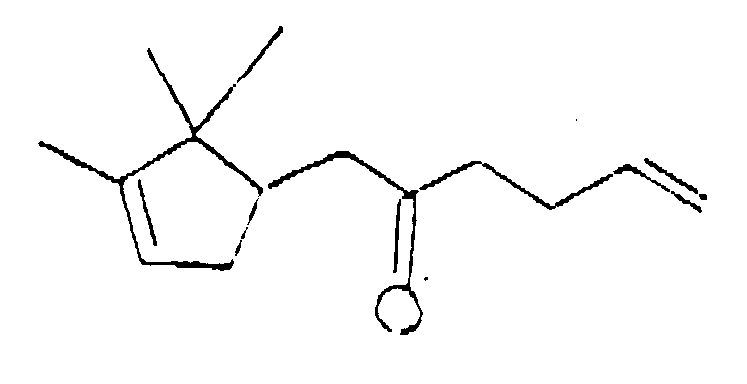
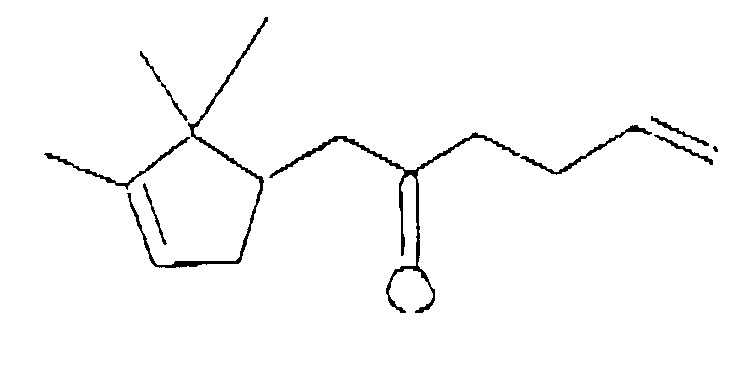
- Dérivé de la 2,2,3-triméthylcyclopenténylacétone défini conformément à une structure choisie parmi :


- Composé répondant à la formule :

- Composition définie conformément à la revendication 1, qui est un mélange de composés répondant aux formules :

- Composé selon la revendication 2, répondant à la formule :

- Procedé pour augmenter ou améliorer l'arôme d'un parfum, d'une eau de toilette ou d'un article parfumé comprenant les étapes consistant à mélanger intimement avec ledit parfum, ladite eau de cologne ou ledit article parfumé, une quantité augmentant ou améliorant l'arôme d'un dérivé de la 2,2,3-triméthylcyclopenténylacétone définie conformément à la revendication 1.
- Procédé selon la revendication 5, dans lequel le dérivé de la 2,2,3-triméthylcyclopenténylacétone est un mélange de composés répondant aux formules :


- Procédé pour augmenter ou améliorer l'arôme d'un détergent solide ou liquide anionique, cationique, non-ionique ou amphotère comprenant les étapes consistant à ajouter auxdits détergents solides ou liquides anioniques, cationiques, non-ioniques ou amphotères une quantité augmentant ou améliorant l'arôme d'au moins un dérivé de la 2,2,3-triméthylcyclopenténylacétone définie selon la revendication 1.
- Procédé selon la revendication 7, dans lequel le dérivé de la 2,2,3-triméthylcyclopenténylacétone est un mélange de composés répondant aux formules :

- Composition de parfum comprenant une base de parfum et, en mélange intime avec celle-ci, une quantité augmentant ou améliorant l'arôme d'au moins un dérivé de la 2,2,3-triméthylcyclopenténylacétone définie selon la revendication 1.
- Polymère parfumé comprenant un polymère et, en mélange intime avec celui-ci au moins un dérivé de la 2,2,3-triméthylcyclopenténylacétone définie selon la revendication 1.
- Composition d'adoucissant pour tissus ou article adoucissant pour tissus comprenant une base de composition d'adoucissant pour tissus ou une base d'article adoucissant pour tissus et en mélange intime avec celui-ci au moins un dérivé de la 2,2,3-triméthylcyclopenténylacétone définie selon la revendication 1.
- Eau de cologne comprenant de l'alcool, de l'eau et une quantité améliorant l'arôme d'au moins un dérivé de la 2,2,3-triméthylcyclopenténylacétone définie selon la revendication 1.
Applications Claiming Priority (2)
| Application Number | Priority Date | Filing Date | Title |
|---|---|---|---|
| US07/563,607 US5039659A (en) | 1990-08-07 | 1990-08-07 | 2,2,3-trimethylcyclopentenyl acetone derivatives, organoleptic uses thereof and process for preparing same |
| US563607 | 1990-08-07 |
Publications (3)
| Publication Number | Publication Date |
|---|---|
| EP0470426A2 EP0470426A2 (fr) | 1992-02-12 |
| EP0470426A3 EP0470426A3 (en) | 1992-07-01 |
| EP0470426B1 true EP0470426B1 (fr) | 1995-02-01 |
Family
ID=24251200
Family Applications (1)
| Application Number | Title | Priority Date | Filing Date |
|---|---|---|---|
| EP91112278A Expired - Lifetime EP0470426B1 (fr) | 1990-08-07 | 1991-07-22 | Dérivés de 2,2,3-triméthylcyclopentényl acétone, leur utilisation organoleptique et leur procédé de préparation |
Country Status (4)
| Country | Link |
|---|---|
| US (1) | US5039659A (fr) |
| EP (1) | EP0470426B1 (fr) |
| CA (1) | CA2038988A1 (fr) |
| DE (1) | DE69107143T2 (fr) |
Families Citing this family (5)
| Publication number | Priority date | Publication date | Assignee | Title |
|---|---|---|---|---|
| ES2190916T3 (es) * | 1999-05-27 | 2003-09-01 | Givaudan Sa | Cetonas alfa, beta, no saturadas. |
| JP5226782B2 (ja) | 2007-06-15 | 2013-07-03 | イーコラブ インコーポレイティド | 織物柔軟剤組成物および使用方法 |
| GB0802526D0 (en) * | 2008-02-12 | 2008-03-19 | Givaudan Sa | Organic compounds |
| US8232239B2 (en) * | 2010-03-09 | 2012-07-31 | Ecolab Usa Inc. | Liquid concentrated fabric softener composition |
| US8673838B2 (en) | 2011-06-22 | 2014-03-18 | Ecolab Usa Inc. | Solid concentrated fabric softener composition |
Family Cites Families (5)
| Publication number | Priority date | Publication date | Assignee | Title |
|---|---|---|---|---|
| US4208296A (en) * | 1978-08-10 | 1980-06-17 | International Flavors & Fragrances Inc. | Use of 2,2,3,-trimethyl-3-cyclopenten-1-ylalkenyl and alkylidene cycloalkanols and cycloalkanones in augmenting or enhancing the aroma of detergents |
| JPS55139330A (en) * | 1979-04-13 | 1980-10-31 | Taiyo Koryo Kk | Camphoren derivative,perfume composition containing said derivative, and preparation of said derivative |
| DE3441902C1 (de) * | 1984-11-16 | 1986-01-30 | Dragoco Gerberding & Co Gmbh, 3450 Holzminden | 4-(2,2,3-Trimethylcyclopent-3-en-1-yl)-but-3-en-1-ole,Verfahren zu deren Herstellung und Verwendung als Riechstoffe |
| US4666629A (en) * | 1985-09-20 | 1987-05-19 | International Flavors & Fragrances Inc. | Process for preparing mixture containing 2-campholenylidenbutanol, product produced thereby and perfumery uses thereof |
| US4619781A (en) * | 1985-09-20 | 1986-10-28 | International Flavors & Fragrances Inc. | Process for preparing mixture containing 2-campholenylidenbutanol, product produced thereby and perfumery uses thereof |
-
1990
- 1990-08-07 US US07/563,607 patent/US5039659A/en not_active Expired - Fee Related
-
1991
- 1991-03-25 CA CA002038988A patent/CA2038988A1/fr not_active Abandoned
- 1991-07-22 EP EP91112278A patent/EP0470426B1/fr not_active Expired - Lifetime
- 1991-07-22 DE DE69107143T patent/DE69107143T2/de not_active Expired - Fee Related
Also Published As
| Publication number | Publication date |
|---|---|
| US5039659A (en) | 1991-08-13 |
| DE69107143D1 (de) | 1995-03-16 |
| EP0470426A2 (fr) | 1992-02-12 |
| EP0470426A3 (en) | 1992-07-01 |
| DE69107143T2 (de) | 1995-06-22 |
| CA2038988A1 (fr) | 1992-02-08 |
Similar Documents
| Publication | Publication Date | Title |
|---|---|---|
| GB2343450A (en) | Trimethylcyclohexenyl cyclopropyl ketones | |
| EP1213277B1 (fr) | Dérivés alkylés du 4,5,6,7-tétrahydroindane et leur utilisation dans des compositions parfumées | |
| US5665698A (en) | Methyl substituted tetrahydroindane alkyl enol ethers, perfumery uses thereof, processes for preparing same, and process intermediates | |
| US5039659A (en) | 2,2,3-trimethylcyclopentenyl acetone derivatives, organoleptic uses thereof and process for preparing same | |
| US5767305A (en) | Cyclopropyl carboxylic acid esters and uses thereof in imparting, augmenting and enhancing aromas | |
| US5376630A (en) | Methyl, substituted propyl-substituted pentamethyl indane derivatives, processes for producing same and perfumery uses thereof | |
| US4902840A (en) | Substituted tetrahydroindane derivatives and organoleptic uses of substituted tetrahydroindanes | |
| EP0051404B1 (fr) | Ethers norbornyliques, leur préparation et utilisation pour l'augmentation de l'arôme des biens de consommation, étoffe ou tissus | |
| EP0608070B1 (fr) | Dérivés de p-méthylènedioxyphényl propionitrile, procédé de leur préparation, composés intermédiaires utilisés dans ce procédé et utilisations organolepliques de ces dérivés et composés intermédiaires | |
| US4639330A (en) | Alkyl-substituted spirodecenone derivatives, organoleptic utility thereof and processes for preparing same | |
| US4902672A (en) | Polyalkyl indanyl n-propyl and allyl ethers and perfumery uses thereof | |
| EP0410731B1 (fr) | Utilisation de 3-(2-bornyloxy)-2-méthyl-1-propanol comme parfum | |
| US4914083A (en) | Oxy-substituted-2-phenyl pyran derivatives and process for preparing same and perfumery uses thereof | |
| US4622172A (en) | Alkyl-substituted spiroundecenone derivatives, organoleptic utility thereof and processes for preparing same | |
| EP0485061B1 (fr) | Cyclopentényloxabicyclooctanes substitués, cyclopentényl-formylcyclohexènes, cyclopenténylhydroxyméthyl cyclohexènes et compositions contenant du camphonyl spirocyclooctane, leur utilisation organoleptique et leur procédé de préparation | |
| US4582634A (en) | Use in augmenting or enhancing the aroma of perfume compositions, colognes and perfumed articles of 1-phenylpenten-4-one-1 and methyl homologues thereof | |
| US4593143A (en) | Hydroxyalkoxy norbornyl ethers | |
| US5366959A (en) | Mixtures of 2-(2-bornyloxy)-ethyl-1-ethanols and perfumery uses thereof | |
| US5066641A (en) | 3,5,5-trimethylhexanal oxime and organoleptic uses thereof | |
| EP0513977B1 (fr) | Compositions contenant un composé bicycloalkadiène acylé, son procédé de préparation et son utilisation en parfumerie | |
| US4720481A (en) | Cyclohexenyl pyridine derivatives, organoleptic uses of same and processes for preparing same | |
| US4540812A (en) | 2-Acetoxy-4-(2-bornyloxy) butane | |
| US5137869A (en) | Methyl substituted tetrahydroindanone and perfumery uses thereof | |
| US4601835A (en) | Hydroxyalkoxy norbornyl ethers, process for preparing same and organoleptic uses thereof | |
| US5077274A (en) | Bicyclo[10.2.0]tetradecan-13-one, fragrance use thereof, process for preparing same and dichlorinated intermediate used in said process |
Legal Events
| Date | Code | Title | Description |
|---|---|---|---|
| PUAI | Public reference made under article 153(3) epc to a published international application that has entered the european phase |
Free format text: ORIGINAL CODE: 0009012 |
|
| AK | Designated contracting states |
Kind code of ref document: A2 Designated state(s): CH DE FR GB LI NL |
|
| PUAL | Search report despatched |
Free format text: ORIGINAL CODE: 0009013 |
|
| AK | Designated contracting states |
Kind code of ref document: A3 Designated state(s): CH DE FR GB LI NL |
|
| 17P | Request for examination filed |
Effective date: 19920814 |
|
| 17Q | First examination report despatched |
Effective date: 19940520 |
|
| GRAA | (expected) grant |
Free format text: ORIGINAL CODE: 0009210 |
|
| AK | Designated contracting states |
Kind code of ref document: B1 Designated state(s): CH DE FR GB LI NL |
|
| REF | Corresponds to: |
Ref document number: 69107143 Country of ref document: DE Date of ref document: 19950316 |
|
| ET | Fr: translation filed | ||
| PG25 | Lapsed in a contracting state [announced via postgrant information from national office to epo] |
Ref country code: GB Effective date: 19950722 |
|
| PG25 | Lapsed in a contracting state [announced via postgrant information from national office to epo] |
Ref country code: LI Effective date: 19950731 Ref country code: CH Effective date: 19950731 |
|
| PLBE | No opposition filed within time limit |
Free format text: ORIGINAL CODE: 0009261 |
|
| STAA | Information on the status of an ep patent application or granted ep patent |
Free format text: STATUS: NO OPPOSITION FILED WITHIN TIME LIMIT |
|
| 26N | No opposition filed | ||
| PG25 | Lapsed in a contracting state [announced via postgrant information from national office to epo] |
Ref country code: NL Effective date: 19960201 |
|
| REG | Reference to a national code |
Ref country code: CH Ref legal event code: PL |
|
| GBPC | Gb: european patent ceased through non-payment of renewal fee |
Effective date: 19950722 |
|
| NLV4 | Nl: lapsed or anulled due to non-payment of the annual fee |
Effective date: 19960201 |
|
| PG25 | Lapsed in a contracting state [announced via postgrant information from national office to epo] |
Ref country code: DE Effective date: 19960402 |
|
| PG25 | Lapsed in a contracting state [announced via postgrant information from national office to epo] |
Ref country code: FR Effective date: 19960430 |
|
| REG | Reference to a national code |
Ref country code: FR Ref legal event code: ST |
|
| REG | Reference to a national code |
Ref country code: FR Ref legal event code: ST |
|
| REG | Reference to a national code |
Ref country code: FR Ref legal event code: ST |