EP0475600A2 - Système et procédé de communication entre des environnements de fenêtres - Google Patents
Système et procédé de communication entre des environnements de fenêtres Download PDFInfo
- Publication number
- EP0475600A2 EP0475600A2 EP91307561A EP91307561A EP0475600A2 EP 0475600 A2 EP0475600 A2 EP 0475600A2 EP 91307561 A EP91307561 A EP 91307561A EP 91307561 A EP91307561 A EP 91307561A EP 0475600 A2 EP0475600 A2 EP 0475600A2
- Authority
- EP
- European Patent Office
- Prior art keywords
- server
- client
- communication
- event
- clients
- Prior art date
- Legal status (The legal status is an assumption and is not a legal conclusion. Google has not performed a legal analysis and makes no representation as to the accuracy of the status listed.)
- Granted
Links
Images




Classifications
-
- G—PHYSICS
- G06—COMPUTING OR CALCULATING; COUNTING
- G06F—ELECTRIC DIGITAL DATA PROCESSING
- G06F9/00—Arrangements for program control, e.g. control units
- G06F9/06—Arrangements for program control, e.g. control units using stored programs, i.e. using an internal store of processing equipment to receive or retain programs
- G06F9/46—Multiprogramming arrangements
- G06F9/54—Interprogram communication
- G06F9/543—User-generated data transfer, e.g. clipboards, dynamic data exchange [DDE], object linking and embedding [OLE]
-
- G—PHYSICS
- G06—COMPUTING OR CALCULATING; COUNTING
- G06F—ELECTRIC DIGITAL DATA PROCESSING
- G06F9/00—Arrangements for program control, e.g. control units
- G06F9/06—Arrangements for program control, e.g. control units using stored programs, i.e. using an internal store of processing equipment to receive or retain programs
- G06F9/44—Arrangements for executing specific programs
- G06F9/451—Execution arrangements for user interfaces
- G06F9/452—Remote windowing, e.g. X-Window System, desktop virtualisation
-
- G—PHYSICS
- G06—COMPUTING OR CALCULATING; COUNTING
- G06F—ELECTRIC DIGITAL DATA PROCESSING
- G06F9/00—Arrangements for program control, e.g. control units
- G06F9/06—Arrangements for program control, e.g. control units using stored programs, i.e. using an internal store of processing equipment to receive or retain programs
- G06F9/46—Multiprogramming arrangements
- G06F9/54—Interprogram communication
- G06F9/542—Event management; Broadcasting; Multicasting; Notifications
-
- Y—GENERAL TAGGING OF NEW TECHNOLOGICAL DEVELOPMENTS; GENERAL TAGGING OF CROSS-SECTIONAL TECHNOLOGIES SPANNING OVER SEVERAL SECTIONS OF THE IPC; TECHNICAL SUBJECTS COVERED BY FORMER USPC CROSS-REFERENCE ART COLLECTIONS [XRACs] AND DIGESTS
- Y10—TECHNICAL SUBJECTS COVERED BY FORMER USPC
- Y10S—TECHNICAL SUBJECTS COVERED BY FORMER USPC CROSS-REFERENCE ART COLLECTIONS [XRACs] AND DIGESTS
- Y10S707/00—Data processing: database and file management or data structures
- Y10S707/99941—Database schema or data structure
- Y10S707/99944—Object-oriented database structure
- Y10S707/99945—Object-oriented database structure processing
-
- Y—GENERAL TAGGING OF NEW TECHNOLOGICAL DEVELOPMENTS; GENERAL TAGGING OF CROSS-SECTIONAL TECHNOLOGIES SPANNING OVER SEVERAL SECTIONS OF THE IPC; TECHNICAL SUBJECTS COVERED BY FORMER USPC CROSS-REFERENCE ART COLLECTIONS [XRACs] AND DIGESTS
- Y10—TECHNICAL SUBJECTS COVERED BY FORMER USPC
- Y10S—TECHNICAL SUBJECTS COVERED BY FORMER USPC CROSS-REFERENCE ART COLLECTIONS [XRACs] AND DIGESTS
- Y10S707/00—Data processing: database and file management or data structures
- Y10S707/99941—Database schema or data structure
- Y10S707/99948—Application of database or data structure, e.g. distributed, multimedia, or image
Definitions
- This invention relates generally to systems that provide graphics environments for application programs, and more particularly to communication between application programs in systems capable of running multiple application programs written for various environments.
- protocols define the data formats and order of communication that allow application programs to communicate with system components such as I/O devices or servers. These protocols include application programming interfaces, interprocess communication protocols, and remote procedure calls. With the rapid growth of computers and application programs, there has been a parallel growth in the number of software and hardware protocols. The existence of multiple protocols throughout the data processing industry has been a source of inconvenience because application programs written for one protocol must be modified, rewritten, or even redesigned, for a different protocol.
- the graphic services can include an interclient communication facility.
- interclient communication may be required when, for example, a user copies text from a window "owned" by one client into a window owned by a different client.
- Windows are areas on a video screen that allow a user to view data processing output. Windows provide clients an organized way of managing the use of space on the screen, and allow the display server to present information for multiple clients in an organized way.
- Fig. 1 is a diagram of a system disclosed in U.S. Patent No. 4,899,136 having a server implemented by a host system processor and another server implemented by an emulating processor.
- the host processor seizes control of the keyboard buffer for the emulating processor and writes the data into the buffer by simulating key strokes.
- Converting an existing single server system into such a system may also entail substantial legal and technological problems.
- the person attempting to implement such a system might not possess the legal right to modify the support technology used by an existing single server system, as that technology may be protected by the intellectual property rights of another.
- the support technology of the single server system may be poorly documented or structured in such a way as to make it difficult or impossible to adapt to support another server. Therefore, it is desirable not to have to modify existing host systems.
- the ′136 patent's method of data transfer is limited to types of data that are represented by key strokes, and may therefore not be suitable for the bidirectional transfer of other data, such as bit-map data. Also, the ′136 patent only provides for the transfer of bit-map data from an emulating processor window into a host system processor window, but not for the transfer of data from a host system processor window into an emulating processor window.
- FIG. 2 shows an X Window system, where clients 210, 220, and 230 send graphics request to a display server for implementing the X Window System Protocol (X server) 240, thereby communicating with graphics hardware 250.
- X server X Window System Protocol
- X Window Systems are not the only graphics systems in use throughout the industry. Therefore, it may be desirable to execute clients written for an X Window System together with clients written for some other type of windowing system.
- An example of another windowing system currently in use is the Microsoft Operating System/2 Presentation Manager (PM). It is therefore likely that a need will arise to execute clients using the X Window System protocol (X clients) in the same system as clients using the PM system protocol (PM clients).
- an X client be able to communicate with PM clients in the same manner as the X client communicates with other X clients, while allowing a PM client to communicate with X clients in the same manner as the PM client communicates with other PM clients.
- this invention detects a communication directed to the communication facility of one server by a client connected to the server and makes the communication available to clients connected to a different server. This allows a user to copy data from a window owned by a client of one server and paste the data into a window owned by a client of a different server.
- a method of communicating between a first one of the clients of the first server and a second one of the clients of the second server comprising the steps, performed by a communication client of both the first and second servers, of receiving, by the communication client, a first communication transmitted by the first client to the first communication facility of the first server; sending, to the second communication facility of the second server, a notification for the second client of the first communication from the first client.
- a computer system for providing communication mechanisms to clients comprises a first server processor for responding to communication operations requests generated by a first one of the clients of the first server processor, the first server processor including a first communication facility for communicating between client of the first server; a second server processor for responding to the communication operations requests generated by a second one of the clients of the second server processor, the second server processor including a second communication facility for communication between clients of the second server; and a communication client, coupled to the first server processor as a client and to the second server processor as a client, including means for receiving a first communication transmitted by the first client to the first communication facility of the first server; and means, coupled to the receiving means, for sending to the second communication facility of the second server a notification for the second client of the first communication from the first client.
- Fig. 1 is a block diagram of one type of multi-server system in which a host system processor has access to low level data structures of another processor.
- Fig. 2 is a block diagram of a prior art single-server system.
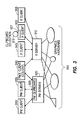
- Fig. 3 is a multi-server system containing a communication client according to one preferred embodiment of the invention.
- Fig. 4 is a general flow diagram of processing carried out by the preferred embodiments of the present invention.
- Fig. 5 is a more detailed flow diagram of the process shown in Fig. 4.
- Fig. 6 is a general flow diagram of a variation of the processing carried out by the first preferred embodiment.
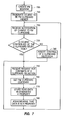
- Fig. 7 is a more detailed diagram of the process shown in Fig. 6.
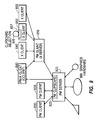
- Fig. 8 is an alternative version of Fig. 3.
- Fig. 9 is a diagram of a multi-server system containing an emulated communication client according to a second preferred embodiment of the present invention.
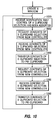
- Fig. 10 is a flow diagram of processing carried out by the second preferred embodiment.
- Fig. 11 is a diagram of a multiserver system containing an emulated communication client according to a third embodiment of the present invention.
- one of the protocols is the X window system protocol described in the BACKGROUND OF THE INVENTION.
- the X window server provides token-like mechanisms called "selections" that allow communication between X clients.
- Each selection has a unique selection name and may be controlled by one X client at a time.
- the client controlling the selection is the current "owner" of the selection.
- the controller of a selection controls what data is associated with the selection at a given time.
- An X client other than the controller may request information about the data associated with the selection, and the controller of the selection should then respond to the request from the requesting X client.
- the controller of the selection may be viewed as the transmitter of data and the requester may be viewed as the receiver of data.
- a request is a type of message.
- a SetSelectionOwner request asks that the X client sending the request become the controller of the selection designated in the request.
- Another example is the CreateWindow request, which asks that a new window be created by the server and that the X client issuing the request be made the owner of the window.
- the X Window server in turn, generates "events" to inform clients of status information.
- the SelectionClear event indicates that a certain client has lost control of a certain selection.
- the SelectionClear event is generated for a window associated with a selection, it is sent to clients that have designated SelectionClear as one of the events they wish to receive for that window. This is done by setting an appropriate bit in an event mask for that window.
- the other protocol is one implemented by the Presentation Manager (PM) of the Microsoft Operating System/2.
- PM has an internal inter-client communication facility also called the "CLIPBOARD.”
- the PM CLIPBOARD is different than the X Window CLIPBOARD selection, however.
- the PM CLIPBOARD is a database that PM clients may write or read. In the PM system, it is a convention that PM clients copying data from a window write the data to the PM CLIPBOARD, and that PM clients copying data into a window read the data from the PM CLIPBOARD.
- the three preferred embodiments of the invention described below keep the contents of the PM CLIPBOARD consistent with the contents of the X Window CLIPBOARD selection (X CLIPBOARD selection).
- X CLIPBOARD selection When an X client changes data associated with the X CLIPBOARD selection, the preferred embodiments write the associated data to the PM CLIPBOARD. Similarly, when a PM client writes information to the PM CLIPBOARD, the preferred embodiments associate the written data with the X CLIPBOARD selection.
- Fig. 3 is a diagram of a system in which a client named CCLIENT 340 is connected to both X server 310 and PM server 320.
- PM clients 330 and 335 are also connected to PM server 320 through which they communicate with graphics hardware 360.
- X clients 345, 350 and 355 are connected to X server 310 through which they communicate with graphics hardware 360.
- PM server 320 provides an interclient communication facility, a PM CLIPBOARD 325, to PM clients 330-340
- X server 310 provides a interclient communication facility, an X CLIPBOARD selection 315, to X clients 340-355.
- PM CLIPBOARD 325 is a communication data base that may be read from or written to by any of PM clients 330-340.
- X CLIPBOARD selection 315 might be visualized as a communication data base, but is actually a token representing control, or ownership, of a collection of data named "CLIPBOARD.”
- X client 350 shown as controlling CLIPBOARD selection 315, may associate the contents of an internal data base 357 with the selection and transfer the contents of data base 357 to any X client requesting the contents of X CLIPBOARD selection 315.
- X CLIPBOARD selection 315 were to be currently controlled by some other X client instead of X client 350, that other X client may associate a different data structure, having no relation to data base 357 in X client 350, with X CLIPBOARD selection 315.
- the transfer of data from a window is typically called a "copy” when the window from which the data is acquired is not modified, and is called a “cut” when the window from which the data is acquired is modified to remove the transferred data.
- a copy when the window from which the data is acquired is not modified
- a cut when the window from which the data is acquired is modified to remove the transferred data.
- both types of transfers will be referred to generically as a "copy.”
- the transfer of data to a window is typically called a "paste.”
- CCLIENT 340 a process that follows both X protocol and PM protocol, functions as a well-behaved client of both an X server and a PM server. This means that CCLIENT 340 issues standard requests to both servers and accepts standard responses.
- This process allows a PM client such as PM client 330 to access data which an X client, such as X client 350, copies from a window.
- Fig. 4 shows an overview of the control flow of the process CCLIENT 340 follows to allow PM client 330 to access the copied data.
- CCLIENT 340 acting as an X client, receives the associated data (step 410). Subsequently, CCLIENT 340, now acting as a PM client, sends the data to the interclient communication facility of the PM server (step 420).
- Fig. 5 shows the control flow outlined in Fig. 4 in more detail for the first preferred embodiment.
- CCLIENT 340 To receive the data CCLIENT 340 first creates an X window for itself (step 505), and asserts control of the X CLIPBOARD selection by issuing a SetSelectionOwner request (step 510). This request ensures that CCLIENT 340 will receive notification when a conventional X client, such as X client 350, copies data from a window. A conventional X client copying data from a window will itself assert control of X CLIPBOARD selection 315, thereby causing X server 310 to send a SelectionClear event to CCLIENT 340.
- CCLIENT 340 behaves as a "clipboard client" as described in the inter-client communication conventions manual cited earlier.
- CCLIENT 340's behaving as a clipboard client means that, when another X client asserts control of X CLIPBOARD selection 315, CCLIENT 340 will reassert its own control by issuing another SetSelectionOwner request. As described later, this ensures that CCLIENT 340 will always be informed when another client changes X CLIPBOARD selection 315.
- a copy of data from a window owned by an X client, followed by a paste of the data into a window owned by a PM client, will now be described to illustrate the process of steps 410-420.
- One way in which a user may select text in a window owned by an X client is by using the mouse to designate data to be copied. The user may then perform the copy by selecting an appropriate item in a data management menu for the window.
- a client owning the window such as X Client 350 in Fig. 3, will assert control of X CLIPBOARD selection 315 by sending a SetSelectionOwner request to X server 310.
- X server 310 will send a SelectionClear event to CCLIENT 340 in accordance with the X protocol.
- CCLIENT 340 then receives the SelectionClear event, thereby receiving notification that control has been transferred to another client and that CCLIENT 340 no longer has control (step 520).
- CCLIENT 340 in response to receiving the SelectionClear event, requests the contents of X CLIPBOARD selection 315 by issuing a ConvertSelection request (step 530).
- X server 310 in response to receiving the ConvertSelection request, will send a SelectionRequest event to X client 350.
- X client 350 responds to the SelectionRequest event by storing the data associated with the selection of an item of data, called a "property," on the window owned by CCLIENT 340 and in a format designated in the ConvertSelection request.
- CCLIENT 340 being the controller of X CLIPBOARD selection 315, must respond to ConvertSelection requests instead of the X client that copied the data from a window, CCLIENT 340 must be able to deliver data in any format that might be designated in the ConvertSelection request.
- CCLIENT 340 could ask X client 350 for the data in all known formats, one at format at a time.
- CCLIENT 340 itself could be equipped to perform the conversion to any known format upon receipt of a SelectionRequest event from X server 310, issued in response to a ConvertSelection request from another X client.
- X client 350 then issues a request causing X server 310 to send a SelectionNotify event to CCLIENT 340, thereby informing CCLIENT 340 that the data in the selection was converted in accordance with the ConvertSelection request issued by the CCLIENT 340.
- CCLIENT 340 effectively receives the contents of the CLIPBOARD from X client 350 by receiving the SelectionNotify event and then issuing a GetProperty request to read the data (step 540).
- CCLIENT 340 is now ready to send the data to the PM server communication facility. (See step 420 in Fig. 4).
- CCLIENT 340 reasserts control of X CLIPBOARD selection 315 by issuing a SetSelectionOwner request (step 550), and then transfers the contents of X CLIPBOARD selection 315 to PM CLIPBOARD 325 by opening PM CLIPBOARD 325 (i.e. calling PM WinOpenClipbrd), writing the data from the property into PM CLIPBOARD 325 (i.e. calling PM WinSetClipbrdData), and closing PM CLIPBOARD 325 (i.e. calling PM WinCloseClipbrd) (step 560).
- step 560 at least two versions of the data, a text version and a bitmap version, are written into PM CLIPBOARD 325.
- Translation of the data into the desired formats is performed by CCLIENT 340. Note that in Fig. 3, CCLIENT 340 has the ability to write data into PM CLIPBOARD 325, but X clients 345-355 do not because X clients 345-355 are not also PM clients.
- PM client 330 may then paste data into a window owned by a PM client, such as PM client 330.
- PM client 330 will use its normal mechanisms to read from PM CLIPBOARD 325 to paste the data at a location specified by the user.
- CCLIENT 340 may go back to step 520.
- a client such as PM client 335 copies data from a window
- an X client such as X client 350
- Fig. 6 shows an overview of the control flow that CCLIENT 340 follows to allow X client 350 to access the copied data.
- PM client 335 copies the data from a window in response to, for example, a user selecting data with a mouse
- CCLIENT 340 acting as an PM client receives the associated data (step 610).
- CCLIENT 340 acting as a X client, sends the data to the interclient communication facility of the X server (step 620).
- Fig. 7 shows the control flow outlined in Fig. 6 in more detail.
- CCLIENT 340 creates a PM window for itself (step 705), and issues a request to the PM server to make CCLIENT 340 the PM CLIPBOARD "viewer," which is a client that receives a PM event whenever the contents of PM CLIPBOARD 325 changes, by calling PM WinSetClipbrdViewer (step 710).
- PM CLIPBOARD viewer By being the PM CLIPBOARD viewer, CCLIENT 340 is ensured of always being informed of changes to PM CLIPBOARD 325.
- CCLIENT 340 must be able to reacquire its status as the PM CLIPBOARD viewer. This problem can be addressed by relying on the other PM client to restore the previous viewer when it is finished. In addition, CCLIENT 340 could periodically monitor PM CLIPBOARD 325 by calling PM WinClipbrdViewer to determine whether there is another viewer.
- a copy of data from a window owned by a PM client, followed by a paste of the data into a window owned by an X client, will now be described. This corresponds to step 720 in Fig. 7.
- the user may select data in a window owned by a PM client by, for example, using a mouse to select text to be copied. Alternatively, the user could select some other type of data, such as graphical data, to be copied. The user may then perform the copy by selecting an appropriate item in a data management menu for the window. When this occurs the client owning the window, such as PM Client 335, will open PM CLIPBOARD 325 and write the copied data into PM CLIPBOARD 325. In response to PM CLIPBOARD 325 being written, PM server 320 sends a WM_DRAWCLIPBOARD event to CCLIENT 340 because CCLIENT 340 is the designated CLIPBOARD viewer as described earlier.
- CCLIENT 340 receives notification of the change to PM CLIPBOARD 325 by receiving the WM_DRAWCLIPBOARD event (step 720). In response to receiving the PM draw CLIPBOARD message, CCLIENT 340 should ensure that it is the controller of X CLIPBOARD selection 315 (step 730), and issue a SetSelectionOwner request to assert control of X CLIPBOARD selection 315 if it is not the current controller (step 740). The previous controller of X CLIPBOARD selection 315 is sent a SelectionClear event in accordance with the X protocol, and any X client may now paste the data associated with the selection. An X client wishing to paste the data associated with X CLIPBOARD selection 315 issues a ConvertSelection request to X server 310 which in turn generates a SelectionRequest event that is sent to CCLIENT 340.
- CCLIENT 340 effectively receives the request for the contents of X CLIPBOARD selection 315 when it receives the SelectionRequest event (step 750). CCLIENT 340 then gets the contents of PM CLIPBOARD 325 by opening PM CLIPBOARD 325 (i.e. calling PM WinOpenClipbrd), reading the contents of PM CLIPBOARD 325 (i.e. calling PM WinQueryClipbrdData), and closing PM CLIPBOARD 325 (i.e. calling PM WinCloseClipbrd) (step 760).
- PM CLIPBOARD 325 i.e. calling PM WinOpenClipbrd
- PM WinQueryClipbrdData i.e. calling PM WinQueryClipbrdData
- PM CLIPBOARD 325 i.e. calling PM WinCloseClipbrd
- CCLIENT 340 If the data is available from the CLIPBOARD in the requested format, or if it can be converted to the requested format by PM or CCLIENT 340, CCLIENT 340 writes the data as a property on a window as specified by X Client 350 in the ConvertSelection request (step 770).
- X server 310 issues a SelectionNotify event to X client 350 on behalf of CCLIENT 340 after CCLIENT 340 has attempted to convert the contents of the PM CLIPBOARD to the requested format and has attached the converted data to the designated property if the convert was successful.
- CCLIENT 340 reports the status of convert operation by issuing a SendEvent request for event type SelectionNotify to X server 310, thereby causing X server 310 to send a SelectionNotify event to X client 350.
- X client 350 may then read the property and paste the data at a location specified by the user.
- X server 310 is communicating with the same set of graphics hardware as PM server 320, X server 310 could be communicating with a different set of graphics hardware than PM server 320. In that case, it would be possible to copy data from a window generated on one set of graphics hardware and paste the data into a window generated on the other set of graphics hardware. It is more typical, however, for X server 310 to share a common set of graphics hardware with PM server 320. If the two servers are sharing a common set of graphics hardware, then some scheme should be implemented to ensure that the graphics hardware is efficiently allocated between the two servers.
- X server 810 is a PM client that translates between X protocol and PM protocol thereby allowing X clients 840-855 to communicate with graphics hardware 860.
- This implementation of X protocol in terms of PM protocol essentially allows X server 810 to share support technology (conventions, code, data structures, hardware access structures, etc.) with PM server 820, thereby allowing hardware resources to be efficiently allocated.
- This configuration is preferable to one involving low level integration of an X server with a PM server because, as explained above, such integration might entail major technological and legal problems.
- Fig. 8 shows a PM server as the server on which X server 810 is based
- the base server is not restricted, to be PM server.
- the base server could instead be any graphics server having sufficient functionality to support the protocol of the system being implemented, which is the X Window System in the first preferred embodiment.
- CCLIENT 840 can be implemented without modification to either X server 810 or PM server 820.
- X server 810 or PM server 820 can be implemented without modification to either X server 810 or PM server 820.
- commercially available versions of these servers might be used to implement the illustrated configurations.
- Fig. 9 shows a second preferred embodiment of the present invention.
- Fig. 9 is similar to Fig. 8, except that the presence and functionality of a communication client (CCLIENT) 940 is emulated within X server 910. This emulation is invisible to X clients 945-955 which cannot detect whether they are running in a conventional X Window System or in an X Window System according to the second preferred embodiment of the present invention where CCLIENT 940 is emulated within the X server 910.
- X server 910 in this case supplies a virtual X client to the operating environment of X clients 945-955.
- CCLIENT 940 issues a slightly different sequence of requests. These will be described below.
- X server 910 containing CCLIENT 940 is a modified version of the X Window System sample server Version 11, Release 4, published by MIT.
- the modifications needed fall into two classes: (1) modifications needed to translate between X protocol and PM protocol and (2) modifications needed to emulate CCLIENT 940.
- X server 910 containing CCLIENT 940 differs from the X Window sample server in both data structure and control flow.
- One of the modifications to translate between X protocol and PM protocol is to change the sample server device dependent layer (DDX) to contain calls to PM.
- DDX sample server device dependent layer
- MAIN another modification to the X window sample server is to rename the entry point named MAIN to be XMAIN, and modify it.
- a new routine, MAIN is written to initialize the PM environment, and then MAIN calls XMAIN.
- Initializing the PM environment includes a call to PM WinRegisterClass to register a PM window class. This PM call causes extra storage in the PM window data structure (PMREC) to be allocated for a pointer to a corresponding X WindowRec data structure. Because XMAIN may return when X server 910 closes down, MAIN closes down the PM environment after the call to XMAIN.
- PMREC PM window data structure
- X server 910 as a client of PM server 920 is not described in detail because it is believed that an acceptable implementation can be designed by persons of ordinary skill having knowledge of both servers.
- other X servers that communicate with graphics hardware through a PM server have been designed, including XVision, a Microsoft Windows-based X server, marketed by Visionware Limited; and MacX, an Apple Macintosh-based X server.
- a method of implementing X server 910 such that the windowing interface of X clients are compatible with the windowing interface of PM clients is described in U.S. Patent Application Serial No. 560,725 filed July 31, 1990, whose contents are herein incorporated by reference.
- routine names used in the discussion that follows refer to routines in the X window sample server version 11, Release 4, published by MIT. All OS/2 PM routine names are identified by "PM.”
- CCLIENT 940 must appear as a client connected to X server 910 possessing resources such as selections.
- the status of CCLIENT 940 is represented in X server 910 with many of the same data structures used to represent other X clients. This representation is implemented with steps performed in the initialization section of the sample server where X server 910 allocates data for CCLIENT 940. Data initialization for CCLIENT 940 is performed after the "server client," which owns certain resources including the root window, is created and initialized.
- Data initialization for CCLIENT 940 includes allocating a data structure (not shown) for CCLIENT 940 and placing the data structure at a predefined position in X server 910's client array. InitClientResources is called for CCLIENT 940 so that space is allocated in the client resources table for resources such as windows, fonts, pixmaps, and graphics contexts. A client counter (not shown) in X server 910 is increased by 1 to signify the existence of CCLIENT 940.
- the sample server is further modified to send a SelectionClear event to CCLIENT 940 whenever another client asserts control of X CLIPBOARD selection 915, regardless of whether CCLIENT 940 was the controller of the selection before the other X client asserted control.
- CCLIENT 940 need not behave as a CLIPBOARD client and constant assertion of control of the CLIPBOARD selection, as is done in steps 510 and 550 in the first preferred embodiment, is therefore not necessary.
- Fig. 10 shows the control flow outlined in Fig. 4 in more detail for the second preferred embodiment.
- To receive the data CCLIENT 940 first creates an X window for itself (step 1005).
- a copy of data from a window owned by an X client, followed by a paste of the data into a window owned by a PM client, will now be described.
- a user may select data in a window owned by an X client by using the mouse to designate data to be copied, and then performing the copy by selecting an appropriate item in a data management menu for the window, thereby invoking the process of steps 410-420.
- a client owning the window such as X Client 950 in Fig. 9, will assert control of X CLIPBOARD selection 915 by sending a SetSelectionOwner request to X server 910.
- X server 910 will send a SelectionClear event to CCLIENT 940, regardless of whether CCLIENT 940 was the previous controller of CLIPBOARD selection 915.
- CCLIENT 940 then receives the SelectionClear event, thereby receiving notification that control has been asserted by a client (step 1020).
- CCLIENT 940 in response to receiving the SelectionClear event, requests the contents of X CLIPBOARD selection 915 in text format by issuing a ConvertSelection request (step 1030).
- X server 910 in response to receiving the ConvertSelection request, will send a SelectionRequest event to X client 950.
- X client 950 responds to the SelectionRequest event by storing the data associated with the selection in an item of data, called a "property," on the window owned by CCLIENT 940 in text format, provided that X client 950 is capable of converting the data to text format.
- X client 950 then issues a SendEvent request causing X server 910 to send a SelectionNotify event to CCLIENT 940, thereby informing CCLIENT 940 whether the data in the selection was converted in accordance with the ConvertSelection request issued by the CCLIENT 940.
- CCLIENT 940 effectively receives the contents of X CLIPBOARD selection 915 from X client 950 by receiving the SelectionNotify event and issuing a GetProperty request to read the data (step 1040).
- CCLIENT 940 is now ready to send the data to the PM server interclient communication facility. (See step 420 in Fig. 4).
- CCLIENT 940 transfers the contents of X CLIPBOARD selection 915 to PM CLIPBOARD 925 by opening PM CLIPBOARD 925 (i.e. calling PM WinOpenClipbrd), writing the data from the property into PM CLIPBOARD 925 (i.e. calling PM WinSetClipbrdData), and closing PM CLIPBOARD 925 (i.e. calling PM WinCloseClipbrd) (step 1060).
- CCLIENT 940 then performs steps 1070, 1080, and 1090, which are similar to steps 1030, 1040, and 1060 respectively. Steps 1070, 1080, and 1090 request, receive, and transfer data in bitmap instead of text format. If CCLIENT 940 were to be modified to support another format for PM, another set of steps of requesting, receiving, and transferring would be added to support that other format.
- the user may then paste data into a window owned by a PM client, such as PM client 930, and PM client 930 will use its normal mechanisms to read from PM CLIPBOARD 925 to paste the data at a location specified by the user. Thereafter, CCLIENT 940 may go to step 1020.
- CCLIENT 940 appears to be a separate process from X server 910 when viewed outside of X server 910, in the second preferred embodiment, X server 910 and CCLIENT 940 share a common address space within a common process. In other words, CCLIENT 940 is preferably emulated in the same process in which other facilities of X server 910 are implemented.
- CCLIENT 940 resides in the same address space as X server 910, CCLIENT 940 is still somewhat modular. There are two primary entry points into CCLIENT 940. The first entry point corresponds to X server 910 sending CCLIENT 940 an X event, and the second entry point corresponds to X server 910 sending CCLIENT 940 a PM event.
- the first entry point is called from the sample server routine SendEventToClient when it is determined that the current event being generated is to be sent to CCLIENT 940.
- the second entry point into CCLIENT 940 is called from the designated window procedure for the WM_DRAWCLIPBOARD event.
- the designated window procedure for the WM_DRAWCLIPBOARD event is called when X server 910, which is a PM client, receives the PM event WM_DRAWCLIPBOARD.
- CCLIENT 940 effectively issues the same sequence of requests, and receives the same sequence of events as CCLIENT 340 of the first embodiment.
- the mechanism for issuing requests is different from the mechanism used for a normal X client.
- CCLIENT 940 wishes to issue an X request, it adds the request to X server 910's request queue.
- X server 910 dequeues request from the request queue synchronously in X server 910. Thus, request processing will not commence until CCLIENT 940 returns control to X server 910.
- This mechanism of issuing a request by adding to the request queue works in the second preferred embodiment because all of the requests in this embodiment are "one way requests" that do not require processing of the requests by the X server before execution can continue in the client issuing the request. If, for some reason, the preferred embodiments were to be modified so that CCLIENT 940 were to issue a round trip request requiring that request processing complete in the X server before the client issuing the request can continue execution, some other mechanism must be used by CCLIENT 940 to issue the request. One such mechanism might be to call a high level routine in the sample server for the associated request.
- CCLIENT 940 The issuance of PM requests by CCLIENT 940 is more straightforward than the issuing of X requests, as CCLIENT 940 is effectively a real PM client in the same address space as X server 910.
- CCLIENT 940 executes a RETURN instruction in order to return control to X server 910.
- the second preferred embodiment has the functionality of the first preferred embodiment without having an actual X client to act as a communication client.
- One advantage of the second preferred embodiment is that the correct communication client for the host system will always be running since the communication client is bound to the server that is a client of the host system. Thus, no process need be concerned about starting the correct communication client, which could be awkward because such a process may be on a different network node than the host server, which in this case is PM server 920.
- Another advantage of the second preferred embodiment is that, because control of the CLIPBOARD selection remains with the X client that copied data from a window, that X client will respond to ConvertSelection requests, and CCLIENT 340 need not have the capability to convert to any format that might be designated in the ConvertSelection request.
- CCLIENT 940 could be intertwined with the code implementing the other portions of X server 910.
- CCLIENT 940 could be a procedure composed of a first set of interrelated computer instructions
- the part of X server 910 responsible for executing graphics operation requests could be a second procedure composed of a second set of interrelated computer instructions interspersed with the computer instructions of CCLIENT 940. Because the two sets of computer instructions would be interspersed, execution of the two procedures would be interleaved.
- the CCLIENT 940 event handling procedure in emulating a communication client's handling of an event, may submit its own requests to X server 910 by calling the appropriate X server 910 request processing routine directly.
- Conditional statements that change the execution flow when the current request is from CCLIENT 940 could be dispersed throughout the server. This would be needed because there are various points in the server where it would be appropriate to respond to a request as if it had come from a normal client.
- Fig. 11 shows a system containing CCLIENT 1140 according to a third embodiment of the invention.
- X client 1110 is a PM server that operates by translating between PM protocol and X protocol.
- X clients 1130, 1135 and 1140 communicate with graphics hardware 1160 through X server 1120.
- PM clients 1145, 1150 and 1155 communicate with graphics hardware 1160 through PM server 1110, which is an X client.
- the dependency of the servers in the third embodiment is the inverse of that of the second embodiment, and as such has the advantages of shared support technology as explained in connection with the second embodiment above.
- communication clients may act as agents for clients connected to different display servers.
- the communication client acting as a client of the server to which the communication issuing client is connected receives the communication and then, acting as a client of a different server, transmits the communication to the communication facility of the different server.
- the communication client communicates with the various servers using relatively high-level mechanisms such as client protocols or high-level routine calls. Modification, or knowledge, of the low-level architecture of the servers is not required.
- the selection used to communicate between servers is not limited to the CLIPBOARD selection, and other selections, such as a selection named "PRIMARY", might be used as new conventions are defined and supported.
- selections are not necessarily used to communicate between servers, as the communication mechanism of the particular type of server would be used.
Landscapes
- Engineering & Computer Science (AREA)
- Software Systems (AREA)
- Theoretical Computer Science (AREA)
- Physics & Mathematics (AREA)
- General Engineering & Computer Science (AREA)
- General Physics & Mathematics (AREA)
- Multimedia (AREA)
- Human Computer Interaction (AREA)
- Computer And Data Communications (AREA)
Applications Claiming Priority (2)
| Application Number | Priority Date | Filing Date | Title |
|---|---|---|---|
| US58207790A | 1990-09-14 | 1990-09-14 | |
| US582077 | 1990-09-14 |
Publications (3)
| Publication Number | Publication Date |
|---|---|
| EP0475600A2 true EP0475600A2 (fr) | 1992-03-18 |
| EP0475600A3 EP0475600A3 (en) | 1993-04-21 |
| EP0475600B1 EP0475600B1 (fr) | 1998-11-04 |
Family
ID=24327746
Family Applications (1)
| Application Number | Title | Priority Date | Filing Date |
|---|---|---|---|
| EP91307561A Expired - Lifetime EP0475600B1 (fr) | 1990-09-14 | 1991-08-15 | Système et procédé de communication entre des environnements de fenêtres |
Country Status (5)
| Country | Link |
|---|---|
| US (1) | US5313581A (fr) |
| EP (1) | EP0475600B1 (fr) |
| AU (1) | AU631749B2 (fr) |
| CA (1) | CA2049508A1 (fr) |
| DE (1) | DE69130442T2 (fr) |
Cited By (5)
| Publication number | Priority date | Publication date | Assignee | Title |
|---|---|---|---|---|
| EP0670547A3 (fr) * | 1994-03-04 | 1996-05-01 | Canon Kk | Méthode de traitement de données et système utilisant cette méthode. |
| EP0744692A1 (fr) * | 1995-05-26 | 1996-11-27 | International Business Machines Corporation | Système d'ordinateur |
| EP0786724A1 (fr) * | 1996-01-29 | 1997-07-30 | Sun Microsystems, Inc. | Procédé et dispositif de transfert de données entre environnements ordinateurs |
| WO2001048600A3 (fr) * | 1999-12-24 | 2003-10-30 | Koninkl Philips Electronics Nv | Systeme et procede de commande d'appareil |
| WO2005045669A1 (fr) * | 2003-10-27 | 2005-05-19 | Yahoo Inc. | Communication entre des fenetres de navigateur |
Families Citing this family (48)
| Publication number | Priority date | Publication date | Assignee | Title |
|---|---|---|---|---|
| JP3161725B2 (ja) * | 1990-11-21 | 2001-04-25 | 株式会社日立製作所 | ワークステーションおよび共同情報処理システム |
| DE69329577T2 (de) * | 1992-07-01 | 2001-05-31 | Telefonaktiebolaget Lm Ericsson, Stockholm | Verfahren und system für implementierung-unabhängige schnittstellenspezifikation |
| US5329619A (en) * | 1992-10-30 | 1994-07-12 | Software Ag | Cooperative processing interface and communication broker for heterogeneous computing environments |
| JP3162514B2 (ja) * | 1992-11-17 | 2001-05-08 | 富士通株式会社 | マルチプロセス入力システム |
| US5548745A (en) * | 1993-01-19 | 1996-08-20 | Canon Kabushiki Kaisha | Method and apparatus for designating context in a windowing environment |
| DE69426927T2 (de) * | 1993-04-13 | 2001-11-08 | Intel Corp., Santa Clara | System für rechnerunterstützte zusammenarbeit |
| CA2164524A1 (fr) * | 1993-06-28 | 1995-01-05 | George Van Der Sijpt | Serveur de communication entre programmes perfectionne |
| US5613090A (en) * | 1993-10-05 | 1997-03-18 | Compaq Computer Corporation | Computer system for disparate windowing environments which translates requests and replies between the disparate environments |
| US5455953A (en) * | 1993-11-03 | 1995-10-03 | Wang Laboratories, Inc. | Authorization system for obtaining in single step both identification and access rights of client to server directly from encrypted authorization ticket |
| JP3979504B2 (ja) * | 1994-03-04 | 2007-09-19 | 富士通株式会社 | コモン・プラットフォーム機能による対話的情報処理装置 |
| US6119151A (en) * | 1994-03-07 | 2000-09-12 | International Business Machines Corp. | System and method for efficient cache management in a distributed file system |
| US5862377A (en) * | 1994-05-26 | 1999-01-19 | Bay Networks Groups, Inc. | Technique for sharing information between applications |
| US5623663A (en) * | 1994-11-14 | 1997-04-22 | International Business Machines Corp. | Converting a windowing operating system messaging interface to application programming interfaces |
| DE69535580T2 (de) * | 1994-12-13 | 2007-12-06 | Microsoft Corp., Redmond | Datenaustausch mit erweiterten Zwischenablage-Datenformaten |
| US6356275B1 (en) * | 1995-02-13 | 2002-03-12 | International Business Machines Corporation | Pixel color matching across X servers in network conferencing systems by master-participant pair mapping |
| US5978577A (en) * | 1995-03-17 | 1999-11-02 | Csg Systems, Inc. | Method and apparatus for transaction processing in a distributed database system |
| JP3649769B2 (ja) * | 1995-03-17 | 2005-05-18 | 富士通株式会社 | 情報処理システムの切替え装置 |
| US5671418A (en) * | 1995-05-22 | 1997-09-23 | Bull Hn Information Systems Inc. | Operating system translator incorporating a verbose mode of operation |
| US5889518A (en) * | 1995-10-10 | 1999-03-30 | Anysoft Ltd. | Apparatus for and method of acquiring, processing and routing data contained in a GUI window |
| US6222542B1 (en) * | 1995-10-10 | 2001-04-24 | Anysoft, Ltd | Apparatus for and method of acquiring, processing and routing data contained in a GUI window |
| US5982371A (en) * | 1996-01-29 | 1999-11-09 | Sun Microsystems, Inc. | Method and apparatus for executing and displaying output of an environment in a host environment |
| US5930465A (en) * | 1996-11-26 | 1999-07-27 | Xerox Corporation | Printing system with enhanced print service capability |
| US6219669B1 (en) | 1997-11-13 | 2001-04-17 | Hyperspace Communications, Inc. | File transfer system using dynamically assigned ports |
| US6249294B1 (en) * | 1998-07-20 | 2001-06-19 | Hewlett-Packard Company | 3D graphics in a single logical sreen display using multiple computer systems |
| US6675371B1 (en) * | 1999-04-30 | 2004-01-06 | Hewlett-Packard Development Company, L.P. | Java and native application window integration |
| IL133230A0 (en) * | 1999-11-30 | 2001-03-19 | Anysoft Ltd | Method for identifying regions in documents on the screen |
| US7043534B1 (en) * | 2000-03-31 | 2006-05-09 | Lenavo (Singapore) Pte. Ltd. | Remote execution of commands in a multi-host network |
| US6915347B2 (en) * | 2000-10-17 | 2005-07-05 | Sun Microsystems, Inc. | Associating multiple display units in a grouped server environment |
| JP2002288124A (ja) * | 2001-03-21 | 2002-10-04 | Internatl Business Mach Corp <Ibm> | ワークステーションシステム、コンピュータ装置、データ転送方法、データ編集方法、コンピュータプログラムの作成方法、コンピュータプログラム、記憶媒体 |
| US20050066335A1 (en) * | 2003-09-23 | 2005-03-24 | Robert Aarts | System and method for exposing local clipboard functionality towards external applications |
| US8935316B2 (en) | 2005-01-14 | 2015-01-13 | Citrix Systems, Inc. | Methods and systems for in-session playback on a local machine of remotely-stored and real time presentation layer protocol data |
| US7831728B2 (en) * | 2005-01-14 | 2010-11-09 | Citrix Systems, Inc. | Methods and systems for real-time seeking during real-time playback of a presentation layer protocol data stream |
| US8230096B2 (en) * | 2005-01-14 | 2012-07-24 | Citrix Systems, Inc. | Methods and systems for generating playback instructions for playback of a recorded computer session |
| US7996549B2 (en) * | 2005-01-14 | 2011-08-09 | Citrix Systems, Inc. | Methods and systems for recording and real-time playback of presentation layer protocol data |
| US8296441B2 (en) | 2005-01-14 | 2012-10-23 | Citrix Systems, Inc. | Methods and systems for joining a real-time session of presentation layer protocol data |
| US20060159432A1 (en) | 2005-01-14 | 2006-07-20 | Citrix Systems, Inc. | System and methods for automatic time-warped playback in rendering a recorded computer session |
| US8200828B2 (en) | 2005-01-14 | 2012-06-12 | Citrix Systems, Inc. | Systems and methods for single stack shadowing |
| US20060161671A1 (en) * | 2005-01-14 | 2006-07-20 | Citrix Systems, Inc. | Method and systems for capture and replay of remote presentation protocol data |
| US8145777B2 (en) | 2005-01-14 | 2012-03-27 | Citrix Systems, Inc. | Method and system for real-time seeking during playback of remote presentation protocols |
| US8340130B2 (en) | 2005-01-14 | 2012-12-25 | Citrix Systems, Inc. | Methods and systems for generating playback instructions for rendering of a recorded computer session |
| US8191008B2 (en) | 2005-10-03 | 2012-05-29 | Citrix Systems, Inc. | Simulating multi-monitor functionality in a single monitor environment |
| US7840970B2 (en) * | 2006-11-22 | 2010-11-23 | Sap Ag | Graphical user interface components that interact through a collaboration server |
| US9128784B2 (en) * | 2007-05-08 | 2015-09-08 | At&T Intellectual Property I, L.P. | Data transfer using a network clipboard |
| US8375126B2 (en) * | 2007-10-17 | 2013-02-12 | Attachmate Corporation | Methods, apparatus and techniques for suspending, resuming, and sharing sessions using object serialization |
| US8549093B2 (en) | 2008-09-23 | 2013-10-01 | Strategic Technology Partners, LLC | Updating a user session in a mach-derived system environment |
| US8301687B2 (en) * | 2009-03-31 | 2012-10-30 | Software Ag | Systems and/or methods for standards-based messaging |
| US8615159B2 (en) | 2011-09-20 | 2013-12-24 | Citrix Systems, Inc. | Methods and systems for cataloging text in a recorded session |
| US9503485B1 (en) | 2013-03-01 | 2016-11-22 | Whatsapp Inc. | Connecting communicating devices in a multi-server communication system |
Family Cites Families (15)
| Publication number | Priority date | Publication date | Assignee | Title |
|---|---|---|---|---|
| US4458311A (en) * | 1981-10-09 | 1984-07-03 | International Business Machines Corporation | Text processor having an interactive display terminal which alternately functions as a data processing terminal |
| JPS59114631A (ja) * | 1982-12-22 | 1984-07-02 | Hitachi Ltd | 端末制御装置 |
| US4823108A (en) * | 1984-05-02 | 1989-04-18 | Quarterdeck Office Systems | Display system and memory architecture and method for displaying images in windows on a video display |
| US4723210A (en) * | 1984-08-30 | 1988-02-02 | International Business Machines Corp. | Superblock structure in a multiple in a data editor |
| US4761642A (en) * | 1985-10-04 | 1988-08-02 | Tektronix, Inc. | System for providing data communication between a computer terminal and a plurality of concurrent processes running on a multiple process computer |
| US5113517A (en) * | 1986-04-28 | 1992-05-12 | Xerox Corporation | Concurrent display of data from two different processors each having different display font and user interface for controlling transfer of converted font data therebetween |
| US4899136A (en) * | 1986-04-28 | 1990-02-06 | Xerox Corporation | Data processor having a user interface display with metaphoric objects |
| GB2191918B (en) * | 1986-06-16 | 1990-09-05 | Ibm | Data display system |
| US4829294A (en) * | 1986-06-25 | 1989-05-09 | Hitachi, Ltd. | Document processing method and system using multiwindow |
| US5133053A (en) * | 1987-02-13 | 1992-07-21 | International Business Machines Corporation | Interprocess communication queue location transparency |
| US4859995A (en) * | 1987-06-30 | 1989-08-22 | Xerox Corporation | Mouse pointer with switchable emulation mode |
| US4989139A (en) * | 1987-07-17 | 1991-01-29 | International Business Machines Corporation | Map case network virtual connection interface system |
| AU601328B2 (en) * | 1988-05-26 | 1990-09-06 | Digital Equipment Corporation | Temporary state preservation for a distributed file service |
| US5142622A (en) * | 1989-01-31 | 1992-08-25 | International Business Machines Corporation | System for interconnecting applications across different networks of data processing systems by mapping protocols across different network domains |
| CA2021823C (fr) * | 1989-08-14 | 1999-01-26 | Michael Morris Golding | Presentoir pour vitrine et mode d'utilisation connexe |
-
1991
- 1991-08-13 AU AU81778/91A patent/AU631749B2/en not_active Ceased
- 1991-08-15 EP EP91307561A patent/EP0475600B1/fr not_active Expired - Lifetime
- 1991-08-15 DE DE69130442T patent/DE69130442T2/de not_active Expired - Fee Related
- 1991-08-19 CA CA002049508A patent/CA2049508A1/fr not_active Abandoned
-
1993
- 1993-09-28 US US08/128,031 patent/US5313581A/en not_active Expired - Lifetime
Non-Patent Citations (3)
| Title |
|---|
| ACM TRANSACTIONS ON GRAPHICS vol. 5, no. 2, April 1986, pages 79 - 109 R. W. SCHEIFLER AND J. GETTYS 'The X Window System' * |
| IBM TECHNICAL DISCLOSURE BULLETIN. vol. 31, no. 10, March 1989, NEW YORK US page 394 'Inter-program graphical data distribution' * |
| SOFTWARE PRACTICE & EXPERIENCE. vol. 20, no. S2, 20 October 1990, CHICHESTER GB pages 109 - 118 G. WIDENER 'The X11 Inter-Client Communication Conventions Manual' * |
Cited By (7)
| Publication number | Priority date | Publication date | Assignee | Title |
|---|---|---|---|---|
| US5926633A (en) * | 1994-03-03 | 1999-07-20 | Canon Kabushiki Kaisha | Method and apparatus for selective control of data transfer between systems having a shared memory |
| EP0670547A3 (fr) * | 1994-03-04 | 1996-05-01 | Canon Kk | Méthode de traitement de données et système utilisant cette méthode. |
| EP0744692A1 (fr) * | 1995-05-26 | 1996-11-27 | International Business Machines Corporation | Système d'ordinateur |
| EP0786724A1 (fr) * | 1996-01-29 | 1997-07-30 | Sun Microsystems, Inc. | Procédé et dispositif de transfert de données entre environnements ordinateurs |
| WO2001048600A3 (fr) * | 1999-12-24 | 2003-10-30 | Koninkl Philips Electronics Nv | Systeme et procede de commande d'appareil |
| WO2005045669A1 (fr) * | 2003-10-27 | 2005-05-19 | Yahoo Inc. | Communication entre des fenetres de navigateur |
| US8528003B2 (en) | 2003-10-27 | 2013-09-03 | Yahoo! Inc. | Communication among browser windows |
Also Published As
| Publication number | Publication date |
|---|---|
| AU8177891A (en) | 1992-06-04 |
| EP0475600B1 (fr) | 1998-11-04 |
| EP0475600A3 (en) | 1993-04-21 |
| AU631749B2 (en) | 1992-12-03 |
| DE69130442T2 (de) | 1999-06-02 |
| DE69130442D1 (de) | 1998-12-10 |
| CA2049508A1 (fr) | 1992-03-15 |
| US5313581A (en) | 1994-05-17 |
Similar Documents
| Publication | Publication Date | Title |
|---|---|---|
| US5313581A (en) | System and method for communication between windowing environments | |
| US6859928B2 (en) | Shared virtual desktop collaborative application system | |
| US6182108B1 (en) | Method and system for multi-threaded processing | |
| US5689664A (en) | Interface sharing between objects | |
| US5381347A (en) | Method and system for displaying images on a display device using an offscreen video memory | |
| EP0469709B1 (fr) | Système et procédé pour émuler un environnement de gestion de fenêtres avec une interface de fenêtre uniforme | |
| US5675796A (en) | Concurrency management component for use by a computer program during the transfer of a message | |
| EP0769172B1 (fr) | Procede et appareil pour traiter des requetes e/s | |
| EP0783152B1 (fr) | Procédé et dispositif pour la gestion automatique d'accès simultané aux ressources partagées dans un environnement de programmation à fils multiples | |
| US5337412A (en) | Method and apparatus for substituting real and virtual devices independent from an data processing system application program | |
| JP4690437B2 (ja) | ネットワークアプリケーションにおける通信方法、通信装置及びそのためのプログラム | |
| US5175854A (en) | Inter-applicataion interface system | |
| US7200695B2 (en) | Method, system, and program for processing packets utilizing descriptors | |
| US5029077A (en) | System and method for controlling physical resources allocated to a virtual terminal | |
| CA2057404C (fr) | Methode d'execution de processus a duree critique dans un systeme a fenetres | |
| JPH1078882A (ja) | ハードウェア資源マネージャ | |
| JPH0797303B2 (ja) | コンピュータシステム及びそれを動作させる方法 | |
| JP2000330806A (ja) | 計算機システム | |
| US6195710B1 (en) | Operating system having shared personality neutral resources | |
| EP0769740B1 (fr) | Communication interobjet | |
| JP2534229B2 (ja) | マルチプロセス・コンピュ―タ装置における分散デ―タ処理方法 | |
| Andert | Object frameworks in the Taligent OS | |
| US5265251A (en) | Mechanism for allowing a single operation to shift the focus between user applications having direct hardware level access to multiple displays in a virtual terminal environment | |
| US5982371A (en) | Method and apparatus for executing and displaying output of an environment in a host environment | |
| EP0441509B1 (fr) | Méthode et système pour changer une seule opération du point d'attention entre des programmes utilisateur dans un environnement à terminaux virtuels |
Legal Events
| Date | Code | Title | Description |
|---|---|---|---|
| PUAI | Public reference made under article 153(3) epc to a published international application that has entered the european phase |
Free format text: ORIGINAL CODE: 0009012 |
|
| 17P | Request for examination filed |
Effective date: 19910830 |
|
| AK | Designated contracting states |
Kind code of ref document: A2 Designated state(s): DE FR GB IT |
|
| PUAL | Search report despatched |
Free format text: ORIGINAL CODE: 0009013 |
|
| AK | Designated contracting states |
Kind code of ref document: A3 Designated state(s): DE FR GB IT |
|
| 17Q | First examination report despatched |
Effective date: 19970305 |
|
| GRAG | Despatch of communication of intention to grant |
Free format text: ORIGINAL CODE: EPIDOS AGRA |
|
| GRAG | Despatch of communication of intention to grant |
Free format text: ORIGINAL CODE: EPIDOS AGRA |
|
| GRAH | Despatch of communication of intention to grant a patent |
Free format text: ORIGINAL CODE: EPIDOS IGRA |
|
| GRAH | Despatch of communication of intention to grant a patent |
Free format text: ORIGINAL CODE: EPIDOS IGRA |
|
| GRAA | (expected) grant |
Free format text: ORIGINAL CODE: 0009210 |
|
| AK | Designated contracting states |
Kind code of ref document: B1 Designated state(s): DE FR GB IT |
|
| REF | Corresponds to: |
Ref document number: 69130442 Country of ref document: DE Date of ref document: 19981210 |
|
| ITF | It: translation for a ep patent filed | ||
| ET | Fr: translation filed | ||
| PG25 | Lapsed in a contracting state [announced via postgrant information from national office to epo] |
Ref country code: GB Free format text: LAPSE BECAUSE OF NON-PAYMENT OF DUE FEES Effective date: 19990815 |
|
| PLBE | No opposition filed within time limit |
Free format text: ORIGINAL CODE: 0009261 |
|
| STAA | Information on the status of an ep patent application or granted ep patent |
Free format text: STATUS: NO OPPOSITION FILED WITHIN TIME LIMIT |
|
| 26N | No opposition filed | ||
| GBPC | Gb: european patent ceased through non-payment of renewal fee |
Effective date: 19990815 |
|
| PG25 | Lapsed in a contracting state [announced via postgrant information from national office to epo] |
Ref country code: FR Free format text: LAPSE BECAUSE OF NON-PAYMENT OF DUE FEES Effective date: 20000428 |
|
| PG25 | Lapsed in a contracting state [announced via postgrant information from national office to epo] |
Ref country code: DE Free format text: LAPSE BECAUSE OF NON-PAYMENT OF DUE FEES Effective date: 20000601 |
|
| REG | Reference to a national code |
Ref country code: FR Ref legal event code: ST |
|
| PG25 | Lapsed in a contracting state [announced via postgrant information from national office to epo] |
Ref country code: IT Free format text: LAPSE BECAUSE OF NON-PAYMENT OF DUE FEES Effective date: 20050815 |