EP0475657A2 - Pentapeptide and salts thereof having specific inhibiting effect of epidermal cell proliferation - Google Patents
Pentapeptide and salts thereof having specific inhibiting effect of epidermal cell proliferation Download PDFInfo
- Publication number
- EP0475657A2 EP0475657A2 EP91308045A EP91308045A EP0475657A2 EP 0475657 A2 EP0475657 A2 EP 0475657A2 EP 91308045 A EP91308045 A EP 91308045A EP 91308045 A EP91308045 A EP 91308045A EP 0475657 A2 EP0475657 A2 EP 0475657A2
- Authority
- EP
- European Patent Office
- Prior art keywords
- paad
- gly
- ser
- asp
- pentapeptide
- Prior art date
- Legal status (The legal status is an assumption and is not a legal conclusion. Google has not performed a legal analysis and makes no representation as to the accuracy of the status listed.)
- Withdrawn
Links
Classifications
-
- C—CHEMISTRY; METALLURGY
- C07—ORGANIC CHEMISTRY
- C07K—PEPTIDES
- C07K7/00—Peptides having 5 to 20 amino acids in a fully defined sequence; Derivatives thereof
- C07K7/04—Linear peptides containing only normal peptide links
- C07K7/06—Linear peptides containing only normal peptide links having 5 to 11 amino acids
-
- A—HUMAN NECESSITIES
- A61—MEDICAL OR VETERINARY SCIENCE; HYGIENE
- A61P—SPECIFIC THERAPEUTIC ACTIVITY OF CHEMICAL COMPOUNDS OR MEDICINAL PREPARATIONS
- A61P43/00—Drugs for specific purposes, not provided for in groups A61P1/00-A61P41/00
-
- A—HUMAN NECESSITIES
- A61—MEDICAL OR VETERINARY SCIENCE; HYGIENE
- A61K—PREPARATIONS FOR MEDICAL, DENTAL OR TOILETRY PURPOSES
- A61K38/00—Medicinal preparations containing peptides
-
- Y—GENERAL TAGGING OF NEW TECHNOLOGICAL DEVELOPMENTS; GENERAL TAGGING OF CROSS-SECTIONAL TECHNOLOGIES SPANNING OVER SEVERAL SECTIONS OF THE IPC; TECHNICAL SUBJECTS COVERED BY FORMER USPC CROSS-REFERENCE ART COLLECTIONS [XRACs] AND DIGESTS
- Y10—TECHNICAL SUBJECTS COVERED BY FORMER USPC
- Y10S—TECHNICAL SUBJECTS COVERED BY FORMER USPC CROSS-REFERENCE ART COLLECTIONS [XRACs] AND DIGESTS
- Y10S930/00—Peptide or protein sequence
- Y10S930/01—Peptide or protein sequence
- Y10S930/32—Modification to prevent enzymatic degradation
Definitions
- the present invention relates to a novel pentapeptide of formula pAad-Glu-Asp-Ser-Gly-OH, wherein pAad represents the acyl group of pyro-alpha-amino adipic acid, and salts thereof having specific inhibiting effect on epidermal cell proliferation, pharmaceutical compositions comprising the same and a process for the preparation of the pentapeptide and the pharmaceutical compositions.
- the chalons are produced in the cells of tissues, thus they paracrinally exhibit their effect by the so-called negative feed-back mechanism. Since then these substances have been isolated from various tissues (mouse skin, rat medulla, human leucocytes, mouse liver, mouse intestine) and the tests carried out on them seem to support the above chalon-hypothesis: the cell proliferation inhibiting effect of these compounds is strictly specific and reversible.
- this compound potentially may be a drug for the specific treatment of dermatological diseases caused by epidermal cell proliferation and tumours of other epidermal origin.
- a pentapeptide of formula pAad-Glu-Asp-Ser-Gly-OH wherein pAad represents the acyl group of pyro-alpha-aminoadipic acid, and salts thereof.
- the inhibitory effect of the compound of the present invention on the proliferation of tumourous cells is twofold compared to the natural peptide and this effect is maintained even after 13 hours. Considering that the proliferation of healthy epidermal cells is inhibited by both peptides in the same degree, the inhibiting effect of the peptide of the invention is significantly more selective than that of the known one. The increase of selectivity could not have been expected in the knowledge of the prior art.
- novel peptide of formula pAad-Glu-Asp-Ser-Gly-OH can be prepared by any method conventionally used in peptide chemistry.
- the stepwise strategy and the benzyl/tert-butyl-type protecting group combination is preferably employed, and according to another feature of this invention, there is provided a process for the preparation of pentapeptide of formula pAad-Glu-Asp-Ser-Gly-OH, wherein pAad is hereinbefore defined or a salt thereof which comprises step-wise chain elongation of protected intermediates of the peptide of the above formula, starting from the C-terminal amino acid derivative using successively dicyclohexyl carbodiimide mediated and active ester coupling and liberation of the alpha-amino group by hydrogenolysis, while blocking the non-reacting hydroxyl and carboxyl functions by groups removable with mild acidolysis, removing the blocking groups from the protected intermediate by mild acidolysis,
- the alpha-amino groups are temporarily protected by protective groups of benzyl type which can selectively be removed by hydrogenolysis, while the permanent protection of other functional groups is ensured by protective groups of t-butyl type which are split off at the end of the synthesis in one step by acidolysis.
- glycine-t-butyl ester is condensed with N-benzyloxycarbonyl-O-t-butyl-L-serine to form a protected dipeptide of formula Z-Ser( t Bu)-Gly-(O t Bu) in the presence of dicyclohexyl carbodiimide, from which the amino protective group is removed by catalytic hydrogenation.
- the free dipeptide ester obtained is acylated with N-benzyloxycarbonyl-L-asparaginyl-alpha-(1-hydroxy-succinimidyl)-beta-(t-butyl)-ester to produce the protected tripeptide of formula Z-Asp(O t Bu)-Ser( t Bu)-Gly-O t Bu.
- the benzyloxycarbonyl protective group is removed by hydrogenolysis, and the amino group liberated is acylated by N-benzyloxycarbonyl-L-glutamic acid-alpha-(1-hydroxy-succinimidyl)-gamma-(t-butyl)-ester.
- the protected tetrapeptide of formula Z-Glu(O t Bu)-Asp(O t Bu)-Ser( t Bu)-Gly-O t Bu is subjected to catalytic hydrogenation and the free tetrapeptide ester thus obtained is acylated with L-pyro-alpha-aminoadipic acid-pentafluorophenyl ester.
- the t-butyl groups are removed in one step by trifluoroacetic acid treatment, thus the novel compound of formula pAad-Glu-Asp-Ser-Gly-OH is obtained which is purified by recrystallization from aqueous alcoholic medium.
- the compound thus obtained is suitable for pharmaceutical use.
- the effect on cell proliferation was tested by measuring the incorporation of labelled thymidine.
- the cell cultures were developed as follows:
- a suspension of epidermal cells containing 2 x 10⁵ cells/ml was grown in Parker medium supplemented with 10 % fetal calf serum.
- the elements adhered after 24 hour pre-incubation were treated with the active ingredient, cultured for further 4 hours, treated with 0.12 % trypsin, then worked up.
- the femoral medulla was removed from two-week old rats weighing 40 g, then it was suspended in TC-199 Parker medium (product of OKI) supplemented with 10 % fetal calf serum.
- TC-199 Parker medium product of OKI
- the samples taken from the suspension containing 3 x 10⁶ cytoblastic cells/ml were incubated with and without the test substances in blood tubes at a temperature of 37°C under an atmosphere saturated with vapour, comprising 5 % by volume carbon dioxide for 4 hours in a Heraaeus B 5060 EK incubator.
- the rat thymus cells were removed from male rats weighing 40 g after decapitation.
- the 5 x 10⁶ cells/ml suspension was cultured for 4 hours in blood tubes, then worked up.
- the radioactivity of the paper discs was measured in a mixture comprising 5 g/ml of 2,5-diphenyl oxazole and 0.3 g/l of 1,4-bis(2-(5-phenyl)-oxazolyl)-benzene in a liquid scintillation spectrometer of Packard-TriCarb type. The number of entries per minute was counted (cpm).
- the table shows the latter number, the standard error ( ⁇ SE) and the percentage change of the number of entries compared to the control.
- the cell suspension was treated with the oligopeptide and centrifuged, then the activity of the supernatant was determined by a Packard apparatus.
- the results relating to the effect on cell proliferation of the compound of the invention are summarized in the following tables.
- the compound of the invention is designated pAad-EI, while the epidermal inhibitor isolated from a mouse, used for comparison is designated EI.
- a pharmaceutical composition which comprises a pentapeptide of formula pAad-Glu-Asp-Ser-Gly-OH, wherein pAad is hereinbefore defined or a pharmaceutically acceptable salt thereof in admixture where necessary with one or more pharmaceutically acceptable excipients, carriers and/or diluents.
- a yet further feature of this invention provides a process for the preparation of a pharmaceutical composition which comprises admixing a pentapeptide of formula pAad-Glu-Asp-Ser-Gly-OH, wherein pAad is hereinbefore defined or a pharmaceutically acceptable salt thereof with one or more pharmaceutically acceptable excipients, carriers and/or diluents.
- the melting points were measured with a dr. Tottoli apparatus (product of Büchi).
- the optical rotation was determined by a polarimeter of Perkin-Elmer type.
- the thin-layer chromatograms were prepared on precoated silica gel plates (Merck; layer thickness: 0.25 mm).
- the solution is cooled to a temperature of 0°C and 3.1 g (15 mmoles) of dicyclohexyl carbodiimide are added under stirring.
- the reaction mixture is left to stand overnight in a refrigerator, then the precipitate is filtered off and the filtrate is evaporated.
- the evaporation residue is dissolved in 100 ml of ethyl acetate and the solution is successively extracted with 2 x 30 ml of 1 N sodium hydrocarbonate solution and with 30 ml of water, dried over anhydrous sodium sulfate and evaporated.
- the evaporation residue is taken up with 100 ml of ethyl acetate, then successively shaken with 30 ml of 1 N hydrochloric acid solution, 3 x 30 ml of 1 N sodium hydrocarbonate solution and 30 ml of water.
- the ethyl acetate solution is dried over anhydrous sodium sulfate, evaporated and the evaporation residue is crystallized by the addition of n-hexane.
- the 1.65 g of oil obtained as evaporation residue and 1.65 g (3.8 mmoles) of Z-Glu(O t Bu)-OSu are dissolved in 20 ml of dichloromethane and the solution is left to stand overnight. Thereafter the solution is evaporated, the evaporation residue is dissolved in 50 ml of ether and the etheral solution is successively shaken with 20 ml of 1 N hydrochloric acid solution, 2 x 20 ml of 1 N sodium hydrocarbonate solution and 20 ml of water, dried over anhydrous sodium sulfate and evaporated. The crystalline residue is mixed with ether and left to stand overnight in a refrigerator.
- the etheral solution is washed with 10 ml of water, dried over anhydrous sodium sulfate and evaporated.
- the 0.6 g of crude product obtained is dissolved in 20 ml of water, clarified by the addition of charcoal and the water-clear solution is evaporated.
- the thick aqueous solution thus obtained is diluted by the addition of 10 ml of ethanol, the precipitate is filtered off and washed with ethanol.
- pentapeptide of formula pAad-Glu-Asp-Ser-Gly-OH and 9.5 g of lactose are dissolved in 80 ml of distilled water suitable for preparing injections,then 0.1 g of methyl-p-hydroxy benzoate are added to the solution, and the volume of the solution is supplemented to 100 ml with distilled water of a quality of suitable for making up injections.
- the homogeneous solution is filtered to sterile, each 1 ml is filled into closable vials and the vials are covered with a polymer plug.
- the amount of lactose is preferably choosen to supplement the weight of the active ingredient to about 10 g calculated for 100 ml of solution.
- lactose the same amount of mannitol may also be used.
- the powder When the drug is administered, the powder is dissolved in aqueous sodium chloride solution to prepare an isotonic solution.
Landscapes
- Chemical & Material Sciences (AREA)
- Organic Chemistry (AREA)
- Health & Medical Sciences (AREA)
- Medicinal Chemistry (AREA)
- General Health & Medical Sciences (AREA)
- Life Sciences & Earth Sciences (AREA)
- Biochemistry (AREA)
- Biophysics (AREA)
- Proteomics, Peptides & Aminoacids (AREA)
- Molecular Biology (AREA)
- Genetics & Genomics (AREA)
- Chemical Kinetics & Catalysis (AREA)
- Bioinformatics & Cheminformatics (AREA)
- Public Health (AREA)
- Veterinary Medicine (AREA)
- Engineering & Computer Science (AREA)
- Animal Behavior & Ethology (AREA)
- Nuclear Medicine, Radiotherapy & Molecular Imaging (AREA)
- Pharmacology & Pharmacy (AREA)
- General Chemical & Material Sciences (AREA)
- Medicines That Contain Protein Lipid Enzymes And Other Medicines (AREA)
- Peptides Or Proteins (AREA)
Abstract
Description
- The present invention relates to a novel pentapeptide of formula
pAad-Glu-Asp-Ser-Gly-OH,
wherein pAad represents the acyl group of pyro-alpha-amino adipic acid, and salts thereof having specific inhibiting effect on epidermal cell proliferation, pharmaceutical compositions comprising the same and a process for the preparation of the pentapeptide and the pharmaceutical compositions. - It is known that a cause of a great many dermatological diseases (e.g. psoriasis, malignant benign tumours) is the irregularly enhanced proliferation of epidermal cells. Though several cytostatic drugs are available, their common feature and drawback is that they are toxic and are not specific for the cells of the organ or tissue where the irregular proliferation occurs.
- The existence of endogenous substances specifically inhibiting cell proliferation was supposed at the beginning of the 1960s when tests were carried out in order to find the reason how the organs of the adult humans and animals can keep their constant size. The compounds ensuring the equilibrium between the inhibition and proliferation of cells were called "chalons" (Biol. Rev., 37, 307 /1962/).
- The chalons are produced in the cells of tissues, thus they paracrinally exhibit their effect by the so-called negative feed-back mechanism. Since then these substances have been isolated from various tissues (mouse skin, rat medulla, human leucocytes, mouse liver, mouse intestine) and the tests carried out on them seem to support the above chalon-hypothesis: the cell proliferation inhibiting effect of these compounds is strictly specific and reversible.
- Today the chemical structure of numerous inhibitors of chalon type is known. All of these substances are peptides.
- The structure of the epidermal inhibitor pentapeptide (EI) was discovered in the middle of the 1980's (Cell. Biol. Int. Rep. 8, 379 /1984/; Biological Regulation of Cell Proliferation, Eds. R. Baserga et al., Raven Press, New York, 1986, Vol. 34, page 259). The amino acid sequence of this peptide is as follows:
Glp-Glu-Asp-Ser-Gly-OH.
Both the natural and synthetic peptides inhibit the epidermal cell proliferation of mice even in a very small dose (10⁻¹⁴ to 10⁻¹¹ mol/animal). In vitro it reduces the proliferation rate of mouse epidermal cells by about 40 % when administered in a dose of 10⁻¹² to 10⁻⁸ mol/l. - It is evident that this compound potentially may be a drug for the specific treatment of dermatological diseases caused by epidermal cell proliferation and tumours of other epidermal origin.
- The data of structure-activity relationship available up to now show that the activity is highly connected with the structure of EI.
- However it was found that the replacement of the N-terminal pyroglutamic acid (Glp) of the peptide by pyro-alpha-aminoadipic acid (pAad) had not influenced the cell proliferation inhibiting activity thereof.
- The change of Glp to pAad in biologically active peptides is not unprecedented in the prior art. Generally this substitution results in the keeping of the biological activity or - in certain cases - some increase in the activity (German published patent application No. 2,414,381, Hungarian patent No. 180,926 and German patent No. 3,226,242; Life Sci., 34, 2597 /1984/).
- However, an even more significant advantage of the peptide analogues obtained in this manner is that they are less sensitive to peptide degrading enzymes, thus their effect is more durable.
- Namely, it is known that the main route of metabolism and inactivation of pyroglutamyl peptides is the splitting off of the pyroglutamyl moiety by pyroglutamyl-aminopeptidase enzyme. The peptides containing a N-terminal pyro-alpha-aminoadipic acid are resistant to this enzyme.
- In the light of these facts, the difference in the strength and duration of the activity, i.e. the inhibition of the proliferation of the epidermal but malignant (so-called HeLa) cells, by the pyro-alpha-aminoadipyl analogoue of the invention, as compared to the known peptide, is surprising and preferable from many practical points of view.
- According to one aspect of the present invention therefore, there is provided a pentapeptide of formula pAad-Glu-Asp-Ser-Gly-OH, wherein pAad represents the acyl group of pyro-alpha-aminoadipic acid, and salts thereof.
- The inhibitory effect of the compound of the present invention on the proliferation of tumourous cells is twofold compared to the natural peptide and this effect is maintained even after 13 hours. Considering that the proliferation of healthy epidermal cells is inhibited by both peptides in the same degree, the inhibiting effect of the peptide of the invention is significantly more selective than that of the known one. The increase of selectivity could not have been expected in the knowledge of the prior art.
- The novel peptide of formula pAad-Glu-Asp-Ser-Gly-OH can be prepared by any method conventionally used in peptide chemistry. For the synthesis of the peptide the stepwise strategy and the benzyl/tert-butyl-type protecting group combination is preferably employed, and according to another feature of this invention, there is provided a process for the preparation of pentapeptide of formula pAad-Glu-Asp-Ser-Gly-OH, wherein pAad is hereinbefore defined or a salt thereof which comprises step-wise chain elongation of protected intermediates of the peptide of the above formula, starting from the C-terminal amino acid derivative using successively dicyclohexyl carbodiimide mediated and active ester coupling and liberation of the alpha-amino group by hydrogenolysis, while blocking the non-reacting hydroxyl and carboxyl functions by groups removable with mild acidolysis, removing the blocking groups from the protected intermediate by mild acidolysis,
and if necessary or desired, transforming the pentapeptide of formula pAad-Glu-Asp-Ser-Gly-OH so obtained into a salt. - Preferably the alpha-amino groups are temporarily protected by protective groups of benzyl type which can selectively be removed by hydrogenolysis, while the permanent protection of other functional groups is ensured by protective groups of t-butyl type which are split off at the end of the synthesis in one step by acidolysis.
- According to a preferred embodiment of this process glycine-t-butyl ester is condensed with N-benzyloxycarbonyl-O-t-butyl-L-serine to form a protected dipeptide of formula Z-Ser(tBu)-Gly-(OtBu) in the presence of dicyclohexyl carbodiimide, from which the amino protective group is removed by catalytic hydrogenation.
- The free dipeptide ester obtained is acylated with N-benzyloxycarbonyl-L-asparaginyl-alpha-(1-hydroxy-succinimidyl)-beta-(t-butyl)-ester to produce the protected tripeptide of formula Z-Asp(OtBu)-Ser(tBu)-Gly-OtBu.
- The benzyloxycarbonyl protective group is removed by hydrogenolysis, and the amino group liberated is acylated by N-benzyloxycarbonyl-L-glutamic acid-alpha-(1-hydroxy-succinimidyl)-gamma-(t-butyl)-ester.
- The protected tetrapeptide of formula Z-Glu(OtBu)-Asp(OtBu)-Ser(tBu)-Gly-OtBu is subjected to catalytic hydrogenation and the free tetrapeptide ester thus obtained is acylated with L-pyro-alpha-aminoadipic acid-pentafluorophenyl ester.
- From the protected pentapeptide the t-butyl groups are removed in one step by trifluoroacetic acid treatment, thus the novel compound of formula pAad-Glu-Asp-Ser-Gly-OH is obtained which is purified by recrystallization from aqueous alcoholic medium. The compound thus obtained is suitable for pharmaceutical use.
- In the in vitro test of the cell proliferation inhibiting effect of the new compound of the invention, normal diploid Chang and epidermal HeLa-S3 tumor cell lines were used.
- In order to verify the specificity of the effect, the tests were also carried out by using non-target rat medulla and rat thymus cell lines.
- The effect on cell proliferation was tested by measuring the incorporation of labelled thymidine.
- The in vitro toxicity of the new compound was examined by ⁵¹Cr emission test.
- The cell cultures were developed as follows:
- A suspension of epidermal cells containing 2 x 10⁵ cells/ml was grown in Parker medium supplemented with 10 % fetal calf serum. The elements adhered after 24 hour pre-incubation were treated with the active ingredient, cultured for further 4 hours, treated with 0.12 % trypsin, then worked up.
- An aneuploid tumourous cell suspension containing 5 x 10⁴ to 2.5 x 10⁵ cells/ml, derived from endometry, was grown in TC-199 Parker medium (product of OKI) supplemented with 10 % fetal calf serum in Bellaco-tubes. The treatment was carried out after 24 hour pre-incubation. 4 Hours later the cells were subjected to trypsin treatment and worked up.
- After decapitation the femoral medulla was removed from two-week old rats weighing 40 g, then it was suspended in TC-199 Parker medium (product of OKI) supplemented with 10 % fetal calf serum. The samples taken from the suspension containing 3 x 10⁶ cytoblastic cells/ml were incubated with and without the test substances in blood tubes at a temperature of 37°C under an atmosphere saturated with vapour, comprising 5 % by volume carbon dioxide for 4 hours in a Heraaeus B 5060 EK incubator.
- The rat thymus cells were removed from male rats weighing 40 g after decapitation. The 5 x 10⁶ cells/ml suspension was cultured for 4 hours in blood tubes, then worked up.
- 6 x 10⁷ cytoblastic medulla cells to be labelled were centrifuged (1000 rotations/minute for 7 minutes), then the cells were suspended in 1 ml of TC-199 Parker medium (product of OKI) and incubated with ⁵¹Cr ray source of an activity of 3.7 x 10⁷ Bq (1 mCi) at a temperature of 37°C for 1 hour, then the labelled cells were washed with 60 ml of medium. When the evaluation was carried out, the cell suspension was centrifuged after the treatment with the oligopeptide and the radioactivity of the supernatant was measured.
- In the 3rd and 12th hour of incubation 36 kBq/ml of ³H-Tdr tritiated thymidine (product of UWVR), of a specific activity of 721 MBq/ml were added. 60 minutes later 2 x 100 µl aliquote samples were pipetted to 3MM filter paper discs (Whatman) and the paper discs were successively washed with ice-cold 5 % perchloric acid solution, ethanol and diethyl ether for 5 minutes each, then dried.
- The radioactivity of the paper discs was measured in a mixture comprising 5 g/ml of 2,5-diphenyl oxazole and 0.3 g/l of 1,4-bis(2-(5-phenyl)-oxazolyl)-benzene in a liquid scintillation spectrometer of Packard-TriCarb type. The number of entries per minute was counted (cpm).
- The table shows the latter number, the standard error (± SE) and the percentage change of the number of entries compared to the control.
- When the ⁵¹Cr emission test was evaluated, the cell suspension was treated with the oligopeptide and centrifuged, then the activity of the supernatant was determined by a Packard apparatus.
- The results relating to the effect on cell proliferation of the compound of the invention are summarized in the following tables. The compound of the invention is designated pAad-EI, while the epidermal inhibitor isolated from a mouse, used for comparison is designated EI.


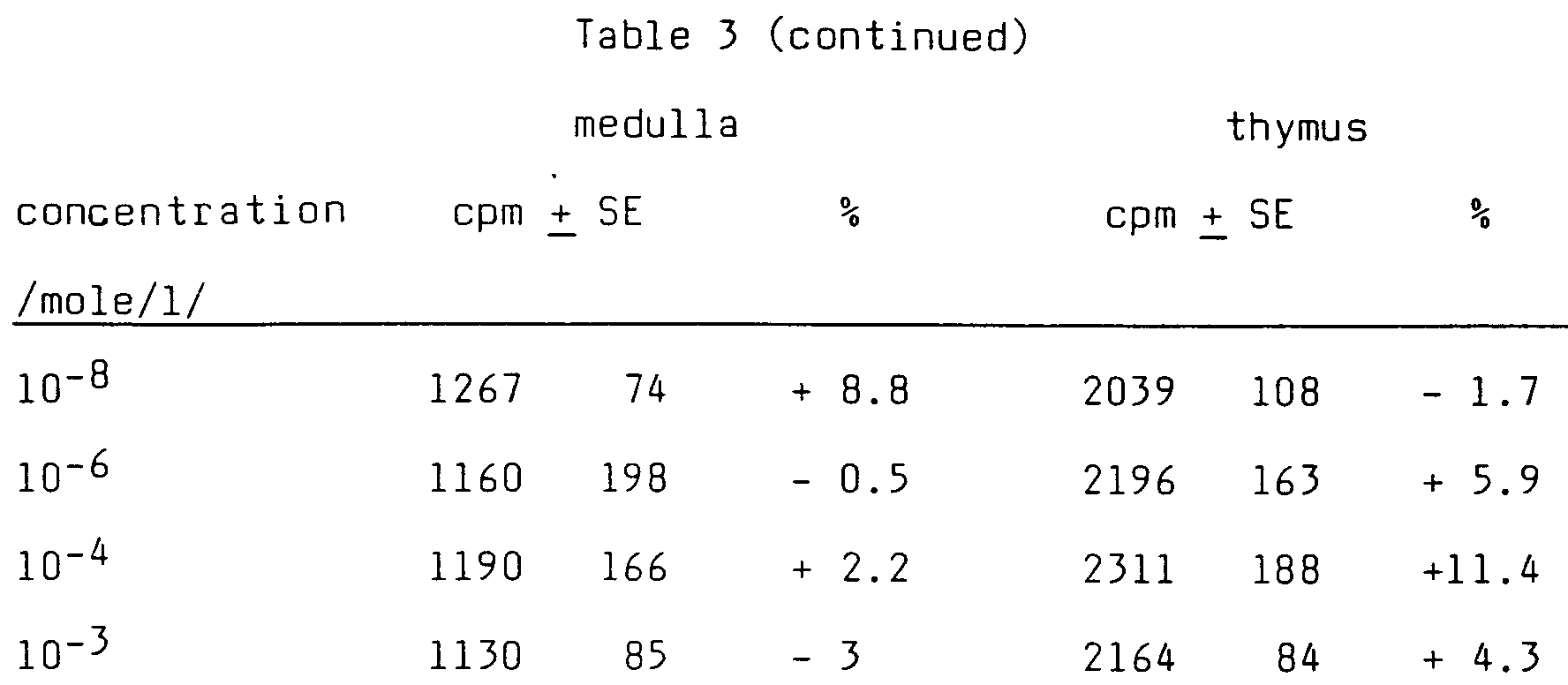

- The results summarized in the above Tables clearly indicate that pAad-EI effectively inhibits the proliferation of epidermal target cells (Table 1 and 2). The extent of the inhibition of the tumourous HeLa cells and the long duration of the effect are remarkable.
- The specificity of the effect is verified by the fact that the inhibiting activity is not exerted on non-target (medulla, thymus) cells (Table 3).
- The ⁵¹Cr emission tests indicate that pAad-EI is not toxic as it did not cause higher isotope emission than the control (Table 4).
- According to a further feature of this invention there is provided a pharmaceutical composition which comprises a pentapeptide of formula pAad-Glu-Asp-Ser-Gly-OH, wherein pAad is hereinbefore defined or a pharmaceutically acceptable salt thereof in admixture where necessary with one or more pharmaceutically acceptable excipients, carriers and/or diluents. A yet further feature of this invention provides a process for the preparation of a pharmaceutical composition which comprises admixing a pentapeptide of formula pAad-Glu-Asp-Ser-Gly-OH, wherein pAad is hereinbefore defined or a pharmaceutically acceptable salt thereof with one or more pharmaceutically acceptable excipients, carriers and/or diluents.
- The further details of the process of the invention are illustrated by the following, non-limiting Example.
- The abbreviations used in the Example correspond to those recommended by the IUPAC-IUB Commission on Chemical Nomenclature (J. Biol. Chem., 247, 977 /1972/).
- The further abbreviations are as follows:
Z = benzyloxycarbonyl group
Boc = t-butoxycarbonyl group
pAad = pyro-alpha-aminoadipic acid - All of the amino acids are of L configuration, if it is not otherwise mentioned.
- The melting points were measured with a dr. Tottoli apparatus (product of Büchi).
- The optical rotation was determined by a polarimeter of Perkin-Elmer type.
- The thin-layer chromatograms were prepared on precoated silica gel plates (Merck; layer thickness: 0.25 mm).
- The following solvent mixtures were used for elution (the ratios are expressed in volume):
- 1) ethyl acetate - pyridine : acetic acid : water (20:6:11) = 99 : 1
- 2) ethyl acetate - pyridine : acetic acid : water (20:6:11) = 9 : 1
- 3) ethyl acetate - pyridine : acetic acid : water (20:6:11) = 4 : 1
- 4) ethyl acetate : n-butanol : acetic acid : water = 1:1:1:1
- For the visualization of the thin-layer chromatograms ninhydrine or chlorotolidine/potassium iodide was used.
- The solutions were evaporated in vacuo in a Rotavapor "R" (Büchi) vacuum evaporator at a temperature lower than 50°C.
-
Ser( t Bu)-Gly-O t Bu-oxalate
- 2.52 g (15 mmoles) of H-Gly-OtBu.HCl and 4.43 g (15 mmoles) of Z-Ser(tBu)-OH are dissolved in 30 ml of dichloro methane, then 2.1 ml (15 mmoles) of triethyl amine are added to the solution.
- The solution is cooled to a temperature of 0°C and 3.1 g (15 mmoles) of dicyclohexyl carbodiimide are added under stirring. The reaction mixture is left to stand overnight in a refrigerator, then the precipitate is filtered off and the filtrate is evaporated.
- The evaporation residue is dissolved in 100 ml of ethyl acetate and the solution is successively extracted with 2 x 30 ml of 1 N sodium hydrocarbonate solution and with 30 ml of water, dried over anhydrous sodium sulfate and evaporated.
- The oily Z-Ser(tBu)-Gly-OtBu obtained as evaporation residue and 1.9 g (15 mmoles) of oxalic acid dihydrate are dissolved in 200 ml of ethanol and hydrogen gas is bubbled through the solution in the presence of 1 g 10 % palladium-on-charcoal catalyst. 1 hour later the catalyst is filtered off, the filtrate is evaporated, the crystalline residue is mixed with ether and filtered off.
- Thus 4.52 g (83 %) of chromatographically pure Ser(tBu)-Gly-OtBu-oxalate are obtained.
- Melting point:
- 152-154°C.
- Rf³ :
- 0.21.
- 4.37 g (12 mmoles) of H-Ser(tBu)-Gly-OtBu oxalate are dissolved in 30 ml of dichloromethane, then 3.36 ml (24 mmoles) of triethyl amine and 5.46 g (13 mmoles) of Z-Asp(OtBu)-Osu are added. The reaction mixture is stirred at room temperature overnight, then evaporated.
- The evaporation residue is taken up with 100 ml of ethyl acetate, then successively shaken with 30 ml of 1 N hydrochloric acid solution, 3 x 30 ml of 1 N sodium hydrocarbonate solution and 30 ml of water. The ethyl acetate solution is dried over anhydrous sodium sulfate, evaporated and the evaporation residue is crystallized by the addition of n-hexane.
- Thus 6.1 g (88 %) of Z-Asp(OtBu)-Ser(tBu)-Gly-CtBu are obtained.
- Melting point:
- (86) .... 92°C.
- Rf¹ :
- 0.68.
- (α)²⁵D :
- - 8.9° (c = 1, methanol).
- 2.81 g (4.85 mmoles) of Z-Asp(OtBu)-Ser(tBu)-Gly-OtBu and 0.63 g (5 mmoles) of oxalic acid dihydrate are dissolved in 50 ml of methanol. 0.4 g of 10 % palladium-on-charcoal catalyst is suspended in the solution, and hydrogen gas is bubbled through the suspension with stirring for 1 hour.
- Then the catalyst is filtered off, the filtrate is evaporated and the evaporation residue is crystallized by the addition of 20 ml of diisopropyl ether. After filtering 2.46 g of crude title product are obtained which is filtered off after mixing with 20 ml of ethyl acetate.
- Thus 2.2 g (85 %) of H-Asp(OtBu)-Ser(tBu)-Gly-OtBu are obtained.
- Melting point
- : 140-142°C.
- Rf²
- : 0.30.
- (α)²⁵D
- : + 7.35° (c = 1, methanol).
- 1.95 g (3.65 mmoles) of H-Asp(OtBu)-Ser(tBu)-Gly-OtBu oxalate are shaken between 30 ml of ether and 10 ml of 20 % potassium hydrocarbonate solution. The etheral solution is washed with 10 ml of water, dried over anhydrous sodium sulfate and evaporated.
- The 1.65 g of oil obtained as evaporation residue and 1.65 g (3.8 mmoles) of Z-Glu(OtBu)-OSu are dissolved in 20 ml of dichloromethane and the solution is left to stand overnight. Thereafter the solution is evaporated, the evaporation residue is dissolved in 50 ml of ether and the etheral solution is successively shaken with 20 ml of 1 N hydrochloric acid solution, 2 x 20 ml of 1 N sodium hydrocarbonate solution and 20 ml of water, dried over anhydrous sodium sulfate and evaporated. The crystalline residue is mixed with ether and left to stand overnight in a refrigerator.
- Next day the crystals are filtered off, thus 2.06 g (74 %) of a tetrapeptide of formula Z-Glu-(OtBu)-Asp(OtBu)-Ser(tBu)-Gly-OtBu are obtained which is a chromatographically pure, white substance.
- Melting point
- : 124 - 126 °C.
- Rf¹
- : 0.68.
- (α)²⁵D
- : - 21.0° (c = 1, methanol).
- 1.53 g (2 mmoles) of Z-Glu-(OtBu)-Asp(OtBu)-Ser(tBu)-Gly-OtBu and 0.26 g (2 mmoles) of oxalic acid dihydrate are dissolved in 40 ml of methanol, then 0.3 g of palladium-on-charcoal catalyst is suspended in the solution. Thereafter hydrogen gas is led into the solution with stirring for 1 hour.
- Then the catalyst is filtered off, the filtrate is evaporated, the evaporation residue is crystallized by the addition of n-hexane, then filtered off.
- Thus 1.30 g (90 %) of the oxalate of the tetrapeptide of formula H-Glu-(OtBu)-Asp(OtBu)-Ser(tBu)-Gly-OtBu are obtained.
- Melting point
- : 146-148°C.
- Rf²
- : 0.24.
- Rf³
- : 0.40.
- (α)²⁵D
- : - 2.8° (c = 1, methanol).
- 1.08 g (1.5 mmoles) of H-Glu-(OtBu)-Asp(OtBu)-Ser(tBu)-Gly-OtBu oxalate are suspended is 15 ml of ether and the suspension is shaken with 10 ml of 20 % potassium hydrocarbonate solution until a homogeneous solution is obtained.
- The etheral solution is washed with 10 ml of water, dried over anhydrous sodium sulfate and evaporated.
- The 0.97 g of oily evaporation residue and 0.5 g (1.62 mmoles) of pAad-Opfp are dissolved in 10 ml of dichloromethane, the solution is diluted with 10 ml of dichloromethane after 1 hour standing, then successively shaken with 3 x 10 ml of 1 N sodium hydrocarbonate solution and 2 x 10 ml of water. The dichloromethane solution is dried over anhydrous sodium sulfate and evaporated, the evaporation residue is crystallized by the addition of 10 ml of ether and left to stand overnight in a refrigerator.
- Next day the precipitate is filtered off, thus 0.88 g (78 %) of a chromatographically pure pAad-Glu-(OtBu)-Asp(OtBu)-Ser(tBu)-Gly-OtBu are obtained.
- Melting point
- : 184-185°C.
- Rf²
- : 0.45.
- (α)²⁵D
- : - 21.0° (c = 1, methanol).
- 0.80 g (1.06 mmoles) of pAad-Glu-(OtBu)-Asp(OtBu)-Ser(tBu)-Gly-OtBu are dissolved in 10 ml of trifluoroacetic acid. After standing for 3 hours the solution is diluted with 50 ml of ether, the precipitate is filtered off and thoroughly washed with ether.
- The 0.6 g of crude product obtained is dissolved in 20 ml of water, clarified by the addition of charcoal and the water-clear solution is evaporated. The thick aqueous solution thus obtained is diluted by the addition of 10 ml of ethanol, the precipitate is filtered off and washed with ethanol.
- Thus 0.27 g (48 %) of title product are obtained which is a chromatographically pure, white, amorphous substance.
- Rf4
- : 0.31.
- (α)²⁵D
- : - 47.2° (c = 1, methanol).
- The following is a non-limiting Example of the preparation of a pharmaceutical composition according to this invention.
- 500 mg of pentapeptide of formula pAad-Glu-Asp-Ser-Gly-OH and 9.5 g of lactose are dissolved in 80 ml of distilled water suitable for preparing injections,then 0.1 g of methyl-p-hydroxy benzoate are added to the solution, and the volume of the solution is supplemented to 100 ml with distilled water of a quality of suitable for making up injections.
- The homogeneous solution is filtered to sterile, each 1 ml is filled into closable vials and the vials are covered with a polymer plug.
- Thus powder ampoules containing 5 mg of active ingredient are obtained.
- If powder ampoules containing different amount of active ingredient are required, the amount of lactose is preferably choosen to supplement the weight of the active ingredient to about 10 g calculated for 100 ml of solution. Instead of lactose the same amount of mannitol may also be used.
- When the drug is administered, the powder is dissolved in aqueous sodium chloride solution to prepare an isotonic solution.
Z-Asp(O t Bu)-Ser( t Bu)-Gly-O t Bu
H-Asp(O t Bu)-Ser( t Bu)-Gly-O t Bu oxalate
Z-Glu-(O t Bu)-Asp(O t Bu)-Ser( t Bu)-Gly-O t Bu
H-Glu-(O t Bu)-Asp(O t Bu)-Ser( tBu)-Gly-O t Bu oxalate
pAad-Glu-(O t Bu)-Asp(O t Bu)-Ser( tBu)-Gly-O t Bu
pAad-Glu-Asp-Ser-Gly-OH
Aad = 0.97 (1) ; Glu = 1.00 (1) ; Asp = 1.00 (1)
Ser = 0.81 (1) ; Gly = 1.17 (1).
Claims (6)
- A pentapeptide of formula
pAad-Glu-Asp-Ser-Gly-OH
wherein pAad represents the acyl group of pyro-alpha-aminoadipic acid, and salts thereof. - A process for the preparation of pentapeptide of formula
pAad-Gly-Asp-Ser-Gly-OH,
wherein pAad is as defined in Claim 1 or a salt thereof which comprises step-wise chain-elongation of protected intermediates of the peptide of the above formula, starting from the C-terminal amino acid derviative using successively dicyclohexyl carbodiimide mediated and active ester coupling and liberation of the alpha-amino group by hydrogenolysis, while blocking the non-reacting hydroxyl and carboxyl functions by groups removable with mild acidolysis, removing the blocking groups from the protected intermediate by mild acidolysis,
and if necessary or desired, transforming the pentapeptide of formula pAad-Glu-Asp-Ser-Gly-OH so obtained into a salt. - A process as claimed in Claim 2 which comprises using t-butyl groups as the acid-removable protective groups.
- A pharmaceutical composition which comprises a pentapeptide of formula
pAad-Glu-Asp-Ser-Gly-OH,
wherein pAad is as defined in Claim 1 or a pharmaceutically acceptable salt thereof in admixture where necessary with one or more pharmaceutically acceptable excipients, carriers and/or diluents. - A process for the preparation of a pharmaceutical composition which comprises admixing a pentapeptide of formula
pAad-Glu-Asp-Ser-Gly-OH
wherein pAad is as defined in Claim 1 or a pharmaceutically acceptable salt thereof with one or more pharmaceutically acceptable excipients, carriers and/or diluents. - A peptide as defined in Claim 1 for use in the treatment of inhibiting epidermal cell proliferation of mammals.
Applications Claiming Priority (2)
| Application Number | Priority Date | Filing Date | Title |
|---|---|---|---|
| HU905744A HU206374B (en) | 1990-09-03 | 1990-09-03 | Process for producing pentapeptide and its salts specifically inhibiting proliferation of epidermic cells, as well as pharmaceutical compositions comprising same as active ingredient |
| HU574490 | 1990-09-03 |
Publications (2)
| Publication Number | Publication Date |
|---|---|
| EP0475657A2 true EP0475657A2 (en) | 1992-03-18 |
| EP0475657A3 EP0475657A3 (en) | 1993-03-03 |
Family
ID=10970681
Family Applications (1)
| Application Number | Title | Priority Date | Filing Date |
|---|---|---|---|
| EP19910308045 Withdrawn EP0475657A3 (en) | 1990-09-03 | 1991-09-03 | Pentapeptide and salts thereof having specific inhibiting effect of epidermal cell proliferation |
Country Status (9)
| Country | Link |
|---|---|
| US (1) | US5252558A (en) |
| EP (1) | EP0475657A3 (en) |
| JP (1) | JPH05140192A (en) |
| KR (1) | KR920006370A (en) |
| AU (1) | AU639594B2 (en) |
| HU (1) | HU206374B (en) |
| LV (1) | LV10110B (en) |
| RU (1) | RU2018510C1 (en) |
| ZA (1) | ZA916784B (en) |
Cited By (1)
| Publication number | Priority date | Publication date | Assignee | Title |
|---|---|---|---|---|
| GR1001502B (en) * | 1992-11-26 | 1994-02-28 | Smithkline Beecham Corp | Hemoregulatory peptides. |
Family Cites Families (6)
| Publication number | Priority date | Publication date | Assignee | Title |
|---|---|---|---|---|
| US3959248A (en) * | 1974-04-03 | 1976-05-25 | Merck & Co., Inc. | Analogs of thyrotropin-releasing hormone |
| HU180926B (en) * | 1979-06-28 | 1983-05-30 | Richter Gedeon Vegyeszet | Process for preparing trh analogues,tripeptide amides infectives on the central nerve sysrhem |
| DE3226242A1 (en) * | 1982-07-14 | 1984-01-26 | Basf Ag, 6700 Ludwigshafen | N-ACYL DERIVATIVES OF DIPEPTIDES, THEIR PRODUCTION AND USE IN THE THERAPY OF DISEASES AND AGENTS THEREFOR |
| FI77875C (en) * | 1982-11-26 | 1989-05-10 | Nyegaard & Co As | FOERFARANDE FOER FRAMSTAELLNING AV NYA TERAPEUTISKT ANVAENDBARA PEPTIDER. |
| NO860752L (en) * | 1985-06-26 | 1986-12-29 | Bio Tech As | PENTAPEPTIDES WITH CELL GROWTH REGULATORY EFFECTS AND PROCEDURES FOR PRODUCING THEREOF. |
| GB8821785D0 (en) * | 1988-09-16 | 1988-10-19 | Nycomed As | Peptide compounds |
-
1990
- 1990-09-03 HU HU905744A patent/HU206374B/en not_active IP Right Cessation
-
1991
- 1991-08-27 US US07/750,330 patent/US5252558A/en not_active Expired - Fee Related
- 1991-08-27 ZA ZA916784A patent/ZA916784B/en unknown
- 1991-09-02 AU AU83550/91A patent/AU639594B2/en not_active Ceased
- 1991-09-02 JP JP3221736A patent/JPH05140192A/en active Pending
- 1991-09-02 RU SU915010002A patent/RU2018510C1/en active
- 1991-09-02 KR KR1019910015235A patent/KR920006370A/en not_active Withdrawn
- 1991-09-03 EP EP19910308045 patent/EP0475657A3/en not_active Withdrawn
-
1992
- 1992-12-30 LV LVP-92-689A patent/LV10110B/en unknown
Cited By (1)
| Publication number | Priority date | Publication date | Assignee | Title |
|---|---|---|---|---|
| GR1001502B (en) * | 1992-11-26 | 1994-02-28 | Smithkline Beecham Corp | Hemoregulatory peptides. |
Also Published As
| Publication number | Publication date |
|---|---|
| RU2018510C1 (en) | 1994-08-30 |
| KR920006370A (en) | 1992-04-27 |
| HUT59164A (en) | 1992-04-28 |
| ZA916784B (en) | 1992-09-30 |
| LV10110A (en) | 1994-05-10 |
| EP0475657A3 (en) | 1993-03-03 |
| HU905744D0 (en) | 1991-03-28 |
| HU206374B (en) | 1992-10-28 |
| US5252558A (en) | 1993-10-12 |
| LV10110B (en) | 1995-02-20 |
| AU8355091A (en) | 1992-03-05 |
| AU639594B2 (en) | 1993-07-29 |
| JPH05140192A (en) | 1993-06-08 |
Similar Documents
| Publication | Publication Date | Title |
|---|---|---|
| US4024248A (en) | Peptides having LH-RH/FSH-RH activity | |
| CA1322076C (en) | Phosphorus containing peptides | |
| US4720484A (en) | Peptide compounds having a nitrogenous polycyclic structure | |
| US4426324A (en) | Immunopotentiating peptides | |
| EP1174438A1 (en) | Novel cyclic tetrapeptide derivatives and use thereof as drugs | |
| US4499081A (en) | Peptide compounds | |
| JPH06340691A (en) | Peptide | |
| NL192575C (en) | Central nervous system acting tripeptides. | |
| JPH01151600A (en) | Cyclosporin | |
| US5100874A (en) | Hydroxamic acid tetrapeptide derivatives | |
| US20070219194A1 (en) | Phenylalanine derivatives | |
| GB2086912A (en) | Enkephalin derivatives production thereof and pharmaceutical compositions | |
| US5312812A (en) | Pharmaceutical compositions comprising novel oligopeptides exhibiting selective inhibiting effect upon the proliferation of hemopoietic cells | |
| JP2980129B2 (en) | Amino-substituted heterocyclic compounds as renin inhibitors | |
| AU639594B2 (en) | Pentapeptide having specific inhibiting effect on epidermal cell proliferation, the salts thereof, pharmaceutical compositions comprising the same and a process for the preparation of the pentapeptide and the pharmaceutical compositions | |
| US4719200A (en) | Amino acid derivatives and antihypertensive drugs containing the same | |
| GB2130590A (en) | Peptides | |
| AU721261B2 (en) | Peptide inhibitors of hematopoietic cell proliferation | |
| US6649593B1 (en) | Modulators of SREBP processing | |
| US7226991B1 (en) | Phenylalanine derivatives | |
| US4247543A (en) | Organic compounds | |
| GB2228937A (en) | SDK (Ser-Asp-Lys) peptides | |
| EP0353211A1 (en) | New compounds | |
| Mihara et al. | Cyclic peptides. XVI. Syntheses of AM‐toxin I analogs containing a lower or higher homolog of the component L‐2‐amino‐5‐(p‐methoxyphenyl) pentanoic acid residue | |
| JP2004083427A (en) | Cyclic hexapeptide and proteasome inhibitor |
Legal Events
| Date | Code | Title | Description |
|---|---|---|---|
| PUAI | Public reference made under article 153(3) epc to a published international application that has entered the european phase |
Free format text: ORIGINAL CODE: 0009012 |
|
| AK | Designated contracting states |
Kind code of ref document: A2 Designated state(s): AT BE CH DE DK ES FR GB GR IT LI LU NL SE |
|
| PUAL | Search report despatched |
Free format text: ORIGINAL CODE: 0009013 |
|
| AK | Designated contracting states |
Kind code of ref document: A3 Designated state(s): AT BE CH DE DK ES FR GB GR IT LI LU NL SE |
|
| 17P | Request for examination filed |
Effective date: 19930609 |
|
| 17Q | First examination report despatched |
Effective date: 19941026 |
|
| STAA | Information on the status of an ep patent application or granted ep patent |
Free format text: STATUS: THE APPLICATION IS DEEMED TO BE WITHDRAWN |
|
| 18D | Application deemed to be withdrawn |
Effective date: 19950628 |