EP0475698B1 - Verwaltungsverfahren für Funkkommunikationsbetriebsmittel - Google Patents
Verwaltungsverfahren für Funkkommunikationsbetriebsmittel Download PDFInfo
- Publication number
- EP0475698B1 EP0475698B1 EP91308202A EP91308202A EP0475698B1 EP 0475698 B1 EP0475698 B1 EP 0475698B1 EP 91308202 A EP91308202 A EP 91308202A EP 91308202 A EP91308202 A EP 91308202A EP 0475698 B1 EP0475698 B1 EP 0475698B1
- Authority
- EP
- European Patent Office
- Prior art keywords
- channel
- access request
- mobile unit
- request
- access
- Prior art date
- Legal status (The legal status is an assumption and is not a legal conclusion. Google has not performed a legal analysis and makes no representation as to the accuracy of the status listed.)
- Expired - Lifetime
Links
- 238000004891 communication Methods 0.000 title claims description 43
- 238000000034 method Methods 0.000 title claims description 34
- 238000012545 processing Methods 0.000 claims description 24
- 230000005540 biological transmission Effects 0.000 claims description 6
- 230000001934 delay Effects 0.000 claims description 5
- 238000012544 monitoring process Methods 0.000 claims description 3
- 230000003213 activating effect Effects 0.000 claims description 2
- 230000004913 activation Effects 0.000 claims 1
- 230000008054 signal transmission Effects 0.000 claims 1
- 230000000694 effects Effects 0.000 description 7
- 230000004044 response Effects 0.000 description 7
- 230000003247 decreasing effect Effects 0.000 description 6
- VYLDEYYOISNGST-UHFFFAOYSA-N bissulfosuccinimidyl suberate Chemical compound O=C1C(S(=O)(=O)O)CC(=O)N1OC(=O)CCCCCCC(=O)ON1C(=O)C(S(O)(=O)=O)CC1=O VYLDEYYOISNGST-UHFFFAOYSA-N 0.000 description 5
- 230000001413 cellular effect Effects 0.000 description 5
- 230000009471 action Effects 0.000 description 4
- 238000012790 confirmation Methods 0.000 description 4
- 238000013016 damping Methods 0.000 description 3
- 230000004075 alteration Effects 0.000 description 2
- 238000010586 diagram Methods 0.000 description 2
- 230000008859 change Effects 0.000 description 1
- 238000001514 detection method Methods 0.000 description 1
- 238000005259 measurement Methods 0.000 description 1
- 230000008569 process Effects 0.000 description 1
- 230000009467 reduction Effects 0.000 description 1
- 238000004904 shortening Methods 0.000 description 1
- 230000011664 signaling Effects 0.000 description 1
Images



Classifications
-
- H—ELECTRICITY
- H04—ELECTRIC COMMUNICATION TECHNIQUE
- H04W—WIRELESS COMMUNICATION NETWORKS
- H04W72/00—Local resource management
- H04W72/12—Wireless traffic scheduling
-
- H—ELECTRICITY
- H04—ELECTRIC COMMUNICATION TECHNIQUE
- H04W—WIRELESS COMMUNICATION NETWORKS
- H04W74/00—Wireless channel access
- H04W74/08—Non-scheduled access, e.g. ALOHA
Definitions
- the present invention relates generally to communication systems. More particularly, this invention relates to the management and allocation of communication system resources amongst a plurality of units requesting said resources. Specifically, however, this invention relates to methods for reducing levels of contention within a communication system, thereby reducing the likelihood that more than one communication channel will be assigned to a single requesting unit.
- Radiotelephone service has been in use for some time and has traditionally been characterized by a central site transmitting with high power to a limited number of mobile units in a large geographic area. Mobile transmissions, due to their lower power, are received by a network of receivers located remotely from the central site and then returned to the central site for processing.
- the coverage area is divided into contiguous smaller zones of coverage (cells) using lower power transmitters and receivers at the central site.
- U.S. Pat. No 3,906,166 assigned to the assignee of the present invention.
- the limited coverage area enables the channel frequencies used in one cell to be reused in another cell geographically separated according to specified plans.
- U.S. Pat No. 4,128,740 assigned to the assignee of the present invention. Consequently, a large number of channels can be made available in a metropolitan area, and the service appears to be identical to the standard telephone.
- Digital cellular radiotelephone service may be similarly characterized.
- One major difference, however, is the use of digital voice and data channels which permit the efficient allocation of system resources via any of the well known multiple access schemes, such as, for example, Time Division Multiple Access (TDMA).
- TDMA Time Division Multiple Access
- each cell dedicates one or more communication channels as a Common Control Channel (CCCH).
- CCCH Common Control Channel
- the CCCH is made up of several logical channels which provide different services to the mobile subscriber.
- the Random Access Channel (RACH) is used for receiving channel access requests from mobile subscriber units.
- the Access Grant Channel (AGCH) is used to instruct mobile subscriber units, via channel assignment signals, to tune to a particular frequency and time slot where further signalling may take place.
- the CCCH shares the same frequency and time slot as the Broadcast Control Channel (BCCH) which is used to transmit cell specific parameters to the mobile subscribers tuned to the cell.
- BCCH Broadcast Control Channel
- the typical access procedure is summarized as follows.
- a mobile unit sends an access request over the RACH, starts a guard timer, and awaits a channel assignment signal or an assignment reject signal from the Base Station System (BSS), informing the mobile whether the access was successful or not.
- BSS Base Station System
- the mobile unit Upon expiration of the guard timer, however, the mobile unit will transmit another access request. This procedure will continue until the mobile unit receives a valid confirmation, or until a maximum number of retries has been attempted, as defined by the BSS broadcast channel.
- mobile unit access requests may or may not contain mobile identification information. Access requests, however, do not contain information pertaining to the number of previous requests made by a particular mobile unit. Accordingly, the above described scenario is extremely susceptible to the misallocation of system resources.
- the BSS fails to respond to a mobile unit's initial access request within the mobile unit's guard time, hereinafter referred to as the access request retry interval, or simply the retry interval, the mobile unit will send a new request.
- the access request retry interval or simply the retry interval
- the mobile unit will send a new request.
- the access request retry interval or simply the retry interval.
- the BSS determines whether a received request is a mobile's first or a subsequent attempt. This may result in the BSS processing both requests, thereby activating two channels for the same mobile unit. Since the mobile will respond to the first assignment signal (valid confirmation) received from the BSS, the second will go unanswered thereby resulting in a hung channel.
- EP-A-0415898 discloses a method in a mobile radio communication system for adapting the system and communication to prevailing traffic and performance requirements. Specifically, this reference reveals how a base site sends an acknowledgment message to give a mobile unit permission to transmit data or to transmit a longer request message, or to deny a mobile unit permission to send speech. Concerning retry messages, this reference teaches sending a retry message from a mobile station when the mobile station does not receive any acknowledgment message from the base station prior to receiving another transmission invitation message.
- the invention provides a method for reducing superfluous channel allocations among a plurality of mobile units in a communication system performing radio channel management, the plurality of mobile units making multiple service requests to communication system base site equipment, said base site equipment receiving a channel request from at least one of the plurality of mobile units, said method characterized by the steps of: determining, at the base site, a communication system processing delay responsive to the time of receiving the channel request; and adjusting system parameters that control a range of mobile unit channel request retry intervals as a function of the processing delay, to reduce the likelihood of more than one channel being assigned to the requesting mobile unit.
- a principal application of the present invention is for a cellular radiotelephone communication system.
- Fig 1 there is shown a partial block diagram of a communication system 100 showing the interconnection between the Base Transceiver Stations (BTS) and the mobile units which communicate with the system.
- BSC Base Site Controllers
- Each BSC controls one or more BTSs.
- BSC 110 is shown connected to BTS units 105, 107, and 109.
- BSS Base Station System
- Each BSS is responsible for sending and receiving communication signals to and from various mobile units.
- BSS Base Station System
- BSS Base Station System
- Each BSS is responsible for sending and receiving communication signals to and from various mobile units.
- BSS Base Station System
- Only three BSSs are shown, each consisting of a single BSC with three BTSs. It will be appreciated by those skilled in the art however, that any number of BSSs may be used depending on the size of the area to be covered.
- Each of the BSCs 110, 120, and 130 is further connected to the Mobile Switching Center 140 which is also connected to a standard wire line telephone network via lines 141.
- the lines 141 provide a connection to a plurality of fixed telephones 150 via a telephone central 160.
- Three mobile units 101, 102 and 103 each containing a transmitter and a receiver for communicating with the BSSs are shown. While only three mobile units are depicted, it will be appreciated by those skilled in the art that the actual number of mobile units serviceable by the communication system 100 is limited only by the number of BSSs, the number of frequencies allocated to the system, and the number of lines allocated to connections with the wire line network.
- incoming messages are transmitted by a mobile unit, for example, mobile unit 101.
- a mobile unit for example, mobile unit 101.
- the request is processed and a decision is made whether or not to allocate system resources.
- the BSS then returns outgoing messages, like assignment or assignment reject signals to the mobile unit.
- the assignment signal transmitted by the BSS will inform the mobile unit 101 what frequency and time slot to tune to in order to find an available communication channel.
- the access request is further processed in order to complete the requested operation.
- the MSC 140 is directed to connect BSC 110 to either the wire line telephone network or to another BSC, such as BSC 130, depending upon whether communication with a fixed or mobile telephone is desired.
- each access request is transmitted over the RACH, a multi-slot TDMA access channel.
- RACH slots support the following access functions: call origination, location reporting, registration and page response. Allocating specific slots to individual functions by imposing an ordering of the slots will reduce the utilization of the RACH.
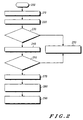
- decision block 260 a check is made to see whether the allocated communication channel can be activated. If not, NO branch is taken back to block 250 where once again, a reject message is transmitted, directing the mobile to take alternative actions. Otherwise, YES branch is taken to block to 270, where the allocated communication channel is activated.
- the BSS next schedules the time when an assignment signal is to be transmitted to the requesting mobile.
- an assignment signal corresponding to the received access request is transmitted to the mobile unit, informing the mobile unit which frequency and time slot to tune to in order to begin communication.
- the BSS Since the BSS receives no information regarding the number of attempted requests, it has no means of distinguishing a mobile unit's first access request from those transmitted after expiration of the access timer. While this is not disruptive to overall system performance, there are decided advantages to be realized by providing the BSS with a mobile's access request count. Access request count represents information which is useful for monitoring system performance. In addition, access request count can provide assistance during the dynamic allocation of shared resources. Finally, however, access request count provides crucial information in the struggle to reduce levels of contention; especially during periods of heavy loading when the probability of contending mobiles is at its highest.
- contention pertains to the situation when two or more mobile units request the same system resource at the same time. Since the BSS is incapable of responding to simultaneous access requests, contention will occur, and neither mobile will receive confirmation. At the expiration of their respective access timers, both mobiles will retransmit their respective access requests. In order to assure the access times are not identical, the BSS establishes a range of times for the mobile units serviced by the communication system. This broadcast parameter is transmitted to each mobile unit via a Broadcast Control Channel (BCCH), along with additional parameters which control, for example, the maximum number of times an access request may be transmitted. When formulating an access request, each mobile unit will randomly select a time from within the range as its access time. Random selection of the access time is one means of reducing the likelihood of contending mobiles.
- BCCH Broadcast Control Channel
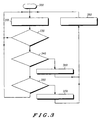
- the flow chart in FIG. 3 is utilized by BSS to alter system resources thereby providing additional protection.
- the number of access requests transmitted by each mobile unit is determined at block 310.
- each mobile unit tracks the number of access requests attempted and includes this information within each new request.
- the BSS can accurately determine the access request count for each mobile unit by simply processing the information contained within each received access request.
- a check is made to see if a proper amount of time has lapsed since the last resource adjustment. The purpose of this step is to provide a moderate amount of damping in order to assure stable system operation during periods characterized by rapid fluctuation in request traffic. If not, NO branch is taken back to block 310. Otherwise, YES branch is taken to decision block 340 where a check is made to see if the access request count exceeds a threshold level. If so, YES branch is taken to block 360 where the BSS is informed to alter system resources.
- One such alteration includes increasing the potential range of retry intervals. Increasing the range of retry intervals has the calculated effect of increasing the range of values randomly selected by mobile units as their access times.
- the present invention strives to distribute the mobiles across a wider range of access times, thereby reducing the likelihood of contention.
- Other system resource alterations include but are not limited to adding or deleting communication channels as a function of the access request count for some or all of the requesting mobile units; and denying further accesses as a function of the access request count for some or all of the requesting mobile units.
- the elapsed time counter checked by decision block 330 is reset. Otherwise, NO branch is taken from block 340 to decision block 350, where a check is made to see if the access request count falls below a threshold level. If so, YES branch is taken to block 370 where the BSS is again informed to alter system resources as a function of the access request count. This may include decreasing the range of potential access times for some or all of the requesting mobile units. While decreasing the range has the calculated effect of shortening access times, it is nonetheless desirable to permit quicker access request retransmission in light of improved system response.
- the elapsed time counter checked by decision block 330 is reset. Otherwise, NO branch is taken back from block 350 to block 310.
- each access request transmitted by each mobile is determined at block 410.
- each access request includes an access request count, the number of attempted access requests.
- the BSS can now accurately determine the access request count by simply processing the information found within received access requests.
- the BSS derives timing advance information from each mobile, in order to roughly determine the mobile's distance from the BSS. Timing advance is the round trip propagation time of a call travelling from the base to a mobile unit and back. From this information, the mobile's distance from the base relative to other mobiles using the same cell is estimated.
- the BSS correlates the timing advance information with the access request count. This correlation will indicate to the BSS if there is a problem with the close in mobiles overriding access requests from mobiles at the cell's perimeter. This phenomenon, the near-far problem, does not appear as normal contention. When two mobiles of substantially similar signal strength collide, the BSS is incapable of distinguishing the two signals, therefore neither mobile receives confirmation. In the near-far case, however, the near mobile's signal is sufficiently stronger than the far mobile's signal and is therefore capable of overriding the distant mobile without the BSS recognizing this access as a collision. Consequently, a channel assignment signal will be sent to the near mobile while the far mobile unit receives no response.
- the BSS is now given a means of identifying the existence of the near-far phenomenon via the correlation of timing advance to the access request count. Such indication arises when distant mobiles consistently have higher access request counts than do near mobiles. Upon recognition of this unique type of contention, system resources are altered in block 440 in order to mitigate this otherwise hard to recognize anomaly.
- FIG. 5 a flow chart depicting an alternate channel allocation method according to the present invention is shown.
- the method described in FIG. 5 operates in accordance with the method of FIG. 2 except that at step 520, the received access request is provided a timing stamp which allows the system to identify the instant that the access request was received.
- decision block 530 after the access request with accompanying timing stamp arrives at the BSS, a check is made to see if there is an available communication channel which may be allocated to the requesting mobile unit. From this point on, call origination proceeds substantially in accordance with the description of FIG.2, however, at block 580 the BSS performs assignment signal scheduling based on the timing stamp information placed on the access request at block 520.
- an assignment signal corresponding to the mobile unit's access request, is transmitted to the mobile unit, informing the mobile which frequency and time slot to tune to in order to begin communication.
- a mobile unit transmits an access request, it starts a guard timer. If the BSS fails to respond to the mobile within this controlled period of time, the mobile unit will be free to transmit yet another request. Since the BSS receives no information regarding access request count, it has no means of correlating a newly received request from those access requests in progress. This will often result in two or more channels being allocated to a single mobile unit.
- the flow chart in FIG. 6 can be utilized by a BSS for increasing or decreasing the range of possible access request retry intervals, that period of time established by the mobile unit guard timer.
- the BSS establishes N , the nominal retry interval available for each mobile unit serviced by the communication system.
- This broadcast parameter is transmitted to each mobile unit via a Broadcast Control Channel (BCCH), along with additional parameters which control for example, the maximum number of times a channel request may be retransmitted by a single mobile unit.
- BCCH Broadcast Control Channel
- each mobile unit When formatting a channel request, each mobile unit will randomly select a value n+k as its channel request retry interval, where n is a value selected between 0 and N -1, and k is a constant which attempts to approximate an optimal channel request retry interval for the communication system. According to present system standards k is a value selected as either 250ms or 350ms.
- each channel request is counted at block 605 in order to determine (X), the total number of requests made.
- an access request processing delay is determined by establishing the timing difference between the instant an access request is received by a BTS and the instant a BSS schedules transmission of the corresponding assignment signal. It will be appreciated by those skilled in the art that this determination may also be established by taking the average of several such timing difference measurements.
- the communication system processing delay is compared to the retry interval ( N+k ). If this comparison identifies a delay greater than or equal to the retry interval, YES branch is taken to block 625 where counter Y is incremented.
- NO branch is taken to decision block 620 where a check is made to see if the delay is less than k . Assuming it is, the YES branch is taken to block 630 where a counter Z is incremented. Else, NO branch is taken to decision block 635.
- a check is made to see if a proper amount of time has elapsed since the last retry interval adjustment. The purpose of this step is to provide a moderate amount of damping in order to assure stable system operation during periods of rapid processing delay change. If not, No branch is taken back to block 605. Otherwise, YES branch is taken to decision block 640 where a check is made to see if (Y), the number of requests with processing delays greater than the retry interval, exceeds a percentage of the total number of channel requests (X). According to the present example, 10 percent is used as a threshold. If so, YES branch is taken to block 645 where the BSS is informed to increase the value of N .
- N has the calculated effect of increasing the range of values randomly selected by mobile units as their access request retry intervals ( n+k ).
- the present invention strives to increase mobile unit retry intervals, thereby reducing the likelihood that more than one channel will be assigned to a single mobile unit.
- NO branch is taken to decision block 650, where a check is made to see if (Z), the number of channel requests with processing delays less than k , is greater than a specified percentage of the total number of requests made. According to the present example, 90 percent is used as a threshold. If so, YES branch is taken to block 655 where the BSS is informed to decrease the value of N . While a decrease in N has the calculated effect of decreasing channel request retry intervals, it is nonetheless desirable to permit quicker channel request retransmissions in light of quicker system response times.
- the elapsed time counter checked by decision block 635 is reset.
- the X, Y and Z counters are reset. Otherwise NO branch is taken back to block 605.
- FIG. 7 Yet another method for managing communication resources in order to reduce the likelihood that more than one channel will be allocated to a single mobile unit is shown in the flow chart of FIG. 7.
- a level of access request traffic activity across the RACH is determined at block 710 by monitoring a number of received access requests.
- the number of access requests is compared to a predetermined threshold level.
- a check is made to see if a proper amount of time has elapsed since the last retry interval adjustment. The purpose of this step is to once again provide a moderate amount of damping in order to assure stable system operation during periods characterized by rapid fluctuation in access request traffic. If not, No branch is taken back to block 710. Otherwise, YES branch is taken to decision block 740 where a check is made to see if the number of access requests exceed the threshold level. If so, YES branch is taken to block 760 where the BSS is informed to increase the value of N . An increase in N has the calculated effect of increasing the range of values randomly selected by mobile units as their access request retry intervals.
- the present invention strives to increase the mobile unit retry interval during periods when the BSS is experiencing heavy loading, thereby reducing the likelihood that more than one channel will be assigned to a single mobile unit.
- the elapsed time counter checked by decision block 730 is reset. Otherwise, NO branch is taken to decision block 750, where a check is made to see if the number of access requests falls below the threshold level. If so, YES branch is taken to block 770 where the BSS is informed to decrease the value of N. While a decrease in N has the calculated effect of decreasing channel request retry intervals, it is nonetheless desirable to permit quicker channel request retransmissions in light of decreased system loading.
- the elapsed time counter checked by decision block 730 is reset. Otherwise, NO branch is taken back to block 710.
- the present invention discloses various means and/or methods for managing communication system resources in order to reduce contention and superfluous channel allocation between a plurality of mobile units, and the communication system servicing those mobile units. While it is suggested that said reduction can be achieved as a function of access request count, system processing delays or levels of request traffic, and thereafter adjusting mobile unit access request retry intervals in response thereto, it will be obvious to those skilled in the art that alternative steps may be performed. For example, N may be adjusted as a function of peak hour or time of day considerations. In addition, N may be adjusted upon the detection of a fault condition. In addition, mobile units may take totally independent action based upon knowledge of access request count, system processing delays and access request traffic. Such actions includes but are not limited to altering mobile unit transmit signal strength levels, selecting other access channels or selecting another serving system.
Landscapes
- Engineering & Computer Science (AREA)
- Computer Networks & Wireless Communication (AREA)
- Signal Processing (AREA)
- Mobile Radio Communication Systems (AREA)
Claims (10)
- Verfahren, um überflüssige Kanalzuweisungen unter einer Mehrzahl von Mobileinheiten (101, 102, 103) in einen Kommunikationssystem (100), das eine Funkkanalverwaltung durchführt, zu reduzieren, wobei die Mehrzahl vom Mobileinheiten (101, 102, 103) mehrfache Service-Anforderungen an eine Kommunikationssystem-Basisstationseinrichtung (105, 110) abgibt, wobei die Basisstationseinrichtung (105, 110) eine Kanalanforderung (bei 210 oder 510) von wenigstens einer der Mehrzahl von Mobileinheiten (101, 102, 103) empfängt, wobei das Verfahren gekennzeichnet ist durch die Schritte:Bestimmen in der Basisstation (105) einer Kommunikationssystem-Verarbeitungsverzögerung (bei 610) reagierend auf die Empfangszeit der Kanalanforderung undJustieren von Systemparametern, die einen Bereich von Kanalanforderungs-Wiederholungsintervallen (bei 645, 655) der Mobileinheiten steuern, als eine Funktion der Verarbeitungsverzögerung, um die Wahrscheinlichkeit zu verringern, daß der anfordernden Mobileinheit mehr als ein Kanal zugewiesen wird.
- Verfahren nach Anspruch 1, bei dem Zuweisungssignalsendungen durch die Basissation (105) nach Maßgabe eines entsprechenden Zeitstempels der Kanalanforderung geplant werden.
- Verfahren nach Anspruch 2, bei dem Zuweisungssignale größere Priorität erhalten als Zuweisungsrückweisungssignale mit demselben Zeitstempel.
- Verfahren nach Anspruch 1, bei dem der Schritt zum Bestimmen einer Kommunikationssystem-Verarbeitungsverzögerung gekennzeichnet ist durch die Schritte:Bereitstellen eines Zeitstempels für die empfangene Kanalanforderung, um den Augenblick zu identifizieren, wann die Kanalanforderung durch die Basisstationseinrichtung empfangen wird, undFestsetzen der Verarbeitungsverzögerung durch Bestimmen einer Zeitdifferenz zwischen dem Augenblick, wo die Kanalanforderung durch die Basisstationseinrichtung (105, 110) empfangen wird, und dem Augenblick, wo die Basisstation (105) ein Zuweisungssignal zum Senden an die anfordernde Mobileinheit plant.
- Verfahren nach Anspruch 1, weiter gekennzeichnet durch die Schritte:Gewinnen der Zeitvoreilung von einer empfangenen Zugangsanforderung (bei 420);Korrelieren der Zugangsanforderungszählung mit der Zeitvoreilung (bei 430) undÄndern von Systembetriebsmitteln (bei 440) als eine Funktion der Korrelation, wodurch die Wahrscheinlichkeit einer Streitigkeit verringert wird.
- Verfahren nach Anspruch 1, weiter gekennzeichnet durch den Schritt:
Ändern der Zugangsprozeduren anfordernder Einheiten als eine Funktion der Zugangsanforderungszählung. - Verfahren nach Anspruch 6, bei dem der Schritt zum Ändern der Zugangsprozeduren anfordernder Einheiten wenigstens einen der folgenden Schritte umfaßt:Ändern der Sendesignalstärkepegel der anfordernden Einheiten;Wählen eines anderen Zugangskanals der anfordernden Einheiten;Wählen eines anderen Versorgungssystems der anfordernden Einheiten;
- Verfahren nach Anspruch 1, weiter gekennzeichnet durch die Schritte:Zuweisen eines Kanals, der die Kommunikation der Mobileinheit unterstützt (bei 240 oder 540);Aktivieren des zugewiesenen Kanals (bei 270 oder 570);Planen des Sendens eines Zuweisungssignals an eine anfordernde Mobileinheit (bei 280 oder 580) undSenden eines Zuweisungssignals an die anfordernde Mobileinheit nach der erfolgreichen Zuweisung und Aktivierung eines Kommunikationskanals (bei 290 oder 590).
- Verfahren nach Anspruch 1, bei dem der Schritt zum Bestimmen einer Verarbeitungsverzögerung weiter gekennzeichnet ist durch die Schritte:Bereitstellen eines Zeitstempels für die empfangene Zugangsanforderung, um den Augenblick zu identifizieren, wann die Zugangsanforderung empfangen wird (bei 520), undFestsetzen der Verarbeitungsverzögerung durch Bestimmen einer Zeitdifferenz zwischen dem Augenblick, wo die Zugangsanforderung empfangen wird, und dem Augenblick, wo das Zuweisungssignal zum Senden geplant wird (bei 610).
- Verfahren nach Anspruch 1, bei dem der Schritt zum Justieren eines Bereiches von Zugangsanforderungs-Wiederholungsintervallen weiter gekennzeichnet ist durch die Schritte:Überwachen der Verarbeitungsverzögerungen (bei 610);Vergleichen der Verarbeitungsverzögerung mit vorbestimmten Werten (bei 615);Bestimmen einer Zeitdauer seit einer letzten Wiederholungsintervalljustierung (bei 635) undDurchführen einer Wiederholungsintervalljustierung nur nach Ablauf einer vorbestimmten Zeitdauer durch:Ändern von Systemparametern, die den Bereich von Wiederholungsintervallen vergrößern, wenn die Verarbeitungsverzögerung einen vorbestimmten Wert übersteigt (bei 645), undÄndern von Systemparametern, die den Bereich von Wiederholungsintervallen verkleinern, wenn die Verarbeitungsverzögerung unter einen vorbestimmten Wert fällt (bei 655).
Priority Applications (1)
| Application Number | Priority Date | Filing Date | Title |
|---|---|---|---|
| DE1991625077 DE69125077T2 (de) | 1991-09-09 | 1991-09-09 | Verwaltungsverfahren für Funkkommunikationsbetriebsmittel |
Applications Claiming Priority (1)
| Application Number | Priority Date | Filing Date | Title |
|---|---|---|---|
| US07/608,414 US5276911A (en) | 1990-11-02 | 1990-11-02 | Contention reducing technique for a radio frequency communication system |
Publications (3)
| Publication Number | Publication Date |
|---|---|
| EP0475698A2 EP0475698A2 (de) | 1992-03-18 |
| EP0475698A3 EP0475698A3 (en) | 1993-02-03 |
| EP0475698B1 true EP0475698B1 (de) | 1997-03-12 |
Family
ID=24436397
Family Applications (1)
| Application Number | Title | Priority Date | Filing Date |
|---|---|---|---|
| EP91308202A Expired - Lifetime EP0475698B1 (de) | 1990-11-02 | 1991-09-09 | Verwaltungsverfahren für Funkkommunikationsbetriebsmittel |
Country Status (2)
| Country | Link |
|---|---|
| US (1) | US5276911A (de) |
| EP (1) | EP0475698B1 (de) |
Cited By (13)
| Publication number | Priority date | Publication date | Assignee | Title |
|---|---|---|---|---|
| US6785249B2 (en) | 1998-10-05 | 2004-08-31 | Qualcomm, Incorporated | Method and apparatus for detecting forward and reverse link imbalance in digital cellular communication systems |
| US7746830B2 (en) | 1998-06-01 | 2010-06-29 | Interdigital Technology Corporation | System and method for maintaining wireless channels over a reverse link of a CDMA wireless communication system |
| US7773566B2 (en) | 1998-06-01 | 2010-08-10 | Tantivy Communications, Inc. | System and method for maintaining timing of synchronization messages over a reverse link of a CDMA wireless communication system |
| US7936728B2 (en) | 1997-12-17 | 2011-05-03 | Tantivy Communications, Inc. | System and method for maintaining timing of synchronization messages over a reverse link of a CDMA wireless communication system |
| US8134980B2 (en) | 1998-06-01 | 2012-03-13 | Ipr Licensing, Inc. | Transmittal of heartbeat signal at a lower level than heartbeat request |
| US8155096B1 (en) | 2000-12-01 | 2012-04-10 | Ipr Licensing Inc. | Antenna control system and method |
| US8175120B2 (en) | 2000-02-07 | 2012-05-08 | Ipr Licensing, Inc. | Minimal maintenance link to support synchronization |
| US8274954B2 (en) | 2001-02-01 | 2012-09-25 | Ipr Licensing, Inc. | Alternate channel for carrying selected message types |
| US8331285B2 (en) | 2005-10-27 | 2012-12-11 | Qualcomm Incorporated | Method and apparatus of establishing access channel in wireless communication systems |
| US8638877B2 (en) | 2001-02-01 | 2014-01-28 | Intel Corporation | Methods, apparatuses and systems for selective transmission of traffic data using orthogonal sequences |
| US9014118B2 (en) | 2001-06-13 | 2015-04-21 | Intel Corporation | Signaling for wireless communications |
| US9042400B2 (en) | 1997-12-17 | 2015-05-26 | Intel Corporation | Multi-detection of heartbeat to reduce error probability |
| US9525923B2 (en) | 1997-12-17 | 2016-12-20 | Intel Corporation | Multi-detection of heartbeat to reduce error probability |
Families Citing this family (63)
| Publication number | Priority date | Publication date | Assignee | Title |
|---|---|---|---|---|
| US7936664B2 (en) | 1991-03-26 | 2011-05-03 | Nokia Corporation | Multi-carrier radio link protocol supervision in a radio communication system |
| US7298701B2 (en) | 2002-10-31 | 2007-11-20 | Nokia Corporation | Apparatus, and associated method, for requesting data retransmission in a packet radio communication system |
| FI98597C (fi) * | 1992-03-06 | 1997-07-10 | Nokia Telecommunications Oy | Radiojärjestelmä |
| US5459761A (en) * | 1992-06-29 | 1995-10-17 | Motorola, Inc. | Intelligent repeater for trunked communications |
| GB2281470B (en) * | 1993-04-02 | 1998-07-15 | Motorola Ltd | Multichannel random access communications system |
| US7924783B1 (en) * | 1994-05-06 | 2011-04-12 | Broadcom Corporation | Hierarchical communications system |
| US5551062A (en) * | 1993-07-22 | 1996-08-27 | Drozt; Peter M. | Method for enhancing communication access in a radio communication system |
| DE4335305A1 (de) * | 1993-10-16 | 1995-04-20 | Philips Patentverwaltung | Verfahren und Schaltungsanordnung zur Übertragung von Sprachsignalen |
| US5490087A (en) * | 1993-12-06 | 1996-02-06 | Motorola, Inc. | Radio channel access control |
| JP3248348B2 (ja) * | 1994-03-15 | 2002-01-21 | 松下電器産業株式会社 | 通信方法及び通信装置 |
| US5715519A (en) * | 1994-04-28 | 1998-02-03 | Matsushita Electric Industrial Co., Ltd. | Interference prevention communication control system and communication method |
| US5561851A (en) * | 1994-05-26 | 1996-10-01 | Arrowsmith Technologies, Inc. | System and method for ensuring the availability of a radio data communications link |
| US5530700A (en) * | 1994-07-29 | 1996-06-25 | Motorola, Inc. | Method and device for controlling time slot contention to provide fairness between a plurality of types of subscriber units in a communication system |
| US5548533A (en) * | 1994-10-07 | 1996-08-20 | Northern Telecom Limited | Overload control for a central processor in the switching network of a mobile communications system |
| DE69636918T2 (de) * | 1995-09-20 | 2007-12-06 | Ntt Mobile Communications Network Inc. | Zugriffsverfahren, Mobilstation und Basisstation für CDMA-Mobilkommunikationssystem |
| US5710972A (en) * | 1995-11-16 | 1998-01-20 | Motorla, Inc. | Method and apparatus for deferring zone resistrations from a PSU-pager when the PSU's own call rate is less than or equal to a transmitted threshold |
| DE69616588T2 (de) * | 1995-12-14 | 2002-06-27 | Ionica International Ltd., Cambridge | Zulassung eines teilnehmers in einem funknetzwerk |
| US5970416A (en) * | 1996-07-31 | 1999-10-19 | Motorola | Provision of distributed call handling over a plurality of network nodes |
| US6058308A (en) * | 1997-02-18 | 2000-05-02 | Telefonaktiebolaget L M Ericsson | Apparatus, and associated method, for adaptively selecting a paging area in which to page a mobile terminal |
| SE9702046L (sv) * | 1997-05-30 | 1998-12-01 | Ericsson Telefon Ab L M | System och förfarande relaterande till cellulära kommunikationssystem |
| US6075779A (en) * | 1997-06-09 | 2000-06-13 | Lucent Technologies, Inc. | Random access channel congestion control for broadcast teleservice acknowledgment messages |
| US6101178A (en) | 1997-07-10 | 2000-08-08 | Ksi Inc. | Pseudolite-augmented GPS for locating wireless telephones |
| EP0925662A1 (de) | 1997-07-14 | 1999-06-30 | Hughes Electronics Corporation | Fehler- und durchflusskontrollmethode mit gruppenzurückweisungs-arq |
| US6400698B1 (en) * | 1998-01-29 | 2002-06-04 | Northern Telecom Limited | State machine and random reserve access protocol for IS136 based TDMA packet date mobile stations |
| US6333937B1 (en) * | 1998-03-05 | 2001-12-25 | At&T Wireless Services, Inc. | Access retry method for shared channel wireless communications links |
| US6014562A (en) * | 1998-05-19 | 2000-01-11 | Ericsson Inc. | Radiotelephone communication systems and methods that map an access request into a predetermined random access channel slot to identify a nearest gateway to a radiotelephone |
| US7221664B2 (en) * | 1998-06-01 | 2007-05-22 | Interdigital Technology Corporation | Transmittal of heartbeat signal at a lower level than heartbeat request |
| DE69834639T2 (de) * | 1998-10-05 | 2006-12-14 | Sony Deutschland Gmbh | Automatische Bestimmung des Punkts für Direktzugriffs-Kanalaufteilungsverfahren |
| JP2000134668A (ja) * | 1998-10-27 | 2000-05-12 | Nec Corp | 移動通信システムにおける通信状態改善方法および移動通信システム |
| JP3001554B1 (ja) * | 1998-12-08 | 2000-01-24 | 埼玉日本電気株式会社 | 上り制御チャネル予約管理システムおよび方法 |
| FR2787281B1 (fr) * | 1998-12-10 | 2001-03-02 | Canon Kk | Procede de communication d'informations, stations de communication de base et peripheriques, dispositif de traitement d'informations et reseaux de communication |
| US6792273B1 (en) | 1998-12-18 | 2004-09-14 | Telefonaktiebolaget Lm Ericsson (Publ) | Method and apparatus for resource reservation in a mobile radio communication system |
| US6553225B1 (en) | 1999-02-03 | 2003-04-22 | Wei Zhao | Apparatus and method for positioning single-offset zones in a spot beam coverage area to maximize call duration in a satellite-based communications network |
| US6332069B1 (en) | 1999-02-10 | 2001-12-18 | Hughes Electronics Corporation | Apparatus and method for grouping carriers to minimize the occurrence of call blocking in a satellite-based communications network |
| JP3968191B2 (ja) * | 1999-03-06 | 2007-08-29 | 松下電器産業株式会社 | 送受信装置 |
| DE69925238T2 (de) * | 1999-03-10 | 2006-02-23 | Sony International (Europe) Gmbh | Übertragungsverfahren für ein Zufallszugriffsburst |
| FR2793376B1 (fr) * | 1999-04-13 | 2002-02-08 | Mitsubishi Electric Inf Tech | Procede d'acces de terminaux a une ressource commune d'un reseau |
| FI108694B (fi) * | 1999-05-24 | 2002-02-28 | Nokia Oyj | Yhteyskahva |
| US6628942B1 (en) * | 1999-10-06 | 2003-09-30 | Telefonaktiebolaget Lm Ericsson (Publ) | Method and apparatus for paging and responding to pages in a mobile radio communications system |
| US6681256B1 (en) * | 1999-12-21 | 2004-01-20 | Nokia Corporation | Method for dynamically selecting allocation of random access channels in a communication system |
| US6501947B1 (en) * | 1999-12-23 | 2002-12-31 | Denso Corporation | Efficient resource management for packet data services |
| US6845245B2 (en) * | 2000-12-22 | 2005-01-18 | Denso Corporation | Access parameter adaptation and packet data resource management using detailed mobile status information |
| CN100581289C (zh) * | 2001-06-13 | 2010-01-13 | 快捷通信公司 | 多次探测心跳信号以减少误差概率 |
| TWI259731B (en) * | 2002-09-26 | 2006-08-01 | Interdigital Tech Corp | Method for providing fast feedback information for random access channel in a wireless communication system |
| US6922561B2 (en) * | 2002-11-19 | 2005-07-26 | Qualcomm Incorporated | Method and apparatus for efficient paging and registration in a wireless communications network |
| US20050096060A1 (en) * | 2003-11-05 | 2005-05-05 | Samsung Electronics Co., Ltd. | Base station for controlling use of reduced slot cycle mode of operation in a wireless network |
| JP4818581B2 (ja) * | 2003-10-27 | 2011-11-16 | 京セラ株式会社 | 通信端末 |
| US7561891B2 (en) | 2004-11-05 | 2009-07-14 | Research In Motion Limited | Customization of data session retry mechanism in a wireless packet data service network |
| US7742444B2 (en) * | 2005-03-15 | 2010-06-22 | Qualcomm Incorporated | Multiple other sector information combining for power control in a wireless communication system |
| US7995538B2 (en) | 2005-04-07 | 2011-08-09 | Qualcomm Incorporated | Method and apparatus for throttling access to a shared resource |
| US20060270414A1 (en) * | 2005-05-27 | 2006-11-30 | Samsung Electronics Co., Ltd. | Apparatus and method for resource allocation in a wireless network |
| US9055552B2 (en) * | 2005-06-16 | 2015-06-09 | Qualcomm Incorporated | Quick paging channel with reduced probability of missed page |
| US8750908B2 (en) * | 2005-06-16 | 2014-06-10 | Qualcomm Incorporated | Quick paging channel with reduced probability of missed page |
| WO2007024165A1 (en) * | 2005-08-23 | 2007-03-01 | Telefonaktiebolaget Lm Ericsson (Publ) | Method and arrangement for avoiding colisions between access attempts in a mobile communication network |
| US20070097935A1 (en) * | 2005-10-27 | 2007-05-03 | Alexei Gorokhov | In-band rate control for an orthogonal frequency division multiple access communication system |
| US20090207790A1 (en) | 2005-10-27 | 2009-08-20 | Qualcomm Incorporated | Method and apparatus for settingtuneawaystatus in an open state in wireless communication system |
| US20070147226A1 (en) * | 2005-10-27 | 2007-06-28 | Aamod Khandekar | Method and apparatus for achieving flexible bandwidth using variable guard bands |
| US8817606B2 (en) | 2006-07-13 | 2014-08-26 | Alcatel Lucent | Managing overload of an access medium for a communication system |
| WO2010002307A1 (en) * | 2008-07-01 | 2010-01-07 | Telefonaktiebolaget L M Ericsson (Publ) | Method and arrangement in a telecommunications system |
| US8805362B2 (en) * | 2008-09-11 | 2014-08-12 | Telefonaktiebolaget Lm Ericsson (Publ) | Method and arrangement for satisfying performance requirements by tuning parameters for accessing a network with random access channels |
| US9480000B2 (en) * | 2012-04-17 | 2016-10-25 | Telefonaktiebolaget Lm Ericsson (Publ) | Method and communication device for controlling access to a wireless access network |
| US10951380B1 (en) * | 2014-12-02 | 2021-03-16 | Sprint Spectrum L.P. | Optimizing uplink synchronization via dynamic PRACH configuration |
| EP4792575A1 (de) * | 2023-10-10 | 2026-08-19 | Cisco Technology, Inc. | Zugangsnetzwerküberwachung in einer drahtlosen föderation |
Family Cites Families (6)
| Publication number | Priority date | Publication date | Assignee | Title |
|---|---|---|---|---|
| US4612415A (en) * | 1984-08-03 | 1986-09-16 | Motorola, Inc. | Dynamic control of telephone traffic in a trunked radio system |
| FR2605820B1 (fr) * | 1986-10-24 | 1988-12-02 | Mouly Michel | Procede de commande de la retransmission de messages a partir de stations emettrices appartenant a un systeme cellulaire |
| US4905302A (en) * | 1987-06-03 | 1990-02-27 | General Electric Company | Trunked radio repeater system |
| US4887265A (en) * | 1988-03-18 | 1989-12-12 | Motorola, Inc. | Packet-switched cellular telephone system |
| DE3814355A1 (de) * | 1988-04-28 | 1989-11-09 | Philips Patentverwaltung | Nachrichtenuebertragungssystem |
| SE464438B (sv) * | 1989-08-25 | 1991-04-22 | Eritel Ab | Foerfarande foer att anpassa radiokommunikationssystem med basstation och flera mobilstationer till trafik och prestandakrav |
-
1990
- 1990-11-02 US US07/608,414 patent/US5276911A/en not_active Expired - Lifetime
-
1991
- 1991-09-09 EP EP91308202A patent/EP0475698B1/de not_active Expired - Lifetime
Cited By (23)
| Publication number | Priority date | Publication date | Assignee | Title |
|---|---|---|---|---|
| US7936728B2 (en) | 1997-12-17 | 2011-05-03 | Tantivy Communications, Inc. | System and method for maintaining timing of synchronization messages over a reverse link of a CDMA wireless communication system |
| US9525923B2 (en) | 1997-12-17 | 2016-12-20 | Intel Corporation | Multi-detection of heartbeat to reduce error probability |
| US9042400B2 (en) | 1997-12-17 | 2015-05-26 | Intel Corporation | Multi-detection of heartbeat to reduce error probability |
| US8792458B2 (en) | 1998-06-01 | 2014-07-29 | Intel Corporation | System and method for maintaining wireless channels over a reverse link of a CDMA wireless communication system |
| US7773566B2 (en) | 1998-06-01 | 2010-08-10 | Tantivy Communications, Inc. | System and method for maintaining timing of synchronization messages over a reverse link of a CDMA wireless communication system |
| US8134980B2 (en) | 1998-06-01 | 2012-03-13 | Ipr Licensing, Inc. | Transmittal of heartbeat signal at a lower level than heartbeat request |
| US8139546B2 (en) | 1998-06-01 | 2012-03-20 | Ipr Licensing, Inc. | System and method for maintaining wireless channels over a reverse link of a CDMA wireless communication system |
| US9307532B2 (en) | 1998-06-01 | 2016-04-05 | Intel Corporation | Signaling for wireless communications |
| US7746830B2 (en) | 1998-06-01 | 2010-06-29 | Interdigital Technology Corporation | System and method for maintaining wireless channels over a reverse link of a CDMA wireless communication system |
| US6950417B2 (en) | 1998-10-05 | 2005-09-27 | Qualcom, Incorporated | Method and apparatus for detecting forward and reverse link imbalance in digital cellular communication systems |
| US6785249B2 (en) | 1998-10-05 | 2004-08-31 | Qualcomm, Incorporated | Method and apparatus for detecting forward and reverse link imbalance in digital cellular communication systems |
| US8509268B2 (en) | 2000-02-07 | 2013-08-13 | Intel Corporation | Minimal maintenance link to support sychronization |
| US9301274B2 (en) | 2000-02-07 | 2016-03-29 | Intel Corporation | Minimal maintenance link to support synchronization |
| US8175120B2 (en) | 2000-02-07 | 2012-05-08 | Ipr Licensing, Inc. | Minimal maintenance link to support synchronization |
| US8437330B2 (en) | 2000-12-01 | 2013-05-07 | Intel Corporation | Antenna control system and method |
| US9225395B2 (en) | 2000-12-01 | 2015-12-29 | Intel Corporation | Antenna control system and method |
| US8155096B1 (en) | 2000-12-01 | 2012-04-10 | Ipr Licensing Inc. | Antenna control system and method |
| US8638877B2 (en) | 2001-02-01 | 2014-01-28 | Intel Corporation | Methods, apparatuses and systems for selective transmission of traffic data using orthogonal sequences |
| US8687606B2 (en) | 2001-02-01 | 2014-04-01 | Intel Corporation | Alternate channel for carrying selected message types |
| US8274954B2 (en) | 2001-02-01 | 2012-09-25 | Ipr Licensing, Inc. | Alternate channel for carrying selected message types |
| US9247510B2 (en) | 2001-02-01 | 2016-01-26 | Intel Corporation | Use of correlation combination to achieve channel detection |
| US9014118B2 (en) | 2001-06-13 | 2015-04-21 | Intel Corporation | Signaling for wireless communications |
| US8331285B2 (en) | 2005-10-27 | 2012-12-11 | Qualcomm Incorporated | Method and apparatus of establishing access channel in wireless communication systems |
Also Published As
| Publication number | Publication date |
|---|---|
| EP0475698A2 (de) | 1992-03-18 |
| US5276911A (en) | 1994-01-04 |
| EP0475698A3 (en) | 1993-02-03 |
Similar Documents
| Publication | Publication Date | Title |
|---|---|---|
| EP0475698A2 (de) | Verwaltungsverfahren für Funkkommunikationsbetriebsmittel | |
| US5355516A (en) | Method for reducing superfluous channel allocation in a cellular radiotelephone communication system | |
| CA2246433C (en) | Method and apparatus for dynamically selecting the length of mobile station burst communications on the reverse digital control channel | |
| US6571101B1 (en) | Method and radio communications system for controlling signaling | |
| US6404756B1 (en) | Methods and apparatus for coordinating channel access to shared parallel data channels | |
| US6031832A (en) | Method and apparatus for improving performance of a packet communications system | |
| EP0889664B1 (de) | Überlastregelung auf einen Direkt-Zugriffskanal für Rückquittierungsnachrichten eines Rundsende-Teleservices | |
| US6295285B1 (en) | Global packet dynamic resource allocation for wireless networks | |
| EP1055296B1 (de) | Kommunikationsgerät und verfahren für datenpakete in einem mobilen kommunikationssystem | |
| US5729534A (en) | Dynamic allocation of radio capacity in a TDMA system | |
| RU2321971C2 (ru) | Способ передач по каналу доступа восходящей линии связи в системе радиосвязи | |
| US5235598A (en) | Method for utilizing a control channel for both data and voice | |
| US6134231A (en) | Uplink channel puncturing for reduced interference within a wireless data communications network | |
| US5115233A (en) | Shared data/voice communication system with programmable data priority | |
| JPS6094550A (ja) | デ−タ・チヤンネルを呼出す方法 | |
| US6266330B1 (en) | Dynamic allocation of radio capacity in TDMA system | |
| CA2364860A1 (en) | Communication channel structure and method | |
| JPH09509801A (ja) | セルラーネットワークにおいて異なる優先順位の呼びを送信する方法 | |
| US7933286B2 (en) | Distributed trunking mechanism for VHF networking | |
| CA2085521C (en) | Method and apparatus for advanced directed retry | |
| US6169880B1 (en) | Method and system of load sharing and prioritization of radio repeaters | |
| KR20030072380A (ko) | 이동국과 무선 접속 네트워크 사이의 상태 정보를보고하기 위한 방법 | |
| EP1213942B1 (de) | Algorithmus zur Teilung eines Zusatzkanals | |
| AU677975B2 (en) | Call set-up in a transmission trunking radio system | |
| JP2000134668A (ja) | 移動通信システムにおける通信状態改善方法および移動通信システム |
Legal Events
| Date | Code | Title | Description |
|---|---|---|---|
| PUAI | Public reference made under article 153(3) epc to a published international application that has entered the european phase |
Free format text: ORIGINAL CODE: 0009012 |
|
| 17P | Request for examination filed |
Effective date: 19910930 |
|
| AK | Designated contracting states |
Kind code of ref document: A2 Designated state(s): DE FR GB |
|
| PUAL | Search report despatched |
Free format text: ORIGINAL CODE: 0009013 |
|
| AK | Designated contracting states |
Kind code of ref document: A3 Designated state(s): DE FR GB |
|
| 17Q | First examination report despatched |
Effective date: 19950515 |
|
| GRAG | Despatch of communication of intention to grant |
Free format text: ORIGINAL CODE: EPIDOS AGRA |
|
| GRAH | Despatch of communication of intention to grant a patent |
Free format text: ORIGINAL CODE: EPIDOS IGRA |
|
| GRAH | Despatch of communication of intention to grant a patent |
Free format text: ORIGINAL CODE: EPIDOS IGRA |
|
| GRAA | (expected) grant |
Free format text: ORIGINAL CODE: 0009210 |
|
| AK | Designated contracting states |
Kind code of ref document: B1 Designated state(s): DE FR GB |
|
| ET | Fr: translation filed | ||
| REF | Corresponds to: |
Ref document number: 69125077 Country of ref document: DE Date of ref document: 19970417 |
|
| PLBE | No opposition filed within time limit |
Free format text: ORIGINAL CODE: 0009261 |
|
| STAA | Information on the status of an ep patent application or granted ep patent |
Free format text: STATUS: NO OPPOSITION FILED WITHIN TIME LIMIT |
|
| 26N | No opposition filed | ||
| PGFP | Annual fee paid to national office [announced via postgrant information from national office to epo] |
Ref country code: DE Payment date: 20000720 Year of fee payment: 10 |
|
| PGFP | Annual fee paid to national office [announced via postgrant information from national office to epo] |
Ref country code: GB Payment date: 20000807 Year of fee payment: 10 |
|
| PGFP | Annual fee paid to national office [announced via postgrant information from national office to epo] |
Ref country code: FR Payment date: 20000905 Year of fee payment: 10 |
|
| PG25 | Lapsed in a contracting state [announced via postgrant information from national office to epo] |
Ref country code: GB Free format text: LAPSE BECAUSE OF NON-PAYMENT OF DUE FEES Effective date: 20010909 |
|
| GBPC | Gb: european patent ceased through non-payment of renewal fee |
Effective date: 20010909 |
|
| PG25 | Lapsed in a contracting state [announced via postgrant information from national office to epo] |
Ref country code: DE Free format text: LAPSE BECAUSE OF NON-PAYMENT OF DUE FEES Effective date: 20020501 |
|
| PG25 | Lapsed in a contracting state [announced via postgrant information from national office to epo] |
Ref country code: FR Free format text: LAPSE BECAUSE OF NON-PAYMENT OF DUE FEES Effective date: 20020531 |
|
| REG | Reference to a national code |
Ref country code: FR Ref legal event code: ST |
|
| P01 | Opt-out of the competence of the unified patent court (upc) registered |
Effective date: 20230520 |