EP0479612A1 - Vorrichtung zur Messung von freier und totaler Sulphureoussäure und Verfahren zur Messung - Google Patents
Vorrichtung zur Messung von freier und totaler Sulphureoussäure und Verfahren zur Messung Download PDFInfo
- Publication number
- EP0479612A1 EP0479612A1 EP91309129A EP91309129A EP0479612A1 EP 0479612 A1 EP0479612 A1 EP 0479612A1 EP 91309129 A EP91309129 A EP 91309129A EP 91309129 A EP91309129 A EP 91309129A EP 0479612 A1 EP0479612 A1 EP 0479612A1
- Authority
- EP
- European Patent Office
- Prior art keywords
- sample
- sulfurous acid
- acid
- trough
- measuring
- Prior art date
- Legal status (The legal status is an assumption and is not a legal conclusion. Google has not performed a legal analysis and makes no representation as to the accuracy of the status listed.)
- Withdrawn
Links
- LSNNMFCWUKXFEE-UHFFFAOYSA-N Sulfurous acid Chemical compound OS(O)=O LSNNMFCWUKXFEE-UHFFFAOYSA-N 0.000 title claims abstract description 117
- 238000000034 method Methods 0.000 title claims description 37
- 238000005259 measurement Methods 0.000 title description 16
- 241000894006 Bacteria Species 0.000 claims abstract description 44
- 150000001875 compounds Chemical class 0.000 claims abstract description 30
- 241000605272 Acidithiobacillus thiooxidans Species 0.000 claims abstract description 29
- QAOWNCQODCNURD-UHFFFAOYSA-N Sulfuric acid Chemical compound OS(O)(=O)=O QAOWNCQODCNURD-UHFFFAOYSA-N 0.000 claims abstract description 27
- 239000002253 acid Substances 0.000 claims abstract description 21
- 239000003513 alkali Substances 0.000 claims abstract description 21
- 238000007254 oxidation reaction Methods 0.000 claims abstract description 20
- 241000605222 Acidithiobacillus ferrooxidans Species 0.000 claims abstract description 9
- 239000012528 membrane Substances 0.000 claims description 30
- 230000008859 change Effects 0.000 claims description 26
- QVGXLLKOCUKJST-UHFFFAOYSA-N atomic oxygen Chemical compound [O] QVGXLLKOCUKJST-UHFFFAOYSA-N 0.000 claims description 24
- 239000001301 oxygen Substances 0.000 claims description 24
- 229910052760 oxygen Inorganic materials 0.000 claims description 24
- 238000006243 chemical reaction Methods 0.000 claims description 19
- 241000605118 Thiobacillus Species 0.000 claims description 10
- 239000000872 buffer Substances 0.000 claims description 10
- 238000010438 heat treatment Methods 0.000 claims description 10
- 238000001816 cooling Methods 0.000 claims description 9
- GPRLSGONYQIRFK-UHFFFAOYSA-N hydron Chemical compound [H+] GPRLSGONYQIRFK-UHFFFAOYSA-N 0.000 claims description 8
- 238000002156 mixing Methods 0.000 claims description 5
- 239000000203 mixture Substances 0.000 claims description 5
- 210000004027 cell Anatomy 0.000 description 43
- GEHJYWRUCIMESM-UHFFFAOYSA-L sodium sulfite Chemical compound [Na+].[Na+].[O-]S([O-])=O GEHJYWRUCIMESM-UHFFFAOYSA-L 0.000 description 33
- 230000001580 bacterial effect Effects 0.000 description 28
- 235000010265 sodium sulphite Nutrition 0.000 description 17
- 239000007853 buffer solution Substances 0.000 description 16
- 235000013305 food Nutrition 0.000 description 13
- 238000011534 incubation Methods 0.000 description 11
- 239000002609 medium Substances 0.000 description 11
- HEMHJVSKTPXQMS-UHFFFAOYSA-M sodium hydroxide Inorganic materials [OH-].[Na+] HEMHJVSKTPXQMS-UHFFFAOYSA-M 0.000 description 10
- 108090000790 Enzymes Proteins 0.000 description 9
- 102000004190 Enzymes Human genes 0.000 description 9
- NINIDFKCEFEMDL-UHFFFAOYSA-N Sulfur Chemical compound [S] NINIDFKCEFEMDL-UHFFFAOYSA-N 0.000 description 9
- 230000003647 oxidation Effects 0.000 description 9
- 239000001963 growth medium Substances 0.000 description 8
- 229910052717 sulfur Inorganic materials 0.000 description 8
- 239000011593 sulfur Substances 0.000 description 8
- 239000000243 solution Substances 0.000 description 7
- DGAQECJNVWCQMB-PUAWFVPOSA-M Ilexoside XXIX Chemical compound C[C@@H]1CC[C@@]2(CC[C@@]3(C(=CC[C@H]4[C@]3(CC[C@@H]5[C@@]4(CC[C@@H](C5(C)C)OS(=O)(=O)[O-])C)C)[C@@H]2[C@]1(C)O)C)C(=O)O[C@H]6[C@@H]([C@H]([C@@H]([C@H](O6)CO)O)O)O.[Na+] DGAQECJNVWCQMB-PUAWFVPOSA-M 0.000 description 6
- KRKNYBCHXYNGOX-UHFFFAOYSA-N citric acid Chemical compound OC(=O)CC(O)(C(O)=O)CC(O)=O KRKNYBCHXYNGOX-UHFFFAOYSA-N 0.000 description 6
- 239000000284 extract Substances 0.000 description 6
- 235000013372 meat Nutrition 0.000 description 6
- 239000011734 sodium Substances 0.000 description 6
- 229910052708 sodium Inorganic materials 0.000 description 6
- -1 sodium sulfite anhydride Chemical class 0.000 description 6
- 238000005406 washing Methods 0.000 description 6
- 229920001817 Agar Polymers 0.000 description 5
- SMEGJBVQLJJKKX-HOTMZDKISA-N [(2R,3S,4S,5R,6R)-5-acetyloxy-3,4,6-trihydroxyoxan-2-yl]methyl acetate Chemical compound CC(=O)OC[C@@H]1[C@H]([C@@H]([C@H]([C@@H](O1)O)OC(=O)C)O)O SMEGJBVQLJJKKX-HOTMZDKISA-N 0.000 description 5
- 229940081735 acetylcellulose Drugs 0.000 description 5
- 239000008272 agar Substances 0.000 description 5
- 229920002301 cellulose acetate Polymers 0.000 description 5
- 239000007789 gas Substances 0.000 description 5
- 230000001590 oxidative effect Effects 0.000 description 5
- 230000036284 oxygen consumption Effects 0.000 description 5
- 239000012064 sodium phosphate buffer Substances 0.000 description 5
- 239000000725 suspension Substances 0.000 description 5
- XLYOFNOQVPJJNP-UHFFFAOYSA-N water Chemical compound O XLYOFNOQVPJJNP-UHFFFAOYSA-N 0.000 description 5
- 238000010306 acid treatment Methods 0.000 description 4
- 235000014633 carbohydrates Nutrition 0.000 description 4
- 150000001720 carbohydrates Chemical class 0.000 description 4
- 238000006911 enzymatic reaction Methods 0.000 description 4
- 238000000855 fermentation Methods 0.000 description 4
- 239000000706 filtrate Substances 0.000 description 4
- 244000005700 microbiome Species 0.000 description 4
- 238000004445 quantitative analysis Methods 0.000 description 4
- 239000000126 substance Substances 0.000 description 4
- 238000012360 testing method Methods 0.000 description 4
- 102100030497 Cytochrome c Human genes 0.000 description 3
- 108010075031 Cytochromes c Proteins 0.000 description 3
- 102000004316 Oxidoreductases Human genes 0.000 description 3
- 108090000854 Oxidoreductases Proteins 0.000 description 3
- 238000004458 analytical method Methods 0.000 description 3
- 239000012153 distilled water Substances 0.000 description 3
- 238000005516 engineering process Methods 0.000 description 3
- 239000011521 glass Substances 0.000 description 3
- XEEYBQQBJWHFJM-UHFFFAOYSA-N iron Substances [Fe] XEEYBQQBJWHFJM-UHFFFAOYSA-N 0.000 description 3
- 229910052742 iron Inorganic materials 0.000 description 3
- 239000007788 liquid Substances 0.000 description 3
- 238000012545 processing Methods 0.000 description 3
- DHCDFWKWKRSZHF-UHFFFAOYSA-L thiosulfate(2-) Chemical compound [O-]S([S-])(=O)=O DHCDFWKWKRSZHF-UHFFFAOYSA-L 0.000 description 3
- 241001515965 unidentified phage Species 0.000 description 3
- 235000014101 wine Nutrition 0.000 description 3
- UZGRZSHGRZYCQV-UHFFFAOYSA-N 4,6-dichloro-1,3-benzothiazol-2-amine Chemical compound C1=C(Cl)C=C2SC(N)=NC2=C1Cl UZGRZSHGRZYCQV-UHFFFAOYSA-N 0.000 description 2
- CIWBSHSKHKDKBQ-JLAZNSOCSA-N Ascorbic acid Natural products OC[C@H](O)[C@H]1OC(=O)C(O)=C1O CIWBSHSKHKDKBQ-JLAZNSOCSA-N 0.000 description 2
- 102000016938 Catalase Human genes 0.000 description 2
- 108010053835 Catalase Proteins 0.000 description 2
- ACTIUHUUMQJHFO-UHFFFAOYSA-N Coenzym Q10 Natural products COC1=C(OC)C(=O)C(CC=C(C)CCC=C(C)CCC=C(C)CCC=C(C)CCC=C(C)CCC=C(C)CCC=C(C)CCC=C(C)CCC=C(C)CCC=C(C)C)=C(C)C1=O ACTIUHUUMQJHFO-UHFFFAOYSA-N 0.000 description 2
- ATRNZOYKSNPPBF-UHFFFAOYSA-N D-beta-hydroxymyristic acid Natural products CCCCCCCCCCCC(O)CC(O)=O ATRNZOYKSNPPBF-UHFFFAOYSA-N 0.000 description 2
- RWSOTUBLDIXVET-UHFFFAOYSA-N Dihydrogen sulfide Chemical compound S RWSOTUBLDIXVET-UHFFFAOYSA-N 0.000 description 2
- 108010010803 Gelatin Proteins 0.000 description 2
- 238000003794 Gram staining Methods 0.000 description 2
- 229910002651 NO3 Inorganic materials 0.000 description 2
- NHNBFGGVMKEFGY-UHFFFAOYSA-N Nitrate Chemical compound [O-][N+]([O-])=O NHNBFGGVMKEFGY-UHFFFAOYSA-N 0.000 description 2
- 229920002472 Starch Polymers 0.000 description 2
- QAOWNCQODCNURD-UHFFFAOYSA-L Sulfate Chemical compound [O-]S([O-])(=O)=O QAOWNCQODCNURD-UHFFFAOYSA-L 0.000 description 2
- 108010046334 Urease Proteins 0.000 description 2
- 238000009651 Voges-Proskauer test Methods 0.000 description 2
- 230000009471 action Effects 0.000 description 2
- 150000001299 aldehydes Chemical class 0.000 description 2
- 235000010323 ascorbic acid Nutrition 0.000 description 2
- 239000011668 ascorbic acid Substances 0.000 description 2
- 229960005070 ascorbic acid Drugs 0.000 description 2
- 238000011088 calibration curve Methods 0.000 description 2
- ACTIUHUUMQJHFO-UPTCCGCDSA-N coenzyme Q10 Chemical compound COC1=C(OC)C(=O)C(C\C=C(/C)CC\C=C(/C)CC\C=C(/C)CC\C=C(/C)CC\C=C(/C)CC\C=C(/C)CC\C=C(/C)CC\C=C(/C)CC\C=C(/C)CCC=C(C)C)=C(C)C1=O ACTIUHUUMQJHFO-UPTCCGCDSA-N 0.000 description 2
- 235000017471 coenzyme Q10 Nutrition 0.000 description 2
- 230000002596 correlated effect Effects 0.000 description 2
- 238000012136 culture method Methods 0.000 description 2
- 230000003247 decreasing effect Effects 0.000 description 2
- 238000010586 diagram Methods 0.000 description 2
- 235000014113 dietary fatty acids Nutrition 0.000 description 2
- 238000004821 distillation Methods 0.000 description 2
- 230000000694 effects Effects 0.000 description 2
- 239000000194 fatty acid Substances 0.000 description 2
- 229930195729 fatty acid Natural products 0.000 description 2
- 150000004665 fatty acids Chemical class 0.000 description 2
- 230000004151 fermentation Effects 0.000 description 2
- 210000003495 flagella Anatomy 0.000 description 2
- 239000008273 gelatin Substances 0.000 description 2
- 229920000159 gelatin Polymers 0.000 description 2
- 235000019322 gelatine Nutrition 0.000 description 2
- 235000011852 gelatine desserts Nutrition 0.000 description 2
- 230000036541 health Effects 0.000 description 2
- 229910000037 hydrogen sulfide Inorganic materials 0.000 description 2
- 230000007062 hydrolysis Effects 0.000 description 2
- 238000006460 hydrolysis reaction Methods 0.000 description 2
- 230000003100 immobilizing effect Effects 0.000 description 2
- 238000009654 indole test Methods 0.000 description 2
- 150000002576 ketones Chemical class 0.000 description 2
- TYQCGQRIZGCHNB-JLAZNSOCSA-N l-ascorbic acid Chemical compound OC[C@H](O)[C@H]1OC(O)=C(O)C1=O TYQCGQRIZGCHNB-JLAZNSOCSA-N 0.000 description 2
- 239000013028 medium composition Substances 0.000 description 2
- CEQFOVLGLXCDCX-WUKNDPDISA-N methyl red Chemical compound C1=CC(N(C)C)=CC=C1\N=N\C1=CC=CC=C1C(O)=O CEQFOVLGLXCDCX-WUKNDPDISA-N 0.000 description 2
- 235000013336 milk Nutrition 0.000 description 2
- 239000008267 milk Substances 0.000 description 2
- 210000004080 milk Anatomy 0.000 description 2
- 230000004899 motility Effects 0.000 description 2
- 230000014075 nitrogen utilization Effects 0.000 description 2
- 235000015097 nutrients Nutrition 0.000 description 2
- 239000008188 pellet Substances 0.000 description 2
- 230000001766 physiological effect Effects 0.000 description 2
- 230000035479 physiological effects, processes and functions Effects 0.000 description 2
- 230000019612 pigmentation Effects 0.000 description 2
- 239000011148 porous material Substances 0.000 description 2
- 230000008569 process Effects 0.000 description 2
- NPCOQXAVBJJZBQ-UHFFFAOYSA-N reduced coenzyme Q9 Natural products COC1=C(O)C(C)=C(CC=C(C)CCC=C(C)CCC=C(C)CCC=C(C)CCC=C(C)CCC=C(C)CCC=C(C)CCC=C(C)CCC=C(C)C)C(O)=C1OC NPCOQXAVBJJZBQ-UHFFFAOYSA-N 0.000 description 2
- 230000009467 reduction Effects 0.000 description 2
- 238000011160 research Methods 0.000 description 2
- 230000029058 respiratory gaseous exchange Effects 0.000 description 2
- 239000002689 soil Substances 0.000 description 2
- 239000007787 solid Substances 0.000 description 2
- 238000009633 stab culture Methods 0.000 description 2
- 235000019698 starch Nutrition 0.000 description 2
- 239000008107 starch Substances 0.000 description 2
- 230000019086 sulfide ion homeostasis Effects 0.000 description 2
- DHCDFWKWKRSZHF-UHFFFAOYSA-N sulfurothioic S-acid Chemical compound OS(O)(=O)=S DHCDFWKWKRSZHF-UHFFFAOYSA-N 0.000 description 2
- 230000009897 systematic effect Effects 0.000 description 2
- 229940035936 ubiquinone Drugs 0.000 description 2
- 102000000634 Cytochrome c oxidase subunit IV Human genes 0.000 description 1
- 108090000365 Cytochrome-c oxidases Proteins 0.000 description 1
- 241000287828 Gallus gallus Species 0.000 description 1
- SXRSQZLOMIGNAQ-UHFFFAOYSA-N Glutaraldehyde Chemical compound O=CCCCC=O SXRSQZLOMIGNAQ-UHFFFAOYSA-N 0.000 description 1
- 206010020751 Hypersensitivity Diseases 0.000 description 1
- 239000004820 Pressure-sensitive adhesive Substances 0.000 description 1
- DWAQJAXMDSEUJJ-UHFFFAOYSA-M Sodium bisulfite Chemical compound [Na+].OS([O-])=O DWAQJAXMDSEUJJ-UHFFFAOYSA-M 0.000 description 1
- 108010016370 Sulfite Dehydrogenase Proteins 0.000 description 1
- RAHZWNYVWXNFOC-UHFFFAOYSA-N Sulphur dioxide Chemical compound O=S=O RAHZWNYVWXNFOC-UHFFFAOYSA-N 0.000 description 1
- 238000005273 aeration Methods 0.000 description 1
- 230000007815 allergy Effects 0.000 description 1
- 239000003963 antioxidant agent Substances 0.000 description 1
- 230000003078 antioxidant effect Effects 0.000 description 1
- 235000006708 antioxidants Nutrition 0.000 description 1
- 238000004061 bleaching Methods 0.000 description 1
- 239000013043 chemical agent Substances 0.000 description 1
- 238000004737 colorimetric analysis Methods 0.000 description 1
- 238000001704 evaporation Methods 0.000 description 1
- 238000001914 filtration Methods 0.000 description 1
- 239000005357 flat glass Substances 0.000 description 1
- 235000013373 food additive Nutrition 0.000 description 1
- 239000002778 food additive Substances 0.000 description 1
- 238000004817 gas chromatography Methods 0.000 description 1
- 230000009931 harmful effect Effects 0.000 description 1
- 238000007689 inspection Methods 0.000 description 1
- 238000004255 ion exchange chromatography Methods 0.000 description 1
- 210000004185 liver Anatomy 0.000 description 1
- 230000004048 modification Effects 0.000 description 1
- 238000012986 modification Methods 0.000 description 1
- 238000003969 polarography Methods 0.000 description 1
- RWPGFSMJFRPDDP-UHFFFAOYSA-L potassium metabisulfite Chemical compound [K+].[K+].[O-]S(=O)S([O-])(=O)=O RWPGFSMJFRPDDP-UHFFFAOYSA-L 0.000 description 1
- 229940043349 potassium metabisulfite Drugs 0.000 description 1
- 235000010263 potassium metabisulphite Nutrition 0.000 description 1
- 230000035484 reaction time Effects 0.000 description 1
- 150000003839 salts Chemical class 0.000 description 1
- 229940079827 sodium hydrogen sulfite Drugs 0.000 description 1
- 235000010267 sodium hydrogen sulphite Nutrition 0.000 description 1
- AKHNMLFCWUSKQB-UHFFFAOYSA-L sodium thiosulfate Chemical compound [Na+].[Na+].[O-]S([O-])(=O)=S AKHNMLFCWUSKQB-UHFFFAOYSA-L 0.000 description 1
- 235000019345 sodium thiosulphate Nutrition 0.000 description 1
- 239000000758 substrate Substances 0.000 description 1
- LSNNMFCWUKXFEE-UHFFFAOYSA-L sulfite Chemical class [O-]S([O-])=O LSNNMFCWUKXFEE-UHFFFAOYSA-L 0.000 description 1
- 239000007113 thiobacillus medium Substances 0.000 description 1
- ICFIZJQGJAJRSU-SGHXUWJISA-N ubiquinone-8 Chemical compound COC1=C(OC)C(=O)C(C\C=C(/C)CC\C=C(/C)CC\C=C(/C)CC\C=C(/C)CC\C=C(/C)CC\C=C(/C)CC\C=C(/C)CCC=C(C)C)=C(C)C1=O ICFIZJQGJAJRSU-SGHXUWJISA-N 0.000 description 1
- 238000011514 vinification Methods 0.000 description 1
- 235000020097 white wine Nutrition 0.000 description 1
Images





Classifications
-
- C—CHEMISTRY; METALLURGY
- C12—BIOCHEMISTRY; BEER; SPIRITS; WINE; VINEGAR; MICROBIOLOGY; ENZYMOLOGY; MUTATION OR GENETIC ENGINEERING
- C12Q—MEASURING OR TESTING PROCESSES INVOLVING ENZYMES, NUCLEIC ACIDS OR MICROORGANISMS; COMPOSITIONS OR TEST PAPERS THEREFOR; PROCESSES OF PREPARING SUCH COMPOSITIONS; CONDITION-RESPONSIVE CONTROL IN MICROBIOLOGICAL OR ENZYMOLOGICAL PROCESSES
- C12Q1/00—Measuring or testing processes involving enzymes, nucleic acids or microorganisms; Compositions therefor; Processes of preparing such compositions
- C12Q1/02—Measuring or testing processes involving enzymes, nucleic acids or microorganisms; Compositions therefor; Processes of preparing such compositions involving viable microorganisms
-
- C—CHEMISTRY; METALLURGY
- C12—BIOCHEMISTRY; BEER; SPIRITS; WINE; VINEGAR; MICROBIOLOGY; ENZYMOLOGY; MUTATION OR GENETIC ENGINEERING
- C12Q—MEASURING OR TESTING PROCESSES INVOLVING ENZYMES, NUCLEIC ACIDS OR MICROORGANISMS; COMPOSITIONS OR TEST PAPERS THEREFOR; PROCESSES OF PREPARING SUCH COMPOSITIONS; CONDITION-RESPONSIVE CONTROL IN MICROBIOLOGICAL OR ENZYMOLOGICAL PROCESSES
- C12Q1/00—Measuring or testing processes involving enzymes, nucleic acids or microorganisms; Compositions therefor; Processes of preparing such compositions
- C12Q1/001—Enzyme electrodes
-
- C—CHEMISTRY; METALLURGY
- C12—BIOCHEMISTRY; BEER; SPIRITS; WINE; VINEGAR; MICROBIOLOGY; ENZYMOLOGY; MUTATION OR GENETIC ENGINEERING
- C12Q—MEASURING OR TESTING PROCESSES INVOLVING ENZYMES, NUCLEIC ACIDS OR MICROORGANISMS; COMPOSITIONS OR TEST PAPERS THEREFOR; PROCESSES OF PREPARING SUCH COMPOSITIONS; CONDITION-RESPONSIVE CONTROL IN MICROBIOLOGICAL OR ENZYMOLOGICAL PROCESSES
- C12Q1/00—Measuring or testing processes involving enzymes, nucleic acids or microorganisms; Compositions therefor; Processes of preparing such compositions
- C12Q1/26—Measuring or testing processes involving enzymes, nucleic acids or microorganisms; Compositions therefor; Processes of preparing such compositions involving oxidoreductase
-
- C—CHEMISTRY; METALLURGY
- C12—BIOCHEMISTRY; BEER; SPIRITS; WINE; VINEGAR; MICROBIOLOGY; ENZYMOLOGY; MUTATION OR GENETIC ENGINEERING
- C12Q—MEASURING OR TESTING PROCESSES INVOLVING ENZYMES, NUCLEIC ACIDS OR MICROORGANISMS; COMPOSITIONS OR TEST PAPERS THEREFOR; PROCESSES OF PREPARING SUCH COMPOSITIONS; CONDITION-RESPONSIVE CONTROL IN MICROBIOLOGICAL OR ENZYMOLOGICAL PROCESSES
- C12Q1/00—Measuring or testing processes involving enzymes, nucleic acids or microorganisms; Compositions therefor; Processes of preparing such compositions
- C12Q1/26—Measuring or testing processes involving enzymes, nucleic acids or microorganisms; Compositions therefor; Processes of preparing such compositions involving oxidoreductase
- C12Q1/32—Measuring or testing processes involving enzymes, nucleic acids or microorganisms; Compositions therefor; Processes of preparing such compositions involving oxidoreductase involving dehydrogenase
-
- Y—GENERAL TAGGING OF NEW TECHNOLOGICAL DEVELOPMENTS; GENERAL TAGGING OF CROSS-SECTIONAL TECHNOLOGIES SPANNING OVER SEVERAL SECTIONS OF THE IPC; TECHNICAL SUBJECTS COVERED BY FORMER USPC CROSS-REFERENCE ART COLLECTIONS [XRACs] AND DIGESTS
- Y10—TECHNICAL SUBJECTS COVERED BY FORMER USPC
- Y10T—TECHNICAL SUBJECTS COVERED BY FORMER US CLASSIFICATION
- Y10T436/00—Chemistry: analytical and immunological testing
- Y10T436/15—Inorganic acid or base [e.g., hcl, sulfuric acid, etc. ]
-
- Y—GENERAL TAGGING OF NEW TECHNOLOGICAL DEVELOPMENTS; GENERAL TAGGING OF CROSS-SECTIONAL TECHNOLOGIES SPANNING OVER SEVERAL SECTIONS OF THE IPC; TECHNICAL SUBJECTS COVERED BY FORMER USPC CROSS-REFERENCE ART COLLECTIONS [XRACs] AND DIGESTS
- Y10—TECHNICAL SUBJECTS COVERED BY FORMER USPC
- Y10T—TECHNICAL SUBJECTS COVERED BY FORMER US CLASSIFICATION
- Y10T436/00—Chemistry: analytical and immunological testing
- Y10T436/18—Sulfur containing
-
- Y—GENERAL TAGGING OF NEW TECHNOLOGICAL DEVELOPMENTS; GENERAL TAGGING OF CROSS-SECTIONAL TECHNOLOGIES SPANNING OVER SEVERAL SECTIONS OF THE IPC; TECHNICAL SUBJECTS COVERED BY FORMER USPC CROSS-REFERENCE ART COLLECTIONS [XRACs] AND DIGESTS
- Y10—TECHNICAL SUBJECTS COVERED BY FORMER USPC
- Y10T—TECHNICAL SUBJECTS COVERED BY FORMER US CLASSIFICATION
- Y10T436/00—Chemistry: analytical and immunological testing
- Y10T436/18—Sulfur containing
- Y10T436/182—Organic or sulfhydryl containing [e.g., mercaptan, hydrogen, sulfide, etc.]
- Y10T436/184—Only hydrogen sulfide
-
- Y—GENERAL TAGGING OF NEW TECHNOLOGICAL DEVELOPMENTS; GENERAL TAGGING OF CROSS-SECTIONAL TECHNOLOGIES SPANNING OVER SEVERAL SECTIONS OF THE IPC; TECHNICAL SUBJECTS COVERED BY FORMER USPC CROSS-REFERENCE ART COLLECTIONS [XRACs] AND DIGESTS
- Y10—TECHNICAL SUBJECTS COVERED BY FORMER USPC
- Y10T—TECHNICAL SUBJECTS COVERED BY FORMER US CLASSIFICATION
- Y10T436/00—Chemistry: analytical and immunological testing
- Y10T436/18—Sulfur containing
- Y10T436/186—Sulfur dioxide
-
- Y—GENERAL TAGGING OF NEW TECHNOLOGICAL DEVELOPMENTS; GENERAL TAGGING OF CROSS-SECTIONAL TECHNOLOGIES SPANNING OVER SEVERAL SECTIONS OF THE IPC; TECHNICAL SUBJECTS COVERED BY FORMER USPC CROSS-REFERENCE ART COLLECTIONS [XRACs] AND DIGESTS
- Y10—TECHNICAL SUBJECTS COVERED BY FORMER USPC
- Y10T—TECHNICAL SUBJECTS COVERED BY FORMER US CLASSIFICATION
- Y10T436/00—Chemistry: analytical and immunological testing
- Y10T436/18—Sulfur containing
- Y10T436/188—Total or elemental sulfur
Definitions
- the present invention relates to a method of measuring sulfurous acid and sulfurous acid containing compounds and to apparatuses for measuring sulfurous acid and sulfurous acid containing compounds.
- the invention relates to a method of measuring sulfites including sulfurous acid, sodium sulfite, sodium hydrogensulfite, crystlized sodium sulfite, sodium sulfite anhydride, sodium hyposulfite, sulfurous acid anhydride and potassium metabisulfite, and sulfurous acid containing compounds (e.g., sulfurous acid combined with aldehyde, ketone or carbohydrates).
- Sulfurous acid and sulfurous acid containing compounds have been widely used as a food additive for bleaching or preserving food (e.g., antioxidant) in the food processing.
- sulfurous acid containing compounds might cause certain allergies and have harmful effects on health if a concentration of sulfurous acid containing compounds is excessive in food.
- Food Sanitation law provides strict guidlines on the sulfurous acid content in each food item. The food industry must not only comply with the law but also take a great caution for a sulfurous acid content in food to which sulfurous acid containing compounds or salts thereof are added.
- Another problem in these methods is that sulfurous acid to be tested is poorly recovered from a sample because during distillation sulfurous acid evaporates out from the system or remains as residue in the system.
- enzyme such as sulfuric acid oxidase recovered from the chicken liver (Beutler, H.O., 1984, Food Chem., 15:157) or instruments such as ion chromatography ( Kim, H.J., Kim, Y.K., 1986, J. Food. Sci., 51, 1360), gas chromatography (Hamano, H., 1978, J. Food Sanitation, 19 :56), polarography (Holak, W., Specchio, J., 1989, J. Assoc. Off. Anal.
- the enzymatic method does not provide reliable results because the presence of colored substance or ascorbic acid in a sample to be tested interferes with an accurate quantitation of sulfurous acid. In addition, the enzyme itself is not stable in such a sample.
- the methods using the instruments described above are not desirable either because the instruments are expensive and can not overcome the drawback of the enzymatic method (e.g., interference of colored substance or ascorbic acid ).
- the enzymatic method is preferable for measuring a sulfurous acid content in a sample due to the following features: specificity of the enzyme contained in the bacterium to sulfurous acid (a property which gives accurate measurement), stability of the enzyme in the bacterial cell, and ease of manipulation.
- the enzymatic method can not apply to measurement of a total sulfurous acid content (free sulfurous acid + fixed sulfurous acid compounds) in a sample. This method is useful only for measuring a free sulfurous acid content in a sample and thus the method of measuring a total sulfurous acid content in a sample has been awaited.
- the present invention provides a method of quantitatively analyzing sulfurous acid or sulfurous acid containing compound content in a sample easily and precisely and also provides apparatuses comprising an oxygen electrode having a bacterial-cell-immobilized membrane which is stable for a long period of time and gives precise analysis of a sulfurous-acid- or fixed-sulfurous-acid compound content in a sample.
- An object of the invention is to provide a method of measuring a total sulfurous acid content in a sample accurately and easily, and to provide instruments for measuring a total sulfurous acid content in a sample.
- the present invention is characterized by the following description.
- the free sulfurous acid content in the sample is indirectly measured by oxygen consumption, pH change, or an amount of hydrogen ion: oxidation of free sulfurous acid to sulfuric acid occurs in the presence of bacteria, which consumes oxygen, changes pH, and releases a hydrogen ion in the sample.
- Suitable microorganisms of the invention include Thiobacillus thiooxidansstrains such as IFO 13724, JCM 3866, JCM 3867, JCM 3868, ATCC 19703, ATCC 21835, 11773 (FERM BP-3119), 20294 (FERM BP-3467), and Thiobacillus ferrooxidans strains such as JCM 3863, IFO 14245, IFO 14246, IFO 14262, ATCC 13598, ATCC 13661, ATCC 14119, ATCC 23270, and ATCC 33020.
- Thiobacillus thiooxidansstrains such as IFO 13724, JCM 3866, JCM 3867, JCM 3868, ATCC 19703, ATCC 21835, 11773 (FERM BP-3119), 20294 (FERM BP-3467)
- Thiobacillus ferrooxidans strains such as JCM 3863, IFO 14245, IFO 14246, IFO 14262,
- the present inventors have searched a bacterium which grows fast and is capable of oxidizing sulfurous acid and successfully found bacteria belonging to the genus Thiobacillus in the soil at Matsuo mine.
- the bacteria have suitable properties such as fast-growing, oxidizing sulfurous acid and stability in conjunction with maintaining these properties.
- the bacterium was classified by Bergey's Manual of Systematic Bacteriology Volume 3, 1989 according to the properties described above. The bacterium was found to be a bacterium belonging to Thiobacillus thiooxidans and was designated as Thiobacillus thiooxidans 11773. Thiobacillus thiooxidans 11773 was deposited with Fermentation Research Institute, Agency of Industrial Science and Technology and was assigned the accession number FERM BP-3119.
- the present inventors have further continued the search for a suitable bacterium and successfully found another bacterium belonging to the genus Thiobacillus in the soil at Noji hot spring.
- the bacterium has suitable properties such as fast-growing, oxidizing sulfurous acid and stability in conjunction with maintaining those properties.
- the bacterium of was classified by Bergey's Manual of Systematic Bacteriology Volume 3, 1989 according to the properties described above.
- the bacterium was found to be a bacterium belonging to Thiobacillus thiooxidans and was designated as Thiobacillus thiooxidans 20294.
- Thiobacillus thiooxidans 20294 was deposited with Fermentation Research Institute, Agency of Industrial Science and Technology and was assigned the accession number FERM BP-3467.
- the bacterium belonging to Thiobacillus thiooxidans described above is grown on solid media such as silverman 9K containing sulfur (Silverman., M.P. et al., J. Bacteriol., 77: 642, 1959), thiobacillus medium (ATCC catalogue of bacteria and bacteriophages 17th ed., 1989), and thiosulphate agar No. 2 medium (Nei, T., et al. Method of maintaining microorganisms, University of Tokyo Press, 1977), or any of the above media with modification.
- Suitable culture temperature may be 10- 37°C, preferably 25-33°C.
- Suitable medium pH may be pH 1-6, preferably pH 3-5.
- Suitable incubation time may be 2-10 days, preferably 3-10 days.
- Growth culture may be liquid or solid under good aeration.
- the bacteria of the invention are used for measuring sulfurous acid. The measurement is carried out using whole cells, disrupted cells or crude enzyme extracted from cells. Whole cells are prepared by filtration of culture to remove sulfur residue, and fractions and crude enzyme are prepared from disrupted whole cells. If desired, bacterial cells are immobilized between acetylcellulose membrane filters (pore size: less than 0.45 ⁇ m). Immobilization keeps the bacterial cells in place, which maintains the stable oxidization of sulfurous acid.
- Free sulfurous acid is oxidized to sulfuric acid by the enzyme contrained in Thiobacillus ferrooxidans in the presence of an iron ion, a similar oxidation reaction that is observed in the presence of Thiobacillus thiooxidans (Hakkokogaku 67 (3): p 173, 1989).
- a free sulfurous acid content in a sample has been readily determined, a content of sulfurous acid containing compounds in a sample has not been determined by methods available to date. For example, a sample containing sulfurous acid containing compounds such as sulfurous acid combined with aldehyde, ketone, or carbohydrate has been excluded from measurement.
- samples containing sulfurous acid containing compounds are treated with acid under the conditions in which pH is pH 1-3, preferably pH 1.5-3, temperature is 70-110°C, preferably 75-105°C and incubation time is 2-25 minutes, preferably 5-20 minutes.
- samples containing sulfurous acid containing compounds are treated with alkali under the conditions in which pH is pH 10-14, preferably pH 11 -13, temperature is 15-70°C, preferably 20-50°C and incubation time is 2-20 minutes, preferably 5-15 minutes.
- the resulting samples contain free sulfurous acid alone.
- a total amount of free sulfurous acid content is determined as described above, which gives a free and total sulfurous acid content in the sample.
- Samples are treated with acid or alkali without removing samples from a system, which prevent loss of samples from evaporating, and then a total amount of the resulting free sulfurous acid in the samples is determined by oxygen electrode having a bacterial-cell-immobilized membrane (hereafter referred to as oxygen-microbe electrode)
- oxygen-microbe electrode oxygen electrode having a bacterial-cell-immobilized membrane
- Sulfurous acid is oxidized to sulfuric acid in the presence of the bacteria as described above.
- an oxygen consumption of bacteria is closely correlated to release of a hydrogen ion, suggesting that an oxygen consumption or a hydrogen ion release can be determined by change in electric current or potential using oxygen electrode or pH meter, which in turn indicates an free sulfurous acid content in the sample.
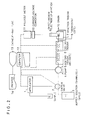
- Fig. 2 shows a circuit diagram of an apparatus of the invention where acid is used to treat samples.
- An apparatus for measuring an amount of sulfurous acid comprising an applicator 1, a switch valve 2 to select either a sample or a buffer, a pump 4 to draw the sample and the buffer toward a heating trough 5 where the sample and the buffer are mixed and heated, a cooling trough 6 to cool the mixture heated in the heating trough, a reaction trough 7 equipped with either an oxygen electrode having a bacterial-cell-immobilized membrane or a biosensor equipped pH meter, a thermostat 7 to maintain a constant temperature of the reaction trough, a current-voltage converter 10, a millivolt meter 11, a computer 12, a cathode-ray tube 13 and a printer 14.
- a given amount of a sample is drawn from the applicator 1 by the pump 4 and is sent to the heating trough 5 by the pump 4.
- buffer solution 3 is drawn to the heating trough 5 where the sample and the buffer solution 3 are mixed and heated.
- the mixture is then sent to the cooling through 6, cooled, sent to the reaction trough 7 whose temperature is kept constant by the thermostat 8.
- the reaction trough 7 is equipped with either an oxygen electrode having a bacterial-cell-immobilized membrane or a biosensor equipped pH meter which measures change in electric potential.
- the measured signal is fed into the computer 12 via the current-voltage converter 10 and the millivolt meter 11 and is processed by the computer 12. After processing, results are shown on a cathode-ray tube Screen 13 or printed out by a printer 14. These series of manupulation are programmed on the computer and can be automatically controlled by the computer.
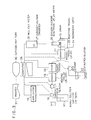
- Fig. 3 shows a circuit diagram of an apparatus of the invention where alkali is used to treat samples.
- An apparatus for measuring an amount of sulfurous acid comprising an applicator 15, a switch valve 16 to select either a sample or a buffer, a pump 18 to draw the sample and the buffer solution toward a heating trough 19 where the sample are treated with alkali, a cooling trough 20 to cool the alkali-treated sample, a pump 23 to send acid to a mixing trough 21 where the sample and acid are mixed, a reaction trough 25 equipped with either an oxygen electrode having a bacterial-cell-immobilized membrane or a biosensor equipped pH meter, a thermostat 24 to maintain a constant temperature of the reaction trough, a current-voltage converter 27, a millivolt meter 28, a computer 29, a cathode-ray tube 30 and a printer 31.
- a given amount of a sample is drawn from the applicator 15 by the pump 18 and is sent to the heating trough 19 by the same pump 18.
- the switch valve 16 When the switch valve 16 is in an alkali solution position, the alkali solution is drawn to the heating trough 19 where the sample is treated with alkali.
- the alkali-treated sample is then sent to the cooling trough 20, cooled, sent to the mixing trough 21 where the alkali-treated sample is mixed with acid 22 which is drawn by the pump 23.
- the mixture is then sent to the reaction trough 25 whose temperature is kept constant by the thermostat 24.
- the reaction trough 25 is equipped with either an oxygen electrode having a bacterial-cell-immobilized membrane or a biosensor equipped pH meter which measures change in electric potential.
- the measured signal is fed into the computer 29 via the current-voltage converter 27 and the millivolt meter 28 and is processed by the computer 29. After processing, results are shown on a cathode-ray tube screen 30 or printed out by a printer 31. These series of manupulation are programmed on the computer and can be automatically controlled by the computer.
- Thiobacillus thiooxidans 11773 (FERM BP-3119) was inoculated into 50 ml of a medium (described below) in a 200 ml Erlenmeyer flask.
- the culture was incubated with shaking at 30°C for 4 days. After incubation, 2 ml of the 4-day culture was added to 100 ml of the same medium described above in a 300 ml Erienmeyer fIask. The culture was incubated with shaking at 30°C for 10 days. After incubation, the culture was filtrated using No.5C filter (Toyo Roshi) to remove sulfur. The resulting filtrate was found to contain 0.2g/i (dry weight) of bacterial cells.
- the bacterium belonging to Thiobacillus thiooxidans or Thiobacillus ferooxidans was inoculated into 100 ml of the medium described in (1) in a 300 ml Erlenmeyer flask to a final concentration of 10 mg/I of bacterial cells (dry weight). The culture was incubated with shaking at 30°C for 4 days.
- the oxygen uptake rate is measured by an oxygen uptake meter(Rank Broth Co) using sodium sulfite as oxidation substrate. Table 1 shows the results.
- the filtrate described in (2) was centrifuged at 11,000 rpm for 15 minutes.
- the cell pellet was suspended in a small amount of ice cold distilled water and then the suspension was centrifuged for washing the cell. The washing procedure was repeated twice. After washing, the cell was resuspended in 0.1 1 M sodium citrate-NaOH buffer/pH 6.0 to a final concentration of 5g/i (dry weight). 5 ⁇ l of the suspension was placed in the space of an acetylcellulose membrane sandwich.
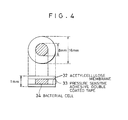
- the acetylcellulose membrane sandwich was made as follows: a pressure sensitive adhesive double coated tape 33 (16 mm in diameter) with a 8 mm-hole in center was sandwiched between acetylcellulose membrane filters 32 [16 mm in diameter, pore size: 0.45 ⁇ m (Millipore)] (Fig. 4). Suction was applied to one side of the membrane to immobilize bacterial cells.
- membrane filter for immobilizing bacterial cells was made as follows: membrane filters were overlayed onto the immobilized bacterial cells. The membrane filter containing the immobilized bacterial cells was stable at 4°C for 3 months.
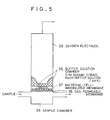
- a bacterial-cell-immobilized membrane 37 described in (3) was plugged into the top of an oxygen electrode 35 (Denkikagaku Keiki CO.,) (See Fig. 5).
- a buffer solution chamber 36 was first filled with 0.1 M sodium citrate-NaOH buffer solution/pH 5.0.
- the top of the oxygen electrode 35 was then capped with a membrane 38 permeable to gas (phloropore filter, Sumitomo Electiric Co.).
- the oxygen-microbe electrode was installed in the reaction trough of an acid treatment type apparatus of the invention shown in Fig. 2.
- An increased concentration of sodium sulfite (10-40 ppm) was prepared as a standard.
- the oxygen-microbe electrode was then tested for a decrease in an electric current by the increased concentration of sodium sulfite standard.
- a concentration of sodium sulfite was found to be inversely proportional to an electric current (Fig. 6).
- Suitable conditions of treating sulfurous acid containing compounds were determined using a compound of sulfurous acid combined with glutaraldehyde as a standard; acid treatment of the compound is shown in Table 2, and alkaline treatment of the compound is shown in Table 3.
- the content of sulfurous containing compound was quantitatively analyzed precisely and quickly according to the apparatus of the invention.
- Thiobacillus ferrooxidans IFO 14246 was cultured as described in (1) and 0.08g/1 (dry weight) of bacterial cells was harvested.
- the bacterial cells were immobilized on the membrane as described in (3) and the bacterial-cell-immobilized membrane was plugged in an oxygen electrode 35 (Denkikagaku Keiki) illustrated in Fig. 5.
- the buffer chamber 36 of the oxygen-microbe electrode was filled with 0.1 M sodium citrate-NaOH buffer solution/pH 5.0 and the oxygen-microbe electrode was capped with a membrane 38 permeable to gas (Fluro filter, Sumitomo Electric Co.).
- the oxygen-microbe electrode was installed in an acid treatment type apparatus illustrated in Fig. 2.
- the oxygen-microbe electrode was then tested for a decrease in an electric current by the increased concentration of sodium sulfite standard (10-40 ppm). A concentration of sodium sulfite was found to be inversely proportional to an electric current (Fig. 7).
- Thiobacillus ferrooxidans IFO 14246 The advantages of Thiobacillus ferrooxidans IFO 14246 were that it grew fast and a small scale of the culture provided an enough amount of bacterial cells.
- a glass electrode of a pH meter was installed in a reaction trough (Figs. 2 and 3).
- Bacterial cells described in (1) was suspended in a 1 mM sodium citrate-NaOH buffer solution/pH 6.0 to a final concentration of 1g/l. The suspension was then placed in the reaction trough.
- Sodium sulfite was injected into the reaction trough to a final concentration of 0-100 ppm. Different concentrations of sodium sulfite were tested at 30°C for 20 minutes. The results suggested that a concentration of sodium sulfite is closely correlated to change in pH (Fig. 8).
- a bacterial-cell-immobilized membrane was plugged into the glass electrode of a pH meter (Flat glass valve 39533, Beckman) (hereafter referred to as biosensor equipped pH meter) and the biosensor equipped pH meter was installed in the trough (see Fig. 2)
- Sulfurous acid is oxidized to sulfuric acid in the presence of Thiobacillus thiooxidans, which is accompanied by a generation of a hydrogen ion.
- the amount of the hydrogen ion generated is proportional to the oxidation of sulfurous acid (see Fig. 9).
- a sulfurous acid content in the sample is thus calculated by measuring the pH change (A pH).
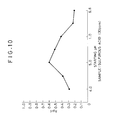
- Suitable starting pH of a buffer solution was pH 4.5 - 6.0. Lower than pH 4.5 and higher than pH 6.0 reduced pH change and were not suitable for measurement (see Fig. 10).
- Fig. 10 shows the relationship between pH change and a starting pH of a buffer solution under conditions; 10 minutes for measurment, starting pH 5.0, 30°C and 2.5 mM sodium phosphate buffer solution containing 0.1 M NaCi.
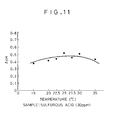
- Suitable temperature for measurement was 15 - 35°C and temperature for measurement had almost no influence on pH change (see Fig. 11).
- Fig. 11 shows the relationship between pH change and temperature for measurement under conditions; 10 minutes for measurment, starting pH 5.0, and 2.5 mM sodium phosphate buffer solution containing 0.1 M NaCI.
- bacterial cells were immobilized on membranes as described in Example 3 and pH change was measured using the membranes.
- a suitable amount of bacterial cells was 0.5 -1.8 mg-dry weight/membrane (see Fig. 12).
- Fig. 12 shows the relationship between pH change and an amount of bacterial cells under conditions; 10 minutes for measurment, starting pH 5.0, 30°C and 2.5 mM sodium phosphate buffer solution containing 0. 1M NaCi.
- a sulfurous acid content in white wine was then measured by the biosensor equipped pH meter and the data obtained were comparable to the data obtained by Rankine's method.
- the biosensor equipped pH meter has the following advantages: 1) dissolved oxygen in a sample does not affect measurement, 2) temperature change has minimum effects on measured values, 3) equipment is inexpensive, 4) smaller sizes of the equipment is available.
- Thiobacillus thiooxidans 20294 (FERM BP-3467) was inoculated into 50 ml of a medium (described below) in a 200 ml Erlenmeyer flask.
- the culture was incubated with shaking at 30°C for 4 days. After incubation, 2 ml of the 4-day culture was added to 100 ml of the same medium as described above in a 300 ml Enenmeyer flask. The mixture was incubated with shaking at 30°C for 10 days. After incubation, the culture was filtrated using No.5C filter (Toyo Roshi) to remove sulfur. The resulting filtrate was found to contain 0.4g/i (dry weight) of bacterial cells.
- the bacteria belonging to Thiobacillus thiooxidans or Thiobacillus ferooxidans were inoculated into 100 ml ofthe medium described in (1) in a 300 ml Erlenmeyer flask to a final concentration of 1 mg/I of bacterial cells (dry weight).
- the culture was incubated with shaking at 30°C for 4 days. After incubation, the culture was filtrated using No.5C filter (Toyo Roshi) to remove sulfur.
- the bacterial cell thus obtained was weighed to measure its growth rate and tested for an oxygen uptake rate as an indicator for ability of oxidizing sulfurous acid.
- the oxygen consumption is measured by an oxygen uptake meter(Rank Broth. Co.) using an increased concentration of sodium sulfite standard. Table 1 shows the results.
- the bacteria listed in Table 9 was inoculated into 100 ml of the medium described in (1) in a 300 ml Erlenmeyer flask to a final concentration of 10 mg/I of bacterial cells (dry weight).
- the culture was incubated with shaking at 30°C for 4 days. After incubation, the culture was filtrated using No.5C filter (Toyo Roshi) to remove sulfur.
- the filtrate described in (2) was centrifuged at 11,000 rpm for 15 minutes. The cell pellet was suspended in a small amount of ice cold distilled water and then the suspension was centrifuged for washing the cells. The washing procedure was repeatd twice.
- the cell was resuspended in 0. 1 M sodium citrate-NaOH buffer solution/pH 6.0 to a final concentration of 5g/1 (dry weight).
- the suspension was incubated in a thermostat at 30°C for a week. After incubation, the bacterial cell was tested for an oxygen consumption using a sodium sulfite standard as described in Example 2. Table 9 shows the results.
Landscapes
- Chemical & Material Sciences (AREA)
- Organic Chemistry (AREA)
- Life Sciences & Earth Sciences (AREA)
- Zoology (AREA)
- Wood Science & Technology (AREA)
- Proteomics, Peptides & Aminoacids (AREA)
- Health & Medical Sciences (AREA)
- Engineering & Computer Science (AREA)
- Microbiology (AREA)
- Biochemistry (AREA)
- Physics & Mathematics (AREA)
- Molecular Biology (AREA)
- Biotechnology (AREA)
- Biophysics (AREA)
- Analytical Chemistry (AREA)
- Immunology (AREA)
- Bioinformatics & Cheminformatics (AREA)
- General Engineering & Computer Science (AREA)
- General Health & Medical Sciences (AREA)
- Genetics & Genomics (AREA)
- Micro-Organisms Or Cultivation Processes Thereof (AREA)
- Measuring Or Testing Involving Enzymes Or Micro-Organisms (AREA)
Applications Claiming Priority (6)
| Application Number | Priority Date | Filing Date | Title |
|---|---|---|---|
| JP26661490 | 1990-10-05 | ||
| JP266614/90 | 1990-10-05 | ||
| JP325586/90 | 1990-11-29 | ||
| JP32558690 | 1990-11-29 | ||
| JP178152/91 | 1991-07-18 | ||
| JP17815291 | 1991-07-18 |
Publications (1)
| Publication Number | Publication Date |
|---|---|
| EP0479612A1 true EP0479612A1 (de) | 1992-04-08 |
Family
ID=27324530
Family Applications (1)
| Application Number | Title | Priority Date | Filing Date |
|---|---|---|---|
| EP91309129A Withdrawn EP0479612A1 (de) | 1990-10-05 | 1991-10-04 | Vorrichtung zur Messung von freier und totaler Sulphureoussäure und Verfahren zur Messung |
Country Status (4)
| Country | Link |
|---|---|
| US (1) | US5385830A (de) |
| EP (1) | EP0479612A1 (de) |
| AU (1) | AU639372B2 (de) |
| CA (1) | CA2052290A1 (de) |
Families Citing this family (2)
| Publication number | Priority date | Publication date | Assignee | Title |
|---|---|---|---|---|
| EP0995803A3 (de) * | 1998-10-20 | 2001-11-07 | Matsushita Electric Industrial Co., Ltd. | Kit zum Probebehandeln und Verfahren zum Probebehandeln für Analyse mit einem Biosensor |
| CN113533624A (zh) * | 2021-05-25 | 2021-10-22 | 华电电力科学研究院有限公司 | 一种脱硫浆液在线取样测量亚硫酸盐系统及其工作方法 |
Family Cites Families (1)
| Publication number | Priority date | Publication date | Assignee | Title |
|---|---|---|---|---|
| CA2052590A1 (en) * | 1991-03-28 | 1992-09-29 | Takeshi Sato | Sulfur dioxide detector device embodied by using so2-oxidant bioagent |
-
1991
- 1991-09-30 CA CA002052290A patent/CA2052290A1/en not_active Abandoned
- 1991-10-03 AU AU85559/91A patent/AU639372B2/en not_active Ceased
- 1991-10-04 EP EP91309129A patent/EP0479612A1/de not_active Withdrawn
- 1991-10-04 US US07/771,632 patent/US5385830A/en not_active Expired - Fee Related
Non-Patent Citations (4)
| Title |
|---|
| APPL. MICROBIOL. BIOTECHNOL. vol. 31, no. 4, September 1989, pages 351 - 354; K. NAKAMURA ET AL.: 'Determination of free sulphite in wine using a microbial sensor.' * |
| FOOD CHEMISTRY vol. 15, no. 2, 1984, pages 157 - 164; H.O.BEUTLER: 'A New Enzymatic Method for Determination of Sulphite in Food' * |
| JOURNAL OF BACTERIOLOGY vol. 77, no. 5, May 1959, pages 642 - 647; M.P.SILVERMAN ET AL.: 'Studies on the chemoautotrophic iron bacterium ferrobacillus ferrooxidans.' * |
| JOURNAL OF BIOTECHNOLOGY vol. 16, no. 1/2, April 1991, AMSTERDAM, NL. pages 93 - 102; A-MULCHANDANI ET AL.: 'Determination of sulfite in food products by an enzyme electrode.' * |
Also Published As
| Publication number | Publication date |
|---|---|
| AU639372B2 (en) | 1993-07-22 |
| AU8555991A (en) | 1993-05-20 |
| CA2052290A1 (en) | 1992-04-06 |
| US5385830A (en) | 1995-01-31 |
Similar Documents
| Publication | Publication Date | Title |
|---|---|---|
| Taylor et al. | New facultative Thiobacillus and a reevaluation of the heterotrophic potential of Thiobacillus novellus | |
| Bonam et al. | Carbon monoxide dehydrogenase from Rhodospirillum rubrum | |
| Ollivier et al. | Desulfohalobium retbaense gen. nov., sp. nov., a halophilic sulfate-reducing bacterium from sediments of a hypersaline lake in Senegal | |
| JPS61104784A (ja) | ペルオキシダ−ゼの製造法 | |
| US4810640A (en) | Method of quantitative assay for 1,5-anhydroglucitol | |
| JPH0671425B2 (ja) | ウリカ−ゼおよびその製造法 | |
| US4970153A (en) | Method of producing acid urease and the use of the urease | |
| Klucas | Nitrogen fixation by Klebsiella grown in the presence of oxygen | |
| Akyilmaz et al. | A mushroom (Agaricus bisporus) tissue homogenate based alcohol oxidase electrode for alcohol determination in serum | |
| Rehr et al. | Competition for nitrate between denitrifying Pseudomonas stutzeri and nitrate ammonifying enterobacteria | |
| Bell | Some morphological and biochemical characteristics of a soil bacterium which decomposes 2, 4-dichlorophenoxyacetic acid | |
| JP3750053B2 (ja) | 脱窒方法 | |
| Miyata et al. | Studies on Denitrification VIII. Production of Nitric Oxide by Denitrifying Reaction in the Presence of Tetramethyl-p-Phenylenediamine | |
| DE3600563C2 (de) | ||
| JP3926071B2 (ja) | ヒスタミンの定量法及び定量用試薬 | |
| EP0479612A1 (de) | Vorrichtung zur Messung von freier und totaler Sulphureoussäure und Verfahren zur Messung | |
| LIGHT et al. | Metabolism in iron-limited growth | |
| Götz et al. | Biochemical Properties and the Physiological Role of the Fructose‐1, 6‐Bisphosphate Activated l‐Lactate Dehydrogenase from Staphylococcus epidermidis | |
| JP3041840B2 (ja) | 新規なグリセロールデヒドロゲナーゼ、その製法及びその用途 | |
| JPS6279780A (ja) | 1,5―アンヒドログルシトールの定量法 | |
| US4503147A (en) | Monomethylamine-oxidizing enzyme | |
| JP3782621B2 (ja) | ヒスタミンデヒドロゲナーゼ及びその製造法 | |
| Tuitemwong et al. | FOOD GRADE OXYGEN REDUCING MEMBRANE BOUND ENZYMES 1 | |
| JP3075605B2 (ja) | 亜硫酸の測定方法及び装置 | |
| EP0097949A2 (de) | L-Glutaminsäure-Oxidase, ihre Gewinnung und ihre Verwendung |
Legal Events
| Date | Code | Title | Description |
|---|---|---|---|
| PUAI | Public reference made under article 153(3) epc to a published international application that has entered the european phase |
Free format text: ORIGINAL CODE: 0009012 |
|
| AK | Designated contracting states |
Kind code of ref document: A1 Designated state(s): AT DE ES FR GB IT NL |
|
| 17P | Request for examination filed |
Effective date: 19920408 |
|
| 17Q | First examination report despatched |
Effective date: 19940622 |
|
| STAA | Information on the status of an ep patent application or granted ep patent |
Free format text: STATUS: THE APPLICATION IS DEEMED TO BE WITHDRAWN |
|
| 18D | Application deemed to be withdrawn |
Effective date: 19941103 |