EP0480155A2 - 4-Substituted dihydropyrido (4,3-d)pyrimidines as analgesics and topical antiinflammatory agents for the treatment of skin disorders - Google Patents
4-Substituted dihydropyrido (4,3-d)pyrimidines as analgesics and topical antiinflammatory agents for the treatment of skin disorders Download PDFInfo
- Publication number
- EP0480155A2 EP0480155A2 EP91114330A EP91114330A EP0480155A2 EP 0480155 A2 EP0480155 A2 EP 0480155A2 EP 91114330 A EP91114330 A EP 91114330A EP 91114330 A EP91114330 A EP 91114330A EP 0480155 A2 EP0480155 A2 EP 0480155A2
- Authority
- EP
- European Patent Office
- Prior art keywords
- oil
- compound
- yield
- methanol
- formula
- Prior art date
- Legal status (The legal status is an assumption and is not a legal conclusion. Google has not performed a legal analysis and makes no representation as to the accuracy of the status listed.)
- Granted
Links
- 0 *C1N(*)C(*)Nc2c1cncc2 Chemical compound *C1N(*)C(*)Nc2c1cncc2 0.000 description 6
Classifications
-
- C—CHEMISTRY; METALLURGY
- C07—ORGANIC CHEMISTRY
- C07D—HETEROCYCLIC COMPOUNDS
- C07D471/00—Heterocyclic compounds containing nitrogen atoms as the only ring hetero atoms in the condensed system, at least one ring being a six-membered ring with one nitrogen atom, not provided for by groups C07D451/00 - C07D463/00
- C07D471/02—Heterocyclic compounds containing nitrogen atoms as the only ring hetero atoms in the condensed system, at least one ring being a six-membered ring with one nitrogen atom, not provided for by groups C07D451/00 - C07D463/00 in which the condensed system contains two hetero rings
- C07D471/06—Peri-condensed systems
-
- C—CHEMISTRY; METALLURGY
- C07—ORGANIC CHEMISTRY
- C07D—HETEROCYCLIC COMPOUNDS
- C07D471/00—Heterocyclic compounds containing nitrogen atoms as the only ring hetero atoms in the condensed system, at least one ring being a six-membered ring with one nitrogen atom, not provided for by groups C07D451/00 - C07D463/00
- C07D471/02—Heterocyclic compounds containing nitrogen atoms as the only ring hetero atoms in the condensed system, at least one ring being a six-membered ring with one nitrogen atom, not provided for by groups C07D451/00 - C07D463/00 in which the condensed system contains two hetero rings
- C07D471/04—Ortho-condensed systems
-
- A—HUMAN NECESSITIES
- A61—MEDICAL OR VETERINARY SCIENCE; HYGIENE
- A61K—PREPARATIONS FOR MEDICAL, DENTAL OR TOILETRY PURPOSES
- A61K31/00—Medicinal preparations containing organic active ingredients
- A61K31/33—Heterocyclic compounds
- A61K31/395—Heterocyclic compounds having nitrogen as a ring hetero atom, e.g. guanethidine or rifamycins
- A61K31/435—Heterocyclic compounds having nitrogen as a ring hetero atom, e.g. guanethidine or rifamycins having six-membered rings with one nitrogen as the only ring hetero atom
- A61K31/47—Quinolines; Isoquinolines
- A61K31/485—Morphinan derivatives, e.g. morphine, codeine
-
- A—HUMAN NECESSITIES
- A61—MEDICAL OR VETERINARY SCIENCE; HYGIENE
- A61P—SPECIFIC THERAPEUTIC ACTIVITY OF CHEMICAL COMPOUNDS OR MEDICINAL PREPARATIONS
- A61P17/00—Drugs for dermatological disorders
-
- A—HUMAN NECESSITIES
- A61—MEDICAL OR VETERINARY SCIENCE; HYGIENE
- A61P—SPECIFIC THERAPEUTIC ACTIVITY OF CHEMICAL COMPOUNDS OR MEDICINAL PREPARATIONS
- A61P25/00—Drugs for disorders of the nervous system
- A61P25/04—Centrally acting analgesics, e.g. opioids
-
- A—HUMAN NECESSITIES
- A61—MEDICAL OR VETERINARY SCIENCE; HYGIENE
- A61P—SPECIFIC THERAPEUTIC ACTIVITY OF CHEMICAL COMPOUNDS OR MEDICINAL PREPARATIONS
- A61P29/00—Non-central analgesic, antipyretic or antiinflammatory agents, e.g. antirheumatic agents; Non-steroidal antiinflammatory drugs [NSAID]
Definitions
- the present invention relates to compounds of Formula I, where
- Formula I covers two groups of compounds depicted by Formula II and Formula III below.
- loweralkyl shall mean a straight or branched alkyl group having from 1 to 6 carbon atoms.
- Examples of said loweralkyl include methyl, ethyl, n-propyl, iso-propyl, n-butyl, iso-butyl, sec-butyl, t-butyl and straight- and branched-chain pentyl and hexyl.
- halogen shall mean fluorine, chlorine, bromine or iodine.
- aryl shall mean a phenyl group optionally mono-substituted with a loweralkyl, loweralkoxy, halogen or trifluoromethyl group.
- the compounds of this invention are prepared by utilizing one or more of the synthetic steps described below.
- the compound of Formula IV is allowed to react with a Grignard reagent of the formula R 3 '-Mg-Br where R 3 ' is loweralkyl, cycloalkyl or aryl in a routine manner known to the art to afford a compound of Formula V.
- the starting compound of Formula IV is disclosed in Turner, J. Org. Chem. 48 3401 (1983).
- Compound V is allowed to react with pyridinium dichromate to afford a compound of Formula VI.
- This reaction is typically conducted in a suitable solvent such as dimethylformamide at a temperature of about 0 to 150 C.
- a compound of Formula VII (which is obtained from STEP B when R 3 is loweralkyl, cycloalkyl or aryl; and which is the same as Compound IV when R 3 is hydrogen) is hydrolyzed to afford a compound of Formula VIII.
- This hydrolysis is typically conducted in the presence of aqueous NaOH dissolved in a suitable solvent such as loweralkanol at a temperature of about 20 to 120 C.
- Compound VIII is allowed to react with hydroxylamine hydrochloride to afford a compound of Formula IX. This reaction is typically conducted in the presence of a suitable solvent such as pyridine at a temperature of about 20 to 115 ° C.
- a suitable solvent such as pyridine
- Compound IX is hydrogenated with the aid of a Raney alloy in a routine manner known to the art to afford a compound of Formula X.
- Raney alloy suitable for this reaction, one can cite 50:50 AI/Ni alloy.
- Compound X is allowed to react with an ortho ester of Formula XI to afford Compound III.
- This reaction is typically conducted in a suitable solvent such as glacial acetic acid at a temperature of about 20 to 120°C.
- Compound VII is allowed to react with a primary amine of the formula to afford a corresponding imine and thereafter the resultant imine is reduced with sodium borohydride to afford a compound of Formula XII.
- Said imine formation is typically conducted with the aid of a suitable acidic catalyst such as p-toluenesulfonic acid and a suitable solvent such as xylene at a temperature of about 80 to 140°C.
- the reduction of the imine with sodium borohydride is typically conducted in a suitable medium such as a mixture of isopropanol and methanol at a temperature of about 20 to 80 ° C.
- Compounds of Formula I according to this invention are useful as topical agents for the treatment of various skin disorders such as those mentioned earlier.
- the dermatological activities of the compounds of this invention were ascertained with reference to the following methods.
- Phospholipase A 2 -induced Paw Edema PIPE
- the ability of a compound to modulate PLA 2 activity was quantitated in this assay.
- the reaction mixture contained Tris buffer (25mM), pH 8.0, calcium chloride (2.0 mM), bovine serum albumin (0.5 mg), dipalmitoyl phosphatidylcholine (8x10 -5 M), ( 14 C-palmitoyl)dipalmitoyl phosphatidylcholine (6x10 3 cpm), porcine pancreatic PLA 2 (3.2 units) and the test compound.
- the reaction was run at 37 °C in a shaking incubator.
- mice The purpose of this assay was to determine the ability of a topically-applied compound to prevent mouse ear edema induced by topical application of arachidonic acid.
- TPA-Induced Ear Edema TPA-Induced Ear Edema
- TPA tridecoxin 12-myristate acetate
- Female Swiss Webster mice topically received TPA (10 ⁇ g/ear) on the right ear and vehicle on the left ear.
- the compounds of Formula I of the present invention are useful as analgesic agents due to their ability to alleviate pain in mammals.
- the activity of the compound is demonstrated in the 2-phenyl-1,4-benzoquinone-induced writhing test in mice, a standard assay for analgesia [Proc. Soc. Exptl. Biol. Med., 95, 729 (1957)].
- Table 2 shows results of the test for some of the compounds of this invention along with a result for a reference compound.
- Effective quantities of the compounds of the invention may be administered to a patient by any of the various methods, for example, orally as in capsule or tablets, parenterally in the form of sterile solutions or suspensions, and in some cases intravenously in the form of sterile solutions.
- the free base final products while effective themselves, may be formulated and administered in the form of their pharmaceutically acceptable acid addition salts for purposes of stability, convenience of crystallization, increased solubility and the like.
- Acids useful for preparing the pharmaceutically acceptable acid addition salts of the invention include inorganic acids such as hydrochloric, hydrobromic, sulfuric, nitric, phosphoric and perchloric acids, as well as organic acids such as tartaric, citric, acetic, succinic, maleic, fumaric and oxalic acids.
- inorganic acids such as hydrochloric, hydrobromic, sulfuric, nitric, phosphoric and perchloric acids
- organic acids such as tartaric, citric, acetic, succinic, maleic, fumaric and oxalic acids.
- the active compounds of the present invention may be orally administered, for example, with an inert diluent or with an edible carrier, or they may be enclosed in gelatin capsules, or they may be compressed into tablets.
- the active compounds of the invention may be incorporated with excipients and used in the form of tablets, troches, capsules, elixirs, suspensions, syrups, wafers, chewing gum and the like. These preparations should contain at least 0.5% of active compounds, but may be varied depending upon the particular form and may conveniently be between 4% to about 70% of the weight of the unit. The amount of active compound in such compositions is such that a suitable dosage will be obtained.
- Preferred compositions and preparations according to the present invention are prepared so that an oral dosage unit form contains between 1.0 - 300 milligrams of active compound.
- the tablets, pills, capsules, troches and the like may also contain the following ingredients: a binder such as micro-crystalline cellulose, gum tragacanth or gelatin; an excipient such as starch or lactose, a disintegrating agent such as alginic acid, Primogel, cornstarch and the like; a lubricant such as magnesium stearate or Sterotex; a glidant such as colloidal silicon dioxide; and a sweetening agent such as sucrose or saccharin may be added or a flavoring agent such as peppermint, methyl salicylate, or orange flavoring.
- a binder such as micro-crystalline cellulose, gum tragacanth or gelatin
- an excipient such as starch or lactose, a disintegrating agent such as alginic acid, Primogel, cornstarch and the like
- a lubricant such as magnesium stearate or Sterotex
- a glidant such as colloidal silicon dioxide
- dosage unit forms may contain other various materials which modify the physical form of the dosage unit, for example, as coatings.
- tablets or pills may be coated with sugar, shellac, or other enteric coating agents.
- a syrup may contain, in addition to the active compounds, sucrose as a sweetening agent and certain preservatives, dyes, coloring and flavors. Materials used in preparing these various compositions should be pharmaceutically pure and non-toxic in the amounts used.
- the active compounds of the invention may be incorporated into a solution or suspension. These preparations should contain at least 0.1% of active compound, but may be varied between 0.5 and about 30% of the weight thereof. The amount of active compound in such compositions is such that a suitable dosage will be obtained. Preferred compositions and preparations according to the present inventions are prepared so that a parenteral dosage unit contains between 0.5 to 100 milligrams of active compound.
- Examples of the compounds of this invention include;
- This oil was eluted with 10% methanol in dichloromethane through silica via HPLC to yield 7 g oil. Following unseccessful attempts to purify this oil as salts, the reconverted free base was again eluted with 20% methanol in dichloromethane through silica via HPLC to yield 5.5 g oil. A 3.5 g portion was converted to the dimaleate salt in methanol/ether to yield 4.5 g solid, d 78-800. This salt was reconverted to the free base to afford a solid which was recrystallized from 50% ether/hexane to yield 1.9 g crystals, m.p. 107-109°.
Landscapes
- Health & Medical Sciences (AREA)
- Chemical & Material Sciences (AREA)
- Organic Chemistry (AREA)
- Life Sciences & Earth Sciences (AREA)
- Pharmacology & Pharmacy (AREA)
- Medicinal Chemistry (AREA)
- Animal Behavior & Ethology (AREA)
- General Health & Medical Sciences (AREA)
- Public Health (AREA)
- Veterinary Medicine (AREA)
- Chemical Kinetics & Catalysis (AREA)
- Nuclear Medicine, Radiotherapy & Molecular Imaging (AREA)
- General Chemical & Material Sciences (AREA)
- Bioinformatics & Cheminformatics (AREA)
- Pain & Pain Management (AREA)
- Engineering & Computer Science (AREA)
- Rheumatology (AREA)
- Epidemiology (AREA)
- Emergency Medicine (AREA)
- Biomedical Technology (AREA)
- Neurology (AREA)
- Neurosurgery (AREA)
- Dermatology (AREA)
- Pharmaceuticals Containing Other Organic And Inorganic Compounds (AREA)
- Nitrogen Condensed Heterocyclic Rings (AREA)
- Pyridine Compounds (AREA)
Abstract
Description
- The present invention relates to compounds of Formula I,

- R1 is hydrogen, loweralkyl, arylloweralkyl or aryl;
- R2 when present is hydrogen, loweralkyl, arylloweralkyl; and
- R3 is hydrogen, loweralkyl, cycloalkyl or aryl;
- The dotted lines present in Formula I signify optional bonds. Specifically, Formula I covers two groups of compounds depicted by Formula II and Formula III below.

- Throughout the specification and the appended claims, a given chemical formula or name shall encompass all stereo isomers and tautomeric isomers where such isomers exist.
- Unless otherwise stated or indicated, the following definitions shall apply throughout the specification and the appended claims.
- The term loweralkyl shall mean a straight or branched alkyl group having from 1 to 6 carbon atoms. Examples of said loweralkyl include methyl, ethyl, n-propyl, iso-propyl, n-butyl, iso-butyl, sec-butyl, t-butyl and straight- and branched-chain pentyl and hexyl.
- The term halogen shall mean fluorine, chlorine, bromine or iodine.
- The term aryl shall mean a phenyl group optionally mono-substituted with a loweralkyl, loweralkoxy, halogen or trifluoromethyl group.
- The compounds of this invention are prepared by utilizing one or more of the synthetic steps described below.
- Throughout the description of the synthetic steps, the notations R, , R2 and R3 shall have the respective meanings given above unless otherwise stated or indicated.
- The compound of Formula IV is allowed to react with a Grignard reagent of the formula R3'-Mg-Br where R3' is loweralkyl, cycloalkyl or aryl in a routine manner known to the art to afford a compound of Formula V. The starting compound of Formula IV is disclosed in Turner, J. Org. Chem. 48 3401 (1983).

- Compound V is allowed to react with pyridinium dichromate to afford a compound of Formula VI. This reaction is typically conducted in a suitable solvent such as dimethylformamide at a temperature of about 0 to 150 C.

- A compound of Formula VII (which is obtained from STEP B when R3 is loweralkyl, cycloalkyl or aryl; and which is the same as Compound IV when R3 is hydrogen) is hydrolyzed to afford a compound of Formula VIII. This hydrolysis is typically conducted in the presence of aqueous NaOH dissolved in a suitable solvent such as loweralkanol at a temperature of about 20 to 120 C.

- Compound VIII is allowed to react with hydroxylamine hydrochloride to afford a compound of Formula IX. This reaction is typically conducted in the presence of a suitable solvent such as pyridine at a temperature of about 20 to 115 ° C.

- Compound IX is hydrogenated with the aid of a Raney alloy in a routine manner known to the art to afford a compound of Formula X. As an example of Raney alloy suitable for this reaction, one can cite 50:50 AI/Ni alloy.

- Compound X is allowed to react with an ortho ester of Formula XI to afford Compound III. This reaction is typically conducted in a suitable solvent such as glacial acetic acid at a temperature of about 20 to 120°C.

- Compound VII is allowed to react with a primary amine of the formula


- Compound XII is hydrolyzed in substantially the same manner as in STEP C to afford a compound of Formula XIII.

- Compound XIII is allowed to react with an ortho ester of Formula XI in substantially the same manner as in STEP F to afford Compound II.

- Compounds of Formula I according to this invention are useful as topical agents for the treatment of various skin disorders such as those mentioned earlier. The dermatological activities of the compounds of this invention were ascertained with reference to the following methods.
- The ability of compounds to prevent naja naja (snake venom) phospholipase A2-induced paw edema in male Wistar rats (100-125 g) was measured. PLA2 (3 units/paw) alone or with 0.1 M of the test compound was injected in the subplantar region of the rat left hindpaw. Immediately subsequent to the injection and at two hours post administration the paw was immersed in a mercury bath, and paw displacement was measured on a recorder via a transducer. (Standard: hydrocortisone ED50 =0.46 M). See Giessler, A.J. et al., Agents and Actions, Vol. 10, Trends in Inflammation Research (1981), p. 195.
- The ability of a compound to modulate PLA2 activity (cleavage of 14C-dipalmitoyl phosphatidylcholine at the 2-position to 14C-palmitic acid) was quantitated in this assay. The reaction mixture contained Tris buffer (25mM), pH 8.0, calcium chloride (2.0 mM), bovine serum albumin (0.5 mg), dipalmitoyl phosphatidylcholine (8x10⁻⁵M), (14C-palmitoyl)dipalmitoyl phosphatidylcholine (6x10³ cpm), porcine pancreatic PLA2 (3.2 units) and the test compound. The reaction was run at 37 °C in a shaking incubator. The reaction was quenched and an internal standard was added in order to determine sample recovery. The samples were loaded onto C18 columns, eluted with ethanol, and the radioactivity was then measured. (standard: quinacrine IC50 =3.5×10⁻⁴M). See Feyen, J.H.M., et al., Journal of Chromatography 259 (1983), pp. 338-340.
- The purpose of this assay was to determine the ability of a topically-applied compound to prevent mouse ear edema induced by topical application of arachidonic acid. Female Swiss Webster mice topically received vehicle or test compound (1.0 mg/ear) on both ears (10 µl on outer and inner ears). After 30 minutes, the right ear of all groups received arachidonic acid (4 mg/ear) and the left ear received vehicle alone. After an additional 1 hour, the mice were sacrificed and an ear punch (4 mm) was taken from each ear. The difference in right and left ear punch weights for each animal was determined to assess activity. (Standard: indomethacin ED50 = 1.5 mg/ear). See Young, J.M. et al., Invest. Dermatol., 80, (1983), pp 48-52.
- The purpose of this assay was to determine the ability of a topically-applied compound to prevent ear edema induced by topical application of TPA (phorbol 12-myristate acetate). Female Swiss Webster mice topically received TPA (10µg/ear) on the right ear and vehicle on the left ear. The test compound (10 µg/ear) was applied to both ears. After five hours, the animals were sacrificed and an ear punch (4 mm) was taken from each ear. The difference in right and left ear punch weights for each animal was determined to assess activity. (Standard: hydrocortisone ED50 =47 µg/ear). See Young, J.M. et al., J. Invest. Dermatol., 80 (1983), pp. 48-52.
- Dermatological activities for some of the compounds of this invention are presented in Table 1.


- The compounds of Formula I of the present invention are useful as analgesic agents due to their ability to alleviate pain in mammals. The activity of the compound is demonstrated in the 2-phenyl-1,4-benzoquinone-induced writhing test in mice, a standard assay for analgesia [Proc. Soc. Exptl. Biol. Med., 95, 729 (1957)]. Table 2 shows results of the test for some of the compounds of this invention along with a result for a reference compound.


- Effective quantities of the compounds of the invention may be administered to a patient by any of the various methods, for example, orally as in capsule or tablets, parenterally in the form of sterile solutions or suspensions, and in some cases intravenously in the form of sterile solutions. The free base final products, while effective themselves, may be formulated and administered in the form of their pharmaceutically acceptable acid addition salts for purposes of stability, convenience of crystallization, increased solubility and the like.
- Acids useful for preparing the pharmaceutically acceptable acid addition salts of the invention include inorganic acids such as hydrochloric, hydrobromic, sulfuric, nitric, phosphoric and perchloric acids, as well as organic acids such as tartaric, citric, acetic, succinic, maleic, fumaric and oxalic acids.
- The active compounds of the present invention may be orally administered, for example, with an inert diluent or with an edible carrier, or they may be enclosed in gelatin capsules, or they may be compressed into tablets. For the purpose of oral therapeutic administration, the active compounds of the invention may be incorporated with excipients and used in the form of tablets, troches, capsules, elixirs, suspensions, syrups, wafers, chewing gum and the like. These preparations should contain at least 0.5% of active compounds, but may be varied depending upon the particular form and may conveniently be between 4% to about 70% of the weight of the unit. The amount of active compound in such compositions is such that a suitable dosage will be obtained. Preferred compositions and preparations according to the present invention are prepared so that an oral dosage unit form contains between 1.0 - 300 milligrams of active compound.
- The tablets, pills, capsules, troches and the like may also contain the following ingredients: a binder such as micro-crystalline cellulose, gum tragacanth or gelatin; an excipient such as starch or lactose, a disintegrating agent such as alginic acid, Primogel, cornstarch and the like; a lubricant such as magnesium stearate or Sterotex; a glidant such as colloidal silicon dioxide; and a sweetening agent such as sucrose or saccharin may be added or a flavoring agent such as peppermint, methyl salicylate, or orange flavoring. When the dosage unit form is a capsule, it may contain, in addition to materials of the above type, a liquid carrier such as a fatty oil. Other dosage unit forms may contain other various materials which modify the physical form of the dosage unit, for example, as coatings. Thus, tablets or pills may be coated with sugar, shellac, or other enteric coating agents. A syrup may contain, in addition to the active compounds, sucrose as a sweetening agent and certain preservatives, dyes, coloring and flavors. Materials used in preparing these various compositions should be pharmaceutically pure and non-toxic in the amounts used.
- For the purpose of parenteral therapeutic administration, the active compounds of the invention may be incorporated into a solution or suspension. These preparations should contain at least 0.1% of active compound, but may be varied between 0.5 and about 30% of the weight thereof. The amount of active compound in such compositions is such that a suitable dosage will be obtained. Preferred compositions and preparations according to the present inventions are prepared so that a parenteral dosage unit contains between 0.5 to 100 milligrams of active compound.
- Examples of the compounds of this invention include;
- 4-cyclohexyl-1,4-dihydropyrido[4,3-d]pyrimidine;
- 3,4-dihydro-4-methyl-3-phenylmethylpyrido[4,3-d]pyrimidine;
- 3-butyl-3,4-dihydropyrido[4,3-d]pyrimidine;
- 1,4-dihydro-4-phenylpyrido[4,3-d]pyrimidine;
- 1,4-dihydro-2,4-dimethylpyrido[4,3-d]pyrimidine;
- 1,4-dihydro-4-methyl-2-phenylmethylpyrido[4,3-d]pyrimidine; and
- 1,4-dihydro-4-methyl-2-phenylpyrido[4,3-d]pyrimidine.
- The following examples are presented in order to illustrate this invention:
- A solution of
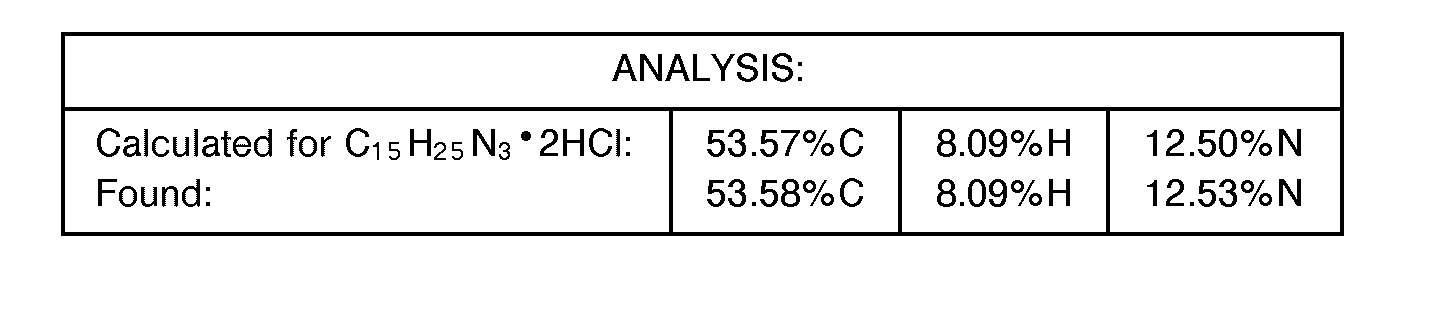
N-(3-formyl-4-pyridinyl)-2,2-dimethylpropanamidel(10 g), n-butylamine (7.1 g) and p-toluenesulfonic acid monohydrate (0.1 g) in 150 ml toluene was stirred at reflux with removal of water. After six hours the solution was cooled and concentrated and the product purified by flash chromatography (silica, 50% ethyl acetate in dichloromethane) to yield 8 g oil. A solution of the imine (combined with 3 g obtained from another condensation) in 100 ml isopropanol and 25 ml methanol was stirred for one hour at 80 with sodium borohydride (5 g) and thereafter cooled, stirred with water and extracted with ether. The organic extract was washed with water and saturated sodium chloride solution, dried (anhy. MgS04), filtered and concentrated to an oil. This oil was purified by flash chromatography (silica, 50% ethyl acetate in dichloromethane) to yield 6.5 g oil. This oil was purified by column chromatography (alumina, ether) to yield 6 g oil. An analytical sample was obtained by converting 2.5 g to the dihydrochloride salt in methanol/ether to yield 2.7 g crystals, m.p. 166-168°. -
- A solution of
N-(3-formyl-4-pyridinyl)-2,2-dimethylpropanamide (10 g), benzylamine (8 g) and p-toluenesulfonic acid monohydrate (0.1 g) in 125 ml toluene was stirred at reflux with removal of water. After two hours the solution was cooled and concentrated and the product purified by flash chromatography (silica, 20% ethyl acetate in dichloromethane) to yield 11.3 g solid, m.p. 105-1090. A solution of the imine (11 g) in 100 ml isopropanol and 25 ml methanol was stirred for one hour at 80 C with sodium borohydride (5 g) and thereafter cooled, stirred with water and extracted with ether. The organic extract was washed with water and saturated sodium chloride solution, dried (anhy. MgS04), filtered and concentrated to 12 g oil. This oil 'Turner, J. Org. Chem., 48 , 3401 (1983) was purified by flash chromatography (silica, 50% ethyl acetate in dichloromethane) to yield 5.5 g oil*. An analytical sample was obtained by recrystallizing 3.2 g from ethanol/ether to yield 3.0 g crystals, m.p. 168-170°.
- To an ice-cooled solution of
N-(3-formyl-4-pyridinyl)-2,2-dimethylpropanamidel(8 g) in 150 ml tetrahydrofuran was added methylmagnesium bromide (3.0 M in ether, 30 ml). After thirty minutes the reaction mixture was stirred with saturated ammonium chloride solution, basified with sodium carbonate and extracted with ether. The organic extract was washed with water and saturated sodium chloride solution, dried over anhydrous magnesium sulfate, filtered and concentrated to an oil. This oil was purified by flash chromatography (silica, ethyl acetate) to give 7 g oil. This oil was crystallized from ether/hexane to give 4.5 g solid, m.p. 100-102°. -

- A solution of a-methyl-a-[4-(2,2-dimethylpropionamido)-3-pyridinyl]-methanol (11 g) and pyridinium dichromate (26 g) in 100 ml dimethylformamide was stirred at ambient temperature for twenty hours and thereafter stirred with water, basified with sodium carbonate and extracted with ether. The organic extract was washed with water and saturated sodium chloride solution, dried (anhy. MgS04), filtered and concentrated to 11 g waxy solid. This solid was purified by flash chromatography (silica, 20% ethyl acetate in dichloromethane) to yield 7 g solid, m.p. 95°. Six grams were recrystallized from hexane to yield 4.8 g crystals, m.p. 98-100". An analytical sample was obtained by recrystallizing 3 g from hexane to yield 2.7 g, m.p. 98-100°.
-

- *This oil was converted to the dihydrochloride salt in methanol/ether to yield 5.5 solid, m.p. 168-170°C.
- 'Turner, J. Org. Chem., 48 , 3401-3408 (1983)
- A solution of
N-(3-acetyl-4-pyridinyl)-2,2-dimethylpropanamide (8 g), benzylamine (12 g) and p-toluenesulfonic acid monohydrate (0.2 g) in 200 ml xylene was stirred at reflux with removal of water. After eighteen hours the solution was cooled and concentrated and the product purified by flash chromatography (silica, 50% ethyl acetate in dichloromethane) to yield 9.4 g solid, m.p. 112-115°. A solution of the imine (9.4 g) in 100 ml isopropanol and 25 ml methanol was stirred for two hours at 80 with sodium borohydride (2.3 g) and thereafter cooled, stirred with water and extracted with ethyl acetate. The organic extract was washed with water and saturated sodium chloride solution, dried (anhy. MgS04), filtered and concentrated to 9 g oil. This oil was purified by flash chromatography (silica, 30% ethyl acetate in dichloromethane) to yield 6.3 g oil. A 2.3 g portion was converted to the dihydrochloride salt in methanol/ether to yield 2.3 g solid, m.p. 205°. This was recrystallized from methanol/ether to yield 2.2 g crystals, m.p. 207-2090.
- A solution of N-[3-[(butylamino)methyl]-4-pyridinyl]-2,2-dimethylpropanamide (7 g) in 150 ml methanol and 15 ml 10% aqueous sodium hydroxide was stirred at reflux for 16 hours and thereafter concentrated, and the product was purified by flash chromatography (silica, 25% methanol in dichloromethane) to yield 4.5 g oil. This oil was converted to the dihydrochloride salt in methanol/ether to yield 3.7 g solid, m.p. 258-260°.

- A solution of N-[3-[1-(phenylmethylamino)ethyl]-4-pyridinyl]-2,2-dimethylpropanamide (12.2 g) in 200 ml n-propanol and 25 ml 10% aqueous sodium hydroxide was stirred at reflux for sixteen hours and thereafter cooled, stirred with water and extracted with ethyl acetate/ether. The organic extract was washed with water and saturated sodium chloride solution and thereafter dried (anhydrous magnesium sulfate), filtered and concentrated to 8.7 g oil. This oil was eluted with 20% methanol in dichloromethane through silica via flash column chromatography to yield 8 g oil. This oil was eluted with 10% methanol in dichloromethane through silica via HPLC to yield 7 g oil. Following unseccessful attempts to purify this oil as salts, the reconverted free base was again eluted with 20% methanol in dichloromethane through silica via HPLC to yield 5.5 g oil. A 3.5 g portion was converted to the dimaleate salt in methanol/ether to yield 4.5 g solid, d 78-800. This salt was reconverted to the free base to afford a solid which was recrystallized from 50% ether/hexane to yield 1.9 g crystals, m.p. 107-109°.

- A solution of N-[3-[(phenylmethylamino)methyl]-4-pyridinyl]-2,2-dimethylpropanamide(8 g) in 200 ml methanol and 20 ml 10% aqueous sodium hydroxide was stirred at reflux for 12 hours and thereafter cooled, stirred with water and extracted with ethyl acetate. The organic extract was washed with water and saturated sodium chloride solution and thereafter dried (anhy. MgS04), filtered and concentrated to 7 g oil. This oil was purified by flash chromatography (silica, 25% methanol in dichloromethane) to give 3.2 g oil. This oil was converted to the dihydrochloride salt in methanol to yield 2.5 g crystals, d 305-307°.

- To an ice-cooled solution of
N-(3-formyl-4-pyridinyl)-2,2-dimethylpropanamide (10 g) in 100 ml tetrahydrofuran was added cyclohexyl- magnesium chloride (2.0 M in ether, 35 ml). After thirty minutes the reaction mixture was stirred with saturated ammonium chloride solution, basified with sodium carbonate and extracted with ether. The organic extract was washed with water and saturated sodium chloride solution, dried over anhydrous magnesium sulfate, filtered and concentrated to an oil. This oil was purified by flash chromatography (silica, 20% ethyl acetate in dichloromethane then ethyl acetate) to give 6 g oil. This oil was crystallized from hexane to give 2.5 g solid, m.p. 148-1500. This solid was recrystallized from acetonitrile to give 2.1 g crystals, m.p. 153-155°.
- Pyridinium dichromate (30 g) was added to a solution of a-cyclohexyl-a-[4-(2,2-dimethylpropionamido)-3-pyridinyl]-methan (16 g) and the resultant solution stirred 16 hours at ambient temperature and thereafter stirred with water, basified with sodium carbonate and extracted with ethyl acetate/ether. The organic extract was washed with water and saturated sodium chloride solution, dried (anhy. MgS04), filtered and concentrated to 12 g waxy solid. This was purified by flash chromatography (silica, 10% ethyl acetate in dichloromethane) to yield 11 g solid. This was purified by column chromatography (alumina, ether) to yield 9 g solid, m.p. 80°. Three grams were converted to the hydrochloride salt in ether to yield 3 g solid, m.p. 212-2150. This was recrystallized from methanol/ether (1:40) to yield 2.2 g crystals, m.p. 216-218°.

- A solution of N-[3-(cyclohexylcarbonyl)-4-pyridinyl]-2,2-dimethylpropanamide (5.5 g) in 100 ml methanol and 10 ml 10% aqueous sodium hydroxide was stirred for three hours at ambient temperature and thereafter concentrated, stirred with water and extracted with ethyl acetate. The organic extract was washed with water and saturated sodium chloride solution, dried (anhy. MgS04), filtered and concentrated to 5 g oil. This oil was purified by flash chromatography (silica, ethyl acetate) to yield 4 g viscous oil. This was converted to the hydrochloride salt in methanol/ether to yield 4.2 g crystals, dec. 266-270 °.

- A solution of
(4-amino-3-pyridinyl)cyclohexylmethanone (5 g) and hydroxylamine hydrochloride (10 g) in 70 ml pyridine was stirred at 80 °C for three hours and thereafter concentrated. The residue was stirred with water, basified with sodium carbonate and extracted with dichloromethane. The organic extract was washed with water and saturated sodium chloride solution. The dried (anhy. MgS04) organic layer was concentrated to 9 g waxy solid. This solid was triturated with acetonitrile to yield 4.9 g solid, m.p. 155-158 °C. Three grams were converted to the hydrochloride salt in methanol/ether to yield 2.8 g solid, m.p. 226-228 °C.
- A solution of
(4-amino-3-pyridinyl)cyclohexylmethanone oxime (6 g) in 145 ml 95% ethanol was quickly treated with Raney alloy (10.7 g, 50:50 Al/Ni alloy) and then with a solution of sodium hydroxide (11.4 g) in 145 ml water. The exothermic reaction was controlled with a reflux condenser. The mixture was cooled to ambient temperature and stirred for four hours. The Raney nickel catalyst (pyrophoric) was removed by filtration and washed with 50% aqueous ethanol. The filtrate was concentrated by removing the ethanol and the aqueous residue was extracted with dichloromethane. The dried (anhy. MgS04) organic layer was concentrated to yield 5 g oil. This was combined with 0.6 g product obtained from a trial reduction and eluted with 20% methanol in dichloromethane through silica via flash column chromatography to yield 5.0 g oil. This oil was converted to the dihydrochloride salt in methanol and thereafter the methanol was removed by evaporation. The residue was recrystallized from 50% methanol in acetonitrile to yield 4.2 g crystals, d 314-316°.
- A solution of (4-amino-3-pyridinyl)phenylmethanone (17 g prepared from N-(3-formyl-4-pyridinyl)-2,2-dimethylpropanamide by utilizing the reaction scheme described in Example 9, 10 and 11 except that phenyl magnesium chloride was used instead of cyclohexyl magnesium chloride) and hydroxylamine hydrochloride (24 g) in 150 ml pyridine was stirred at 90-95 for two hours and thereafter cooled and concentrated. The residue was stirred with water, basified with sodium carbonate and extracted with dichloromethane. The dried organic layer was concentrated to 20 g waxy solid. This was triturated with acetonitrile to yield 13.6 g solid, m.p. 177-179°. The filtrate was concentrated to 4.3 g oil and thereafter eluted with 10% methanol in dichloromethane through silica via flash column chromatography to yield an additional 1.8 g product for a total yield of 15.4 g. Eight grams were again eluted with 10% methanol in dichloromethane through silica via flash column chromatography to yield 6.9 g solid, m.p. 178-180°. A 4.9 g portion was converted to the hydrochloride salt in methanol/ether to yield 3.3 g crystals, d 238-240 °.

- A solution of (4-amino-3-pyridinyl)phenylmethanone oxime (6 g) in 147 ml 95% ethanol was quickly treated with Raney alloy (11 g, 50:50 Al/Ni alloy) and then with a solution of sodium hydroxide (11.7 g) in 147 ml water. The exothermic reaction was controlled with a reflux condenser. The mixture was cooled to ambient temperature and stirred for four hours. The Raney nickel catalyst (pyrophoric) was removed by filtration and washed with 50% aqueous ethanol. The filtrate was concentrated by removing the ethanol and the aqueous residue was extracted with dichloromethane. The dried (anhy. MgS04) organic layer was concentrated to yield 5 g waxy solid. This solid was eluted with 20% methanol in dichloromethane through silica via flash column chromatography to yield 4.2 g solid, m.p. 108-110°. This solid was converted to the dihydrochloride salt in methanol and thereafter the methanol was removed by evaporation. The solid residue was recrystallized from 50% methanol in acetonitrile to yield 3.7 g crystals, d 280-282°.

- A solution of
(4-amino-3-pyridinyl)cyclohexylmethanamine (4.7 g) in 30 ml triethyl orthoformate and 10 ml glacial acetic acid was stirred for one hour at 100 and thereafter cooled and concentrated. The residue was stirred with water and basified with sodium carbonate. The product was extracted with dichloromethane. The dried (anhydrous magnesium sulfate) organic layer was concentrated to 6 g oil. This oil was eluted through silica first with 5% methanol in dichloromethane and then with 10% methanol in dichloromethane via flash column chromatography to yield 4.6 g viscous oil. This oil was converted to the dihydrochloride salt in methanol with ethereal hydrogen chloride to yield 4 g crystals, d 260-262" .
- A solution of 4-amino-a-methyl-N-(phenylmethyl)-3-pyridinemethanamine (3 g) in triethyl orthoformate (25 ml) and glacial acetic acid (8 ml) was stirred at 100-105 for one hour and thereafter cooled and concentrated. The residue was stirred with water, basified with sodium carbonate and extracted with dichloromethane. The dried (anhydrous magnesium sulfate) organic layer was filtered and concentrated to 2.4 g oil. This oil was eluted through silica first with ethyl acetate and then with 10% methanol in ethyl acetate via flash column chromatography to give 2.1 g oil. This oil was converted to the dihydrochloride salt in methanol/ether to give 2.1 g solid. This was recrystallized from methanol/ether to yield 1.8 g crystals, d 244-2460.

which compounds are useful as analgesics and topical antiinflammatory agents for the treatment of various dermatoses including, for example, exogenous dermatitides (e.g. sunburn, photoallergic dermatitis, urticaria, contact dermatitis, allergic dermatitis), endogenous dermatitides (e.g. atopic dermatitis, seborrheic dermatitis, nummular dermatitis), dermatitides of unknown etiology (e.g. generalized exfoliative dermatitis), and other cutaneous disorders with an inflammatory component (e.g. psoriasis).
Claims (10)

or a pharmaceutically acceptable addition salt thereof which comprises


Applications Claiming Priority (2)
| Application Number | Priority Date | Filing Date | Title |
|---|---|---|---|
| US07/573,414 US5059602A (en) | 1990-08-27 | 1990-08-27 | 4-substituted dihydropyrido(4,3-d)pyrimidines as analgesics and topical antiinflammatory agents for the treatment of skin disorders |
| US573414 | 1990-08-27 |
Publications (3)
| Publication Number | Publication Date |
|---|---|
| EP0480155A2 true EP0480155A2 (en) | 1992-04-15 |
| EP0480155A3 EP0480155A3 (en) | 1992-04-29 |
| EP0480155B1 EP0480155B1 (en) | 1996-01-31 |
Family
ID=24291905
Family Applications (1)
| Application Number | Title | Priority Date | Filing Date |
|---|---|---|---|
| EP91114330A Expired - Lifetime EP0480155B1 (en) | 1990-08-27 | 1991-08-27 | 4-Substituted dihydropyrido (4,3-d)pyrimidines as analgesics and topical antiinflammatory agents for the treatment of skin disorders |
Country Status (22)
| Country | Link |
|---|---|
| US (1) | US5059602A (en) |
| EP (1) | EP0480155B1 (en) |
| JP (1) | JP3083180B2 (en) |
| KR (1) | KR100218562B1 (en) |
| AT (1) | ATE133670T1 (en) |
| AU (1) | AU635150B2 (en) |
| CA (1) | CA2049850C (en) |
| CZ (1) | CZ280569B6 (en) |
| DE (1) | DE69116788T2 (en) |
| DK (1) | DK0480155T3 (en) |
| ES (1) | ES2082894T3 (en) |
| FI (1) | FI914007L (en) |
| GR (1) | GR3019085T3 (en) |
| HU (1) | HUT59923A (en) |
| IE (1) | IE72086B1 (en) |
| IL (1) | IL99305A (en) |
| NO (1) | NO913331L (en) |
| NZ (1) | NZ239516A (en) |
| PT (1) | PT98773B (en) |
| SG (1) | SG48250A1 (en) |
| YU (1) | YU144391A (en) |
| ZA (1) | ZA916738B (en) |
Families Citing this family (12)
| Publication number | Priority date | Publication date | Assignee | Title |
|---|---|---|---|---|
| US5095019A (en) * | 1990-08-27 | 1992-03-10 | Hoechst-Roussel Pharmaceuticals Inc. | 4-substituted dihydropyrido(4,3-D)pyrimidines as analgesics and topical antiinflammatory agents for the treatment of skin disorders |
| US6008361A (en) * | 1996-04-09 | 1999-12-28 | Pfizer Inc. | Substituted pyridines |
| US6031105A (en) * | 1996-04-09 | 2000-02-29 | Pfizer Inc | Substituted pyridines |
| AU2001263239A1 (en) | 2000-05-18 | 2001-11-26 | Nuvasive, Inc. | Tissue discrimination and applications in medical procedures |
| AU2002322720B2 (en) | 2001-07-25 | 2008-11-13 | Raptor Pharmaceutical Inc. | Compositions and methods for modulating blood-brain barrier transport |
| CN102379684B (en) | 2005-04-28 | 2014-11-19 | 普罗透斯数字保健公司 | Pharma-informatics system |
| DK1879877T3 (en) * | 2005-05-03 | 2013-04-15 | Ranbaxy Lab Ltd | ANTIMICROBIAL AGENTS |
| JP2009533315A (en) * | 2006-04-10 | 2009-09-17 | ランバクシー ラボラトリーズ リミテッド | Antibacterial agent |
| KR20090071598A (en) | 2006-09-18 | 2009-07-01 | 랩터 파마슈티컬 인코포레이티드 | Treatment of liver disease by administration of receptor binding protein (RAP) -conjugates |
| EP2398500B1 (en) | 2009-02-20 | 2019-03-13 | 2-BBB Medicines B.V. | Glutathione-based drug delivery system |
| ES2942923T3 (en) | 2009-05-06 | 2023-06-07 | Laboratory Skin Care Inc | Dermal delivery compositions comprising complexes of active agent-calcium phosphate particles and methods of use thereof |
| US20120077778A1 (en) | 2010-09-29 | 2012-03-29 | Andrea Bourdelais | Ladder-Frame Polyether Conjugates |
Family Cites Families (6)
| Publication number | Priority date | Publication date | Assignee | Title |
|---|---|---|---|---|
| DE1197466B (en) * | 1962-03-22 | 1965-07-29 | Thomae Gmbh Dr K | Process for the preparation of new 5, 6, 7, 8-tetrahydropyrido- [4, 3-d] pyrimidines |
| US3635973A (en) * | 1969-11-20 | 1972-01-18 | Sherwin Williams Co | Method of preparing 3-substituted pyridopyrimidinediones and lumazines |
| US3962264A (en) * | 1972-09-27 | 1976-06-08 | Pfizer Inc. | Process for making 2-amino nicotinonitrile |
| DE3438351A1 (en) * | 1984-10-19 | 1986-04-24 | Gödecke AG, 1000 Berlin | 4-ALKOXY-PYRIDO (2,3-D) PYRIMIDINE DERIVATIVES, METHOD FOR THE PRODUCTION AND USE THEREOF |
| DE3502590A1 (en) * | 1985-01-26 | 1986-07-31 | Gödecke AG, 1000 Berlin | 5-ALKOXY-PYRIDO (4,3-D) PYRIMIDINE DERIVATIVES, METHOD FOR THE PRODUCTION AND USE THEREOF |
| DE3502742A1 (en) * | 1985-01-28 | 1986-07-31 | Gödecke AG, 1000 Berlin | 5-OXO-PYRIDO (4,3-D) PYRIMIDINE DERIVATIVES, METHOD FOR THE PRODUCTION AND USE THEREOF |
-
1990
- 1990-08-27 US US07/573,414 patent/US5059602A/en not_active Expired - Fee Related
-
1991
- 1991-08-23 FI FI914007A patent/FI914007L/en not_active Application Discontinuation
- 1991-08-23 NZ NZ239516A patent/NZ239516A/en unknown
- 1991-08-26 CA CA002049850A patent/CA2049850C/en not_active Expired - Fee Related
- 1991-08-26 PT PT98773A patent/PT98773B/en not_active IP Right Cessation
- 1991-08-26 NO NO91913331A patent/NO913331L/en unknown
- 1991-08-26 ZA ZA916738A patent/ZA916738B/en unknown
- 1991-08-26 HU HU912786A patent/HUT59923A/en unknown
- 1991-08-26 AU AU82719/91A patent/AU635150B2/en not_active Ceased
- 1991-08-26 KR KR1019910014788A patent/KR100218562B1/en not_active Expired - Fee Related
- 1991-08-26 IL IL9930591A patent/IL99305A/en active IP Right Grant
- 1991-08-26 YU YU144391A patent/YU144391A/en unknown
- 1991-08-26 CZ CS912624A patent/CZ280569B6/en not_active IP Right Cessation
- 1991-08-26 JP JP03213497A patent/JP3083180B2/en not_active Expired - Fee Related
- 1991-08-26 IE IE301091A patent/IE72086B1/en not_active IP Right Cessation
- 1991-08-27 ES ES91114330T patent/ES2082894T3/en not_active Expired - Lifetime
- 1991-08-27 SG SG1996008290A patent/SG48250A1/en unknown
- 1991-08-27 DK DK91114330.3T patent/DK0480155T3/en active
- 1991-08-27 EP EP91114330A patent/EP0480155B1/en not_active Expired - Lifetime
- 1991-08-27 DE DE69116788T patent/DE69116788T2/en not_active Expired - Fee Related
- 1991-08-27 AT AT91114330T patent/ATE133670T1/en not_active IP Right Cessation
-
1996
- 1996-02-22 GR GR960400501T patent/GR3019085T3/en unknown
Also Published As
Similar Documents
| Publication | Publication Date | Title |
|---|---|---|
| EP0405425B1 (en) | Heteroarylamino- and heteroaryloxypyridinamines and related compounds, a process for their preparation and their use as medicaments | |
| AU660337B2 (en) | 1,3-dihydro-2H-imidazo(4,5-B)quinolin-2-one derivatives as phosphodiesterase inhibitors | |
| DE69106715T2 (en) | INDOLDER DERIVATIVES AS AN ANTI-ALLERGIC AND ANTI-INFLAMMATIVE AGENTS. | |
| EP0480155B1 (en) | 4-Substituted dihydropyrido (4,3-d)pyrimidines as analgesics and topical antiinflammatory agents for the treatment of skin disorders | |
| KR930000167B1 (en) | Method for preparing 1,4-dihydropyridine derivative | |
| JP2002502403A (en) | Benzonaphthyridine | |
| US5095019A (en) | 4-substituted dihydropyrido(4,3-D)pyrimidines as analgesics and topical antiinflammatory agents for the treatment of skin disorders | |
| EP0534343A1 (en) | Substituted pyridinylamino-1H-indoles, 1H-indazoles, 2H-indazoles, benzo(b) thiophenes and 1,2-benzisothiazoles, a process for their preparation and their use as medicaments | |
| US4652565A (en) | Piperazine derivatives, their production and pharmaceutical compositions containing them | |
| EP0428878B1 (en) | Benzocycloalkylaminopyridinamines and related compounds, a process and intermediates for their preparation and their use as medicaments | |
| EP0405426A2 (en) | Naphthylamino- and naphthyloxy-pyridinamines and related compounds, a process for their preparation and their use as dermatological agents | |
| EP0424848A2 (en) | Aminopyridinylaminophenols and related compounds, a process and intermediates for their preparation and their use as medicaments | |
| JPH08508031A (en) | Amide derivatives as 5-HT1A ligands | |
| EP0471297B1 (en) | 3-(1,2-Benzisoxazol-3-yl)-4-pyridinamines and derivatives | |
| EP0435222A2 (en) | Aminopyridinylmethanols and aminomethylpyridinamines and related compounds, a process for their preparation and their use as medicaments | |
| US5051430A (en) | 3-(1H-indazol-3-yl)-4-pyridinamines | |
| JPS62135461A (en) | Novel 2,2'-bi-1h-imidazoles | |
| IE902349A1 (en) | Phenoxypyridinamines and Related Compounds, a process for¹their preparation and their use as medicaments | |
| US5166163A (en) | 3-(1H-indazol-3-yl)-4-pyridinamines | |
| EP0311029A2 (en) | Process for preparing 3,3-disubstituted indolines |
Legal Events
| Date | Code | Title | Description |
|---|---|---|---|
| PUAI | Public reference made under article 153(3) epc to a published international application that has entered the european phase |
Free format text: ORIGINAL CODE: 0009012 |
|
| PUAL | Search report despatched |
Free format text: ORIGINAL CODE: 0009013 |
|
| AK | Designated contracting states |
Kind code of ref document: A2 Designated state(s): AT BE CH DE DK ES FR GB GR IT LI LU NL SE |
|
| AK | Designated contracting states |
Kind code of ref document: A3 Designated state(s): AT BE CH DE DK ES FR GB GR IT LI LU NL SE |
|
| 17P | Request for examination filed |
Effective date: 19930123 |
|
| 17Q | First examination report despatched |
Effective date: 19941223 |
|
| GRAA | (expected) grant |
Free format text: ORIGINAL CODE: 0009210 |
|
| AK | Designated contracting states |
Kind code of ref document: B1 Designated state(s): AT BE CH DE DK ES FR GB GR IT LI LU NL SE |
|
| REF | Corresponds to: |
Ref document number: 133670 Country of ref document: AT Date of ref document: 19960215 Kind code of ref document: T |
|
| REF | Corresponds to: |
Ref document number: 69116788 Country of ref document: DE Date of ref document: 19960314 |
|
| ITF | It: translation for a ep patent filed | ||
| REG | Reference to a national code |
Ref country code: ES Ref legal event code: FG2A Ref document number: 2082894 Country of ref document: ES Kind code of ref document: T3 |
|
| ET | Fr: translation filed | ||
| REG | Reference to a national code |
Ref country code: GR Ref legal event code: FG4A Free format text: 3019085 |
|
| REG | Reference to a national code |
Ref country code: DK Ref legal event code: T3 |
|
| PLBE | No opposition filed within time limit |
Free format text: ORIGINAL CODE: 0009261 |
|
| STAA | Information on the status of an ep patent application or granted ep patent |
Free format text: STATUS: NO OPPOSITION FILED WITHIN TIME LIMIT |
|
| RAP2 | Party data changed (patent owner data changed or rights of a patent transferred) |
Owner name: HOECHST MARION ROUSSEL, INC. |
|
| 26N | No opposition filed | ||
| NLT2 | Nl: modifications (of names), taken from the european patent patent bulletin |
Owner name: HOECHST MARION ROUSSEL, INC. |
|
| REG | Reference to a national code |
Ref country code: GB Ref legal event code: IF02 |
|
| PGFP | Annual fee paid to national office [announced via postgrant information from national office to epo] |
Ref country code: NL Payment date: 20030801 Year of fee payment: 13 Ref country code: AT Payment date: 20030801 Year of fee payment: 13 |
|
| PGFP | Annual fee paid to national office [announced via postgrant information from national office to epo] |
Ref country code: GB Payment date: 20030820 Year of fee payment: 13 Ref country code: FR Payment date: 20030820 Year of fee payment: 13 |
|
| PGFP | Annual fee paid to national office [announced via postgrant information from national office to epo] |
Ref country code: SE Payment date: 20030821 Year of fee payment: 13 |
|
| PGFP | Annual fee paid to national office [announced via postgrant information from national office to epo] |
Ref country code: DK Payment date: 20030822 Year of fee payment: 13 |
|
| PGFP | Annual fee paid to national office [announced via postgrant information from national office to epo] |
Ref country code: CH Payment date: 20030825 Year of fee payment: 13 |
|
| PGFP | Annual fee paid to national office [announced via postgrant information from national office to epo] |
Ref country code: GR Payment date: 20030829 Year of fee payment: 13 |
|
| PGFP | Annual fee paid to national office [announced via postgrant information from national office to epo] |
Ref country code: LU Payment date: 20030902 Year of fee payment: 13 |
|
| PGFP | Annual fee paid to national office [announced via postgrant information from national office to epo] |
Ref country code: ES Payment date: 20030908 Year of fee payment: 13 |
|
| PGFP | Annual fee paid to national office [announced via postgrant information from national office to epo] |
Ref country code: BE Payment date: 20030911 Year of fee payment: 13 |
|
| PGFP | Annual fee paid to national office [announced via postgrant information from national office to epo] |
Ref country code: DE Payment date: 20030930 Year of fee payment: 13 |
|
| PG25 | Lapsed in a contracting state [announced via postgrant information from national office to epo] |
Ref country code: LU Free format text: LAPSE BECAUSE OF NON-PAYMENT OF DUE FEES Effective date: 20040827 Ref country code: GB Free format text: LAPSE BECAUSE OF NON-PAYMENT OF DUE FEES Effective date: 20040827 Ref country code: AT Free format text: LAPSE BECAUSE OF NON-PAYMENT OF DUE FEES Effective date: 20040827 |
|
| PG25 | Lapsed in a contracting state [announced via postgrant information from national office to epo] |
Ref country code: SE Free format text: LAPSE BECAUSE OF NON-PAYMENT OF DUE FEES Effective date: 20040828 Ref country code: ES Free format text: LAPSE BECAUSE OF NON-PAYMENT OF DUE FEES Effective date: 20040828 |
|
| PG25 | Lapsed in a contracting state [announced via postgrant information from national office to epo] |
Ref country code: LI Free format text: LAPSE BECAUSE OF NON-PAYMENT OF DUE FEES Effective date: 20040831 Ref country code: DK Free format text: LAPSE BECAUSE OF NON-PAYMENT OF DUE FEES Effective date: 20040831 Ref country code: CH Free format text: LAPSE BECAUSE OF NON-PAYMENT OF DUE FEES Effective date: 20040831 Ref country code: BE Free format text: LAPSE BECAUSE OF NON-PAYMENT OF DUE FEES Effective date: 20040831 |
|
| BERE | Be: lapsed |
Owner name: *HOECHST-ROUSSEL PHARMACEUTICALS INC. Effective date: 20040831 |
|
| PG25 | Lapsed in a contracting state [announced via postgrant information from national office to epo] |
Ref country code: NL Free format text: LAPSE BECAUSE OF NON-PAYMENT OF DUE FEES Effective date: 20050301 Ref country code: DE Free format text: LAPSE BECAUSE OF NON-PAYMENT OF DUE FEES Effective date: 20050301 |
|
| PG25 | Lapsed in a contracting state [announced via postgrant information from national office to epo] |
Ref country code: GR Free format text: LAPSE BECAUSE OF NON-PAYMENT OF DUE FEES Effective date: 20050303 |
|
| EUG | Se: european patent has lapsed | ||
| REG | Reference to a national code |
Ref country code: CH Ref legal event code: PL |
|
| GBPC | Gb: european patent ceased through non-payment of renewal fee |
Effective date: 20040827 |
|
| PG25 | Lapsed in a contracting state [announced via postgrant information from national office to epo] |
Ref country code: FR Free format text: LAPSE BECAUSE OF NON-PAYMENT OF DUE FEES Effective date: 20050429 |
|
| NLV4 | Nl: lapsed or anulled due to non-payment of the annual fee |
Effective date: 20050301 |
|
| REG | Reference to a national code |
Ref country code: FR Ref legal event code: ST |
|
| REG | Reference to a national code |
Ref country code: DK Ref legal event code: EBP |
|
| PG25 | Lapsed in a contracting state [announced via postgrant information from national office to epo] |
Ref country code: IT Free format text: LAPSE BECAUSE OF NON-PAYMENT OF DUE FEES;WARNING: LAPSES OF ITALIAN PATENTS WITH EFFECTIVE DATE BEFORE 2007 MAY HAVE OCCURRED AT ANY TIME BEFORE 2007. THE CORRECT EFFECTIVE DATE MAY BE DIFFERENT FROM THE ONE RECORDED. Effective date: 20050827 |
|
| REG | Reference to a national code |
Ref country code: ES Ref legal event code: FD2A Effective date: 20040828 |
|
| BERE | Be: lapsed |
Owner name: *HOECHST-ROUSSEL PHARMACEUTICALS INC. Effective date: 20040831 |