EP0482619A1 - Dispositif et méthode de screening pour détecter des microorganismes produisant des métabolites volatils de masse moléculaire faible - Google Patents
Dispositif et méthode de screening pour détecter des microorganismes produisant des métabolites volatils de masse moléculaire faible Download PDFInfo
- Publication number
- EP0482619A1 EP0482619A1 EP91118092A EP91118092A EP0482619A1 EP 0482619 A1 EP0482619 A1 EP 0482619A1 EP 91118092 A EP91118092 A EP 91118092A EP 91118092 A EP91118092 A EP 91118092A EP 0482619 A1 EP0482619 A1 EP 0482619A1
- Authority
- EP
- European Patent Office
- Prior art keywords
- microorganisms
- filter
- molecular
- detection
- metabolic product
- Prior art date
- Legal status (The legal status is an assumption and is not a legal conclusion. Google has not performed a legal analysis and makes no representation as to the accuracy of the status listed.)
- Granted
Links
- 244000005700 microbiome Species 0.000 title claims abstract description 31
- 238000000034 method Methods 0.000 title claims abstract description 26
- 238000012216 screening Methods 0.000 title claims abstract description 9
- 239000002207 metabolite Substances 0.000 title description 8
- 230000002503 metabolic effect Effects 0.000 claims abstract description 34
- 239000000758 substrate Substances 0.000 claims abstract description 16
- 230000002906 microbiologic effect Effects 0.000 claims abstract description 6
- 239000012528 membrane Substances 0.000 claims description 17
- 238000001179 sorption measurement Methods 0.000 claims description 17
- 238000001514 detection method Methods 0.000 claims description 15
- 239000011148 porous material Substances 0.000 claims description 10
- 230000002209 hydrophobic effect Effects 0.000 claims description 8
- 230000002285 radioactive effect Effects 0.000 claims description 7
- 239000000463 material Substances 0.000 claims description 6
- LFQSCWFLJHTTHZ-UHFFFAOYSA-N Ethanol Chemical compound CCO LFQSCWFLJHTTHZ-UHFFFAOYSA-N 0.000 claims description 5
- VYPSYNLAJGMNEJ-UHFFFAOYSA-N Silicium dioxide Chemical compound O=[Si]=O VYPSYNLAJGMNEJ-UHFFFAOYSA-N 0.000 claims description 5
- 150000001875 compounds Chemical class 0.000 claims description 5
- 239000004744 fabric Substances 0.000 claims description 5
- 239000002808 molecular sieve Substances 0.000 claims description 5
- URGAHOPLAPQHLN-UHFFFAOYSA-N sodium aluminosilicate Chemical compound [Na+].[Al+3].[O-][Si]([O-])=O.[O-][Si]([O-])=O URGAHOPLAPQHLN-UHFFFAOYSA-N 0.000 claims description 5
- 238000000376 autoradiography Methods 0.000 claims description 4
- 239000000741 silica gel Substances 0.000 claims description 3
- 229910002027 silica gel Inorganic materials 0.000 claims description 3
- 235000008733 Citrus aurantifolia Nutrition 0.000 claims description 2
- 235000011941 Tilia x europaea Nutrition 0.000 claims description 2
- 239000010440 gypsum Substances 0.000 claims description 2
- 229910052602 gypsum Inorganic materials 0.000 claims description 2
- 239000004571 lime Substances 0.000 claims description 2
- TWNQGVIAIRXVLR-UHFFFAOYSA-N oxo(oxoalumanyloxy)alumane Chemical compound O=[Al]O[Al]=O TWNQGVIAIRXVLR-UHFFFAOYSA-N 0.000 claims description 2
- 239000000126 substance Substances 0.000 claims 2
- 150000001732 carboxylic acid derivatives Chemical class 0.000 claims 1
- 125000002485 formyl group Chemical class [H]C(*)=O 0.000 claims 1
- 238000011534 incubation Methods 0.000 description 12
- 239000003365 glass fiber Substances 0.000 description 8
- XLYOFNOQVPJJNP-UHFFFAOYSA-N water Substances O XLYOFNOQVPJJNP-UHFFFAOYSA-N 0.000 description 8
- 239000000243 solution Substances 0.000 description 7
- 239000001967 plate count agar Substances 0.000 description 6
- 229920001817 Agar Polymers 0.000 description 5
- 241000588986 Alcaligenes Species 0.000 description 5
- 239000008272 agar Substances 0.000 description 5
- 239000011521 glass Substances 0.000 description 5
- 239000002609 medium Substances 0.000 description 5
- 241000589516 Pseudomonas Species 0.000 description 4
- 239000008103 glucose Substances 0.000 description 4
- 125000002496 methyl group Chemical group [H]C([H])([H])* 0.000 description 4
- 229920001296 polysiloxane Polymers 0.000 description 4
- VXLYOURCUVQYLN-UHFFFAOYSA-N 2-chloro-5-methylpyridine Chemical compound CC1=CC=C(Cl)N=C1 VXLYOURCUVQYLN-UHFFFAOYSA-N 0.000 description 3
- QTBSBXVTEAMEQO-UHFFFAOYSA-N Acetic acid Chemical compound CC(O)=O QTBSBXVTEAMEQO-UHFFFAOYSA-N 0.000 description 3
- CSCPPACGZOOCGX-UHFFFAOYSA-N Acetone Chemical compound CC(C)=O CSCPPACGZOOCGX-UHFFFAOYSA-N 0.000 description 3
- 239000000020 Nitrocellulose Substances 0.000 description 3
- HEMHJVSKTPXQMS-UHFFFAOYSA-M Sodium hydroxide Chemical compound [OH-].[Na+] HEMHJVSKTPXQMS-UHFFFAOYSA-M 0.000 description 3
- FJWGYAHXMCUOOM-QHOUIDNNSA-N [(2s,3r,4s,5r,6r)-2-[(2r,3r,4s,5r,6s)-4,5-dinitrooxy-2-(nitrooxymethyl)-6-[(2r,3r,4s,5r,6s)-4,5,6-trinitrooxy-2-(nitrooxymethyl)oxan-3-yl]oxyoxan-3-yl]oxy-3,5-dinitrooxy-6-(nitrooxymethyl)oxan-4-yl] nitrate Chemical compound O([C@@H]1O[C@@H]([C@H]([C@H](O[N+]([O-])=O)[C@H]1O[N+]([O-])=O)O[C@H]1[C@@H]([C@@H](O[N+]([O-])=O)[C@H](O[N+]([O-])=O)[C@@H](CO[N+]([O-])=O)O1)O[N+]([O-])=O)CO[N+](=O)[O-])[C@@H]1[C@@H](CO[N+]([O-])=O)O[C@@H](O[N+]([O-])=O)[C@H](O[N+]([O-])=O)[C@H]1O[N+]([O-])=O FJWGYAHXMCUOOM-QHOUIDNNSA-N 0.000 description 3
- 239000007003 mineral medium Substances 0.000 description 3
- 239000000203 mixture Substances 0.000 description 3
- 229920001220 nitrocellulos Polymers 0.000 description 3
- 235000015097 nutrients Nutrition 0.000 description 3
- 229920001343 polytetrafluoroethylene Polymers 0.000 description 3
- 239000004810 polytetrafluoroethylene Substances 0.000 description 3
- 239000007858 starting material Substances 0.000 description 3
- ROWKJAVDOGWPAT-UHFFFAOYSA-N Acetoin Chemical compound CC(O)C(C)=O ROWKJAVDOGWPAT-UHFFFAOYSA-N 0.000 description 2
- OKTJSMMVPCPJKN-UHFFFAOYSA-N Carbon Chemical compound [C] OKTJSMMVPCPJKN-UHFFFAOYSA-N 0.000 description 2
- CURLTUGMZLYLDI-UHFFFAOYSA-N Carbon dioxide Chemical compound O=C=O CURLTUGMZLYLDI-UHFFFAOYSA-N 0.000 description 2
- WQZGKKKJIJFFOK-GASJEMHNSA-N Glucose Natural products OC[C@H]1OC(O)[C@H](O)[C@@H](O)[C@@H]1O WQZGKKKJIJFFOK-GASJEMHNSA-N 0.000 description 2
- 229920000544 Gore-Tex Polymers 0.000 description 2
- LRHPLDYGYMQRHN-UHFFFAOYSA-N N-Butanol Chemical compound CCCCO LRHPLDYGYMQRHN-UHFFFAOYSA-N 0.000 description 2
- JUJWROOIHBZHMG-UHFFFAOYSA-N Pyridine Chemical compound C1=CC=NC=C1 JUJWROOIHBZHMG-UHFFFAOYSA-N 0.000 description 2
- 239000011230 binding agent Substances 0.000 description 2
- 229910002092 carbon dioxide Inorganic materials 0.000 description 2
- 229920002678 cellulose Polymers 0.000 description 2
- 239000001913 cellulose Substances 0.000 description 2
- 238000010790 dilution Methods 0.000 description 2
- 239000012895 dilution Substances 0.000 description 2
- -1 for example Substances 0.000 description 2
- 239000007788 liquid Substances 0.000 description 2
- 238000005259 measurement Methods 0.000 description 2
- BDAGIHXWWSANSR-UHFFFAOYSA-N methanoic acid Natural products OC=O BDAGIHXWWSANSR-UHFFFAOYSA-N 0.000 description 2
- 238000012986 modification Methods 0.000 description 2
- 230000004048 modification Effects 0.000 description 2
- 229920000728 polyester Polymers 0.000 description 2
- 239000004627 regenerated cellulose Substances 0.000 description 2
- 238000012360 testing method Methods 0.000 description 2
- OSWFIVFLDKOXQC-UHFFFAOYSA-N 4-(3-methoxyphenyl)aniline Chemical compound COC1=CC=CC(C=2C=CC(N)=CC=2)=C1 OSWFIVFLDKOXQC-UHFFFAOYSA-N 0.000 description 1
- 229910002012 Aerosil® Inorganic materials 0.000 description 1
- 239000002028 Biomass Substances 0.000 description 1
- 229920000742 Cotton Polymers 0.000 description 1
- 239000004677 Nylon Substances 0.000 description 1
- CTQNGGLPUBDAKN-UHFFFAOYSA-N O-Xylene Chemical compound CC1=CC=CC=C1C CTQNGGLPUBDAKN-UHFFFAOYSA-N 0.000 description 1
- 241000589517 Pseudomonas aeruginosa Species 0.000 description 1
- BLRPTPMANUNPDV-UHFFFAOYSA-N Silane Chemical compound [SiH4] BLRPTPMANUNPDV-UHFFFAOYSA-N 0.000 description 1
- 229920002472 Starch Polymers 0.000 description 1
- 239000002253 acid Substances 0.000 description 1
- 239000003463 adsorbent Substances 0.000 description 1
- 150000001299 aldehydes Chemical class 0.000 description 1
- 230000003851 biochemical process Effects 0.000 description 1
- 235000015895 biscuits Nutrition 0.000 description 1
- 229910052799 carbon Inorganic materials 0.000 description 1
- 239000001569 carbon dioxide Substances 0.000 description 1
- 150000001735 carboxylic acids Chemical class 0.000 description 1
- 239000006285 cell suspension Substances 0.000 description 1
- 229920002301 cellulose acetate Polymers 0.000 description 1
- 239000004568 cement Substances 0.000 description 1
- 239000003795 chemical substances by application Substances 0.000 description 1
- 238000007796 conventional method Methods 0.000 description 1
- 235000014510 cooky Nutrition 0.000 description 1
- 230000001419 dependent effect Effects 0.000 description 1
- IJKVHSBPTUYDLN-UHFFFAOYSA-N dihydroxy(oxo)silane Chemical compound O[Si](O)=O IJKVHSBPTUYDLN-UHFFFAOYSA-N 0.000 description 1
- LIKFHECYJZWXFJ-UHFFFAOYSA-N dimethyldichlorosilane Chemical compound C[Si](C)(Cl)Cl LIKFHECYJZWXFJ-UHFFFAOYSA-N 0.000 description 1
- YWEUIGNSBFLMFL-UHFFFAOYSA-N diphosphonate Chemical compound O=P(=O)OP(=O)=O YWEUIGNSBFLMFL-UHFFFAOYSA-N 0.000 description 1
- 239000003269 fluorescent indicator Substances 0.000 description 1
- 235000019253 formic acid Nutrition 0.000 description 1
- GFAZHVHNLUBROE-UHFFFAOYSA-N hydroxymethyl propionaldehyde Natural products CCC(=O)CO GFAZHVHNLUBROE-UHFFFAOYSA-N 0.000 description 1
- 238000004519 manufacturing process Methods 0.000 description 1
- 238000013048 microbiological method Methods 0.000 description 1
- 239000004570 mortar (masonry) Substances 0.000 description 1
- 229920001778 nylon Polymers 0.000 description 1
- 230000003647 oxidation Effects 0.000 description 1
- 238000007254 oxidation reaction Methods 0.000 description 1
- 230000001590 oxidative effect Effects 0.000 description 1
- 239000002245 particle Substances 0.000 description 1
- DLYUQMMRRRQYAE-UHFFFAOYSA-N phosphorus pentoxide Inorganic materials O1P(O2)(=O)OP3(=O)OP1(=O)OP2(=O)O3 DLYUQMMRRRQYAE-UHFFFAOYSA-N 0.000 description 1
- 238000007747 plating Methods 0.000 description 1
- 235000019353 potassium silicate Nutrition 0.000 description 1
- UMJSCPRVCHMLSP-UHFFFAOYSA-N pyridine Natural products COC1=CC=CN=C1 UMJSCPRVCHMLSP-UHFFFAOYSA-N 0.000 description 1
- 238000012552 review Methods 0.000 description 1
- 239000010865 sewage Substances 0.000 description 1
- 229910000077 silane Inorganic materials 0.000 description 1
- NTHWMYGWWRZVTN-UHFFFAOYSA-N sodium silicate Chemical compound [Na+].[Na+].[O-][Si]([O-])=O NTHWMYGWWRZVTN-UHFFFAOYSA-N 0.000 description 1
- HUAUNKAZQWMVFY-UHFFFAOYSA-M sodium;oxocalcium;hydroxide Chemical compound [OH-].[Na+].[Ca]=O HUAUNKAZQWMVFY-UHFFFAOYSA-M 0.000 description 1
- 239000008107 starch Substances 0.000 description 1
- 235000019698 starch Nutrition 0.000 description 1
- 238000004809 thin layer chromatography Methods 0.000 description 1
- 238000012546 transfer Methods 0.000 description 1
- 238000005303 weighing Methods 0.000 description 1
- 239000008096 xylene Substances 0.000 description 1
Images
Classifications
-
- C—CHEMISTRY; METALLURGY
- C12—BIOCHEMISTRY; BEER; SPIRITS; WINE; VINEGAR; MICROBIOLOGY; ENZYMOLOGY; MUTATION OR GENETIC ENGINEERING
- C12Q—MEASURING OR TESTING PROCESSES INVOLVING ENZYMES, NUCLEIC ACIDS OR MICROORGANISMS; COMPOSITIONS OR TEST PAPERS THEREFOR; PROCESSES OF PREPARING SUCH COMPOSITIONS; CONDITION-RESPONSIVE CONTROL IN MICROBIOLOGICAL OR ENZYMOLOGICAL PROCESSES
- C12Q1/00—Measuring or testing processes involving enzymes, nucleic acids or microorganisms; Compositions therefor; Processes of preparing such compositions
- C12Q1/02—Measuring or testing processes involving enzymes, nucleic acids or microorganisms; Compositions therefor; Processes of preparing such compositions involving viable microorganisms
- C12Q1/04—Determining presence or kind of microorganism; Use of selective media for testing antibiotics or bacteriocides; Compositions containing a chemical indicator therefor
- C12Q1/16—Determining presence or kind of microorganism; Use of selective media for testing antibiotics or bacteriocides; Compositions containing a chemical indicator therefor using radioactive material
-
- C—CHEMISTRY; METALLURGY
- C12—BIOCHEMISTRY; BEER; SPIRITS; WINE; VINEGAR; MICROBIOLOGY; ENZYMOLOGY; MUTATION OR GENETIC ENGINEERING
- C12M—APPARATUS FOR ENZYMOLOGY OR MICROBIOLOGY; APPARATUS FOR CULTURING MICROORGANISMS FOR PRODUCING BIOMASS, FOR GROWING CELLS OR FOR OBTAINING FERMENTATION OR METABOLIC PRODUCTS, i.e. BIOREACTORS OR FERMENTERS
- C12M41/00—Means for regulation, monitoring, measurement or control, e.g. flow regulation
- C12M41/30—Means for regulation, monitoring, measurement or control, e.g. flow regulation of concentration
- C12M41/36—Means for regulation, monitoring, measurement or control, e.g. flow regulation of concentration of biomass, e.g. colony counters or by turbidity measurements
-
- Y—GENERAL TAGGING OF NEW TECHNOLOGICAL DEVELOPMENTS; GENERAL TAGGING OF CROSS-SECTIONAL TECHNOLOGIES SPANNING OVER SEVERAL SECTIONS OF THE IPC; TECHNICAL SUBJECTS COVERED BY FORMER USPC CROSS-REFERENCE ART COLLECTIONS [XRACs] AND DIGESTS
- Y10—TECHNICAL SUBJECTS COVERED BY FORMER USPC
- Y10S—TECHNICAL SUBJECTS COVERED BY FORMER USPC CROSS-REFERENCE ART COLLECTIONS [XRACs] AND DIGESTS
- Y10S435/00—Chemistry: molecular biology and microbiology
- Y10S435/807—Gas detection apparatus
Definitions
- the invention relates to a new device and a new screening method for the detection of microorganisms which, in a microbiological process, form a radioactively labeled, low molecular weight volatile metabolic product from a radioactively labeled substrate.
- the microorganisms that convert a radioactively labeled substrate into a desired product are detected, resulting in a radioactively labeled low-molecular volatile metabolic product.
- the metabolic products formed in a microbiological or biochemical process can be detected by adding a radiolabeled compound to a cell suspension, incubating the whole for a certain time and then, after separating the cells, the radiolabelled metabolite formed, for example determined by liquid scintillation measurement (Firmin, JL and Gray DO, Biochem. J., 1976, 158, pp. 223-229).
- EP-A 124 285 discloses a detection method for microorganisms in specimens to be examined medically.
- This method also has the disadvantage that, regardless of the molecular weight, all radioactive labeled metabolites are detected non-specifically. This method does not represent a screening process for microorganisms with certain metabolic products.
- the object of the present invention was to develop a sensitive screening method for microorganisms with which all microorganisms can be quantitatively detected which form low-molecular volatile metabolic products from a specific substrate.
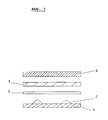
- FIG. 1 shows schematically the device according to the invention.
- the screening method detects the microorganisms that form low-molecular volatile metabolic products in a microbiological process, the detection being carried out in such a way that a radioactively labeled substrate is converted by the microorganism into the radioactively labeled low-molecular volatile metabolic product and then by the radioactively labeled metabolite a semi-permeable filter, (3) in Fig. 1, separated from higher molecular weight non-volatile radioactively labeled products or starting materials, adsorbed on an adsorption plate (4) and detected there by the determination of the radioactivity.
- a low-molecular volatile metabolic product is detected as a radioactively labeled metabolic product.
- Low-molecular metabolic products are metabolic products with a molecular weight of not higher than 500.
- the molecular weight of the metabolites is preferably not higher than 250.
- Volatile metabolic products are understood to mean the metabolic products formed by microorganisms which are able to diffuse through the semipermeable filter (3) in gaseous state under the influence of the adsorption plate (4) and the specified test conditions.
- Semipermeable filters (3) are therefore all filters, in particular the specified pore size, which guarantee sufficient passage of these volatile metabolic products under the test conditions, but do not allow the passage of higher molecular weight nonvolatile compounds.
- Radioactively labeled substrates are used as substrates which are labeled, for example, with the isotopes 14 C, 3 H, 35 S and 32p or with other biorelevant isotopes.
- the substrates are preferably labeled with the 3 H and 14 C isotopes.
- the specific radioactivity of the radioactively labeled substrates is usually in a range between 1 mCi / mmol to 20 Ci / mmol.
- the substrates are expediently so radio-labeled that either a 3 H-labeled or a 14 C-labeled metabolic product is formed as the low-molecular volatile metabolic product, such as 3 H-labeled water, 14 C-labeled products such as carbon dioxide, ethanol, acetic acid, Formic acid, acetone, butanol, acetoin or other metabolic products.
- 3 H-labeled substrates are used, in which 3 H-labeled water is formed, and 14 C-labeled substrates, in which 14C02 is formed.
- the radioactively labeled volatile metabolic compounds can be detected using the methods customary in the specialist field, such as, for example, autoradiography, liquid scintillation measurement, and the metabolic product is preferably determined by means of autoradiography.
- the screening process is carried out in a device according to Figure 1, which consists of a membrane (1), which carries the growing microorganisms (2), on which a semipermeable filter (3), which is permeable to the volatile metabolic product, for higher molecular weight non-volatile products or starting materials is not permeable, however, and an adsorption plate (4) is applied.
- microorganism colonies (2) expediently grow on a membrane (1) which has been applied to standard agar medium, such as, for example, plate-count agar (Difco Laboratories, USA).
- microorganism colonies When the microorganism colonies have reached a diameter of 0.1 to 5 mm, preferably 0.5 to 2 mm, they are covered with an incubation solution which contains the radioactively labeled substrate. In order to minimize convection in the incubation solution, viscosity agents such as agar can be added.
- membrane filter in particular a hydrophilic sterile filter with a pore size of 0.01 to 2 ⁇ m, is preferably applied as membrane (1).
- sterile filters made of cellulose nitrate, cellulose acetate, regenerated cellulose, nylon or other standard sterile filters can be used.
- the selection of the semipermeable filter is not critical and is readily possible for the person skilled in the art on the basis of the present description.
- the preferred material for the semipermeable filter (3) is either Goretex @ (polytetrafluoroethylene PTFE with a pore size of 2 to 0.02 ⁇ m on polyester support fabric), or a hydrophobized glass fiber filter, in particular a silanized glass fiber filter, or silicone Membranes with a layer thickness of 0.1 to 1 mm, applied. It can also be made from hydrophobic powdery materials such as e.g. with Aerosil R972 (Degussa, Germany), a semipermeable layer can be applied.
- a supporting fabric (5) is expediently inserted between the membrane (1) and the semipermeable filter (3).
- cotton fabrics or nets such as gauze can be used as support fabrics.
- a further membrane can also be applied.
- An adsorption plate (4) is then applied to the semipermeable filter (3), a glass plate coated with molecular sieve or with silica gel preferably being used to detect 3 H 2 O as the adsorption plate.
- a glass plate coated with lime is preferably used to detect 14 C0 2 .
- the glass plate is coated with a molecular sieve with a pore size of 3-4 ⁇ or with a silica gel, the layer thickness being between 0.1 and 5 mm.
- adsorbents can also be suitable as material for the adsorption plate, such as gypsum or aluminum oxide.
- binders such as, for example, derivatized cellulose, starch, cement, water glass, glass fibers or other binders customary for the production of thin-layer chromatography plates.
- the entire device is then incubated for 1 to 12 hours, depending on the material of the semipermeable filter (3), at a suitable temperature of 5 to 110 ° C., it being possible to use the incubation media customary in the professional world.
- this device is compressed to 5 mm, for example.
- the length of the device can be 5 cm, for example.
- the device is preferably incubated for up to 3 hours, for Goretex or the hydrophobized glass fiber filters preferably for up to 1 hour.
- the incubation temperature is usually dependent on the temperature properties of the microorganisms and can easily be determined by a person skilled in the art. If, for example, mesophilic microorganisms are detected, the incubation temperature is preferably between 30 and 37 C.
- the microorganisms convert the radiolabelled substrate into a desired product, a radiolabelled low-molecular volatile metabolite being formed.
- This volatile metabolic product diffuses through the semi-permeable filter (3) and adsorbs onto the adsorption plate (4).
- the adsorption plate After the incubation, the adsorption plate is removed and can be used for the detection of the volatile metabolic product with the scintillators customary for the experts, such as e.g. Enhance @ (DuPont, USA). However, other scintillation solutions or those from B.R. Bochner and B.N. Arnes in Anal. Biochem. 131, pp. 510-515 (1984).
- the method according to the invention represents a sensitive method for detecting microorganisms which convert a radioactively labeled substrate into a desired product, a radioactive labeled low-molecular volatile metabolite being obtained. These microorganisms can then be better selected on the basis of this detection method. In contrast to conventional methods, this method also works with colonies of microorganisms as they grow on the surface of solidified nutrient media, which increases the capacity considerably.
- the device is also suitable for the detection of microorganisms which are capable of converting methyl groups into compounds to the corresponding alcohol, aldehyde or to the corresponding carboxylic acid.
- the detection is carried out indirectly by detecting also low-molecular volatile metabolic products formed during the oxidation.
- the device can be used for the detection of microorganisms which are capable of oxidizing the methyl groups of 5-methyl-2-chloropyridine to the corresponding acid, the 3 H 2 O formed thereby being detected on the adsorption plate.
- Alcaligenes entrophus (DSM 428) and Pseudomonas aeruginosa (DSM 50071) were grown separately in Nutrient-Broth (Oxoid, USA) at 30 ° C. overnight on a shaker. Then, 1 part of the Pseudomonas culture was mixed with 999 parts of Alcaligenes culture and 0.1 ml of this mixture in the dilution 10- 4 to a rest on plate count agar (PCA, Difco, USA), cellulose nitrate filter (1) with a pore size of 0.2 ⁇ m and a diameter of 5 cm (Sartorius, Germany). The cells grew to about 1000 colonies overnight with a diameter of 0.5 to 1 mm. The filter carrying the colonies was lifted off the PCA medium (Difco, USA) and placed with the colony upwards in a petri dish. The membrane (1) with the colonies was impregnated with 0.18 ml of radioactive solution of the following composition:
- the glass fiber consisted of a finely ground GF / D filter (GF / D: glass fiber filter type D from Whatman, USA). It was then degassed in vacuo.
- the pulpy mass was poured onto a 6x6 cm, roughened glass plate, then dried at 70 ° C. for 1 hour and then activated for 4 hours at 150 ° C. in a high vacuum.
- the resulting layer thickness was approximately 2 mm.
- the plates were stored over phosphorus pentoxide.
- the entire device was pressed together by placing a stamp weighing 450 g to approx. 5 mm. The mixture was then incubated at 30 ° C. for 1 hour. The molecular sieve plate was then removed and immediately sprayed with Enhance® (from DuPont, USA). An autoradiography was then carried out in accordance with the regulations (RA Laskey, Radioisotope detection by fluorography and intensifying screens; company Amersham, UK, Review 23, 1984) (exposure 2 days). The isolated Pseudomonas colonies were shown as black spots with a diameter of 5 mm, while the predominant background of the Alcaligenes colonies was not visible. Pseudomonas breathes tritiated glucose and produces 3 H 2 0, while Alcaligenes cannot metabolize glucose.
- Enhance® from DuPont, USA
- the overlying membrane (1) made of regenerated cellulose (Sartorius, Germany) was inoculated directly by plating biomass from the aerobic stage of a sewage treatment plant.
- Xylene which was supplied in a desiccator via the gas phase, served as the source of carbon and energy. After a week, colonies with a diameter of 1 to 2 mm can be seen.
Landscapes
- Chemical & Material Sciences (AREA)
- Organic Chemistry (AREA)
- Health & Medical Sciences (AREA)
- Life Sciences & Earth Sciences (AREA)
- Zoology (AREA)
- Engineering & Computer Science (AREA)
- Wood Science & Technology (AREA)
- Bioinformatics & Cheminformatics (AREA)
- Microbiology (AREA)
- Proteomics, Peptides & Aminoacids (AREA)
- Biotechnology (AREA)
- Analytical Chemistry (AREA)
- Biochemistry (AREA)
- General Engineering & Computer Science (AREA)
- General Health & Medical Sciences (AREA)
- Genetics & Genomics (AREA)
- Biomedical Technology (AREA)
- Toxicology (AREA)
- Physics & Mathematics (AREA)
- Biophysics (AREA)
- Sustainable Development (AREA)
- Immunology (AREA)
- Molecular Biology (AREA)
- Measuring Or Testing Involving Enzymes Or Micro-Organisms (AREA)
- Apparatus Associated With Microorganisms And Enzymes (AREA)
Applications Claiming Priority (2)
| Application Number | Priority Date | Filing Date | Title |
|---|---|---|---|
| CH339190 | 1990-10-23 | ||
| CH3391/90 | 1990-10-23 |
Publications (2)
| Publication Number | Publication Date |
|---|---|
| EP0482619A1 true EP0482619A1 (fr) | 1992-04-29 |
| EP0482619B1 EP0482619B1 (fr) | 1995-05-31 |
Family
ID=4254968
Family Applications (1)
| Application Number | Title | Priority Date | Filing Date |
|---|---|---|---|
| EP91118092A Expired - Lifetime EP0482619B1 (fr) | 1990-10-23 | 1991-10-23 | Dispositif et méthode de screening pour détecter des microorganismes produisant des métabolites volatils de masse moléculaire faible |
Country Status (6)
| Country | Link |
|---|---|
| US (2) | US5348861A (fr) |
| EP (1) | EP0482619B1 (fr) |
| JP (1) | JPH053796A (fr) |
| AT (1) | ATE123312T1 (fr) |
| CZ (1) | CZ278186B6 (fr) |
| DE (1) | DE59105619D1 (fr) |
Cited By (2)
| Publication number | Priority date | Publication date | Assignee | Title |
|---|---|---|---|---|
| US8518663B2 (en) | 2009-04-27 | 2013-08-27 | The Charles Stark Draper Laboratory, Inc. | Rapid detection of volatile organic compounds for identification of Mycobacterium tuberculosis in a sample |
| EP3018196A1 (fr) * | 2014-11-04 | 2016-05-11 | Universität Potsdam | Dispositif et procede destines a l'identification de micro-organismes |
Families Citing this family (8)
| Publication number | Priority date | Publication date | Assignee | Title |
|---|---|---|---|---|
| US6306347B1 (en) | 1998-01-21 | 2001-10-23 | Bayer Corporation | Optical sensor and method of operation |
| US6455007B1 (en) * | 2000-06-13 | 2002-09-24 | Symyx Technologies, Inc. | Apparatus and method for testing compositions in contact with a porous medium |
| WO2009108229A2 (fr) | 2007-11-20 | 2009-09-03 | 3M Innovative Properties Company | Articles et procédés d’échantillonnage environnemental |
| CN101952457B (zh) | 2007-12-21 | 2013-08-21 | 3M创新有限公司 | 流体样品分析的微生物系统和方法 |
| DE102009037345A1 (de) * | 2009-06-16 | 2010-12-23 | Sartorius Stedim Biotech Gmbh | Behälter mit einem Sensoradapter |
| WO2011082305A1 (fr) | 2009-12-30 | 2011-07-07 | 3M Innovative Properties Company | Article de détection microbienne |
| JP5881694B2 (ja) | 2010-06-30 | 2016-03-09 | スリーエム イノベイティブ プロパティズ カンパニー | 吸水性フィルターアセンブリを有するフィルタープレート物品 |
| US8906645B2 (en) | 2010-12-29 | 2014-12-09 | 3M Innovative Properties Company | Microbial detection article having a water-absorbent filter assembly |
Citations (1)
| Publication number | Priority date | Publication date | Assignee | Title |
|---|---|---|---|---|
| EP0124285A2 (fr) * | 1983-03-31 | 1984-11-07 | Robert Edward Silman | Procédé et dispositif pour détecter des micro-organismes |
Family Cites Families (2)
| Publication number | Priority date | Publication date | Assignee | Title |
|---|---|---|---|---|
| DE2308087A1 (de) * | 1973-02-19 | 1974-08-22 | Kellner Maximilian Dipl Braur | Fermentationsverfahren |
| DE2932694C2 (de) * | 1979-08-11 | 1982-11-04 | Eberhard Dr. 4930 Detmold Breuker | Vorrichtung zum Erkennen von Mikroorganismen |
-
1991
- 1991-10-18 US US07/781,023 patent/US5348861A/en not_active Expired - Fee Related
- 1991-10-18 JP JP3271168A patent/JPH053796A/ja not_active Withdrawn
- 1991-10-22 CZ CS913197A patent/CZ278186B6/cs unknown
- 1991-10-23 EP EP91118092A patent/EP0482619B1/fr not_active Expired - Lifetime
- 1991-10-23 AT AT91118092T patent/ATE123312T1/de not_active IP Right Cessation
- 1991-10-23 DE DE59105619T patent/DE59105619D1/de not_active Expired - Fee Related
-
1993
- 1993-08-04 US US08/101,931 patent/US5348884A/en not_active Expired - Fee Related
Patent Citations (1)
| Publication number | Priority date | Publication date | Assignee | Title |
|---|---|---|---|---|
| EP0124285A2 (fr) * | 1983-03-31 | 1984-11-07 | Robert Edward Silman | Procédé et dispositif pour détecter des micro-organismes |
Non-Patent Citations (2)
| Title |
|---|
| APPLIED AND ENVIRONMENTAL MICROBIOLOGY Bd. 35, Nr. 6, Juni 1978, WASHINGTON DC USA Seiten 1215 - 1218; T.A. MCMEEKIN ET AL: 'Detection of volatile sulfide-producing bacteria isolated from poultry-processing plants.' * |
| PATENT ABSTRACTS OF JAPAN vol. 9, no. 309 (C-318)(2032) 5. Dezember 1985 & JP-A-60 149 382 ( NITSUSHIN DENKI KK ) 6. August 1985 * |
Cited By (2)
| Publication number | Priority date | Publication date | Assignee | Title |
|---|---|---|---|---|
| US8518663B2 (en) | 2009-04-27 | 2013-08-27 | The Charles Stark Draper Laboratory, Inc. | Rapid detection of volatile organic compounds for identification of Mycobacterium tuberculosis in a sample |
| EP3018196A1 (fr) * | 2014-11-04 | 2016-05-11 | Universität Potsdam | Dispositif et procede destines a l'identification de micro-organismes |
Also Published As
| Publication number | Publication date |
|---|---|
| US5348861A (en) | 1994-09-20 |
| US5348884A (en) | 1994-09-20 |
| CS319791A3 (en) | 1992-05-13 |
| ATE123312T1 (de) | 1995-06-15 |
| DE59105619D1 (de) | 1995-07-06 |
| JPH053796A (ja) | 1993-01-14 |
| CZ278186B6 (en) | 1993-09-15 |
| EP0482619B1 (fr) | 1995-05-31 |
Similar Documents
| Publication | Publication Date | Title |
|---|---|---|
| EP0482619B1 (fr) | Dispositif et méthode de screening pour détecter des microorganismes produisant des métabolites volatils de masse moléculaire faible | |
| Dart et al. | The legume rhizosphere | |
| DE3048852A1 (de) | Vorrichtung zur durchfuehrung eines mikrobiologischen radiorespirometrischen tests und damit durchgefuehrtes bestimmungsverfahren | |
| DE2757826C2 (de) | Verfahren zur Durchführung von biochemischen Reaktionen mit Hilfe von Mikroorganismen | |
| DE3715485A1 (de) | Stabilisierung von ss-galactosidase | |
| EP1066403A1 (fr) | Procede pour deceler des micro-organismes dans des gaz | |
| DE4301087C2 (de) | Vorrichtung zur Bestimmung des biochemischen Sauerstoffbedarfs | |
| JPS6114800B2 (fr) | ||
| EP0024048A2 (fr) | Filtre à membrane pouvant être enduit sur les deux faces, utilisé en screening microbiologique | |
| DE69213036T2 (de) | Verfahren zum Nachweis und zur Quantifizierung kariogener Bakterien | |
| DE69527657T2 (de) | Verfahren und artikel zur herstellung sekundärmetabolite aus planzlichen zellen, die in einer porösen matrix immobilisiert sind | |
| Mian et al. | The onset of nitrogen fixation in young alder plants and its relation to differentiation in the nodular endophyte | |
| Sinha | Organic matter transformation in soils I. Humification of C14-tagged oat roots | |
| DE19750215C1 (de) | Gelatinemembranfilter und Verfahren zu ihrer Herstellung | |
| DE2936294A1 (de) | Vorrichtung zur zuechtung und untersuchung sowie zum transport von mikroorganismen | |
| YAMANAKA et al. | Isolation and identification of myxobacteria from soils and plant materials, with special reference to DNA base composition, quinone system, and cellular fatty acid composition, and with a description of a new species, Myxococcus flavescens | |
| Clark et al. | Ultrastructure of akinete development in a blue-green alga, Cylindrospermum sp | |
| DE3347512C2 (fr) | ||
| DE3115516C2 (de) | Zitronensäureherstellung | |
| EP0293775A2 (fr) | Procédé pour déterminer l'action désinfectante d'un désinfectant et bande d'analyse pour cela | |
| EP0143107B1 (fr) | Méthode pour la détection de virus dans des cultures pures d'organismes microscopiques ainsi que dans des comestibles et dans des produits technologiques | |
| DD253045B1 (de) | Verfahren zur sofortbestimmung des "biochemischen sauerstoffbedarfs (bsb) | |
| Kunc et al. | Effect of glucose on the amount of bacteria mineralizing 2, 4-dichlorophenoxyacetic acid in soil | |
| DE19620250B4 (de) | Mikrobieller Sensor zur Bestimmung des biochemischen Sauerstoffbedarfs | |
| DE2850503A1 (de) | Verfahren und testset zum nachweis und zur bestimmung von antibiotika |
Legal Events
| Date | Code | Title | Description |
|---|---|---|---|
| PUAI | Public reference made under article 153(3) epc to a published international application that has entered the european phase |
Free format text: ORIGINAL CODE: 0009012 |
|
| AK | Designated contracting states |
Kind code of ref document: A1 Designated state(s): AT BE CH DE DK FR GB IT LI LU NL |
|
| 17P | Request for examination filed |
Effective date: 19921026 |
|
| 17Q | First examination report despatched |
Effective date: 19941104 |
|
| RAP1 | Party data changed (applicant data changed or rights of an application transferred) |
Owner name: LONZA AG |
|
| GRAA | (expected) grant |
Free format text: ORIGINAL CODE: 0009210 |
|
| AK | Designated contracting states |
Kind code of ref document: B1 Designated state(s): AT BE CH DE DK FR GB IT LI LU NL |
|
| PG25 | Lapsed in a contracting state [announced via postgrant information from national office to epo] |
Ref country code: IT Free format text: LAPSE BECAUSE OF FAILURE TO SUBMIT A TRANSLATION OF THE DESCRIPTION OR TO PAY THE FEE WITHIN THE PRE;WARNING: LAPSES OF ITALIAN PATENTS WITH EFFECTIVE DATE BEFORE 2007 MAY HAVE OCCURRED AT ANY TIME BEFORE 2007. THE CORRECT EFFECTIVE DATE MAY BE DIFFERENT FROM THE ONE RECORDED.SCRIBED TIME-LIMIT Effective date: 19950531 Ref country code: FR Effective date: 19950531 Ref country code: NL Free format text: LAPSE BECAUSE OF NON-PAYMENT OF DUE FEES Effective date: 19950531 Ref country code: BE Effective date: 19950531 Ref country code: GB Effective date: 19950531 |
|
| REF | Corresponds to: |
Ref document number: 123312 Country of ref document: AT Date of ref document: 19950615 Kind code of ref document: T |
|
| REF | Corresponds to: |
Ref document number: 59105619 Country of ref document: DE Date of ref document: 19950706 |
|
| PG25 | Lapsed in a contracting state [announced via postgrant information from national office to epo] |
Ref country code: AT Effective date: 19951023 Ref country code: DK Effective date: 19951023 |
|
| EN | Fr: translation not filed | ||
| PG25 | Lapsed in a contracting state [announced via postgrant information from national office to epo] |
Ref country code: LU Free format text: LAPSE BECAUSE OF NON-PAYMENT OF DUE FEES Effective date: 19951031 Ref country code: LI Effective date: 19951031 Ref country code: CH Effective date: 19951031 |
|
| NLV1 | Nl: lapsed or annulled due to failure to fulfill the requirements of art. 29p and 29m of the patents act | ||
| GBV | Gb: ep patent (uk) treated as always having been void in accordance with gb section 77(7)/1977 [no translation filed] |
Effective date: 19950531 |
|
| PLBE | No opposition filed within time limit |
Free format text: ORIGINAL CODE: 0009261 |
|
| STAA | Information on the status of an ep patent application or granted ep patent |
Free format text: STATUS: NO OPPOSITION FILED WITHIN TIME LIMIT |
|
| 26N | No opposition filed | ||
| REG | Reference to a national code |
Ref country code: CH Ref legal event code: PL |
|
| PG25 | Lapsed in a contracting state [announced via postgrant information from national office to epo] |
Ref country code: DE Effective date: 19960801 |