EP0483790B1 - Vermittlungssystem von optischen Übertragungsleitungen zum Störungsschutz - Google Patents
Vermittlungssystem von optischen Übertragungsleitungen zum Störungsschutz Download PDFInfo
- Publication number
- EP0483790B1 EP0483790B1 EP91118501A EP91118501A EP0483790B1 EP 0483790 B1 EP0483790 B1 EP 0483790B1 EP 91118501 A EP91118501 A EP 91118501A EP 91118501 A EP91118501 A EP 91118501A EP 0483790 B1 EP0483790 B1 EP 0483790B1
- Authority
- EP
- European Patent Office
- Prior art keywords
- optical
- terminal equipment
- port
- unidirectional
- bidirectional
- Prior art date
- Legal status (The legal status is an assumption and is not a legal conclusion. Google has not performed a legal analysis and makes no representation as to the accuracy of the status listed.)
- Expired - Lifetime
Links
Images







Classifications
-
- H—ELECTRICITY
- H04—ELECTRIC COMMUNICATION TECHNIQUE
- H04J—MULTIPLEX COMMUNICATION
- H04J14/00—Optical multiplex systems
- H04J14/02—Wavelength-division multiplex systems
- H04J14/0287—Protection in WDM systems
- H04J14/0293—Optical channel protection
- H04J14/0295—Shared protection at the optical channel (1:1, n:m)
-
- H—ELECTRICITY
- H04—ELECTRIC COMMUNICATION TECHNIQUE
- H04B—TRANSMISSION
- H04B10/00—Transmission systems employing electromagnetic waves other than radio-waves, e.g. infrared, visible or ultraviolet light, or employing corpuscular radiation, e.g. quantum communication
- H04B10/03—Arrangements for fault recovery
- H04B10/032—Arrangements for fault recovery using working and protection systems
-
- H—ELECTRICITY
- H04—ELECTRIC COMMUNICATION TECHNIQUE
- H04J—MULTIPLEX COMMUNICATION
- H04J14/00—Optical multiplex systems
- H04J14/02—Wavelength-division multiplex systems
- H04J14/0287—Protection in WDM systems
- H04J14/0289—Optical multiplex section protection
- H04J14/0291—Shared protection at the optical multiplex section (1:1, n:m)
-
- H—ELECTRICITY
- H04—ELECTRIC COMMUNICATION TECHNIQUE
- H04J—MULTIPLEX COMMUNICATION
- H04J14/00—Optical multiplex systems
- H04J14/02—Wavelength-division multiplex systems
- H04J14/0278—WDM optical network architectures
- H04J14/0279—WDM point-to-point architectures
Definitions
- the present invention relates to a switching system of optical transmission lines in an optical communication system for protecting a communication between terminal stations.
- the switching system according to the present invention is applied to an optical communication system comprising at least one working transmission line and a protection transmission line.
- Figure 1 is a diagram showing a conventional construction of an optical communication system comprising two terminal stations and a plurality of working optical transmission lines and a protection (stand-by) optical transmission line provided between the terminal stations.
- reference numeral 910, 911, ⁇ 91N each denote a multiplexer/demultiplexer in a terminal station A
- 920 denotes a protection switch in the terminal station A
- 910', 911', ⁇ 91N' each denote a multiplexer/demultiplexer in a terminal station B
- 920' denotes a protection switch in the terminal station B
- L 0 denotes a protection transmission line
- L 1 , L 2 , ⁇ L N each denote a working transmission line
- TS1, TS2, ⁇ TSN and TS1', TS2', ⁇ TSN' each denote a group of transmission lines of tributary signals of low transmission rates
- LPS and LPS' each denote a group of transmission lines for transmitting tribu
- the protection switches 920 in the terminal station A are provided on the sides of groups TS1, TS2, ⁇ TSN of transmission lines of tributary signals of low transmission rates, with regard to the multiplexer/demultiplexers 910, 911, ⁇ 91N, and 910', 911', ⁇ 91N', and connects the groups TS1, TS2, ⁇ TSN of transmission lines transmitting tributary signals of low transmission rates to the corresponding multiplexer/demultiplexers 911, ⁇ 91N, respectively in a normal condition.
- the respective groups TS1, TS2, ⁇ TSN of tributary signals which are to be transmitted from the terminal station A to the terminal station B are multiplexed in the corresponding multiplexer/demultiplexers 911, ⁇ 91N to electric signals of high transmission rates. Then, the electric signals of high transmission rates which are generated in the respective multiplexer/demultiplexers 911, ⁇ 91N, are converted to optical signals in E/O (electric signal to optical signal) conversion circuits (not shown) provided on the sides of the optical transmission lines L 1 , L 2 , ⁇ L N , to be transmitted through the optical transmission lines to the terminal stations B.
- E/O electric signal to optical signal
- optical signals transmitted through the optical transmission lines L 1 , L 2 , ⁇ L N are respectively converted to electric signals in O/E (optical signal to electric signal) conversion circuits (not shown) provided on the sides of the optical transmission lines L 1 , L 2 , ⁇ L N of the corresponding multiplexer/demultiplexers 911, ⁇ 91N, and are then respectively demultiplexed in the corresponding multiplexer/demultiplexers 911, ⁇ 91N to tributary signals to be transmitted through the groups TS1, TS2, ⁇ TSN of transmission lines transmitting tributary signals of low transmission rates. Similar signal transmission and reception operations are performed in the terminal station B.
- O/E optical signal to electric signal
- the transmission lines transmitting tributary signals of low transmission rates corresponding to the above transmission line of the trouble are connected to the multiplexer/demultiplexer 910 so that the tributary signals to be transmitted from the terminal station A to the terminal station B are multiplexed in the multiplexer/demultiplexer 910 to an electric signal of a high transmission rate.
- the tributary signals of the low priorities from the above group LPS of transmission lines are multiplexed and transmitted through the protection transmission line L 0 , the tributary signals of low priorities are discarded in this case.
- the electric signal of a high transmission rate is converted to optical signals in an E/O conversion circuit (not shown) which is provided on the side of the optical transmission lines L 0 , to be transmitted through the optical transmission lines to the terminal stations B.
- optical signals transmitted through the optical transmission lines L 0 are converted to electric signals in an O/E conversion circuit (not shown) provided on the side of the optical transmission lines L 0 of the multiplexer/demultiplexer 910.
- the electric signal is demultiplexed in the multiplexer/demultiplexer 910 to tributary signals of low transmission rate which are to be transmitted through the above transmission lines transmitting tributary signals of low transmission rates, corresponding to the above transmission line of the trouble. Similar signal transmission and reception operations are performed in the terminal station B.
- the switching operation from the working transmission line to the protection transmission line is carried out on the side of the tributary signals (of the low transmission rates). Therefore, the switching operations must be carried out for a large number of transmission lines transmitting tributary signals of low transmission rates. Since, in practice, the respective pieces of terminal equipment corresponding to the plurality of optical transmission lines are provided in different locations in a rack or shelf of an apparatus in a terminal station, a large number of cables must be provided for connecting between these pieces of terminal equipment for the above switching operation, and therefore, the hardware construction becomes large and very complicated, as shown in Fig. 1, thereby increasing a cost, and decreasing reliability of the system.
- FIG. 2 As an attempt to solve the above problem, a construction as shown in Fig. 2 is provided.
- reference numeral 930, 931, ⁇ 93N each denote a multiplexer/demultiplexer in a terminal station A, 940, 941, ⁇ 94N, and 960, 961, ⁇ 96N each denote a parallel to serial and serial to parallel conversion circuit in a terminal station A
- 950 denotes a protection switch in the terminal station A
- 970, 971
- ⁇ 97N each denote an E/O and O/E conversion circuit in a terminal station A
- 930', 931', ⁇ 93N' each denote a multiplexer/demultiplexer in a terminal station B, 940', 941', ⁇ 94N', and 960', 961', ⁇ 96N' each denote a parallel to serial and serial to parallel conversion circuit
- 950' denotes a protection switch in the terminal station B, 970
- the protection switches 950 and 950' are each provided on the side of electric signals of the high transmission rates, with regard to the multiplexer/demultiplexers 930, 931, ⁇ 93N, or 930', 931', ⁇ 93N'.
- the electric signals may have to be propagated for a relatively long distance from a position of a corresponding working transmission line to the protection transmission line when the electric signal is transmitted through the protection transmission line as shown in Fig. 1, it is difficult to carry out the switching operation at the stage of the electric signals of the high transmission rates which are respectively equal to the transmission rates of the corresponding optical transmission lines L 1 , L 2 , ⁇ L N .
- the parallel to serial and serial to parallel conversion circuits 940, 941, ⁇ 94N, 960, 961, ⁇ 96N, 940', 941', ⁇ 94N', and 960', 961', ⁇ 96N' are provided on both sides of the respective protection switches 950 and 950' so that the above electric signals of the high transmission rates are respectively divided into a plurality of parallel electric signals by the parallel to serial and serial to parallel conversion circuits 940, 941, ⁇ 94N, and 940', 941', ⁇ 94N', and the switching to the protection transmission line L 0 is carried out in the stage of the divided parallel electric signals.
- the tributary signals transmitted from the above groups TS1, TS2, ⁇ TSN and TS1', TS2', ⁇ TSN' of transmission lines are first multiplexed in the corresponding multiplexer/demultiplexers 930, 931, ⁇ 93N, or 930', 931', ⁇ 93N', and are then divided into a plurality of parallel electric signals by the parallel to serial and serial to parallel conversion circuits 940, 941, ⁇ 94N, and 940', 941', ⁇ 94N'.
- the protection switches 950 and 950' each connect the transmission lines transmitting tributary signals of low transmission rates corresponding to the above trouble transmission line, to the parallel to serial and serial to parallel conversion circuits 960 and 960', and connect the other transmission lines transmitting tributary signals of low transmission rates corresponding to the other transmission lines in which no trouble occurs, to the corresponding parallel to serial and serial to parallel conversion circuits 961, ⁇ 96N, and 961', ⁇ 96N'.
- the outputs of the protection switches 950 and 950' are converted into the above-mentioned electric signals of high transmission rates, and the electric signals are converted to optical signals in the corresponding E/O and O/E conversion circuits 970', 971', ⁇ 97N', 970', 971', ⁇ 97N' to be transmitted through the respective optical transmission lines L 0 , L 1 , L 2 , ⁇ L N .
- the optical signals are converted to electric signals of the high transmission rates in the corresponding E/O and O/E conversion circuits 970', 971', ⁇ 97N', 970', 971', ⁇ 97N', and then the electric signals are divided into a plurality of parallel electric signals in the corresponding parallel to serial and serial to parallel conversion circuits 960, 961, ⁇ 96N, and 960', 961', ⁇ 96N'.
- the divided electric signals are supplied to the protection switches 950 and 950'.
- the outputs of the protection switches 950 and 950' are converted into the above-mentioned electric signals of high transmission rates in the parallel to serial and serial to parallel conversion circuits 940, 941, ⁇ 94N, and 940', 941', ⁇ 94N', and the electric signals are demultiplexed to tributary signals of low transmission rates to transmit the tributary signals through the transmission lines of the low transmission rates.
- FR-A-2 598 573 discusses a structure for ensuring a signal transmission in an optical fiber, in which a number of normal paths and a number of safety paths is provided. Matrix commutators switch a signal from a normal path to a safety path in the event of failure in the normal path. Even though the normal paths and safety paths are optical paths, the re-routing of signals does not involve optical communication paths.
- the object of the present invention is to provide a better switching system of optical transmission lines in an optical communication system for protecting a communication between terminal stations, which is constructed with simpler hardware of smaller size to reduce cost, and improve reliability of the system.
- Figure 3 is a diagram showing a construction of first and second embodiments of the present invention.
- reference numeral 100 denotes a protection piece of optical terminal equipment in a terminal station A
- 100' denotes a protection piece of optical terminal equipment in a terminal station B
- 100, 101, ⁇ 10N, 100', 101', ⁇ 10N' each denote a working piece of optical terminal equipment in the terminal station A
- 200, 201, ⁇ 20N each denote an optical coupler in the terminal station A
- 200', 201', ⁇ 20N' each denote an optical coupler in the terminal station B.
- 300 and 300' each denote a bidirectional optical coupler
- 300 and 300' each denote a bidirectional optical switch.
- TX denotes an optical signal transmitting unit
- RX denotes an optical signal receiving unit.
- L 0 denotes a protection transmission line
- L 1 , L 2 , ⁇ L N each denote a working transmission line
- TS1, TS2, ⁇ TSN and TS1', TS2', ⁇ TSN' each denote a group of transmission lines of tributary signals of low transmission rates
- LPS and LPS' each denote a group of transmission lines for transmitting tributary signals of low priorities, where each of the transmission lines are assumed to be a bidirectional transmission line, as in the constructions of Figs. 1 and 2.
- Figure 4 is a diagram showing a construction of each of the protection pieces of optical terminal equipment 100 and 100' and the working pieces of optical terminal equipment 101, ⁇ 10N, and 101', ⁇ 10N'.
- reference numeral 161 denotes an interface circuit for transmitting and receiving a plurality of tributary signals through a plurality of ports
- 162 denotes a multiplexer/demultiplexer for multiplexing tributary signals to an electric signal of a high transmission rate, and demultiplexing an electric signal to a plurality of tributary signals of relatively low transmission rates
- 163 denotes a switch unit
- 164 denotes the optical signal transmitting unit TX connected to the protection transmission line L 0
- 165 denotes the optical signal receiving unit RX connected to the protection transmission line L 0
- 166 denotes the optical signal transmitting unit TX connected to a corresponding one of the optical couplers 200, 201, ⁇ 20N each denote an optical coupler in the terminal station A, and
- each of the protection pieces of optical terminal equipment 100 and 100' and the working piece of optical terminal equipment 101, ⁇ 10N, and 101', ⁇ 10N' comprises two sets of optical signal transmitting units TX and optical signal receiving unit RX, where one set of optical signal transmitting unit TX and optical signal receiving units RX is connected to a corresponding one of the bidirectional optical transmission lines L 0 , L 1 , L 2 , ⁇ L N , and the other set is provided for connecting the protection piece of optical terminal equipment 100 or 100' with one of the working pieces of optical terminal equipment 101, ⁇ 10N, and 101', ⁇ 10N' through a bidirectional optical path as explained later.
- each of the optical signal transmitting units TX comprises an electric-to-optical converter for converting the above electric signal of relatively high transmission rate to an optical signal
- each of the optical signal receiving units RX comprises an optical-to-electric converter for converting an optical signal to an electric signal of high transmission rate.
- a pair of an unidirectional optical input port for receiving an optical signal and an unidirectional optical output port for transmitting an optical signal in each set constitute a bidirectional optical port.
- the construction of the switch unit 163 is different for the first and second embodiments, and is explained later.
- each of the above optical couplers 200, 201, ⁇ 20N and 200', 201', ⁇ 20N' comprises one bidirectional optical port and two unidirectional optical ports
- each of the optical couplers 300 and 300' comprises a coupled bidirectional optical port for transmitting and receiving coupled optical signals and a plurality of uncoupled bidirectional optical ports respectively for transmitting and receiving uncoupled optical signals.
- One of the two unidirectional optical ports of each of the above optical couplers 200, 201, ⁇ 20N and 200', 201', ⁇ 20N' receives an optical signal, and the received optical signal passes through the optical coupler to be output from the bidirectional optical port of the optical coupler.
- the bidirectional optical port thereof also receives an optical signal, and the received optical signal passes through the optical coupler to be output from the other of the two unidirectional optical ports of the optical coupler.
- One of the plurality of uncoupled bidirectional optical ports of each of the above optical couplers 300 and 300' receives an optical signal, and the received optical signal passes through the optical coupler to be output from the coupled bidirectional optical port of the optical coupler.
- the coupled bidirectional optical port thereof also receives an optical signal, and the received optical signal passes through the optical coupler to be output from all of the plurality of uncoupled bidirectional optical ports of the optical coupler.
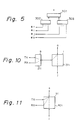
- the optical coupler as above is realized by a star coupler, or a tree connection of a plurality of optical switches as shown in Fig. 5.
- the optical couplers 200 and 200' are respectively provided corresponding to the protection pieces of optical terminal equipment 100 and 100', and the optical couplers 201, ⁇ 20N and 201', ⁇ 20N' are respectively provided corresponding to the working pieces of optical terminal equipment 101, ⁇ 10N and 101', ⁇ 10N'.
- the above two unidirectional optical ports of each of the optical couplers 200, 201, ⁇ 20N and 200', 201', ⁇ 20N' are respectively connected through bidirectional optical paths to the above optical input port and optical output port in the bidirectional optical port of the corresponding one of the protection piece of optical terminal equipment 100 and 100' and the working pieces of optical terminal equipment 101, ⁇ 10N and 101', ⁇ 10N'.
- the bidirectional optical port of each of the optical couplers 200 and 200' is connected through a bidirectional optical path to the coupled bidirectional optical port of the optical coupler 300 or 300' in each of the optical terminal stations A and B.
- the bidirectional optical port of each of the optical couplers 201, ⁇ 20N and 200', 201', ⁇ 20N' is connected to one of the plurality of uncoupled bidirectional optical ports of the corresponding one of the optical couplers 300 and 300'.
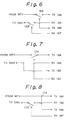
- Figure 6 shows a construction of the switch unit 163 in each working piece of optical terminal equipment 101, ⁇ 10N and 100', 101', ⁇ 10N' in the first embodiment of the present invention.
- reference numeral 168 and 169 each denote a connection switch.
- the connection switch 168 connects the output terminal of the multiplexer 162 to a selected one of the optical signal transmitting unit TX 164 and the optical signal transmitting unit TX 166
- the connection switch 169 in each working piece of optical terminal equipment connects a selected one of the output of the optical signal receiving unit 165 and the output of the optical signal receiving unit RX 167 to the input terminal of the demultiplexer 162.
- the above connections with the optical signal transmitting unit TX 166 and the optical signal receiving unit RX 167 are made in one of the working pieces of optical terminal equipment 101, ⁇ 10N and 101', ⁇ 10N' when the working piece of optical terminal equipment is connected to the protection transmission line.
- the output of the multiplexer 162 is connected through the connection switch 168 to the optical signal transmitting unit TX 164, and the output terminal of the optical signal receiving unit RX 165 is connected through the connection switch 169 to the input terminal of the demultiplexer 162 in the working pieces of optical terminal equipment.
- Figure 7 shows a construction of the switch unit 163 in each protection piece of optical terminal equipment 100 or 100' in the first embodiment of the present invention.
- reference numeral 170 denotes a connection switch.
- the connection switch 170 connects the input terminal of the optical signal transmitting unit TX 164 to a selected one of the output terminal of the multiplexer 162 and the output terminal of the optical signal receiving unit RX 167, and the output of the optical signal receiving unit RX 165 is supplied to both of the input terminal of the demultiplexer 162 and the input terminal of the optical signal transmitting unit TX 166.
- connection with the optical signal receiving unit RX 167 is made in the protection piece of optical terminal equipment 100 and 100' when one of the working pieces of optical terminal equipment is connected to the protection transmission line.
- the output of the multiplexer 162 is connected through the connection switch 170 to the optical signal transmitting unit TX 164.
- the multiplexed signal is converted to an optical signal in the optical signal transmitting unit 166, and then the optical signal is transmitted through one 20i of the optical couplers 201, ⁇ 20N corresponding to the working piece of optical terminal equipment 10i, the optical coupler 300, and the optical coupler 200, to the optical signal receiving unit RX 167 in the protection piece of optical terminal equipment 100.
- the optical signal is converted to an electric signal in the optical signal receiving unit RX 167, and the electric signal is supplied through the switch unit 170 to the optical signal receiving unit RX 164 to be transmitted through the protection transmission line L 0 .
- an optical signal transmitted through the protection transmission line L 0 is converted to an electric signal in the optical signal receiving unit RX 165, and the electric signal is supplied through the connection switch 171 to the optical signal transmitting unit TX 166.
- the optical signal transmitting unit TX 166 converts the electric signal to an optical signal.
- the optical signal is transmitted through the optical coupler 200, the optical coupler 300, and the optical coupler 20i to the optical signal receiving unit RX 167 in the working piece of optical terminal equipment 10i.
- transmission lines for the tributary signals TSi on the side of the optical terminal station A are connected through the working piece of optical terminal equipment 10i, the above bidirectional optical path between the working piece of optical terminal equipment 10i and the protection piece of optical terminal equipment 100, the protection piece of optical terminal equipment 100, the protection transmission line L 0 , the protection piece of optical terminal equipment 100' on the side of the optical terminal station B, a bidirectional optical path between the protection piece of optical terminal equipment 100' and a working piece of optical terminal equipment 10i', and the working piece of optical terminal equipment 100', to tributary signals TSi'.
- connection switches in the switch unit 163 are controlled by a control unit (not shown) provided in each optical terminal station, for realizing the above connection of one working piece of optical terminal equipment corresponding to a working transmission line having a trouble, with the protection transmission line L 0 .
- optical signals are transmitted to only one of the uncoupled bidirectional optical ports of each of the optical couplers 300 and 300' from the optical signal transmitting unit TX 166 of only one of the working pieces of optical terminal equipment in each optical terminal station, and optical signals transmitted from the optical signal transmitting unit TX 166 of the protection piece of optical terminal equipment 100 or 100' are always output from all of the uncoupled bidirectional optical ports of the optical coupler 300 or 300' in each optical terminal station, and therefore, are always applied to the optical signal receiving units RX 167 of all of the working pieces of optical terminal equipment 101, ⁇ 10N or 101', ⁇ 10N'.
- the optical coupler 300 may be replaced by two unidirectional optical couplers passing optical signals in different directions.
- the optical couplers 200, 201, 202, ⁇ 20N may be eliminated.
- the bidirectional optical signals transmitted between the protection piece of optical terminal equipment and the working pieces of optical terminal equipment may have different wavelengths.
- a filter circuit for extracting a required wavelength component may be provided between the optical couplers 201, 202, ⁇ 20N and the optical signal receiving unit of the corresponding working piece of optical terminal equipment.
- each of the optical switches 300 and 300' comprises a first-type bidirectional optical port for transmitting and receiving coupled optical signals and a plurality of second-type bidirectional optical ports each for exclusively transmitting and receiving optical signals.
- a selected one of the plurality of second-type bidirectional optical ports of each of the above optical switches 300 and 300' receives an optical signal, and the received optical signal passes through the optical switch to be output from the first-type bidirectional optical port of the optical switch.
- the first-type bidirectional optical port thereof also receives an optical signal, and the received optical signal passes through the optical switch to be output from a selected one of the plurality of second-type bidirectional optical ports of the optical switch.
- the bidirectional optical port of each of the optical couplers 200 and 200' is connected through a bidirectional optical path to the first-type bidirectional optical port of the optical switch 300 or 300' in each of the optical terminal stations A and B.
- the bidirectional optical port of each of the optical couplers 201, ⁇ 20N and 200', 201', ⁇ 20N' is connected to one of the plurality of second-type bidirectional optical ports of the corresponding one of the optical switches 300 and 300'.
- one of the second-type bidirectional optical ports connected to one of the working pieces of optical terminal equipment corresponding to a working transmission line having a trouble and to be connected to the protection transmission line L 0 is selected by a control unit (not shown).
- Figure 8 shows a construction of the switch unit 163 in each working piece of optical terminal equipment 101, ⁇ 10N and 100', 101', ⁇ 10N' in the second embodiment of the present invention.
- reference numeral 172 denotes a connection point and 173 denote a connection switch.
- the connection switch 168 connects a selected one of the output terminals of the optical signal receiving units RX 165 and 167 to the input terminal of the demultiplexer 162.
- the output of the demultiplexer 162 is supplied to both of the input terminals of the optical signal transmitting units TX 164 and 166.
- the above output of the optical signal receiving unit RX 167 is connected to the input terminal of the demultiplexer 162 in one of the working pieces of optical terminal equipment 101, ⁇ 10N and 101', ⁇ 10N' when the working piece of optical terminal equipment is connected to the protection transmission line L 0 .
- the output of the optical signal receiving unit RX 165 is connected to the input terminal of the demultiplexer 162.
- the construction of the switch unit 163 in the protection piece of optical terminal equipment in the second embodiment is the same as the first embodiment.
- connection switches in the switch unit 163 and the optical switch 300 or 300' are controlled by a control unit (not shown) provided in each optical terminal station, for realizing the above connection of one working piece of optical terminal equipment corresponding to a working transmission line having a trouble, with the protection transmission line L 0 .
- the operation of the construction of the second embodiment is the same as the above-mentioned first embodiment except that the optical switches 300 and 300' are provided instead of explained below, and the construction of the switch unit 163 is as shown in Fig. 8 instead of Fig. 6.
- the optical signals to be transmitted from each of the working pieces of optical terminal equipment are always output from both of the optical signal transmitting units TX 164 and 166 of each working piece of optical terminal equipment, and therefore, are always applied to a corresponding second-type bidirectional optical port of the optical switch 300 or 300', but the optical signals are output from only one of the plurality of second-type bidirectional optical ports to the optical signal receiving unit RX 167 of only one of the working piece of optical terminal equipment 101, ⁇ 10N or 101', ⁇ 10N' in each optical terminal station.
- the optical switch 300 may be replaced by two unidirectional optical switches passing optical signals in different directions.
- the optical couplers 200, 201, 202, ⁇ 20N may be eliminated.
- the bidirectional optical signals transmitted between the protection piece of optical terminal equipment and the working pieces of optical terminal equipment may have different wavelengths.
- a filter circuit for extracting a required wavelength component may be provided between the optical couplers 201, 202, ⁇ 20N and the optical signal receiving unit of the corresponding working piece of optical terminal equipment.
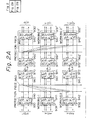
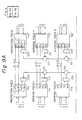
- Figure 9 is a diagram showing a construction for the third and fourth embodiments of the present invention.
- reference numeral 110 denotes a protection piece of optical terminal equipment in a terminal station A
- 110' denotes a protection piece of optical terminal equipment in a terminal station B
- 111, 112, ⁇ 11N, 111', 112', ⁇ 10N' each denote a working piece of optical terminal equipment in the terminal station A
- 210, 211, ⁇ 21N each denote an optical coupler in the terminal station A
- 210', 211', ⁇ 21N' each denote an optical coupler in the terminal station B.
- 311, ⁇ 31N and 311', ⁇ 31N' each denote a bidirectional optical coupler
- 311, ⁇ 31N and 311', ⁇ 31N' each denote a bidirectional optical switch
- ⁇ 11N', TX, RX, L 0 , L 1 , L 2 , ⁇ L N , TS1, TS2, ⁇ TSN, TS1', TS2', ⁇ TSN', LPS, and LPS' each denote the same element as in the constructions of Figs. 1, 2, and 3.
- Each of the protection pieces of optical terminal equipment 110 and 110' in the third and fourth embodiments has the same construction as the first and second embodiments (Figs. 4 and 7).
- Each of the working pieces of optical terminal equipment 111, ⁇ 11N, and 111', ⁇ 11N' in the third embodiment has the same construction as the first embodiment (Figs. 4 and 6), and each of the working pieces of optical terminal equipment 111, ⁇ 11N, and 111', ⁇ 11N' in the fourth embodiment has the same construction as the second embodiment (Figs. 4 and 8).
- each of the optical couplers 210, 211, ⁇ 21N, 210', 211', ⁇ 21N' has the same construction as the optical couplers 200, 201, ⁇ 20N, 200', 201', ⁇ 20N' in the construction of Fig. 4, and is connected to a corresponding one of the protection piece of optical terminal equipment 110 and 110' and the working pieces of optical terminal equipment 111, ⁇ 11N, and 111', ⁇ 11N' in the same manner as the construction of Fig. 4.
- the optical couplers 311, ⁇ 31N and 311', ⁇ 31N' are respectively provided corresponding to the optical couplers 211, ⁇ 21N and 211', ⁇ 21N'.
- Each of the optical couplers 311, ⁇ 31N and 311', ⁇ 31N' comprises a coupled bidirectional optical port for transmitting and receiving coupled optical signals and two uncoupled bidirectional optical ports respectively for transmitting and receiving uncoupled optical signals.
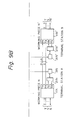
- One of the two uncoupled bidirectional optical ports of each of the above optical couplers 311, ⁇ 31N and 311', ⁇ 31N' receives an optical signal, and the received optical signal passes through the optical coupler to be output from the coupled bidirectional optical port of the optical coupler, as shown in Fig. 10.
- the coupled bidirectional optical port of the optical couplers 311, ⁇ 31N and 311', ⁇ 31N' also receives an optical signal, and the received optical signal passes through the optical coupler to be output from both of the two uncoupled bidirectional optical ports of the optical coupler, as shown in Fig. 10.
- the bidirectional optical port of each of the optical couplers 210 and 210' is connected through a bidirectional optical path to the coupled bidirectional optical port of the optical coupler 311 or 311' corresponding to working piece 111 of optical terminal equipment (which is located at a nearest location to the protection piece of optical terminal equipment 110 or 110') in each of the optical terminal stations A and B.
- the bidirectional optical port of each of the optical couplers 211, ⁇ 21N and 211', ⁇ 21N' is connected to one of the two uncoupled bidirectional optical ports of the corresponding one of the optical couplers 311, ⁇ 31N and 311', ⁇ 31N'.
- each optical coupler 21i or 21i' and a corresponding optical coupler 31i or 31i' is shown in Fig. 10.
- the coupling of optical signals in the construction of Fig. 10 is realized by the construction of Fig. 11.
- the multiplexed signal is converted to an optical signal in the optical signal transmitting unit 166, and then the optical signal is transmitted through the optical coupler 21i, the optical coupler 31i, the optical coupler 31i-1, ⁇ the optical coupler 311, and the optical coupler 210, to the optical signal receiving unit RX 167 in the protection piece of optical terminal equipment 110.
- the optical signal is converted to an electric signal in the optical signal receiving unit RX 167, and the electric signal is supplied through the switch unit 170 to the optical signal receiving unit RX 164 to be transmitted through the protection transmission line L 0 to the other optical terminal station.
- an optical signal transmitted through the protection transmission line L 0 is converted to an electric signal in the optical signal receiving unit RX 165, and the electric signal is supplied through the connection switch 171 to the optical signal transmitting unit TX 166.
- the optical signal transmitting unit TX 166 converts the electric signal to an optical signal.
- the optical signal is transmitted through the optical coupler 210, the optical coupler 311, ⁇ the optical coupler 31i-1, the optical coupler 31i, and the optical coupler 20i to the optical signal receiving unit RX 167 in the working piece of optical terminal equipment 11i.
- transmission lines for the tributary signals TSi on the side of the optical terminal station A are connected through the working piece of optical terminal equipment 11i, the above bidirectional optical path between the working piece of optical terminal equipment 11i and the protection piece of optical terminal equipment 110, the protection transmission line L 0 , the protection piece of optical terminal equipment 110' on the side of the optical terminal station B, a bidirectional optical path between the protection piece of optical terminal equipment 110' and a working piece of optical terminal equipment 10i', and the working piece of optical terminal equipment 110', to tributary signals TSi'.
- connection switches in the switch unit 163 are controlled by a control unit (not shown) provided in each optical terminal station, for realizing the above connection of one working piece of optical terminal equipment corresponding to a working transmission line having a trouble, with the protection transmission line L 0 .
- optical signals are transmitted to the protection piece of optical terminal equipment 110 or 110' from the optical signal transmitting unit TX 166 of only one of the working pieces of optical terminal equipment, and optical signals transmitted from the optical signal transmitting unit TX 166 of the protection piece of optical terminal equipment 110 or 110' always pass through all of the optical couplers 311, ⁇ 31N and 311', ⁇ 31N' in each optical terminal station, and therefore, are always applied to the optical signal receiving units RX 167 of all of the working pieces of optical terminal equipment 111, ⁇ 11N or 111', ⁇ 11N' in each optical terminal station.
- the optical switches 311, ⁇ 31N and 311', ⁇ 31N' are respectively provided corresponding to the optical couplers 211, ⁇ 21N and 211', ⁇ 21N'.
- Each of the optical switches 311, ⁇ 31N and 311', ⁇ 31N' comprises a first-type bidirectional optical port for transmitting and receiving optical signals and two second-type bidirectional optical ports each for exclusively transmitting and receiving second-type optical signals.
- a selected one of the two second-type bidirectional optical ports of each of the above optical couplers 311, ⁇ 31N and 311', ⁇ 31N' receives an optical signal, and the received optical signal passes through the optical coupler to be output from the first-type bidirectional optical port of the optical coupler.
- the first-type bidirectional optical port of the optical couplers 311, ⁇ 31N and 311', ⁇ 31N' also receives an optical signal, and the received optical signal passes through the optical coupler to be output from a selected one of the two second-type bidirectional optical ports of the optical coupler.
- the bidirectional optical port of each of the optical couplers 210 and 210' is connected through a bidirectional optical path to the first-type bidirectional optical port of the optical switch 311 or 311' corresponding to working piece 111 of optical terminal equipment (which is located at a nearest location to the protection piece of optical terminal equipment 110 or 110') in each of the optical terminal stations A and B.
- the bidirectional optical port of each of the optical couplers 211, ⁇ 21N and 211', ⁇ 21N' is connected to one of the two second-type bidirectional optical ports of the corresponding one of the optical switches 311, ⁇ 31N and 311', ⁇ 31N'.
- the multiplexed signal is converted to an optical signal in the optical signal transmitting unit 166, and then the optical signal is transmitted through the optical coupler 21i, the optical switch 31i, the optical switch 31i-1, ⁇ the optical switch 311, and the optical coupler 210, to the optical signal receiving unit RX 167 in the protection piece of optical terminal equipment 110.
- the optical signal is converted to an electric signal in the optical signal receiving unit RX 167, and the electric signal is supplied through the switch unit 170 to the optical signal receiving unit RX 164 to be transmitted through the protection transmission line L 0 to the other optical terminal station.
- an optical signal transmitted through the protection transmission line L 0 is converted to an electric signal in the optical signal receiving unit RX 165, and the electric signal is supplied through the connection switch 171 to the optical signal transmitting unit TX 166.
- the optical signal transmitting unit TX 166 converts the electric signal to an optical signal.
- the optical signal is transmitted through the optical coupler 210, the optical switch 311, ⁇ the optical switch 31i-1, the optical switch 31i, and the optical coupler 21i to the optical signal receiving unit RX 167 in the working piece of optical terminal equipment 11i.
- transmission lines for the tributary signals TSi on the side of the optical terminal station A are connected through the working piece of optical terminal equipment 11i, the above bidirectional optical path between the working piece of optical terminal equipment 11i and the protection piece of optical terminal equipment 110, the protection piece of optical terminal equipment 110, the protection transmission line L 0 , the protection piece of optical terminal equipment 110' on the side of the optical terminal station B, a bidirectional optical path between the protection piece of optical terminal equipment 100' and a working piece of optical terminal equipment 11i', and the working piece of optical terminal equipment 110', to tributary signals TSi'.
- connection switches in the switch unit 163 and the optical switches 311, ⁇ 31N and 311', ⁇ 31N' are controlled by a control unit (not shown) provided in each optical terminal station, for realizing the above connection of one working piece of optical terminal equipment corresponding to a working transmission line having a trouble, with the protection transmission line L 0 .
- the operation of the construction of the fourth embodiment is the same as the above-mentioned third embodiment except that the optical switches 300 and 300' are provided instead of explained below, and the construction of switch unit 163 is as shown in Fig. 8 instead of Fig. 6.
- the optical signals which are to be transmitted from each of the working pieces of optical terminal equipment are always output from both of the optical signal transmitting units TX 164 and 166, and therefore, are always applied to the second-type bidirectional optical port of the corresponding optical switch 31i or 31i' in each optical terminal station, and the optical signals output from the protection piece of optical terminal equipment 110 or 110' reach the optical signal receiving unit RX 167 of only one of the working pieces of optical terminal equipment 111, ⁇ 11N or 111', ⁇ 11N' in each optical terminal station.
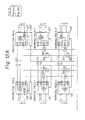
- Figure 12 is a diagram showing a construction for the fifth, sixth, and seventh embodiments of the present invention.
- reference numeral 500 denotes a control unit
- 120 denotes a protection piece of optical terminal equipment in a terminal station A
- 120' denotes a protection piece of optical terminal equipment in a terminal station B
- 121, 122, ⁇ 12N, 121', 122', ⁇ 12N' each denote a working piece of optical terminal equipment in the terminal station A.
- Reference numeral 321, ⁇ 32N and 321', ⁇ 32N' each denote an unidirectional optical switch in the fifth embodiment, and denote an optical switch in the sixth and seventh embodiments.
- Reference numeral 331, ⁇ 33N and 331', ⁇ 33N' each denote an optical switch in the fifth and seventh embodiments, and denote an optical switch in the sixth embodiment.
- ⁇ 12N', TX, RX, L 0 , L 1 , L 2 , ⁇ L N , TS1, TS2, ⁇ TSN, TS1', TS2', ⁇ TSN', LPS, and LPS' each denote the same element as in the constructions of Figs. 1, 2, 3, and 9.
- Each of the protection pieces of optical terminal equipment 120 and 120' in the third and fourth embodiments has the same construction as the first, second, third, fourth embodiments (Figs. 4, 7, and 9).
- Each of the working pieces of optical terminal equipment 121, ⁇ 12N, and 121', ⁇ 12N' in the fifth embodiment has the same construction as the first and third embodiments (Figs. 4 and 6), and each of the working pieces of optical terminal equipment 121, ⁇ 12N, and 121', ⁇ 12N' in the sixth and seventh embodiments has the same construction as the second and fourth embodiments (Figs. 4, 8, and 9).
- the unidirectional optical couplers 321, ⁇ 32N and 321', ⁇ 32N' are respectively provided corresponding to the working pieces of optical terminal equipment 121, ⁇ 12N, and 121', ⁇ 12N'.
- Each of the optical couplers 321, ⁇ 32N and 321', ⁇ 32N' comprises a coupled unidirectional optical port for transmitting coupled optical signals and two uncoupled unidirectional optical ports respectively for receiving uncoupled optical signals.
- One of the two uncoupled unidirectional optical ports of each of the above optical couplers 321, ⁇ 32N and 321', ⁇ 32N' receives an optical signal, and the received optical signal passes through the optical coupler to be output from the coupled unidirectional optical port of the optical coupler.
- the unidirectional optical couplers 331, ⁇ 33N and 331', ⁇ 33N' are respectively provided corresponding to the working pieces of optical terminal equipment 121, ⁇ 12N, and 121', ⁇ 12N'.
- Each of the optical couplers 331, ⁇ 33N and 331', ⁇ 33N' comprises a coupled unidirectional optical port for receiving coupled optical signals and two uncoupled unidirectional optical ports respectively for transmitting uncoupled optical signals.
- the coupled unidirectional optical ports of each of the above optical couplers 331, ⁇ 33N and 331', ⁇ 33N' receives an optical signal, and the received optical signal passes through the optical coupler to be output from both of the uncoupled unidirectional optical ports of the optical coupler.
- the optical input port of the optical signal receiving unit 167 of the protection piece of optical terminal equipment 120 or 120' is connected through an unidirectional optical path to the coupled unidirectional optical port of the optical coupler 321 or 321' corresponding to working piece 121 of optical terminal equipment (which is located at a nearest location to the protection piece of optical terminal equipment 120 or 120'), and the optical output port of the optical signal transmitting unit 166 of the protection piece of optical terminal equipment 120 or 120' is connected through an unidirectional optical path to the coupled unidirectional optical port of the optical coupler 331 or 331' corresponding to working piece 121 of optical terminal equipment, in each of the optical terminal stations A and B.
- the optical output port of the optical signal transmitting unit 166 of each working piece of optical terminal equipment 121, ⁇ 12N, and 121', ⁇ 12N' is connected to one of the two uncoupled unidirectional optical ports of the corresponding one of the optical couplers 321, ⁇ 32N and 321', ⁇ 32N', and the optical input port of the optical signal receiving unit 167 of each working piece of optical terminal equipment 121, ⁇ 12N, and 121', ⁇ 12N' is connected to one of the two uncoupled unidirectional optical ports of the corresponding one of the optical couplers 331, ⁇ 33N and 331', ⁇ 33N'.
- the multiplexed signal is converted to an optical signal in the optical signal transmitting unit 166, and then the optical signal is transmitted through the optical coupler 32i, the optical coupler 32i-1, ⁇ the optical coupler 321 to the optical signal receiving unit RX 167 in the protection piece of optical terminal equipment 120.
- the optical signal is converted to an electric signal in the optical signal receiving unit RX 167, and the electric signal is supplied through the switch unit 170 to the optical signal receiving unit RX 164 to be transmitted through the protection transmission line L 0 to the other optical terminal station.
- an optical signal transmitted through the protection transmission line L 0 is converted to an electric signal in the optical signal receiving unit RX 165, and the electric signal is supplied through the connection switch 171 to the optical signal transmitting unit TX 166.
- the optical signal transmitting unit TX 166 converts the electric signal to an optical signal.
- the optical signal is transmitted through the optical coupler 331, ⁇ the optical coupler 33i-1, the optical coupler 33i to the optical signal receiving unit RX 167 in the working piece of optical terminal equipment 12i.
- transmission lines for the tributary signals TSi on the side of the optical terminal station A are connected through the working piece of optical terminal equipment 12i, the above unidirectional optical path between the working piece of optical terminal equipment 12i and the protection piece of optical terminal equipment 120, the protection piece of optical terminal equipment 120, the protection transmission line L 0 , the protection piece of optical terminal equipment 120' on the side of the optical terminal station B, a unidirectional optical path between the protection piece of optical terminal equipment 120' and a working piece of optical terminal equipment 12i', and the working piece of optical terminal equipment 120', to tributary signals TSi'.
- connection switches in the switch unit 163 are controlled by the control unit 500 or 500' provided in each optical terminal station for realizing the above connection of one working piece of optical terminal equipment corresponding to a working transmission line having a trouble, to the protection transmission line L 0 .
- optical signals are transmitted to the protection piece of optical terminal equipment 110 or 110' from the optical signal transmitting unit TX 166 of only one of the working pieces of optical terminal equipment in each optical terminal station, and optical signals transmitted from the optical signal transmitting unit TX 166 of the protection piece of optical terminal equipment 110 or 110' always pass through all of the optical couplers 331, ⁇ 33N and 331', ⁇ 33N' in each optical terminal station, and therefore, are always applied to the optical signal receiving units RX 167 of all of the working pieces of optical terminal equipment 121, ⁇ 12N or 121', ⁇ 12N' in each optical terminal station.
- the reference numerals 321, ⁇ 32N and 321', ⁇ 32N' each denote an unidirectional optical switch
- the optical switches 321, ⁇ 32N and 321', ⁇ 32N' are respectively provided corresponding to the working pieces of optical terminal equipment 121, ⁇ 12N, and 121', ⁇ 12N'.
- Each of the optical switches 321, ⁇ 32N and 321', ⁇ 32N' comprises a first-type unidirectional optical port for transmitting optical signals and two second-type unidirectional optical ports each for exclusively receiving optical signals.
- a selected one of the two second-type unidirectional optical ports of each of the above optical switches 321, ⁇ 32N and 321', ⁇ 32N' receives an optical signal, and the received optical signal passes through the optical switch to be output from the first-type unidirectional optical port of the optical switch.
- the unidirectional optical switches 331, ⁇ 33N and 331', ⁇ 33N' are respectively provided corresponding to the working pieces of optical terminal equipment 121, ⁇ 12N, and 121', ⁇ 12N'.
- Each of the optical switches 331, ⁇ 33N and 331', ⁇ 33N' comprises a first-type unidirectional optical port for receiving optical signals and two second-type unidirectional optical ports each for exclusively transmitting optical signals.
- the first-type unidirectional optical ports of each of the above optical switches 331, ⁇ 33N and 331', ⁇ 33N' receives an optical signal, and the received optical signal passes through the optical switch to be output from a selected one of the second-type unidirectional optical ports of the optical switch.
- the optical input port of the optical signal receiving unit 167 of the protection piece of optical terminal equipment 120 or 120' is connected through an unidirectional optical path to the first-type unidirectional optical port of the optical switch 321 or 321' corresponding to working piece 121 of optical terminal equipment (which is located at a nearest location to the protection piece of optical terminal equipment 120 or 120'), and the optical output port of the optical signal transmitting unit 166 of the protection piece of optical terminal equipment 120 or 120' is connected through an unidirectional optical path to the first-type unidirectional optical port of the optical switch 331 or 331' corresponding to working piece 121 of optical terminal equipment, in each of the optical terminal stations A and B.
- the optical output port of the optical signal transmitting unit 166 of each working piece of optical terminal equipment 121, ⁇ 12N, and 121', ⁇ 12N' is connected to one of the two second-type unidirectional optical ports of the corresponding one of the optical switches, 321, ⁇ 32N and 321', ⁇ 32N', and the optical input port of the optical signal receiving unit 167 of each working piece of optical terminal equipment 121, ⁇ 12N, and 121', ⁇ 12N' is connected to one of the two second-type unidirectional optical ports of the corresponding one of the optical switches 331, ⁇ 33N and 331', ⁇ 33N'.
- the multiplexed signal is converted to an optical signal in the optical signal transmitting unit 166, and then the optical signal is transmitted through the optical switch 32i, the optical switch 32i-1, ⁇ the optical switch 321 to the optical signal receiving unit RX 167 in the protection piece of optical terminal equipment 120.
- the optical signal is converted to an electric signal in the optical signal receiving unit RX 167, and the electric signal is supplied through the switch unit 170 to the optical signal receiving unit RX 164 to be transmitted through the protection transmission line L 0 to the other optical terminal station.
- an optical signal transmitted through the protection transmission line L 0 is converted to an electric signal in the optical signal receiving unit RX 165, and the electric signal is supplied through the connection switch 171 to the optical signal transmitting unit TX 166.
- the optical signal transmitting unit TX 166 converts the electric signal to an optical signal.
- the optical signal is transmitted through the optical switch 331, ⁇ the optical switch 33i-1, the optical switch 33i to the optical signal receiving unit RX 167 in the working piece of optical terminal equipment 12i.
- transmission lines for the tributary signals TSi on the side of the optical terminal station A are connected through the working piece of optical terminal equipment 12i, the above two unidirectional optical paths between the working piece of optical terminal equipment 12i and the protection piece of optical terminal equipment 120, the protection piece of optical terminal equipment 120, the protection transmission line L 0 , the protection piece of optical terminal equipment 120' on the side of the optical terminal station B, two unidirectional optical paths between the protection piece of optical terminal equipment 120' and a working piece of optical terminal equipment 12i', and the working piece of optical terminal equipment 120', to tributary signals TSi'.
- connection switches in the switch unit 163 and the optical switches 321, ⁇ 32N and 321', ⁇ 32N', and 331, ⁇ 33N and 331', ⁇ 33N' are controlled by the control unit 500 or 500' provided in each optical terminal station, for realizing the above connection of one working piece of optical terminal equipment corresponding to a working transmission line having a trouble, with the protection transmission line L 0 .
- optical signals are transmitted to the protection piece of optical terminal equipment 110 or 110' from the optical signal transmitting unit TX 166 of only one of the working pieces of optical terminal equipment in each optical terminal station, and optical signals transmitted from the optical signal transmitting unit TX 166 of the protection piece of optical terminal equipment 110 or 110' reach the optical signal receiving unit RX 167 of only one of the working pieces of optical terminal equipment 121, ⁇ 12N, and 121', ⁇ 12N' in each optical terminal station.
- the optical signal transmitting unit TX 164 and 166 in each working piece of optical terminal equipment is in operation (in an ON state).
- the optical signal transmitting unit TX 166 in each working piece of optical terminal equipment is in an OFF state in a normal condition in the first, third, and fifth embodiments, and begins to operate when the working piece of optical terminal equipment is switched to the protection transmission line.
- the optical signal transmitting unit contains an automatic power control (APC) circuit for maintaining a power of the output of the optical signal transmitting unit constant, and it takes a considerable time (rising time) for the automatic power control circuit to shift its state from the OFF state to a stable ON state. Therefore, some data may be lost during the rising time when a working piece of optical terminal equipment is switched from a normal working transmission line Li to the protection transmission line L 0 .
- APC automatic power control
- the optical signal receiving unit RX 165 and 167 in each working piece of optical terminal equipment is in operation (in an ON state).
- the optical signal receiving unit RX 167 in each working piece of optical terminal equipment is in an OFF state in a normal condition in the second, fourth, and sixth embodiments, and begins to operate when the working piece of optical terminal equipment is switched to the protection transmission line.
- the optical signal receiving unit contains an automatic gain control (AGC) circuit for maintaining a power of the output of the optical signal receiving unit constant, and it takes a considerable time (rising time) for the automatic gain control circuit to shift its state from the OFF state to a stable ON state. Therefore, some data may be lost during the rising time when a working piece of optical terminal equipment is switched from a normal working transmission line Li to the protection transmission line L 0 .
- AGC automatic gain control
- the seventh embodiment of the present invention is provided.
- optical switches 321, ⁇ 32N and 321', ⁇ 32N' are respectively provided corresponding to the working pieces of optical terminal equipment 121, ⁇ 12N, and 121', ⁇ 12N'.
- Each of the optical switches 321, ⁇ 32N and 321', ⁇ 32N' has the same construction as the corresponding element in the construction of the sixth embodiment, and is connected to the protection piece of optical terminal equipment, the corresponding working piece of optical terminal equipment, and the other optical switches 321, ⁇ 32N and 321', ⁇ 32N' in the same manner as in the construction of the sixth embodiment.
- the seventh embodiment in the construction of Fig.
- unidirectional optical couplers 331, ⁇ 33N and 331', ⁇ 33N' are respectively provided corresponding to the working pieces of optical terminal equipment 121, ⁇ 12N, and 121', ⁇ 12N'.
- Each of the optical couplers 331, ⁇ 33N and 331', ⁇ 33N' has the same construction as the corresponding element in the construction of the sixth embodiment, and is connected to the protection piece of optical terminal equipment, the corresponding working piece of optical terminal equipment, and the other optical switches 331, ⁇ 33N and 331', ⁇ 33N' in the same manner as in the construction of the fifth embodiment.
- optical signals are transmitted from a working piece of optical terminal equipment to be connected to the protection transmission line, to the protection piece of optical terminal equipment in the same manner as the sixth embodiment, and optical signals are transmitted from the protection piece of optical terminal equipment to the working piece of optical terminal equipment to be connected to the protection transmission line, in the same manner as the fifth embodiment.
- the optical signal transmitting unit TX 166 and the optical signal receiving unit RX 167 in each working piece of optical terminal equipment are constantly in the ON state, and therefore, the above problems in the first to sixth embodiments are solved in the seventh embodiment.
- the bidirectional optical coupler or optical switch 300 may be replaced by an unidirectional optical switch for transmitting an optical signal in a direction from the working pieces of optical terminal equipment to the protection piece of optical terminal equipment, and an unidirectional optical coupler for transmitting an optical signal in the other direction from the protection piece of optical terminal equipment to the working pieces of optical terminal equipment.
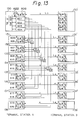
- Figure 13 is a diagram showing a construction for the eighth embodiments of of the present invention.
- reference numeral 130 and 130' each denote a protection piece of optical terminal equipment
- 131, ⁇ 138, and 131' each denote a working piece of optical terminal equipment
- L 0 denotes a protection transmission line
- C1, C2, ⁇ C8 each denote an unidirectional optical coupler or optical switch
- 600 to 620 each denote a pair of the above-mentioned optical signal transmitting unit and optical signal receiving unit, which are also denoted by "E/O & O/E" in Fig.
- 621 denotes a switch unit
- 622 denotes a multiplexer/demultiplexer.
- paths of optical signals between the protection piece of optical terminal equipment 130 and the working pieces of optical terminal equipment 131, ⁇ 138 in the optical terminal station A are shown, and paths of optical signals between the protection piece of optical terminal equipment 130' and the working pieces of optical terminal equipment 131', ⁇ 138' in the optical terminal station B are not shown in Fig. 13, the same construction as in the optical terminal station A is provided in the optical terminal station B.
- the transmission rate of the protection transmission line L 0 is four times the transmission rate of each of the working transmission lines L 1 , L 2 , ⁇ L 8 .
- the protection piece 130 or 130' of optical terminal equipment in each optical terminal station comprises a plurality (four) of pairs of optical signal transmitting units and optical signal receiving units 601 to 604 other than the pair of optical signal transmitting unit and optical signal receiving unit 600 which are connected to the protection transmission line L 0 , where the plurality of pairs of optical signal transmitting units and optical signal receiving units 601 to 604 are respectively correspond to, and connected to two of the working transmission lines L 1 , L 2 , ⁇ L 8 .
- the transmission of optical signals between the pair of the optical signal transmitting unit and the optical signal receiving unit 601 of the protection piece of optical terminal equipment 130, and the pair of units 606 of the working piece of optical terminal equipment 131 or the pair of units 614 of the working piece of optical terminal equipment 135, through the unidirectional optical couplers or optical switches C1 and C2, is carried out in the same manner as in one of the fifth to seventh embodiments.
- the transmissions of optical signals are carried out: between the pair of the optical signal transmitting unit and the optical signal receiving units 602 of the protection piece of optical terminal equipment 130, and the pair of units 608 of the working piece of optical terminal equipment 132 or the pair of units 616 of the working piece of optical terminal equipment 136, through the unidirectional optical couplers or optical switches C3 and C4; between the pair of the optical signal transmitting unit and the optical signal receiving units 603 of the protection piece of optical terminal equipment 130, and the pair of units 610 of the working piece of optical terminal equipment 133 or the pair of units 616 of the working piece of optical terminal equipment 137, through the unidirectional optical couplers or optical switches C5 and C6; and between the pair of the optical signal transmitting unit and the optical signal receiving units 604 of the protection piece of optical terminal equipment 130, and the pair of units 612 of the working piece of optical terminal equipment 134 or the pair of units 618 of the working piece of optical terminal equipment 138, through the unidirectional optical couplers or optical switches C7 and C
- the optical signals transmitted from the working pieces of optical terminal equipment are respectively converted to electric signals in the optical signal receiving units in the corresponding pairs of units 601 to 604 in the protection piece of optical terminal equipment 130, and then, the electric signals are supplied to the multiplexer 622 through the switch unit 621.
- the electric signals are multiplexed in the multiplexer 622, and then, the multiplexed electric signal is converted to an optical signal in the optical signal transmitting unit in the pair 600 to be transmitted through the protection transmission line L 0 .
- an optical signal transmitted through the protection transmission line L 0 is converted to an electric signal in the optical signal receiving unit in the pair of units 600, and then, the electric signal is demultiplexed in the demultiplexer 622 to four electric signals.
- the four electric signals are then supplied through the switch unit 621 to the corresponding pairs of units 601 to 604.
- These electric signals are respectively converted to optical signals in the optical signal receiving units in the pairs of units 601 to 604 to be transmitted to the corresponding working pieces of optical terminal equipment.
- Figure 14 is a diagram showing a construction for the ninth embodiments of the present invention.
- reference numeral 140 and 140' each denote a protection piece of optical terminal equipment, 141, ⁇ 144, and 141', ⁇ 144' each denote a working piece of optical terminal equipment
- L 0 denotes a protection transmission line
- L 1 , L 2 , ⁇ L 4 each denote a working transmission line
- C1', C2', ⁇ C8' each denote an unidirectional optical coupler or optical switch
- 700, 630, 640, 650, and 660 each denote an optical signal transmitting unit, 701, 631, 641, 651, and 661 each denote an optical signal receiving unit, 702 to 705, 632 to 635, 642, 643, 652, and 662 each denote a pair of an optical signal transmitting unit and an optical signal receiving unit
- 706, 636, 646, 656, and 666 each denote a switch unit, 707, 637, 647, 657, and
- the transmission rate of the protection transmission line L 0 and the working transmission line L 1 is, for example, 2.4 GHz
- the transmission rate of each path of optical signals between the protection piece of optical terminal equipment 140 and the working pieces of optical terminal equipment 141, ⁇ 144 (and each of the optical signal transmitting units and the optical signal receiving units in each pair of units 702 to 705, 632 to 635, 642 643, 652, and 662) is, for example, 600 MHz.
- transmission rates of the working transmission lines L 1 , L 2 , ⁇ L 4 are not the same, and the minimum transmission rate is 600 MHz.
- transmission of optical signals between the protection piece of optical terminal equipment 140 and the working pieces of optical terminal equipment 141, ⁇ 144 is carried out at the transmission rate which is equal to the minimum transmission rate of the working transmission lines L 1 , L 2 , ⁇ L 4 , and each of the protection piece of optical terminal equipment 140 and the working pieces of optical terminal equipment 141, ⁇ 144 comprises one or more pairs of an optical signal transmitting unit and an optical signal receiving unit for realizing the transmission.
- an optical signal received through the protection transmission line L 0 is converted to an electric signal in the optical signal receiving unit 701, and the electric signal is demultiplexed to a plurality of electric signals of the above minimum transmission rate of the working transmission lines L 1 , L 2 , ⁇ L N , in the demultiplexer 707.
- the protection transmission line L 0 is used by the working pieces of optical terminal equipment 141, ⁇ 144
- the demultiplexed electric signals are supplied through the switch unit 706 to the optical signal transmitting units in the pairs of units 702 to 705 to be respectively transmitted to the corresponding working pieces of optical terminal equipment 141, ⁇ 144.
- optical signals transmitted from the working pieces of optical terminal equipment 141, ⁇ 144 to the protection piece of optical terminal equipment 140 are received in the pairs of units 702 to 705, and are respectively converted to electric signals.
- the electric signals are supplied through the switch unit 706 to the multiplexer 707 to be multiplexed to an electric signal of high transmission rate (2.4 GHz).
- the multiplexed electric signal is converted to an optical signal in the optical signal transmitting unit 700 to be transmitted through the protection transmission line L 0 .
- tributary signals are first multiplexed to electric signals of the minimum transmission rate (600 MHz) in the multiplexer in the portion 638, 648, 658, or 668.
- the electric signals are supplied through the switch unit 636, 646, 656,or 666 to the multiplexer 637, 647, 657, or 667 to be multiplexed to an electric signal of the transmission rate of the working transmission line L 1 , L 2 , or L 4 .
- the multiplexed electric signal is converted to an optical signal in the optical signal transmitting unit 630, 640, 650, or 660 to be transmitted through the corresponding working transmission line L 1 , L 2 , or L 4 .
- an optical signal received through the corresponding working transmission line L 1 , L 2 , or L 4 is converted to an electric signal in the optical signal receiving unit 631, 641, 651, or 661.
- the electric signal is demultiplexed to a plurality of electric signals of the minimum transmission rate in the demultiplexer 637, 547, 657, or 667.
- the demultiplexed electric signals are supplied through the switch unit 636, 646, 656, or 666 to the multiplexer in the portion 638, 648, 658, or 668 to be demultiplexed to tributary signals.
- the above electric signals output from the portion 638, 648, 658, or 668 are supplied through the switch unit 636, 646, 656, or 666 to the pairs of units 632 to 635, 642 643, 652, and 662 to be transmitted to the protection piece of optical terminal equipment 140.
- the optical signals transmitted from the protection piece of optical terminal equipment 140 to the working piece of optical terminal equipment which uses the protection piece of optical terminal equipment 140 are received by the optical signal receiving unit in the pair of units 632 to 635, 642 643, 652, and are converted therein to an electric signal of the minimum transmission rate.
- the electric signals are supplied through the switch unit 636, 646, 656, or 666 to the portion 638, 648, 658, or 668, and are demultiplexed therein to tributary signals.
- the paths of the optical signals between the respective optical signal transmitting units and the optical signal receiving units in the working pieces of optical terminal equipment and the corresponding units in the protection piece of optical terminal equipment 140 are provided by using the optical couplers or optical switches C1', C2', ⁇ C8' in a similar manner to the fifth, sixth, and seventh embodiments.
- working pieces of optical terminal equipment respectively containing working transmission lines of various transmission rates can efficiently use a protection transmission line having a high transmission rate.
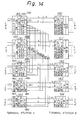
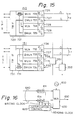
- Figure 15 is a diagram showing a construction for the tenth embodiments of the present invention.
- reference numeral 720 denotes an interface circuit for tributary signals
- 721 denotes a switch unit
- 722, 724, 732, and 734 each denote a multiplexer
- 723, 725, 733, and 735 each denote a demultiplexer
- 726, 728, 736, and 738 each denote an optical signal transmitting unit
- 727, 729, 737, and 729 each denote an optical signal receiving unit
- 351 and 352 each denote an optical coupler or optical switch.
- the interface circuits 720 and 730 are each the same as the interface circuit 161 in Fig. 4, and the interface circuits 720 and 730 in Fig. 15 may contain a construction equivalent to the multiplexer/demultiplexer 162.
- the switch unit 721 is the same as the construction of Fig. 8, and the switch unit 731 is the same as the construction of Fig. 7.
- multiplexers and demultiplexers are provided on the side of the optical signal transmitting units and the optical signal receiving units.
- the multiplexer 722 in the protection piece of optical terminal equipment comprises a construction for synchronizing the signals received from the working pieces of optical terminal equipment, with a clock signal in the protection piece of optical terminal equipment 150.
- reference numeral 800 denotes a clock generator
- 81l to 81n each denotes a buffer memory (FIFO memory)
- 820 denotes a justification circuit
- 830 denotes a multiplexing circuit.
- Each bit of the electric signals to be multiplexed are respectively input into the corresponding memories 81l to 81n synchronizing with writing clocks which respectively synchronize with the electric signals input into the memory, and each bit written in each memory is read and supplied to the multiplexing circuit 830 synchronizing with a reading clock which synchronizes with the clock generated in the clock generator 800 in the protection piece of optical terminal equipment 150.
- the frequency of the reading clock is set to be a little higher than the frequencies of the writing clocks.
- the justification control circuit 820 supplies the writing clocks and the reading clock to the memories 81l to 81n and the multiplexing circuit 830, compares phases of the writing clocks and the reading clock, and stops supplying of one cycle of the reading clock to each of the memories 81l to 81n and the multiplexing circuit 830 when the same bit is to be read twice from the memory if the cycle of the reading clock is supplied thereto.
- the above construction for synchronization may be provided in the other multiplexers 724, 732, and 734 in the construction of Fig. 15.
- an optical signal transmitted through the protection transmission line L 0 is converted to an electric signal in the optical signal receiving unit 723, and then the electric signal is demultiplexed in the demultiplexer 723.
- the demultiplexed electric signals are supplied through the switch unit 721 to the multiplexer 724.
- the electric signals are multiplexed in the multiplexer 724, and the multiplexed electric signal is converted to an optical signal in the optical signal transmitting unit 728 to be transmitted to the corresponding working piece of optical terminal equipment.
- an optical signal transmitted from a working piece of optical terminal equipment is converted to an electric signal in the optical signal receiving unit 729, and the converted electric signal is demultiplexed in the demultiplexer 725.
- Electric signals generated by the demultiplexer 725 are supplied through the switch unit 721 to the multiplexer 722.
- the multiplexer 722 multiplexes the supplied electric signals to an electric signal synchronizing the signals with the clock signal generated therein as explained above, and the multiplexed electric signal is converted to an optical signal in the optical signal transmitting unit 726 to be transmitted through the protection transmission line L 0 .
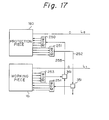
- Figure 17 is a diagram showing a construction for the eleventh embodiments of the present invention.
- reference numeral 160 denotes an protection piece of optical terminal equipment
- 16i denotes a working piece of optical terminal equipment
- 34i and 35i each denote an optical coupler or optical switch
- 250 and 254 each denote a wavelength division demultiplexer
- 251 and 253 each denote a wavelength division multiplexer
- 252 and 255 each denote an optical fiber.
- the wavelength division multiplexer 251 converts a plurality of signals into a plurality of optical signals of respectively different wavelengths, and multiplexes the plurality of optical signals to be transmitted through an optical fiber 252.
- the wavelength division demultiplexer 254 receives the wavelength division multiplexed optical signal through the optical fiber 252 and the optical coupler or optical switch 35i, and demultiplexes the multiplexed optical signal into a plurality of signals as those output from the protection piece of optical terminal equipment 160.
- a plurality of signals to be transmitted from the working piece of optical terminal equipment 16i to the protection piece of optical terminal equipment 160 are wavelength division multiplexed in the wavelength division multiplexer 253.
- the multiplexed optical signal is transmitted through the optical coupler or optical switch 34i and the optical fiber 255 to the wavelength division demultiplexer 250, and is then demultiplexed to the above signals output from the working piece of optical terminal equipment 16i.
- the transmission between the protection piece of optical terminal equipment and the working pieces of optical terminal equipment are carried out through a small number of optical fibers.
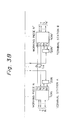
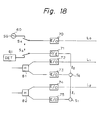
- FIG. 18 is a diagram showing a construction for confirming the above normality as the eleventh embodiment of the present invention.
- reference numeral 60 denotes a dummy signal generator
- 61 denotes a signal detector
- 70, and 72 to 75 each denote an optical signal transmitting unit
- 81 and 82 each denote a hybrid circuit
- S 3 and S 4 each denote an optical switch
- S 1 and S 2 each denote an electric switch.
- the dummy signal generator 60 and the signal detector 61 are provided in the protection piece of optical terminal equipment.
- the dummy signal generator 60 generates a dummy signal, and the dummy signal is transmitted through the protection transmission line L 0 between the protection pieces of optical terminal equipment in the optical terminal stations A and B.
- the dummy signal transmitted through the protection transmission line L 0 is detected by another signal detector (not shown) in the other optical terminal station to confirm the normality of the protection transmission line L 0 .
- the hybrid circuits 81 and 82 are respectively provided in two working pieces of optical terminal equipment. In the normal condition, an electric signal to be transmitted from each working piece of optical terminal equipment to the protection piece of optical terminal equipment, is supplied through the hybrid circuit 81 or 82 to the optical signal transmitting units 72 and 73, or 74 and 75. Thus, the electric signals from the hybrid circuits 81 and 82 are respectively applied to the optical signal transmitting units 73 and 75 to be converted to optical signals.
- the optical switches S 1 and S 2 are controlled so that the optical signals generated in the optical signal transmitting units 73 and 75, are alternatively (cyclically) transmitted through the optical signal receiving unit 71 to the signal detector 61 in the protection piece of optical terminal equipment. Thus, the normality of the paths of optical signals from the working pieces of optical terminal equipment to the protection piece of optical terminal equipment can be confirmed by the signal detector 61.
- the paths of optical signals from the protection piece of optical terminal equipment to the working pieces of optical terminal equipment can be confirmed by providing a signal detector in each working piece of optical terminal equipment, and cyclically transmitting a dummy signal to each working piece of optical terminal equipment.
- Figure 19 is a diagram showing a construction and flows of optical and electric signals of the thirteenth embodiment of the present invention.
- reference numeral 170 and 170 each denote a protection piece of optical terminal equipment
- 171, 172, 173, 171', 172', and 173' each denote a working piece of optical terminal equipment
- 770 and 770' each denote a bidirectional optical path connecting the protection piece of optical terminal equipment and the working piece of optical terminal equipment which is located at
- an optical input port of the optical signal transmitting unit 863 of the protection piece of optical terminal equipment 170 and an optical input port of the optical signal receiving unit 892 may be connected by an unidirectional optical path
- an optical input port of the optical signal transmitting unit 873 of the working piece of optical terminal equipment 171 which is located at a location nearest to the protection piece of optical terminal equipment 170, and an optical output port of the optical signal receiving unit 862 of the protection piece of optical terminal equipment 170 may be connected with an unidirectional optical path 771.
- Parallel to the relay operation normal operations of multiplexing tributary signals TSi, converting and transmitting the multiplexed signal through the working transmission line Li, receiving and converting an optical signal, and demultiplexing the converted signal to tributary signals TSi, are carried out in the respective working pieces of optical terminal equipment 171 and 173, as indicated by arrows b and f in Fig. 19.
- the protection transmission line L 0 is connected to the optical signal transmitting unit 862 and the optical signal receiving unit 863.
- the tributary signals TS2 are multiplexed in the working piece of optical terminal equipment 172, and the multiplexed signal is converted to an optical signal in the optical signal transmitting unit 882. Then, the optical signal is transmitted through the path 772, the optical signal receiving unit 873, the path d, the optical signal transmitting unit 872, and the path 771 to the protection piece of optical terminal equipment 170.
- the optical signal output from the optical signal transmitting unit 862 is transmitted through the path 770 , the optical signal receiving unit 893, the path a, the optical signal transmitting unit 892, the path 773 to the optical signal receiving unit 883 of the working piece of optical terminal equipment 172 to be converted and demultiplexed to the tributary signals TS2.
- reference numeral 510 denotes a multiplexer/demultiplexer
- 511, 512, and 513 each denote a switch
- 514 and 516 each denote an optical signal transmitting unit
- 515 and 517 each denote an optical signal receiving unit.
- Each of the switches 511, 512, and 513 has two contacts A and B.
- the switches 511, 512, and 513 are respectively switched to their contact B.
- the switches 511, 512, and 513 are respectively switched to their contact A.
- Figure 21 is a diagram showing a construction of the protection piece of optical terminal equipment 170 in the construction of Fig. 19.
- reference numeral 520 denotes a dummy signal generator
- 521 denotes a dummy signal detector
- 522, 523, 524, and 525 each denote a switch
- 526 and 528 each denote an optical signal transmitting unit
- 527 and 529 each denote an optical signal receiving unit.
- Each of the switches 522, 523, 524, and 525 has two contacts A and B. In the normal condition, the switches 522 and 524 are respectively switched to the contact A. When one of the working pieces of optical terminal equipment is to be connected to the protection transmission line L 0 , all the switches 522, 523, 524, and 525 are respectively switched to the contact B.
- reference numeral 545 denotes a switch, and the switch 545 has two contacts A and B.
- the optical signal transmitting unit 516 and the optical signal receiving unit 517 can be bypassed when a trouble occurs in the optical signal transmitting unit 516, the optical signal receiving unit 517, and the switch 513.
- Reference signs in the claims are intended for better understanding and shall not limit the scope.
Landscapes
- Engineering & Computer Science (AREA)
- Computer Networks & Wireless Communication (AREA)
- Signal Processing (AREA)
- Physics & Mathematics (AREA)
- Electromagnetism (AREA)
- Optical Communication System (AREA)
Claims (46)
- System zur optischen Kommunikation zwischen ersten und zweiten optischen Endämtern (A, B), umfassend:wobei das erste und zweite optische Endamt (A, B) jeweils umfaßt:eine Vielzahl von optischen Arbeitsübertragungsleitungen (L1, L2, ..., LN), jeweils zur Verbindung des ersten und zweiten optischen Endamts (A, B), und zur Übertragung von optischen Signalen in zwei Richtungen zwischen dem ersten und zweiten optischen Endamt (A, B);eine optische Schutzübertragungsleitung (L0), vorgesehen als eine bidirektionale optische Bereitschaftsübertragungsleitung für zumindest einen Teil der optischen Arbeitsübertragungsleitungen (L1, L2, ..., LN), wovon jede zum Verbinden zwischen dem ersten und zweiten optischen Endamt (A, B) und zum Übertragen eines optischen Signals zwischen dem ersten und zweiten optischen Endamt (A, B) vorgesehen ist;das erste und zweite optische Endamt (A, B);dadurch gekennzeichnet, daß das System ferner umfaßt:eine Vielzahl von Arbeitsstücken der optischen Anschlußausrüstung (101, 102, ..., 10N 101', 102', ..., 10N'), welche entsprechend der jeweiligen optischen Arbeitsübertragungsleitungen (L1, L2, ..., LN) vorgesehen sind,ein Schutzstück der optischen Anschlußausrüstung (100, 100'), welches entsprechend der optischen Schutzübertragungsleitung (L0) vorgesehen ist,wobei das Schutzstück der optischen Anschlußausrüstung (100, 100') umfaßteine Vielzahl von bidirektionalen optischen Signalpfaden, welche entsprechend der jeweiligen Arbeitsstücke der optischen Anschlußausrüstung (101, ..., 10N, 101 ..., 10N') vorgesehen sind, und jeweils in der Lage sind das entsprechende Arbeitsstück der optischen Anschlußausrüstung (101, ..., 10N, 101, ..., 10N') mit dem Schutzstück der optischen Anschlußausrüstung ((100, 100') zu verbinden;wobei jedes der Vielzahl von Arbeitsstücken der optischen Anschlußausrüstung ((101, ..., 10N, 101', ..., 10N') umfaßtmindestens ein bidirektionales Zuflußport zum Übertragen und Empfangen von Zuflußsignalen (TS1, ..., TSN, TS1', ..., TSN'),erste und zweite bidirektionale optische Ports, jeweils zum Übertragen und Empfangen von optischen Signalen, wobei das erste bidirektionale optische Port mit einer der optischen Arbeitsübertragungsleitungen (L1, ..., LN), welche dem Arbeitsstück der optischen Anschlußausrüstung (101, ..., 10N, 101', ..., 10N') entspricht, verbunden ist, und das zweite bidirektionale optische Port mit einem der bidirektionalen optischen Signalpfade verbunden ist, welche dem Arbeitsstück der optischen Anschlußausrüstung (101, ..., 10N, 101', ..., 10N') entsprechen,eine erste Empfangsvorrichtung zum Empfangen von Zuflußsignalen (TS1, ...; TSN, TS1', ..., TSN') aus jenem mindestens einen Zuflußport,eine erste Umwandlungsvorrichtung zur Umwandlung der empfangenen Zuflußsignale (TS1, ...; TSN, TS1', ..., TSN') in optische Signale,eine erste Übertragungsvorrichtung (TX 164) zur Übertragung der aus den empfangenen Zuflußsignalen (TSi) umgewandelten optischen Signale durch das erste bidirektionale optische Port zu dem anderen optischen Endamt (B),eine zweite Übertragungsvorrichtung (TX 166) zur Übertragung der aus den empfangenen Zuflußsignalen (TSi) umgewandelten optischen Signale über das zweite bidirektionale optische Port an das Schutzstück (100, 100') der optischen Anschlußausrüstung,eine zweite Empfangsvorrichtung (RX 165) zum Empfangen von optischen Signalen, welche aus dem anderen optischen Endamt (B) übertragen werden, durch das erste bidirektionale optische Port,eine dritte Empfangsvorrichtung (RX 167) zum Empfangen von optischen Signalen, welche aus dem Schutzstück der optischen Anschlußausrüstung (100, 100') übertragen werden, durch das zweite bidirektionale optische Port,eine zweite Umwandlungsvorrichtung zum Umwandeln der optischen Signale, welche von der zweiten oder dritten Empfangsvorrichtung empfangen werden, in Zuflußsignale (TSi), welche aus dem mindestens einen bidirektionalen Zuflußport übertragen werden sollen, undeine dritte Übertragungsvorrichtung zum Übertragen der Zuflußsignale (TSi), welche von der zweiten Umwandlungsvorrichtung umgewandelt wurden, aus dem mindestens einen bidirektionalen Zuflußport;eine Schaltvorrichtung (163) zur Aktivierung der Verbindung, welche es optischen Signalen ermöglicht durch das erste oder zweite bidirektionale optische Port zu laufen, in Übereinstimmung mit dem betriebsfähigen oder nicht betriebsfähigen Zustand der entsprechenden optischen Arbeitsübertragungsleitung;dritte und vierte bidirektionale optische Ports, jeweils zum Übertragen und Empfangen optischer Signale, wobei das dritte bidirektionale optische Port mit der optischen Schutzübertragungsleitung (L0) verbunden ist, und das vierte bidirektionale optische Port betrieben werden kann, um mit mindestens einem der Vielzahl von bidirektionalen optischen Signalpfaden verbunden zu werden,eine vierte Empfangsvorrichtung zum Empfangen von optischen Signalen über das vierte bidirektionale optische Port aus mindestens einem der Vielzahl von Arbeitsstücken (101, ..., 10N, 100', ..., 10N') der optischen Anschlußausrüstung, welches dem bidirektionalen optischen Signalpfad entspricht,eine vierte Übertragungsvorrichtung zum Übertragen der empfangenen optischen Signale durch die optische Schutzübertragungsleitung (L0) an das andere optische Endamt (B),eine fünfte Empfangsvorrichtung zum Empfangen von optischen Signalen aus dem anderen optischen Endamt (B) durch das dritte bidirektionale optische Port, undeine fünfte Übertragungsvorrichtung zum Übertragen der empfangenen optischen Signale durch das vierte bidirektionale optische Port an mindestens eines der Vielzahl von Arbeitsstücken der optischen Anschlußausrüstung (101, ..., 10N, 101', ..., 10N'), welches jenem mindestens einen bidirektionalen optischen Signalpfad entspricht.
- System nach Anspruch 1, in welchem das Schutzstück der optischen Anschlußausrüstung (100, 100') umfaßt:eine Dummysignal-Erzeugungsvorrichtung (60) zur Erzeugung eines Dummysignals, welches durch die optische Schutzübertragungsleitung (L0) übertragen werden soll, wenn kein Arbeitsstück der optischen Anschlußausrüstung (101, ..., 10N, 101', ..., 10N') mit der optischen Schutzübertragungsleitung (L0) verbunden ist, undeine Dummysignal-Verbindungschaltvorrichtung (S4) zum Verbinden der Dummysignal-Erzeugungsvorrichtung (60) mit der optischen Schutzübertragungsleitung (L0), wenn kein Arbeitsstück der optischen Anschlußausrüstung (101, ..., 10N , 101A, ..., 10N') mit der optischen Schutzübertragungsleitung (L0) verbunden ist.
- System nach Anspruch 1, in welchem das Schutzstück der optischen Anschlußausrüstung (100, 100') umfaßt:mindestens ein bidirektionales Zuflußport zum Übertragen und Empfangen von Zuflußsignalen (LPS, LPS') niedriger Priorität,eine sechste Empfangsvorrichtung zum Empfangen von Zuflußsignalen (LPS,LPS') niedriger Priorität aus dem mindestens einen Zuflußport,eine dritte Umwandlungsvorrichtung zum Umwandeln der empfangenen Zuflußsignale (LPS,LPS') niedriger Priorität in optische Signale,eine sechste Übertragungsvorrichtung zum Übertragen der optischen Signale, welche aus den empfangenen Zuflußsignalen (LPS,LPS') niedriger Priorität umgewandelt wurden, durch das erste bidirektionale optische Port an das andere optische Endamt (A,B),eine siebte Empfangsvorrichtung zum Empfangen von optischen Signalen, welche aus dem anderen Endamt (A,B) übertragen wurden, durch das erste bidirektionale optische Port,eine vierte Umwandlungsvorrichtung zum Umwandeln der von der sechsten Empfangsvorrichtung empfangenen optischen Signale in Zuflußsignale (LPS,LPS') niedriger Priorität, um aus dem mindestens einen bidirektionalen Zuflußport übertragen zu werden, undeine siebte Übertragungsvorrichtung zum Übertragen der Zuflußsignale (LPS,LPS') niedriger Priorität, welche von der vierten Umwandlungsvorrichtung umgewandelt wurden, aus dem mindestens einen bidirektionalen Zuflußport,eine Ersatzsignal-Verbindungsschaltvorrichtung zur Verbindung der dritten Übertragungsvorrichtung mit der optischen Schutzübertragungsleitung (L0), wenn kein Arbeitsstück der optischen Anschlußausrüstung (101, ..., 10N, 101',..., 10N') mit der optischen Schutzübertragungsleitung (L0) verbunden ist.
- System nach Anspruch 1, in welchem das Schutzstück der optischen Anschlußausrüstung (100, 100') synchron mit einem Taktsignal arbeitet, und die vierte und fünfte Übertragungsvorrichtung jeweils eine Synchronisationsvorrichtung (811, ..., 81N, 820) umfaßt, zur Wiedergewinnung der durch das vierte und fünfte bidirektionale optische Port empfangenen optischen Signale, bei der Zeitgebung des Taktsignals vor den Übertragungsvorgängen durch die vierte und fünfte Übertragungsvorrichtung.
- System nach Anspruch 4, in welchem die vierte und fünfte Empfangsvorrichtung jeweils Umwandlungsvorrichtungen (E/O) von optisch auf elektrisch umfassen, um die jeweils empfangenen optischen Signale in elektrische Signale umzuwandeln, und eine Demultiplexer-Vorrichtung zum Entmultiplexen der umgewandelten elektrischen Signale in entmultiplexte elektrische Signale,die vierte und fünfte Übertragungsvorrichtung jeweils Multiplexer-Vorrichtungen umfassen, um die jeweils empfangenen elektrischen Signale in gemultiplexte elektrische Signale zu multiplexen, und eine Umwandlungsvorrichtung (E/O) von elektrisch auf optisch, um die gemultiplexten elektrischen Signale in optische Signale umzuwandeln, unddas Schutzstück der optischen Anschlußausrüstung (100', 100') eine Verbindungsvorrichtung umfaßt, um die in der vierten und fünften Empfangsvorrichtung erzeugten entmultiplexten elektrischen Signale jeweils der vierten und fünften Übertragungsvorrichtung zuzuführen.
- System nach Anspruch 4, in welchem eine Wellenlänge des optischen Signals, welches aus dem Schutzstück der optischen Anschlußausrüstung (100, 100') an die Arbeitsstücke der optischen Anschlußausrüstung (101, ..., 10N, 101', ..., 10N') übertragen wurde, und eine Wellenlänge des optischen Signals, welches aus den jeweiligen Arbeitsstücken der optischen Anschlußausrüstung (101, ..., 10N, 101', ..., 10N') an das Schutzstück der optischen Anschlußausrüstung (100, 100') übertragen wurde, gleich sind.
- System nach Anspruch 1, in welchem jeder der Vielzahl von bidirektionalen optischen Signalpfade eine Wellenlängenaufteilungs-Multiplexvorrichtung (251) umfaßt, zur Verwandlung einer Vielzahl von optischen Signalen in optische Signale, welche jeweils verschiedene Wellenlängen haben, und zum Multiplexen der Vielzahl von optischen Signalen, um die Vielzahl von optischen Signalen zwischen dem Schutzstück der optischen Anschlußausrüstung (100, 100') und einem der Vielzahl von Arbeitsstücken der optischen Anschlußausrüstung (101, ..., 10n, 101', ..., 10N') durch eine optische Übertragungsleitung zu übertragen.
- System nach Anspruch 1, in welchem jedes der Vielzahl von Arbeitsstücken der optischen Anschlußausrüstung (101, ..., 10N, 101', ..., 10N') umfaßt,eine Empfangssignal-Schaltvorrichtung (169), um die über das erste oder zweite bidirektionale optische Port empfangenen optischen Signale auszuwählen, um von der zweiten Umwandlungsvorrichtung in die Zuflußsignale (TSi) umgewandelt zu werden,eine Übertragungssignal-Schaltvorrichtung (168) um die erste oder zweite Übertragungsvorrichtung in Betrieb zu setzen.
- System nach Anspruch 8, in welchem jedes der ersten und zweiten optischen Endämter (A,B) ferner eine Schaltsteuervorrichtung umfaßt, zur Steuerung des Betriebs der Empfangssignal-Schaltvorrichtung (169) und der Übertragungssignal-Schaltvorrichtung (168).
- System nach Anspruch 8, in welchem die Vielzahl von bidirektionalen optischen Signalpfaden in jedem der ersten und zweiten optischen Endämter (A,B) umfaßt:
eine erste Signalkopplungs/Verzweigungsvorrichtung (300, 300'), welche entsprechend dem Schutzstück der optischen Anschlußausrüstung (100, 100') vorgesehen ist, wobei die erste Signalkopplungs/Verzweigungsvorrichtung (300, 300') ein gekoppeltes bidirektionales optisches Port und eine Vielzahl von ungekoppelten bidirektionalen optischen Ports hat, welche entsprechend der jeweiligen Arbeitsstücke der optischen Anschlußausrüstung (101, ..., 10N, 101', ..., 10N') vorgesehen sind, die Vielzahl von ungekoppelten bidirektionalen optischen Ports jeweils mit dem zweiten bidirektionalen optischen Port der entsprechenden Arbeitsstücke der optischen Anschlußausrüstung (101, ..., 10N, 101', ..., 10N') verbunden sind, das gekoppelte bidirektionale optische Port mit dem vierten bidirektionalen optischen Port des Schutzstücks der optischen Anschlußausrüstung (100, 100') verbunden ist, ein optisches Signal, welches in das gekoppelte bidirektionale optische Port eingegeben wird, in jeder ersten Signalkopplungs/Verzweigungsvorrichtung (300, 300') sich verzweigt, um aus der Vielzahl von ungekoppelten bidirektionalen optischen Ports ausgegeben zu werden, und ein optisches Signal, welches in eines der Vielzahl von ungekoppelten bidirektionalen optischen Ports in der ersten Signalkopplungs/Verzweigungsvorrichtung (300, 300') eingegeben wird, dort durchläuft, um aus dem gekoppelten bidirektionalen optischen Port ausgegeben zu werden. - System nach Anspruch 10, in welchem die ersten und zweiten bidirektionalen optischen Ports jedes der Vielzahl von Arbeitsstücken der optischen Anschlußausrüstung (101, ..., 10N') jeweils ein optisches Eingangsport für den Empfang durch die dritte Empfangsvorrichtung (RX 167) haben, und ein optisches Ausgangsport für die Übertragung durch die zweite Übertragungsvorrichtung (TX 166), und das Schutzstück der optischen Anschlußausrüstung (100, 100') ein optisches Eingangsport für den Empfang durch die vierte Empfangsvorrichtung hat, und ein optisches Ausgangsport für die Übertragung durch die fünfte Übertragungsvorrichtung;
die Vielzahl von bidirektionalen optischen Signalpfaden ferner umfaßt:eine zweite Signalkopplungs/Verzweigungsvorrichtung (200, 200'), welche entsprechend dem Schutzstück der optischen Anschlußausrüstung (100,100') vorgesehen ist, wobei die zweite Signalkopplungs/Verzweigungsvorrichtung (200,200') ein gekoppeltes bidirektionales optisches Port und zwei ungekoppelte unidirektionale Ports hat, das gekoppelte bidirektionale optische Port der zweiten Signalkopplungs/Verzweigungsvorrichtung mit dem gekoppelten bidirektionalen optischen Port der ersten Signalkopplungs/Verzweigungsvorrichtung (300, 300') verbunden ist, die zwei ungekoppelten unidirektionalen Ports der zweiten Signalkopplungs/Verzweigungsvorrichtung (200,200') jeweils mit dem optischen Eingangsport und dem optischen Ausgangsport des Schutzstücks der optischen Anschlußausrüstung (100, 100') verbunden sind, ein optisches Signal, welches in das gekoppelte bidirektionale optische Port in der zweiten Signalkopplungs/Verzweigungsvorrichtung (200, 200') eingegeben wird, dort hindurchläuft, um in das Schutzstück der optischen Anschlußausrüstung (100, 100') über dessen optisches Eingangsport eingegeben zu werden, und ein aus dem optischen Eingangsport des Schutzstück der optischen Anschlußausrüstung (100, 100') ausgegebenes optisches Signal durch die zweite Signalkopplungs/Verzweigungsvorrichtung (200, 200') läuft, um aus dessen gekoppeltem bidirektionalen optischen Port an die erste Signalkopplungs/Verzweigungsvorrichtung (300, 300') ausgegeben zu werden; undeine Vielzahl von dritten Signalkopplungs/Verzweigungsvorrichtungen (201, 202, ..., 20N), welche jeweils entsprechend der Vielzahl von Arbeitsstücken der optischen Anschlußausrüstung (101, ..., 10N) vorgesehen sind, wobei jede der dritten Signalkopplungs/Verzweigungsvorrichtungen (201, ..., 20N) ein gekoppeltes bidirektionales optisches Port und zwei ungekoppelte unidirektionale Ports hat, das gekoppelte bidirektionale optische Port jeder der dritten Signalkopplungs/Verzweigungsvorrichtungen (201, 202, ..., 20N) mit einem der Vielzahl von ungekoppelten bidirektionalen optischen Ports der ersten Signalkopplungs/Verzweigungsvorrichtung (300, 300') verbunden ist, die zwei ungekoppelten unidirektionalen Ports jeder der dritten Signalkopplungs/Verzweigungsvorrichtungen (201, ..., 20N) jeweils mit dem optischen Eingangsport und dem optischen Ausgangsport eines der Vielzahl von Arbeitsstücken der optischen Anschlußausrüstung (101, ..., 10N), welches der jeweiligen dritten Signalkopplungs/Verzweigungsvorrichtung (201, ..., 20N) entspricht, verbunden sind, ein optisches Signal, welches in das gekoppelte bidirektionale optische Port in jede der dritten Signalkopplungs/Verzweigungsvorrichtung (201, ..., 20N) eingegeben wird, dort hindurchläuft, um an das Arbeitsstück der optischen Anschlußausrüstung (101, ..., 10N), welches der dritten Signalkopplungs/Verzweigungsvorrichtung (201, ..., 20N) entspricht, angelegt zu werden, durch das eine ungekoppelte unidirektionale Port der dritten Signalkopplungs/Verzweigungsvorrichtung (201, ..., 20N) und das optische Eingangsport des Arbeitsstück der optischen Anschlußausrüstung (101, ..., 10N), und ein optisches Signal, welches aus dem optischen Ausgangsport des Arbeitsstücks der optischen Anschlußausrüstung (101, ..., 10N), welches der dritten Signalkopplungs/Verzweigungsvorrichtung (201, ..., 20N) entspricht, ausgegeben wird, durch das andere der zwei ungekoppelten unidirektionalen Ports der dritten Signalkopplungs/Verzweigungsvorrichtung (201 ..., 20N) eingegeben wird, und dort hindurchläuft, um aus dessen gekoppeltem bidirektionalen optischen Port an die erste Signalkopplungs/Verzweigungsvorrichtung (300,300') ausgegeben zu werden. - System nach Anspruch 8, in welchem die Vielzahl von bidirektionalen optischen Signalpfaden in dem ersten und zweiten optischen Endamt (A,B) umfaßt:eine erste unidirektionale Signalkopplungs/Verzweigungsvorrichtung (321, ..., 32N), entsprechend dem Schutzstück (120, 12') der optischen Anschlußausrüstung vorgesehen, wobei die erste unidirektionale Signalkopplungs/Verzweigungsvorrichtung (321, ..., 32N) ein unidirektionales Koppelsignalport und eine Vielzahl von ungekoppelten unidirektionalen Ports hat, die entsprechend der jeweiligen Arbeitsstücke der optischen Anschlußausrüstung (121, ..., 12N) vorgesehen sind, wobei die Vielzahl von ungekoppelten unidirektionalen Ports jeweils mit den optischen Ausgangsports in den zweiten bidirektionalen optischen Ports der entsprechenden Arbeitsstücke der optischen Anschlußausrüstung (121, ..., 12N) verbunden sind, das unidirektionale Koppelsignalport mit dem optischen Eingangsport des vierten bidirektionalen optischen Ports des Schutzstücks der optischen Anschlußausrüstung (120) verbunden ist, ein optisches Signal, welches in eines der ungekoppelten unidirektionalen Ports in der ersten unidirektionalen Signalkopplungs/Verzweigungsvorrichtung (321, ..., 32N) eingegeben wird, aus dem unidirektionalen Koppelsignalport ausgegeben wird, um über das optische Eingangsport des Schutzstücks der optischen Anschlußausrüstung (120) in das Schutzstück der optischen Anschlußausrüstung (120) eingegeben zu werden; undeine zweite unidirektionale Signalkopplungs/Verzweigungsvorrichtung (331, ..., 33N), welche entsprechend dem Schutzstück der optischen Anschlußausrüstung (212,..., 12N) vorgesehen ist, wobei die zweite unidirektionale Signalkopplungs/Verzweigungsvorrichtung (331, ..., 33N) ein unidirektionales Koppelsignalport und eine Vielzahl von ungekoppelten unidirektionalen Ports hat, welche entsprechend der jeweiligen Arbeitsstücke der optischen Anschlußausrüstung (121, ..., 12N) vorgesehen sind, die Vielzahl von ungekoppelten unidirektionalen Ports jeweils mit den optischen Eingangsports in den zweiten bidirektionalen optischen Ports der entsprechenden Arbeitsstücke der optischen Anschlußausrüstung (121, ..., 12N) verbunden sind, das unidirektionale Koppelsignalport mit dem optischen Ausgangsport des vierten bidirektionalen optischen Ports des Schutzstücks der optischen Anschlußausrüstung (121) verbunden ist, ein optisches Signal, welches in das unidirektionale Koppelsignalport in der zweiten Signalkopplungs/Verzweigungsvorrichtung (331, ..., 33N) eingegeben wird, aus allen ungekoppelten unidirektionalen Ports ausgegeben wird, um über die optischen Eingangsports der entsprechenden Arbeitsstücke der optischen Anschlußausrüstung (121, ..., 12N) an die jeweiligen Arbeitsstücke der optischen Anschlußausrüstung (121, ..., 12N) angelegt zu werden.
- System nach Anspruch 8, in welchem die Vielzahl von bidirektionalen optischen Signalpfaden in dem ersten und zweiten optischen Endamt umfaßt:eine oder mehrere Signalkopplungs/Verzweigungsvorrichtungen (311, 312, ..., 31N), vorgesehen entsprechend der jeweiligen Arbeitsstücke der optischen Anschlußausrüstung (111, ..., 11N), außer einem der Arbeitsstücke der optischen Anschlußausrüstung, welches von dem Schutzstück der optischen Anschlußausrüstung (110) am weitesten entfernt ist, wobei jede der einen oder mehreren Signalkopplungs/Verzweigungsvorrichtungen (311, ..., 31N) ein gekoppeltes bidirektionales optisches Port und zwei ungekoppelte bidirektionale cptische Ports hat, wobei eines der zwei ungekoppelten bidirektionalen optischen Ports mit dem zweiten bidirektionalen optischen Port des entsprechenden Arbeitsstücks der optischen Anschlußausrüstung (111, ..., 11N) verbunden ist, ein optisches Signal, welches in das gekoppelte bidirektionale optische Port in jeder Signalkopplungs/Verzweigungsvorrichtung (311, ..., 31N) eingegeben wird, sich darin verzweigt, um aus den zwei ungekoppelten bidirektionalen optischen Ports ausgegeben zu werden, und ein optisches Signal, welches in eines der ungekoppelten bidirektionalen optischen Ports in jeder der Signalkopplungs/Verzweigungsvorrichtung (311, ..., 31N) eingegeben wird, dort hindurchläuft, um aus dem gekoppelten bidirektionalen optischen Port ausgegeben zu werden;ein entferntester bidirektionaler optischer Verbindungspfad zur Verbindung des zweiten bidirektionalen optischen Ports des Arbeitsstücks der optischen Anschlußausrüstung, welches sich von dem Schutzstück der optischen Anschlußausrüstung (110) am entferntesten befindet, mit dem anderen der zwei ungekoppelten bidirektionalen optischen Ports einer der einen oder mehreren Signalkopplungs/Verzweigungsvorrichtungen (311, ..., 31N), welche sich am nächsten zum Arbeitsstück der optischen Anschlußausrüstung befindet, das sich am entferntesten befindet;eine oder mehrere bidirektionale optische Verbindungspfade zum Verbinden des anderen der zwei ungekoppelten bidirektionalen optischen Ports jeder der einen oder mehreren Signalkopplungs/Verzweigungsvorrichtungen (311, ..., 31N) mit dem gekoppelten bidirektionalen optischen Port einer der einen oder mehreren Signalkopplungs/Verzweigungsvorrichtungen (311, ..., 31N), welche sich um ein Stück weiter befindet als die jeweilige Signalkopplungs/Verzweigungsvorrichtung (311, ..., 31N) von dem Schutzstück der optischen Anschlußausrüstung (110), außer wenn die jeweilige der einen oder mehreren Signalkopplungs/Verzweigungsvorrichtungen (311, ..., 31N) die Signalkopplungs/Verzweigungsvorrichtung (311, ..., 31N) ist, welche sich am nächsten zu dem Arbeitsstück der optischen Anschlußausrüstung befindet, das sich am entferntesten befindet; undeinen nahegelegensten bidirektionalen optischen Verbindungspfad zur Verbindung des gekoppelten bidirektionalen optischen Ports der Signalkopplungs/Verzweigungsvorrichtung (311, ..., 31N), welche sich am nächsten zum Schutzstück der optischen Anschlußausrüstung (110) befindet, mit dem vierten bidirektionalen optischen Port des Schutzstücks der optischen Anschlußausrüstung (110).
- System nach Anspruch 13, in welchem die ersten und zweiten bidirektionalen optischen Ports jedes der Vielzahl von Arbeitsstücken der optischen Anschlußausrüstung (111, ..., 11N) jeweils ein optisches Eingangsport für den Empfang durch die dritte Empfangsvorrichtung (RX 167) haben, und ein optisches Ausgangsport für die Übertragung durch die zweite Übertragungsvorrichtung (TX 166), und das Schutzstück der optischen Anschlußausrüstung (110) jeweils ein optisches Eingangsport für den Empfang durch die vierte Empfangsvorrichtung hat, und ein optisches Ausgangsport für die Übertragung durch die fünfte Übertragungsvorrichtung;
wobei die Vielzahl von bidirektionalen optischen Signalpfaden ferner umfaßt:eine zweite Signalkopplungs/Verzweigungsvorrichtung (210) zur Verbindung des vierten bidirektionalen optischen Ports des Schutzstücks der optischen Anschlußausrüstung (110) mit dem gekoppelten bidirektionalen optischen Port der Signalkopplungs/Verzweigungsvorrichtung, welche sich dem Schutzstück der optischen Anschlußausrüstung (110) am nächsten befindet, wobei die zweite Signalkopplungs/Verzweigungsvorrichtung (210) ein gekoppeltes bidirektionales optisches Port und zwei ungekoppelte unidirektionale Ports hat, wobei das gekoppelte bidirektionale optische Port der zweiten Signalkopplungs/Verzweigungsvorrichtung (210) mit dem gekoppelten bidirektionalen optischen Port der Signalkopplungs/Verzweigungsvorrichtung verbunden ist, welche dem Schutzstück der optischen Anschlußausrüstung (110) am nächsten gelegen ist, die zwei ungekoppelten unidirektionalen Ports der zweiten Signalkopplungs/Verzweigungsvorrichtung jeweils mit dem optischen Eingangsport und dem optischen Ausgangsport des Schutzstück der optischen Anschlußausrüstung (110) verbunden sind, ein optisches Signal, welches in das gekoppelte bidirektionale optische Port in der zweiten Signalkopplungs/Verzweigungsvorrichtung (210) eingegeben wird, dort hindurchläuft, um in das Schutzstück der optischen Anschlußausrüstung (110) durch den einen der zwei ungekoppelten unidirektionalen Ports der zweiten Signalkopplungs/Verzweigungsvorrichtung (210) und dessen optischen Eingangsport eingegeben zu werden, und ein optisches Signal, welches aus dem optischen Ausgangsport des Schutzstücks der optischen Anschlußausrüstung (110) ausgegeben wird, in die zweite Signalkopplungs/Verzweigungsvorrichtung (210) über dessen anderen ungekoppelten unidirektionalen Port eingegeben wird, durch die zweite Signalkopplungs/Verzweigungsvorrichtung (210) läuft, um aus dessen gekoppeltem bidirektionalen optischen Port an die erste Signalkopplungs/Verzweigungsvorrichtung (311) ausgegeben zu werden; undeine Vielzahl von dritten Signalkopplungs/Verzweigungsvorrichtungen (211, 212, ..., 21N) zum Verbinden der zweiten bidirektionalen optischen Ports der jeweiligen Arbeitsstücke der optischen Anschlußausrüstung (111, ..., 11N) mit dem einen der zwei ungekoppelten bidirektionalen Ports der entsprechenden einen oder mehreren Signalkopplungs/Verzweigungsvorrichtungen, wobei jede der dritten Signalkopplungs/Verzweigungsvorrichtungen (211, ..., 21N) ein gekoppeltes bidirektionales optisches Port und zwei ungekoppelte unidirektionale Ports hat, das gekoppelte bidirektionale optische Port jeder dritten Signalkopplungs/Verzweigungsvorrichtung (211, ..., 21N) mit dem anderen der zwei ungekoppelten unidirektionalen Ports einer der einen oder mehreren Signalkopplungs/Verzweigungsvorrichtungen verbunden ist, welche sich ein Stück weiter befindet als die eine der einen oder mehreren Signalkopplungs/Verzweigungsvorrichtungen, welche der jeweiligen dritten Signalkopplungs/Verzweigungsvorrichtung (211, ..., 21N) entspricht, von dem Schutzstück der optischen Anschlußausrüstung, die zwei ungekoppelten unidirektionalen Ports jeder dritten Signalkopplungs/Verzweigungsvorrichtung (211, ..., 21N) jeweils mit dem optischen Eingangsport und dem optischen Ausgangsport des einen der Vielzahl von Arbeitsstücken der optischen Anschlußausrüstung (111, ..., 11N), welches der jeweiligen dritten Signalkopplungs/Verzweigungsvorrichtung (211, ..., 21N) entspricht, verbunden sind, ein optisches Signal, welches in das gekoppelte bidirektionale optische Port in jeder dritten Signalkopplungs/Verzweigungsvorrichtung (211, ..., 21N) eingegeben wird, dort hindurchläuft, um an das Arbeitsstück der optischen Anschlußausrüstung (111, ..., 11N) angelegt zu werden, welches der dritten Signalkopplungs/Verzweigungsvorrichtung (211, ..., 21N) entspricht, durch einen ihrer ungekoppelten unidirektionalen Ports und dem optischen Eingangsport des Arbeitsstücks der optischen Anschlußausrüstung (111, ..., 11N), und ein optisches Signal, welches aus dem optischen Ausgangsport des Arbeitsstücks der optischen Anschlußausrüstung (111, ..., 11N), welches der dritten Signalkopplungs/Verzweigungsvorrichtung (211, ..., 21N) entspricht, ausgegeben wird, über das andere der zwei ungekoppelten unidirektionalen Ports der dritten Signalkopplungs/Verzweigungsvorrichtung (211, ..., 21N) eingegeben wird, und dort hindurchläuft, um aus dessen gekoppeltem bidirektionalen optischen Port ausgegeben zu werden, an die eine der einen oder mehreren Signalkopplungs/Verzweigungsvorrichtung, welche sich an einer um ein Stück weiteren Position befinden als die eine der einen oder mehreren Signalkopplungs/verzweigungsvorrichtungen, welche der jeweiligen dritten Signalkopplungs/Verzweigungsvorrichtung (211, ..., 21N) entspricht, von dem Schutzstück der optischen Anschlußausrüstung (110). - System nach Anspruch 14, in welchem jede der einen oder mehreren Signalkopplungs/Verzweigungsvorrichtung und eine entsprechende der dritten Kopplungs/Verzweigungsvorrichtungen (211, ..., 12N) durch einen optischen Koppler verwirklicht werden, welcher ein gekoppeltes bidirektionales optisches Port umfaßt, ein ungekoppeltes bidirektionales optisches Port und zwei ungekoppelte unidirektionale optischen Ports, wobei das gekoppelte bidirektionale optische Port und das ungekoppelte bidirektionale optische Port in dem optischen Koppler jeweils dem gekoppelten bidirektionalen optischen Port und dem jeweils anderen der einen oder mehreren Signalkopplungs/Verzweigungsvorrichtungen entsprechen, die zwei ungekoppelten unidirektionalen optischen Ports in dem optischen Koppler jeweils den zwei ungekoppelten unidirektionalen Ports der entsprechenden dritten Signalkopplungs/Verzweigungsvorrichtung (211, ..., 21N) entsprechen.
- Vermittlungssystem nach Anspruch 14, in welchem eine Wellenlänge des optischen Signals, welches aus dem Schutzstück der optischen Anschlußausrüstung (110) an die Arbeitsstücke der optischen Anschlußausrüstung (111, ..., 11N) übertragen wird, und eine Wellenlänge des optischen Signals, welches aus den jeweiligen Arbeitsstücken der optischen Anschlußausrüstung (111, ..., 11N) an das Schutzstück der optischen Anschlußausrüstung (110) übertragen wird, verschieden sind, und die dritte Signalkopplungs/Verzweigungsvorrichtung (211, ..., 21N) eine Filtervorrichtung umfaßt, durch welche optische Signale der Wellenlänge des optischen Signals, welches von dem Schutzstück der optischen Anschlußausrüstung (110) an die Arbeitsstücke der optischen Anschlußausrüstung (111, ..., 11N) übertragen wird, laufen.
- System nach Anspruch 8, in welchem das erste und zweite bidirektionale optische Port jedes der Vielzahl von Arbeitsstücken der optischen Anschlußausrüstung (121, ..., 12N) jeweils einen optischen Eingangsport zum Empfang durch die dritte Empfangsvorrichtung (RX 167) hat, und ein optisches Ausgangsport zum Übertragen durch die zweite Übertragungsvorrichtung (TX 166), und das Schutzstück der optischen Anschlußausrüstung (100) jeweils ein optisches Eingangsport für den Empfang durch die vierte Empfangsvorrichtung hat, und ein optisches Ausgangsport für die Übertragung durch die fünfte Übertragungsvorrichtung;
wobei die Vielzahl von bidirektionalen optischen Signalpfaden in dem ersten und zweiten optischen Endamt jeweils umfaßt:eine oder mehrere erste unidirektionale Signalkopplungs/Verzweigungsvorrichtungen (321, 322, ..., 32N), welche entsprechend der jeweiligen Arbeitsstücke der optischen Anschlußausrüstung (121, ..., 12N), außer einem der Arbeitsstücke der optischen Anschlußausrüstung, welches vom Schutzstück der optischen Anschlußausrüstung (120) am weitesten entfernt ist, vorgesehen sind, wobei jede der einen oder mehreren ersten unidirektionalen Signalkopplungs/Verzweigungsvorrichtungen (321, ..., 32N) ein gekoppeltes unidirektionales optisches Port und zwei ungekoppelte unidirektionale optische Ports hat, eines der zwei ungekoppelten unidirektionalen optischen Ports mit dem optischen Ausgangsport des zweiten bidirektionalen optischen Ports des entsprechenden Arbeitsstücks der optischen Anschlußausrüstung verbunden ist, ein optisches Signal, welches in einem der ungekoppelten unidirektionalen optischen Ports in jeder ersten unidirektionalen Signalkopplungs/Verzweigungsvorrichtung (321, ..., 32N) eingegeben wird, dort hindurchläuft, um aus dem gekoppeltem unidirektionalen optischen Port ausgegeben zu werden;einen ersten entferntesten unidirektionalen optischen Verbindungspfad zum Verbinden des optischen Ausgangsports des zweiten bidirektionalen optischen Ports des Arbeitsstücks der optischen Anschlußausrüstung, welches vom Schutzstück der optischen Anschlußausrüstung (120) am weitesten entfernt ist, mit dem anderen der zwei ungekoppelten unidirektionalen optischen Ports einer der einen oder mehreren ersten unidirektionalen Signalkopplungs/Verzweigungsvorrichtungen, welche zu dem Arbeitsstück der optischen Anschlußausrüstung, welches sich am weitesten entfernt befindet, am nächsten liegt;eine oder mehrere erste unidirektionale optische Verbindungspfade zum Verbinden des anderen der zwei ungekoppelten unidirektionalen optischen Ports jeder der einen oder mehreren ersten unidirektionalen Signalkopplungs/Verzweigungsvorrichtungen mit dem gekoppelten unidirektionalen optischen Port einer der einen oder mehreren unidirektionalen Signalkopplungs/Verzweigungsvorrichtungen (321, ..., 32N), welche sich um ein Stück weiter befindet als die jeweilige erste unidirektionale Signalkopplungs/Verzweigungsvorrichtung, von dem Schutzstück der optischen Anschlußausrüstung (120), außer wenn die jeweilige der einen oder mehreren ersten unidirektionalen Signalkopplungs/Verzweigungsvorrichtungen (321, ..., 32N) die erste unidirektionale Signalkopplungs/Verzweigungsvorrichtung ist, welche dem Schutzstück der optischen Anschlußausrüstung, welches sich am entferntesten befindet, am nächsten liegt;einen ersten nahegelegensten unidirektionalen optischen Verbindungspfad zum Verbinden des gekoppelten unidirektionalen optischen Ports der ersten unidirektionalen Signalkopplungs/Verzweigungsvorrichtung, welche dem Schutzstück der optischen Anschlußausrüstung (120) am nächsten liegt, mit dem optischen Eingangsport des vierten bidirektionalen optischen Ports des Schutzstücks der optischen Anschlußausrüstung (120);eine oder mehrere zweite Signalkopplungs/Verzweigungsvorrichtungen (331,332, ..., 33N), welche entsprechend der jeweiligen Arbeitsstücke der optischen Anschlußausrüstung (121, ..., 12N), außer dem Arbeitsstück der optischen Anschlußausrüstung, welches vom Schutzstück der optischen Anschlußausrüstung (121) am entferntesten gelegen ist, vorgesehen sind, wobei jede der einen oder mehreren zweiten Signalkopplungs/Verzweigungsvorrichtungen (331, ..., 33N) ein gekoppeltes unidirektionales optisches Port und zwei ungekoppelte unidirektionale optischen Ports hat, eines der zwei ungekoppelten unidirektionalen optischen Ports mit dem optischen Eingangsport des zweiten bidirektionalen optischen Ports des entsprechenden Arbeitsstück der optischen Anschlußausrüstung verbunden ist, ein optisches Signal, welches in das gekoppelte unidirektionale optische Port in jeder zweiten Signalkopplungs/Verzweigungsvorrichtungen (331, ..., 33N) eingegeben wird, sich dort verzweigt, um aus den ungekoppelten unidirektionalen optischen Ports ausgegeben zu werden;einen zweiten entferntesten unidirektionalen optischen Verbindungspfad zum Verbinden des optischen Eingangsports des zweiten bidirektionalen optischen Ports des Arbeitsstücks der optischen Anschlußausrüstung, welches sich von dem Schutzstück der optischen Anschlußausrüstung (120) am entferntesten befindet, mit dem anderen der zwei ungekoppelten unidirektionalen optischen Ports einer der einen oder mehreren zweiten Signalkopplungs/Verzweigungsvorrichtungen (331, ..., 33N), welche dem am entferntesten liegenden Arbeitsstück der optischen Anschlußausrüstung am nächsten liegt;einen oder mehrere zweite unidirektionale optische Verbindungspfade zum Verbinden des anderen der zwei ungekoppelten unidirektionalen optischen Ports jeder der einen oder mehreren zweiten Signalkopplungs/Verzweigungsvorrichtungen (331, ..., 33N) mit dem gekoppelten unidirektionalen optischen Port einer der einen oder mehreren zweiten Signalkopplungs/Verzweigungsvorrichtungen (331, ..., 33N), welche sich ein Stück weiter befindet als die jeweilige zweite Signalkopplungs/Verzweigungsvorrichtung (331, ..., 33N) von dem Schutzstück der optischen Anschlußausrüstung (120), außer wenn die jeweilige der einen oder mehreren zweiten Signalkopplungs/Verzweigungsvorrichtungen (331, ..., 33N) die zweite Signalkopplungs/Verzweigungsvorrichtung (331, ..., 33N) ist, welche dem am entferntesten liegenden Arbeitsstück der optischen Anschlußausrüstung am nächsten gelegen ist; undeinen zweiten nahegelegensten unidirektionalen optischen Verbindungspfad zum Verbinden des gekoppelten unidirektionalen optischen Ports der zweiten Signalkopplungs/Verzweigungsvorrichtung, welche dem Schutzstück der optischen Anschlußausrüstung (120) am nächsten gelegen ist, mit dem optischen Ausgangsport des vierten bidirektionalen optischen Ports des Schutzstücks der optischen Anschlußausrüstung (120). - System nach Anspruch 1, in welchem jedes der Vielzahl von Arbeitsstücken der optischen Anschlußausrüstung (101, ..., 10N) eine Empfangssignal-Schaltvorrichtung (173) umfaßt, zum Auswählen der optischen Signale, welche durch das erste oder zweite bidirektionale optische Port empfangen werden, um von der zweiten Umwandlungsvorrichtung in die Zuflußsignale (TSi) umgewandelt zu werden, und
die erste und zweite Übertragungsvorrichtung gleichzeitig arbeiten. - System nach Anspruch 18, in welchem die Vielzahl von bidirektionalen optischen Signalpfaden in dem ersten und zweiten optischen Endamt umfaßt:
eine erste Signalschaltvorrichtung (300), welche entsprechend dem Schutzstück der optischen Anschlußausrüstung (100) vorgesehen ist, wobei die erste Signalschaltvorrichtung (300) ein bidirektionales optisches Port erster Art und eine Vielzahl von bidirektionalen optischen Ports zweiter Art hat, das bidirektionale optische Port erster Art mit dem vierten bidirektionalen optischen Port des Schutzstücks der optischen Anschlußausrüstung (100) verbunden ist, die Vielzahl von bidirektionalen optischen Ports zweiter Art jeweils mit den zweiten bidirektionalen optischen Port der entsprechenden Arbeitsstücke der optischen Anschlußausrüstung (101, ..., 10N) verbunden sind, ein optisches Signal, welches in das bidirektionale optische Port erster Art in der ersten Signalschaltvorrichtung eingegeben wird, aus einem ausgewählten Port der Vielzahl von bidirektionalen optischen Ports zweiter Art ausgegeben wird, und ein optisches Signal, welches in eines der Vielzahl von bidirektionalen optischen Ports zweiter Art in der ersten Signalschaltvorrichtung eingegeben wird, dort hindurchläuft, um aus dem bidirektionalen optischen Port erster Art ausgegeben zu werden. - System nach Anspruch 19, in welchem das erste und zweite optische Endamt (A,B) jeweils weiterhin eine Schaltsteuervorrichtung umfaßt, zur Steuerung des Betriebs der Empfangssignal-Schaltvorrichtung und der einen oder mehreren Signalschaltvorrichtungen.
- System nach Anspruch 20, in welchem das erste und zweite bidirektionale optische Port jedes der Vielzahl von Arbeitsstücken der optischen Anschlußausrüstung (101, ..., 10N) jeweils ein optisches Eingangsport für den Empfang durch die dritte Empfangsvorrichtung hat, und ein optisches Ausgangsport für die Übertragung durch die zweite Übertragungsvorrichtung, und das Schutzstück der optischen Anschlußausrüstung (100) jeweils ein optisches Eingangsport für den Empfang durch die vierte Empfangsvorrichtung hat, und ein optisches Ausgangsport für die Übertragung durch die vierte Übertragungsvorrichtung;
die Vielzahl von bidirektionalen optischen Signalpfaden ferner umfassen:eine erste Signalkopplungs/Verzweigungsvorrichtung (200), welche entsprechend dem Schutzstück der optischen Anschlußausrüstung (100) vorgesehen ist, wobei die erste Signalkopplungs/Verzweigungsvorrichtung (200) ein gekoppeltes bidirektionales optisches Port und zwei ungekoppelte unidirektionale Ports hat, das gekoppelte bidirektionale optische Port der ersten Signalkopplungs/Verzweigungsvorrichtung (200) mit dem bidirektionalen optischen Port erster Art der ersten Signalschaltvorrichtung verbunden ist, die zwei ungekoppelten unidirektionalen Ports der ersten Signalkopplungs/Verzweigungsvorrichtung (200) jeweils mit dem optischen Eingangsport und dem optischen Ausgangsport des Schutzstücks der optischen Anschlußausrüstung (100) verbunden sind, ein optisches Signal, welches in das gekoppelte bidirektionale optische Port in der ersten Signalkopplungs/Verzweigungsvorrichtung (200) eingegeben wird, dort hindurchläuft, um in das Schutzstück der optischen Anschlußausrüstung (100) über dessen optisches Eingangsport eingegeben zu werden, und ein optisches Signal, welches aus dem optischen Ausgangsport des Schutzstücks der optischen Anschlußausrüstung (100) ausgegeben wird, durch die erste Signalkopplungs/Verzweigungsvorrichtung (200) läuft, um aus dessen gekoppeltem bidirektionalen optischen Port an die erste Signalschaltvorrichtung ausgegeben zu werden;eine Vielzahl von zweiten Signalkopplungs/Verzweigungsvorrichtungen (201, 202, ..., 20N), welche jeweils entsprechend der Vielzahl von Arbeitsstücken der optischen Anschlußausrüstung (101, ..., 10N) vorgesehen sind, wobei jede der zweiten Signalkopplungs/Verzweigungsvorrichtungen (201, ..., 20N) ein gekoppeltes bidirektionales optisches Port und zwei ungekoppelte unidirektionale Ports hat, das gekoppelte bidirektionale optische Port jeder zweiten Signalkopplungs/Verzweigungsvorrichtungen (201, ..., 20N) mit einem der Vielzahl von ungekoppelten bidirektionalen optischen Ports der ersten Signalschaltvorrichtung verbunden ist, die zweiten ungekoppelten unidirektionalen Ports jeder zweiten Signalkopplungs/Verzweigungsvorrichtung jeweils mit dem optischen Eingangsport und dem optischen Ausgangsport eines der Vielzahl von Arbeitsstücken der optischen Anschlußausrüstung (101, ..., 10N), welches der jeweiligen zweiten Signalkopplungs/Verzweigungsvorrichtung (201, ..., 20N) entspricht, verbunden sind, ein optisches Signal, welches in das gekoppelte bidirektionale optische Port in jeder zweiten Signalkopplungs/Verzweigungsvorrichtung (201, ..., 20N) eingegeben wird, dort hindurchläuft, um an das Arbeitsstück der optischen Anschlußausrüstung (101, ..., 10N) angelegt zu werden, welches der zweiten Signalkopplungs/Verzweigungsvorrichtung (201, ..., 20N) entspricht, durch eines von deren ungekoppelten unidirektionalen Ports und das optische Eingangsport des Arbeitsstücks der optischen Anschlußausrüstung (101, ..., 10N), und ein optisches Signal, welches aus dem optischen Ausgangsport des Arbeitsstücks der optischen Anschlußausrüstung (101, ...10N), welches der zweiten Signalkopplungs/Verzweigungsvorrichtung (201, ..., 20N) entspricht, ausgegeben wird, durch das andere der zwei ungekoppelten unidirektionalen Ports der zweiten Signalkopplungs/Verzweigungsvorrichtung (201, ..., 20N) eingegeben wird, und durch die zweite Signalkopplungs/Verzweigungsvorrichtung (201, ..., 20N) läuft, um aus deren gekoppeltem bidirektionalen optischen Port an die erste Signalschaltvorrichtung ausgegeben zu werden. - System nach Anspruch 18, in welchem die Vielzahl von bidirektionalen optischen Signalpfaden in den ersten und zweiten optischen Endämtern (A,B) umfaßt:eine erste unidirektionale Signalschaltvorrichtung, welche entsprechend dem Schutzstück der optischen Anschlußausrüstung (100) vorgesehen ist, wobei die erste unidirektionale Signalschaltvorrichtung ein unidirektionales Port erster Art und eine Vielzahl von unidirektionalen Ports zweiter Art hat, die Vielzahl von unidirektionalen Ports zweiter Art entsprechend der jeweiligen Arbeitsstücke der optischen Anschlußausrüstung (101, ..., 10N) vorgesehen sind, wobei die Vielzahl von unidirektionalen Ports zweiter Art jeweils mit den optischen Ausgangsports in dem zweiten bidirektionalen optischen Ports der entsprechenden Arbeitsstücke der optischen Anschlußausrüstung (101, ..., 10N) verbunden sind, das unidirektionale Port erster Art mit dem optischen Eingangsport des vierten bidirektionalen optischen Ports des Schutzstücks der optischen Anschlußausrüstung (100) verbunden ist, ein optisches Signal, welches in eines der unidirektionalen Ports zweiter Art in der ersten unidirektionalen Signalschaltvorrichtung eingegeben wird, aus dem unidirektionalen Port erster Art ausgegeben wird, um in das Schutzstück der optischen Anschlußausrüstung (100) durch dessen optisches Eingangsport des Schutzstücks eingegeben zu werden; undeine zweite unidirektionale Signalschaltvorrichtung, welche entsprechend dem Schutzstück der optischen Anschlußausrüstung (100) vorgesehen ist, wobei die zweite unidirektionale Signalschaltvorrichtung ein unidirektionales Port erster Art und eine Vielzahl von unidirektionalen Ports zweiter Art hat, die Vielzahl von unidirektionalen Ports zweiter Art entsprechend der jeweiligen Arbeitsstücke der optischen Anschlußausrüstung (101, ..., 10N) vorgesehen sind, wobei die Vielzahl von unidirektionalen Ports zweiter Art jeweils mit den optischen Eingangsports in den zweiten bidirektionalen optischen Ports der entsprechenden Arbeitsstücke der optischen Anschlußausrüstung (101, ..., 10N) verbunden sind, das unidirektionale Port erster Art mit dem optischen Ausgangsport des vierten bidirektionalen optischen Ports des Schutzstücks der optischen Anschlußausrüstung (100) verbunden ist, ein optisches Signal, welches in das unidirektionale Port erster Art in der zweiten unidirektionalen Signalschaltvorrichtung eingegeben wird, aus einem ausgewählten unidirektionalen Port zweiter Art ausgegeben wird, um an die jeweiligen Arbeitsstücke der optischen Anschlußausrüstung (101, ..., 10N) über deren optisches Eingangsport angelegt zu werden.
- System nach Anspruch 22, in welchem die ersten und zweiten optischen Endämter (A,B) ferner jeweils Schaltsteuervorrichtungen umfassen, zur Steuerung des Betriebs der Empfangssignal-Schaltvorrichtung und der ersten und zweiten unidirektionalen Signalschaltvorrichtungen.
- System nach Anspruch 18, in welchem die Vielzahl von bidirektionalen optischen Signalpfaden in dem ersten und zweiten optischen Endamt (A,B) jeweils umfaßt:eine oder mehrere Signalschaltvorrichtungen (311, 312, ..., 31N), welche entsprechend der jeweiligen Arbeitsstücke der optischen Anschlußausrüstung (111, ..., 11N) vorgesehen sind, außer einem der Arbeitsstücke der optischen Anschlußausrüstung, welches sich von dem Schutzstück der optischen Anschlußausrüstung (110) am entferntesten befindet, wobei jede der einen oder mehreren Vorrichtungen ein bidirektionales optisches Port zweiter Art und zwei bidirektionale optische Ports zweiter Art haben,wobei eine der zwei bidirektionalen optischen Ports zweiter Art der Signalschaltvorrichtung (311, ..., 31N) mit dem zweiten bidirektionalen optischen Port des entsprechenden Arbeitsstücks der optischen Anschlußausrüstung (111, ..., 11N) verbunden ist, ein optisches Signal, welches in das bidirektionale optische Port zweiter Art in jeder Signalschaltvorrichtung (311, ..., 31N) eingegeben wird, dort durchläuft, um aus einem der zwei bidirektionalen optischen Ports zweiter Art ausgegeben zu werden, und ein optisches Signal, welches in eines der bidirektionalen optischen Ports zweiter Art in jeder Signalschaltvorrichtung (311, ..., 31N) eingegeben wird, dort hindurchläuft, um aus dem bidirektionalen optischen Port zweiter Art ausgegeben zu werden;einen entferntesten bidirektionalen optischen Verbindungspfad zum Verbinden des zweiten bidirektionalen optischen Ports des Arbeitsstücks der optischen Anschlußausrüstung, welches sich von dem Schutzstück der optischen Anschlußausrüstung (110) am entferntesten befindet, mit dem anderen der zwei bidirektionalen optischen Ports zweiter Art einer der einen oder mehreren Signalschaltvorrichtungen, welche dem einen Arbeitsstück der optischen Anschlußausrüstung, welches sich am entferntesten befindet, am nächsten liegen;einen oder mehrere bidirektionale optische Verbindungspfade zum Verbinden des anderen der zwei bidirektionalen optischen Ports zweiter Art jeder der einen oder mehreren Signalschaltvorrichtungen mit dem bidirektionalen optischen Port zweiter Art einer der einen oder mehreren Signalkopplungs/Verzweigungsvorrichtungen, welche sich an einer um ein Stück weiteren Position befinden als die jeweilige Signalkopplungs/Verzweigungsvorrichtung von dem Schutzstück der optischen Anschlußausrüstung (110), außer wo die jeweilige Vorrichtung der einen oder mehreren Signalschaltvorrichtungen jene Signalschaltvorrichtung ist, welche dem einen Arbeitsstück der optischen Anschlußausrüstung, welches sich am entferntesten befindet, am nächsten gelegen ist; undein nahegelegenster bidirektionaler optischer Verbindungspfad zum Verbinden des bidirektionalen optischen Ports erster Art der Signalschaltvorrichtung, welche dem Schutzstück der optischen Anschlußausrüstung (110) am nächsten gelegen ist, mit dem vierten bidirektionalen optischen Port des Schutzstücks der optischen Anschlußausrüstung (110).
- System nach Anspruch 24, in welchem das erste und zweite optische Endamt (A,B) jeweils eine Schaltsteuervorrichtung umfaßt, zur Steuerung des Betriebs der Empfangssignal-Schaltvorrichtung und der einen oder mehreren Signalschaltvorrichtungen.
- System nach Anspruch 24, in welchem die ersten und zweiten bidirektionalen optischen Ports jedes der Vielzahl von Arbeitsstücken der optischen Anschlußausrüstung (111, ..., 11N) jeweils ein optisches Eingangsport für den Empfang durch die dritte Empfangsvorrichtung haben, und ein optisches Ausgangsport für die Übertragung durch die zweite Übertragungsvorrichtung, und das Schutzstück der optischen Anschlußausrüstung (110) jeweils ein optisches Eingangsport für den Empfang durch die vierte Empfangsvorrichtung hat, und ein optisches Ausgangsport für die Übertragung durch die fünfte Übertragungsvorrichtung;
die Vielzahl von bidirektionalen optischen Signalpfaden ferner umfaßt:eine erste Signalkopplungs/Verzweigungsvorrichtung (210), welche entsprechend dem Schutzstück der optischen Anschlußausrüstung (110) vorgesehen ist, zum Verbinden des vierten bidirektionalen optischen Ports des Schutzstücks der optischen Anschlußausrüstung (110) mit dem gekoppelten bidirektionalen optischen Port der Signalschaltvorrichtung (311), welche sich dem Schutzstück der optischen Anschlußausrüstung (110) am nächsten befindet, wobei die erste Signalkopplungs/Verzweigungsvorrichtung (210) ein gekoppeltes bidirektionales optisches Port und zwei ungekoppelte unidirektionale optische Ports hat, das gekoppelte bidirektionale optische Port der ersten Signalkopplungs/Verzweigungsvorrichtung (210) mit dem gekoppelten bidirektionalen optischen Port der Signalschaltvorrichtung (311) verbunden ist, welche dem Schutzstück der optischen Anschlußausrüstung (110) am nächsten gelegen ist, die zwei ungekoppelten unidirektionalen Ports der ersten Signalkopplungs/Verzweigungsvorrichtung (210) jeweils mit dem optischen Eingangsport und dem optischen Ausgangsport des Schutzstücks der optischen Anschlußausrüstung (110) verbunden sind, ein optisches Signal, welches in das gekoppelte bidirektionale optische Port in der ersten Signalkopplungs/Verzweigungsvorrichtung (210) eingegeben wird, dort durchläuft, um in das Schutzstück der optischen Anschlußausrüstung (110) über dessen optisches Eingangsport eingegeben zu werden, und ein optisches Signal, welches aus dem optischen Ausgangsport des Schutzstück der optischen Anschlußausrüstung (110) ausgegeben wird, durch die erste Signalkopplungs/Verzweigungsvorrichtung (210) läuft, um aus dessen gekoppeltem bidirektionalen optischen Port an die Signalschaltvorrichtung (311) ausgegeben zu werden, welche dem Schutzstück der optischen Anschlußausrüstung (110) am nächsten gelegen ist; undeine Vielzahl von zweiten Signalkopplungs/Verzweigungsvorrichtungen (211, 212, ..., 21N), welche jeweils entsprechend der Vielzahl von Arbeitsstücken der optischen Anschlußausrüstung (111, ..., 11N) vorgesehen sind, zum Verbinden des einen der zwei bidirektionalen optischen Ports zweiter Art jeder Signalschaltvorrichtung (311, ..., 31N) mit dem zweiten bidirektionalen optischen Port eines entsprechenden Arbeitsstücks der optischen Anschlußausrüstung (111, ..., 11N), wobei jede der zweiten Signalkopplungs/Verzweigungsvorrichtungen (211, ..., 21N) ein gekoppeltes bidirektionales optisches Port und zwei ungekoppelte unidirektionale Ports hat, das gekoppelte bidirektionale optische Port jeder zweiten Signalkopplungs/Verzweigungsvorrichtung (211, ..., 21N) mit einem der ungekoppelten unidirektionalen optischen Ports einer entsprechenden Signalkopplungs/Verzweigungsvorrichtung verbunden ist, die zwei ungekoppelten unidirektionalen Ports jeder zweiten Signalkopplungs/Verzweigungsvorrichtung (211, ..., 21N) jeweils mit dem optischen Eingangsport und dem optischen Ausgangsport eines der Vielzahl von Arbeitsstücken der optischen Anschlußausrüstung (111, ..., 11N) verbunden sind, welches der jeweiligen zweiten Signalkopplungs/Verzweigungsvorrichtung (211, ..., 21N) entspricht, ein optisches Signal, welches in das gekoppelte bidirektionale optische Port in jeder zweiten Signalkopplungs/Verzweigungsvorrichtungen (211, ..., 21N) eingegeben wird, dort durchläuft, um an das Arbeitsstück der optischen Anschlußausrüstung (111, ..., 11N) angelegt zu werden, welches der zweiten Signalkopplungs/Verzweigungsvorrichtung (211, ..., 21N) entspricht, durch das eine ungekoppelte unidirektionale Port der zweiten Signalkopplungs/Verzweigungsvorrichtung (211, ..., 21N) und das optische Eingangsport des Schutzstücks der optischen Anschlußausrüstung (111, ..., 11N), und ein optisches Signal, welches aus dem optischen Ausgangsport des Arbeitsstücks der optischen Anschlußausrüstung (111, ..., 11N), welches der zweiten Signalkopplungs/Verzweigungsvorrichtung (211, ..., 21N) entspricht, ausgegeben wird, über das andere der zwei ungekoppelten unidirektionalen Ports der zweiten Signalkopplungs/Verzweigungsvorrichtung (211, ..., 21N) eingegeben wird, und dort durchläuft, um aus dessen gekoppeltem bidirektionalen optischen Port an die Signalschaltvorrichtung (311, ..., 31N) ausgegeben zu werden, welche der zweiten Signalkopplungs/Verzweigungsvorrichtung (211, ..., 21N) entspricht. - System nach Anspruch 26, in welchem die ersten und zweiten bidirektionalen optischen Ports jedes der Vielzahl von Arbeitsstücken der optischen Anschlußausrüstung (111, 11N) jeweils ein optisches Eingangsport für den Empfang durch die dritte Empfangsvorrichtung hat, und ein optisches Ausgangsport für die Übertragung durch die zweite Übertragungsvorrichtung, und das Schutzstück der optischen Anschlußausrüstung (120) jeweils ein optisches Eingangsport für den Empfang durch die vierte Empfangsvorrichtung und ein optisches Ausgangsport für die Übertragung durch die fünfte Übertragungsvorrichtung hat;
die Vielzahl von bidirektionalen optischen Signalpfaden in den ersten und zweiten optischen Endämtern (A,B) umfaßt:eine oder mehrere erste unidirektionale Signalschaltvorrichtungen (321, 322, ..., 32N), welche entsprechend der jeweiligen Arbeitsstücke der optischen Anschlußausrüstung (121, ..., 12N) vorgesehen sind, außer einem der Arbeitsstücke der optischen Anschlußausrüstung, welches vom Schutzstück der optischen Anschlußausrüstung (120) am weitesten entfernt ist, wobei jede der einen oder mehreren ersten Signalschaltvorrichtungen (321, ... 32N) ein gekoppeltes unidirektionales optisches Port und zwei ungekoppelte unidirektionale optische Ports hat, eines der zwei ungekoppelten unidirektionalen optischen Ports mit dem optischen Ausgangsport des zweiten bidirektionalen optischen Ports des entsprechenden Arbeitsstück der optischen Anschlußausrüstung (121, ..., 12N) verbunden ist, ein optisches Signal, welches in ein vorbestimmtes ungekoppeltes unidirektionales optisches Port in einer ersten unidirektionalen Schaltvorrichtung (321, ..., 32N), welche dem Arbeitsstück der optischen Anschlußausrüstung (121, ..., 12N) entspricht, eingegeben wird, durch die erste unidirektionale Signalschaltvorrichtung läuft, um aus dessen gekoppeltem unidirektionalen optischen Port ausgegeben zu werden, wenn das Arbeitsstück der optischen Anschlußausrüstung (121, ..., 12N) mit der Schutzübertragungsleitung (L0) verbunden werden soll, und ein optisches Signal, welches in das andere der ungekoppelten unidirektionalen optischen Ports in der ersten unidirektionalen Signalschaltvorrichtung (321, ..., 32N) eingegeben wird, durch die erste unidirektionale Signalschaltvorrichtung (321, ..., 32N) läuft, um aus dem gekoppelten unidirektionalen optischen Port ausgegeben zu werden, wenn irgendein Arbeitsstück der optischen Anschlußausrüstung (121, ..., 12N), welches sich weiter entfernt befindet als das Arbeitsstück der optischen Anschlußausrüstung, welches der ersten unidirektionalen Signalschaltvorrichtung entspricht, mit der Schutzübertragungsleitung (L0) verbunden werden soll;einen ersten entferntesten unidirektionalen optischen Verbindungspfad zum Verbinden des optischen Ausgangsports des zweiten bidirektionalen optischen Ports des Arbeitsstücks der optischen Anschlußausrüstung, welches vom Schutzstück der optischen Anschlußausrüstung (120) am weitesten entfernt ist, mit dem anderen der zwei ungekoppelten unidirektionalen optischen Ports einer der einen oder mehreren ersten unidirektionalen Signalschaltvorrichtungen, welche dem Arbeitsstück der optischen Anschlußausrüstung, welches sich am weitesten entfernt befindet, am nächsten liegt, ein optisches Signal, welches in ein vorbestimmtes Port der ungekoppelten unidirektionalen optischen Ports in höchstens einer ausgewählten Vorrichtung der einen oder mehreren ersten unidirektionalen Signalschaltvorrichtungen (321, ..., 32N) eingegeben wird, dort durchläuft, um aus dem gekoppeltem unidirektionalen optischen Port ausgegeben zu werden, und ein optisches Signal, welches in das andere der ungekoppelten unidirektionalen optischen Ports in einer der einen oder mehreren ersten unidirektionalen Signalschaltvorrichtungen eingegeben wird, dort hindurchläuft, um aus dem gekoppelten unidirektionalen optischen Port ausgegeben zu werden, wenn irgendeines der Arbeitsstücke der optischen Anschlußausrüstung (121, ... 12N), welches sich weiter entfernt befindet als das Arbeitsstück der optischen Anschlußausrüstung, welches der ersten unidirektionalen Signalschaltvorrichtung entspricht, mit der Schutzübertragungsleitung (Lo) verbunden werden soll;einen oder mehrere erste unidirektionale optische Verbindungspfade zum Verbinden des anderen der zwei ungekoppelten unidirektionalen optischen Ports jeder ersten unidirektionalen Signalschaltvorrichtung (321, ..., 32N) mit dem gekoppelten unidirektionalen optischen Ports einer der einen oder mehreren ersten unidirektionalen Signalschaltvorrichtungen (321, ..., 32N), welche sich an einer um ein Stück weiteren Position befindet als die jeweilige erste unidirektionale Signalschaltvorrichtung von dem Schutzstück der optischen Anschlußausrüstung (120), außer wenn die jeweilige Vorrichtung der einen oder mehreren ersten unidirektionalen Signalschaltvorrichtungen (321, ..., 32N) die erste unidirektionale Signalschaltvorrichtung ist, welche dem Arbeitsstück der optischen Anschlußausrüstung, welches sich am entferntesten befindet, am nächsten gelegen ist;einen ersten nahegelegensten unidirektionalen Verbindungspfad zum Verbinden des gekoppelten unidirektionalen optischen Ports der ersten unidirektionalen Signalschaltvorrichtung, welche dem Schutzstück der optischen Anschlußausrüstung (120) am nächsten gelegen ist, mit dem Eingangsport des vierten bidirektionalen optischen Ports des Schutzstücks der optischen Anschlußausrüstung (120);eine oder mehrere zweite unidirektionale Signalschaltvorrichtungen (331, 332, ..., 33N), welche entsprechend der jeweiligen Arbeitsstücke der optischen Anschlußausrüstung (121, ..., 12N) vorgesehen sind, außer dem Arbeitsstück der optischen Anschlußausrüstung, welches von dem Schutzstück der optischen Anschlußausrüstung (120) am weitesten entfernt ist, wobei jede der einen oder mehreren zweiten unidirektionalen Signalschaltvorrichtungen (331, ..., 33N) ein gekoppeltes unidirektionales optisches Port und zwei ungekoppelte unidirektionale optische Ports hat, eines der zwei ungekoppelten unidirektionalen optischen Ports mit dem optischen Eingangsport des zweiten bidirektionalen optischen Ports des entsprechenden Arbeitsstücks der optischen Anschlußausrüstung (121, ..., 12N) verbunden ist, ein optisches Signal, welches an die gekoppelten unidirektionalen optischen Ports in einer zweiten unidirektionalen Signalschaltvorrichtung (331, ..., 33N), welche dem einen Arbeitsstück der optischen Anschlußausrüstung (212, ..., 12N) entspricht, angelegt wird, durch die zweite unidirektionale Signalschaltvorrichtung (331, ..., 33N), um aus einem vorbestimmten Port der zweiten ungekoppelten unidirektionalen optischen Ports an das Arbeitsstück der optischen Anschlußausrüstung (121, ..., 12N) ausgegeben zu werden, welches der zweiten unidirektionalen Signalschaltvorrichtung (331, ..., 33N) entspricht, wenn das Arbeitsstück der optischen Anschlußausrüstung (121, ..., 12N) mit der Schutzübertragungsleitung (L0) verbunden werden soll, und ein optisches Signal, welches an die gekoppelten unidirektionalen optischen Ports der zweiten unidirektionalen Signalschaltvorrichtung (331, ..., 33N), welche dem Arbeitsstück der optischen Anschlußausrüstung (121, ..., 12N) entspricht, angelegt wird, durch die zweite unidirektionale Signalschaltvorrichtung (331, ..., 33N) läuft, um aus dem anderen der zwei ungekoppelten unidirektionalen optischen Ports ausgegeben zu werden, wenn irgendein Arbeitsstück der optischen Anschlußausrüstung (121, ..., 12N), welches sich von dem Arbeitsstück der optischen Anschlußausrüstung (121, ..., 12N), welches der zweiten unidirektionalen Signalschaltvorrichtung (331, ..., 33N) entspricht, weiter entfernt befindet, mit der Schutzübertragungsleitung (L0) verbunden werden soll;einen zweiten entferntesten unidirektionalen optischen Verbindungspfad zum Verbinden des optischen Eingangsports des zweiten bidirektionalen optischen Ports des Arbeitsstücks der optischen Anschlußausrüstung (121, ..., 12N), welches von dem Schutzstück der optischen Anschlußausrüstung (120) am weitesten entfernt ist, mit dem anderen der zwei ungekoppelten unidirektionalen optischen Ports einer der einen oder mehreren zweiten unidirektionalen Signalschaltvorrichtungen (331, ..., 33N), welche dem Arbeitsstück der optischen Anschlußausrüstung (121, ..., 12N), welches sich am entferntesten befindet, am nächsten gelegen ist;einen oder mehrere zweite unidirektionale optische Verbindungspfade zum Verbinden des anderen der zwei ungekoppelten unidirektionalen optischen Ports jeder zweiten unidirektionalen Signalschaltvorrichtung (331, ..., 33N) mit dem gekoppelten unidirektionalen optischen Port einer der einen oder mehreren zweiten unidirektionalen Signalschaltvorrichtungen (331, ..., 33N), welche sich an einer um ein Stück weiteren Position befinden als die jeweilige zweite unidirektionale Signalschaltvorrichtung (331, ..., 33N) von dem Schutzstück der optischen Anschlußausrüstung (120), außer wenn die jeweilige zweite unidirektionale Signalschaltvorrichtung (331, ..., 33N) dem Arbeitsstück der optischen Anschlußausrüstung (121, ..., 12N), welches sich am entferntesten befindet, am nächsten gelegen ist; undeinen zweiten nahegelegensten unidirektionalen optischen Verbindungspfad zum Verbinden des gekoppelten unidirektionalen optischen Ports der zweiten unidirektionalen Signalschaltvorrichtung (331, ... 33N), welche dem Schutzstück der optischen Anschlußausrüstung (120) am nächsten gelegen ist, mit dem optischen Ausgangsport des vierten bidirektionalen optischen Ports des Schutzstücks der optischen Anschlußausrüstung (120). - System nach Anspruch 27, in welchem die ersten und zweiten optischen Endämter (A,B) weiter jeweils eine Schaltsteuervorrichtung umfassen, zur Steuerung des Betriebs der Empfangssignal-Schaltvorrichtung und der ersten und zweiten unidirektionalen Signalschaltvorrichtungen.
- System nach Anspruch 18, in welchem die Vielzahl von bidirektionalen optischen Signalpfaden in den ersten und zweiten optischen Endämtern (A,B) umfaßt:eine unidirektionale Signalschaltvorrichtung, welche entsprechend dem Schutzstück der optischen Anschlußausrüstung vorgesehen ist, wobei die unidirektionale Signalschaltvorrichtung ein unidirektionales Port erster Art und eine Vielzahl von unidirektionalen Ports zweiten Art hat, die Vielzahl von unidirektionalen Ports zweiter Art entsprechend der jeweiligen Arbeitsstücke der optischen Anschlußausrüstung vorgesehen sind, wobei die Vielzahl von unidirektionalen Ports zweiter Art jeweils mit den optischen Ausgangsports in den zweiten bidirektionalen Ports der entsprechenden Arbeitsstücke der optischen Anschlußausrüstung verbunden sind, das unidirektionale Port erster Art mit dem optischen Eingangsport des vierten bidirektionalen optischen Ports des Schutzstücks der optischen Anschlußausrüstung verbunden ist, ein optisches Signal, welches in eines der unidirektionalen Ports zweiter Art in der unidirektionalen Signalschaltvorrichtung eingegeben wird, aus dem unidirektionalen Port erster Art ausgegeben wird, um in das Schutzstück der optischen Anschlußausrüstung durch das optische Eingangsport des Schutzstücks eingegeben zu werden;eine unidirektionale Signalkopplungs/Verzweigungsvorrichtung, welche entsprechend dem Schutzstück der optischen Anschlußausrüstung vorgesehen ist, wobei die unidirektionale Signalkopplungs/Verzweigungsvorrichtung ein unidirektionales Koppelsignalport und eine Vielzahl von ungekoppelten unidirektionalen Ports hat, welche entsprechend der jeweiligen Arbeitsstücke der optischen Anschlußausrüstung vorgesehen sind, wobei die Vielzahl von ungekoppelten unidirektionalen Ports jeweils mit den optischen Eingangsports in den zweiten bidirektionalen optischen Ports der entsprechenden Arbeitsstücke der optischen Anschlußausrüstung verbunden sind, das unidirektionale Koppelsignalport mit dem optischen Ausgangsport des vierten bidirektionalen optischen Ports des Schutzstück der optischen Anschlußausrüstung verbunden ist, ein optisches Signal, welches in das unidirektionale Koppelsignalport in der unidirektionalen Signalkopplungs/Verzweigungsvorrichtung eingegeben wird, aus allen der ungekoppelten unidirektionalen Ports ausgegeben wird, um über die optischen Eingangsports der entsprechenden Arbeitsstücke der optischen Anschlußausrüstung an die entsprechenden Arbeitsstücke der optischen Anschlußausrüstung angelegt zu werden.
- System nach Anspruch 18, in welchem die ersten und zweiten bidirektionalen optischen Ports jedes der Vielzahl von Arbeitsstücken der optischen Anschlußausrüstung (121, ..., 12N) jeweils ein optisches Eingangsport für den Empfang durch die dritte Empfangsvorrichtung haben, und ein optisches Ausgangsport für die Übertragung durch die zweite Übertragungsvorrichtung, und das Schutzstück der optischen Anschlußausrüstung (120) ein optisches Eingangsport für den Empfang durch die vierte Empfangsvorrichtung hat, und ein optisches Ausgangsport für die Übertragung durch die fünfte Übertragungsvorrichtung;die Vielzahl von bidirektionalen optischen Signalpfaden in den ersten und zweiten optischen Endämtern (A,B) umfaßt:eine oder mehrere unidirektionale Signalschaltvorrichtungen (321, 322, ..., 32N), welche entsprechend der jeweiligen Arbeitsstücke der optischen Anschlußausrüstung (121, ..., 12N) vorgesehen sind, außer einem der Arbeitsstücke der optischen Anschlußausrüstung (121, ..., 12N), welches vom Schutzstück der optischen Anschlußausrüstung (120) am weitesten entfernt ist, wobei jede der einen oder mehreren ersten Signalschaltvorrichtungen (321, ..., 32N) ein gekoppeltes unidirektionales optisches Port und zwei ungekoppelte unidirektionale optische Ports hat, eines der zwei ungekoppelten unidirektionalen optischen Ports mit dem optischen Ausgangsport des zweiten bidirektionalen optischen Ports des entsprechenden Arbeitsstücks der optischen Anschlußausrüstung (121, ..., 12N) verbunden ist, ein optisches Signal, welches in ein vorbestimmtes Port der ungekoppelten unidirektionalen optischen Ports in einer unidirektionalen Signalschaltvorrichtung (321, ..., 32N), welche dem Arbeitsstück der optischen Anschlußausrüstung (121, ..., 12N) entspricht, eingegeben wird, durch die unidirektionalen Signalschaltvorrichtung (321, ..., 32N) läuft, um aus dessen gekoppeltem unidirektionalen optischen Port ausgegeben zu werden, wenn das Arbeitsstück der optischen Anschlußausrüstung (121, ..., 12N) mit der Schutzübertragungsleitung (L0) verbunden werden soll, und ein optisches Signal, welches in das andere der ungekoppelten unidirektionalen optischen Ports in der unidirektionalen Signalschaltvorrichtung (321, ..., 32N) eingegeben wird, durch die unidirektionale Signalschaltvorrichtung (321, ..., 32N) läuft, um aus dem gekoppelten unidirektionalen optischen Port ausgegeben zu werden, wenn irgendein Arbeitsstück der optischen Anschlußausrüstung (121, ..., 12N), welches von dem Arbeitsstück der optischen Anschlußausrüstung (121, ..., 12N), welches der unidirektionalen Signalschaltvorrichtung (321, ..., 32N) entspricht, weiter entfernt ist, mit der Schutzübertragungsleitung (L0) verbunden werden soll;einen entferntesten unidirektionalen optischen Verbindungspfad zur Verbindung des optischen Ausgangsports des zweiten bidirektionalen optischen Ports des Arbeitsstücks der optischen Anschlußausrüstung (121, ..., 12N), welches von dem Schutzstück der optischen Anschlußausrüstung (120) am entferntesten gelegen ist, mit dem anderen der zwei ungekoppelten unidirektionalen optischen Ports einer der einen oder mehreren unidirektionalen Signalschaltvorrichtungen (321, ..., 32N), welche dem Arbeitsstück der optischen Anschlußausrüstung (121, ..., 12N), welches am weitesten entfernt liegt, am nächsten liegt, ein optisches Signal, welches in ein vorbestimmtes Port der ungekoppelten unidirektionalen optischen Ports in höchstens einer ausgewählten Vorrichtung der einen oder mehreren unidirektionalen Signalschaltvorrichtungen (321, ..., 32N) eingegeben wird, dort hindurchläuft, um aus dem gekoppelten unidirektionalen optischen Port ausgegeben zu werden, und ein optisches Signal, welches in das andere der ungekoppelten unidirektionalen optischen Ports in einer der einen oder mehreren unidirektionalen Signalschaltvorrichtungen (321, ..., 32N) eingegeben wird, dort hindurchläuft, um aus dem gekoppelten unidirektionalen optischen Port ausgegeben zu werden, wenn irgendeines der Arbeitsstücke der optischen Anschlußausrüstung (121, ..., 12N), welches weiter entfernt liegt als das Schutzstück der optischen Anschlußausrüstung (121, ..., 12N), welches der unidirektionalen Signalschaltvorrichtung (321, ..., 32N) entspricht, mit der Schutzübertragungsleitung (L0) verbunden werden soll;eine oder mehrere unidirektionale optische Verbindungspfade zum Verbinden des anderen der zwei ungekoppelten unidirektionalen optischen Ports jeder unidirektionalen Signalschaltvorrichtung (321, ..., 32N) mit dem gekoppelten unidirektionalen optischen Port einer der einen oder mehreren unidirektionalen Signalschaltvorrichtungen (321, ..., 32N), welche sich an einer um ein Stück weiteren Position befindet als die jeweilige unidirektionalen Signalschaltvorrichtung (321, ..., 32N) von dem Schutzstück der optischen Anschlußausrüstung (120), außer wenn die jeweilige Vorrichtung der einen oder mehreren unidirektionalen Signalschaltvorrichtungen (321, ..., 32N) die unidirektionale Signalschaltvorrichtung (321, ..., 32N) ist, welche dem Arbeitsstück der optischen Anschlußausrüstung (121, ..., 12N), welches am entferntesten liegt, am nächsten gelegen ist;einen nahegelegensten unidirektionalen optischen Verbindungspfad zum Verbinden des ungekoppelten unidirektionalen optischen Ports der unidirektionalen Signalschaltvorrichtung (321, ..., 32N), welche dem Schutzstück der optischen Anschlußausrüstung (120) am nächsten gelegen ist, mit dem optischen Eingangsport des vierten bidirektionalen optischen Ports des Schutzstücks der optischen Anschlußausrüstung (120);eine oder mehrere unidirektionale Signalkopplungs/Verzweigungsvorrichtungen (331, 332, ..., 33N), welche entsprechend der jeweiligen Arbeitstücke der optischen Anschlußausrüstung (121, ..., 12N) vorgesehen sind, außer einem der Arbeitsstücke der optischen Anschlußausrüstung (121, ..., 12N), welche von dem Schutzstück der optischen Anschlußausrüstung (120) am entferntesten gelegen ist, wobei jede der einen oder mehreren unidirektionalen Signalkopplungs/Verzweigungsvorrichtungen (331, 332, ..., 33N) ein gekoppeltes unidirektionales optisches Port und zwei ungekoppelte unidirektionale optische Ports hat, eines der zwei ungekoppelten unidirektionalen optischen Ports mit dem optischen Ausgangsport des zweiten bidirektionalen optischen Ports des entsprechenden Arbeitsstücks der optischen Anschlußausrüstung (121, ..., 21N) verbunden ist, ein optisches Signal, welches in einen der ungekoppelten unidirektionalen optischen Ports in jeder unidirektionalen Signalkopplungs/Verzweigungsvorrichtung (331, ..., 32N) eingegeben wird, dort hindurchläuft, um aus dem gekoppelten unidirektionalen optischen Port ausgegeben zu werden;einen zweiten entferntesten unidirektionalen optischen Verbindungspfad zum Verbinden des optischen Ausgangsports des zweiten bidirektionalen optischen Ports des Arbeitsstücks der optischen Anschlußausrüstung (121, ..., 12N), welches von dem Schutzstück der optischen Anschlußausrüstung (120) am entferntesten gelegen ist, mit dem anderen der zwei ungekoppelten unidirektionalen optischen Ports einer der einen oder mehreren unidirektionalen Signalkopplungs/Verzweigungsvorrichtungen (331,..., 33N), welche dem Arbeitsstück der optischen Anschlußausrüstung (121, ..., 12N), welches am entferntesten ist, am nächsten gelegen ist;einen oder mehrere zweite unidirektionale optische Verbindungspfade zum Verbinden des anderen der zwei ungekoppelten unidirektionalen optischen Ports jede der einen oder mehreren unidirektionalen Signalkopplungs/Verzweigungsvorrichtungen (331, ..., 33N) mit dem gekoppelten unidirektionalen optischen Port einer der einen oder mehreren unidirektionalen Signalkopplungs/Verzweigungsvorrichtungen (331, ..., 33N), welche sich an einer um ein Stück weiteren Position befinden als die jeweiligen unidirektionale Signalkopplungs/Verzweigungsvorrichtung (331, ..., 33N) von dem Schutzstück der optischen Anschlußausrüstung (120), außer wenn die jeweilige Vorrichtung der einen oder mehreren unidirektionalen Signalkopplungs/Verzweigungsvorrichtungen (331, ..., 33N) die unidirektionale Signalkopplungs/Verzweigungsvorrichtung (331, ..., 33N) ist, welche dem Arbeitsstück der optischen Anschlußausrüstung (121, ..., 12N), welches am entferntesten ist, am nächsten gelegen ist;einen zweiten nahegelegensten unidirektionalen optischen Verbindungspfad zum Verbinden des gekoppelten unidirektionalen optischen Ports der unidirektionalen Signalkopplungs/Verzweigungsvorrichtung (331, ..., 33N), welche dem Schutzstück der optischen Anschlußausrüstung (120) am nächsten gelegen ist, mit dem optischen Eingangsport des vierten bidirektionalen optischen Ports des Schutzstücks der optischen Anschlußausrüstung (120).
- System nach Anspruch 8, in welchem die ersten und zweiten bidirektionalen optischen Ports jedes der Vielzahl von Arbeitsstücken der optischen Anschlußausrüstung (171, ..., 173) jeweils ein optisches Eingangsport für den Empfang durch die dritte Empfangsvorrichtung haben, und ein optisches Ausgangsport für die Übertragung durch die zweite Übertragungsvorrichtung, und das Schutzstück der optischen Anschlußausrüstung (170) jeweils ein optisches Eingangsport für den Empfang durch die vierte Empfangsvorrichtung hat, und ein optisches Ausgangsport für die Übertragung durch die fünfte Übertragungsvorrichtung;
die Vielzahl von bidirektionalen optischen Signalpfaden in den ersten und zweiten optischen Endämtern (A,B) umfaßt:einen langen unidirektionalen optischen Verbindungspfad (770) zum Verbinden des optischen Ausgangsports des vierten bidirektionalen optischen Ports des Schutzstück der optischen Anschlußausrüstung (170) mit dem optischen Eingangsport des zweiten bidirektionalen optischen Ports des Arbeitsstücks der optischen Anschlußausrüstung (173), welches von dem Schutzstück der optischen Anschlußausrüstung (170) am entferntesten gelegen ist,eine Vielzahl von unidirektionalen optischen Verbindungspfaden (77i), jeweils zum Verbinden des optischen Ausgangsports des zweiten bidirektionalen optischen Ports jedes der Arbeitsstücke der optischen Anschlußausrüstung (171, ..., 173), außer einem der Arbeitsstücke der optischen Anschlußausrüstung (173), welches von dem Schutzstück der optischen Anschlußausrüstung (170) am entferntesten gelegen ist, mit dem optischen Eingangs-Ausgangsport des zweiten bidirektionalen optischen Ports eines der Vielzahl von Arbeitsstücken der optischen Anschlußausrüstung (171, 172) welches sich an einer um ein Stück weiteren Position befindet als das jeweilige Arbeitsstück der optischen Anschlußausrüstung (171, 172, 173) von dem Schutzstück der optischen Anschlußausrüstung (170), undeinen nahegelegensten unidirektionalen optischen Verbindungspfad (771) zum Verbinden des optischen Ausgangsports des vierten bidirektionalen optischen Ports des Schutzstücks der optischen Anschlußausrüstung (170) mit dem optischen Eingangsport des zweiten bidirektionalen optischen Ports des Arbeitsstücks der optischen Anschlußausrüstung (171), welches dem Schutzstück der optischen Anschlußausrüstung (170) am nächsten gelegen ist; undjedes der Vielzahl von Arbeitsstücken der optischen Anschlußausrüstung (171, ..., 173) ferner eine Weiterschaltvorrichtung (513) umfaßt, zum Empfangen eines optischen Signals, welches aus dem optischen Eingangsport des zweiten bidirektionalen optischen Ports eingegeben wird, und zum Übertragen des empfangenen optischen Signals aus dem optischen Ausgangsport des zweiten bidirektionalen optischen Ports, wenn das Arbeitsstück der optischen Anschlußausrüstung (17i) nicht mit der Schutzübertragungsleitung (L0) verbunden werden soll, und eines der Arbeitsstücke der optischen Anschlußausrüstung (17i), welches sich an einem entfernteren Ort befindet als das jeweilige Arbeitsstück der optischen Anschlußausrüstung, mit der Schutzübertragungsleitung (L0) verbunden werden soll. - System nach Anspruch 31, in welchem die ersten und zweiten optischen Endämter (A,B) ferner jeweils Schaltsteuervorrichtungen (501, 501') umfassen, zur Steuerung des Betriebs der Empfangssignal-Schaltvorrichtung, der Übertragungssignal-Schaltvorrichtung und der Weiterschaltvorrichtung (513).
- System nach Anspruch 31, in welchem die Weiterschaltvorrichtung (513) eine optische Umgehungsschaltvorrichtung (545) umfaßt, um das optische Eingangsport des zweiten bidirektionalen optischen Ports direkt mit dem optischen Ausgangsport des zweiten bidirektionalen optischen Ports zu verbinden, um die optischen Signale, welche aus dem optischen Eingangsport empfangen werden, an das optische Ausgangsport umzuleiten, wenn das Arbeitsstück der optischen Anschlußausrüstung (17i) nicht mit der Schutzübertragungsleitung (L0) verbunden werden soll, und eines der Arbeitsstücke der optischen Anschlußausrüstung (17i), welches sich weiter entfernt befindet als das jeweilige Arbeitsstück der optischen Anschlußausrüstung (17i), mit der Schutzübertragungsleitung (L0) verbunden werden soll.
- System nach Anspruch 31, in welchem das optische Eingangsport eine Umwandlungsvorrichtung von optisch auf elektrisch (E/O) umfaßt, zur Umwandlung der optischen Signale, welche durch das optische Eingangsport empfangen wurden, in elektrische Signale, und das optische Ausgangsport eine Umwandlungsvorrichtung von elektrisch auf optisch (E/O) umfaßt, zur Umwandlung von elektrischen Signalen in optische Signale, um über das optische Ausgangsport ausgegeben zu werden, und die Weiterschaltvorrichtung (513) eine optische Umleitungsschaltvorrichtung umfaßt, um die von der Umwandlungsvorrichtung von optisch auf elektrisch (E/O) umgewandelten elektrischen Signale an die Umwandlungsvorrichtung von elektrisch auf optisch (E/O) zu liefern, wenn das Arbeitsstück der optischen Anschlußausrüstung (17i) nicht mit der Schutzübertragungsleitung (L0) verbunden werden soll, und eines der Arbeitsstücke der optischen Anschlußausrüstung (17i), welches sich an einem entfernteren Ort befindet als das jeweilige Arbeitsstück der optischen Anschlußausrüstung (17i), mit der Schutzübertragungsleitung (L0) verbunden werden soll.
- System nach Anspruch 8, in welchem das erste und zweite bidirektionale optische Port jedes der Vielzahl von Arbeitsstücken der optischen Anschlußausrüstung (17i) ein optisches Eingangsport für den Empfang durch die dritte Empfangsvorrichtung hat, und ein optisches Ausgangsport für die Übertragung durch die zweite Übertragungsvorrichtung, und das Schutzstück der optischen Anschlußausrüstung (170) ein optisches Eingangsport für den Empfang durch die vierte Empfangsvorrichtung hat, und ein optisches Ausgangsport für die Übertragung durch die fünfte Übertragungsvorrichtung;
die Vielzahl von bidirektionalen optischen Signalpfaden in dem ersten und zweiten optischen Endamt (A,B) jeweils umfaßt:einen langen unidirektionalen optischen Verbindungspfad (770) zum Verbinden des optischen Eingangsports des zweiten bidirektionalen optischen Ports des Schutzstücks der optischen Anschlußausrüstung (170) mit dem optischen Ausgangsport des zweiten bidirektionalen optischen Ports des Arbeitsstücks der optischen Anschlußausrüstung (173), welches sich an einem entferntesten Ort von dem Schutzstück der optischen Anschlußausrüstung (170) befindet,eine Vielzahl von unidirektionalen optischen Verbindungspfaden (77i), jeweils zum Verbinden des optischen Eingangsports des zweiten bidirektionalen optischen Ports jedes der Arbeitsstücke der optischen Anschlußausrüstung (17i), außer einem der Arbeitsstücke der optischen Anschlußausrüstung, welches sich an einem entferntesten Ort von dem Schutzstück der optischen Anschlußausrüstung (170) befindet, mit dem optischen Ausgangsport des zweiten bidirektionalen optischen Ports einer der Vielzahl von Arbeitsstücken der optischen Anschlußausrüstung (17i), welches sich an einer um ein Stück weiteren Position befindet als das jeweilige Arbeitsstück der optischen Anschlußausrüstung, von dem Schutzstück der optischen Anschlußausrüstung (170), undeinen nahegelegensten bidirektionalen Verbindungspfad (771) zum Verbinden des optischen Eingangsports des vierten bidirektionalen optischen Ports des Schutzstücks der optischen Anschlußausrüstung (170) mit dem optischen Ausgangsport des zweiten bidirektionalen optischen Ports des Arbeitsstück der optischen Anschlußausrüstung (171), welches an einer nahegelegensten Position von dem Schutzstück der optischen Anschlußausrüstung (170) befindlich ist; undjedes der Vielzahl von Arbeitsstücken der optischen Anschlußausrüstung (17i) ferner eine Weiterschaltvorrichtung (513) umfaßt, zum Empfangen eines optischen Signals, welches von dessen optischem Eingangsport des zweiten bidirektionalen optischen Ports eingegeben wird, und zum Übertragen des empfangenen optischen Signals aus dem optischen Ausgangsport des zweiten bidirektionalen optischen Ports, wenn das Arbeitsstück der optischen Anschlußausrüstung (17i) nicht mit der Schutzübertragungsleitung (L0) verbunden werden soll, und eines der Arbeitsstücke der optischen Anschlußausrüstung (17i), welches sich weiter entfernt befindet als das jeweilige Arbeitsstück der optischen Anschlußausrüstung (17i), mit der Schutzübertragungsleitung (L0) verbunden werden soll. - System nach Anspruch 35, bei welchem das erste und zweite optische Endamt (A,B) jeweils eine Schaltsteuervorrichtung (501) umfaßt, zum Steuern des Betriebs der Empfangssignal-Schaltvorrichtung, der Übertragungssignal-Schaltvorrichtung und der Weiterschaltvorrichtung (513).
- System nach Anspruch 35, bei welchem die Weiterschaltvorrichtung (513) eine optische Umleitungsschaltvorrichtung (545) umfaßt, zum direkten Verbinden des optischen Eingangsports des zweiten bidirektionalen optischen Ports mit dem optischen Ausgangsport des zweiten bidirektionalen optischen Ports, um die optischen Signale, welche von dem optischen Eingangsport empfangen werden, an das optische Ausgangsport umzuleiten, wenn das Arbeitsstück der optischen Anschlußausrüstung (17i) nicht mit der Schutzübertragungsleitung (L0) verbunden werden soll, und eines der Arbeitsstücke der optischen Anschlußausrüstung (17i), welches sich weiter entfernt befindet als das jeweilige Arbeitsstück der optischen Anschlußausrüstung (17i), mit der Schutzübertragungsleitung (L0) verbunden werden soll.
- System nach Anspruch 35, in welchem das optische Eingangsport eine Umwandlungsvorrichtung von optisch auf elektrisch (E/O) umfaßt, zum Umwandeln der optischen Signale, welche durch das optische Eingangsport empfangen werden, in elektrische Signale, und das optische Ausgangsport eine Umwandlungsvorrichtung von elektrisch auf optisch (E/O) umfaßt, zum Umwandeln von elektrischen Signalen in optische Signale, um über das optische Ausgangsport ausgegeben zu werden, und die Weiterschaltvorrichtung (513) eine optische Umleitungsschaltvorrichtung umfaßt, zum Liefern der in der Umwandlungsvorrichtung von optisch auf elektrisch (E/O) umgewandelten elektrischen Signale an die Umwandlungsvorrichtung von elektrisch auf optisch, wenn das Arbeitsstück der optischen Anschlußausrüstung (17i) nicht mit der Schutzübertragungsleitung (L0) verbunden werden soll, und eines der Arbeitsstücke der optischen Anschlußausrüstung (17i), welches sich weiter entfernt befindet als das jeweilige Arbeitsstück der optischen Anschlußausrüstung (17i), mit der Schutzübertragungsleitung (L0) verbunden werden soll.
- System nach Anspruch 8, bei welchem das erste und zweite bidirektionale optische Port jedes der Vielzahl von Arbeitsstücken der optischen Anschlußausrüstung jeweils ein optisches Eingangsport für den Empfang durch die dritte Empfangsvorrichtung hat, und ein optisches Ausgangsport für die Übertragung durch die zweite Übertragungsvorrichtung, und das Schutzstück der optischen Anschlußausrüstung ein optisches Eingangsport für den Empfang durch die vierte Empfangsvorrichtung hat, und ein optisches Ausgangsport für die Übertragung durch die fünfte Übertragungsvorrichtung;die Vielzahl von bidirektionalen optischen Signalpfaden in jedem der ersten und zweiten optischen Endämter umfaßt:die Vielzahl von bidirektionalen optischen Signalpfaden in jedem der ersten optischen Endämter einen ersten langen unidirektionalen optischen Verbindungspfad umfaßt, zum Verbinden des optischen Ausgangsports des vierten bidirektionalen optischen Ports des Schutzstücks der optischen Anschlußausrüstung mit dem optischen Eingangsport des zweiten bidirektionalen optischen Ports des Arbeitsstücks der optischen Anschlußausrüstung, welches sich an einem entferntesten Ort von dem Schutzstück der optischen Anschlußausrüstung befindet;eine Vielzahl von ersten unidirektionalen optischen Verbindungspfaden, jeweils zum Verbinden des optischen Ausgangsports des zweiten bidirektionalen optischen Ports jedes der Arbeitsstücke der optischen Anschlußausrüstung, außer einem der Arbeitsstücke der optischen Anschlußausrüstung, welches sich an einer entferntesten Position von dem Schutzstück der optischen Anschlußausrüstung befindet, mit dem eingabeoptischen Ausgangsport des zweiten bidirektionalen optischen Ports eines der Vielzahl von Arbeitsstücken der optischen Anschlußausrüstung, welches sich an einer um eins weiteren Position als das jeweilige Arbeitsstück der optischen Anschlußausrüstung von dem Schutzstück der optischen Anschlußausrüstung entfernt befindet, undein erster nahegelegenster unidirektionaler optischer Verbindungspfad zum Verbinden des optischen Ausgangsports des vierten bidirektionalen optischen Ports des Schutzstücks der optischen Anschlußausrüstung mit dem optischen Eingangsport des zweiten bidirektionalen optischen Ports des Arbeitsstücks der optischen Anschlußausrüstung, welches sich an einem nahegelegensten Ort von dem Schutzstück der optischen Anschlußausrüstung befindet;einen zweiten langen unidirektionalen optischen Verbindungspfad, zum Verbinden des optischen Eingangsports des zweiten bidirektionalen optischen Ports des Schutzstücks der optischen Anschlußausrüstung mit dem optischen Ausgangsport des zweiten bidirektionalen optischen Ports des Arbeitsstücks der optischen Anschlußausrüstung, welches sich an einem entferntesten Ort von dem Schutzstück der optischen Anschlußausrüstung befindet,eine Vielzahl von zweiten unidirektionalen optischen Verbindungspfaden, jeweils zum Verbinden des optischen Eingangsports des zweiten bidirektionalen optischen Ports jedes der Arbeitsstücke der optischen Anschlußausrüstung, außer einem der Arbeitsstücke der optischen Anschlußausrüstung, welches sich an einem entferntesten Ort von dem Schutzstück der optischen Anschlußausrüstung befindet, mit dem ausgangsoptischen Ausgangsport des zweiten bidirektionalen optischen Ports eines der Vielzahl von Arbeitsstücken der optischen Anschlußausrüstung, welches sich an einer um ein Stück weiteren Position als das jeweilige Arbeitsstück der optischen Anschlußausrüstung von dem Schutzstück der optischen Anschlußausrüstung befindet, undein zweiter nahegelegenster unidirektionaler optischer Verbindungspfad zum Verbinden des optischen Eingangsports des vierten bidirektionalen optischen Ports des Schutzstücks der optischen Anschlußausrüstung mit dem optischen Ausgangsport des zweiten bidirektionalen optischen Ports des Arbeitsstücks der optischen Anschlußausrüstung, welches sich an einer nahegelegensten Position von dem Schutzstück der optischen Anschlußausrüstung befindet;jedes der Vielzahl von Arbeitsstücken der optischen Anschlußausrüstung ferner eine Weiterschaltvorrichtung (513) umfaßt, zum Empfangen eines optischen Signals, welches dem optischen Eingangsport des zweiten bidirektionalen optischen Ports eingegeben wird, und zum Übertragen des empfangenen optischen Signals aus dem optischen Ausgangsport des zweiten bidirektionalen optischen Ports, wenn das Arbeitsstück der optischen Anschlußausrüstung nicht mit der Schutzübertragungsleitung verbunden werden soll, und eines der Arbeitsstücke der optischen Anschlußausrüstung, welches sich an einem entfernteren Ort als das jeweilige Arbeitsstück der optischen Anschlußausrüstung befindet, mit der Schutzübertragungsleitung verbunden werden soll.
- System nach Anspruch 39, bei welchem das erste und zweite optische Endamt (A,B) jeweils eine Schaltsteuervorrichtung umfaßt, zur Steuerung des Betriebs der Empfangssignal-Schaltvorrichtung, der Übertragungssignal-Schaltvorrichtung und der Weiterschaltvorrichtung.
- System nach Anspruch 39, bei welchem die Weiterschaltvorrichtung eine optische Umleitungsschaltvorrichtung (545) umfaßt, zum direkten Verbinden des optischen Eingangsports des zweiten bidirektionalen optischen Ports mit dem optischen Ausgangsport des zweiten bidirektionalen optischen Port, um die von dem optischen Eingangsport empfangenen optischen Signale an das optische Ausgangsport umzuleiten, wenn das Arbeitsstück der optischen Anschlußausrüstung nicht mit der Schutzübertragungsleitung verbunden werden soll, und eines der Arbeitsstücke der optischen Anschlußausrüstung, welches sich weiter entfernt befindet als das jeweilige Arbeitsstück der optischen Anschlußausrüstung, mit der Schutzübertragungsleitung verbunden werden soll.
- System nach Anspruch 39, bei welchem das optische Eingangsport eine Umwandlungsvorrichtung von optisch auf elektrisch umfaßt, zum Umwandeln der durch das optischen Eingangsport empfangenen Signale in elektrische Signale, und das optische Ausgangsport eine Umwandlungsvorrichtung von elektrisch auf optisch umfaßt, zum Umwandeln der elektrischen Signale in optische Signale, um durch das optische Ausgangsport ausgegeben zu werden, und die Weiterschaltvorrichtung eine optische Umleitungsschaltvorrichtung umfaßt, zum Liefern der von der Umwandlungsvorrichtung von optisch auf elektrisch umgewandelten elektrischen Signale an die Umwandlungsvorrichtung von elektrisch auf optisch, wenn das Arbeitsstück der optischen Anschlußausrüstung nicht mit der Schutzübertragungsleitung verbunden werden soll, und eines der Arbeitsstücke der optischen Anschlußausrüstung, welches sich weiter entfernt befindet als das jeweilige Arbeitsstück der optischen Anschlußausrüstung, mit der Schutzübertragungsleitung verbunden werden soll.
- System nach Anspruch 1, bei welchemdie Vielzahl von Arbeitsstücken der optischen Anschlußausrüstung eine Vielzahl von Gruppen von Arbeitsstücken der optischen Anschlußausrüstung (131, ..., 138, 131', ..., 138') enthält, wobei eines der Arbeitsstücke der optischen Anschlußausrüstung (131, ..., 138, 131', ..., 138') in jeder Gruppe gleichzeitig mit dem Schutzstück der optischen Anschlußausrüstung (130) verbunden werden kann, eine Summe von maximalen Übertragungsraten einer der optischen Arbeitsübertragungsleitungen (Li), welche den jeweiligen Gruppen entspricht, nicht größer ist als eine Übertragungsrate der Schutzübertragungsleitung (L0), unddie Vielzahl von bidirektionalen optischen Signalpfaden entsprechend der jeweiligen Gruppen vorgesehen sind, und jeweils betrieben werden können, um eines der Arbeitsstücke der optischen Anschlußausrüstung (13i) in einer der Gruppen, welche dem bidirektionalen optischen Signalpfad entspricht, mit dem Schutzstück der optischen Anschlußausrüstung (130) zu verbinden;die dritten und vierten bidirektionalen optischen Ports eine Vielzahl von vierten bidirektionalen optischen Ports (601, 602, 603, 604) enthalten, vorgesehen für die jeweiligen Gruppen, jeweils zum Übertragen und Empfangen von optischen Signalen, wobei jedes der Vielzahl von vierten bidirektionalen optischen Ports (601, ..., 604) betrieben werden kann, um mit einem der Vielzahl von bidirektionalen optischen Signalpfaden verbunden zu werden, welche dem vierten bidirektionalen optischen Port entsprechen, undeine Multiplex/Demultiplex-Vorrichtung (622) zum Multiplexen der durch die Vielzahl von vierten bidirektionalen optischen Ports (601, ..., 604) empfangenen Signale, um durch die Schutzübertragungsleitung (L0) übertragen zu werden, und zum Demultiplexen der durch das dritte bidirektionale optische Port empfangenen Signale, um durch die jeweiligen vierten bidirektionalen optischen Ports (601, ..., 604) übertragen zu werden.
- System nach Anspruch 1, bei welchemdie Vielzahl von Arbeitsstücken der optischen Anschlußausrüstung (141, ..., 144 und 141', ..., 144') entsprechend der optischen Arbeitsübertragungsleitungen (Li) vorgesehen sind;das erste bidirektionalen optische Port mit einer der optischen Arbeitsübertragungsleitungen (Li) verbunden ist, welche dem jeweiligen der Vielzahl von Arbeitsstücken der optischen Anschlußausrüstung (14i, 14i') entspricht,eines oder mehrere zweite bidirektionale optische Ports, jeweils zum Übertragen und Empfangen von optischen Signalen mit dem Schutzstück der optischen Anschlußausrüstung,die dritten und vierten bidirektionalen optischen Ports (700, ..., 705)enthalten eine Vielzahl von vierten bidirektionalen optischen Ports (702, 703, 704, 705), jeweils zum Übertragen und Empfangen von optischen Signalen, wobei jedes der Vielzahl von vierten bidirektionalen optischen Ports (702 ..., 705) betrieben werden kann, um mit einem der einen oder mehreren zweiten bidirektionalen optischen Ports in den Arbeitsstücken der optischen Anschlußausrüstung (14i) verbunden zu werden,eine Multiplex/Demultiplex-Vorrichtung (707) zum Multiplexen der durch die Vielzahl von vierten bidirektionalen optischen Ports (702, ..., 705) empfangenen Signale, um durch die Schutzübertragungsleitung (L0) übertragen zu werden, undDemultiplexen der durch das dritte bidirektionale optische Port empfangenen Signale, um durch die jeweiligen vierten bidirektionalen optischen Ports (702, ... 705) übertragen zu werden,die vierte Übertragungsvorrichtung optische Signale durch die Vielzahl von vierten bidirektionalen optischen Ports (702, ..., 705) aus mindestens einem der Vielzahl von Arbeitsstücken der optischen Anschlußausrüstung (14i) empfängt,die fünfte Übertragungsvorrichtung die empfangenen optischen Signale durch die vierten bidirektionalen optischen Ports überträgt, an mindestens eines der Vielzahl von Arbeitsstücken der optischen Anschlußausrüstung (14i);das erste und zweite optische Endamt weiterhin jeweils umfaßtdie Vielzahl von bidirektionalen optischen Signalpfaden, welche entsprechend der jeweiligen zweiten bidirektionalen optischen Ports der Arbeitsstücke der optischen Anschlußausrüstung (14i) vorgesehen sind, jeweils um die jeweiligen zweiten bidirektionalen optischen Ports mit dem Schutzstück der optischen Anschlußausrüstung (140) zu verbinden, innerhalb einer Bedingung, daß eine Summe von maximalen Ubertragungsraten der Vielzahl von bidirektionalen optischen Signalpfaden, welche gleichzeitig mit den vierten bidirektionalen optischen Ports des Schutzstücks der optischen Anschlußausrüstung (140) verbunden sind, nicht größer ist als eine Übertragungsrate der Schutzübertragungsleitung (L0).
- System nach Anspruch 40, bei welchem die Übertragungsraten der Vielzahl von bidirektionalen optischen Signalpfaden gleich sind.
- System nach Anspruch 41, bei welchem die Ubertragungsraten der Vielzahl von bidirektionalen optischen Signalpfaden gleich einer minimalen Übertragungsrate der Arbeitsstücke der optischen Anschlußausrüstung sind.
Applications Claiming Priority (4)
| Application Number | Priority Date | Filing Date | Title |
|---|---|---|---|
| JP293420/90 | 1990-10-30 | ||
| JP2293420A JP2853750B2 (ja) | 1990-10-30 | 1990-10-30 | 現用予備切替え伝送システム |
| JP327508/90 | 1990-11-28 | ||
| JP2327508A JPH04196830A (ja) | 1990-11-28 | 1990-11-28 | 1対n伝送路切り替え方式 |
Publications (3)
| Publication Number | Publication Date |
|---|---|
| EP0483790A2 EP0483790A2 (de) | 1992-05-06 |
| EP0483790A3 EP0483790A3 (en) | 1993-03-03 |
| EP0483790B1 true EP0483790B1 (de) | 1998-04-15 |
Family
ID=26559402
Family Applications (1)
| Application Number | Title | Priority Date | Filing Date |
|---|---|---|---|
| EP91118501A Expired - Lifetime EP0483790B1 (de) | 1990-10-30 | 1991-10-30 | Vermittlungssystem von optischen Übertragungsleitungen zum Störungsschutz |
Country Status (5)
| Country | Link |
|---|---|
| US (1) | US5327275A (de) |
| EP (1) | EP0483790B1 (de) |
| AU (1) | AU629488B2 (de) |
| CA (1) | CA2054443C (de) |
| DE (1) | DE69129258T2 (de) |
Families Citing this family (41)
| Publication number | Priority date | Publication date | Assignee | Title |
|---|---|---|---|---|
| JP2528225B2 (ja) * | 1991-09-18 | 1996-08-28 | 富士通株式会社 | 伝送路切替方式 |
| IT1252576B (it) * | 1991-12-20 | 1995-06-19 | Italtel Spa | Struttura di rete ottica passiva con elevata insensibilita' ai guasti |
| WO1993014574A1 (fr) * | 1992-01-10 | 1993-07-22 | Fujitsu Limited | Systeme de transmission optique |
| US6147783A (en) * | 1992-02-18 | 2000-11-14 | Fujitsu Limited | Optical transmission system wherein protection terminal equipment converts alarm indication signal before relaying same to working terminal equipment |
| JPH05292040A (ja) * | 1992-04-08 | 1993-11-05 | Hitachi Ltd | 光伝送システムの構築方法 |
| US5555477A (en) * | 1992-04-08 | 1996-09-10 | Hitachi, Ltd. | Optical transmission system constructing method and system |
| US6005699A (en) * | 1992-04-08 | 1999-12-21 | Hitachi, Ltd. | Optical wavelength multiplexing system |
| EP0700605B1 (de) * | 1993-05-28 | 1998-08-05 | Siemens Aktiengesellschaft | Verfahren zur ersatzschaltung für eine übertragungseinrichtung zur bidirektionalen übertragung von digitalsignalen und anordnung zur durchführung des verfahrens |
| JPH0795161A (ja) * | 1993-09-20 | 1995-04-07 | Fujitsu Ltd | 光増幅中継伝送システム |
| US5440538A (en) * | 1993-09-23 | 1995-08-08 | Massachusetts Institute Of Technology | Communication system with redundant links and data bit time multiplexing |
| US5594581A (en) * | 1993-12-29 | 1997-01-14 | Lucent Technologies Inc. | Low loss optical transmission/monitoring path selection in redundant equipment terminals |
| US5610749A (en) * | 1994-03-09 | 1997-03-11 | Sharp Kabushiki Kaisha | Microcomputer control optical fiber transmission system |
| JP3582030B2 (ja) * | 1995-07-05 | 2004-10-27 | 富士通株式会社 | クロスコネクト装置 |
| KR0159663B1 (ko) * | 1995-10-28 | 1998-12-01 | 김광호 | 광데이타 전송 이중화를 구현한 광데이타 전송장치 |
| JPH10209964A (ja) * | 1997-01-28 | 1998-08-07 | Fujitsu Ltd | 波長多重送受信装置、光伝送システム及びその冗長系切替え方法 |
| JP3013799B2 (ja) * | 1997-01-28 | 2000-02-28 | 日本電気株式会社 | 波長多重光伝送用送信装置と受信装置 |
| JP3102471B2 (ja) * | 1997-01-31 | 2000-10-23 | 日本電気株式会社 | 信号切替方法 |
| US6061482A (en) * | 1997-12-10 | 2000-05-09 | Mci Communications Corporation | Channel layered optical cross-connect restoration system |
| CN1305668A (zh) * | 1998-02-24 | 2001-07-25 | 艾利森电话股份有限公司 | Wdm信道的保护 |
| US6288813B1 (en) * | 1998-03-25 | 2001-09-11 | The United States Of America As Represented By The Administrator Of The National Aeronautics And Space Administration | Apparatus and method for effecting data transfer between data systems |
| JP3859369B2 (ja) * | 1998-09-18 | 2006-12-20 | 株式会社東芝 | メッセージ中継装置及び方法 |
| US6323974B1 (en) * | 2000-01-25 | 2001-11-27 | Corning Incorporated | Optical protection system for liquid crystal switches |
| EP1126650A3 (de) * | 2000-02-18 | 2007-01-03 | Ericsson AB | Vorrichtung zur optischen Kommunikation |
| US6513092B1 (en) | 2000-04-18 | 2003-01-28 | Nec Eluminant Technologies, Inc. | 1:N protection switching architecture for common processing units |
| EP1148667A1 (de) * | 2000-04-20 | 2001-10-24 | TELEFONAKTIEBOLAGET L M ERICSSON (publ) | Mehrwellenlängen/Mehrkanaliges Lichtübertragungssystem |
| DE10104704A1 (de) | 2001-02-02 | 2002-09-26 | Siemens Ag | Verfahren und elektro-optische Schaltungsanordnung zur Leitungsprotektion in einer WDM-Datenübertragungsstrecke |
| US6307986B1 (en) | 2001-04-24 | 2001-10-23 | Seneca Networks | Protection switching in bidirectional WDM optical communication networks with transponders |
| US6321004B1 (en) | 2001-04-24 | 2001-11-20 | Seneca Networks | Protection switching in bidirectional WDM optical communication networks |
| CA2365752A1 (en) * | 2001-12-20 | 2003-06-20 | Pierre Coll | Data communication apparatus with distributed traffic protection switching system |
| ES2295511T3 (es) * | 2002-04-30 | 2008-04-16 | NOKIA SIEMENS NETWORKS GMBH & CO. KG | Procedimiento para proteger señales de datos que se transmiten a traves de conductores de fibra optica. |
| US8018838B2 (en) * | 2002-06-25 | 2011-09-13 | Tellabs Operations, Inc. | Apparatus and method for protection switching in a network |
| JP4035714B2 (ja) * | 2002-07-18 | 2008-01-23 | 日本電気株式会社 | 通信ノードおよびスイッチ装置 |
| JP4439934B2 (ja) * | 2004-01-30 | 2010-03-24 | 富士通株式会社 | 光リングネットワークの予備系診断方法 |
| US7532817B1 (en) | 2004-06-29 | 2009-05-12 | Lightech Fiberoptics, Inc. | Fiber optic link protection apparatus |
| JP4638754B2 (ja) * | 2005-03-18 | 2011-02-23 | 富士通株式会社 | 光装置および光クロスコネクト装置 |
| US7630597B2 (en) * | 2006-05-30 | 2009-12-08 | Rogers Communications Inc. | Master/slave multiple path optical switching device |
| US8611740B2 (en) * | 2008-02-22 | 2013-12-17 | Motorola Mobility Llc | System and method for protecting an extended passive optical network |
| JP4756228B1 (ja) * | 2010-07-30 | 2011-08-24 | Necインフロンティア株式会社 | 送受信システム及び送受信方法 |
| JP6179187B2 (ja) * | 2013-05-17 | 2017-08-16 | 富士通株式会社 | 予備回線設定方法およびノード装置 |
| EP3750260A1 (de) * | 2018-02-09 | 2020-12-16 | Telefonaktiebolaget Lm Ericsson (Publ) | Verfahren und vorrichtung zur bestimmung von defekten in glasfaserleitungen |
| CN112491475A (zh) * | 2020-10-27 | 2021-03-12 | 南京熊猫电子股份有限公司 | 一种通信时频级联设备、系统及级联方法 |
Family Cites Families (17)
| Publication number | Priority date | Publication date | Assignee | Title |
|---|---|---|---|---|
| JPS5341957A (en) * | 1976-09-29 | 1978-04-15 | Hitachi Ltd | Automatic switching control unit |
| JPS55136742A (en) * | 1979-04-13 | 1980-10-24 | Toshiba Corp | Multiplex communication system |
| JPS55161449A (en) * | 1979-05-31 | 1980-12-16 | Fujitsu Ltd | Fault monitor system |
| JPS5941335B2 (ja) * | 1980-03-24 | 1984-10-06 | 日本電信電話株式会社 | デイジタル無線回線切替方式 |
| US4451916A (en) * | 1980-05-12 | 1984-05-29 | Harris Corporation | Repeatered, multi-channel fiber optic communication network having fault isolation system |
| US4393493A (en) * | 1980-11-10 | 1983-07-12 | International Telephone And Telegraph Corporation | Automatic protection apparatus for span lines employed in high speed digital systems |
| JPS603237A (ja) * | 1983-06-21 | 1985-01-09 | Nec Corp | 光伝送用多重化装置 |
| EP0142138B1 (de) * | 1983-11-11 | 1988-10-26 | Fujitsu Limited | System zur Reservenumschaltung für eine Trägerübertragungsleitung |
| JPS6174422A (ja) * | 1984-09-20 | 1986-04-16 | Fujitsu Ltd | 予備切替方式 |
| JPS61234634A (ja) * | 1985-04-11 | 1986-10-18 | Fujitsu Ltd | 光伝送路切替方式 |
| US4646286A (en) * | 1985-07-30 | 1987-02-24 | Northern Telecom Limited | Communications system with protection switching and channel identities |
| FR2598573B1 (fr) * | 1986-05-06 | 1988-09-16 | Thomson Csf | Procede et structure pour assurer la trasmission de signaux par fibres optiques, et reseau comportant une telle structure |
| US5175639A (en) * | 1986-11-21 | 1992-12-29 | Hitachi, Ltd. | Optical subscriber network transmission system |
| JPH0279542A (ja) * | 1988-09-14 | 1990-03-20 | Fujitsu Ltd | 副信号伝送方式 |
| JP2782775B2 (ja) * | 1989-04-27 | 1998-08-06 | 日本電気株式会社 | 回線切替システム |
| GB8910957D0 (en) * | 1989-05-12 | 1989-06-28 | Plessey Telecomm | Optical transmission apparatus |
| US5007070A (en) * | 1989-10-31 | 1991-04-09 | Bell Communications Research, Inc. | Service clock recovery circuit |
-
1991
- 1991-10-29 CA CA002054443A patent/CA2054443C/en not_active Expired - Fee Related
- 1991-10-30 AU AU86875/91A patent/AU629488B2/en not_active Ceased
- 1991-10-30 EP EP91118501A patent/EP0483790B1/de not_active Expired - Lifetime
- 1991-10-30 US US07/784,211 patent/US5327275A/en not_active Expired - Fee Related
- 1991-10-30 DE DE69129258T patent/DE69129258T2/de not_active Expired - Fee Related
Also Published As
| Publication number | Publication date |
|---|---|
| DE69129258D1 (de) | 1998-05-20 |
| AU629488B2 (en) | 1992-10-01 |
| US5327275A (en) | 1994-07-05 |
| DE69129258T2 (de) | 1998-09-17 |
| EP0483790A3 (en) | 1993-03-03 |
| AU8687591A (en) | 1992-05-07 |
| CA2054443A1 (en) | 1992-05-01 |
| CA2054443C (en) | 1995-11-07 |
| EP0483790A2 (de) | 1992-05-06 |
Similar Documents
| Publication | Publication Date | Title |
|---|---|---|
| US5327275A (en) | Switching system of optical transmission lines for protecting from trouble | |
| US6701085B1 (en) | Method and apparatus for data transmission in the wavelength-division multiplex method in an optical ring network | |
| US6288809B1 (en) | Optical subscriber network system | |
| US6335992B1 (en) | Scalable optical cross-connect system and method transmitter/receiver protection | |
| US6570685B1 (en) | Node for optical communication and wavelength-division multiplexing transmission apparatus having a ring structure composed of the same nodes | |
| US6198721B1 (en) | Method and system for data transmission in a ring network | |
| EP0533167B1 (de) | Optisches Übertragungssystem mit Umschaltungseinrichtung für die Übertragungsleitungen | |
| JP2006191212A (ja) | 光ノードおよび光分岐挿入装置 | |
| US7146102B2 (en) | Optical cross-connect device | |
| EP1239694A2 (de) | Optischer Verkehr-Gruppierung | |
| US5282193A (en) | Maintenance signal transmission system | |
| EP1665867B1 (de) | Knoten für ein optisches kommunikationsnetz | |
| KR20050104057A (ko) | 링 타입 광 전송 시스템 | |
| US7302180B2 (en) | Dual homing for DWDM networks in fiber rings | |
| KR101542217B1 (ko) | 양방향 파장 분할 다중화를 위해 파장들을 변환하기 위한 장치 및 방법 | |
| US20050129403A1 (en) | Method and system for communicating optical traffic at a node | |
| US6922530B1 (en) | Method and apparatus for optical channel switching in an optical add/drop multiplexer | |
| EP1267587A2 (de) | Kommunikationsnetzwerk | |
| KR100256689B1 (ko) | 분기 결합용 광전송 장치 | |
| KR100602951B1 (ko) | 광 순환기를 채용한 wdm pon 시스템 | |
| JP3173824B2 (ja) | 光端局装置 | |
| US6847787B2 (en) | WDM network node module | |
| WO1999018679A1 (en) | An optical network with protection path for failure recovery | |
| KR100509819B1 (ko) | 링형 wdm pon 시스템 | |
| JPH08293854A (ja) | 波長多重による予備回線を有する光海底ケーブル装置およびその通信方法 |
Legal Events
| Date | Code | Title | Description |
|---|---|---|---|
| PUAI | Public reference made under article 153(3) epc to a published international application that has entered the european phase |
Free format text: ORIGINAL CODE: 0009012 |
|
| AK | Designated contracting states |
Kind code of ref document: A2 Designated state(s): DE FR GB |
|
| PUAL | Search report despatched |
Free format text: ORIGINAL CODE: 0009013 |
|
| AK | Designated contracting states |
Kind code of ref document: A3 Designated state(s): DE FR GB |
|
| 17P | Request for examination filed |
Effective date: 19930607 |
|
| 17Q | First examination report despatched |
Effective date: 19951219 |
|
| GRAG | Despatch of communication of intention to grant |
Free format text: ORIGINAL CODE: EPIDOS AGRA |
|
| GRAG | Despatch of communication of intention to grant |
Free format text: ORIGINAL CODE: EPIDOS AGRA |
|
| GRAH | Despatch of communication of intention to grant a patent |
Free format text: ORIGINAL CODE: EPIDOS IGRA |
|
| GRAH | Despatch of communication of intention to grant a patent |
Free format text: ORIGINAL CODE: EPIDOS IGRA |
|
| GRAA | (expected) grant |
Free format text: ORIGINAL CODE: 0009210 |
|
| AK | Designated contracting states |
Kind code of ref document: B1 Designated state(s): DE FR GB |
|
| REF | Corresponds to: |
Ref document number: 69129258 Country of ref document: DE Date of ref document: 19980520 |
|
| ET | Fr: translation filed | ||
| PLBE | No opposition filed within time limit |
Free format text: ORIGINAL CODE: 0009261 |
|
| STAA | Information on the status of an ep patent application or granted ep patent |
Free format text: STATUS: NO OPPOSITION FILED WITHIN TIME LIMIT |
|
| 26N | No opposition filed | ||
| REG | Reference to a national code |
Ref country code: GB Ref legal event code: IF02 |
|
| PGFP | Annual fee paid to national office [announced via postgrant information from national office to epo] |
Ref country code: GB Payment date: 20021030 Year of fee payment: 12 |
|
| PGFP | Annual fee paid to national office [announced via postgrant information from national office to epo] |
Ref country code: DE Payment date: 20021031 Year of fee payment: 12 |
|
| PGFP | Annual fee paid to national office [announced via postgrant information from national office to epo] |
Ref country code: FR Payment date: 20031003 Year of fee payment: 13 |
|
| PG25 | Lapsed in a contracting state [announced via postgrant information from national office to epo] |
Ref country code: GB Free format text: LAPSE BECAUSE OF NON-PAYMENT OF DUE FEES Effective date: 20031030 |
|
| PG25 | Lapsed in a contracting state [announced via postgrant information from national office to epo] |
Ref country code: DE Free format text: LAPSE BECAUSE OF NON-PAYMENT OF DUE FEES Effective date: 20040501 |
|
| GBPC | Gb: european patent ceased through non-payment of renewal fee |
Effective date: 20031030 |
|
| PG25 | Lapsed in a contracting state [announced via postgrant information from national office to epo] |
Ref country code: FR Free format text: LAPSE BECAUSE OF NON-PAYMENT OF DUE FEES Effective date: 20050630 |
|
| REG | Reference to a national code |
Ref country code: FR Ref legal event code: ST |