EP0484446B1 - Karnitindiät für ausgewachsene schweine - Google Patents
Karnitindiät für ausgewachsene schweine Download PDFInfo
- Publication number
- EP0484446B1 EP0484446B1 EP90912541A EP90912541A EP0484446B1 EP 0484446 B1 EP0484446 B1 EP 0484446B1 EP 90912541 A EP90912541 A EP 90912541A EP 90912541 A EP90912541 A EP 90912541A EP 0484446 B1 EP0484446 B1 EP 0484446B1
- Authority
- EP
- European Patent Office
- Prior art keywords
- carnitine
- approximately
- ppm
- lysine
- pigs
- Prior art date
- Legal status (The legal status is an assumption and is not a legal conclusion. Google has not performed a legal analysis and makes no representation as to the accuracy of the status listed.)
- Expired - Lifetime
Links
Images
Classifications
-
- A—HUMAN NECESSITIES
- A61—MEDICAL OR VETERINARY SCIENCE; HYGIENE
- A61K—PREPARATIONS FOR MEDICAL, DENTAL OR TOILETRY PURPOSES
- A61K31/00—Medicinal preparations containing organic active ingredients
- A61K31/185—Acids; Anhydrides, halides or salts thereof, e.g. sulfur acids, imidic, hydrazonic or hydroximic acids
- A61K31/205—Amine addition salts of organic acids; Inner quaternary ammonium salts, e.g. betaine, carnitine
-
- A—HUMAN NECESSITIES
- A23—FOODS OR FOODSTUFFS; TREATMENT THEREOF, NOT COVERED BY OTHER CLASSES
- A23K—FODDER
- A23K20/00—Accessory food factors for animal feeding-stuffs
- A23K20/10—Organic substances
- A23K20/105—Aliphatic or alicyclic compounds
-
- A—HUMAN NECESSITIES
- A23—FOODS OR FOODSTUFFS; TREATMENT THEREOF, NOT COVERED BY OTHER CLASSES
- A23K—FODDER
- A23K20/00—Accessory food factors for animal feeding-stuffs
- A23K20/10—Organic substances
- A23K20/142—Amino acids; Derivatives thereof
-
- A—HUMAN NECESSITIES
- A23—FOODS OR FOODSTUFFS; TREATMENT THEREOF, NOT COVERED BY OTHER CLASSES
- A23K—FODDER
- A23K50/00—Feeding-stuffs specially adapted for particular animals
-
- A—HUMAN NECESSITIES
- A61—MEDICAL OR VETERINARY SCIENCE; HYGIENE
- A61P—SPECIFIC THERAPEUTIC ACTIVITY OF CHEMICAL COMPOUNDS OR MEDICINAL PREPARATIONS
- A61P3/00—Drugs for disorders of the metabolism
-
- Y—GENERAL TAGGING OF NEW TECHNOLOGICAL DEVELOPMENTS; GENERAL TAGGING OF CROSS-SECTIONAL TECHNOLOGIES SPANNING OVER SEVERAL SECTIONS OF THE IPC; TECHNICAL SUBJECTS COVERED BY FORMER USPC CROSS-REFERENCE ART COLLECTIONS [XRACs] AND DIGESTS
- Y10—TECHNICAL SUBJECTS COVERED BY FORMER USPC
- Y10S—TECHNICAL SUBJECTS COVERED BY FORMER USPC CROSS-REFERENCE ART COLLECTIONS [XRACs] AND DIGESTS
- Y10S426/00—Food or edible material: processes, compositions, and products
- Y10S426/807—Poultry or ruminant feed
Definitions
- a major function of lipids in modern nutrition is to serve as a substrate for production of metabolic energy. Mechanisms regulating the production of metabolic energy under a wide variety of physiological conditions are required for survival of the species.
- the critical role of carnitine in the production of energy from long-chain fatty acids is well recognized.
- Carnitine also has a role in the production of metabolic energy from several substrates in addition to long-chain fatty acids. Thus, adequate carnitine status and carnitine nutriture are essential in maintaining health.
- carnitine was identified and synthesized long before the discovery of its nutritional role. Carnitine was first found in muscle extracts by two Russian scientists in 1905, identified as ⁇ -hydroxy- ⁇ -butyrobetaine, and named from the latin carnis , meaning flesh or meat. In the late 1940's, Fraenkel discovered that carnitine was a necessary substance for the mealworm Tenebrio molitor . He named it vitamin B r , although it was later established that carnitine is not a vitamin for higher organisms. Early research literature also calls carnitine vitamin B11. In 1959, Fritz found that carnitine stimulated the rate of fat burning (called "beta-oxidation"). Subsequent investigations revealed the mechanism of carnitine's action: fats are transported by a carnitine-dependent mechanism into the mitochondria where they are burned for energy.
- Carnitine is chemically termed 3-hydroxy-4-N-trimethylamino butyric acid; it is similar to choline and a close cousin to amino acids. Unlike amino acids, carnitine is not used for protein synthesis. Carnitine is not a vitamin since part of the animal requirement is fulfilled by biosynthesis. Carnitine, like many other biological molecules, comes in two forms: L-carnitine and D-carnitine. These isomers are mirror images of each other, much like the left hand is a mirror image of the right. Only the L-isomer is biologically active, however. The D-form is completely inactive, and may even inhibit the utilization of L-carnitine.
- carnitine is essential in the metabolism and movement of fatty adds within and between cells.
- An enzyme, carnitine acyltransferase has been found to be part of the mechanism for releasing CoA and acyl-CoA.
- the effect of carnitine on fatty acid metabolism seems to be limited to fatty adds with chain lengths greater than C8. Palmitylcarnitine also stimulates fat synthesis in livers so another vitamin role of carnitine may be in the regulation of lipogenesis.
- nursery pigs are pigs that have been weaned between the ages of 21 to 28 days and weigh in the range of 10 to 15 pounds (4.8 to 5.2 up to 6.5 to 7 kg). Diet is especially important in nursery pigs since the pigs have just been weaned and milk contains appreciable quantities of carnitine. It was postulated that supplementation of carnitine could reduce the lysine requirement, at least during some period following weaning.
- the pigs were fed 72.4% corn and 24.2% soybean meal with vitamin, mineral and antibiotic supplementation.
- the 1.1% lysine diet produced high daily gains and greater feed efficiencies than the other diets.
- the effect on daily gain was significant throughout the study, while the effect on feed efficiency was significant for the first four days.
- Carnitine did not have a significant effect on performance and did not alter the need for lysine.
- carnitine When added to the simple diet, carnitine tended to produce an increase in feed intake during the first 4 days, which resulted in slightly better gains and feed efficiency at that time. When added to the complex diet, carnitine tended to increase food intake over the entire 20 day trial. Carnitine addition resulted in increased weight gains at 14 and 20 days.
- DE 1803 980 discloses a milk substitute for calves which contains 21 to 45% whey powder, up to 50% skimmed milk powder and 0.05 to 1% lysine and/or methionine.
- RO 88820 discloses a feedstuff for rainbow trout containing 60 -80% fish meal, 1.5% milk powder and 0.5-1% lysine.
- Feed compositions containing at least 0.6% lysine, preferably between about 0.7 and 0.8% lysine, and between approximately 0.1 to 400 ppm, preferably between 5 and 50 ppm, L-carnitine produce greater weight gains and feed efficiency, and alter fat metabolism, as compared with the same diet in the absence of the carnitine when fed to finishing pigs.
- the effect of the carnitine is sex linked, with significantly greater weight gains and feed efficiency observed for gilts than for barrows.
- the L-carnitine can also be administered as a feed supplement providing between 0.05 and 15 mg L-carnitine/kg body weight/day, most preferably between 0.1 and 2.0 mg L-carnitine/kg body weight/day.
- the diets can be optimized by conducting studies to determine the optimum amounts of amino acids, including lysine and methyl donors such as choline or methionine, to provide in conjunction with the L-carnitine based on the age, sex, weight, and breed of pigs to increase weight gains, feed efficiency, and tissue fat content.
- amino acids including lysine and methyl donors such as choline or methionine
- Increased weight gain and feed efficiency can be achieved by supplementation of animal feeds containing minimum required levels of lysine with L-carnitine.
- the amount of required lysine and effective amount of L-carnitine is dependent on the age, sex, species, breed, and feed composition. Growth rate, feed conversion, and carcass composition are affected not only by nutrient intake, but also by breed, strain, sex and age.
- the criteria selected as indicative of a response to a particular diet or ingredient can influence requirements. For example, maximal carcass leanness may require greater concentrations of certain nutrients than maximal rate of gain. Lean pigs deposit more protein in their gain, which increases their requirements for protein and individual amino acids. Leanness is associated positively with feed efficiency; requirements for maximal feed efficiency are generally greater than those for maximal weight gain.
- a standard diet may contain 79.5% corn; 17.4% soybean meal; 0.9% defluorinated phosphate; 0.65% limestone (35% Ca); 0.25% sodium chloride; 0.25% vitamin premix; 0.25% trace element premix; and 0.25% antimicrobial premix.
- corn and soybean meal are generally not as available nor as cost effective as beans, peas, barley, wheat, rape seed meal, cassava (tapioca), molasses, fish, bone and meat meal. These materials do not yield as fast of a growth rate as soybean meal and corn.
- swine producers wean piglets at approximately 21 to 28 days of age, at weights for crossbred piglets of about 10 pounds (4.8 to 5.2 kg) to 15 pounds (6.5 top 7 kg). Pigs between about two up to about three to four months of age, weighing between about 40 pounds (18 kg) and 110 pounds (50 kg), which are able to be maintained in non-temperature controlled environments, are called growing pigs. Finishing, or feeder, pigs are pigs being readied for market and range in weight and age from approximately greater than 110 pounds (50 kg) up to 220 pounds (100 kg) to 230 pounds (104 kg) and from greater than about four months up to approximately five to six months.
- the dietary requirements for finishing pigs are quite different from nursery and growing pigs.
- Tables 5 and 6 of the Nutrient Requirements of Swine lists the amino acids, mineral elements, vitamins, and other dietary requirements for swine as a function of weight.
- the lysine requirement for nursery pigs is from about 3.2 to 4.8 g daily, or from 1.25 to 0.95 % of diet.
- the lysine requirement for finishing pigs ranges from approximately 12.2 to 17.1 g daily, or 0.61 to 0.57 % of diet.
- Carnitine is not listed as part of the daily nutritional requirements for swine. It was determined in the studies reported in 1986 and 1987 that the optimum amount of carnitine added to a diet for nursery pigs which was adequate in lysine was about 2000 ppm for a mixture of D- and L-carnitine, and about 800 ppm of L-carnitine. It has now been determined that diets containing from approximately 0.1 to 400 ppm, most preferably between 5 and 50 ppm, L-carnitine produce a significant increase in weight gain and feed efficiency in finishing pigs receiving a diet containing greater than 0.6% lysine, preferably about 0.7 to 0.8% lysine, an increase in the normal dietary amounts.
- Supplements may also be provided to the animals' normal diet to provide between 0.05 to 15 mg L-carnitine/kg body weight/daily, preferably 0.1 to 15 mg L-carnitine/kg body weight/daily, preferably between 0.1 and 2.0% L-carnitine.
- the amount of carnitine producing this effect is drastically less than the amount producing an effect in nursery pigs, even though the amount of lysine is decreased by a factor of less than one third.
- the method for increasing feed efficiency and weight gain consists of providing lysine and L-carnitine levels in a feed composition to produce the maximum effect as a function of age and sex of the pigs. These amounts can be optimized for individual feed compositions or pig breeds by conducting studies of the nature described in the following examples. It is possible to optimize the diet to favorably alter the levels of fat in the tissue, based on these studies.
- lysine and L-carnitine can also be optimized by adding additional sources of methyl groups for utilization in the conversion by the animal of lysine to carnitine.
- methyl donors known to those skilled in the art include methionine and choline. Choline would be administered at between 200 and 800 mg choline/kg.
- the L-carnitine diets and supplements, and methods for utilization thereof, can be applied to other feeder animals such as feedlot cattle.
- Cattle are put into feedlots for between 90 and 120 days, usually 112 days, either shortly after weaning (at a weight of approximately 400 to 500 pounds) or more typically, after a second summer on grass (at a weight of between 700 and 900 pounds).
- the latter group are considered analogous to finishing pigs.
- Example 1 Administration of L-lysine and L-carnitine to finishing pigs.
- the diet for the finishing pigs fed supplemental L-carnitine consisted of: Item Basal diet * Ground corn 84.86 Soybean meal 12.59 Defluorinated phosphate 1.18 Ground limestone .47 Salt .35 Vitamin premix .20 Trace mineral premix .10 Antibiotic .25 * This diet was supplemented with either 0, 5, or 10 mg/kg of L-carnitine.
- the pigs were individually housed and fed, and were removed from test after 28 days.
- the average weight of the pigs was 102.5 kg.
- the diet was as described in example 1.
- the initial weights for the three groups were initially the same. Over the first fourteen days, the daily gain, in kg, was 1.04, 0.89, and 0.98 for 0, 5, and 10 ppm L-carnitine, respectively.
- the daily feed, in kg, was 3.53, 3.27, and 3.59 for 0, 5, and 10 ppm L-carnitine, respectively.
- the gain/feed ratio was 0.29, 0.25, and 0.27 for 0, 5, and 10 ppm L-carnitine, respectively.
- Performance was then compared after an additional fourteen days (total of 28 days).
- the final weight for the three groups was 102.5, 102.1, and 101.8, for 0, 5 and 10 ppm L-carnitine, respectively.
- Daily gain for the second fourteen days, in kg was 0.91, 0.96, and 0.91 for 0, 5, and 10 ppm L-carnitine, respectively.
- Daily gain for the entire 28 days, in kg, was 0.97, 0.93, and 0.95 for 0,5, and 10 ppm L-carnitine, respectively.
- Daily feed for the second fourteen days, in kg was 3.28, 3.36, and 3.57 for 0, 5, and 10 ppm L-carnitine, respectively.
- the effect of pig sex and dietary carnitine on feed consumption alter 28 days was as follows. Daily feed, in kg, for barrows fed 0, 5, and 10 ppm L-carnitine, was 3.44, 3.42, and 3.67, respectively. Daily feed, in kg, for gilts fed 0, 5 and 10 ppm L-carnitine, was 3.27, 3.02, and 3.12, respectively.
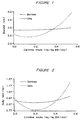
- the effect by sex of the different levels of carnitine on backfat is shown in Figure 1.
- the effect by sex of the different levels of L-carnitine on daily gain is shown in Figure 2. Gilts exhibit a pronounced curvilinear response in both backfat and daily gain in response to supplementary L-carnitine. It is therefore possible, by varying the levels of L-carnitine administered to pigs of different ages and sexes to alter the amount of fat in the tissue.
Landscapes
- Life Sciences & Earth Sciences (AREA)
- Chemical & Material Sciences (AREA)
- Polymers & Plastics (AREA)
- Health & Medical Sciences (AREA)
- Engineering & Computer Science (AREA)
- Animal Husbandry (AREA)
- Food Science & Technology (AREA)
- Zoology (AREA)
- General Health & Medical Sciences (AREA)
- Veterinary Medicine (AREA)
- Public Health (AREA)
- Animal Behavior & Ethology (AREA)
- Pharmacology & Pharmacy (AREA)
- Medicinal Chemistry (AREA)
- Epidemiology (AREA)
- Proteomics, Peptides & Aminoacids (AREA)
- Birds (AREA)
- Hematology (AREA)
- Diabetes (AREA)
- Bioinformatics & Cheminformatics (AREA)
- Obesity (AREA)
- Chemical Kinetics & Catalysis (AREA)
- General Chemical & Material Sciences (AREA)
- Nuclear Medicine, Radiotherapy & Molecular Imaging (AREA)
- Organic Chemistry (AREA)
- Feed For Specific Animals (AREA)
- Fodder In General (AREA)
- Medicines Containing Material From Animals Or Micro-Organisms (AREA)
- Acyclic And Carbocyclic Compounds In Medicinal Compositions (AREA)
Claims (11)
- Tierfutterzusammensetzung mit etwa 0,6 % bis 0,8 % Lysin und etwa 0,1 bis 400 ppm L-Carnitin.
- Futterzusammensetzung nach Anspruch 1 mit etwa 5 bis 50 ppm L-Carnitin.
- Futterzusammensetzung nach Anspruch 1, die des weiteren unter Mais, Sojabohnenmehl, Hafer, Sorghum, Melasse, synthetischen Aminosäuren, Bohnen, Erbsen, Gerste, Weizen, Rapssamenmehl, Kassawe, Fischmehl, Knochenmehl, Fleischmehl, Vitaminen, Antibiotika und Spurenelementen ausgewählte Materialien umfaßt.
- Futterzusammensetzung nach Anspruch 1, die des weiteren unter Methionin und Cholin ausgewählte Methyldonoren umfaßt.
- Verfahren zur Erhöhung der Gewichtszunahme und Futterausnutzung bei (markt)fertigen Schweinen mit einem Alter von mehr als 4 Monaten durch Gabe von etwa 0,05 bis 15 mg L-Carnitin/kg Körpergewicht/Tag in Kombination mit etwa 0,6 % bis 0,8 % Lysin enthaltendem Futter an die Schweine.
- Verfahren nach Anspruch 5, wobei den (markt)fertigen Schweinen mit einem Alter von mehr als 4 Monaten etwa 0,1 bis 2,0 mg L-Carnitin/kg Körpergewicht/Tag gegeben werden.
- Verfahren nach Anspruch 6, wobei das Futter etwa 5 bis 50 ppm L-Carnitin enthält, um etwa 0,1 bis 2,0 mg L-Carnitin/kg Körpergewicht/Tag bereitzustellen.
- Verfahren nach Anspruch 6, umfassend eine Gabe von unter Mais, Sojabohnenmehl, Hafer, Sorghum, Melasse, synthetischen Aminosäuren, Bohnen, Erbsen, Gerste, Weizen, Rapssamenmehl, Kassawe, Fischmehl, Knochenmehl, Fleischmehl, Vitaminen, Antibiotika und Spurenelementen ausgewählten Materialien.
- Verfahren nach Anspruch 5, des weiteren umfassend unter Methionin und Cholin ausgewählte Methyldonoren.
- Verfahren zur Herstellung einer Tierfutterzusammensetzung für (markt)fertige Schweine mit einem Alter von mehr als 4 Monaten durch Vermischen geeigneter Tierfuttermaterialien, um für etwa 0,1 bis 400 ppm L-Carnitin und etwa 0,6 bis 0,8 % Lysin in der Futterzusammensetzung zu sorgen.
- Verfahren nach Anspruch 10, wobei für etwa 5 bis 50 ppm L-Carnitin gesorgt ist.
Applications Claiming Priority (3)
| Application Number | Priority Date | Filing Date | Title |
|---|---|---|---|
| US38785689A | 1989-07-31 | 1989-07-31 | |
| US387856 | 1989-07-31 | ||
| PCT/US1990/004231 WO1991001728A1 (en) | 1989-07-31 | 1990-07-27 | Carnitine supplemented finishing pig diet |
Publications (3)
| Publication Number | Publication Date |
|---|---|
| EP0484446A1 EP0484446A1 (de) | 1992-05-13 |
| EP0484446A4 EP0484446A4 (en) | 1992-06-03 |
| EP0484446B1 true EP0484446B1 (de) | 1995-05-17 |
Family
ID=23531608
Family Applications (1)
| Application Number | Title | Priority Date | Filing Date |
|---|---|---|---|
| EP90912541A Expired - Lifetime EP0484446B1 (de) | 1989-07-31 | 1990-07-27 | Karnitindiät für ausgewachsene schweine |
Country Status (6)
| Country | Link |
|---|---|
| US (1) | US5124357A (de) |
| EP (1) | EP0484446B1 (de) |
| JP (1) | JPH05501798A (de) |
| AT (1) | ATE122540T1 (de) |
| DE (1) | DE69019524T2 (de) |
| WO (1) | WO1991001728A1 (de) |
Cited By (1)
| Publication number | Priority date | Publication date | Assignee | Title |
|---|---|---|---|---|
| US7955629B2 (en) | 2005-01-14 | 2011-06-07 | Land O'lakes Purina Feed Llc | Method of feeding milk replacer with carnitine |
Families Citing this family (21)
| Publication number | Priority date | Publication date | Assignee | Title |
|---|---|---|---|---|
| HUT75085A (en) * | 1994-02-22 | 1997-04-28 | Lonza Ag | Improving growth and lactation of ruminants |
| ATE223662T1 (de) | 1996-12-03 | 2002-09-15 | Univ Kansas State | Verwendung von carnitin-angereicherte futter für trächtige säue |
| US5770217A (en) * | 1997-07-02 | 1998-06-23 | Atlatl, Inc. | Dietary supplement for hematological, immune and appetite enhancement |
| US6413545B1 (en) | 1998-09-01 | 2002-07-02 | Access Business Group International Llc | Diet composition and method of weight management |
| US6489362B1 (en) | 1999-03-23 | 2002-12-03 | The Board Of Regents For Oklahoma State University | Carnitine supplemented diet to prevent or alleviate ascites in broiler type poultry |
| US6090849A (en) * | 1999-03-23 | 2000-07-18 | The Board Of Regents For Oklahoma State University | Carnitine supplemented diet to prevent sudden death syndrome in breeder type poultry |
| WO2002002106A1 (en) * | 2000-06-30 | 2002-01-10 | Kansas State University Research Foundation | Use of modified tall oil in combination with dietary supplements to improve body composition and health status |
| KR100343367B1 (ko) * | 2000-07-31 | 2002-07-15 | 정연권 | 항생제 대체를 위한 가축사료 조성물 |
| US7169770B2 (en) | 2001-04-24 | 2007-01-30 | Lonza Ltd. | Method of enhancing reproductive performance in sows |
| US20030235646A1 (en) * | 2002-03-15 | 2003-12-25 | Lonza Inc. | Method for improving quality of meat by supplementing pig diets and concentrates used therefor |
| AU2006265280B2 (en) * | 2005-07-05 | 2011-07-14 | Lonza Ag | Spray-drying process for producing a dry carnitine powder or granulate |
| CN108740573A (zh) * | 2018-06-04 | 2018-11-06 | 岳阳市新宏饲料有限公司 | 一种黄颡鱼膨化颗粒配合饲料及其生产方法 |
| CN108740572A (zh) * | 2018-06-04 | 2018-11-06 | 岳阳市新宏饲料有限公司 | 一种泥鳅膨化配合饲料及其生产方法 |
| CN108813208A (zh) * | 2018-06-04 | 2018-11-16 | 岳阳市新宏饲料有限公司 | 一种鮰鱼膨化颗粒配合饲料及其生产方法 |
| CN108713659A (zh) * | 2018-06-04 | 2018-10-30 | 岳阳市新宏饲料有限公司 | 一种鲈鱼膨化颗粒配合饲料及其生产方法 |
| CN108713660A (zh) * | 2018-06-04 | 2018-10-30 | 岳阳市新宏饲料有限公司 | 一种黄鳝膨化颗粒配合饲料及其生产方法 |
| CN108378229A (zh) * | 2018-06-04 | 2018-08-10 | 岳阳市新宏饲料有限公司 | 一种青蛙膨化配合饲料及其生产方法 |
| CN108782961A (zh) * | 2018-06-04 | 2018-11-13 | 岳阳市新宏饲料有限公司 | 一种翘嘴鲌鱼膨化颗粒配合饲料及其生产方法 |
| AU2019432401B9 (en) * | 2019-03-06 | 2023-09-28 | Anipha Technologies Pty Ltd | USE OF γ-QUATERNARY AMMONIUM BUTYRATE COMPOUND IN PREPARATION OF ANIMAL FEED ADDITIVE |
| CN114145263A (zh) * | 2021-11-26 | 2022-03-08 | 佳和农牧股份有限公司 | 一种新型丹系后备母猪诱情方式 |
| WO2025240202A1 (en) * | 2024-05-16 | 2025-11-20 | Can Technologies, Inc. | Methylation blends and use of the compositions in feeding an animal |
Citations (2)
| Publication number | Priority date | Publication date | Assignee | Title |
|---|---|---|---|---|
| DE1803980A1 (de) * | 1968-10-18 | 1970-06-04 | Friedrich Botzenhardt Kg Fa | Milchaustauschfuttermittel fuer Kaelberaufzucht und Kaelbermast |
| JPS56121441A (en) * | 1980-02-27 | 1981-09-24 | Shimahisa Yakuhin Kk | Feed additive for culturing fish or shell |
Family Cites Families (4)
| Publication number | Priority date | Publication date | Assignee | Title |
|---|---|---|---|---|
| US3810994A (en) * | 1972-06-01 | 1974-05-14 | Ethyl Corp | Method and composition for treating obesity |
| US4767781A (en) * | 1981-11-26 | 1988-08-30 | Takeda Chemical Industries, Ltd. | Derivatives of beta-amino-gamma-trimethylammonio-butyrate and their production and use |
| US4948534A (en) * | 1981-11-26 | 1990-08-14 | Takeda Chemical Industries, Ltd. | Derivatives of β-amino-γ-trimethylammonio-butyrate and their production and use |
| IT1177384B (it) * | 1984-12-12 | 1987-08-26 | Boeehringer Biochemia Robin Sp | Prodotti dietetici granulari a base di amminoacidi e procedimento per la loro preparazione |
-
1990
- 1990-07-27 DE DE69019524T patent/DE69019524T2/de not_active Expired - Lifetime
- 1990-07-27 WO PCT/US1990/004231 patent/WO1991001728A1/en not_active Ceased
- 1990-07-27 JP JP2511864A patent/JPH05501798A/ja active Pending
- 1990-07-27 AT AT90912541T patent/ATE122540T1/de not_active IP Right Cessation
- 1990-07-27 EP EP90912541A patent/EP0484446B1/de not_active Expired - Lifetime
-
1991
- 1991-09-26 US US07/766,901 patent/US5124357A/en not_active Expired - Lifetime
Patent Citations (2)
| Publication number | Priority date | Publication date | Assignee | Title |
|---|---|---|---|---|
| DE1803980A1 (de) * | 1968-10-18 | 1970-06-04 | Friedrich Botzenhardt Kg Fa | Milchaustauschfuttermittel fuer Kaelberaufzucht und Kaelbermast |
| JPS56121441A (en) * | 1980-02-27 | 1981-09-24 | Shimahisa Yakuhin Kk | Feed additive for culturing fish or shell |
Non-Patent Citations (2)
| Title |
|---|
| Fundamentals of dairy Chemistry ( N.Wong) page 16 * |
| RO 88820 (Derwent abstract no. 86-256636) * |
Cited By (1)
| Publication number | Priority date | Publication date | Assignee | Title |
|---|---|---|---|---|
| US7955629B2 (en) | 2005-01-14 | 2011-06-07 | Land O'lakes Purina Feed Llc | Method of feeding milk replacer with carnitine |
Also Published As
| Publication number | Publication date |
|---|---|
| DE69019524T2 (de) | 1996-01-04 |
| EP0484446A4 (en) | 1992-06-03 |
| EP0484446A1 (de) | 1992-05-13 |
| US5124357A (en) | 1992-06-23 |
| WO1991001728A1 (en) | 1991-02-21 |
| DE69019524D1 (de) | 1995-06-22 |
| ATE122540T1 (de) | 1995-06-15 |
| JPH05501798A (ja) | 1993-04-08 |
Similar Documents
| Publication | Publication Date | Title |
|---|---|---|
| EP0484446B1 (de) | Karnitindiät für ausgewachsene schweine | |
| US5030657A (en) | L-carnitine supplemented catfish diet | |
| EP0620981B1 (de) | Verfahren zur Stimulierung des Schlüpfens von Küken durch Zugabe von Carnitin zum Hühnerfutter | |
| Lee et al. | Performance of broilers fed limited quantities of feed or nutrients during seven to fourteen days of age | |
| Alexis et al. | Formulation of practical diets for rainbow trout (Salmo gairdneri) made by partial or complete substitution of fish meal by poultry by-products and certain plant by-products | |
| Wang et al. | Effect of rapid and multiple changes in level of distillers dried grain with solubles (DDGS) in broiler diets on performance and carcass characteristics | |
| Garlich | Response of broilers to DL-methionine hydroxy analog free acid, DL-methionine, and L-methionine | |
| KR100372341B1 (ko) | 임신기 및 수유기의 돼지를 위한 카르니틴 보충 식이조성물 | |
| Hoffman et al. | The effect of L-carnitine and soybean oil on performance and nitrogen and energy utilization by neonatal and young pigs | |
| EA002558B1 (ru) | Способ снабжения коровы биодоступным метионином | |
| RU2436409C2 (ru) | Добавка к корму поросят и способ их кормления с использованием указанной добавки | |
| Heywang et al. | Relationship between the weight of chicks and levels of dietary free gossypol supplied by different cottonseed products | |
| CHEVA-ISARAKUL et al. | Effect of different levels of sunflower seed in broiler rations | |
| Menton et al. | Utilization of free glycerol as a source of dietary energy in rainbow trout (Salmo gairdneri) | |
| Owen et al. | Response of growing turkeys to dietary energy levels | |
| Smalley et al. | Methionine requirement of kittens given amino acid diets containing adequate cystine | |
| Viola et al. | The effects of oil-coated pellets on carp (Cyprinus carpio) in intensive culture | |
| RU2655844C1 (ru) | Новая добавка к рациону и способ кормления молодняка свиней | |
| Cho | Nutrition and fish health | |
| Arentson et al. | Nutritive value of D-tryptophan for the growing pig | |
| Schuhmacher et al. | Carnitine—a vitamin for rainbow trout? | |
| Misir et al. | Biotin bioavailability of protein supplements and cereal grains for starting turkey poults | |
| CA2064073C (en) | Carnitine supplemented finishing pig diet | |
| WO1992016218A1 (en) | Carnitine-supplemented diet for starter pigs | |
| Doan | Effects of different levels of dietary calcium and supplemental Vitamin C on growth, survivability, leg abnormalities, total ash in the tibia, serum calcium and phosphorus in 0-4 week-old chicks under tropical conditions |
Legal Events
| Date | Code | Title | Description |
|---|---|---|---|
| PUAI | Public reference made under article 153(3) epc to a published international application that has entered the european phase |
Free format text: ORIGINAL CODE: 0009012 |
|
| 17P | Request for examination filed |
Effective date: 19920130 |
|
| AK | Designated contracting states |
Kind code of ref document: A1 Designated state(s): AT BE CH DE DK ES FR GB IT LI LU NL SE |
|
| RIN1 | Information on inventor provided before grant (corrected) |
Inventor name: BLUM, STEVEN, A. Inventor name: HAYDON, KEITH, D. Inventor name: NEWTON, G., LARRY |
|
| A4 | Supplementary search report drawn up and despatched |
Effective date: 19920413 |
|
| AK | Designated contracting states |
Kind code of ref document: A4 Designated state(s): AT BE CH DE DK ES FR GB IT LI LU NL SE |
|
| 17Q | First examination report despatched |
Effective date: 19920831 |
|
| GRAA | (expected) grant |
Free format text: ORIGINAL CODE: 0009210 |
|
| AK | Designated contracting states |
Kind code of ref document: B1 Designated state(s): AT BE CH DE DK ES FR GB IT LI LU NL SE |
|
| PG25 | Lapsed in a contracting state [announced via postgrant information from national office to epo] |
Ref country code: IT Free format text: LAPSE BECAUSE OF FAILURE TO SUBMIT A TRANSLATION OF THE DESCRIPTION OR TO PAY THE FEE WITHIN THE PRE;WARNING: LAPSES OF ITALIAN PATENTS WITH EFFECTIVE DATE BEFORE 2007 MAY HAVE OCCURRED AT ANY TIME BEFORE 2007. THE CORRECT EFFECTIVE DATE MAY BE DIFFERENT FROM THE ONE RECORDED.SCRIBED TIME-LIMIT Effective date: 19950517 Ref country code: DK Effective date: 19950517 Ref country code: ES Free format text: THE PATENT HAS BEEN ANNULLED BY A DECISION OF A NATIONAL AUTHORITY Effective date: 19950517 |
|
| REF | Corresponds to: |
Ref document number: 122540 Country of ref document: AT Date of ref document: 19950615 Kind code of ref document: T |
|
| REF | Corresponds to: |
Ref document number: 69019524 Country of ref document: DE Date of ref document: 19950622 |
|
| PG25 | Lapsed in a contracting state [announced via postgrant information from national office to epo] |
Ref country code: LU Free format text: LAPSE BECAUSE OF NON-PAYMENT OF DUE FEES Effective date: 19950731 |
|
| PG25 | Lapsed in a contracting state [announced via postgrant information from national office to epo] |
Ref country code: SE Effective date: 19950817 |
|
| ET | Fr: translation filed | ||
| PLBE | No opposition filed within time limit |
Free format text: ORIGINAL CODE: 0009261 |
|
| STAA | Information on the status of an ep patent application or granted ep patent |
Free format text: STATUS: NO OPPOSITION FILED WITHIN TIME LIMIT |
|
| 26N | No opposition filed | ||
| REG | Reference to a national code |
Ref country code: GB Ref legal event code: IF02 |
|
| REG | Reference to a national code |
Ref country code: CH Ref legal event code: NV Representative=s name: LONZA AG Ref country code: CH Ref legal event code: PFA Owner name: UNIVERSITY OF GEORGIA RESEARCH FOUNDATION, INC. Free format text: UNIVERSITY OF GEORGIA RESEARCH FOUNDATION, INC.#BOYD GRADUATE STUDIES RES.CENTER#ATHENS/GA (US) $ LONZA, INC.#22-10 ROUTE 208#FAIR LAWN/NJ (US) -TRANSFER TO- UNIVERSITY OF GEORGIA RESEARCH FOUNDATION, INC.#BOYD GRADUATE STUDIES RES.CENTER#ATHENS/GA (US) $ LONZA, INC.#90 BOROLINE ROAD#ALLENDALE, NJ 07401-1613 (US) |
|
| PGFP | Annual fee paid to national office [announced via postgrant information from national office to epo] |
Ref country code: FR Payment date: 20090528 Year of fee payment: 20 |
|
| PGFP | Annual fee paid to national office [announced via postgrant information from national office to epo] |
Ref country code: BE Payment date: 20090602 Year of fee payment: 20 |
|
| PGFP | Annual fee paid to national office [announced via postgrant information from national office to epo] |
Ref country code: CH Payment date: 20090602 Year of fee payment: 20 |
|
| PGFP | Annual fee paid to national office [announced via postgrant information from national office to epo] |
Ref country code: NL Payment date: 20090531 Year of fee payment: 20 Ref country code: AT Payment date: 20090601 Year of fee payment: 20 Ref country code: GB Payment date: 20090528 Year of fee payment: 20 Ref country code: DE Payment date: 20090601 Year of fee payment: 20 |
|
| BE20 | Be: patent expired |
Owner name: *LONZA INC. Effective date: 20100727 Owner name: *UNIVERSITY OF GEORGIA RESEARCH FOUNDATION INC. Effective date: 20100727 |
|
| REG | Reference to a national code |
Ref country code: NL Ref legal event code: V4 Effective date: 20100727 |
|
| REG | Reference to a national code |
Ref country code: CH Ref legal event code: PL |
|
| REG | Reference to a national code |
Ref country code: GB Ref legal event code: PE20 Expiry date: 20100726 |
|
| PG25 | Lapsed in a contracting state [announced via postgrant information from national office to epo] |
Ref country code: NL Free format text: LAPSE BECAUSE OF EXPIRATION OF PROTECTION Effective date: 20100727 |
|
| PG25 | Lapsed in a contracting state [announced via postgrant information from national office to epo] |
Ref country code: GB Free format text: LAPSE BECAUSE OF EXPIRATION OF PROTECTION Effective date: 20100726 |
|
| PG25 | Lapsed in a contracting state [announced via postgrant information from national office to epo] |
Ref country code: DE Free format text: LAPSE BECAUSE OF EXPIRATION OF PROTECTION Effective date: 20100727 |