EP0486233B1 - Procédé de transformation de plantes utilisants des espèces d'Agrobacterium - Google Patents
Procédé de transformation de plantes utilisants des espèces d'Agrobacterium Download PDFInfo
- Publication number
- EP0486233B1 EP0486233B1 EP91310374A EP91310374A EP0486233B1 EP 0486233 B1 EP0486233 B1 EP 0486233B1 EP 91310374 A EP91310374 A EP 91310374A EP 91310374 A EP91310374 A EP 91310374A EP 0486233 B1 EP0486233 B1 EP 0486233B1
- Authority
- EP
- European Patent Office
- Prior art keywords
- cells
- transformed
- tissue
- plant
- genetic material
- Prior art date
- Legal status (The legal status is an assumption and is not a legal conclusion. Google has not performed a legal analysis and makes no representation as to the accuracy of the status listed.)
- Expired - Lifetime
Links
Images


Classifications
-
- C—CHEMISTRY; METALLURGY
- C12—BIOCHEMISTRY; BEER; SPIRITS; WINE; VINEGAR; MICROBIOLOGY; ENZYMOLOGY; MUTATION OR GENETIC ENGINEERING
- C12N—MICROORGANISMS OR ENZYMES; COMPOSITIONS THEREOF; PROPAGATING, PRESERVING, OR MAINTAINING MICROORGANISMS; MUTATION OR GENETIC ENGINEERING; CULTURE MEDIA
- C12N15/00—Mutation or genetic engineering; DNA or RNA concerning genetic engineering, vectors, e.g. plasmids, or their isolation, preparation or purification; Use of hosts therefor
- C12N15/09—Recombinant DNA-technology
- C12N15/87—Introduction of foreign genetic material using processes not otherwise provided for, e.g. co-transformation
-
- C—CHEMISTRY; METALLURGY
- C12—BIOCHEMISTRY; BEER; SPIRITS; WINE; VINEGAR; MICROBIOLOGY; ENZYMOLOGY; MUTATION OR GENETIC ENGINEERING
- C12N—MICROORGANISMS OR ENZYMES; COMPOSITIONS THEREOF; PROPAGATING, PRESERVING, OR MAINTAINING MICROORGANISMS; MUTATION OR GENETIC ENGINEERING; CULTURE MEDIA
- C12N15/00—Mutation or genetic engineering; DNA or RNA concerning genetic engineering, vectors, e.g. plasmids, or their isolation, preparation or purification; Use of hosts therefor
- C12N15/09—Recombinant DNA-technology
- C12N15/63—Introduction of foreign genetic material using vectors; Vectors; Use of hosts therefor; Regulation of expression
- C12N15/79—Vectors or expression systems specially adapted for eukaryotic hosts
- C12N15/82—Vectors or expression systems specially adapted for eukaryotic hosts for plant cells, e.g. plant artificial chromosomes (PACs)
- C12N15/8201—Methods for introducing genetic material into plant cells, e.g. DNA, RNA, stable or transient incorporation, tissue culture methods adapted for transformation
- C12N15/8202—Methods for introducing genetic material into plant cells, e.g. DNA, RNA, stable or transient incorporation, tissue culture methods adapted for transformation by biological means, e.g. cell mediated or natural vector
- C12N15/8205—Agrobacterium mediated transformation
Definitions
- the present invention relates to the use of Agrobacterium species for the transformation of plants.
- T transforming
- Agrobacteria infect plants and cause a callus of tumor tissue to grow in an undifferentiated way at the site of infection.
- the tumor inducing agent is the Ti plasmid, which functions by integrating some of its DNA into the genome of host plant cells. This plasmid is an ideal vector for transformation of plants.
- the portion of the Ti plasmid DNA that is transferred to host cell chromosomes during Agrobacterium infection is referred to as transforming ("T") DNA. See, for example, Watson JD, Tooze J, & Kurtz DT, Recombinant DNA: A Short Course , 169 (W.H. Freeman, 1983).
- Agrobacteria normally require a wound environment to induce the DNA transfer needed for transformation.
- leaf punches and stem segments are commonly used because they present a cut and wounded surface to the bacteria that may contain cells capable of regenerating plants.
- the intended target is an organized, multilayered tissue, such as a meristem, which is not readily accessible for Agrobacterium infection and transformation and is not easily wounded without damaging its organization and function.
- leaf punches and stem segments are used, these only present a limited region, such as the perimeter of a leaf punch disk, which has been wounded. It would be desirable to use the entire surface of the disk as a potential transformation site.
- Another method for transformation of plants has been bombardment of plant cells with dense microparticles carrying genetic material such as DNA sequences or plasmids. This method is less genotype specific, but frequencies of stable transformation are also low with this method. This is due in part to an absence of natural mechanisms to mediate integration of the introduced genetic material into the plant genome. In contrast, Agrobacterium species actively mediate those transformation events as a part of the natural process of infecting a plant cell. Thus, a continuing need exists for a method of transformation which reduces genotype specificity and enhances reliability, both in monocots and dicots.
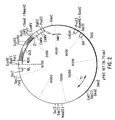
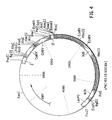
- Figures 1 through 4 are plasmid maps of the plasmids pPHI158, pPHI167, pPHI419 and pPHI413, respectively.
- This invention provides an improved transformation method in which plant tissues are first perforated with microprojectiles which do not carry genetic material. It is now appreciated that the high velocity impact of dense particles on plant tissues will generate a wide array of microwounds, creating an environment which is particularly conducive to infection by Agrobacteria. In the next step, the tissues are treated with an Agrobacterium species carrying the genetic material of interest. The Agrobacterium is able to transfer genetic material permanently into the genome of target cells at frequencies substantially higher than by conventional Agrobacterium treatment. While excessive wounding of the target tissue is detrimental in conventional particle/ plasmid methods of transformation, such wounding is used to advantage in the present invention.
- the present invention provides a method for transformation of cells of a plant, comprising the steps of (a) preparing bacteria of an Agrobacterium species, which bacteria have been transformed to include in their T-DNA the genetic material to be inserted into the genome of the plant cells; (b) perforating a tissue from the plant by microprojectile bombardment; and (c) treating the perforated tissue with the transformed Agrobacteria; whereby the Agrobacteria incorporate the T-DNA, including the inserted genetic material, into the genome of the cells.
- This method can be used to make permanently, heritably transformed plant cells which can be regenerated to whole, fertile plants.
- the foregoing method can also be used for transient transformations and assays in plant research.
- the transformed plant cells produced by the foregoing method are suitable for regeneration by known techniques to produce whole, fertile plants which include in their nuclear genome the genetic material incorporated by the action of the Agrobacteria. Accordingly, this invention also provides a method of producing whole, fertile, transformed plants, comprising the steps of (a) culturing tissues of the species and genotype to be transformed; (b) preparing bacteria of an Agrobacterium species, which bacteria have been transformed to include in their T-DNA the genetic material to be inserted into the genome of the plant cells; (c) perforating the target tissue by microprojectile bombardment using microprojectiles which do not carry genetic material; (d) treating the perforated tissue with the transformed Agrobacteria, whereby the Agrobacteria incorporate the T-DNA, including the inserted genetic material into the genome of the cells to produce transformed cells; and (e) regenerating the transformed cells to produce whole plants.
- the particles need not and preferably do not carry genetic or other biological material.
- the higher transformation frequencies obtained with this invention can overcome in part the low frequencies of transformation associated with many difficult to tranform genotypes and species.
- the monocot species will be selected from maize, sorghum, triticale, barley, oats, rye, wheat, onion and rice
- the dicot species will be selected from soybean and other beans; alfalfa; tobacco, brassicas such as rapeseed, broccoli and cauliflower; sunflower; cucurbits such as melons, cucumbers and squashes; and solanaceae such as potatoes, peppers and tomatoes.
- Tissues from flowers including orchid, rose, carnation, petunia, zinnia, aster, lily, marigold, impatiens, African and common violet and pansy, anthurium, gladiolus, hyacinth, geranium, lavender, peony, tulip, poppy, chrysanthemum, daffodil, and begonia varieties, as well as other ornamentals, including without limitation taxus, juniper, rhododendron, philodendron, ficus, ivy, pothos, lilac, cactus, dizygotheca, euphorbia, fatsia, hedera, coleus, and other varieties, and herbs such as parsley, sage, rosemary, thyme, basil, oregano, garlic, mint, fennel, marjoram, coriander, dill, and the like can also be subjected to the methods of this invention.
- Tissues used can come from any desired plant part, including roots, anthers, stems, cotyledons, hypocotyls and flowers.
- Preferred tissues include meristem explants, whole leaf explants, partial leaf cuttings, leaf punch disks and immature embryos.
- An especially preferred tissue is a split meristem explant. This latter tissue has been described in the literature by B. Schrammeijer et al., "Meristem Transformation of Sunflower via Agrobacterium ,” Plant Cell Reports 9: 55-60 (1990).
- Agrobacterium tumefaciens and Agrobacterium rhizogenies .
- Preferred is an Agrobacterium tumefaciens strain of the nopaline, binary type.
- Especially preferred is the publicly available Agrobacterium tumefaciens strain EHA101. This strain contains a C58 bacterial chromosome and a disarmed derivative of the Ti plasmid referred to in the literature as TiBO542.
- strain EHA101 is transformed with plasmids pPHI158 and pPHI167 as shown in Figures 1 and 2, using freeze-thaw transformation.
- pPHI158 Figure 1 is constructed by the insertion of linearized, EcoR1 digested plasmid pPHI419 ( Figure 3) carrying the plant-expressible marker NPTII near the right border of the 11.6 kb binary pPHI6.
- pPHI6 also contains the RK2 origin of replication and an ampicillin resistance marker.
- pPHI167 is constructed in an identical manner except that the linearized EcoR1 fragment of pPHI413 ( Figure 4) carrying the GUS gene is inserted into pPHI6.
- This is referred to in the literature as a binary vector system.
- a binary vector system See, e.g., Hoekema A, Hirsch PR, Hooykaas PJJ & Schilperoort RA, "A Binary Plant Vector Strategy Based on Separation of Vir- and T-Regions of the A. tumefaciens Ti Plasmid.” Nature 303: 179-180 (1983).
- the bacteria are preferably grown in YEP medium supplemented with 50 »g/mL kanamycin and 100 »g/mL carbenicillin to an OD600 of 0.5-1.0.
- the bacteria are preferably transferred to inoculation medium.
- Compositions of various media are as follows:
- Inoculation Buffer 12.5 mM MES at pH 5.7 1 g/L NH4Cl 0.3 g/L MgSO4
- a general method for transformation of sunflower meristem tissues is practiced as follows.
- Shelled sunflower seeds are surface sterilized with dilute hypochlorite solution in the usual manner and imbibed overnight (18 hours) in the dark at 26°C on moist filter paper to initiate germination.
- the meristems are arranged in a 2 cm circle in the center of a petri plate containing a stiff water agar to hold the meristems upright for bombardment purposes.
- the meristems are bombarded twice in a microparticle bombardment apparatus of the general construction described by Sanford et al. in their European Patent Application, Publication Number 331,885, claiming priority of U.S. Patent Application Serial No. 161,807, filed February 29, 1988.
- Nitric acid-washed tungsten particles having a mean diameter of 1.8»m suspended in TE buffer are used, and the explants are positioned 10cm below the stopping plate.
- the cultures are incubated on 374B-GA for 3 days and then transferred to 374 medium (374B-GA without hormones but containing 250 »g/mL cefotaxime to inhibit bacterial growth).
- the meristem plants emerge in a few days and are allowed to develop for about 2 weeks at 26°C with a 16 hour day. At that point plants can be harvested to measure the level of transformation that has occurred.
- Tobacco leaves were treated in the same general manner as described in Example 1.
- the culture medium comprised MS minerals and vitamins, 4% sucrose and 1.5% Gelrite at a pH of 5.8. 10 to 14 days post germination, the first true leaves were harvested and cultured adaxial side up for 24 hours on filter paper moistened with medium comprising MS minerals, B-5 vitamins, 4 mg/L pCPA, 3% sucrose and 0.25 M sorbitol at a pH of 5.8.
- the leaves were dipped for 10 minutes in an Agrobacterium tumefaciens EHA101/pPHI158 or EHA101/pPHI167 suspension after bombardment and then returned to the culture medium, and 3 days later were transferred to 526 medium, comprising MS mineral elements, B-5 vitamins, 0.5 mg/L BAP, 2.0 mg/L NAA, 3% sucrose, and 0.8% Phytagar at a pH of 5.7, supplemented with 100 »g/Ml kanamycin sulfate and 250 »g/mL cefotaxime.
- the NPTII gene was used as a selectable marker and selection was done in a kanamycin-containing medium.
- Additional treatment groups included three levels of controls: Group II used bombardment followed by the same Agrobacteria as the test group containing same plasmid but without the NPTII gene (i.e., no selectable marker); Group III used the test Agrobacteria containing the test plasmid but without bombardment; and Group IV used standard particle/plasmid bombardment using the NPTII gene (i.e., no Agrobacteria) (Group IV).
- the combination of particle bombardment, Agrobacterium cultivations and kanamycin selection pressure did not prevent leaves from forming callus and regenerating plants. Transformation was identified by counting colonies surviving on the medium. Results were as follows:
- Sunflower meristems were transformed in the general manner of Example I. Meristem diameter increased from 50 »m to over 200 »m in 2 days in culture prior to bombardment. Plants were easily recovered from meristems after treatment. Transformation was evaluated by counting plants with GUS-positive sectors and comparisons were made using treatment groups divided as in groups I, III and IV of Example II. Results, expressed as the percentage of transformants identified among regenerated plants, were as follows:
- the selection medium included kanamycin, so that only cells transformed to contain the NPTII gene (pPHI158 or pPHI419)) were expected to survive. Cells transformed with pPHI167 (GUS gene) could have been identified by blue staining, but would not yield viable colonies in this experiment. Results were as follows:
- the first five groups were controls: Group 1 to evaluate the effect of bombardment only on colony development; Group 2 to evaluate the effect of wounding using a scalpel cut to split the leaf; Group 3 to evaluate particle wounding as in Group 1 but with functional bacteria that contained GUS only (no selectable marker) to establish a baseline; and Group 4 to evaluate whether the Agrobacteria were needed if microparticle wounding is used. None of these treatments were expected to produce viable colonies on selection medium, and all of these developed 0 colonies on selection medium. Group 5 was a control to confirm the need for tissue wounding, and colonies developed only at the excision point as expected.
- Group 6 was a positive control using normal particle gun methods, and Group 7 was a positive control using wounding by a simple scalpel cut to split the leaf.
- Group 8 used the method of this invention.
- the method of this invention showed approximately a 100-fold improvement in frequency of transformation compared to a conventional microparticle bombardment method and a 9-fold improvement in comparison to a conventional Agrobacterium transformation method which used a split leaf specimen.
Landscapes
- Health & Medical Sciences (AREA)
- Life Sciences & Earth Sciences (AREA)
- Genetics & Genomics (AREA)
- Engineering & Computer Science (AREA)
- Biomedical Technology (AREA)
- Biotechnology (AREA)
- Organic Chemistry (AREA)
- Wood Science & Technology (AREA)
- General Engineering & Computer Science (AREA)
- Chemical & Material Sciences (AREA)
- Bioinformatics & Cheminformatics (AREA)
- Zoology (AREA)
- Molecular Biology (AREA)
- Biophysics (AREA)
- Microbiology (AREA)
- Plant Pathology (AREA)
- Biochemistry (AREA)
- General Health & Medical Sciences (AREA)
- Physics & Mathematics (AREA)
- Cell Biology (AREA)
- Breeding Of Plants And Reproduction By Means Of Culturing (AREA)
- Micro-Organisms Or Cultivation Processes Thereof (AREA)
- Agricultural Chemicals And Associated Chemicals (AREA)
- Hydroponics (AREA)
- Organic Low-Molecular-Weight Compounds And Preparation Thereof (AREA)
Claims (10)
- Procédé de transformation de cellules d'un végétal par insertion de matériel génétique dans le génome des cellules, comprenant les étapes consistant à :(a) préparer des bactéries appartenant à une espèce d'Agrobacterium, lesquelles bactéries ont été transformées pour inclure dans leur ADNt le matériel génétique devant être inséré dans le génome des cellules;(b) perforer un tissu provenant du végétal par bombardement de microprojectiles ; et(c) traiter le tissu perforé avec les Agrobacteria transformées; ce par quoi les Agrobacteria incorporent dans le génome des cellules l'ADNt comprenant le matériel génétique inséré.
- Procédé selon la revendication 1, dans lequel le tissu est un explant de méristème.
- Procédé selon la revendication 1, dans lequel le tissu est un élément choisi dans le groupe constitué par les explants de feuille entière, les découpes partielles de feuilles, et les disques découpés à partir de feuilles.
- Procédé selon la revendication 1, dans lequel le tissu est une plantule immature.
- Procédé selon l'une quelconque des revendications précédentes, dans lequel la plante est une monocotylédone choisie dans le groupe constitué par le maïs, le sorgho, la triticale, l'orge, l'avoine, le seigle, le blé, l'oignon et le riz.
- Procédé selon l'une quelconque des revendications 1 à 4, dans lequel la plante est une dicotylédone choisie dans le groupe constitué par le soja, la luzeme, le tabac, les plantes appartenant au genre Brassica, le tournesol, les cucurbitacées, les pommes de terre, les poivrons et les tomates.
- Procédé de production de végétaux entiers fertiles, dont les cellules ont été transformées par insertion de matériel génétique dans leur génome, comprenant les étapes consistant à :(a) préparer des bactéries appartenant à une espèce d'Agrobacterium, lesquelles bactéries ont été transformées pour insérer dans leur ADNt le matériel génétique devant être inséré dans le génome des cellules des végétaux;(b) perforer par bombardement de microprojectiles un tissu provenant d'un végétal de l'espèce et du génotype devant être transformé;(c) traiter le tissu perforé avec les Agrobacteria transformées, ce par quoi les Agrobacteria incorporent du matériel génétique comprenant le matériel génétique inséré dans le génome des cellules pour produire des cellules transformées ; et(d) régénérer les cellules transformées pour produire des végétaux entiers.
- Procédé selon l'une quelconque des revendications 1 à 7, comprenant en outre l'étape consistant à faire croître, avant régénération, le tissu bombardé traité par Agrobacterium dans un milieu de sélection dans lequel seules les cellules transformées sont viables.
- Procédé selon la revendication 7, dans lequel le tissu est tel que défini dans l'une quelconque des revendications 2 à 4.
- Procédé selon la revendication 7, dans lequel le végétal est tel que défini dans la revendication 5 ou 6.
Applications Claiming Priority (2)
| Application Number | Priority Date | Filing Date | Title |
|---|---|---|---|
| US61440290A | 1990-11-14 | 1990-11-14 | |
| US614402 | 1990-11-14 |
Publications (3)
| Publication Number | Publication Date |
|---|---|
| EP0486233A2 EP0486233A2 (fr) | 1992-05-20 |
| EP0486233A3 EP0486233A3 (en) | 1992-07-15 |
| EP0486233B1 true EP0486233B1 (fr) | 1995-07-19 |
Family
ID=24461103
Family Applications (1)
| Application Number | Title | Priority Date | Filing Date |
|---|---|---|---|
| EP91310374A Expired - Lifetime EP0486233B1 (fr) | 1990-11-14 | 1991-11-11 | Procédé de transformation de plantes utilisants des espèces d'Agrobacterium |
Country Status (11)
| Country | Link |
|---|---|
| EP (1) | EP0486233B1 (fr) |
| JP (1) | JPH05308960A (fr) |
| AT (1) | ATE125301T1 (fr) |
| AU (1) | AU643846B2 (fr) |
| CA (1) | CA2053473C (fr) |
| DE (1) | DE69111385T2 (fr) |
| DK (1) | DK0486233T3 (fr) |
| ES (1) | ES2077181T3 (fr) |
| GR (1) | GR3017619T3 (fr) |
| HU (1) | HUT60783A (fr) |
| NZ (1) | NZ239977A (fr) |
Cited By (3)
| Publication number | Priority date | Publication date | Assignee | Title |
|---|---|---|---|---|
| US6284345B1 (en) | 1997-12-08 | 2001-09-04 | Washington University | Designer particles of micron and submicron dimension |
| US7364901B2 (en) | 2002-07-15 | 2008-04-29 | University Of Kentucky Research Foundation | Recombinant Stokesia epoxygenase gene |
| EP2248902A2 (fr) | 2002-02-20 | 2010-11-10 | J.R. Simplot Company | Amélioration génétique précise |
Families Citing this family (74)
| Publication number | Priority date | Publication date | Assignee | Title |
|---|---|---|---|---|
| NZ239977A (en) * | 1990-11-14 | 1993-08-26 | Pioneer Hi Bred Int | Transforming plants by the use of agrobacterium |
| US5324646A (en) * | 1992-01-06 | 1994-06-28 | Pioneer Hi-Bred International, Inc. | Methods of regeneration of Medicago sativa and expressing foreign DNA in same |
| US5712112A (en) | 1992-11-04 | 1998-01-27 | National Science Council Of R.O.C. | Gene expression system comprising the promoter region of the alpha-amylase genes |
| US6288302B1 (en) | 1992-11-04 | 2001-09-11 | National Science Council Of R.O.C. | Application of α-amylase gene promoter and signal sequence in the production of recombinant proteins in transgenic plants and transgenic plant seeds |
| EP0644945A4 (fr) * | 1993-01-29 | 1997-01-15 | Pioneer Hi Bred Int | Pre-traitement de micro-projectiles avant leur utilisation dans un canon a particules. |
| FR2709496B1 (fr) | 1993-08-30 | 1995-11-03 | Limagrain Holding Groupe | Procédé de production de plantes transgéniques, entièrement transformées en génération T0, à partir de méristèmes. |
| ES2164759T3 (es) * | 1993-12-09 | 2002-03-01 | Texas A & M Univ Sys | Transformacion de especies musa utilizando agrobacterium tumefaciens. |
| DE4416784A1 (de) * | 1994-05-09 | 1995-11-30 | Soft Gene Gmbh | Methode zur Anreicherung von Zellen, die durch ballistischen Transfer modifiziert wurden |
| US5994624A (en) * | 1997-10-20 | 1999-11-30 | Cotton Incorporated | In planta method for the production of transgenic plants |
| US6586658B1 (en) | 1998-03-06 | 2003-07-01 | Metabolix, Inc. | Modification of fatty acid metabolism in plants |
| US7129393B1 (en) | 1999-02-22 | 2006-10-31 | Yissum Research Development Company Of The Hebrew University | Transgenic plants and method for transforming carnations |
| WO2000050613A2 (fr) * | 1999-02-22 | 2000-08-31 | Yissum Research And Development Company Of The Hebrew University Of Jerusalem | Plantes transgeniques et procede de transformation d'oeillets |
| GB9923306D0 (en) | 1999-10-01 | 1999-12-08 | Isis Innovation | Diagnostic and therapeutic epitope, and transgenic plant |
| AU2001236839A1 (en) | 2000-02-11 | 2001-08-20 | Metabolix, Inc. | Multi-gene expression constructs containing modified inteins |
| US6875907B2 (en) | 2000-09-13 | 2005-04-05 | Pioneer Hi-Bred International, Inc. | Antimicrobial peptides and methods of use |
| FR2815969B1 (fr) | 2000-10-30 | 2004-12-10 | Aventis Cropscience Sa | Plantes tolerantes aux herbicides par contournement de voie metabolique |
| WO2003000863A2 (fr) | 2001-06-22 | 2003-01-03 | Pioneer Hi-Bred International, Inc. | Polynucleotides de defensine et methodes d'utilisation |
| GB0212885D0 (en) | 2002-06-05 | 2002-07-17 | Isis Innovation | Therapeutic epitopes and uses thereof |
| CA2492917C (fr) | 2002-07-19 | 2011-10-18 | University Of South Carolina | Compositions et procedes permettant de moduler l'expression de genes dans des plantes |
| AU2003902253A0 (en) | 2003-05-12 | 2003-05-29 | The University Of Queensland | Method for increasing product yield |
| US7812222B2 (en) * | 2003-08-13 | 2010-10-12 | Japan Tobacco Inc. | Method of transducing gene into plant material |
| US10105437B2 (en) | 2004-04-28 | 2018-10-23 | Btg International Limited | Epitopes related to coeliac disease |
| AU2005237287B2 (en) | 2004-04-28 | 2011-08-11 | Btg International Limited | Epitopes related to coeliac disease |
| NZ582988A (en) | 2004-10-21 | 2011-07-29 | Venganza Inc | Methods and materials for conferring resistance to pests and pathogens of plants |
| CA2600882C (fr) | 2005-03-16 | 2013-02-26 | Metabolix, Inc. | Expression inductible chimiquement de voies biosynthetiques |
| WO2007092704A2 (fr) | 2006-02-09 | 2007-08-16 | Pioneer Hi-Bred International, Inc. | Gènes destinés à augmenter l'efficacité d'utilisation de l'azote dans des plantes cultivées |
| AR060523A1 (es) | 2006-04-19 | 2008-06-25 | Pioneer Hi Bred Int | Moleculas de polinucleotidos aislados que corresponden a alelos mutantes y tipo salvaje del gen de maiz d9 y metodos para usarlas |
| US8153863B2 (en) | 2007-03-23 | 2012-04-10 | New York University | Transgenic plants expressing GLK1 and CCA1 having increased nitrogen assimilation capacity |
| GB0709835D0 (en) | 2007-05-22 | 2007-07-04 | Plant Bioscience Ltd | Composition and method for modulating plant root hair development |
| NZ562781A (en) * | 2007-10-24 | 2010-02-26 | Nz Inst Plant & Food Res Ltd | Allium transformation |
| CN101932712B (zh) | 2007-11-20 | 2014-05-14 | 先锋国际良种公司 | 用于改善植物应激耐性的玉米乙烯信号转导基因及其调节 |
| JP5695422B2 (ja) | 2007-11-27 | 2015-04-08 | コモンウェルス サイエンティフィック アンド インダストリアル リサーチ オーガナイゼーション | デンプン代謝改変植物 |
| IT1394596B1 (it) * | 2008-09-30 | 2012-07-05 | Fond Parco Tecnologico Padano | Produzione di ngf in pianta. |
| CA2741006A1 (fr) | 2008-10-30 | 2010-05-20 | Pioneer Hi-Bred International, Inc. | Manipulation de glutamine synthetases (gs) pour ameliorer l'efficacite d'utilisation de l'azote et le rendement en grains de plantes superieures |
| GB2465748B (en) | 2008-11-25 | 2012-04-25 | Algentech Sas | Plant cell transformation method |
| GB2465749B (en) | 2008-11-25 | 2013-05-08 | Algentech Sas | Plant cell transformation method |
| CA2743707A1 (fr) | 2008-12-04 | 2010-06-10 | Pioneer Hi-Bred International, Inc. | Procedes et compositions pour un rendement ameliore par une expression ciblee de knotted1 |
| GB2467167B (en) | 2009-01-26 | 2013-09-11 | Algentech Sas | Gene targeting in plants |
| WO2010102220A1 (fr) | 2009-03-05 | 2010-09-10 | Metabolix, Inc. | Multiplication de plantes transgéniques |
| WO2010102293A1 (fr) | 2009-03-06 | 2010-09-10 | Metabolix, Inc. | Méthode de sélection positive de plantes au moyen de la sorbitol déshydrogénase |
| IN2012DN00324A (fr) | 2009-06-15 | 2015-05-08 | Plant Bioscience Ltd | |
| EP2456874A1 (fr) | 2009-07-24 | 2012-05-30 | Pioneer Hi-Bred International Inc. | Utilisation d'empilements de composants de domaines de dimérisation pour moduler l'architecture d'une plante |
| BR112012002454A2 (pt) | 2009-08-05 | 2017-07-04 | Chromocell Corp | plantas, micróbios e organismos melhorados |
| US20110035843A1 (en) | 2009-08-05 | 2011-02-10 | Pioneer Hi-Bred International, Inc. | Novel eto1 genes and use of same for reduced ethylene and improved stress tolerance in plants |
| US20110061132A1 (en) | 2009-08-20 | 2011-03-10 | Pioneer Hi-Bred International, Inc. | Functional expression of yeast nitrate transporter (ynt1) in maize to improve nitrate uptake |
| WO2011022597A1 (fr) | 2009-08-20 | 2011-02-24 | Pioneer Hi-Bred International, Inc. | Expression fonctionnelle d'un transporteur de nitrate de levure brassé (ynti) chez le maïs pour améliorer l'absorption du nitrate dans un environnement pauvre en nitrate |
| EP2357239A1 (fr) | 2009-10-29 | 2011-08-17 | Universität zu Köln | Procédés et moyens pour un système marqueur sélectionnable dans les plantes |
| ES2659085T3 (es) | 2009-12-23 | 2018-03-13 | Bayer Intellectual Property Gmbh | Plantas tolerantes a herbicidas inhibidores de HPPD |
| EA201290559A1 (ru) | 2009-12-23 | 2013-01-30 | Байер Интеллектуэль Проперти Гмбх | Растения, устойчивые к гербицидам - ингибиторам hppd |
| WO2011076877A1 (fr) | 2009-12-23 | 2011-06-30 | Bayer Cropscience Ag | Plantes tolérantes aux herbicides inhibiteurs de hppd |
| ES2659086T3 (es) | 2009-12-23 | 2018-03-13 | Bayer Intellectual Property Gmbh | Plantas tolerantes a herbicidas inhibidores de HPPD |
| AR079883A1 (es) | 2009-12-23 | 2012-02-29 | Bayer Cropscience Ag | Plantas tolerantes a herbicidas inhibidores de las hppd |
| PH12012501239B1 (en) | 2010-02-04 | 2018-08-24 | Bayer Cropscience Ag | A method for increasing photosynthetic carbon fixation using glycolate dehydrogenase multi-subunit fusion protein |
| MX2012012672A (es) | 2010-05-06 | 2012-12-17 | Du Pont | Gen y proteina acc sintasa 3 de maiz y sus usos. |
| GB201008720D0 (en) | 2010-05-25 | 2010-07-07 | Univ Aberdeen | RxLR-leader peptides and protein translocation |
| CN103080127A (zh) | 2010-09-01 | 2013-05-01 | 先锋国际良种公司 | 液泡靶向肽及使用方法 |
| ES2950027T3 (es) | 2010-11-04 | 2023-10-04 | Arista Cereal Tech Pty Ltd | Trigo con alto contenido en amilosa |
| BR112014009968A2 (pt) | 2011-10-25 | 2017-07-04 | Du Pont | método para redução do teor de acetato, arabinosidase e/ou ferulato em uma planta, método de modulação da concentração de carboidratos da planta em uma planta transgénica, método para alterar o teor de acetila e de reticulação nos tecidos das plantas, método para a produção de biomassa para a produção de biocombustíveis ou silagem, produto, forragem de planta |
| US20150159166A1 (en) | 2011-10-31 | 2015-06-11 | Pioneer Hi Bred International Inc | Plant drought tolerance and nitrogen use efficiency by reducing plant sensitivity to ethylene |
| WO2013184768A1 (fr) | 2012-06-05 | 2013-12-12 | University Of Georgia Research Foundation, Inc. | Compositions et méthodes d'inactivation génique dans les plantes |
| US20150211019A1 (en) | 2012-08-13 | 2015-07-30 | University Of Georgia Research Foundation, Inc. | Compositions and Methods for Increasing Pest Resistance in Plants |
| WO2014043435A1 (fr) | 2012-09-14 | 2014-03-20 | Bayer Cropscience Lp | Variants hppd et leurs procédés d'utilisation |
| US20150299718A1 (en) | 2012-11-20 | 2015-10-22 | Rajeev Gupta | Engineering Plants for Efficient Uptake and Utilization of Urea to Improve |
| WO2014164014A1 (fr) | 2013-03-11 | 2014-10-09 | Pioneer Hi-Bred International, Inc. | Gènes destinés à améliorer l'absorption des nutriments et la tolérance au stress abiotique chez les plantes |
| ES2706499T3 (es) | 2013-08-14 | 2019-03-29 | Inst Of Genetics And Developmental Biology | Métodos de modulación del tamaño de la semilla y de los órganos de plantas |
| GB201319876D0 (en) | 2013-11-11 | 2013-12-25 | Plant Bioscience Ltd | Methods of modulating seed and organ size in plants |
| MX2016011745A (es) | 2014-03-11 | 2017-09-01 | Bayer Cropscience Lp | Variantes de hppd y metodos de uso. |
| US11624076B2 (en) | 2016-04-21 | 2023-04-11 | BASF Agricultural Solutions Seed US LLC | TAL-effector mediated herbicide tolerance |
| EP3260542A1 (fr) | 2016-06-20 | 2017-12-27 | Algentech | Production de protéine dans des cellules végétales |
| US11371056B2 (en) | 2017-03-07 | 2022-06-28 | BASF Agricultural Solutions Seed US LLC | HPPD variants and methods of use |
| US11180770B2 (en) | 2017-03-07 | 2021-11-23 | BASF Agricultural Solutions Seed US LLC | HPPD variants and methods of use |
| US20210032651A1 (en) | 2017-10-24 | 2021-02-04 | Basf Se | Improvement of herbicide tolerance to hppd inhibitors by down-regulation of putative 4-hydroxyphenylpyruvate reductases in soybean |
| WO2019083810A1 (fr) | 2017-10-24 | 2019-05-02 | Basf Se | Amélioration de la tolérance aux herbicides pour des inhibiteurs de la 4-hydroxyphénylpyruvate dioxygénase (hppd) par la régulation négative de l'expression de hppd dans le soja |
| WO2019185129A1 (fr) | 2018-03-27 | 2019-10-03 | The University Court Of The University Of Glasgow | Résistance dérivée d'un pathogène bactérien chez les plantes |
Family Cites Families (1)
| Publication number | Priority date | Publication date | Assignee | Title |
|---|---|---|---|---|
| NZ239977A (en) * | 1990-11-14 | 1993-08-26 | Pioneer Hi Bred Int | Transforming plants by the use of agrobacterium |
-
1991
- 1991-09-27 NZ NZ239977A patent/NZ239977A/xx unknown
- 1991-10-15 CA CA002053473A patent/CA2053473C/fr not_active Expired - Fee Related
- 1991-11-08 AU AU87713/91A patent/AU643846B2/en not_active Ceased
- 1991-11-11 AT AT91310374T patent/ATE125301T1/de not_active IP Right Cessation
- 1991-11-11 DE DE69111385T patent/DE69111385T2/de not_active Expired - Fee Related
- 1991-11-11 EP EP91310374A patent/EP0486233B1/fr not_active Expired - Lifetime
- 1991-11-11 DK DK91310374.3T patent/DK0486233T3/da active
- 1991-11-11 ES ES91310374T patent/ES2077181T3/es not_active Expired - Lifetime
- 1991-11-13 HU HU913556A patent/HUT60783A/hu unknown
- 1991-11-14 JP JP3299109A patent/JPH05308960A/ja not_active Withdrawn
-
1995
- 1995-10-04 GR GR950402732T patent/GR3017619T3/el unknown
Cited By (9)
| Publication number | Priority date | Publication date | Assignee | Title |
|---|---|---|---|---|
| US6284345B1 (en) | 1997-12-08 | 2001-09-04 | Washington University | Designer particles of micron and submicron dimension |
| EP2248902A2 (fr) | 2002-02-20 | 2010-11-10 | J.R. Simplot Company | Amélioration génétique précise |
| US7880057B2 (en) | 2002-02-20 | 2011-02-01 | J.R. Simplot Company | Precise breeding—backbone integration markers |
| US7947868B2 (en) | 2002-02-20 | 2011-05-24 | J.R. Simplot Company | Precise breeding—marker-free transformation |
| US8143477B2 (en) | 2002-02-20 | 2012-03-27 | J. R. Simplot Company | All-native recombinant plant |
| US8193412B2 (en) | 2002-02-20 | 2012-06-05 | J.R. Simplot Company | Precise breeding—simultaneous silencing |
| US8252974B2 (en) | 2002-02-20 | 2012-08-28 | J.R. Simplot Comany | Precise breeding—low acrylamide foods |
| US8502027B2 (en) | 2002-02-20 | 2013-08-06 | J.R. Simplot Company | Precise breeding—low acrylamide foods |
| US7364901B2 (en) | 2002-07-15 | 2008-04-29 | University Of Kentucky Research Foundation | Recombinant Stokesia epoxygenase gene |
Also Published As
| Publication number | Publication date |
|---|---|
| AU643846B2 (en) | 1993-11-25 |
| DK0486233T3 (da) | 1995-09-11 |
| AU8771391A (en) | 1992-05-21 |
| DE69111385T2 (de) | 1996-01-04 |
| JPH05308960A (ja) | 1993-11-22 |
| CA2053473C (fr) | 1998-12-29 |
| EP0486233A2 (fr) | 1992-05-20 |
| NZ239977A (en) | 1993-08-26 |
| CA2053473A1 (fr) | 1992-05-15 |
| ATE125301T1 (de) | 1995-08-15 |
| ES2077181T3 (es) | 1995-11-16 |
| GR3017619T3 (en) | 1996-01-31 |
| HU913556D0 (en) | 1992-01-28 |
| HUT60783A (en) | 1992-10-28 |
| DE69111385D1 (de) | 1995-08-24 |
| EP0486233A3 (en) | 1992-07-15 |
Similar Documents
| Publication | Publication Date | Title |
|---|---|---|
| EP0486233B1 (fr) | Procédé de transformation de plantes utilisants des espèces d'Agrobacterium | |
| EP0486234B1 (fr) | Procédé de transformation de plantes utilisant des espèces d'agrobacterium | |
| Olhoft et al. | L-Cysteine increases Agrobacterium-mediated T-DNA delivery into soybean cotyledonary-node cells | |
| Moore et al. | Agrobacterium-mediated transformation of citrus stem segments and regeneration of transgenic plants | |
| Boulton et al. | Specificity of Agrobacterium-mediated delivery of maize streak virus DNA to members of the Gramineae | |
| Dong et al. | An improved procedure for production of transgenic flax plants using Agrobacterium tumefaciens | |
| US7803988B2 (en) | Plant transformation method | |
| AU4785893A (en) | An improved method of (agrobacterium)-mediated transformation of cultured soybean cells | |
| Uranbey et al. | Influence of different co-cultivation temperatures, periods and media on Agrobacterium tumefaciens-mediated gene transfer | |
| US5929306A (en) | KYRT1, a disarmed version of a highly tumorigenic Agrobacterium tumefaciens strain identified as Chry5 | |
| Sangwan et al. | Effect of culture conditions on Agrobacterium-mediated transformation in datura | |
| Sarria et al. | Agrobacterium-mediated transformation of Stylosanthes guianensis and production of transgenic plants | |
| AU747514B2 (en) | A method for the production of transgenic plants using apical shoot tips | |
| Schöpke et al. | Transformation in cassava (Manihot esculenta Crantz) | |
| WO1995006127A1 (fr) | Procede pour la production de cereales transgeniques | |
| van der Graaff et al. | Improvements in the transformation of Arabidopsis thaliana C24 leaf-discs by Agrobacterium tumefaciens | |
| WO1999048355A1 (fr) | Procede de transformation | |
| JPH03187381A (ja) | グルタミンシンテターゼインヒビター耐性に関するダイズ植物の遺伝子操作方法 | |
| Beyaz et al. | Explant position effect on gene transformation to flax (Linum usitatissimum L.) via Agrobacterium tumefaciens | |
| Dommisse | Development of an Agrobacterium transformation system for onion (Allium cepa L.) | |
| Quoirin et al. | Progress towards the genetic transformation of four tropical Acacia species: Acacia mangium, Acacia crassicarpa, Acacia mearnsii and Acacia albida | |
| Sanyal et al. | Genetic transformation of chickpea (Cicer arietinum L.) using cotyledonary node explants | |
| Samuels | Optimization of apex-mediated DNA transformation in rice | |
| Taylor | Regeneration of sugarcane plants from protoplasts and application of genetic transformation systems to sugarcane | |
| Choi et al. | Agrobacterium tumefaciens-mediated genetic transformation of Eleutherococcus sessiliflorus by phosphinothricin acetyl transferase gene |
Legal Events
| Date | Code | Title | Description |
|---|---|---|---|
| PUAI | Public reference made under article 153(3) epc to a published international application that has entered the european phase |
Free format text: ORIGINAL CODE: 0009012 |
|
| AK | Designated contracting states |
Kind code of ref document: A2 Designated state(s): AT BE CH DE DK ES FR GB GR IT LI LU NL SE |
|
| PUAL | Search report despatched |
Free format text: ORIGINAL CODE: 0009013 |
|
| AK | Designated contracting states |
Kind code of ref document: A3 Designated state(s): AT BE CH DE DK ES FR GB GR IT LI LU NL SE |
|
| 17P | Request for examination filed |
Effective date: 19920918 |
|
| 17Q | First examination report despatched |
Effective date: 19941014 |
|
| GRAA | (expected) grant |
Free format text: ORIGINAL CODE: 0009210 |
|
| AK | Designated contracting states |
Kind code of ref document: B1 Designated state(s): AT BE CH DE DK ES FR GB GR IT LI LU NL SE |
|
| REF | Corresponds to: |
Ref document number: 125301 Country of ref document: AT Date of ref document: 19950815 Kind code of ref document: T |
|
| REF | Corresponds to: |
Ref document number: 69111385 Country of ref document: DE Date of ref document: 19950824 |
|
| ITF | It: translation for a ep patent filed | ||
| REG | Reference to a national code |
Ref country code: DK Ref legal event code: T3 |
|
| REG | Reference to a national code |
Ref country code: ES Ref legal event code: FG2A Ref document number: 2077181 Country of ref document: ES Kind code of ref document: T3 |
|
| ET | Fr: translation filed | ||
| REG | Reference to a national code |
Ref country code: GR Ref legal event code: FG4A Free format text: 3017619 |
|
| PLBE | No opposition filed within time limit |
Free format text: ORIGINAL CODE: 0009261 |
|
| STAA | Information on the status of an ep patent application or granted ep patent |
Free format text: STATUS: NO OPPOSITION FILED WITHIN TIME LIMIT |
|
| 26N | No opposition filed | ||
| REG | Reference to a national code |
Ref country code: GB Ref legal event code: IF02 |
|
| PGFP | Annual fee paid to national office [announced via postgrant information from national office to epo] |
Ref country code: AT Payment date: 20031021 Year of fee payment: 13 |
|
| PGFP | Annual fee paid to national office [announced via postgrant information from national office to epo] |
Ref country code: NL Payment date: 20031022 Year of fee payment: 13 |
|
| PGFP | Annual fee paid to national office [announced via postgrant information from national office to epo] |
Ref country code: GB Payment date: 20031105 Year of fee payment: 13 |
|
| PGFP | Annual fee paid to national office [announced via postgrant information from national office to epo] |
Ref country code: FR Payment date: 20031119 Year of fee payment: 13 |
|
| PGFP | Annual fee paid to national office [announced via postgrant information from national office to epo] |
Ref country code: SE Payment date: 20031121 Year of fee payment: 13 Ref country code: DK Payment date: 20031121 Year of fee payment: 13 Ref country code: CH Payment date: 20031121 Year of fee payment: 13 |
|
| PGFP | Annual fee paid to national office [announced via postgrant information from national office to epo] |
Ref country code: GR Payment date: 20031127 Year of fee payment: 13 |
|
| PGFP | Annual fee paid to national office [announced via postgrant information from national office to epo] |
Ref country code: LU Payment date: 20031128 Year of fee payment: 13 |
|
| PGFP | Annual fee paid to national office [announced via postgrant information from national office to epo] |
Ref country code: ES Payment date: 20031209 Year of fee payment: 13 |
|
| PGFP | Annual fee paid to national office [announced via postgrant information from national office to epo] |
Ref country code: DE Payment date: 20031231 Year of fee payment: 13 |
|
| PGFP | Annual fee paid to national office [announced via postgrant information from national office to epo] |
Ref country code: BE Payment date: 20040115 Year of fee payment: 13 |
|
| PG25 | Lapsed in a contracting state [announced via postgrant information from national office to epo] |
Ref country code: LU Free format text: LAPSE BECAUSE OF NON-PAYMENT OF DUE FEES Effective date: 20041111 Ref country code: GB Free format text: LAPSE BECAUSE OF NON-PAYMENT OF DUE FEES Effective date: 20041111 Ref country code: AT Free format text: LAPSE BECAUSE OF NON-PAYMENT OF DUE FEES Effective date: 20041111 |
|
| PG25 | Lapsed in a contracting state [announced via postgrant information from national office to epo] |
Ref country code: SE Free format text: LAPSE BECAUSE OF NON-PAYMENT OF DUE FEES Effective date: 20041112 Ref country code: ES Free format text: LAPSE BECAUSE OF NON-PAYMENT OF DUE FEES Effective date: 20041112 |
|
| PG25 | Lapsed in a contracting state [announced via postgrant information from national office to epo] |
Ref country code: LI Free format text: LAPSE BECAUSE OF NON-PAYMENT OF DUE FEES Effective date: 20041130 Ref country code: DK Free format text: LAPSE BECAUSE OF NON-PAYMENT OF DUE FEES Effective date: 20041130 Ref country code: CH Free format text: LAPSE BECAUSE OF NON-PAYMENT OF DUE FEES Effective date: 20041130 Ref country code: BE Free format text: LAPSE BECAUSE OF NON-PAYMENT OF DUE FEES Effective date: 20041130 |
|
| BERE | Be: lapsed |
Owner name: *PIONEER HI-BRED INTERNATIONAL INC. Effective date: 20041130 |
|
| PG25 | Lapsed in a contracting state [announced via postgrant information from national office to epo] |
Ref country code: NL Free format text: LAPSE BECAUSE OF NON-PAYMENT OF DUE FEES Effective date: 20050601 Ref country code: DE Free format text: LAPSE BECAUSE OF NON-PAYMENT OF DUE FEES Effective date: 20050601 |
|
| PG25 | Lapsed in a contracting state [announced via postgrant information from national office to epo] |
Ref country code: GR Free format text: LAPSE BECAUSE OF NON-PAYMENT OF DUE FEES Effective date: 20050602 |
|
| REG | Reference to a national code |
Ref country code: DK Ref legal event code: EBP |
|
| GBPC | Gb: european patent ceased through non-payment of renewal fee |
Effective date: 20041111 |
|
| EUG | Se: european patent has lapsed | ||
| REG | Reference to a national code |
Ref country code: CH Ref legal event code: PL |
|
| PG25 | Lapsed in a contracting state [announced via postgrant information from national office to epo] |
Ref country code: FR Free format text: LAPSE BECAUSE OF NON-PAYMENT OF DUE FEES Effective date: 20050729 |
|
| NLV4 | Nl: lapsed or anulled due to non-payment of the annual fee |
Effective date: 20050601 |
|
| REG | Reference to a national code |
Ref country code: FR Ref legal event code: ST |
|
| PG25 | Lapsed in a contracting state [announced via postgrant information from national office to epo] |
Ref country code: IT Free format text: LAPSE BECAUSE OF NON-PAYMENT OF DUE FEES;WARNING: LAPSES OF ITALIAN PATENTS WITH EFFECTIVE DATE BEFORE 2007 MAY HAVE OCCURRED AT ANY TIME BEFORE 2007. THE CORRECT EFFECTIVE DATE MAY BE DIFFERENT FROM THE ONE RECORDED. Effective date: 20051111 |
|
| REG | Reference to a national code |
Ref country code: ES Ref legal event code: FD2A Effective date: 20041112 |
|
| BERE | Be: lapsed |
Owner name: *PIONEER HI-BRED INTERNATIONAL INC. Effective date: 20041130 |