EP0486531B1 - Composes de perylene contenant des groupes d'acide sulfonique, procede de fabrication et application - Google Patents
Composes de perylene contenant des groupes d'acide sulfonique, procede de fabrication et application Download PDFInfo
- Publication number
- EP0486531B1 EP0486531B1 EP90911597A EP90911597A EP0486531B1 EP 0486531 B1 EP0486531 B1 EP 0486531B1 EP 90911597 A EP90911597 A EP 90911597A EP 90911597 A EP90911597 A EP 90911597A EP 0486531 B1 EP0486531 B1 EP 0486531B1
- Authority
- EP
- European Patent Office
- Prior art keywords
- perylene
- formula
- sulfonic acid
- alkyl
- group
- Prior art date
- Legal status (The legal status is an assumption and is not a legal conclusion. Google has not performed a legal analysis and makes no representation as to the accuracy of the status listed.)
- Expired - Lifetime
Links
- OUHXXEZMPAAOBX-UHFFFAOYSA-N CCCC(C(C)C(C)CCC1)C1N(C(C(CCC1C2CCC3C(N4C)=O)C(C5CC6)C1C6C(CC1)C2C3C1C4=O)=O)C5=O Chemical compound CCCC(C(C)C(C)CCC1)C1N(C(C(CCC1C2CCC3C(N4C)=O)C(C5CC6)C1C6C(CC1)C2C3C1C4=O)=O)C5=O OUHXXEZMPAAOBX-UHFFFAOYSA-N 0.000 description 1
Classifications
-
- C—CHEMISTRY; METALLURGY
- C09—DYES; PAINTS; POLISHES; NATURAL RESINS; ADHESIVES; COMPOSITIONS NOT OTHERWISE PROVIDED FOR; APPLICATIONS OF MATERIALS NOT OTHERWISE PROVIDED FOR
- C09B—ORGANIC DYES OR CLOSELY-RELATED COMPOUNDS FOR PRODUCING DYES, e.g. PIGMENTS; MORDANTS; LAKES
- C09B5/00—Dyes with an anthracene nucleus condensed with one or more heterocyclic rings with or without carbocyclic rings
- C09B5/62—Cyclic imides or amidines of peri-dicarboxylic acids of the anthracene, benzanthrene, or perylene series
Definitions
- the subject of the invention is also a method for producing the previously described Perylene compounds containing sulfonic acid groups with the chemical structure according to formula I.
- These new compounds can be reacted with perylene-3,4,9,10-tetracarboxylic acid monoanhydride monoalkali salts, in particular the monopotassium salt, perylene 3,4,9,10-tetracarboxylic acid monoanhydride -monoimide, -N-monoalkyl- or -N-monoarylimides or perylene-3,4,9,10-tetracarboxylic acid dianhydride with primary aliphatic amines of the general formula II containing sulfonic acid groups H2N-R2-SO3 ⁇ X+ (II), in which R2 and X+ have the meaning given above, for example aminoalkanesulfonic acids or their salts such as, in particular, taurine (2-aminoethanesulfonic acid), are obtained, the condensation of the starting
- the amines of the formula II are advantageously used in excess.
- the process products of the formula I formed are isolated from the reaction mixture by filtration of their salts, which can subsequently be converted into the corresponding free sulfonic acids by treatment with strong mineral acids such as sulfuric acid.
- the condensation of the two reactants can also be carried out in high-boiling, inert organic solvents, such as quinoline, imidazole, naphthalene, chloronaphthalene, trichlorobenzene or phenol, at temperatures> 100 ° C., preferably in the range between 180 ° and 230 ° C, optionally in the presence of known catalysts (reaction accelerators) such as sulfuric acid, phosphoric acid or zinc salts.
- inert organic solvents such as quinoline, imidazole, naphthalene, chloronaphthalene, trichlorobenzene or phenol
- the salts formed are filtered Perylene compounds of the formula I containing sulfonic acid groups are advantageously removed from the reaction mixture at relatively high temperatures, such as in the range from 80 ° to 120 ° C., if appropriate after prior dilution with inert organic solvents, for example aliphatic alcohols or aliphatic ketones. If desired, the sulfonate separated off can then be converted into the free acid form in the customary manner by hydrolysis.
- Type by step-wise reaction with the amines of the formula II containing sulfonic acid groups with special consideration of the amount used and the reaction conditions, or such a project is carried out by reacting primary aliphatic or aromatic amines R1-NH2 with imide nitrogen already present on one side of sulfonic acid alkylene groups -R2-SO3 ⁇ X+ perylene tetracarboxylic monoanhydride monoimides of the formula I instead.
- DE-OS 3 703 513 describes perylene tetracarboxylic acid arylene imides containing sulfonic acid groups, but these differ structurally from the compounds according to the invention and are used as water-soluble fluorescent dyes. The water solubility of these dyes is achieved by introducing sulfonic acid groups into the two terminal residues of the dyes. However, these compounds are not suitable for use as pigments or pigment dispersants.
- the properties of the claimed, one or two anionic sulfonic acid / sulfonate groups -R2-SO3 ⁇ X+ perylene compounds of the formula I can be selected by a special choice of either one of the other imide nitrogen substituent R1 or the number n of halogen atoms D. on the polycyclic system as well as that of the cation X+ within wide limits.
- the property profile of these new compounds, which is required for the respective application, must be aligned and specifically optimized by means of orientation tests. Depending on the nature of the substituent and the cation, this results in compounds which are soluble in water and polar organic solvents, in non-polar organic solvents or plastics.
- the compatibility of the process products in the media in question can additionally be influenced by the introduction of hydrophobic or hydrophilic substituents or cations.
- Hydrophobic amine residues (long-chain alkylene groups) generally promote solubility in organic solvents and plastics.
- Hydrophilic amines or water-soluble amines promote solubility in aqueous or polar systems.
- the sulfonated perylene compounds of the formula I according to the invention have proven to be valuable colorants. Depending on the nature of the substituent and cation, they can be considered for this task as pigments, pigment dispersants or fluorescent dyes.
- the halogenated, sulfonated perylene compounds of this type are soluble as free sulfonic acids as well as in the form of their salts in aqueous and in organic media. They are characterized by the high fluorescence intensities and good fastness properties that can be achieved and are therefore useful for use as fluorescent dyes for dyeing aqueous or aqueous-organic media and of liquid or solid organic substances.
- the perylene compounds according to the invention are suitable for use in light collection systems and can be used in analytical detection methods, in colored liquid crystal displays, for the production of cold light sources, for material testing and for the examination of microstructures of semiconductor components and for marking and information purposes.
- Liquid organic substances which can be colored with such fluorescent dyes are, for example, alcohols, ketones, halogenated hydrocarbons, ethers, esters, aromatic and aliphatic hydrocarbons, nitriles, amines, nitro compounds, amides or mixtures thereof with one another and mixtures of these solvents with binders.
- Solid organic substances which can be colored with such fluorescent dyes are synthetic resins and plastics, such as, for example, aminoplasts, in particular urea and melamine-formaldehyde resins, alkyd resins, acrylic resins, phenoplasts, polycarbonates, polyolefins such as polystyrene, polyvinyl chloride, polyethylene, polypropylene, polyacrylonitrile, polyacrylic acid esters , Polyamides, polyurethanes or polyesters, which can be used alone or in the form of mixtures or copolymers.
- synthetic resins and plastics such as, for example, aminoplasts, in particular urea and melamine-formaldehyde resins, alkyd resins, acrylic resins, phenoplasts, polycarbonates, polyolefins such as polystyrene, polyvinyl chloride, polyethylene, polypropylene, polyacrylonitrile, polyacrylic acid esters , Polyamides, polyurethanes
- the easily soluble and the poorly soluble, sulfonated perylene compounds are also highly effective dispersants for the production of pigment preparations under the influence of their anionic character. Preparations of this genus have excellent coloristic and rheological properties.
- the alkaline earth metal salts, the heavy metal salts and the amine salts of the sulfonic acids of the perylene type can be used directly as pigments because of their poor solubility. They show very good coloristic and rheological properties.
- High molecular weight organic materials which can be colored with the claimed perylene compounds of the formula I containing sulfonic acid groups or with pigment preparations based on products of this type are, for example, cellulose ether and ester such as ethyl cellulose, nitrocellulose, cellulose acetate, cellulose butyrate, natural resins or synthetic resins, such as polymerization resins or condensation resins, for example Aminoplasts, especially urea and melamine formaldehyde resins, alkyd resins, acrylic resins, phenoplasts, polycarbonates, polyolefins, such as polystyrene, polyvinyl chloride, polyethylene, polypropylene, polyacrylonitrile, polyacrylic acid esters, polyamides, polyurethanes or polyesters, rubber, casein, silicone and silicone resins, individually or in Mixtures.
- cellulose ether and ester such as ethyl cellulose, nitrocellulose, cellulose acetate, cellulose butyrate,
- the high-molecular organic compounds mentioned are present as plastic masses, melts or in the form of spinning solutions, lacquers, paints or printing inks.
- the claimed perylene compounds or pigment preparations derived therefrom are used in an amount of preferably 1 to 10% by weight.
- Particularly preferred paint systems in this regard are stoving paints from the class of alkyd / melamine resin or acrylic / melamine resin paints, as well as two-component paints based on acrylic resins that can be crosslinked with polyisocyanate.
- stoving paints from the class of alkyd / melamine resin or acrylic / melamine resin paints, as well as two-component paints based on acrylic resins that can be crosslinked with polyisocyanate.
- printing inks based on nitrocellulose are particularly worth mentioning.
- the perylene compounds according to the invention or pigment preparations resulting from their cooperation are easy to disperse in many application media and to high finenesses. These dispersions have high flocculation stability and show excellent rheological properties even with high pigmentation. They can be used to produce coatings and prints of high color strength, high gloss and high transparency with excellent fastness properties.
- the perylene compounds or pigment preparations according to the invention on this basis are also outstandingly suitable as polymer-soluble colorants for coloring deformable plastics, in particular polyvinyl chloride, polyethylene and polypropylene. Colorings of high color strength and very good dispersibility are obtained.
- an alkyd / melamine resin paint (AM6) based on a medium-oil, non-drying alkyd resin made of synthetic fatty acids and phthalic anhydride and a melamine resin etherified with butanol and portions of a non-drying alkyd resin based on ricinic acid (short oil) as well as an acrylic resin stoving enamel based on a non-aqueous dispersion (TSA-NAD).
- TSA-NAD non-aqueous dispersion
- the rheology of the mill base after dispersion is assessed on the following five-point scale: 5 thin 2nd slightly bush hammered 4th liquid 1 bushhammered 3rd viscous
- the viscosity was assessed using the Rossmann viscospatula, type 301, from the Erichsen company.
- PVC polyvinyl chloride
- parts each relate to parts by weight and percentages each to percentages by weight of the substances described.
- 10 g of perylene compound with the formula III are introduced into 150 ml of water and dissolved.
- a solution of 10 g of ethanol and 1 g of oleic acid monoethanolamide is then added and the mixture is brought to a boil while heating.
- a solution of 10 g calcium chloride (anhydrous) and 200 ml water is also added dropwise within 10 minutes.
- the separated reaction product is then filtered off with suction, washed free of chloride with water and dried at 80.degree. This gives 10.8 g of a pigment (as Ca salt) which in TSA-NAD-Lack delivers transparent, marron-colored paintwork with a high gloss.
- the mill base rheology of the product (15%) is rated 5.
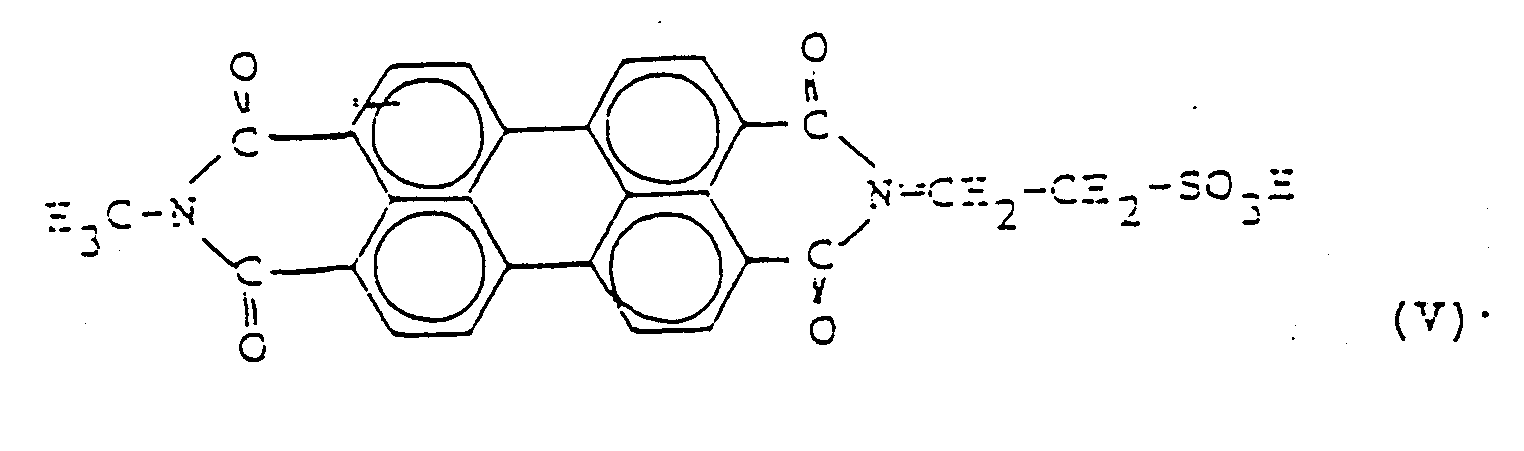
- the perylene compound with the formula V was added as a pigment dispersant in different amounts to different pigments, mixed mechanically, and the pigment preparations obtained in this way were then tested in TSA / NAD lacquer or AM6 lacquer against the respective base pigment.
- the application technology results achieved are listed in the following list:
- reaction product which has precipitated here is filtered off with suction through a glass frit, washed with 60% strength sulfuric acid, washed sulfate-free by treatment with 31% strength hydrochloric acid and dried at 80 ° C. in vacuo.
- reaction product which has precipitated here is filtered off with suction through a glass frit, washed with 50% strength sulfuric acid, washed sulfate-free by treatment with 31% strength hydrochloric acid and dried at 80 ° C. in a vacuum cabinet.
- the dry residue is first introduced and dissolved in 80 g of 100% sulfuric acid at 25 ° C. Then 52 g of 50% sulfuric acid are added to this solution added dropwise, whereby the temperature may rise up to 80 ° C. After the reaction mixture has been cooled to 25 ° C, it is poured into 800 ml of water. The resulting process product is suctioned off and washed sulfate-free by treatment with water. The resulting moist press cake is then introduced into a mixture of 100 ml of ethanol and 5.6 g of hydrochloric acid (31%) and stirred at the boiling point for 1 hour.
Landscapes
- Chemical & Material Sciences (AREA)
- Organic Chemistry (AREA)
- Nitrogen Condensed Heterocyclic Rings (AREA)
- Paints Or Removers (AREA)
- Nitrogen And Oxygen Or Sulfur-Condensed Heterocyclic Ring Systems (AREA)
- Compositions Of Macromolecular Compounds (AREA)
Abstract
Claims (15)
- Composés du pérylène à groupes sulfoniques, de formule générale I ci-dessous :
 A représente un radical bivalent -O-, >NR¹ ou >N-R²-SO₃⁻X⁺ etB le radical bivalent >N-R²-SO₃⁻X⁺,D un atome de chlore ou de brome et, dans la mesure où n est supérieur à 1, éventuellement une combinaison de tels atomes, etn est un nombre de 0 à 8 ;et dans les radicaux A et B ci-dessus :R¹ représente un atome d'hydrogène, un groupe alkyle en C₁-C₃₀ ou un groupe aryle qui peut être non substitué ou substitué une ou plusieurs fois par un ou plusieurs substituants pris parmi les suivants : halogènes, groupes sulfoniques, alkyles en C₁-C₄, alcoxy en C₁-C₄ et phénylazo,R² représente un groupe alkylène en C₁-C₆ à chaîne linéaire ou ramifiée, etX⁺ représente le proton H⁺ ou l'équivalent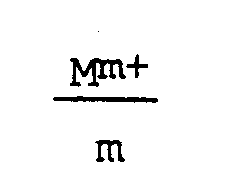
ou bien un ion ammonium N⁺R³R⁴R⁵R⁶, où les substituants R³, R⁴, R⁵ et R⁶ sur l'atome d'azote quaternaire peuvent être chacun, indépendamment les uns des autres, un atome d'hydrogène ou un groupe pris parmi les suivants : alkyles en C₁-C₃₀, alcényles en C₁-C₃₀, cycloalkyles en C₅-C₃₀, phényle non substitué, phényles substitués par des alkyles en C₁-C₈ et (poly)alkylènoxy
ou bien où les substituants R³ et R⁴ peuvent former ensemble et avec l'atome d'azote quaternaire un système cyclique pentagonal à heptagonal saturé pouvant éventuellement comporter encore d'autres hétéroatomes ;
ou encore où les substituants R³, R⁴ et R⁵ peuvent former ensemble et avec l'atome d'azote quaternaire un système cyclique aromatique pentagonal à heptagonal pouvant éventuellement comporter encore d'autres hétéroatomes et sur lequel éventuellement d'autres cycles sont condensés, à l'exception du composé dans lequel n est zéro et A et B représentent chacun le groupe >N-CH²-CH²-SO₃H. - Composés du pérylène à groupes sulfoniques selon la revendication 1, caractérisés en ce que dans la formule générale I qui y est indiquée :A et B sont identiques et représentent chacun le radical bivalent >N-R²-SO₃⁻X⁺, etD et n sont définis comme à la revendication 1,dans les radicaux A et B ci-dessus :R2 représente le groupe éthylène ou propylène, etX⁺ le proton H⁺ ou l'équivalent

ou bien représente un ion ammonium N⁺R³R⁴R⁵R⁶, dans lequel les substituants R³, R⁴, et R⁵ sur l'atome d'azote quaternaire sont chacun, indépendamment les uns des autres, un atome d'hydrogène ou un groupe hydroxyalkyle en C₂-C₃, et R⁶ représente l'un des groupes suivants : alkyles en C₁-C₃₀, alcényles en C₁-C₃₀, hydroxyalkyles en C₂-C₃ et cycloalkyles en C₅-C₆. - Composés du pérylène à groupes sulfoniques selon la revendication 1, caractérisés en ce que, dans la formule générale I qui y est indiquée :A représente un radical bivalent -O- ou >N-R¹ etB le radical bivalent >N-R²-SO₃⁻X⁺, etD et n sont définis comme à la revendication 1,où dans les radicaux A et B ci-dessus :R1 représente un atome d'hydrogène, un groupe alkyle en C₁-C₁₈ ou un groupe phényle, qui peut être non substitué ou substitué par un ou plusieurs substituants pris parmi le chlore, le brome et des groupes sulfoniques, méthyle, éthyle, méthoxy et/ou éthoxy,R² représente un groupe éthylène ou propylène, etX⁺ représente le proton H⁺ ou l'équivalent

; ou bien représente un ion ammonium N⁺R³R⁴R⁵R⁶, dans lequel les substituants R³, R⁴ et R⁵ sur l'atome d'azote quaternaire sont chacun, indépendamment les uns des autres, un atome d'hydrogène ou un groupe hydroxyalkyle en C₂-C₃ et R⁶ est l'un des groupes suivants : alkyles en C₁-C₃₀, alcényles en C₁-C₃₀, hydroxyalkyles en C₂-C₃ et cycloalkyles en C₅-C₆. - Composés du pérylène à groupes sulfoniques selon une ou plusieurs des revendications 1 à 3, caractérisés en ce que, dans la formule générale I qui y est indiquée :A représente un radical bivalent -O-, >NR¹ ou >N-CH₂-CH₂-SO₃⁻X⁺ etB le radical bivalent >N-CH₂-CH₂-SO₃⁻X⁺, etn est le nombre 0,où, dans les radicaux A et B ci-dessus :R¹ représente l'hydrogène ou un alkyle en C₁-C₄ etX⁺ représente le cation H⁺ ou

- Procédé de préparation des composés du pérylène à groupes sulfoniques de formule générale I, selon une ou plusieurs des revendications 1 à 4, caractérisé en ce que l'on fait réagir un sel monoalcalin du mono-anhydride de l'acide pérylène-3,4,9,10-tétracarboxylique,
les monoimides du mono-anhydride de l'acide pérylène-3,4,9,10-tétracarboxylique, ou bien le dianhydride de l'acide pérylène-3,4,9,10-tétracarboxylique,
avec des amines aliphatiques primaires à groupes sulfoniques de formule générale II
H₂N-R²-SO₃⁻X⁺ (II),
dans laquelle R² et X⁺ possèdent les significations indiquées à la revendiction 1, en solution aqueuse, de préférence à un pH alcalin, à des températures comprises entre 50 et 180°C. - Procédé de préparation de composés du pérylène de formule générale I ayant un ou deux groupes sulfoniques, selon une ou plusieurs des revendications 1 à 4, caractérisé en ce que l'on fait réagir
un sel monoalcalin du mono-anhydride de l'acide pérylène-3,4,9,10-tétracarboxylique,
des monoimides du mono-anhydride de l'acide pérylène-3,4,9,10-tétracarboxylique, ou le dianhydride de l'acide pérylène-3,4,9,10-tétracarboxylique,
avec des amines aliphatiques primaires à groupes sulfoniques de formule générale II
H₂N-R²-SO₃⁻X⁺ (II)
dans laquelle R² et X⁺ possèdent les significations indiquées à la revendication 1, dans des solvants organiques inertes à haut point d'ébullition, à des températures supérieures à 100°C, de préférence entre 180 et 230°C, éventuellement en présence de catalyseurs. - Procédé selon la revendication 5 ou 6, caractérisé en ce que l'on transforme en acides sulfoniques libres correspondants de formule I les produits de la réaction formés à l'état de sels sous forme de sulfonates, avantageusement après les avoir isolés de façon intermédiaire, par traitement avec des acides minéraux forts.
- Utilisation des composés du pérylène de formule I à groupes sulfoniques, définis selon une ou plusieurs des revendications 1 à 4, comme dispersants de pigments pour obtenir des préparations pigmentaires.
- Utilisation des préparations pigmentaires selon la revendication 8 dont le pigment de base dérive du groupe des composés du pérylène à la base du dispersant utilisé ou d'un dérivé de ceux-ci.
- Utilisation des préparations pigmentaires selon la revendication 8 dont le pigment de base dérive d'un groupe de composés chimiquement différents du dispersant employé.
- Utilisation des préparations pigmentaires selon une ou plusieurs des revendications 8 à 10 comme colorants pour pigmenter des matières organiques macromoléculaires d'origine naturelle ou synthétique qui sont en masses plastiques ou fondues, solutions de filage, vernis, laques ou peintures ou encres d'impression.
- Utilisation comme colorants de fluorescence de composés du pérylène à groupes sulfoniques de formule I, facilement solubles, définis selon une ou plusieurs des revendications 1 à 4.
- Utilisation des colorants fluorescents selon la revendication 12 pour colorer des milieux aqueux ou hydro-organiques ainsi que des matières organiques liquides ou solides.
- Utilisation de composés du pérylène de formule I, peu solubles, selon une ou plusieurs des revendications 1 à 4, en particulier de leurs sels de cations de métaux divalents ou polyvalents, comme colorants pour pigmenter des matières organiques macromoléculaires d'origine naturelle ou synthétique.
- Composé du pérylène de formule V :
Applications Claiming Priority (3)
| Application Number | Priority Date | Filing Date | Title |
|---|---|---|---|
| DE3926563 | 1989-08-11 | ||
| DE3926563A DE3926563A1 (de) | 1989-08-11 | 1989-08-11 | Sulfonsaeuregruppenhaltige perylenverbindungen, verfahren zu ihrer herstellung und ihre verwendung |
| PCT/EP1990/001312 WO1991002032A1 (fr) | 1989-08-11 | 1990-08-09 | Composes de perylene contenant des groupes d'acide sulfonique, procede de fabrication et application |
Publications (2)
| Publication Number | Publication Date |
|---|---|
| EP0486531A1 EP0486531A1 (fr) | 1992-05-27 |
| EP0486531B1 true EP0486531B1 (fr) | 1994-10-19 |
Family
ID=6386937
Family Applications (1)
| Application Number | Title | Priority Date | Filing Date |
|---|---|---|---|
| EP90911597A Expired - Lifetime EP0486531B1 (fr) | 1989-08-11 | 1990-08-09 | Composes de perylene contenant des groupes d'acide sulfonique, procede de fabrication et application |
Country Status (6)
| Country | Link |
|---|---|
| US (1) | US5466807A (fr) |
| EP (1) | EP0486531B1 (fr) |
| JP (1) | JPH06104665B2 (fr) |
| CA (1) | CA2064881C (fr) |
| DE (2) | DE3926563A1 (fr) |
| WO (1) | WO1991002032A1 (fr) |
Cited By (1)
| Publication number | Priority date | Publication date | Assignee | Title |
|---|---|---|---|---|
| WO2023222712A1 (fr) | 2022-05-19 | 2023-11-23 | Heubach Holding Switzerland Ag (Ltd) | Préparation de pigment à base de pigment violet c.i. 23 |
Families Citing this family (40)
| Publication number | Priority date | Publication date | Assignee | Title |
|---|---|---|---|---|
| DE4007618A1 (de) * | 1990-03-10 | 1991-09-12 | Langhals Heinz | Perylenfarbstoffe als dokumentenechte toner fuer die elektrophotographie - verwendung in laserdruckern und xerox-kopiergeraeten |
| JP3362865B2 (ja) * | 1991-03-21 | 2003-01-07 | クラリアント・ゲゼルシヤフト・ミト・ベシユレンクテル・ハフツング | ペリレン化合物の分子内塩、その製造方法およびその用途 |
| ES2252880T3 (es) | 1998-02-21 | 2006-05-16 | Clariant Produkte (Deutschland) Gmbh | Compuestos de perileno y formulaciones pigmentarias. |
| DE19831097A1 (de) | 1998-07-10 | 2000-01-13 | Clariant Gmbh | Verfahren zur Herstellung von Chinacridonpigmenten |
| US6039769A (en) * | 1998-12-15 | 2000-03-21 | Bayer Corporation | Process for the preparation of highly chromatic perylene pigments |
| US6015458A (en) * | 1998-12-15 | 2000-01-18 | Bayer Corporation | Process for the preparation of highly chromatic perylene pigments |
| DE19902907A1 (de) | 1999-01-26 | 2000-07-27 | Clariant Gmbh | Pigmentzubereitungen mit mehreren Perylenverbindungen |
| DE19906494A1 (de) | 1999-02-17 | 2000-08-24 | Clariant Gmbh | Pigmentzubereitungen auf Basis von Diketopyrrolopyrrolpigmenten mit basischen Perylendispergatoren |
| US6403797B1 (en) | 2000-12-22 | 2002-06-11 | Bayer Corporation | Process for the preparation of perylene pigments |
| US6986811B2 (en) * | 2003-01-31 | 2006-01-17 | Basf Aktiengesellschaft | Perylene derivatives and their application as dispersants |
| DE10307557A1 (de) * | 2003-02-21 | 2004-09-02 | Clariant Gmbh | Verfahren zur Herstellung von transparenten Pigmentzubereitungen auf Basis von Perylen-3,4,9,10-tetracarbonsäurediimid |
| GB0312067D0 (en) * | 2003-05-24 | 2003-07-02 | Avecia Ltd | Inks |
| JP4581627B2 (ja) * | 2003-10-31 | 2010-11-17 | 三菱化学株式会社 | ペリレン系色素、異方性色素膜形成用組成物、異方性色素膜および偏光素子 |
| WO2005089094A2 (fr) * | 2003-11-21 | 2005-09-29 | The Board Of Regents Of The University And Community College System Of Nevada | Materiaux et procedes de preparation de solides a ordre anisotrope |
| DE102005050512A1 (de) * | 2005-10-21 | 2007-04-26 | Clariant Produkte (Deutschland) Gmbh | Pigmentzubereitungen auf Basis von Diketopyrrolopyrrolen |
| KR20080106276A (ko) * | 2006-03-01 | 2008-12-04 | 바스프 에스이 | 액체용 마커로서의 릴렌의 용도 |
| JP5306681B2 (ja) * | 2007-03-30 | 2013-10-02 | 富士フイルム株式会社 | 重合性化合物、重合体、インク組成物、印刷物及びインクジェット記録方法 |
| CN101730724A (zh) * | 2007-04-24 | 2010-06-09 | 太阳化学公司 | 用于非水性油墨和涂料的颜料 |
| TWI431071B (zh) * | 2007-10-17 | 2014-03-21 | Clariant Finance Bvi Ltd | 用於彩色濾光片中的二酮基吡咯并吡咯顏料組成物 |
| DE102007049682A1 (de) | 2007-10-17 | 2009-04-23 | Clariant International Ltd. | Diketopyrrolopyrrol-Pigmentzusammensetzung zur Verwendung in Colorfiltern |
| WO2012094409A2 (fr) | 2011-01-05 | 2012-07-12 | Nitto Denko Corporation | Chromophores au diester de pérylène de conversion de longueur d'onde et films luminescents |
| CN102766353A (zh) * | 2011-05-04 | 2012-11-07 | 丽王化工(南通)有限公司 | 一种液晶光阻用的黑色颜料衍生物制备方法 |
| JP5468119B2 (ja) | 2011-09-26 | 2014-04-09 | 日東電工株式会社 | 増強された太陽光集光効率のための高蛍光性かつ光安定性の発色団 |
| TW201317327A (zh) | 2011-10-05 | 2013-05-01 | Nitto Denko Corp | 波長轉換膜、其形成方法以及其使用方法 |
| JP6078242B2 (ja) * | 2012-07-03 | 2017-02-08 | サカタインクス株式会社 | カラーフィルター用赤色着色組成物 |
| AU2015259291A1 (en) | 2014-05-12 | 2016-11-24 | Capacitor Sciences Incorporated | Energy storage device and method of production thereof |
| US20170301477A1 (en) | 2016-04-04 | 2017-10-19 | Capacitor Sciences Incorporated | Electro-polarizable compound and capacitor |
| US10347423B2 (en) | 2014-05-12 | 2019-07-09 | Capacitor Sciences Incorporated | Solid multilayer structure as semiproduct for meta-capacitor |
| US10340082B2 (en) | 2015-05-12 | 2019-07-02 | Capacitor Sciences Incorporated | Capacitor and method of production thereof |
| CN107592939B (zh) | 2014-11-04 | 2020-05-05 | 电容器科学股份公司 | 储能器件及其生产方法 |
| RU2017128756A (ru) | 2015-02-26 | 2019-03-27 | Кэпэситор Сайенсиз Инкорпорейтед | Самовосстанавливающийся конденсатор и способы его получения |
| US9932358B2 (en) | 2015-05-21 | 2018-04-03 | Capacitor Science Incorporated | Energy storage molecular material, crystal dielectric layer and capacitor |
| US9941051B2 (en) | 2015-06-26 | 2018-04-10 | Capactor Sciences Incorporated | Coiled capacitor |
| US10026553B2 (en) | 2015-10-21 | 2018-07-17 | Capacitor Sciences Incorporated | Organic compound, crystal dielectric layer and capacitor |
| US10305295B2 (en) | 2016-02-12 | 2019-05-28 | Capacitor Sciences Incorporated | Energy storage cell, capacitive energy storage module, and capacitive energy storage system |
| US20170233528A1 (en) * | 2016-02-12 | 2017-08-17 | Capacitor Sciences Incorporated | Sharp polymer and capacitor |
| US10153087B2 (en) | 2016-04-04 | 2018-12-11 | Capacitor Sciences Incorporated | Electro-polarizable compound and capacitor |
| US9978517B2 (en) | 2016-04-04 | 2018-05-22 | Capacitor Sciences Incorporated | Electro-polarizable compound and capacitor |
| US10395841B2 (en) | 2016-12-02 | 2019-08-27 | Capacitor Sciences Incorporated | Multilayered electrode and film energy storage device |
| JP2024118614A (ja) * | 2023-02-21 | 2024-09-02 | 大日精化工業株式会社 | 顔料分散剤、顔料分散液、及びコーティング剤 |
Family Cites Families (10)
| Publication number | Priority date | Publication date | Assignee | Title |
|---|---|---|---|---|
| FR1570579A (fr) * | 1968-03-29 | 1969-06-13 | ||
| US3544303A (en) * | 1968-04-03 | 1970-12-01 | Stanford Research Inst | Aromatic carboximides as herbicides |
| DE3017185A1 (de) * | 1980-05-05 | 1981-11-19 | Hoechst Ag, 6000 Frankfurt | Perylen-3,4,9,10-tetracarbonsaeuremonoanhydridmonoimide, verfahren zur herstellung solcher verbindungen und ihre verwendung |
| DE3018006A1 (de) * | 1980-05-10 | 1981-11-12 | Hoechst Ag, 6000 Frankfurt | Verfahren zur herstellung von pigmenten der perylen-3,4,9,10-tetracarbonsaeurediimidreihe und ihre verwendung |
| US4607097A (en) * | 1983-06-03 | 1986-08-19 | Alps Electric Co., Ltd. | Dichromatic coloring matter for a colored liquid crystal display element |
| US4667036A (en) * | 1983-08-27 | 1987-05-19 | Basf Aktiengesellschaft | Concentration of light over a particular area, and novel perylene-3,4,9,10-tetracarboxylic acid diimides |
| DE3513358A1 (de) * | 1985-04-15 | 1986-10-16 | Hoechst Ag, 6230 Frankfurt | Verfahren zur herstellung von perylen-3,4,9,10-tetracarbonsaeurearylimiden |
| DE3631678A1 (de) * | 1986-09-18 | 1988-03-24 | Basf Ag | Tetrachlorperylen-3,4,9,10-tetracarbonsaeurediimidpigment und dessen verwendung |
| DE3703513A1 (de) * | 1987-02-05 | 1988-08-18 | Langhals Heinz | Wasserloesliche perylen-fluoreszenzfarbstoffe |
| DE3836536A1 (de) * | 1988-10-27 | 1990-05-10 | Hoechst Ag | Mischkristallpigmente auf basis halogenierter perylentetracarbonsaeurediimide |
-
1989
- 1989-08-11 DE DE3926563A patent/DE3926563A1/de not_active Withdrawn
-
1990
- 1990-08-09 WO PCT/EP1990/001312 patent/WO1991002032A1/fr not_active Ceased
- 1990-08-09 DE DE59007520T patent/DE59007520D1/de not_active Expired - Fee Related
- 1990-08-09 CA CA002064881A patent/CA2064881C/fr not_active Expired - Lifetime
- 1990-08-09 JP JP2510865A patent/JPH06104665B2/ja not_active Expired - Fee Related
- 1990-08-09 EP EP90911597A patent/EP0486531B1/fr not_active Expired - Lifetime
- 1990-08-09 US US07/829,045 patent/US5466807A/en not_active Expired - Lifetime
Cited By (1)
| Publication number | Priority date | Publication date | Assignee | Title |
|---|---|---|---|---|
| WO2023222712A1 (fr) | 2022-05-19 | 2023-11-23 | Heubach Holding Switzerland Ag (Ltd) | Préparation de pigment à base de pigment violet c.i. 23 |
Also Published As
| Publication number | Publication date |
|---|---|
| US5466807A (en) | 1995-11-14 |
| WO1991002032A1 (fr) | 1991-02-21 |
| CA2064881C (fr) | 1998-01-06 |
| DE59007520D1 (de) | 1994-11-24 |
| CA2064881A1 (fr) | 1991-02-12 |
| JPH04503518A (ja) | 1992-06-25 |
| DE3926563A1 (de) | 1991-02-14 |
| JPH06104665B2 (ja) | 1994-12-21 |
| EP0486531A1 (fr) | 1992-05-27 |
Similar Documents
| Publication | Publication Date | Title |
|---|---|---|
| EP0486531B1 (fr) | Composes de perylene contenant des groupes d'acide sulfonique, procede de fabrication et application | |
| EP0504872B1 (fr) | Sels internes de pérylènes, méthode pour leur préparation et leur utilisation | |
| EP0485441B1 (fr) | Nouvelles preparations pigmentaires a base de composes de perylene | |
| EP0636666B1 (fr) | Préparations pigmentaires contenant des dérivés de pérylène en tant qu'agent dispersant | |
| EP0864613B1 (fr) | Composition pigmentaire et son procédé de fabrication | |
| DE69228280T2 (de) | Oxidationsverfahren zur Herstellung von Chinacridonpigmenten | |
| EP0321919B1 (fr) | Pigments et leur utilisation | |
| EP0937724B1 (fr) | Composés de pérylène et leur utilisation comme agents dispersants de pigments | |
| EP0504922B1 (fr) | Nouvelle préparation de pigment à base des composés dioxaziniques | |
| DE69813541T2 (de) | Thiazin-indigo pigmente, diese enthaltende feste lösungen und ihre herstellung | |
| DE69416219T2 (de) | Herstellung von pigmentärem 2,9-Dichlorchinacridon | |
| EP1024177B1 (fr) | Préparations pigmentaires de plusieurs composés de perylène | |
| EP0273866B1 (fr) | Compositions de matières à base du pigment rouge C.I. 177 | |
| EP0360182B1 (fr) | Préparations pigmentaires | |
| EP0489421B1 (fr) | Compositions pigmentaires | |
| EP0366062B1 (fr) | Cristaux mixtes de pigments à base de diimides halogenées de l'acide pérylènetétracarbonique | |
| EP0632108A1 (fr) | Préparations pigmentaires avec des dérivés d'anthraquinone comme dispersants | |
| EP0570750A1 (fr) | Phtalocyanine substituées, exemptes de métal, dans la forme X, procédé pour leur fabrication et leur utilisation comme pigments | |
| EP0360184A2 (fr) | Procédé de fabrication de préparations pigmentaires de la série des anthanthrones | |
| EP0376158A1 (fr) | Solution solide cristalline de pigments du type anthanthrone, leurs procédés de préparation et leur application | |
| DE2012505B2 (de) | Kupfer- und nickelphthalocyanin- mischkondensat-pigmente | |
| DE1122192B (de) | Verfahren zur Herstellung von 4,9-Dinitrochin-(3,2-a)-acridin-13, 14(5,8)-dion | |
| EP1706459B1 (fr) | Pigments de triphene dioxazine | |
| DE1278643B (de) | Verfahren zur Herstellung von Pigmentfarbstoffen | |
| DE3931052A1 (de) | Pigmentzubereitungen |
Legal Events
| Date | Code | Title | Description |
|---|---|---|---|
| PUAI | Public reference made under article 153(3) epc to a published international application that has entered the european phase |
Free format text: ORIGINAL CODE: 0009012 |
|
| 17P | Request for examination filed |
Effective date: 19920110 |
|
| AK | Designated contracting states |
Kind code of ref document: A1 Designated state(s): CH DE FR GB IT LI |
|
| 17Q | First examination report despatched |
Effective date: 19931217 |
|
| GRAA | (expected) grant |
Free format text: ORIGINAL CODE: 0009210 |
|
| AK | Designated contracting states |
Kind code of ref document: B1 Designated state(s): CH DE FR GB IT LI |
|
| REF | Corresponds to: |
Ref document number: 59007520 Country of ref document: DE Date of ref document: 19941124 |
|
| ITF | It: translation for a ep patent filed | ||
| GBT | Gb: translation of ep patent filed (gb section 77(6)(a)/1977) |
Effective date: 19950106 |
|
| ET | Fr: translation filed | ||
| PLBE | No opposition filed within time limit |
Free format text: ORIGINAL CODE: 0009261 |
|
| STAA | Information on the status of an ep patent application or granted ep patent |
Free format text: STATUS: NO OPPOSITION FILED WITHIN TIME LIMIT |
|
| 26N | No opposition filed | ||
| REG | Reference to a national code |
Ref country code: CH Ref legal event code: PUE Owner name: HOECHST AKTIENGESELLSCHAFT TRANSFER- CLARIANT GMBH |
|
| REG | Reference to a national code |
Ref country code: FR Ref legal event code: TP |
|
| REG | Reference to a national code |
Ref country code: GB Ref legal event code: 732E |
|
| REG | Reference to a national code |
Ref country code: GB Ref legal event code: IF02 |
|
| REG | Reference to a national code |
Ref country code: CH Ref legal event code: PFA Owner name: CLARIANT PRODUKTE (DEUTSCHLAND) GMBH Free format text: CLARIANT GMBH#BRUENINGSTRASSE 50#65929 FRANKFURT AM MAIN (DE) -TRANSFER TO- CLARIANT PRODUKTE (DEUTSCHLAND) GMBH#BRUENINGSTRASSE 50#65929 FRANKFURT AM MAIN (DE) |
|
| REG | Reference to a national code |
Ref country code: FR Ref legal event code: CD |
|
| PGFP | Annual fee paid to national office [announced via postgrant information from national office to epo] |
Ref country code: CH Payment date: 20080623 Year of fee payment: 19 |
|
| PGFP | Annual fee paid to national office [announced via postgrant information from national office to epo] |
Ref country code: IT Payment date: 20080625 Year of fee payment: 19 |
|
| PGFP | Annual fee paid to national office [announced via postgrant information from national office to epo] |
Ref country code: DE Payment date: 20080620 Year of fee payment: 19 |
|
| PGFP | Annual fee paid to national office [announced via postgrant information from national office to epo] |
Ref country code: FR Payment date: 20080612 Year of fee payment: 19 |
|
| PGFP | Annual fee paid to national office [announced via postgrant information from national office to epo] |
Ref country code: GB Payment date: 20080730 Year of fee payment: 19 |
|
| REG | Reference to a national code |
Ref country code: CH Ref legal event code: PL |
|
| GBPC | Gb: european patent ceased through non-payment of renewal fee |
Effective date: 20090809 |
|
| PG25 | Lapsed in a contracting state [announced via postgrant information from national office to epo] |
Ref country code: LI Free format text: LAPSE BECAUSE OF NON-PAYMENT OF DUE FEES Effective date: 20090831 Ref country code: CH Free format text: LAPSE BECAUSE OF NON-PAYMENT OF DUE FEES Effective date: 20090831 |
|
| PG25 | Lapsed in a contracting state [announced via postgrant information from national office to epo] |
Ref country code: DE Free format text: LAPSE BECAUSE OF NON-PAYMENT OF DUE FEES Effective date: 20100302 |
|
| REG | Reference to a national code |
Ref country code: FR Ref legal event code: ST Effective date: 20100730 |
|
| PG25 | Lapsed in a contracting state [announced via postgrant information from national office to epo] |
Ref country code: FR Free format text: LAPSE BECAUSE OF NON-PAYMENT OF DUE FEES Effective date: 20080901 |
|
| PG25 | Lapsed in a contracting state [announced via postgrant information from national office to epo] |
Ref country code: GB Free format text: LAPSE BECAUSE OF NON-PAYMENT OF DUE FEES Effective date: 20090809 |
|
| PG25 | Lapsed in a contracting state [announced via postgrant information from national office to epo] |
Ref country code: IT Free format text: LAPSE BECAUSE OF NON-PAYMENT OF DUE FEES Effective date: 20090809 |