EP0487793B1 - Procédé d'explosion pour la préparation de pâte à papier - Google Patents
Procédé d'explosion pour la préparation de pâte à papier Download PDFInfo
- Publication number
- EP0487793B1 EP0487793B1 EP19900312833 EP90312833A EP0487793B1 EP 0487793 B1 EP0487793 B1 EP 0487793B1 EP 19900312833 EP19900312833 EP 19900312833 EP 90312833 A EP90312833 A EP 90312833A EP 0487793 B1 EP0487793 B1 EP 0487793B1
- Authority
- EP
- European Patent Office
- Prior art keywords
- cooking
- process according
- chips
- steam
- pressure
- Prior art date
- Legal status (The legal status is an assumption and is not a legal conclusion. Google has not performed a legal analysis and makes no representation as to the accuracy of the status listed.)
- Expired - Lifetime
Links
- 238000004880 explosion Methods 0.000 title description 20
- 238000004519 manufacturing process Methods 0.000 title description 6
- 238000010411 cooking Methods 0.000 claims description 52
- IJGRMHOSHXDMSA-UHFFFAOYSA-N Atomic nitrogen Chemical compound N#N IJGRMHOSHXDMSA-UHFFFAOYSA-N 0.000 claims description 30
- 238000000034 method Methods 0.000 claims description 30
- 238000007670 refining Methods 0.000 claims description 22
- GEHJYWRUCIMESM-UHFFFAOYSA-L sodium sulfite Chemical compound [Na+].[Na+].[O-]S([O-])=O GEHJYWRUCIMESM-UHFFFAOYSA-L 0.000 claims description 20
- 239000002023 wood Substances 0.000 claims description 17
- 229910052757 nitrogen Inorganic materials 0.000 claims description 15
- 239000012634 fragment Substances 0.000 claims description 11
- 235000010265 sodium sulphite Nutrition 0.000 claims description 11
- 239000003963 antioxidant agent Substances 0.000 claims description 10
- 230000006837 decompression Effects 0.000 claims description 10
- 239000002360 explosive Substances 0.000 claims description 10
- 230000003078 antioxidant effect Effects 0.000 claims description 9
- 229920006395 saturated elastomer Polymers 0.000 claims description 8
- 239000011261 inert gas Substances 0.000 claims description 5
- CDBYLPFSWZWCQE-UHFFFAOYSA-L Sodium Carbonate Chemical compound [Na+].[Na+].[O-]C([O-])=O CDBYLPFSWZWCQE-UHFFFAOYSA-L 0.000 claims description 4
- UIIMBOGNXHQVGW-UHFFFAOYSA-M Sodium bicarbonate Chemical compound [Na+].OC([O-])=O UIIMBOGNXHQVGW-UHFFFAOYSA-M 0.000 claims description 4
- 229910000030 sodium bicarbonate Inorganic materials 0.000 claims description 2
- 235000017557 sodium bicarbonate Nutrition 0.000 claims description 2
- 229910000029 sodium carbonate Inorganic materials 0.000 claims description 2
- 238000005470 impregnation Methods 0.000 description 18
- 239000003795 chemical substances by application Substances 0.000 description 12
- 238000004537 pulping Methods 0.000 description 10
- 239000000126 substance Substances 0.000 description 10
- 235000006708 antioxidants Nutrition 0.000 description 9
- 239000000835 fiber Substances 0.000 description 9
- 230000008961 swelling Effects 0.000 description 9
- 230000003647 oxidation Effects 0.000 description 7
- 238000007254 oxidation reaction Methods 0.000 description 7
- 239000011121 hardwood Substances 0.000 description 6
- 230000015556 catabolic process Effects 0.000 description 5
- 238000006731 degradation reaction Methods 0.000 description 5
- 241000183024 Populus tremula Species 0.000 description 4
- 238000004061 bleaching Methods 0.000 description 4
- 239000012808 vapor phase Substances 0.000 description 4
- QTBSBXVTEAMEQO-UHFFFAOYSA-N Acetic acid Chemical compound CC(O)=O QTBSBXVTEAMEQO-UHFFFAOYSA-N 0.000 description 3
- 102100031260 Acyl-coenzyme A thioesterase THEM4 Human genes 0.000 description 3
- 101000638510 Homo sapiens Acyl-coenzyme A thioesterase THEM4 Proteins 0.000 description 3
- KWYUFKZDYYNOTN-UHFFFAOYSA-M Potassium hydroxide Chemical compound [OH-].[K+] KWYUFKZDYYNOTN-UHFFFAOYSA-M 0.000 description 3
- 239000008139 complexing agent Substances 0.000 description 3
- 238000011010 flushing procedure Methods 0.000 description 3
- 230000003301 hydrolyzing effect Effects 0.000 description 3
- 230000035515 penetration Effects 0.000 description 3
- 238000002360 preparation method Methods 0.000 description 3
- CURLTUGMZLYLDI-UHFFFAOYSA-N Carbon dioxide Chemical compound O=C=O CURLTUGMZLYLDI-UHFFFAOYSA-N 0.000 description 2
- KCXVZYZYPLLWCC-UHFFFAOYSA-N EDTA Chemical compound OC(=O)CN(CC(O)=O)CCN(CC(O)=O)CC(O)=O KCXVZYZYPLLWCC-UHFFFAOYSA-N 0.000 description 2
- MHAJPDPJQMAIIY-UHFFFAOYSA-N Hydrogen peroxide Chemical compound OO MHAJPDPJQMAIIY-UHFFFAOYSA-N 0.000 description 2
- XEEYBQQBJWHFJM-UHFFFAOYSA-N Iron Chemical compound [Fe] XEEYBQQBJWHFJM-UHFFFAOYSA-N 0.000 description 2
- 240000009002 Picea mariana Species 0.000 description 2
- 235000017997 Picea mariana var. mariana Nutrition 0.000 description 2
- 235000018000 Picea mariana var. semiprostrata Nutrition 0.000 description 2
- FAPWRFPIFSIZLT-UHFFFAOYSA-M Sodium chloride Chemical compound [Na+].[Cl-] FAPWRFPIFSIZLT-UHFFFAOYSA-M 0.000 description 2
- 239000002253 acid Substances 0.000 description 2
- 150000007513 acids Chemical class 0.000 description 2
- 238000013459 approach Methods 0.000 description 2
- 239000007795 chemical reaction product Substances 0.000 description 2
- 230000003247 decreasing effect Effects 0.000 description 2
- 229960001484 edetic acid Drugs 0.000 description 2
- 239000001257 hydrogen Substances 0.000 description 2
- 229910052739 hydrogen Inorganic materials 0.000 description 2
- BDAGIHXWWSANSR-UHFFFAOYSA-N methanoic acid Natural products OC=O BDAGIHXWWSANSR-UHFFFAOYSA-N 0.000 description 2
- 239000000203 mixture Substances 0.000 description 2
- JHJLBTNAGRQEKS-UHFFFAOYSA-M sodium bromide Chemical compound [Na+].[Br-] JHJLBTNAGRQEKS-UHFFFAOYSA-M 0.000 description 2
- HEMHJVSKTPXQMS-UHFFFAOYSA-M sodium hydroxide Inorganic materials [OH-].[Na+] HEMHJVSKTPXQMS-UHFFFAOYSA-M 0.000 description 2
- 239000011122 softwood Substances 0.000 description 2
- 239000008399 tap water Substances 0.000 description 2
- 235000020679 tap water Nutrition 0.000 description 2
- 238000012360 testing method Methods 0.000 description 2
- 238000005406 washing Methods 0.000 description 2
- XLYOFNOQVPJJNP-UHFFFAOYSA-N water Substances O XLYOFNOQVPJJNP-UHFFFAOYSA-N 0.000 description 2
- JIAARYAFYJHUJI-UHFFFAOYSA-L zinc dichloride Chemical compound [Cl-].[Cl-].[Zn+2] JIAARYAFYJHUJI-UHFFFAOYSA-L 0.000 description 2
- OSWFIVFLDKOXQC-UHFFFAOYSA-N 4-(3-methoxyphenyl)aniline Chemical compound COC1=CC=CC(C=2C=CC(N)=CC=2)=C1 OSWFIVFLDKOXQC-UHFFFAOYSA-N 0.000 description 1
- 241000208140 Acer Species 0.000 description 1
- 241000609240 Ambelania acida Species 0.000 description 1
- VHUUQVKOLVNVRT-UHFFFAOYSA-N Ammonium hydroxide Chemical compound [NH4+].[OH-] VHUUQVKOLVNVRT-UHFFFAOYSA-N 0.000 description 1
- 101100457461 Caenorhabditis elegans mnm-2 gene Proteins 0.000 description 1
- PQUCIEFHOVEZAU-UHFFFAOYSA-N Diammonium sulfite Chemical compound [NH4+].[NH4+].[O-]S([O-])=O PQUCIEFHOVEZAU-UHFFFAOYSA-N 0.000 description 1
- 235000014466 Douglas bleu Nutrition 0.000 description 1
- 244000166124 Eucalyptus globulus Species 0.000 description 1
- 229920002488 Hemicellulose Polymers 0.000 description 1
- DGAQECJNVWCQMB-PUAWFVPOSA-M Ilexoside XXIX Chemical compound C[C@@H]1CC[C@@]2(CC[C@@]3(C(=CC[C@H]4[C@]3(CC[C@@H]5[C@@]4(CC[C@@H](C5(C)C)OS(=O)(=O)[O-])C)C)[C@@H]2[C@]1(C)O)C)C(=O)O[C@H]6[C@@H]([C@H]([C@@H]([C@H](O6)CO)O)O)O.[Na+] DGAQECJNVWCQMB-PUAWFVPOSA-M 0.000 description 1
- 241000218652 Larix Species 0.000 description 1
- 235000005590 Larix decidua Nutrition 0.000 description 1
- 235000008565 Pinus banksiana Nutrition 0.000 description 1
- 241000218680 Pinus banksiana Species 0.000 description 1
- 235000011334 Pinus elliottii Nutrition 0.000 description 1
- 241000142776 Pinus elliottii Species 0.000 description 1
- 239000004285 Potassium sulphite Substances 0.000 description 1
- 240000001416 Pseudotsuga menziesii Species 0.000 description 1
- 235000005386 Pseudotsuga menziesii var menziesii Nutrition 0.000 description 1
- 238000005742 Schweitzer synthesis reaction Methods 0.000 description 1
- LSNNMFCWUKXFEE-UHFFFAOYSA-N Sulfurous acid Chemical compound OS(O)=O LSNNMFCWUKXFEE-UHFFFAOYSA-N 0.000 description 1
- 241000209140 Triticum Species 0.000 description 1
- 235000021307 Triticum Nutrition 0.000 description 1
- FMQNKVGDYIXYDI-UHFFFAOYSA-N [Na].C=C.C=C Chemical group [Na].C=C.C=C FMQNKVGDYIXYDI-UHFFFAOYSA-N 0.000 description 1
- 238000005903 acid hydrolysis reaction Methods 0.000 description 1
- 239000000908 ammonium hydroxide Substances 0.000 description 1
- QVGXLLKOCUKJST-UHFFFAOYSA-N atomic oxygen Chemical compound [O] QVGXLLKOCUKJST-UHFFFAOYSA-N 0.000 description 1
- 239000010905 bagasse Substances 0.000 description 1
- ATSGLBOJGVTHHC-UHFFFAOYSA-N bis(ethane-1,2-diamine)copper(2+) Chemical compound [Cu+2].NCCN.NCCN ATSGLBOJGVTHHC-UHFFFAOYSA-N 0.000 description 1
- 239000000872 buffer Substances 0.000 description 1
- JLCRXCPXQLBSEM-UHFFFAOYSA-N calcium diisocyanate Chemical compound [Ca++].[N-]=C=O.[N-]=C=O JLCRXCPXQLBSEM-UHFFFAOYSA-N 0.000 description 1
- 239000001569 carbon dioxide Substances 0.000 description 1
- 229910002092 carbon dioxide Inorganic materials 0.000 description 1
- 230000003197 catalytic effect Effects 0.000 description 1
- 239000001913 cellulose Substances 0.000 description 1
- 229920002678 cellulose Polymers 0.000 description 1
- 239000008367 deionised water Substances 0.000 description 1
- 229910021641 deionized water Inorganic materials 0.000 description 1
- 238000000151 deposition Methods 0.000 description 1
- 230000006866 deterioration Effects 0.000 description 1
- KDSGPAZGWJOGTA-UHFFFAOYSA-M dibenzyl(dimethyl)azanium;hydroxide Chemical compound [OH-].C=1C=CC=CC=1C[N+](C)(C)CC1=CC=CC=C1 KDSGPAZGWJOGTA-UHFFFAOYSA-M 0.000 description 1
- 238000004090 dissolution Methods 0.000 description 1
- 238000009826 distribution Methods 0.000 description 1
- 238000005265 energy consumption Methods 0.000 description 1
- 238000005516 engineering process Methods 0.000 description 1
- 238000011156 evaluation Methods 0.000 description 1
- 238000002474 experimental method Methods 0.000 description 1
- 235000019253 formic acid Nutrition 0.000 description 1
- 239000007789 gas Substances 0.000 description 1
- 230000009477 glass transition Effects 0.000 description 1
- 230000007062 hydrolysis Effects 0.000 description 1
- 238000006460 hydrolysis reaction Methods 0.000 description 1
- 125000002887 hydroxy group Chemical group [H]O* 0.000 description 1
- 230000000977 initiatory effect Effects 0.000 description 1
- 229910052742 iron Inorganic materials 0.000 description 1
- 229920005610 lignin Polymers 0.000 description 1
- 239000007788 liquid Substances 0.000 description 1
- 239000007791 liquid phase Substances 0.000 description 1
- JESHZQPNPCJVNG-UHFFFAOYSA-L magnesium;sulfite Chemical compound [Mg+2].[O-]S([O-])=O JESHZQPNPCJVNG-UHFFFAOYSA-L 0.000 description 1
- 229910052751 metal Inorganic materials 0.000 description 1
- 239000002184 metal Substances 0.000 description 1
- 150000002739 metals Chemical class 0.000 description 1
- 238000002156 mixing Methods 0.000 description 1
- 238000010525 oxidative degradation reaction Methods 0.000 description 1
- 230000001590 oxidative effect Effects 0.000 description 1
- 239000001301 oxygen Substances 0.000 description 1
- 229910052760 oxygen Inorganic materials 0.000 description 1
- 230000000149 penetrating effect Effects 0.000 description 1
- 150000002978 peroxides Chemical class 0.000 description 1
- 230000000704 physical effect Effects 0.000 description 1
- 239000004033 plastic Substances 0.000 description 1
- 238000006116 polymerization reaction Methods 0.000 description 1
- BHZRJJOHZFYXTO-UHFFFAOYSA-L potassium sulfite Chemical compound [K+].[K+].[O-]S([O-])=O BHZRJJOHZFYXTO-UHFFFAOYSA-L 0.000 description 1
- 235000019252 potassium sulphite Nutrition 0.000 description 1
- 239000000047 product Substances 0.000 description 1
- 238000011084 recovery Methods 0.000 description 1
- 238000011160 research Methods 0.000 description 1
- 238000012216 screening Methods 0.000 description 1
- 238000004088 simulation Methods 0.000 description 1
- 239000011780 sodium chloride Substances 0.000 description 1
- VYKVQJFOZDGJLN-UHFFFAOYSA-M sodium hydrogen sulfite sulfurous acid Chemical compound [Na+].OS(O)=O.OS([O-])=O VYKVQJFOZDGJLN-UHFFFAOYSA-M 0.000 description 1
- 235000019832 sodium triphosphate Nutrition 0.000 description 1
- 239000007858 starting material Substances 0.000 description 1
- 239000010902 straw Substances 0.000 description 1
- 239000000725 suspension Substances 0.000 description 1
- 229940073455 tetraethylammonium hydroxide Drugs 0.000 description 1
- LRGJRHZIDJQFCL-UHFFFAOYSA-M tetraethylazanium;hydroxide Chemical compound [OH-].CC[N+](CC)(CC)CC LRGJRHZIDJQFCL-UHFFFAOYSA-M 0.000 description 1
- 230000000930 thermomechanical effect Effects 0.000 description 1
- 238000012546 transfer Methods 0.000 description 1
- 239000011592 zinc chloride Substances 0.000 description 1
- 235000005074 zinc chloride Nutrition 0.000 description 1
Images


Classifications
-
- D—TEXTILES; PAPER
- D21—PAPER-MAKING; PRODUCTION OF CELLULOSE
- D21C—PRODUCTION OF CELLULOSE BY REMOVING NON-CELLULOSE SUBSTANCES FROM CELLULOSE-CONTAINING MATERIALS; REGENERATION OF PULPING LIQUORS; APPARATUS THEREFOR
- D21C3/00—Pulping cellulose-containing materials
- D21C3/22—Other features of pulping processes
-
- D—TEXTILES; PAPER
- D21—PAPER-MAKING; PRODUCTION OF CELLULOSE
- D21B—FIBROUS RAW MATERIALS OR THEIR MECHANICAL TREATMENT
- D21B1/00—Fibrous raw materials or their mechanical treatment
- D21B1/04—Fibrous raw materials or their mechanical treatment by dividing raw materials into small particles, e.g. fibres
- D21B1/12—Fibrous raw materials or their mechanical treatment by dividing raw materials into small particles, e.g. fibres by wet methods, by the use of steam
- D21B1/30—Defibrating by other means
- D21B1/36—Explosive disintegration by sudden pressure reduction
-
- D—TEXTILES; PAPER
- D21—PAPER-MAKING; PRODUCTION OF CELLULOSE
- D21C—PRODUCTION OF CELLULOSE BY REMOVING NON-CELLULOSE SUBSTANCES FROM CELLULOSE-CONTAINING MATERIALS; REGENERATION OF PULPING LIQUORS; APPARATUS THEREFOR
- D21C3/00—Pulping cellulose-containing materials
- D21C3/02—Pulping cellulose-containing materials with inorganic bases or alkaline reacting compounds, e.g. sulfate processes
- D21C3/022—Pulping cellulose-containing materials with inorganic bases or alkaline reacting compounds, e.g. sulfate processes in presence of S-containing compounds
Definitions
- This invention relates to processes for the preparation of pulp for paper manufacture. More particularly, it relates to such processes which involve explosive decompression of wood fragments in the preparation of pulp.
- S-pulping Steam Explosion Pulping Process
- impregnation and cooking conditions were aimed at minimizing yield and brightness loss, optimizing resulting paper properties and decreasing specific refining energy.
- the steam explosion pulping process consists of the chemical impregnation of chips, short duration saturated steam cooking at temperatures varying from about 180°C to 210°C, pressure release, refining and bleaching (if necessary).
- the major problems accompanying previous processes using explosive decompression are believed to have been the degradation due to the oxidation of wood and acid hydrolysis leading to loss in brightness, deterioration of fibre and paper properties and loss of yield.
- the approach adopted by this invention is therefore to attempt to curtail hydrolytic and oxidative wood degradation and thereby to protect against loss of yield, brightness and fibre strength.
- the loss of fibre strength will be particularly great if the degree of polymerization of the cellulose falls below the critical value which is about 500-600. Hydrolytic degradation will also cause yield loss due mainly to degradation of hemi-cellulose.
- the present invention provides a process in which additional energy saving and improved paper properties are obtained by pressurizing the reactor with inert gas before explosive decompression.
- the process of this invention achieves a positive improvement in the strength of the paper that will be produced from the fibres by increasing the number of hydrophilic groups on the fibre surfaces thereby adding to the potential sites for hydrogen bonding.
- the starting material will normally be chips in which the fibres are of a length suitable for paper making. Shavings could also be used but sawdust would be undesirable, except as a minor part of the total furnish, as the fibres are partially cut.
- the chips would also, as is well known, be suitable in the sense of being free from bark and foreign matter.
- impregnation is to protect the chips against oxidation during cooking and during transfer from the cooking vessel to the refiner. It is also an objective to provide a positive increase in strength by developing hydrophilic groups on the fibre surface during steam treatment. This will then provide additional sites for hydrogen bonding.
- the preferred anti-oxidant is sodium sulphite, Na2SO3, which also forms hydrophilic groups, and which is available at a low cost. It is used to provide a concentration of absorbed chemical of about 1 to 15%. Concentrations below 4% would be used where brightness protection is unimportant and high strength is not required. Where, however, brightness is important the sodium sulphite should be at least 4%. If physical properties are important these will be improved by using a concentration of at least 4% sodium sulphite and will be further improved as the concentration is further increased towards 12%.
- the concentration of the solution is preferably about the same as the percentage of chemical to be absorbed where there are equal quantities of chips and liquor.
- EDTA ethylene diamine tetracetic acid
- DTPA sodium diethylene triaminepentacetate
- TPF sodium tripolyphosphate
- complexing agents such as ethylene diamine tetracetic acid (EDTA), sodium diethylene triaminepentacetate (DTPA), sodium tripolyphosphate (TPF) and other complexing agents known in the art as being usable under alkaline conditions may be added to minimize the catalytic effect of metals such as iron on oxidative degradation.
- a swelling agent to assist the antioxidant or hydrophilic agent in penetrating the wood and this contributes also to softening the chip.
- Suitable swelling agents are sodium or potassium hydroxide or ammonium hydroxide or sodium carbonate or sodium bicarbonate which will contribute also to providing hydrophilic groups.
- Other swelling agents that can be used and which may be desirable as auxiliary swelling agents for high density wood are zinc chloride, sodium chloride, sodium bromide, calcium isocyanate, Schweitzers solution, cupriethylenediamine (C.E.D.) tetraethylammonium hydroxide and dimethyldibenzylammonium hydroxide.
- the concentration of swelling agent and conditions of swelling must be controlled in such a way as to avoid any dissolution of the hollocellulose.
- the percentage of swelling agent in the impregnating solution will be in the range of about 1 to 4% depending on the agent and the conditions.
- the impregnating solution must be alkaline and have enough free hydroxyl to be able to neutralize the liberated wood acids such as formic acid and acetic acid. Normally the starting pH is about 7.5 or higher and the final pH after steam cooking should be at least 6 or higher.
- the time of impregnation at atmospheric pressure in holding tanks typically ranges from about 12 hours to 24 hours at a temperature of about 30°C to 60°C. Approximately equal weights of chips and of aqueous impregnating solution can be used. For industrial purposes, however, the time may be shortened to an hour or to minutes by impregnating with steam under pressure and at a higher temperature.
- the pressure should be up to about 100kPa (1 atmosphere) extra pressure at a temperature of about 100°C to 110°C.
- the impregnation may be carried out in the substantial absence of air, achieved by replacing air with saturated steam.
- the chips should be compressed in advance of impregnation in solutions of the chemicals, sodium sulphite, or sodium sulphite and swelling agent and complexing agent DTPA etc., at a temperature of about 15-50°C. Under these conditions, penetration will be achieved in a shorter time, but penetration is what predominantly occurs. There is no significant cooking.
- the impregnated chips are steam cooked at a high temperature and pressure.
- the temperature of cooking should be within the range of about 180°C to 210°C and preferably within the range 190-200°C. These temperatures correspond with a pressure of about 1.0 MPa (10 atmospheres) for 180°C and about 1.57 MPa (15.5 atmospheres) for 200°C. It is these high pressures which make a very important contribution to ensuring excellent penetration of the chips by the cooking liquor.
- the cooking may be preceded by steam flushing under low pressure steam at 100°C for a short period such as one minute.
- steam flushing under low pressure steam at 100°C for a short period such as one minute.
- This preliminary treatment is then followed by cooking for about 30 seconds to 6 minutes and preferably about 1 to 4 minutes.
- the reactor After cooking, the reactor is pressurized immediately with an inert gas such as nitrogen.
- an inert gas such as nitrogen.
- the pressurisation conducted after cooking with saturated steam is accomplished in order to obtain optimum results as far as paper properties, yield and brightness are concerned.
- the nitrogen temperature being well below the cooking temperature, is not likely to increase hydrolysis and decrease cooking yield.
- the use of nitrogen pressure varying from about 2.5 MPa to 5.0 MPa (25 to 50 atm), contributes to even more efficient chip defibration in the subsequent step of pressure release.
- the chips resulting from the explosive decompression are softened and partially defibrated.
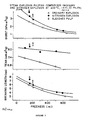
- Refining energies are usually low and can be expected to be in the range of 2.6 to 4 MJ/kg, hardwoods, CSF ⁇ 100 ml, which is considerably lower than that of conventional CMP and about 20% lower than that described in Kokta, CA-A-1 230 208 and US-A-4 798 651 (1989).
- Explosion pulps have been prepared using vapor phase steam cooking of sulfite pretreated aspen wood chips. Pulps have been prepared with the same 90% yield by using cooking temperatures 190°C, 195°C and 200°C with cooking times 2 minutes, 1.5 minute and 1 minute respectively.
- Cooking took place using saturated steam in a laboratory batch reactor built by Stake Tech. Co. Cooking was preceded by one minute steam flushing at atmospheric pressure. After cooking, the pressure was instantaneously released and chips which exploded into the release vessel were washed and cooled down with one litre of tap water, and subsequently refined after being stored in a cold room. The reported amount of steam used for cooking varied from 0.5 to 1 kg of steam for 1 kg of chips. Yield was measured as follows: exploded chips (75 g) were washed with one litre of tap water and subsequently defibrated for 90 seconds in a laboratory blender at 2% consistency. The pulp was washed again with one litre of water, dried at 105°C to constant weight and the resulting weights were compared with the initial weight of chips.
- Paper sheets were prepared and tested according to standard CPPA testing methods on 1.2 g sheets. Brightness (Elrepho) was evaluated on sheets made with deionized water.
- Bleaching was carried out using 4% of hydrogen peroxide.
- the yield of nitrogen exploded pulps has not been decreased by more than 0.4% compared to ordinary exploded pulps.
- the nitrogen explosion process seems to be very promising in the field of explosion pulping processes. It allows the preparation of very high yield pulps which are easy to refine; they can be easily bleached to more than 80% MgO brightness by single stage peroxide bleaching and their properties are superior to conventional CMP/CTMP with the same yield.
Landscapes
- Engineering & Computer Science (AREA)
- Life Sciences & Earth Sciences (AREA)
- Wood Science & Technology (AREA)
- Mechanical Engineering (AREA)
- Chemical & Material Sciences (AREA)
- Inorganic Chemistry (AREA)
- Paper (AREA)
Claims (10)
- Procédé pour produire de la pâte, comprenant :
l'imprégnation de fragments de bois avec une solution capable de fournir des groupes hydrophiles et un antioxydant dans les fragments,
la cuisson à la vapeur des fragments imprégnés dans un réacteur avec de la vapeur saturée à une pression superatmosphérique et à une température dans l'intervalle de 180° à 210°C,
la décompression de façon explosive des fragments cuits, et
le raffinage subséquent du produit pour fournir la pâte, caractérisé en ce qu'après la cuisson à la vapeur, le réacteur est de plus mis sous pression avec un gaz inerte à une température de 10 à 50°C avant ladite décompression explosive. - Procédé selon la revendication 1 dans lequel le gaz inerte est l'azote.
- Procédé selon la revendication 2 dans lequel la pression d'azote est de 2,5 à 5,0 MPa (25 à 50 atmosphères).
- Procédé selon l'une quelconque des revendications 1 à 3 dans lequel l'étape d'imprégnation des fragments de bois est mise en oeuvre en l'absence substantielle d'air, atteinte en remplaçant l'air par de la vapeur saturée.
- Procédé selon l'une quelconque des revendications 1 à 4 dans lequel la solution utilisée pour imprégner les fragments de bois contient du sulfite de sodium.
- Procédé selon l'une quelconque des revendications 1 à 5 dans lequel la cuisson à la vapeur est effectuée à une température de 190°C à 200°C.
- Procédé selon l'une quelconque des revendications 1 à 6 dans lequel la cuisson à la vapeur est effectuée à une pression de 1,0 à 1,57 MPa (10 atmosphères à 15,5 atmosphères).
- Procédé selon l'une quelconque des revendications 1 à 7 dans lequel la cuisson à la vapeur est effectuée pendant une durée de 30 secondes à 6 minutes.
- Procédé selon l'une quelconque des revendications 1 à 8 dans lequel la mise sous pression supplémentaire est effectuée pendant une durée de 5 secondes à 2 minutes.
- Procédé selon l'une quelconque des revendications précédentes dans lequel la solution utilisée pour imprégner les fragments de bois contient du carbonate de sodium ou du bicarbonate de sodium.
Priority Applications (1)
| Application Number | Priority Date | Filing Date | Title |
|---|---|---|---|
| EP19900312833 EP0487793B1 (fr) | 1990-11-26 | 1990-11-26 | Procédé d'explosion pour la préparation de pâte à papier |
Applications Claiming Priority (1)
| Application Number | Priority Date | Filing Date | Title |
|---|---|---|---|
| EP19900312833 EP0487793B1 (fr) | 1990-11-26 | 1990-11-26 | Procédé d'explosion pour la préparation de pâte à papier |
Publications (2)
| Publication Number | Publication Date |
|---|---|
| EP0487793A1 EP0487793A1 (fr) | 1992-06-03 |
| EP0487793B1 true EP0487793B1 (fr) | 1995-08-30 |
Family
ID=8205621
Family Applications (1)
| Application Number | Title | Priority Date | Filing Date |
|---|---|---|---|
| EP19900312833 Expired - Lifetime EP0487793B1 (fr) | 1990-11-26 | 1990-11-26 | Procédé d'explosion pour la préparation de pâte à papier |
Country Status (1)
| Country | Link |
|---|---|
| EP (1) | EP0487793B1 (fr) |
Families Citing this family (15)
| Publication number | Priority date | Publication date | Assignee | Title |
|---|---|---|---|---|
| CA2037275A1 (fr) * | 1991-02-28 | 1992-08-29 | Bohuslav V. Kokta | Procede de fabrication de pate a papier par cuisson a la vapeur suivie de detente explosive de celle-ci |
| US6413362B1 (en) | 1999-11-24 | 2002-07-02 | Kimberly-Clark Worldwide, Inc. | Method of steam treating low yield papermaking fibers to produce a permanent curl |
| KR20010100017A (ko) | 1998-12-30 | 2001-11-09 | 로날드 디. 맥크레이 | 화학물질을 첨가하는 증기 폭발 처리 |
| WO2002081816A1 (fr) * | 2001-04-06 | 2002-10-17 | Gerischer Guenter Friedrich Ru | Traitement de copeaux de bois |
| CA2638152C (fr) | 2008-07-24 | 2013-07-16 | Sunopta Bioprocess Inc. | Methode et appareil permettant le traitement d'une charge d'alimentation cellulosique |
| CA2638157C (fr) | 2008-07-24 | 2013-05-28 | Sunopta Bioprocess Inc. | Methode et appareil permettant le transport d'une charge d'alimentation cellulosique |
| CA2638150C (fr) | 2008-07-24 | 2012-03-27 | Sunopta Bioprocess Inc. | Methode et appareil permettant le transport d'une charge d'alimentation cellulosique |
| CA2638159C (fr) | 2008-07-24 | 2012-09-11 | Sunopta Bioprocess Inc. | Methode et appareil permettant le traitement d'une charge d'alimentation cellulosique |
| CA2638160C (fr) | 2008-07-24 | 2015-02-17 | Sunopta Bioprocess Inc. | Methode et appareil permettant le transport d'une charge d'alimentation cellulosique |
| CA2650913C (fr) | 2009-01-23 | 2013-10-15 | Sunopta Bioprocess Inc. | Methode et appareillage de transport de produits de depart cellulosiques |
| US8915644B2 (en) | 2008-07-24 | 2014-12-23 | Abengoa Bioenergy New Technologies, Llc. | Method and apparatus for conveying a cellulosic feedstock |
| US9127325B2 (en) | 2008-07-24 | 2015-09-08 | Abengoa Bioenergy New Technologies, Llc. | Method and apparatus for treating a cellulosic feedstock |
| CA2650919C (fr) | 2009-01-23 | 2014-04-22 | Sunopta Bioprocess Inc. | Methode et installation de transport de produit de depart cellulosique |
| PL2467532T3 (pl) | 2009-08-24 | 2014-11-28 | Abengoa Bioenergy New Tech Llc | Sposób wytwarzania etanolu i współproduktów z biomasy celulozowej |
| CN103362008A (zh) * | 2012-04-01 | 2013-10-23 | 中国科学院过程工程研究所 | 一种以碱木质素为胶粘剂的汽爆秸秆生态板制备方法 |
Family Cites Families (2)
| Publication number | Priority date | Publication date | Assignee | Title |
|---|---|---|---|---|
| SE434652B (sv) * | 1977-04-27 | 1984-08-06 | Commw Scient Ind Res Org | Forfarande for explosionsdefibrering av cellulosafibrer fran vextmaterial samt utmatningsmunstycke for genomforande av forfarandet |
| CA1230208A (fr) * | 1987-03-24 | 1987-12-15 | Bohuslav V. Kokta | Preparation de la pate a papier |
-
1990
- 1990-11-26 EP EP19900312833 patent/EP0487793B1/fr not_active Expired - Lifetime
Also Published As
| Publication number | Publication date |
|---|---|
| EP0487793A1 (fr) | 1992-06-03 |
Similar Documents
| Publication | Publication Date | Title |
|---|---|---|
| CA1230208A (fr) | Preparation de la pate a papier | |
| EP0501059B1 (fr) | Procédé de lessivage par explosion à la vapeur pour faire du papier | |
| US4486267A (en) | Chemithermomechanical pulping process employing separate alkali and sulfite treatments | |
| EP0487793B1 (fr) | Procédé d'explosion pour la préparation de pâte à papier | |
| US4869783A (en) | High-yield chemical pulping | |
| EP1552052B1 (fr) | Procede de production de pate mecanique et pate mecanique ainsi produite | |
| US5338405A (en) | Production of fiber pulp by impregnating the lignocellulosic material with an aqueous alcoholic SO2 solution prior to defibration | |
| Kokta et al. | Steam explosion pulping | |
| CA2065939A1 (fr) | Methode de reduction en pate par procede d'explosion a la vapeur utilisee dans la fabrication du papier a partir de plantes annuelles | |
| CA2063547A1 (fr) | Procede de defibrage par explosion a la vapeur | |
| JP2588495B2 (ja) | 製紙用高収率高漂白度パルプの製造方法 | |
| US3829357A (en) | Oxidative manufacture of pulp with chlorine dioxide | |
| CA1287705C (fr) | Preparation de la pate a papier | |
| AU2002244309B8 (en) | Method for producing pulp | |
| US6752904B2 (en) | Process for removal of lignin from lignocellulosic material | |
| CA2721612C (fr) | Procedes de preparation des pates mecaniques ayant un degre de blancheur eleve | |
| US3981765A (en) | Treatment of wood chips with an alkali metal borohydride solution followed by mechanical defibration | |
| CA1051246A (fr) | Methode de fabrication de la pate mecanique | |
| AU778689B2 (en) | Pulping process | |
| CA2024935A1 (fr) | Methode amelioree pour la preparation de la pate a papier | |
| CA1320067C (fr) | Methode de fabrication de pate a papier mecanique et semi-mecanique | |
| CA1309562C (fr) | Procede chimio-mecanique de fabrication de pate a papier utilisant du carbonate de sodium et du sulfite de sodium | |
| CA2026102A1 (fr) | Methode de preparation de pate sans soufre pour la fabrication du papier | |
| CA1230709A (fr) | Production de pate de bois affinee | |
| CA1079906A (fr) | Procede de fabrication de pate a papier en presence de quinone |
Legal Events
| Date | Code | Title | Description |
|---|---|---|---|
| PUAI | Public reference made under article 153(3) epc to a published international application that has entered the european phase |
Free format text: ORIGINAL CODE: 0009012 |
|
| AK | Designated contracting states |
Kind code of ref document: A1 Designated state(s): DE ES FR GB IT SE |
|
| 17P | Request for examination filed |
Effective date: 19921028 |
|
| 17Q | First examination report despatched |
Effective date: 19940728 |
|
| GRAA | (expected) grant |
Free format text: ORIGINAL CODE: 0009210 |
|
| AK | Designated contracting states |
Kind code of ref document: B1 Designated state(s): GB |
|
| RBV | Designated contracting states (corrected) |
Designated state(s): GB |
|
| PLBE | No opposition filed within time limit |
Free format text: ORIGINAL CODE: 0009261 |
|
| STAA | Information on the status of an ep patent application or granted ep patent |
Free format text: STATUS: NO OPPOSITION FILED WITHIN TIME LIMIT |
|
| 26N | No opposition filed | ||
| REG | Reference to a national code |
Ref country code: GB Ref legal event code: IF02 |
|
| PGFP | Annual fee paid to national office [announced via postgrant information from national office to epo] |
Ref country code: GB Payment date: 20021115 Year of fee payment: 13 |
|
| PG25 | Lapsed in a contracting state [announced via postgrant information from national office to epo] |
Ref country code: GB Free format text: LAPSE BECAUSE OF NON-PAYMENT OF DUE FEES Effective date: 20031126 |
|
| GBPC | Gb: european patent ceased through non-payment of renewal fee |
Effective date: 20031126 |