EP0493043A2 - Fabrication de films électrochromiques - Google Patents
Fabrication de films électrochromiques Download PDFInfo
- Publication number
- EP0493043A2 EP0493043A2 EP91311905A EP91311905A EP0493043A2 EP 0493043 A2 EP0493043 A2 EP 0493043A2 EP 91311905 A EP91311905 A EP 91311905A EP 91311905 A EP91311905 A EP 91311905A EP 0493043 A2 EP0493043 A2 EP 0493043A2
- Authority
- EP
- European Patent Office
- Prior art keywords
- solution
- substrate
- transition metal
- surface active
- nickel
- Prior art date
- Legal status (The legal status is an assumption and is not a legal conclusion. Google has not performed a legal analysis and makes no representation as to the accuracy of the status listed.)
- Withdrawn
Links
Images

Classifications
-
- G—PHYSICS
- G02—OPTICS
- G02F—OPTICAL DEVICES OR ARRANGEMENTS FOR THE CONTROL OF LIGHT BY MODIFICATION OF THE OPTICAL PROPERTIES OF THE MEDIA OF THE ELEMENTS INVOLVED THEREIN; NON-LINEAR OPTICS; FREQUENCY-CHANGING OF LIGHT; OPTICAL LOGIC ELEMENTS; OPTICAL ANALOGUE/DIGITAL CONVERTERS
- G02F1/00—Devices or arrangements for the control of the intensity, colour, phase, polarisation or direction of light arriving from an independent light source, e.g. switching, gating or modulating; Non-linear optics
- G02F1/01—Devices or arrangements for the control of the intensity, colour, phase, polarisation or direction of light arriving from an independent light source, e.g. switching, gating or modulating; Non-linear optics for the control of the intensity, phase, polarisation or colour
- G02F1/15—Devices or arrangements for the control of the intensity, colour, phase, polarisation or direction of light arriving from an independent light source, e.g. switching, gating or modulating; Non-linear optics for the control of the intensity, phase, polarisation or colour based on an electrochromic effect
- G02F1/1514—Devices or arrangements for the control of the intensity, colour, phase, polarisation or direction of light arriving from an independent light source, e.g. switching, gating or modulating; Non-linear optics for the control of the intensity, phase, polarisation or colour based on an electrochromic effect characterised by the electrochromic material, e.g. by the electrodeposited material
- G02F1/1523—Devices or arrangements for the control of the intensity, colour, phase, polarisation or direction of light arriving from an independent light source, e.g. switching, gating or modulating; Non-linear optics for the control of the intensity, phase, polarisation or colour based on an electrochromic effect characterised by the electrochromic material, e.g. by the electrodeposited material comprising inorganic material
- G02F1/1524—Transition metal compounds
Definitions
- Electrochromism is defined as reversible optical switching of a material to a coloured, bleached or intermediate state as a result of dual ion and electron insertion/removal under a low applied voltage.
- colour centres are formed in the material, producing optical absorption principally in the visible wavelength region, although near infra-red absorption is possible.
- Electrochromic materials have shown great promise for future window and information display applications. These reversible optically switching materials offer dynamic control of solar radiation with long memory times. An important property of electrochromic materials for window displays is the ability to control illumination levels as well as glare and heat gain or loss. These features are particularly desirable for large-scale architectural glazing. Other glazing applications arise in the vehicle and aerospace fields. Electrochromic materials can be used for rewritable holograms. Because the bleached/coloured change involves oxidation/reduction, the material can also be used to detect processes involving oxidation or reduction, e.g. in smoke detectors or biosensors.
- electrochromic material is tungsten oxide, which exhibits a transparent to blue colouration.
- transition metal oxides such as hydrated nickel oxide
- Nickel oxide films can be produced by a variety of processes.
- the fabrication processes are physical vapour deposition, electrochemical deposition and chemical deposition.
- the types of physical deposition reported are electron beam evaporation (1), d.c. magnetron sputtering (2), r.f. magnetron sputtering (3) and r.f. sputtering (4).
- Two types of electrochemical deposition have been reported, anodic (5) and cathodic (6).
- chemical deposition involves the alternate immersion of a conductive substrate into nickel sulphate and sodium hydroxide (7).
- a variation to this method is immersing a conductive substrate into one solution containing nickel sulphate and sodium hydroxide (8).
- nickel oxide films that are deposited by physical vapour deposition have to be cycled in aqueous potassium hydroxide in order to observe electrochromism. This may lead to the nickel oxide being partly converted to nickel hydroxide.
- the overall reaction can be written: The precise chemical state of the film is not material to the present invention.
- the term nickel hydroxide film is used herein.
- the mixture When ammonium hydroxide is added to nickel sulphate solution, the mixture turns blue, with a colloid nickel hydroxide forming virtually simultaneously. Shortly afterwards, large white flakes of nickel hydroxide start to precipitate out from the colloid. Smaller flakes of nickel hydroxide can also be seen forming on all surfaces in contact with the mixture.
- the mixture has a useful life of less than 2 hours, which is inconveniently short for many purposes.
- the present invention is based on the discovery that the useful lifetime of the mixture can be greatly increased by the addition of a non-ionic surface active agent.
- Films formed by anodic or cathodic deposition tend to be non-uniform when the current density is not uniform. It would in any event be more convenient not to have to use electric current. Films formed by simple chemical deposition in the absence of applied electric current appear to be different in some way, presently not understood, from those formed by anodic or cathodic deposition. But chemically deposited films may have variable properties and variable adhesion to the substrate. It is an object of this invention to overcome these problems and to provide films which have excellent adhesion to the substrate and which can be bleached to a highly transparent state.
- the invention provides a method of forming an electrochromic film on a substrate, which method comprises contacting the substrate with an alkaline aqueous solution comprising transition metal ions and a stabiliser.
- the transition metal ions are preferably nickel, although other transition metals are possible including cobalt, manganese, chromium and tungsten.
- the properties of the films may be improved in known manner by doping the main transition metal ion component with ions of another metal such as lithium.
- the transition metal ion concentration is generally from 0.001M to 1.0M, preferably from 0.01M to 0.1M. Within these limits, lower metal concentrations tend to give films that are sensitive only to visible light, while higher metal concentrations tend to give films that are sensitive also to infra-red radiation. If the concentration is too high, then the deposited film may have reduced or non-existent electrochromic properties. If the concentration is too low, then the contact time required to achieve a film of useful thickness may be unacceptably long.
- the aqueous solution contains alkali, generally at a molar concentration from 0.1 to 100, preferably from 1 to 10, times the molar concentration of the transition metal ions. If the alkali concentration is too high in relation to the metal ion concentration, then the plating rate is reduced. The alkali is one which gives rise to a colloidal solution rather than an immediate gross precipitate. Amines, and particularly ammonium hydroxide are preferred.
- the solution includes a stabiliser whose function is to delay or even prevent precipitation of the transition metal.
- Preferred stabilisers are non-ionic surface active agents.
- a caustic alkali such as sodium or potassium hydroxide may be used in partial or even complete replacement of the non-ionic surfactant.
- a surfactant may act by stabilising a colloidal solution of the transition metal hydroxide.
- a caustic alkali may act by stabilising a soluble transition metal/amine complex.
- the aqueous solution contains a non-ionic surface active agent, generally at a concentration of 1 to 40%, particularly 5 to 30%, by weight. These preferred concentrations are much higher than usual surfactant concentrations.
- Any non-ionic surface active agent can be used that is soluble in the alkaline aqueous solution but preferred are those which have no strong affinity for the transition metal and whose aliphatic chain length is relatively short.
- One preferred agent is a polyethylene glycol reduced monosaccharide, for example polyoxyethylene sorbitan monolaurate, used at a concentration of 2.5-40% by weight.
- Another preferred agent is that sold under the Trade Name Decon 90 by Decon Ltd. preferably at a concentration of 5-20%.
- Decon 90 is a proprietary mixture of non-ionic and anionic surface active agents and stabilisers in an alkaline medium. Enough surfactant should be used to give the colloidal solution an acceptable lifetime. It is probably not desirable to use so much surface active agent that the colloidal solution is indefinitely stable.
- PSL polyoxyethylene sorbitan monolaurate
- the deposition rate may be slightly lower than the equivalent non-stabilised solutions, but can be increased by the addition of extra ammonium hydroxide to the solution.
- Decon 90 has been investigated as an alternative detergent to PSL for electroplating, with encouraging results. Deposition rates are higher than those achieved with PSL.
- potassium permanganate has been found to give rise to electrochromic nickel hydroxide films which colour to grey or black rather than bronze or brown.
- the transition metal salt used to make up the solution is not critical. Nickel sulphate is preferred as giving rise to a stable colloidal solution.
- the transition metal salt is preferably mixed first with the surface active agent, and the alkali then added to the resulting mixture. This procedure avoids premature nickel hydroxide precipitation.
- the resulting colloidal solutions have useful lifetimes of days or weeks. They may be used at ambient temperature, or alternatively at lower temperatures in order to increase their lifetimes.
- Electrochromic film thickness is a function of contact time, and times from 10 seconds up to 6 hours preferably 15-120 minutes are feasible. Contact is preferably effected by dipping the substrate in the solution, but spraying and roller coating are possible alternatives.
- the deposited films are washed e.g. with distilled water, and dried e.g. with air or nitrogen. Since they bleach in air, the films are generally stored in the absence of air. No heat curing is required.
- the films are found to be mechanically durable, and typically pass the British Standard Adhesive Tape Test.
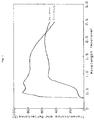
- a solution containing 0.025 moles of nickel sulphate in 50 cm3 of distilled water was prepared. To this was added 33 cm3 of 0.79 molar ammonium hydroxide (aqueous). The mixture was stirred as the ammonium hydroxide was added. Solution ageing time was measured from the moment of the addition of the first drop of ammonium hydroxide.
- a solution containing 2.5% (by mass of the total distilled water mass) of polyoxyethylene sorbitan monolaurate was prepared in 167 cm3 of distilled water. The solution was stirred. The addition of the detergent solution occurred 3 minutes after the first drop of ammonium hydroxide was added to the nickel sulphate solution. The solution was stirred for a further two minutes.
- An indium tin oxide coated glass substrate of sheet resistance 40 ohms per square was cleaned in a 10% aqueous Decon solution using a sonicator for 10 minutes. The substrate was then washed using distilled water followed by drying in a nitrogen jet. This substrate was dipped in the solution, and held there for 30 minutes to effect deposition of a nickel hydroxide film.
- the conductive substrate was earthed during the deposition procedure so as to remove charge from the substrate as negatively charged colloidal particles deposited on the substrate. It was found that the deposition rates were enhanced by earthing the substrate, since an unearthed substrate would have acquired an increasing negative charge, repelling colloidal particles of nickel hydroxide hence reducing the deposition rate.
- Post deposition treatment consisted of washing in distilled water followed by drying in a nitrogen jet.
- the nickel hydroxide film was then bleached and coloured electrochemically at -500 mV and +750 mV respectively for two minutes in both cases.
- the optical properties were measured for both the bleached and coloured states using a uv/vis/nir spectrophotometer.
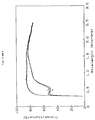
- nickel sulphate was dissolved in 50 cm3 of distilled water this was followed by the addition of 75g of polyoxyethylene sorbitan monolaurate. The solution was stirred for five minutes. To this was then added a solution of 11.2 cm3 of ammonium hydroxide (in this case the addition of 0.0085 moles) in 113.8 cm3. Both potentials were applied for 2 minutes. See Fig. 2.
- nickel sulphate was dissolved in 50 cm3 of distilled water this was followed by the addition of 100g of polyoxyethylene sorbitan monolaurate. The solution was stirred for five minutes. To this was then added a solution of 11.2 cm3 of ammonium hydroxide (in this case the addition of 0.0085 moles) in 88.8 cm3. Both potentials were applied for 2 minutes. See Fig. 3.
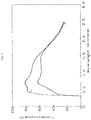
- nickel sulphate was dissolved in 50 cm3 of distilled water this was followed by the addition of 100 g of polyoxyethylene sorbitan monolaurate. The solution was stirred for five minutes. To this was then added a solution of 11.2 cm3 of ammonium hydroxide (in this case the addition of 0.0085 moles) in 113.8 cm3. Both potentials were applied for 2 minutes. See Fig. 4.
- nickel sulphate was dissolved in 50 cm3 of distilled water this was followed by the addition of 12.5 g of polyoxyethylene sorbitan monolaurate. The solution was stirred for five minutes. To this was then added a solution of 9.0 cm3 of ammonium hydroxide (in this case the addition of 0.007 moles) in 178.5 cm3. Both potentials were applied for 2 minutes. See Fig. 5.
Landscapes
- Physics & Mathematics (AREA)
- Chemical & Material Sciences (AREA)
- Inorganic Chemistry (AREA)
- Nonlinear Science (AREA)
- Crystallography & Structural Chemistry (AREA)
- General Physics & Mathematics (AREA)
- Optics & Photonics (AREA)
- Electrochromic Elements, Electrophoresis, Or Variable Reflection Or Absorption Elements (AREA)
Applications Claiming Priority (2)
| Application Number | Priority Date | Filing Date | Title |
|---|---|---|---|
| GB9027608 | 1990-12-20 | ||
| GB909027608A GB9027608D0 (en) | 1990-12-20 | 1990-12-20 | Making electrochromic films |
Publications (2)
| Publication Number | Publication Date |
|---|---|
| EP0493043A2 true EP0493043A2 (fr) | 1992-07-01 |
| EP0493043A3 EP0493043A3 (en) | 1992-10-14 |
Family
ID=10687298
Family Applications (1)
| Application Number | Title | Priority Date | Filing Date |
|---|---|---|---|
| EP19910311905 Withdrawn EP0493043A3 (en) | 1990-12-20 | 1991-12-20 | Making electrochromic films |
Country Status (2)
| Country | Link |
|---|---|
| EP (1) | EP0493043A3 (fr) |
| GB (1) | GB9027608D0 (fr) |
Cited By (1)
| Publication number | Priority date | Publication date | Assignee | Title |
|---|---|---|---|---|
| US12384715B2 (en) | 2017-07-20 | 2025-08-12 | Miru Smart Technologies Corp. | Photodeposition of metal oxides for electrochromic devices |
Family Cites Families (2)
| Publication number | Priority date | Publication date | Assignee | Title |
|---|---|---|---|---|
| US3657003A (en) * | 1970-02-02 | 1972-04-18 | Western Electric Co | Method of rendering a non-wettable surface wettable |
| US4959247A (en) * | 1987-12-14 | 1990-09-25 | Donnelly Corporation | Electrochromic coating and method for making same |
-
1990
- 1990-12-20 GB GB909027608A patent/GB9027608D0/en active Pending
-
1991
- 1991-12-20 EP EP19910311905 patent/EP0493043A3/en not_active Withdrawn
Cited By (1)
| Publication number | Priority date | Publication date | Assignee | Title |
|---|---|---|---|---|
| US12384715B2 (en) | 2017-07-20 | 2025-08-12 | Miru Smart Technologies Corp. | Photodeposition of metal oxides for electrochromic devices |
Also Published As
| Publication number | Publication date |
|---|---|
| GB9027608D0 (en) | 1991-02-13 |
| EP0493043A3 (en) | 1992-10-14 |
Similar Documents
| Publication | Publication Date | Title |
|---|---|---|
| US5030331A (en) | Process for preparing iridium oxide film | |
| US4960324A (en) | Electrochromic, oxygen deficient metal oxide films provided by pyrolytic deposition | |
| US5818636A (en) | Complementary surface confined polmer electrochromic materials, systems, and methods of fabrication therefor | |
| US5457564A (en) | Complementary surface confined polymer electrochromic materials, systems, and methods of fabrication therefor | |
| US5209980A (en) | Transparent counterelectrodes | |
| Ziegler et al. | Applications of reversible electrodeposition electrochromic devices | |
| US5215821A (en) | Solid-state electrochromic device with proton-conducting polymer electrolyte and Prussian blue counterelectrode | |
| JP2002154185A (ja) | 狭組成分布ポリ弗化ビニリデンレクルトフィルム、方法、製品及び組成物 | |
| Morisaki et al. | Formation of Nickel Oxyhydroxide Thin Films by Electrodepositon and Their Electrochromic Characteristics | |
| GB2148524A (en) | Electrochromic device | |
| US4427267A (en) | Metal diphthalocyanine electrochromic displays and electrolytes therefor | |
| Kazusuke Yamanaka | The electrochemical behavior of anodically electrodeposited iridium oxide films and the reliability of transmittance variable cells | |
| CA2047392A1 (fr) | Compositions electrochromiques a base de dicetopyrrolopyrroles | |
| US5210638A (en) | Electrolyte material and light modulation devices using the same | |
| US5164855A (en) | Counter electrode for electrochromic systems | |
| EP0735408B1 (fr) | Dispositif électrochromique à l'état solide | |
| Martini et al. | Electrochromic properties of NiO-based thin films prepared by sol–gel and dip coating | |
| US20240053648A1 (en) | Reversible Electrochemical Mirror (REM) | |
| JPH0217093B2 (fr) | ||
| EP1060289B1 (fr) | Procede d'elaboration de substrats de qualite optique revetus d'oxyde de vanadium lithie | |
| Orel et al. | The electrochromic properties of hydrated nickel oxide films formed by colloidal and anodic deposition | |
| EP0493043A2 (fr) | Fabrication de films électrochromiques | |
| AU632244B2 (en) | Electrochromic device with oxymethylene-polyoxyethylene electrolyte | |
| Morita | Multicolor electrochromic behavior of polyaniline composite films combined with tungsten trioxide | |
| Paul | Electrochromic tungsten oxide: doping with two or three other metal oxides |
Legal Events
| Date | Code | Title | Description |
|---|---|---|---|
| PUAI | Public reference made under article 153(3) epc to a published international application that has entered the european phase |
Free format text: ORIGINAL CODE: 0009012 |
|
| AK | Designated contracting states |
Kind code of ref document: A2 Designated state(s): AT BE CH DE DK ES FR GB GR IT LI LU NL SE |
|
| PUAL | Search report despatched |
Free format text: ORIGINAL CODE: 0009013 |
|
| RBV | Designated contracting states (corrected) |
Designated state(s): AT BE DE ES FR GB IT NL |
|
| AK | Designated contracting states |
Kind code of ref document: A3 Designated state(s): AT BE CH DE DK ES FR GB GR IT LI LU NL SE |
|
| 17P | Request for examination filed |
Effective date: 19930413 |
|
| STAA | Information on the status of an ep patent application or granted ep patent |
Free format text: STATUS: THE APPLICATION IS DEEMED TO BE WITHDRAWN |
|
| 18D | Application deemed to be withdrawn |
Effective date: 19940701 |