EP0500210A2 - Flüssigkristalline Verbindungen und Zusammensetzungen - Google Patents
Flüssigkristalline Verbindungen und Zusammensetzungen Download PDFInfo
- Publication number
- EP0500210A2 EP0500210A2 EP92300470A EP92300470A EP0500210A2 EP 0500210 A2 EP0500210 A2 EP 0500210A2 EP 92300470 A EP92300470 A EP 92300470A EP 92300470 A EP92300470 A EP 92300470A EP 0500210 A2 EP0500210 A2 EP 0500210A2
- Authority
- EP
- European Patent Office
- Prior art keywords
- compound
- formula
- liquid crystal
- phase
- followed
- Prior art date
- Legal status (The legal status is an assumption and is not a legal conclusion. Google has not performed a legal analysis and makes no representation as to the accuracy of the status listed.)
- Withdrawn
Links
Images






Classifications
-
- C—CHEMISTRY; METALLURGY
- C07—ORGANIC CHEMISTRY
- C07D—HETEROCYCLIC COMPOUNDS
- C07D213/00—Heterocyclic compounds containing six-membered rings, not condensed with other rings, with one nitrogen atom as the only ring hetero atom and three or more double bonds between ring members or between ring members and non-ring members
- C07D213/02—Heterocyclic compounds containing six-membered rings, not condensed with other rings, with one nitrogen atom as the only ring hetero atom and three or more double bonds between ring members or between ring members and non-ring members having three double bonds between ring members or between ring members and non-ring members
- C07D213/04—Heterocyclic compounds containing six-membered rings, not condensed with other rings, with one nitrogen atom as the only ring hetero atom and three or more double bonds between ring members or between ring members and non-ring members having three double bonds between ring members or between ring members and non-ring members having no bond between the ring nitrogen atom and a non-ring member or having only hydrogen or carbon atoms directly attached to the ring nitrogen atom
- C07D213/24—Heterocyclic compounds containing six-membered rings, not condensed with other rings, with one nitrogen atom as the only ring hetero atom and three or more double bonds between ring members or between ring members and non-ring members having three double bonds between ring members or between ring members and non-ring members having no bond between the ring nitrogen atom and a non-ring member or having only hydrogen or carbon atoms directly attached to the ring nitrogen atom with substituted hydrocarbon radicals attached to ring carbon atoms
- C07D213/28—Radicals substituted by singly-bound oxygen or sulphur atoms
- C07D213/30—Oxygen atoms
-
- C—CHEMISTRY; METALLURGY
- C07—ORGANIC CHEMISTRY
- C07C—ACYCLIC OR CARBOCYCLIC COMPOUNDS
- C07C43/00—Ethers; Compounds having groups, groups or groups
- C07C43/02—Ethers
- C07C43/20—Ethers having an ether-oxygen atom bound to a carbon atom of a six-membered aromatic ring
- C07C43/225—Ethers having an ether-oxygen atom bound to a carbon atom of a six-membered aromatic ring containing halogen
-
- C—CHEMISTRY; METALLURGY
- C07—ORGANIC CHEMISTRY
- C07C—ACYCLIC OR CARBOCYCLIC COMPOUNDS
- C07C45/00—Preparation of compounds having >C = O groups bound only to carbon or hydrogen atoms; Preparation of chelates of such compounds
- C07C45/004—Preparation of compounds having >C = O groups bound only to carbon or hydrogen atoms; Preparation of chelates of such compounds by reaction with organometalhalides
-
- C—CHEMISTRY; METALLURGY
- C07—ORGANIC CHEMISTRY
- C07C—ACYCLIC OR CARBOCYCLIC COMPOUNDS
- C07C45/00—Preparation of compounds having >C = O groups bound only to carbon or hydrogen atoms; Preparation of chelates of such compounds
- C07C45/45—Preparation of compounds having >C = O groups bound only to carbon or hydrogen atoms; Preparation of chelates of such compounds by condensation
- C07C45/46—Friedel-Crafts reactions
-
- C—CHEMISTRY; METALLURGY
- C07—ORGANIC CHEMISTRY
- C07C—ACYCLIC OR CARBOCYCLIC COMPOUNDS
- C07C69/00—Esters of carboxylic acids; Esters of carbonic or haloformic acids
- C07C69/76—Esters of carboxylic acids having a carboxyl group bound to a carbon atom of a six-membered aromatic ring
- C07C69/94—Esters of carboxylic acids having a carboxyl group bound to a carbon atom of a six-membered aromatic ring of polycyclic hydroxy carboxylic acids, the hydroxy groups and the carboxyl groups of which are bound to carbon atoms of six-membered aromatic rings
-
- C—CHEMISTRY; METALLURGY
- C09—DYES; PAINTS; POLISHES; NATURAL RESINS; ADHESIVES; COMPOSITIONS NOT OTHERWISE PROVIDED FOR; APPLICATIONS OF MATERIALS NOT OTHERWISE PROVIDED FOR
- C09K—MATERIALS FOR MISCELLANEOUS APPLICATIONS, NOT PROVIDED FOR ELSEWHERE
- C09K19/00—Liquid crystal materials
- C09K19/04—Liquid crystal materials characterised by the chemical structure of the liquid crystal components, e.g. by a specific unit
- C09K19/06—Non-steroidal liquid crystal compounds
- C09K19/08—Non-steroidal liquid crystal compounds containing at least two non-condensed rings
- C09K19/10—Non-steroidal liquid crystal compounds containing at least two non-condensed rings containing at least two benzene rings
- C09K19/14—Non-steroidal liquid crystal compounds containing at least two non-condensed rings containing at least two benzene rings linked by a carbon chain
-
- C—CHEMISTRY; METALLURGY
- C09—DYES; PAINTS; POLISHES; NATURAL RESINS; ADHESIVES; COMPOSITIONS NOT OTHERWISE PROVIDED FOR; APPLICATIONS OF MATERIALS NOT OTHERWISE PROVIDED FOR
- C09K—MATERIALS FOR MISCELLANEOUS APPLICATIONS, NOT PROVIDED FOR ELSEWHERE
- C09K19/00—Liquid crystal materials
- C09K19/04—Liquid crystal materials characterised by the chemical structure of the liquid crystal components, e.g. by a specific unit
- C09K19/06—Non-steroidal liquid crystal compounds
- C09K19/08—Non-steroidal liquid crystal compounds containing at least two non-condensed rings
- C09K19/10—Non-steroidal liquid crystal compounds containing at least two non-condensed rings containing at least two benzene rings
- C09K19/14—Non-steroidal liquid crystal compounds containing at least two non-condensed rings containing at least two benzene rings linked by a carbon chain
- C09K19/18—Non-steroidal liquid crystal compounds containing at least two non-condensed rings containing at least two benzene rings linked by a carbon chain the chain containing carbon-to-carbon triple bonds, e.g. tolans
-
- C—CHEMISTRY; METALLURGY
- C09—DYES; PAINTS; POLISHES; NATURAL RESINS; ADHESIVES; COMPOSITIONS NOT OTHERWISE PROVIDED FOR; APPLICATIONS OF MATERIALS NOT OTHERWISE PROVIDED FOR
- C09K—MATERIALS FOR MISCELLANEOUS APPLICATIONS, NOT PROVIDED FOR ELSEWHERE
- C09K19/00—Liquid crystal materials
- C09K19/04—Liquid crystal materials characterised by the chemical structure of the liquid crystal components, e.g. by a specific unit
- C09K19/06—Non-steroidal liquid crystal compounds
- C09K19/34—Non-steroidal liquid crystal compounds containing at least one heterocyclic ring
- C09K19/3441—Non-steroidal liquid crystal compounds containing at least one heterocyclic ring having nitrogen as hetero atom
-
- C—CHEMISTRY; METALLURGY
- C09—DYES; PAINTS; POLISHES; NATURAL RESINS; ADHESIVES; COMPOSITIONS NOT OTHERWISE PROVIDED FOR; APPLICATIONS OF MATERIALS NOT OTHERWISE PROVIDED FOR
- C09K—MATERIALS FOR MISCELLANEOUS APPLICATIONS, NOT PROVIDED FOR ELSEWHERE
- C09K19/00—Liquid crystal materials
- C09K19/04—Liquid crystal materials characterised by the chemical structure of the liquid crystal components, e.g. by a specific unit
- C09K19/42—Mixtures of liquid crystal compounds covered by two or more of the preceding groups C09K19/06 - C09K19/40
Definitions
- This invention relates to liquid crystal compounds and liquid crystal compositions, useful as ferroelectric liquid crystal materials.
- liquid crystal compounds showing smectic C phase or ciral smectic C phase for used in ferroelectric liquid crystal materials, there have been known liquid crystal phenyl pyrimidine compounds, such as 5-alkyl-2-(4'-alkoxyphenyl)pyrimidines.
- liquid crystal compounds are of positive dielectric anisotropy, and therefore improvement of memory or storage capacity is not attained even when is used a driving method of liquid crystal display elements called AC stabilize method.
- liquid crystal compound useful as a component giving negative dielectric anisotropy to liquid crystal composition.
- the present invention provides liquid crystal compounds represented by the following general formula (1) or (2): wherein R 1 and R 2 are the same or different alkyl groups containing 1 to 18 carbon atoms, which are each unsubstituted or are each substituted with at least one subsituent selected from the group consisting of F, CI, alkoxy, trifluoromethyl and cyano groups;
- A is a cyclic group selected from the group consisting of Ph, X 1 , X 2 , X 3 , X 4 , X 5 , Ph-X 4 and X 1 -Ph, wherein Ph represents 1,4-phenylene group, which is unsubstituted or substituted with at least one subsituent selected from the group consisting of F, Cl, CN and N0 2 ; X l , X 2 , X 3 , X 4 and X 5 represent and respectively;
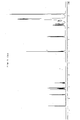
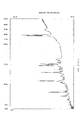
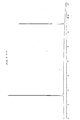
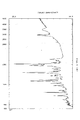
- Fig.1 (a) to Fig.4(a) are IR spectra of compounds of Examples 1 to 4, respectively.
- Fig.1 (b) to Fig.4(b) are H-NMR spectra of compounds of Examples 1 to 4, respectively.
- Fig.1 (c) to Fig.4(c) are F-NMR spectra of compounds of Examples 1 to 4, respectively.
- R 1 and R 2 are the same or different alkyl groups containing usually 1 - 18 carbon atoms, which may be substituted with at least one substituent selected from the group consisting of fluorine, chlorine, alkoxy groups containing 1 to 10 or more carbon atoms, trifluoromethyl group and cyano group.
- alkyl groups are straightchain alkyl groups, branched alkyl groups, cyclic alkyl groups, F-substituted alkyl groups, CI-substituted alkyl groups and alkoxy-substituted alkyl groups, as written in EP 0 385 692 as examples of R and R'; trifluoromethyl-substituted alkyl groups, such as 1-trifluoromethylpropyl, 1-trifluoromethylbutyl, 1-trifluoromethylpentyl, 1-trifluoromethylhexyl, 1-trifluoromethylheptyl, 1-trifluoromethyloc- tyl, 1-trifluoromethylnonyl, 1-trifluoromethyldecyl, 1-trifluoromethylundecyl, 1-trifluoromethyldodecyl, 1-trifluoromethyl-2-methoxyethyl, 1-trifluoromethyl-2-ethoxyethyl,
- Alkyl groups R and R' may contain one or more asymmetric carbon atoms, and may be optically active (hereinafter referred to as oa).
- oa alkyl groups are oa alkyl groups, F-substituted oa alkyl groups, CI-substituted oa alkyl groups and alkoxy-substituted oa alkyl groups, as written in EP 0 385 692 as examples of R and R'; as well as oa ones among trifluoromethyl-substituted alkyl groups and cyano-substituted as mentioned hereinabove.
- alkyl groups containing 1 to 16, particularly 1 to 14 carbon atoms are preferred.
- alkyl groups of R 2 preferred are asymmetric carbon atom-containing alkyl groups of the formula: -(CH 2 ) n C * H(CH 3 )R', wherein R'is an alkyl group containing 2-10 (particularly 2-6) carbon atoms and n is an integer of 0-9 (particularly 0-5).
- A is a cyclic group selected from the group consisting of Ph, X 1 , X 2 , X 3 , X 4 , X 5 , Ph-X 4 and X 1 -Ph.
- Suitable examples of Ph include 1,4-phenylene group, and substituted 1,4-phenylene groups, such as ones substituted with 1-4 fluorine atoms, ones substituted with 1 or 2 substituents selected from Cl, Br, CN and N0 2 .
- preferred are 1,4-phenylene group, F-substituted 1,4-phenylene groups, X l , X 2 , X 3, X4, X5, Ph-X 4 and X 1 -Ph.
- X is - (direct bond), O (ether oxygen linkage) or-C ⁇ C-, X being O when A is Ph; and Z is -C ⁇ C- or -CH 2 CH 2 -.
- a compound of the formula (0) prepared by reacting 2,3-difluorophenol with halogen on the ice bath, is reacted with an alkylating reagent (such as alkyl halide) in the presence of sodium hydroxide within dimethylsulfoxide (hereinafter referred to as DMSO) to obtain a compound of the formula (3).
- DMSO dimethylsulfoxide
- the compound of the formula (3) is reacted with 3-methyl-1-butyne-3-ol in triethylamine under an atmosphere of inert gas in the presence of zero-or bi-valent palladium catalyst to obtain a compound of the formula (1a), within the scope of this invention.
- a compound of the formula (6) is reacted with 3-methyl-1-butyne-3-ol in triethylamine under an atmosphere of inert gas in the presence of zero- or bi-valent palladium catalyst to obtain a compound of the formula (7), followed by reacting this compound with sodium hydroxide powder in anhydrous toluene to obtain a compound of the formula (8).
- This compound and the compound of the formula (3) are reacted in triethylamine under an atmosphere of inert gas in the presence of zero- or bi-valent palladium catalyst to obtain a compound of the formula (1a) of the present invention.
- the compound of the formula (6) as a raw material can be produced as follows: in accordance with [1-1] in case where X is direct bond; and in accordance with [1-2] in case where X is O.
- a compound of the formula (9) and a compound of the formula (10) are reacted in triethylamine under an atmosphere of inert gas in the presence of zero- or bi-valent palladium catalyst to obtain a compound of the formula (11), followed by hydrogenating and reducing this compound in ethanol in the presence of 5% palladium-carbon as catalyst to obtain a compound of the formula (12).
- This compound is diazotized with sodium nitrite, followed by reacting an alkali metal iodide to obtain a compound of the formula (6').
- An 1-alkyne (such as 1-decyne) is reduced with 2,5-dihalogenoopyridyne (such as 2,5-dibromopyridyne) in triethylamine under an atmosphere of inert gas in the presence of zero- or bi-valent palladium catalyst to obtain a compound of the formula (6"').
- a compound of the formula (13) and a compound of the formula (5) are reacted in triethylamine under an atmosphere of inert gas in the presence of zero- or bi-valent palladium catalyst to obtain a compound of the formula (1 b), within the scope of the present invention.
- a compound of the formula (14) and a compound of the formula (5) are reacted in triethylamine under an atmosphere of inert gas in the presence of zero- or bivalent palladium catalyst to obtain a compound of the formula (1 b), within the scope of the present invention.
- the compound of the formula (14) as a raw material can be produced as follows: in accordance with [111-1] in case where X is direct bond; and in accordance with [III-2] in case where X is O.
- 2-bromo-5-aminopyridine obtained by hydrogenating 2-bromo-5-nitropyridine in ethanol in the presence of platinum dioxide as catalyst, is diazotized with sodium nitrite, followed by reacting an alkali metal iodide to obtain 2-bromo-5-iodopyridine.
- 2-bromo-5-iodopyridine is reacted with a compound of the formula (10) in triethylamine under an atmosphere of inert gas in the presence of zero- or bi-valent palladium catalyst to obtain a compound of the formula (15), followed by hydrogenating this compound in ethanol in the presence of platinum dioxide as catalyst to obtain a compound of the formula (14').
- 2-iodo-5-hydroxypyridine obtained by adding sodium iodide and aqueous solution of sodium hypochlorite to 3-hydroxypyridine under ice bath, is reacted with an alkylating agent (such as alkyl halides) to obtain a compound of the formula (14").
- an alkylating agent such as alkyl halides
- a compound of the formula (16) and a compound of the formula (3) are reacted in triethylamine under an atmosphere of inert gas in the presence of zero- or bi-valent palladium catalyst to obtain a compound of the formula (1d), within the scope of the present invention.
- the compound of the formula (16) as a raw material can be produced as follows: in accordance with [IV-1] in case where X is direct bond; and in accordance with [IV-2] in case where X is O.
- 3,6-dichloropyridazine is reacted with a compound of the formula (10) in triethylamine under an atmosphere of inert gas in the presence of zero- or bi-valent palladium catalyst to obtain a compound of the formula (17), followed by hydrogenating this compound in ethanol in the presence of 5% palladium carbon catalyst to obtain a compound of the formula (18).
- This compound and 3-methylbutyne-3-ol are reacted in triethylamine under an atmosphere of inert gas in the presence of zero- or bi-valent palladium catalyst to obtain a compound of the formula (19), followed by reacting this compound with sodium hydroxide powder in anhydrous toluene to obtain a compound of the formula (16').
- a compound of the formula (22) and a compound of the formula (5) are reacted in triethylamine under an atmosphere of inert gas in the presence of zero- or bi-valent palladium catalyst to obtain a compound of the formula (1e), within the scope of the present invention.
- the compound of the formula (22) as a raw material can be produced as follows.
- a compound of the formula (23) is reacted with 2,5-dihalogenopyridine, such as 2,5-dibromopyridine, under an atmosphere of inert gas in the presence of zero- or bi-valent palladiun or nickel catalyst to obtain a compound of the formula (22).
- 2,5-dihalogenopyridine such as 2,5-dibromopyridine
- the compound of the formula (23) can be produced as follows: in accordance with [V-1] in case where X is direct bond; and in accordance with [V-2] in case where X is 0.
- a compound of the formula (24) and a compound of the formula (10) are reacted in triethylamine under an atmosphere of inert gas in the presence of zero- or bi-valent palladium catalyst, followed by hydrogenating this compound in ethanol in the presence of platinum dioxide as catalyst to obtain a compound of the formula (26).
- This compound is reacted with magnesium metal to obtain a compound of the formula (23').
- a compound of the formula (27) is reacted with a halogenating reagent (such as alkyl halide) in the presence of sodium hydroxide within DMSO to obtain a compound of the formula (28).
- a halogenating reagent such as alkyl halide
- This compound is reacted with magnesium metal to obtain a compound of the formula (23").
- a compound of the formula (1e), obtaied [V] is hydrogenated in ethanol in the presence of 5% palladium carbon as catalyst to obtain a compound of the formula (1f), within the scope of the present invention.
- a compound of the formula (29) and a compound of the formula (5) are reacted in triethylamine under an atmosphere of inert gas in the presence of zero- or bi-valent palladium catalyst to obtain a compound of the formula (1g), within the scope of the present invention.
- the compound of the formula (29) as a raw material can be produced as follows.
- a compound of the formula (30) is reacted with trifluoromethanesulufonic anhydride in pyridine to obtain a compound of the formula (29).
- a compound of the formula (1g), obtaied [VII] is hydrogenated in ethanol in the presence of 5% palladium carbon as catalyst to obtain a compound of the formula (1 h), within the scope of the present invention.
- 2,3-difluorophenol and alkylating reagent (such as alkyl halides) are reacted in the presence of sodium hydroxide to obtain a compound of the formula (31), followed by reacting this compound with periodic acid and iodine to obtain a compound of the formula (32).
- This compound is reacted with 3-metyl-1-butyn-3-ol in triethylamine under an atmosphere of inert gas in the presence of zero- or bi-valent palladium catalyst to obtain a compound of the formula (33), followed by reacting this compound with sodium hydroxide powder in anhydrous toluene to obtain a compound of the formula (34).
- This compound and the compound of the formula (35) are reacted in triethylamine under an atmosphere of inert gas in the presence of zero- or bi-valent palladium catalyst to obtain a compound of the formula (2a) of the present invention.
- the compound of the formula (35) can be produced as follows
- amine such as pyridine
- a compound of the formula (39) and a compound of the formula (40) are reacted in the presence of alminium trichloride to obtain a compound of the formula (41).
- This compound and the compound of the formula (34) are reacted in triethylanine under an atmosphere of inert gas in the presence of zero- or bi-valent palladium catalyst to obtain a compound of the formula (2b) of the present invention.
- a compound of the formula (42) and a compound of the formula (43) are reacted in diethyl ether/benzen at reflux temperature, followed by adding 6N hydrochloric acid to obtain a compound of the formula (44).
- This compound and the compound of the formula (34) are reacted in triethylamine under an atmosphere of inert gas in the presence of zero- or bi-valent palladium catalyst to obtain a compound of the formula (2b) of the present invention.
- a 1-cyano-2,3-difluoro-4-benzyloxybenzene and a compound of the formula (45) are reacted in diethyl ether/benzene at reflux temperature, followed by adding 6N hydrochloric acid to obtain a compound of the formula (46), followed by hydrogenating this compound in ethanol in the presence of 5% palladium-carbon as catalyst to obtain a compound of the formula (47).
- This compound is reacted with trifluoromethanesulufonic anhydride in pyridine to obtain a compound of the formula (48).
- This compound and the compound of the formula (49) are reacted in triethylanine under an atmosphere of inert gas in the presence of zero- or bi-valent palladium catalyst to obtain a compound of the formula (2c) of the present invention.
- the 1-cyano-2,3-difluoro-4-benzyloxybenzene can be produced as follows.
- a 2,3-difluorophenol is reacted with benzyl chloride to obtain a 2,3-difluoro-4-benzyloxybenzene.
- This compound is lithiated by n-buthyl lithium, followed by reacting with carbon dioxide to obtain a 2,3-difluoro-4-benzyloxybenzoic acid.
- the 2,3-difluoro-4-benzyloxybenzoic acid is reacted with thionyl chloride, followed by reacting with ammonia to obtain a 2,3-difluoro-4-benzyloxybenzamide.
- This compound is dehydrated by thionyl chloride to obtain a 2,3-difluoro-4-benzyloxycyanobenzene.
- the resulting liquid crystal compound (2d) shows chiral smectic C phase; and when the alcohol (50) is racemic one, the resulting liquid crystal compound (2d) shows smectic C phase.
- the raw material 4-benzyloxy-2,3-difluorobenzoic acid can be produced as follows:
- 2,3-difluorophenol is iodided with sodium hypochlorite and sodium iodide, etherified with benzyl chloride, and then reacted with metallic magnesium into a Grignard's compound, follwed by reacting the compound with carbon dioxide to obtain 4-benzyloxy-2,3-difluorobenzoic acid.
- Liquid crystal compounds of the present invention containing optically active R 1 and/or R2group show chiral smectic C phase
- liquid crystal compounds of this invention containing R 1 and/or R 2 group free from optical activity show smectic C phase.
- liquid crystals are used in the forms of liquid crystal compositions containing two or more components; and compounds of the present invention can be used as a component of liquid crystal compositions.
- Liquid crystal composition according to the present invention comprises a mixture of a pluralty of compounds, comprising at least one compound of this invention.
- Liquid crystal compositions of the invention include, for example, [1] ones showing smectic C phase, and [2] ones showing chiral smectic C phase.
- Liquid crystal compositions [1] of the present invention comprise at least one liquid crystal compound of this invention showing smectic C phase as the essential component, and can optionally contain one or more other liquid crystal compounds, which may be selected from the group consisting of other liquid crystal compounds showing smectic C phase, liquid crystal compounds showing smectic phase other than smectic C or chiral smectic C phase, and liquid crystal compounds showing nematic phase.
- These liquid crystal compounds include, for example, those written in EP 220,296.
- suitable liquid crystal compounds showing smectic C phase are 2-4'-alkoxyphenyl-5-alkylpyrimidine, 2-4'-alkylphenyl-5-alkoxypyrimidine, 2-4'-alkoxyphenyl-5-alkoxypyrimidine, 2-4'-alkylphenyl-5-alkylpyrimidine, 2-p-alkoxycarbonylphenyl-5-alkylprimidine, 2-4'-alkoxy-3'-fluorophenyl-5-alkylpyrimidine, 2-4'-alkoxy-2',3'-difluoro-phenyl-5-alkylpyrimidine, 2-4'-alkoxyphenyl-5-alkylpyridine, 2-4'-alkoxy-3'-fluorophenyl-5-alkylpyridine, 2-4'-alkoxy-2',3'-difluorophenyl-5-alkylpyridine, 2-4'-alkylbiphenyl-5-
- Liquid crystal compositions [2] of the present invention comprise at least one liquid crystal compound of this invention as the essential component and optionally one or more other liquid crystal compounds, and contain at least one optically active liquid crystal compound which may be the compound of this invention or/and the other liquid crystal compound.
- Liquid crystal compositions [2] include, for example, ones comprising said liquid crystal composition [1] and at least one optically active compound selected from the group consisting of compounds of this invention showing chiral smectic C phase and other liquid crystal compounds showing chiral smectic C phase.
- suitable other liquid crystal compounds include ones showing chiral smectic C phase, for example oa p'-(2-methylbutyloxycarbonyl)phenyl 4-alkoxy-4'-biphenylcarboxylate, oa 2-methylbutyl 4-alkoxy-4'-biphenylcarboxylate; oa 2-(2-methyibutyioxycarbonyi)naphthaiene-6-4'-n-aikoxyphe- nylcarboxylate, oa 2-(1-methylheptyloxycarbonyl)naphthalene-6-4'-n-alkoxyphenylcarboxylate, oa 2-(2-me- thylbutyloxy)naphthalene-6-4'-n-alkoxyphenylcarboxylate and oa 2-(1-methylheptyloxy)-naphthalene-6-4'-n-alkoxyphenylcarboxylate; and other optical
- Illustrative of these compounds are oa 2-(1-cyanoethyl)-naphthalene-6-4'-n-alkylphenylcarboxylate, 2-(1-cyanoethyl)-naphthalene-6-4'-n-alkoxyphenylcarboxylate, oa 4-(1-trifluoromethylheptyloxymethyl)-4'-n-al- koxybiphenyl, oa 4-(1-trifluoromethylheptyloxymethyl)-4'-n-alkylbiphenyl, oa trans 4-(4'-n-atkoxyphenyt)-1-(1'-trifluoromethylheptyloxycarbonyl)cyclohexane, and the like.
- Liquid crystal compositions may contain other components, for example, chiral compounds showing no liquid crystaline properties, pleochroic dyes (such as anthraquinone dyes, azo dyes and the like), and so on.
- pleochroic dyes such as anthraquinone dyes, azo dyes and the like
- Content of said liquid crystal compound of this invention in liquid crystal compositions of the invention is usually 5-100 % by weight (5-99% in case of compositions [2]).
- Content of pleochroic dye is usually 0-5 % by weight.
- ferroelectric liquid crystal compositions of this invention cause photo-switching phenomena, which are applied for producing display elements of quick response [See for example, JPN Patent Lay-open Nos.107216/1981 and 118744/1984, and N.A.Clark and S.T.Lagerwall:Applied Physics Letters,36,899(1980)].
- Liquid crystal compositions, showing ferroelectricity, according to the invention bring about optical switching phenomena by applied voltage, and can provide display devices, such as those described in JPN Lay-open Patents No.107216/1981 and No.118744/1984, and N.A.Clark and S.T.Lagerwall, "Applied Physics Letters" 36,899(1980).
- liquid crystal compositions of this invention can be used as photo-switching elements (display devices), for instance, by sealing in vacuum into liquid crystal cells having cell distance of 0.5-10 (preferably 0.5-3) micron m, followed by providing polarizers on both sides.
- the above liquid crystal cells can be produced by combining, through a spacer, two surface-aligned glass substrates provided with transparent electrodes.
- suitable spacers are alumina beads, glass fiber and polyimide film.
- Alignment can be done by conventional alignment treatment, such as application of polyimide membrane, rubbing treatment, oblique vapor-deposition of SiO.
- Example 3 In the same manner as Example 3, were prepared Compounds No.7, No.11, No.12, No.16, No.19, No.20 and No.24 in Table 1, within the scope of the present invention.
- Phase transition temperatures of compounds obtained in Examples 1-17 were as shown in Table 12.
- a composition comprising 80 % of Compound No.76 and 20 % of a compound represented by the formula (i) and having phase transition temperatures of 47.8°C[Cry-S c] , 47.9°C[S C -S A ] and 51.9°C[S A -Iso] was prepared, and phase transition temperatures thereof were determined.
- This composition showed a series of Iso-Nem-S A -S c phases, having phase transition temperatures of 40.0°C [Cry-S c] , 52.5°C[S c -S A] , 53.5°C[S A -Nem] and 54.9°C[Nem-lso]; and reduction of the minimum temperature of S c phase and elevation of the maximum temperature of S c phase were observed, as compared with each component.
- a composition comprising 20 % of Compound No.76 and 80 % of 2-p-n-nonyloxyphenyl-5-n-nonylpyrimi- dine having phase transition temperatures of 35.6°C[Cry-S c] , 52.5°C[S C -S A ] and 53.5°C[S A -Nem] was prepared, and phase transition temperatures thereof were determined.
- This composition showed a series of Iso-Nem-S A -S c phases, having phase transition temperatures of 22.2°C [Cry-S c] , 64.0°C[S C -S A ], 67.3°C[S A -Nem] and 68.7°C[Nem-Iso]; and reduction of the minimum temperature of S c phase and elevation of the maximum temperature of S c phase were observed, as compared with each component.
- a composition comprising 10 % of Compound No.168 and 90 % of 2-p-n-nonyloxyphenyl-5-n-nonylpyrimi- dine was prepared, and phase transition temperatures thereof were determined.
- This composition showed a series of Iso-Nem-S A -S c phases, having phase transition temperatures of 27.0°C [Cry-S c] , 68.0°C[S C -S A ], 71.2°C[S A -Nem] and 72.6°C[Nem-lso]; and reduction of the minimum temperature of S c phase and elevation of the maximum temperature of S c phase were observed, as compared with each component.
- a composition comprising 11 % of Compound No.172 and 89 % of 2-p-n-octyloxyphenyl-5-n-decylpyrimi- dine having phase transition temperatures of40.6°C[Cry-Sc], 69.6°C[S C -S A ] and 74.6°C[S A -lso] was prepared, and phase transition temperatures thereof were determined.
- This composition showed a series of Iso-Nem-S A -S c phases, having phase transition temperatures of 38.0°C [Cry-S c] , 70.8°C[S C -S A ], 71.6°C[S A -Nem] and 72.2°C[Nem-lso]; and reduction of the minimum temperature of S c phase and elevation of the maximum temperature of S c phase were observed, as compared with each component.
- Phase transition temperatures of compounds obtained in Examples 22-30 were as shown in Table 13.
- the present invention provide liquid crystal compounds showing smectic C phase or ciral smectic C phase, which have unexpected effects as follows:
- liquid crystal compounds of the present invention are advantageously used in in the production of ferroelectric smectic liquid crystal compositions.
Landscapes
- Chemical & Material Sciences (AREA)
- Organic Chemistry (AREA)
- Crystallography & Structural Chemistry (AREA)
- Engineering & Computer Science (AREA)
- Materials Engineering (AREA)
- Chemical Kinetics & Catalysis (AREA)
- Pyridine Compounds (AREA)
Applications Claiming Priority (6)
| Application Number | Priority Date | Filing Date | Title |
|---|---|---|---|
| JP1942591 | 1991-01-19 | ||
| JP19425/91 | 1991-01-19 | ||
| JP3159789A JPH04360853A (ja) | 1991-06-03 | 1991-06-03 | 液晶化合物および組成物 |
| JP159789/91 | 1991-06-03 | ||
| JP29085991 | 1991-10-09 | ||
| JP290859/91 | 1991-10-09 |
Publications (2)
| Publication Number | Publication Date |
|---|---|
| EP0500210A2 true EP0500210A2 (de) | 1992-08-26 |
| EP0500210A3 EP0500210A3 (en) | 1992-10-21 |
Family
ID=27282618
Family Applications (1)
| Application Number | Title | Priority Date | Filing Date |
|---|---|---|---|
| EP19920300470 Withdrawn EP0500210A3 (en) | 1991-01-19 | 1992-01-20 | Liquid crystal compounds and compositions |
Country Status (1)
| Country | Link |
|---|---|
| EP (1) | EP0500210A3 (de) |
Cited By (1)
| Publication number | Priority date | Publication date | Assignee | Title |
|---|---|---|---|---|
| US5525258A (en) * | 1992-12-17 | 1996-06-11 | Hoechst Aktiengesellschaft | Trifluorophenylene compounds, process for their preparation, and their use in liquid-crystalline mixtures |
Family Cites Families (6)
| Publication number | Priority date | Publication date | Assignee | Title |
|---|---|---|---|---|
| DE3710069A1 (de) * | 1987-03-27 | 1988-10-06 | Merck Patent Gmbh | Ethinderivate |
| DE3884545D1 (de) * | 1987-04-03 | 1993-11-04 | Merck Patent Gmbh | Fluessigkristalline phase, tolane enthaltend. |
| US4921632A (en) * | 1987-08-26 | 1990-05-01 | Nec Corporation | Liquid crystal compounds and compositions |
| DE3835803A1 (de) * | 1988-03-10 | 1990-04-26 | Merck Patent Gmbh | Supertwist-fluessigkristallanzeigeelement und fluessigkristallmischung |
| DE3807802A1 (de) * | 1988-03-10 | 1989-09-21 | Merck Patent Gmbh | Chirale derivate des 1,2-difluorbenzols |
| EP0399298B1 (de) * | 1989-05-20 | 1995-11-15 | Hoechst Aktiengesellschaft | Flüssigkristallmedium mit einer smektischen C-Phase |
-
1992
- 1992-01-20 EP EP19920300470 patent/EP0500210A3/en not_active Withdrawn
Cited By (1)
| Publication number | Priority date | Publication date | Assignee | Title |
|---|---|---|---|---|
| US5525258A (en) * | 1992-12-17 | 1996-06-11 | Hoechst Aktiengesellschaft | Trifluorophenylene compounds, process for their preparation, and their use in liquid-crystalline mixtures |
Also Published As
| Publication number | Publication date |
|---|---|
| EP0500210A3 (en) | 1992-10-21 |
Similar Documents
| Publication | Publication Date | Title |
|---|---|---|
| KR100989030B1 (ko) | 액정 혼합물 및 이를 포함하는 액정 디스플레이 장치 | |
| US4876027A (en) | Optically active composition, mesomorphic compound and liquid crystal device | |
| GB2334718A (en) | Liquid crystalline 1,4-bis(phenylethynyl)benzene compounds & compositions thereof, & phenylacetylene precursors therefor | |
| EP0302875B1 (de) | Optisch aktive naphthalen-verbindungen und sie enthaltende flüssigkristalline zusammensetzungen | |
| EP0341922A2 (de) | Naphthalen-Verbindung und dieselbe enthaltende flüssigkristalline Zusammensetzung | |
| US5759443A (en) | Cyclopentyl derivatives | |
| US4886623A (en) | Ferroelectric smectic liquid crystal compound and composition containing the same | |
| KR960000076B1 (ko) | 키랄성 에스테르의 제조방법 | |
| US5167855A (en) | Ferroelectric liquid crystal compositions chiral haloalkoxy tail units | |
| EP0377516B1 (de) | Flüssigkristallverbindungen mit hoher optischer Anisotropie | |
| US5180520A (en) | Ferroelectric liquid crystal compositions containing halogenated cores and chiral halogenated cores and chiral haloalkoxy tail units | |
| EP0315958A2 (de) | Optisch aktive mesomorphe Verbindung und diese enthaltende flüssigkristalline Zusammensetzung | |
| EP0257457A2 (de) | Optisch-aktive 2-Methyl-1,3-propandiol-Derivate, sie enthaltende flüssigkristalline Zusammensetzungen und optisches schaltendes Element | |
| US4623477A (en) | Ester compounds having a pyrimidine ring | |
| US4786730A (en) | Pyrimidine compound | |
| US5626792A (en) | High birefringence liquid crystal compounds | |
| US5026506A (en) | Chiral smectic liquid crystal composition | |
| US4640795A (en) | 5-alkyl-2-(3,4-difluorophenyl)pyrimidine and nematic liquid crystal composition containing same | |
| US5152919A (en) | Optically active compounds, liquid crystal compositions comprising said compounds, and liquid crystal optical modulators using said compositions | |
| US4880561A (en) | Optically active compound and liquid crystalline composition | |
| EP0272115B1 (de) | Optisch aktive Flüssigkristalline Biphenylverbindungen | |
| EP0500210A2 (de) | Flüssigkristalline Verbindungen und Zusammensetzungen | |
| US5178791A (en) | Halogenated diphenyldiacetylene liquid crystals | |
| EP0339252A2 (de) | 2,5-Disubstituierte Pyrazin-Derivate, Pyrimidin-Derivate und sie enthaltende Flüssigkristalle | |
| US5422037A (en) | Ferroelectric liquid crystal compounds containing halogenated cores and chiral haloalkoxy tail units |
Legal Events
| Date | Code | Title | Description |
|---|---|---|---|
| PUAI | Public reference made under article 153(3) epc to a published international application that has entered the european phase |
Free format text: ORIGINAL CODE: 0009012 |
|
| AK | Designated contracting states |
Kind code of ref document: A2 Designated state(s): DE FR GB IT |
|
| PUAL | Search report despatched |
Free format text: ORIGINAL CODE: 0009013 |
|
| AK | Designated contracting states |
Kind code of ref document: A3 Designated state(s): DE FR GB IT |
|
| 17P | Request for examination filed |
Effective date: 19930416 |
|
| 17Q | First examination report despatched |
Effective date: 19940614 |
|
| 18W | Application withdrawn |
Withdrawal date: 19940615 |