EP0501059B1 - Aufschlussverfahren durch Dampfexplosion zur Papierherstellung - Google Patents
Aufschlussverfahren durch Dampfexplosion zur Papierherstellung Download PDFInfo
- Publication number
- EP0501059B1 EP0501059B1 EP91306166A EP91306166A EP0501059B1 EP 0501059 B1 EP0501059 B1 EP 0501059B1 EP 91306166 A EP91306166 A EP 91306166A EP 91306166 A EP91306166 A EP 91306166A EP 0501059 B1 EP0501059 B1 EP 0501059B1
- Authority
- EP
- European Patent Office
- Prior art keywords
- cooking
- process according
- steam
- chips
- wood fragments
- Prior art date
- Legal status (The legal status is an assumption and is not a legal conclusion. Google has not performed a legal analysis and makes no representation as to the accuracy of the status listed.)
- Expired - Lifetime
Links
Images

Classifications
-
- D—TEXTILES; PAPER
- D21—PAPER-MAKING; PRODUCTION OF CELLULOSE
- D21C—PRODUCTION OF CELLULOSE BY REMOVING NON-CELLULOSE SUBSTANCES FROM CELLULOSE-CONTAINING MATERIALS; REGENERATION OF PULPING LIQUORS; APPARATUS THEREFOR
- D21C1/00—Pretreatment of the finely-divided materials before digesting
-
- D—TEXTILES; PAPER
- D21—PAPER-MAKING; PRODUCTION OF CELLULOSE
- D21B—FIBROUS RAW MATERIALS OR THEIR MECHANICAL TREATMENT
- D21B1/00—Fibrous raw materials or their mechanical treatment
- D21B1/04—Fibrous raw materials or their mechanical treatment by dividing raw materials into small particles, e.g. fibres
- D21B1/12—Fibrous raw materials or their mechanical treatment by dividing raw materials into small particles, e.g. fibres by wet methods, by the use of steam
- D21B1/30—Defibrating by other means
- D21B1/36—Explosive disintegration by sudden pressure reduction
Definitions
- This invention relates to a steam explosion pulping process for papermaking.
- CTMP/CMP ultra-high-yield chemithermomechanical or chemimechanical pulping
- the steam explosion pulping process consists of the chemical impregnation of chips, short duration saturated steam cooking at temperatures varying from 180°C to 210°C, pressure release, refining and bleaching (if necessary).
- the object of this invention is to provide a process in which additional yield saving and brightness level increase and cost decrease are obtained when compared to the previous invention of Kokta, CA-A-1 230 208 (equivalent to EP-A-284585) by substituting sodium hydroxide with milder swelling agents selected from: a carbonate or bicarbonate of ammonium, an alkaline earth or alkali metal, or magnesium chloride.
- EP-A-487793 which forms part of the state of the art by virtue of Article 54(3), discloses a process for producing pulp suitable for making paper, which comprised the steps of impregnating wood fragments with an alkaline aqueous liquor including at least one soluble sulphite to provide hydrophylic groups and/or act as an antioxidant, steam cooking the impregnated wood fragments with saturated steam at superatmospheric pressure and at an elevated temperature; subjecting the cooked wood fragments to explosive decompression partially to defibrate same; and refining the softened and defibrated fragments to provide pulp.
- the reactor is pressurised with cool nitrogen prior to explosive decompression and the liquor generally contains a strong base.
- the major problems accompanying previous processes using explosive decompression are believed to have been degradation due to the oxidation of wood and acid hydrolysis leading to loss in brightness, deterioration of fiber and paper properties and loss of yield.
- the approach adopted by this invention is thereto to attempt to curtail hydrolytic and oxidative wood degradation and thereby to protect against loss of yield, brightness and fiber strength.
- the loss of fiber strength will be particularly great if the degree of polymerisation of the cellulose falls below the critical value which is about 500-600. Hydrolytic degradation will also cause yield lowss due mainly to degradation of hemi-cellulose.
- the process of this invention tries to achieve a positive improvement in the strength of the paper that will be produced from the fibers by increasing the number of hydrophilic groups on the fiber surfaces thereby adding to the potential sites for hydrogen bonding.
- Claim 1 sets out the conditions in more detail, in particular the choice of swelling agent, which is a mild base.
- Claim 2 sets out alternative conditions, in which an inert gas is excluded during decompression.
- the starting material will normally be chips in which the fibers are of a length suitable for paper making. Shavings could also be used but sawdust would be undesirable except as a minor part of the total furnish as the fibers are partially cut.
- the chips should also, as is well known, be suitable in the sense of being free from bark and foreign matter.
- impregnation is to protect the chips against oxidation during cooking and during transfer from the cooking vessel to the refiner. It is also an objective to provide a positive increase in strength by developing hydrophylic groups on the fiber surface during steam treatment. This will then provide additional sites for hydrogen bonding.
- the preferred antioxidant is sodium sulphite Na2SO3 which also forms hydrophilic groups, and which is available at a low cost. It is used to provide a concentration of absorbed chemical of about 1 to 16% by weight. Concentrations below 4% would be used where brightness protection is unimportant and high strength is not required. Where, however, brightness is important the sodium sulphite should be at least 4%. If physical properties are important these will be improved by using a concentration of at least 4% sodium sulphite and will be further improved as the concentration is further increased towards 16%.
- the concentration of the solution is preferably about the same as the percentage of chemical to be absorbed where there are equal quantities of chips and liquor.
- a ton of chips of 50% consistency mixed with one ton of 8% solution will result in about 8% absorbed on the pulp.
- Thorough impregnation is important so as to distribute the antioxidant evenly rather than depositing it just on the surface.
- Other antioxidants that can be used are potassium sulphite or magnesium sulphite.
- Ammonium sulphite could be used if cooking conditions are not severe, or with a buffer.
- Complexing agents such as ethylene diamine tetracetic acid (EDTA), sodium diethylene triaminepentacetate (DTPA), sodium tripolyphosphate (TPF) and other complexing agents known in the art as being usable under alkaline conditions may be added to minimize the catalytic effect of metals such as iron on oxidative degradation.
- a swelling agent to assist the antioxidant or hydrophilic agent in penetrating the wood and this contributes also to softening the chip.
- Suitable swelling agents are sodium carbonate or sodium bicarbonate or magnesium carbonate any of which will contribute also to providing hydrophilic groups.
- Other swelling agents that can be used and which may be desirable as auxiliary swelling agents for high density wood are zinc chloride, sodium chloride, sodium bromide, magnesium chloride, calcium isocyanate, Schweitzers solution, cupriethylenediamne (C.E.D.) tetraethylammonium hydroxide or dimethyldibenzylammonium hydroxide.
- the concentration of swelling agent and conditions of swelling must be controlled in such a way as to avoid any dissolution of the hollocellulose.
- the percentage of swelling agent in the impregnating solution will be in the range of about 1 to 4% depending on the agent and the conditions.
- the impregnating solution must be alkaline and have enough free hydroxyl to be able to neutralize the liberated wood acids such as formic acid and acetic acid. Normally the starting pH is about 7.5 or higher and the final pH after steam cooking should be at least 6 or higher.
- the time of impregnation at atmospheric pressure in holding tanks typically ranges from about 12 hours to 24 hours at a temperature of about 30°C to 60°C. Approximately equal weights of chips and of aqueous impregnating solution can be used. For industrial purposes, however, the time may be shortened to an hour or to minutes by impregnating with steam under pressure and at a higher temperature.
- the pressure should be up to about 1 atmospheric extra pressure at a temperature of about 100°C to 110°C.
- the chips should be compressed in advance of impregnation in cool solutions of chemicals. Under these conditions, penetration will be achieved in a shorter time. Penetration is what predominantly occurs; there is no significant cooking as evidenced by the fact that there is no significant sulphonic and carboxylic group increase.
- the impregnated chips are steam cooked at a high temperature and pressure.
- the temperature of cooking should be within the range of about 180°C to 210°C and preferably within the range 190-200°C, which is in excess of the temperatures considered possible according to the publications of Asplund and Higgins previously referred to. These temperatures correspond with a pressure of 1 MPa (10 atmospheres) for 180°C and 1.6 MPa (15.5 atmospheres) for 200°C. It is these high pressures and temperatures which make a very important contribution to ensuring excellent penetration of the chips by the cooking liquor and results in higher efficience of ionic groups formation on fiber surface.
- the cooking may be preceded by steam flushing under low pressure steam at 100°C for a short period such as one minute.
- steam flushing under low pressure steam at 100°C for a short period such as one minute.
- This preliminary treatment is then followed by cooking for about 30 seconds to 6 minutes and preferably about 1 to 4 minutes.
- the chips resulting from the explosive decompression are softened and partially defibrated.
- Refining energies are usually low and can be expected to be in the range of 1.7 to 4 MJ/kg, hardwoods, CSF ⁇ 100 ml, which is considerably lower than that of conventional CMP and similar to that described in Kokta, CA-A-1 230 208 and US-A-4 798 651.
- Time of impregnation 24 hours; temperature of impregnation: 60°C.
- Liquid/chip ratio during impregnation was equal to 3.
- Explosion pulps were prepared using vapor phase team cooking of chemically pretreated aspen wood chips at a cooking temperature of 190°C and cooking time 4 minutes.
- Cooking took place using saturated steam in a laboratory batch reactor built by Stake Tech. Co. Cooking was preceded by one minute steam flushing at atmospheric pressure. After cooking, the pressure was instantaneously released and chips which exploded into the release vessel were washed and cooled down with one liter of tap water, and subsequently refined after being stored in a cold room. The reported amount of steam used for cooking varied from 0.5 to 1 kg of steam for 1 kg of chips. Yield was measured as follows: exploded chips (75 g) were washed with one liter of tap water and subsequently defibrated for 90 seconds in a laboratory blender at 2% consistency. The pulp was washed again with one liter of water, dried at 105°C to constant weight and the resulted weights were compared to the initial O.D. weight of chips.
- Paper sheets were prepared and tested according to standard CPPA testing methods on 1.2 g sheets. Brightness (Elrepho) was evaluated on sheets made with deinosized water. Ionic content (sulfonate and carboxylate ions) was determined by means of conductometric titration.
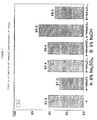
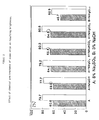
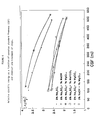
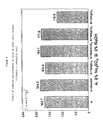
- the present invention consisting in substituting NaOH by agents such as carbonates or bicarbonates results not only in the yield and brightness advantage but also in cost decrease.
Landscapes
- Engineering & Computer Science (AREA)
- Life Sciences & Earth Sciences (AREA)
- Wood Science & Technology (AREA)
- Mechanical Engineering (AREA)
- Paper (AREA)
Claims (10)
- Verfahren zur Herstellung von zur Papiererzeugung geeignetem Halbstoff, welches die Schritte des Imprägnierens von Holzbruchstücken mit einer wäßrigen alkalischen Flüssigkeit, die zumindest ein lösliches Sulfit enthält, um hydrophile Gruppen zu liefern und/oder als Oxidationshemmer zu wirken, des Dampfkochens der imprägnierten Holzfragmente mit Sattdampf bei Überatmosphärendruck und bei einer erhöhten Temperatur; des Aussetzens der gekochten Holzfragmente einer schlagartigen Druckentlastung, um sie teilweise zu defibrieren; und des Raffinierens der erweichten und defibrierten Fragmente, um Halbstoff zu erhalten, worin die Flüssigkeit Magnesiumchlorid, oder ein Karbonat oder Bikarbonat von Ammonium, von einem Erdalkalimetall oder einem Alkalimetall mit Ausnahme von Natrium als Quellmittel umfaßt.
- Verfahren zur Herstellung von zur Papiererzeugung geeignetem Halbstoff, welches die Schritte des Imprägnierens von Holzbruchstücken mit einer wäßrigen alkalischen Flüssigkeit, die zumindest ein lösliches Sulfit enthält, um hydrophile Gruppen zu liefern und/oder als Oxidationshemmer zu wirken, des Dampfkochens der imprägnierten Holzfragmente mit Sattdampf bei Überatmosphärendruck und bei einer erhöhten Temperatur; des Aussetzens der gekochten Holzfragmente einer schlagartigen Druckentlastung ohne vorhergehendes weiteres Unter-Druck-Setzen mit kühlem Inertgas, um sie teilweise zu defibrieren; und des Raffinierens der erweichten und defibrierten Fragmente, um Halbstoff zu erhalten, worin die Flüssigkeit Magnesiumchlorid, oder ein Karbonat oder Bikarbonat von Ammonium, von einem Erdalkalimetall oder einem Alkalimetall als Quellmittel umfaßt.
- Verfahren nach Anspruch 1 oder 2, worin die Quellmittel in einer Menge von 1-4 Gew.-% von den Holzfragmenten absorbiert werden.
- Verfahren nach einem der Ansprüche 1 bis 3, worin das Dampfkochen bei einer Kochtemperatur im Bereich von 180°C bis 210°C durchgeführt wird und der Kochdruck etwa 1 MPa (10 atm) bis etwa 1,6 MPa (15,5 atm) beträgt.
- Verfahren nach Anspruch 4, worin die Kochtemperatur 190°C bis 200°C beträgt.
- Verfahren nach einem der vorhergehenden Ansprüche, worin dem Schritt des Imprägnierens das Ersetzen von Luft durch Sattdampf vorangeht.
- Verfahren nach einem der vorhergehenden Ansprüche, worin die Kochzeit 30 Sekunden bis 6 Minuten beträgt.
- Verfahren nach Anspruch 7, worin die Kochzeit 1 Minute bis 4 Minuten beträgt.
- Verfahren nach einem der vorhergehenden Ansprüche, worin während des Imprägnierungsschrittes zusätzlich ein kleiner Prozentsatz eines Hilfsquellmittels vorhanden ist.
- Verfahren nach Anspruch 8, worin das Hilfsquellmittel Zinkchlorid, Natriumchlorid, Natriumbromid, Magnesiumchlorid, Kalziumisocyanat, Schweizers-Reagenz, Kupfer(II)-ethylendiamin-tetraethylammoniumhydroxid oder -dimethyldibenzylammoniumhydroxid ist.
Applications Claiming Priority (2)
| Application Number | Priority Date | Filing Date | Title |
|---|---|---|---|
| CA 2037275 CA2037275A1 (en) | 1991-02-28 | 1991-02-28 | Steam explosion pulping process for papermaking |
| CA2037275 | 1991-02-28 |
Publications (2)
| Publication Number | Publication Date |
|---|---|
| EP0501059A1 EP0501059A1 (de) | 1992-09-02 |
| EP0501059B1 true EP0501059B1 (de) | 1995-11-29 |
Family
ID=4147084
Family Applications (1)
| Application Number | Title | Priority Date | Filing Date |
|---|---|---|---|
| EP91306166A Expired - Lifetime EP0501059B1 (de) | 1991-02-28 | 1991-07-08 | Aufschlussverfahren durch Dampfexplosion zur Papierherstellung |
Country Status (2)
| Country | Link |
|---|---|
| EP (1) | EP0501059B1 (de) |
| CA (1) | CA2037275A1 (de) |
Families Citing this family (19)
| Publication number | Priority date | Publication date | Assignee | Title |
|---|---|---|---|---|
| WO2000019004A1 (en) * | 1998-09-25 | 2000-04-06 | Stake Technology Ltd. | Semi alkaline steam explosion treatment of fibrous material for the production of cellulose pulp |
| US6413362B1 (en) | 1999-11-24 | 2002-07-02 | Kimberly-Clark Worldwide, Inc. | Method of steam treating low yield papermaking fibers to produce a permanent curl |
| BR9916641A (pt) | 1998-12-30 | 2001-09-25 | Kimberly Clark Co | Processo de reciclagem por explosão a vapor de fibras e tecidos fabricados a partir das fibras recicladas |
| CA2650919C (en) | 2009-01-23 | 2014-04-22 | Sunopta Bioprocess Inc. | Method and apparatus for conveying a cellulosic feedstock |
| CA2638160C (en) | 2008-07-24 | 2015-02-17 | Sunopta Bioprocess Inc. | Method and apparatus for conveying a cellulosic feedstock |
| CA2638159C (en) | 2008-07-24 | 2012-09-11 | Sunopta Bioprocess Inc. | Method and apparatus for treating a cellulosic feedstock |
| US8915644B2 (en) | 2008-07-24 | 2014-12-23 | Abengoa Bioenergy New Technologies, Llc. | Method and apparatus for conveying a cellulosic feedstock |
| US9127325B2 (en) | 2008-07-24 | 2015-09-08 | Abengoa Bioenergy New Technologies, Llc. | Method and apparatus for treating a cellulosic feedstock |
| CA2650913C (en) | 2009-01-23 | 2013-10-15 | Sunopta Bioprocess Inc. | Method and apparatus for conveying a cellulosic feedstock |
| CA2638152C (en) | 2008-07-24 | 2013-07-16 | Sunopta Bioprocess Inc. | Method and apparatus for treating a cellulosic feedstock |
| CA2638157C (en) | 2008-07-24 | 2013-05-28 | Sunopta Bioprocess Inc. | Method and apparatus for conveying a cellulosic feedstock |
| CA2638150C (en) | 2008-07-24 | 2012-03-27 | Sunopta Bioprocess Inc. | Method and apparatus for conveying a cellulosic feedstock |
| ES2458554T3 (es) | 2009-08-24 | 2014-05-06 | Abengoa Bioenergy New Technologies, Inc. | Procedimientos de producción de etanol y coproductos a partir de biomasa celulósica |
| CN103362008A (zh) * | 2012-04-01 | 2013-10-23 | 中国科学院过程工程研究所 | 一种以碱木质素为胶粘剂的汽爆秸秆生态板制备方法 |
| CN104404803B (zh) * | 2014-08-29 | 2016-08-17 | 济南米铎碳新能源科技有限公司 | 秸秆组分分离及秸秆组分全利用的方法 |
| FR3026655A1 (fr) * | 2014-10-01 | 2016-04-08 | Commissariat Energie Atomique | Dispositif de reduction de la taille de particules de biomasse a fonctionnement continu |
| CN106522004B (zh) * | 2016-11-10 | 2018-10-23 | 北京化工大学 | 一种纤维素与半纤维素联合预处理装置 |
| CN116694711A (zh) * | 2023-01-31 | 2023-09-05 | 杭州佳嘉乐生物技术有限公司 | 一种高纯度牡蛎肽的制备方法 |
| CN116334943A (zh) * | 2023-04-12 | 2023-06-27 | 张志晔 | 物理蒸解法植物纤维提取工艺 |
Citations (2)
| Publication number | Priority date | Publication date | Assignee | Title |
|---|---|---|---|---|
| WO1987001402A1 (en) * | 1985-09-03 | 1987-03-12 | Chaudhuri Punya B | Method for producing of cellulosic pulp |
| EP0487793A1 (de) * | 1990-11-26 | 1992-06-03 | Bohuslav Vaclav Kokta | Explosionsverfahren zur Papierzellstoffherstellung |
Family Cites Families (2)
| Publication number | Priority date | Publication date | Assignee | Title |
|---|---|---|---|---|
| CA1212505A (en) * | 1984-07-17 | 1986-10-14 | Rudy Vit | Method, process and apparatus for converting wood, wood residue and or biomass into pulp |
| CA1230208A (en) * | 1987-03-24 | 1987-12-15 | Bohuslav V. Kokta | Process for preparing pulp for paper making |
-
1991
- 1991-02-28 CA CA 2037275 patent/CA2037275A1/en not_active Abandoned
- 1991-07-08 EP EP91306166A patent/EP0501059B1/de not_active Expired - Lifetime
Patent Citations (2)
| Publication number | Priority date | Publication date | Assignee | Title |
|---|---|---|---|---|
| WO1987001402A1 (en) * | 1985-09-03 | 1987-03-12 | Chaudhuri Punya B | Method for producing of cellulosic pulp |
| EP0487793A1 (de) * | 1990-11-26 | 1992-06-03 | Bohuslav Vaclav Kokta | Explosionsverfahren zur Papierzellstoffherstellung |
Also Published As
| Publication number | Publication date |
|---|---|
| EP0501059A1 (de) | 1992-09-02 |
| CA2037275A1 (en) | 1992-08-29 |
Similar Documents
| Publication | Publication Date | Title |
|---|---|---|
| CA1230208A (en) | Process for preparing pulp for paper making | |
| EP0501059A1 (de) | Aufschlussverfahren durch Dampfexplosion zur Papierherstellung | |
| US4486267A (en) | Chemithermomechanical pulping process employing separate alkali and sulfite treatments | |
| US5002635A (en) | Method for producing pulp using pre-treatment with stabilizers and refining | |
| EP0487793B1 (de) | Explosionsverfahren zur Papierzellstoffherstellung | |
| US5338405A (en) | Production of fiber pulp by impregnating the lignocellulosic material with an aqueous alcoholic SO2 solution prior to defibration | |
| Kokta et al. | Steam explosion pulping | |
| CA2065939A1 (en) | Steam explosion pulping process for annual plants papermaking | |
| JP2588495B2 (ja) | 製紙用高収率高漂白度パルプの製造方法 | |
| CA2063547A1 (en) | Steam explosion pulping process for papermaking | |
| US3829357A (en) | Oxidative manufacture of pulp with chlorine dioxide | |
| CA1287705C (en) | Process for preparing pulp for paper making | |
| US6752904B2 (en) | Process for removal of lignin from lignocellulosic material | |
| CA2721612C (en) | Processes for preparing mechanical pulps having high brightness | |
| Johansson et al. | Improvement of energy efficiency in TMP refining by selective wood disintegration and targeted application of chemicals | |
| US5433825A (en) | Method for pulping wood chips separate alkali and peroxymonosulfate treatments | |
| US3981765A (en) | Treatment of wood chips with an alkali metal borohydride solution followed by mechanical defibration | |
| EP0239583B2 (de) | Vorbehandlungsverfahren von pulpe mit stabilisierungsmitteln und peroxid vor der mechanischen raffinierung | |
| CA1051246A (en) | Method of producing mechanical pulp | |
| CA2399772A1 (en) | Pulping process | |
| CA2024935A1 (en) | Modified process for preparing pulp for paper making | |
| CA1309562C (en) | Chemimechanical pulping process employing sodium carbonate and sodium sulphite | |
| CA2026102A1 (en) | Non-sulfur process for preparing pulp for paper making | |
| Becher et al. | Improved bonding in groundwood furnishes | |
| More | Structural changes to Pinus radiata wood lignin during kraft pulping and bleaching |
Legal Events
| Date | Code | Title | Description |
|---|---|---|---|
| PUAI | Public reference made under article 153(3) epc to a published international application that has entered the european phase |
Free format text: ORIGINAL CODE: 0009012 |
|
| AK | Designated contracting states |
Kind code of ref document: A1 Designated state(s): DE ES FR GB IT SE |
|
| 17P | Request for examination filed |
Effective date: 19930114 |
|
| 17Q | First examination report despatched |
Effective date: 19940726 |
|
| GRAA | (expected) grant |
Free format text: ORIGINAL CODE: 0009210 |
|
| RBV | Designated contracting states (corrected) |
Designated state(s): GB |
|
| AK | Designated contracting states |
Kind code of ref document: B1 Designated state(s): GB |
|
| REG | Reference to a national code |
Ref country code: DE Ref legal event code: 8566 |
|
| PLBE | No opposition filed within time limit |
Free format text: ORIGINAL CODE: 0009261 |
|
| STAA | Information on the status of an ep patent application or granted ep patent |
Free format text: STATUS: NO OPPOSITION FILED WITHIN TIME LIMIT |
|
| 26N | No opposition filed | ||
| REG | Reference to a national code |
Ref country code: GB Ref legal event code: IF02 |
|
| PGFP | Annual fee paid to national office [announced via postgrant information from national office to epo] |
Ref country code: GB Payment date: 20020708 Year of fee payment: 12 |
|
| PG25 | Lapsed in a contracting state [announced via postgrant information from national office to epo] |
Ref country code: GB Free format text: LAPSE BECAUSE OF NON-PAYMENT OF DUE FEES Effective date: 20030708 |
|
| GBPC | Gb: european patent ceased through non-payment of renewal fee |
Effective date: 20030708 |