EP0501821A2 - Anti-thrombin polypeptides - Google Patents
Anti-thrombin polypeptides Download PDFInfo
- Publication number
- EP0501821A2 EP0501821A2 EP92301721A EP92301721A EP0501821A2 EP 0501821 A2 EP0501821 A2 EP 0501821A2 EP 92301721 A EP92301721 A EP 92301721A EP 92301721 A EP92301721 A EP 92301721A EP 0501821 A2 EP0501821 A2 EP 0501821A2
- Authority
- EP
- European Patent Office
- Prior art keywords
- polypeptide
- dna sequence
- sequence
- host
- pharmaceutically acceptable
- Prior art date
- Legal status (The legal status is an assumption and is not a legal conclusion. Google has not performed a legal analysis and makes no representation as to the accuracy of the status listed.)
- Granted
Links
Images







Classifications
-
- C—CHEMISTRY; METALLURGY
- C07—ORGANIC CHEMISTRY
- C07K—PEPTIDES
- C07K14/00—Peptides having more than 20 amino acids; Gastrins; Somatostatins; Melanotropins; Derivatives thereof
-
- C—CHEMISTRY; METALLURGY
- C12—BIOCHEMISTRY; BEER; SPIRITS; WINE; VINEGAR; MICROBIOLOGY; ENZYMOLOGY; MUTATION OR GENETIC ENGINEERING
- C12N—MICROORGANISMS OR ENZYMES; COMPOSITIONS THEREOF; PROPAGATING, PRESERVING, OR MAINTAINING MICROORGANISMS; MUTATION OR GENETIC ENGINEERING; CULTURE MEDIA
- C12N15/00—Mutation or genetic engineering; DNA or RNA concerning genetic engineering, vectors, e.g. plasmids, or their isolation, preparation or purification; Use of hosts therefor
- C12N15/09—Recombinant DNA-technology
- C12N15/63—Introduction of foreign genetic material using vectors; Vectors; Use of hosts therefor; Regulation of expression
- C12N15/79—Vectors or expression systems specially adapted for eukaryotic hosts
- C12N15/85—Vectors or expression systems specially adapted for eukaryotic hosts for animal cells
- C12N15/86—Viral vectors
-
- A—HUMAN NECESSITIES
- A61—MEDICAL OR VETERINARY SCIENCE; HYGIENE
- A61P—SPECIFIC THERAPEUTIC ACTIVITY OF CHEMICAL COMPOUNDS OR MEDICINAL PREPARATIONS
- A61P7/00—Drugs for disorders of the blood or the extracellular fluid
- A61P7/02—Antithrombotic agents; Anticoagulants; Platelet aggregation inhibitors
-
- A—HUMAN NECESSITIES
- A61—MEDICAL OR VETERINARY SCIENCE; HYGIENE
- A61P—SPECIFIC THERAPEUTIC ACTIVITY OF CHEMICAL COMPOUNDS OR MEDICINAL PREPARATIONS
- A61P9/00—Drugs for disorders of the cardiovascular system
-
- C—CHEMISTRY; METALLURGY
- C07—ORGANIC CHEMISTRY
- C07K—PEPTIDES
- C07K14/00—Peptides having more than 20 amino acids; Gastrins; Somatostatins; Melanotropins; Derivatives thereof
- C07K14/005—Peptides having more than 20 amino acids; Gastrins; Somatostatins; Melanotropins; Derivatives thereof from viruses
-
- C—CHEMISTRY; METALLURGY
- C07—ORGANIC CHEMISTRY
- C07K—PEPTIDES
- C07K14/00—Peptides having more than 20 amino acids; Gastrins; Somatostatins; Melanotropins; Derivatives thereof
- C07K14/81—Protease inhibitors
- C07K14/815—Protease inhibitors from leeches, e.g. hirudin, eglin
-
- A—HUMAN NECESSITIES
- A61—MEDICAL OR VETERINARY SCIENCE; HYGIENE
- A61K—PREPARATIONS FOR MEDICAL, DENTAL OR TOILETRY PURPOSES
- A61K38/00—Medicinal preparations containing peptides
-
- C—CHEMISTRY; METALLURGY
- C07—ORGANIC CHEMISTRY
- C07K—PEPTIDES
- C07K2319/00—Fusion polypeptide
-
- C—CHEMISTRY; METALLURGY
- C07—ORGANIC CHEMISTRY
- C07K—PEPTIDES
- C07K2319/00—Fusion polypeptide
- C07K2319/01—Fusion polypeptide containing a localisation/targetting motif
- C07K2319/02—Fusion polypeptide containing a localisation/targetting motif containing a signal sequence
-
- C—CHEMISTRY; METALLURGY
- C07—ORGANIC CHEMISTRY
- C07K—PEPTIDES
- C07K2319/00—Fusion polypeptide
- C07K2319/01—Fusion polypeptide containing a localisation/targetting motif
- C07K2319/035—Fusion polypeptide containing a localisation/targetting motif containing a signal for targeting to the external surface of a cell, e.g. to the outer membrane of Gram negative bacteria, GPI- anchored eukaryote proteins
-
- C—CHEMISTRY; METALLURGY
- C07—ORGANIC CHEMISTRY
- C07K—PEPTIDES
- C07K2319/00—Fusion polypeptide
- C07K2319/33—Fusion polypeptide fusions for targeting to specific cell types, e.g. tissue specific targeting, targeting of a bacterial subspecies
-
- C—CHEMISTRY; METALLURGY
- C12—BIOCHEMISTRY; BEER; SPIRITS; WINE; VINEGAR; MICROBIOLOGY; ENZYMOLOGY; MUTATION OR GENETIC ENGINEERING
- C12N—MICROORGANISMS OR ENZYMES; COMPOSITIONS THEREOF; PROPAGATING, PRESERVING, OR MAINTAINING MICROORGANISMS; MUTATION OR GENETIC ENGINEERING; CULTURE MEDIA
- C12N2710/00—MICROORGANISMS OR ENZYMES; COMPOSITIONS THEREOF; PROPAGATING, PRESERVING, OR MAINTAINING MICROORGANISMS; MUTATION OR GENETIC ENGINEERING; CULTURE MEDIA dsDNA viruses
- C12N2710/00011—Details
- C12N2710/14011—Baculoviridae
- C12N2710/14111—Nucleopolyhedrovirus, e.g. autographa californica nucleopolyhedrovirus
- C12N2710/14122—New viral proteins or individual genes, new structural or functional aspects of known viral proteins or genes
-
- C—CHEMISTRY; METALLURGY
- C12—BIOCHEMISTRY; BEER; SPIRITS; WINE; VINEGAR; MICROBIOLOGY; ENZYMOLOGY; MUTATION OR GENETIC ENGINEERING
- C12N—MICROORGANISMS OR ENZYMES; COMPOSITIONS THEREOF; PROPAGATING, PRESERVING, OR MAINTAINING MICROORGANISMS; MUTATION OR GENETIC ENGINEERING; CULTURE MEDIA
- C12N2710/00—MICROORGANISMS OR ENZYMES; COMPOSITIONS THEREOF; PROPAGATING, PRESERVING, OR MAINTAINING MICROORGANISMS; MUTATION OR GENETIC ENGINEERING; CULTURE MEDIA dsDNA viruses
- C12N2710/00011—Details
- C12N2710/14011—Baculoviridae
- C12N2710/14111—Nucleopolyhedrovirus, e.g. autographa californica nucleopolyhedrovirus
- C12N2710/14141—Use of virus, viral particle or viral elements as a vector
- C12N2710/14143—Use of virus, viral particle or viral elements as a vector viral genome or elements thereof as genetic vector
-
- C—CHEMISTRY; METALLURGY
- C12—BIOCHEMISTRY; BEER; SPIRITS; WINE; VINEGAR; MICROBIOLOGY; ENZYMOLOGY; MUTATION OR GENETIC ENGINEERING
- C12N—MICROORGANISMS OR ENZYMES; COMPOSITIONS THEREOF; PROPAGATING, PRESERVING, OR MAINTAINING MICROORGANISMS; MUTATION OR GENETIC ENGINEERING; CULTURE MEDIA
- C12N2760/00—MICROORGANISMS OR ENZYMES; COMPOSITIONS THEREOF; PROPAGATING, PRESERVING, OR MAINTAINING MICROORGANISMS; MUTATION OR GENETIC ENGINEERING; CULTURE MEDIA ssRNA viruses negative-sense
- C12N2760/00011—Details
- C12N2760/20011—Rhabdoviridae
- C12N2760/20211—Vesiculovirus, e.g. vesicular stomatitis Indiana virus
- C12N2760/20222—New viral proteins or individual genes, new structural or functional aspects of known viral proteins or genes
Definitions
- the present invention relates to polypeptides and to their preparation.
- the polypeptides have been isolated from the leech Hirudinaria manillensis .
- the polypeptides have anti-thrombin properties.
- Hirudin originally isolated from the medicinal leech, Hirudo medicinalis , is a well known and well characterized polypeptidic inhibitor of thrombin 1,2 . More particularly, it binds thrombin by ionic interactions thus preventing the cleavage of fibrinogen to fibrin and the subsequent fibrinclot formation.
- Hirudin has demonstrated efficacy in preventing venous thrombosis, vascular shunt occlusion and thrombin-induced disseminated intravascular coagulation.
- hirudin exhibits low toxicity, little or no antigenicity and a very short clearance time from circulation.3
- the present invention provides a polypeptide comprising the amino acid sequence:
- a residue Yaa represents an Asp or Tyr residue and Zaa is -OH, -NH2 or Gly-OH.
- the salts may be acid addition salts. They may be salts with an inorganic acid such as a hydrohalic acid, such as hydrochloric acid; sulphuric acid; phosphoric acid; or pyrophosphoric acid.
- the salts may be salts with an organic acid such as benzenesulphonic, p-toluenesulphonic, methanesulphonic, acetic, lactic, palmitic, stearic, malic, tartaric, ascorbic or citric acid.
- polypeptides also contain free carboxyl groups and may therefore be present as sodium, calcium, potassium, magnesium or ammonium salts or salts with a physiologically tolerable organic nitrogen-containing base.
- the polypeptides can also be in the form of inner salts.
- the polypeptides of the invention therefore consist essentially of the amino acid sequences (i) to (iii).
- the natural polypeptides isolated from Hirudinaria manillensis leeches have the amino acid sequence (i) or (ii) in which Yaa is Asp and Zaa is -OH or the partial amino acid sequence (iii).
- the polypeptides of the invention may be isolated and purified for use as anti-thrombin agents.
- the polypeptides may be produced preceded by all or part of a leader sequence.
- the leader sequence may be a native or foreign leader sequence with respect to the cell in which a polypeptide is obtained.
- the leader sequence is capable of directing secretion of the polypeptide from the cell.
- Two of the natural polypeptides of the invention are expressed with a leader sequence which is cleaved subsequently. All or part of this leader sequence may therefore be present, the sequence being: Met Phe Ser Leu Lys Leu Phe Val Val Phe Leu Ala Val Cys Ile Cys Val Ser Gln Ala.
- a natural polypeptide according to the invention, or salts thereof, may be prepared by isolating the said polypeptide or a pharmaceutically acceptable salt thereof from the tissue or secretions of a leech of the species Hirudinaria manillensis . More specifically, a polypeptide of the invention can be obtained by obtaining a preparation according to WO 90/05143 and subjecting the preparation to high pressure liquid chromatography.
- a polypeptide according to the invention or a salt thereof can also be prepared by:
- a host in which a polypeptide according to the invention is able to be expressed is prepared by transforming a host with a compatible expression vector of the invention.
- the expression vector can be prepared by:
- an expression vector can be prepared by:
- a polypeptide according to the invention is consequently prepared by providing a transformed host under such conditions that the polypeptide is expressed therein.
- the polypeptide can be obtained glycosylated.
- the polypeptide can be isolated as such or in the form of a pharmaceutically acceptable salt. In this way, a polypeptide or salt according to the invention may be obtained in pure form.
- polypeptides of the invention may be modified by way of amino acid extension at either or each end.
- a polypeptide composed of such an extended sequence must of course still exhibit anti-thrombin activity.
- a short sequence of up to 30 amino acid residues may be provided at either or each terminus.
- polypeptides of the invention may be subjected to one or more post-translational modification such as sulphation, COOH- amidation, acylation or chemical alteration of the polypeptide chain.
- post-translational modification such as sulphation, COOH- amidation, acylation or chemical alteration of the polypeptide chain.
- a polypeptide having a glycine residue at its carboxy terminus may be subjected to enzymatic amidation with peptidylglycine ⁇ -amidating monooxygenase (PAM enzyme).
- PAM enzyme peptidylglycine ⁇ -amidating monooxygenase
- a gene encoding a polypeptide of the invention is prepared.
- the DNA coding sequence typically does not include introns.
- the DNA sequence is isolated and purified.
- the gene is inserted in an expression vector able to drive production of the recombinant product.
- the DNA sequence may be a cDNA sequence.
- the DNA sequence may be a synthetic DNA sequence.
- the synthetic gene is typically prepared by chemically synthesising oligonucleotides which, in total, correspond to the desired gene. The oligonucleotides are then assembled to obtain the gene.
- a gene may therefore be constructed from six chemically synthesised oligonucleotides, each oligonucleotide representing about one third of one strand of a double-stranded DNA gene.
- the oligonucleotides are ligated and annealed to obtain the desired gene.
- the gene sequence may be modified by site-directed mutagenesis to introduce one or more codon changes.
- a gene is constructed with restriction sites at each end to facilitate its subsequent manipulation.
- a DNA sequence may be provided which further encodes a leader peptide as mentioned above.
- the leader peptide is capable of directing secretion of the polypeptide from cells in which the polypeptide is to be expressed.
- the sequence encoding the leader peptide is typically fused to the 5'-end of the DNA sequence encoding the polypeptide.
- the leader peptide may be the OmpA leader peptide when expression in a bacterial host, such as E. coli is required.
- the leader peptide may be the leader peptide of vesicular stomatitis virus G protein (VSV G protein) when expression is to be in insect cells.
- VSV G protein vesicular stomatitis virus G protein
- a DNA sequence may be provided which encodes a fusion protein which is cleavable to release a polypeptide of the invention.
- a DNA sequence may be used which encodes a carrier polypeptide sequence fused via a cleavable linkage to the N-terminus of a polypeptide of the invention.
- the cleavable linkage may be one cleavable by cyanogen bromide.
- an expression vector is constructed which comprises a DNA sequence encoding the polypeptide and which is capable of expressing the polypeptide when provided in a suitable host.
- Appropriate transcriptional and translational control elements are provided, including a promoter for the DNA sequence, a transcriptional termination site, and translational start and stop codons.
- the DNA sequence is provided in the correct frame such as to enable expression of the polypeptide to occur in a host compatible with the vector.
- the expression vector typically comprises an origin of replication and, if desired, a selectable marker gene such as an antibiotic resistance gene.
- a promoter is operably linked to the DNA sequence encoding the polypeptide.
- the expression vector may be a plasmid. In that case, preferably a promoter selected from the P trp and P lcc/lac promoters is operably linked to the DNA sequence.
- the expression vector may be a virus.
- the virus may be a recombinant baculovirus in which the polyhedrin promoter is operably linked to the DNA sequence encoding the polypeptide.
- An expression vector capable of expressing the polypeptide may be prepared in any convenient fashion.
- a DNA fragment encoding the polypeptide may be inserted into an appropriate restriction site of an expression vector, for example a plasmid vector.
- a recombinant baculovirus may be prepared by:
- the baculovirus transfer vector may be one having a unique cloning site downstream of the polyhedrin ATG start codon.
- the product that is then expressed by the resulting recombinant baculovirus will be a fusion protein in which a N-terminal portion of the polyhedrin protein is fused to the N-terminus of the polypeptide.
- a cleavable linkage may be provided at the fusion junction.
- the insect cells employed in step (ii) are typically Spodoptera frugiperda cells.
- the wild-type baculovirus is typically Autographa californica nuclear polyhedrosis virus (AcNPV).
- An expression vector encoding the polypeptide is provided in an appropriate host.
- Cells are transformed with the polypeptide gene.
- a transformed host is provided under such conditions that the polypeptide is expressed therein.
- Transformed cells for example, are cultivated so as to enable expression to occur. Any compatible host-vector system may be employed.
- the transformed host may be a prokaryotic or eukaryotic host.
- a bacterial or yeast host may be employed, for example E. coli or S. cerevisiae .
- Gram positive bacteria may be employed.
- a preferred bacterial host is a strain of E. coli type B.
- Insect cells can alternatively be used, in which case a baculovirus expression system is appropriate.
- the insect cells are typically Spodoptera frugiperda cells.
- cells of a mammalian cell line may be transformed.
- a transgenic animal for example a non-human mammal, may be provided in which the polypeptide is produced.
- polypeptide that is expressed may be isolated and purified.
- a polypeptide having any one of the amino acid sequences (i), (ii) or (iii) above preceded by a Met residue attributable to a translation start codon can be obtained.
- a fusion protein may be obtained comprising the amino acid sequence of a polypeptide of the invention, i.e. sequence (i), (ii) or (iii) above, fused to a carrier sequence.
- a polypeptide having amino acid sequence (i), (ii) or (iii) can be released by cleavage with a suitable agent.
- a polypeptide of the invention or a pharmaceutically acceptable salt thereof can also be prepared by:
- polypeptides can therefore be built up by chemical synthesis from single amino acids and/or preformed peptides of two or more amino acids in the order of the sequence of the desired polypeptide. Solid-phase or solution methods may be employed. The resultant polypeptide may be converted into a pharmaceutically acceptable salt if desired.
- the amino acid sequence of the desired polypeptide is built up sequentially from the C-terminal amino acid which is bound to an insoluble resin.
- the desired polypeptide is cleaved from the resin.
- the desired polypeptide may again be built up from the C-terminal amino acid.
- the carboxy group of this acid remains blocked throughout by a suitable protecting group, which is removed at the end of the synthesis.
- each amino acid added to the reaction system typically has a protected amino group and an activated carboxy group.
- Functional side-chain groups are protected too. After each step in the synthesis, the amino-protecting group is removed. Side-chain functional groups are generally removed at the end of the synthesis.
- a polypeptide may be converted into a pharmaceutically acceptable salt. It may be converted into an acid addition salt with an organic or inorganic acid. Suitable acids include acetic, succinic and hydrochloric acid. Alternatively, the peptide may be converted into a carboxylic acid salt such as the ammonium salt or an alkali metal salt such as the sodium or potassium salt.
- a polypeptide or pharmaceutically acceptable salt thereof may be used in a pharmaceutical composition, together with a pharmaceutically acceptable carrier or excipient therefor.
- a pharmaceutical composition is typically for intravenous administration (in which case the carrier is generally sterile saline or water of acceptable purity).
- a polypeptide according to the invention is an anti-thrombin and is suitable for treatment of thromboembolic events, such as the coagulation of blood, typically in a human patient.
- a polypeptide can therefore be used for the therapy and prophylaxis of thromboses and thromboembolisms, including the prophylaxis of post-operative thromboses, for acute shock therapy (for example for septic or polytraumatic shock), for the therapy of consumption coagulopathies, in haemodialyses, haemoseparations and in extracorporeal blood circulation.
- the polypeptide or salt thereof can be coadministered with a plasminogen activator, such as tissue plasminogen activator.
- the dosage depends especially on the specific form of administration and on the purpose of the therapy or prophylaxis.
- the size of the individual doses and the administration regime can best be determined by way of an individual judgement of the particular case of illness; the methods of determining relevant blood factors required for this purpose are familiar to the person skilled in the art.
- the therapeutically effective amount of the compounds according to the invention is in a dosage range of from approximately 0.005 to approximately 0.1 mg/kg body weight. A range of from approximately 0.01 to approximately 0.05 mg/kg body weight is preferred.
- the administration is effected by intravenous, intramuscular or subcutaneous injection.
- compositions for parenteral administration in single dose form contain per dose, depending on the mode of administration, from approximately 0.4 to approximately 7.5 mg of the compound according to the invention.
- these pharmaceutical compositions usually also contain a buffer, for example a phosphate buffer, which is intended to keep the pH value between approximately 3.5 and 7, and also sodium chloride, mannitol or sorbitol for adjusting the isotonicity.
- a buffer for example a phosphate buffer, which is intended to keep the pH value between approximately 3.5 and 7, and also sodium chloride, mannitol or sorbitol for adjusting the isotonicity.
- They may be in freeze-dried or dissolved form, it being possible for solutions advantageously to contain an antibacterially active preservative, for example from 0.2 to 0.3% 4-hydroxybenzoic acid methyl ester or ethyl ester.
- a composition for topical application can be in the form of an aqueous solution, lotion or gel, an oily solution or suspension or a fat-containing or, especially, emulsified ointment.
- a composition in the form of an aqueous solution is obtained, for example, by dissolving the active ingredients according to the invention, or a therapeutically acceptable salt thereof, in an aqueous buffer solution of from e.g., pH 4 to pH 6.5 and, if desired, adding a further active ingredient, for example an anti-inflammatory agent, and/or a polymeric binder, for example polyvinylpyrrolidone, and/or a preservative.
- the concentration of active ingredient is from approximately 0.1 to approximately 1.5 mg, preferably from 0.25 to 1.0 mg, in 10 ml of a solution or 10 g of a gel.
- An oily form of administration for topical application is obtained, for example, by suspending the active ingredient according to the invention, or a therapeutically acceptable salt thereof, in an oil, optionally with the addition of swelling agents, such as aluminium stearate, and/or surfactants (tensides) having an HLB value ("hydrophilic-lipophilic balance") of below 10, such as fatty acid monoesters of polyhydric alcohols, for example glycerin monostearate, sorbitan monolaurate, sorbitan monostearate or sorbitan monooleate.
- swelling agents such as aluminium stearate, and/or surfactants (tensides) having an HLB value ("hydrophilic-lipophilic balance") of below 10
- fatty acid monoesters of polyhydric alcohols for example glycerin monostearate, sorbitan monolaurate, sorbitan monostearate or sorbitan monooleate.
- a fat-containing ointment is obtained, for example, by suspending the active ingredient according to the invention, or a salt thereof, in a spreadable fatty base, optionally with the addition of a tenside having an HLB value of below 10.
- An emulsified ointment is obtained by triturating an aqueous solution of the active ingredient according to the invention, or a salt thereof, in a soft, spreadable fatty base with the addition of a tenside having an HLB value of below 10. All these forms for topical application can also contain preservatives.
- the concentration of active ingredient is from approximately 0.1 to approximately 1.5 mg, preferably from 0.25 to 1.0 mg, in approximately 10 g of base.
- compositions described above and pharmaceutical compositions analogous thereto that are intended for direct medicinal use in the body of a human or a mammal relate also to pharmaceutical compositions and preparations for medicinal use outside the living body of humans or mammals.
- Such compositions and preparations are used especially as anticoagulant additives to blood that is being subjected to circulation or treatment outside the body (for example extracorporeal circulation or dialysis in artificial kidneys), preservation or modification (for example haemoseparation).
- preparations such as stock solutions or alternatively preparations in single dose form, are similar in composition to the injection preparations described above; however, the amount or concentration of active ingredient is advantageously based on the volume of blood to be treated or, more precisely, on its thrombin content.
- the active ingredient according to the invention in free form completely deactivates approximately 5 times the amount by weight of thrombin, are physiologically harmless even in relatively large amounts, and are eliminated from the circulating blood rapidly even in high concentrations so that there is no risk of overdose, even, for example, during transfusions.
- the suitable dose is from approximately 0.01 to approximately 1.0 mg of the active ingredient/litre of blood, although the upper limit may still be exceeded without risk.
- An antithrombin preparation was prepared from Hirudinaria manillensis leeches according to WO 90/05143, following the procedure illustrated under a) and b) below:
- Ethanol dried leech heads (2920 g) were finely chopped into small pieces and treated with a mixture 40:60 acetone/water (7.5 1). After homogenisation with stirring at room temperature, the mixture was spun for 15 min at 2,700 rpm and the supernatant was decanted; the pellet was again resuspended in 40:60 acetone:water mixture, stirred for 30 min and the mixture centrifuged for 15 min at 2,700 rpm. The supernatant was pooled with the initial one and acidified to pH 4.5 with glacial acetic acid (vol. 8.5 1). The mixture was spun at 2,700 rpm for 15 minutes, then the supernatant was decanted and the pH of the solution adjusted to pH 6.0 by adding 30% ammonia.
- the pH of the concentrated solution was lowered to 1.8; precipitated contaminants were removed by centrifuging and the raw anti-thrombin material was precipitated from the mixture using a 9-fold acetone excess.
- the mixture was then spun down, the pellet resuspended in acetone and again centrifuged. The precipitated material was then lyophilized.
- the raw anti-thrombin material was reconstituted in water, dialyzed against 10 mM ammonium acetate buffer at pH 4.0 and loaded onto a carboxymethyl Sepharose column (CM Sepharose, Pharmacia, 2.6 x 30 cm) pre-equilibrated in the same buffer. Following a 100 ml washing with starting buffer, anti-thrombin active fractions were eluted with 20 mM ammonium acetate pH 4.5, collected and pooled (1.3 1).
- CM Sepharose carboxymethyl Sepharose
- pooled fractions were concentrated to 0.5 1 in a Minitan apparatus (Millipore); the concentrated solution was neutralised with NaOH and then applied on to a Q Sepharose column equilibrated in 20 mM Tris-HCl pH 7.0. The bound material was eluted with a linear gradient of 0 - 1 M NaCl in the starting buffer. The fractions containing with anti-thrombin activity were pooled, concentrated and desalted on a Superdex 5-200 column eluted with 20 mM Tris-HCl pH 7.5 at a flow rate of 4 ml/min. Active pool from gel filtration was concentrated by Minitan and further purified by weak anion exchange chromatography (DEAE FPLC).
- DEAE FPLC weak anion exchange chromatography
- the active material was loaded onto a Protein Pak DEAE-5PW column (Waters) and eluted with a gradient of 0 - 1 M NaCl in 20 mM Tris-HCl pH 6.5, at a flow rate of 1.0 ml/min. Active fractions were pooled, characterized for protein content and activity (specific activity: 800 ATU/mg), and freeze-dried in a SpeedVac concentrator (Savant).
- Peaks of protein (detected at 220 nm) were manually collected, concentrated under vacuum and re-chromatographed under the same conditions.
- the nucleotide coding sequence was designed on the basis of the Escherichia coli preferred codons5. Moreover, a BalI restriction site was engineered very close to the 5' end of the synthetic gene to allow insertion of such sequence in different expression vectors. Indeed, the same synthetic gene was used for expression of recombinant P2 protein in bacterial and insect cells. In the case of insect cells methods were developed which yielded protein P2 as a secreted or cytoplasmic product.
- the recombinant plasmid M13-P2 was used as the source of the P2 gene for all the expression vectors used in the Examples.
- leader peptide responsible for an efficient secretion must be present at the NH2 end of P2 8,9 . This extra sequence is then cleaved off, in vivo , during secretion, by a specific E. coli leader peptidase, yielding the correct mature sequence10.
- FIG. 5 Their sequence, shown in Fig. 5, includes also the beginning of the P2 gene coding for the first 10 amino acids.
- the presence of the BalI site allowed the joining of this synthetic piece to the rest of the P2 coding sequence while the presence of the upstream HindIII site allowed the joining to the M13 vector.
- the synthetic HindIII-BalI fragment was ligated to a BalI-BamHI piece from M13-P2 and inserted in M13mp18, obtaining a new plasmid named OMP-P2.
- the schematic representation of this new plasmid construction is also shown in Figure 5.
- the P2 gene can be excised as a HindIII-BamHI fragment which codes for the OmpA Shine-Dalgarno and leader peptide followed by the P2 coding sequence.
- This restriction fragment is now ready to be inserted in an appropriate expression vector.
- Several expression systems could, theoretically, be employed to obtain high level production of heterologous proteins in bacteria. The system based on the promoter P trp has been used with success in our laboratory in the past14. Again, even in the case of the selected promoter, the levels of expression of a given polypeptide cannot be predicted.
- Plasmid pFC33 shown in Figure 6, has already been described in the literature14. It carries the resistance to the antibiotic ampicillin and the bacterial promoter P trp which drives expression of proapolipoprotein A1. Following digestion of pFC33 with HindIII and BamHI, the large HindIII-BamHI fragment, carrying the antibiotic resistance gene and the promoter, was isolated and joined to the HindIII-BamHI fragment from OMP-P2 coding for the P2 gene. The details of this construction are shown in Figure 6. We isolated a new plasmid, named pFC-P2, which is the final plasmid for the production of P2 in E. coli .
- An object of the present invention is the use of E. coli strains of the type B for the expression and secretion to the periplasm of P2 and the other anti-thrombin polypeptides of the invention. Indeed, we have found that insertion of plasmid pFC-P2 in type B strains of the bacterium E. coli brings high level production of P2. Interestingly, different strain types of E. coli do not work as efficiently and it seems, therefore, that the host strain type is crucial for the successful production of bufrudin.
- Competent cells of strain NCTC 10537 were prepared using the calcium chloride procedure of Mandel and Higa15. Approximately 200 ⁇ l of a preparation of these cells at 1 x 10⁹ cells per milliliter were transformed with 2 ⁇ l of plasmid DNA (approximate concentration 5 ⁇ g/ml). Transformants were selected on plates of L-agar containing 100 ⁇ g/ml ampicillin. Two small colonies were streaked with wooden tooth picks (each as three streaks about 1 cm long) onto L-agar containing the same antibiotic.
- VSV Vescicular Stomatitis Virus
- VSV-P2 The synthetic HindIII-BalI fragment was joined to a purified BalI-BamHI fragment from M13-P2 carrying the P2 gene and inserted in M13mp18 previously cut with HindIII and BamHI.
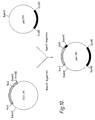
- This construction which yielded a new plasmid named VSV-P2 is schematically shown in Figure 9. From VSV-P2 we have excised a BamHI-BamHI DNA fragment carrying the P2 gene fused to the VSV leader peptide which was then inserted into the vector pAcYM119, as shown in Figure 10. The resulting plasmid was named pAc-P2.
- the VSV-P2 coding sequence must be transferred to the baculovirus genome under the transcriptional control of the polyhedrin promoter.
- insect cells For this purpose, we co-transfected insect cells with a wild-type baculovirus DNA and with the transfer vector pAc-P2.
- Spodoptera frugiperda cells were chosen as host cells. Experimental details are as follows: S. frugiperda cells were transfected with a mixture of infectious AcNPV DNA and plasmid DNA representing the individual recombinant transfer vectors by a modification of the procedure described by Summers et al 20.
- One microgram of viral DNA was mixed with 25-100 ⁇ g of plasmid DNA and precipitated with (final concentrations) 0.125 M calcium chloride in the presence of 20 mM HEPES buffer, pH 7.5, 1 mM disodium hydrogen orthophosphate, 5mM potassium chloride, 140 mM sodium chloride and 10 mM glucose (total volume 1ml).
- the DNA suspension was inoculated onto a monolayer of 106 S. frugiperda cells in a 35-mm tissue culture dish, allowed to adsorb to the cells for 1 h at room temperature, then replaced with 1 ml of medium. After incubation at 28 o C for 3 days the supernatant fluids were harvested and used to produce plaques in S. frugiperda cell monolayers. Plaques containing recombinant virus were identified by their lack of polyhedra when examined by light microscopy. Virus from such plaques was recovered and after further plaque purification was used to produce polyhedrin-negative virus stocks.
- the above procedure allowed us to isolate a recombinant baculovirus whose genome carried the P2 gene under control of the polyhedrin promoter and of the VSV G protein leader peptide.
- This virus was used to infect S. frugiperda cells according to well-established procedures20, at a multiplicity of infection of 10. Infected cells were then cultivated in spinner culture or in monolayers in the presence of 10% foetal calf serum according to published methods20. In both conditions, the S-2238 chromogenic assay showed the presence of an anti-thrombin activity in the culture supernatants of the infected cells.
- Example 6 Expression of protein P2 in the cytoplasm of insect cells
- Protein P2 could also be produced and accumulated in the cytoplasm of S. frugiperda cells. This approach generally gives a better yield of heterologous proteins since it utilizes the expression signals of polyhedrin which is a non-secreted viral protein.
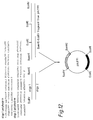
- FIG. 12 A different transfer vector, pAcFT1, carrying the nucleotide sequence coding for the first 18 amino acids of polyhedrin has been obtained ( Figure 12). Briefly, the EcoRV-BamHI fragment of pAcYM119 has been replaced by a synthetic oligonucleotide containing the polyhedrin gene sequence from nucleotide -92 to nucleotide +55. A convenient BamHI site is present after this sequence and it has been used for insertion of the complete P2 coding sequence according to a scheme illustrated in Figure 13. Through this construction, we obtained a new plasmid, named pAcFT1-P2, which has been used to transfer the hybrid gene to the baculovirus genome.
- the recombinant baculovirus was obtained as described in Example 5. Infection of S. frugiperda cells was carried out according to standard procedures20. Cultivation of infected insect cells lead to the cytoplasmic accumulation of the fusion protein. This hybrid protein was the source of recombinant protein P2.
- Several methods are available from the literature which can be used to cleave the hybrid with CNBr 22,23 . The application of the method of Olson et al 23, has allowed us to obtain the correct polypeptidic sequence of P2. This molecule displayed anti-thrombin activity.
- oligo 5-Tyr the triplet TAC which is underlined codes for a tyrosine residue and substitutes the GAC triplet coding for aspartic acid originally present.
- Oligo 6-Tyr has been corrected accordingly in order to obtain a complete complementarity between the two strands.
- the following steps leading to the expression and/or secretion of the variant in insect cells or in E. coli are the same described above in Examples 4 to 6.
- oligonucleotides 5 and 6 described above in Example 3 and shown in Figure 3 have been substituted with the following ones:
- RNA from Hirudinaria manillensis ' heads was prepared according to Cathala et al 24.
- the reverse transcription reaction was performed as follows: were assembled on ice, mixed and the mixture was heated for 2 minutes at 65°C followed by quenching on ice. 10 units of PNAsin (Promega) and 20 units of AMV reverse transcriptase (Boehringer Mannheim) were added, followed by incubation at 42°C for 2 hours. The reaction mixture was then phenolchloroform extracted and isopropanol precipitated.
- PCR Polymerase chain reaction
- PCR mixture The reaction mixture was denatured at 95°C for 5 minutes prior to the addition of 2.5 units of Tag polymerase (Cetus/Perkin-Elmer) and then overlaid with 80 ⁇ l of mineral oil. The reaction was cycled in a Cetus/Perkin-Elmer DNA Thermal Cycler. The cycle profile was: 3 min. 94°C 1 cycle 2 min. 60°C 2 min. 30 seconds 72°C 1 min. 94°C 30 cycles 2 min. 60°C 3 min. 30 seconds 72°C 1 min. 94°C 1 cycle 2 min. 60°C 5 min. 72°C 7 min.
- TdT Terminal deoxynucleotidyltransferase
- the reaction mixture was then diluted to 500 ⁇ l in distilled water. 10 ⁇ l of the polyadenylated products were amplified using 10 pmoles of the dT17 adaptor primer, 25 pmoles of the adaptor primer and 25 pmoles of a second gene-specific primer upstream to the first specific used for transcription (5' II, see Fig. 15).
- d) Analysis of PCR products The amplified products were cleaved at restriction sites present in each primer.
- the digested product was gel purified and subcloned into pUC13 vector, previously digested with the same restriction enzymes. Plasmids carrying the insert of interest were identified by restriction analyses. Plasmid DNA was sequenced with Sequenase (USB) using the supplier's recommendations.
- the cDNA sequences of P1 and P2 thus obtained and the deduced amino acid sequences are as follows. Leader sequences are underlined.
Landscapes
- Health & Medical Sciences (AREA)
- Chemical & Material Sciences (AREA)
- Life Sciences & Earth Sciences (AREA)
- Organic Chemistry (AREA)
- Genetics & Genomics (AREA)
- General Health & Medical Sciences (AREA)
- Engineering & Computer Science (AREA)
- Biophysics (AREA)
- Medicinal Chemistry (AREA)
- Molecular Biology (AREA)
- Biochemistry (AREA)
- Bioinformatics & Cheminformatics (AREA)
- Gastroenterology & Hepatology (AREA)
- Proteomics, Peptides & Aminoacids (AREA)
- Biomedical Technology (AREA)
- Biotechnology (AREA)
- Zoology (AREA)
- Virology (AREA)
- Wood Science & Technology (AREA)
- General Engineering & Computer Science (AREA)
- Nuclear Medicine, Radiotherapy & Molecular Imaging (AREA)
- Chemical Kinetics & Catalysis (AREA)
- Pharmacology & Pharmacy (AREA)
- Physics & Mathematics (AREA)
- General Chemical & Material Sciences (AREA)
- Plant Pathology (AREA)
- Microbiology (AREA)
- Animal Behavior & Ethology (AREA)
- Veterinary Medicine (AREA)
- Public Health (AREA)
- Tropical Medicine & Parasitology (AREA)
- Heart & Thoracic Surgery (AREA)
- Cardiology (AREA)
- Diabetes (AREA)
- Hematology (AREA)
- Peptides Or Proteins (AREA)
- Medicines That Contain Protein Lipid Enzymes And Other Medicines (AREA)
- Preparation Of Compounds By Using Micro-Organisms (AREA)
- Medicines Containing Material From Animals Or Micro-Organisms (AREA)
- Micro-Organisms Or Cultivation Processes Thereof (AREA)
Abstract
Description
- The present invention relates to polypeptides and to their preparation. The polypeptides have been isolated from the leech Hirudinaria manillensis. The polypeptides have anti-thrombin properties.
- The most popular anticoagulant peptides are probably those belonging to the family of hirudins. Hirudin, originally isolated from the medicinal leech, Hirudo medicinalis, is a well known and well characterized polypeptidic inhibitor of thrombin1,2. More particularly, it binds thrombin by ionic interactions thus preventing the cleavage of fibrinogen to fibrin and the subsequent fibrinclot formation. In animal studies hirudin has demonstrated efficacy in preventing venous thrombosis, vascular shunt occlusion and thrombin-induced disseminated intravascular coagulation. In addition, hirudin exhibits low toxicity, little or no antigenicity and a very short clearance time from circulation.³
- Polypeptides with anticoagulant properties have been isolated from a different leech species, Hirudinaria manillensis (EP-A-0347376 and WO 90/05143). This leech is evolutionarily more advanced than Hirudo medicinalis and could therefore synthesize anticoagulant peptides whose amino acid sequences may be different from those of hirudin and other known hirudin variants.
- We have analysed a preparation obtained from Hirudinaria manillensis leeches. We have found three new polypeptides having anti-thrombin activity. Accordingly, the present invention provides a polypeptide comprising the amino acid sequence:
- (i) P1 (SEQ ID NO: 1 in which Xaa at positions 61 and 65 denote Yaa and Zaa respectively)


- (ii) P2 (SEQ ID NO:2 in which Xaa at positions 61 and 65 denote Yaa and Zaa respectively)or

- (iii) P3 (SEQ ID NO:3)

- and pharmaceutically acceptable salts thereof.
- Amino acid residues are presented according to the three letter code (Eur. J. Biochem. 138, 9-37, 1984). A residue Yaa represents an Asp or Tyr residue and Zaa is -OH, -NH₂ or Gly-OH. The salts may be acid addition salts. They may be salts with an inorganic acid such as a hydrohalic acid, such as hydrochloric acid; sulphuric acid; phosphoric acid; or pyrophosphoric acid. The salts may be salts with an organic acid such as benzenesulphonic, p-toluenesulphonic, methanesulphonic, acetic, lactic, palmitic, stearic, malic, tartaric, ascorbic or citric acid. The polypeptides also contain free carboxyl groups and may therefore be present as sodium, calcium, potassium, magnesium or ammonium salts or salts with a physiologically tolerable organic nitrogen-containing base. The polypeptides can also be in the form of inner salts.
- The polypeptides of the invention therefore consist essentially of the amino acid sequences (i) to (iii). The natural polypeptides isolated from Hirudinaria manillensis leeches have the amino acid sequence (i) or (ii) in which Yaa is Asp and Zaa is -OH or the partial amino acid sequence (iii). The polypeptides of the invention may be isolated and purified for use as anti-thrombin agents.
- The polypeptides may be produced preceded by all or part of a leader sequence. The leader sequence may be a native or foreign leader sequence with respect to the cell in which a polypeptide is obtained. The leader sequence is capable of directing secretion of the polypeptide from the cell. Two of the natural polypeptides of the invention are expressed with a leader sequence which is cleaved subsequently. All or part of this leader sequence may therefore be present, the sequence being: Met Phe Ser Leu Lys Leu Phe Val Val Phe Leu Ala Val Cys Ile Cys Val Ser Gln Ala.
- A natural polypeptide according to the invention, or salts thereof, may be prepared by isolating the said polypeptide or a pharmaceutically acceptable salt thereof from the tissue or secretions of a leech of the species Hirudinaria manillensis. More specifically, a polypeptide of the invention can be obtained by obtaining a preparation according to WO 90/05143 and subjecting the preparation to high pressure liquid chromatography.
- A polypeptide according to the invention or a salt thereof can also be prepared by:
- (a) providing a host, transformed with an expression vector comprising a DNA sequence encoding a said polypeptide, under such conditions that the said polypeptide is expressed therein; and
- (b) isolating the said polypeptide thus obtained or a pharmaceutically acceptable salt thereof.
- This approach is typically based on obtaining a nucleotide sequence encoding the polypeptide it is wished to express and expressing the polypeptide in recombinant organisms. The cultivation of the genetically modified organisms leads to the production of the desired product displaying full biological activity. The present invention therefore further provides
- an expression vector comprising a DNA sequence encoding a polypeptide of the invention;
- a host transformed with a compatible expression vector according to the invention; and
- a DNA sequence encoding a polypeptide according to the invention.
- A host in which a polypeptide according to the invention is able to be expressed is prepared by transforming a host with a compatible expression vector of the invention. The expression vector can be prepared by:
- (a) chemically synthesising a DNA sequence encoding a polypeptide of the invention; and
- (b) inserting the said DNA into an expression vector.
- Alternatively, an expression vector can be prepared by:
- (a) producing and isolating a cDNA encoding the polypeptide of the invention from mRNA of a leech of the species Hirudinaria manillensis; and
- (b) inserting the isolated cDNA into an expression vector.
- A polypeptide according to the invention is consequently prepared by providing a transformed host under such conditions that the polypeptide is expressed therein. When a eucaryotic host is employed, the polypeptide can be obtained glycosylated. The polypeptide can be isolated as such or in the form of a pharmaceutically acceptable salt. In this way, a polypeptide or salt according to the invention may be obtained in pure form.
- The polypeptides of the invention may be modified by way of amino acid extension at either or each end. A polypeptide composed of such an extended sequence must of course still exhibit anti-thrombin activity. For example, a short sequence of up to 30 amino acid residues may be provided at either or each terminus.
- The polypeptides of the invention may be subjected to one or more post-translational modification such as sulphation, COOH- amidation, acylation or chemical alteration of the polypeptide chain. For example a polypeptide having a glycine residue at its carboxy terminus may be subjected to enzymatic amidation with peptidylglycine α-amidating monooxygenase (PAM enzyme).
- In order to produce an anti-thrombin polypeptide by recombinant DNA technology, a gene encoding a polypeptide of the invention is prepared. The DNA coding sequence typically does not include introns. The DNA sequence is isolated and purified. The gene is inserted in an expression vector able to drive production of the recombinant product. The DNA sequence may be a cDNA sequence. The DNA sequence may be a synthetic DNA sequence. The synthetic gene is typically prepared by chemically synthesising oligonucleotides which, in total, correspond to the desired gene. The oligonucleotides are then assembled to obtain the gene.
- A gene may therefore be constructed from six chemically synthesised oligonucleotides, each oligonucleotide representing about one third of one strand of a double-stranded DNA gene. The oligonucleotides are ligated and annealed to obtain the desired gene. If desired, the gene sequence may be modified by site-directed mutagenesis to introduce one or more codon changes. Typically, a gene is constructed with restriction sites at each end to facilitate its subsequent manipulation.
- A DNA sequence may be provided which further encodes a leader peptide as mentioned above. The leader peptide is capable of directing secretion of the polypeptide from cells in which the polypeptide is to be expressed. The sequence encoding the leader peptide is typically fused to the 5'-end of the DNA sequence encoding the polypeptide.
- The leader peptide may be the OmpA leader peptide when expression in a bacterial host, such as E. coli is required. The leader peptide may be the leader peptide of vesicular stomatitis virus G protein (VSV G protein) when expression is to be in insect cells. Appropriate DNA sequences encoding the OmpA and VSV G protein leader sequences are:

- A DNA sequence may be provided which encodes a fusion protein which is cleavable to release a polypeptide of the invention. A DNA sequence may be used which encodes a carrier polypeptide sequence fused via a cleavable linkage to the N-terminus of a polypeptide of the invention. The cleavable linkage may be one cleavable by cyanogen bromide.
- For expression of the polypeptide, an expression vector is constructed which comprises a DNA sequence encoding the polypeptide and which is capable of expressing the polypeptide when provided in a suitable host. Appropriate transcriptional and translational control elements are provided, including a promoter for the DNA sequence, a transcriptional termination site, and translational start and stop codons. The DNA sequence is provided in the correct frame such as to enable expression of the polypeptide to occur in a host compatible with the vector.
- The expression vector typically comprises an origin of replication and, if desired, a selectable marker gene such as an antibiotic resistance gene. A promoter is operably linked to the DNA sequence encoding the polypeptide. The expression vector may be a plasmid. In that case, preferably a promoter selected from the Ptrp and Plcc/lac promoters is operably linked to the DNA sequence. Alternatively, the expression vector may be a virus. The virus may be a recombinant baculovirus in which the polyhedrin promoter is operably linked to the DNA sequence encoding the polypeptide.
- An expression vector capable of expressing the polypeptide may be prepared in any convenient fashion. A DNA fragment encoding the polypeptide may be inserted into an appropriate restriction site of an expression vector, for example a plasmid vector. A recombinant baculovirus may be prepared by:
- (i) cloning a gene encoding the polypeptide into a baculovirus transfer vector at a restriction site downstream of the polyhedrin promoter; and
- (ii) co-transfecting insect cells susceptible to baculovirus infection with the recombinant transfer vector from step (i) and intact wild-type baculovirus DNA.
- Homologous recombination occurs, resulting in a recombinant baculovirus harbouring the polypeptide gene downstream of the polyhedrin promoter. The baculovirus transfer vector may be one having a unique cloning site downstream of the polyhedrin ATG start codon. The product that is then expressed by the resulting recombinant baculovirus will be a fusion protein in which a N-terminal portion of the polyhedrin protein is fused to the N-terminus of the polypeptide. As indicated above, a cleavable linkage may be provided at the fusion junction.
- The insect cells employed in step (ii) are typically Spodoptera frugiperda cells. The wild-type baculovirus is typically Autographa californica nuclear polyhedrosis virus (AcNPV).
- An expression vector encoding the polypeptide is provided in an appropriate host. Cells are transformed with the polypeptide gene. A transformed host is provided under such conditions that the polypeptide is expressed therein. Transformed cells, for example, are cultivated so as to enable expression to occur. Any compatible host-vector system may be employed.
- The transformed host may be a prokaryotic or eukaryotic host. A bacterial or yeast host may be employed, for example E. coli or S. cerevisiae. Gram positive bacteria may be employed. A preferred bacterial host is a strain of E. coli type B. Insect cells can alternatively be used, in which case a baculovirus expression system is appropriate. The insect cells are typically Spodoptera frugiperda cells. As a further alternative, cells of a mammalian cell line may be transformed. A transgenic animal, for example a non-human mammal, may be provided in which the polypeptide is produced.
- The polypeptide that is expressed may be isolated and purified. A polypeptide having any one of the amino acid sequences (i), (ii) or (iii) above preceded by a Met residue attributable to a translation start codon can be obtained. Alternatively, as mentioned above, a fusion protein may be obtained comprising the amino acid sequence of a polypeptide of the invention, i.e. sequence (i), (ii) or (iii) above, fused to a carrier sequence. Where a suitable linkage is provided in the fusion protein between the amino acid sequence (i), (ii) or (iii) and the carrier sequence, a polypeptide having amino acid sequence (i), (ii) or (iii) can be released by cleavage with a suitable agent.
- A polypeptide of the invention or a pharmaceutically acceptable salt thereof can also be prepared by:
- (a) chemically synthesising the said polypeptide; and
- (b) isolating the said polypeptide thus obtained or a pharmaceutically acceptable salt thereof.
- The polypeptides can therefore be built up by chemical synthesis from single amino acids and/or preformed peptides of two or more amino acids in the order of the sequence of the desired polypeptide. Solid-phase or solution methods may be employed. The resultant polypeptide may be converted into a pharmaceutically acceptable salt if desired.
- In solid-phase synthesis, the amino acid sequence of the desired polypeptide is built up sequentially from the C-terminal amino acid which is bound to an insoluble resin. When the desired polypeptide has been produced, it is cleaved from the resin. When solution-phase synthesis is employed, the desired polypeptide may again be built up from the C-terminal amino acid. The carboxy group of this acid remains blocked throughout by a suitable protecting group, which is removed at the end of the synthesis.
- Whichever technique, solid-phase or solution-phase, is employed each amino acid added to the reaction system typically has a protected amino group and an activated carboxy group. Functional side-chain groups are protected too. After each step in the synthesis, the amino-protecting group is removed. Side-chain functional groups are generally removed at the end of the synthesis.
- A polypeptide may be converted into a pharmaceutically acceptable salt. It may be converted into an acid addition salt with an organic or inorganic acid. Suitable acids include acetic, succinic and hydrochloric acid. Alternatively, the peptide may be converted into a carboxylic acid salt such as the ammonium salt or an alkali metal salt such as the sodium or potassium salt.
- A polypeptide or pharmaceutically acceptable salt thereof may be used in a pharmaceutical composition, together with a pharmaceutically acceptable carrier or excipient therefor. Such a formulation is typically for intravenous administration (in which case the carrier is generally sterile saline or water of acceptable purity). A polypeptide according to the invention is an anti-thrombin and is suitable for treatment of thromboembolic events, such as the coagulation of blood, typically in a human patient. A polypeptide can therefore be used for the therapy and prophylaxis of thromboses and thromboembolisms, including the prophylaxis of post-operative thromboses, for acute shock therapy (for example for septic or polytraumatic shock), for the therapy of consumption coagulopathies, in haemodialyses, haemoseparations and in extracorporeal blood circulation. In one embodiment of the invention, the polypeptide or salt thereof can be coadministered with a plasminogen activator, such as tissue plasminogen activator.
- The dosage depends especially on the specific form of administration and on the purpose of the therapy or prophylaxis. The size of the individual doses and the administration regime can best be determined by way of an individual judgement of the particular case of illness; the methods of determining relevant blood factors required for this purpose are familiar to the person skilled in the art. Normally, in the case of an injection the therapeutically effective amount of the compounds according to the invention is in a dosage range of from approximately 0.005 to approximately 0.1 mg/kg body weight. A range of from approximately 0.01 to approximately 0.05 mg/kg body weight is preferred. The administration is effected by intravenous, intramuscular or subcutaneous injection. Accordingly, pharmaceutical compositions for parenteral administration in single dose form contain per dose, depending on the mode of administration, from approximately 0.4 to approximately 7.5 mg of the compound according to the invention. In addition to the active ingredient these pharmaceutical compositions usually also contain a buffer, for example a phosphate buffer, which is intended to keep the pH value between approximately 3.5 and 7, and also sodium chloride, mannitol or sorbitol for adjusting the isotonicity. They may be in freeze-dried or dissolved form, it being possible for solutions advantageously to contain an antibacterially active preservative, for example from 0.2 to 0.3% 4-hydroxybenzoic acid methyl ester or ethyl ester.
- A composition for topical application can be in the form of an aqueous solution, lotion or gel, an oily solution or suspension or a fat-containing or, especially, emulsified ointment. A composition in the form of an aqueous solution is obtained, for example, by dissolving the active ingredients according to the invention, or a therapeutically acceptable salt thereof, in an aqueous buffer solution of from e.g.,
pH 4 to pH 6.5 and, if desired, adding a further active ingredient, for example an anti-inflammatory agent, and/or a polymeric binder, for example polyvinylpyrrolidone, and/or a preservative. The concentration of active ingredient is from approximately 0.1 to approximately 1.5 mg, preferably from 0.25 to 1.0 mg, in 10 ml of a solution or 10 g of a gel. - An oily form of administration for topical application is obtained, for example, by suspending the active ingredient according to the invention, or a therapeutically acceptable salt thereof, in an oil, optionally with the addition of swelling agents, such as aluminium stearate, and/or surfactants (tensides) having an HLB value ("hydrophilic-lipophilic balance") of below 10, such as fatty acid monoesters of polyhydric alcohols, for example glycerin monostearate, sorbitan monolaurate, sorbitan monostearate or sorbitan monooleate. A fat-containing ointment is obtained, for example, by suspending the active ingredient according to the invention, or a salt thereof, in a spreadable fatty base, optionally with the addition of a tenside having an HLB value of below 10. An emulsified ointment is obtained by triturating an aqueous solution of the active ingredient according to the invention, or a salt thereof, in a soft, spreadable fatty base with the addition of a tenside having an HLB value of below 10. All these forms for topical application can also contain preservatives. The concentration of active ingredient is from approximately 0.1 to approximately 1.5 mg, preferably from 0.25 to 1.0 mg, in approximately 10 g of base.
- In addition to the compositions described above and pharmaceutical compositions analogous thereto that are intended for direct medicinal use in the body of a human or a mammal, the present invention relates also to pharmaceutical compositions and preparations for medicinal use outside the living body of humans or mammals. Such compositions and preparations are used especially as anticoagulant additives to blood that is being subjected to circulation or treatment outside the body (for example extracorporeal circulation or dialysis in artificial kidneys), preservation or modification (for example haemoseparation). Such preparations, such as stock solutions or alternatively preparations in single dose form, are similar in composition to the injection preparations described above; however, the amount or concentration of active ingredient is advantageously based on the volume of blood to be treated or, more precisely, on its thrombin content. In this connection it must be borne in mind that the active ingredient according to the invention (in free form) completely deactivates approximately 5 times the amount by weight of thrombin, are physiologically harmless even in relatively large amounts, and are eliminated from the circulating blood rapidly even in high concentrations so that there is no risk of overdose, even, for example, during transfusions. Depending on the specific purpose, the suitable dose is from approximately 0.01 to approximately 1.0 mg of the active ingredient/litre of blood, although the upper limit may still be exceeded without risk.
- The following Examples illustrate the invention. In the accompanying drawings:
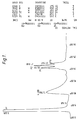
- Figure 1 is a chromatogram showing the results of the HPLC analysis of Example 1. P1 to P3 denote the three different peaks obtained from the preparation according to Example 1, FT is for flow through and 4-AB is for 4-aminobenzamidine.
- Figure 2 shows the elution profiles obtained in Example 2(b) for trypsin-digested PE-P1 (A) and PE-P2 (B).
- Figure 3 shows the nucleotide sequence of the six oligonucleotides coding for most of the protein corresponding to peak 2 (P2) in which the amino acid residue in position 61 is Asp and the last amino acid of the polypeptidic chain is Asn₆₄. The sequence shown in bold face indicates the BalI site which has been used for further constructions. The lower part of the Figure shows the mode of assembling of the six oligos. HindIII and PstI sites were included to allow subsequent manipulations. Oligos 1-6 are SEQ ID NOS: 37-42 respectively.
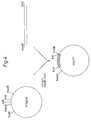
- Figure 4 shows the scheme of the construction of the intermediate plasmid M13-P2, which is the source of a BalI-BamHI DNA fragment for all further P2 constructions.
- Figure 5 shows schematically the construction of a new recombinant M13, named OMP-P2, which carries the complete P2 gene linked to the OmpA leader peptide. The leader peptide sequence is shown in bold face while the BalI blunt end and the HindIII sticky end are underlined. Oligos 1 and 2 are SEQ ID NOS: 43 and 44 respectively.
- Figure 6 shows schematically the construction of pFC-P2 which is the plasmid used for the production of P2 protein in E. coli.
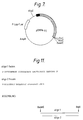
- Figure 7 shows the general structure of the plasmid pOMPA-P2 used for the production of P2 in E. coli. We employed traditional gene manipulation techniques to prepare this new plasmid where the P2 gene is under transcriptional control of the hybrid promoter Plpp/lac. Even in this case, the OmpA leader peptide drives secretion of P2 to the periplasm of E. coli.
- Figure 8 shows the nucleotide sequence and assembling of the synthetic oligos used for the secretion of P2 from insect cells. The sequence shown in bold face indicates the VSV G protein leader peptide. Oligos 1 and 2 are SEQ ID NOS: 45 and 46 respectively.
- Figure 9 is a schematic representation of the construction of a new recombinant M13, named VSV-P2, where the complete P2 gene is linked to the VSV G protein leader peptide.
- Figure 10 shows schematically the construction of pAc-P2 which has been used as transfer vector to the baculovirus genome. pAcYM1 is the starting plasmid widely used as acceptor of heterologous sequences to be transferred to the virus.
- Figure 11 shows the nucleotide sequence and assembling of the synthetic oligos coding for the beginning of the P2 chain. The ATG codon coding for the additional methionine residue is shown in bold face. Oligos 1 and 2 are SEQ ID NOS: 47 and 48 respectively.
- Figure 12 shows schematically the construction of pAcFT1, which has been used for intracellular expression. Oligos 1 and 2 are SEQ ID NOS: 49 and 50 respectively.
- Figure 13 is a schematic representation of a new transfer plasmid, named pAcFT1-P2, which carries the complete P2 sequence linked to the first 18 amino acids of polyhedrin. This plasmid has been used to transfer the heterologous sequence to the baculovirus genome.
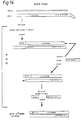
- Figure 14 is a schematic representation of the RACE protocol for amplification of 3' ends. In the Figure "***TTTT..." represents the dT17 adaptor primer. At each step the diagram is simplified to illustrate only how the new product formed during the previous step is utilized.
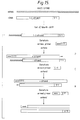
- Figure 15 is a schematic representation of the RACE protocol for amplification of 5' ends. In the Figure "***TTTT..." and "***" respectively represents the dT17 adaptor primer and the adaptor primer. At each step the diagram is simplified to illustrate only how the new product formed during the previous step is utilized.
- An antithrombin preparation was prepared from Hirudinaria manillensis leeches according to WO 90/05143, following the procedure illustrated under a) and b) below:
- Ethanol dried leech heads (2920 g) were finely chopped into small pieces and treated with a mixture 40:60 acetone/water (7.5 1). After homogenisation with stirring at room temperature, the mixture was spun for 15 min at 2,700 rpm and the supernatant was decanted; the pellet was again resuspended in 40:60 acetone:water mixture, stirred for 30 min and the mixture centrifuged for 15 min at 2,700 rpm. The supernatant was pooled with the initial one and acidified to pH 4.5 with glacial acetic acid (vol. 8.5 1). The mixture was spun at 2,700 rpm for 15 minutes, then the supernatant was decanted and the pH of the solution adjusted to pH 6.0 by adding 30% ammonia. Following rotary evaporation at 35°C, the pH of the concentrated solution was lowered to 1.8; precipitated contaminants were removed by centrifuging and the raw anti-thrombin material was precipitated from the mixture using a 9-fold acetone excess. The mixture was then spun down, the pellet resuspended in acetone and again centrifuged. The precipitated material was then lyophilized.
- The raw anti-thrombin material was reconstituted in water, dialyzed against 10 mM ammonium acetate buffer at pH 4.0 and loaded onto a carboxymethyl Sepharose column (CM Sepharose, Pharmacia, 2.6 x 30 cm) pre-equilibrated in the same buffer. Following a 100 ml washing with starting buffer, anti-thrombin active fractions were eluted with 20 mM ammonium acetate pH 4.5, collected and pooled (1.3 1). For further purification steps, pooled fractions were concentrated to 0.5 1 in a Minitan apparatus (Millipore); the concentrated solution was neutralised with NaOH and then applied on to a Q Sepharose column equilibrated in 20 mM Tris-HCl pH 7.0. The bound material was eluted with a linear gradient of 0 - 1 M NaCl in the starting buffer. The fractions containing with anti-thrombin activity were pooled, concentrated and desalted on a Superdex 5-200 column eluted with 20 mM Tris-HCl pH 7.5 at a flow rate of 4 ml/min. Active pool from gel filtration was concentrated by Minitan and further purified by weak anion exchange chromatography (DEAE FPLC). The active material was loaded onto a Protein Pak DEAE-5PW column (Waters) and eluted with a gradient of 0 - 1 M NaCl in 20 mM Tris-HCl pH 6.5, at a flow rate of 1.0 ml/min. Active fractions were pooled, characterized for protein content and activity (specific activity: 800 ATU/mg), and freeze-dried in a SpeedVac concentrator (Savant).
- The thus obtained partially purified material (specific activity 800 ATU/mg) was then subject to two additional chromatographic steps, in order to get homogenous polypeptides, as described below under c) and d):
- Commercial bovine thrombin (Sigma) was further purified according to the procedure described by Lundblad (*) and then was attached to activated Sepharose CL 6B (Pharmacia) following manufacturer's instructions. The column (1.7 ml) was equilibrated with 50 mM Tris-HCl pH 8.3 and the freeze-dried material from DEAE-FPLC (reconstituted in buffer) was loaded. The column was subjected to three washing, in starting buffer, then in the same buffer containing 3.0 M NaCl and again with starting buffer (each washing was three times the column volume). Flow rate was 0.3 ml/min. The bound material was eluted with 10 ml of 0.1 M 4-aminobenzamidine in 25 mM HCl. The active fractions were pooled and buffer exchanged in 50 mM Tris-HCl pH 8.3 onto a PD-10 column (Pharmacia).
(*) Lundblad, R.L., 1971, Biochemistry, 10: 2501-2506 - Unbound material eluted from the column by washing in starting buffer and still containing anti-thrombin activity, was reloaded onto the column until all the activity was bound and chromatographed.
- Material obtained after affinity chromatography was finally purified by reverse phase high performance chromatography (RP-HPLC) on a C4 Vydac column (4.6 x 250 mm. 5µ) using 20 mM sodium phosphate pH 7.5 as first eluent and 50% acetonitrile in water as modified. Anti-thrombin polypeptides were eluted with a linear gradient from 5% to 55% of eluent B in 45 minutes, at room temperature with a flow rate of 1.0 ml/min. The resulting chromatogram is shown in Figure 1.
- Peaks of protein (detected at 220 nm) were manually collected, concentrated under vacuum and re-chromatographed under the same conditions.
- Pure anti-thrombin polypeptides after C4 HPLC were characterized for protein content, amino acid composition, N-terminal sequence, C-terminal end and their activity determined by in vitro assays (ATU/NIH test and "thrombin time" test). Each of the three peaks of protein has been found to be endowed with anti-thrombin activity.
- The complete amino acid sequences of the polypeptides labeled P1 and P2 in Figure 1 were determined by N-terminal sequencing of the peptides obtained from tryptic and V8 protease digests. The sequences are reported under (i) and (ii) above. The partial amino acid sequence of the other polypeptide (P3) is reported under (iii) above.
-
- a) Reduction/Alkylation - Active fractions purified by affinity chromatography on Thrombin-Sepharose (Example 1c) were pooled and buffer exchanged in 10 mM Tris-HCl pH 8.3 onto a PD-10 column. The active pool (about 50 µg) was concentrated in a Speed-Vac centrifuge (Savant) and treated with 100 µl of 1% b-mercaptoethanol in 6M guanidine-HCl / 50 mM Tris-HCl pH 8.5, under nitrogen, in the dark, for 2 hours at room temperature. Then 4 µl of 4-vinyl-pyridine (neat) were added and the mixture incubated again for 2 hours as above⁴.
Pyridylethylated polypeptides were first recovered from the reaction mixture by RP-HPLC on a C4 Vydac (4.6x250 mm, 5µm) column eluted with a 90 min. linear gradient from 5-65% acetonitrile in 0.1% TFA, at a flow rate of 1.0 ml/min. Under such conditions the mixture of anti-thrombin polypeptides is poorly resolved so that they have to be re-chromatographed on the same column using the elution system sodium phosphate/acetonitrile with the conditions already described in Example 1d. - b) Trypsin digestion and peptide mapping of PE-P1 and PE-P2 - Purified PE-P1 and PE-P2 (respectively 10 and 20 µg) were digested with TPCK-treated trypsin (Sigma) in 200 µl of 1% ammonium bicarbonate pH 8.0 in the presence of 0.2 M sodium phosphate. Trypsin was added at an enzyme-to-substrate ratio of 1:20 (w/w) and incubation was carried out for 4 hours at 37°C. Digestion was stopped by freeze-drying in Savant.
Peptides obtained by tryptic digestion were separated on a µBondapak C18 column (3.9 x 300 mm, 10µ Waters) or on a C4-Vydac (4.6 x 250 mm, 5µm) column eluted using a 60 min. linear gradient from 5-65% acetonitrile in 0.1% TFA, at a flow rate of 1.0 ml/min (Figure 2). Eluted peaks were manually collected, concentrated in Savant and then subjected to amino acid analysis and to N-terminal sequence analysis on a pulsed liquid-phase mod. 477A Sequencer (Applied Biosystems). - The results of C4-HPLC peptide mapping of trypsin-digested PE-P1 (A) and PE-P2 (B) are shown below.
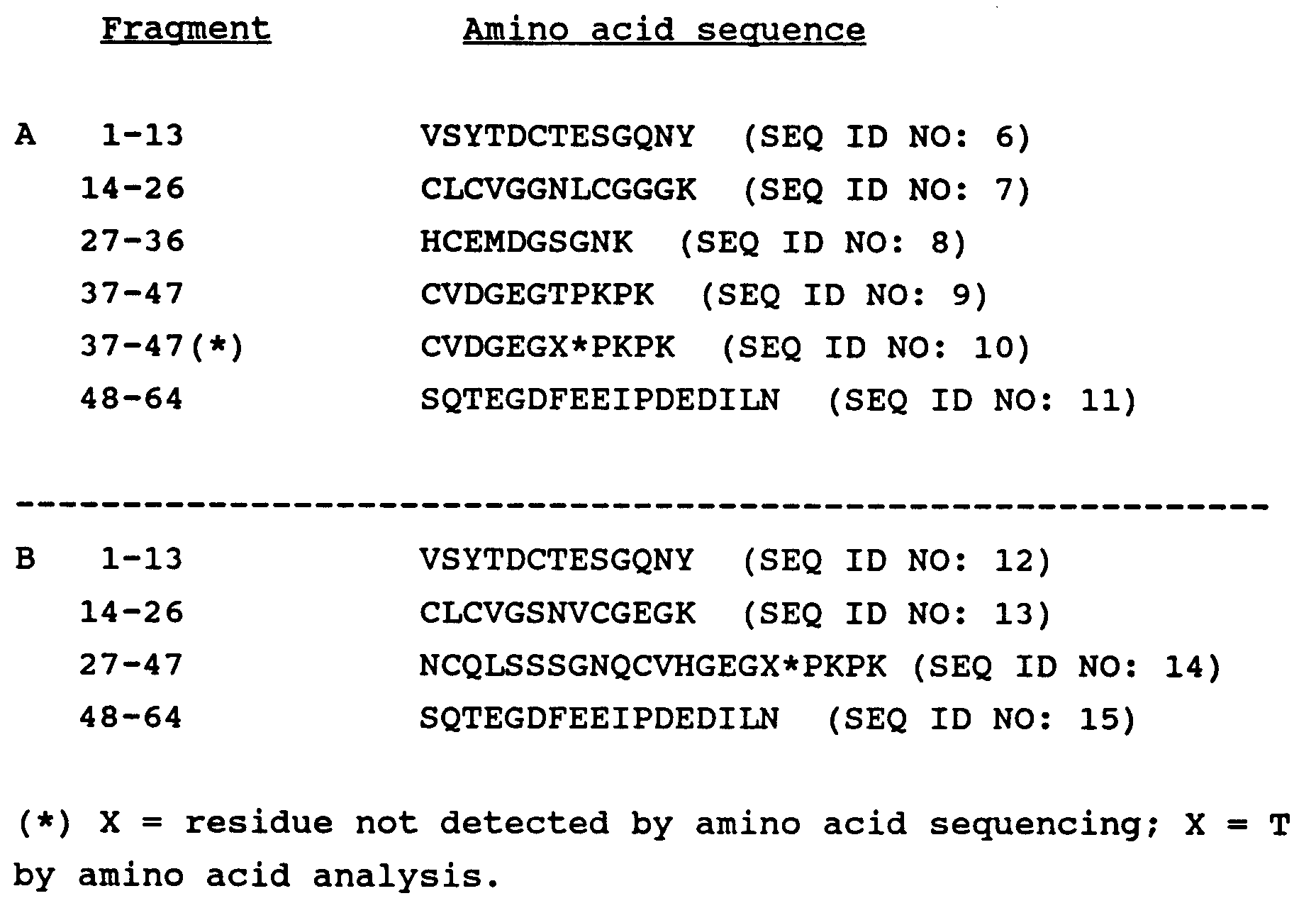
- The complete amino acid sequences of P1 and P2 are therefore:

- The nucleotide coding sequence was designed on the basis of the Escherichia coli preferred codons⁵. Moreover, a BalI restriction site was engineered very close to the 5' end of the synthetic gene to allow insertion of such sequence in different expression vectors. Indeed, the same synthetic gene was used for expression of recombinant P2 protein in bacterial and insect cells. In the case of insect cells methods were developed which yielded protein P2 as a secreted or cytoplasmic product.
- All plasmid DNA manipulations were carried out as described by Maniatis et al⁶.
- Six synthetic complementary oligonucleotides were prepared using an automated DNA synthetizer (Applied Biosystems) and their sequence is shown in Figure 3. Following enzymatic phosphorylation the six oligos were assembled using DNA ligase and the resulting double-strand sequence was inserted in the M13 phage vector mp18, obtaining the recombinant plasmid M13-P2 which is shown in Figure 4. In order to enable insertion of the P2 gene in the M13 vector, HindIII and PstI sites were also added in the synthetic oligos. The correct nucleotide sequence has been verified by the Sanger method carried out on the single strand phage DNA⁷.
- The recombinant plasmid M13-P2 was used as the source of the P2 gene for all the expression vectors used in the Examples.
- In order to obtain secretion to the periplasm of the recombinant product, it is necessary to synthesize the P2 molecule in the form of a pre-protein. More particularly, an amino acid sequence named "leader peptide", responsible for an efficient secretion must be present at the NH₂ end of P2 8,9. This extra sequence is then cleaved off, in vivo, during secretion, by a specific E. coli leader peptidase, yielding the correct mature sequence¹⁰.
- Many examples of secretion systems have been described in the literature11,12. Among them, we have selected the system based on the secretion signal of the Outer Membrane Protein of E. coli (Omp A) previously published¹³. We therefore designed two additional complementary oligonucleotides coding for the OmpA leader peptide preceded by the OmpA Shine-Dalgarno sequence known to be responsible for an efficient translation of the messenger RNA¹⁴.
- Their sequence, shown in Fig. 5, includes also the beginning of the P2 gene coding for the first 10 amino acids. The presence of the BalI site allowed the joining of this synthetic piece to the rest of the P2 coding sequence while the presence of the upstream HindIII site allowed the joining to the M13 vector. Thus, the synthetic HindIII-BalI fragment was ligated to a BalI-BamHI piece from M13-P2 and inserted in M13mp18, obtaining a new plasmid named OMP-P2. The schematic representation of this new plasmid construction is also shown in Figure 5.
- From OMP-P2 the P2 gene can be excised as a HindIII-BamHI fragment which codes for the OmpA Shine-Dalgarno and leader peptide followed by the P2 coding sequence. This restriction fragment is now ready to be inserted in an appropriate expression vector. Several expression systems could, theoretically, be employed to obtain high level production of heterologous proteins in bacteria. The system based on the promoter Ptrp has been used with success in our laboratory in the past¹⁴. Again, even in the case of the selected promoter, the levels of expression of a given polypeptide cannot be predicted.
- Plasmid pFC33, shown in Figure 6, has already been described in the literature¹⁴. It carries the resistance to the antibiotic ampicillin and the bacterial promoter Ptrp which drives expression of proapolipoprotein A1. Following digestion of pFC33 with HindIII and BamHI, the large HindIII-BamHI fragment, carrying the antibiotic resistance gene and the promoter, was isolated and joined to the HindIII-BamHI fragment from OMP-P2 coding for the P2 gene. The details of this construction are shown in Figure 6. We isolated a new plasmid, named pFC-P2, which is the final plasmid for the production of P2 in E. coli.
- An object of the present invention is the use of E. coli strains of the type B for the expression and secretion to the periplasm of P2 and the other anti-thrombin polypeptides of the invention. Indeed, we have found that insertion of plasmid pFC-P2 in type B strains of the bacterium E. coli brings high level production of P2. Interestingly, different strain types of E. coli do not work as efficiently and it seems, therefore, that the host strain type is crucial for the successful production of bufrudin.
- Several type B strains of E. coli are available and can be used for the production of P2. Preferred strains are ATCC 12407, ATCC 11303, NCTC 10537. Below is an example of transformation of strain NCTC 10537 with plasmid pFC-P2 and subsequent cultivation of the transformant.
- Competent cells of strain NCTC 10537 were prepared using the calcium chloride procedure of Mandel and Higa¹⁵. Approximately 200µl of a preparation of these cells at 1 x 10⁹ cells per milliliter were transformed with 2µl of plasmid DNA (approximate concentration 5µg/ml). Transformants were selected on plates of L-agar containing 100µg/ml ampicillin. Two small colonies were streaked with wooden tooth picks (each as three streaks about 1 cm long) onto L-agar containing the same antibiotic. After 12 hours incubation at 37oC, portions of the streaks were tested for P2 protein production by inoculation onto 10 ml of LB medium (containing ampicillin at a concentration of 150µg/ml) and incubated overnight at 37oC. The following day the cultures were diluted 1:100 in M9 medium, containing the same concentration of ampicillin, and incubated for 6 hours at 37oC.
- 20 ml of such culture were centrifuged at 12000xg, 4oC, for 10 minutes. The bacterial pellet was resuspended in 2 ml of 33 mM HCl Tris pH 8; an equal volume of a second solution 33 mM EDTA, 40% sucrose was then added and the total mixture was incubated under mild shaking conditions at 37oC for 10 minutes. Following centrifugation, the permeabilized cells were resuspended in 2 ml of cold water and left for 10 minutes in ice. The resulting supernatant was isolated by centrifugation and represents the periplasmic fraction of the bacterial cell.
- Using a chromogenic assay that is based on the inhibition of the thrombin ability to cleave a synthetic substrate S-2238¹⁶, we have measured the presence of anti-thrombin activity in the periplasmic fraction of P2 producing cells but not in control periplasmic fractions.
- With the similar approach we have also constructed a new expression/secretion plasmid for P2 where the promoter Plpp/lac¹⁷ is present instead of the promoter Ptrp. This different plasmid, named pOMF-P2, is shown in Figure 7. Following insertion of this plasmid in E. coli strains of the type B, high levels of active P2 were also obtained. As starting plasmid for the construction of pOMP-P2 we used the plasmid pIN-III-ompA3 described by Ghrayb et al¹⁷. Conditions for cultivation and induction of expression with isopropyl-β-D-thiogalactopyranoside (IPTG) were as previously described¹⁷.
- To obtain secretion of protein P2 from recombinant insect cells we had to join the P2 coding sequence to a leader peptide that is efficiently recognized by these cells. We have used the leader peptide of the Vescicular Stomatitis Virus (VSV) G protein¹⁸. Similarly to what is described above, a synthetic DNA sequence coding for the VSV G protein leader peptide followed by the beginning of the P2 gene has been prepared and the nucleotide sequence is given in Figure 8. Also in this case we provided convenient restriction sites (HindIII, BamHI and BalI) to allow joining to the rest of the P2 gene and to the expression vector.
- The synthetic HindIII-BalI fragment was joined to a purified BalI-BamHI fragment from M13-P2 carrying the P2 gene and inserted in M13mp18 previously cut with HindIII and BamHI. This construction which yielded a new plasmid named VSV-P2 is schematically shown in Figure 9. From VSV-P2 we have excised a BamHI-BamHI DNA fragment carrying the P2 gene fused to the VSV leader peptide which was then inserted into the vector pAcYM1¹⁹, as shown in Figure 10. The resulting plasmid was named pAc-P2.
- To obtain expression in insect cells, the VSV-P2 coding sequence must be transferred to the baculovirus genome under the transcriptional control of the polyhedrin promoter. For this purpose, we co-transfected insect cells with a wild-type baculovirus DNA and with the transfer vector pAc-P2. As insect cells, Spodoptera frugiperda cells were chosen as host cells. Experimental details are as follows:
S. frugiperda cells were transfected with a mixture of infectious AcNPV DNA and plasmid DNA representing the individual recombinant transfer vectors by a modification of the procedure described by Summers et al²⁰. One microgram of viral DNA was mixed with 25-100 µg of plasmid DNA and precipitated with (final concentrations) 0.125 M calcium chloride in the presence of 20 mM HEPES buffer, pH 7.5, 1 mM disodium hydrogen orthophosphate, 5mM potassium chloride, 140 mM sodium chloride and 10 mM glucose (total volume 1ml). - The DNA suspension was inoculated onto a monolayer of 10⁶ S. frugiperda cells in a 35-mm tissue culture dish, allowed to adsorb to the cells for 1 h at room temperature, then replaced with 1 ml of medium. After incubation at 28oC for 3 days the supernatant fluids were harvested and used to produce plaques in S. frugiperda cell monolayers. Plaques containing recombinant virus were identified by their lack of polyhedra when examined by light microscopy. Virus from such plaques was recovered and after further plaque purification was used to produce polyhedrin-negative virus stocks.
- The above procedure allowed us to isolate a recombinant baculovirus whose genome carried the P2 gene under control of the polyhedrin promoter and of the VSV G protein leader peptide. We used this virus to infect S. frugiperda cells according to well-established procedures²⁰, at a multiplicity of infection of 10. Infected cells were then cultivated in spinner culture or in monolayers in the presence of 10% foetal calf serum according to published methods²⁰. In both conditions, the S-2238 chromogenic assay showed the presence of an anti-thrombin activity in the culture supernatants of the infected cells.
- Protein P2 could also be produced and accumulated in the cytoplasm of S. frugiperda cells. This approach generally gives a better yield of heterologous proteins since it utilizes the expression signals of polyhedrin which is a non-secreted viral protein.
- Our approach to obtain large quantities of recombinant protein P2 is based on the expression of a fusion polypeptide where the first 18 amino acids of polyhedrin are joined in frame to the 64 amino acids of P2. The presence of the NH₂ end sequence of polyhedrin allows high level expression²¹. In addition, between the polyhedrin portion and the P2 sequence we put a methionine residue which allows the release of the P2 moiety by treatment of the hybrid protein with CNBr.
- Similarly to the previous approaches, we prepared a synthetic DNA fragment which could allow the joining of the BalI-BamHI fragment from M13-P2 to an appropriate transfer vector. The new synthetic piece, shown in Figure 11, includes also SamHI and BalI sites for subsequent manipulations.
- A different transfer vector, pAcFT1, carrying the nucleotide sequence coding for the first 18 amino acids of polyhedrin has been obtained (Figure 12). Briefly, the EcoRV-BamHI fragment of pAcYM1¹⁹ has been replaced by a synthetic oligonucleotide containing the polyhedrin gene sequence from nucleotide -92 to nucleotide +55. A convenient BamHI site is present after this sequence and it has been used for insertion of the complete P2 coding sequence according to a scheme illustrated in Figure 13. Through this construction, we obtained a new plasmid, named pAcFT1-P2, which has been used to transfer the hybrid gene to the baculovirus genome.
- The recombinant baculovirus was obtained as described in Example 5. Infection of S. frugiperda cells was carried out according to standard procedures²⁰. Cultivation of infected insect cells lead to the cytoplasmic accumulation of the fusion protein. This hybrid protein was the source of recombinant protein P2. Several methods are available from the literature which can be used to cleave the hybrid with CNBr22,23. The application of the method of Olson et al²³, has allowed us to obtain the correct polypeptidic sequence of P2. This molecule displayed anti-thrombin activity.
- In order to obtain the Tyr₆₁ variant of the P2 protein,
oligonucleotides number 
- In oligo 5-Tyr the triplet TAC which is underlined codes for a tyrosine residue and substitutes the GAC triplet coding for aspartic acid originally present. Oligo 6-Tyr has been corrected accordingly in order to obtain a complete complementarity between the two strands. The following steps leading to the expression and/or secretion of the variant in insect cells or in E. coli are the same described above in Examples 4 to 6.
- In order to obtain a glycine-extended derivative of the P2 protein,
oligonucleotides 

- In oligo 5-Gly the triplet GGT which is underlined and which codes for glycine has been inserted before the stop codon. Oligo 6-Gly has been corrected accordingly in order to obtain a complete complementarity between the two strands. The following steps leading to the expression and/or secretion of the Gly-extended derivative in insect cells or in E. coli are the same described above under Examples 4 to 6.
-
(a) Total RNA from Hirudinaria manillensis' heads was prepared according to Cathala et al²⁴.
(b) The reverse transcription reaction was performed as follows:were assembled on ice, mixed and the mixture was heated for 2 minutes at 65°C followed by quenching on ice. 10 units of PNAsin (Promega) and 20 units of AMV reverse transcriptase (Boehringer Mannheim) were added, followed by incubation at 42°C for 2 hours. The reaction mixture was then phenolchloroform extracted and isopropanol precipitated.
c) Polymerase chain reaction (PCR) reactions were then carried out. The general scheme for each PCR reaction is outlined below:
PCR mixture:The reaction mixture was denatured at 95°C for 5 minutes prior to the addition of 2.5 units of Tag polymerase (Cetus/Perkin-Elmer) and then overlaid with 80 µl of mineral oil. The reaction was cycled in a Cetus/Perkin-Elmer DNA Thermal Cycler.
The cycle profile was:3 min. 94° C 1 cycle 2 min. 60° C 2 min. 30 seconds 72° C 1 min. 94° C 30 cycles 2 min. 60° C 3 min. 30 seconds 72° C 1 min. 94° C 1 cycle 2 min. 60° C 5 min. 72°C 7 min. 72°C leave at 25°C  First round of amplification

500 pmoles of fully degenerated primers, spanning fromresidue 3 to 8 and from residue 56 to 52 of the P2 amino acid sequence were used as opposing primers in the PCR reaction.
Amplification of cDNA 3' ends (RACE protocol) Frohman et al²⁵.
A gene specific primer, spanning from residue 32 to 37 was designed on the basis of the nucleotide sequence of P2 determined in the first round of amplification. This was used together with the dT adaptor primer to amplify the cDNA (Fig. 14).
Amplification of cDNA 5' ends (RACE protocol), Frohman et al²⁵.
10 µg of total RNA from leeches' heads were reverse transcribed as previously described except for the substitution of 1 µg of a gene specific primer (5'I) for dT17 adaptor primer (see Fig. 15). The reaction mixture was then isopropanol precipitated and the first strand cDNA products were polyadenylated at their 5' ends using Terminal deoxynucleotidyltransferase (TdT) as follows:
22 µl of cDNA
1 µl of 6mM dATP
6 µl of 5X TdT Buffer (BRL)
1.1 µl of TdT (BRL)
Samples were incubated for 10 minutes at 37°C and heated for 16 minutes at 65°C. The reaction mixture was then diluted to 500µl in distilled water.
10µl of the polyadenylated products were amplified using 10 pmoles of the dT17 adaptor primer, 25 pmoles of the adaptor primer and 25 pmoles of a second gene-specific primer upstream to the first specific used for transcription (5' II, see Fig. 15).
d) Analysis of PCR products
The amplified products were cleaved at restriction sites present in each primer. The digested product was gel purified and subcloned into pUC13 vector, previously digested with the same restriction enzymes. Plasmids carrying the insert of interest were identified by restriction analyses. Plasmid DNA was sequenced with Sequenase (USB) using the supplier's recommendations. The cDNA sequences of P1 and P2 thus obtained and the deduced amino acid sequences are as follows. Leader sequences are underlined.

-
- 1) Markwardt, F. 1970, Methods in Enzymology, 19, p. 924
- 2) Markwardt, F. 1985, Biomed. Biochim. Acta. 44, p. 1007
- 3) Markwardt, F. Hauptmann, J., Nowak, G., Klessen, C., and Walsmann, P. 1982. Thromb. Haemostasis 47, p. 226.
- 4) Dupont D., Keim P., Chui A., Bello R. and Wilson K., Derivatizer-Analyser User Bulletin No. 1, Applied Biosystems Inc., 1987
- 5) Grosjeans H. and Fiers W. 1982. Gene, 18, p. 199
- 6) Maniatis T., Fritsch E.F. and Sambrook J. 1982. Cold Spring Harbor, NY
- 7) Sanger, F., Nicklen, S., and Coulson, A.R. 1977, Proc. Natl. Acad. Sci. USA 74, p. 5463.
- 8) Blobel G. and Dobberstain B. 1975. J. Cell Biology, 67, p. 83
- 9) Pages J.M. 1983, Biochimie, 65, p. 531
- 10) Wolfe P.B. 1983. J. Biol. Chem. 258, p. 12073
- 11) Talmadge K., Stahl S. and Gilbert W. 1980. Proc. Natl. Acad. Sci. USA, 77, p. 3369
- 12) Oka T., Sakamoto S., Miyoshi K., Fuwa T., Yoda K., Yamasaki M., Tamura G. and Miyake K. 1985. Proc. Natl. Acad. Sci. USA, 82, p. 7212
- 13) Henning V., Royer H.D., Teather R.M., Hindennach I. and Hollenberg C.P. 1979. Proc. Natl. Acad. Sci. USA, 76, p. 4360
- 14) Isacchi A., Sarmientos P., Lorenzetti R. and Soria M. 1989, Gene 81, p. 129
- 15) Mandel M. and Higa A.J. 1970. J. Mol. Biology, 53, p. 154
- 16) Krstenansky, J.K., and Mao, S.J.T. 1987. FEBS Lett. 211, p. 10
- 17) Ghrayeb J., Kimura H., Takahara M., Hsiung H., Masui Y. and Inouye M. 1984.
EMBO Journal 3, p. 2437 - 18) Bailey, M.J., McLeod, D.A., Kang, C., and Bishop, D.H.L. 1989. Virology 169, p. 323
- 19) Matsuura, Y., Possee, R.D., Overton, H.A. and Bishop. D.H.L. 1987. J. Gen. Virol. 68, p. 1233
- 20) Summers, M.D., and Smith, G.E. 1987, Texas Agricultural Experiment Station Bulletin No. 1555
- 21) Luckow, V.A. and Summers, M.D. 1988, Virology, 167, p.56
- 22) Gross E. 1967. Methods in Enzymology, 11, p. 238
- 23) Olson H., Lind P., Pohl G., Henrichson C., Mutt V., Jornvall H., Josephson S., Uhlen M. and Lake M. 1987, Peptides, 9, p. 301
- 24) Cathala, G., Savouret, J.-F., Mendez, B., West, B.L., Karin, M., Martial, J.A. and Baxter, J.D. (1983) DNA, 2,4: 329-335
- 25) Frohman, M.A., Dush, M.K. and Martin, G.R. (1988) Proc. Natl. Acad. Sci. USA 85: 8998-9002


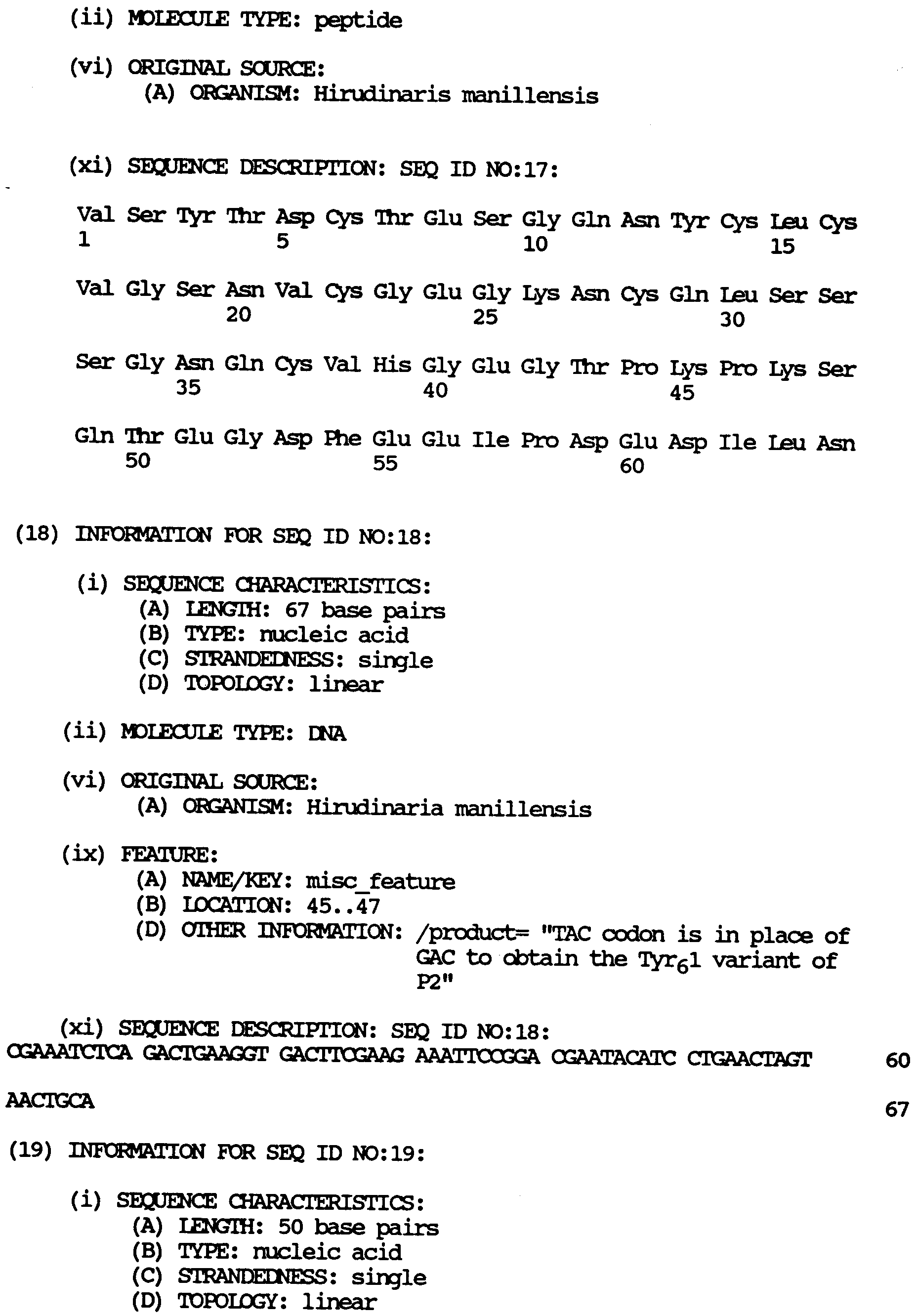
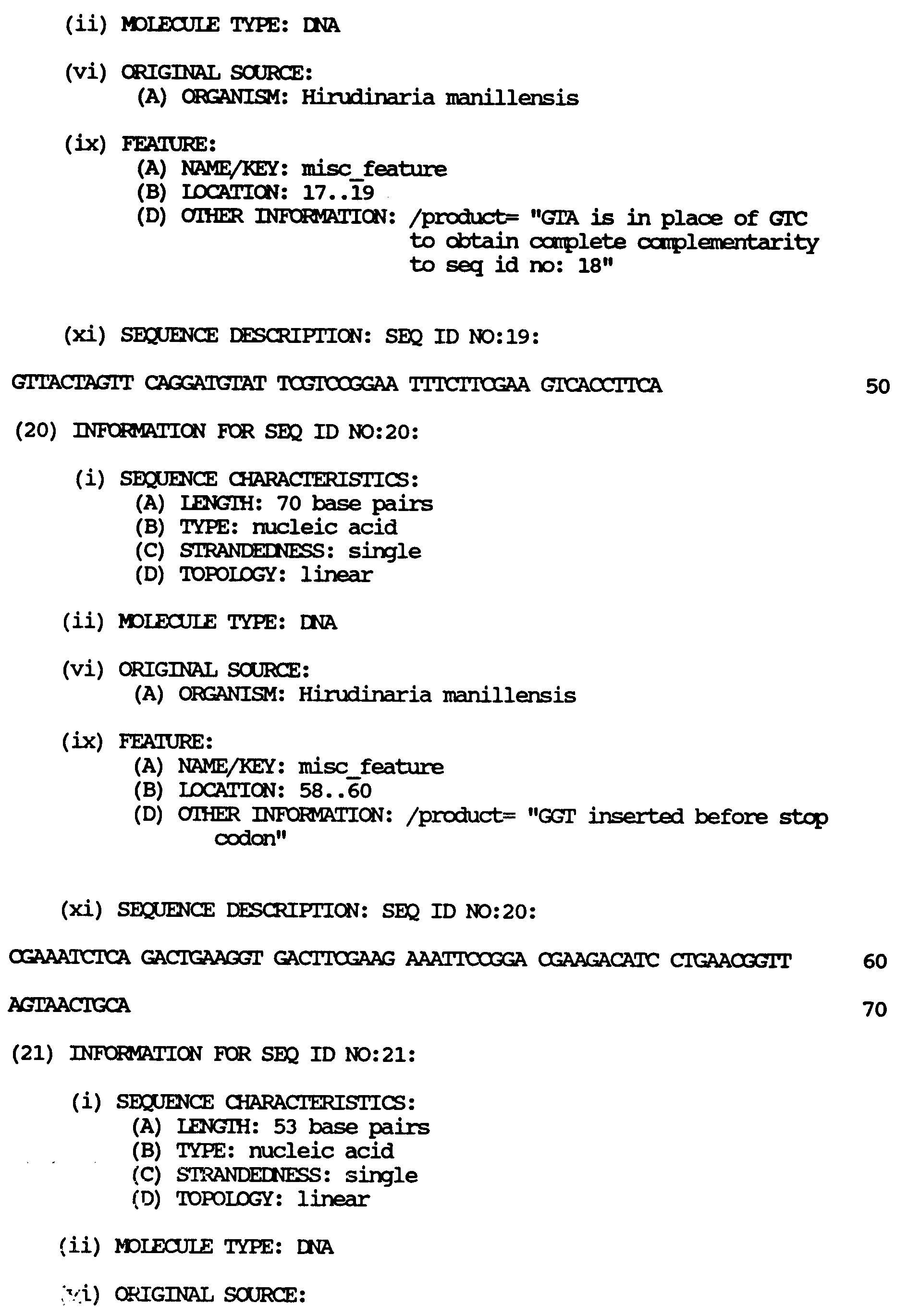


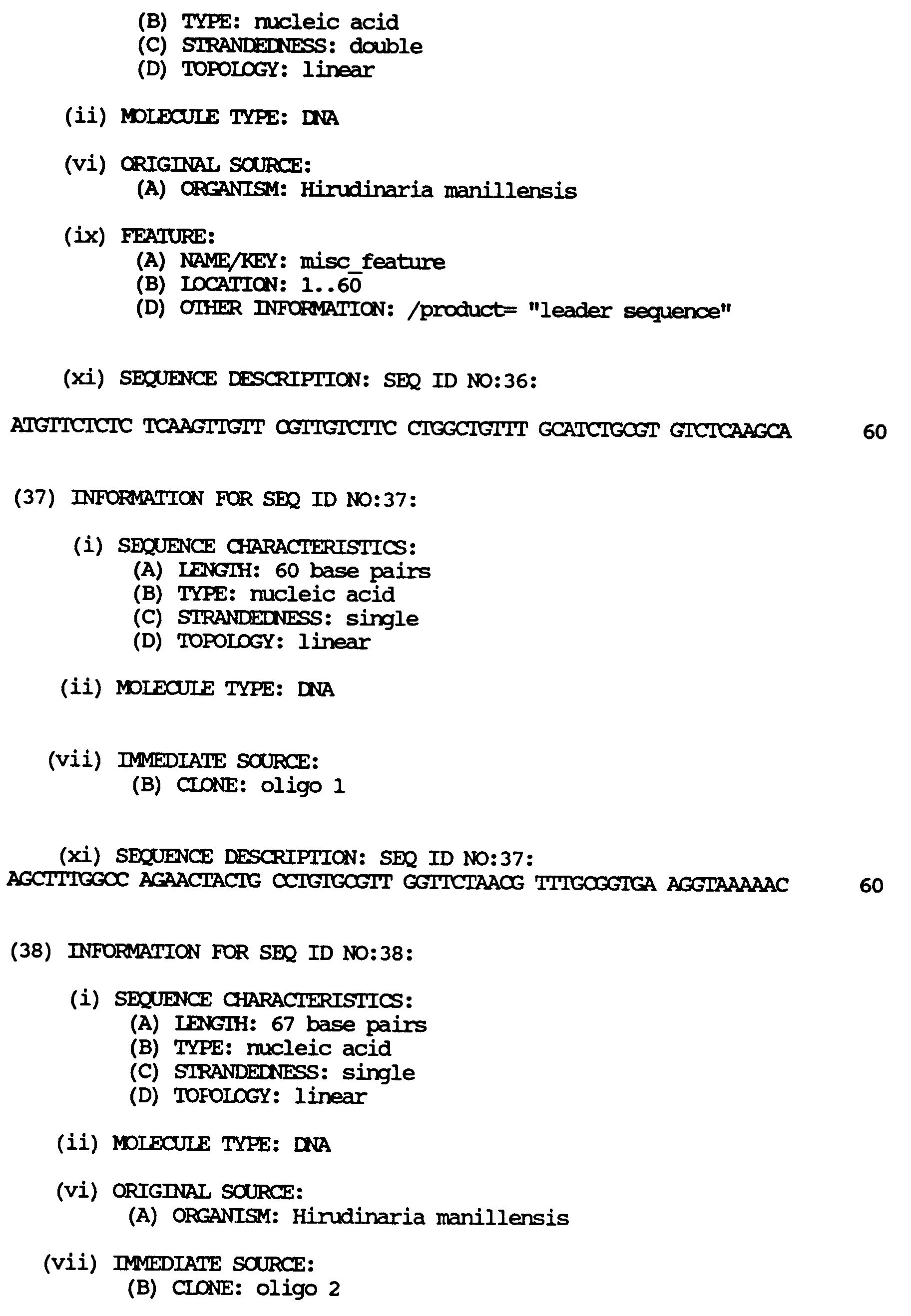
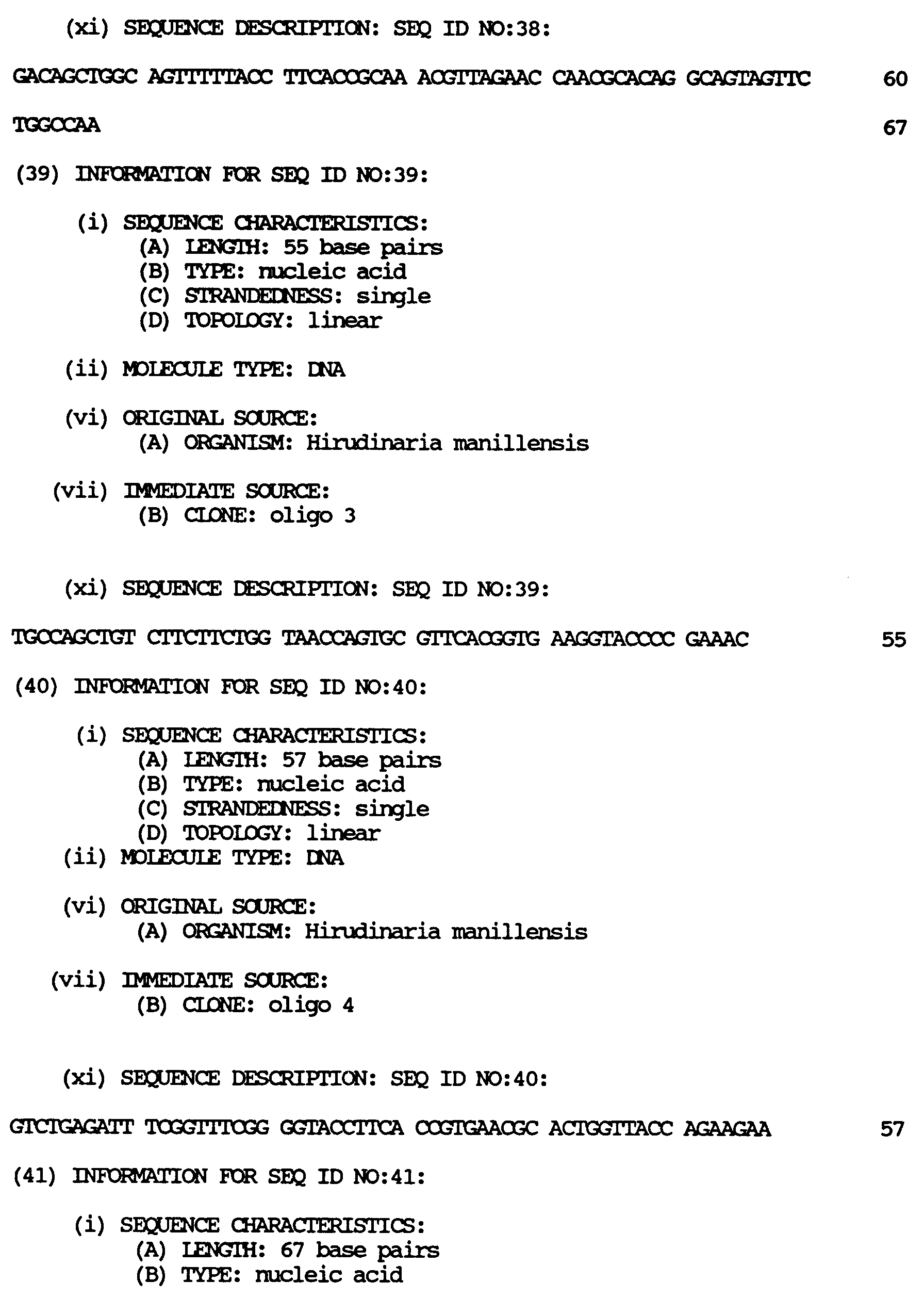


Claims (33)
- A polypeptide comprising the amino acid sequence:(i) P1 (SEQ ID NO: 1 in which Xaa at positions 61 and 65 denote Yaa and Zaa respectively)
 (ii) P2 (SEQ ID NO: 2 in which Xaa at positions 61 and 65 denote Yaa and Zaa respectively)
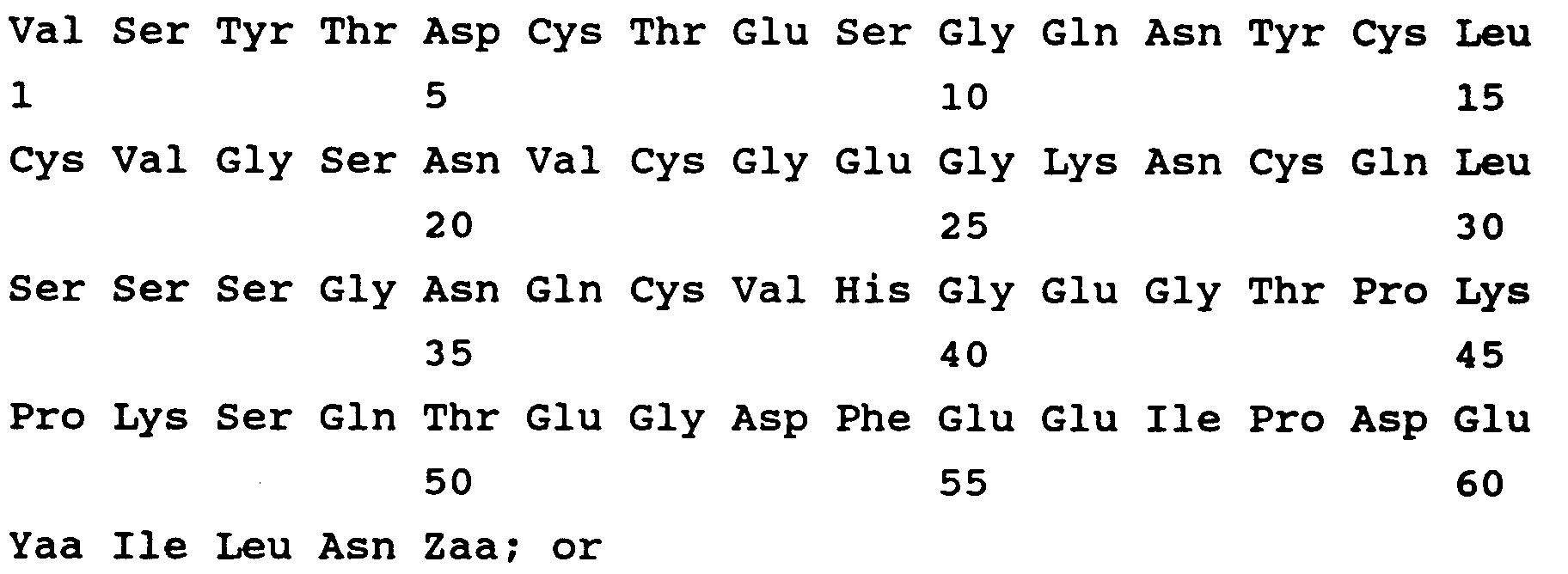 (iii) P3 (SEQ ID NO: 3)and pharmaceutically acceptable salts thereof and wherein Yaa is Asp or Tyr and Zaa is -OH, -NH₂ or Gly-OH.

- A polypeptide according to claim 1 having any one of the amino acid sequences shown in claim 1 preceded by a Met residue.
- A polypeptide according to claim 1, having any one of the amino acid sequences shown in claim 1 preceded by all or part of a leader sequence.
- A polypeptide according to claim 3, in which all or part of the following leader sequence is present: Met Phe Ser Leu Lys Leu Phe Val Val Phe Leu Ala Val Cys Ile Cys Val Ser Gln Ala.
- A polypeptide according to claim 1, which is a fusion protein in which any one of the amino acid sequences shown in claim 1 is fused to a carrier sequence.
- A process for the preparation of a polypeptide as defined in any one of the preceding claims or a pharmaceutically acceptable salt thereof, which process comprises:(a) providing a host, transformed with an expression vector comprising a DNA sequence encoding a said polypeptide, under such conditions that the said polypeptide is expressed therein; and(b) isolating the said polypeptide thus obtained or a pharmaceutically acceptable salt thereof.
- A process according to claim 6, wherein the host is a bacterium, yeast, mammalian cell line, insect cell line or animal.
- A process according to claim 7, wherein the host is a strain of E. coli type B or a Spodoptera frugiperda cell line.
- A process for the preparation of a polypeptide as defined in any one of claims 1 to 5 or a pharmaceutically acceptable salt thereof, which process comprises(a) chemically synthesising the said polypeptide; and(b) isolating the said polypeptide thus obtained or a pharmaceutically acceptable salt thereof.
- A process according to claim 9, wherein step (a) is effected by solid-phase synthesis.
- A process for the preparation of a polypeptide as defined in claim 1 having the amino acid sequence (i), (ii) or (iii) in which Yaa denotes Asp and Zaa denotes -OH, or a pharmaceutically acceptable salt thereof, which process comprises isolating the said polypeptide or a pharmaceutically acceptable salt thereof from the tissue or secretions of a leech of the species Hirudinaria manillensis.
- A pharmaceutical composition comprising a pharmaceutically acceptable carrier or diluent and, as active ingredient, a polypeptide as defined in any one of claims 1 to 5 or a pharmaceutically acceptable salt thereof.
- An expression vector comprising a DNA sequence encoding a polypeptide as defined in any one of claims 1 to 5.
- A vector according to claim 13, which is a plasmid.
- A vector according to claim 13, which is a virus.
- A vector according to claim 15, wherein the virus is a recombinant baculovirus in which the polyhedrin promoter is operably linked to the said DNA sequence.
- A vector according to any one of claims 13 to 16, wherein the said DNA sequence further encodes a leader peptide capable of directing secretion of the said polypeptide from cells in which the said polypeptide is expressed.
- A vector according to any one of claims 13 to 17, wherein the said DNA sequence encodes a fusion protein which is cleavable to release the polypeptide.
- A host transformed with a compatible expression vector according to any one of claims 13 to 18.
- A host according to claim 19, which is a bacterium, yeast, mammalian cell line, insect cell line or animal.
- A host according to claim 20, which is a strain of E. coli type B or a Spodoptera frugiperda cell line.
- A DNA sequence encoding a polypeptide as defined in any one of claims 1 to 5.
- A DNA sequence according to claim 22, which is a synthetic DNA sequence.
- A DNA sequence according to claim 22, which is a cDNA.
- A DNA sequence according to any one of claims 22 to 24, which further encodes a leader peptide capable of directing secretion of the said polypeptide from cells in which the said polypeptide is expressed.
- A DNA sequence according to any one of claims 22 to 25, which encodes a fusion protein which is cleavable to release the said polypeptide.
- A process for the preparation of a host in which a polypeptide as defined in any one of claims 1 to 5 is able to be expressed, which process comprises transforming a host with a compatible expression vector according to any one of claims 13 to 18.
- A process according to claim 27, wherein the said expression vector has been prepared by:(a) chemically synthesising a DNA sequence encoding the said polypeptide; and(b) inserting the said DNA sequence into an expression vector.
- A process according to claim 27, wherein the said expression vector has been prepared by:(a) producing and isolating a cDNA encoding the said polypeptide from mRNA from a leech of the species Hirudinaria manillensis; and(b) inserting the isolated cDNA into an expression vector.
- A DNA sequence according to claim 22, which consists essentially of (SEQ ID NO: 33):

- A DNA sequence according to claim 22, which consists essentially of (SEQ ID NO: 34):

- A DNA sequence according to claim 22, which consists essentially of (SEQ ID NO: 35):

- A DNA sequence according to claim 31 or 32, wherein the depicted sequence is immediately preceded by the sequence (SEQ ID NO: 36):

Applications Claiming Priority (4)
| Application Number | Priority Date | Filing Date | Title |
|---|---|---|---|
| GB9104260 | 1991-02-28 | ||
| GB919104260A GB9104260D0 (en) | 1991-02-28 | 1991-02-28 | Anti-thrombin polypeptides |
| GB919119954A GB9119954D0 (en) | 1991-09-18 | 1991-09-18 | Antithrombin polypeptides |
| GB9119954 | 1991-09-18 |
Publications (3)
| Publication Number | Publication Date |
|---|---|
| EP0501821A2 true EP0501821A2 (en) | 1992-09-02 |
| EP0501821A3 EP0501821A3 (en) | 1993-03-03 |
| EP0501821B1 EP0501821B1 (en) | 1998-12-30 |
Family
ID=26298509
Family Applications (1)
| Application Number | Title | Priority Date | Filing Date |
|---|---|---|---|
| EP92301721A Expired - Lifetime EP0501821B1 (en) | 1991-02-28 | 1992-02-28 | Anti-thrombin polypeptides |
Country Status (23)
| Country | Link |
|---|---|
| US (2) | US5356875A (en) |
| EP (1) | EP0501821B1 (en) |
| JP (1) | JPH05247090A (en) |
| KR (1) | KR100218818B1 (en) |
| CN (1) | CN1044479C (en) |
| AT (1) | ATE175236T1 (en) |
| AU (1) | AU643876B2 (en) |
| CA (1) | CA2061920A1 (en) |
| CZ (1) | CZ283458B6 (en) |
| DE (1) | DE69228015T2 (en) |
| DK (1) | DK0501821T3 (en) |
| ES (1) | ES2129426T3 (en) |
| FI (1) | FI920861A7 (en) |
| GR (1) | GR3029364T3 (en) |
| HU (1) | HU215580B (en) |
| IE (1) | IE920622A1 (en) |
| IL (1) | IL101062A0 (en) |
| MX (1) | MX9200795A (en) |
| MY (1) | MY110327A (en) |
| NO (1) | NO300138B1 (en) |
| NZ (1) | NZ241715A (en) |
| TW (1) | TW214556B (en) |
| YU (1) | YU19792A (en) |
Cited By (2)
| Publication number | Priority date | Publication date | Assignee | Title |
|---|---|---|---|---|
| WO1995003409A1 (en) * | 1993-07-22 | 1995-02-02 | Ministero Dell' Universita' E Della Ricerca Scientifica E Tecnologica | Analogues of an anti-thrombin polypeptide and process for their preparation |
| CN111454352A (en) * | 2020-03-05 | 2020-07-28 | 中国科学院昆明动物研究所 | A kind of active protein HMEI-A, the encoding gene and application of active protein HMEI-A |
Families Citing this family (14)
| Publication number | Priority date | Publication date | Assignee | Title |
|---|---|---|---|---|
| CN1064968C (en) * | 1996-07-10 | 2001-04-25 | 中国人民解放军第一军医大学 | Process of extracting and purifying recombined protein |
| EP0998942A4 (en) | 1997-01-20 | 2006-08-16 | Japan Energy Corp | METHOD FOR STABILIZING PEPTIDES AND LYOPHILIZED MEDICINAL COMPOSITIONS COMPRISING PEPTIDES OBTAINED THEREBY |
| US6077825A (en) * | 1997-03-13 | 2000-06-20 | Auburn University | Antithrombin protein and DNA sequences from black fly |
| JP2000080046A (en) * | 1998-09-03 | 2000-03-21 | Dai Ichi Seiyaku Co Ltd | Prevention and treatment of multiple organ disorders |
| CN102876654A (en) * | 2012-10-19 | 2013-01-16 | 广东海洋大学 | Preparation method of mulberry silk fibroin immobilized thrombin |
| CN104193809B (en) * | 2014-09-28 | 2016-08-17 | 顾玉奎 | A kind of thrombin suppression and preparation method thereof, application |
| CN104193807B (en) * | 2014-09-28 | 2016-06-15 | 广州贝奥吉因生物科技有限公司 | Thrombin suppresses polypeptide and preparation method thereof, application |
| CN105646702B (en) * | 2016-04-13 | 2019-03-01 | 中国科学院昆明动物研究所 | Kazal-type trypsin inhibitor Bdellin-HM, its encoding gene and its application |
| CN108059672B (en) * | 2016-11-08 | 2021-06-11 | 中国科学院昆明动物研究所 | Forest leech antithrombotic peptide Sylvestin and gene and application thereof |
| CN110468174A (en) * | 2019-08-21 | 2019-11-19 | 北京中医药大学 | A kind of preparation method of leech active oligopeptide |
| CN112114069B (en) * | 2020-09-18 | 2023-05-16 | 江苏艾迪药业股份有限公司 | Affinity chromatographic column, preparation method and application of thrombin |
| CN112480210B (en) * | 2020-11-25 | 2021-09-17 | 广东海洋大学 | Anticoagulant active peptide and application thereof |
| KR102354461B1 (en) * | 2021-02-19 | 2022-01-20 | 김건언 | Duct integrated lighting fixture |
| CN115572329B (en) * | 2021-06-21 | 2024-02-06 | 王大勇 | Poecilobdella manillensis gene recombinant hirudin with slower activity enhancement metabolism and preparation method thereof |
Family Cites Families (4)
| Publication number | Priority date | Publication date | Assignee | Title |
|---|---|---|---|---|
| ES2052062T3 (en) * | 1988-06-11 | 1994-07-01 | Ciba Geigy Ag | NEW POLYPEPTIDES WITH ANTICOAGULANT ACTIVITY. |
| US5268296A (en) * | 1988-06-11 | 1993-12-07 | Ciba-Geigy Corporation | DNA vector and recombinant host cell for production of hirullin P6 and P18 |
| GB8826428D0 (en) * | 1988-11-11 | 1988-12-14 | Biopharm Ltd | Antithrombin |
| IT1250689B (en) * | 1991-07-22 | 1995-04-21 | Marco Gerna | ANALOGUES OF IRUDINA AND PROCEDURE FOR THEIR PREPARATION |
-
1992
- 1992-02-24 IL IL101062A patent/IL101062A0/en unknown
- 1992-02-25 TW TW081101387A patent/TW214556B/zh active
- 1992-02-25 NZ NZ241715A patent/NZ241715A/en unknown
- 1992-02-25 MX MX9200795A patent/MX9200795A/en not_active IP Right Cessation
- 1992-02-25 HU HU9200620A patent/HU215580B/en not_active IP Right Cessation
- 1992-02-25 AU AU11221/92A patent/AU643876B2/en not_active Ceased
- 1992-02-26 CA CA002061920A patent/CA2061920A1/en not_active Abandoned
- 1992-02-26 KR KR1019920002964A patent/KR100218818B1/en not_active Expired - Fee Related
- 1992-02-26 US US07/842,089 patent/US5356875A/en not_active Expired - Fee Related
- 1992-02-26 YU YU19792A patent/YU19792A/en unknown
- 1992-02-26 FI FI920861A patent/FI920861A7/en unknown
- 1992-02-27 NO NO920777A patent/NO300138B1/en unknown
- 1992-02-27 JP JP4075594A patent/JPH05247090A/en active Pending
- 1992-02-27 IE IE062292A patent/IE920622A1/en not_active Application Discontinuation
- 1992-02-27 CZ CS92584A patent/CZ283458B6/en not_active IP Right Cessation
- 1992-02-27 CN CN92101143A patent/CN1044479C/en not_active Expired - Fee Related
- 1992-02-27 MY MYPI92000321A patent/MY110327A/en unknown
- 1992-02-28 EP EP92301721A patent/EP0501821B1/en not_active Expired - Lifetime
- 1992-02-28 ES ES92301721T patent/ES2129426T3/en not_active Expired - Lifetime
- 1992-02-28 DK DK92301721T patent/DK0501821T3/en active
- 1992-02-28 AT AT92301721T patent/ATE175236T1/en not_active IP Right Cessation
- 1992-02-28 DE DE69228015T patent/DE69228015T2/en not_active Expired - Fee Related
-
1994
- 1994-06-23 US US08/264,485 patent/US5439820A/en not_active Expired - Fee Related
-
1999
- 1999-02-10 GR GR990400451T patent/GR3029364T3/en unknown
Cited By (3)
| Publication number | Priority date | Publication date | Assignee | Title |
|---|---|---|---|---|
| WO1995003409A1 (en) * | 1993-07-22 | 1995-02-02 | Ministero Dell' Universita' E Della Ricerca Scientifica E Tecnologica | Analogues of an anti-thrombin polypeptide and process for their preparation |
| CN111454352A (en) * | 2020-03-05 | 2020-07-28 | 中国科学院昆明动物研究所 | A kind of active protein HMEI-A, the encoding gene and application of active protein HMEI-A |
| CN111454352B (en) * | 2020-03-05 | 2021-07-23 | 中国科学院昆明动物研究所 | A kind of active protein HMEI-A, the encoding gene and application of active protein HMEI-A |
Also Published As
Similar Documents
| Publication | Publication Date | Title |
|---|---|---|
| EP0501821B1 (en) | Anti-thrombin polypeptides | |
| US5696088A (en) | Chimeric proteins | |
| Scacheri et al. | Novel hirudin variants from the leech Hirudinaria manillensis: amino acid sequence, cDNA cloning and genomic organization | |
| JP2580141B2 (en) | Method for producing transformed yeast and hirudin | |
| US5705484A (en) | Biologically active polypeptide fusion dimers | |
| IE70759B1 (en) | Proteins having anticoagulant activity | |
| DE69329083T2 (en) | Semiconductor device | |
| AU3055789A (en) | Cleaved dimers of mullerian inhibiting substance-like polypeptides | |
| AU7652591A (en) | Method for the recombinant production of hiridius and hirudin-like polypeptides | |
| Kono et al. | Eclosion hormone of the silkworm Bombyx mori Expression in Escherichia coli and location of disulfide bonds | |
| EP0710285B1 (en) | Analogues of an anti-thrombin polypeptide and process for their preparation | |
| JPH04505554A (en) | Soluble thrombomodulin analogs | |
| Benatti et al. | Secretion of biologically active leech hirudin from baculovirus-infected insect cells | |
| RU2131462C1 (en) | Dna fragment, recombinant polypeptide exhibiting antithrombin activity, method of its preparing (variants), pharmaceutical composition, recombinant vector (variants) | |
| CA2150909A1 (en) | Clotting inhibitor made from protostomia saliva | |
| AU4868785A (en) | Novel polypeptides having growth factor activity and nucleic acid sequences encoding the polypeptides |
Legal Events
| Date | Code | Title | Description |
|---|---|---|---|
| PUAI | Public reference made under article 153(3) epc to a published international application that has entered the european phase |
Free format text: ORIGINAL CODE: 0009012 |
|
| AK | Designated contracting states |
Kind code of ref document: A2 Designated state(s): AT BE CH DE DK ES FR GB GR IT LI NL PT SE |
|
| PUAL | Search report despatched |
Free format text: ORIGINAL CODE: 0009013 |
|
| AK | Designated contracting states |
Kind code of ref document: A3 Designated state(s): AT BE CH DE DK ES FR GB GR IT LI NL PT SE |
|
| 17P | Request for examination filed |
Effective date: 19930322 |
|
| RAP1 | Party data changed (applicant data changed or rights of an application transferred) |
Owner name: PHARMACIA S.P.A. |
|
| RAP1 | Party data changed (applicant data changed or rights of an application transferred) |
Owner name: PHARMACIA & UPJOHN S.P.A. |
|
| 17Q | First examination report despatched |
Effective date: 19961210 |
|
| GRAG | Despatch of communication of intention to grant |
Free format text: ORIGINAL CODE: EPIDOS AGRA |
|
| GRAG | Despatch of communication of intention to grant |
Free format text: ORIGINAL CODE: EPIDOS AGRA |
|
| GRAG | Despatch of communication of intention to grant |
Free format text: ORIGINAL CODE: EPIDOS AGRA |
|
| GRAH | Despatch of communication of intention to grant a patent |
Free format text: ORIGINAL CODE: EPIDOS IGRA |
|
| GRAH | Despatch of communication of intention to grant a patent |
Free format text: ORIGINAL CODE: EPIDOS IGRA |
|
| GRAA | (expected) grant |
Free format text: ORIGINAL CODE: 0009210 |
|
| AK | Designated contracting states |
Kind code of ref document: B1 Designated state(s): AT BE CH DE DK ES FR GB GR IT LI NL PT SE |
|
| REF | Corresponds to: |
Ref document number: 175236 Country of ref document: AT Date of ref document: 19990115 Kind code of ref document: T |
|
| REG | Reference to a national code |
Ref country code: CH Ref legal event code: EP |
|
| ITF | It: translation for a ep patent filed | ||
| REF | Corresponds to: |
Ref document number: 69228015 Country of ref document: DE Date of ref document: 19990211 |
|
| ET | Fr: translation filed | ||
| REG | Reference to a national code |
Ref country code: CH Ref legal event code: NV Representative=s name: BOVARD AG PATENTANWAELTE |
|
| REG | Reference to a national code |
Ref country code: PT Ref legal event code: SC4A Free format text: AVAILABILITY OF NATIONAL TRANSLATION Effective date: 19990112 |
|
| REG | Reference to a national code |
Ref country code: ES Ref legal event code: FG2A Ref document number: 2129426 Country of ref document: ES Kind code of ref document: T3 |
|
| REG | Reference to a national code |
Ref country code: DK Ref legal event code: T3 |
|
| PLBE | No opposition filed within time limit |
Free format text: ORIGINAL CODE: 0009261 |
|
| 26N | No opposition filed | ||
| PGFP | Annual fee paid to national office [announced via postgrant information from national office to epo] |
Ref country code: DE Payment date: 19991231 Year of fee payment: 9 |
|
| PGFP | Annual fee paid to national office [announced via postgrant information from national office to epo] |
Ref country code: SE Payment date: 20000207 Year of fee payment: 9 |
|
| PGFP | Annual fee paid to national office [announced via postgrant information from national office to epo] |
Ref country code: PT Payment date: 20000210 Year of fee payment: 9 Ref country code: FR Payment date: 20000210 Year of fee payment: 9 |
|
| PGFP | Annual fee paid to national office [announced via postgrant information from national office to epo] |
Ref country code: DK Payment date: 20000211 Year of fee payment: 9 Ref country code: AT Payment date: 20000211 Year of fee payment: 9 |
|
| PGFP | Annual fee paid to national office [announced via postgrant information from national office to epo] |
Ref country code: ES Payment date: 20000222 Year of fee payment: 9 |
|
| PGFP | Annual fee paid to national office [announced via postgrant information from national office to epo] |
Ref country code: GB Payment date: 20000223 Year of fee payment: 9 |
|
| PGFP | Annual fee paid to national office [announced via postgrant information from national office to epo] |
Ref country code: GR Payment date: 20000225 Year of fee payment: 9 |
|
| PGFP | Annual fee paid to national office [announced via postgrant information from national office to epo] |
Ref country code: NL Payment date: 20000228 Year of fee payment: 9 Ref country code: CH Payment date: 20000228 Year of fee payment: 9 |
|
| PGFP | Annual fee paid to national office [announced via postgrant information from national office to epo] |
Ref country code: BE Payment date: 20000412 Year of fee payment: 9 |
|
| PG25 | Lapsed in a contracting state [announced via postgrant information from national office to epo] |
Ref country code: LI Free format text: LAPSE BECAUSE OF NON-PAYMENT OF DUE FEES Effective date: 20010228 Ref country code: GR Free format text: LAPSE BECAUSE OF NON-PAYMENT OF DUE FEES Effective date: 20010228 Ref country code: GB Free format text: LAPSE BECAUSE OF NON-PAYMENT OF DUE FEES Effective date: 20010228 Ref country code: DK Free format text: LAPSE BECAUSE OF NON-PAYMENT OF DUE FEES Effective date: 20010228 Ref country code: CH Free format text: LAPSE BECAUSE OF NON-PAYMENT OF DUE FEES Effective date: 20010228 Ref country code: BE Free format text: LAPSE BECAUSE OF NON-PAYMENT OF DUE FEES Effective date: 20010228 Ref country code: AT Free format text: LAPSE BECAUSE OF NON-PAYMENT OF DUE FEES Effective date: 20010228 |
|
| PG25 | Lapsed in a contracting state [announced via postgrant information from national office to epo] |
Ref country code: SE Free format text: LAPSE BECAUSE OF NON-PAYMENT OF DUE FEES Effective date: 20010301 Ref country code: ES Free format text: LAPSE BECAUSE OF NON-PAYMENT OF DUE FEES Effective date: 20010301 |
|
| BERE | Be: lapsed |
Owner name: PHARMACIA & UPJOHN S.P.A. Effective date: 20010228 |
|
| PG25 | Lapsed in a contracting state [announced via postgrant information from national office to epo] |
Ref country code: PT Free format text: LAPSE BECAUSE OF NON-PAYMENT OF DUE FEES Effective date: 20010831 |
|
| PG25 | Lapsed in a contracting state [announced via postgrant information from national office to epo] |
Ref country code: NL Free format text: LAPSE BECAUSE OF NON-PAYMENT OF DUE FEES Effective date: 20010901 |
|
| REG | Reference to a national code |
Ref country code: CH Ref legal event code: PL |
|
| REG | Reference to a national code |
Ref country code: DK Ref legal event code: EBP |
|
| GBPC | Gb: european patent ceased through non-payment of renewal fee |
Effective date: 20010228 |
|
| PG25 | Lapsed in a contracting state [announced via postgrant information from national office to epo] |
Ref country code: FR Free format text: LAPSE BECAUSE OF NON-PAYMENT OF DUE FEES Effective date: 20011031 |
|
| NLV4 | Nl: lapsed or anulled due to non-payment of the annual fee |
Effective date: 20010901 |
|
| EUG | Se: european patent has lapsed |
Ref document number: 92301721.4 |
|
| REG | Reference to a national code |
Ref country code: FR Ref legal event code: ST |
|
| PG25 | Lapsed in a contracting state [announced via postgrant information from national office to epo] |
Ref country code: DE Free format text: LAPSE BECAUSE OF NON-PAYMENT OF DUE FEES Effective date: 20011201 |
|
| REG | Reference to a national code |
Ref country code: PT Ref legal event code: MM4A Free format text: LAPSE DUE TO NON-PAYMENT OF FEES Effective date: 20010831 |
|
| REG | Reference to a national code |
Ref country code: ES Ref legal event code: FD2A Effective date: 20021016 |
|
| PG25 | Lapsed in a contracting state [announced via postgrant information from national office to epo] |
Ref country code: IT Free format text: LAPSE BECAUSE OF NON-PAYMENT OF DUE FEES Effective date: 20050228 |