EP0501847B1 - Dispositif de mesure nucléaire avec compensation pour spécimen avec activité neutronique insuffisante - Google Patents
Dispositif de mesure nucléaire avec compensation pour spécimen avec activité neutronique insuffisante Download PDFInfo
- Publication number
- EP0501847B1 EP0501847B1 EP92400362A EP92400362A EP0501847B1 EP 0501847 B1 EP0501847 B1 EP 0501847B1 EP 92400362 A EP92400362 A EP 92400362A EP 92400362 A EP92400362 A EP 92400362A EP 0501847 B1 EP0501847 B1 EP 0501847B1
- Authority
- EP
- European Patent Office
- Prior art keywords
- sample
- plug
- samples
- shaped
- neutrons
- Prior art date
- Legal status (The legal status is an assumption and is not a legal conclusion. Google has not performed a legal analysis and makes no representation as to the accuracy of the status listed.)
- Expired - Lifetime
Links
- 230000000694 effects Effects 0.000 title description 3
- 239000010426 asphalt Substances 0.000 claims abstract description 54
- 239000000126 substance Substances 0.000 claims abstract description 26
- UFHFLCQGNIYNRP-UHFFFAOYSA-N Hydrogen Chemical compound [H][H] UFHFLCQGNIYNRP-UHFFFAOYSA-N 0.000 claims abstract description 24
- 229910052739 hydrogen Inorganic materials 0.000 claims abstract description 24
- 239000001257 hydrogen Substances 0.000 claims abstract description 24
- 239000004698 Polyethylene Substances 0.000 claims abstract description 18
- -1 polyethylene Polymers 0.000 claims abstract description 18
- 229920000573 polyethylene Polymers 0.000 claims abstract description 18
- 238000000034 method Methods 0.000 claims abstract description 17
- 230000002301 combined effect Effects 0.000 claims description 5
- 238000011088 calibration curve Methods 0.000 claims description 3
- 239000002184 metal Substances 0.000 claims description 2
- 230000003993 interaction Effects 0.000 abstract description 8
- 239000000523 sample Substances 0.000 description 88
- 238000012360 testing method Methods 0.000 description 31
- 239000000203 mixture Substances 0.000 description 18
- 238000005259 measurement Methods 0.000 description 14
- 239000000463 material Substances 0.000 description 5
- 230000008569 process Effects 0.000 description 3
- 238000007630 basic procedure Methods 0.000 description 2
- 230000008901 benefit Effects 0.000 description 2
- 239000004566 building material Substances 0.000 description 2
- 230000001276 controlling effect Effects 0.000 description 2
- 238000012937 correction Methods 0.000 description 2
- 238000002360 preparation method Methods 0.000 description 2
- 239000013590 bulk material Substances 0.000 description 1
- 230000008859 change Effects 0.000 description 1
- 238000005056 compaction Methods 0.000 description 1
- 238000010276 construction Methods 0.000 description 1
- 230000002596 correlated effect Effects 0.000 description 1
- 238000010586 diagram Methods 0.000 description 1
- 238000009826 distribution Methods 0.000 description 1
- 230000003203 everyday effect Effects 0.000 description 1
- 230000004907 flux Effects 0.000 description 1
- 125000004435 hydrogen atom Chemical group [H]* 0.000 description 1
- 230000002209 hydrophobic effect Effects 0.000 description 1
- 239000004973 liquid crystal related substance Substances 0.000 description 1
- 238000004519 manufacturing process Methods 0.000 description 1
- 230000005855 radiation Effects 0.000 description 1
- 238000010561 standard procedure Methods 0.000 description 1
- 238000010998 test method Methods 0.000 description 1
- XLYOFNOQVPJJNP-UHFFFAOYSA-N water Substances O XLYOFNOQVPJJNP-UHFFFAOYSA-N 0.000 description 1
- 238000005303 weighing Methods 0.000 description 1
Images

Classifications
-
- G—PHYSICS
- G01—MEASURING; TESTING
- G01N—INVESTIGATING OR ANALYSING MATERIALS BY DETERMINING THEIR CHEMICAL OR PHYSICAL PROPERTIES
- G01N23/00—Investigating or analysing materials by the use of wave or particle radiation, e.g. X-rays or neutrons, not covered by groups G01N3/00 – G01N17/00, G01N21/00 or G01N22/00
- G01N23/02—Investigating or analysing materials by the use of wave or particle radiation, e.g. X-rays or neutrons, not covered by groups G01N3/00 – G01N17/00, G01N21/00 or G01N22/00 by transmitting the radiation through the material
- G01N23/025—Investigating or analysing materials by the use of wave or particle radiation, e.g. X-rays or neutrons, not covered by groups G01N3/00 – G01N17/00, G01N21/00 or G01N22/00 by transmitting the radiation through the material using neutrons
-
- G—PHYSICS
- G01—MEASURING; TESTING
- G01N—INVESTIGATING OR ANALYSING MATERIALS BY DETERMINING THEIR CHEMICAL OR PHYSICAL PROPERTIES
- G01N33/00—Investigating or analysing materials by specific methods not covered by groups G01N1/00 - G01N31/00
- G01N33/42—Road-making materials
Definitions
- U.S. Pat. US-A-3,492,479 discloses a portable nuclear gauge that utilizes a fast neutron source and a thermal neutron-detector for determining the composition of a bulk material placed in a sample pan.
- This gauge is particularly useful for measuring the asphalt content of a bituminous paving mix.
- This type of gauge relies upon the neutron moderating characteristics of hydrogen present in the composition for determining, for example, the amount of asphalt in a paving mix or the amount of moisture in a building material. For these determinations it is known that the amount of asphalt or the amount of moisture can be related to the hydrogen content of the material.
- the hydrogen content of the material can be determined by subjecting the sample to radiation from a fast neutron source and detecting neutrons that have been slowed or thermalized as a result of interaction with the hydrogen nuclei present in the sample. The number of thermalized neutrons detected and counted over a period of time is utilized in determining the hydrogen content of the sample.
- a typical procedure for preparing samples for testing involves weighing a sample pan, filling the sample pan carefully, and compacting the samples to a uniform volume and weight. For determining the asphalt content of a bituminous paving mix, this procedure entails filling a sample pan with a loose, well-mixed paving mix and carefully compacting the loose mix so that all the test samples will have the same density.
- the present invention is based upon the recognition that the volume of the Marshall plug samples is insufficient to provide an adequate level of thermalized neutrons for accurate and reproducible determination of the asphalt content of the sample.
- an auxiliary neutron moderating substance is provided in the neutron gauge along with the hydrogen-containing test sample for increasing the interaction of neutrons in the vicinity of the test sample.
- the hydrogen content of the test sample is determined from a count of neutrons thermalized by the combined effects of the test sample and the auxiliary neutron moderating substance.
- an apparatus for determining the asphalt content of a bituminous paving mix comprising a neutron gauge having a gauge housing adapted for receiving a sample therein so that the hydrogen-content thereof can be measured.
- a neutron source is provided in the housing for subjecting the sample to neutrons, and detector means provided in the housing for detecting thermalized neutrons. Means is provided cooperating with said detector means for calculating from the thus detected thermalized neutrons the hydrogen content of the hydrogen-containing sample.
- An auxiliary neutron moderating substance is provided in the gauge housing in the vicinity of the hydrogen-containing sample for increasing the interaction of neutrons from said source with hydrogen nuclei present in the sample.
- the auxiliary neutron moderating substance comprises a fixed quantity of the neutron moderating substance which is located within the gauge housing in a fixed position in relation to said source and detector means.
- the auxiliary neutron moderating substance is a block of polyethylene. More specifically, the auxiliary neutron moderating substance is a polyethylene sample holder that fits into a conventional sample pan and which is provided with receptacles for closely receiving Marshall plug samples of the bituminous paving mix.
- a process for determining the asphalt content of a bituminous paving mix comprises forming the bituminous paving mix into a plug-shaped sample, positioning the plug-shaped sample in a sample holder having a sample receptacle formed therein of a size and shape adapted to closely receive the plug-shaped sample, and which is formed of a hydrogen-containing substance, subjecting the sample holder with the plug-shaped sample positioned therein to a neutron source, detecting neutrons that have been thermalized by the combined effects of the sample holder and plug-shaped sample, and determining the asphalt content of the plug-shaped sample based upon the thus detected thermalized neutrons.
- the counts of thermalized neutrons are the average of four counts. After taking the first count, the sample is rotated 180° about a vertical axis and a second count is taken. Then the sample is turned over and a third count is taken. The fourth count is taken after the sample has been again rotated 180° about a vertical axis.
- background counts are taken prior to calibration and prior to determining the asphalt content of test samples. The difference between these two counts is taken, and the count determined for the combined effects of test sample and neutron moderating substance is adjusted thereby. Asphalt content is determined from the combined count.
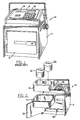
- a neutron gauge is generally indicated by the number 10 in Figure 1 and comprises a generally rectangular housing 11 having a door 12 that provides access to a measurement chamber in which sample pans are placed for measurement.
- a control unit 14 is provided, including a keypad 15 for entry of data and for controlling the functions of the gauge, and a display 16 , which may be of any suitable construction, such as a liquid crystal display.
- a sample pan 17 is sized to fit into the measurement chamber 18 of the neutron gauge.
- a sample holder 19 is shown disposed above the sample pan and is sized to be closely fitted within the sample pan.
- Sample holder 19 is formed of a neutron moderating substance.
- the sample holder is formed of a block of polyethylene. Since polyethylene contains a fixed amount of hydrogen in its molecular structure, it effectively serves as a neutron moderating substance. In addition, polyethylene is relatively inert and its hydrophobic property renders it relatively unaffected by changes in ambient moisture.
- the neutron moderating substance may be used as the neutron moderating substance, so long as the material does not chemically react with the sample material, does not absorb or release moisture, and provides neutron moderating activity.
- a water filled polyethylene or metal sample holder should be suitable.
- the sample holder 19 has cylindrical holes formed therein which are of a size and shape adapted to closely receive a test sample.
- Plug-shaped samples 21 and 22 are shown disposed above the sample holder and sample tray. These samples may suitably comprise Marshall or other plugs or core samples formed in a conventional manner in connection with tests for asphalt compactability including core samples from a paved highway.
- the sample holder itself serves as the auxiliary neutron moderating substance.
- the auxiliary neutron moderating substance could be provided in other configurations and at other locations within the gauge than as illustrated, while still reaping the benefits of this invention.
- auxiliary neutron moderating substance be positioned in a fixed or consistent location in relation to the source and detector. Because the auxiliary neutron moderating substance is located in the sample pan and the pan is designed to be received in the same location within the sample-receiving cavity of the gauge housing, this consistent positional relationship is achieved.
- measurement chamber 18 receives sample pan 17 , sample holder 19 , and plug-shaped samples 21 and 22 .
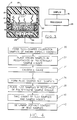
- a source 24 of fast neutrons Located in the upper interior portion of the gauge is a source 24 of fast neutrons.
- the source 24 may, for example, suitably comprise an Am-241:Be source.
- a series of detector tubes 26 for detecting neutrons that have been slowed or thermalized by interaction with hydrogen atoms present in the sample and sample holder.
- the illustrated detectors 26 are He 3 detector tubes, but any suitable thermal neutron detector will suffice.
- the gauge also includes a processor module 28 for controlling the gauge and counting thermalized neutrons.
- the plug-shaped samples are placed in the receptacles of the sample holder in the sample pan and inserted into the interior of the gauge.
- the door is shut and fast neutrons from the source 24 are emitted down through the samples 21 and 22 and sample holder 19 in the sample pan 17 .
- Fast neutrons from the source interact with hydrogen nuclei present in the samples and in the sample holder.
- Detector 26 detects thermalized neutrons below a specified energy level. The thermalized neutrons are counted for a predetermined period and a count is recorded in the data processor module 28 .
- the processor module 28 then correlates the number of counts to an asphalt content by using a previously established calibration to indicate the result in display 16 for the bituminous paving mix being tested.
- Test samples of unknown asphalt content are formed into plugs following the same procedure as used for forming the samples of known asphalt content, as illustrated in Figure 4 at 36 . As illustrated in steps 38 and 40 , these samples are placed in receptacles of the polyethylene sample holder, and counts of the test samples and sample holder are then taken. Finally, in accordance with step 42 , the asphalt content of the test samples is determined from the counts of the test samples in accordance with the predetermined calibration.
- measurements of neutron moderating activity are made on each of two or more plug-shaped samples of known asphalt content, each of which has a slightly different asphalt content, for calibration of the apparatus. For example, counts may be taken for three different samples, one having an asphalt content of 4%, one of 5%, and one of 6%.
- the samples are placed in the receptacles of the polyethylene sample holder, subjected to a source of neutrons, and the thermalized neutrons are detected and counted. The count obtained is from the combination of the sample and sample holder.
- the material to be tested is a bituminous paving mix that has been formed into plug-shaped samples such as Marshall plugs
- this sample can have a nonhomogeneous distribution of asphalt and aggregate.
- a single count from the sample, whether for calibration or testing, may not provide sufficiently accurate results. Accordingly, it is preferred to obtain several counts for each sample in various positions to ensure accuracy and repeatability of results.
- the procedure for calibrating a neutron gauge to determine the asphalt content of bituminous paving mixes from Marshall plug samples is described with reference to Figure 5.
- the first step, as illustrated at 46 is to determine analytically the asphalt content of several samples. Generally speaking, at least two samples of different percent asphalt should be analyzed for use in establishing a calibration curve. However, it is preferred to analytically establish the asphalt content of three or more samples. These three samples can be used, for example, to establish the norm and the upper and lower limits for asphalt content for test samples of unknown asphalt content.
- a count is taken of the first known sample.
- the known sample is rotated 180°, and a second count is taken as illustrated at 50 .
- the plugs should be turned over in the receptacle and a third count taken.
- the sample holder is again rotated 180° and a fourth count is taken.
- the unknown test samples should be prepared and measured similarly.
- the average of the four counts is taken. As illustrated at 58 , these steps are repeated for the second and third test samples and then, as illustrated at 60 , a calibration curve is established based on the known asphalt content of the calibration samples and the average counts obtained for them.
- the counts obtained for the samples can be fitted to a polynomial or any suitable equation.
- the parameters for the calibration equation are stored in processor 28 , which is illustrated in Figure 3, and these parameters are thereafter used to determine the asphalt content of unknown test samples. In this manner, the gauge is calibrated to determine the asphalt content of unknown test samples from the combined counts of the test sample and sample holder. The average of four counts taken from an unknown test sample can then be used in the calibration equation to determine the percent asphalt of the sample.
- the gauge While it is somewhat simpler to calibrate the gauge to determine the property being measured directly from the count resulting from the combination of test sample and neutron moderating substance, one can also calibrate the gauge by first taking the measurement of the hydrogen content of the neutron moderating substance and using this value as the background. This count can then be used to adjust all subsequent counts taken by the gauge. Alternatively, one can also determine the hydrogen content of the neutron moderating substance, generate a correction factor that is a function of the hydrogen content of the substance, and apply that correction factor to the combined measurement of the hydrogen content of the substance and test sample.
Landscapes
- Health & Medical Sciences (AREA)
- Life Sciences & Earth Sciences (AREA)
- Chemical & Material Sciences (AREA)
- Pathology (AREA)
- General Physics & Mathematics (AREA)
- Immunology (AREA)
- Physics & Mathematics (AREA)
- Analytical Chemistry (AREA)
- Biochemistry (AREA)
- General Health & Medical Sciences (AREA)
- Food Science & Technology (AREA)
- Medicinal Chemistry (AREA)
- Engineering & Computer Science (AREA)
- Analysing Materials By The Use Of Radiation (AREA)
- Steroid Compounds (AREA)
- Monitoring And Testing Of Nuclear Reactors (AREA)
- Road Paving Machines (AREA)
Claims (7)
- Appareil pour déterminer la teneur en asphalte d'un mélange de revêtement bitumineux présenté en un échantillon en forme de bouchon, ledit appareil comprenant, en combinaison :un boîtier d'instrument de mesure (11) ayant une cavité intérieure de réception d'échantillon,un support d'échantillon (19) prévu pour être placé dans la cavité de réception d'échantillon dudit boîtier (11),ledit support d'échantillon (19) étant constitué d'une substance contenant de l'hydrogène, et ledit support d'échantillon (19) ayant au moins un réceptacle formé à l'intérieur et d'une dimension et d'une forme permettant de recevoir étroitement un échantillon en forme de bouchon (21,22) du mélange de revêtement bitumineux,une source de neutrons (24) prévue dans ledit boîtier (11) pour exposer un support d'échantillon (19), dans lequel est placé un échantillon en forme de bouchon (21,22), à des neutrons,des moyens de détection (26) prévus dans ledit boîtier (11) pour détecter les neutrons thermalisés, etdes moyens (28) qui coopèrent avec lesdits moyens de détection (26) pour calculer, à partir des neutrons thermalisés ainsi détectés, la teneur en asphalte de l'échantillon en forme de bouchon (21,22) du mélange de revêtement bitumineux
- Appareil suivant la revendication 1, dans lequel le support d'échantillon (19) est fabriqué en polyéthylène.
- Appareil pour déterminer la teneur en asphalte d'un mélange de revêtement bitumineux formé en bouchons de Marshall, ledit appareil comprenant, en combinaison :un boîtier d'instrument de mesure (11) comportant une porte (12) qui donne accès à une cavité de réception d'échantillon dans le boîtier d'instrument de mesure (11),une unité de commande (14) pour le boîtier d'instrument de mesure (11), comportant un clavier (15) pour l'entrée de données et la commande des fonctions de l'instrument, et un affichage (16) pour afficher les mesures fournies par l'instrument,une cuvette d'échantillon en métal (17) dimensionnée pour s'ajuster étroitement dans la cavité de réception d'échantillon,un support d'échantillon (19) dimensionné pour s'ajuster étroitement dans la cuvette d'échantillon (17) et dans lequel sont définis deux réceptacles d'échantillon cylindriques ayant une dimension et une forme permettant de recevoir étroitement les échantillons sous forme de bouchon de Marshall (21,22), le support d'échantillon (19) étant constitué de polyéthylène,une source de neutrons Am-241:Be (24) prévue dans ledit boîtier pour soumettre le support d'échantillon (19) et les échantillons sous forme de bouchon de Marshall (21,22) placés dans ce support, à des neutrons,des tubes de détection à He3 (26) prévus dans ledit boîtier (11) pour détecter les neutrons thermalisés par les caractéristiques de modération de neutrons du support d'échantillon en polyéthylène (19) et des échantillons sous forme de bouchon de Marshall (21,22),un processeur (28) qui coopère avec les tubes de détection (26) pour calculer, à partir des neutrons thermalisés détectés, la teneur en asphalte des échantillons sous forme de bouchon de Marshall (21,22) du mélange de revêtement bitumineux.
- Méthode de détermination de la teneur en asphalte d'un mélange de revêtement bitumineux, comprenant :la préparation du mélange de revêtement bitumineux en un échantillon en forme de bouchon,le positionnement de l'échantillon en forme de bouchon dans un support d'échantillon dans lequel est défini un réceptacle d'échantillon ayant une dimension et une forme prévues pour recevoir étroitement l'échantillon en forme de bouchon, et qui est constitué d'une substance contenant de l'hydrogène,l'exposition du support d'échantillon, dans lequel est placé l'échantillon en forme de bouchon, à une source de neutrons,la détection des neutrons qui ont été thermalisés par les effets combinés du support d'échantillon et de l'échantillon en forme de bouchon, etla détermination de la teneur en asphalte de l'échantillon en forme de bouchon, sur la base des neutrons thermalisés ainsi détectés.
- Méthode suivant la revendication 4, dans laquelle l'étape de positionnement de l'échantillon en forme de bouchon dans un support d'échantillon comprend la mise en place de l'échantillon en forme de bouchon dans un bloc de polyéthylène dans lequel est ménagé un trou ayant une dimension et une forme prévues pour recevoir étroitement l'échantillon en forme de bouchon.
- Méthode suivant la revendication 4, comprenant l'étape d'étalonnage de l'instrument de mesure de neutrons par :(a) mise en place d'un premier échantillon en forme de bouchon ayant une teneur en asphalte prédéterminée, dans chaque réceptacle du support d'échantillon en polyéthylène de la cuvette d'échantillon de l'instrument de mesure de neutrons,(b) exposition des échantillons en forme de bouchon et du support d'échantillon en polyéthylène à une source de neutrons rapides dans l'instrument de mesure,(c) détection des neutrons thermalisés par l'hydrogène présent dans les échantillons et le support d'échantillon,(d) comptage des neutrons détectés et mémorisation de ce compte,(e) rotation des échantillons de 180° autour d'un axe vertical jusqu'à une deuxième position et répétition des étapes (b-d),(f) rotation des échantillons de 180° autour d'un axe horizontal jusqu'à une troisième position et répétition des étapes (b-d),(g) rotation des échantillons de 180° autour d'un axe vertical jusqu'à une quatrième position et répétition des étapes (b-d),(h) calcul de la moyenne des quatre comptes des échantillons en forme de bouchon et du support d'échantillon en polyéthylène déterminés aux étapes (b-g), pour déterminer un compte moyen,(i) répétition des étapes (a) à (h) pour un ou plusieurs échantillons en forme de bouchon restants, ayant des teneurs en asphalte prédéterminées différentes de celle du premier échantillon en forme de bouchon et différentes les unes des autres, et(j) établissement d'une courbe d'étalonnage basée sur le compte moyen calculé conformément à l'étape (h) des échantillons en forme de bouchon de teneur en asphalte prédéterminée, et sur la teneur en asphalte prédéterminée de chaque échantillon.
- Méthode suivant la revendication 4, dans laquelle l'étape de détection des neutrons thermalisés par les effets combinés du support d'échantillon et de l'échantillon en forme de bouchon comprend :(a) l'exposition des échantillons en forme de bouchon et du support d'échantillon à une source de neutrons rapides dans l'instrument de mesure,(b) la détection des neutrons thermalisés,(c) le comptage des neutrons détectés et la mémorisation de ce compte,(d) la rotation des échantillons de 180 degrés autour d'un axe vertical jusqu'à une deuxième position et répétition des étapes (a-c),(e) la rotation des échantillons en forme de bouchon de 180 degrés autour d'un axe horizontal jusqu'à une troisième position et répétition des étapes (a-c),(f) la rotation des échantillons de 180 degrés autour d'un axe vertical jusqu'à une quatrième position et répétition des étapes (a-c), et(g) le calcul de la moyenne des quatre comptes des échantillons en forme de bouchon et du support d'échantillon en polyéthylène déterminés aux étapes (a-f) , pour déterminer un compte moyen.
Applications Claiming Priority (2)
| Application Number | Priority Date | Filing Date | Title |
|---|---|---|---|
| US07/656,959 US5151601A (en) | 1991-02-15 | 1991-02-15 | Nuclear gauge with compensation for sample of insufficient neutron moderating activity |
| US656959 | 1991-02-15 |
Publications (3)
| Publication Number | Publication Date |
|---|---|
| EP0501847A2 EP0501847A2 (fr) | 1992-09-02 |
| EP0501847A3 EP0501847A3 (en) | 1992-12-16 |
| EP0501847B1 true EP0501847B1 (fr) | 1996-08-28 |
Family
ID=24635298
Family Applications (1)
| Application Number | Title | Priority Date | Filing Date |
|---|---|---|---|
| EP92400362A Expired - Lifetime EP0501847B1 (fr) | 1991-02-15 | 1992-02-11 | Dispositif de mesure nucléaire avec compensation pour spécimen avec activité neutronique insuffisante |
Country Status (14)
| Country | Link |
|---|---|
| US (1) | US5151601A (fr) |
| EP (1) | EP0501847B1 (fr) |
| JP (1) | JPH0552770A (fr) |
| KR (1) | KR920016840A (fr) |
| AT (1) | ATE142016T1 (fr) |
| AU (1) | AU644988B2 (fr) |
| BR (1) | BR9200505A (fr) |
| CA (1) | CA2061020C (fr) |
| DE (1) | DE69213050T2 (fr) |
| ES (1) | ES2093223T3 (fr) |
| IL (1) | IL100849A (fr) |
| NZ (1) | NZ241483A (fr) |
| TW (1) | TW199206B (fr) |
| ZA (1) | ZA92935B (fr) |
Families Citing this family (16)
| Publication number | Priority date | Publication date | Assignee | Title |
|---|---|---|---|---|
| US5532492A (en) * | 1994-10-12 | 1996-07-02 | Troxler Electronic Laboratories, Inc. | Nuclear gauge with compensation for sample irregularities |
| US6207462B1 (en) | 1998-03-20 | 2001-03-27 | Cem Corporation | Microwave apparatus and method for analysis of asphalt-aggregate compositions |
| US6190917B1 (en) | 1998-03-20 | 2001-02-20 | Cem Corporation | Microwave apparatus and method for analysis of asphalt-aggregate compositions |
| US6054323A (en) * | 1998-06-12 | 2000-04-25 | Troxler Electronics Laboratories, Inc. | Method and apparatus for analyzing asphalt content |
| AU766378B2 (en) | 1999-05-27 | 2003-10-16 | Analyser Systems Sa | Method and apparatus for multi-parameter digital pulse pile-up rejection |
| US6492641B1 (en) | 2000-06-29 | 2002-12-10 | Troxler Electronic Laboratories, Inc. | Apparatus and method for gamma-ray determination of bulk density of samples |
| US8164048B2 (en) | 2008-01-04 | 2012-04-24 | Troxler Electronic Laboratories, Inc. | Nuclear gauges and methods of configuration and calibration of nuclear gauges |
| US11795648B2 (en) | 2002-10-11 | 2023-10-24 | TRoxley Electronic Laboratories, INC | Paving-related measuring device incorporating a computer device and communication element therebetween and associated method |
| US8330116B2 (en) * | 2008-06-16 | 2012-12-11 | Proportional Technologies, Inc. | Long range neutron-gamma point source detection and imaging using rotating detector |
| EP2438470A4 (fr) * | 2009-06-02 | 2014-02-12 | Proportional Technologies Inc | Détection optimisée de neutrons de fission au moyen de détecteurs de paille revêtus de bore distribués dans un matériau modérateur |
| US9213111B2 (en) | 2010-05-12 | 2015-12-15 | Proportional Technologies, Inc. | Neutron detectors for active interrogation |
| EP2569799A4 (fr) | 2010-05-13 | 2015-01-21 | Proportional Technologies Inc | Sondes de détection étanches enduites de bore |
| US10515731B1 (en) | 2013-03-14 | 2019-12-24 | Troxler Electronic Laboratories, Inc. | Nuclear Gauge |
| US9885566B2 (en) | 2014-07-24 | 2018-02-06 | Johnson Matthey Public Limited Company | Apparatus for determining thickness of lining layer |
| CN104483176B (zh) * | 2014-12-26 | 2017-09-26 | 上海浦东路桥建设股份有限公司 | 用于马歇尔试验的自动制取料机 |
| CN110438866B (zh) * | 2019-08-10 | 2022-06-03 | 深圳市市政工程总公司 | 温拌沥青混合料的最佳油石比设计方法 |
Family Cites Families (6)
| Publication number | Priority date | Publication date | Assignee | Title |
|---|---|---|---|---|
| US3492479A (en) * | 1966-05-02 | 1970-01-27 | Troxler Electronic Lab Inc | Apparatus for measuring hydrogenous material utilizing radioactive source |
| US4164655A (en) * | 1977-12-30 | 1979-08-14 | Noma Komuten Company Limited | Apparatus for measuring quantity of asphalt ingredient in an asphalt compound |
| US4243886A (en) * | 1978-06-19 | 1981-01-06 | National Nuclear Corp. | Apparatus and method for the measurement of neutron moderating or absorbing properties of objects |
| US4499380A (en) * | 1982-10-21 | 1985-02-12 | Esso Resources Canada, Ltd. | Apparatus and method for determining the hydrogen content of a substance |
| US4874950A (en) * | 1988-03-30 | 1989-10-17 | Troxler Electronic Laboratories, Inc. | Asphalt content gauge with compensation for sample temperature deviations |
| US4864842A (en) * | 1988-07-29 | 1989-09-12 | Troxler Electronic Laboratories, Inc. | Method and system for transferring calibration data between calibrated measurement instruments |
-
1991
- 1991-02-15 US US07/656,959 patent/US5151601A/en not_active Expired - Fee Related
-
1992
- 1992-01-31 NZ NZ241483A patent/NZ241483A/en unknown
- 1992-02-03 IL IL10084992A patent/IL100849A/en not_active IP Right Cessation
- 1992-02-10 ZA ZA92935A patent/ZA92935B/xx unknown
- 1992-02-11 AT AT92400362T patent/ATE142016T1/de not_active IP Right Cessation
- 1992-02-11 KR KR1019920001972A patent/KR920016840A/ko not_active Abandoned
- 1992-02-11 CA CA002061020A patent/CA2061020C/fr not_active Expired - Fee Related
- 1992-02-11 EP EP92400362A patent/EP0501847B1/fr not_active Expired - Lifetime
- 1992-02-11 ES ES92400362T patent/ES2093223T3/es not_active Expired - Lifetime
- 1992-02-11 TW TW081100936A patent/TW199206B/zh active
- 1992-02-11 DE DE69213050T patent/DE69213050T2/de not_active Expired - Fee Related
- 1992-02-12 JP JP4025273A patent/JPH0552770A/ja active Pending
- 1992-02-14 BR BR929200505A patent/BR9200505A/pt not_active IP Right Cessation
- 1992-02-14 AU AU10943/92A patent/AU644988B2/en not_active Ceased
Also Published As
| Publication number | Publication date |
|---|---|
| IL100849A (en) | 1996-07-23 |
| EP0501847A3 (en) | 1992-12-16 |
| BR9200505A (pt) | 1992-10-20 |
| DE69213050D1 (de) | 1996-10-02 |
| EP0501847A2 (fr) | 1992-09-02 |
| AU1094392A (en) | 1992-08-20 |
| US5151601A (en) | 1992-09-29 |
| NZ241483A (en) | 1994-04-27 |
| CA2061020C (fr) | 1995-09-26 |
| JPH0552770A (ja) | 1993-03-02 |
| TW199206B (fr) | 1993-02-01 |
| AU644988B2 (en) | 1993-12-23 |
| ATE142016T1 (de) | 1996-09-15 |
| DE69213050T2 (de) | 1997-04-10 |
| CA2061020A1 (fr) | 1992-08-16 |
| ZA92935B (en) | 1992-10-28 |
| ES2093223T3 (es) | 1996-12-16 |
| KR920016840A (ko) | 1992-09-25 |
Similar Documents
| Publication | Publication Date | Title |
|---|---|---|
| EP0501847B1 (fr) | Dispositif de mesure nucléaire avec compensation pour spécimen avec activité neutronique insuffisante | |
| US4864842A (en) | Method and system for transferring calibration data between calibrated measurement instruments | |
| US6369381B1 (en) | Apparatus and method for calibration of nuclear gauges | |
| US5258622A (en) | Apparatus and method for measuring physical characteristics of materials | |
| US4766319A (en) | Portable nuclear moisture-density gauge with low activity nuclear sources | |
| AU2001265285B2 (en) | Apparatus and method for gamma-ray determination of bulk density of samples | |
| US4874950A (en) | Asphalt content gauge with compensation for sample temperature deviations | |
| US3492479A (en) | Apparatus for measuring hydrogenous material utilizing radioactive source | |
| AU2001265285A1 (en) | Apparatus and method for gamma-ray determination of bulk density of samples | |
| USRE34070E (en) | Method and system for transferring calibration data between calibrated measurement instruments | |
| Baker III et al. | A comparison of in-place unit weight and moisture content measurements made using nuclear based methods and the drive cylinder method | |
| US5532492A (en) | Nuclear gauge with compensation for sample irregularities | |
| US3911271A (en) | Radioisotope gauge for determining cement content of concrete | |
| CA1312967C (fr) | Appareil de mesure de la teneur en asphalte muni d'un dispositif de compensation des ecarts de temperature de l'echantillon | |
| NZ229663A (en) | Hydrogen assay by neutron source: temperature correction factor | |
| Stone et al. | Calibration of neutron moisture probes by transfer through laboratory media: I. Principles | |
| Ayers et al. | Laboratory investigation of nuclear density gauge operation | |
| AU4807493A (en) | Apparatus and method for measuring physical characteristics of materials |
Legal Events
| Date | Code | Title | Description |
|---|---|---|---|
| PUAI | Public reference made under article 153(3) epc to a published international application that has entered the european phase |
Free format text: ORIGINAL CODE: 0009012 |
|
| AK | Designated contracting states |
Kind code of ref document: A2 Designated state(s): AT BE CH DE DK ES FR GB GR IT LI LU NL SE |
|
| PUAL | Search report despatched |
Free format text: ORIGINAL CODE: 0009013 |
|
| AK | Designated contracting states |
Kind code of ref document: A3 Designated state(s): AT BE CH DE DK ES FR GB GR IT LI LU NL SE |
|
| RHK1 | Main classification (correction) |
Ipc: G01N 23/09 |
|
| 17P | Request for examination filed |
Effective date: 19930601 |
|
| 17Q | First examination report despatched |
Effective date: 19950801 |
|
| GRAG | Despatch of communication of intention to grant |
Free format text: ORIGINAL CODE: EPIDOS AGRA |
|
| GRAH | Despatch of communication of intention to grant a patent |
Free format text: ORIGINAL CODE: EPIDOS IGRA |
|
| GRAH | Despatch of communication of intention to grant a patent |
Free format text: ORIGINAL CODE: EPIDOS IGRA |
|
| GRAA | (expected) grant |
Free format text: ORIGINAL CODE: 0009210 |
|
| AK | Designated contracting states |
Kind code of ref document: B1 Designated state(s): AT BE CH DE DK ES FR GB GR IT LI LU NL SE |
|
| PG25 | Lapsed in a contracting state [announced via postgrant information from national office to epo] |
Ref country code: NL Free format text: LAPSE BECAUSE OF FAILURE TO SUBMIT A TRANSLATION OF THE DESCRIPTION OR TO PAY THE FEE WITHIN THE PRESCRIBED TIME-LIMIT Effective date: 19960828 Ref country code: LI Effective date: 19960828 Ref country code: GR Free format text: LAPSE BECAUSE OF FAILURE TO SUBMIT A TRANSLATION OF THE DESCRIPTION OR TO PAY THE FEE WITHIN THE PRESCRIBED TIME-LIMIT Effective date: 19960828 Ref country code: DK Effective date: 19960828 Ref country code: CH Effective date: 19960828 Ref country code: BE Effective date: 19960828 Ref country code: AT Effective date: 19960828 |
|
| REF | Corresponds to: |
Ref document number: 142016 Country of ref document: AT Date of ref document: 19960915 Kind code of ref document: T |
|
| REF | Corresponds to: |
Ref document number: 69213050 Country of ref document: DE Date of ref document: 19961002 |
|
| ITF | It: translation for a ep patent filed | ||
| ET | Fr: translation filed | ||
| REG | Reference to a national code |
Ref country code: ES Ref legal event code: FG2A Ref document number: 2093223 Country of ref document: ES Kind code of ref document: T3 |
|
| ET1 | Fr: translation filed ** revision of the translation of the patent or the claims | ||
| NLV1 | Nl: lapsed or annulled due to failure to fulfill the requirements of art. 29p and 29m of the patents act | ||
| PG25 | Lapsed in a contracting state [announced via postgrant information from national office to epo] |
Ref country code: GB Effective date: 19970211 |
|
| PG25 | Lapsed in a contracting state [announced via postgrant information from national office to epo] |
Ref country code: LU Free format text: LAPSE BECAUSE OF NON-PAYMENT OF DUE FEES Effective date: 19970228 |
|
| REG | Reference to a national code |
Ref country code: CH Ref legal event code: PL |
|
| PLBE | No opposition filed within time limit |
Free format text: ORIGINAL CODE: 0009261 |
|
| STAA | Information on the status of an ep patent application or granted ep patent |
Free format text: STATUS: NO OPPOSITION FILED WITHIN TIME LIMIT |
|
| 26N | No opposition filed | ||
| GBPC | Gb: european patent ceased through non-payment of renewal fee |
Effective date: 19970211 |
|
| PGFP | Annual fee paid to national office [announced via postgrant information from national office to epo] |
Ref country code: SE Payment date: 19990204 Year of fee payment: 8 |
|
| PGFP | Annual fee paid to national office [announced via postgrant information from national office to epo] |
Ref country code: FR Payment date: 19990209 Year of fee payment: 8 |
|
| PGFP | Annual fee paid to national office [announced via postgrant information from national office to epo] |
Ref country code: ES Payment date: 19990222 Year of fee payment: 8 |
|
| PGFP | Annual fee paid to national office [announced via postgrant information from national office to epo] |
Ref country code: DE Payment date: 19990223 Year of fee payment: 8 |
|
| PG25 | Lapsed in a contracting state [announced via postgrant information from national office to epo] |
Ref country code: SE Free format text: LAPSE BECAUSE OF NON-PAYMENT OF DUE FEES Effective date: 20000212 Ref country code: ES Free format text: LAPSE BECAUSE OF NON-PAYMENT OF DUE FEES Effective date: 20000212 |
|
| EUG | Se: european patent has lapsed |
Ref document number: 92400362.7 |
|
| PG25 | Lapsed in a contracting state [announced via postgrant information from national office to epo] |
Ref country code: FR Free format text: LAPSE BECAUSE OF NON-PAYMENT OF DUE FEES Effective date: 20001031 |
|
| PG25 | Lapsed in a contracting state [announced via postgrant information from national office to epo] |
Ref country code: DE Free format text: LAPSE BECAUSE OF NON-PAYMENT OF DUE FEES Effective date: 20001201 |
|
| REG | Reference to a national code |
Ref country code: FR Ref legal event code: ST |
|
| REG | Reference to a national code |
Ref country code: ES Ref legal event code: FD2A Effective date: 20011010 |
|
| PG25 | Lapsed in a contracting state [announced via postgrant information from national office to epo] |
Ref country code: IT Free format text: LAPSE BECAUSE OF NON-PAYMENT OF DUE FEES;WARNING: LAPSES OF ITALIAN PATENTS WITH EFFECTIVE DATE BEFORE 2007 MAY HAVE OCCURRED AT ANY TIME BEFORE 2007. THE CORRECT EFFECTIVE DATE MAY BE DIFFERENT FROM THE ONE RECORDED. Effective date: 20050211 |