EP0502418A1 - Verwendung von Levemopamil zur Herstellung eines Arzneimittels zur Behandlung von Alkoholmissbrauch - Google Patents
Verwendung von Levemopamil zur Herstellung eines Arzneimittels zur Behandlung von Alkoholmissbrauch Download PDFInfo
- Publication number
- EP0502418A1 EP0502418A1 EP92103337A EP92103337A EP0502418A1 EP 0502418 A1 EP0502418 A1 EP 0502418A1 EP 92103337 A EP92103337 A EP 92103337A EP 92103337 A EP92103337 A EP 92103337A EP 0502418 A1 EP0502418 A1 EP 0502418A1
- Authority
- EP
- European Patent Office
- Prior art keywords
- alcohol
- levemopamil
- intake
- rats
- administered
- Prior art date
- Legal status (The legal status is an assumption and is not a legal conclusion. Google has not performed a legal analysis and makes no representation as to the accuracy of the status listed.)
- Withdrawn
Links
Images




Classifications
-
- A—HUMAN NECESSITIES
- A61—MEDICAL OR VETERINARY SCIENCE; HYGIENE
- A61K—PREPARATIONS FOR MEDICAL, DENTAL OR TOILETRY PURPOSES
- A61K31/00—Medicinal preparations containing organic active ingredients
- A61K31/275—Nitriles; Isonitriles
-
- A—HUMAN NECESSITIES
- A61—MEDICAL OR VETERINARY SCIENCE; HYGIENE
- A61K—PREPARATIONS FOR MEDICAL, DENTAL OR TOILETRY PURPOSES
- A61K31/00—Medicinal preparations containing organic active ingredients
- A61K31/33—Heterocyclic compounds
- A61K31/395—Heterocyclic compounds having nitrogen as a ring hetero atom, e.g. guanethidine or rifamycins
- A61K31/435—Heterocyclic compounds having nitrogen as a ring hetero atom, e.g. guanethidine or rifamycins having six-membered rings with one nitrogen as the only ring hetero atom
- A61K31/44—Non condensed pyridines; Hydrogenated derivatives thereof
Definitions
- the present invention relates to the use of levemopamil for the treatment of alcohol abuse, and more particularly to the attenuation of alcohol preference, consumption and the effects of alcohol intoxication and withdrawal.
- Alcoholism or alcohol dependence is generally characterized by habitual, compulsive, long term heavy consumption of alcohol and the development of withdrawal symptoms when drinking has stopped.
- the treatment for alcoholism generally involves complete abstinence and detoxification. During this period of abstinence or withdrawal, physical symptoms including hallucinations, seizures and delirium tremens often appear. To alleviate some of the physical symptoms, tranquilizers and/or vitamins, if the patient is deficient, are prescribed. However, this treatment does not alleviate the desire for alcohol or the effects of intoxication.
- Verapamil a calcium channel blocking agent has been investigated as a treatment for alcohol dependency. See, for example, Rezvani et al., Prog. Neuro-Psychopharmacol. & Biol. Psychiat. , 14 : 623-631 (1990). However, verapamil does not have very effective cerebral availability or blood-brain permeability. See, Hofmann, et al ., Arzneim.-Forsch./Drug Res., 39/(1) : 3,304-308 (1989) and Szabo, Arzneim.-Forsch./Drug Res., 39/(1) : 3,309-314 (1989).
- levemopamil 2-isopropyl-5-(methylphenethylamino)-2-phenylvaleronitrile
- emopamil and (S)-emopamil has been used to treat hypoxic tissue damage, oxygen deficiency states of the brain and migraine headaches. See, for example, U.S. Patents 4,596,820 and 4,914,125, and EP 147,707, all of which are hereby incorporated by reference.
- Figure 1 shows a comparison of ethanol intake of alcohol preferring rats which have been administered levemopamil or a control vehicle.
- Figure 2 shows a comparison of water intake of alcohol preferring rats which have been administered levemopamil or a control vehicle.
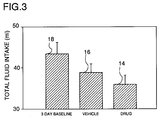
- Figure 3 shows a comparison of total fluid intake of alcohol preferring rats which have been administered levemopamil or a control vehicle.
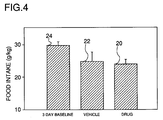
- Figure 4 shows a comparison of food intake of alcohol preferring rats which have been administered levemopamil or a control vehicle.
- Figure 5 shows the effects of ethanol intake of alcohol preferring rats which have been administered various dosages of levemopamil or a control vehicle.
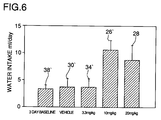
- Figure 6 shows the effects of water intake of alcohol preferring rats which have been administered various dosages of levemopamil or a control vehicle.
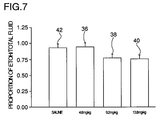
- Figure 7 shows a comparison of ethanol intake of alcohol preferring rats which have been administered nimodipine or a control vehicle.
- Figure 8 shows a comparison of water intake of alcohol preferring rats which have been administered nimodipine or a control vehicle.
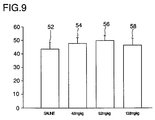
- Figure 9 shows a comparison of total fluid intake of alcohol preferring rats which have been administered nimodipine or a control vehicle.
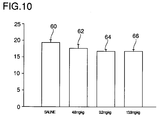
- Figure 10 shows a comparison of food intake of alcohol preferring rats which have been nimodipine or a control vehicle.
- Levemopamil is a strong phenylalkylamine calcium and serotonin antagonist, and is particularly preferred.
- alcohol dependency means a patient physically, emotionally and/or psychologically dependent upon alcohol.
- alcohol dependency alcohol abuse and alcoholism are interchangeable.
- intoxication means the result of drinking an excessive amount of alcohol over a relatively short period of time. Intoxication generally depresses the activity of the central nervous system, leading to loss of normal mental and physical control.
- treating alcohol dependency means an attenuation of alcohol dependence, including an attenuation of alcohol preference and consumption, and an attenuation of the effects of intoxication and withdrawal symptoms.
- levemopamil and/or the physiologically acceptable salts thereof have an significant anti-serotonin action which reaches the potency of known serotonin antagonists.
- the cerebral availability of levemopamil is significantly higher than that of the comparison compound verapamil.
- BAI brain uptake index
- levemopamil is particularly suitable for the prophylaxis and treatment of alcohol dependency.
- Levemopamil may be produced by the method described in U.S. Patent 4,596,820, hereby incorporated by reference.
- Levemopamil can be administered in a conventional manner orally, parenterally (intravenously, intramuscularly, subcutaneously) or rectally.
- physiologically tolerated acids include, for example, hydrochloric acid, hydrobromic acid, sulfuric acid, phosphoric acid, acetic acid, maleic acid, lactic acid tartaric acid, citric acid and fumaric acid.
- the dosage depends on the age, condition and weight of the patient and on the mode of administration.
- the daily dose of active substance is from about 1 to 50 mg/kg body weight on oral and rectal administration and from about 0.1 to 5 mg/kg body weight on parenteral administration.
- Levemopamil can be used in conventional solid or liquid pharmaceutical forms for administration, for example as tablets, film-coated tablets, sugar-coated tablets, capsules, powders, granules, suppositories or solutions. These are prepared in a conventional manner.
- the active substances can be processed in this connection with the conventional pharmaceutical aids such as tablet binders, fillers, preservatives, tablet disintegrants, flow-regulating agents, plasticizers, wetting agents, dispersants, emulsifiers, suppository bases, solvents, retardants and/or antioxidants.
- the forms for administration obtained in this way normally contain the active substance in an amount of from 1 to 99 percent by weight.
- Tablets of the following composition are produced in a tableting machine in a conventional manner: 40 mg Levemopamil hydrochloride 120 mg corn starch 13.5 mg gelatin 45 mg lactose 2.25 mg Aerosil® (chemically pure silica in submicroscopically fine distribution) 6.75 mg potato starch (as 6% strength paste).
- Sugar-coated tablets of the following composition are produced in a conventional manner: 20 mg Levemopamil hydrochloride 60 mg core composition 60 mg sugar-coating composition
- the core composition comprises 9 parts of corn starch, 3 parts of lactose and 1 part of Luviskol. VA 64 (60:40 vinylpyrrolidone/vinyl acetate copolymer).
- the sugar-coating composition comprises 5 parts of sucrose, 2 parts of corn starch, 2 parts of calcium carbonate and 1 part of talc. The sugar-coated tablets produced in this wire are then provided with an enteric coating.
- Suppositories of the following composition are produced in a conventional manner: 100 mg Levemopamil hydrochloride 40 mg Aerosil® silica 1900 mg hard fat.
- Levemopamil was administered in eight selectively-bred adult male alcohol preferring Wistar rats (hereinafter "P") obtained from the Indiana Alcohol Research Center at the University of Indiana School of Medicine.
- the criteria for classification of P rats was that the average daily intake of ethanol (10%v/v) in P rats should be equal or greater than 5g/Kg body weight/day and the ethanol to water intake ratio should be equal or greater than 2:1.
- FIG 2 shows that the rats administered levemopamil displayed significantly increased water intake (8) than those rats administered the vehicle (10) and also over the base-line established (12). Total fluid intake was decreased in the rats administered emopamil (14) in comparison to those rats administered the vehicle alone (16) and to the base-line intake (18), as illustrated in Figure 3.
- Figure 4 shows that food intake was unaffected by the administration of levemopamil (20) or the vehicle (22) but slightly decreased over the base-line intake (24).
- Figure 4 shows that the administration exerts a specific effect only on alcohol intake and not other consummatory behavior.
- Levemopamil and a vehicle were administered in eight P rats obtained from the Indiana Alcohol Research Center at the University of Indiana School of Medicine, as described in Example 5. After establishing a stable baseline for alcohol and water intake, Each animal was injected twice (9:15 and 16:00 hours) with either one of three doses of levemopamil (3.3, 10, and 20 mg/Kg) or an equal volume of the vehicle (a solution of 1 ml absolute ethanol and 4 ml distilled water. Water and alcohol intake were monitored. The amount of alcohol and water intake was recorded twice daily before each administration of vehicle or levemopamil and continued during the drug washout periods.
- Nimodipine was administered in ten P rats obtained from the Indiana Alcohol Research Center at the University of Indiana School of Medicine, as described in Example 5.
- nimodipine failed to exert a significant effect on ethanol intake at any dose [4.6 mg/Kg (36), 9.2 mg/Kg (38 or 13.8 mg/Kg (40)], using saline as a control (42).
- Figure 8 shows that water intake was not significantly affected by the administration of nimodipine at any dose [4.6 mg/Kg (44), 9.2 mg/Kg (46) or 13.8 mg/Kg (48)], using saline as the control (50).
- Figure 9 shows that a comparison of total fluid intake of the control (52) and administration of varied doses of nimodipine [4.6 mg/Kg (54), 9.2 mg/Kg (56) or 13.8 mg/Kg (58)], was unaffected by nimodipine, as was a comparison of the control (60) and food intake [4.6 mg/Kg (62), 9.2 mg/Kg (64) or 13.8 mg/Kg (66)], as illustrated in Figure 10.
Landscapes
- Health & Medical Sciences (AREA)
- Chemical & Material Sciences (AREA)
- Medicinal Chemistry (AREA)
- Pharmacology & Pharmacy (AREA)
- Epidemiology (AREA)
- Life Sciences & Earth Sciences (AREA)
- Animal Behavior & Ethology (AREA)
- General Health & Medical Sciences (AREA)
- Public Health (AREA)
- Veterinary Medicine (AREA)
- Pharmaceuticals Containing Other Organic And Inorganic Compounds (AREA)
Applications Claiming Priority (2)
| Application Number | Priority Date | Filing Date | Title |
|---|---|---|---|
| US66158191A | 1991-02-26 | 1991-02-26 | |
| US661581 | 2000-09-14 |
Publications (1)
| Publication Number | Publication Date |
|---|---|
| EP0502418A1 true EP0502418A1 (de) | 1992-09-09 |
Family
ID=24654201
Family Applications (1)
| Application Number | Title | Priority Date | Filing Date |
|---|---|---|---|
| EP92103337A Withdrawn EP0502418A1 (de) | 1991-02-26 | 1992-02-26 | Verwendung von Levemopamil zur Herstellung eines Arzneimittels zur Behandlung von Alkoholmissbrauch |
Country Status (1)
| Country | Link |
|---|---|
| EP (1) | EP0502418A1 (de) |
Citations (1)
| Publication number | Priority date | Publication date | Assignee | Title |
|---|---|---|---|---|
| EP0444854A2 (de) * | 1990-02-26 | 1991-09-04 | Eli Lilly And Company | 6-Substituierte Hexahydrobenz[cd]indole |
-
1992
- 1992-02-26 EP EP92103337A patent/EP0502418A1/de not_active Withdrawn
Patent Citations (1)
| Publication number | Priority date | Publication date | Assignee | Title |
|---|---|---|---|---|
| EP0444854A2 (de) * | 1990-02-26 | 1991-09-04 | Eli Lilly And Company | 6-Substituierte Hexahydrobenz[cd]indole |
Non-Patent Citations (3)
| Title |
|---|
| ARZNEIMITTELFORSCHUNG/DRUG RESEARCH vol. 39(I), no. 3, 1989, AULENDORF pages 304 - 308; H.P.HOFFMANN ET AL: '(s)-emopamil, a novel calcium and serotonin antagonist for the treatment of cerebrovascular disorders' * |
| J. CLIN. PSYCHIATRY vol. 47, no. 4, 1986, pages 4 - 8; R.W.FULLER: 'Pharmacologic Modification of Serotonin Function: Drugs for the study and treatment of Psychiatric and other Disorders' * |
| MEDICAL HYPOTHESES vol. 29, no. 4, 1989, pages 237 - 239; J.BACKON: 'Predicting new effective treatments of alcohol addiction on the basis of their properties of inhibition of noradrenergic activity and/or thromboxane or on the activation of the dopamine reward system and /or Beta-endorphin' * |
Similar Documents
| Publication | Publication Date | Title |
|---|---|---|
| US6558701B2 (en) | Multilayer tablet for administering a fixed combination of tramadol and diclofenac | |
| CA2003524C (en) | Treatment of obesity | |
| EP1085862B1 (de) | Behandlung von autoimmunerkrankungen | |
| US4945083A (en) | Safe oral folic-acid-containing vitamin preparation | |
| Rumore | Clinical pharmacokinetics of chlorpheniramine | |
| CA2197554A1 (en) | Combination of an opioid antagonist and a selective serotonin reuptake inhibitor for treatment of alcoholism and alcohol dependence | |
| US6469044B1 (en) | Method for treating patients suffering from drug dependencies which lead to plasma melationin deficiencies | |
| Mandal et al. | Is quinine effective and safe in leg cramps? | |
| HU224009B1 (hu) | Aldóz reduktáz inhibitort és ACE inhibitort tartalmazó gyógyászati készítmények | |
| US5627172A (en) | Method for reduction of serum blood lipids or lipoprotein fraction | |
| KR20040030788A (ko) | 요실금 치료를 위한 아릴(또는 헤테로아릴)아졸릴카르비놀 유도체 | |
| US4914125A (en) | (S)-emopamil for the treatment of migraine | |
| JP2009102399A (ja) | 利尿機能および腎機能を回復するためのアデノシンa1レセプターアンタゴニスト含有組成物および方法 | |
| Myhre et al. | The influence of antacid on the absorption of two different sustained‐release formulations of theophylline. | |
| US4822789A (en) | Method of producing renal function-improving effect and diuretic effect on warm-blooded animal | |
| US20090291939A1 (en) | Treating Alcohol And Or Substance Abuse By Antagonizing Alpha 2 Adrenergic Receptors With Weak Dopamine Blocking | |
| EP1863446A2 (de) | Pharmazeutische liothyroninzusammensetzungen mit kontrollierter freisetzung sowie verfahren zu ihrer herstellung und verwendung | |
| Luft et al. | Effects of oral calcium, potassium, digoxin, and nifedipine on natriuresis in normal humans | |
| Chiu et al. | Acute blood pressure and urinary responses to single dose combinations of captopril and diuretics in conscious spontaneously hypertensive rats | |
| KR100193929B1 (ko) | 브레타제닐을 포함하는 수면장해 치료용 약제 | |
| JPH02121925A (ja) | 腎ドーパミン様作用剤とアンジオテンシン変換酵素抑制剤の相乗作用を有する組成物 | |
| JP3154750B2 (ja) | 外因性カルシウム及びニカルジピンを含む医薬組成物 | |
| Kher et al. | Pharmacokinetics of a fixed combination of sotalol and hydrochlorothiazide in hypertensive patients with moderate renal insufficiency | |
| EP1386609A1 (de) | Adenosin A1 Rezeptor Antagonisten enthaltende Zusammensetzung und Verfahren zur Wiederherstellung der Diuretischen- und Nierenfunktion | |
| JPH09136843A (ja) | 血圧上昇薬 |
Legal Events
| Date | Code | Title | Description |
|---|---|---|---|
| PUAI | Public reference made under article 153(3) epc to a published international application that has entered the european phase |
Free format text: ORIGINAL CODE: 0009012 |
|
| AK | Designated contracting states |
Kind code of ref document: A1 Designated state(s): AT BE CH DE DK ES FR GB GR IT LI LU NL PT SE |
|
| 17P | Request for examination filed |
Effective date: 19930120 |
|
| 17Q | First examination report despatched |
Effective date: 19930317 |
|
| STAA | Information on the status of an ep patent application or granted ep patent |
Free format text: STATUS: THE APPLICATION IS DEEMED TO BE WITHDRAWN |
|
| 18D | Application deemed to be withdrawn |
Effective date: 19930928 |