EP0509705A2 - Traitement d'interactions entre les caractéristiques d'appel de télécommunication - Google Patents
Traitement d'interactions entre les caractéristiques d'appel de télécommunication Download PDFInfo
- Publication number
- EP0509705A2 EP0509705A2 EP92303084A EP92303084A EP0509705A2 EP 0509705 A2 EP0509705 A2 EP 0509705A2 EP 92303084 A EP92303084 A EP 92303084A EP 92303084 A EP92303084 A EP 92303084A EP 0509705 A2 EP0509705 A2 EP 0509705A2
- Authority
- EP
- European Patent Office
- Prior art keywords
- call
- request message
- indicator
- data
- switching system
- Prior art date
- Legal status (The legal status is an assumption and is not a legal conclusion. Google has not performed a legal analysis and makes no representation as to the accuracy of the status listed.)
- Withdrawn
Links
Images

Classifications
-
- H—ELECTRICITY
- H04—ELECTRIC COMMUNICATION TECHNIQUE
- H04Q—SELECTING
- H04Q3/00—Selecting arrangements
- H04Q3/42—Circuit arrangements for indirect selecting controlled by common circuits, e.g. register controller, marker
- H04Q3/47—Circuit arrangements for indirect selecting controlled by common circuits, e.g. register controller, marker using translators
-
- H—ELECTRICITY
- H04—ELECTRIC COMMUNICATION TECHNIQUE
- H04M—TELEPHONIC COMMUNICATION
- H04M3/00—Automatic or semi-automatic exchanges
- H04M3/42—Systems providing special services or facilities to subscribers
- H04M3/42136—Administration or customisation of services
- H04M3/4217—Managing service interactions
-
- H—ELECTRICITY
- H04—ELECTRIC COMMUNICATION TECHNIQUE
- H04Q—SELECTING
- H04Q3/00—Selecting arrangements
- H04Q3/0016—Arrangements providing connection between exchanges
- H04Q3/0029—Provisions for intelligent networking
- H04Q3/0041—Provisions for intelligent networking involving techniques for avoiding interaction of call service features
-
- H—ELECTRICITY
- H04—ELECTRIC COMMUNICATION TECHNIQUE
- H04Q—SELECTING
- H04Q2213/00—Indexing scheme relating to selecting arrangements in general and for multiplex systems
- H04Q2213/13501—Feature interactions
-
- H—ELECTRICITY
- H04—ELECTRIC COMMUNICATION TECHNIQUE
- H04Q—SELECTING
- H04Q2213/00—Indexing scheme relating to selecting arrangements in general and for multiplex systems
- H04Q2213/13502—Indexing scheme relating to selecting arrangements in general and for multiplex systems primitives - inc. service-independent building blocks [SIBBs]
-
- H—ELECTRICITY
- H04—ELECTRIC COMMUNICATION TECHNIQUE
- H04Q—SELECTING
- H04Q2213/00—Indexing scheme relating to selecting arrangements in general and for multiplex systems
- H04Q2213/13547—Indexing scheme relating to selecting arrangements in general and for multiplex systems subscriber, e.g. profile, database, database access
Definitions
- This invention relates to control of telecommunication features from a remote feature processor data base.
- a telecommunication switch of such a system comprises a stored program for controlling switch operations and implementing features, and a data base which, among other functions, defines the active features for each customer connected to the switch.
- These features include customer services such as conference, call waiting, call forwarding, and call forwarding on busy.
- a data base is used for routing 800 (free phone) calls by providing a destination, a conventional or plain old telephone service (POTS) telephone number that corresponds to each dialed 800 number for a particular region.
- POTS plain old telephone service
- the combination of the switches, the data bases for modifying routing and the signaling network interconnecting these data bases is called an intelligent network.
- a feature is a service to which a customer may subscribe.
- An example is the call waiting service whereby a customer can arrange to get a signal if an incoming call comes while the customer is on another call and the customer can arrange to switch to the waiting call.
- a data base called a remote feature processor (RFP)
- RFP remote feature processor
- SCP switching control point
- adjunct uses a higher speed data link to communicate with the switch, thereby making it possible to exchange more data between the switch and the adjunct).
- the combination of the switches and the SCP or adjunct plus the signaling network that interconnects the two is called an advanced intelligent network.
- More advanced intelligent networks are capable not only of modifying or specifying routing of calls performing calling card checks, etc., but also for customizing the use of telephone features, making available new features through appropriate use of the atomic feature set of the switch. Therefore, in order to implement an advanced intelligent network, it is necessary to provide an interface for specifying the atomic capability set elements to be invoked in a particular call at the interface to the switch and at the interface to the RFP, to provide a description of the atomic capability set currently active for a particular customer and the character of the stimulus such as an incoming call for which a response is to be generated.
- the features in the switch are implemented through the use of a set of feature primitives or primitives.
- the remote feature processor has its own data base for storing information about remote features of customers and switch feature information.
- a requirement of a more advanced intelligent network is that it must allow for the proper interworking of remote and switch features.
- the amount of interface bandwidth required to transmit feature information between the remote feature processor and the switch is high; as new switch features are introduced, they must be introduced using a standard communication protocol between the remote feature processor and the switch and must be programmed simultaneously into the remote feature processors as well as the switches; the remote feature processor must store and process a great deal of switch feature information in order to accomplish its task; and the remote feature processor must store a great deal of switch feature information for each customer connected to the switch.
- a problem with this arrangement is that the processing which must be carried out by the remote feature processor must take into account the characteristics both of the switch feature set and the remote feature processor feature set in order to carry out its work. This requires the remote feature processor be constantly updated as new features are added to the switch and requires a complex analysis program to account for all the interactions of features of the remote feature processor and features of the switch processor.
- Another problem of the advanced intelligent network is that the switches of different vendors must all interact with a common feature processor. As a result, it is necessary to have a coordinated data interface describing each feature in a common language so that the feature information received by the remote feature processor and transmitted from the remote feature processor is the same for the switches of all different manufacturers.
- a functional indicator is an indicator of a basic characteristic of a call which may be associated with a plurality of features, and which may influence execution of other features, wherein the execution of at least some of the features in the two groups can be influenced by the RFP.
- Execution of a switch based feature that causes that characteristic to occur sets the functional indicator.
- RFP based features that might be affected by the characteristic read the functional indicator to determine the execution of the RFP based feature.
- execution of an RFP based feature that causes a characteristic to occur sets a functional indicator.
- the RFP transmits that functional indicator to the switch.
- the execution of switch based features can then be modified by functional indicators received from the RFP.
- An example of a functional indicator is a "do not disturb" indicator which may be set, for example, by features such as cancel call waiting (do not give a call waiting signal because the customer does not wish to have the call interrupted), data security (do not interrupt the call because a data call may be mutilated through the signal for call waiting) and a "do not disturb" feature (the customer does not wish to be disturbed with calls for a certain period).
- Functional indicators allow switch and remote features to have enough knowledge of each other's operation so that they can interact in appropriate ways. Defining only needed functional indicators that can be shared by multiple features saves switch-RFP bandwidth and results in less switch information for the RFP to process than is the case with a feature- specific solution. Sharing of functional indicators by multiple features allows new switch features to be introduced without changing RFP software or the switch-RFP interface (and thus, the software of other switch vendors). In general, it results in a more stable switch-RFP interface and thus, in fewer multi-vendor coordinated software changes than with a feature- specific solution.
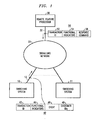
- FIG. 1 is a block diagram of an exemplary embodiment of applicant's invention.
- a plurality of switching systems 10,..., 11 are connected to a signaling network 20 for accessing a remote feature processor 30.
- Each of the switching systems and the remote feature processor comprise a program controlled processor and a data base for storing data, such as feature data, related to individual customers.
- the switching systems are, for example, local end offices such as the 5ESS@ switching system described in AT&T Technical Journal, Vol. 64, No. 6, Part 2, July/August 1985, pp. 1305-1564.
- the signaling network in this exemplary embodiment is a network for transmitting signaling messages using the CCS7 protocol of the American National Standards Institute (ANSI).
- the signaling network includes signal transfer points for switching messages transmitted within the signaling network.
- the remote feature processor may process event messages transmitted from a switching system, such as switching system 10, and to reply with event response messages. Responsive to Me event response messages, the switching system may alter subsequent processing of a call if the functional indicators received are different from the functional indicators transmitted.
- Switching system 10 transmits an event message 40 comprising a transaction identifier 42 to allow the event and event response messages to be correlated, a group of functional indicators (segment 44), a description of the event for which a response is requested (segment 46), and the identifications of the customers associated with that event (segment 48).
- This message 40 is transmitted from switching system 10 over data link 12 to the signaling network 20, thence over data link 32 to remote feature processor 30.
- Remote feature processor 30 receives message 40, examines the functional indicators therein, consults its own data base and its own event processing programs and prepares and transmits an event response message 50.
- This event response message is transmitted from remote feature processor 30 over data link 32 to signaling network 20, thence to data link 12 and switching system 10.
- the event response message 50 comprises a transaction identifier (segment 52) which, if the response message is in response to message 40 is identical to the original transaction identifier of segment 42, a group of functional indicators (segment 54) prepared in response to the event message in consideration of the program of the remote feature processor 30 for processing event messages including functional indicators and in view of data concerning the customer stored in the data base of the remote feature processor, and segment 56 which specifies the response command to switching system 10.
- a transaction identifier (segment 52) which, if the response message is in response to message 40 is identical to the original transaction identifier of segment 42
- a group of functional indicators (segment 54) prepared in response to the event message in consideration of the program of the remote feature processor 30 for processing event messages including functional indicators and in view of data concerning the customer stored in the data base of the remote feature processor, and segment 56 which specifies the response command to switching system 10.
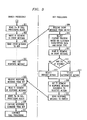
- FIG. 2 is a high level flow chart of the call processing that takes place in the switch.
- Block 201 indicates that a detectable event is detected in the switch. This event may be something which is actually detected using the peripheral equipment of the switch or it may be a message received from another switch.
- Test 203 checks whether the remote feature processor is interested in this type of event. If so, then the blocks of FIG. 3, starting with block 301 are executed. If not, test 205 determines whether any switch feature is interested in the detected event. If a switch feature is interested in the event, then the blocks shown on FIG. 4, starting with block 401 are executed. If not, then normal call processing is continued (action block 207).
- FIG. 3 describes the actions performed in response to the detection of an event which is of interest to a remote feature processor.
- the functional indicators in the call processing block are read (action block 301) and an event message is generated including the functional indicator segment (action block 303).
- This event message is then sent to the remote feature processor 305.
- the remote feature processor acts on this message, the switch is in the state whereby it waits for the response message (action block 307).
- the remote feature processor receives the event message from the switch (action block 309) and reads the functional indicator segment in the event message (action block 311).
- Test 313 determines whether there are any functional indicators of interest. If so, an alternative action is selected (action block 315) so that the actions performed are not the same as the default actions (action block 317).
- the functional indicator segment is prepared for the response message according to the alternative or default action, whichever was selected (action block 319) and the response message containing a response command and the functional indicator segment is sent back to the switch (action block 321).
- the switch receives the response message from the remote feature processor (action block 323) reads the functional indicator segment in the response message (action block 325) and responsive to the reading of this segment, writes the appropriate functional indicators in the call processing block (action block 327).
- the response command received from the RFP is then executed (action block 329) and normal call processing is continued (action block 331). Note that any functional indicator set by the RFP can influence the execution of any subsequent switch or RFP feature.
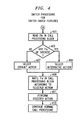
- the programs shown in FIG. 4 are executed.
- the functional indicators in the call processing block are read (action block 401) and are tested to see if there are any functional indicators of interest (test 403). If so, then an alternative action for responding to the event is selected in accordance with the functional indicators (action block 405). If there are no functional indicators of interest, as determined in test403, then a default action is selected (action block 407). Functional indicators are written in the call processing block according to the selected action (action block 409), and then that action is executed (action block 411). Subsequently, normal call processing is continued (action block 413).
- a new feature is implemented using the remote feature processor.
- the new feature is one wherein a customer who dials a priority code is given call waiting treatment when the call is completed to another customer who accepts call waiting type calls only for priority calls and not for normal calls.
- call waiting treatment of a call allows a special call waiting signal to be delivered to the called customer when the called customer is busy on another call and the called customer can switch back and forth between the two calls by briefly depressing the switchhook of the called customer's telephone. This treatment is normally provided to all incoming calls. However, for this special service, it is provided only to priority incoming calls.
- the caller first dials a priority calling code, then receives second dial tone and dials the number of the terminating customer.
- the switch based priority calling feature will be discussed. This feature is used to set a priority calling functional indicator in response to the reception of the priority code.
- the event that activates the switch based priority calling feature is the detection by a digit analysis process that the priority code has been dialed. This event is detected in the switch (action block 201), the test 203 of whether the RFP is interested yields a negative result since this is a switch based feature, but the test 205 of whether any switch feature is interested yields a positive result.
- the feature indicators in the call processing block are read, and test 403 check whether there are any functional indicators of interest.
- action block 407 is selected and the functional indicator for priority call is set (action block 409).
- the planned actions for detecting a priority call are then performed (action block 411) and normal call processing is continued (action block 413).
- the caller dials the number of the called customer who is busy on another call. Because this is a priority call and the called customer has the RFP based call waiting for priority calls feature, this call will be given call waiting treatment. This is performed as follows: In the switch, following the detection of completion of dialing and the subsequent attempt to route the call to the called customer, the switch detects a busy event (action block 201) and detects that a busy event check of the RFP is required for this customer (positive result of test 203). The switch will therefore read the functional indicators in the call block (action block 301) which in this case will include the priority indicator. The switch then writes the functional indicator segment in the event message (action block 303) and sends the event message to the RFP (action block 305).
- the switch then waits for the response message (action block 307) while performing work on other calls.
- the RFP receives the event message from the switch (action block 309) and based on the customer subscription data and event type, selects the feature process for processing this message (action block 310).
- the RFP then reads the functional indicator segment of the event message (action block 311) and tests whether there are any functional indicators of interest (test 313).
- the default action associated with action block 317 in this case would be to apply busy tone to the incoming call.
- the RFP feature process reads the functional indicators (action block 311), it finds a functional indicator of interest, namely the priority indicator in test 313 and selects an alternative action (action block 315).
- the alternative action is to formulate a response message that directs the switch to apply call waiting tone to the called customer (action block 315).
- the call waiting for priority calls feature does not affect any of the functional indicator call characteristics so that no further functional indicators need be set in the functional indicator segment of the response action (action block 319).
- the RFP then sends the response message to the switch including a response command asking the switch to give call waiting treatment to this call (action block 321). This message is received in the switch (action block 323).
- the switch reads the functional indicator segment in the response message (action block 325) and responsive to seeing no additional functional indicators set or reset, does not change any of the functional indicators in the call block (action block 327).
- the switch executes the response command from the RFP by giving this call the call waiting treatment and continues call processing (action block 331).
Landscapes
- Engineering & Computer Science (AREA)
- Computer Networks & Wireless Communication (AREA)
- Signal Processing (AREA)
- Exchange Systems With Centralized Control (AREA)
- Telephonic Communication Services (AREA)
Applications Claiming Priority (2)
| Application Number | Priority Date | Filing Date | Title |
|---|---|---|---|
| US686647 | 1991-04-17 | ||
| US07/686,647 US5251255A (en) | 1991-04-17 | 1991-04-17 | Processing interactions among telecommunications call features |
Publications (2)
| Publication Number | Publication Date |
|---|---|
| EP0509705A2 true EP0509705A2 (fr) | 1992-10-21 |
| EP0509705A3 EP0509705A3 (en) | 1993-11-18 |
Family
ID=24757156
Family Applications (1)
| Application Number | Title | Priority Date | Filing Date |
|---|---|---|---|
| EP19920303084 Withdrawn EP0509705A3 (en) | 1991-04-17 | 1992-04-08 | Processing interactions among telecommunications call features |
Country Status (4)
| Country | Link |
|---|---|
| US (1) | US5251255A (fr) |
| EP (1) | EP0509705A3 (fr) |
| JP (1) | JPH07170342A (fr) |
| CA (1) | CA2064487C (fr) |
Cited By (12)
| Publication number | Priority date | Publication date | Assignee | Title |
|---|---|---|---|---|
| EP0583190A1 (fr) * | 1992-07-29 | 1994-02-16 | Alcatel Cit | Réseau de télécommunication réalisant séparement un traitement d'appel et un traitement de connexion |
| EP0622936A1 (fr) * | 1993-04-26 | 1994-11-02 | AT&T Corp. | Accès aux caractéristiques des autres postes téléphoniques |
| WO1995004436A1 (fr) * | 1993-07-30 | 1995-02-09 | British Telecommunications Public Limited Company | Reseaux intelligents |
| EP0608612A3 (fr) * | 1992-12-31 | 1995-08-02 | At & T Corp | Dispositif de traitement d'appel téléphonique basé sur les services des abonnés. |
| WO1995020854A3 (fr) * | 1994-01-24 | 1995-11-09 | Ericsson Telefon Ab L M | Mecanisme generique de coordination de services |
| WO1995032588A1 (fr) * | 1994-05-20 | 1995-11-30 | Bellsouth Corporation | Fonction de transfert d'une interface de reseau intelligent de pointe par l'intermediaire d'un environnement d'execution commun |
| WO1998023098A1 (fr) * | 1996-11-19 | 1998-05-28 | British Telecommunications Public Limited Company | Systeme de gestion de services pour communications |
| US5878128A (en) * | 1995-03-09 | 1999-03-02 | Nokia Telecommuniction Oy | Method of communication and connection control |
| WO1999038339A1 (fr) * | 1998-01-23 | 1999-07-29 | Telefonaktiebolaget Lm Ericsson (Publ) | Procede et appareils concernant les dispositifs ou agents dispositifs et procede de commande de l'enchainement des operations entre ces dispositifs |
| EP0936821A1 (fr) * | 1998-02-13 | 1999-08-18 | Siemens Aktiengesellschaft | Element de commande dans un commutateur de réseau intelligent (service switching point) |
| EP0781059A3 (fr) * | 1995-12-18 | 2000-03-08 | Ericsson Inc. | Application de services spéciaux d'abonnés dans un réseau de télécommunication |
| US6661887B1 (en) | 1997-09-25 | 2003-12-09 | Nokia Networks Oy | Service interaction in an intelligent network |
Families Citing this family (74)
| Publication number | Priority date | Publication date | Assignee | Title |
|---|---|---|---|---|
| BR9106586A (pt) * | 1990-06-26 | 1993-03-30 | Australian & Overseas Telecom | Sistema e aparelho de telefonia aperfeicoados e metodos para fornecer servicos de telefonia aperfeicoados |
| JPH0497645A (ja) * | 1990-08-15 | 1992-03-30 | Fujitsu Ltd | インテリジェントネットワークにおけるscpのサービス制御方式 |
| CA2078045C (fr) * | 1992-09-11 | 1999-11-16 | Mark R. Sestak | Gestion globale d'un annuaire telephonique |
| US6134304A (en) * | 1992-11-10 | 2000-10-17 | Telefonaktiebolaget Lm Ericsson | General analysis system |
| US5701301A (en) * | 1993-06-28 | 1997-12-23 | Bellsouth Corporation | Mediation of open advanced intelligent network in SS7 protocol open access environment |
| AU691509B2 (en) * | 1993-06-28 | 1998-05-21 | Bellsouth Intellectual Property Corporation | Mediation of open advanced intelligent network interface for public switched telephone network |
| US5377186A (en) * | 1993-07-21 | 1994-12-27 | Telefonaktiebolaget L M Ericsson | System for providing enhanced subscriber services using ISUP call-setup protocol |
| US5550904A (en) * | 1993-09-30 | 1996-08-27 | Lucent Technologies Inc. | Method for identifying the originating network at the terminating network for transnetwork calls |
| US5425090A (en) * | 1993-12-07 | 1995-06-13 | Bell Communications Research, Inc. | System and method for providing advanced intelligent network services |
| US5583976A (en) * | 1994-02-18 | 1996-12-10 | Bellsouth Corporation | Telecommunications network configuration model for data management and allocation |
| US5991301A (en) | 1994-05-05 | 1999-11-23 | Sprint Communications Co. L.P. | Broadband telecommunications system |
| RU2138919C1 (ru) | 1994-05-05 | 1999-09-27 | Спринт Комьюникейшнз Компани Л.П. | Способ, система и устройство управления телефонной связью |
| US6631133B1 (en) * | 1994-05-05 | 2003-10-07 | Sprint Communications Company L.P. | Broadband telecommunications system |
| US5920562A (en) * | 1996-11-22 | 1999-07-06 | Sprint Communications Co. L.P. | Systems and methods for providing enhanced services for telecommunication call |
| US6314103B1 (en) | 1994-05-05 | 2001-11-06 | Sprint Communications Company, L.P. | System and method for allocating bandwidth for a call |
| US6172977B1 (en) * | 1994-05-05 | 2001-01-09 | Sprint Communications Company, L. P. | ATM direct access line system |
| US6023474A (en) * | 1996-11-22 | 2000-02-08 | Sprint Communications C.O.L.P. | Broadband telecommunications system interface |
| US6031840A (en) | 1995-12-07 | 2000-02-29 | Sprint Communications Co. L.P. | Telecommunications system |
| US6181703B1 (en) * | 1995-09-08 | 2001-01-30 | Sprint Communications Company L. P. | System for managing telecommunications |
| US6430195B1 (en) | 1994-05-05 | 2002-08-06 | Sprint Communications Company L.P. | Broadband telecommunications system interface |
| US5926482A (en) | 1994-05-05 | 1999-07-20 | Sprint Communications Co. L.P. | Telecommunications apparatus, system, and method with an enhanced signal transfer point |
| US6633561B2 (en) | 1994-05-05 | 2003-10-14 | Sprint Communications Company, L.P. | Method, system and apparatus for telecommunications control |
| US5579318A (en) * | 1994-06-30 | 1996-11-26 | Bellsouth Corporation | Processes and apparatus for maintaining data concurrence between databases in telecommunications networks |
| US5546574A (en) * | 1994-06-30 | 1996-08-13 | At&T Corporation | Peer-to-peer data concurrence processes and apparatus |
| US5535263A (en) * | 1994-10-13 | 1996-07-09 | U S West Technologies, Inc. | Method for recording subscriber specific messages in an advanced intelligent network |
| US5570410A (en) * | 1994-10-13 | 1996-10-29 | Bellsouth Corporation | Dynamic resource allocation process for a service control point in an advanced intelligent network system |
| SE515179C2 (sv) | 1994-10-24 | 2001-06-25 | Ericsson Telefon Ab L M | Sätt för internkommunikaton i telekommunikationssystem |
| WO1996013927A1 (fr) * | 1994-10-27 | 1996-05-09 | Telefonaktiebolaget Lm Ericsson | Systeme et procede destines a offrir de meilleurs services abonnes dans un reseau de telecommunications a noeuds multiples |
| US5579384A (en) * | 1995-02-17 | 1996-11-26 | Bellsouth Corporation | Telecommunications network service central management system interfacing with protocol specific regional stations providing services to subscribers |
| US5526413A (en) * | 1995-04-17 | 1996-06-11 | Bell Atlantic Network Services, Inc. | Advanced intelligent network access by customer premise equipment |
| US6453037B1 (en) * | 1995-04-19 | 2002-09-17 | Mci Communications Corporation | Remote telecommunications system for automatic number identification screening |
| WO1997000570A1 (fr) * | 1995-06-16 | 1997-01-03 | Harris Corporation | Procede faisant appel a une interface a programme d'application de conception dynamique |
| US5771279A (en) * | 1995-07-31 | 1998-06-23 | Bell Atlantic Network Services, Inc. | Advanced intelligent network interacting with customer premises equipment |
| US6081529A (en) * | 1995-11-22 | 2000-06-27 | Sprint Communications Company, L. P. | ATM transport system |
| AU2257097A (en) * | 1996-02-02 | 1997-08-22 | Sprint Communications Company, L.P. | Atm gateway system |
| US5870550A (en) * | 1996-02-26 | 1999-02-09 | Network Engineering Software | Web server employing multi-homed, moldular framework |
| US8117298B1 (en) | 1996-02-26 | 2012-02-14 | Graphon Corporation | Multi-homed web server |
| US5940393A (en) * | 1996-05-28 | 1999-08-17 | Sprint Communications Co. L.P. | Telecommunications system with a connection processing system |
| US6445782B1 (en) * | 1996-11-19 | 2002-09-03 | British Telecommunications Public Limited Company | Service management system for use in communications |
| KR100459306B1 (ko) | 1996-11-22 | 2004-12-03 | 스프린트 커뮤니케이숀스 컴파니 리미티드 파트너쉽 | 원격통신 네트워크에서 호출을 전송하기 위한 시스템 및 방법 |
| US6667982B2 (en) | 1996-11-22 | 2003-12-23 | Sprint Communications Company, L.P. | Broadband telecommunications system interface |
| US6115380A (en) * | 1996-11-22 | 2000-09-05 | Sprint Communications Co., L.P. | Broadband telecommunications system |
| US6014378A (en) * | 1996-11-22 | 2000-01-11 | Sprint Communications Company, L.P. | Telecommunications tandem system for circuit-based traffic |
| US6002689A (en) * | 1996-11-22 | 1999-12-14 | Sprint Communications Co. L.P. | System and method for interfacing a local communication device |
| US6067299A (en) * | 1997-04-16 | 2000-05-23 | Sprint Communications Company, L.P. | Communications system for providing ATM connections and echo cancellation |
| US6137800A (en) * | 1997-05-09 | 2000-10-24 | Sprint Communications Company, L. P. | System and method for connecting a call |
| US6704327B1 (en) | 1997-05-09 | 2004-03-09 | Sprint Communications Company, L.P. | System and method for connecting a call |
| US6178170B1 (en) | 1997-05-13 | 2001-01-23 | Sprint Communications Company, L. P. | System and method for transporting a call |
| US7088801B1 (en) * | 1997-09-08 | 2006-08-08 | Mci, Inc. | Single telephone number access to multiple communications services |
| US6795532B1 (en) | 1997-09-08 | 2004-09-21 | Mci, Inc. | Single telephone number access to multiple communication services |
| US6483837B1 (en) | 1998-02-20 | 2002-11-19 | Sprint Communications Company L.P. | System and method for connecting a call with an interworking system |
| US6888820B1 (en) * | 1998-02-20 | 2005-05-03 | Sprint Communications Company L.P. | System and method for treating a call for call processing |
| US6563918B1 (en) | 1998-02-20 | 2003-05-13 | Sprint Communications Company, LP | Telecommunications system architecture for connecting a call |
| NO313027B1 (no) | 1998-03-06 | 2002-07-29 | Ericsson Telefon Ab L M | Fremgangsmåte for å forbedre en nettstruktur, spesielt et intelligent nett |
| US6546022B1 (en) | 1998-04-03 | 2003-04-08 | Sprint Communications Company, L.P. | Method, system and apparatus for processing information in a telecommunications system |
| US6160871A (en) | 1998-04-10 | 2000-12-12 | Sprint Communications Company, L.P. | Communications test system |
| US6714217B2 (en) * | 1998-12-18 | 2004-03-30 | Sprint Communication Company, L.P. | System and method for providing a graphical user interface to, for building, and/or for monitoring a telecommunication network |
| US6785282B1 (en) | 1998-12-22 | 2004-08-31 | Sprint Communications Company L.P. | System and method for connecting a call with a gateway system |
| US6597701B1 (en) | 1998-12-22 | 2003-07-22 | Sprint Communications Company L.P. | System and method for configuring a local service control point with a call processor in an architecture |
| US6724765B1 (en) | 1998-12-22 | 2004-04-20 | Sprint Communications Company, L.P. | Telecommunication call processing and connection system architecture |
| US6888833B1 (en) | 1998-12-22 | 2005-05-03 | Sprint Communications Company L.P. | System and method for processing call signaling |
| US6982950B1 (en) | 1998-12-22 | 2006-01-03 | Sprint Communications Company L.P. | System and method for connecting a call in a tandem architecture |
| US6560226B1 (en) | 1999-02-25 | 2003-05-06 | Sprint Communications Company, L.P. | System and method for caching ported number information |
| US7079530B1 (en) | 1999-02-25 | 2006-07-18 | Sprint Communications Company L.P. | System and method for caching toll free number information |
| US7072687B2 (en) * | 1999-02-26 | 2006-07-04 | Hiatt Jr Aden Dale | System for transferring an address list and method |
| US7103068B1 (en) | 1999-05-04 | 2006-09-05 | Sprint Communication Company L.P. | System and method for configuring bandwidth transmission rates for call connections |
| US6895088B1 (en) | 1999-05-21 | 2005-05-17 | Sprint Communications Company L.P. | System and method for controlling a call processing system |
| KR100585830B1 (ko) * | 1999-07-19 | 2006-06-01 | 에스케이 텔레콤주식회사 | 이동전화망에서의 아이에스 41 씨 프로토콜 적용에 따른 원격제어서비스 제공방법 |
| US6816497B1 (en) | 1999-11-05 | 2004-11-09 | Sprint Communications Company, L.P. | System and method for processing a call |
| US6704314B1 (en) | 1999-12-15 | 2004-03-09 | Sprint Communications Company, L.P. | Method and apparatus to control cell substitution |
| US6549617B1 (en) | 2000-01-19 | 2003-04-15 | International Controllers, Inc. | Telephone switch with delayed mail control system |
| US20060096867A1 (en) * | 2004-11-10 | 2006-05-11 | George Bokisa | Tin alloy electroplating system |
| JP2007013683A (ja) * | 2005-06-30 | 2007-01-18 | Toshiba Corp | サーバ装置 |
| KR20110138245A (ko) * | 2009-03-16 | 2011-12-26 | 노키아 지멘스 네트웍스 오와이 | 요청되지 않은 통신을 방지하기 위한 통신 연결 설정 제어 |
Family Cites Families (8)
| Publication number | Priority date | Publication date | Assignee | Title |
|---|---|---|---|---|
| US4611094A (en) * | 1983-12-01 | 1986-09-09 | At&T Bell Laboratories | Method for customer definable telephone capability |
| US4737983A (en) * | 1985-10-02 | 1988-04-12 | American Telephone And Telegraph Company Communications, Inc. | Automatic call distributor telephone service |
| US4782517A (en) * | 1986-09-08 | 1988-11-01 | Bell Communications Research, Inc. | System and method for defining and providing telephone network services |
| US4899373A (en) * | 1986-11-28 | 1990-02-06 | American Telephone And Telegraph Company At&T Bell Laboratories | Method and apparatus for providing personalized telephone subscriber features at remote locations |
| US4757267A (en) * | 1987-06-17 | 1988-07-12 | Applied Telematics, Inc. | Telephone system for connecting a customer to a supplier of goods |
| US4788718A (en) * | 1987-10-05 | 1988-11-29 | American Telephone And Telegraph Company, At & T Laboratories | Call data collection and modification of received call distribution |
| JPH01278155A (ja) * | 1988-04-30 | 1989-11-08 | Fujitsu Ltd | 集中保守方式 |
| US5062103A (en) * | 1988-12-29 | 1991-10-29 | At&T Bell Laboratories | Telephone agent call management system |
-
1991
- 1991-04-17 US US07/686,647 patent/US5251255A/en not_active Expired - Lifetime
-
1992
- 1992-03-31 CA CA002064487A patent/CA2064487C/fr not_active Expired - Fee Related
- 1992-04-08 EP EP19920303084 patent/EP0509705A3/en not_active Withdrawn
- 1992-04-17 JP JP4096886A patent/JPH07170342A/ja not_active Withdrawn
Cited By (19)
| Publication number | Priority date | Publication date | Assignee | Title |
|---|---|---|---|---|
| EP0583190A1 (fr) * | 1992-07-29 | 1994-02-16 | Alcatel Cit | Réseau de télécommunication réalisant séparement un traitement d'appel et un traitement de connexion |
| AU665099B2 (en) * | 1992-07-29 | 1995-12-14 | Alcatel N.V. | Telecommunication network |
| EP0608612A3 (fr) * | 1992-12-31 | 1995-08-02 | At & T Corp | Dispositif de traitement d'appel téléphonique basé sur les services des abonnés. |
| EP0622936A1 (fr) * | 1993-04-26 | 1994-11-02 | AT&T Corp. | Accès aux caractéristiques des autres postes téléphoniques |
| AU679544B2 (en) * | 1993-07-30 | 1997-07-03 | British Telecommunications Public Limited Company | Intelligent networks |
| WO1995004436A1 (fr) * | 1993-07-30 | 1995-02-09 | British Telecommunications Public Limited Company | Reseaux intelligents |
| US6266535B1 (en) | 1993-07-30 | 2001-07-24 | British Telecommunications Public Limited Company | Telecommunication network which transmits the state of an occurrence of a non-call related service request associated with a network termination |
| US5657451A (en) * | 1994-01-24 | 1997-08-12 | Telefonaktiebolaget Lm Ericsson | System for determining whether to accept new supplementary services based upon identified types of supplementary service interactions and identified supplementary service interaction criteria |
| AU707274B2 (en) * | 1994-01-24 | 1999-07-08 | Telefonaktiebolaget Lm Ericsson (Publ) | Generic service coordination mechanism |
| WO1995020854A3 (fr) * | 1994-01-24 | 1995-11-09 | Ericsson Telefon Ab L M | Mecanisme generique de coordination de services |
| WO1995032588A1 (fr) * | 1994-05-20 | 1995-11-30 | Bellsouth Corporation | Fonction de transfert d'une interface de reseau intelligent de pointe par l'intermediaire d'un environnement d'execution commun |
| US5878128A (en) * | 1995-03-09 | 1999-03-02 | Nokia Telecommuniction Oy | Method of communication and connection control |
| EP0781059A3 (fr) * | 1995-12-18 | 2000-03-08 | Ericsson Inc. | Application de services spéciaux d'abonnés dans un réseau de télécommunication |
| WO1998023098A1 (fr) * | 1996-11-19 | 1998-05-28 | British Telecommunications Public Limited Company | Systeme de gestion de services pour communications |
| US6661887B1 (en) | 1997-09-25 | 2003-12-09 | Nokia Networks Oy | Service interaction in an intelligent network |
| WO1999038339A1 (fr) * | 1998-01-23 | 1999-07-29 | Telefonaktiebolaget Lm Ericsson (Publ) | Procede et appareils concernant les dispositifs ou agents dispositifs et procede de commande de l'enchainement des operations entre ces dispositifs |
| US6654454B1 (en) | 1998-01-23 | 2003-11-25 | Telefonaktiebolaget Lm Ericsson (Publ) | Method and devices related to features or feature agent and method of controlling process flow between features |
| EP0936821A1 (fr) * | 1998-02-13 | 1999-08-18 | Siemens Aktiengesellschaft | Element de commande dans un commutateur de réseau intelligent (service switching point) |
| WO1999041916A1 (fr) * | 1998-02-13 | 1999-08-19 | Siemens Aktiengesellschaft | Composant de commande monte en un point de commutation de services |
Also Published As
| Publication number | Publication date |
|---|---|
| JPH07170342A (ja) | 1995-07-04 |
| CA2064487A1 (fr) | 1992-10-18 |
| US5251255A (en) | 1993-10-05 |
| CA2064487C (fr) | 1997-01-07 |
| EP0509705A3 (en) | 1993-11-18 |
Similar Documents
| Publication | Publication Date | Title |
|---|---|---|
| US5251255A (en) | Processing interactions among telecommunications call features | |
| US5369695A (en) | Method of redirecting a telephone call to an alternate destination | |
| US5394463A (en) | Telephone call processing arrangement based on calling and called party telephone services | |
| CA1331802C (fr) | Systeme de communication numerique a structure modulaire comportant des elements actifs et des elements de protection | |
| US5404396A (en) | Feature interaction manager | |
| US5283824A (en) | Calling line identification | |
| US5583929A (en) | Customer oriented telecommunications network | |
| AU707617B2 (en) | Providing special services to a caller configured as a virtual called party | |
| US20020021796A1 (en) | Flexible software architecture for a call processing system | |
| KR980013191A (ko) | 호출 가입자 식별 고지 서비스용 장치 (Calling party identification announcement service) | |
| EP0715474A2 (fr) | Procédé de traitement d'appel basé sur un processeur adjoint | |
| US4486626A (en) | Method of and system for limiting access to a group of telephone trunks | |
| JP3021630B2 (ja) | 通信システム及び通信方法 | |
| US5644632A (en) | Distributed key telephone station network | |
| JPH09182120A (ja) | キーホンシステムにおける加入者多重接続方法 | |
| US6765886B1 (en) | Call set-up and service invocation in telecommunications networks | |
| AU737075B2 (en) | Call diversion with destination querying | |
| EP0748133B1 (fr) | Méthode pour opérer un réseau de télécommunications et réseau associé | |
| US6389131B1 (en) | Enhanced initiate call attempt | |
| KR910006061B1 (ko) | 집단전화교환기의 호 자동분배 방법 | |
| JPH01293053A (ja) | 話中着信接続方式 | |
| JPH04290351A (ja) | 発信規制制御方式 | |
| JP2618030B2 (ja) | 交換機における通話路接続方式 | |
| EP1006705A1 (fr) | Autocommutateur privé et méthode pour l'établissement d'une connection | |
| KR19990034369A (ko) | 센트릭스 기능을 이용한 링픽업 방법 |
Legal Events
| Date | Code | Title | Description |
|---|---|---|---|
| PUAI | Public reference made under article 153(3) epc to a published international application that has entered the european phase |
Free format text: ORIGINAL CODE: 0009012 |
|
| AK | Designated contracting states |
Kind code of ref document: A2 Designated state(s): AT BE CH DE ES FR GB IT LI NL SE |
|
| PUAL | Search report despatched |
Free format text: ORIGINAL CODE: 0009013 |
|
| AK | Designated contracting states |
Kind code of ref document: A3 Designated state(s): AT BE CH DE ES FR GB IT LI NL SE |
|
| RAP3 | Party data changed (applicant data changed or rights of an application transferred) |
Owner name: AT&T CORP. |
|
| 17P | Request for examination filed |
Effective date: 19940506 |
|
| 17Q | First examination report despatched |
Effective date: 19961223 |
|
| STAA | Information on the status of an ep patent application or granted ep patent |
Free format text: STATUS: THE APPLICATION IS DEEMED TO BE WITHDRAWN |
|
| 18D | Application deemed to be withdrawn |
Effective date: 19980804 |