EP0511559A1 - Reagens für eine Oligonukleotidprobe - Google Patents
Reagens für eine Oligonukleotidprobe Download PDFInfo
- Publication number
- EP0511559A1 EP0511559A1 EP92106603A EP92106603A EP0511559A1 EP 0511559 A1 EP0511559 A1 EP 0511559A1 EP 92106603 A EP92106603 A EP 92106603A EP 92106603 A EP92106603 A EP 92106603A EP 0511559 A1 EP0511559 A1 EP 0511559A1
- Authority
- EP
- European Patent Office
- Prior art keywords
- probes
- membrane
- probe
- reagent
- oligonucleotide probe
- Prior art date
- Legal status (The legal status is an assumption and is not a legal conclusion. Google has not performed a legal analysis and makes no representation as to the accuracy of the status listed.)
- Withdrawn
Links
Images


Classifications
-
- C—CHEMISTRY; METALLURGY
- C07—ORGANIC CHEMISTRY
- C07H—SUGARS; DERIVATIVES THEREOF; NUCLEOSIDES; NUCLEOTIDES; NUCLEIC ACIDS
- C07H21/00—Compounds containing two or more mononucleotide units having separate phosphate or polyphosphate groups linked by saccharide radicals of nucleoside groups, e.g. nucleic acids
-
- C—CHEMISTRY; METALLURGY
- C07—ORGANIC CHEMISTRY
- C07K—PEPTIDES
- C07K14/00—Peptides having more than 20 amino acids; Gastrins; Somatostatins; Melanotropins; Derivatives thereof
- C07K14/82—Translation products from oncogenes
-
- C—CHEMISTRY; METALLURGY
- C12—BIOCHEMISTRY; BEER; SPIRITS; WINE; VINEGAR; MICROBIOLOGY; ENZYMOLOGY; MUTATION OR GENETIC ENGINEERING
- C12Q—MEASURING OR TESTING PROCESSES INVOLVING ENZYMES, NUCLEIC ACIDS OR MICROORGANISMS; COMPOSITIONS OR TEST PAPERS THEREFOR; PROCESSES OF PREPARING SUCH COMPOSITIONS; CONDITION-RESPONSIVE CONTROL IN MICROBIOLOGICAL OR ENZYMOLOGICAL PROCESSES
- C12Q1/00—Measuring or testing processes involving enzymes, nucleic acids or microorganisms; Compositions therefor; Processes of preparing such compositions
- C12Q1/68—Measuring or testing processes involving enzymes, nucleic acids or microorganisms; Compositions therefor; Processes of preparing such compositions involving nucleic acids
- C12Q1/6813—Hybridisation assays
- C12Q1/6834—Enzymatic or biochemical coupling of nucleic acids to a solid phase
-
- C—CHEMISTRY; METALLURGY
- C12—BIOCHEMISTRY; BEER; SPIRITS; WINE; VINEGAR; MICROBIOLOGY; ENZYMOLOGY; MUTATION OR GENETIC ENGINEERING
- C12Q—MEASURING OR TESTING PROCESSES INVOLVING ENZYMES, NUCLEIC ACIDS OR MICROORGANISMS; COMPOSITIONS OR TEST PAPERS THEREFOR; PROCESSES OF PREPARING SUCH COMPOSITIONS; CONDITION-RESPONSIVE CONTROL IN MICROBIOLOGICAL OR ENZYMOLOGICAL PROCESSES
- C12Q1/00—Measuring or testing processes involving enzymes, nucleic acids or microorganisms; Compositions therefor; Processes of preparing such compositions
- C12Q1/68—Measuring or testing processes involving enzymes, nucleic acids or microorganisms; Compositions therefor; Processes of preparing such compositions involving nucleic acids
- C12Q1/6876—Nucleic acid products used in the analysis of nucleic acids, e.g. primers or probes
- C12Q1/6883—Nucleic acid products used in the analysis of nucleic acids, e.g. primers or probes for diseases caused by alterations of genetic material
- C12Q1/6886—Nucleic acid products used in the analysis of nucleic acids, e.g. primers or probes for diseases caused by alterations of genetic material for cancer
-
- C—CHEMISTRY; METALLURGY
- C12—BIOCHEMISTRY; BEER; SPIRITS; WINE; VINEGAR; MICROBIOLOGY; ENZYMOLOGY; MUTATION OR GENETIC ENGINEERING
- C12Q—MEASURING OR TESTING PROCESSES INVOLVING ENZYMES, NUCLEIC ACIDS OR MICROORGANISMS; COMPOSITIONS OR TEST PAPERS THEREFOR; PROCESSES OF PREPARING SUCH COMPOSITIONS; CONDITION-RESPONSIVE CONTROL IN MICROBIOLOGICAL OR ENZYMOLOGICAL PROCESSES
- C12Q2600/00—Oligonucleotides characterized by their use
- C12Q2600/156—Polymorphic or mutational markers
Definitions
- the present invention relates to an oligonucleotide probe reagent, a method for constructing the oligonucleotide probe reagent and kits based thereon.
- the invention relates to the field of nucleic acid based diagnostics and particularly to methods for site-specific attachment of oligonucleotide probes to nylon membranes.
- the resulting membrane bound probes and probe arrays are useful in the diagnosis of infectious, genetic, and neoplastic diseases.
- PCR polymerase chain reaction
- CF cystic fibrosis
- RAS oncogenes are one of the most common genetic diseases in Caucasian populations and more than 60 mutations have been found at this locus (see Roberts, 1990, Science 250 :1076-1077). Transforming mutations of the RAS oncogenes are found quite frequently in cancers, and more than 60 probes are needed to detect the majority of the mutated variants (see Bos, 1989, Cancer Res.
- the filters containing the immobilized array of probes must be prepared for this purpose, and there is a need in the art for a better attached oligonucleotide probe reagent and hence for more efficient and better methods for attaching oligonucleotides to activated membranes and for methods suitable for both the research and the clinical diagnostics laboratory.
- the present invention meets that need in that the invention provides an oligonucleotide probe reagent consisting of a nylon membrane with a high density of anionic carboxyl groups to which membrane at least one oligonucleotide probe containing a 5' amine is covalently bound via an amide bond.
- the oligonucleotide probe reagent is further characterized in that it contains a spacer.
- the nylon membrane is preferably a Biodyne CTM membrane or an equivalent one.
- different probes can be attached to said membrane at a discrete location. It is preferred that a set of different probes is attached to the membrane so that each probe is present at a location different from the location of every other member of that set. Thereby at least one probe of that set can be a mixture of different probes.
- said set of probes is composed of probes that can hybridize to DNA that contains a CF or a RAS mutation or comprises probes for analysis of cytochrome P450 systems and chromosomal translations.
- a method for constructing the membrane-bound oligonucleotide probe reagent according to the present invention comprises (a) activating a nylon membrane with a high density of anionic carboxyl groups by treatment with a reagent that converts carboxyl groups to O-acylureas; and (b) reacting an oligonucleotide probe containing 5' amine with an O-acylurea formed in step (a) to attach the probe to the membrane via an amide bond form between said 5'-amine and said O-acylurea.
- a preferred reagent for converting carboxyl groups to O-acylureas in the method is 1-ethyl-3-(dimethylaminopropyl)carbodiimide hydrochloride (EDC).
- a preferred nylon membrane for use in the method is a Biodyne CTM (Pall Corp. Glen Cove, NY) membrane or an equivalent membrane thereto.
- the membrane is treated, after step (b), to render inactive any unreacted O-acylureas formed in step (a) to a nucleophile.
- the treatment is preferably performed with hydroxylamine and/or NaOH, especially with 0.1N NaOH.
- a set of different probes is attached to the membrane so that each probe is present at a location on the membrane different from the location of every other probe of said set.
- one preferably can attach a mixture of different probes to the membrane at a particular location, and such a mixture can serve as one probe of a set of different probes immobilized on a membrane in a manner such that each probe of the set is present at a location on the membrane different from the location of every other probe of the set.
- the present invention provides a method for immobilizing probe(s) on a solid support and immobilized probe reagent(s) for diagnostic, forensic, and other applications.
- the method is especially preferred for detection of cystic fibrosis (CF) and RAS mutations.
- the set of probes is composed of probes that can hybridize to DNA that contains a CF mutation or the set of probes is composed of probes that can hybridize to DNA that contains a RAS mutation.
- analysis of the cytochrome P450 system and of diseases associated with chromosomal translocations, such as ALL, AML, and CML can be facilitated with the method and reagents of the present invention.
- kits comprising the probe reagents prepared and especially to kits comprising reagents useful in performing the afore mentioned method for making and/or using the probe reagents.
- Kits can comprise amplification reagents, i.e., if the preferred amplification method is PCR, then such reagents can be primers, nucleoside triphosphates, and/or polymerase.
- Kits for making the reagents can comprise nylon membranes, EDC, oligonucleotides, and/or quenching reagents.
- Figure 1 shows schematically the structure of the oligonucleotide amino-linker and spacer arm.
- Figure 2 shows the results of a hybridization test of oligonucleotide probes with varying concentrations and spacer lengths.
- Probes N-RAS 12 Asp (SEQ ID NO: 1) 5'-GAGCAGATGGTGTTGG) were diluted as described in Example 2, subsequently immobilized on the membranes, and hybridized to PCR amplified N-RAS 12 sequences from PA-1 DNA.
- S is spacer.
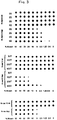
- Figure 3 shows the sensitivity of the reverse dot blot format.
- Two pmoles of the oligonucleotides that represent the N-RAS 12 wild-type (wild-type, wt (SEQ ID NO:2) 5'-GAGCAGGTGGTGTTGG) and N-RAS 12 Asp mutant probes were immobilized on the membranes and hybridized to PCR amplified PA-1 DNA (heterozygous for N-RAS 12 Asp) that were serially diluted in normal PBL DNA such that the mutant sequence was represented from 50% to 0% (see Example 7): (a) aminomodified probes on a Biodyne CTM filter; (b) enzymatically tailed probes on a BiodyneBTM filter; and (c) chemically synthesized 100T tailed probes on a Biodyne BTM filter.
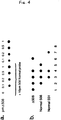
- Figure 4 shows the results of pooling of oligonucleotide probes: (a) a probe that recognizes ⁇ 508 mutant of CF ( ⁇ 508 (SEQ ID NO: 3) 5'-AATATCATTGGTGTTTCCTAT) was mixed with 10 pmoles of the wild-type CF probe (wt (SEQ ID NO: 4)5'-TATCATCTTTGGTGTTTCCTA) and hybridized with PCR product of DNA from a CF patient carrying 508 on both alleles; and (b) three identical Biodyne CTM filters with probes at position 1: ⁇ 508, 2: ⁇ 508 + wt 508, 3: ⁇ 508 + wt 508 + wt 551, 4: ⁇ 508 + wt 508 + wt 551 + mutant 551, 5: wt 508, 6: ⁇ 508, 7: wt 551, and 8: mutant 551.
- the probes were immobilized on Biodyne CTM membranes as described in Example 4. The
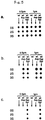
- Figure 5 shows the detection of RAS point mutations in a mixture of oligonucleotides. Equal amounts of three RAS probes ((SEQ ID NO: 2), with a varying number of spaces were immobilized on Biodyne CTM membranes. The same filter was subsequently hybridized with HRP-labelled complementary strand oligonucleotides:
- the invention provides a method for immobilizing oligonucleotide probes on nylon membranes through a covalent binding reaction.
- the reaction is a chemically controlled coupling rather than the random attachment characteristic of photochemical crosslinking (UV).
- UV photochemical crosslinking
- the immobilization is site-specific, and the covalent bonds formed between the probes and the surface molecules of the membrane are very strong.
- the membrane probes provided by the method are an important aspect of the invention and not only can withstand multiple stringent hybridizations and washings but also can be reused after being stripped by boiling in a microwave oven.
- the attachment method provides a membrane bound probe reagent that provides excellent sensitivity in the reverse dot blot format; less than 0.1 pmole oligonucleotide probe per spot is sufficient to give a strong hybridization signal.
- the binding capacity per dot is high, with more than 50 pmoles required to saturate an area equivalent to the size of one well in any common 96 well dot blot apparatus.
- This high sensitivity in combination with high capacity of attachment allows one to bind several different probes on one dot without sacrificing detection capabilities, which is very useful in the clinical diagnostic setting where large scale screening is often necessary for detecting and analyzing infectious and genetic diseases or cancer.
- These reagents have great potential in the study and analysis of HLA Class II genes.
- the HLA Class II loci are highly polymorphic, and classification of the polymorphisms is important in cases of organ transplantation, paternity, forensics, and in other areas. In marked contrast, normal serological or dot blot typing methods are much more difficult in these settings, because of the scarcity of reagents and the presence of many alleles in the population.
- T m melting temperature
- the invention provides reagents and methods for making membrane bound probe arrays in which the probes have T m 's roughly within 2 centigrade degrees of each other.
- TMAC1 see Wood et al., 1985, Proc. Natl. Acad. Sci. USA 82 :1585-1588
- TMAC1 can be used in the washing buffer to minimize the differences among the probes caused by variations in the base composition of the oligonucleotides (see Example 6; RAS point mutation detection).
- nylon membranes are a suitable substrate, because they are easy to handle, durable, and convenient for both hybridization and detection procedures.
- the membrane should have a high density of anionic carboxyl groups to be reactive with amino-modified oligonucleotides.
- IAM International Metal Organic Chemical Vapor
- Biodyne CTM membranes were able to bind oligonucleotides functionalized by introducing nucleophile groups, such as amines or thiol groups which are reactive with derivatized surfaces, at their 5' end during synthesis.
- Oligonucleotides bind to IAM predominantly through hydroxyl groups when one uses the manufacturer's recommended conditions, whereas Biodyne CTM membrane binding is specifically through the primary amines of the modified end. Hydroxyl and sulfhydryl modified oligonucleotides have shown only a very low level of non-specific binding. Biodyne CTM is a preferred membrane because of the ability of its carboxyl groups to react with the amino-linkers of the oligonucleotides through EDC (see U.S. Patent No. 4,693,985).
- the weakly anionic property of Biodyne CTM membranes may contribute to the reduction of non-specific binding due to electrostatic interactions between the nucleic acids and the membranes. The chemical reactions for activating the Biodyne CTM membrane are simple and straightforward and do not require the use of organic solvents.
- the nylon membrane is activated by treatment with EDC, which activates carboxyls to form an O-acylurea. These intermediates, in turn, can be attacked by amines to form amide bonds.
- the coupling efficiency depends upon the competition between hydrolysis and aminolysis of the O-acylurea. In principle, at least in liquid phase, both the amino-linker and the exocyclic amines of the bases can react with the activated carboxyl groups. However, the 5' primary amine is a stronger nucleophile than the aromatic amines on the bases. For purposes of the present invention, both reaction efficiency (speed) and selectively (specific amino-linker attachment) are desirable.
- the coupling efficiency was tested as a function of (1) EDC concentration with the amount of oligonucleotides constant; and (2) oligonucleotide concentration with EDC concentration constant at 2 M.
- a covalent binding efficiency of 80-90% was achieved after 2 hours of immobilization.
- the percentage of end attachment of the amino-linker was calculated by the amount of binding of amino-modified oligonucleotides minus the amount of the binding of unmodified oligonucleotides (nonspecific binding) divided by the total amount of covalent binding.
- Various immobilization times yielded about 90% specific end attachment, higher than reported in a liquid phase reaction (see Ghosh et al., 1987, Nuc. Acids Res. 15 :5353-5372).
- the high percentage of end attachment implies that the immobilization capacity, which is determined solely by the density of functional groups on the membrane surface, has not been exceeded. With both a high capacity and efficient attachment, it is much easier to immobilize a defined amount of oligonucleotide probe.
- Non-specific binding through electrostatic, hydrophobic, or chemical interactions can reduce the sensitivity of an assay system dramatically.
- the activated carboxyls are reactive to any nucleophile present in the solutions. After oligonucleotide immobilization, it is important to block any remaining preactivated sites prior to subsequent use, because nucleic acid probes can attach to the sites at a low but significant level, even without an amino-linker.
- the single, 5' end attachment of the oligonucleotides to the membrane surface leaves the probe free to interact with complementary sequences, thus increasing the hybridization efficiency relative to probes attached by methods in which heat or ultraviolet light is used for immobilization.
- the hybridization efficiency of the membrane bound probes was studied using different amounts of membrane-immobilized oligonucleotides containing varying linker lengths. As Figure 2 demonstrates, a strong signal can be obtained by immobilizing as little as 0.06 pmoles of oligonucleotide with one or two spacers, while oligonucleotides without spacers are 4-fold less efficient in hybridization.
- the access of the target nucleic acid to the membrane-bound probes depends on the presence and the length of a linker.
- the membrane bound probes with spacers resulted in a 2-4 fold increase in sensitivity as compared to methods using membrane bound probes with no spacers.
- Spacer length may be more important as target product size increases, i.e., longer spacers are preferred for larger products.
- T tailing of oligonucleotides was done by both enzymatic reaction and chemical synthesis, and immobilization was done by UV crosslinking on Biodyne BTM membranes.
- Figures 3b and 3c show, with enzymatic tailing, addition of 400 T's is necessary to approach the sensitivity comparable with the covalently immobilized probes without a spacer.
- the sensitivity of diagnostic methods employing the present reagent was also compared to the conventional dot blot format, in which the PCR products are immobilized to the membranes and hybridized to a 32P- or biotin-labelled probe.
- a radioactive probe 10 to 20% of the DNA has to be mutant to be detected.
- a nonradioactive probe labelled with the ECL light emitting system the sensitivity approximates the reverse dot blot method, but the background is considerably higher.
- both probe and PCR product are free to interact as if in solution without steric constraints.
- the single, site-specific end attachment of the oligonucleotides provided by the present invention has made possible the immobilization of several different probes on one dot.
- all the probes should have equal probability of being bound and should all be freely available for hybridization. If probes are bound by UV or heat, then the probes will be attached in random fashion to the filter and sometimes to each other, making it more difficult to determine consistent or optimal hybridization conditions. Pooling of oligonucleotides can be very useful in the diagnostic test setting where a large number of probes is required to detect many mutations that are present in low frequency.
- Analyses of the CF and RAS loci are examples of this category of diagnostic tests; there are certain mutations present in high frequency in these systems, but most occur on the order of 1% or less. Probes for the low frequency mutation can be pooled in one dot if only a yes/no type answer is required. In addition, the size and the complexity of the test filters can be reduced by pooling.
- mutant specific probes were mixed with 10 to 20 pmoles of related sequences derived from separated exons or differing by only a single-base.
- the probe mixtures were bound to filters and hybridized with complementary PCR products or oligonucleotides.
- Figure 4 there was no problem in identifying the proper sequence even when mixed with a large excess of related or unrelated oligonucleotides.
- As little as 0.1 pmole of specific probe was sufficient to give a strong signal even in the presence of 10 pmoles of other probes, showing that up to a 100 fold excess of a different sequence can be used for a pooled dot.
- the yes/no type signals are perhaps easier to obtain, because the probe sequences can be very different from one another.
- three RAS oligonucleotide probes were immobilized on one dot (Figure 5). These probes differ by only one base and represent the possible sequence changes in codon 12 of N-RAS. As Figure 5 shows, with this more stringent test, a mixture of three probes with only a single base mismatch among them, the present reagent provides the ability to differentiate the single base changes in RAS point mutations.
- the present invention provides useful methods and reagents for nucleic acid-based diagnostics.
- the invention is further exemplified below.
- the example relates to allele-specific oligonucleotide synthesis and 5'-modifications. Oligonucleotide syntheses were performed on a Milligen/Biosearch Model 8750 DNA synthesizer using reagents and protocols obtained from the manufacturer. The terminal primary amino groups (“aminolinkers”) were introduced during the final coupling step on the DNA synthesizer using N-trifluoroacetyl-6-aminohexyl-2cyanoethyl N', N'-diisopropylphosphoramidite (see Beaucage et al., 1981, Tetra. Lett. 22 :1859-1862, and Sinha et al., 1984, Nuc. Acids Res.
- oligonucleotides were converted to their lithium salts by precipitation from 4 M lithium chloride using five volumes of cold ethanol:acetone 1:1. The precipitates were pelleted by brief centrifugation (15 minutes at 4000 G). The supernatants were decanted and discarded and the pelleted nucleic acid reconstituted in water and stored at -20°C. Oligonucleotides can be purified by PAGE and quantitated following elution from the gel by determination of the OD at 260 nm (see Borer, 1975, "Handbook of Biochemistry and Molecular Biology” 3rd edition, Nucleic Acids 1, Fasman, ed., CRC Press, p. 589).
- the example relates to oligonucleotide immobilization studies.
- the 5' amino-modified oligonucleotides were 3' end labelled with 35S-ddATP (du Pont NEN, specific activity, 1240 Ci/mmol, 12.5 ⁇ Ci/ ⁇ l).
- the labeled oligonucleotides were mixed with unlabeled oligonucleotides in a 1:50 ratio.
- the Biodyne CTM membranes (Pall Biosupport, NJ) were cut into a 96-well plate size and acidified by a rinse with 0.1 N HCl, then preactivated with EDC. Varying amounts of oligonucleotides were applied to preactivated membranes in sodium bicarbonate buffer (pH 8.4) for different lengths of time. The amount of immobilized oligonucleotide was calculated by the cpm as measured by Ambis-scan (Ambis Corp., San Diego).
- the example relates to DNA isolation and PCR amplification.
- Mutant N-RAS 12 genomic DNA was isolated by a salting-out method (see Miller et al., 1988, Nuc. Acids. Res. 16 :1215) from PA-1 cell line (see Tainsky et al., 1984, Science 225 :643-645) which harbors an N-RAS exon I, codon 12, G to A transition resulting in an amino acid substitution of glycine by aspartic acid.
- DNA (0.5 ⁇ g) was amplified for N-RAS exon I region in a 100 ⁇ l reaction volume containing 50 mM KC1, 10 mM Tris-HCl, 1.5 mM MgCl2, 0.2 mM each of dATP, dCTP, dTTP, and dGTP (Pharmacia), 30 pmol of each biotinylated amplification primer (see Farr et al., 1988, Proc. Natl. Acad Sci. USA 85 :1629-1633) and 2.5 units of Thermus aquaticus (Taq) DNA polymerase from Perkin Elmer Cetus Instruments (PECI).
- PECI Perkin Elmer Cetus Instruments
- the reaction was performed in a thermal cycler (PECI, Norwalk, CT) using the cycle: denaturing at 95°C for 30 seconds, annealing at 55°C for 30 seconds, and extending at 72°C for 30 seconds. After 35 cycles, the samples were incubated for an additional 10 minutes at 72°C.
- PECI Norwalk, CT
- the biotinylated PCR product was amplified from a patient who had DNA with CF mutations in codons 508 and 557 and a patient who was homozygous for the ⁇ 508 mutation.
- the example relates to the filter preparation and subsequent immobilization of the oligonucleotides.
- Biodyne CTM membranes were briefly rinsed with 0.1 N HCl, then treated for 15 minutes with freshly prepared 20% EDC (w/v) in deionized water, and rinsed with deionized water.
- the preactivated membrane was immediately placed in a 96-well Biodot apparatus (Bio-Rad, CA). Amino-modified oligonucleotides were applied to it in 0.5 M sodium bicarbonate buffer, pH 8.4, for 15 minutes.
- the dots were rinsed with TBS (Tris-Buffered Saline)/0.1% Tween-20. Any remaining active groups were quenched with 0.1 N NaOH for 10 minutes. Finally, filters were rinsed with deionized water and air dried for storage or immediately used for hybridization (prehybridization is not necessary).
- Biodyne BTM membranes (Pall Biosupport, NJ) were used to immobilize poly Ttailed oligonucleotides.
- the methods of poly T tailing (chemically synthesized or enzymatically tailed) and immobilization are essentially the same as described by Saiki et al., supra.
- the example relates to the quenching of the preactivated membranes.
- Quenching reagents tested were (1) 10-20% ethanolamine in sodium bicarbonate buffer, pH 9.5, (2) 4 M hydroxylamine in sodium bicarbonate buffer, pH 9.5, (3) 3 M glycine in sodium bicarbonate buffer, pH 9.5, (4) 0.5-1% casein (Sigma) in TBS buffer, and (5) 0.1 N NaOH. Quenching reagents were tested separately for their ability to block active groups and were applied to the preactivated membranes for varying lengths of times prior to the oligonucleotide immobilization.
- the example relates to the hybridization and non-radioactive detection of the amplified DNA.
- the filters were washed in 3 M TMAC1 (tetramethylammonium chloride; see Ghosh et al., 1987, Nuc. Acids Res. 15 :5353-5372) at 50°C for 15 minutes (RAS) or in 2 x SSPE/0.1% SDS at 45°C (CF).
- the example relates to the effect of a spacer arm.
- the teratocarcinoma cell line PA-1 is heterozygous for an N-RAS 12 mutation changing glycine to aspartic acid.
- PA-1 DNA was serially diluted with normal peripheral blood leucocyte (PBL) DNA such that the mutant sequence represented from 50% to 0% of the DNA.
- PBL peripheral blood leucocyte
- the diluted samples were PCR amplified and hybridized against the various probes. As shown in Figure 3a, as little as 2.5% of mutant DNA (equal to 5% mutant cells) can be detected when the probes have spacers. This is 2-4 fold more sensitive than the probes without the spacer.
Landscapes
- Chemical & Material Sciences (AREA)
- Health & Medical Sciences (AREA)
- Life Sciences & Earth Sciences (AREA)
- Organic Chemistry (AREA)
- Proteomics, Peptides & Aminoacids (AREA)
- Biochemistry (AREA)
- Molecular Biology (AREA)
- Engineering & Computer Science (AREA)
- Genetics & Genomics (AREA)
- Zoology (AREA)
- General Health & Medical Sciences (AREA)
- Wood Science & Technology (AREA)
- Biophysics (AREA)
- Biotechnology (AREA)
- Immunology (AREA)
- Analytical Chemistry (AREA)
- General Engineering & Computer Science (AREA)
- Physics & Mathematics (AREA)
- Bioinformatics & Cheminformatics (AREA)
- Microbiology (AREA)
- Oncology (AREA)
- Pathology (AREA)
- Hospice & Palliative Care (AREA)
- Gastroenterology & Hepatology (AREA)
- Medicinal Chemistry (AREA)
- Measuring Or Testing Involving Enzymes Or Micro-Organisms (AREA)
- Apparatus Associated With Microorganisms And Enzymes (AREA)
Applications Claiming Priority (2)
| Application Number | Priority Date | Filing Date | Title |
|---|---|---|---|
| US69422691A | 1991-04-30 | 1991-04-30 | |
| US694226 | 1991-04-30 |
Publications (1)
| Publication Number | Publication Date |
|---|---|
| EP0511559A1 true EP0511559A1 (de) | 1992-11-04 |
Family
ID=24787937
Family Applications (1)
| Application Number | Title | Priority Date | Filing Date |
|---|---|---|---|
| EP92106603A Withdrawn EP0511559A1 (de) | 1991-04-30 | 1992-04-16 | Reagens für eine Oligonukleotidprobe |
Country Status (9)
| Country | Link |
|---|---|
| EP (1) | EP0511559A1 (de) |
| JP (1) | JPH05168499A (de) |
| AU (1) | AU1506292A (de) |
| BR (1) | BR9201591A (de) |
| CA (1) | CA2067426A1 (de) |
| IL (1) | IL101678A0 (de) |
| NO (1) | NO921683L (de) |
| NZ (1) | NZ242508A (de) |
| ZA (1) | ZA922950B (de) |
Cited By (17)
| Publication number | Priority date | Publication date | Assignee | Title |
|---|---|---|---|---|
| BE1012275A3 (fr) * | 1998-11-12 | 2000-08-01 | Univ Bruxelles | Fixation covalente d'oligonucleotides a la surface du nylon. |
| EP0905258A3 (de) * | 1992-11-27 | 2001-01-31 | Innogenetics N.V. | Verfahren zum Nachweis von Nukleinsäuresequenzen unter Verwendung von auf Festphasen immobilisierten Nukleotid-Sonden (line probe assay) |
| EP1136566A1 (de) * | 2000-03-24 | 2001-09-26 | Facultés Universitaires Notre-Dame de la Paix | Methode und Kit zum Nachweis und/oder Quantifizierung von homologen Sequenzen mittels Arrays |
| WO2001077372A3 (en) * | 2000-03-24 | 2002-06-13 | Univ Notre Dame De La Paix | Identification of biological (micro) organisms by detection of their homologous nucleotide sequences on arrays |
| EP1008658A4 (de) * | 1998-05-19 | 2002-08-28 | Lab Molecular Biophotonics | Festphase zur erkennung von nukleinsäuren und verfahren zu deren erkennung |
| WO2002088160A1 (en) * | 2001-04-30 | 2002-11-07 | Avecia Biotechnology Inc. | Immobilization of oligonucleotides onto solid supports |
| WO2004011643A1 (ja) * | 2002-07-26 | 2004-02-05 | Kabushiki Kaisha Toshiba | 核酸プローブ固定化基体およびそれを用いた標的核酸の存在を検出する方法 |
| US7196183B2 (en) | 2001-08-31 | 2007-03-27 | Innogenetics N.V. | Hepatitis C virus genotype, and its use as prophylactic, therapeutic and diagnostic agent |
| US7202026B2 (en) | 2000-03-24 | 2007-04-10 | Eppendorf Array Technologies Sa (Eat) | Identification of a large number of biological (micro)organisms groups at different levels by their detection on a same array |
| US7338763B2 (en) | 2004-06-02 | 2008-03-04 | Eppendorf Array Technologies S.A. | Method and kit for the detection and/or quantification of homologous nucleotide sequences on arrays |
| US7618066B2 (en) | 2000-03-28 | 2009-11-17 | Giesecke & Devrient Gmbh | Photoengraved printed data carrier |
| US7829313B2 (en) | 2000-03-24 | 2010-11-09 | Eppendorf Array Technologies | Identification and quantification of a plurality of biological (micro)organisms or their components |
| US7875442B2 (en) | 2000-03-24 | 2011-01-25 | Eppendorf Array Technologies | Identification and quantification of a plurality of biological (micro)organisms or their components |
| US8067164B2 (en) | 2007-08-12 | 2011-11-29 | Integrated Dna Technologies, Inc. | Microarray system with improved sequence specificity |
| WO2012010708A1 (de) | 2010-07-23 | 2012-01-26 | Aj Innuscreen Gmbh | Verfahren, vorrichtung und testkit für molekularbiologische reaktionen |
| US8124747B2 (en) | 2003-08-29 | 2012-02-28 | Innogenetics | HCV clade and prototype sequences thereof |
| WO2015091525A1 (en) * | 2013-12-16 | 2015-06-25 | Syddansk Universitet | Ras exon 2 skipping for cancer treatment |
Families Citing this family (2)
| Publication number | Priority date | Publication date | Assignee | Title |
|---|---|---|---|---|
| JP2004041109A (ja) * | 2002-07-12 | 2004-02-12 | Toshiba Corp | 核酸検出方法およびそれに使用されるプライマー |
| JP3917640B2 (ja) * | 2002-07-26 | 2007-05-23 | 株式会社東芝 | 核酸プローブ固定化基体を用いた標的核酸の存在を検出する方法 |
Citations (3)
| Publication number | Priority date | Publication date | Assignee | Title |
|---|---|---|---|---|
| WO1989011548A1 (en) * | 1988-05-20 | 1989-11-30 | Cetus Corporation | Immobilized sequence-specific probes |
| EP0416801A2 (de) * | 1989-09-07 | 1991-03-13 | Zeneca Limited | Verfahren zur Bestimmung von Allelen fÀ¼r zystische Fibrose |
| WO1991012343A2 (en) * | 1990-02-07 | 1991-08-22 | F. Hoffmann-La Roche Ag | Detection of point mutations in genes encoding gtp binding proteins |
-
1992
- 1992-04-16 EP EP92106603A patent/EP0511559A1/de not_active Withdrawn
- 1992-04-23 AU AU15062/92A patent/AU1506292A/en not_active Abandoned
- 1992-04-23 ZA ZA922950A patent/ZA922950B/xx unknown
- 1992-04-23 IL IL101678A patent/IL101678A0/xx unknown
- 1992-04-27 NZ NZ24250892A patent/NZ242508A/en unknown
- 1992-04-28 CA CA002067426A patent/CA2067426A1/en not_active Abandoned
- 1992-04-29 BR BR929201591A patent/BR9201591A/pt not_active Application Discontinuation
- 1992-04-29 NO NO92921683A patent/NO921683L/no unknown
- 1992-04-30 JP JP4155569A patent/JPH05168499A/ja active Pending
Patent Citations (3)
| Publication number | Priority date | Publication date | Assignee | Title |
|---|---|---|---|---|
| WO1989011548A1 (en) * | 1988-05-20 | 1989-11-30 | Cetus Corporation | Immobilized sequence-specific probes |
| EP0416801A2 (de) * | 1989-09-07 | 1991-03-13 | Zeneca Limited | Verfahren zur Bestimmung von Allelen fÀ¼r zystische Fibrose |
| WO1991012343A2 (en) * | 1990-02-07 | 1991-08-22 | F. Hoffmann-La Roche Ag | Detection of point mutations in genes encoding gtp binding proteins |
Cited By (23)
| Publication number | Priority date | Publication date | Assignee | Title |
|---|---|---|---|---|
| EP0905258A3 (de) * | 1992-11-27 | 2001-01-31 | Innogenetics N.V. | Verfahren zum Nachweis von Nukleinsäuresequenzen unter Verwendung von auf Festphasen immobilisierten Nukleotid-Sonden (line probe assay) |
| EP1008658A4 (de) * | 1998-05-19 | 2002-08-28 | Lab Molecular Biophotonics | Festphase zur erkennung von nukleinsäuren und verfahren zu deren erkennung |
| BE1012275A3 (fr) * | 1998-11-12 | 2000-08-01 | Univ Bruxelles | Fixation covalente d'oligonucleotides a la surface du nylon. |
| EP1136566A1 (de) * | 2000-03-24 | 2001-09-26 | Facultés Universitaires Notre-Dame de la Paix | Methode und Kit zum Nachweis und/oder Quantifizierung von homologen Sequenzen mittels Arrays |
| WO2001077372A3 (en) * | 2000-03-24 | 2002-06-13 | Univ Notre Dame De La Paix | Identification of biological (micro) organisms by detection of their homologous nucleotide sequences on arrays |
| US7875442B2 (en) | 2000-03-24 | 2011-01-25 | Eppendorf Array Technologies | Identification and quantification of a plurality of biological (micro)organisms or their components |
| US7829313B2 (en) | 2000-03-24 | 2010-11-09 | Eppendorf Array Technologies | Identification and quantification of a plurality of biological (micro)organisms or their components |
| US7202026B2 (en) | 2000-03-24 | 2007-04-10 | Eppendorf Array Technologies Sa (Eat) | Identification of a large number of biological (micro)organisms groups at different levels by their detection on a same array |
| US7205104B2 (en) | 2000-03-24 | 2007-04-17 | Eppendorf Array Technologies Sa (Eat) | Identification of biological (micro) organisms by detection of their homologous nucleotide sequences on arrays |
| US7618066B2 (en) | 2000-03-28 | 2009-11-17 | Giesecke & Devrient Gmbh | Photoengraved printed data carrier |
| WO2002088160A1 (en) * | 2001-04-30 | 2002-11-07 | Avecia Biotechnology Inc. | Immobilization of oligonucleotides onto solid supports |
| US7230095B2 (en) | 2001-04-30 | 2007-06-12 | Avecia Biotechnology Inc. | Immobilization of oligonucleotides onto solid supports |
| US7196183B2 (en) | 2001-08-31 | 2007-03-27 | Innogenetics N.V. | Hepatitis C virus genotype, and its use as prophylactic, therapeutic and diagnostic agent |
| CN100480384C (zh) * | 2002-07-26 | 2009-04-22 | 株式会社东芝 | 核酸探针固定化基体和用其检测靶核酸存在的方法 |
| WO2004011643A1 (ja) * | 2002-07-26 | 2004-02-05 | Kabushiki Kaisha Toshiba | 核酸プローブ固定化基体およびそれを用いた標的核酸の存在を検出する方法 |
| US8124747B2 (en) | 2003-08-29 | 2012-02-28 | Innogenetics | HCV clade and prototype sequences thereof |
| US7338763B2 (en) | 2004-06-02 | 2008-03-04 | Eppendorf Array Technologies S.A. | Method and kit for the detection and/or quantification of homologous nucleotide sequences on arrays |
| US8067164B2 (en) | 2007-08-12 | 2011-11-29 | Integrated Dna Technologies, Inc. | Microarray system with improved sequence specificity |
| US8945928B2 (en) | 2007-08-12 | 2015-02-03 | Kerry B Gunning | Microarray system with improved sequence specificity |
| WO2012010708A1 (de) | 2010-07-23 | 2012-01-26 | Aj Innuscreen Gmbh | Verfahren, vorrichtung und testkit für molekularbiologische reaktionen |
| DE102010038330A1 (de) | 2010-07-23 | 2012-03-01 | Aj Innuscreen Gmbh | Verfahren, Vorrichtung und Testkit für Molekularbiologische Reaktionen |
| WO2015091525A1 (en) * | 2013-12-16 | 2015-06-25 | Syddansk Universitet | Ras exon 2 skipping for cancer treatment |
| US10266828B2 (en) | 2013-12-16 | 2019-04-23 | Syddansk Universitet | RAS exon 2 skipping for cancer treatment |
Also Published As
| Publication number | Publication date |
|---|---|
| ZA922950B (en) | 1993-09-20 |
| BR9201591A (pt) | 1992-12-01 |
| NO921683L (no) | 1992-11-02 |
| NZ242508A (en) | 1994-07-26 |
| AU1506292A (en) | 1992-11-05 |
| CA2067426A1 (en) | 1992-10-31 |
| NO921683D0 (no) | 1992-04-29 |
| JPH05168499A (ja) | 1993-07-02 |
| IL101678A0 (en) | 1992-12-30 |
Similar Documents
| Publication | Publication Date | Title |
|---|---|---|
| Zhang et al. | Single-base mutational analysis of cancer and genetic diseases using membrane bound modified oligonucleotides | |
| US6268147B1 (en) | Nucleic acid analysis using sequence-targeted tandem hybridization | |
| US5843650A (en) | Nucleic acid detection and amplification by chemical linkage of oligonucleotides | |
| EP0656068B1 (de) | Vervielfältigungs- und detektionsprozess | |
| NZ242508A (en) | Oligonucleotide probe reagent, its production and use | |
| US5834181A (en) | High throughput screening method for sequences or genetic alterations in nucleic acids | |
| US6248521B1 (en) | Amplification and other enzymatic reactions performed on nucleic acid arrays | |
| EP1430150B1 (de) | Diagnostisches sondennachweissystem | |
| US20050112636A1 (en) | Polymeric nucleic acid hybridization probes | |
| US20030077609A1 (en) | Modified oligonucleotides and uses thereof | |
| WO2000026412A1 (en) | Nucleic acid analysis using sequence-targeted tandem hybridization | |
| JP2003527867A (ja) | ポリヌクレオチド配列改変のマイクロアレイベースの分析 | |
| JP2004511220A (ja) | 型特異的ハイブリッド捕捉法による核酸の検出方法 | |
| WO1990001563A1 (en) | Identification of allele specific nucleic acid sequences by hybridization with crosslinkable oligonucleotide probes | |
| JP2000102384A (ja) | 完全n量体アレイを用いる核酸分析 | |
| US20090075275A1 (en) | Nucleic acid probe-immobilized substrate and method of detecting the presence of target nucleic acid by using the same | |
| AU742599B2 (en) | Multiple functionalities within an array element and uses thereof | |
| US20020182606A1 (en) | Detection of single nucleotide polymorphisms | |
| CA2266750A1 (en) | Cleaved amplified rflp detection methods | |
| AU698934B2 (en) | Amplification and detection process | |
| EP0975804A2 (de) | Detektion von mutationen basierend auf amplifizierung | |
| HK1035213A (en) | Personal gene library | |
| AU2002312155A1 (en) | Detection of single nucleotide polymorphisms |
Legal Events
| Date | Code | Title | Description |
|---|---|---|---|
| PUAI | Public reference made under article 153(3) epc to a published international application that has entered the european phase |
Free format text: ORIGINAL CODE: 0009012 |
|
| 17P | Request for examination filed |
Effective date: 19920416 |
|
| AK | Designated contracting states |
Kind code of ref document: A1 Designated state(s): AT BE CH DE DK ES FR GB IT LI NL SE |
|
| 17Q | First examination report despatched |
Effective date: 19950727 |
|
| STAA | Information on the status of an ep patent application or granted ep patent |
Free format text: STATUS: THE APPLICATION IS DEEMED TO BE WITHDRAWN |
|
| 18D | Application deemed to be withdrawn |
Effective date: 19951205 |