EP0511925A2 - Sauvegarde et restauration dynamique des points focaux dans un réseau d'ordinateurs - Google Patents
Sauvegarde et restauration dynamique des points focaux dans un réseau d'ordinateurs Download PDFInfo
- Publication number
- EP0511925A2 EP0511925A2 EP92480041A EP92480041A EP0511925A2 EP 0511925 A2 EP0511925 A2 EP 0511925A2 EP 92480041 A EP92480041 A EP 92480041A EP 92480041 A EP92480041 A EP 92480041A EP 0511925 A2 EP0511925 A2 EP 0511925A2
- Authority
- EP
- European Patent Office
- Prior art keywords
- focal point
- node
- nodes
- backup
- primary
- Prior art date
- Legal status (The legal status is an assumption and is not a legal conclusion. Google has not performed a legal analysis and makes no representation as to the accuracy of the status listed.)
- Withdrawn
Links
Images



Classifications
-
- H—ELECTRICITY
- H04—ELECTRIC COMMUNICATION TECHNIQUE
- H04L—TRANSMISSION OF DIGITAL INFORMATION, e.g. TELEGRAPHIC COMMUNICATION
- H04L41/00—Arrangements for maintenance, administration or management of data switching networks, e.g. of packet switching networks
- H04L41/06—Management of faults, events, alarms or notifications
- H04L41/0654—Management of faults, events, alarms or notifications using network fault recovery
- H04L41/0663—Performing the actions predefined by failover planning, e.g. switching to standby network elements
Definitions
- the present invention relates to computer networks and more particularly to a device and a method for providing dynamic backup and recovery of focal points in a network utilizing focal point architecture.
- the need for effective network management is most apparent for a large network consisting of individual computer systems or nodes interconnected through communication links.
- the topology or configuration of such a network typically changes constantly as nodes and/or links are added or dropped.
- a network manager should be capable of responding dynamically to changes in the network when providing management services.
- a suitable type of network manager is shown in United States patent 4.995,035, issued February 19, 1991, and assigned to the assignee of the present invention.
- nodes in a computer network are classified either as: (1) control nodes, called focal point (FP) or server nodes; or (2) managed nodes, called non-focal point (NFP) or served nodes.
- Focal point or server nodes are nodes capable of providing management services to other nodes in the network.
- One example of such a management service is the reception and handling of Alerts, which are messages indicating an event (typically an error event) occurring somewhere in the network.
- Alerts are messages indicating an event (typically an error event) occurring somewhere in the network.
- a network which implements the focal point/non-focal point concept is sometimes referred to as a focal point network even though every node in the network is not necessarily a focal point.
- a focal point network may also include a third type of node, referred to as an end node.
- End nodes may receive management services from focal point nodes either directly or indirectly through intermediate non-focal point nodes. End nodes will rarely be mentioned in the following paragraphs. Where the discussion refers to non-focal point nodes, the reference may be interpreted as including end nodes which receive management services through such non-focal point nodes.
- a server/served relationship may be established at the request of either of the two potentially-paired nodes. For example, node A may offer to provide a particular management service to node B. If node B accepts the offer, the server/served relationship is established for the specified management service. Alternatively, node B may ask node A to provide the management service. If node A accepts, the same server/served relationship is established.
- a served node is considered to be within a sphere of control of the server node.
- Each server node maintains a Sphere Of Control or SOC table identifying each served node and the type of management service being provided to that node.
- a primary focal point node is a node which has been explicitly defined as a provider of a particular management service to one or more non-focal point nodes.
- a secondary focal point node is a node which is available to non-focal point nodes that have not yet been explicitly assigned a primary focal point node.
- a secondary focal point node acts as a default node. The terms "secondary" and "default” can be used interchangeably in referring to this type of node.
- a backup focal point node is a node that can provide a management service to a non-focal point node when the designated primary focal point node for that node becomes unavailable.
- focal point may not be used when referring to the different types of focal point nodes.
- primary node may be used when referring to focal point nodes having primary, default and backup roles, respectively.
- backup node may be used when referring to focal point nodes having primary, default and backup roles, respectively.
- serving node may be used to refer to any node that receives a management service from another node, whether that node is a network (or non-focal point) node or an end node.
- the referenced patent describes processes for establishing backup/primary relationships and for activating a backup node when the associated primary node becomes unavailable.
- a prospective backup node "bids” for that role by sending a "Request to be Your Backup Focal Point” message to the prospective primary node. If the request is accepted by the prospective primary node, a session is established between the two nodes.
- a node If a node has been accepted as a backup node, that node must know about the non-focal point nodes that are served by the primary node.
- the backup node acquires that information from the Sphere of Control table maintained in the primary node.
- the backup node will appear inactive or dormant to any non-focal point nodes served by the primary node.
- the backup node will notify a network operator of that fact and allow the operator to decide whether the backup node should attempt to establish sessions with each node formerly served by the primary node.
- the theory is that the network operator will have some insight into why the session between the backup and primary nodes cannot be reestablished and will know whether it is appropriate for the backup node to provide management services to the non-focal point nodes.
- the backup node attempts to establish sessions with each served non-focal point node by sending a message to each such node offering to provide backup management services.
- the fact that the required session between those two nodes fails doesn't necessarily mean the primary node has become incapable of supplying a needed management service to the non-focal point nodes. If the primary node is still operating properly and only the backup/primary session has failed, a bid by the backup node to the network operator to provide management services will be a waste of system resources.
- the present invention is a system and method for dealing with the problems for establishing backup focal point services in a focal point network.
- the invention is intended for use in a computer network having a plurality of interconnected nodes. Some of the nodes are categorized as focal point nodes while others are categorized as non-focal point nodes. Focal point nodes provide management services to non-focal point nodes, Focal point nodes can further be characterized either as primary or backup focal point nodes.
- the invention may be embodied as a method practiced at a non-focal point node. The method includes the step of monitoring communications between the non-focal point node and its primary focal point node to detect communication failures. If a communication failure occurs, the non-focal point node generates a takeover request. The takeover request is forwarded directly to a previously designated backup focal point node to authorize hat node to immediately begin providing the management service previously provided by the primary focal point node.
- FIG. 1 is a block diagram of a computer network which implements the focal point architecture referred to briefly above and within which the present invention may be practiced.
- the network is shown as having a plurality of network nodes 10, 12, 14, 16, 28 and 30.
- Network nodes normally include host processors controlled by an operating system program and running various application programs, including communications programs used in communicating with other nodes.
- the network nodes are interconnected by communications links A, B, C, D, E, F and G.
- the network also includes a plurality of end nodes 18, 20, 22, 24, 26, and 32, each of which is connected to one of the network nodes.
- End nodes may include devices such as intelligent terminals, printers or small computers.
- End nodes differ from network nodes in that end nodes do not provide certain network services provided by network nodes.
- the network nodes may take on the roles of focal point or non-focal points.
- Figure 1 arbitrarily shows nodes 10 and 28 as focal point nodes and nodes 12, 14, 16 and 30 as non-focal point nodes.
- a focal point node is a network node that is currently providing at least one network management service to another node in the network.
- node 10 is shown acting as a focal point for a management service being provided to non-focal point nodes 12, 14 and 16.
- the functional links by which node 10 provides the management service to nodes 12, 14 and 16 are represented by dashed lines 34, 36 and 38, respectively.
- Any non-focal point node receiving at least one management service from a focal point node at a given time is referred to as being within the sphere of control of the focal point node.
- non-focal point nodes 12, 14 and 16 are shown within the sphere of control of focal point node 10.
- the same network node may concurrently be both (1) a focal point to any node to which it is providing a management service and (2) a non-focal point node to any node from which it is receiving a management service.
- the status of a node can change dynamically during network operations.
- either of two potentially-paired nodes may request the establishment of a focal point/non-focal point (or server/served) relationship.
- any server/served relationship is limited to a particular type of management service; e.g., the handling of Alerts. Different sets of server/served relationships may exist concurrently between the same nodes for different types of management services.
- Figure 1 is basically a "snapshot" of the way in which a network provides a particular management service at a given time. For a different management service being provided at the same time, the "snapshot” might look entirely different. For the same management service but at a different time, the "snapshot” might also look entirely different.
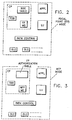
- Figure 2 is a schematic representation of the major components of a node performing a focal point function. Many of the major components exist in any node which implements a known APPN system architecture. Details of the components are not required to understand how to make and use the present invention. A reader still interested in component details may find them in:
- a focal point node includes a control point or CP, one or more application programs (APPL), a logical unit (LU), path control, a topology database (TDB), and a plurality of data link control (DLC) modules.
- a control point or CP includes a control point or CP, one or more application programs (APPL), a logical unit (LU), path control, a topology database (TDB), and a plurality of data link control (DLC) modules.
- API application programs
- LU logical unit
- path control includes a topology database (TDB), and a plurality of data link control (DLC) modules.
- DLC data link control
- Each DLC module provides a protocol conversion function which allows any message leaving the focal point node to be converted to a format which complies with the requirements of one of the communications links. Having multiple DLC modules allows messages to be converted to different formats.
- the path control module provides routing functions needed to transfer a message from a source to a destination node.
- the CP or control point provides control functions for the node, such as establishing sessions, calculating routes, providing directory services, etc.
- the CP may use the node's topology database (TDB) which defines the nodes in the network and the communications links which connect those nodes.
- TDB topology database
- the logical unit or LU provides an interface between a user (including an application program) and the remainder of the network.
- SOC Sphere of Control
- FP MS focal point management services
- a different SOC table may exist for each different management service that a node may provide.
- Each SOC table contains a list of all network nodes for which the local node may be responsible. The list also contains an indicator of the current status of the relationship between the local node and each of the other nodes in the list. At a given point in time, the relationship may be active or inactive for a number of reasons. Further details about the SOC table may be found in U.S. Patent 4,995,035, referenced earlier.
- a focal point management services (FPMS) program controls the focal point functions of the node.
- the FPMS program controls message exchanges with a non-focal point node, the type of focal point node role being assumed by the local node and the types of network management services being provided by the node.
- a focal point node may be a primary node, a secondary or default node or a back-up node. The differences between the types of focal point nodes are elaborated on in the patent.
- a network node acting as a non-focal point or served node has the same APPN components as a focal point node.
- a non-focal point node also contains an FP authorization table and a non-focal point management services (NFP MS) program.
- the additions allow a non-focal point node to respond to a focal point node and to exchange messages which cause the non-focal point node to transmit management services information to the focal point node.
- the FP authorization table lists focal point names, management services (MS) keys or identifiers, and focal point types.
- the NFP MS program controls the node as it performs non-focal point functions.
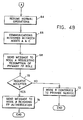
- Figure 4 consisting of Figures 4A and 4B, taken together illustrates an improved process for (1) establishing a primary/backup node relationship, (2) for non-disruptively transferring focal point sculptureities to the backup node upon a communications failure between the primary node and a served node, and (3) reestablishing the relationship between the primary node and the served node once communications have been restored.
- Node A is a node which initially has the responsibility of providing a management service to one or more served nodes.
- Node B is a node which can assume the responsibility of providing the management service to served nodes under certain conditions.
- Node C is a node which expects to receive the management service either from the primary node or the backup node.
- the primary node transmits a message to the served node, offering to provide a management service to the served node.
- the message identifies a proposed backup node.
- the primary node will have previously learned of the identity of the backup node either through network flows or as a result of system definition by a network operator.
- the served node receives the message from the primary node in an operation 50. If the served node accepts the offer in an operation 52, the identity of both the primary node and the backup node are written into memory at the served node. If the served node rejects the offer, the attempt to establish the node relationships is ended.
- the backup node is not involved during normal (non-failure) operation and need not necessarily have a session in place with either the primary node or the served node during this time.
- the served node If a communications failure is indicated (operation 56), the served node generates a takeover request that is sent directly to the designated backup node in an operation 58. If the backup node rejects the request, it will send a notice of rejection to the served node in an operation 60.
- the backup node If, however, the backup node accepts the request, it assumes the responsibility of providing the management service to the served node. Normal operations are resumed (operation 64) at the served node. As a result of normal network data flows, the served node will know (operation 66) when communications have been restored between the primary node and the served node. The served node will then send a message (operation 68) directly to the primary node, asking that it once again provide the management service.
- the backup node will continue to provide the management service as indicated by block 72.
- the original primary node will once again take over the responsibility of providing the management service to the served node.
- the served node will respond by sending a message (operation 74) to the backup node, revoking the backup node's authority to supply the management service.
- Figure 5 shows node C distributing a "FP is A" message to other nodes, not shown in the drawing.
- a non-focal point node (such as node C) may support end nodes which, technically, are not considered part of the focal point network that includes nodes A and B. It is to such end nodes and to application programs running at the non-focal point node that the "FP is A" and similar messages are being directed.
- Time zone T2 corresponds to operations identified as operations 54 and 56 in the flow chart.
- the messages in time zone T3 are a result of operations beginning at operation 58 and ending between operations 64 and 66 in the flow chart.
- Time zone T4 covers the process beginning with a positive response to operation 66 and ending with operation 70.
- Time zone T5 covers the message transmitted as a result of operation 74 in the process.
Landscapes
- Engineering & Computer Science (AREA)
- Computer Networks & Wireless Communication (AREA)
- Signal Processing (AREA)
- Computer And Data Communications (AREA)
- Small-Scale Networks (AREA)
- Data Exchanges In Wide-Area Networks (AREA)
Applications Claiming Priority (2)
| Application Number | Priority Date | Filing Date | Title |
|---|---|---|---|
| US693483 | 1985-01-22 | ||
| US69348391A | 1991-04-30 | 1991-04-30 |
Publications (2)
| Publication Number | Publication Date |
|---|---|
| EP0511925A2 true EP0511925A2 (fr) | 1992-11-04 |
| EP0511925A3 EP0511925A3 (en) | 1994-10-19 |
Family
ID=24784852
Family Applications (1)
| Application Number | Title | Priority Date | Filing Date |
|---|---|---|---|
| EP9292480041A Withdrawn EP0511925A3 (en) | 1991-04-30 | 1992-03-13 | Dynamic backup and recovery of focal points in a computer network |
Country Status (2)
| Country | Link |
|---|---|
| EP (1) | EP0511925A3 (fr) |
| JP (1) | JPH0675258B2 (fr) |
Cited By (6)
| Publication number | Priority date | Publication date | Assignee | Title |
|---|---|---|---|---|
| WO1996028920A3 (fr) * | 1995-03-13 | 1996-12-12 | Intecom Inc | Architecture d'un systeme multimedia interactif reparti |
| WO1999007110A1 (fr) * | 1997-07-28 | 1999-02-11 | Siemens Aktiengesellschaft | Procede et dispositif pour assurer le fonctionnement d'un reseau de communication |
| EP0898399A3 (fr) * | 1997-08-12 | 2003-05-14 | Lucent Technologies Inc. | Méthode et appareil de protection par redondance géographique pour un réseau de télécommunication |
| US7058067B1 (en) | 1995-03-13 | 2006-06-06 | Cisco Technology, Inc. | Distributed interactive multimedia system architecture |
| CN102340410A (zh) * | 2010-07-21 | 2012-02-01 | 中兴通讯股份有限公司 | 集群管理系统及方法 |
| US8306002B2 (en) * | 2004-04-05 | 2012-11-06 | Texas Instruments Incorporated | Wireless communication technique comprising multiple beacons in each communications superframe |
Families Citing this family (1)
| Publication number | Priority date | Publication date | Assignee | Title |
|---|---|---|---|---|
| EP2449303B1 (fr) | 2009-06-30 | 2017-08-09 | Compagnie Générale des Etablissements Michelin | Poste de travail pour pneus avec transfert rapide |
Family Cites Families (1)
| Publication number | Priority date | Publication date | Assignee | Title |
|---|---|---|---|---|
| US4995035A (en) * | 1988-10-31 | 1991-02-19 | International Business Machines Corporation | Centralized management in a computer network |
-
1992
- 1992-03-13 EP EP9292480041A patent/EP0511925A3/en not_active Withdrawn
- 1992-03-27 JP JP4068889A patent/JPH0675258B2/ja not_active Expired - Lifetime
Cited By (8)
| Publication number | Priority date | Publication date | Assignee | Title |
|---|---|---|---|---|
| WO1996028920A3 (fr) * | 1995-03-13 | 1996-12-12 | Intecom Inc | Architecture d'un systeme multimedia interactif reparti |
| US7058067B1 (en) | 1995-03-13 | 2006-06-06 | Cisco Technology, Inc. | Distributed interactive multimedia system architecture |
| WO1999007110A1 (fr) * | 1997-07-28 | 1999-02-11 | Siemens Aktiengesellschaft | Procede et dispositif pour assurer le fonctionnement d'un reseau de communication |
| US6714973B1 (en) | 1997-07-28 | 2004-03-30 | Siemens Aktiengesellschaft | Method and configuration for operating a communication network |
| EP0898399A3 (fr) * | 1997-08-12 | 2003-05-14 | Lucent Technologies Inc. | Méthode et appareil de protection par redondance géographique pour un réseau de télécommunication |
| US8306002B2 (en) * | 2004-04-05 | 2012-11-06 | Texas Instruments Incorporated | Wireless communication technique comprising multiple beacons in each communications superframe |
| CN102340410A (zh) * | 2010-07-21 | 2012-02-01 | 中兴通讯股份有限公司 | 集群管理系统及方法 |
| CN102340410B (zh) * | 2010-07-21 | 2014-09-10 | 中兴通讯股份有限公司 | 集群管理系统及方法 |
Also Published As
| Publication number | Publication date |
|---|---|
| JPH0675258B2 (ja) | 1994-09-21 |
| JPH0589007A (ja) | 1993-04-09 |
| EP0511925A3 (en) | 1994-10-19 |
Similar Documents
| Publication | Publication Date | Title |
|---|---|---|
| US7370223B2 (en) | System and method for managing clusters containing multiple nodes | |
| US4995035A (en) | Centralized management in a computer network | |
| US6983294B2 (en) | Redundancy systems and methods in communications systems | |
| EP0511927B1 (fr) | Détection et élimination des boucles dans un réseau comportant des points focaux | |
| US6266694B1 (en) | Architecture for network manager | |
| US20060153068A1 (en) | Systems and methods providing high availability for distributed systems | |
| US9385944B2 (en) | Communication system, path switching method and communication device | |
| RU2471301C2 (ru) | Функционирование сетевых субъектов в системе связи, содержащей сеть управления с уровнями агентов и управления | |
| CN110958151B (zh) | 保活检测方法、装置、节点、存储介质及通信系统 | |
| CN110417600B (zh) | 分布式系统的节点切换方法、装置及计算机存储介质 | |
| CN100391190C (zh) | 经由冗余网络控制的多重网络故障容错管理的方法和装置 | |
| AU2001241700A1 (en) | Multiple network fault tolerance via redundant network control | |
| EP0511925A2 (fr) | Sauvegarde et restauration dynamique des points focaux dans un réseau d'ordinateurs | |
| US20050234919A1 (en) | Cluster system and an error recovery method thereof | |
| US20020046357A1 (en) | Software-based fault tolerant networking using a single LAN | |
| EP2119113B1 (fr) | Système, procédé et n ud de réseau pour vérifier la cohérence d'informations de relation de n ud dans les n uds d'un réseau fortement connecté | |
| WO1997049034A1 (fr) | Systeme de prise en charge de taches | |
| EP1282953B1 (fr) | Systeme de communication | |
| JPH09293059A (ja) | 分散システム及びその運用管理方法 | |
| CN117792937B (zh) | 基于sdn控制器的离线配置方法、系统、控制器及介质 | |
| JP2009075710A (ja) | 冗長化システム | |
| US8161147B2 (en) | Method of organising servers | |
| EP0898399A2 (fr) | Méthode et appareil de protection par redondance géographique pour un réseau de télécommunication | |
| JP2004295656A (ja) | 通信システム、クライアント装置及びクライアント装置によるサーバ装置の負荷分散方法 | |
| CN113824595A (zh) | 链路切换控制方法、装置和网关设备 |
Legal Events
| Date | Code | Title | Description |
|---|---|---|---|
| PUAI | Public reference made under article 153(3) epc to a published international application that has entered the european phase |
Free format text: ORIGINAL CODE: 0009012 |
|
| AK | Designated contracting states |
Kind code of ref document: A2 Designated state(s): DE FR GB |
|
| 17P | Request for examination filed |
Effective date: 19930218 |
|
| PUAL | Search report despatched |
Free format text: ORIGINAL CODE: 0009013 |
|
| AK | Designated contracting states |
Kind code of ref document: A3 Designated state(s): DE FR GB |
|
| 18D | Application deemed to be withdrawn |
Effective date: 19961001 |