EP0514946B1 - Verbundmaterial aus Aluminiumlegierungen zum Hartlöten - Google Patents
Verbundmaterial aus Aluminiumlegierungen zum Hartlöten Download PDFInfo
- Publication number
- EP0514946B1 EP0514946B1 EP19920108782 EP92108782A EP0514946B1 EP 0514946 B1 EP0514946 B1 EP 0514946B1 EP 19920108782 EP19920108782 EP 19920108782 EP 92108782 A EP92108782 A EP 92108782A EP 0514946 B1 EP0514946 B1 EP 0514946B1
- Authority
- EP
- European Patent Office
- Prior art keywords
- ditto
- core member
- brazing
- aluminum alloy
- cladding
- Prior art date
- Legal status (The legal status is an assumption and is not a legal conclusion. Google has not performed a legal analysis and makes no representation as to the accuracy of the status listed.)
- Expired - Lifetime
Links
Images
Classifications
-
- B—PERFORMING OPERATIONS; TRANSPORTING
- B32—LAYERED PRODUCTS
- B32B—LAYERED PRODUCTS, i.e. PRODUCTS BUILT-UP OF STRATA OF FLAT OR NON-FLAT, e.g. CELLULAR OR HONEYCOMB, FORM
- B32B15/00—Layered products comprising a layer of metal
- B32B15/01—Layered products comprising a layer of metal all layers being exclusively metallic
- B32B15/016—Layered products comprising a layer of metal all layers being exclusively metallic all layers being formed of aluminium or aluminium alloys
-
- B—PERFORMING OPERATIONS; TRANSPORTING
- B23—MACHINE TOOLS; METAL-WORKING NOT OTHERWISE PROVIDED FOR
- B23K—SOLDERING OR UNSOLDERING; WELDING; CLADDING OR PLATING BY SOLDERING OR WELDING; CUTTING BY APPLYING HEAT LOCALLY, e.g. FLAME CUTTING; WORKING BY LASER BEAM
- B23K35/00—Rods, electrodes, materials, or media, for use in soldering, welding, or cutting
- B23K35/02—Rods, electrodes, materials, or media, for use in soldering, welding, or cutting characterised by mechanical features, e.g. shape
- B23K35/0222—Rods, electrodes, materials, or media, for use in soldering, welding, or cutting characterised by mechanical features, e.g. shape for use in soldering or brazing
- B23K35/0233—Sheets or foils
- B23K35/0238—Sheets or foils layered
-
- B—PERFORMING OPERATIONS; TRANSPORTING
- B23—MACHINE TOOLS; METAL-WORKING NOT OTHERWISE PROVIDED FOR
- B23K—SOLDERING OR UNSOLDERING; WELDING; CLADDING OR PLATING BY SOLDERING OR WELDING; CUTTING BY APPLYING HEAT LOCALLY, e.g. FLAME CUTTING; WORKING BY LASER BEAM
- B23K35/00—Rods, electrodes, materials, or media, for use in soldering, welding, or cutting
- B23K35/22—Rods, electrodes, materials, or media, for use in soldering, welding, or cutting characterised by the composition or nature of the material
- B23K35/24—Selection of soldering or welding materials proper
- B23K35/28—Selection of soldering or welding materials proper with the principal constituent melting at less than 950°C
- B23K35/286—Al as the principal constituent
Definitions
- the present invention relates to an aluminum alloy composite material for brazing, which is improved in strength, corrosion resistance and brazability, and which provides remarkable advantages when used for assembly process by brazing method with noncorrosive flux.
- Aluminum alloy composite materials for brazing are used for a tube member of a brazed radiator, and the like, and conventionally, brazing sheets comprising an Al-Mn alloy (JIS A3003) core member and an Al-Si filler member clad on the core member are used for this purpose.
- the brazing sheet with the A3003 core member has a post-brazing strength of not greater than 12 kgf/mm 2 or thereabouts and is not sufficiently resistant to corrosion.
- Mg is added to the aluminum alloy for the core member, the strength of the composite material can be improved, but this results in an increased erosion of the core member due to the filler member and also in a reduction of brazability and corrosion resistance.
- the Mg content of the core member in excess of 0.2% entails a substantial drop of the brazability, and accordingly, the addition of Mg to the core member of the aluminum alloy must be restricted.
- JP-A-2175093 (corresponding to US-A-5011547) an aluminum alloy composite material for brazing improved in post-brazing strength without inhibiting brazability.
- This composite material has a total thickness of 0.4 mm or thereabouts and comprises a core member made of an aluminum alloy which may contain 0.2-1.5 wt.% Mn, 0.3-1.3 wt.% Si and at most 0.2 wt.% Mg and optionally Cu, Cr and Zr, the balance being Al; an Al-Si filler member clad on one surface of the core member; and a cladding member of an aluminum alloy clad on the opposite side of the core member comprising 0.3-2.5 wt.% Mg and optionally Mn, Cu, Cr and Zr.
- the US-A-4560625 discloses an aluminum alloy composite material for brazed heat exchangers, the material comprising a core member essentially consisting of one element selected from the group consisting of Mn, Cr and Zr in an amount of 0.05-0.5 wt.%, 0.2-1.0 wt.% Si, 0.1-0.5 wt.% Mg, and 0.2-1.0 wt.% Cu, the balance being Al and inevitable impurities; an Al-Si-filler and a cladding layer.
- US-A-4649087 discloses an aluminum core alloy for use in the manufacture of brazed heat exchanger assemblies having high resistance to corrosion and moderate strength.
- the aluminum core alloy comprises 0.11-0.3 wt.% Ti, 0.3-1.5 wt.% Mn, 0.005-0.7 wt.% Cu, up to 0.7 wt.% Fe, up to 0.8 wt.% Si, up to 1.5 wt.% Mg, the balance being aluminum and inevitable impurities.
- the inventors hereof made studies on members for brazing which have a smaller amount of Mg contained in the aluminum alloy for the core member but have high strength while brazability and corrosion resistance are still more improved.
- the present invention is accomplished as follows.
- the present invention provides an aluminum alloy composite material for brazing comprising (in wt.-%):
- the present invention also provides a tube member for a radiator in which the aforementioned aluminum alloy composite material for brasing is welded into a tube with said filler member outside, and said tube is fabricated into a radiator by brazing method with noncorrosive flux, wherein after brazing, said core member has a pitting potential (positive) higher than a pitting potential of said cladding member and higher than a pitting potential of said filler member, and the differences in pitting potential between said core member and said cladding member and between said core member and said filler member fall in the range of from 30 - 120 mV.
- the present invention thus provides a high-strength aluminum alloy composite material which is not lowered in brazability or corrosion resistance by Nocolok brazing method. Accordingly, when the high-strength aluminum alloy composite material of the present invention is used for assembling a heat exchanger of an automobile, it provides remarkable effects such as a reduction in thickness and weight of the heat exchanger, reduction in the cost, and the like
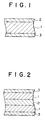
- Fig.1 is a view showing a structure of an example of an aluminum alloy composite material for brazing, according to the present invention.
- Fig.2 is a view showing a structure of an application example of an aluminum alloy composite material for brazing, according to the present invention.
- the structure of an aluminum alloy composite material for brazing according to the present invention is such that, as shown in Fig.1, a core member 1, made of an aluminum alloy, the content of Mg being restricted to 0.1 wt.% or less and inevitable impurities, consisting essentially of 0.2 to 1.5 wt.% of Mn, 0.3 to 1.3 wt.% of Si, 0.02 to 0.3 wt.% of Ti, and containing further as required, 0.1 wt.% or less of Cu, 0.3 wt.% or less of Cr and 0.2 wt.% or less of Zr, contacts an Al-Si filler member 3; and a cladding member 2 of aluminum alloy consisting essentially of a predetermined amount of ( 0.3 to 3 wt.%) of Mg is clad on the opposite surface of the core member 1.
- the aluminum alloy composite material with the above structure has the following characteristics and thus achieves the intended effects.
- the brazability of the composite material is never lowered since the Mg content of the core member 1 is restricted to a low value. Further, during brazing with heat, Si in the filler member 3 is diffused into the core member 1, while Mg is diffused into the core member 1 from the cladding member 2 on the opposite side of the core member 1, whereby MgSi compound is produced in the core member 1, thus increasing the post-brazing strength.
- the region of the core member 1 contacting the filler member 3 has the lowest Mg content since the Mg is supplied to the core member 1 from the cladding member 2 clad on the core member 1 on the opposite side of the filler member 3 and diffuses in the core member 1 to said region, whereby the strength can be improved without a reduction in the brazability.
- the surface of the cladding member 2 at the opposite side has the highest Mg content and the lowest Si content, and accordingly, the corrosion resistance is hardly lowered.
- the core member of the present invention is added as essential components with Mn, Si and Ti, and this is because these alloy elements are indispensable for improving the strength and corrosion resistance (or inhibition of intergranular corrosion sensitivity) of core member.
- the strength as well as outside corrosion resistance can be further increased by adding Cu, while suitable amounts of Cr, Zr and the like regulate crystalline grain shape of the core member, thus improving the brazability.
- Mg within a regulated range also works as an inhibitor for reduction in brazability and contributes to improve the strength.
- an Aluminum alloy containing Mg is used, which can function as a sacrificial anode when used for the radiator tube, thereby remarkably increasing corrosion resistance.
- Zn a suitable amount of Zn
- the core member 1 serves to restrain the diffusion of Si from the filler member 3 clad on one surface of the core member 1 and the diffusion of Mg from the cladding member 2 clad on the opposite surface of the core member 1.
- the thickness of the core member 1 will be optimum when the aforementioned effect can be obtained simultaneously with the strength being improved to its maximum.
- the aluminum alloy composite material according to the invention has the above-mentioned effects. Now, the definition of the contents of the individual elements will be described.
- the allowable amount of Mg contained in aluminum alloy core member 1 as impurity before brazing is defined as 0.1 wt.% at the maximum, to avoid the brazability being lowered. If the Mg content is greater than the allowable value, the brazability is unfavorably lowered especially during a brazing process by a Nocolok brazing method. The Mg content is thus less than 0.1wt.%.
- the corrosion resistance, brasability and strength can be improved.
- the adding amount of Mn for this purpose is to fall within a range of 0.2 to 1.5 wt.%. If the addition of Mn is less than 0.2 wt.%, the above advantages are not fully achieved, whereas the Mn content is greater than 1.5 wt.%, large compounds are produced and thus the workability is lowered.
- Si is added to the core member 1, it is possible to improve the strength even if the supply of Si from the filler member 3 is insufficient.
- a preferable amount of Si to be added is 0.3 wt.% to 1.3 wt.%. If the amount of Si is smaller than 0.3 wt.%, the strength is not sufficiently improved, and if the amount of Si is greater than 1.3 wt.%, a disadvantage arises because the melting point is lowered.
- addition of Ti to the core member 1 can further improve the corrosion resistance.
- a preferable content of Ti to be added is 0.02 to 0.3 wt.%. If the content of Ti is less than 0.02 wt.%, the improvement of the corrosion resistance can not be achieved, and if the content of Ti exceeds 0.3 wt.%, the effect will reach saturation, and production of large compounds arises, thus disadvantageously resulting in low workability.
- the Ti is indispensable for improving the corrosion resistance. This mechanism is performed such that Ti precipitates to form Ti-rich layers in the core member 1 in a rolling direction, thereby to inhibit a pitting corrosion from propagating toward the depth, and Ti makes the electrical potential of the core member 1 change toward positive.
- the amount of Cu is 0.1 wt.% or less. In this case, if the content of Cu is 0.1wt.% or less, it is advantageous for inhibiting the sensitivity of the intergranular corrosion. If the amount of Cu exceeds 0.6 wt.%, although the strength is improved, the corrosion resistance is greatly lowered. As a result, it is impossible to ensure a sufficient corrosion resistance even though the function of the cladding member 2 as a sacrificial anode is enhanced, and thus brazability is lowered.
- adding at least one element selected form Cr and Zr to the core member 1 makes it possible to improve the corrosion resistance, strength and brazability.
- Preferable amounts of Cr and Zr are 0.3 wt.% or less and 0.2 wt.%, respectively. Addition of the elements in excess of their respective upper limits leads to saturation of the aforementioned effects and decreases in workability.
- the core member 1 serves to restrict not only the diffusion of Si from the filler member 3 but the diffusion of Mg from the cladding member 2 during brazing.
- the thickness of the core member 1 is set to an optimum value such that the above-mentioned effects are achieved and the strength is the maximum, and preferably is 2.5 times or more the thickness of the filler member 3 and in the range of 0.1 to 1 mm.
- an aluminum alloy containing Mg is used, which can act as a sacrificial anode when the composite material is used for a radiator tube and the like, thereby remarkably increasing the corrosion resistance.
- the Mg content at the interface between the core member 1 and the filler member 3 after brazing is preferably about 0.1 wt.% to 0.2 wt.%, and to obtain such Mg content, the Mg content of the cladding member 2 should be in the range of 0.3 wt.% to 3.0 wt.%, though the content depends on the thickness of the cladding member 2, the brazing conditions, and the like.
- the Mg content is less than 0.3 wt.%, the improvement in strength is insufficient, and if the Mg content is greater than 3.0 wt.% then it is difficult to have the cladding member 2 clad on the core member 1.
- Mn, Cu, Cr, Ti, Zr, and the like may be added to the cladding member 2 to improve the strength.
- the preferable amounts of these elements to be added are the same as in the case of adding the elements to the alloy of the core member 1.
- the cladding member 2 When the cladding member 2 is to be used as a sacrificial anode, it is effective to add elements for transferring the potential toward positive, e.g., Mn, Cu, Ti, Cr, and the like, to the core member 1; in addition, to increase anode potential of the cladding member 2, Zn may be added to the cladding member 2.
- the amount of Zn to be added is 5 wt.% or less, and if the cladding member 2 contains more Zn, a disadvantage can be caused in that the furnace is contaminated during brazing.
- Al-Si alloys such as, for instance, A4045 alloy and the like can be used as in the conventional art. It is also possible to add Zn to the filler member 3 in order to function the filler member 3 as a sacrificial anode. Preferable amount of Zn to be added to the filler member 3 is the same as in the case of adding the elements to the alloy of the cladding member 2.
- the thickness of the composite material 0.3 mm or less is enough when the material is used for a tube member of a radiator, because the strength is sufficiently increased by the diffusion of Mg from the cladding member 2 clad on the side of the core member 1 which is opposite to the filler member 3.
- the present invention is the most effective when applied to the brazing method with noncorrosive flux which can extremely degrade the brazability due to Mg, but of course, it can be applied to other brazing methods such as atmosphere brazing, flux brazing, vacuum-brazing, and the like. If, as shown in Fig.2, aluminum alloy core members 1 containing no Mg are clad on both surfaces of an aluminum alloy cladding member 2 containing Mg and Al-Si filler members 3 are clad on both surfaces of the resultant structure, then a brazing sheet with filler members 3 on both surfaces thereof can be obtained.
- the composite material is worked into a tube by a suitable process, e.g., by seam welding, with the aforesaid filler member 3 outside.
- the most effective measure is to use the cladding member 2 as a sacrificial anode for the core member 1. Since the brazing method with noncorrosive flux is carried out under atmospheric pressure, Zn scarcely vaporizes but is diffused into the core member 1 by the brazing heat, thus deceasing the surface concentration. To greatly improve the corrosion resistance of the inner surface (coolant-side surface) of the radiator tube by the sacrificial anode effect of the cladding member 2, the difference of pitting potentials between the surface of the cladding member 2 and the core member 1 need be not smaller than 30 mV.
- the difference of the pitting potentials is greater than 120 mV, the speed of consumption of the cladding member 2 is large and thus the sacrificial anode effect cannot be maintained for a long period of time.
- the difference of the pitting potentials between the cladding member 2 and the core member 1 varies depending on the composition of the cladding member 2 and core member 1 and the brazing conditions, but if the pitting potential difference after the brazing with noncorrosive flux is within the range of 30 to 120 mV, excellent corrosion resistance can be enjoyed for a long time.
- the pitting potential difference between the surface of the filler member 3 and the core member 1 falls within the range of 30 to 120 mV, it is possible to ensure excellent corrosion resistance for a long period of time.
- aluminum alloys core member, cladding member and filler member having the chemical compositions shown in Table 1 were prepared.
- Table 1 No.1 to No.12 alloys were used for the core member, No.13 to No.19 alloys for the cladding member clad on the opposite side of the core member, and No.20 alloy (4045 alloy) for the filler member.
- No.7 to No.12 alloys are used as comparative examples, and No.7 alloy contained a large amount of Ti, and No.8 alloy contained little amount of Si and Ti.
- No.9, No.10, No.11 and No.12 alloys contained Mn, Si, Mg and Cu in a large amount respectively.
- Each of the aluminum alloy composite material for brazing having a respective combination shown in Table.2 was applied with 5g/m 2 brazing flux of noncorrosive on the filler member thereof, dried and then heated at 600 °C for 5 minutes in a nitrogen gas atmosphere having a dew point of -40 °C.
- the evaluation results on brazing for each are shown in Table.3.
- the brazability of the samples was evaluated in terms of flow factor. As is apparent from Table.3, the examples according to the present invention had improved brazability.
- Example 2 The aluminum alloy composite materials heated under the same conditions as in Example 1 were left to stand for 7 days in room temperature, and then subjected to a tensile test. As seen from Table 3 showing the results, the examples according to the present invention had high strength after brazing over 15 kgf/mm 2 (145N/mm 2 )
- Example 1-1 The aluminum alloy composite materials heated under the same conditions as in Example 1-1 were subjected to a CASS test to evaluate the corrosion resistance of the filler member side of the composite material.
- the evaluation results after the CASS test for 250 hours are shown in Table 3.
- Table.3 Under the caption "Corrosion depth of Filler Member Side (mm)", the examples according to the invention had excellent corrosion resistance.
- Example 1-1 The aluminum alloy composite materials heated under the same conditions as in Example 1-1 were subjected to an immersion test by immersing the composite materials in artificial water (Cl - : 300ppm; SO -2 : 100ppm; Cu + : 5ppm) for 30 days under alternate temperature conditions of 88°C for 8 hours and room temperature for 16 hours, to evaluate the corrosion resistance of the cladding member clad on the core member.
- the results of the immersion test are shown in Table.3. As indicated in Table.3 under the caption "Corrosion depth of Cladding Member Side (mm)", the examples according to the invention had excellent corrosion resistance.
- the pitting potential of the surface of the cladding member clad on the core member, the pitting potential of the surface of the filler member and the pitting potential of the core member which was exposed by mechanically removing the cladding member with emery grinding paper were measured under the following conditions.
- the measured differences of pitting potentials between the core member and the cladding member are shown in Table.3. As shown in Table.3, the differences of pitting potentials between the core member and cladding member and between the core member and the filler member, of the aluminum alloy composite materials for brazing according to the present invention fall within the range of 30 to 120 mV, and this means that excellent corrosion resistance can be maintained for a long period of time.
- aluminum alloys core member, cladding member and filler member having the chemical compositions shown in Table.4 were prepared.
- No.1 to No.12 alloys were used for the core member, No.13 to No.19 alloys for the cladding member, and No.20 alloy (4045 alloy) for the filler member.
- No.7 to No.12 alloys are used as comparative examples, and No. 7 alloy contained a large amount of Ti, and No.8 alloy contained little amount of Si and Ti.
- No.9, No.10, No.11 and No.12 alloys contained Mn, Si, Mg and Cu in a large amount, respectively.
- Each of the aluminum alloy composite material for brazing having a respective combination shown in Table.5 was applied with 5g/m 2 Nocolok brazing flux on the filler member thereof, dried and then heated at 600°C for 5 minutes in a nitrogen gas atmosphere having a dew point of -40°C.
- the evaluation results on brazing for each are shown in Table.6.
- the brazability of the samples was evaluated in terms of flow factor. As is apparent from Table.6, the examples according to the present invention had improved brazability.
- Example 2-1 The aluminum alloy composite materials heated under the same conditions as in Example 2-1 were left to stand for 7 days in room temperature, and then subjected to a tensile test. As seen from Table.6 showing the results, the examples according to the present invention had high strength after brasing over 15 kgf/mm 2 (145 N/mm 2 ).
- Example 2-1 The aluminum alloy composite materials heated under the same conditions as in Example 2-1 were subjected to a CASS test to evaluate the corrosion resistance of the filler member side of the composite material.
- the evaluation results 250 hours after the CASS test are shown in Table 6.
- Table.6 Under the caption "Corrosion depth of Filler Member Side (mm)", the examples according to the present invention had excellent corrosion resistance.
- Example 2-1 The aluminum alloy composite materials heated under the same conditions as in Example 2-1 were subjected to an immersion test by immersing the composite materials in artificial water (Cl - : 300ppm; SO -2 : 100ppm; Cu + : 5ppm) for 30 days under alternate temperature conditions of 88°C for 8 hours and room temperature for 16 hours, to evaluate the corrosion resistance of the cladding member clad on the core member.
- the results of the immersion test are shown in Table.6. As indicated in Table.6 under the caption "Corrosion depth of Cladding Member Side (mm)", the examples according to the present invention had excellent corrosion resistance.
- the pitting potential of the surface of the cladding member, the pitting potential of the surface of the filler member and the pitting potential of the core member which was exposed by mechanically removing the cladding member with emery grinding paper were measured under the same conditions as in Example 1-5 of Embodiment 1.
- the measured differences of pitting potentials between the core member and the cladding member are shown in Table.6.
- Table.6 the differences of pitting potentials between the core member and cladding member and between the core member and the filler member, of the aluminum alloy composite materials for brazing according to the present invention fall within the range of 30 to 120 mV, and this means that excellent corrosion resistance can be maintained for a long period of time.
- each of the examples of the present invention can provide high strength without a reduction in brazability or corrosion resistance.
- Example 2 0.8 0.0 1.5 0.00 0.0 0.05 0.00 0.15 bal Ditto 3 1.2 0.0 1.0 0.00 0.0 0.10 0.05 0.10 bal Ditto 4
- 0.8 0.0 1.0 0.10 0.0 0.00 0.15 0.15 bal Ditto 5 0.8 0.1 0.4 0.00 0.0 0.10 0.05 0.05 bal Ditto 6 0.8 0.0 1.0 0.00 0.0 0.00 0.15 bal Ditto 7 0.8 0.0 1.0 0.00 0.0 0.10 0.05 0.35 bal Core Member Comparative Example 8 0.2 0.1 1.0 0.00 0.0 0.10 0.05 0.01 bal Ditto 9 0.8
- Core Member Cladding Member Filler Member Total Thickness of sheet Reference (mm) No. Thickness (mm) No. Thickness (mm) No. Thickness (mm) 1 1 0.24 14 0.03 20 0.03 0.30
- Example 2 2 0.24 14 0.03 20 0.03 0.30 Ditto 3 3 0.24 14 0.03 20 0.03 0.30 Ditto 4 4 0.24 14 0.03 20 0.03 0.30 Ditto 5 5 0.24 14 0.03 20 0.03 0.30 Ditto 6 6 0.24 14 0.03 20 0.03 0.30 Ditto 7 7 0.24 14 0.03 20 0.03 0.30 Comparative Example 8 8 0.24 14 0.03 20 0.03 0.30 Ditto 9 9 0.24 14 0.03 20 0.03 0.30 Ditto 10 10 0.24 14 0.03 20 0.03 0.30 Ditto 11 11 0.24 14 0.03 20 0.03 0.30 Ditto 12 12 0.24 14 0.03 20 0.03 0.30 Ditto 13 1 0.24 13 0.03 20 0.03 0.30
- Example 14 1 0.24 15 0.03 20 0.03 0.30 Ditto 15 1
- Core Member Cladding Member Filler Member Total Thickness of sheet (mm) Reference No. Thickness (mm) No. Thickness (mm) No. Thickness (mm) 1 1 0.24 14 0.03 20 0.03 0.30
- Example 2 2 0.24 14 0.03 20 0.03 0.30 Ditto 3 3 0.24 14 0.03 20 0.03 0.30 Ditto 4 4 0.24 14 0.03 20 0.03 0.30 Ditto 5 5 0.24 14 0.03 20 0.03 0.30 Ditto 6 6 0.24 14 0.03 20 0.03 0.30 Ditto 7 7 0.24 14 0.03 20 0.03 0.30 Comparative Example 8 8 0.24 14 0.03 20 0.03 0.30 Ditto 9 9 0.24 14 0.03 20 0.03 0.30 Ditto 10 10 0.24 14 0.03 20 0.03 0.30 Ditto 11 11 0.24 14 0.03 20 0.03 0.30 Ditto 12 12 0.24 14 0.03 20 0.03 0.30 Ditto 13 3 0.24 13 0.03 20 0.03 0.30
- the composite material has a structure comprising: a core member(1) of an aluminum alloy, the content of Mg being restricted to 0.2 wt.% or less as an impurity, consisting essentially of 0.2 to 1.5 wt.% of Mn, 0.3 to 1.3 wt.% of Si, 0.02 to 0.3 wt.% of Ti, and, as required, 0.6 wt.% or less of Cu, 0.3 wt.% or less of Cr and 0.2 wt.% or less of Zr; an Al-Si filler member(3) clad on one surface of the core member; and a cladding member(2) of an aluminum alloy clad on the opposite side of said core member 1, consisting essentially of 0.3 to 3 wt.% of Mg and as required, 5 wt.% or less of Zn.
- the thickness of the core member(1) is preferably, 2.5 times or more greater than that of the filler member(3) falling within a range of 0.1 to 1 mm.
- the pitting potential of the core member (positive) is higher than that of the cladding member and is higher than that of the filler member, and the differences in pitting potential between the core member and the cladding member and between the core member and the filler member are 30 to 120 mV. With this, it is possible to obtain a tube member for a radiator which has excellent corrosion resistance for a long period of time.
Landscapes
- Engineering & Computer Science (AREA)
- Mechanical Engineering (AREA)
- Laminated Bodies (AREA)
Claims (4)
- Verbundmaterial aus Aluminiumlegierungen zum Hartlöten, umfassend (in Gewichtsprozent):ein Kernbauteil (1), hergestellt aus einer Aluminiumlegierung, bestehend aus 0,2 - 1,5% Mn, 0,3 - 1,3% Si, 0,02 - 0,3% Ti, weniger als 0,1% Mg,
gegebenenfalls 0,1% oder weniger Cu, 0,3% oder weniger Cr, 0,2% oder weniger Zr,
Rest Al und unvermeidbare Verunreinigungen;ein Al-Si-Füllmaterialbauteil (3), das auf eine Oberfläche des Kernbauteils plattiert ist, undein Plattierungsbauteil (2) aus einer Aluminiumlegierung, das auf die entgegengesetzte Seite des Kernbauteils plattiert ist, umfassend 0,3 - 3% Mg, und gegebenenfalls 5% oder weniger Zn;wobei das Verbundmaterial eine Gesamtdicke von weniger oder gleich 0,3 mm hat. - Verbundmaterial aus Aluminiumlegierungen zum Hartlöten nach Anspruch 1, wobei das fakultative Cu, Cr und Zr des Kernbauteils (1) und das fakultative Zn des Plattierungsbauteils (2) jeweils obligatorisch darin enthalten sind.
- Verbundmaterial aus Aluminiumlegierungen zum Hartlöten nach Anspruch 1 oder 2, wobei das Kernbauteil (1) eine 2,5-fach oder mehr größere Dicke als die des Füllmaterialbauteils (3) besitzt und innerhalb eines Bereichs von 0,1 bis 0,24 mm fällt.
- Rohrenbauteil für einen Radiator, bei dem das Verbundmaterial aus Aluminiumlegierungen zum Hartlöten nach einem der Ansprüche 1 bis 3 in eine Röhre mit dem Füllmaterialbauteil an der Außenseite eingeschweißt wird, und die Röhre in einen Radiator durch das Hartlötverfahren mit nichtkorrodierendem Flußmittel verarbeitet wird, wobei das Kernbauteil nach dem Hartlöten ein Lochfraßpotential (positiv) hat, das höher ist als das Lochfraßpotential des Plattierungsbauteils und das höher ist als das Lochfraßpotential des Füllmaterialbauteils, und die Unterschiede im Lochfraßpotential zwischen dem Kernbauteil und dem Plattierungsbauteil und zwischen dem Kernbauteil und dem Füllmaterialbauteil in den Bereich von 30 - 120 mV fallen.
Applications Claiming Priority (6)
| Application Number | Priority Date | Filing Date | Title |
|---|---|---|---|
| JP14948191 | 1991-05-24 | ||
| JP149481/91 | 1991-05-24 | ||
| JP14948191 | 1991-05-24 | ||
| JP14221892 | 1992-05-07 | ||
| JP4142218A JPH0623535A (ja) | 1991-05-24 | 1992-05-07 | ろう付け用アルミニウム合金複合材 |
| JP142218/92 | 1992-05-07 |
Publications (3)
| Publication Number | Publication Date |
|---|---|
| EP0514946A2 EP0514946A2 (de) | 1992-11-25 |
| EP0514946A3 EP0514946A3 (en) | 1992-12-16 |
| EP0514946B1 true EP0514946B1 (de) | 1999-08-18 |
Family
ID=26474295
Family Applications (1)
| Application Number | Title | Priority Date | Filing Date |
|---|---|---|---|
| EP19920108782 Expired - Lifetime EP0514946B1 (de) | 1991-05-24 | 1992-05-25 | Verbundmaterial aus Aluminiumlegierungen zum Hartlöten |
Country Status (4)
| Country | Link |
|---|---|
| EP (1) | EP0514946B1 (de) |
| JP (1) | JPH0623535A (de) |
| AU (1) | AU636813B2 (de) |
| DE (1) | DE69229813T2 (de) |
Families Citing this family (18)
| Publication number | Priority date | Publication date | Assignee | Title |
|---|---|---|---|---|
| JP2572495B2 (ja) * | 1991-09-06 | 1997-01-16 | 昭和アルミニウム株式会社 | 耐食性に優れたろう付用アルミニウム材 |
| JP3276790B2 (ja) | 1994-11-11 | 2002-04-22 | 古河電気工業株式会社 | アルミニウム合金ブレージングシートの製造方法、前記ブレージングシートを用いた熱交換器、および前記熱交換器の製造方法 |
| JP3734302B2 (ja) * | 1996-04-02 | 2006-01-11 | 神鋼アルコア輸送機材株式会社 | ろう付熱交換器用アルミニウム合金製ブレージングシート |
| CN1053133C (zh) * | 1996-05-14 | 2000-06-07 | 西北有色金属研究院 | 一种铝-钛-铝钎焊料三层轧制复合板 |
| US6129143A (en) * | 1996-08-08 | 2000-10-10 | Denso Corporation | Brazing sheet having an excellent corrosion resistance for use in a heat exchanger, and a heat exchanger using the same |
| US6352789B1 (en) * | 1999-04-12 | 2002-03-05 | Corus Aluminium Walzprodukte Gmbh | Brazing sheet and method of making same |
| EP1090745B1 (de) * | 1999-10-04 | 2002-06-19 | Denso Corporation | Mit einer Aluminium-Legierung plattiertes Material für einen Wärmetauscher mit hoher Festigkeit und guter Korrosionsbeständigkeit |
| US20030183376A1 (en) * | 2002-04-02 | 2003-10-02 | Abell Bradley David | High strength CAB brazed heat exchangers using high strength fin materials |
| US7247392B2 (en) * | 2002-05-29 | 2007-07-24 | Furukawa-Sky Aluminum Corp. | Aluminum alloy heat exchanger and method of producing the same |
| DE10353577A1 (de) * | 2003-11-14 | 2005-06-16 | Behr Gmbh & Co. Kg | Hochtemperaturgelöteter Abgaswärmetauscher |
| US7755185B2 (en) | 2006-09-29 | 2010-07-13 | Infineon Technologies Ag | Arrangement for cooling a power semiconductor module |
| JP4181607B2 (ja) | 2007-03-29 | 2008-11-19 | 株式会社神戸製鋼所 | アルミニウム合金製ブレージングシートおよびその製造方法 |
| JP4477668B2 (ja) | 2007-12-25 | 2010-06-09 | 株式会社神戸製鋼所 | アルミニウム合金製ブレージングシート |
| JP5118983B2 (ja) * | 2008-01-29 | 2013-01-16 | 三菱アルミニウム株式会社 | 熱交換器用ブレージングシート、熱交換器及びその製造方法 |
| JP5118984B2 (ja) * | 2008-01-29 | 2013-01-16 | 三菱アルミニウム株式会社 | 熱交換器用ブレージングシート、熱交換器及びその製造方法 |
| WO2011108460A1 (ja) | 2010-03-02 | 2011-09-09 | 三菱アルミニウム株式会社 | アルミニウム合金製熱交換器 |
| JP6236207B2 (ja) * | 2013-03-11 | 2017-11-22 | 株式会社Uacj | 成形加工用アルミニウム合金板とその製造方法、およびアルミニウム合金ブレージングシート |
| CN106041354A (zh) * | 2016-07-06 | 2016-10-26 | 江苏常铝铝业股份有限公司 | 一种高耐蚀的四层铝合金钎焊板材及其制造方法 |
Family Cites Families (5)
| Publication number | Priority date | Publication date | Assignee | Title |
|---|---|---|---|---|
| JPS6041697B2 (ja) * | 1980-03-31 | 1985-09-18 | 住友軽金属工業株式会社 | アルミニウム合金製熱交換器用ブレ−ジングフィン材 |
| JPS59150052A (ja) * | 1983-02-14 | 1984-08-28 | Kobe Steel Ltd | ろう付熱交換器用a1複合材料 |
| US4649087A (en) * | 1985-06-10 | 1987-03-10 | Reynolds Metals Company | Corrosion resistant aluminum brazing sheet |
| JP2564190B2 (ja) * | 1988-09-12 | 1996-12-18 | 株式会社神戸製鋼所 | ろう付け用アルミニウム合金複合材 |
| WO1991014794A1 (en) * | 1990-03-27 | 1991-10-03 | Alcan International Limited | Improved aluminum alloy |
-
1992
- 1992-05-07 JP JP4142218A patent/JPH0623535A/ja active Pending
- 1992-05-25 DE DE1992629813 patent/DE69229813T2/de not_active Expired - Fee Related
- 1992-05-25 AU AU17159/92A patent/AU636813B2/en not_active Ceased
- 1992-05-25 EP EP19920108782 patent/EP0514946B1/de not_active Expired - Lifetime
Also Published As
| Publication number | Publication date |
|---|---|
| AU1715992A (en) | 1993-03-04 |
| EP0514946A2 (de) | 1992-11-25 |
| AU636813B2 (en) | 1993-05-06 |
| DE69229813D1 (de) | 1999-09-23 |
| EP0514946A3 (en) | 1992-12-16 |
| JPH0623535A (ja) | 1994-02-01 |
| DE69229813T2 (de) | 2000-04-20 |
Similar Documents
| Publication | Publication Date | Title |
|---|---|---|
| US5011547A (en) | Aluminum alloy composite material for brazing | |
| US5350436A (en) | Aluminum alloy composite material for brazing | |
| AU636813B2 (en) | An aluminum alloy composite material for brazing | |
| US4991647A (en) | Heat exchanger | |
| EP0556798B1 (de) | Hochfester korrosionsbeständiger Werkstoff aus plattierter Aluminium-Legierung für einen Wärmetauscher | |
| US4649087A (en) | Corrosion resistant aluminum brazing sheet | |
| US4203490A (en) | Heat exchanger core having fin members serving as sacrificial anodes | |
| US20040185293A1 (en) | Brazing sheet | |
| EP2075083A1 (de) | Lötblech aus Aluminiumlegierung | |
| US20010007720A1 (en) | Aluminum alloy brazing sheet | |
| JPS6248742B2 (de) | ||
| EP0623461A1 (de) | Röhrenförmiges Bauteil für Wärmeaustauscher | |
| PL200632B1 (pl) | Wielowarstwowy arkusz lutowniczy | |
| EP1576332B1 (de) | Aus alulegierung bestehende rohr und rippen vorrichtung für wärmetauschern mit verbessertem korrosionschutz nach dem löten | |
| US4172181A (en) | Composite material for vacuum brazing | |
| JPH06182581A (ja) | 熱交換器ろう付用アルミニウム合金ろう材および熱交換器用アルミニウム合金ブレージングシート | |
| JPS6321741B2 (de) | ||
| JPS60251243A (ja) | 真空ろう付用耐水.高強度ブレ−ジングシ−ト及びこれを用いた熱交換器 | |
| JPH1180870A (ja) | 強度および耐食性に優れた熱交換器用アルミニウム合金クラッド材 | |
| JPH09291328A (ja) | ろう付用アルミニウム合金複合部材及びろう付方法 | |
| JPH09302433A (ja) | ろう付け性に優れたアルミニウム合金クラッド材およびその製造方法 | |
| JPS60251246A (ja) | 真空ろう付用耐水ブレ−ジングシ−ト及びこれを用いた熱交換器 | |
| JPH06184686A (ja) | 熱交換器用高強度高耐食性アルミニウム合金ブレージングシート | |
| JPH0250934A (ja) | 熱交換器部材用アルミニウム製ブレージングシート | |
| JP3337771B2 (ja) | 熱交換器用アルミニウム合金複合材 |
Legal Events
| Date | Code | Title | Description |
|---|---|---|---|
| PUAI | Public reference made under article 153(3) epc to a published international application that has entered the european phase |
Free format text: ORIGINAL CODE: 0009012 |
|
| PUAL | Search report despatched |
Free format text: ORIGINAL CODE: 0009013 |
|
| AK | Designated contracting states |
Kind code of ref document: A2 Designated state(s): DE FR GB IT |
|
| AK | Designated contracting states |
Kind code of ref document: A3 Designated state(s): DE FR GB IT |
|
| 17P | Request for examination filed |
Effective date: 19921211 |
|
| 17Q | First examination report despatched |
Effective date: 19940809 |
|
| RAP1 | Party data changed (applicant data changed or rights of an application transferred) |
Owner name: KABUSHIKI KAISHA KOBE SEIKO SHO ALSO KNOWN AS KOBE Owner name: DENSO CORPORATION |
|
| GRAG | Despatch of communication of intention to grant |
Free format text: ORIGINAL CODE: EPIDOS AGRA |
|
| GRAG | Despatch of communication of intention to grant |
Free format text: ORIGINAL CODE: EPIDOS AGRA |
|
| GRAH | Despatch of communication of intention to grant a patent |
Free format text: ORIGINAL CODE: EPIDOS IGRA |
|
| GRAH | Despatch of communication of intention to grant a patent |
Free format text: ORIGINAL CODE: EPIDOS IGRA |
|
| GRAA | (expected) grant |
Free format text: ORIGINAL CODE: 0009210 |
|
| AK | Designated contracting states |
Kind code of ref document: B1 Designated state(s): DE FR GB IT |
|
| ET | Fr: translation filed | ||
| REF | Corresponds to: |
Ref document number: 69229813 Country of ref document: DE Date of ref document: 19990923 |
|
| ITF | It: translation for a ep patent filed | ||
| PLBE | No opposition filed within time limit |
Free format text: ORIGINAL CODE: 0009261 |
|
| STAA | Information on the status of an ep patent application or granted ep patent |
Free format text: STATUS: NO OPPOSITION FILED WITHIN TIME LIMIT |
|
| 26N | No opposition filed | ||
| REG | Reference to a national code |
Ref country code: GB Ref legal event code: IF02 |
|
| PGFP | Annual fee paid to national office [announced via postgrant information from national office to epo] |
Ref country code: IT Payment date: 20090520 Year of fee payment: 18 Ref country code: FR Payment date: 20090515 Year of fee payment: 18 Ref country code: DE Payment date: 20090527 Year of fee payment: 18 |
|
| PGFP | Annual fee paid to national office [announced via postgrant information from national office to epo] |
Ref country code: GB Payment date: 20090520 Year of fee payment: 18 |
|
| GBPC | Gb: european patent ceased through non-payment of renewal fee |
Effective date: 20100525 |
|
| REG | Reference to a national code |
Ref country code: FR Ref legal event code: ST Effective date: 20110131 |
|
| PG25 | Lapsed in a contracting state [announced via postgrant information from national office to epo] |
Ref country code: IT Free format text: LAPSE BECAUSE OF NON-PAYMENT OF DUE FEES Effective date: 20100525 |
|
| PG25 | Lapsed in a contracting state [announced via postgrant information from national office to epo] |
Ref country code: DE Free format text: LAPSE BECAUSE OF NON-PAYMENT OF DUE FEES Effective date: 20101201 |
|
| PG25 | Lapsed in a contracting state [announced via postgrant information from national office to epo] |
Ref country code: FR Free format text: LAPSE BECAUSE OF NON-PAYMENT OF DUE FEES Effective date: 20100531 |
|
| PG25 | Lapsed in a contracting state [announced via postgrant information from national office to epo] |
Ref country code: GB Free format text: LAPSE BECAUSE OF NON-PAYMENT OF DUE FEES Effective date: 20100525 |