EP0518105A1 - 3-Formyl-1,4-dihydropyridine, Verfahren zu ihrer Herstellung und ihre Verwendung als Arzneimittel - Google Patents
3-Formyl-1,4-dihydropyridine, Verfahren zu ihrer Herstellung und ihre Verwendung als Arzneimittel Download PDFInfo
- Publication number
- EP0518105A1 EP0518105A1 EP92108736A EP92108736A EP0518105A1 EP 0518105 A1 EP0518105 A1 EP 0518105A1 EP 92108736 A EP92108736 A EP 92108736A EP 92108736 A EP92108736 A EP 92108736A EP 0518105 A1 EP0518105 A1 EP 0518105A1
- Authority
- EP
- European Patent Office
- Prior art keywords
- carbon atoms
- chain
- straight
- alkoxy
- branched alkyl
- Prior art date
- Legal status (The legal status is an assumption and is not a legal conclusion. Google has not performed a legal analysis and makes no representation as to the accuracy of the status listed.)
- Withdrawn
Links
- 238000000034 method Methods 0.000 title claims abstract description 12
- 230000008569 process Effects 0.000 title claims abstract description 10
- 238000002360 preparation method Methods 0.000 title claims abstract description 8
- NBPCLUWBHFSQIW-UHFFFAOYSA-N 1,4-dihydropyridine-3-carbaldehyde Chemical class O=CC1=CNC=CC1 NBPCLUWBHFSQIW-UHFFFAOYSA-N 0.000 title claims abstract description 5
- 125000003545 alkoxy group Chemical group 0.000 claims abstract description 54
- 125000000217 alkyl group Chemical group 0.000 claims abstract description 54
- 125000004432 carbon atom Chemical group C* 0.000 claims abstract description 52
- 125000001997 phenyl group Chemical group [H]C1=C([H])C([H])=C(*)C([H])=C1[H] 0.000 claims abstract description 37
- -1 trifluoromethoxy, difluoromethoxy Chemical group 0.000 claims abstract description 36
- 125000000449 nitro group Chemical group [O-][N+](*)=O 0.000 claims abstract description 31
- 229910052736 halogen Inorganic materials 0.000 claims abstract description 30
- 150000002367 halogens Chemical class 0.000 claims abstract description 30
- 125000002023 trifluoromethyl group Chemical group FC(F)(F)* 0.000 claims abstract description 30
- 125000004453 alkoxycarbonyl group Chemical group 0.000 claims abstract description 24
- 125000004093 cyano group Chemical group *C#N 0.000 claims abstract description 24
- 125000004414 alkyl thio group Chemical group 0.000 claims abstract description 16
- 229910052739 hydrogen Inorganic materials 0.000 claims abstract description 16
- 239000001257 hydrogen Substances 0.000 claims abstract description 16
- 125000005034 trifluormethylthio group Chemical group FC(S*)(F)F 0.000 claims abstract description 15
- 125000000876 trifluoromethoxy group Chemical group FC(F)(F)O* 0.000 claims abstract description 14
- 125000004423 acyloxy group Chemical group 0.000 claims abstract description 11
- 125000002252 acyl group Chemical group 0.000 claims abstract description 9
- 125000003178 carboxy group Chemical group [H]OC(*)=O 0.000 claims abstract description 9
- 150000003839 salts Chemical class 0.000 claims abstract description 9
- 125000003342 alkenyl group Chemical group 0.000 claims abstract description 8
- 125000000951 phenoxy group Chemical group [H]C1=C([H])C([H])=C(O*)C([H])=C1[H] 0.000 claims abstract description 8
- 239000003814 drug Substances 0.000 claims abstract description 7
- 125000003118 aryl group Chemical group 0.000 claims abstract description 5
- 125000002887 hydroxy group Chemical group [H]O* 0.000 claims abstract description 4
- 208000024172 Cardiovascular disease Diseases 0.000 claims abstract description 3
- 150000001875 compounds Chemical class 0.000 claims description 23
- ZAMOUSCENKQFHK-UHFFFAOYSA-N Chlorine atom Chemical compound [Cl] ZAMOUSCENKQFHK-UHFFFAOYSA-N 0.000 claims description 16
- 229910052801 chlorine Inorganic materials 0.000 claims description 14
- 239000000460 chlorine Substances 0.000 claims description 14
- UFHFLCQGNIYNRP-UHFFFAOYSA-N Hydrogen Chemical compound [H][H] UFHFLCQGNIYNRP-UHFFFAOYSA-N 0.000 claims description 10
- 150000002431 hydrogen Chemical group 0.000 claims description 10
- 125000002496 methyl group Chemical group [H]C([H])([H])* 0.000 claims description 10
- 229910052731 fluorine Inorganic materials 0.000 claims description 6
- 239000011737 fluorine Substances 0.000 claims description 6
- 125000001153 fluoro group Chemical group F* 0.000 claims description 6
- JVJQPDTXIALXOG-UHFFFAOYSA-N nitryl fluoride Chemical compound [O-][N+](F)=O JVJQPDTXIALXOG-UHFFFAOYSA-N 0.000 claims description 6
- 239000003960 organic solvent Substances 0.000 claims description 4
- 230000029936 alkylation Effects 0.000 claims description 3
- 238000005804 alkylation reaction Methods 0.000 claims description 3
- 125000000304 alkynyl group Chemical group 0.000 claims description 3
- 238000004519 manufacturing process Methods 0.000 claims description 3
- WKBOTKDWSSQWDR-UHFFFAOYSA-N Bromine atom Chemical compound [Br] WKBOTKDWSSQWDR-UHFFFAOYSA-N 0.000 claims description 2
- 230000003213 activating effect Effects 0.000 claims description 2
- GDTBXPJZTBHREO-UHFFFAOYSA-N bromine Substances BrBr GDTBXPJZTBHREO-UHFFFAOYSA-N 0.000 claims description 2
- 229910052794 bromium Inorganic materials 0.000 claims description 2
- CPPKAGUPTKIMNP-UHFFFAOYSA-N cyanogen fluoride Chemical compound FC#N CPPKAGUPTKIMNP-UHFFFAOYSA-N 0.000 claims description 2
- 238000011144 upstream manufacturing Methods 0.000 claims description 2
- 201000010099 disease Diseases 0.000 claims 1
- 208000037265 diseases, disorders, signs and symptoms Diseases 0.000 claims 1
- 239000000546 pharmaceutical excipient Substances 0.000 claims 1
- 125000004786 difluoromethoxy group Chemical group [H]C(F)(F)O* 0.000 abstract description 6
- 206010019280 Heart failures Diseases 0.000 abstract description 3
- 230000036772 blood pressure Effects 0.000 abstract description 3
- 125000006193 alkinyl group Chemical group 0.000 abstract description 2
- 125000004435 hydrogen atom Chemical class [H]* 0.000 abstract 2
- 125000001424 substituent group Chemical group 0.000 abstract 1
- XEKOWRVHYACXOJ-UHFFFAOYSA-N Ethyl acetate Chemical compound CCOC(C)=O XEKOWRVHYACXOJ-UHFFFAOYSA-N 0.000 description 9
- 239000000203 mixture Substances 0.000 description 8
- 230000010412 perfusion Effects 0.000 description 8
- WEVYAHXRMPXWCK-UHFFFAOYSA-N Acetonitrile Chemical compound CC#N WEVYAHXRMPXWCK-UHFFFAOYSA-N 0.000 description 6
- 239000002904 solvent Substances 0.000 description 6
- QTBSBXVTEAMEQO-UHFFFAOYSA-N Acetic acid Chemical compound CC(O)=O QTBSBXVTEAMEQO-UHFFFAOYSA-N 0.000 description 5
- 230000008602 contraction Effects 0.000 description 5
- WYURNTSHIVDZCO-UHFFFAOYSA-N Tetrahydrofuran Chemical compound C1CCOC1 WYURNTSHIVDZCO-UHFFFAOYSA-N 0.000 description 4
- 239000000243 solution Substances 0.000 description 4
- 0 C*NC=NC=CC Chemical compound C*NC=NC=CC 0.000 description 3
- RTZKZFJDLAIYFH-UHFFFAOYSA-N Diethyl ether Chemical compound CCOCC RTZKZFJDLAIYFH-UHFFFAOYSA-N 0.000 description 3
- LFQSCWFLJHTTHZ-UHFFFAOYSA-N Ethanol Chemical compound CCO LFQSCWFLJHTTHZ-UHFFFAOYSA-N 0.000 description 3
- PXGOKWXKJXAPGV-UHFFFAOYSA-N Fluorine Chemical compound FF PXGOKWXKJXAPGV-UHFFFAOYSA-N 0.000 description 3
- KFZMGEQAYNKOFK-UHFFFAOYSA-N Isopropanol Chemical compound CC(C)O KFZMGEQAYNKOFK-UHFFFAOYSA-N 0.000 description 3
- OKKJLVBELUTLKV-UHFFFAOYSA-N Methanol Chemical compound OC OKKJLVBELUTLKV-UHFFFAOYSA-N 0.000 description 3
- ZMXDDKWLCZADIW-UHFFFAOYSA-N N,N-Dimethylformamide Chemical compound CN(C)C=O ZMXDDKWLCZADIW-UHFFFAOYSA-N 0.000 description 3
- YXFVVABEGXRONW-UHFFFAOYSA-N Toluene Chemical compound CC1=CC=CC=C1 YXFVVABEGXRONW-UHFFFAOYSA-N 0.000 description 3
- 239000004480 active ingredient Substances 0.000 description 3
- 230000037396 body weight Effects 0.000 description 3
- KRKNYBCHXYNGOX-UHFFFAOYSA-N citric acid Chemical compound OC(=O)CC(O)(C(O)=O)CC(O)=O KRKNYBCHXYNGOX-UHFFFAOYSA-N 0.000 description 3
- 238000009472 formulation Methods 0.000 description 3
- 210000004072 lung Anatomy 0.000 description 3
- 230000009467 reduction Effects 0.000 description 3
- 239000012279 sodium borohydride Substances 0.000 description 3
- 229910000033 sodium borohydride Inorganic materials 0.000 description 3
- LBLYYCQCTBFVLH-UHFFFAOYSA-N 2-Methylbenzenesulfonic acid Chemical compound CC1=CC=CC=C1S(O)(=O)=O LBLYYCQCTBFVLH-UHFFFAOYSA-N 0.000 description 2
- 241000700199 Cavia porcellus Species 0.000 description 2
- LCGLNKUTAGEVQW-UHFFFAOYSA-N Dimethyl ether Chemical compound COC LCGLNKUTAGEVQW-UHFFFAOYSA-N 0.000 description 2
- IAZDPXIOMUYVGZ-UHFFFAOYSA-N Dimethylsulphoxide Chemical compound CS(C)=O IAZDPXIOMUYVGZ-UHFFFAOYSA-N 0.000 description 2
- VZCYOOQTPOCHFL-OWOJBTEDSA-N Fumaric acid Chemical compound OC(=O)\C=C\C(O)=O VZCYOOQTPOCHFL-OWOJBTEDSA-N 0.000 description 2
- VEXZGXHMUGYJMC-UHFFFAOYSA-N Hydrochloric acid Chemical compound Cl VEXZGXHMUGYJMC-UHFFFAOYSA-N 0.000 description 2
- CSNNHWWHGAXBCP-UHFFFAOYSA-L Magnesium sulfate Chemical compound [Mg+2].[O-][S+2]([O-])([O-])[O-] CSNNHWWHGAXBCP-UHFFFAOYSA-L 0.000 description 2
- AFVFQIVMOAPDHO-UHFFFAOYSA-N Methanesulfonic acid Chemical compound CS(O)(=O)=O AFVFQIVMOAPDHO-UHFFFAOYSA-N 0.000 description 2
- NBIIXXVUZAFLBC-UHFFFAOYSA-N Phosphoric acid Chemical compound OP(O)(O)=O NBIIXXVUZAFLBC-UHFFFAOYSA-N 0.000 description 2
- JUJWROOIHBZHMG-UHFFFAOYSA-N Pyridine Chemical compound C1=CC=NC=C1 JUJWROOIHBZHMG-UHFFFAOYSA-N 0.000 description 2
- VYPSYNLAJGMNEJ-UHFFFAOYSA-N Silicium dioxide Chemical compound O=[Si]=O VYPSYNLAJGMNEJ-UHFFFAOYSA-N 0.000 description 2
- UIIMBOGNXHQVGW-UHFFFAOYSA-M Sodium bicarbonate Chemical compound [Na+].OC([O-])=O UIIMBOGNXHQVGW-UHFFFAOYSA-M 0.000 description 2
- FAPWRFPIFSIZLT-UHFFFAOYSA-M Sodium chloride Chemical compound [Na+].[Cl-] FAPWRFPIFSIZLT-UHFFFAOYSA-M 0.000 description 2
- QAOWNCQODCNURD-UHFFFAOYSA-N Sulfuric acid Chemical compound OS(O)(=O)=O QAOWNCQODCNURD-UHFFFAOYSA-N 0.000 description 2
- FIGLZBZCOVINNN-UHFFFAOYSA-N [N+](=O)([O-])ClF Chemical compound [N+](=O)([O-])ClF FIGLZBZCOVINNN-UHFFFAOYSA-N 0.000 description 2
- 229960000583 acetic acid Drugs 0.000 description 2
- WPYMKLBDIGXBTP-UHFFFAOYSA-N benzoic acid Chemical compound OC(=O)C1=CC=CC=C1 WPYMKLBDIGXBTP-UHFFFAOYSA-N 0.000 description 2
- 230000000747 cardiac effect Effects 0.000 description 2
- 239000000969 carrier Substances 0.000 description 2
- 210000000038 chest Anatomy 0.000 description 2
- JVTAAEKCZFNVCJ-UHFFFAOYSA-N lactic acid Chemical compound CC(O)C(O)=O JVTAAEKCZFNVCJ-UHFFFAOYSA-N 0.000 description 2
- 239000007788 liquid Substances 0.000 description 2
- 150000007522 mineralic acids Chemical class 0.000 description 2
- 230000000144 pharmacologic effect Effects 0.000 description 2
- 239000000741 silica gel Substances 0.000 description 2
- 229910002027 silica gel Inorganic materials 0.000 description 2
- 239000000126 substance Substances 0.000 description 2
- 239000003826 tablet Substances 0.000 description 2
- YLQBMQCUIZJEEH-UHFFFAOYSA-N tetrahydrofuran Natural products C=1C=COC=1 YLQBMQCUIZJEEH-UHFFFAOYSA-N 0.000 description 2
- VZCYOOQTPOCHFL-UHFFFAOYSA-N trans-butenedioic acid Natural products OC(=O)C=CC(O)=O VZCYOOQTPOCHFL-UHFFFAOYSA-N 0.000 description 2
- XLYOFNOQVPJJNP-UHFFFAOYSA-N water Substances O XLYOFNOQVPJJNP-UHFFFAOYSA-N 0.000 description 2
- BJEPYKJPYRNKOW-REOHCLBHSA-N (S)-malic acid Chemical compound OC(=O)[C@@H](O)CC(O)=O BJEPYKJPYRNKOW-REOHCLBHSA-N 0.000 description 1
- YNGDWRXWKFWCJY-UHFFFAOYSA-N 1,4-Dihydropyridine Chemical class C1C=CNC=C1 YNGDWRXWKFWCJY-UHFFFAOYSA-N 0.000 description 1
- RYHBNJHYFVUHQT-UHFFFAOYSA-N 1,4-Dioxane Chemical compound C1COCCO1 RYHBNJHYFVUHQT-UHFFFAOYSA-N 0.000 description 1
- WLBBFQPQINJQTE-UHFFFAOYSA-N 1-(4,4-dimethyl-5h-1,3-oxazol-2-yl)propan-2-one Chemical compound CC(=O)CC1=NC(C)(C)CO1 WLBBFQPQINJQTE-UHFFFAOYSA-N 0.000 description 1
- ZDVRPKUWYQVVDX-UHFFFAOYSA-N 2-(trifluoromethyl)benzaldehyde Chemical compound FC(F)(F)C1=CC=CC=C1C=O ZDVRPKUWYQVVDX-UHFFFAOYSA-N 0.000 description 1
- XNWFRZJHXBZDAG-UHFFFAOYSA-N 2-METHOXYETHANOL Chemical compound COCCO XNWFRZJHXBZDAG-UHFFFAOYSA-N 0.000 description 1
- BMYNFMYTOJXKLE-UHFFFAOYSA-N 3-azaniumyl-2-hydroxypropanoate Chemical compound NCC(O)C(O)=O BMYNFMYTOJXKLE-UHFFFAOYSA-N 0.000 description 1
- HBAQYPYDRFILMT-UHFFFAOYSA-N 8-[3-(1-cyclopropylpyrazol-4-yl)-1H-pyrazolo[4,3-d]pyrimidin-5-yl]-3-methyl-3,8-diazabicyclo[3.2.1]octan-2-one Chemical class C1(CC1)N1N=CC(=C1)C1=NNC2=C1N=C(N=C2)N1C2C(N(CC1CC2)C)=O HBAQYPYDRFILMT-UHFFFAOYSA-N 0.000 description 1
- 239000005711 Benzoic acid Substances 0.000 description 1
- HZRZMHNRCSIQFT-UHFFFAOYSA-N CC1(C)N=C(C)OC1 Chemical compound CC1(C)N=C(C)OC1 HZRZMHNRCSIQFT-UHFFFAOYSA-N 0.000 description 1
- YZACUXVUJFGSQU-UHFFFAOYSA-N CCOC(=O)C1=C(C)NC(C)=C(C=O)C1C1=CC=CC2=NC=C(C=3C=CC=CC=3)C=C12 Chemical compound CCOC(=O)C1=C(C)NC(C)=C(C=O)C1C1=CC=CC2=NC=C(C=3C=CC=CC=3)C=C12 YZACUXVUJFGSQU-UHFFFAOYSA-N 0.000 description 1
- IMPYRGVXQJRQTI-UHFFFAOYSA-N COC(=O)C1=C(C)NC(C)=C(C=2OCC(C)(C)N=2)C1C1=CC=CC=C1C(F)(F)F Chemical compound COC(=O)C1=C(C)NC(C)=C(C=2OCC(C)(C)N=2)C1C1=CC=CC=C1C(F)(F)F IMPYRGVXQJRQTI-UHFFFAOYSA-N 0.000 description 1
- UXVMQQNJUSDDNG-UHFFFAOYSA-L Calcium chloride Chemical compound [Cl-].[Cl-].[Ca+2] UXVMQQNJUSDDNG-UHFFFAOYSA-L 0.000 description 1
- 241000700198 Cavia Species 0.000 description 1
- FEWJPZIEWOKRBE-JCYAYHJZSA-N Dextrotartaric acid Chemical compound OC(=O)[C@H](O)[C@@H](O)C(O)=O FEWJPZIEWOKRBE-JCYAYHJZSA-N 0.000 description 1
- ZGTMUACCHSMWAC-UHFFFAOYSA-L EDTA disodium salt (anhydrous) Chemical compound [Na+].[Na+].OC(=O)CN(CC([O-])=O)CCN(CC(O)=O)CC([O-])=O ZGTMUACCHSMWAC-UHFFFAOYSA-L 0.000 description 1
- WQZGKKKJIJFFOK-GASJEMHNSA-N Glucose Natural products OC[C@H]1OC(O)[C@H](O)[C@@H](O)[C@@H]1O WQZGKKKJIJFFOK-GASJEMHNSA-N 0.000 description 1
- 239000007836 KH2PO4 Substances 0.000 description 1
- 241001465754 Metazoa Species 0.000 description 1
- OFOBLEOULBTSOW-UHFFFAOYSA-N Propanedioic acid Natural products OC(=O)CC(O)=O OFOBLEOULBTSOW-UHFFFAOYSA-N 0.000 description 1
- FEWJPZIEWOKRBE-UHFFFAOYSA-N Tartaric acid Natural products [H+].[H+].[O-]C(=O)C(O)C(O)C([O-])=O FEWJPZIEWOKRBE-UHFFFAOYSA-N 0.000 description 1
- PXGKGQWMIMUYPF-UHFFFAOYSA-N [fluoro(nitro)-lambda3-chloranyl]formonitrile Chemical compound C(#N)Cl(F)[N+](=O)[O-] PXGKGQWMIMUYPF-UHFFFAOYSA-N 0.000 description 1
- 230000009471 action Effects 0.000 description 1
- 239000000443 aerosol Substances 0.000 description 1
- 150000001298 alcohols Chemical class 0.000 description 1
- 150000001350 alkyl halides Chemical class 0.000 description 1
- 239000002168 alkylating agent Substances 0.000 description 1
- 229940100198 alkylating agent Drugs 0.000 description 1
- BJEPYKJPYRNKOW-UHFFFAOYSA-N alpha-hydroxysuccinic acid Natural products OC(=O)C(O)CC(O)=O BJEPYKJPYRNKOW-UHFFFAOYSA-N 0.000 description 1
- 229910000147 aluminium phosphate Inorganic materials 0.000 description 1
- 239000002246 antineoplastic agent Substances 0.000 description 1
- 210000000709 aorta Anatomy 0.000 description 1
- SRSXLGNVWSONIS-UHFFFAOYSA-N benzenesulfonic acid Chemical compound OS(=O)(=O)C1=CC=CC=C1 SRSXLGNVWSONIS-UHFFFAOYSA-N 0.000 description 1
- 235000010233 benzoic acid Nutrition 0.000 description 1
- SIPUZPBQZHNSDW-UHFFFAOYSA-N bis(2-methylpropyl)aluminum Chemical compound CC(C)C[Al]CC(C)C SIPUZPBQZHNSDW-UHFFFAOYSA-N 0.000 description 1
- 239000008280 blood Substances 0.000 description 1
- 210000004369 blood Anatomy 0.000 description 1
- 239000001110 calcium chloride Substances 0.000 description 1
- 235000011148 calcium chloride Nutrition 0.000 description 1
- 229910001628 calcium chloride Inorganic materials 0.000 description 1
- 230000002213 calciumantagonistic effect Effects 0.000 description 1
- 150000001722 carbon compounds Chemical class 0.000 description 1
- UBAZGMLMVVQSCD-UHFFFAOYSA-N carbon dioxide;molecular oxygen Chemical compound O=O.O=C=O UBAZGMLMVVQSCD-UHFFFAOYSA-N 0.000 description 1
- 150000001735 carboxylic acids Chemical class 0.000 description 1
- 239000003638 chemical reducing agent Substances 0.000 description 1
- ZARLVKKFVQNMHQ-UHFFFAOYSA-N chloro-fluoro-nitro-lambda3-bromane Chemical compound [N+](=O)([O-])Br(F)Cl ZARLVKKFVQNMHQ-UHFFFAOYSA-N 0.000 description 1
- 235000015165 citric acid Nutrition 0.000 description 1
- 239000000470 constituent Substances 0.000 description 1
- 229940127089 cytotoxic agent Drugs 0.000 description 1
- 229940085304 dihydropyridine derivative selective calcium channel blockers with mainly vascular effects Drugs 0.000 description 1
- 230000010339 dilation Effects 0.000 description 1
- 239000003085 diluting agent Substances 0.000 description 1
- 239000012895 dilution Substances 0.000 description 1
- 238000010790 dilution Methods 0.000 description 1
- VAYGXNSJCAHWJZ-UHFFFAOYSA-N dimethyl sulfate Chemical compound COS(=O)(=O)OC VAYGXNSJCAHWJZ-UHFFFAOYSA-N 0.000 description 1
- 239000002270 dispersing agent Substances 0.000 description 1
- 229940079593 drug Drugs 0.000 description 1
- 230000000694 effects Effects 0.000 description 1
- 239000003995 emulsifying agent Substances 0.000 description 1
- 239000000839 emulsion Substances 0.000 description 1
- CCIVGXIOQKPBKL-UHFFFAOYSA-M ethanesulfonate Chemical compound CCS([O-])(=O)=O CCIVGXIOQKPBKL-UHFFFAOYSA-M 0.000 description 1
- 150000002170 ethers Chemical class 0.000 description 1
- 239000012530 fluid Substances 0.000 description 1
- 125000002485 formyl group Chemical group [H]C(*)=O 0.000 description 1
- 239000001530 fumaric acid Substances 0.000 description 1
- 235000011087 fumaric acid Nutrition 0.000 description 1
- 239000012362 glacial acetic acid Substances 0.000 description 1
- 239000008103 glucose Substances 0.000 description 1
- 239000008187 granular material Substances 0.000 description 1
- 229940093915 gynecological organic acid Drugs 0.000 description 1
- 230000004217 heart function Effects 0.000 description 1
- GNOIPBMMFNIUFM-UHFFFAOYSA-N hexamethylphosphoric triamide Chemical compound CN(C)P(=O)(N(C)C)N(C)C GNOIPBMMFNIUFM-UHFFFAOYSA-N 0.000 description 1
- 150000004678 hydrides Chemical class 0.000 description 1
- JBFYUZGYRGXSFL-UHFFFAOYSA-N imidazolide Chemical compound C1=C[N-]C=N1 JBFYUZGYRGXSFL-UHFFFAOYSA-N 0.000 description 1
- 238000001990 intravenous administration Methods 0.000 description 1
- INQOMBQAUSQDDS-UHFFFAOYSA-N iodomethane Chemical compound IC INQOMBQAUSQDDS-UHFFFAOYSA-N 0.000 description 1
- 230000001788 irregular Effects 0.000 description 1
- 239000004310 lactic acid Substances 0.000 description 1
- 235000014655 lactic acid Nutrition 0.000 description 1
- 239000004816 latex Substances 0.000 description 1
- 229920000126 latex Polymers 0.000 description 1
- 210000005246 left atrium Anatomy 0.000 description 1
- 210000005240 left ventricle Anatomy 0.000 description 1
- 239000012280 lithium aluminium hydride Substances 0.000 description 1
- 229910052943 magnesium sulfate Inorganic materials 0.000 description 1
- 235000019341 magnesium sulphate Nutrition 0.000 description 1
- VZCYOOQTPOCHFL-UPHRSURJSA-N maleic acid Chemical compound OC(=O)\C=C/C(O)=O VZCYOOQTPOCHFL-UPHRSURJSA-N 0.000 description 1
- 239000011976 maleic acid Substances 0.000 description 1
- 239000001630 malic acid Substances 0.000 description 1
- 235000011090 malic acid Nutrition 0.000 description 1
- 229940126601 medicinal product Drugs 0.000 description 1
- 238000002844 melting Methods 0.000 description 1
- 230000008018 melting Effects 0.000 description 1
- 229910052751 metal Inorganic materials 0.000 description 1
- 239000002184 metal Substances 0.000 description 1
- 229940098779 methanesulfonic acid Drugs 0.000 description 1
- 230000004048 modification Effects 0.000 description 1
- 238000012986 modification Methods 0.000 description 1
- 229910000402 monopotassium phosphate Inorganic materials 0.000 description 1
- 235000019796 monopotassium phosphate Nutrition 0.000 description 1
- 210000004400 mucous membrane Anatomy 0.000 description 1
- YZMHQCWXYHARLS-UHFFFAOYSA-N naphthalene-1,2-disulfonic acid Chemical compound C1=CC=CC2=C(S(O)(=O)=O)C(S(=O)(=O)O)=CC=C21 YZMHQCWXYHARLS-UHFFFAOYSA-N 0.000 description 1
- 231100000252 nontoxic Toxicity 0.000 description 1
- 230000003000 nontoxic effect Effects 0.000 description 1
- 150000007524 organic acids Chemical class 0.000 description 1
- 235000005985 organic acids Nutrition 0.000 description 1
- JOXIMZWYDAKGHI-UHFFFAOYSA-N p-toluenesulfonic acid Substances CC1=CC=C(S(O)(=O)=O)C=C1 JOXIMZWYDAKGHI-UHFFFAOYSA-N 0.000 description 1
- 238000003359 percent control normalization Methods 0.000 description 1
- 239000006187 pill Substances 0.000 description 1
- 230000009090 positive inotropic effect Effects 0.000 description 1
- GNSKLFRGEWLPPA-UHFFFAOYSA-M potassium dihydrogen phosphate Chemical compound [K+].OP(O)([O-])=O GNSKLFRGEWLPPA-UHFFFAOYSA-M 0.000 description 1
- UMJSCPRVCHMLSP-UHFFFAOYSA-N pyridine Natural products COC1=CC=CN=C1 UMJSCPRVCHMLSP-UHFFFAOYSA-N 0.000 description 1
- 238000010992 reflux Methods 0.000 description 1
- 210000002460 smooth muscle Anatomy 0.000 description 1
- 235000017557 sodium bicarbonate Nutrition 0.000 description 1
- 229910000030 sodium bicarbonate Inorganic materials 0.000 description 1
- 239000011780 sodium chloride Substances 0.000 description 1
- 238000001228 spectrum Methods 0.000 description 1
- 239000000758 substrate Substances 0.000 description 1
- 150000003459 sulfonic acid esters Chemical class 0.000 description 1
- 150000003460 sulfonic acids Chemical class 0.000 description 1
- 150000003467 sulfuric acid derivatives Chemical class 0.000 description 1
- 239000000725 suspension Substances 0.000 description 1
- 230000008961 swelling Effects 0.000 description 1
- 239000006188 syrup Substances 0.000 description 1
- 235000020357 syrup Nutrition 0.000 description 1
- 239000011975 tartaric acid Substances 0.000 description 1
- 235000002906 tartaric acid Nutrition 0.000 description 1
- 229940124597 therapeutic agent Drugs 0.000 description 1
- 230000002792 vascular Effects 0.000 description 1
- 230000002861 ventricular Effects 0.000 description 1
Classifications
-
- C—CHEMISTRY; METALLURGY
- C07—ORGANIC CHEMISTRY
- C07D—HETEROCYCLIC COMPOUNDS
- C07D401/00—Heterocyclic compounds containing two or more hetero rings, having nitrogen atoms as the only ring hetero atoms, at least one ring being a six-membered ring with only one nitrogen atom
- C07D401/02—Heterocyclic compounds containing two or more hetero rings, having nitrogen atoms as the only ring hetero atoms, at least one ring being a six-membered ring with only one nitrogen atom containing two hetero rings
- C07D401/04—Heterocyclic compounds containing two or more hetero rings, having nitrogen atoms as the only ring hetero atoms, at least one ring being a six-membered ring with only one nitrogen atom containing two hetero rings directly linked by a ring-member-to-ring-member bond
-
- A—HUMAN NECESSITIES
- A61—MEDICAL OR VETERINARY SCIENCE; HYGIENE
- A61P—SPECIFIC THERAPEUTIC ACTIVITY OF CHEMICAL COMPOUNDS OR MEDICINAL PREPARATIONS
- A61P9/00—Drugs for disorders of the cardiovascular system
-
- A—HUMAN NECESSITIES
- A61—MEDICAL OR VETERINARY SCIENCE; HYGIENE
- A61P—SPECIFIC THERAPEUTIC ACTIVITY OF CHEMICAL COMPOUNDS OR MEDICINAL PREPARATIONS
- A61P9/00—Drugs for disorders of the cardiovascular system
- A61P9/12—Antihypertensives
-
- C—CHEMISTRY; METALLURGY
- C07—ORGANIC CHEMISTRY
- C07D—HETEROCYCLIC COMPOUNDS
- C07D211/00—Heterocyclic compounds containing hydrogenated pyridine rings, not condensed with other rings
- C07D211/04—Heterocyclic compounds containing hydrogenated pyridine rings, not condensed with other rings with only hydrogen or carbon atoms directly attached to the ring nitrogen atom
- C07D211/80—Heterocyclic compounds containing hydrogenated pyridine rings, not condensed with other rings with only hydrogen or carbon atoms directly attached to the ring nitrogen atom having two double bonds between ring members or between ring members and non-ring members
- C07D211/84—Heterocyclic compounds containing hydrogenated pyridine rings, not condensed with other rings with only hydrogen or carbon atoms directly attached to the ring nitrogen atom having two double bonds between ring members or between ring members and non-ring members with hetero atoms or with carbon atoms having three bonds to hetero atoms, with at the most one bond to halogen directly attached to ring carbon atoms
- C07D211/90—Carbon atoms having three bonds to hetero atoms with at the most one bond to halogen
Definitions
- the present invention relates to the use of 3-formyl-1,4-dihydropyridine derivatives as medicaments for combating cardiovascular diseases, in particular pathologically changed blood pressure and heart failure, new compounds and processes for their preparation.
- 1,4-dihydropyridines with a 3,5-diester, 3,5-diacyl or 3,5-ester / acyl grouping have a calcium-antagonistic effect [cf. e.g. DOS 37 11 991].
- N-substituted 1,4-dihydropyridine derivatives with a formyl group in the 3-position are described in EP 330 470 as chemotherapeutic agents.
- Physiologically acceptable salts can be salts of the compounds according to the invention with inorganic or organic acids.
- Salts with inorganic acids such as hydrochloric acid, hydrobromic acid, phosphoric acid or sulfuric acid, or salts with organic carboxylic or sulfonic acids such as acetic acid, maleic acid, fumaric acid, malic acid, citric acid, tartaric acid, lactic acid, benzoic acid or methanesulfonic acid, ethanesulfonic acid, phenylsulfonic acid, toluenesulfonic acid, toluenesulfonic acid, are preferred or naphthalenedisulfonic acid.
- the compounds according to the invention exist in stereoisomeric forms which either behave like image and mirror image (enantiomers) or do not behave like image and mirror image (diastereomers).
- the invention relates to both the antipodes and the racemic forms as well as the diastereomer mixtures.
- the racemic forms, like the diastereomers, can be separated into the stereoisomerically uniform constituents in a known manner (cf. E.L. Eliel, Stereochemistry of Carbon Compounds, McGraw Hill, 1962).
- All inert organic solvents are suitable as solvents for the process. These preferably include alcohols such as methanol, ethanol, n- or. isopropanol, ethers such as diethyl ether, tetrahydrofuran, dioxane or glycol mono- or dimethyl ether, glacial acetic acid, pyridine, dimethylformamide, dimethyl sulfoxide, acetonitrile or hexamethylphosphoric triamide or acetonitrile.
- alcohols such as methanol, ethanol, n- or. isopropanol
- ethers such as diethyl ether, tetrahydrofuran, dioxane or glycol mono- or dimethyl ether
- glacial acetic acid pyridine
- dimethylformamide dimethyl sulfoxide
- acetonitrile or hexamethylphosphoric triamide or acetonitrile.
- the reduction is generally carried out using hydrides such as sodium borohydride, lithium aluminum hydride or diisobutyl aluminum hydride.
- hydrides such as sodium borohydride, lithium aluminum hydride or diisobutyl aluminum hydride.
- Sodium borohydride is preferred.
- the reducing agent is generally used in an amount of 0.5 mol to 10 mol, preferably 1 mol to 3 mol, based on 1 mol of the compounds of the general formula (II).
- the reduction is generally carried out in a temperature range from 0 ° C. to 100 ° C., preferably from 25 ° C. to 60 ° C.
- the reduction can in general be carried out under normal pressure, elevated or reduced pressure (for example from 0.5 to 5 bar), but preferably under normal pressure.
- the alkylation is carried out in the solvents listed above at temperatures from 0 ° C. to + 150 ° C., preferably at room temperature to + 100 ° C. under normal pressure.
- alkylating agents which can be used in the processes are (C1-C-) alkyl halides, sulfonic acid esters or substituted or unsubstituted (C1-C6) dialkyl or (C1-CD) dialiary sulfates, preferably methyl iodide, p-toluenesulfonic acid ester or dimethyl sulfate.
- the compounds of the general formula (I) according to the invention show an unforeseeable, valuable pharmacological spectrum of action. They influence the contraction power of the heart and the tone of the smooth muscles, in particular they show positive inotropic effects. They can therefore be used in medicinal products to influence the pathologically changed blood pressure, as coronary therapeutic agents and for the treatment of heart failure. They can also be used to treat irregular heartbeats, to lower blood sugar, to reduce swelling of the mucous membranes and to influence the salt and fluid balance.
- the cardiac and vascular effects were found on the isolated perfused heart of the guinea pig.
- the hearts of 250 to 350 g guinea pigs are used for this.
- the animals are killed with one blow to the head, the thorax is opened, and a metal cannula is inserted into the freed-up aorta.
- the heart is separated from the thorax with the lungs and via an aortic cannula to the perfusion apparatus while the perfusion is ongoing connected.
- the lungs are separated at the roots of the lung and a Krebs-Henseleit solution (1) (118.5 mmol / l NaCl, 4.75 mmol / l KCl, 1.19 mmol / l KH2PO4, 1.19 mmol / l is used as the perfusion medium MgSO4, 25 mmol / l NaHCO3, 0.013 mmol / l Na2EDTA), whose CaCl2 content is 1.2 mmol / l. 10 mmol / l glucose are added as the energy-supplying substrate.
- the solution is filtered particle-free before perfusion.
- the solution is gassed with carbogen (95% O2, 5% CO2) to maintain the pH 7.4.
- the hearts are perfused with constant flow (10 ml / min) at 32 ° C using a roller squeeze pump.
- a liquid-filled latex balloon which is connected to a pressure sensor via a liquid column, is inserted through the left atrium into the left ventricle, and the isovolumetric contractions are recorded on a high-speed recorder (Opie, L., J. Physiol. 180 (1965 ), 529-541).
- the perfusion pressure is registered by means of a pressure sensor, which is connected to the perfusion system in front of the heart. Under these conditions, a lowering of the perfusion pressure shows coronary dilation, an inflow or outflow. Decrease in left ventricular contraction amplitude indicates a decrease or an increase in cardiac contractility.
- the compounds according to the invention are perfused in suitable dilutions into the perfusion system shortly before the isolated heart.
- the new active ingredients can be converted into the customary formulations in a known manner, such as tablets, coated tablets, pills, granules, aerosols, syrups, Emulsions, suspensions and solutions, using inert, non-toxic, pharmaceutically suitable carriers or solvents.
- the therapeutically active compound should in each case be present in a concentration of about 0.5 to 90% by weight of the total mixture, ie in amounts which are sufficient to achieve the dosage range indicated.
- the formulations are prepared, for example, by stretching the active ingredients with solvents and / or carriers, optionally using emulsifiers and / or dispersants, e.g. if water is used as the diluent, organic solvents can optionally be used as auxiliary solvents.
- the application is carried out in the usual way, preferably orally or parenterally, in particular perlingually or intravenously.
Landscapes
- Chemical & Material Sciences (AREA)
- Organic Chemistry (AREA)
- Health & Medical Sciences (AREA)
- Engineering & Computer Science (AREA)
- Bioinformatics & Cheminformatics (AREA)
- Cardiology (AREA)
- Heart & Thoracic Surgery (AREA)
- Chemical Kinetics & Catalysis (AREA)
- General Chemical & Material Sciences (AREA)
- Medicinal Chemistry (AREA)
- Nuclear Medicine, Radiotherapy & Molecular Imaging (AREA)
- Pharmacology & Pharmacy (AREA)
- Life Sciences & Earth Sciences (AREA)
- Animal Behavior & Ethology (AREA)
- General Health & Medical Sciences (AREA)
- Public Health (AREA)
- Veterinary Medicine (AREA)
- Pharmaceuticals Containing Other Organic And Inorganic Compounds (AREA)
- Plural Heterocyclic Compounds (AREA)
- Hydrogenated Pyridines (AREA)
Abstract
Die vorliegende Erfindung betrifft 3-Formyl-1,4-dihydropyridine der allgemeinen Formel I <IMAGE> in welcher R¹: für Phenyl steht, das gegebenenfalls bis zu 3-fach gleich oder verschieden durch Nitro, Cyano, Halogen, Trifuormethyl, Trifluormethylthio, Trifluormethoxy, Difluormethoxy oder durch geradkettiges oder verzweigtes Alkyl, Alkoxy, Alkylthio oder Alkoxycarbonyl mit jeweils bis zu 8 Kohlenstoffatomen, oder durch eine Gruppe der Formel -O(CH2)n-R³, -S-(CH2)n-R³ oder -CO-(CH2)n-R³ substituiert ist, worin n eine Zahl 0,1,2,3 oder 4 bedeutet, R³ Aryl mit 6 bis 10 Kohlenstoffatomen bedeutet, das gegebenenfalls bis zu 3-fach gleich oder verschieden durch Halogen, Nitro, Trifluormethyl, Trifluormethoxy, Difluormethoxy, Trifluormethylthio oder durch geradkettiges oder verzeigtes Alkyl oder Alkoxy mit jeweils bis zu 8 Kohlenstoffatomen substituiert ist, oder für einen Rest der Formel <IMAGE> steht, worin R<4> Wasserstoff, Halogen oder geradkettiges oder verzweigtes Alkyl oder Alkoxy mit jeweils bis zu 8 Kohlenstoffatomen bedeutet, R<5> Phenyl bedeutet, das gegebenenfalls bis zu 2-fach gleich oder verschieden durch Halogen, Nitro, Cyano, Trifluormethyl, Trifluormethoxy, Trifluormethylthio, geradkettiges oder verzweigtes Alkyl, Alkoxy oder Alkoxycarbonyl mit jeweils bis zu 8 Kohlenstoffatomen oder Carboxy substituiert ist, R²: für Wasserstoff steht, oder für geradkettiges oder verzweigtes Alkyl, Alkenyl, Alkadienyl oder Alkinyl mit jeweils bis zu 10 Kohlenstoffatomen steht, die gegebenenfalls bis zu 2-fach gleich oder verschieden durch Halogen, Hydroxy, Carboxy, Cyano, Nitro oder durch geradkettiges oder verzweigtes Alkylthio, Alkoxy, Alkoxycarbonyl, Acyl oder Acyloxy mit jeweils bis zu 8 Kohlenstoffatomen oder durch Phenoxy oder Phenyl substituiert sind, wobei die beiden letzteren ihrerseits bis zu 2-fach gleich oder verschieden durch Halogen oder durch geradkettiges oder verzweigtes Alkyl oder Alkoxy mit jeweils bis zu 6 Kohlenstoffatomen substituiert sein können, und deren physiologisch unbedenklichen Salze, mit der Maβgabe, daβ wenn R¹ für m-Nitrophenyl steht, R² nicht Methyl bedeuten darf. Verfahren zu ihrer Herstellung und deren Verwendung als Arzneimittel bei der Bekämpfung von Herz-Kreislauferkrankungen, insbesondere des pathologisch veränderten Blutdrucks und der Herzinsuffzienz.
Description
- Die vorliegende Erfindung betrifft die Verwendung von 3-Formyl-1,4-dihydropyridinderivaten als Arzneimittel bei der Bekämpfung von Herz-Kreislauferkrankungen, insbesondere des pathologisch veränderten Blutdrucks und der Herzinsuffizienz, neue Verbindungen und Verfahren zu ihrer Herstellung.
- Es ist bekannt, daß 1,4-Dihydropyridine mit einer 3,5-Diester-, 3,5-Diacyl- oder 3,5-Ester/Acyl-Gruppierung eine calciumantagonistische Wirkung besitzen [vgl. z.B. DOS 37 11 991].
- Außerdem sind N-substituierte 1,4-Dihydropyridinderivate mit einer Formylgruppe in der 3-Position in der EP 330 470 als Chemotherapeutika beschrieben.
- In der Publikation [Hons, You Hwa, Suh, Jung Jin, Yuhan Res. Cent., Kunpo 433 - 810, S. Korea, Yakhak Hoechi, 33(5), 290 - 295] wird die Verbindung 5-Formyl-1,4-dihydro-2,6-dimethyl-4-(3-nitro-phenyl)-pyridinmethylester ohne Angabe einer pharmakologischen Wirkung beschrieben.
- Die vorliegende Erfindung betrifft 3-Formyl-1,4-dihydropyridine der allgemeinen Formel (I)
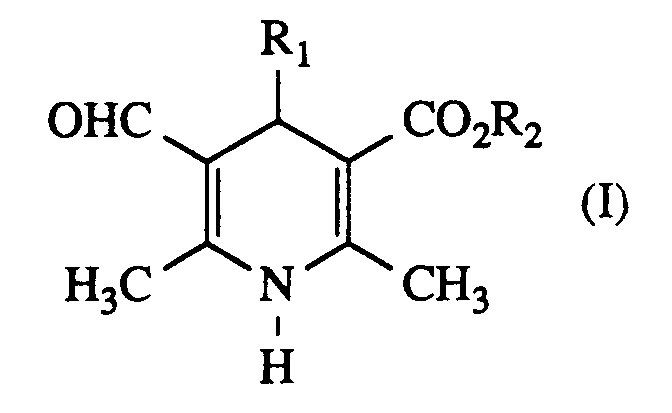
in welcher - R¹
- für Phenyl steht, das gegebenenfalls bis zu 3-fach gleich oder verschieden durch Nitro, Cyano, Halogen, Trifluormethyl, Trifluormethylthio, Trifluormethoxy, Difluormethoxy oder durch geradkettiges oder verzweigtes Alkyl, Alkoxy, Alkylthio oder Alkoxycarbonyl mit jeweils bis zu 8 Kohlenstoffatomen,
oder durch eine Gruppe der Formel -O(CH₂)n-R³, -S-(CH₂)n-R³ oder -CO-(CH₂)n-R³ substituiert ist,
worin - n
- eine Zahl 0, 1, 2, 3 oder 4 bedeutet,
- R³
- Aryl mit 6 bis 10 Kohlenstoffatomen bedeutet, das gegebenenfalls bis zu 3-fach gleich oder verschieden durch Halogen, Nitro, Trifluormethyl, Trifluormethoxy, Difluormethoxy, Trifluormethylthio oder durch geradkettiges oder verzeigtes Alkyl oder Alkoxy mit jeweils bis zu 8 Kohlenstoffatomen substituiert ist,
oder für einen Rest der Formel
worin - R⁴
- Wasserstoff, Halogen oder geradkettiges oder verzweigtes Alkyl oder Alkoxy mit jeweils bis zu 8 Kohlenstoffatomen bedeutet,
- R⁵
- Phenyl bedeutet, das gegebenenfalls bis zu 2-fach gleich oder verschieden durch Halogen, Nitro, Cyano, Trifluormethyl, Trifluormethoxy, Trifluormethylthio, geradkettiges oder verzweigtes Alkyl, Alkoxy oder Alkoxycarbonyl mit jeweils bis zu 8 Kohlenstoffatomen oder Carboxy substituiert ist,
- R²
- für Wasserstoff steht, oder
für geradkettiges oder verzweigtes Alkyl, Alkenyl, Alkadienyl oder Alkinyl mit jeweils bis zu 10 Kohlenstoffatomen steht, die gegebenenfalls bis zu 2-fach gleich oder verschieden durch Halogen, Hydroxy, Carboxy, Cyano, Nitro oder durch geradkettiges oder verzweigtes Alkylthio, Alkoxy, Alkoxycarbonyl, Acyl oder Acyloxy mit jeweils bis zu 8 Kohlenstoffatomen oder durch Phenoxy oder Phenyl substituiert sind, wobei die beiden letzteren ihrerseits bis zu 2-fach gleich oder verschieden durch Halogen oder durch geradkettiges oder verzweigtes Alkyl oder Alkoxy mit jeweils bis zu 6 Kohlenstoffatomen substituiert sein können, - Physiologisch unbedenkliche Salze können Salze der erfindungsgemäßen Verbindungen mit anorganischen oder organischen Säuren sein. Bevorzugt werden Salze mit anorganischen Säuren wie beispielsweise Salzsäure, Bromwasserstoffsäure, Phosphorsäure oder Schwefelsäure, oder Salze mit organischen Carbon- oder Sulfonsäuren wie beispielsweise Essigsäure, Maleinsäure, Fumarsäure, Äpfelsäure, Zitronensäure, Weinsäure, Milchsäure, Benzoesäure, oder Methansulfonsäure, Ethansulfonsäure, Phenylsulfonsäure, Toluolsulfonsäure oder Naphthalindisulfonsäure.
- Die erfindungsgemäßen Verbindungen existieren in stereoisomeren Formen, die sich entweder wie Bild und Spiegelbild (Enantiomere), oder die sich nicht wie Bild und Spiegelbild (Diastereomere) verhalten. Die Erfindung betrifft sowohl die Antipoden als auch die Racemformen sowie die Diastereomerengemische. Die Racemformen lassen sich ebenso wie die Diastereomeren in bekannter Weise in die stereoisomer einheitlichen Bestandteile trennen (vgl. E.L. Eliel, Stereochemistry of Carbon Compounds, McGraw Hill, 1962).
- Bevorzugt sind Verbindungen der allgemeinen Formel (I),
in welcher - R¹
- für Phenyl steht, das gegebenenfalls bis zu 2-fach gleich oder verschieden durch Nitro, Cyano, Fluor, Chlor, Trifluormethyl, Trifluormethoxy, Difluormethoxy, durch geradkettiges oder verzweigtes Alkyl, Alkoxy, Alkylthio oder Alkoxycarbonyl mit jeweils bis zu 6 Kohlenstoffatomen, oder durch eine Gruppe der Formel -O(CH₂)n-R³, -S(CH₂)n-R³ oder -CO(CH₂)n-R³ substituiert ist,
worin - n
- eine Zahl 0, 1 oder 2 bedeutet
und - R³
- Phenyl bedeutet, das gegebenenfalls bis zu 2-fach gleich oder verschieden durch Nitro, Fluor, Chlor, Trifluormethyl, Trifluormethoxy, Difluormethoxy oder durch geradkettiges oder verzweigtes Alkyl oder Alkoxy mit jeweils bis zu 6 Kohlenstoffatomen substituiert ist,
oder für einen Rest der Formel
worin - R⁴
- Wasserstoff bedeutet,
- R⁵
- Phenyl bedeutet, das gegebenenfalls durch Fluor, Chlor, Nitro, Cyano, Trifluormethyl oder durch geradkettiges oder verzweigtes Alkyl oder Alkoxy mit jeweils bis zu 6 Kohlenstoffatomen substituiert ist,
- R²
- für Wasserstoff oder für geradkettiges oder verzweigtes Alkyl oder Alkenyl mit jeweils bis zu 8 Kohlenstoffatomen steht, die gegebenenfalls durch Fluor, Chlor, Hydroxy, Carboxy, Cyano, Nitro oder durch geradkettiges oder verzweigtes Alkylthio, Alkoxy, Alkoxycarbonyl, Acyl oder Acyloxy mit jeweils bis zu 6 Kohlenstoffatomen oder durch Phenoxy oder Phenyl substituiert sind,
- Besonders bevorzugt sind Verbindungen der allgemeinen Formel (I), in welcher
- R¹
- für Phenyl steht, das gegebenenfalls durch Nitro, Fluor, Chlor, Brom, Trifluormethyl, Trifluormethoxy, Difluormethoxy, durch geradkettiges oder verzweigtes Alkyl oder Alkoxy mit jeweils bis zu 4 Kohlenstoffatomen oder durch eine Gruppe der Formel -O(CH₂)n-R³ oder -S(CH₂)n-R³ substituiert ist,
worin - n
- die Zahl 1 bedeutet,
- R³
- Phenyl bedeutet, das gegebenenfalls durch Nitro, Fluor, Chlor, Trifluormethoxy oder durch geradkettiges oder verzweigtes Alkyl oder Alkoxy mit jeweils bis zu 4 Kohlenstoffaotmen substituiert ist,
oder für einen Rest der Formel
worin - R⁴
- Wasserstoff bedeutet,
- R⁵
- Phenyl bedeutet, das gegebenenfalls durch Fluor, Chlor, Nitro, Trifluormethyl oder durch geradkettiges oder verzweigtes Alkyl oder Alkoxy mit jeweils bis zu 4 Kohlenstoffatomen substituiert ist, bedeutet,
- R²
- für Wasserstoff steht, oder für geradkettiges oder verzweigtes Alkyl mit bis zu 6 Kohlenstoffatomen steht, das gegebenenfalls durch Hydroxy, Carboxy, Cyano oder durch geradkettiges oder verzweigtes Alkoxycarbonyl, Alkoxy oder Acyloxy mit jeweils bis zu 4 Kohlenstoffatomen substituiert ist
- Außerdem wurde ein Verfahren zur Herstellung der erfindungsgemäßen Verbindungen der allgemeinen Formel (I) gefunden, dadurch gekennzeichnet, daß man aktivierte Verbindungen der allgemeinen Formel (II)

in welcher - R¹ und R²
- die oben angegebene Bedeutung haben
und - X
- für einen aktivierenden Rest der Formel

- Das erfindungsgemäße Verfahren kann durch folgendes Formelschema beispielhaft erläutert werden:

Als Losemittel eignen sich für das Verfahren alle inerten organischen Lösemittel. Hierzu gehören bevorzugt Alkohole wie Methanol, Ethanol, n-bzw. iso-Propanol, Ether wie Diethylether, Tetrahydrofuran, Dioxan oder Glykolmono- oder dimethylether, Eisessig, Pyridin, Dimethylformamid, Dimethylsulfoxid, Acetonitril oder Hexamethylphosphorsäuretriamid oder Acetonitril. - Die Reduktion erfolgt im allgemeinen mit Hydriden wie beispielsweise Natriumborhydrid, Lithiumaluminiumhydrid oder Diisobutylaluminiumhydrid. Bevorzugt ist Natriumborhydrid.
- Das Reduktionsmittel wird im allgemeinen in einer Menge von 0,5 mol bis 10 mol, bevorzugt von 1 mol bis 3 mol bezogen auf 1 mol der Verbindungen der allgemeinen Formel (II) eingesetzt.
- Die Reduktion erfolgt im allgemeinen in einem Temperaturbereich von 0°C bis 100°C, bevorzugt von 25°C bis 60°C.
- Die Reduktion kann im allgemeinen bei Normaldruck, erhöhtem oder erniedrigtem Druck (beispielsweise von 0,5 bis 5 bar), vorzugsweise aber bei Normaldruck durchgeführt werden.
- Die Alkylierung wird in den oben aufgeführten Lösemitteln bei Temperaturen von 0°C bis +150°C, vorzugsweise bei Raumtemperatur bis +100°C bei Normaldruck durchgeführt.
- Als Alkylierungsmittel bei den Verfahren können beispielsweise (C₁-C₈)-Alkylhalogenide, Sulfonsäureester oder substituierte oder unsubstituierte (C₁-C₆)-Dialkyl- oder (C₁-C₆)-Diarylsulfate, vorzugsweise Methyljodid, p-Toluolsulfonsäureester oder Dimethylsulfat eingesetzt werden.
- Die vorstehenden Herstellungsverfahren sind lediglich zur Verdeutlichung angegeben. Die Herstellung der Verbindungen der Formel (I) ist nicht auf diese Verfahren beschränkt, sondern jede Modifikation dieser Verfahren ist in gleicher Weise für die Herstellung der erfindungsgemäßen Verbindungen anwendbar.
- Die Verbindungen der allgemeinen Formel (II) sind zum Teil bekannt oder können nach bekannten Methoden hergestellt werden [vgl. US 4 707 479].
- Die erfindungsgemäßen Verbindungen der allgemeinen Formel (I) zeigen ein nicht vorhersehbares, wertvolles pharmakologisches Wirkspektrum. Sie beeinflussen die Kontraktionskraft des Herzens und den Tonus der glatten Muskulatur, insbesondere zeigen sie positiv-inotrope Wirkungen. Sie können deshalb in Arzneimitteln zur Beeinflussung des pathologisch veränderten Blutdrucks, als Koronartherapeutika und zur Behandlung der Herzinsuffizienz eingesetzt werden. Darüber hinaus können sie zur Behandlung von Herzrhythmusstörungen, zur Senkung des Blutzuckers, zur Abschwellung von Schleimhäuten und zur Beeinflussung des Salz- und Flüssigkeitshaushaltes verwendet werden.
- Die Herz- und Gefäßwirkungen wurden am isoliert perfundierten Herzen des Meerschweinchens gefunden. Dazu werden die Herzen von 250 bis 350 g schweren Meerschweinchen verwendet. Die Tiere werden mit einem Schlag auf den Kopf getötet, der Thorax geöffnet, und in die freipräparierte Aorta eine Metallkanüle eingebunden. Das Herz wird mit den Lungen aus dem Thorax herausgetrennt und über eine Aortenkanüle an die Perfusionsapparatur bei laufender Perfusion angeschlossen. Die Lungen werden an den Lungenwurzeln abgetrennt als Perfusionsmedium dient eine Krebs-Henseleit-Lösung (1) (118,5 mmol/l NaCl, 4,75 mmol/l KCl, 1,19 mmol/l KH₂PO₄, 1,19 mmol/l MgSO₄, 25 mmol/l NaHCO₃, 0,013 mmol/l Na₂EDTA), deren CaCl₂-Gehalt 1,2 mmol/l beträgt. Als energielieferndes Substrat werden 10 mmol/l Glucose zugesetzt. Vor der Perfusion wird die Lösung partikelfrei filtriert. Die Lösung wird mit Carbogen (95% O₂, 5% CO₂) zur Aufrechterhaltung des pH-Wertes 7,4 begast. Die Herzen werden mit konstantem Fluß (10 ml/min) bei 32°C mittels einer Rollenquetschpumpe perfundiert.
- Zur Messung der Herzfunktion wird ein flüssigkeitsgefüllter Latexballon, der über eine Flüssigkeitssäule mit einem Druckaufnehmer verbunden ist, durch den linken Vorhof in den linken Ventrikel eingeführt, und die isovolumetrischen Kontraktionen auf einem Schnellschreiber registriert (Opie, L., J. Physiol. 180 (1965), 529 - 541). Der Perfusionsdruck wird mittels eines Druckaufnehmers, der vor dem Herzen mit dem Perfusionssystem in Verbindung steht, registiert. Unter diesen Bedingungen zeigt eine Senkung des Perfusionsdrucks eine Koronardilatation, eine Zu-bzw. Abnahme der linksventrikulären Kontraktionsamplitude eine Senkung bzw. einen Anstieg der Herzkontraktilität an. Die erfindungsgemäßen Verbindungen werden in geeigneten Verdünnungen in das Perfusionssystem kurz vor dem isolierten Herzen perfundiert.
- Substanzeffekte auf die Kontraktionsamplitude isolierter Meerschweinchen-Herzvorhöfe beieiner Wirkstoffkonzentration von 10⁻⁴ g/l.
Bsp.-Nr. Kontraktionskraft (% Kontrolle) 1 +32 3 +31 4 +41 - Die neuen Wirkstoffe können in bekannter Weise in die üblichen Formulierungen überführt werden, wie Tabletten, Dragees, Pillen, Granulate, Aerosole, Sirupe, Emulsionen, Suspensionen und Lösungen, unter Verwendung inerter, nicht toxischer, pharmazeutisch geeigneter Trägerstoffe oder Lösungsmittel. Hierbei soll die therapeutisch wirksame Verbindung jeweils in einer Konzentration von etwa 0,5 bis 90-Gew.-% der Gesamtmischung vorhanden sein, d.h. in Mengen, die ausreichend sind, um den angegebenen Dosierungsspielraum zu erreichen.
- Die Formulierungen werden beispielsweise hergestellt durch Verstrecken der Wirkstoffe mit Lösungsmitteln und/oder Trägerstoffen, gegebenenfalls unter Verwendung von Emulgiermitteln und/oder Dispergiermitteln, wobei z.B. im Fall der Benutzung von Wasser als Verdünnungsmittel gegebenenfalls organische Lösungsmittel als Hilfslösungsmittel verwendet werden können.
- Die Applikation erfolgt in üblicher Weise, vorzugsweise oral oder parenteral, insbesondere perlingual oder intravenös.
- Im allgemeinen hat es sich als vorteilhaft erwiesen, bei intravenöser Applikation Mengenvon etwa 0,001 bis 1 mg/kg, vorzugsweise etwa 0,01 bis 0,5 mg/kg Körpergewicht zur Erzielung wirksamer Ergebnisse zu verabreichen, und bei oraler Applikation beträgt die Dosierung etwa 0,01 bis 20 mg/kg, vorzugsweise 0,1 bis 10 mg/kg Körpergewicht.
- Trotzdem kann es gegebenenfalls erforderlich sein, von den genannten Mengen abzuweichen, und zwar in Abhängigkeit vom Körpergewicht bzw. der Art des Applikationsweges, vom individuellen Verhalten gegenüber dem Medikament, der Art von dessen Formulierung und dem Zeitpunkt bzw. Intervall, zu welchen die Verabreichung erfolgt. So kann es in einigen Fallen ausreichend sein, mit weniger als der vorgenannten Mindestmenge auszukommen, während in anderen Fällen die genannte obere Grenze überschritten werden muß. Im Falle der Applikation größerer Mengen kann es empfehlenswert sein, diese in mehreren Einzelgaben über den Tag zu verteilen.
-

- 17,4 g (0,1 mol) o-Trifluormethylbenzaldehyd, 15,5 g (0,1 mol) 2-Acetonyl-4,4-dimethyloxazolin und 11,5 g (0,1 mol) β-Aminocrotonsäuremethylester werden in 150 ml i-Propanol 12 h unter Rückfluß erhitzt. Anschließend wird das Lösemittel im Vakuum entfernt und der Rückstand auf einer Kieselgelsäule getrennt. Man erhält 18 g der Titelverbindung.
F°C: 181 -

- 1 g (2,1 mol) 1,4-Dihydro-2,6-dimethyl-4-(3-phenyl-chinolin-5-yl)-pyridin-3-carbonsäureethylester-5-carbonsäureimidazolid werden in 50 ml trockenem Tetrahydrofuran gelöst und mit 500 mg (12,6 mmol) Natriumborhydrid versetzt. Es wird 20 Stunden bei 60°C gerührt, eingeengt, in Essigester gelöst und mit Wasser gewaschen. Die Essigesterphase wird getrocknet und eingeengt. Das Produktgemisch wird über eine Kieselgelsäule mit Toluol/Essigester-Gemischen gereinigt. Man erhält 146 mg einer farblosen Substanz vom Schmelzpunkt 275 - 277°C.
- In Analogie zur Vorschrift des Beispiels 1 werden die in Tabelle 1 aufgeführten Beispiele hergestellt:
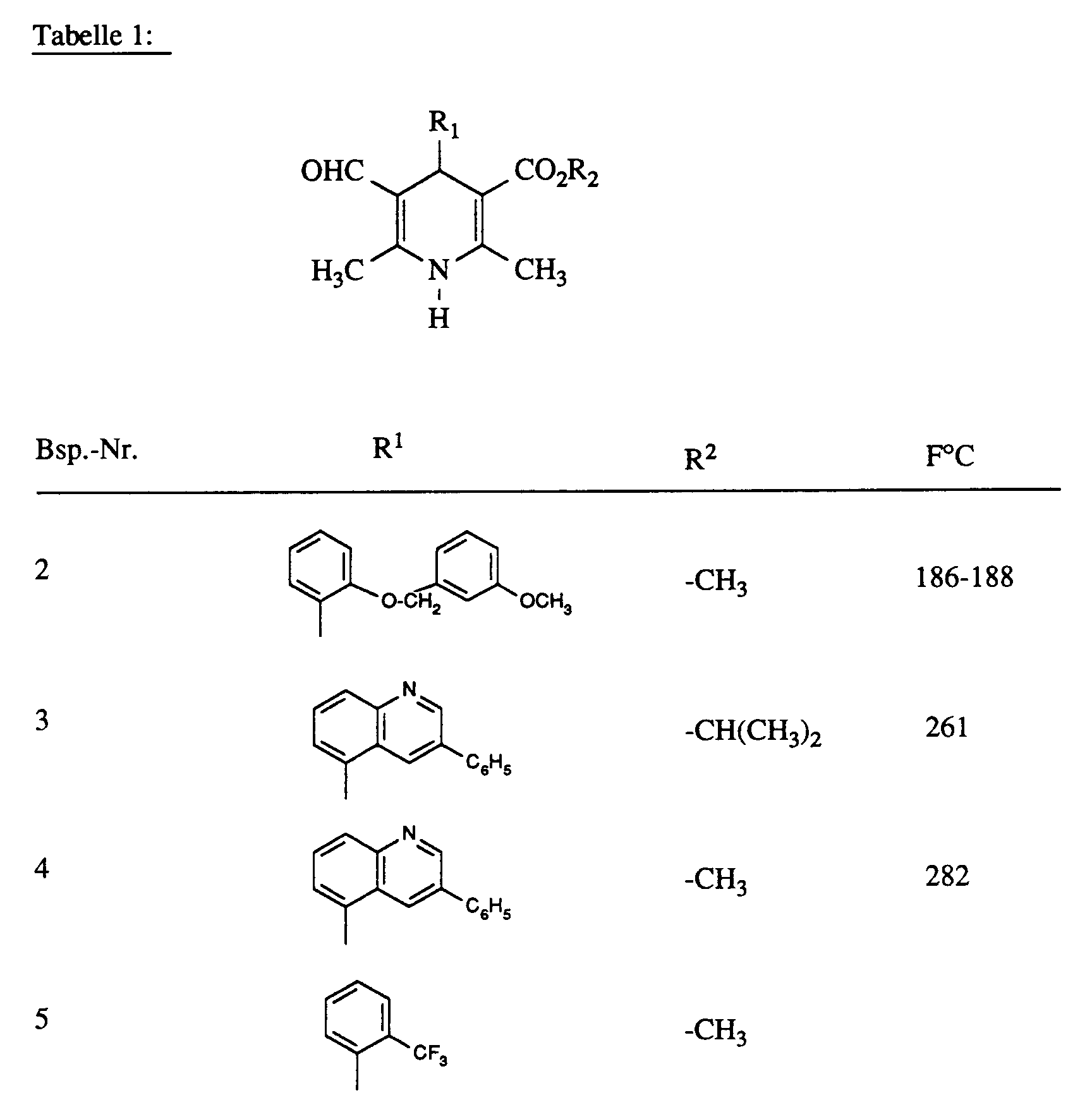
entweder direkt oder nach einem vorgeschalteten Alkylierungsschritt in inerten organischen Lösemitteln bei Temperaturen von 0-100°C reduziert.
Claims (8)
- 3-Formyl-1,4-dihydropyridine der allgemeinen Formel (I)
 R¹ für Phenyl steht, das gegebenenfalls bis zu 3-fach gleich oder verschieden durch Nitro, Cyano, Halogen, Trifluormethyl, Trifluormethylthio, Trifluormethoxy, Difluormethoxy oder durch geradkettiges oder verzweigtes Alkyl, Alkoxy, Alkylthio oder Alkoxycarbonyl mit jeweils bis zu 8 Kohlenstoffatomen, oder durch eine Gruppe der Formel -O(CH₂)n-R³, -S-(CH₂)n-R³ oder -CO-(CH₂)n-R³ substituiert ist,
worinn eine Zahl 0, 1, 2, 3 oder 4 bedeutet,R³ Aryl mit 6 bis 10 Kohlenstoffatomen bedeutet, das gegebenenfalls bis zu 3-fach gleich oder verschieden durch Halogen, Nitro, Trifluormethyl, Trifluormethoxy, Difluormethoxy, Trifluormethylthio oder durch geradkettiges oder verzeigtes Alkyl oder Alkoxy mit jeweils bis zu 8 Kohlenstoffatomen substituiert ist,
oder für einen Rest der Formel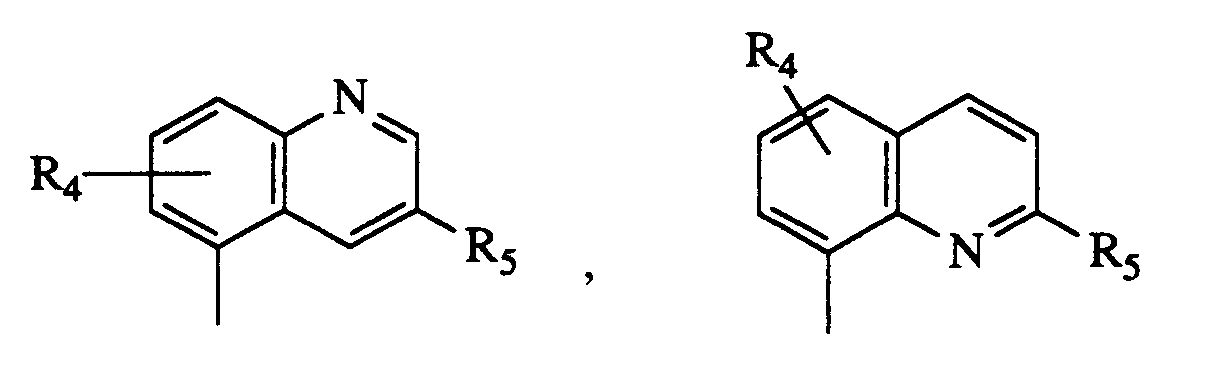
worinR⁴ Wasserstoff, Halogen oder geradkettiges oder verzweigtes Alkyl oder Alkoxy mit jeweils bis zu 8 Kohlenstoffatomen bedeutet,R⁵ Phenyl bedeutet, das gegebenenfalls bis zu 2-fach gleich oder verschieden durch Halogen, Nitro, Cyano, Trifluormethyl, Trifluormethoxy, Trifluormethylthio, geradkettiges oder verzweigtes Alkyl, Alkoxy oder Alkoxycarbonyl mit jeweils bis zu 8 Kohlenstoffatomen oder Carboxy substituiert ist,R² für Wasserstoff steht, oderund deren physiologisch unbedenklichen Salze, zur Verwendung bei der Bekämpfung von Erkrankungen.
für geradkettiges oder verzweigtes Alkyl, Alkenyl, Alkadienyl oder Alkinyl mit jeweils bis zu 10 Kohlenstoffatomen steht, die gegebenenfalls bis zu 2-fach gleich oder verschieden durch Halogen, Hydroxy, Carboxy, Cyano, Nitro oder durch geradkettiges oder verzweigtes Alkylthio, Alkoxy, Alkoxycarbonyl, Acyl oder Acyloxy mit jeweils bis zu 8 Kohlenstoffatomen oder durch Phenoxy oder Phenyl substituiert sind, wobei die beiden letzteren ihrerseits bis zu 2-fach gleich oder verschieden durch Halogen oder durch geradkettiges oder verzweigtes Alkyl oder Alkoxy mit jeweils bis zu 6 Kohlenstoffatomen substituiert sein können, - Verbindungen der allgemeinen Formel (I) gemäß Anspruch 1 mit der Maßgabe das wenn R¹ für m-Nitrophenyl steht, R² nicht Methyl bedeuten darf.
- Verbindungen der allgemeinen Formel (I) gemäß Anspruch 1
in welcherR¹ für Phenyl steht, das gegebenenfalls bis zu 2-fach gleich oder verschieden durch Nitro, Cyano, Fluor, Chlor, Trifluormethyl, Trifluormethoxy, Difluormethoxy, durch geradkettiges oder verzweigtes Alkyl, Alkoxy, Alkylthio oder Alkoxycarbonyl mit jeweils bis zu 6 Kohlenstoffatomen, oder
durch eine Gruppe der Formel -O(CH₂)n-R³, -S(CH₂)n-R³ oder -CO(CH₂)n-R³ substituiert ist,
worinn eine Zahl 0, 1 oder 2 bedeutet
undR³ Phenyl bedeutet, das gegebenenfalls bis zu 2-fach gleich oder verschieden durch Nitro, Fluor, Chlor, Trifluormethyl, Trifluormethoxy, Difluormethoxy oder durch geradkettiges oder verzweigtes Alkyl oder Alkoxy mit jeweils bis zu 6 Kohlenstoffatomen substituiert ist,
oder für einen Rest der Formel
worinR⁴ Wasserstoff bedeutet,R⁵ Phenyl bedeutet, das gegebenenfalls durch Fluor, Chlor, Nitro, Cyano, Trifluormethyl oder durch geradkettiges oder verzweigtes Alkyl oder Alkoxy mit jeweils bis zu 6 Kohlenstoffatomen substituiert ist,R² für Wasserstoff oder für geradkettiges oder verzweigtes Alkyl oder Alkenyl mit jeweils bis zu 8 Kohlenstoffatomen steht, die gegebenenfalls durch Fluor, Chlor, Hydroxy, Carboxy, Cyano, Nitro oder durch geradkettiges oder verzweigtes Alkylthio, Alkoxy, Alkoxycarbonyl, Acyl oder Acyloxy mit jeweils bis zu 6 Kohlenstoffatomen oder durch Phenoxy oder Phenyl substituiert sind,mit der Maßgabe, daß wenn R¹ für m-Nitrophenyl steht, R² nicht Methyl bedeuten darf. - Verbindungen der allgemeinen Formel (I) gemäß Anspruch 1
in welcherR¹ für Phenyl steht, das gegebenenfalls durch Nitro, Fluor, Chlor, Brom, Trifluormethyl, Trifluormethoxy, Difluormethoxy, durch geradkettiges oder verzweigtes Alkyl oder Alkoxy mit jeweils bis zu 4 Kohlenstoffatomen oder
durch eine Gruppe der Formel -O(CH₂)n-R³ oder -S(CH₂)n-R³ substituiert ist,
worinn die Zahl 1 bedeutet,R³ Phenyl bedeutet, das gegebenenfalls durch Nitro, Fluor, Chlor, Trifluormethoxy oder durch geradkettiges oder verzweigtes Alkyl oder Alkoxy mit jeweils bis zu 4 Kohlenstoffatomen substituiert ist,
oder für einen Rest der Formel
worinR⁴ Wasserstoff bedeutet,R⁵ Phenyl bedeutet, das gegebenenfalls durch Fluor, Chlor, Nitro, Trifluormethyl oder durch geradkettiges oder verzweigtes Alkyl oder Alkoxy mit jeweils bis zu 4 Kohlenstoffatomen substituiert ist, bedeutet,R² für Wasserstoff steht, oder für geradkettiges oder verzweigtes Alkyl mit bis zu 6 Kohlenstoffatomen steht, das gegebenenfalls durch Hydroxy, Carboxy, Cyano oder durch geradkettiges oder verzweigtes Alkoxycarbonyl, Alkoxy oder Acyloxy mit jeweils bis zu 4 Kohlenstoffatomen substituiert istmit der Maßgabe, daß wenn R¹ für m-Nitrophenyl steht, R² nicht Methyl bedeuten darf. - Verfahren zur Herstellung von Verbindungen der allgemeinen Formel (I)
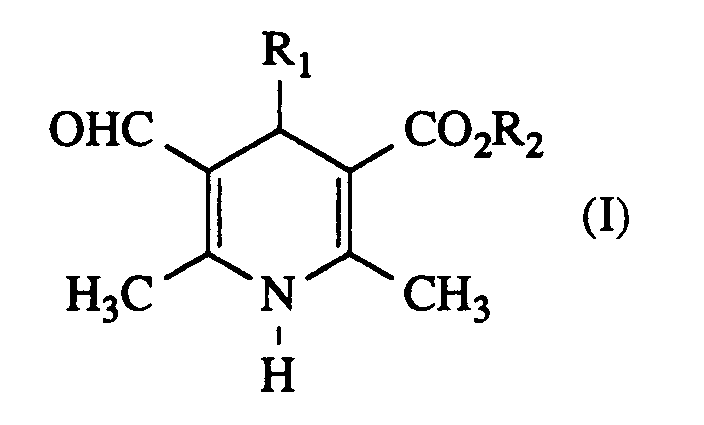 R¹ für Phenyl steht, das gegebenenfalls bis zu 3-fach gleich oder verschieden durch Nitro, Cyano, Halogen, Trifluormethyl, Trifluormethylthio, Trifluormethoxy, Difluormethoxy oder durch geradkettiges oder verzweigtes Alkyl, Alkoxy, Alkylthio oder Alkoxycarbonyl mit jeweils bis zu 8 Kohlenstoffatomen, oder durch eine Gruppe der Formel -O(CH₂)n-R³, -S-(CH₂)n-R³ oder -CO-(CH₂)n-R³ substituiert ist,
worinn eine Zahl 0, 1, 2, 3 oder 4 bedeutet,R³ Aryl mit 6 bis 10 Kohlenstoffatomen bedeutet, das gegebenenfalls bis zu 3-fach gleich oder verschieden durch Halogen, Nitro, Trifluormethyl, Trifluormethoxy, Difluormethoxy, Trifluormethylthio oder durch geradkettiges oder verzeigtes Alkyl oder Alkoxy mit jeweils bis zu 8 Kohlenstoffatomen substituiert ist,
oder für einen Rest der Formel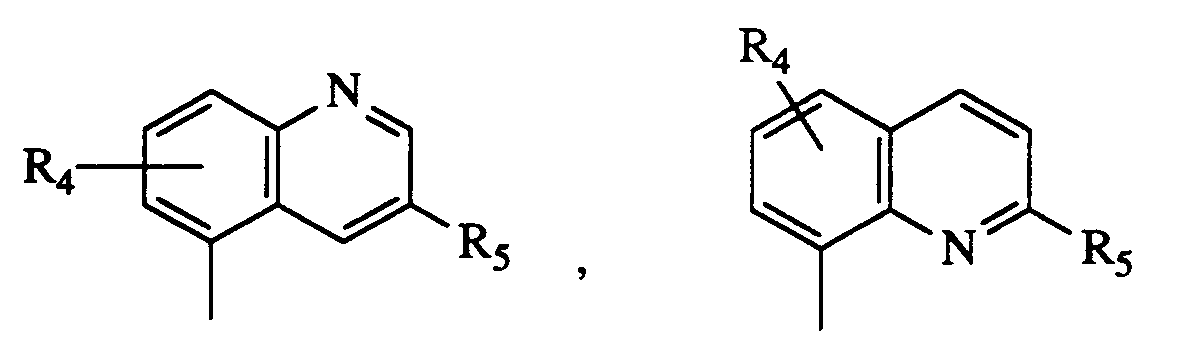
worinR⁴ Wasserstoff, Halogen oder geradkettiges oder verzweigtes Alkyl oder Alkoxy mit jeweils bis zu 8 Kohlenstoffatomen bedeutet,R⁵ Phenyl bedeutet, das gegebenenfalls bis zu 2-fach gleich oder verschieden durch Halogen, Nitro, Cyano, Trifluormethyl, Trifluormethoxy, Trifluormethylthio, geradkettiges oder verzweigtes Alkyl, Alkoxy oder Alkoxycarbonyl mit jeweils bis zu 8 Kohlenstoffatomen oder Carboxy substituiert ist,R² für Wasserstoff steht, oderund deren physiologisch unbedenklichen Salze, mit der Maßgabe das wenn R¹ für m-Nitrophenyl steht, R² nicht Methyl bedeuten darf,
für geradkettiges oder verzweigtes Alkyl, Alkenyl, Alkadienyl oder Alkinyl mit jeweils bis zu 10 Kohlenstoffatomen steht, die gegebenenfalls bis zu 2-fach gleich oder verschieden durch Halogen, Hydroxy, Carboxy, Cyano, Nitro oder durch geradkettiges oder verzweigtes Alkylthio, Alkoxy, Alkoxycarbonyl, Acyl oder Acyloxy mit jeweils bis zu 8 Kohlenstoffatomen oder durch Phenoxy oder Phenyl substituiert sind, wobei die beiden letzteren ihrerseits bis zu 2-fach gleich oder verschieden durch Halogen oder durch geradkettiges oder verzweigtes Alkyl oder Alkoxy mit jeweils bis zu 6 Kohlenstoffatomen substituiert sein können,
dadurch gekennzeichnet, daß man aktivierte Verbindungen der allgemeinen Formel (II)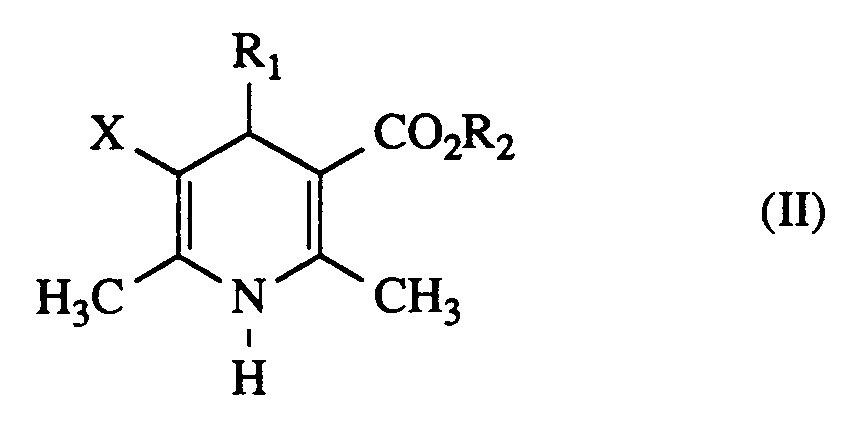 R¹ und R² die oben angegebene Bedeutung haben
undX für einen aktivierenden Rest der Formel
entweder direkt oder nach einem vorgeschalteten Alkylierungsschritt in inerten organischen Lösemitteln bei Temperaturen von 0-100°C reduziert. - Arzneimittel enthaltend mindestens eine Verbindung der allgemeinen Formel (I) gemäß Anspruch 1.
- Verfahren zur Herstellung von Arzneimitteln dadurch gekennzeichnet, daß man mindestens eine Verbindung der allgemeinen Formel (I) gemäß Anspruch 1 gegebenenfalls unter Verwendung von üblichen Hilfs- und Trägerstoffen in eine geeignete Applikationsform überführt.
- Verwendung von Verbindungen der allgemeinen Formel I gemäß Anspruch 1 bei der Herstellung von Arzneimitteln zur Behandlung von Herz-Kreislauferkrankungen.
Applications Claiming Priority (2)
| Application Number | Priority Date | Filing Date | Title |
|---|---|---|---|
| DE4118707A DE4118707A1 (de) | 1991-06-07 | 1991-06-07 | Pharmazeutische verwendung von 3-formyl-1,4-dihydropyridinen, neue verbindungen und verfahren zu ihrer herstellung |
| DE4118707 | 1991-06-07 |
Publications (1)
| Publication Number | Publication Date |
|---|---|
| EP0518105A1 true EP0518105A1 (de) | 1992-12-16 |
Family
ID=6433390
Family Applications (1)
| Application Number | Title | Priority Date | Filing Date |
|---|---|---|---|
| EP92108736A Withdrawn EP0518105A1 (de) | 1991-06-07 | 1992-05-23 | 3-Formyl-1,4-dihydropyridine, Verfahren zu ihrer Herstellung und ihre Verwendung als Arzneimittel |
Country Status (4)
| Country | Link |
|---|---|
| US (1) | US5420142A (de) |
| EP (1) | EP0518105A1 (de) |
| JP (1) | JPH05194394A (de) |
| DE (1) | DE4118707A1 (de) |
Cited By (4)
| Publication number | Priority date | Publication date | Assignee | Title |
|---|---|---|---|---|
| EP0622368A1 (de) * | 1993-04-27 | 1994-11-02 | Bayer Ag | Chinolyl-dihydropyridinester zur Behandlung von Herz-Kreislauferkrankungen |
| EP0622364A3 (de) * | 1993-04-27 | 1994-11-30 | Bayer Ag | |
| EP0627427A1 (de) * | 1993-04-27 | 1994-12-07 | Bayer Ag | 3-Chinolyl substituierte Dihydropyridine, Verfahren zu ihrer Herstellung und ihre Verwendung in Arzneimitteln |
| EP0622369A3 (de) * | 1993-04-27 | 1996-02-28 | Bayer Ag | 2-Amino-4-chinolin-dihydropyridine, Verfahren zu ihrer Herstellung und ihre Verwendung. |
Citations (6)
| Publication number | Priority date | Publication date | Assignee | Title |
|---|---|---|---|---|
| US4414213A (en) * | 1982-03-22 | 1983-11-08 | Mead Johnson & Company | Dihydropyridyl cyclic imidate esters and their pharmaceutical use |
| WO1986002640A1 (en) * | 1984-10-31 | 1986-05-09 | Bristol-Myers Company | Dihydropyridin-3,5-dicarboxylates incorporating aryloxypropanolamine moieties |
| US4707479A (en) * | 1984-12-15 | 1987-11-17 | Bayer Aktiengesellschaft | Circulation active dihydropyridine-3-carboxamides |
| DE3711991A1 (de) * | 1987-04-09 | 1988-10-20 | Bayer Ag | Dihydropyridinamide, verfahren zu ihrer herstellung und ihre verwendung in arzneimitteln |
| EP0330470A2 (de) * | 1988-02-24 | 1989-08-30 | Ajinomoto Co., Inc. | Gegen Tumorzellen verwendbare 1,4-Dihydropyridin-Derivate |
| EP0452712A1 (de) * | 1990-04-06 | 1991-10-23 | Bayer Ag | Neue 4-Chinolyl-dihydropyridine, Verfahren zu ihrer Herstellung und ihre Verwendung in Arzneimitteln |
Family Cites Families (1)
| Publication number | Priority date | Publication date | Assignee | Title |
|---|---|---|---|---|
| DE2003146A1 (de) * | 1970-01-24 | 1971-07-29 | Bayer Ag | Neue 1,4-Dihydropyridinderivate |
-
1991
- 1991-06-07 DE DE4118707A patent/DE4118707A1/de not_active Withdrawn
-
1992
- 1992-05-23 EP EP92108736A patent/EP0518105A1/de not_active Withdrawn
- 1992-06-02 JP JP4165507A patent/JPH05194394A/ja active Pending
-
1993
- 1993-12-14 US US08/166,671 patent/US5420142A/en not_active Expired - Fee Related
Patent Citations (6)
| Publication number | Priority date | Publication date | Assignee | Title |
|---|---|---|---|---|
| US4414213A (en) * | 1982-03-22 | 1983-11-08 | Mead Johnson & Company | Dihydropyridyl cyclic imidate esters and their pharmaceutical use |
| WO1986002640A1 (en) * | 1984-10-31 | 1986-05-09 | Bristol-Myers Company | Dihydropyridin-3,5-dicarboxylates incorporating aryloxypropanolamine moieties |
| US4707479A (en) * | 1984-12-15 | 1987-11-17 | Bayer Aktiengesellschaft | Circulation active dihydropyridine-3-carboxamides |
| DE3711991A1 (de) * | 1987-04-09 | 1988-10-20 | Bayer Ag | Dihydropyridinamide, verfahren zu ihrer herstellung und ihre verwendung in arzneimitteln |
| EP0330470A2 (de) * | 1988-02-24 | 1989-08-30 | Ajinomoto Co., Inc. | Gegen Tumorzellen verwendbare 1,4-Dihydropyridin-Derivate |
| EP0452712A1 (de) * | 1990-04-06 | 1991-10-23 | Bayer Ag | Neue 4-Chinolyl-dihydropyridine, Verfahren zu ihrer Herstellung und ihre Verwendung in Arzneimitteln |
Non-Patent Citations (2)
| Title |
|---|
| CHEMICAL ABSTRACTS, vol. 114, no. 5, 4. Februar 1991, Columbus, Ohio, US; abstract no. 42505W, Y.H. HONG ET AL.: 'SYNTHESIS OF 1,4-DIHYDROPYRIDINE-5-FORMYL DERIVATIVES' Seite 718 ;Spalte 1 ; * |
| JOURNAL OF THE CHEMICAL SOCIETY, CHEMICAL COMMUNICATIONS Nr. 12, 15. Juni 1986, Seiten 920 - 921; A.I. MEYERS AND T. OPPENLAENDER: 'AN ASYMMETRIC SYNTHESIS OF CHIRAL NIFEDIPINE ANALOGUES' * |
Cited By (8)
| Publication number | Priority date | Publication date | Assignee | Title |
|---|---|---|---|---|
| EP0622368A1 (de) * | 1993-04-27 | 1994-11-02 | Bayer Ag | Chinolyl-dihydropyridinester zur Behandlung von Herz-Kreislauferkrankungen |
| EP0622364A3 (de) * | 1993-04-27 | 1994-11-30 | Bayer Ag | |
| EP0627427A1 (de) * | 1993-04-27 | 1994-12-07 | Bayer Ag | 3-Chinolyl substituierte Dihydropyridine, Verfahren zu ihrer Herstellung und ihre Verwendung in Arzneimitteln |
| EP0622369A3 (de) * | 1993-04-27 | 1996-02-28 | Bayer Ag | 2-Amino-4-chinolin-dihydropyridine, Verfahren zu ihrer Herstellung und ihre Verwendung. |
| US5508406A (en) * | 1993-04-27 | 1996-04-16 | Bayer Aktiengesellschaft | Quinolyl-dihydropyridine esters, processes for their preparation, and their use in medicaments |
| US5514803A (en) * | 1993-04-27 | 1996-05-07 | Bayer Aktiengesellschaft | 2,6-disubstituted 4-quinolyl-dihydropyridines |
| US5550245A (en) * | 1993-04-27 | 1996-08-27 | Bayer Aktiengesellschaft | 3-quinolyl-substituted dihydropyridines, processes for their preparation and their use in medicaments |
| US5629320A (en) * | 1993-04-27 | 1997-05-13 | Bayer Aktiengesellschaft | 3-quinolyl-substituted dihydropyridines, and their use in medicaments |
Also Published As
| Publication number | Publication date |
|---|---|
| DE4118707A1 (de) | 1992-12-10 |
| JPH05194394A (ja) | 1993-08-03 |
| US5420142A (en) | 1995-05-30 |
Similar Documents
| Publication | Publication Date | Title |
|---|---|---|
| EP0026317B1 (de) | Optisch aktive 1,4-Dihydropyridine, Verfahren zu ihrer Herstellung und ihre Verwendung als Arzneimittel | |
| EP0185964B1 (de) | Dihydropyridin-carbonsäureamide, Verfahren zu ihrer Herstellung und ihre Verwendung in Arzneimitteln | |
| EP0452712B1 (de) | Neue 4-Chinolyl-dihydropyridine, Verfahren zu ihrer Herstellung und ihre Verwendung in Arzneimitteln | |
| EP0450420B1 (de) | Heterocyclisch substituierte Dihydropyridine, Verfahren zu ihrer Herstellung und ihre Verwendung in Arzneimitteln | |
| EP0209701B1 (de) | Neue 1,4-Dihydropyridine, Verfahren zur Herstellung und ihre Verwendung in Arzneimitteln | |
| EP0622366B1 (de) | Kondensierte Chinolyl-dihydropyridine, Verfahren zu ihrer Herstellung und ihre Verwendung in Arzneimitteln zur Behandlung von Herz-Kreislauferkrangen | |
| EP0622369A2 (de) | 2-Amino-4-chinolin-dihydropyridine, Verfahren zu ihrer Herstellung und ihre Verwendung | |
| EP0515940B1 (de) | Neue 2-Amino-5-cyano-1,4-dihydropyridine, Verfahren zu ihrer Herstellung und ihre Verwendung in Arzneimitteln | |
| EP0179386B1 (de) | 1,4-Dihydropyridin-hydroxyamine, Verfahren zu ihrer Herstellung sowie ihre Verwendung in Arzneimitteln | |
| EP0627427A1 (de) | 3-Chinolyl substituierte Dihydropyridine, Verfahren zu ihrer Herstellung und ihre Verwendung in Arzneimitteln | |
| DE3601397A1 (de) | Substituierte 1,4-dihydropyridin-3-carbonsaeurepiperazide, verfahren zu ihrer herstellung und ihre verwendung in arzneimitteln | |
| EP0538690B1 (de) | Aryl-Chinolyl-substituierte 1,4-Dihydropyridin-dicarbonsäurederivate, Verfahren zu ihrer Herstellung und ihre Verwendung in Arzneimitteln | |
| DE3447169A1 (de) | Optisch aktive nitrodihydropyridine, verfahren zur herstellung und ihre verwendung in arzneimitteln | |
| DE4118707A1 (de) | Pharmazeutische verwendung von 3-formyl-1,4-dihydropyridinen, neue verbindungen und verfahren zu ihrer herstellung | |
| EP0214437B1 (de) | Verfahren zur Herstellung von 1,4-Dihydropyridinderivaten über neue Zwischenprodukte | |
| EP0555657A1 (de) | Neue 4-Cinnolinyl- und 4-Naphthyridinyl-dihydropyridine, Verfahren zur ihrer Herstellung und ihre Verwendung in Arzneimitteln | |
| EP0622364A2 (de) | 2,6-Disubstituierte 4-Chinolyldihydropyridine | |
| EP0229381B1 (de) | Methioninsubstituierte 1,4-Dihydropyridine, Verfahren zur Herstellung und ihre Verwendung | |
| EP0622368A1 (de) | Chinolyl-dihydropyridinester zur Behandlung von Herz-Kreislauferkrankungen | |
| EP0622365A1 (de) | 2-Amino-4-heteroaryl-1,4-dihydropyridine, Verfahren zu ihrer Herstellung und ihre Verwendung in Arzneimitteln | |
| EP0315019A2 (de) | Neue Fluormethoxyphenyl-dihydropyridine, Verfahren zur Herstellung und ihre Verwendung in Arzneimitteln | |
| DE3528601A1 (de) | Hydropyrane, verfahren zur herstellung und ihre verwendung | |
| AT368495B (de) | Verfahren zur hestellung von neuen nitrosubstituierten 1,4-dihydropyridinen | |
| EP0622363A2 (de) | 2-Amino-5-cyano-4-chinolyldihydropyridinester, Verfahren zu ihrer Herstellung und ihre Verwendung in Arzneimitteln zur Behandlung von Herz-Kreislaufkrankungen | |
| DE69132927T2 (de) | Verwendung von Dihydropyridinen in kardiotonischen pharmazeutischen Zusammensetzungen |
Legal Events
| Date | Code | Title | Description |
|---|---|---|---|
| PUAI | Public reference made under article 153(3) epc to a published international application that has entered the european phase |
Free format text: ORIGINAL CODE: 0009012 |
|
| AK | Designated contracting states |
Kind code of ref document: A1 Designated state(s): AT BE CH DE DK ES FR GB GR IT LI LU NL PT SE |
|
| 17P | Request for examination filed |
Effective date: 19930118 |
|
| 17Q | First examination report despatched |
Effective date: 19930421 |
|
| STAA | Information on the status of an ep patent application or granted ep patent |
Free format text: STATUS: THE APPLICATION HAS BEEN WITHDRAWN |
|
| 18W | Application withdrawn |
Withdrawal date: 19970424 |