EP0521761A1 - Pansement cicatrisant - Google Patents
Pansement cicatrisant Download PDFInfo
- Publication number
- EP0521761A1 EP0521761A1 EP92401835A EP92401835A EP0521761A1 EP 0521761 A1 EP0521761 A1 EP 0521761A1 EP 92401835 A EP92401835 A EP 92401835A EP 92401835 A EP92401835 A EP 92401835A EP 0521761 A1 EP0521761 A1 EP 0521761A1
- Authority
- EP
- European Patent Office
- Prior art keywords
- dressing according
- dressing
- polystyrene
- weight
- parts
- Prior art date
- Legal status (The legal status is an assumption and is not a legal conclusion. Google has not performed a legal analysis and makes no representation as to the accuracy of the status listed.)
- Granted
Links
- 230000035876 healing Effects 0.000 title claims description 24
- 229920001400 block copolymer Polymers 0.000 claims abstract description 19
- 229920006395 saturated elastomer Polymers 0.000 claims abstract description 17
- 239000004014 plasticizer Substances 0.000 claims abstract description 16
- 239000011159 matrix material Substances 0.000 claims abstract description 8
- 239000000203 mixture Substances 0.000 claims description 21
- 235000019271 petrolatum Nutrition 0.000 claims description 18
- 229920005996 polystyrene-poly(ethylene-butylene)-polystyrene Polymers 0.000 claims description 11
- 229920001577 copolymer Polymers 0.000 claims description 9
- -1 ethylene-butylene units Chemical group 0.000 claims description 8
- 238000000034 method Methods 0.000 claims description 5
- 230000001737 promoting effect Effects 0.000 claims description 5
- 125000003011 styrenyl group Chemical group [H]\C(*)=C(/[H])C1=C([H])C([H])=C([H])C([H])=C1[H] 0.000 claims description 5
- 229940088710 antibiotic agent Drugs 0.000 claims description 4
- 239000003795 chemical substances by application Substances 0.000 claims description 4
- 230000000844 anti-bacterial effect Effects 0.000 claims description 3
- 102000035195 Peptidases Human genes 0.000 claims description 2
- 108091005804 Peptidases Proteins 0.000 claims description 2
- 241000241413 Propolis Species 0.000 claims description 2
- 239000002671 adjuvant Substances 0.000 claims description 2
- 229940035676 analgesics Drugs 0.000 claims description 2
- 229940035674 anesthetics Drugs 0.000 claims description 2
- 239000000730 antalgic agent Substances 0.000 claims description 2
- 239000003242 anti bacterial agent Substances 0.000 claims description 2
- 230000002421 anti-septic effect Effects 0.000 claims description 2
- 229940121375 antifungal agent Drugs 0.000 claims description 2
- 229940064004 antiseptic throat preparations Drugs 0.000 claims description 2
- 239000011248 coating agent Substances 0.000 claims description 2
- 238000000576 coating method Methods 0.000 claims description 2
- 239000003193 general anesthetic agent Substances 0.000 claims description 2
- 230000012010 growth Effects 0.000 claims description 2
- 229940069949 propolis Drugs 0.000 claims description 2
- 229940024999 proteolytic enzymes for treatment of wounds and ulcers Drugs 0.000 claims description 2
- 229940121363 anti-inflammatory agent Drugs 0.000 claims 1
- 239000002260 anti-inflammatory agent Substances 0.000 claims 1
- 230000003110 anti-inflammatory effect Effects 0.000 claims 1
- 238000004898 kneading Methods 0.000 claims 1
- 206010052428 Wound Diseases 0.000 description 27
- 208000027418 Wounds and injury Diseases 0.000 description 27
- 238000002360 preparation method Methods 0.000 description 11
- 241001465754 Metazoa Species 0.000 description 8
- 239000004264 Petrolatum Substances 0.000 description 8
- 229940066842 petrolatum Drugs 0.000 description 8
- 239000000047 product Substances 0.000 description 6
- 239000000126 substance Substances 0.000 description 6
- 229940099259 vaseline Drugs 0.000 description 6
- 229920002633 Kraton (polymer) Polymers 0.000 description 5
- 239000004793 Polystyrene Substances 0.000 description 5
- 210000000416 exudates and transudate Anatomy 0.000 description 5
- 239000000835 fiber Substances 0.000 description 5
- 229920000728 polyester Polymers 0.000 description 5
- 229920001296 polysiloxane Polymers 0.000 description 5
- 229920002223 polystyrene Polymers 0.000 description 5
- 229930189077 Rifamycin Natural products 0.000 description 4
- 239000000853 adhesive Substances 0.000 description 4
- 230000001070 adhesive effect Effects 0.000 description 4
- 230000000052 comparative effect Effects 0.000 description 4
- 230000002349 favourable effect Effects 0.000 description 4
- 238000002156 mixing Methods 0.000 description 4
- 229960003292 rifamycin Drugs 0.000 description 4
- YVOFSHPIJOYKSH-NLYBMVFSSA-M sodium rifomycin sv Chemical compound [Na+].OC1=C(C(O)=C2C)C3=C([O-])C=C1NC(=O)\C(C)=C/C=C/[C@H](C)[C@H](O)[C@@H](C)[C@@H](O)[C@@H](C)[C@H](OC(C)=O)[C@H](C)[C@@H](OC)\C=C\O[C@@]1(C)OC2=C3C1=O YVOFSHPIJOYKSH-NLYBMVFSSA-M 0.000 description 4
- 229920000742 Cotton Polymers 0.000 description 3
- 239000004698 Polyethylene Substances 0.000 description 3
- 239000004480 active ingredient Substances 0.000 description 3
- 230000015572 biosynthetic process Effects 0.000 description 3
- 229920000573 polyethylene Polymers 0.000 description 3
- HJYYPODYNSCCOU-ODRIEIDWSA-N rifamycin SV Chemical compound OC1=C(C(O)=C2C)C3=C(O)C=C1NC(=O)\C(C)=C/C=C/[C@H](C)[C@H](O)[C@@H](C)[C@@H](O)[C@@H](C)[C@H](OC(C)=O)[C@H](C)[C@@H](OC)\C=C\O[C@@]1(C)OC2=C3C1=O HJYYPODYNSCCOU-ODRIEIDWSA-N 0.000 description 3
- OFQCQIGMURIECL-UHFFFAOYSA-N 2-[2-(diethylamino)ethyl]-2',6'-dimethylspiro[isoquinoline-4,4'-oxane]-1,3-dione;phosphoric acid Chemical compound OP(O)(O)=O.O=C1N(CCN(CC)CC)C(=O)C2=CC=CC=C2C21CC(C)OC(C)C2 OFQCQIGMURIECL-UHFFFAOYSA-N 0.000 description 2
- 229920004939 Cariflex™ Polymers 0.000 description 2
- DGAQECJNVWCQMB-PUAWFVPOSA-M Ilexoside XXIX Chemical compound C[C@@H]1CC[C@@]2(CC[C@@]3(C(=CC[C@H]4[C@]3(CC[C@@H]5[C@@]4(CC[C@@H](C5(C)C)OS(=O)(=O)[O-])C)C)[C@@H]2[C@]1(C)O)C)C(=O)O[C@H]6[C@@H]([C@H]([C@@H]([C@H](O6)CO)O)O)O.[Na+] DGAQECJNVWCQMB-PUAWFVPOSA-M 0.000 description 2
- 239000005662 Paraffin oil Substances 0.000 description 2
- FAPWRFPIFSIZLT-UHFFFAOYSA-M Sodium chloride Chemical compound [Na+].[Cl-] FAPWRFPIFSIZLT-UHFFFAOYSA-M 0.000 description 2
- 230000002745 absorbent Effects 0.000 description 2
- 239000002250 absorbent Substances 0.000 description 2
- 230000001580 bacterial effect Effects 0.000 description 2
- WPYMKLBDIGXBTP-UHFFFAOYSA-N benzoic acid Chemical compound OC(=O)C1=CC=CC=C1 WPYMKLBDIGXBTP-UHFFFAOYSA-N 0.000 description 2
- 230000007423 decrease Effects 0.000 description 2
- 239000004615 ingredient Substances 0.000 description 2
- 239000007788 liquid Substances 0.000 description 2
- 239000002480 mineral oil Substances 0.000 description 2
- 235000011837 pasties Nutrition 0.000 description 2
- 229920006267 polyester film Polymers 0.000 description 2
- 229920006264 polyurethane film Polymers 0.000 description 2
- 239000011734 sodium Substances 0.000 description 2
- 229910052708 sodium Inorganic materials 0.000 description 2
- WXMKPNITSTVMEF-UHFFFAOYSA-M sodium benzoate Chemical compound [Na+].[O-]C(=O)C1=CC=CC=C1 WXMKPNITSTVMEF-UHFFFAOYSA-M 0.000 description 2
- 235000010234 sodium benzoate Nutrition 0.000 description 2
- 239000004299 sodium benzoate Substances 0.000 description 2
- 239000000243 solution Substances 0.000 description 2
- KKEYFWRCBNTPAC-UHFFFAOYSA-L terephthalate(2-) Chemical compound [O-]C(=O)C1=CC=C(C([O-])=O)C=C1 KKEYFWRCBNTPAC-UHFFFAOYSA-L 0.000 description 2
- GFNANZIMVAIWHM-OBYCQNJPSA-N triamcinolone Chemical compound O=C1C=C[C@]2(C)[C@@]3(F)[C@@H](O)C[C@](C)([C@@]([C@H](O)C4)(O)C(=O)CO)[C@@H]4[C@@H]3CCC2=C1 GFNANZIMVAIWHM-OBYCQNJPSA-N 0.000 description 2
- 229960005294 triamcinolone Drugs 0.000 description 2
- VSKJLJHPAFKHBX-UHFFFAOYSA-N 2-methylbuta-1,3-diene;styrene Chemical compound CC(=C)C=C.C=CC1=CC=CC=C1.C=CC1=CC=CC=C1 VSKJLJHPAFKHBX-UHFFFAOYSA-N 0.000 description 1
- SODWJACROGQSMM-UHFFFAOYSA-N 5,6,7,8-tetrahydronaphthalen-1-amine Chemical compound C1CCCC2=C1C=CC=C2N SODWJACROGQSMM-UHFFFAOYSA-N 0.000 description 1
- 229920002134 Carboxymethyl cellulose Polymers 0.000 description 1
- 102000008186 Collagen Human genes 0.000 description 1
- 108010035532 Collagen Proteins 0.000 description 1
- 201000004624 Dermatitis Diseases 0.000 description 1
- VGGSQFUCUMXWEO-UHFFFAOYSA-N Ethene Chemical group C=C VGGSQFUCUMXWEO-UHFFFAOYSA-N 0.000 description 1
- 239000005977 Ethylene Substances 0.000 description 1
- 108010010803 Gelatin Proteins 0.000 description 1
- 206010018691 Granuloma Diseases 0.000 description 1
- HEFNNWSXXWATRW-UHFFFAOYSA-N Ibuprofen Chemical compound CC(C)CC1=CC=C(C(C)C(O)=O)C=C1 HEFNNWSXXWATRW-UHFFFAOYSA-N 0.000 description 1
- 229910002651 NO3 Inorganic materials 0.000 description 1
- NHNBFGGVMKEFGY-UHFFFAOYSA-N Nitrate Chemical compound [O-][N+]([O-])=O NHNBFGGVMKEFGY-UHFFFAOYSA-N 0.000 description 1
- 239000004952 Polyamide Substances 0.000 description 1
- 201000004681 Psoriasis Diseases 0.000 description 1
- 241000700159 Rattus Species 0.000 description 1
- 239000004772 Sontara Substances 0.000 description 1
- QAOWNCQODCNURD-UHFFFAOYSA-L Sulfate Chemical compound [O-]S([O-])(=O)=O QAOWNCQODCNURD-UHFFFAOYSA-L 0.000 description 1
- 230000001464 adherent effect Effects 0.000 description 1
- 239000002390 adhesive tape Substances 0.000 description 1
- 230000033115 angiogenesis Effects 0.000 description 1
- 229940124599 anti-inflammatory drug Drugs 0.000 description 1
- 208000010668 atopic eczema Diseases 0.000 description 1
- 230000008901 benefit Effects 0.000 description 1
- 229960001716 benzalkonium Drugs 0.000 description 1
- 229960000686 benzalkonium chloride Drugs 0.000 description 1
- CYDRXTMLKJDRQH-UHFFFAOYSA-N benzododecinium Chemical compound CCCCCCCCCCCC[N+](C)(C)CC1=CC=CC=C1 CYDRXTMLKJDRQH-UHFFFAOYSA-N 0.000 description 1
- CADWTSSKOVRVJC-UHFFFAOYSA-N benzyl(dimethyl)azanium;chloride Chemical compound [Cl-].C[NH+](C)CC1=CC=CC=C1 CADWTSSKOVRVJC-UHFFFAOYSA-N 0.000 description 1
- FACXGONDLDSNOE-UHFFFAOYSA-N buta-1,3-diene;styrene Chemical compound C=CC=C.C=CC1=CC=CC=C1.C=CC1=CC=CC=C1 FACXGONDLDSNOE-UHFFFAOYSA-N 0.000 description 1
- 239000001768 carboxy methyl cellulose Substances 0.000 description 1
- 235000010948 carboxy methyl cellulose Nutrition 0.000 description 1
- 239000008112 carboxymethyl-cellulose Substances 0.000 description 1
- 230000010261 cell growth Effects 0.000 description 1
- 229920001436 collagen Polymers 0.000 description 1
- 230000001143 conditioned effect Effects 0.000 description 1
- 238000001816 cooling Methods 0.000 description 1
- 230000003111 delayed effect Effects 0.000 description 1
- XXJWXESWEXIICW-UHFFFAOYSA-N diethylene glycol monoethyl ether Chemical compound CCOCCOCCO XXJWXESWEXIICW-UHFFFAOYSA-N 0.000 description 1
- SZXQTJUDPRGNJN-UHFFFAOYSA-N dipropylene glycol Chemical compound OCCCOCCCO SZXQTJUDPRGNJN-UHFFFAOYSA-N 0.000 description 1
- 239000003814 drug Substances 0.000 description 1
- 238000001035 drying Methods 0.000 description 1
- 229960003645 econazole nitrate Drugs 0.000 description 1
- 150000002148 esters Chemical class 0.000 description 1
- 238000001704 evaporation Methods 0.000 description 1
- 230000008020 evaporation Effects 0.000 description 1
- 239000004744 fabric Substances 0.000 description 1
- 230000020764 fibrinolysis Effects 0.000 description 1
- 239000012530 fluid Substances 0.000 description 1
- 239000012634 fragment Substances 0.000 description 1
- PGBHMTALBVVCIT-VCIWKGPPSA-N framycetin Chemical compound N[C@@H]1[C@@H](O)[C@H](O)[C@H](CN)O[C@@H]1O[C@H]1[C@@H](O)[C@H](O[C@H]2[C@@H]([C@@H](N)C[C@@H](N)[C@@H]2O)O[C@@H]2[C@@H]([C@@H](O)[C@H](O)[C@@H](CN)O2)N)O[C@@H]1CO PGBHMTALBVVCIT-VCIWKGPPSA-N 0.000 description 1
- 230000004927 fusion Effects 0.000 description 1
- 239000000499 gel Substances 0.000 description 1
- 239000008273 gelatin Substances 0.000 description 1
- 229920000159 gelatin Polymers 0.000 description 1
- 235000019322 gelatine Nutrition 0.000 description 1
- 235000011852 gelatine desserts Nutrition 0.000 description 1
- 238000005469 granulation Methods 0.000 description 1
- 230000003179 granulation Effects 0.000 description 1
- 230000036074 healthy skin Effects 0.000 description 1
- 239000000416 hydrocolloid Substances 0.000 description 1
- 229960001680 ibuprofen Drugs 0.000 description 1
- 238000000338 in vitro Methods 0.000 description 1
- 230000028709 inflammatory response Effects 0.000 description 1
- 208000014674 injury Diseases 0.000 description 1
- 229960004393 lidocaine hydrochloride Drugs 0.000 description 1
- YECIFGHRMFEPJK-UHFFFAOYSA-N lidocaine hydrochloride monohydrate Chemical compound O.[Cl-].CC[NH+](CC)CC(=O)NC1=C(C)C=CC=C1C YECIFGHRMFEPJK-UHFFFAOYSA-N 0.000 description 1
- 238000002803 maceration Methods 0.000 description 1
- 238000004519 manufacturing process Methods 0.000 description 1
- 238000002844 melting Methods 0.000 description 1
- 230000008018 melting Effects 0.000 description 1
- 230000000813 microbial effect Effects 0.000 description 1
- 230000002906 microbiologic effect Effects 0.000 description 1
- 210000003205 muscle Anatomy 0.000 description 1
- 229940053050 neomycin sulfate Drugs 0.000 description 1
- 230000001717 pathogenic effect Effects 0.000 description 1
- 239000001814 pectin Substances 0.000 description 1
- 235000010987 pectin Nutrition 0.000 description 1
- 229920001277 pectin Polymers 0.000 description 1
- 230000000144 pharmacologic effect Effects 0.000 description 1
- 229920002647 polyamide Polymers 0.000 description 1
- 229920005862 polyol Polymers 0.000 description 1
- 229920000098 polyolefin Polymers 0.000 description 1
- 150000003077 polyols Chemical class 0.000 description 1
- 239000004814 polyurethane Substances 0.000 description 1
- 230000001681 protective effect Effects 0.000 description 1
- 230000001012 protector Effects 0.000 description 1
- 230000009467 reduction Effects 0.000 description 1
- 230000037390 scarring Effects 0.000 description 1
- 229920002545 silicone oil Polymers 0.000 description 1
- 208000017520 skin disease Diseases 0.000 description 1
- 239000011780 sodium chloride Substances 0.000 description 1
- 159000000000 sodium salts Chemical class 0.000 description 1
- 239000007787 solid Substances 0.000 description 1
- 239000012265 solid product Substances 0.000 description 1
- 239000008174 sterile solution Substances 0.000 description 1
- 230000003637 steroidlike Effects 0.000 description 1
- 230000000638 stimulation Effects 0.000 description 1
- 238000003756 stirring Methods 0.000 description 1
- 229920006132 styrene block copolymer Polymers 0.000 description 1
- 229920000468 styrene butadiene styrene block copolymer Polymers 0.000 description 1
- 238000001356 surgical procedure Methods 0.000 description 1
- 238000003786 synthesis reaction Methods 0.000 description 1
- 239000012209 synthetic fiber Substances 0.000 description 1
- 229920002994 synthetic fiber Polymers 0.000 description 1
- 239000004753 textile Substances 0.000 description 1
- 210000001519 tissue Anatomy 0.000 description 1
- 230000008733 trauma Effects 0.000 description 1
- XLYOFNOQVPJJNP-UHFFFAOYSA-N water Substances O XLYOFNOQVPJJNP-UHFFFAOYSA-N 0.000 description 1
- 230000029663 wound healing Effects 0.000 description 1
Images
Classifications
-
- A—HUMAN NECESSITIES
- A61—MEDICAL OR VETERINARY SCIENCE; HYGIENE
- A61L—METHODS OR APPARATUS FOR STERILISING MATERIALS OR OBJECTS IN GENERAL; DISINFECTION, STERILISATION OR DEODORISATION OF AIR; CHEMICAL ASPECTS OF BANDAGES, DRESSINGS, ABSORBENT PADS OR SURGICAL ARTICLES; MATERIALS FOR BANDAGES, DRESSINGS, ABSORBENT PADS OR SURGICAL ARTICLES
- A61L15/00—Chemical aspects of, or use of materials for, bandages, dressings or absorbent pads
- A61L15/16—Bandages, dressings or absorbent pads for physiological fluids such as urine or blood, e.g. sanitary towels, tampons
- A61L15/42—Use of materials characterised by their function or physical properties
- A61L15/44—Medicaments
-
- A—HUMAN NECESSITIES
- A61—MEDICAL OR VETERINARY SCIENCE; HYGIENE
- A61L—METHODS OR APPARATUS FOR STERILISING MATERIALS OR OBJECTS IN GENERAL; DISINFECTION, STERILISATION OR DEODORISATION OF AIR; CHEMICAL ASPECTS OF BANDAGES, DRESSINGS, ABSORBENT PADS OR SURGICAL ARTICLES; MATERIALS FOR BANDAGES, DRESSINGS, ABSORBENT PADS OR SURGICAL ARTICLES
- A61L15/00—Chemical aspects of, or use of materials for, bandages, dressings or absorbent pads
- A61L15/07—Stiffening bandages
- A61L15/10—Stiffening bandages containing organic materials
-
- A—HUMAN NECESSITIES
- A61—MEDICAL OR VETERINARY SCIENCE; HYGIENE
- A61L—METHODS OR APPARATUS FOR STERILISING MATERIALS OR OBJECTS IN GENERAL; DISINFECTION, STERILISATION OR DEODORISATION OF AIR; CHEMICAL ASPECTS OF BANDAGES, DRESSINGS, ABSORBENT PADS OR SURGICAL ARTICLES; MATERIALS FOR BANDAGES, DRESSINGS, ABSORBENT PADS OR SURGICAL ARTICLES
- A61L15/00—Chemical aspects of, or use of materials for, bandages, dressings or absorbent pads
- A61L15/16—Bandages, dressings or absorbent pads for physiological fluids such as urine or blood, e.g. sanitary towels, tampons
- A61L15/22—Bandages, dressings or absorbent pads for physiological fluids such as urine or blood, e.g. sanitary towels, tampons containing macromolecular materials
- A61L15/225—Mixtures of macromolecular compounds
-
- A—HUMAN NECESSITIES
- A61—MEDICAL OR VETERINARY SCIENCE; HYGIENE
- A61L—METHODS OR APPARATUS FOR STERILISING MATERIALS OR OBJECTS IN GENERAL; DISINFECTION, STERILISATION OR DEODORISATION OF AIR; CHEMICAL ASPECTS OF BANDAGES, DRESSINGS, ABSORBENT PADS OR SURGICAL ARTICLES; MATERIALS FOR BANDAGES, DRESSINGS, ABSORBENT PADS OR SURGICAL ARTICLES
- A61L2300/00—Biologically active materials used in bandages, wound dressings, absorbent pads or medical devices
- A61L2300/20—Biologically active materials used in bandages, wound dressings, absorbent pads or medical devices containing or releasing organic materials
- A61L2300/252—Polypeptides, proteins, e.g. glycoproteins, lipoproteins, cytokines
- A61L2300/254—Enzymes, proenzymes
-
- A—HUMAN NECESSITIES
- A61—MEDICAL OR VETERINARY SCIENCE; HYGIENE
- A61L—METHODS OR APPARATUS FOR STERILISING MATERIALS OR OBJECTS IN GENERAL; DISINFECTION, STERILISATION OR DEODORISATION OF AIR; CHEMICAL ASPECTS OF BANDAGES, DRESSINGS, ABSORBENT PADS OR SURGICAL ARTICLES; MATERIALS FOR BANDAGES, DRESSINGS, ABSORBENT PADS OR SURGICAL ARTICLES
- A61L2300/00—Biologically active materials used in bandages, wound dressings, absorbent pads or medical devices
- A61L2300/20—Biologically active materials used in bandages, wound dressings, absorbent pads or medical devices containing or releasing organic materials
- A61L2300/30—Compounds of undetermined constitution extracted from natural sources, e.g. Aloe Vera
-
- A—HUMAN NECESSITIES
- A61—MEDICAL OR VETERINARY SCIENCE; HYGIENE
- A61L—METHODS OR APPARATUS FOR STERILISING MATERIALS OR OBJECTS IN GENERAL; DISINFECTION, STERILISATION OR DEODORISATION OF AIR; CHEMICAL ASPECTS OF BANDAGES, DRESSINGS, ABSORBENT PADS OR SURGICAL ARTICLES; MATERIALS FOR BANDAGES, DRESSINGS, ABSORBENT PADS OR SURGICAL ARTICLES
- A61L2300/00—Biologically active materials used in bandages, wound dressings, absorbent pads or medical devices
- A61L2300/40—Biologically active materials used in bandages, wound dressings, absorbent pads or medical devices characterised by a specific therapeutic activity or mode of action
Definitions
- the present invention relates to a new healing dressing comprising a mixture of block copolymers with a saturated central block and a plasticizer.
- the main families of dressings are dry gauzes, soft tulle, occlusive films and absorbent occlusive dressings.
- the primary function of all these dressings is to cover and protect the wound from the external environment, in particular from mechanical, thermal, chemical and bacterial attack.
- Dry gauzes have, in addition to the properties mentioned above, a function of absorbing exudates.
- a major drawback of this type of dressing consists in the formation of a granuloma with a foreign body caused by the release into the wound of micro-fragments of the cotton weft, generating an important inflammatory response.
- Another drawback consists in the drying of the wound which results in the removal of the dressing, destroying the newly formed tissue thus causing a delay in healing.
- the fatty tulles thus consist of a dry gauze coated with mineral oils, notably petroleum jelly.
- mineral oils notably petroleum jelly.
- the petroleum jelly softens due to the rise in temperature and tends to be pushed back around the periphery of the dressing. This phenomenon is amplified in presence of exudates and leaves the textile fibers of the tulle in direct contact with the wound as in the case of dry gauze.
- occlusive films have been proposed, such as, for example, the OPSITE R dressing consisting of an adhesive polyurethane film.
- OPSITE R dressing consisting of an adhesive polyurethane film.
- the essential drawback of such a dressing is its inability to absorb exudates thus causing a risk of maceration of the wound, rupture of the dressing and development of a pathogenic bacterial flora.
- Absorbent occlusive dressings have also been proposed, in particular hydrocolloid dressings, essentially consisting of carboxymethylcellulose, pectin and gelatin.
- hydrocolloid dressings essentially consisting of carboxymethylcellulose, pectin and gelatin.
- the adhesive mass of such dressings is transformed into a soft and moist gel in contact with the developing wound.
- a micro-environment favorable to cell multiplication, collagen synthesis, fibrinolysis, angiogenesis and the good progress of the bacteriocycle of the wound Despite this favorable microclimate, the results of healing studies on this type of dressing remains divided. Scarring is not always significantly accelerated.
- JP-A-54 138 124 a bandage adhering well to the skin, but easy to remove, the matrix of which is based on a mixture of unvulcanized block copolymers of the ABA type, in particular the poly (styrene-butadiene-styrene) and poly (styrene-isoprene-styrene) dissolved in an oily substance.
- These copolymers differ from the copolymers used within the framework of the present invention by the chemical structure of the central elastomeric block which is unsaturated for the copolymers recommended by JP-A-54 138 124 whereas the present invention recommends copolymers whose central block is saturated.
- the dressing according to JP-A-54 138 124 has a healing power significantly lower than the healing dressing according to the invention as shown in the comparative tests reproduced in the present description.
- the healing dressing according to the invention protects the wound from the external environment and retains exudates, thereby creating a moist environment favorable to cell growth and multiplication and is not adherent to the wound which has the consequence of avoiding the trauma of the wound during the removal of the dressing and of promoting epithelialization in good conditions.
- the matrix dressing containing a block copolymer according to the invention is characterized in that it comprises in its matrix 10 to 30 parts by weight of a block copolymer with a saturated central block, in particular polystyrene-polyethylene-butylene-polystyrene and 70 to 90 parts by weight of plasticizer, in particular petrolatum.
- a block copolymer with a saturated central block in particular polystyrene-polyethylene-butylene-polystyrene and 70 to 90 parts by weight of plasticizer, in particular petrolatum.
- plasticizer in particular petrolatum.
- the mass constituted by the mixture of block copolymers with a saturated central block and of plasticizer is non-adhesive.
- block copolymers with a saturated central block is understood to mean here the styrenic block copolymers whose block sequence is saturated. Their structure is such that each block consists, at each end, of a polystyrene terminal block, the central sequence comprised between said terminal blocks being constituted by a saturated polyolefinic block.
- block copolymers with an unsaturated central block composed of polystyrene end blocks and a central block consisting of an unsaturated polyolefin block, such as for example the polystyrene-polybutadienepolystyrene or polystyrene-polyisoprene-polystyrene copolymers.
- polystyrene-polyethylene-butylene-polystyrene copolymers are preferred (abbreviated to S-EB-S), in particular S-EB-S, the ratio of the number of styrene units / number of ethylenebutylene units is less than 0.5 and preferably of around 0.4.
- S-EB-S polystyrene-polyethylene-butylene-polystyrene copolymers
- the ratio of the number of styrene units / number of ethylenebutylene units is less than 0.5 and preferably of around 0.4.
- These copolymers are in particular marketed by the company Shell Chemical Company under the name Kraton R G.
- plasticizer is understood here to mean a fatty, liquid or pasty substance, in particular mineral oils, liquid or pasty paraffins, silicone oils or greases. We will prefer plasticizers with a point drop below 70 ° C and more particularly petroleum jellies whose drop point is between 40 and 60 ° C.
- the healing dressing according to the invention is characterized in that it consists of a non-adhesive mass comprising 15 to 25 parts by weight of polystyrene-polyethylene-butylene-polystyrene whose ratio of styrene units / ethylene-butylene units is less than 0.5 and preferably of the order of 0.4 and 75 to 85 parts by weight of petrolatum whose drop point is between 40 and 60 ° C.
- the mixture of block copolymer with saturated central block and plasticizer according to the invention being a mass having sufficient cohesion
- a weft embedded in the mass resulting from the mixture of block copolymer with block central saturated and plasticizer can consist of natural fibers or not such as for example cotton or polyamide fibers woven or nonwoven. It is important that the weft is completely embedded in the mass constituting the dressing so as to exclude any possibility of adhesion of the fibers to the wound.
- the healing dressing according to the invention can be covered with a support, such as, for example, polyurethane or polyester films or a fabric or nonwoven made of natural or synthetic fibers.
- a support such as, for example, polyurethane or polyester films or a fabric or nonwoven made of natural or synthetic fibers.
- an active principle present in a therapeutically effective amount.
- Said active ingredient will be added to said mass either in fusion if its melting temperature is compatible with the mixing temperature of the ingredients constituting the mass, or solid at a temperature compatible with the mixing temperature of the ingredients constituting the mass, or again in solution in the plasticizer.
- active principles mention may be made of steroidal anti-inflammatory drugs or not, analgesics, antibiotics, antibacterials, antifungals, antiseptics, surface anesthetics, proteolytic enzymes, healing adjuvants, factors growth and propolis.
- agent promoting the release of the active ingredient In order to accelerate the release of the active ingredient, it is possible, if necessary, to add an agent promoting the release of the active ingredient.
- polyols and esters of alkylene glycols, in particular the monoethyl ether of diethylene glycol or dipropylene glycol, are recommended in particular.
- the amount of agent promoting the release of the active principle will be between 0.1 and 5%, advantageously of the order of 2 to 2.5%, relative to the total weight of the dressing.
- the process for preparing a dressing according to the invention consists in mixing in a kneader the block copolymer with saturated central block, the plasticizer and optionally the active principle and the agent promoting the release of the active principle at the softening temperature of the copolymer , knead the resulting mixture for about 1 hour, then at a temperature 10 to 40 ° C lower than the softening temperature of the copolymer, coat the mixture on a silicone support, peelable before use, so as to obtain a thickness of between 10 ⁇ m and 1 cm, preferably 100 ⁇ m to 500 ⁇ m, let cool and finally cut the product thus obtained to the desired size. If necessary, the coating step will be carried out so that a weft is embedded in the mass constituted by the block copolymer with saturated central block and the plasticizer.
- the healing dressing thus obtained can be packaged in a protective pouch, for example a thermosealed pouch in polyester terephthalate / polyethylene between two protectors in silicone polyester. If necessary, the healing dressing will be sterilized by gamma irradiation at a dose between 25 and 32 kGy.
- the mixture obtained, fluid and transparent, is coated on a silicone polyester film with a thickness of 40 ⁇ m, at a temperature of 105 ° C. so as to obtain a thickness of 400 ⁇ m.
- the film thus obtained is cut into rectangular dressings of 3 cm x 6 cm and each dressing is packaged in a heat-sealed envelope of polyester terephthalate / polyethylene then radio-sterilized by gamma irradiation at a dose of 25 kGy.
- the procedure is analogous to preparation I, replacing the polystyrene-polyethylene-butylene-polystyrene copolymer KRATON R G 1652 with a polystyrene-polyethylene-butylene-polystyrene copolymer KRATON R G 1650 (ratio number of styrene units / number of ethylene units- butylene 0.40).
- 25 kg of paraffin oil sold under the brand SIDEPALINE R BC 015 are then introduced into a mixer heated to 150 ° C., then 5 kg of polystyrene-polybutadiene-polystyrene copolymer sold by the company SHELL under the brand Cariflex R TR 1101 and 15 kg of polystyrene-polyisoprene-polystyrene copolymer sold under the brand Cariflex R TR 1107. The whole is homogenized for 1 hour and then 50 kg of paraffin oil is again incorporated and the whole is homogenized again for 0.5 hour.
- the mixture obtained is coated, so as to obtain a thickness of 1 mm, on a film of silicone polyethylene 40 ⁇ m thick, at a temperature of 125 ° C. and then laminated with a nonwoven consisting of 55 g / m2. polyester fibers, sold under the brand SONTARA R by the Dupont de Nemours Company.
- the dressing obtained is then conditioned in the same way as the dressing of Example 1.
- Example 1 150 g of the product obtained in Example 1 are heated in a water bath for 1 hour at 90 ° C. Then 50 g of a pre-mixture obtained by cold mixing 250 g of FINA R F officinal vaseline are added. 7850 and 250 g of sodium salt of rifamycin. After 5 minutes of stirring, the mixture obtained is poured into a silicone polyester tray. After cooling, the solid product obtained is extracted from the tray and pressed at 90 ° C for 2 minutes to obtain a plate 350 ⁇ m thick which is cut into dressings of dimension 10 cm x 10 cm.
- the microbiological activity of the products of Examples 6 and 7 was checked in vitro.
- the products have anti-bacterial activity in accordance with the European Pharmacopoeia.
- the dressing according to the invention has particularly remarkable healing properties. These healing properties were studied on a model of non-delayed healing in animals in comparison with the product of Example 5 consisting of copolymers with an unsaturated central sequence and in comparison with a 100% cotton dry gauze and a fatty tulle sold under the brand Tulle Gras Lumière R.
- Each batch consists of 10 WISTAR inbred rats.
- the wound is produced under aseptic conditions by dermo-epidermal excision including the skin muscle.
- a bandage (3cm x 6cm) to be studied is applied to the wound so as to completely cover it.
- the dressing is covered with sterile gauze and the whole is held in place with an adhesive tape.
- the dressing is removed every 3 days, the wound is cleaned by rinsing with a sterile solution of sodium chloride and a new dressing is then applied until complete healing is achieved.
- the day of excision, then every 3 days until complete healing the macroscopic appearance of the wound is noted, the wound is photographed under standardized conditions and the development is analyzed comparatively and quantitatively (perimeter and area) of the wound.
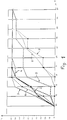
- the results obtained are presented in FIG. 1 in the system percentages (%) of healed animals on the ordinate as a function of time (expressed in days) on the abscissa.
- Curve 6 is that obtained with dry gauze
- curve 7 that obtained with Lumière R fatty tulle
- curve 3 that obtained with the dressing of Example 3
- curve 1 that obtained with the dressing of Example 1
- curve 2 that obtained with the dressing of example 2
- curve 4 that obtained with the dressing of example 4
- curve 5 that obtained with comparative example 5.
- the percentage of fully healed animals has been shown as a function of the number of healing days.
- the dressings according to the invention make it possible to obtain total healing, from the 18th day for the dressings of examples 1 and 3, the 21st day for the dressing of example 2 and the 24th day for the dressing of example 4.
- the dressings made of dry gauze, tulle gras or block copolymers unsaturated power plant does not allow total healing until the 39th day.
- the dressings according to the invention therefore have
- the dressings according to the invention are useful in the care and treatment of wounds and burns in human and veterinary medicine as well as in surgery. They are also useful in the treatment of skin conditions such as psoriasis, eczema and dermatoses and wounds of dermatological origin.
Landscapes
- Health & Medical Sciences (AREA)
- Public Health (AREA)
- Chemical & Material Sciences (AREA)
- Engineering & Computer Science (AREA)
- Epidemiology (AREA)
- Life Sciences & Earth Sciences (AREA)
- Animal Behavior & Ethology (AREA)
- Materials Engineering (AREA)
- General Health & Medical Sciences (AREA)
- Veterinary Medicine (AREA)
- Hematology (AREA)
- Materials For Medical Uses (AREA)
- Medicinal Preparation (AREA)
- Acyclic And Carbocyclic Compounds In Medicinal Compositions (AREA)
- Compositions Of Macromolecular Compounds (AREA)
- Pharmaceuticals Containing Other Organic And Inorganic Compounds (AREA)
- Medicines That Contain Protein Lipid Enzymes And Other Medicines (AREA)
Abstract
Description
- La présente invention concerne un nouveau pansement cicatrisant comprenant un mélange de copolymères blocs à séquence centrale saturée et un plastifiant.
- Les principales familles de pansements sont les gazes sèches, les tulles gras, les films occlusifs et les pansements occlusifs absorbants. Tous ces pansements ont pour fonction première de couvrir et protéger la plaie de l'environnement extérieur, en particulier des agressions mécanique, thermique, chimique et bactérienne.
- Les gazes sèches possèdent, en plus des propriétés précédemment citées, une fonction d'absorption des exsudats. Un inconvénient majeur de ce type de pansement consiste en la formation d'un granulome à corps étranger provoqué par la libération dans la plaie de micro-fragments de la trame en coton, générant une réponse inflammatoire importante. Un autre inconvénient consiste dans l'assèchement de la plaie qui a pour conséquence, à l'ablation du pansement, de détruire les tissus néoformés provoquant ainsi un retard à la cicatrisation.
- Pour diminuer l'adhérence de la gaze sèche on a proposé de l'enduire d'un corps gras. Les tulles gras sont ainsi constitués d'une gaze sèche enduite d'huiles minérales, notamment la vaseline. Cependant, au contact de la plaie, la vaseline se ramollit en raison de l'élévation de température et tend à être repoussée en périphérie du pansement. Ce phénomène est amplifié en présence d'exsudats et laisse les fibres textiles du tulle au contact direct de la plaie comme dans le cas de la gaze sèche. La cicatrisation se déroule alors dans un environnement semi-occlusif dont les principales conséquences directes sont la diminution de l'évaporation des exsudats, l'augmentation de l'humidité et de la température locale, la favorisation de la détersion, l'absence de formation de croûte, la stimulation de la granulation et la favorisation de la multiplication microbienne. On observe finalement un retard à la cicatrisation sous tulle gras.
- L'occlusivité ayant une action favorable sur la cicatrisation, on a proposé des films occlusifs comme par exemple le pansement OPSITER constitué d'un film de polyuréthanne adhésif. A ce sujet, on pourra se référer de façon utile au brevet FR-B-2 012 584.
L'inconvénient essentiel d'un tel pansement est son incapacité à absorber les exsudats provoquant ainsi un risque de macération de la plaie, de rupture du pansement et de développement d'une flore bactérienne pathogène. - On a également proposé des pansements occlusifs absorbants, en particulier les pansements hydrocolloïdes, essentiellement constitués de carboxyméthylcellulose, de pectine et de gélatine. A ce sujet, on pourra se référer utilement aux brevets US-A-3 339 546 et FR-B-2495 473. De par sa composition, la masse adhésive de tels pansements se transforme en gel doux et humide au contact de la plaie développant ainsi un micro-environnement favorable à la multiplication cellulaire, à la synthèse de collagène, à la fibrinolyse, à l'angiogénèse et au bon déroulement du bactériocycle de la plaie. Malgré ce micro-climat favorable les résultats des études de cicatrisation sur ce type de pansement restent partagés. La cicatrisation n'est pas toujours accélérée de façon significative.
- On connait enfin de la demande de brevet japonais JP-A-54 138 124 un pansement adhérant bien à la peau, mais facile à enlever, dont la matrice est à base d'un mélange de copolymères blocs non vulcanisés du type A-B-A, notamment les poly(styrène-butadiène-styrène) et poly(styrène-isoprène-styrène) dissous dans une substance huileuse.
Ces copolymères diffèrent des copolymères utilisés dans le cadre de la présente invention par la structure chimique de la séquence élastomérique centrale qui est insaturée pour les copolymères préconisés par JP-A-54 138 124 alors que la présente invention préconise des copolymères dont la séquence centrale est saturée. De plus le pansement selon JP-A-54 138 124 possède un pouvoir cicatrisant nettement inférieur au pansement cicatrisant selon l'invention comme il est montré dans les essais comparatifs reproduits dans la présente description. - On propose à présent une nouvelle solution technique telle que le pansement cicatrisant selon l'invention protège la plaie de l'environnement extérieur et retient les exsudats en créant ainsi un milieu humide favorable à la croissance et à la multiplication cellulaire et est non adhérent à la plaie ce qui a pour conséquence d'éviter le traumatisme de la plaie lors de l'enlèvement du pansement et de favoriser l'épithélialisation dans de bonnes conditions.
- Le pansement à matrice contenant un copolymère blocs selon l'invention est caractérisé en ce qu'il comprend dans sa matrice 10 à 30 parties en poids d'un copolymère blocs à séquence centrale saturée, notamment le polystyrène-polyéthylène-butylène-polystyrène et 70 à 90 parties en poids de plastifiant, notamment la vaseline.
La masse constituée par le mélange de copolymères blocs à séquence centrale saturée et de plastifiant est non adhésive. - Par copolymères blocs à séquence centrale saturée on entend ici les copolymères blocs styréniques triséquencés dont la séquence centrale est saturée. Leur structure est telle que chaque bloc est constitué, à chaque extrémité, d'un bloc terminal polystyrène, la séquence centrale comprise entre lesdits blocs terminaux étant constituée par un bloc polyoléfinique saturé.
- On exclut donc de la présente invention les copolymères blocs à séquence centrale insaturée composés de blocs terminaux polystyrène et d'une séquence centrale constituée d'un bloc polyoléfinique insaturé, comme par exemple les copolymères polystyrène-polybutadiènepolystyrène ou polystyrène-polyisoprène-polystyrène.
- Avantageusement on préférera les copolymères polystyrène-polyéthylène-butylène-polystyrène (en abrégé S-EB-S) notamment les S-EB-S dont le rapport nombre de motifs styrène/nombre de motifs éthylènebutylène est inférieur à 0,5 et de préférence de l'ordre de 0,4. Ces copolymères sont en particulier commercialisés par la firme Shell Chemical Company sous la dénomination KratonR G.
- Par plastifiant on entend ici un corps gras, liquide ou pâteux, notamment les huiles minérales, les paraffines liquides ou pâteuses, les huiles ou graisses de silicones. On préférera les plastifiants ayant un point de goutte inférieur à 70°C et plus particulièrement les vaselines dont le point de goutte est compris entre 40 et 60°C.
- Avantageusement, le pansement cicatrisant selon l'invention est caractérisé en ce qu'il est constitué d'une masse non adhésive comprenant 15 à 25 parties en poids de polystyrène-polyéthylène-butylène-polystyrène dont le rapport motifs styrène/motifs éthylène-butylène est inférieur à 0,5 et de préférence de l'ordre de 0,4 et 75 à 85 parties en poids de vaseline dont le point de goutte est compris entre 40 et 60°C.
- Bien que cela ne soit généralement pas nécessaire, le mélange de copolymère blocs à séquence centrale saturée et de plastifiant selon l'invention étant une masse ayant une cohésion suffisante, on pourra ajouter une trame noyée dans la masse résultant du mélange de copolymère blocs à séquence centrale saturée et de plastifiant. Une telle trame peut être constituée de fibres naturelles ou non comme par exemple les fibres de coton ou de polyamide tissées ou non-tissées. Il est important que la trame soit totalement noyée dans la masse constituant le pansement de façon à exclure toute possibilité d'adhérence des fibres à la plaie.
- Si nécessaire, on pourra recouvrir le pansement cicatrisant selon l'invention avec un support, comme par exemple les films de polyuréthanne ou de polyester ou un tissu ou un non-tissé constitué de fibres naturelles ou synthétiques. Un tel support est destiné à protéger le pansement selon l'invention, le pansement devant alors être appliqué sur la plaie ou la peau le support étant à l'opposé de la plaie ou la peau.
- On pourra encore additionner à la masse constituée du copolymère blocs à séquence centrale saturée et du plastifiant un principe actif présent en quantité thérapeutiquement efficace. Ledit principe actif sera additionné à ladite masse soit en fusion si sa température de fusion est compatible avec la température de mélange des ingrédients constitutifs de la masse, soit solide à une température compatible avec la température de mélange des ingrédients constitutifs de la masse, soit encore en solution dans le plastifiant.
A titre d'exemple de principes actifs on citera les anti-inflammatoires stéroïdiens ou non, les antalgiques, les antibiotiques, les antibactériens, les antifongiques, les antiseptiques, les anesthésiques de surface, les enzymes protéolytiques, les adjuvants de la cicatrisation, les facteurs de croissance et la propolis.
Afin d'accélérer la libération du principe actif on pourra, si nécessaire, ajouter un agent promoteur du relargage du principe actif. A cet effet, on préconise notamment les polyols et les esters des alkylèneglycols, comme par exemple l'éther monoéthylique du diéthylèneglycol ou le dipropylèneglycol. La quantité d'agent promoteur du relargage du principe actif sera comprise entre 0,1 et 5 %, de façon avantageuse de l'ordre de 2 à 2,5 %, par rapport au poids total du pansement. - Le procédé de préparation d'un pansement selon l'invention consiste à mélanger dans un malaxeur le copolymère blocs à séquence centrale saturée, le plastifiant et éventuellement le principe actif et l'agent promoteur du relargage du principe actif à la température de ramollissement du copolymère, malaxer le mélange obtenu pendant environ 1 heure, puis, à une température inférieure de 10 à 40°C à la température de ramollissement du copolymère, enduire le mélange sur un support siliconé, pelable avant emploi, de façon à obtenir une épaisseur comprise entre 10 µm et 1 cm, de préférence 100 µm à 500 µm, laisser refroidir et enfin découper le produit ainsi obtenu à la dimension désirée.
Si nécessaire, l'étape d'enduction sera réalisée de façon à ce qu'une trame soit noyée dans la masse constituée par le copolymère blocs à séquence centrale saturée et le plastifiant. - Le pansement cicatrisant ainsi obtenu pourra être conditionné dans une pochette protectrice, par exemple une pochette thermosoudée en polyester téréphtalate/polyéthylène entre deux protecteurs en polyester siliconé.
Si nécessaire, le pansement cicatrisant sera stérilisé par irradiation aux rayons gamma à une dose comprise entre 25 et 32 kGy. - L'invention sera mieux comprise à la lecture des exemples de préparation et des essais pharmacologiques qui suivent.
- Dans un malaxeur chauffé à 130°C on introduit 42,5 kg de vaseline officinale commercialisée sous la marque FINAR F 7850 de point de goutte égal à 57°C et 15 kg de copolymère polystyrène-polyéthylène-butylène-polystyrène commercialisé par la Société SHELL sous la marque KRATONR G 1652 (rapport nombre de motifs styrène/nombre de motifs éthylène-butylène de 29/71 soit 0,40). On homogénéise l'ensemble pendant 1 heure puis on incorpore à nouveau 42,5 kg de vaseline officinale FINAR F 7850 et on homogénéise à nouveau l'ensemble pendant 0,5 heure. Le mélange obtenu, fluide et transparent, est enduit sur un film de polyester siliconé d'épaisseur 40 µm, à la température de 105°C de façon à obtenir une épaisseur de 400 µm. Le film ainsi obtenu est découpé en pansements rectangulaires de 3cm x 6cm et chaque pansement est conditionné dans une enveloppe thermosoudée en polyester téréphtalate/polyéthylène puis radio-stérilisé par irradiation gamma à la dose de 25 kGy.
- On opère de façon analogue à la préparation I en introduisant dans le malaxeur 37,5 kg de vaseline officinale FINAR F 7850 et 25 kg de copolymère polystyrène-polyéthylène-butylène-polystyrène KRATONR G 1652 puis à nouveau 37,5 kg de vaseline officinale FINAR F 7850.
- On opère de façon analogue à la préparation I en remplaçant la vaseline FINAR F 7850 par la même quantité de vaseline PROLABO RECTAPURR de point de goutte compris entre 50 et 55°C commercialisée par la Société RHONE-POULENC.
- On opère de façon analogue à la préparation I en remplaçant le copolymère polystyrène-polyéthylène-butylène-polystyrène KRATONR G 1652 par un copolymère polystyrène-polyéthylène-butylène-polystyrène KRATONR G 1650 (rapport nombre de motifs styrène/nombre de motifs éthylène-butylène de 0,40).
- Dans un malaxeur chauffé à 150°C on introduit 25 kg d'huile de paraffine commercialisée sous la marque SIDEPALINER BC 015 puis 5 kg de copolymère polystyrène-polybutadiène-polystyrène commercialisé par la Société SHELL sous la marque CariflexR TR 1101 et 15 kg de copolymère polystyrène-polyisoprène-polystyrène commercialisé sous la marque CariflexR TR 1107. On homogénéise l'ensemble pendant 1 heure puis on incorpore à nouveau 50 kg d'huile de paraffine et on homogénéise à nouveau l'ensemble pendant 0,5 heure. Le mélange obtenu est enduit, de façon à obtenir une épaisseur de 1 mm, sur un film de polyéthylène siliconé de 40 µm d'épaisseur, à la température de 125°C puis contre-collé par un non-tissé constitué de 55g/m² de fibres de polyester, commercialisé sous la marque SONTARAR par la Société Dupont de Nemours. Le pansement obtenu est ensuite conditionné de la même façon que le pansement de l'exemple 1.
- On chauffe au bain-marie, pendant 1 heure à 90°C, 150 g du produit obtenu à l'exemple 1. On additionne ensuite 50 g d'un pré-mélange obtenu en mélangeant à froid 250 g de vaseline officinale FINAR F 7850 et 250 g de sel de sodium de rifamycine. Après 5 minutes d'agitation le mélange obtenu est coulé dans une barquette en polyester siliconé. Après refroidissement, le produit solide obtenu est extrait de la barquette et pressé à 90°C pendant 2 minutes pour obtenir une plaque de 350 µm d'épaisseur que l'on découpe en pansements de dimension 10 cm x 10 cm.
- En opérant de façon analogue à la préparation VI on a obtenu les produits suivants :
- exemple 7 : on a remplacé la rifamycine par la même quantité de sulfate de néomycine.
- exemple 8 : on a remplacé la rifamycine par la même quantité d'ibuprofène.
- exemple 9 : on a remplacé la rifamycine par la même quantité de benzoate de sodium.
- exemple 10 : le pré-mélange est constitué de 115 g de vaseline officinale FINAR F 7850 et 115 g de chlorure de benzalkonium.
- exemple 11 : le pré-mélange est constitué de 100 g de vaseline officinale FINAR F 7850 et 100 g de chlorhydrate de lidocaïne.
- exemple 12 : le pré-mélange est constitué de 100 g de vaseline officinale FINAR F 7850 et 100 g de benzoate de sodium.
- exemple 13 : le pré-mélange est constitué de 95 g de vaseline officinale FINAR F 7850 et 5 g de triamcinolone.
- exemple 14 : le pré-mélange est constitué de 150 g de vaseline officinale FINAR F 7850 et 50 g de nitrate d'éconazole.
- L'activité microbiologique des produits des exemples 6 et 7 a été vérifiée in vitro. Les produits présentent une activité anti-bactérienne conforme à la Pharmacopée européenne.
- Le pansement selon l'invention possède des propriétés cicatrisantes particulièrement remarquables.
Ces propriétés cicatrisantes ont été étudiées sur un modèle de cicatrisation non retardée chez l'animal en comparaison avec le produit de l'exemple 5 constitué de copolymères à séquence centrale insaturée et en comparaison avec une gaze sèche 100% coton et un tulle gras commercialisé sous la marque Tulle Gras LumièreR. - Chaque lot est constitué de 10 rats non consanguins WISTAR. Sur chaque animal on pratique une plaie de 10 cm² (2cm x 5cm) paravertébrale sur un flanc de l'animal. La plaie est réalisée en conditions aseptiques par excision dermo-épidermique incluant le muscle peaucier. Immédiatement après excision un pansement (3cm x 6cm) à étudier est appliqué sur la plaie de façon à la recouvrir totalement. Le pansement est recouvert d'une gaze stérile et l'ensemble est maintenu à l'aide d'une bande adhésive. Le pansement est enlevé tous les 3 jours, la plaie est nettoyée par rinçage avec une solution stérile de chlorure de sodium et on applique ensuite un nouveau pansement jusqu'à obtenir une cicatrisation totale. Le jour de l'excision, puis tous les 3 jours jusqu'à cicatrisation totale, l'aspect macroscopique de la plaie est noté, la plaie est photographiée dans des conditions standardisées et on analyse comparativement et quantitativement (périmètre et surface) l'évolution de la plaie.
- Les résultats obtenus sont présentés sur la figure 1 dans le système pourcentages (%) d'animaux cicatrisés en ordonnées en fonction du temps (exprimé en jour) en abscisses. La courbe 6 est celle obtenue avec la gaze sèche, la courbe 7 celle obtenue avec le tulle gras LumièreR, la courbe 3 celle obtenue avec le pansement de l'exemple 3, la courbe 1 celle obtenue avec le pansement de l'exemple 1, la courbe 2 celle obtenue avec le pansement de l'exemple 2, la courbe 4 celle obtenue avec le pansement de l'exemple 4, la courbe 5 celle obtenue avec l'exemple 5 comparatif.
On a représenté le pourcentage d'animaux totalement cicatrisés en fonction du nombre de jours de cicatrisation. Les pansements selon l'invention permettent d'obtenir une cicatrisation totale, dès le 18ème jour pour les pansements des exemples 1 et 3, le 21ème jour pour le pansement de l'exemple 2 et le 24ème jour pour le pansement de l'exemple 4. Les pansements constitués de gaze sèche, de tulle gras ou de copolymères à séquence centrale insaturée ne permettent d'obtenir la cicatrisation totale qu'au 39ème jour. Les pansements selon l'invention présentent donc un pouvoir cicatrisant nettement supérieur aux pansements connus de l'art antérieur. - De plus, on a observé que chez les animaux traités par la gaze sèche et le tulle gras, la surface de la plaie augmente jusqu'au 3ème jour pour représenter près de 120 % de la surface de la plaie initiale. Chez les animaux traités par le pansement comparatif de l'exemple 5 la plaie ne varie pas de surface jusqu'au 3ème jour. Par contre, chez les animaux traités par les pansements des exemples 1 à 4 selon l'invention, la surface de la plaie diminue dès le 1er jour pour ne représenter plus que 80 % de la surface initiale au 3ème jour. Ceci représente un avantage considérable par rapport aux pansements connus de l'art antérieur, notamment dans le traitement des brûlures où il est important de conserver la surface de peau non brûlée et d'augmenter rapidement la surface de peau saine.
- Les pansements selon l'invention sont utiles dans le soin et le traitement des plaies et brûlures en médecine humaine et vétérinaire ainsi qu'en chirurgie. Ils sont également utiles dans le traitement des affections cutanées comme par exemple les psoriasis, eczémas et dermatoses et des plaies d'origine dermatologique.
Claims (10)
- Pansement à matrice contenant un copolymère blocs, caractérisé en ce qu'il comprend dans sa matrice 10 à 30 parties en poids d'un copolymère blocs à séquence centrale saturée et 70 à 90 parties en poids de plastifiant.
- Pansement selon la revendication 1 caractérisé en ce que le copolymère blocs à séquence centrale saturée est un copolymère polystyrène-polyéthylène-butylène-polystyrène.
- Pansement selon l'une quelconque des revendications 1 ou 2 caractérisé en ce que le plastifiant est une vaseline.
- Pansement selon l'une quelconque des revendications 1 à 3 caractérisé en ce qu'il comprend 15 à 25 parties en poids de polystyrène-polyéthylène-butylène-polystyrène dont le rapport motifs styrène/motifs éthylène-butylène est inférieur à 0,5 et de préférence de l'ordre de 0,4 et 75 à 85 parties en poids de vaseline dont le point de goutte est compris entre 40 et 60°C.
- Pansement selon l'une quelconque des revendications 1 à 4 caractérisé en ce qu'il comprend en outre dans la matrice un principe actif en quantité thérapeutiquement efficace.
- Pansement selon la revendication 5 caractérisé en ce que le principe actif est choisi parmi les anti-inflammatoires, les antalgiques, les antibiotiques, les antifongiques, les antibactériens, les antiseptiques, les anesthésiques, les enzymes protéolytiques, les adjuvants de la cicatrisation, les facteurs de croissance et la propolis.
- Pansement selon l'une quelconque des revendications 5 ou 6 caractérisé en ce qu'il comprend en outre un agent promoteur du relargage du principe actif.
- Pansement selon l'une quelconque des revendications 1 à 7 caractérisé en ce qu'il comprend en outre une trame noyée dans la masse constituée par le mélange copolymère blocs à séquence centrale saturée et le plastifiant.
- Pansement selon l'une quelconque des revendications 1 à 8 caractérisé en ce qu'il comprend en outre un support solidaire de l'une des faces de la matrice.
- Procédé de préparation d'un pansement selon la revendication 1, caractérisé en ce qu'il comprend :- le mélange de 10 à 30 parties en poids dudit copolymères blocs à séquence centrale saturée et de 70 à 90 parties en poids dudit plastifiant.- le malaxage du mélange résultant pendant 1 heure, puis- l'enduction à une température inférieure de 10 à 40°C à la température de ramollissement dudit copolymère sur un support pelable avant emploi, de façon à obtenir une épaisseur dudit mélange comprise entre 10 µm et 1 cm.
Applications Claiming Priority (2)
| Application Number | Priority Date | Filing Date | Title |
|---|---|---|---|
| FR9108305 | 1991-07-03 | ||
| FR9108305A FR2678513B1 (fr) | 1991-07-03 | 1991-07-03 | Pansement cicatrisant. |
Publications (2)
| Publication Number | Publication Date |
|---|---|
| EP0521761A1 true EP0521761A1 (fr) | 1993-01-07 |
| EP0521761B1 EP0521761B1 (fr) | 1996-10-23 |
Family
ID=9414658
Family Applications (1)
| Application Number | Title | Priority Date | Filing Date |
|---|---|---|---|
| EP92401835A Expired - Lifetime EP0521761B1 (fr) | 1991-07-03 | 1992-06-29 | Pansement cicatrisant |
Country Status (17)
| Country | Link |
|---|---|
| US (1) | US5389092A (fr) |
| EP (1) | EP0521761B1 (fr) |
| JP (1) | JPH07114801B2 (fr) |
| KR (1) | KR930001936A (fr) |
| AT (1) | ATE144430T1 (fr) |
| CA (1) | CA2072307A1 (fr) |
| CZ (1) | CZ207792A3 (fr) |
| DE (1) | DE69214732T2 (fr) |
| DK (1) | DK0521761T3 (fr) |
| ES (1) | ES2094888T3 (fr) |
| FR (1) | FR2678513B1 (fr) |
| GR (1) | GR3022318T3 (fr) |
| IE (1) | IE922161A1 (fr) |
| MX (1) | MX9203892A (fr) |
| NO (1) | NO922590L (fr) |
| RU (1) | RU2093190C1 (fr) |
| SK (1) | SK207792A3 (fr) |
Cited By (5)
| Publication number | Priority date | Publication date | Assignee | Title |
|---|---|---|---|---|
| DE4224325C1 (de) * | 1992-07-23 | 1994-02-10 | Sanol Arznei Schwarz Gmbh | Wirkstoffpflaster für niedrigschmelzende und/oder flüchtige Wirkstoffe und Verfahren zu seiner Herstellung |
| FR2783412A1 (fr) * | 1998-09-18 | 2000-03-24 | Lhd Lab Hygiene Dietetique | Compresse non adherente sterile |
| EP2524706A1 (fr) | 2011-05-19 | 2012-11-21 | Lohmann & Rauscher GmbH & Co. KG | Pansement stérile comprenant un composé élastomère tribloc |
| WO2014013175A1 (fr) * | 2012-07-17 | 2014-01-23 | Laboratoires Urgo | Pansement interface autoporte |
| DE202011110464U1 (de) | 2011-05-19 | 2014-02-19 | Lohmann & Rauscher Gmbh & Co. Kg | Wundauflage II |
Families Citing this family (32)
| Publication number | Priority date | Publication date | Assignee | Title |
|---|---|---|---|---|
| US5814031A (en) * | 1995-03-02 | 1998-09-29 | Mooney; Mark | Structured occllusive dressings |
| US5840387A (en) * | 1995-07-28 | 1998-11-24 | Aegis Biosciences L.L.C. | Sulfonated multiblock copolymer and uses therefor |
| US6221997B1 (en) | 1997-04-28 | 2001-04-24 | Kimberly Ann Woodhouse | Biodegradable polyurethanes |
| US7022111B2 (en) * | 1998-10-09 | 2006-04-04 | Duplessie Renee F | Intravenous stabilizing device |
| US6375639B1 (en) * | 1998-10-09 | 2002-04-23 | Renee F. Duplessie | Intravenous stabilizing device |
| US6306419B1 (en) * | 2000-02-23 | 2001-10-23 | Aegis Biosciences, Llc | Medical uses of styrene sulfonate polymers |
| AU2001256347A1 (en) * | 2000-05-23 | 2001-12-03 | Unilever Plc | Deodorant and/or antiperspirant compositions |
| US7041787B2 (en) * | 2000-12-29 | 2006-05-09 | Kimberly-Clark Worldwide, Inc. | Design and use of advanced zinc chelating peptides to regulate matrix metalloproteinases |
| US6600057B2 (en) | 2000-12-29 | 2003-07-29 | Kimberly-Clark Worldwide, Inc. | Matrix metalloproteinase inhibitors |
| DK1409034T3 (da) * | 2001-07-24 | 2006-10-30 | Advanced Biotechnologies | Topisk farmaceutisk formulering |
| US20030119073A1 (en) * | 2001-12-21 | 2003-06-26 | Stephen Quirk | Sensors and methods of detection for proteinase enzymes |
| US8790688B2 (en) * | 2001-12-21 | 2014-07-29 | Coloplast A/S | Wound care device for local treatment of pain in a wound |
| GB0216427D0 (en) * | 2002-07-16 | 2002-08-21 | Advanced Biotechnologies Inter | Wound dressing |
| US20040142910A1 (en) * | 2002-10-21 | 2004-07-22 | Aegis Biosciences Llc | Sulfonated styrene copolymers for medical uses |
| RU2231368C1 (ru) * | 2002-11-04 | 2004-06-27 | Государственное унитарное предприятие "Иммунопрепарат" | Ранозаживляющее покрытие с прополисом |
| US20040180093A1 (en) * | 2003-03-12 | 2004-09-16 | 3M Innovative Properties Company | Polymer compositions with bioactive agent, medical articles, and methods |
| US7285576B2 (en) * | 2003-03-12 | 2007-10-23 | 3M Innovative Properties Co. | Absorbent polymer compositions, medical articles, and methods |
| WO2004089357A2 (fr) * | 2003-04-02 | 2004-10-21 | Regents Of The University Of Minnesota | Preparation antifongique a base de triterpene et d'huile essentielle |
| DE20306600U1 (de) * | 2003-04-29 | 2003-09-04 | Karpfl, Peter, 47546 Kalkar | Hautpflegeprodukt bzw. Wundpflegemittel |
| US7745509B2 (en) * | 2003-12-05 | 2010-06-29 | 3M Innovative Properties Company | Polymer compositions with bioactive agent, medical articles, and methods |
| US20050123590A1 (en) * | 2003-12-05 | 2005-06-09 | 3M Innovative Properties Company | Wound dressings and methods |
| EP1778143A4 (fr) * | 2004-07-12 | 2009-07-22 | Aegis Biosciences Llc | Polymeres de styrene sulfones pour articles medicaux |
| JP5242950B2 (ja) * | 2007-06-15 | 2013-07-24 | 日東電工株式会社 | ゲル組成物およびその用途 |
| RU2391958C1 (ru) * | 2009-01-19 | 2010-06-20 | ФГУ НИИ трансплантологии и искусственных органов Росмедтехнологии | Хирургическая салфетка |
| US20100322875A1 (en) | 2009-06-18 | 2010-12-23 | Advanced Bio-Technologies, Inc. | Silicone scar treatment preparation |
| US8846740B2 (en) | 2011-01-04 | 2014-09-30 | Biological Responsibility, Llc | Biotherapeutics for the treatment of infectious diseases |
| US9717741B2 (en) | 2012-10-11 | 2017-08-01 | Anaplasi Pharmaceuticals Llc | Method and compositions for treating psoriasis |
| ES2660978T3 (es) * | 2012-10-11 | 2018-03-26 | Anaplasi Pharmaceuticals Llc | Método y composiciones para el tratamiento de la psoriasis |
| US9226890B1 (en) | 2013-12-10 | 2016-01-05 | Englewood Lab, Llc | Polysilicone base for scar treatment |
| EP3310392A4 (fr) * | 2015-06-19 | 2019-03-27 | Global Health Solutions, LLC | Systèmes d'administration à base de vaseline pour des principes actifs |
| WO2020068750A1 (fr) | 2018-09-27 | 2020-04-02 | Corning Incorporated | Appareil modulaire de distribution de verre fondu |
| EP3856690A1 (fr) * | 2018-09-27 | 2021-08-04 | Corning Incorporated | Appareils de formation de verre comprenant des systèmes d'affinage modulaire du verre |
Citations (4)
| Publication number | Priority date | Publication date | Assignee | Title |
|---|---|---|---|---|
| GB2089351A (en) * | 1980-12-05 | 1982-06-23 | Coloplast As | Adhesive skin barrier |
| US4386179A (en) * | 1980-05-07 | 1983-05-31 | Medical Research Associates, Ltd. | Hydrocarbon block copolymer with dispersed polysiloxane |
| EP0104005A2 (fr) * | 1982-08-26 | 1984-03-28 | Personal Products Company | Adhésif fusible à chaud, sensible à la pression, pour articles hygiéniques |
| EP0130061B1 (fr) * | 1983-06-27 | 1988-08-31 | E.R. Squibb & Sons, Inc. | Composition adhésive résistant aux fluides biologiques |
Family Cites Families (14)
| Publication number | Priority date | Publication date | Assignee | Title |
|---|---|---|---|---|
| GB559027A (en) * | 1941-09-10 | 1944-02-01 | American Cyanamid Co | Improvements in and relating to impregnated gauze |
| US2464755A (en) * | 1946-07-09 | 1949-03-15 | Vodol Company | Coated gauze |
| US3339546A (en) * | 1963-12-13 | 1967-09-05 | Squibb & Sons Inc | Bandage for adhering to moist surfaces |
| GB1576522A (en) * | 1977-05-24 | 1980-10-08 | Colorplast International A S | Sealing material for ostomy devices |
| JPS54138124A (en) * | 1978-04-19 | 1979-10-26 | Hisamitsu Pharmaceut Co Inc | Novel plaster and its preparation |
| US4243500A (en) * | 1978-12-04 | 1981-01-06 | International Coatings, Co., Inc. | Pressure sensitive adhesives |
| US4291015A (en) * | 1979-08-14 | 1981-09-22 | Key Pharmaceuticals, Inc. | Polymeric diffusion matrix containing a vasodilator |
| US4538603A (en) * | 1982-04-22 | 1985-09-03 | E. R. Squibb & Sons, Inc. | Dressings, granules, and their use in treating wounds |
| CA1257425A (fr) * | 1984-05-21 | 1989-07-11 | Th. Goldschmidt Ag | Materiaux permeables a la vapeur d'eau |
| JPS61215682A (ja) * | 1985-03-22 | 1986-09-25 | Bando Chem Ind Ltd | 粘着シ−ト |
| JPS62285969A (ja) * | 1986-06-03 | 1987-12-11 | Kao Corp | 伸縮性を有する止着テ−プ基材 |
| JPH02178206A (ja) * | 1988-12-27 | 1990-07-11 | Unitika Ltd | 歯科用組成物 |
| US5154706A (en) * | 1991-08-07 | 1992-10-13 | Ndm Acquisition Corp. | Wound dressing for deep wounds |
| US6137104A (en) * | 1998-06-12 | 2000-10-24 | Varian, Inc. | Fast automated spectral fitting method |
-
1991
- 1991-07-03 FR FR9108305A patent/FR2678513B1/fr not_active Expired - Fee Related
-
1992
- 1992-06-24 US US07/903,520 patent/US5389092A/en not_active Expired - Fee Related
- 1992-06-25 CA CA002072307A patent/CA2072307A1/fr not_active Abandoned
- 1992-06-29 ES ES92401835T patent/ES2094888T3/es not_active Expired - Lifetime
- 1992-06-29 DE DE69214732T patent/DE69214732T2/de not_active Expired - Lifetime
- 1992-06-29 EP EP92401835A patent/EP0521761B1/fr not_active Expired - Lifetime
- 1992-06-29 AT AT92401835T patent/ATE144430T1/de not_active IP Right Cessation
- 1992-06-29 DK DK92401835.1T patent/DK0521761T3/da active
- 1992-07-01 NO NO92922590A patent/NO922590L/no unknown
- 1992-07-02 KR KR1019920011723A patent/KR930001936A/ko not_active Abandoned
- 1992-07-02 MX MX9203892A patent/MX9203892A/es not_active Application Discontinuation
- 1992-07-02 CZ CS922077A patent/CZ207792A3/cs unknown
- 1992-07-02 RU SU925052146A patent/RU2093190C1/ru active
- 1992-07-02 IE IE216192A patent/IE922161A1/en not_active Application Discontinuation
- 1992-07-02 SK SK2077-92A patent/SK207792A3/sk unknown
- 1992-07-03 JP JP4177033A patent/JPH07114801B2/ja not_active Expired - Lifetime
-
1997
- 1997-01-20 GR GR960403675T patent/GR3022318T3/el unknown
Patent Citations (4)
| Publication number | Priority date | Publication date | Assignee | Title |
|---|---|---|---|---|
| US4386179A (en) * | 1980-05-07 | 1983-05-31 | Medical Research Associates, Ltd. | Hydrocarbon block copolymer with dispersed polysiloxane |
| GB2089351A (en) * | 1980-12-05 | 1982-06-23 | Coloplast As | Adhesive skin barrier |
| EP0104005A2 (fr) * | 1982-08-26 | 1984-03-28 | Personal Products Company | Adhésif fusible à chaud, sensible à la pression, pour articles hygiéniques |
| EP0130061B1 (fr) * | 1983-06-27 | 1988-08-31 | E.R. Squibb & Sons, Inc. | Composition adhésive résistant aux fluides biologiques |
Non-Patent Citations (4)
| Title |
|---|
| PATENT ABSTRACTS OF JAPAN, vol. 4, no. 2 (C-69), 9 janvier 1980; & JP-A-54 138 124 (HISAMITSU SEIYAKU K.K.) 26-10-1979 * |
| WORLD PATENTS INDEX LATEST, accession no. 86-294595, semaine 45, Derwent Publications Ltd, Londres, GB; & JP-A-61 215 682 (BANDO CHEM. IND.) 25-09-1986 * |
| WORLD PATENTS INDEX LATEST, accession no. 90-256395, semaine 34, Derwent Publications Ltd, Londres, GB; & JP-A-2 178 206 (UNITIKA K.K. et al.) 11-07-1990 * |
| WORLD PATENTS INDEX LATEST, accession no. 91-256236, semaine 35, Derwent Publications Ltd, Londres, GB; & JP-A-3 166 280 (BANDO CHEM. IND.) 18-07-1991 * |
Cited By (14)
| Publication number | Priority date | Publication date | Assignee | Title |
|---|---|---|---|---|
| DE4224325C1 (de) * | 1992-07-23 | 1994-02-10 | Sanol Arznei Schwarz Gmbh | Wirkstoffpflaster für niedrigschmelzende und/oder flüchtige Wirkstoffe und Verfahren zu seiner Herstellung |
| US5527536A (en) * | 1992-07-23 | 1996-06-18 | Schwarz Pharma Ag | Active ingredient patch for low-melting and/or volatile active ingredients |
| US5603948A (en) * | 1992-07-23 | 1997-02-18 | Schwarz Pharma Ag | Active ingredient patch for low-melting and/or volatile active ingredients |
| WO2000016725A3 (fr) * | 1998-09-18 | 2002-10-03 | Lhd Lab Hygiene Dietetique | Compresse non adherente sterile |
| WO2000016725A2 (fr) | 1998-09-18 | 2000-03-30 | Laboratoires D'hygiene Et De Dietetique | Compresse non adherente sterile |
| US6270792B1 (en) | 1998-09-18 | 2001-08-07 | Laboratories D'hygiene Et De Dietique | Sterile nonstick compress |
| FR2783412A1 (fr) * | 1998-09-18 | 2000-03-24 | Lhd Lab Hygiene Dietetique | Compresse non adherente sterile |
| AU758702B2 (en) * | 1998-09-18 | 2003-03-27 | Laboratoires Urgo | Sterile non-adhesive compress |
| BG64413B1 (bg) * | 1998-09-18 | 2005-01-31 | Laboratoires D'hygiene Et De Dietetique | Стерилен неадхезивен компрес |
| EP1559385A3 (fr) * | 1998-09-18 | 2006-03-22 | Holding Urgo Participations - HUP | Procédé continu de fabrication d'une compresse non adhérente stérile |
| EP2524706A1 (fr) | 2011-05-19 | 2012-11-21 | Lohmann & Rauscher GmbH & Co. KG | Pansement stérile comprenant un composé élastomère tribloc |
| DE202011110464U1 (de) | 2011-05-19 | 2014-02-19 | Lohmann & Rauscher Gmbh & Co. Kg | Wundauflage II |
| WO2014013175A1 (fr) * | 2012-07-17 | 2014-01-23 | Laboratoires Urgo | Pansement interface autoporte |
| FR2993464A1 (fr) * | 2012-07-17 | 2014-01-24 | Urgo Lab | Pansement interface autoporte |
Also Published As
| Publication number | Publication date |
|---|---|
| EP0521761B1 (fr) | 1996-10-23 |
| ES2094888T3 (es) | 1997-02-01 |
| DE69214732D1 (de) | 1996-11-28 |
| US5389092A (en) | 1995-02-14 |
| IE922161A1 (en) | 1993-01-13 |
| JPH07114801B2 (ja) | 1995-12-13 |
| RU2093190C1 (ru) | 1997-10-20 |
| SK207792A3 (en) | 1995-01-12 |
| GR3022318T3 (en) | 1997-04-30 |
| DE69214732T2 (de) | 1997-05-15 |
| CA2072307A1 (fr) | 1993-01-04 |
| MX9203892A (es) | 1993-04-01 |
| ATE144430T1 (de) | 1996-11-15 |
| FR2678513A1 (fr) | 1993-01-08 |
| DK0521761T3 (da) | 1997-03-24 |
| CZ207792A3 (en) | 1993-01-13 |
| NO922590L (no) | 1993-01-04 |
| KR930001936A (ko) | 1993-02-22 |
| FR2678513B1 (fr) | 1995-06-30 |
| NO922590D0 (no) | 1992-07-01 |
| JPH05184655A (ja) | 1993-07-27 |
Similar Documents
| Publication | Publication Date | Title |
|---|---|---|
| EP0521761B1 (fr) | Pansement cicatrisant | |
| US5196190A (en) | Synthetic skin substitutes | |
| DE69032125T2 (de) | Gelwundverbandszusammensetzungen und verfahren zu deren gebrauch | |
| CN102762212B (zh) | 合成多硫酸化寡糖作为用于伤口的清洁剂方面的用途 | |
| JP2004516864A (ja) | 感染の危険性を低減し、流体喪失を最小化するための、哺乳類の皮膚上の熱傷に処置する方法 | |
| KR20100016275A (ko) | 적어도 하나의 지방 기질을 포함하는 드레싱에서 방출 활성 기질용 신규 제제 | |
| JP6212552B2 (ja) | 有効成分を持続的に放出するドレッシング材 | |
| JPH0564B2 (fr) | ||
| DK154806B (da) | Saarplejemiddel indeholdende et aktivt stof til fremme af saarbehandlingen og fremgangsmaade til fremstilling deraf | |
| EP1061965A1 (fr) | Masse adhesive hydrocolloide utilisable a des fins medicales | |
| FR2810243A1 (fr) | Timbre transdermique pour medicaments anti-inflammatoires non steroidiens | |
| EP0927051A1 (fr) | Nouvelle masse adhesive hydrophile | |
| EP1272229B1 (fr) | Compresse antiseptique | |
| JP2014513696A (ja) | セアプローゼを含有する創傷デブリードマン組成物およびそれを用いた創傷治療の方法 | |
| HU200103B (en) | Process for producing pharmaceutical compositions for treating lack of epithelium | |
| EP0489206B1 (fr) | Peau artificielle | |
| EP0682534A1 (fr) | Compositions pharmaceutiques comprenant une substance spongieuse composee de derives ester d'acide hyaluronique en combinaison avec d'autres substances pharmacologiquement actives | |
| JP2002501525A (ja) | 火傷及び他の皮膚外傷の治療のための組成物及び手段 | |
| JP2003517448A (ja) | 肥厚性皮膚の酵素による処置および予防 | |
| Sawada et al. | An evaluation of a new lactic acid polymer drug delivery system: A preliminary report | |
| JP3620055B2 (ja) | 創傷治療剤 | |
| JPH06145047A (ja) | 使用性の改善された含水性皮膚外用貼付剤 | |
| FR3025430A1 (fr) | Fibre electronegative pour son utilisation dans la cicatrisation des plaies | |
| JPH06145053A (ja) | 使用性の改善された消炎鎮痛用皮膚外用貼付剤 | |
| WO2006094064A2 (fr) | Methode de diminution de cicatrices a l'aide de vitamine d |
Legal Events
| Date | Code | Title | Description |
|---|---|---|---|
| PUAI | Public reference made under article 153(3) epc to a published international application that has entered the european phase |
Free format text: ORIGINAL CODE: 0009012 |
|
| AK | Designated contracting states |
Kind code of ref document: A1 Designated state(s): AT BE CH DE DK ES FR GB GR IT LI LU MC NL PT SE |
|
| 17P | Request for examination filed |
Effective date: 19921216 |
|
| 17Q | First examination report despatched |
Effective date: 19941128 |
|
| GRAG | Despatch of communication of intention to grant |
Free format text: ORIGINAL CODE: EPIDOS AGRA |
|
| GRAH | Despatch of communication of intention to grant a patent |
Free format text: ORIGINAL CODE: EPIDOS IGRA |
|
| GRAH | Despatch of communication of intention to grant a patent |
Free format text: ORIGINAL CODE: EPIDOS IGRA |
|
| GRAA | (expected) grant |
Free format text: ORIGINAL CODE: 0009210 |
|
| AK | Designated contracting states |
Kind code of ref document: B1 Designated state(s): AT BE CH DE DK ES FR GB GR IT LI LU MC NL PT SE |
|
| PG25 | Lapsed in a contracting state [announced via postgrant information from national office to epo] |
Ref country code: GR Free format text: LAPSE BECAUSE OF FAILURE TO SUBMIT A TRANSLATION OF THE DESCRIPTION OR TO PAY THE FEE WITHIN THE PRESCRIBED TIME-LIMIT Effective date: 19961023 |
|
| REF | Corresponds to: |
Ref document number: 144430 Country of ref document: AT Date of ref document: 19961115 Kind code of ref document: T |
|
| REF | Corresponds to: |
Ref document number: 69214732 Country of ref document: DE Date of ref document: 19961128 |
|
| REG | Reference to a national code |
Ref country code: CH Ref legal event code: NV Representative=s name: ERNST ACKERMANN PATENTANWALT |
|
| GBT | Gb: translation of ep patent filed (gb section 77(6)(a)/1977) |
Effective date: 19961210 |
|
| ITF | It: translation for a ep patent filed | ||
| REG | Reference to a national code |
Ref country code: ES Ref legal event code: FG2A Ref document number: 2094888 Country of ref document: ES Kind code of ref document: T3 |
|
| REG | Reference to a national code |
Ref country code: PT Ref legal event code: SC4A Free format text: AVAILABILITY OF NATIONAL TRANSLATION Effective date: 19961127 |
|
| REG | Reference to a national code |
Ref country code: DK Ref legal event code: T3 |
|
| REG | Reference to a national code |
Ref country code: GR Ref legal event code: FG4A Free format text: 3022318 |
|
| PG25 | Lapsed in a contracting state [announced via postgrant information from national office to epo] |
Ref country code: AT Free format text: LAPSE BECAUSE OF NON-PAYMENT OF DUE FEES Effective date: 19970629 |
|
| PG25 | Lapsed in a contracting state [announced via postgrant information from national office to epo] |
Ref country code: SE Effective date: 19970630 Ref country code: LU Free format text: LAPSE BECAUSE OF NON-PAYMENT OF DUE FEES Effective date: 19970630 Ref country code: LI Free format text: LAPSE BECAUSE OF NON-PAYMENT OF DUE FEES Effective date: 19970630 Ref country code: ES Free format text: LAPSE BECAUSE OF NON-PAYMENT OF DUE FEES Effective date: 19970630 Ref country code: CH Free format text: LAPSE BECAUSE OF NON-PAYMENT OF DUE FEES Effective date: 19970630 Ref country code: BE Effective date: 19970630 |
|
| PLBE | No opposition filed within time limit |
Free format text: ORIGINAL CODE: 0009261 |
|
| STAA | Information on the status of an ep patent application or granted ep patent |
Free format text: STATUS: NO OPPOSITION FILED WITHIN TIME LIMIT |
|
| 26N | No opposition filed | ||
| BERE | Be: lapsed |
Owner name: LABORATOIRES D'HYGIENE ET DE DIETETIQUE LHD Effective date: 19970630 |
|
| PG25 | Lapsed in a contracting state [announced via postgrant information from national office to epo] |
Ref country code: PT Effective date: 19971231 Ref country code: MC Effective date: 19971231 |
|
| PG25 | Lapsed in a contracting state [announced via postgrant information from national office to epo] |
Ref country code: NL Effective date: 19980101 |
|
| REG | Reference to a national code |
Ref country code: CH Ref legal event code: PL |
|
| EUG | Se: european patent has lapsed |
Ref document number: 92401835.1 |
|
| NLV4 | Nl: lapsed or anulled due to non-payment of the annual fee |
Effective date: 19980101 |
|
| REG | Reference to a national code |
Ref country code: PT Ref legal event code: MM4A Free format text: LAPSE DUE TO NON-PAYMENT OF FEES Effective date: 19971231 |
|
| REG | Reference to a national code |
Ref country code: ES Ref legal event code: FD2A Effective date: 20010503 |
|
| REG | Reference to a national code |
Ref country code: GB Ref legal event code: IF02 |
|
| PG25 | Lapsed in a contracting state [announced via postgrant information from national office to epo] |
Ref country code: IT Free format text: LAPSE BECAUSE OF NON-PAYMENT OF DUE FEES;WARNING: LAPSES OF ITALIAN PATENTS WITH EFFECTIVE DATE BEFORE 2007 MAY HAVE OCCURRED AT ANY TIME BEFORE 2007. THE CORRECT EFFECTIVE DATE MAY BE DIFFERENT FROM THE ONE RECORDED. Effective date: 20050629 |
|
| REG | Reference to a national code |
Ref country code: FR Ref legal event code: TP Ref country code: FR Ref legal event code: CD |
|
| PGFP | Annual fee paid to national office [announced via postgrant information from national office to epo] |
Ref country code: DK Payment date: 20110517 Year of fee payment: 20 Ref country code: GB Payment date: 20110523 Year of fee payment: 20 |
|
| PGFP | Annual fee paid to national office [announced via postgrant information from national office to epo] |
Ref country code: DE Payment date: 20110613 Year of fee payment: 20 |
|
| PGFP | Annual fee paid to national office [announced via postgrant information from national office to epo] |
Ref country code: FR Payment date: 20110715 Year of fee payment: 20 |
|
| REG | Reference to a national code |
Ref country code: DE Ref legal event code: R071 Ref document number: 69214732 Country of ref document: DE |
|
| REG | Reference to a national code |
Ref country code: DE Ref legal event code: R071 Ref document number: 69214732 Country of ref document: DE |
|
| REG | Reference to a national code |
Ref country code: DK Ref legal event code: EUP |
|
| REG | Reference to a national code |
Ref country code: GB Ref legal event code: PE20 Expiry date: 20120628 |
|
| PG25 | Lapsed in a contracting state [announced via postgrant information from national office to epo] |
Ref country code: DE Free format text: LAPSE BECAUSE OF EXPIRATION OF PROTECTION Effective date: 20120630 |
|
| PG25 | Lapsed in a contracting state [announced via postgrant information from national office to epo] |
Ref country code: GB Free format text: LAPSE BECAUSE OF EXPIRATION OF PROTECTION Effective date: 20120628 |