EP0523672B1 - Copolymères d'esters d'acides carboxyliques éthyléniquement insaturés et de polyalkylenether d'alcools inférieurs insaturés comme agents modifiant l'écoulement de pétroles contenant de la paraffine - Google Patents
Copolymères d'esters d'acides carboxyliques éthyléniquement insaturés et de polyalkylenether d'alcools inférieurs insaturés comme agents modifiant l'écoulement de pétroles contenant de la paraffine Download PDFInfo
- Publication number
- EP0523672B1 EP0523672B1 EP92112100A EP92112100A EP0523672B1 EP 0523672 B1 EP0523672 B1 EP 0523672B1 EP 92112100 A EP92112100 A EP 92112100A EP 92112100 A EP92112100 A EP 92112100A EP 0523672 B1 EP0523672 B1 EP 0523672B1
- Authority
- EP
- European Patent Office
- Prior art keywords
- weight
- hydrogen
- formula
- alkyl
- copolymer
- Prior art date
- Legal status (The legal status is an assumption and is not a legal conclusion. Google has not performed a legal analysis and makes no representation as to the accuracy of the status listed.)
- Expired - Lifetime
Links
Classifications
-
- C—CHEMISTRY; METALLURGY
- C10—PETROLEUM, GAS OR COKE INDUSTRIES; TECHNICAL GASES CONTAINING CARBON MONOXIDE; FUELS; LUBRICANTS; PEAT
- C10L—FUELS NOT OTHERWISE PROVIDED FOR; NATURAL GAS; SYNTHETIC NATURAL GAS OBTAINED BY PROCESSES NOT COVERED BY SUBCLASSES C10G OR C10K; LIQUIFIED PETROLEUM GAS; USE OF ADDITIVES TO FUELS OR FIRES; FIRE-LIGHTERS
- C10L1/00—Liquid carbonaceous fuels
- C10L1/10—Liquid carbonaceous fuels containing additives
- C10L1/14—Organic compounds
- C10L1/18—Organic compounds containing oxygen
- C10L1/192—Macromolecular compounds
-
- C—CHEMISTRY; METALLURGY
- C08—ORGANIC MACROMOLECULAR COMPOUNDS; THEIR PREPARATION OR CHEMICAL WORKING-UP; COMPOSITIONS BASED THEREON
- C08F—MACROMOLECULAR COMPOUNDS OBTAINED BY REACTIONS ONLY INVOLVING CARBON-TO-CARBON UNSATURATED BONDS
- C08F220/00—Copolymers of compounds having one or more unsaturated aliphatic radicals, each having only one carbon-to-carbon double bond, and only one being terminated by only one carboxyl radical or a salt, anhydride ester, amide, imide or nitrile thereof
- C08F220/02—Monocarboxylic acids having less than ten carbon atoms; Derivatives thereof
- C08F220/10—Esters
- C08F220/12—Esters of monohydric alcohols or phenols
- C08F220/16—Esters of monohydric alcohols or phenols of phenols or of alcohols containing two or more carbon atoms
- C08F220/18—Esters of monohydric alcohols or phenols of phenols or of alcohols containing two or more carbon atoms with acrylic or methacrylic acids
- C08F220/1818—C13or longer chain (meth)acrylate, e.g. stearyl (meth)acrylate
-
- C—CHEMISTRY; METALLURGY
- C10—PETROLEUM, GAS OR COKE INDUSTRIES; TECHNICAL GASES CONTAINING CARBON MONOXIDE; FUELS; LUBRICANTS; PEAT
- C10L—FUELS NOT OTHERWISE PROVIDED FOR; NATURAL GAS; SYNTHETIC NATURAL GAS OBTAINED BY PROCESSES NOT COVERED BY SUBCLASSES C10G OR C10K; LIQUIFIED PETROLEUM GAS; USE OF ADDITIVES TO FUELS OR FIRES; FIRE-LIGHTERS
- C10L1/00—Liquid carbonaceous fuels
- C10L1/10—Liquid carbonaceous fuels containing additives
- C10L1/14—Organic compounds
- C10L1/143—Organic compounds mixtures of organic macromolecular compounds with organic non-macromolecular compounds
-
- C—CHEMISTRY; METALLURGY
- C10—PETROLEUM, GAS OR COKE INDUSTRIES; TECHNICAL GASES CONTAINING CARBON MONOXIDE; FUELS; LUBRICANTS; PEAT
- C10L—FUELS NOT OTHERWISE PROVIDED FOR; NATURAL GAS; SYNTHETIC NATURAL GAS OBTAINED BY PROCESSES NOT COVERED BY SUBCLASSES C10G OR C10K; LIQUIFIED PETROLEUM GAS; USE OF ADDITIVES TO FUELS OR FIRES; FIRE-LIGHTERS
- C10L1/00—Liquid carbonaceous fuels
- C10L1/10—Liquid carbonaceous fuels containing additives
- C10L1/14—Organic compounds
- C10L1/146—Macromolecular compounds according to different macromolecular groups, mixtures thereof
-
- C—CHEMISTRY; METALLURGY
- C10—PETROLEUM, GAS OR COKE INDUSTRIES; TECHNICAL GASES CONTAINING CARBON MONOXIDE; FUELS; LUBRICANTS; PEAT
- C10L—FUELS NOT OTHERWISE PROVIDED FOR; NATURAL GAS; SYNTHETIC NATURAL GAS OBTAINED BY PROCESSES NOT COVERED BY SUBCLASSES C10G OR C10K; LIQUIFIED PETROLEUM GAS; USE OF ADDITIVES TO FUELS OR FIRES; FIRE-LIGHTERS
- C10L1/00—Liquid carbonaceous fuels
- C10L1/10—Liquid carbonaceous fuels containing additives
- C10L1/14—Organic compounds
- C10L1/18—Organic compounds containing oxygen
- C10L1/192—Macromolecular compounds
- C10L1/195—Macromolecular compounds obtained by reactions involving only carbon-to-carbon unsaturated bonds
- C10L1/196—Macromolecular compounds obtained by reactions involving only carbon-to-carbon unsaturated bonds derived from monomers containing a carbon-to-carbon unsaturated bond and a carboxyl group or salts, anhydrides or esters thereof homo- or copolymers of compounds having one or more unsaturated aliphatic radicals each having one carbon bond to carbon double bond, and at least one being terminated by a carboxyl radical or of salts, anhydrides or esters thereof
- C10L1/1963—Macromolecular compounds obtained by reactions involving only carbon-to-carbon unsaturated bonds derived from monomers containing a carbon-to-carbon unsaturated bond and a carboxyl group or salts, anhydrides or esters thereof homo- or copolymers of compounds having one or more unsaturated aliphatic radicals each having one carbon bond to carbon double bond, and at least one being terminated by a carboxyl radical or of salts, anhydrides or esters thereof mono-carboxylic
-
- C—CHEMISTRY; METALLURGY
- C10—PETROLEUM, GAS OR COKE INDUSTRIES; TECHNICAL GASES CONTAINING CARBON MONOXIDE; FUELS; LUBRICANTS; PEAT
- C10L—FUELS NOT OTHERWISE PROVIDED FOR; NATURAL GAS; SYNTHETIC NATURAL GAS OBTAINED BY PROCESSES NOT COVERED BY SUBCLASSES C10G OR C10K; LIQUIFIED PETROLEUM GAS; USE OF ADDITIVES TO FUELS OR FIRES; FIRE-LIGHTERS
- C10L1/00—Liquid carbonaceous fuels
- C10L1/10—Liquid carbonaceous fuels containing additives
- C10L1/14—Organic compounds
- C10L1/18—Organic compounds containing oxygen
- C10L1/192—Macromolecular compounds
- C10L1/195—Macromolecular compounds obtained by reactions involving only carbon-to-carbon unsaturated bonds
- C10L1/196—Macromolecular compounds obtained by reactions involving only carbon-to-carbon unsaturated bonds derived from monomers containing a carbon-to-carbon unsaturated bond and a carboxyl group or salts, anhydrides or esters thereof homo- or copolymers of compounds having one or more unsaturated aliphatic radicals each having one carbon bond to carbon double bond, and at least one being terminated by a carboxyl radical or of salts, anhydrides or esters thereof
- C10L1/1966—Macromolecular compounds obtained by reactions involving only carbon-to-carbon unsaturated bonds derived from monomers containing a carbon-to-carbon unsaturated bond and a carboxyl group or salts, anhydrides or esters thereof homo- or copolymers of compounds having one or more unsaturated aliphatic radicals each having one carbon bond to carbon double bond, and at least one being terminated by a carboxyl radical or of salts, anhydrides or esters thereof poly-carboxylic
-
- C—CHEMISTRY; METALLURGY
- C10—PETROLEUM, GAS OR COKE INDUSTRIES; TECHNICAL GASES CONTAINING CARBON MONOXIDE; FUELS; LUBRICANTS; PEAT
- C10L—FUELS NOT OTHERWISE PROVIDED FOR; NATURAL GAS; SYNTHETIC NATURAL GAS OBTAINED BY PROCESSES NOT COVERED BY SUBCLASSES C10G OR C10K; LIQUIFIED PETROLEUM GAS; USE OF ADDITIVES TO FUELS OR FIRES; FIRE-LIGHTERS
- C10L1/00—Liquid carbonaceous fuels
- C10L1/10—Liquid carbonaceous fuels containing additives
- C10L1/14—Organic compounds
- C10L1/18—Organic compounds containing oxygen
- C10L1/192—Macromolecular compounds
- C10L1/198—Macromolecular compounds obtained otherwise than by reactions involving only carbon-to-carbon unsaturated bonds homo- or copolymers of compounds having one or more unsaturated aliphatic radicals, each having only one carbon to carbon double bond, and at least one being terminated by an acyloxy radical of a saturated carboxylic acid, of carbonic acid
- C10L1/1985—Macromolecular compounds obtained otherwise than by reactions involving only carbon-to-carbon unsaturated bonds homo- or copolymers of compounds having one or more unsaturated aliphatic radicals, each having only one carbon to carbon double bond, and at least one being terminated by an acyloxy radical of a saturated carboxylic acid, of carbonic acid polyethers, e.g. di- polygylcols and derivatives; ethers - esters
-
- C—CHEMISTRY; METALLURGY
- C10—PETROLEUM, GAS OR COKE INDUSTRIES; TECHNICAL GASES CONTAINING CARBON MONOXIDE; FUELS; LUBRICANTS; PEAT
- C10M—LUBRICATING COMPOSITIONS; USE OF CHEMICAL SUBSTANCES EITHER ALONE OR AS LUBRICATING INGREDIENTS IN A LUBRICATING COMPOSITION
- C10M145/00—Lubricating compositions characterised by the additive being a macromolecular compound containing oxygen
- C10M145/02—Macromolecular compounds obtained by reactions only involving carbon-to-carbon unsaturated bonds
- C10M145/10—Macromolecular compounds obtained by reactions only involving carbon-to-carbon unsaturated bonds containing monomers having an unsaturated radical bound to a carboxyl radical, e.g. acrylate
- C10M145/12—Macromolecular compounds obtained by reactions only involving carbon-to-carbon unsaturated bonds containing monomers having an unsaturated radical bound to a carboxyl radical, e.g. acrylate monocarboxylic
- C10M145/14—Acrylate; Methacrylate
-
- C—CHEMISTRY; METALLURGY
- C10—PETROLEUM, GAS OR COKE INDUSTRIES; TECHNICAL GASES CONTAINING CARBON MONOXIDE; FUELS; LUBRICANTS; PEAT
- C10M—LUBRICATING COMPOSITIONS; USE OF CHEMICAL SUBSTANCES EITHER ALONE OR AS LUBRICATING INGREDIENTS IN A LUBRICATING COMPOSITION
- C10M145/00—Lubricating compositions characterised by the additive being a macromolecular compound containing oxygen
- C10M145/18—Macromolecular compounds obtained otherwise than by reactions only involving carbon-to-carbon unsaturated bonds
- C10M145/24—Polyethers
- C10M145/26—Polyoxyalkylenes
- C10M145/38—Polyoxyalkylenes esterified
-
- C—CHEMISTRY; METALLURGY
- C10—PETROLEUM, GAS OR COKE INDUSTRIES; TECHNICAL GASES CONTAINING CARBON MONOXIDE; FUELS; LUBRICANTS; PEAT
- C10L—FUELS NOT OTHERWISE PROVIDED FOR; NATURAL GAS; SYNTHETIC NATURAL GAS OBTAINED BY PROCESSES NOT COVERED BY SUBCLASSES C10G OR C10K; LIQUIFIED PETROLEUM GAS; USE OF ADDITIVES TO FUELS OR FIRES; FIRE-LIGHTERS
- C10L1/00—Liquid carbonaceous fuels
- C10L1/10—Liquid carbonaceous fuels containing additives
- C10L1/14—Organic compounds
- C10L1/16—Hydrocarbons
- C10L1/1616—Hydrocarbons fractions, e.g. lubricants, solvents, naphta, bitumen, tars, terpentine
-
- C—CHEMISTRY; METALLURGY
- C10—PETROLEUM, GAS OR COKE INDUSTRIES; TECHNICAL GASES CONTAINING CARBON MONOXIDE; FUELS; LUBRICANTS; PEAT
- C10L—FUELS NOT OTHERWISE PROVIDED FOR; NATURAL GAS; SYNTHETIC NATURAL GAS OBTAINED BY PROCESSES NOT COVERED BY SUBCLASSES C10G OR C10K; LIQUIFIED PETROLEUM GAS; USE OF ADDITIVES TO FUELS OR FIRES; FIRE-LIGHTERS
- C10L1/00—Liquid carbonaceous fuels
- C10L1/10—Liquid carbonaceous fuels containing additives
- C10L1/14—Organic compounds
- C10L1/22—Organic compounds containing nitrogen
- C10L1/234—Macromolecular compounds
- C10L1/236—Macromolecular compounds obtained by reactions involving only carbon-to-carbon unsaturated bonds derivatives thereof
- C10L1/2368—Macromolecular compounds obtained by reactions involving only carbon-to-carbon unsaturated bonds derivatives thereof homo- or copolymers derived from unsaturated compounds containing heterocyclic compounds containing nitrogen in the ring
-
- C—CHEMISTRY; METALLURGY
- C10—PETROLEUM, GAS OR COKE INDUSTRIES; TECHNICAL GASES CONTAINING CARBON MONOXIDE; FUELS; LUBRICANTS; PEAT
- C10M—LUBRICATING COMPOSITIONS; USE OF CHEMICAL SUBSTANCES EITHER ALONE OR AS LUBRICATING INGREDIENTS IN A LUBRICATING COMPOSITION
- C10M2209/00—Organic macromolecular compounds containing oxygen as ingredients in lubricant compositions
- C10M2209/02—Macromolecular compounds obtained by reactions only involving carbon-to-carbon unsaturated bonds
- C10M2209/08—Macromolecular compounds obtained by reactions only involving carbon-to-carbon unsaturated bonds containing monomers having an unsaturated radical bound to a carboxyl radical, e.g. acrylate type
- C10M2209/084—Acrylate; Methacrylate
-
- C—CHEMISTRY; METALLURGY
- C10—PETROLEUM, GAS OR COKE INDUSTRIES; TECHNICAL GASES CONTAINING CARBON MONOXIDE; FUELS; LUBRICANTS; PEAT
- C10M—LUBRICATING COMPOSITIONS; USE OF CHEMICAL SUBSTANCES EITHER ALONE OR AS LUBRICATING INGREDIENTS IN A LUBRICATING COMPOSITION
- C10M2209/00—Organic macromolecular compounds containing oxygen as ingredients in lubricant compositions
- C10M2209/10—Macromolecular compoundss obtained otherwise than by reactions only involving carbon-to-carbon unsaturated bonds
- C10M2209/103—Polyethers, i.e. containing di- or higher polyoxyalkylene groups
-
- C—CHEMISTRY; METALLURGY
- C10—PETROLEUM, GAS OR COKE INDUSTRIES; TECHNICAL GASES CONTAINING CARBON MONOXIDE; FUELS; LUBRICANTS; PEAT
- C10M—LUBRICATING COMPOSITIONS; USE OF CHEMICAL SUBSTANCES EITHER ALONE OR AS LUBRICATING INGREDIENTS IN A LUBRICATING COMPOSITION
- C10M2209/00—Organic macromolecular compounds containing oxygen as ingredients in lubricant compositions
- C10M2209/10—Macromolecular compoundss obtained otherwise than by reactions only involving carbon-to-carbon unsaturated bonds
- C10M2209/103—Polyethers, i.e. containing di- or higher polyoxyalkylene groups
- C10M2209/104—Polyethers, i.e. containing di- or higher polyoxyalkylene groups of alkylene oxides containing two carbon atoms only
-
- C—CHEMISTRY; METALLURGY
- C10—PETROLEUM, GAS OR COKE INDUSTRIES; TECHNICAL GASES CONTAINING CARBON MONOXIDE; FUELS; LUBRICANTS; PEAT
- C10M—LUBRICATING COMPOSITIONS; USE OF CHEMICAL SUBSTANCES EITHER ALONE OR AS LUBRICATING INGREDIENTS IN A LUBRICATING COMPOSITION
- C10M2209/00—Organic macromolecular compounds containing oxygen as ingredients in lubricant compositions
- C10M2209/10—Macromolecular compoundss obtained otherwise than by reactions only involving carbon-to-carbon unsaturated bonds
- C10M2209/103—Polyethers, i.e. containing di- or higher polyoxyalkylene groups
- C10M2209/107—Polyethers, i.e. containing di- or higher polyoxyalkylene groups of two or more specified different alkylene oxides covered by groups C10M2209/104 - C10M2209/106
-
- C—CHEMISTRY; METALLURGY
- C10—PETROLEUM, GAS OR COKE INDUSTRIES; TECHNICAL GASES CONTAINING CARBON MONOXIDE; FUELS; LUBRICANTS; PEAT
- C10M—LUBRICATING COMPOSITIONS; USE OF CHEMICAL SUBSTANCES EITHER ALONE OR AS LUBRICATING INGREDIENTS IN A LUBRICATING COMPOSITION
- C10M2209/00—Organic macromolecular compounds containing oxygen as ingredients in lubricant compositions
- C10M2209/10—Macromolecular compoundss obtained otherwise than by reactions only involving carbon-to-carbon unsaturated bonds
- C10M2209/103—Polyethers, i.e. containing di- or higher polyoxyalkylene groups
- C10M2209/109—Polyethers, i.e. containing di- or higher polyoxyalkylene groups esterified
Definitions
- the invention relates to the use of copolymers of ethylenically.
- the invention relates to the use of copolymers of ethylenically unsaturated carboxylic acid esters with polyoxyalkylene ethers of allyl and / or methallyl alcohol as flow improvers for paraffinic oils.
- the invention also relates to new copolymers of ethylenically unsaturated carboxylic esters with polyoxyalkylene ethers of lower, unsaturated alcohols, their preparation, their use as flow improvers for paraffin-containing oils and oils which contain such copolymers.
- Crude oils, residual oils, oil distillates, such as diesel fuel, mineral oils, lubricating oils, hydraulic oils, etc. contain, depending on their origin or the way in which they are processed, more or less large proportions of n-paraffins and asphaltenes, which pose particular problems because they reduce the temperature crystallize or agglomerate and can lead to deterioration in the flow properties of these oils. This deterioration in the flow properties of the oils is called "stagnation" of the oil.
- the pour point is the standardized term for the temperature at which an oil such as mineral oil, diesel fuel or hydraulic fluid just stops flowing. However, the pour point is not identical to the so-called pour point.
- the pour point is an unspecific term, not covered by standards, for the temperature at which a solid begins to flow under given measuring conditions.
- the deterioration in the flow properties can then block containers, pipelines, valves or pumps, for example during transport, storage and / or processing of these oils, in particular with oils containing paraffin, which are difficult to inhibit.
- Special paraffinic oils that are difficult to inhibit.
- Special Difficulties arise in practice when the natural pour point of these oils is above the ambient temperature, in particular at 20 ° C. or above.
- thermal or mechanical measures e.g. B. scraping the paraffin from the inner tube wall, heating entire pipelines or flushing with solvents. It is certainly more elegant to combat the phenomenon by adding flow improvers, which are also known as pour point depressants or paraffin inhibitors. It is generally advantageous to lower the pour point to values of approximately 10 ° C. and below.
- Flow improvers are generally homo- or copolymers based on olefins, (meth) acrylic acid esters, maleic acid derivatives and certain vinyl monomers.
- GB-A-1 368 729 discloses homopolymers of acrylic esters with C 18 to C 24 alkyl chains in the alcohol residue for use as pour point depressants in crude and residue oils.
- From US-A-5 039 432 copolymers of free (meth) acrylic acid and long-chain (meth) acrylic acid esters are known as from flow improvers for crude and residue oils.
- Esters of polyoxyalkylene ethers have been described in various forms as flow improvers.
- Copolymers of esters of fumaric acid with polyoxyalkylene glycols are known from EP-A-0 183 447.
- Copolymers of 1-alkenes and the (meth) acrylic acid ester of a C 10 to C 24 alkyl polyoxyalkylene ether EP-B-0 220 611
- copolymers of (meth) acrylic acid esters with cyclic hydrocarbons alkoxylated via a heteroatom (DE-A- 3,711,344)
- mixtures of fatty acid esters of polyoxyalkylene ethers and C 10 to C 30 fumaric acid esters of polyoxyalkylene ethers US Pat. No. 4,891,145
- flow improvers for crude oils or paraffin-rich petroleum fractions are known from EP-A-0 183 447.
- Copolymers of alkyl (meth) acrylates and esters of alkylpolyoxyalkylene ethers with (meth) acrylic acid as oil additives in diesel and gasoline engines are known from EP-A-0 418 610.
- Copolymers of polyoxyalkylene ethers of (meth) allyl alcohol and C 1 to C 20 - (meth) acrylic acid alkyl esters are described in GB-A-2 174 096. However, these copolymers are used as demulsifiers for crude oil emulsions.
- a disadvantage of the known flow improvers for crude and residue oils is the insufficient effectiveness and the resulting high use concentrations.
- Another disadvantage is the high intrinsic pour points of the flow improvers, which require heating and / or a very strong dilution for the metering.
- Copolymers are therefore sought which have improved properties as pour point depressants, ie which still have sufficient activity even at low doses and which have a lower intrinsic pour point at the same high concentration in comparison with pour point depressants of the prior art and with a large number of oils, in particular those containing paraffin Oils are effective.
- the invention relates to the use of copolymers of ethylenically unsaturated carboxylic acid esters with polyoxyalkylene ethers of allyl and / or methallyl alcohol as flow improvers for oils containing paraffin.
- GB-A-2 174 096 discloses the use of copolymers of polyoxyalkylene ethers of (meth) allyl alcohol and C 1 - to C 20 - (meth) acrylic acid alkyl esters as demulsifiers for crude oil containing water.
- copolymers known from GB-A-2 174 096 improve the fluidity particularly effectively by significantly lowering the pour point of paraffin-containing oils and that solutions of these copolymers in aromatic solvents simultaneously have a very low intrinsic pour point.
- these copolymers when mixed with known homopolymers of acrylic acid esters or methacrylic acid esters, of long-chain C 18 to C 24 fatty alcohols, as are known, for example, from GB-A-1 368 729, are particularly effective.
- the present invention also relates to copolymers of ethylenically unsaturated carboxylic acid esters with polyoxyalkylene ethers of lower, unsaturated alcohols, their preparation, their use as flow improvers for paraffin-containing oils and oils which contain such copolymers.
- the copolymers according to the invention have structural elements of the formula I in which R 4 can be a linear or branched alkyl chain having 8 to 40 carbon atoms, preferably 10 to 24 carbon atoms or a linear or branched alkenyl chain having 8 to 40 carbon atoms.
- R1 and R 2 independently of one another are hydrogen or COOR 4 , R 4 is C 10 -C 24 -alkyl, R 6 is hydrogen or methyl, R 7 is hydrogen or methyl and R 8 represents C 1 to C 22 alkyl or phenyl.
- Copolymers in which R 1 and R 2 are hydrogen, R 3 is hydrogen or methyl and R 6 is hydrogen are particularly preferred.
- the copolymers according to the invention have structural elements of the formula II in which R 6 is linear or branched alkyl chains having up to 30 carbon atoms, preferably with up to 24 carbon atoms, cycloalkyl radicals or aryl esters, R 7 linear or branched alkyl chains with up to 20 carbon atoms, preferably methyl and R 8 linear or branched alkyl chains with up to 30 carbon atoms, preferably up to 22 carbon atoms, linear or branched alkenyl chains with 2 up to 30 carbon atoms, cycloalkyl radicals or aryl radicals, preferably phenyl.
- the cycloalkyl radicals generally have a ring size of 5 to 7 carbon atoms, can be saturated or unsaturated and / or contain one or more heteroatoms, such as S, O, N.
- Suitable cycloalkyl radicals are, for example, cyclopentyl, cyclohexyl, cycloheptyl, cyclopentenyl, cyclohexenyl, cycloheptenyl, piperidyl or morpholinyl radical.
- aryl radicals are derived from mono- or polynuclear carbocyclic or heterocyclic aromatics and can carry alkyl radicals of 1 to 4 carbon atoms and / or halogen atoms, preferably fluorine or chlorine, as substituents.
- Suitable aryl radicals are, for example, the phenyl, naphthyl, pyridyl or benzyl radical.
- the copolymers according to the invention are prepared by copolymerization of 50 to 99.9% by weight, preferably 70 to 99.9% by weight, of the monomers of the formula (III) and 0.1 to 50% by weight, preferably 0, 1 to 30% by weight of the monomers of the formula IV by customary free-radical polymerization processes.
- R 1 R 2 C CR 3 COOR 4 (III)
- a suitable preparation process consists in dissolving the monomers of the formulas III and IV in an organic solvent and polymerizing them in the presence of a radical initiator at a temperature in the range from 30 to 150 ° C.
- Aromatic hydrocarbons are suitable as solvents, such as B. toluene, xylene, trimethylbenzene, dimethylnaphthalene or mixtures of these aromatic hydrocarbons.
- Commercially available mixtures of aromatic hydrocarbons such as. B. Solvent Naphtha or Shellsol AB® (manufacturer: Shell) are used.
- Aliphatic hydrocarbons are also suitable as solvents.
- alkoxylated aliphatic alcohols or their esters such as. B. butyl glycol are used as solvents, but preferably as a mixture with aromatic hydrocarbons.
- radical initiators are starters such as azo-bis-isobutyronitrile, esters of peroxycarboxylic acids such as e.g. t-Butyl perpivalate and t-butyl per-2-ethylhexanoate or dibenzoyl peroxide are used.
- the monomers of the formula III are ethylenically unsaturated carboxylic esters which contain at least one, at most two, carboxylic acid units of the formulas COOR 4 , CH 2 COOR 4 .
- the monomers of the formula III can be esters of monocarboxylic acids, such as acrylic acid, methacrylic acid or cinnamic acid with C 8 to C 40 alcohols, preferably acrylic acid with C 12 -C 24 alcohols, particularly preferably acrylic acid with C 18 alcohols, Act C 20 and / or C 22 alcohols.
- Suitable alcohols for ester production are e.g. B. coconut fatty alcohol, tallow fatty alcohol, lauryl alcohol, myristyl alcohol, cetyl alcohol and stearyl alcohol.
- the monomers of the formula III can also be esters of dicarboxylic acids.
- the half esters of dicarboxylic acids are preferably used, such as. B. the half esters of maleic acid, fumaric acid or itaconic acid with C 8 - to C 40 alcohols.
- ⁇ -olefin oxides such as ethylene oxide, propylene oxide and / or Butylene oxide
- polymerizable lower unsaturated alcohols are e.g. B. allyl alcohol, methallyl alcohol, butenols such as 3-buten-1-ol, 1-buten-3-ol or methylbutenols such as 2-methyl-3-buten-1-ol, 2-methyl-3-buten-2-ol or 3-methyl-3-buten-1-ol. Addition products of ethylene oxide and / or propylene oxide onto allyl alcohol are preferred.
- the chlorides and bromides are preferably used as halides. Suitable manufacturing processes are described, for example, in J. March, Advanced Organic Chemistry, 2nd edition, pp. 357f (1977).
- the acid halides and anhydrides with C 1 -C 30 -alkyl, cycloalkyl or aryl are preferably used.
- the esterification is generally carried out at temperatures from 0 to 200 ° C., preferably 10 to 100 ° C.
- the carboxylic acid derivative is generally used in a stoichiometric amount, based on the alcohol group of the polyoxyalkylene ether.
- Suitable solvents are, for example, aromatic hydrocarbons, for example alkyl aromatics, such as toluene, xylene, trimethylbenzenes, tetramethylbenzenes, dimethylethylbenzenes, dimethylnaphthalene and aromatics mixtures.
- the copolymers according to the invention can be prepared in two ways.
- it is also possible first of all the polyoxyalkylene ethers with R 6 H by addition of carboxylic acid derivatives to give the Esterify monomers of the formula IV and then copolymerize with the ethylenically unsaturated carboxylic acid esters of the formula III. Because of the different reactivities of the monomers used for the polymerization, different molecular weight distributions result from the two production processes.
- the index m indicates the degree of alkoxylation, ie the number of moles of ⁇ -olefin oxide which are added per mole of alcohol of the formula V or VI.
- copolymers according to the invention are soluble in organic solvents such as toluene and xylene, as well as in crude oil, paraffin-containing crude oil and paraffin-containing crude oil products, residual oils, petroleum distillates such as e.g. Diesel, hydraulic oils, as well as mixtures of aromatic and aliphatic hydrocarbons, e.g. are commercially available under the names Shellsol®AB, Shellsol®R or Shellsol®A (manufacturer: Shell) and Solvesso®100, Solvesso®200 or Actrel® (manufacturer: Esso Chemie).
- the monomers III and IV can be present in any distribution in the copolymers according to the invention, the distribution preferably being statistical.
- the molecular weights or molecular weight distributions of the copolymers according to the invention are characterized by a K value of 10 to 100, preferably 10 to 80 intrinsic viscosity of a 5% by weight polymer solution in toluene (measured according to Ubbelohde).
- the molecular weights M ⁇ n can be in the range from 1,000 to 300,000, preferably 5,000 to 200,000, and can be determined, for example, by the gel permeation chromatography method using polystyrene calibration.
- the copolymers according to the invention and known can be used very generally as flow improvers in oils containing paraffin of any origin.
- the paraffins can be, for example, straight-chain or branched alkanes having 8 to 100, preferably 10 to 70, carbon atoms.
- the copolymers according to the invention and known have a broad activity in a wide variety of paraffin-containing oils. They are therefore generally applicable, for example in crude oils, other paraffinic oils and paraffinic oil products of various origins.
- Paraffin-containing oils are understood to mean, for example, crude oils, other paraffin-containing oils and paraffin-containing oil products such as are obtained in the processing of crude oils, for example as distillation products such as diesel fuel or hydraulic oil.
- the known copolymers according to the invention can be separated off from the solvent and the copolymers separated off can be added to the oil. If you want to isolate the copolymers from the reaction mixture, this is e.g. B. by distilling off the solvent or by precipitation, e.g. B. by adding acetone, possible. However, it may be advantageous not to isolate the flow improvers, but to add the solution obtained in the polymerization to the petroleum in order to improve the flow properties.
- the copolymers according to the invention are added to the oil in amounts such that the content of the copolymers is in the range from 10 to 10,000 ppm by weight, preferably in the range from 50 to 5000 ppm by weight.
- the optimal application concentration can be different for different oils.
- copolymers according to the invention can be added already in the borehole for the crude oil, but also before or during its transport, storage and / or further processing.
- the known copolymers according to the invention improve the flow behavior of oils containing paraffin, especially at low temperatures, which is indicated by greater reductions in pour points compared to paraffin inhibitors of the prior art. If precipitates are formed by crystallization of the paraffin, the presence of the copolymers according to the invention and known copolymers does not form deposits which are as compact and / or not as strongly adherent.
- the manageability of paraffinic oils such as crude oils, residual oils, Oil distillates, such as, for example, diesel fuels, mineral oils, lubricating oils, hydraulic oils, etc., are therefore significantly improved overall at low temperatures when the copolymers according to the invention and known copolymers are added, and blockages during transport, storage and / or processing do not occur so easily. This also applies to oils which are otherwise difficult to inhibit against crystallization of paraffins.
- compositions which contain 10 to 90% by weight of the copolymer and 10 to 90% by weight of a polyacrylic acid C 8 -C 24 -alkyl ester are particularly effective as flow improvers.
- Compositions containing 10 to 90% by weight of the copolymer and 10 to 90% by weight of an aromatic solvent are also very effective.
- Copolymers in which the intrinsic viscosity of a 5% by weight polymer solution in toluene, determined according to Ubbelohde, is between 10 and 100 are particularly suitable.
- Table 1 The results obtained are summarized in Table 1.
- the use concentrations (ppm) mentioned in each case relate to polymers which contain 50% of active ingredient. Products with a higher active substance content are diluted with solvents to a 50% active substance content, products with a lower active substance content are added in a correspondingly higher amount.
- Table 2 shows comparative experiments with known pour point depressants.
- Table 3 shows the intrinsic pour points of the copolymers according to the invention.
- the production of some monomers that are not common commercial products is described below.
- the designation EO stands for ethylene oxide units
- the designation PO stands for popylene oxide units.
- the inherent viscosity values K are determined according to Ubbelohde at 25 ° C in toluene at a polymer concentration of 5% by weight.
- the polymerizations are carried out in a 1 l five-necked flask equipped with an anchor stirrer, reflux condenser, contact thermometer, gas inlet tube and dropping funnel.
- the solutions presented for the polymerization are flushed with nitrogen.
- Example II.1 95 g of stearyl acrylate and 5 g of allyl polyglycol (with 4 EO) were analogous to Example II.1. polymerized. The polymer has a K value (5%) of 33.
- example Comonomer K value 9 10% allyl alcohol (10 EO) 45 10th 2% allyl alcohol (15 EO) 40 11 5% allyl alcohol (10 PO) 36 12th 5% allyl alcohol (5 EO + 5 PO) 42 13 5% 2-methyl-3-buten-2-ol (9 EO) 37
- Table 2 (comparative examples): product Amount used (ppm) Eigenstock point (° C) Paradyne 70® 300 25.5 Paradyne 70® 500 23.0 Paradyne 85® 300 30.6 Paradyne 85® 500 30.5 Shellswim 5 T® 300 21.3 Shellswim 5 T® 500 14.0 Shellswim 11 T® 300 20.5 Shellswim 11 T® 500 14.0
- the flow improvers listed in Table 2 are commercially available products from Exxon (Paradyne 70®, Paradyne 80®) and Shell (Shellswim 5 T®, Shellswim 11 T®)
Landscapes
- Chemical & Material Sciences (AREA)
- Oil, Petroleum & Natural Gas (AREA)
- Chemical Kinetics & Catalysis (AREA)
- Organic Chemistry (AREA)
- General Chemical & Material Sciences (AREA)
- Engineering & Computer Science (AREA)
- Health & Medical Sciences (AREA)
- Emergency Medicine (AREA)
- Medicinal Chemistry (AREA)
- Polymers & Plastics (AREA)
- Liquid Carbonaceous Fuels (AREA)
- Addition Polymer Or Copolymer, Post-Treatments, Or Chemical Modifications (AREA)
- Lubricants (AREA)
- Fats And Perfumes (AREA)
- Organic Low-Molecular-Weight Compounds And Preparation Thereof (AREA)
- Colloid Chemistry (AREA)
- Macromonomer-Based Addition Polymer (AREA)
- Treatments For Attaching Organic Compounds To Fibrous Goods (AREA)
- Compositions Of Macromolecular Compounds (AREA)
Claims (18)
- Copolymères contenant de 50 à 99,9 % en poids au moins d'un élément de structure répétitif de formule I :
 R1 et R2 indépendamment l'un de l'autre représentent l'hydrogène, phényle ou un groupe de formule COOR4,R3 représente l'hydrogène, méthyle ou un groupe de formule CH2COOR4, ouR2 et R3 ensemble représentent alkylène en C4 à C7 etR4 représente l'hydrogène, alkyle en C8 à C40 ou alcényle en C8 à C40,à la condition que les éléments de structure répétitifs de formule I contiennent au moins un, tout au plus deux motifs acide carboxylique de formules COOR4, CH2COOR4 dans un élément de structure
et de 0,1 à 50 % en poids d'au moins un élément de structure répétitif de formule II : R5 représente l'hydrogène ou méthyle,Z représente alkylène en C1 à C3,R6 représente l'hydrogène, alkyle en C1 à C30, cycloalkyle, aryle ou -C(O)-R8,R7 représente l'hydrogène, alkyle en C1 à C20,R8 représente alkyle en C1 à C30, alcényle en C3 à C30, cycloalkyle ou aryle, etm est un nombre de 1 à 60, à la condition que si R6 représente l'hydrogène, R1 et R2 ne sont pas simultanément l'hydrogène.
 - Copolymères selon la revendication 1, caractérisés en ce queR1 et R2, indépendamment l'un de l'autre, représentent l'hydrogène ou un groupe de formule COOR4,R4 représente alkyle en C10 à C24,R6 représente l'hydrogène ou alkyle en C1 à C24,R7 représente l'hydrogène ou méthyle etR8 représente alkyle en C1 à C22 ou phényle.
- Copolymères selon la revendication 1 ou 2, caractérisés en ce qu'ils ont une viscosité propre dans une solution de polymère à 5 % dans du toluène, déterminée selon Ubbelohde, comprise entre 10 et 100.
- Pétroles paraffiniques contenant le copolymère selon la revendication 1, dans une quantité efficace de 10 à 10.000 ppm en poids.
- Procédé pour la préparation des copolymères selon la revendication 1, caractérisé en ce qu'on polymérise radicalairement de 50 à 99,9 % en poids des monomères de formule III :
R1R2C=CR3COOR4 (III)
et de 0,1 à 50 % en poids des monomères de formule IV :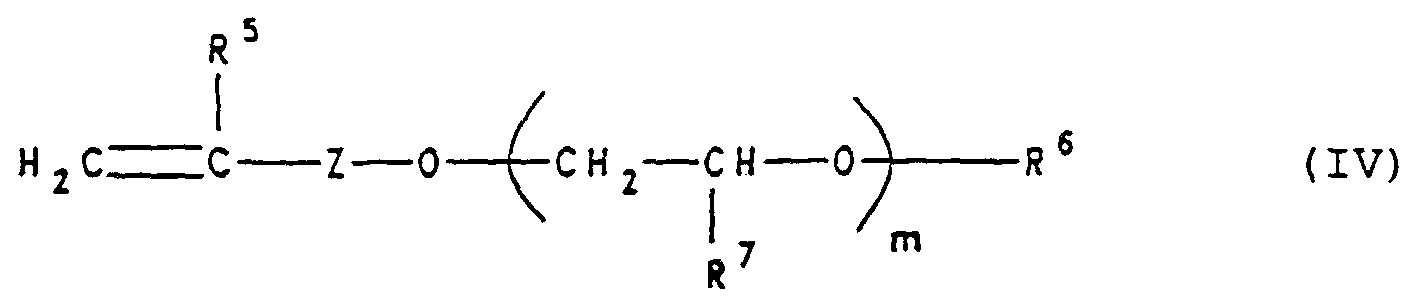
- Procédé selon la revendication 5, caractérisé en ce qu'on dissout entre 50 et 99,9 % en poids du monomère de formule III et de 0,1 à 50 % en poids du monomère de formule IV dans un solvant organique et on polymérise en présence d'un amorceur radicalaire à 30 à 150°C.
- Utilisation des copolymères contenant de 50 à 99,9 % en poids au moins d'un élément de structure répétitif de formule I :
 R1 et R2 indépendamment l'un de l'autre représentent l'hydrogène, phényle ou un groupe de formule COOR4, R3 représente l'hydrogène, méthyle ou un groupe de formule CH2COOR4, ouR2 et R3 ensemble représentent alkylène en C4 à C7 et R4 représente l'hydrogène, alkyle en C8 à C40 ou alcényle en C8 à C40,à la condition que les éléments de structure répétitifs de formule I contiennent au moins un, tout au plus deux motifs acide carboxylique de formules COOR4, CH2COOR4 dans un élément de structure
et de 0,1 à 50 % en poids d'au moins un élément de structure répétitif de formule II : R5 représente l'hydrogène ou méthyle,Z représente alkyle en C1 à C3,R6 représente l'hydrogène, alkyle en C1 à C30, cycloalkyle, aryle ou -C(O)-R8,R7 représente l'hydrogène, alkyle en C1 à C20,R8 représente alkyle en C1 à C30, alcényle en C3 à C30, cycloalkyle ou aryle,m est un nombre de 1 à 60, dans une quantité ajoutée de 10 à 10.000 ppm en poids pour améliorer le comportement de l'écoulement des huiles paraffiniques.
 - Utilisation selon la revendication 7, caractérisée en ce queR1 et R2, indépendamment l'un de l'autre, représentent l'hydrogène ou COOR4,R4 représente alkyle en C10 à C24,R6 représente l'hydrogène ou méthyle,R7 représente l'hydrogène ou méthyle etR8 représente alkyle en C1 à C22 ou phényle.
- Utilisation selon la revendication 7, caractérisée en ce queR1 et R2 représentent l'hydrogène,R3 représente l'hydrogène ou méthyle etR6 représente l'hydrogène.
- Utilisation des compositions contenant de 10 à 90 % en poids d'un copolymère selon la revendication 1 et de 10 à 90 % en poids d'un ester d'alkyle en C8-C24 d'acide polyacrylique pour améliorer le comportement à l'écoulement des huiles paraffiniques.
- Utilisation des compositions contenant de 10 à 90 % en poids d'un copolymère selon la revendication 1 et de 10 à 90 % en poids d'un solvant aromatique pour améliorer le comportement à l'écoulement des huiles paraffiniques.
- Composition contenant de 10 à 90 % en poids d'un copolymère selon la revendication 1 et de 10 à 90 % en poids d'un ester d'alkyle en C8-C24 d'acide polyacrylique.
- Composition contenant de 10 à 90 % en poids d'un copolymère selon la revendication 1 et de 10 à 90 % en poids d'un solvant aromatique.
- Copolymères selon la revendication 1, contenantde 70 à 99,9 % en poids au moins d'un élément de structure répétitif de formule I, etde 0,1 à 30 % en poids au moins d'un élément de structure répétitif de formule II,où m est un nombre de 1 à 30.
- Copolymères selon la revendication 1, 2 ou 14, caractérisés en ce que la viscosité propre dans une solution de polymère à 5 % dans du toluène, déterminée selon Ubbelohde, est comprise entre 10 et 80.
- Pétroles paraffiniques contenant des copolymères selon la revendication 1, 2 ou 14, dans une quantité efficace de 50 à 5.000 ppm en poids.
- Procédé selon la revendication 5 ou 6, caractérisé en ce qu'on utilise de 70 à 99,9 % en poids de monomères de formule III et de 0,1 à 30 % en poids de monomères de formule IV.
- Utilisation selon la revendication 7, caractérisée en ce que le copolymère contientde 70 à 99,9 % en poids au moins d'un élément de structure répétitif de formule I, etde 0,1 à 30 % en poids au moins d'un élément de structure répétitif de formule II,dans laquelle m est un nombre de 1 à 30.
Applications Claiming Priority (2)
| Application Number | Priority Date | Filing Date | Title |
|---|---|---|---|
| DE4123795 | 1991-07-18 | ||
| DE4123795 | 1991-07-18 |
Publications (3)
| Publication Number | Publication Date |
|---|---|
| EP0523672A2 EP0523672A2 (fr) | 1993-01-20 |
| EP0523672A3 EP0523672A3 (en) | 1993-04-28 |
| EP0523672B1 true EP0523672B1 (fr) | 1996-10-09 |
Family
ID=6436440
Family Applications (1)
| Application Number | Title | Priority Date | Filing Date |
|---|---|---|---|
| EP92112100A Expired - Lifetime EP0523672B1 (fr) | 1991-07-18 | 1992-07-15 | Copolymères d'esters d'acides carboxyliques éthyléniquement insaturés et de polyalkylenether d'alcools inférieurs insaturés comme agents modifiant l'écoulement de pétroles contenant de la paraffine |
Country Status (10)
| Country | Link |
|---|---|
| US (1) | US5718821A (fr) |
| EP (1) | EP0523672B1 (fr) |
| JP (1) | JPH05255452A (fr) |
| AT (1) | ATE143983T1 (fr) |
| AU (1) | AU649552B2 (fr) |
| BR (1) | BR9202722A (fr) |
| CA (1) | CA2074111A1 (fr) |
| DE (1) | DE59207320D1 (fr) |
| EG (1) | EG20168A (fr) |
| NO (1) | NO301077B1 (fr) |
Families Citing this family (4)
| Publication number | Priority date | Publication date | Assignee | Title |
|---|---|---|---|---|
| DE19927561C1 (de) * | 1999-06-17 | 2000-12-14 | Clariant Gmbh | Verwendung hydroxylgruppenhaltiger Copolymere zur Herstellung von Brennstoffölen mit verbesserter Schmierwirkung |
| DE10012947A1 (de) * | 2000-03-16 | 2001-09-27 | Clariant Gmbh | Mischungen aus Carbonsäuren, deren Derivate und hydroxylgruppenhaltigen Polymeren, sowie deren Verwendung zur Verbesserung der Schmierwirkung von Ölen |
| DE10106147A1 (de) * | 2001-02-10 | 2002-08-14 | Clariant Gmbh | Saure Pigmentdispergatoren und Pigmentzubereitungen |
| DE102007039785A1 (de) * | 2007-08-23 | 2009-02-26 | Clariant International Ltd. | Nichtionische wasserlösliche Additive auf Allyl- und Vinyletherbasis |
Family Cites Families (12)
| Publication number | Priority date | Publication date | Assignee | Title |
|---|---|---|---|---|
| CA481657A (fr) * | 1952-03-11 | Dominion Rubber Company | Copolymeres d'ether de dimethallyle et d'ester d'acide propenoique | |
| US2579079A (en) * | 1948-11-12 | 1951-12-18 | Us Rubber Co | Interpolymers of mono-2-alkenyl ethers of saturated monohydric alcohols or phenols with esters of saturated monohydric alcohols or phenols and alpha-unsat-urated aliphatic carboxylic acids |
| NL238305A (fr) * | 1958-04-21 | |||
| GB1001475A (en) * | 1960-12-30 | 1965-08-18 | Monsanto Co | Compositions containing oil-soluble polymeric materials |
| US3904385A (en) * | 1972-05-08 | 1975-09-09 | Texaco Inc | Polyacrylates and waxy residual fuel compositions thereof |
| JPS57202311A (en) * | 1981-06-05 | 1982-12-11 | Nippon Shokubai Kagaku Kogyo Co Ltd | Novel block copolymer, its preparation and its use |
| GB8428880D0 (en) * | 1984-11-15 | 1984-12-27 | Exxon Research Engineering Co | Polyesters |
| GB8502458D0 (en) * | 1985-01-31 | 1985-03-06 | Exxon Chemical Patents Inc | Lubricating oil composition |
| DE3513550C1 (de) * | 1985-04-16 | 1986-11-06 | Th. Goldschmidt Ag, 4300 Essen | Verwendung von Copolymerisaten von Polyoxyalkylenethern des Allyl- und/oder Methallylalkohols und Acryl- oder Methacrylestern als Dismulgatoren fuer Wasser enthaltendes Erdoel |
| US4972025A (en) * | 1987-03-24 | 1990-11-20 | Nippon Shokubai Kagaku Kogyo, Co., Ltd. | Cement dispersant |
| DE3807395A1 (de) * | 1988-03-07 | 1989-09-21 | Henkel Kgaa | Verwendung ausgewaehlter copolymertypen der acryl- und/oder methacrylsaeureester als fliessverbesserer in paraffinreichen erdoelen und erdoelfraktionen (ii) |
| JP2804273B2 (ja) * | 1988-03-09 | 1998-09-24 | 株式会社メニコン | 高含水性眼用レンズ材料 |
-
1992
- 1992-07-15 DE DE59207320T patent/DE59207320D1/de not_active Expired - Fee Related
- 1992-07-15 EP EP92112100A patent/EP0523672B1/fr not_active Expired - Lifetime
- 1992-07-15 AT AT92112100T patent/ATE143983T1/de active
- 1992-07-16 EG EG39692A patent/EG20168A/xx active
- 1992-07-16 JP JP4189599A patent/JPH05255452A/ja not_active Withdrawn
- 1992-07-17 BR BR929202722A patent/BR9202722A/pt not_active Application Discontinuation
- 1992-07-17 CA CA002074111A patent/CA2074111A1/fr not_active Abandoned
- 1992-07-17 AU AU20428/92A patent/AU649552B2/en not_active Ceased
- 1992-07-17 NO NO922854A patent/NO301077B1/no not_active IP Right Cessation
-
1997
- 1997-03-20 US US08/821,284 patent/US5718821A/en not_active Expired - Fee Related
Also Published As
| Publication number | Publication date |
|---|---|
| NO922854D0 (no) | 1992-07-17 |
| CA2074111A1 (fr) | 1993-01-19 |
| US5718821A (en) | 1998-02-17 |
| EP0523672A3 (en) | 1993-04-28 |
| AU2042892A (en) | 1993-01-21 |
| DE59207320D1 (de) | 1996-11-14 |
| ATE143983T1 (de) | 1996-10-15 |
| NO922854L (no) | 1993-01-19 |
| JPH05255452A (ja) | 1993-10-05 |
| NO301077B1 (no) | 1997-09-08 |
| BR9202722A (pt) | 1993-03-23 |
| EP0523672A2 (fr) | 1993-01-20 |
| AU649552B2 (en) | 1994-05-26 |
| EG20168A (en) | 1997-08-31 |
Similar Documents
| Publication | Publication Date | Title |
|---|---|---|
| EP0126363B1 (fr) | Utilisation de copolymères d'esters et d'amides d'acides acryliques et/ou méthacryliques comme agent abaissant le point d'écoulement de solutions de paraffine | |
| EP0606055B1 (fr) | Terpolymères à base d'anhydrydes d'acides dicarboxyliques alpha, bêta insaturés, de composés alpha, bêta insaturés et de polyoxyalkylène éther d'alcools inférieurs insaturés | |
| EP0271738B1 (fr) | Procédé de préparation de copolymères de l'éthylène et leur application comme additifs aux huiles minérals et aux fractions d'huiles minérales | |
| EP0332002B1 (fr) | Utilisation de copolymères sélectionnés d'esters d'acides acryliques ou/et méthacryliques, comme agents modifiant l'écoulement dans des pétroles et fractions (II) de pétroles riches en paraffine | |
| EP0463518B1 (fr) | Terpolymères de l'éthylène, leur préparation et leur utilisation pour les distillats d'huile minérale | |
| EP2935345B1 (fr) | Formulations de polymères dans des solvants à haut point d'éclair, procédé pour la préparation et l'utilisation desdites formulations comme produits améliorant le point d'écoulement pour les huiles brutes, les huiles minérales et les produits pétroliers | |
| EP0744457A2 (fr) | Additif pour lubrifiants | |
| EP0184083B1 (fr) | Terpolymères de l'éthylène, leur procédé de fabrication et leur application | |
| EP1433836B1 (fr) | Huiles combustibles à propriétés au froid améliorées. | |
| DE1914756A1 (de) | Verfahren zur Herstellung von Mischpolymerisaten sowie deren Verwendung in Destillatoelen | |
| EP0485773A1 (fr) | Distillat moyen de pétrole à propriétés d'écoulement au froid améliorées | |
| EP1881053B1 (fr) | Additif destiné à l'amélioration des propriétés à froid d'huiles combustibles | |
| EP0054138A1 (fr) | Copolymères d'éthylène et d'alcynes, leur fabrication et leur application comme additifs aux distillats de pétrole | |
| EP0332000B1 (fr) | Utilisation de types de copolymères sélectionnés d'esters d'acides acryliques et/ou méthacryliques, comme agents modifiant l'écoulement dans des pétroles et fractions (I) de pétroles riches en paraffine | |
| EP0523672B1 (fr) | Copolymères d'esters d'acides carboxyliques éthyléniquement insaturés et de polyalkylenether d'alcools inférieurs insaturés comme agents modifiant l'écoulement de pétroles contenant de la paraffine | |
| EP0486836B1 (fr) | Distillat moyen de pétrole à propriétés d'écoulement au froid améliorées | |
| EP3394122A1 (fr) | Compositions de polymère à maniabilité améliorée | |
| DE3513356A1 (de) | Neue ester ungesaettigter polymerisierbarer carbonsaeuren, daraus gewonnene oelloesliche homo- und copolymere, verfahren zu ihrer herstellung und ihre verwendung als stockpunktserniedriger | |
| EP0485774B1 (fr) | Distillat moyen de pétrole à propriétés d'écoulement au froid améliorées | |
| EP0190553B1 (fr) | Procédé d'amélioration de la fluidité des huiles minérales et des distillats d'huiles minérales | |
| EP0105529A1 (fr) | Copolymères, procédé de leur préparation et leur usage | |
| EP0376138B1 (fr) | Copolymère, leur mélanges avec des polymères d'esters d'acide (méth)acrylique et leur utilisation pour modifier la fluidité d'huile brute à température basse | |
| DE60114603T2 (de) | Acrylat-copolymere als zusatzmittel für die verhinderung der ablagerung von paraffin in rohöl und diese enthaltende zusammensetzungen | |
| EP0925274B1 (fr) | Ameliorateur d'ecoulement pour distillats moyens de petrole brut | |
| EP4034599A1 (fr) | Compositions polymères et leur utilisation en tant qu'améliorants de point d'écoulement dans des huiles d'hydrocarbures contenant de la paraffine |
Legal Events
| Date | Code | Title | Description |
|---|---|---|---|
| PUAI | Public reference made under article 153(3) epc to a published international application that has entered the european phase |
Free format text: ORIGINAL CODE: 0009012 |
|
| AK | Designated contracting states |
Kind code of ref document: A2 Designated state(s): AT DE FR GB IT NL |
|
| PUAL | Search report despatched |
Free format text: ORIGINAL CODE: 0009013 |
|
| AK | Designated contracting states |
Kind code of ref document: A3 Designated state(s): AT DE FR GB IT NL |
|
| 17P | Request for examination filed |
Effective date: 19940112 |
|
| 17Q | First examination report despatched |
Effective date: 19950123 |
|
| GRAH | Despatch of communication of intention to grant a patent |
Free format text: ORIGINAL CODE: EPIDOS IGRA |
|
| GRAA | (expected) grant |
Free format text: ORIGINAL CODE: 0009210 |
|
| AK | Designated contracting states |
Kind code of ref document: B1 Designated state(s): AT DE FR GB IT NL |
|
| REF | Corresponds to: |
Ref document number: 143983 Country of ref document: AT Date of ref document: 19961015 Kind code of ref document: T |
|
| REF | Corresponds to: |
Ref document number: 59207320 Country of ref document: DE Date of ref document: 19961114 |
|
| ITF | It: translation for a ep patent filed | ||
| GBT | Gb: translation of ep patent filed (gb section 77(6)(a)/1977) |
Effective date: 19961213 |
|
| ET | Fr: translation filed | ||
| PGFP | Annual fee paid to national office [announced via postgrant information from national office to epo] |
Ref country code: FR Payment date: 19970619 Year of fee payment: 6 |
|
| PGFP | Annual fee paid to national office [announced via postgrant information from national office to epo] |
Ref country code: NL Payment date: 19970630 Year of fee payment: 6 |
|
| PGFP | Annual fee paid to national office [announced via postgrant information from national office to epo] |
Ref country code: AT Payment date: 19970710 Year of fee payment: 6 |
|
| PLBE | No opposition filed within time limit |
Free format text: ORIGINAL CODE: 0009261 |
|
| STAA | Information on the status of an ep patent application or granted ep patent |
Free format text: STATUS: NO OPPOSITION FILED WITHIN TIME LIMIT |
|
| 26N | No opposition filed | ||
| PG25 | Lapsed in a contracting state [announced via postgrant information from national office to epo] |
Ref country code: AT Free format text: LAPSE BECAUSE OF NON-PAYMENT OF DUE FEES Effective date: 19980715 |
|
| PG25 | Lapsed in a contracting state [announced via postgrant information from national office to epo] |
Ref country code: NL Free format text: LAPSE BECAUSE OF NON-PAYMENT OF DUE FEES Effective date: 19990201 |
|
| PG25 | Lapsed in a contracting state [announced via postgrant information from national office to epo] |
Ref country code: FR Free format text: LAPSE BECAUSE OF NON-PAYMENT OF DUE FEES Effective date: 19990331 |
|
| NLV4 | Nl: lapsed or anulled due to non-payment of the annual fee |
Effective date: 19990201 |
|
| REG | Reference to a national code |
Ref country code: FR Ref legal event code: ST |
|
| REG | Reference to a national code |
Ref country code: GB Ref legal event code: 732E |
|
| PGFP | Annual fee paid to national office [announced via postgrant information from national office to epo] |
Ref country code: DE Payment date: 20010620 Year of fee payment: 10 |
|
| PGFP | Annual fee paid to national office [announced via postgrant information from national office to epo] |
Ref country code: GB Payment date: 20010626 Year of fee payment: 10 |
|
| REG | Reference to a national code |
Ref country code: GB Ref legal event code: IF02 |
|
| PG25 | Lapsed in a contracting state [announced via postgrant information from national office to epo] |
Ref country code: GB Free format text: LAPSE BECAUSE OF NON-PAYMENT OF DUE FEES Effective date: 20020715 |
|
| PG25 | Lapsed in a contracting state [announced via postgrant information from national office to epo] |
Ref country code: DE Free format text: LAPSE BECAUSE OF NON-PAYMENT OF DUE FEES Effective date: 20030201 |
|
| GBPC | Gb: european patent ceased through non-payment of renewal fee |
Effective date: 20020715 |
|
| PG25 | Lapsed in a contracting state [announced via postgrant information from national office to epo] |
Ref country code: IT Free format text: LAPSE BECAUSE OF NON-PAYMENT OF DUE FEES;WARNING: LAPSES OF ITALIAN PATENTS WITH EFFECTIVE DATE BEFORE 2007 MAY HAVE OCCURRED AT ANY TIME BEFORE 2007. THE CORRECT EFFECTIVE DATE MAY BE DIFFERENT FROM THE ONE RECORDED. Effective date: 20050715 |