EP0524100A2 - Appareil téléphonique multifonctionnel et méthode de contrôle pour celui-ci - Google Patents
Appareil téléphonique multifonctionnel et méthode de contrôle pour celui-ci Download PDFInfo
- Publication number
- EP0524100A2 EP0524100A2 EP92402061A EP92402061A EP0524100A2 EP 0524100 A2 EP0524100 A2 EP 0524100A2 EP 92402061 A EP92402061 A EP 92402061A EP 92402061 A EP92402061 A EP 92402061A EP 0524100 A2 EP0524100 A2 EP 0524100A2
- Authority
- EP
- European Patent Office
- Prior art keywords
- communication
- telephone
- program
- terminal
- function
- Prior art date
- Legal status (The legal status is an assumption and is not a legal conclusion. Google has not performed a legal analysis and makes no representation as to the accuracy of the status listed.)
- Withdrawn
Links
- 238000000034 method Methods 0.000 title claims description 56
- 238000004891 communication Methods 0.000 claims abstract description 103
- 230000008014 freezing Effects 0.000 claims description 18
- 238000007710 freezing Methods 0.000 claims description 18
- 230000005540 biological transmission Effects 0.000 claims description 17
- 238000003745 diagnosis Methods 0.000 claims description 15
- 238000001514 detection method Methods 0.000 claims description 14
- 238000012790 confirmation Methods 0.000 claims description 9
- 230000006870 function Effects 0.000 description 87
- 230000008569 process Effects 0.000 description 46
- 238000010586 diagram Methods 0.000 description 8
- 238000012545 processing Methods 0.000 description 5
- 230000010365 information processing Effects 0.000 description 4
- 238000012546 transfer Methods 0.000 description 4
- 238000009825 accumulation Methods 0.000 description 3
- 230000015654 memory Effects 0.000 description 3
- 230000004044 response Effects 0.000 description 3
- 230000036541 health Effects 0.000 description 2
- 239000004973 liquid crystal related substance Substances 0.000 description 2
- 238000011084 recovery Methods 0.000 description 2
- 230000000717 retained effect Effects 0.000 description 1
Images



Classifications
-
- H—ELECTRICITY
- H04—ELECTRIC COMMUNICATION TECHNIQUE
- H04M—TELEPHONIC COMMUNICATION
- H04M1/00—Substation equipment, e.g. for use by subscribers
- H04M1/247—Telephone sets including user guidance or feature selection means facilitating their use
-
- H—ELECTRICITY
- H04—ELECTRIC COMMUNICATION TECHNIQUE
- H04M—TELEPHONIC COMMUNICATION
- H04M11/00—Telephonic communication systems specially adapted for combination with other electrical systems
- H04M11/06—Simultaneous speech and data transmission, e.g. telegraphic transmission over the same conductors
- H04M11/066—Telephone sets adapted for data transmision
-
- H—ELECTRICITY
- H04—ELECTRIC COMMUNICATION TECHNIQUE
- H04M—TELEPHONIC COMMUNICATION
- H04M3/00—Automatic or semi-automatic exchanges
- H04M3/42—Systems providing special services or facilities to subscribers
-
- H—ELECTRICITY
- H04—ELECTRIC COMMUNICATION TECHNIQUE
- H04M—TELEPHONIC COMMUNICATION
- H04M2250/00—Details of telephonic subscriber devices
- H04M2250/14—Details of telephonic subscriber devices including a card reading device
Definitions
- the present invention relates to a multi-function telephone apparatus and control method therefor, and more particularly, to a multi-function telephone apparatus which is operated as a terminal of a personal computer or a host system and to control method of the telephone apparatus.
- the conventional multi-function telephone apparatuses have functions such as not-at-home response, auto-dial, redial, or transfer to other telephone.
- an MPU is employed as a controller and IC memories and microcassettes are employed for voice recording or dial recording.
- an LCD Liquid Crystal Display which can display characters of several lines is attached for dial display and the like.
- a host computer (hereinafter referred to as "host") has been provided as a center of the system accommodating multiple terminals thereunder, which are connected to the system by the communication lines.
- This system is generally comprising identification cards (hereinafter referred to as "ID card”) possessed by each employee, dedicated reader-writer terminals for cards accommodating an internal clock therein (hereinafter referred to as "reader-writer”) and a host, which processes input information from the reader-writers.
- ID card is usually a plastic card on which a magnetic stripe is attached on the backside. A photo of an employee is attached and his/her name and section are embossed on the surface of the ID.
- the reader-writer reads information from an ID card, and inputs the time indicated by the internal clock. This time is transmitted to the host as the time that an employee arrived or gets off from the work with other managerial information recorded on the magnetic stripe.
- the host loads an employee's labor management program stored in an external storage device into a main storage device and waits a data reception from the reader-writer.
- the host accesses the labor management data on each employee stored in a master file and reads the data on a particular employee, and then records the time that the employee checked in/out.
- a cluster machine can be provided as a dedicated system for the employees' labor management. This cluster machine can receive the labor management data on each employee and process the data.
- a plurality of reader-writer terminals are set based on the number of employees in each office. Then, the data communication between the reader-writer terminals and the host are performed through communication lines such as private lines, leased lines, or public lines. That is, whenever an input/output operation is occurred at the reader-writer terminal, data is transmitted to the cluster or the host through the communication line.
- a telephone apparatus having execution means for executing any desired programs, comprising: detection means for detecting an incoming/outgoing call and a completion of a telephone communication; diagnosis means for diagnosing a state of program being executed by the execution means when the incoming/outgoing call is detected by the detection means; confirmation means for confirming data integrity being dealt with the program based on a result of diagnosis by the diagnosis means; freezing means for freezing execution of the program after the data integrity is confirmed by the confirmation means; and restart means for restarting the execution of the program being suppressed by the freezing means when it is detected that the telephone communication is completed by the detection means.
- a control method of a multi-function-telephone apparatus capable of executing a-certain program, comprising the steps of: execution step which executes any desired programs; detection step which detects an incoming/outgoing call and a completion of telephone communication; diagnosis step which diagnoses-a state of program execution being executed by the execution step when an incoming/outgoing call is detected by the detection step; confirmation step which confirms data integrity being dealt with the program based on a result of diagnosis by the diagnosis step; freezing step which freezes execution of the program after the data integrity is confirmed by the confirmation step; and restart step which restarts the execution of the program being suppressed by the freezing step when it is detected that the telephone communication is completed by the detection step.
- a program being executed is suppressed by an outgoing/incoming call of the telephone while preserving the data integrity and the execution of the suppressed program is restarted after the telephone communication is completed.
- a telephone apparatus having a terminal function which is operated as a terminal of a host system through a telephone line comprising: terminal emulation means for emulating terminals under the host system; supervising means for supervising a terminal emulation by the terminal emulation means and an execution state in the communication function of the telephone apparatus; scheduling means for scheduling a communication with the host system by the terminal emulation means; controlling means for controlling the communication by the terminal emulation means in a manner such that the communication with the host system becomes on waiting by the terminal emulation means even though the communication with the host system is scheduled by the scheduling means, in case that the communication function is used by the supervising means and it is confirmed that the communication line is busy; and freezing means for freezing the communication function in the case where it is discriminated that the terminal emulation means is communicating with the host system.
- the foregoing object is attained by providing a control method of a multi-function telephone apparatus having a function which is operated as a terminal of the host system through the telephone lines, comprising the steps of: terminal emulation step which emulates terminals under the host system; supervising step which supervises a terminal emulation by the emulation step and an execution state in the communication function of the telephone apparatus; scheduling step which schedules a communication with the host system by the terminal emulation step; controlling step which controls the communication with the host by the terminal emulate step in a manner such that the communication with the host system becomes on waiting in the case where it is confirmed by the supervising step that the telephone line is busy, even when the communication with the host system is scheduled by the scheduling step; and freezing step which freezes the telephone communication function in the case where the communication with the host is confirmed.
- communication with the host system of the telephone apparatus which is emulated as a terminal of the host system, is executed at scheduled time.
- the communication with the host is waited, while in the case where the communicating with the host system is being executed, the telephone communication function is suppressed.
- the invention is particularly advantageous because of the following reasons: a program which is being executed can be suppressed for an incoming/outgoing call while data integrity is being preserved; one can dial freely regardless of an execution state of application program since the program can be recovered and executed after the telephone communication is completed; the communication with the host system is executed at a scheduled time without disturbing a conventional telephone communication since the communication with the host is suppressed when the communication function of the telephone is being occupied; the communication line load is distributed and efficiently used; and inexpensive terminals can be produced since the telephone is emulated as a terminal of the host system.
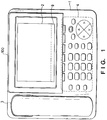
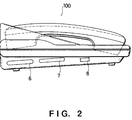
- Fig. 1 and Fig.2 are exterior views of a multi-function telephone apparatus 100 which is a typical embodiment according to the present invention.
- Fig. 1 is a top view of the telephone apparatus and
- Fig. 2 is a side view.
- reference numeral 1 is a main unit including MPU, memory and modem (MDM).
- Reference numeral 2 is LCD (Liquid Crystal Display), reference numeral 3 is a receiver, and reference numeral 4 is a group of keys.
- Reference numeral 6 and 7 are ID card slots and reference numeral 8 is a telephone line interface.
- the LCD 2 is constituted as 480 dots X 320 dots.
- the lower part of the LCD 2 the area of 480 dots X 20 dots (reference numeral 9 in Fig. 1), is used as a display area for character control and the rest of the area (480 dots X 300 dots) is a display area for various kinds of information when an intelligence function of the multi-function telephone apparatus is used.
- External printer can be attached to the ID card slots 6 and 7 through a printer interface and information produced by the intelligence function of the multi-function telephone apparatus can be output therein.
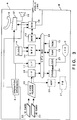
- Fig. 3 is a block diagram which illustrates the constitution of the hardware of the multi-function telephone apparatus.
- area A is an area of structural elements for conventional telephone functions and area B is an area of structural elements in the case where the intelligence function of the telephone is being operated.
- the area A (conventional telephone function) is comprising the receiver 3, part of the operation keys 4 (keys for dialing and the like), the NCU 16, a communication unit 21 and a speaker 28.
- the area B (intelligence function) is comprising the MPU 11, the RAM 12, the ROM 13 which stores control program to execute various types of the intelligence functions (to be described in the two embodiments), a clock 14, a modem 15, the NCU 16 (also used for telephone function), the LCD 2, the VRAM 24, the LCD controller (LCDC) 25, the operation keys 4 (also used for telephone function), an operation key interface 17, an IC card interface 18, an IC card reader 19, and a CPU bus 20 which is connected to each element.
- the IC card reader 19 is connected to IC cards 22-23 attached to the IC card slots 6-7 which store various kinds of application programs and data.
- an external printer 27 can be connected to the IC card interface 18 by attaching an adaptor (ADP) 26 instead of the IC card.
- ADP adaptor
- the telephone apparatus in case of being operated as an intelligence function, that is, as a personal computer function of the above-described multi-function telephone apparatus will now be described. More particularly, it will be described how the personal computer function is operated in the multi-function telephone apparatus while the conventional telephone function is being retained.
- the telephone is operated in a manner such that the telephone function is given priority over the personal computer function. That is, in the case where an incoming call arrives in the NCU 16, even though the personal computer function is under the operation, the MPU 11 detects it and a telephone communication is carried out by that the personal computer function is temporarily suppressed. In the case where the receiver 3 is picked up or the talk key of the operation keys 4 is pushed down, even though the personal computer function is under operation, the MPU detects it and a telephone communication is carried out by that the personal computer function is temporary suppressed.
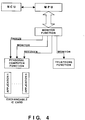
- Fig. 4 is a diagram which illustrates the constitution of the function of the telephone apparatus according to the first embodiment.
- the telephone apparatus basically comprises of the telephone function and the personal computer function, however, in addition to these functions, a monitor function is substantially present as a third function.
- the monitor function observes a state of the telephone function and the personal computer in a fixed interval (approximately 1/36 second according the present embodiment).
- the monitor further operates to freeze an application under the personal computer function or to recover the application at the time of incoming/outgoing call and completion of telephone communication (to be described later) in a manner such that the telephone function is given priority over the personal computer function all the time.
- the applications stored in the IC card are loaded on the RAM 12 through the IC card reader.
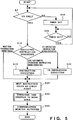
- step S5 it is examined whether there is an incoming/outgoing call in the NCU 16. If there is no call in the NCU, the process proceeds to step S40 where a timer is set. Then, the process proceeds to step S45 where a fixed period (approximately 1/36 second in the present embodiment) is being waited and the process returns to step S5.
- step S10 the kind of the instruction being executed is discriminated.
- the process proceeds to step S25.
- the result (b) is discriminated as a state of that the CPU operation is being executed.
- the process proceeds to step S20.
- step S15 the CPU operation is completed by the detected instruction.
- step S20 the execution input/output operation is completed by the detected instruction.
- the "completion of input/output operation" here is not only completion of an instruction of "WRITE” or "READ,” but also completion of data input/output. That is, it is a state that a completion of data input/output to the external input/output storage device (IC card in the present embodiment) corresponding to WRITE check or READ check instruction is recognized by the MPU 11.
- step S25 the instruction which will be executed after that the instruction detected in step S10 is saved as a check point. Further, in step S30, a task being executed is swapout to the work area of the RAM 12 with other information needed for restarting the execution.
- step S35 the communication monitor of the telephone is activated and the process is completed.
- step S50 it is examined in the NCU 16 whether the telephone communication is completed.
- the completion of the telephone communication is detected, for example, when the NCU 16 detects that the receiver 3 is returned to a hook via the communication unit 21.
- the process proceeds to step S80 where the timer is set.
- step S85 a fixed period (approximately 1/36 second in the present embodiment) is waited, and then, the process returns to step S 50.
- step S55 the task which was swapout to the work area of the RAM 12 is returned to an executable state.
- step S60 the check point saved in step S25 is searched and the instruction to restart the execution is detected.
- step S65 the execution of the task is restarted.
- step S70 the incoming/outgoing detection monitor is activated and the process is completed.
- the data integrity is preserved regardless of the state of the application being executed and the application can be suppressed and recovered at the completion of the telephone communication. Further, after the completion of the telephone communication, the application can be returned to the state when it was suppressed. Therefore, the telephone can be used for the purpose of the telephone communication at any time regardless of the state of the application execution.
- the telephone functions as an intelligence function of the above mentioned multi-function telephone apparatus, that is, as a terminal which is connected to an external host computer (hereinafter referred to as "host") through the telephone line.
- host an external host computer
- the present telephone apparatus is operated as a terminal of the host system whereby the labor control system is employed.
- the telephone function and the terminal function are operated by sharing the resource of the multi-function telephone apparatus and a telephone line.
- the IC card 22 which stores an emulation program (hereinafter referred to as "emulator"), functioning as PROM, is attached to the IC card slot 6.
- This emulator operates the telephone as a terminal of the labor management system.
- an IC card 23 which is an identification card (hereinafter referred to as "ID card”) possessed by each employee is attached to the IC card slot 7.
- the IC card 23 is employed only when information on employees' in/out is inputted or outputted. A plurality of different ID cards are alternately inserted into the IC card slot 7.
- the telephone apparatus daily opens a session to the host of the labor management system by automatic dialling at the predetermined time based on the fixed schedule set in the emulator.
- the telephone apparatus also transmits the whole information on employees' in/out which read from the IC card slot 7 in the fixed period.
- the telephone apparatus In the case where a communication function of the telephone apparatus is occupied, the communication with the host is on waiting and an automatic dialling is performed to the host when the telephone communication is completed.
- the telephone gives a busy signal, as a conventional telephone, until the communication with the host is completed.
- the communication function is not operated and cannot be used until the session to the host is terminated.
- Fig. 7 is a block diagram which illustrates an outline of the above described labor management system.
- the labor management system is comprising a plurality of the telephone apparatus 100 having a terminal function of the above described constitution and the host system which manages the employee's working- day and the like.
- the host 200 controls the employee's labor management master file 205 which manages the information on employee's work performances.
- the communication with the telephone apparatus 100 is executed by the communication control unit 210 dedicated to the host through the NCU 220 and the public line 230.
- the communication controls unit 210 manages a plurality of public lines 230 (a plurality of dials) for concurrent communication with a plurality of terminals (that is, a plurality of the telephone apparatus 100).
- the host system is structured as a well known art and the host can communicate with the telephone apparatus 100 based on a predetermined communication protocol.
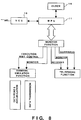
- Fig. 8 is a diagram which illustrates an outline of the function according to the present embodiment.
- the telephone apparatus is comprising of the telephone function and the terminal function, however, there exists a monitor function as a third function for supervising the above mentioned two functions.
- the monitor supervises a state of the telephone function and the terminal function in fixed interval (approximately 1/36 second according to the present embodiment).
- the terminal function which will be described later, is comprising of the two functions:
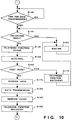
- step S110 whether a terminal emulation is terminated is checked in step S110.
- the terminal emulation can be terminated when a fixed key of the operation keys 4 is pushed down. If it is discriminated that the terminal emulation is terminated, the terminal process is completed. On the other hand, in the case where the terminal emulation is continued, the process proceeds to step S115.
- step S115 it is checked if a current time is in the ID card readable period. This period depends on a policy of core working time in each corporation employed the present system.
- the processing step is based on one's point of view that there are periods for check-in (including late coming) and check-out (including leaving office earlier than usual or over-time work).
- the ID card readable period is from 8 a.m. to noon. If it is discriminated that the time is in this period, the process proceeds to step S120 where the ID card is to be read. On the other hand, if it is discriminated that the time is not in this period (that is, "time-out"), the process proceeds to step S140.
- step S120 in the case where there is no ID card to be read, the process returns to step S110.
- step S130 it is checked if the read information is for the labor management. If the read information is discriminated as the information from other kind of IC card, it is further discriminated as "invalid information.” Then, the rest of processes are not processed and the process returns to step S110. On the other hand, if the read information is discriminated as a "valid information,” the process proceeds to step S135.
- step S135 the information read from the IC card and the time (when the IC card is read) can be read as an employee's check-in/check-out time and this information is stored in the RAM 12.
- step S140 data transmission to the host is being waited. If a time monitor in the clock 14 discriminated that it is time for data transmission, the process proceeds to step S145. In step S145, it is examined whether the telephone is busy. If it is busy, the process proceeds to step S165 where a fixed period is waited and the process again returns to step S145. On the other hand, if it is discriminated that the telephone is not busy, the process proceeds to step S150 where the telephone function is closed. Further, in step S155, an auto-dial to the host is performed.
- step S160 it is checked if the host is available. If the host is not available, the process proceeds to S170. Then, the communication function is recovered and the the process returns to step S165 where a fixed period is waited and the process again returns to step S145. On the other hand, if the host is available, the process proceeds to step 175.
- step S175 after the confirmation of the line connection with the host, the session is opened for the communication program of the host and the emulator of the terminal and the emulator is logically connected to the host.
- step S180 the information on the lobar management stored in the RAM 12 is transmitted to the host system.
- step S185 after the completion of the data transmission is confirmed, the session to the host is closed. After that, the connection of the communication with the host is disconnected and the communication function which was suppressed is recovered in step S190. The process, then, returns to step S110.
- the information on the labor management is read when the IC card, which is employed as an ID card possessed by each employee, is inserted into the IC card slot 7 of the terminal.
- the read information is accumulated and transmitted to the host, which manages the information on the labor management. This transmission is performed at the fixes time if the communication line is available.
- the information is read without using any dedicated IC card readers and an inexpensive system can be produced. Further, since the data transmission is waited until the communication line becomes available, even it is after the fixed time, the communication line load will not be increased and the lines are efficiently used.
- the telephone apparatus having a terminal function of the labor management system has been described in the present embodiments.
- the IC card 22, which is operated as PROM storing the emulator program can be replaced by the other IC card (not shown), which stores other application program (other emulation program).
- the IC card (not shown) is loaded and operated as a terminal of other system. More particularly, in a hospital belonging to some corporation, it is possible to display information on each employee's health condition on the screen of the telephone apparatus when an employee's ID card is inserted in the slot and connected to the host computer which manages the information on the employees' health condition in the hospital.
- IC card slots two slots according to the present embodiments
- a connector corresponding to other interface for example, RS-232C
- an IC card which stores application programs and emulator programs is inserted into another IC card slot.
- the IC card can be an IC memory card.
- the information is read without using any dedicated IC card readers and an inexpensive system can be produced. Further, since the data transmission is waited until the communication line becomes available, even it is after the fixed time, the communication line load will not be increased and the lines are efficiently used.
Landscapes
- Engineering & Computer Science (AREA)
- Signal Processing (AREA)
- Computer Vision & Pattern Recognition (AREA)
- Human Computer Interaction (AREA)
- Computer Networks & Wireless Communication (AREA)
- Telephonic Communication Services (AREA)
Applications Claiming Priority (4)
| Application Number | Priority Date | Filing Date | Title |
|---|---|---|---|
| JP3174999A JPH0522387A (ja) | 1991-07-16 | 1991-07-16 | 電話機 |
| JP174999/91 | 1991-07-16 | ||
| JP304352/91 | 1991-11-20 | ||
| JP3304352A JPH05145657A (ja) | 1991-11-20 | 1991-11-20 | 電話機 |
Publications (2)
| Publication Number | Publication Date |
|---|---|
| EP0524100A2 true EP0524100A2 (fr) | 1993-01-20 |
| EP0524100A3 EP0524100A3 (en) | 1993-10-27 |
Family
ID=26496404
Family Applications (1)
| Application Number | Title | Priority Date | Filing Date |
|---|---|---|---|
| EP19920402061 Withdrawn EP0524100A3 (en) | 1991-07-16 | 1992-07-16 | Multi-function telephone apparatus and control method therefor |
Country Status (3)
| Country | Link |
|---|---|
| US (1) | US5369700A (fr) |
| EP (1) | EP0524100A3 (fr) |
| CA (1) | CA2071191A1 (fr) |
Cited By (5)
| Publication number | Priority date | Publication date | Assignee | Title |
|---|---|---|---|---|
| EP0614302A1 (fr) * | 1993-02-27 | 1994-09-07 | Alcatel SEL Aktiengesellschaft | Dispositif de télécommunication comprenant un terminal munis d'interfaces pour une carte à mémoire et une carte à puce |
| FR2739242A1 (fr) * | 1995-09-25 | 1997-03-28 | Gemplus Card Int | Modem equipe d'un lecteur de carte a puce |
| GB2322519A (en) * | 1993-12-30 | 1998-08-26 | Northern Telecom Ltd | Modular ADSI telephone |
| EP0744087A4 (fr) * | 1994-02-10 | 1999-04-14 | Elonex Technologies Inc | Telephone intelligent |
| EP0977413A3 (fr) * | 1998-07-27 | 2003-08-20 | Sony Corporation | Téléphone et méthode de transmission de données |
Families Citing this family (36)
| Publication number | Priority date | Publication date | Assignee | Title |
|---|---|---|---|---|
| US5799068A (en) * | 1992-06-29 | 1998-08-25 | Elonex I.P. Holdings Ltd. | Smart phone integration with computer systems |
| US7082106B2 (en) | 1993-01-08 | 2006-07-25 | Multi-Tech Systems, Inc. | Computer-based multi-media communications system and method |
| US5592538A (en) * | 1993-03-10 | 1997-01-07 | Momentum, Inc. | Telecommunication device and method for interactive voice and data |
| JPH0787221A (ja) * | 1993-09-14 | 1995-03-31 | Sony Corp | 電話装置、情報処理装置及び情報通信端末 |
| US5923735A (en) * | 1996-05-29 | 1999-07-13 | Symbol Technologies, Inc. | Self-service checkout system utilizing portable self-checkout communications terminal |
| US6243447B1 (en) | 1993-08-25 | 2001-06-05 | Symbol Technologies, Inc. | Self-service checkout system utilizing portable communications terminal |
| US6687346B1 (en) | 1993-08-25 | 2004-02-03 | Symbol Technologies, Inc. | Cellular telephone for acquiring data encoded in bar code indicia |
| US5628030A (en) * | 1994-03-24 | 1997-05-06 | Multi-Tech Systems, Inc. | Virtual modem driver apparatus and method |
| EP0800742A4 (fr) * | 1994-12-28 | 2000-03-08 | Elonex I P Holdings Limited | Systemes informatiques integrant des fonctions de telephonie intelligente |
| CA2192017C (fr) * | 1995-12-08 | 2000-04-25 | Masayuki Ohki | Lecteur-enregistreur pour carte a circuit integre et methode de fonctionnement de cet appareil |
| US5745695A (en) * | 1996-01-16 | 1998-04-28 | Motorola Inc. | Radio system with suspension of packet data service during non-data service connection |
| US7092379B1 (en) * | 1996-10-30 | 2006-08-15 | 8×8, Inc. | Internet telephony arrangement and method |
| USD404393S (en) | 1997-02-28 | 1999-01-19 | Siemens Aktiengesellschaft | Communication terminal |
| USD397112S (en) | 1997-03-19 | 1998-08-18 | Cidco Incorporated | Telephone set |
| USD398302S (en) | 1997-06-24 | 1998-09-15 | Profton Communications Technologies Inc. | Video telephone |
| WO1999034339A2 (fr) | 1997-12-29 | 1999-07-08 | Ameritech Corporation | Systeme de domotique et de telesecurite residentielle et procede associe |
| US6215863B1 (en) | 1997-12-29 | 2001-04-10 | Ameritech Corporation | Method and apparatus for providing a station set with advanced telecommunications services |
| USD402977S (en) | 1998-01-23 | 1998-12-22 | Thomson Consumer Electronics, Inc. | Telephone base |
| US7349682B1 (en) * | 1998-06-12 | 2008-03-25 | Sbc Properties, L.P. | Home gateway system for automation and security |
| USD411987S (en) | 1998-04-21 | 1999-07-13 | Sharp Kabushiki Kaisha | Combined electronic computer and telephone |
| US6219227B1 (en) | 1999-07-27 | 2001-04-17 | David Trane | Portable computer assembly |
| USD454127S1 (en) | 2000-01-21 | 2002-03-05 | Universal Talkware Corporation | Communications terminal |
| USD511761S1 (en) * | 2004-07-22 | 2005-11-22 | Royal Consumer Information Products, Inc. | E-mail telephone |
| USD529477S1 (en) * | 2005-09-20 | 2006-10-03 | Inventec Multimedia & Telecom Corporation | Telephone |
| CA120749S (en) * | 2007-05-16 | 2008-02-21 | Bce Inc | Telephone base |
| USD616843S1 (en) * | 2009-06-05 | 2010-06-01 | Openpeak Inc. | Multi-media device |
| USD668642S1 (en) * | 2010-07-28 | 2012-10-09 | Avaya Inc. | Telephone handset |
| US8537990B2 (en) | 2010-11-19 | 2013-09-17 | Frederic Rudman | Communications device and method and method of use |
| USD662909S1 (en) * | 2011-03-29 | 2012-07-03 | Shoretel, Inc. | Telephone |
| USD657773S1 (en) * | 2011-04-04 | 2012-04-17 | Savant Systems, Llc | Smart phone |
| USD664519S1 (en) * | 2011-05-20 | 2012-07-31 | Nec Infrontia Corporation | Telephone |
| USD664520S1 (en) * | 2011-07-06 | 2012-07-31 | Panasonic Corporation | Telephone base unit |
| USD723503S1 (en) * | 2013-07-19 | 2015-03-03 | Samsung Electronics Co., Ltd. | Telephone |
| USD739372S1 (en) * | 2014-03-25 | 2015-09-22 | Captioncall, Llc | Captioning communication device |
| USD778870S1 (en) | 2015-03-30 | 2017-02-14 | Captioncall, Llc | Captioning communication device with volume control |
| USD934832S1 (en) * | 2020-04-07 | 2021-11-02 | Yealink (Xiamen) Network Technology Co., Ltd. | Communication equipment |
Family Cites Families (14)
| Publication number | Priority date | Publication date | Assignee | Title |
|---|---|---|---|---|
| US4363936A (en) * | 1980-02-11 | 1982-12-14 | Stromberg-Carlson Corporation | Telephone network including common equipment with message information and control information circuits for connecting to stations having multifunction telephones |
| EP0141911A3 (fr) * | 1983-08-05 | 1986-11-20 | Cygnet Technologies, Inc. | Appareil de télécommunications |
| US5140628A (en) * | 1985-08-27 | 1992-08-18 | Kabushiki Kaisha Toshiba | Radio telephone system control method |
| JPH084289B2 (ja) * | 1986-03-27 | 1996-01-17 | キヤノン株式会社 | データ通信装置 |
| JPS6326153A (ja) * | 1986-07-18 | 1988-02-03 | Nippon Bijinesu Syst Kk | 通信装置 |
| US4790004A (en) * | 1986-12-10 | 1988-12-06 | American Telephone And Telegraph Company, At&T Information Systems | Implied principal busy status indicator for covered calls |
| US5153912A (en) * | 1987-03-11 | 1992-10-06 | Canon Kabushiki Kaisha | Data communication apparatus |
| JPS6468172A (en) * | 1987-09-09 | 1989-03-14 | Canon Kk | Computer |
| US4847892A (en) * | 1988-03-21 | 1989-07-11 | Shelley Edwin F | Dial-in data transmission system with standby capability |
| US5195130A (en) * | 1988-05-05 | 1993-03-16 | Transaction Technology, Inc. | Computer and telephone apparatus with user friendly computer interface and enhanced integrity features |
| JPH02214354A (ja) * | 1989-02-15 | 1990-08-27 | Nec Corp | カード式多機能電話端末システム |
| US4995074A (en) * | 1989-04-03 | 1991-02-19 | Goldman Bruce J | Switched line modem interface system |
| JP2854680B2 (ja) * | 1990-06-15 | 1999-02-03 | 株式会社東芝 | Icメモリカード |
| US5048080A (en) * | 1990-06-29 | 1991-09-10 | At&T Bell Laboratories | Control and interface apparatus for telephone systems |
-
1992
- 1992-04-16 US US07/869,660 patent/US5369700A/en not_active Expired - Fee Related
- 1992-06-12 CA CA002071191A patent/CA2071191A1/fr not_active Abandoned
- 1992-07-16 EP EP19920402061 patent/EP0524100A3/en not_active Withdrawn
Cited By (8)
| Publication number | Priority date | Publication date | Assignee | Title |
|---|---|---|---|---|
| EP0614302A1 (fr) * | 1993-02-27 | 1994-09-07 | Alcatel SEL Aktiengesellschaft | Dispositif de télécommunication comprenant un terminal munis d'interfaces pour une carte à mémoire et une carte à puce |
| GB2322519A (en) * | 1993-12-30 | 1998-08-26 | Northern Telecom Ltd | Modular ADSI telephone |
| GB2322519B (en) * | 1993-12-30 | 1998-11-18 | Northern Telecom Ltd | Screen-based telephone set for interactive enhanced telephony service and method of operating same by microprocessor control |
| EP0744087A4 (fr) * | 1994-02-10 | 1999-04-14 | Elonex Technologies Inc | Telephone intelligent |
| FR2739242A1 (fr) * | 1995-09-25 | 1997-03-28 | Gemplus Card Int | Modem equipe d'un lecteur de carte a puce |
| WO1997012478A1 (fr) * | 1995-09-25 | 1997-04-03 | Gemplus S.C.A. | Modem |
| CN1592343B (zh) * | 1995-09-25 | 2012-09-05 | 格马尔托股份有限公司 | 调制解调器 |
| EP0977413A3 (fr) * | 1998-07-27 | 2003-08-20 | Sony Corporation | Téléphone et méthode de transmission de données |
Also Published As
| Publication number | Publication date |
|---|---|
| US5369700A (en) | 1994-11-29 |
| EP0524100A3 (en) | 1993-10-27 |
| CA2071191A1 (fr) | 1993-01-17 |
Similar Documents
| Publication | Publication Date | Title |
|---|---|---|
| US5369700A (en) | Multi-function telephone apparatus and control method | |
| US5675831A (en) | Method for automatic installation of a modem wherein unique identification for the device registry is computed from modem responses to queries by the system | |
| JP4090511B2 (ja) | 外部装置からシムカードにシムカード用の制御コマンドを伝達するための方法 | |
| US5170470A (en) | Integrated modem which employs a host processor as its controller | |
| US4954950A (en) | Terminal communications circuit | |
| US6128372A (en) | Extension device for telephone | |
| EP0409604A2 (fr) | Procédé de traitement au moyen duquel un fonctionnement en continu de programme de commande de communication est obtenu | |
| JPH11353425A (ja) | Icカード端末装置 | |
| JP2002508628A (ja) | チップカード読取り装置遠距離通信端末 | |
| WO2003027846A1 (fr) | Systeme et procede de commutation de taches et modem dsp | |
| JP2809209B2 (ja) | プロセス間通信方式 | |
| JPH0522387A (ja) | 電話機 | |
| JPH10222324A (ja) | ネットワークシステム | |
| JP4212296B2 (ja) | コマンド制御方法及びicカード利用端末装置及びメモリカード | |
| CN116842970B (zh) | 信息处理方法、装置、设备以及存储介质 | |
| JPH05145657A (ja) | 電話機 | |
| US5793950A (en) | Device control apparatus | |
| JPS6155150B2 (fr) | ||
| JP3040281B2 (ja) | データ収集方式 | |
| CN100368979C (zh) | 实现pos机并口数据接收并输出打印的装置及使用方法 | |
| JPS60250759A (ja) | デ−タ伝送端末装置 | |
| KR100724063B1 (ko) | 발신자 번호 처리 시스템 | |
| JP2856154B2 (ja) | 非並行型パラレルトランザクションシステムにおける優先制御負荷分散方式 | |
| WO2022081145A1 (fr) | Transitions d'état de puissance | |
| JPH0766771A (ja) | 通信システム、携帯通信装置、及びデータ処理装置 |
Legal Events
| Date | Code | Title | Description |
|---|---|---|---|
| PUAI | Public reference made under article 153(3) epc to a published international application that has entered the european phase |
Free format text: ORIGINAL CODE: 0009012 |
|
| 17P | Request for examination filed |
Effective date: 19920803 |
|
| AK | Designated contracting states |
Kind code of ref document: A2 Designated state(s): DE FR GB NL |
|
| PUAL | Search report despatched |
Free format text: ORIGINAL CODE: 0009013 |
|
| AK | Designated contracting states |
Kind code of ref document: A3 Designated state(s): DE FR GB NL |
|
| STAA | Information on the status of an ep patent application or granted ep patent |
Free format text: STATUS: THE APPLICATION IS DEEMED TO BE WITHDRAWN |
|
| 18D | Application deemed to be withdrawn |
Effective date: 19950201 |