EP0528018B1 - Liaison d'unites de programme au moment du declenchement du programme - Google Patents
Liaison d'unites de programme au moment du declenchement du programme Download PDFInfo
- Publication number
- EP0528018B1 EP0528018B1 EP92908037A EP92908037A EP0528018B1 EP 0528018 B1 EP0528018 B1 EP 0528018B1 EP 92908037 A EP92908037 A EP 92908037A EP 92908037 A EP92908037 A EP 92908037A EP 0528018 B1 EP0528018 B1 EP 0528018B1
- Authority
- EP
- European Patent Office
- Prior art keywords
- vector
- image
- symbol
- identified
- calling
- Prior art date
- Legal status (The legal status is an assumption and is not a legal conclusion. Google has not performed a legal analysis and makes no representation as to the accuracy of the status listed.)
- Expired - Lifetime
Links
Images

Classifications
-
- G—PHYSICS
- G06—COMPUTING OR CALCULATING; COUNTING
- G06F—ELECTRIC DIGITAL DATA PROCESSING
- G06F9/00—Arrangements for program control, e.g. control units
- G06F9/06—Arrangements for program control, e.g. control units using stored programs, i.e. using an internal store of processing equipment to receive or retain programs
- G06F9/44—Arrangements for executing specific programs
- G06F9/445—Program loading or initiating
- G06F9/44521—Dynamic linking or loading; Link editing at or after load time, e.g. Java class loading
Definitions
- This invention relates to computer programming, and more particularly to a method of making callable symbols visible outside a code image in an environment supporting sharable images.
- a feature of the VAX/VMSTM operating system is the support of sharable object code images.
- An applications program may make use of library images, e.g., for printing, video display, etc., that are used by many other programs. Rather than use a copy of each of such library images for each applications program, there is provided the capability of sharing such images by a number of programs activated at the same time in a multi-user and/or multi-tasking environment. Thus, when several programs make use of a library image, only one copy of this image need be activated, instead of a copy for each program using it. In this manner, real memory space is conserved.
- images may be constructed from a set of compiled modules, and may invoke service in other such images and in the operating system itself.
- images serve as super modular program units which may be supplied by different vendors and which, with certain limitations, do not need to be rebuilt if others around them change.
- a main program block may use images in memory for specific purposes (e.g., math processing, windowing, etc.) used by other tasks executing on the same CPU, in a multiuser, multitasking environment. In this manner. these auxiliary program functions need not be duplicated in memory. thus conserving memory space. and time is saved upon image activation.
- the VAX/VMS operating system supported sharable images by employing a transfer vector in the target image.
- This transfer vector was a data structure having an entry for each procedure within the code image that was to be visible externally. Each entry contained the offset to one of the procedures, and the entries were in a fixed order.
- the calling image need only have the address of the transfer vector and the order number of the called procedure within the transfer vector. So, at image execution time, the called procedure is referenced by merely referencing the transfer vector (or, more precisely, an offset in the vector according to which ordered number this called procedure was placed) where a pointer to the actual address is found.
- the actual location of the procedures Proc-A, Proc-B, etc., in the image 11 could vary, with updates or corrections to the code, for example. As discussed above, however, this method has certain shortcomings in the present environment.
- VAX/VMS by the sharable image feature, provides a limited kind of linking between images at program startup.
- This linkage requires that programmers manually construct a "transfer vector" within each image to be shared, where each entry represents the transfer point for a procedure within that image or possibly a data cell or structure.
- this vector a typical practice at many interfaces of an operating or programming system
- the relative value (offset) of each entry is made invariant and may be bound into other images which call this one, so long as the location of the transfer vector is known at activation time.
- the invention in its broad form resides in a method of preparing a calling image for execution on a computer as generally recited in Claim 1.
- the invention in its broad form also resides in an apparatus for preparing a calling image for execution on a computer as generally recited in Claim 10.
- an improved method for linking images at program activation uses the feature of automatically constructing a "symbol vector" which the linker and operating system use to effect fast lookup of symbols values at program activation, thus providing flexibility similar to that of link time binding.
- the programmer for each sharable image being constructed, provides a list of symbols which are to be made visible outside of the image. (This is comparable to declaring symbols in a compilation unit that are to be made visible outside of that unit.) These symbols may be procedure names, data cells, absolute values, or any other valid use of a symbolic value. The only requirement is that the order of this list remain fixed from one image build to the next. From this list, a "symbol vector" is constructed (as by the linker) of the value of each of the identified symbols, and the symbol vector is associated with the sharable image. A symbol table is also associated with the sharable image. where each symbol has the value of its index in the symbol vector.
- the linker When resolving references to other images, the linker does a symbolic lookup in the symbol table of the target image and obtains the index into the target symbol vector. That index is bound into the calling image. Then, at program activation, the image activator uses the index bound into a calling image to obtain the current value of the symbol in the target image.
- the current value of a symbolic reference obtained at program activation time is used with no additional overhead, in comparison to a symbolic value known at compile or link time.
- one part of a computer program is a code image 10 (a block of code), referred to as the calling image.
- Another part of the program is a code image 11, referred to as the target image.
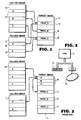
- the calling image 10 contains procedure calls 12, instructions which call certain procedures 13 in target image 11, referred to as Proc_A, Proc_B and Proc_C.
- the program segments represented by these code images identify the called procedures 13 in symbolic form, i.e., by name (e.g., Proc_A, Proc_B, etc.), but when the code image is activated in memory to be executed by a CPU the procedures 13 must then be identified by an address (or linkage pair as will be referred to).
- the addresses are not known until activation time, that is, when the code of images 10 and 11 is invoked by a CPU 14 as in Figure 2 and loaded to memory 15.
- a virtual memory environment such as VMS virtual addresses are assigned at activation, and remain fixed, even though the physical addresses in memory 15 may change in a dynamic fashion in a multitasking environment as the code images are swapped in and out of memory to disk 16. If all of the calling and target images 10, 11, etc., that are to be executed referencing one another, are linked into a single package, (i.e., not using sharable images) the problem is alleviated, but that is not the case here.
- the target image is to be sharable, i.e., another calling image 17 may make calls 18 to the same target image 11. That is, in most conventional operating systems, sharable images are not supported, so if the two calling images 10 and 17 are in separately-activated programs and both make references to the same target image 11, then the section of code represented by the image 11 is merely duplicated.
- a mechanism must be provided to accomplish the linkage function.
- the VAX/VMS operating system employed a transfer vector to support sharable images.
- the VAX architecture is described by Levy and Eckhouse in “Computer Programming and Architecture: The VAX", 2nd Ed., Digital Press, 1989, which is incorporated herein by reference.
- the VMS operating system included definition of a transfer vector 19 in the target image 11, and this transfer vector contained an entry A′, B′, C′ for each of the procedures 13. Each entry contained the offset (a pointer referenced to the beginning of the transfer vector 19) to one of the procedures 13, and the entries were in a fixed order.
- the calling image 10 need only have the address of the transfer vector 19 and the order number of the called procedure within the transfer vector.
- a symbol vector 20 as illustrated in Figure 4 is used instead of the transfer vector 19 of Figure 3.
- a target image 11 contains certain procedures 13 to be used by external references (e.g., from caller image 10); these procedures 13, again referred to as Proc_A, Proc_B and Proc_C, are located at arbitrary positions in the code of this image 11.
- the procedures 13 are identified and added to the symbol table 21, in order, thus creating symbol table entries 22.
- the symbol table 21 is of course a data structure ordinarily created by a compiler along with the code images, and is used by the linker to locate all external references to variables. literal values, procedures, callable routines, etc.
- Each entry in a symbol table contains the symbol name referenced to an index into a code image for the location of the corresponding item. Any item declared by the programmer to be global or universal is included in the symbol table, so the procedures 13 are thus declared.
- the linker builds a symbol vector 20 and places it in the image 11 at a default location or at some location defined in an options file, i.e., a pointer to this symbol vector 20 is given in a header 23.
- the vector 20 is built in the order that the symbols 13 appear in the link options file, and contains an entry 24 for each symbol 13. This order must remain the same over later builds.
- Entries 24 can be added to the end, and other entries can be obsoleted (in which event they hold a null entry), but ongoing entries 24 must be in the same original position.
- the linker does a symbolic lookup in the symbol table 21 of the target image, finding an entry 22, and obtains the index into the symbol vector 20 for this target image 11; that index (ordinal number) for that image name 11 is bound into the calling image 10 at the calling position 12.
- the image activator routine uses the index bound into the calling image 10 to obtain the current value of the symbol in the target image 11, by referencing the header 23 to get the pointer to the symbol vector 20 and indexing into the symbol vector to the entry 24 which contains the actual offset into the image 11 where the procedure 13 is to be found.
- the symbol vector 20 does not become part of the activated code in memory, nor of course does the symbol table 21.
- the reference at calling location 12 is to an address (or, in some cases, it is a literal value, if the symbol is a literal), rather than indirectly as in Figure 3.
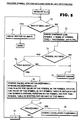
- FIG. 5 a way of processing the symbol vector declarations in the link options file is illustrated.
- the programmer adds the names of the procedures 13 to the link options file, i.e, adds the names of items in a module that are to be externally visible or callable, and sets a SYMBOL_VECTOR option as true.
- the steps of Figure 5 are an addition to the ordinary options file processing routines executed by the linker: the steps of Figure 5 are invoked by the linker only if the SYMBOL_VECTOR option is seen.
- the variable N is initialized to zero, then a loop is entered using the decision point 30 to see if the end of the declaration list has been reached.
- the symbol vector 20 is written to the image 11, indicated by item 31, and the operations of Figure 5 are done. If not, the command line is parsed to get the next entry N (the next symbol 13 as identified by the user), and it is defined as the local variable SYMBOL, while its type (procedure or data cell) is defined as the variable TYPE, in the item 32 of the flow chart.
- the entries are checked in items 33 and 34 to see if properly defined, and if not an error is reported at item 35 and the routine exited. If the check is positive. at item 36 the value of the symbol is placed in the symbol vector 20 as an entry 24 at position N, and the value of the symbol in corresponding entry 22 in the symbol table 21 is replaced by the symbol's ordinal position N in the symbol vector 20.
- This symbol table 21 is written out as part of the image 11.
- the entry is checked at item 37 to see if it is a procedure (instead of a data cell) and if so the indicated operation is performed at item 38, showing the code address field CA of the symbol vector being set up with the code address from the procedure descriptor PDSC, for this symbol.
- the code address entry is used upon activation, Figure 7.
- Return is via item 39 to increment the ordinal number N. This loop is repeated until all of the entries 13 on the list have been processed, at which time the completed symbol vector 20 is written at item 31.
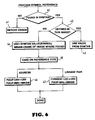
- the linker fetches a symbol to process, and checks in item 40 to see if the symbol is an entry 22 by this name in the symbol table 21; if not, an error is reported at item 41. If the symbol is in the symbol table, the linker checks in item 42 to see if it is defined in this same image 11 it is processing, and if so it uses the value from the symbol table itself, shown as item 43. If not, the symbol table value in entry 22 (the ordinal number, from item 36) is used as the USV (universal symbol value), and the image name is defined as the name of the image 11 where the symbol is found, these operations being in item 44.
- the symbol table value in entry 22 (the ordinal number, from item 36) is used as the USV (universal symbol value)
- the image name is defined as the name of the image 11 where the symbol is found, these operations being in item 44.
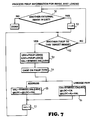
- the code used in the image activator for fixing up inter-image references is shown in flow chart form.
- the images are loaded, and the fixup begins to process the external images in the list, using a loop with a checkpoint 50 to see if each list is completed.
- Each entry has loop variable I set to zero at item 51 and enters a loop to check if all the fixups are done for this target image, using checkpoint 52.
- the operation here is to go down the list generated by the linker (see Figure 6) that indicates all of the fixups that need to be made in this particular image; the same operation will be done for all of the other images that need fixups.
- fixup type item 54
- a linkage pair is two separate quadwords that are addresses related to a particular procedure, one quadword is a procedure descriptor and the other is the actual address of the first instruction of the code of the procedure. This is a specification for doing procedure calls on the advanced RISC architecture referred to.
- the other is fixed up with a code address CA which is picked up from the symbol vector entry 24 (using ordinal number USV as index, again, to select that entry). This CA is becomes the @LOC.
- This loop continues with i incremented at item 57 until all of the fixups are completed.
Landscapes
- Engineering & Computer Science (AREA)
- Software Systems (AREA)
- Theoretical Computer Science (AREA)
- Physics & Mathematics (AREA)
- General Engineering & Computer Science (AREA)
- General Physics & Mathematics (AREA)
- Devices For Executing Special Programs (AREA)
- Information Retrieval, Db Structures And Fs Structures Therefor (AREA)
- Stored Programmes (AREA)
- Circuits Of Receivers In General (AREA)
- Debugging And Monitoring (AREA)
Abstract
Claims (18)
- Méthode de préparation d'une image d'appel à exécuter sur un ordinateur, méthode qui comprend les étapes consistant à :A. prévoir une liste ordonnée de symboles identifiés contenus dans une image-cible qui sont disponibles pour que ladite image d'appel puisse y faire référence;B. réaliser (30-39) à partir de ladite liste ordonnée un vecteur associé à ladite image-cible, ledit vecteur contenant une entrée de vecteur identifiée par une position ordonnée à l'intérieur dudit vecteur pour chacun desdits symboles identifiés, et chaque entrée de vecteur contenant des informations d'image-cible correspondantes pour ledit symbole identifié; etC. enchaîner (40-47) dans ladite image d'appel la position ordonnée à l'intérieur dudit vecteur correspondant à chaque symbole identifié auquel ladite image d'appel fait référence;
caractérisée en ce que :D. au cours de l'étape B, ledit vecteur associé à ladite image-cible est un vecteur de symboles;E. au cours des étapes B et C, une position ordonnée à l'intérieur dudit vecteur est un index de vecteur; et en ce que
ladite méthode comprend également l'étape qui consiste à :F. utiliser (50-57), lors de l'activation de ladite image-cible et de ladite image d'appel à exécuter, ledit index de vecteur enchaîné dans ladite image d'appel pour obtenir à partir dudit vecteur de symboles lesdites informations d'image-cible correspondantes pour chacun desdits symboles identifiés. - Méthode selon la revendication 1, suivant laquelle lors de l'activation de ladite image-cible et de ladite image d'appel à exécuter sur ledit ordinateur, ledit vecteur de symboles est exclu de ladite image-cible qui est activée.
- Méthode selon la revendication 1, suivant laquelle ladite image-cible est une image qui peut être partagée.
- Méthode selon la revendication 3, comprenant une seconde image d'appel, et un enchaînement dans ladite seconde image d'appel d'un index de vecteur correspondant à chaque symbole identifié auquel ladite seconde image d'appel fait référence.
- Méthode selon la revendication 1, suivant laquelle l'une au moins desdites entrées de vecteur est une valeur absolue, tandis que le symbole identifié correspondant est une constante définie globalement.
- Méthode selon la revendication 1, comprenant également l'étape qui consiste à prévoir une table desdits symboles identifiés et desdits index de vecteur correspondants représentant la position dans le vecteur de symboles de chacune des informations d'image-cible dudit symbole identifié.
- Méthode selon la revendication 6, suivant laquelle ledit enchaînement utilise la table de symboles pour obtenir pour chaque symbole identifié son index de vecteur correspondant.
- Méthode selon la revendication 1, suivant laquelle l'une au moins desdites entrées de vecteur est un décalage d' image-cible, tandis que le symbole identifié correspondant et un appel de procédure.
- Méthode selon la revendication 1, suivant laquelle l'une au moins desdites entrées de vecteur est un décalage d'image-cible, tandis que le symbole identifié correspondant représente une zone de données.
- Appareil pour préparer une image d'appel à exécuter sur un ordinateur, comprenant :A. des moyens destinés à enregistrer une liste ordonnée de symboles identifiés dans une image-cible qui sont disponibles pour que ladite image d'appel puisse y faire référence;B. des moyens pour réaliser (30-39) à partir de ladite liste ordonnée un vecteur associé à ladite image-cible, ledit vecteur contenant une entrée de vecteur identifiée par une position ordonnée à l'intérieur du vecteur pour chacun desdits symboles identifiés, et chaque entrée de vecteur contenant des informations d'image-cible correspondantes pour ledit symbole identifié; etC. des moyens pour enchaîner (40-47) dans ladite image d'appel une position ordonnée à l'intérieur du vecteur correspondant à chaque symbole identifié auquel ladite image d'appel fait référence;
caractérisé en ce que :D. ledit vecteur associé à ladite image-cible est un vecteur de symboles;E. une position ordonnée à l'intérieur dudit vecteur est un index de vecteur; et en ce que
ledit appareil comprend également :F. des moyens aptes à agir pour, lors de l'activation de ladite image-cible et de ladite image d'appel, obtenir (50-57) à partir dudit vecteur de symboles lesdites informations d'image-cible correspondantes pour chacun desdits symboles identifiés en utilisant ledit index de vecteur enchaîné dans ladite image d'appel. - Appareil selon la revendication 10, dans lequel lesdits moyens destinés à activer ladite image-cible et ladite image d'appel à exécuter sur ledit ordinateur ne chargent pas ledit vecteur de symboles en mémoire en vue de l'exécution.
- Appareil selon la revendication 10, dans lequel ladite image-cible est une image qui peut être partagée.
- Appareil selon la revendication 12, comprenant une seconde image d'appel, et des moyens pour enchaîner dans ladite seconde image d'appel un index de vecteur correspondant à chaque symbole identifié auquel ladite seconde image fait référence.
- Appareil selon la revendication 10, comprenant des moyens pour générer une table de symboles contenant ledit index de vecteur pour chacun desdits symboles identifiés.
- Appareil selon la revendication 14, dans lequel lesdits moyens d'enchaînement utilisent ladite table de symboles pour obtenir ledit index de vecteur.
- Appareil selon la revendication 10, dans lequel l'une au moins desdites entrées de vecteur est une valeur absolue, tandis que le symbole identifié correspondant est une constante définie globalement.
- Appareil selon la revendication 10, dans lequel l'une au moins desdites entrées de vecteur est un décalage d'image-cible, tandis que le symbole identifié correspondant est un appel de procédure.
- Appareil selon la revendication 10, dans lequel l'une au moins desdites entrées de vecteur est un décalage d'image-cible, tandis que le symbole identifié correspondant représente une zone de données.
Applications Claiming Priority (3)
| Application Number | Priority Date | Filing Date | Title |
|---|---|---|---|
| US666023 | 1991-03-07 | ||
| US07/666,023 US5297291A (en) | 1991-03-07 | 1991-03-07 | System for linking program units by binding symbol vector index in the symbol table into calling image to obtain current value of the target image |
| PCT/US1992/001839 WO1992015940A1 (fr) | 1991-03-07 | 1992-03-04 | Liaison d'unites de programme au moment du declenchement du programme |
Publications (2)
| Publication Number | Publication Date |
|---|---|
| EP0528018A1 EP0528018A1 (fr) | 1993-02-24 |
| EP0528018B1 true EP0528018B1 (fr) | 1995-12-20 |
Family
ID=24672513
Family Applications (1)
| Application Number | Title | Priority Date | Filing Date |
|---|---|---|---|
| EP92908037A Expired - Lifetime EP0528018B1 (fr) | 1991-03-07 | 1992-03-04 | Liaison d'unites de programme au moment du declenchement du programme |
Country Status (12)
| Country | Link |
|---|---|
| US (1) | US5297291A (fr) |
| EP (1) | EP0528018B1 (fr) |
| JP (1) | JPH087673B2 (fr) |
| KR (1) | KR950006617B1 (fr) |
| AU (1) | AU655464B2 (fr) |
| CA (1) | CA2082069C (fr) |
| DE (1) | DE69206919T2 (fr) |
| IE (1) | IE72197B1 (fr) |
| IL (1) | IL100993A (fr) |
| MX (1) | MX9200939A (fr) |
| RU (1) | RU2128362C1 (fr) |
| WO (1) | WO1992015940A1 (fr) |
Families Citing this family (15)
| Publication number | Priority date | Publication date | Assignee | Title |
|---|---|---|---|---|
| US5408665A (en) * | 1993-04-30 | 1995-04-18 | Borland International, Inc. | System and methods for linking compiled code with extended dictionary support |
| US5546586A (en) * | 1993-05-06 | 1996-08-13 | Apple Computer, Inc. | Method and apparatus for vectorizing the contents of a read only memory device without modifying underlying source code |
| US5481713A (en) * | 1993-05-06 | 1996-01-02 | Apple Computer, Inc. | Method and apparatus for patching code residing on a read only memory device |
| CA2143488C (fr) * | 1995-02-27 | 2000-01-11 | Robert Paul Duncan | Bibliotheques a liaisons dynamiques sans soutien pour les dispositifs de liaison ou de chargement |
| US5878263A (en) * | 1997-03-05 | 1999-03-02 | International Business Machines Corporation | Internal chaining technique for fixup records |
| DE29807670U1 (de) * | 1998-04-28 | 1998-06-18 | Siemens AG, 80333 München | Programmiergerät |
| JP3837244B2 (ja) | 1998-10-23 | 2006-10-25 | 松下電器産業株式会社 | プログラムリンク装置及び方法 |
| US7155710B2 (en) * | 2001-06-08 | 2006-12-26 | Igt | Method and apparatus for gaming device software configuration |
| US20040205151A1 (en) * | 2002-12-19 | 2004-10-14 | Sprigg Stephen A. | Triggering event processing |
| US7653880B2 (en) * | 2004-04-13 | 2010-01-26 | Microsoft Corporation | Application of data-binding mechanism to perform command binding |
| US7539687B2 (en) * | 2004-04-13 | 2009-05-26 | Microsoft Corporation | Priority binding |
| US8402410B2 (en) * | 2007-08-27 | 2013-03-19 | Samsung Electronics Co., Ltd. | Method and apparatus for managing configuration memory of reconfigurable hardware |
| US10061571B2 (en) * | 2015-11-16 | 2018-08-28 | Qualcomm Innovation Center, Inc. | System and method for link time optimization |
| US10108407B2 (en) * | 2016-10-24 | 2018-10-23 | International Business Machines Corporation | Loading optimized local entry points for local-use-only function pointers |
| US10649802B2 (en) | 2018-03-21 | 2020-05-12 | Red Hat, Inc. | Component based dynamic guest instantiation |
Family Cites Families (17)
| Publication number | Priority date | Publication date | Assignee | Title |
|---|---|---|---|---|
| US4309756A (en) * | 1971-02-17 | 1982-01-05 | Beckler Robert I | Method of automatically evaluating source language logic condition sets and of compiling machine executable instructions directly therefrom |
| US4553205A (en) * | 1982-09-21 | 1985-11-12 | Salvatore Porchia | Flexible macro expansion process |
| US4636940A (en) * | 1983-03-31 | 1987-01-13 | Hewlett-Packard Company | Logic analyzer using source program or other user defined symbols in the trace specification and the trace listing |
| US4792895A (en) * | 1984-07-30 | 1988-12-20 | International Business Machines Corp. | Instruction processing in higher level virtual machines by a real machine |
| GB8626642D0 (en) * | 1986-11-07 | 1986-12-10 | Nighthawk Electronics Ltd | Data buffer/switch |
| SU1451710A1 (ru) * | 1986-12-25 | 1989-01-15 | Предприятие П/Я М-5769 | Устройство обработки информации |
| US4961133A (en) * | 1987-11-06 | 1990-10-02 | Visystems, Inc. | Method for providing a virtual execution environment on a target computer using a virtual software machine |
| US5067072A (en) * | 1987-11-06 | 1991-11-19 | Visystems, Inc. | Virtual software machine which preprocesses application program to isolate execution dependencies and uses target computer processes to implement the execution dependencies |
| JPH01263734A (ja) * | 1988-04-08 | 1989-10-20 | Internatl Business Mach Corp <Ibm> | マルチ・タスク環境における動的リンク識別子供給方法 |
| US5093916A (en) * | 1988-05-20 | 1992-03-03 | International Business Machines Corporation | System for inserting constructs into compiled code, defining scoping of common blocks and dynamically binding common blocks to tasks |
| FR2633414B1 (fr) * | 1988-06-27 | 1993-07-09 | Bull Sa | Systeme informatique a interconnexion centrale |
| US5062039A (en) * | 1988-09-07 | 1991-10-29 | International Business Machines Corp. | Sharing of workspaces in interactive processing using workspace name tables for linking of workspaces |
| US5097533A (en) * | 1988-11-29 | 1992-03-17 | International Business Machines Corporation | System and method for interfacing computer application programs written in different languages to a software system |
| US5201048A (en) * | 1988-12-01 | 1993-04-06 | Axxess Technologies, Inc. | High speed computer system for search and retrieval of data within text and record oriented files |
| US5212633A (en) * | 1989-08-18 | 1993-05-18 | Sharedata | System for transferring resident programs to virtual area and recalling for instant excution in memory limited DOS system using program control tables |
| US5253361A (en) * | 1989-09-15 | 1993-10-12 | Emtek Health Care Systems, Inc. | System for accessing a row of time-dependent data by referring to a composite index table indicating page locations of linked row labels |
| SU1709328A1 (ru) * | 1990-04-23 | 1992-01-30 | Войсковая Часть 73790 | Устройство дл обработки структур данных |
-
1991
- 1991-03-07 US US07/666,023 patent/US5297291A/en not_active Expired - Lifetime
-
1992
- 1992-02-18 IL IL10099392A patent/IL100993A/en not_active IP Right Cessation
- 1992-03-04 EP EP92908037A patent/EP0528018B1/fr not_active Expired - Lifetime
- 1992-03-04 KR KR1019920702759A patent/KR950006617B1/ko not_active Expired - Fee Related
- 1992-03-04 DE DE69206919T patent/DE69206919T2/de not_active Expired - Fee Related
- 1992-03-04 WO PCT/US1992/001839 patent/WO1992015940A1/fr not_active Ceased
- 1992-03-04 CA CA002082069A patent/CA2082069C/fr not_active Expired - Fee Related
- 1992-03-04 JP JP4507578A patent/JPH087673B2/ja not_active Expired - Lifetime
- 1992-03-04 RU RU92016302A patent/RU2128362C1/ru active
- 1992-03-04 MX MX9200939A patent/MX9200939A/es unknown
- 1992-03-04 AU AU15417/92A patent/AU655464B2/en not_active Ceased
- 1992-03-06 IE IE920744A patent/IE72197B1/en not_active IP Right Cessation
Also Published As
| Publication number | Publication date |
|---|---|
| IL100993A (en) | 1995-10-31 |
| WO1992015940A1 (fr) | 1992-09-17 |
| IE920744A1 (en) | 1992-09-09 |
| JPH05505272A (ja) | 1993-08-05 |
| JPH087673B2 (ja) | 1996-01-29 |
| AU1541792A (en) | 1992-10-06 |
| RU2128362C1 (ru) | 1999-03-27 |
| EP0528018A1 (fr) | 1993-02-24 |
| CA2082069A1 (fr) | 1992-09-08 |
| CA2082069C (fr) | 1996-10-29 |
| MX9200939A (es) | 1993-03-01 |
| DE69206919T2 (de) | 1996-08-14 |
| AU655464B2 (en) | 1994-12-22 |
| KR950006617B1 (ko) | 1995-06-19 |
| DE69206919D1 (de) | 1996-02-01 |
| US5297291A (en) | 1994-03-22 |
| IE72197B1 (en) | 1997-03-26 |
Similar Documents
| Publication | Publication Date | Title |
|---|---|---|
| EP0528018B1 (fr) | Liaison d'unites de programme au moment du declenchement du programme | |
| KR100239028B1 (ko) | 컴퓨터 시스템 | |
| US5475840A (en) | High performance dynamic linking through caching | |
| US5790860A (en) | Method and apparatus for patching code residing on a read only memory device | |
| US5546586A (en) | Method and apparatus for vectorizing the contents of a read only memory device without modifying underlying source code | |
| US5999732A (en) | Techniques for reducing the cost of dynamic class initialization checks in compiled code | |
| US6792612B1 (en) | Java runtime system with modified constant pool | |
| US7412710B2 (en) | System, method, and medium for efficiently obtaining the addresses of thread-local variables | |
| JPH10198570A (ja) | 読み出し専用メモリにクラスをロードする方法及びシステム | |
| US6243668B1 (en) | Instruction set interpreter which uses a register stack to efficiently map an application register state | |
| JP2001216169A (ja) | 第1ビット・アーキテクチャの命令を第2ビット・アーキテクチャの命令に変換する方法、システム、プログラムおよびデータ構造 | |
| EP1114366A2 (fr) | Procede permettant d'effectuer avec precision une inclusion par reference d'appels virtuels | |
| Lu et al. | System V application binary interface | |
| JPH09288586A (ja) | ダイナミック・ライブラリ・タスク切替え | |
| US7032230B2 (en) | Efficient virtual function calls for compiled/interpreted environments | |
| US20250348295A1 (en) | Converting Data From An Optimized Format To A Target Format | |
| WO2002048864A2 (fr) | Registres de systeme pour processeur oriente objet | |
| CA2355990A1 (fr) | Appel efficace de fonctions virtuelles pour environnements compiles/interpretes | |
| Thomas | Mite: a fast and flexible virtual machine | |
| Ranai et al. | An experiment in language translation for two orthogonal architectures |
Legal Events
| Date | Code | Title | Description |
|---|---|---|---|
| PUAI | Public reference made under article 153(3) epc to a published international application that has entered the european phase |
Free format text: ORIGINAL CODE: 0009012 |
|
| 17P | Request for examination filed |
Effective date: 19921104 |
|
| AK | Designated contracting states |
Kind code of ref document: A1 Designated state(s): BE CH DE ES FR GB IT LI NL SE |
|
| 17Q | First examination report despatched |
Effective date: 19931208 |
|
| GRAA | (expected) grant |
Free format text: ORIGINAL CODE: 0009210 |
|
| AK | Designated contracting states |
Kind code of ref document: B1 Designated state(s): BE CH DE ES FR GB IT LI NL SE |
|
| PG25 | Lapsed in a contracting state [announced via postgrant information from national office to epo] |
Ref country code: LI Effective date: 19951220 Ref country code: ES Free format text: THE PATENT HAS BEEN ANNULLED BY A DECISION OF A NATIONAL AUTHORITY Effective date: 19951220 Ref country code: CH Effective date: 19951220 Ref country code: BE Effective date: 19951220 |
|
| REF | Corresponds to: |
Ref document number: 69206919 Country of ref document: DE Date of ref document: 19960201 |
|
| ITF | It: translation for a ep patent filed | ||
| PG25 | Lapsed in a contracting state [announced via postgrant information from national office to epo] |
Ref country code: SE Effective date: 19960320 |
|
| ET | Fr: translation filed | ||
| PLBE | No opposition filed within time limit |
Free format text: ORIGINAL CODE: 0009261 |
|
| 26N | No opposition filed | ||
| PGFP | Annual fee paid to national office [announced via postgrant information from national office to epo] |
Ref country code: FR Payment date: 19990218 Year of fee payment: 8 |
|
| PGFP | Annual fee paid to national office [announced via postgrant information from national office to epo] |
Ref country code: GB Payment date: 19990219 Year of fee payment: 8 Ref country code: DE Payment date: 19990219 Year of fee payment: 8 |
|
| PGFP | Annual fee paid to national office [announced via postgrant information from national office to epo] |
Ref country code: NL Payment date: 19990222 Year of fee payment: 8 |
|
| PG25 | Lapsed in a contracting state [announced via postgrant information from national office to epo] |
Ref country code: GB Free format text: LAPSE BECAUSE OF NON-PAYMENT OF DUE FEES Effective date: 20000304 |
|
| REG | Reference to a national code |
Ref country code: GB Ref legal event code: 732E |
|
| PG25 | Lapsed in a contracting state [announced via postgrant information from national office to epo] |
Ref country code: NL Free format text: LAPSE BECAUSE OF NON-PAYMENT OF DUE FEES Effective date: 20001001 |
|
| GBPC | Gb: european patent ceased through non-payment of renewal fee |
Effective date: 20000304 |
|
| PG25 | Lapsed in a contracting state [announced via postgrant information from national office to epo] |
Ref country code: FR Free format text: LAPSE BECAUSE OF NON-PAYMENT OF DUE FEES Effective date: 20001130 |
|
| NLV4 | Nl: lapsed or anulled due to non-payment of the annual fee |
Effective date: 20001001 |
|
| REG | Reference to a national code |
Ref country code: FR Ref legal event code: ST |
|
| PG25 | Lapsed in a contracting state [announced via postgrant information from national office to epo] |
Ref country code: DE Free format text: LAPSE BECAUSE OF NON-PAYMENT OF DUE FEES Effective date: 20010103 |
|
| PG25 | Lapsed in a contracting state [announced via postgrant information from national office to epo] |
Ref country code: IT Free format text: LAPSE BECAUSE OF NON-PAYMENT OF DUE FEES Effective date: 20050304 |