EP0536807A1 - Monoklonale Antikörper und deren Verwendung - Google Patents
Monoklonale Antikörper und deren Verwendung Download PDFInfo
- Publication number
- EP0536807A1 EP0536807A1 EP92118716A EP92118716A EP0536807A1 EP 0536807 A1 EP0536807 A1 EP 0536807A1 EP 92118716 A EP92118716 A EP 92118716A EP 92118716 A EP92118716 A EP 92118716A EP 0536807 A1 EP0536807 A1 EP 0536807A1
- Authority
- EP
- European Patent Office
- Prior art keywords
- mice
- antigen
- monoclonal antibodies
- mammal
- antibody
- Prior art date
- Legal status (The legal status is an assumption and is not a legal conclusion. Google has not performed a legal analysis and makes no representation as to the accuracy of the status listed.)
- Withdrawn
Links
Images



Classifications
-
- C—CHEMISTRY; METALLURGY
- C07—ORGANIC CHEMISTRY
- C07K—PEPTIDES
- C07K16/00—Immunoglobulins [IG], e.g. monoclonal or polyclonal antibodies
- C07K16/18—Immunoglobulins [IG], e.g. monoclonal or polyclonal antibodies against material from animals or humans
- C07K16/28—Immunoglobulins [IG], e.g. monoclonal or polyclonal antibodies against material from animals or humans against receptors, cell surface antigens or cell surface determinants
- C07K16/2866—Immunoglobulins [IG], e.g. monoclonal or polyclonal antibodies against material from animals or humans against receptors, cell surface antigens or cell surface determinants against receptors for cytokines, lymphokines, interferons
-
- A—HUMAN NECESSITIES
- A61—MEDICAL OR VETERINARY SCIENCE; HYGIENE
- A61P—SPECIFIC THERAPEUTIC ACTIVITY OF CHEMICAL COMPOUNDS OR MEDICINAL PREPARATIONS
- A61P37/00—Drugs for immunological or allergic disorders
-
- C—CHEMISTRY; METALLURGY
- C07—ORGANIC CHEMISTRY
- C07K—PEPTIDES
- C07K16/00—Immunoglobulins [IG], e.g. monoclonal or polyclonal antibodies
- C07K16/18—Immunoglobulins [IG], e.g. monoclonal or polyclonal antibodies against material from animals or humans
- C07K16/28—Immunoglobulins [IG], e.g. monoclonal or polyclonal antibodies against material from animals or humans against receptors, cell surface antigens or cell surface determinants
- C07K16/2803—Immunoglobulins [IG], e.g. monoclonal or polyclonal antibodies against material from animals or humans against receptors, cell surface antigens or cell surface determinants against the immunoglobulin superfamily
- C07K16/2812—Immunoglobulins [IG], e.g. monoclonal or polyclonal antibodies against material from animals or humans against receptors, cell surface antigens or cell surface determinants against the immunoglobulin superfamily against CD4
-
- C—CHEMISTRY; METALLURGY
- C07—ORGANIC CHEMISTRY
- C07K—PEPTIDES
- C07K16/00—Immunoglobulins [IG], e.g. monoclonal or polyclonal antibodies
- C07K16/18—Immunoglobulins [IG], e.g. monoclonal or polyclonal antibodies against material from animals or humans
- C07K16/28—Immunoglobulins [IG], e.g. monoclonal or polyclonal antibodies against material from animals or humans against receptors, cell surface antigens or cell surface determinants
- C07K16/2803—Immunoglobulins [IG], e.g. monoclonal or polyclonal antibodies against material from animals or humans against receptors, cell surface antigens or cell surface determinants against the immunoglobulin superfamily
- C07K16/2815—Immunoglobulins [IG], e.g. monoclonal or polyclonal antibodies against material from animals or humans against receptors, cell surface antigens or cell surface determinants against the immunoglobulin superfamily against CD8
-
- A—HUMAN NECESSITIES
- A61—MEDICAL OR VETERINARY SCIENCE; HYGIENE
- A61K—PREPARATIONS FOR MEDICAL, DENTAL OR TOILETRY PURPOSES
- A61K38/00—Medicinal preparations containing peptides
-
- A—HUMAN NECESSITIES
- A61—MEDICAL OR VETERINARY SCIENCE; HYGIENE
- A61K—PREPARATIONS FOR MEDICAL, DENTAL OR TOILETRY PURPOSES
- A61K39/00—Medicinal preparations containing antigens or antibodies
Definitions
- This invention relates to monoclonal antibodies and their use.
- a major goal in immunology has been to find a means of selectively abolishing an individual's potential to mount an immune response to certain antigens, while preserving responsiveness to others.
- the facility to induce such specific immunological unresponsiveness in an adult would have major implications for tissue-grafting, the control of allergy and for treatment of autoimmune disease.
- immunosuppresive regimes such as irradiation, anti-lymphocyte globulin or thoracic duct drainage, may facilitate tolerance induction.
- rat monoclonal antibodies designated YTS 191.1
- L3T4 L3T4
- D.P. Dialynas et al have described properties of rat monoclonal antibodies, designated GK 1.5, also directed to the L3T4 molecule on T-helper cells, in J. Immun., 131 , 2445-2451 (1983), and in Immun. Rev. 47 , 29-56 (1983).
- the L3T4 molecule is the name given to the mouse CD4 molecule.
- CD4 type molecule on T-helper cells in all mammalian species.
- mice with such monoclonal antibodies leads to rapid depletion of T-helper cells from the blood and lymphoid tissues, with subsequent immunosuppression of a range of immune functions.
- This latter work has been reported by S.P. Cobbold et al, loc cit , and by D.C. Wofsy et al, J. Immun., 135 , 1698-1701 (1985).
- D.C. Wofsy et al, loc cit further reported that L3T4 depleted animals fail to respond on immunisation with protein antigens.
- anti-CD25 anti IL-2 receptors
- therapy with anti-CD25 (anti IL-2 receptors) monoclonal antibodies will also produce tolerance in a subject mammal towards a primary antigen.
- 'tolerogenic vaccine' is defined as a pharmaceutical preparation which when administered to mammals will modify their immune response.
- the monoclonal antibodies are directed against antigens on the mammal's T-cells.
- the monoclonals are directed towards antigens on either T-helper cells or activated T-cells.
- the monoclonals be selected from either anti-CD4 monoclonals or anti-CD25 monoclonals.
- the monoclonal will be an anti-CD4 monoclonal.
- a method of treating a subject mammal suffering from an abnormal immune response which comprises administering to the mammal an amount of tolerogenic vaccine, comprising monoclonal antibodies as tolerogenic agents, sufficient to deplete significantly for a limited period the population of helper T-cells in the subject mammal, whereby the previously abnormal immune response of the subject mammal is normalised to a significant extent.
- the tolerogenic vaccine comprises monoclonal antibodies to the CD4 molecule on the helper-T lymphocytes.
- the invention also relates to a method of treating a subject mammal so as to modify its immune response to an antigen which comprises administering to the subject mammal an amount of a tolerogenic vaccine comprising monoclonal antibodies as tolerogenic agents, said amount being sufficient to deplete significantly for a limited period a population of T-lymphocytes in the subject mammal, challenging the subject mammal, shortly before or, whilst the population of T-lymphocytes is so depleted, with an antigen and allowing the population of T-lymphocytes to re-establish itself in the subject mammal.
- a tolerogenic vaccine comprising monoclonal antibodies as tolerogenic agents
- the period between exposure to the antigen and commencement of the vaccination procedure should not be such, as to allow the mammal to develop a strong immune response and should preferably not exceed 5 days.
- mice As examples of mammals there can be mentioned mice, cats, dogs, horses, cows and man.
- a pharmaceutical formulation for use as a tolerogenic vaccine, comprising tolerogenic monoclonals.
- tolerogenic monoclonals are selected from either anti-CD4 monoclonals or anti-CD25 monoclonals.
- the amount administered should be sufficient for the mammal's helper T-cells population to be significantly depleted.
- the amount administered should be sufficient for the mammals activated T-cell population to be significantly depleted.
- treatment is typically carried out so as to reduce the population of helper T-lymphocytes to less than about 20% and preferably to less than about 10% of their normal level.
- reduction of the population of helper T-lymphocytes can be achieved, for example, by administration of the antibodies in a series of doses each of the order of about 20mg antibody per kg of body weight.
- Administration of such a tolerogenic vaccine can be effected by intravenous or intraperitoneal injection in one or more doses.
- Sufficient of the tolerogenic vaccine is administered in one or more doses to the subject mammal to cause its population of helper T-lymphocytes to be depleted for a limited period. Generally speaking this limited period should be at least 1 day but need not exceed about 14 days. It will normally suffice, so our experiments to date would appear to suggest, to administer the tolerogenic vaccine for a period of from 1 to about 7 days, e.g. 3 days. Conveniently the doses of vaccine are selected so as to obtain the desired depletion of helper T-lymphocytes by daily injections.
- the reduction of activated T-cells may be effected in a similar manner using a tolerogenic vaccine comprising anti-CD25 monoclonals.
- an antigen may be administered to the subject mammal.
- Such antigen may be administered by injection, by inhalation, by ingestion, by transplantation or by implantation. It may comprise, for example, an immunoglobulin.
- mice injected with antigen under the umbrella of an anti-L3T4 (CD4) antibody maintain a record of the encounter manifesting as tolerance, and we have been able to induce tolerance in normal adult mice with an immunogenic form of an antigen.
- CD4 anti-L3T4
- rat IgG2b monoclonal antibodies that deplete lymphocyte populations such as anti-Thy 1 or anti-Lyt 1 are also immunosuppressive, yet such immunosuppresive monoclonal antibodies elicit strong anti-globulin responses to themselves in mice, as reported by S.P. Cobbold et al, Adv. Exp. Med. Biol., 186 , 789-795 (1985).
- anti-L3T4 (CD4) such as YTS 191.1 and GK1.5, both of which are rat IgG2b monoclonal antibodies, do not elicit anti-globulin responses in vivo , according to S.P.
- the tolerogenic properties of the vaccine of the invention have important implications for serotherapy with monoclonal antibodies.
- By treatment of patients with vaccines containing suitable anti-L3T4 (CD4) monoclonal antibodies at the beginning of such serotherapy it becomes possible to diminish substantially and in some cases to suppress entirely the anti-globulin response normally mounted by the patient's body to the monoclonal antibodies used in such serotherapy.
- Such a response is also achieved with an anti-CD25 treatment.
- the vaccine of the present invention containing anti-CD4 monoclonals has an important role to play in correction of the abnormal immune response associated with many forms of autoimmune disease.
- prior reported work has studied the immunosuppressive effects of anti-L3T4 monoclonals, as reported by D. Wofsy et al, J. Exp. Med., 161 , 378-391 (1985), by M.K. Waldor et al, Science, 227 , 415-417 (1985), by G.E. Ranges et al. J. Exp. Med., 162 , 1105-1110 (1985), and by S.W. Brostoff et al. J.
- mice suffering from an autoimmune disease having many of the same symptoms as lupus erythematosus in human beings have their symptoms ameliorated by injection at the age of 4 months with daily doses of two anti-L3T4 (CD4) monoclonal antibodies, YTS 191.1 and YTA 3.1 (equilvalent to 0.4mg of monoclonal antibody per dose) for 1 week.
- CD4 anti-L3T4
- YTS 191.1 and YTA 3.1 epidermatitis
- mice given human -globulin as a primary antigen develop tolerance towards it when given subsequently, up to 5 days later, a short course of vaccination with monoclonal antibodies to the L3T4 molecule on mice helper T-lymphocytes.
- a short course of vaccination may comprise, for example, daily doses for from 3 to 7 days.
- This Example demonstrates the return of immunocompetence after YTS 191.1 (anti-L3T4(a CD4)) treatment in euthymic mice.
- mice aged 8-12 weeks were depleted of L3T4-positive T-cells by daily injections on days 0 (intravenous (i.v.)), 1 and 2 (intraperitoneal (i.p.)) of YTS 191.1 as 0.2ml of ascitic fluid from (DA x LOU) F1, rats enriched for immunoglobulin by precipitation with 50% saturated ammonium sulphate, and equivalent to 0.4mg of active monoclonal antibody per dose. Controls received saline by the same protocol.
- mice Groups of four mice were randomly selected on various days following treatment and immunized with 0.5mg heat-aggregated HGG i.v., purified from group O rhesus-positive serum by ammonium sulphate precipitation followed by elution through an ion-exchange chromatographic column (DE52, Whatman) in 0.01 sodium phosphate buffer pH 8.0, dialysed into phosphate-buffered saline (PBS) at 10mg mlR-1F, and then aggregated by heating to 63 o for 25 minutes followed by overnight incubation on ice (see W.O. Weigle, Adv. Immun., 16 , 61-121 (1973)). Mice were bled from their tail veins 11 days after immunization and the sera stored at -20 o C. Serum anti-HGG antibody titres were measured by an enzyme-linked immunosorbent assay (ELISA) as follows.
- ELISA enzyme-linked immunosorbent assay
- Polyvinyl microtitration trays were coated with purified HGG by incubation of 50 ⁇ l per well of 20 ⁇ g ml ⁇ 1 HGG in PBS for 60 minutes at 37 o , washed three times in PBS/0.05% (v/v) Tween 20 (Sigma), and then blocked overnight with 1% (w/v) bovine serum albumin (BSA) in PBS/0.02% (w/v) sodium azide. The trays were then washed and doubling diluations of test sera in 0.1% BSA/PBS were added to each tray at 50 ⁇ l per well and incubated in 60 minutes at 20 o C.
- BSA bovine serum albumin
- a positive control of peroxidase-linked rabbit anti-human immunoglobulin (Dako) was titrated on each tray.
- the test samples were followed, with intervening washes, by species-specific biotinylated sheep anti-mouse immunoglobulin (Amersham) and then biotinylated streptavidin horseradish peroxidase complex (Amersham) both at 1:1,000 dilution in PBS/0.1% BSA and incubated at 50 ⁇ l per well for 35 minutes at 20 o C. Trays were then washed and developed for 5 min with o -phenylenediamine (100 l per well) and the reaction stopped with 50 ⁇ l per well of 0.5 M H2SO4.
- YTS 191.1 anti-L3T4(a CD4) induces unresponsiveness to its own IgG2b epitopes and to heat-aggregated HGG given concomitantly.
- mice in groups of five were pretreated with three injections of YTS 191.1 as in Example 1 (groups 1, 4, 5), or as controls received an irrelevant IgG2b monoclonal antibody (YTH 65.3.3, anti-human T200 obtained by the method of C. Bindon et al, Transplanation, 40 , 538-543 (1985)) (groups 2,6) or saline (groups 3, 7, 8) by the same protocol. Groups 5, 6 and 7 were then injected i.p. on days 2 and 3 with 0.5mg doses of heat-aggregated HGG prepared as in Example 1.
- mice were maintained on antibiotics (oxytetracyclin 50mgl ⁇ 1, Terramycin; Pfizer) and were free of any obvious disease.
- antibiotics oxytetracyclin 50mgl ⁇ 1, Terramycin; Pfizer
- mice were bled and the effectiveness of anti-L3T4 treatment was confirmed by the absence of an antibody response to HGG in group 5 as compared with strong primary responses in group 6 and 7 measured by an ELISA.
- mice On days 42 and 52, mice were immunized i.p. with 0.5mg of the heat-aggregated form of YTH 3.2.6 (anti-CD7 IgG2b), of YTH 53.1.4 (anti-human red blood cell, IgG2b), or of HGG.
- YTH 3.2.6 was prepared by the method described by H. Waldmann et al, Adv.
- YTH 3.2.6 and YTH 53.1.4 were purified from (DA x LOUOF1 rat ascites by ammonium sulphate precipitation, followed by ion-exchange chromtography in 0.01M sodium phosphate buffer pH 8.0 (DE 52, Whatman) and then heat-aggregated as above. Mice were bled from their tail veins on day 58 and their sera stored at -20 o C. The serum titres of antibody to the respective immunizing Ag (YTH 3.2.6, YTH 53.1.4 or HGG) were determined by ELISA as in Example 1.
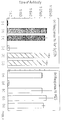
- mice when mice were pre-treated with YTS 191.1, or an irrelevant monoclonal antibody or saline, and then 42 days later were immunized with either of two different heat-aggregated IgG2b monoclonals, having no binding activity for mouse cells (YTH 3.2.6 and YTH 53.1.4), no anti-globulin responses could be detected in anti-L3T4 - treated mice (group 1) compared with controls (groups 2 and 3).
- administration of HGG under the anti-L3T4 umbrella led to later unresponsiveness to re-challenge with this antigen (group 5 in Figures 2(b)).
- This Example demonstrates the specificity of unresponsiveness to rat IgG2b and HGG.
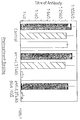
- mice were rendered unresponsive to rat IgG2b by YTS 191.1 (anti-L3T4 antibody) pretreatment as in group 1 in Figure 2(a) or to HGG by pretreatment with YTS 191.1 plus aggregated HGG (anti-L3T4 antibody plus HGG) as in group 5 in Figure 2(b).
- YTS 191.1 anti-L3T4 antibody
- HGG HGG
- HGG HGG
- YTS 191.1 plus aggregated HGG anti-L3T4 antibody plus HGG
- Sera were stored at -20 o C and antibody titres determined by ELISA. Data are geometric means ⁇ s.d. of antibody titres from five mice. The results were plotted in Figure 3. They show that mice rendered unresponsive to rat Igg2b by administration of anti-L3T4 remained fully responsive to HGG or chicken -globulin (CGG). Similarly, mice made unresponsive to HGG given CGG under the anti-L3T4 unbrella responded normally to CGG. Hence the state of unresponsiveness appears to be true tolerance to the administered antigens.
- YCTLD 140.2 sw IgG2b an anti IL-2 receptor IgG2c Mab induces unresponsivenss to heat aggregated HGG given concomitantly.
- mice in groups of five were pretreated with three intravenous injections (days 0, 3 and 6) of group 1) YCTLD 45.1 (an anti-Il-2R IgG2c Mab), group 2) YCTLD 140.2 sw IgG2b (an anti-IL-2R IgG2b Mab), 3) YTH 3.2.6 (an anti-CD7 IgG2b-which showed no crossreaction on mouse cells) and group 4) saline; all at 2mg in 200 microlitres. Each group received a recording dose of heat aggregated HGG (1mg in 200 microlitres) intravenously on day one.
- mice were bled through their tail veins on days 8 and 14, sera being stored at -20 o C until needed. On days 42 and 50 mice were immunized with 0.5mg of heat aggregated to HGG were assessed, as in example, one by means of an ELISA.
- mice pretreated with YCTLD 140.2 sw IgG2b and HGG followed by a rechallenge with HGG on days 42 and 50 were unresponsive to HGG (p ⁇ 0.01). All other groups receiving a recording dose of HGG on day one responded as strongly as the saline control (group 4). Later bleeds did not expose late immune responses in tolerant mice.
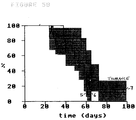
- This example demonstrates the combined use of L3T4 (CD4), Lyt-2 (CD8) and IL-2 (CD25) receptor monoclonal antibodies to generate tolerance to mismatched skin grafts.
- FIG. 5a shows the following groups: control group 1 received no antibody; group 2 received Lyt-2 (CD8) antibodies (TYS 169.4.2 + YTS 156.7.7, 25 g each per injection); group 3 received L3T4 (CD4) antibodies (YTS 191.1.2 + YTA 3.1, 25 g each per injection); group 4 received anti-IL-2 receptor antibody (YCTLD 45.1, 200 g per injection).
- Example shows a typical pharmaceutical preparation for preparing a tolerogenic vaccine using tolerogenic monoclonal antibodies.
- the tolerogenic vaccine is sterile, pyrogen-free, and free from other abnormal toxicity and will be presented in a lyopholised form in sterile vials.
- each vial contains 23.4mg sodium chloride, 6.2mg L-histidine, and 20mg each of sorbitol and human serum albumin, in addition to the monoclonal.
- the vials should be stored in a fridge at 2-8 o C until reconstitution.
- the formulation is sterile, pyrogen free, and free from abnormal toxicity and is presented in a lyopholised form in sterile vials.
Landscapes
- Health & Medical Sciences (AREA)
- Immunology (AREA)
- Chemical & Material Sciences (AREA)
- Organic Chemistry (AREA)
- Life Sciences & Earth Sciences (AREA)
- General Health & Medical Sciences (AREA)
- Medicinal Chemistry (AREA)
- Biochemistry (AREA)
- Biophysics (AREA)
- Genetics & Genomics (AREA)
- Molecular Biology (AREA)
- Proteomics, Peptides & Aminoacids (AREA)
- Engineering & Computer Science (AREA)
- Bioinformatics & Cheminformatics (AREA)
- Chemical Kinetics & Catalysis (AREA)
- General Chemical & Material Sciences (AREA)
- Nuclear Medicine, Radiotherapy & Molecular Imaging (AREA)
- Pharmacology & Pharmacy (AREA)
- Animal Behavior & Ethology (AREA)
- Public Health (AREA)
- Veterinary Medicine (AREA)
- Medicines Containing Antibodies Or Antigens For Use As Internal Diagnostic Agents (AREA)
- Preparation Of Compounds By Using Micro-Organisms (AREA)
- Peptides Or Proteins (AREA)
Applications Claiming Priority (2)
| Application Number | Priority Date | Filing Date | Title |
|---|---|---|---|
| GB868608068A GB8608068D0 (en) | 1986-04-02 | 1986-04-02 | Monoclonal antibodies |
| GB8608068 | 1986-04-02 |
Related Parent Applications (1)
| Application Number | Title | Priority Date | Filing Date |
|---|---|---|---|
| EP87302864.1 Division | 1987-04-02 |
Publications (1)
| Publication Number | Publication Date |
|---|---|
| EP0536807A1 true EP0536807A1 (de) | 1993-04-14 |
Family
ID=10595565
Family Applications (2)
| Application Number | Title | Priority Date | Filing Date |
|---|---|---|---|
| EP92118716A Withdrawn EP0536807A1 (de) | 1986-04-02 | 1987-04-02 | Monoklonale Antikörper und deren Verwendung |
| EP87302864A Expired - Lifetime EP0240344B1 (de) | 1986-04-02 | 1987-04-02 | Monoklonale Antikörper und deren Verwendung |
Family Applications After (1)
| Application Number | Title | Priority Date | Filing Date |
|---|---|---|---|
| EP87302864A Expired - Lifetime EP0240344B1 (de) | 1986-04-02 | 1987-04-02 | Monoklonale Antikörper und deren Verwendung |
Country Status (4)
| Country | Link |
|---|---|
| EP (2) | EP0536807A1 (de) |
| JP (1) | JP2562141B2 (de) |
| DE (1) | DE3788148T2 (de) |
| GB (1) | GB8608068D0 (de) |
Cited By (2)
| Publication number | Priority date | Publication date | Assignee | Title |
|---|---|---|---|---|
| EP0955948A4 (de) * | 1995-10-26 | 1999-11-17 | ||
| WO2003086457A3 (en) * | 2002-04-08 | 2003-12-04 | Robarts John P Res Inst | Method of treating or preventing autoimmune disease |
Families Citing this family (16)
| Publication number | Priority date | Publication date | Assignee | Title |
|---|---|---|---|---|
| FR2616330B1 (fr) * | 1987-06-12 | 1990-12-21 | Immunotech Sa | Agent actif et medicament en contenant destines a prevenir ou a combattre le rejet de greffe d'organe chez l'homme |
| WO1989001340A1 (en) * | 1987-08-17 | 1989-02-23 | The United States Of America, As Represented By Th | Method for treating malignancy and autoimmune disorders in humans |
| CA1335792C (en) * | 1987-08-18 | 1995-06-06 | Chaim O. Jacob | Method and dosage form using an antagonist to gamma interferon to control mhc-associated autoimmune disease |
| ATE108664T1 (de) * | 1987-12-02 | 1994-08-15 | Becton Dickinson Co | Verfahren zur verhütung von gvhd. |
| WO1989011287A1 (en) * | 1988-05-19 | 1989-11-30 | The Beth Israel Hospital Association | Induction of tolerance to a foreign antigen |
| US5152980A (en) * | 1988-05-19 | 1992-10-06 | The Beth Israel Hospital Association | Induction of tolerance to a foreign antigen IL-2 receptor-binding substances |
| GB8912497D0 (en) * | 1989-05-31 | 1989-07-19 | Cobbold Stephen P | Monoclonal antibodies |
| US7037496B2 (en) | 1989-12-27 | 2006-05-02 | Centocor, Inc. | Chimeric immunoglobulin for CD4 receptors |
| CA2015515C (en) | 1990-01-03 | 1999-12-07 | Jean-Marie Saint-Remy | Pharmaceutical compositions containing antigen-antibody complexes and uses therefor |
| DE4033120A1 (de) * | 1990-10-18 | 1992-04-23 | Boehringer Mannheim Gmbh | Verfahren zur herstellung von chimaeren antikoerpern |
| DE4143214A1 (de) * | 1991-07-25 | 1993-01-28 | Boehringer Mannheim Gmbh | Synergistisch wirkende antikoerperzusammensetzung |
| US6270766B1 (en) | 1992-10-08 | 2001-08-07 | The Kennedy Institute Of Rheumatology | Anti-TNF antibodies and methotrexate in the treatment of arthritis and crohn's disease |
| GB9312315D0 (en) * | 1993-06-15 | 1993-07-28 | Poston Robin | Leukocyte adhesion assay |
| EP1161955A3 (de) * | 1995-05-18 | 2001-12-19 | Ortho Pharmaceutical Corporation | Induktion von Immuntoleranz bei Organtransplantation durch humanisierte nicht zellmengenverringernden anti-cd4 Antikörpern in Kombination mit spezifischen Knochenmarkzellen des Spenders |
| AU3044697A (en) * | 1997-06-24 | 1999-01-04 | Norman Godin | A composition for specific immunoprotection and method for obtaining said comp osition |
| GB0314461D0 (en) * | 2003-06-20 | 2003-07-23 | Isis Innovation | Suppression of transplant rejection |
Citations (1)
| Publication number | Priority date | Publication date | Assignee | Title |
|---|---|---|---|---|
| EP0200412A2 (de) * | 1985-04-17 | 1986-11-05 | The Board Of Trustees Of The Leland Stanford Junior University | Verfahren zur Verleihung von Immuntoleranz gegen ein spezifisches Antigen |
Family Cites Families (3)
| Publication number | Priority date | Publication date | Assignee | Title |
|---|---|---|---|---|
| US4381295A (en) * | 1979-04-26 | 1983-04-26 | Ortho Pharmaceutical Corporation | Monoclonal antibody to human helper T cells and methods of preparing same |
| US4550086A (en) * | 1983-02-16 | 1985-10-29 | Dana-Farber Cancer Institute, Inc. | Monoclonal antibodies that recognize human T cells |
| GB8605316D0 (en) * | 1986-03-04 | 1986-04-09 | Royal Free Hosp School Med | Immunosuppression |
-
1986
- 1986-04-02 GB GB868608068A patent/GB8608068D0/en active Pending
-
1987
- 1987-04-02 DE DE87302864T patent/DE3788148T2/de not_active Expired - Lifetime
- 1987-04-02 JP JP62082202A patent/JP2562141B2/ja not_active Expired - Lifetime
- 1987-04-02 EP EP92118716A patent/EP0536807A1/de not_active Withdrawn
- 1987-04-02 EP EP87302864A patent/EP0240344B1/de not_active Expired - Lifetime
Patent Citations (1)
| Publication number | Priority date | Publication date | Assignee | Title |
|---|---|---|---|---|
| EP0200412A2 (de) * | 1985-04-17 | 1986-11-05 | The Board Of Trustees Of The Leland Stanford Junior University | Verfahren zur Verleihung von Immuntoleranz gegen ein spezifisches Antigen |
Non-Patent Citations (26)
| Title |
|---|
| C. BINDON ET AL., TRANSPLANATION, vol. 40, 1985, pages 538 - 543 |
| D. 1,7OFSY ET AL., J. EXP. MED., vol. 161, 1985, pages 378 - 391 |
| D. WOFSY ET AL., J. EXP. MED., vol. 161, 1985, pages 378 - 391 |
| D.C. WOFSY ET AL., J. IMMUN., vol. 135, 1985, pages 1698 - 1701 |
| D.P. DIALYNAS ET AL., J. IMMUN., vol. 131, 1983, pages 2445 - 2451 |
| EUROPEAN SURGICAL RESEARCH vol. 14, January 1982, BASEL, CH pages 447 - 448 H. BALNER ET AL. 'IN VITRO AND IN VIVO EFFECTS IN RHESUS MONKEYS OF MONOCLONAL ANTIBODIES AGAINST HUMAN AND MONKEY T-CELL SUBSETS.' * |
| G.E. RANGES ET AL., J. EXP. MED., vol. 162, 1985, pages 1105 - 1110 |
| G.R., SHELLAM, IMMUNOLOGY, vol. 17, 1969, pages 267 - 270 |
| H. WALDMANN ET AL., ADV. EXP. MED. BIOL., vol. 186, 1985, pages 869 - 875 |
| IMMUN. REV., vol. 47, 1983, pages 29 - 56 |
| JOURNAL OF EXPERIMENTAL MEDICINE vol. 162, July 1985, NEW YORK, N.Y., US pages 358 - 363 R.L. KIRKMAN ET AL. 'ADMINISTRATION OF AN ANTI-INTERLEUKIN 2 RECEPTOR MONOCLONAL ANTIBODY PROLONGS CARDIAC ALLOGRAFT SURVIVAL IN MICE.' * |
| JOURNAL OF IMMUNOLOGY. vol. 135, no. 3, September 1985, BALTIMORE US pages 1698 - 1701 D. WOFSY ET AL. 'INHIBITION OF HUMORAL IMMUNITY IN VIVO BY MONOCLONAL ANTIBODY TO L3T4: STUDIES WITH SOLUBLE ANTIGENS IN INTACT MICE.' * |
| JOURNAL OF IMMUNOLOGY. vol. 137, no. 4, 15 August 1986, BALTIMORE US pages 1127 - 1132 N.L. GUTSTEIN ET AL. 'INDUCTION OF IMMUNE TOLERANCE BY ADMINISTRATION OF MONOCLONAL ANTIBODY TO L3T4.' * |
| KIRKMAIN R.L. ET AL., J. OF EXPERIMENTAL MEDICINE, vol. 162, 1985, pages 358 |
| L.L. LANIER ET AL., HYBRIDOMA, vol. 1, 1982, pages 125 - 130 |
| M.K. WALDOR ET AL., SCIENCE, vol. 227, 1985, pages 415 - 417 |
| N.M. AGEL ET AL., J. IMMUN. METH., vol. 69, 1984, pages 207 - 214 |
| NATURE. vol. 312, no. 5994, 6 December 1984, LONDON GB pages 548 - 551 S.P. COBBOLD ET AL. 'THERAPY WITH MONOCLONAL ANTIBODIES BY ELIMINATION OF T-CELL SUBSETS IN VIVO.' * |
| NATURE. vol. 320, 3 April 1986, LONDON GB pages 449 - 451 R.J. BENJAMIN ET AL. 'INDUCTION OF TOLERANCE BY MONOCLONAL ANTIBODY THERAPY.' * |
| S.P. COBBOLD ET AL., ADV. EXP. MED. BIOL., vol. 186, 1985, pages 789 - 795 |
| S.P. COBBOLD ET AL., LOC CIT |
| S.P. COBBOLD ET AL., NATURE, vol. 312, 1984, pages 548 - 551 |
| S.W. BROSTOFF ET AL., J. IMMUN., vol. 133, 1985, pages 1938 - 1942 9 |
| UCHIYAMA ET AL., J. OF IMMUNOLOGY, vol. 126, 1981, pages 1363 |
| W.O. WEIGLE, ADV. IMMUN., vol. 16, 1973, pages 61 - 121 |
| W.O. WIEGLE, ADV. IMMUN., vol. 16, 1973, pages 61 - 121 |
Cited By (5)
| Publication number | Priority date | Publication date | Assignee | Title |
|---|---|---|---|---|
| EP0955948A4 (de) * | 1995-10-26 | 1999-11-17 | ||
| EP1586284A1 (de) * | 1995-10-26 | 2005-10-19 | Paul P. Latta | Induktion von immunologischer Toleranz |
| US7361333B2 (en) | 1995-10-26 | 2008-04-22 | Latta Paul P | Prevention of diabetes through induction of immunological tolerance |
| US7361334B2 (en) | 1995-10-26 | 2008-04-22 | Latta Paul P | Method of treatment of diabetes through induction of immunological tolerance |
| WO2003086457A3 (en) * | 2002-04-08 | 2003-12-04 | Robarts John P Res Inst | Method of treating or preventing autoimmune disease |
Also Published As
| Publication number | Publication date |
|---|---|
| DE3788148T2 (de) | 1994-03-10 |
| EP0240344A3 (en) | 1989-08-16 |
| EP0240344A2 (de) | 1987-10-07 |
| JP2562141B2 (ja) | 1996-12-11 |
| EP0240344B1 (de) | 1993-11-18 |
| JPS632934A (ja) | 1988-01-07 |
| GB8608068D0 (en) | 1986-05-08 |
| DE3788148D1 (de) | 1993-12-23 |
Similar Documents
| Publication | Publication Date | Title |
|---|---|---|
| EP0240344B1 (de) | Monoklonale Antikörper und deren Verwendung | |
| US6143297A (en) | Methods of promoting immunopotentiation and preparing antibodies with anti-CD3 antibodies | |
| Benjamin | Evidence for specific suppression in the maintenance of immunologic tolerance. | |
| US6406696B1 (en) | Methods of stimulating the immune system with anti-CD3 antibodies | |
| Wimperis et al. | Transfer of a functioning humoral immune system in transplantation of T-lymphocyte-depleted bone marrow | |
| Chan et al. | Regulation of the immune response: V. An analysis of the function of the Fc portion of antibody in suppression of an immune response with respect to interaction with components of the lymphoid system | |
| US6004763A (en) | Antigen-carrying microparticles and their use in the induction of humoral or cellular responses | |
| JP2530316B2 (ja) | 特異的抗原に対する免疫耐性賦与組成物 | |
| US6056956A (en) | Non-depleting anti-CD4 monoclonal antibodies and tolerance induction | |
| Benjamin et al. | Mechanisms of monoclonal antibody‐facilitated tolerance induction: a possible role for the CD4 (L3T4) and CD11a (LFA‐1) molecules in self‐non‐self discrimination | |
| CA2055615C (en) | Monoclonal antibodies for inducing tolerance | |
| Ferguson et al. | Immunoregulatory properties of antigenic fragments from bovine serum albumin | |
| JPH03227942A (ja) | 抗原―抗体複合体を含む医薬組成物およびその使用 | |
| JP3875730B2 (ja) | 自己免疫疾患の予防治療剤 | |
| Menard et al. | Anti-GAD monoclonal antibody delays the onset of diabetes mellitus in NOD mice | |
| Scott | Antifluorescein affinity columns. Isolation and immunocompetence of lymphocytes that bind fluoresceinated antigens in vivo or in vitro. | |
| Warren et al. | Antigen mediation of a late-acting suppressor T-cell activity. | |
| EP0504136A1 (de) | Tolerogene immunglobulin-protein-konjugate | |
| RU2085215C1 (ru) | Способ лечения лейкоза с аутоиммунными проявлениями, индуцированного в эксперименте | |
| Allison | Immunological tolerance | |
| Fujiwara | Activation and suppression of T cells in termination of immunological tolerance | |
| Malley | The immune response of offspring mice from mothers immunized during pregnancy with protein antigens | |
| RU2175246C2 (ru) | Способ профилактики и лечения реакции трансплантат против хозяина стимуляцией антиидиотипической супрессии донорских лимфоцитов на экспериментальной модели | |
| Uchiyama et al. | Approach to withdrawal from tacrolimus in a fully allogeneic murine skin graft model | |
| CA1337756C (en) | Means and method for preventing and treating graft failure in humans |
Legal Events
| Date | Code | Title | Description |
|---|---|---|---|
| PUAI | Public reference made under article 153(3) epc to a published international application that has entered the european phase |
Free format text: ORIGINAL CODE: 0009012 |
|
| 17P | Request for examination filed |
Effective date: 19921116 |
|
| AC | Divisional application: reference to earlier application |
Ref document number: 240344 Country of ref document: EP |
|
| AK | Designated contracting states |
Kind code of ref document: A1 Designated state(s): BE CH DE FR GB IT LI LU NL SE |
|
| 17Q | First examination report despatched |
Effective date: 19930811 |
|
| STAA | Information on the status of an ep patent application or granted ep patent |
Free format text: STATUS: THE APPLICATION IS DEEMED TO BE WITHDRAWN |
|
| 18D | Application deemed to be withdrawn |
Effective date: 19950527 |