EP0537202B1 - Sehr dauerhafte, kieselsäurehaltige aschen enthaltende zementprodukte - Google Patents
Sehr dauerhafte, kieselsäurehaltige aschen enthaltende zementprodukte Download PDFInfo
- Publication number
- EP0537202B1 EP0537202B1 EP91911430A EP91911430A EP0537202B1 EP 0537202 B1 EP0537202 B1 EP 0537202B1 EP 91911430 A EP91911430 A EP 91911430A EP 91911430 A EP91911430 A EP 91911430A EP 0537202 B1 EP0537202 B1 EP 0537202B1
- Authority
- EP
- European Patent Office
- Prior art keywords
- cement
- ash
- concrete
- rha
- composition
- Prior art date
- Legal status (The legal status is an assumption and is not a legal conclusion. Google has not performed a legal analysis and makes no representation as to the accuracy of the status listed.)
- Expired - Lifetime
Links
- 239000004568 cement Substances 0.000 title claims abstract description 89
- 239000002956 ash Substances 0.000 title abstract description 46
- 235000002918 Fraxinus excelsior Nutrition 0.000 title description 11
- 239000004567 concrete Substances 0.000 claims abstract description 111
- 239000000203 mixture Substances 0.000 claims abstract description 102
- 230000035699 permeability Effects 0.000 claims abstract description 58
- 239000002245 particle Substances 0.000 claims abstract description 46
- 238000000034 method Methods 0.000 claims abstract description 22
- 239000010908 plant waste Substances 0.000 claims abstract description 11
- 239000011398 Portland cement Substances 0.000 claims description 39
- VYPSYNLAJGMNEJ-UHFFFAOYSA-N Silicium dioxide Chemical compound O=[Si]=O VYPSYNLAJGMNEJ-UHFFFAOYSA-N 0.000 claims description 39
- XLYOFNOQVPJJNP-UHFFFAOYSA-N water Substances O XLYOFNOQVPJJNP-UHFFFAOYSA-N 0.000 claims description 26
- 239000011396 hydraulic cement Substances 0.000 claims description 19
- 238000002156 mixing Methods 0.000 claims description 19
- 235000007164 Oryza sativa Nutrition 0.000 claims description 18
- 235000009566 rice Nutrition 0.000 claims description 18
- 239000000377 silicon dioxide Substances 0.000 claims description 16
- 239000004570 mortar (masonry) Substances 0.000 claims description 7
- 238000002356 laser light scattering Methods 0.000 claims description 4
- 240000007594 Oryza sativa Species 0.000 claims 1
- 239000010881 fly ash Substances 0.000 abstract description 29
- 230000003247 decreasing effect Effects 0.000 abstract description 4
- 238000009826 distribution Methods 0.000 abstract description 4
- 238000012360 testing method Methods 0.000 description 54
- 241000209094 Oryza Species 0.000 description 17
- 239000000047 product Substances 0.000 description 17
- VEXZGXHMUGYJMC-UHFFFAOYSA-M Chloride anion Chemical compound [Cl-] VEXZGXHMUGYJMC-UHFFFAOYSA-M 0.000 description 15
- IJGRMHOSHXDMSA-UHFFFAOYSA-N Atomic nitrogen Chemical compound N#N IJGRMHOSHXDMSA-UHFFFAOYSA-N 0.000 description 12
- 239000000463 material Substances 0.000 description 11
- 238000007792 addition Methods 0.000 description 9
- 238000000227 grinding Methods 0.000 description 9
- 239000010754 BS 2869 Class F Substances 0.000 description 7
- OKTJSMMVPCPJKN-UHFFFAOYSA-N Carbon Chemical compound [C] OKTJSMMVPCPJKN-UHFFFAOYSA-N 0.000 description 6
- 229910052799 carbon Inorganic materials 0.000 description 6
- 229910052757 nitrogen Inorganic materials 0.000 description 6
- 238000001179 sorption measurement Methods 0.000 description 6
- 239000000654 additive Substances 0.000 description 5
- 230000000996 additive effect Effects 0.000 description 5
- 229910052500 inorganic mineral Inorganic materials 0.000 description 5
- 239000011707 mineral Substances 0.000 description 5
- 235000010755 mineral Nutrition 0.000 description 5
- 239000000843 powder Substances 0.000 description 5
- 230000006872 improvement Effects 0.000 description 4
- 238000003921 particle size analysis Methods 0.000 description 4
- 239000002002 slurry Substances 0.000 description 4
- 239000000126 substance Substances 0.000 description 4
- 239000008030 superplasticizer Substances 0.000 description 4
- HEMHJVSKTPXQMS-UHFFFAOYSA-M Sodium hydroxide Chemical compound [OH-].[Na+] HEMHJVSKTPXQMS-UHFFFAOYSA-M 0.000 description 3
- 230000001413 cellular effect Effects 0.000 description 3
- 238000001723 curing Methods 0.000 description 3
- 238000007415 particle size distribution analysis Methods 0.000 description 3
- 239000007787 solid Substances 0.000 description 3
- 238000010998 test method Methods 0.000 description 3
- 235000019738 Limestone Nutrition 0.000 description 2
- 239000011402 Portland pozzolan cement Substances 0.000 description 2
- FAPWRFPIFSIZLT-UHFFFAOYSA-M Sodium chloride Chemical compound [Na+].[Cl-] FAPWRFPIFSIZLT-UHFFFAOYSA-M 0.000 description 2
- 238000002441 X-ray diffraction Methods 0.000 description 2
- 230000001133 acceleration Effects 0.000 description 2
- 230000008901 benefit Effects 0.000 description 2
- AXCZMVOFGPJBDE-UHFFFAOYSA-L calcium dihydroxide Chemical compound [OH-].[OH-].[Ca+2] AXCZMVOFGPJBDE-UHFFFAOYSA-L 0.000 description 2
- 239000000920 calcium hydroxide Substances 0.000 description 2
- 229910001861 calcium hydroxide Inorganic materials 0.000 description 2
- 235000011116 calcium hydroxide Nutrition 0.000 description 2
- -1 calcium silicate hydrates Chemical class 0.000 description 2
- 238000005266 casting Methods 0.000 description 2
- 238000006243 chemical reaction Methods 0.000 description 2
- 229910052906 cristobalite Inorganic materials 0.000 description 2
- 238000013461 design Methods 0.000 description 2
- 230000000694 effects Effects 0.000 description 2
- 238000010348 incorporation Methods 0.000 description 2
- 229910010272 inorganic material Inorganic materials 0.000 description 2
- 239000011147 inorganic material Substances 0.000 description 2
- 239000006028 limestone Substances 0.000 description 2
- 238000002360 preparation method Methods 0.000 description 2
- 239000004576 sand Substances 0.000 description 2
- 235000012239 silicon dioxide Nutrition 0.000 description 2
- 239000010902 straw Substances 0.000 description 2
- 238000006467 substitution reaction Methods 0.000 description 2
- 235000007237 Aegopodium podagraria Nutrition 0.000 description 1
- 244000045410 Aegopodium podagraria Species 0.000 description 1
- 235000014429 Angelica sylvestris Nutrition 0.000 description 1
- 235000008733 Citrus aurantifolia Nutrition 0.000 description 1
- 241000196324 Embryophyta Species 0.000 description 1
- 206010058467 Lung neoplasm malignant Diseases 0.000 description 1
- 239000011399 Portland cement blend Substances 0.000 description 1
- 229910001294 Reinforcing steel Inorganic materials 0.000 description 1
- QAOWNCQODCNURD-UHFFFAOYSA-L Sulfate Chemical compound [O-]S([O-])(=O)=O QAOWNCQODCNURD-UHFFFAOYSA-L 0.000 description 1
- 235000011941 Tilia x europaea Nutrition 0.000 description 1
- 238000004458 analytical method Methods 0.000 description 1
- 239000006227 byproduct Substances 0.000 description 1
- 239000000378 calcium silicate Substances 0.000 description 1
- 229910052918 calcium silicate Inorganic materials 0.000 description 1
- 210000003850 cellular structure Anatomy 0.000 description 1
- 230000008859 change Effects 0.000 description 1
- 239000003638 chemical reducing agent Substances 0.000 description 1
- 150000001875 compounds Chemical class 0.000 description 1
- 239000000470 constituent Substances 0.000 description 1
- 238000010276 construction Methods 0.000 description 1
- 230000007797 corrosion Effects 0.000 description 1
- 238000005260 corrosion Methods 0.000 description 1
- 238000005336 cracking Methods 0.000 description 1
- 229910002026 crystalline silica Inorganic materials 0.000 description 1
- 230000006866 deterioration Effects 0.000 description 1
- 238000010586 diagram Methods 0.000 description 1
- 239000006185 dispersion Substances 0.000 description 1
- 230000007613 environmental effect Effects 0.000 description 1
- 238000002474 experimental method Methods 0.000 description 1
- 230000008014 freezing Effects 0.000 description 1
- 238000007710 freezing Methods 0.000 description 1
- 239000010903 husk Substances 0.000 description 1
- 230000036571 hydration Effects 0.000 description 1
- 238000006703 hydration reaction Methods 0.000 description 1
- 230000010220 ion permeability Effects 0.000 description 1
- YWXYYJSYQOXTPL-SLPGGIOYSA-N isosorbide mononitrate Chemical compound [O-][N+](=O)O[C@@H]1CO[C@@H]2[C@@H](O)CO[C@@H]21 YWXYYJSYQOXTPL-SLPGGIOYSA-N 0.000 description 1
- 238000009533 lab test Methods 0.000 description 1
- 239000004571 lime Substances 0.000 description 1
- 201000005202 lung cancer Diseases 0.000 description 1
- 208000020816 lung neoplasm Diseases 0.000 description 1
- 238000005259 measurement Methods 0.000 description 1
- 238000013508 migration Methods 0.000 description 1
- 230000005012 migration Effects 0.000 description 1
- 238000012986 modification Methods 0.000 description 1
- 230000004048 modification Effects 0.000 description 1
- 238000012544 monitoring process Methods 0.000 description 1
- PSZYNBSKGUBXEH-UHFFFAOYSA-M naphthalene-1-sulfonate Chemical compound C1=CC=C2C(S(=O)(=O)[O-])=CC=CC2=C1 PSZYNBSKGUBXEH-UHFFFAOYSA-M 0.000 description 1
- RECVMTHOQWMYFX-UHFFFAOYSA-N oxygen(1+) dihydride Chemical compound [OH2+] RECVMTHOQWMYFX-UHFFFAOYSA-N 0.000 description 1
- 230000008569 process Effects 0.000 description 1
- 238000005086 pumping Methods 0.000 description 1
- 239000010453 quartz Substances 0.000 description 1
- 230000009257 reactivity Effects 0.000 description 1
- 230000009467 reduction Effects 0.000 description 1
- 208000023504 respiratory system disease Diseases 0.000 description 1
- 230000000717 retained effect Effects 0.000 description 1
- 238000001878 scanning electron micrograph Methods 0.000 description 1
- 238000012216 screening Methods 0.000 description 1
- 239000011780 sodium chloride Substances 0.000 description 1
- 238000010257 thawing Methods 0.000 description 1
- 229910052905 tridymite Inorganic materials 0.000 description 1
Images


Classifications
-
- C—CHEMISTRY; METALLURGY
- C04—CEMENTS; CONCRETE; ARTIFICIAL STONE; CERAMICS; REFRACTORIES
- C04B—LIME, MAGNESIA; SLAG; CEMENTS; COMPOSITIONS THEREOF, e.g. MORTARS, CONCRETE OR LIKE BUILDING MATERIALS; ARTIFICIAL STONE; CERAMICS; REFRACTORIES; TREATMENT OF NATURAL STONE
- C04B18/00—Use of agglomerated or waste materials or refuse as fillers for mortars, concrete or artificial stone; Treatment of agglomerated or waste materials or refuse, specially adapted to enhance their filling properties in mortars, concrete or artificial stone
- C04B18/04—Waste materials; Refuse
- C04B18/06—Combustion residues, e.g. purification products of smoke, fumes or exhaust gases
- C04B18/10—Burned or pyrolised refuse
- C04B18/101—Burned rice husks or other burned vegetable material
-
- C—CHEMISTRY; METALLURGY
- C04—CEMENTS; CONCRETE; ARTIFICIAL STONE; CERAMICS; REFRACTORIES
- C04B—LIME, MAGNESIA; SLAG; CEMENTS; COMPOSITIONS THEREOF, e.g. MORTARS, CONCRETE OR LIKE BUILDING MATERIALS; ARTIFICIAL STONE; CERAMICS; REFRACTORIES; TREATMENT OF NATURAL STONE
- C04B28/00—Compositions of mortars, concrete or artificial stone, containing inorganic binders or the reaction product of an inorganic and an organic binder, e.g. polycarboxylate cements
- C04B28/02—Compositions of mortars, concrete or artificial stone, containing inorganic binders or the reaction product of an inorganic and an organic binder, e.g. polycarboxylate cements containing hydraulic cements other than calcium sulfates
- C04B28/04—Portland cements
-
- C—CHEMISTRY; METALLURGY
- C04—CEMENTS; CONCRETE; ARTIFICIAL STONE; CERAMICS; REFRACTORIES
- C04B—LIME, MAGNESIA; SLAG; CEMENTS; COMPOSITIONS THEREOF, e.g. MORTARS, CONCRETE OR LIKE BUILDING MATERIALS; ARTIFICIAL STONE; CERAMICS; REFRACTORIES; TREATMENT OF NATURAL STONE
- C04B2103/00—Function or property of ingredients for mortars, concrete or artificial stone
- C04B2103/0068—Ingredients with a function or property not provided for elsewhere in C04B2103/00
- C04B2103/0091—Organic co-binders for mineral binder compositions
- C04B2103/0092—Organic co-binders for mineral binder compositions for improving green strength
-
- C—CHEMISTRY; METALLURGY
- C04—CEMENTS; CONCRETE; ARTIFICIAL STONE; CERAMICS; REFRACTORIES
- C04B—LIME, MAGNESIA; SLAG; CEMENTS; COMPOSITIONS THEREOF, e.g. MORTARS, CONCRETE OR LIKE BUILDING MATERIALS; ARTIFICIAL STONE; CERAMICS; REFRACTORIES; TREATMENT OF NATURAL STONE
- C04B2201/00—Mortars, concrete or artificial stone characterised by specific physical values
- C04B2201/50—Mortars, concrete or artificial stone characterised by specific physical values for the mechanical strength
-
- Y—GENERAL TAGGING OF NEW TECHNOLOGICAL DEVELOPMENTS; GENERAL TAGGING OF CROSS-SECTIONAL TECHNOLOGIES SPANNING OVER SEVERAL SECTIONS OF THE IPC; TECHNICAL SUBJECTS COVERED BY FORMER USPC CROSS-REFERENCE ART COLLECTIONS [XRACs] AND DIGESTS
- Y02—TECHNOLOGIES OR APPLICATIONS FOR MITIGATION OR ADAPTATION AGAINST CLIMATE CHANGE
- Y02W—CLIMATE CHANGE MITIGATION TECHNOLOGIES RELATED TO WASTEWATER TREATMENT OR WASTE MANAGEMENT
- Y02W30/00—Technologies for solid waste management
- Y02W30/50—Reuse, recycling or recovery technologies
- Y02W30/91—Use of waste materials as fillers for mortars or concrete
Definitions
- the present invention relates to a novel anhydrous blend of portland cement and siliceous ash, to novel cement compositions, to a method for reducing the permeability of hardened cement products and to a method for accelerating the early strength of concrete mixtures.
- a certain type of ash can be made from the controlled incineration of certain siliceous crop residues, such as rice hull and rice straw. This ash consists of cellular particles with silica held essentially in the non-crystalline (amorphous) state and is known to be used as a pozzolanic material in the preparation of blended hydraulic cements (See, U.S. Patent 4,105,459, August 8, 1978, to Povindar K. Mehta.
- An hydraulic cement is a dry powder which, upon mixing with water, sets and becomes a hardened solid mass forming a water resistant product.
- Hydraulic cements blended with siliceous RHA containing 20 to 30% by weight of portland cement and 70-80% by weight of the ash are disclosed in U.S. Patent 4,105,459. The majority of ash particles in these blends are probably larger than 75 micrometers ( ⁇ m) .
- the Kindt patent states that RHA having a median particle diameter of 4 micrometers or less can be used in dry powder form.
- RHA having a median particle diameter of 4 micrometers or less
- the powder of the Kindt patent tends to flocculate and attempts to add such RHA in dry form to a concrete mixture using the standard mixing procedure (ASTM C 192) gave a nonuniform dispersion.
- One aim of this invention is provide a novel blend of crop residue siliceous ash and cement.
- Another aim of this invention is to provide a novel blend of crop residue siliceous ash, fly ash and cement.
- a further aim of this invention is to provide novel hydraulic cement compositions.
- Another aim of this invention is to provide hydraulic cement compositions prepared from crop residue siliceous ash whereby the cement composition has high strength and low permeability or very low permeability to water and chloride ions.
- Still a further aim of this invention is to provide a method for decreasing the water and chloride ion permeability of cement products.
- Yet another aim of this invention is to provide a method for accelerating the early strength of concrete mixtures containing fly ash.
- the present invention therefore provides a composition for use in concrete or mortar comprising a cement selected from portland cements and pozzolan-portland blended hydraulic cements and from 5-30% siliceous ash by weight of cement, said ash being from crop residue and from 60-95% by weight of silica and at least 90% of said silica is amorphous, wherein at least 10% of said ash particles have a size greater than 75 micrometers and the ash particles have a mean particle diameter measured by laser-light-scattering of at least 6 micrometers and a B.E.T surface area of at least 20 m/g.
- the median particle diameter of the ash particles may be from 15 to 38 micrometers and the crop residue from which the ash is obtained may be rice hulls.
- the cement and the ash may be anhydrous.
- the pozzolan-portland blended hydraulic cement may be Type I (PM) or Type IP hydraulic cement.
- the composition may comprise 10-30% ash, by weight of cement, more particularly 10-15% or 15-30%.
- the invention provides a cement product comprising such a composition, fine aggregate and coarse aggregate.
- the invention provides a method for obtaining a cement product having a better than moderate permeability comprising (a) mixing a hydraulic cement composition comprising effective amounts of a composition according to the first aspect of the invention, fine aggregate, coarse aggregate and water; and (b) allowing the cement composition to harden.
- Figure 1 illustrates data in table and graphical form obtained from the particle size distribution analysis of a sample of ground RHA.
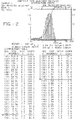
- Figure 2 shows data in table and graphical form obtained from the particle size distribution analysis of a sample of ultra-finely ground RHA.
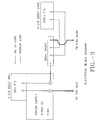
- Figure 3 is a schematic diagram illustrating the standard apparatus used in the chloride permeability test.
- Figure 4 shows data in graphical form obtained from the particle size distribution analysis of ordinary portland cement (ASTM C 150, Type I Portland Cement).
- This invention describes the use of a siliceous ash, obtained from the burning of crop residues such as rice hull (also called rice husk), which is used as a mineral addition for making cement products.
- mineral addition is used for inorganic materials, both natural materials and industrial byproducts, that are used in quantities of 5% or more by mass of the cement. Mineral additions may be blended or interground with portland cement, or added directly to concrete before or during mixing.
- Type I(PM) is a pozzolan-modified portland cement produced either by intergrinding portland cement clinker and pozzolan, or by blending portland cement and finely divided pozzolan, in which the pozzolan content is less than 15% by weight of the pozzolan-modified portland cement.
- a pozzolan is an inorganic material which consists principally of chemically reactive siliceous or siliceous and aluminous compounds and which, in the presence of moisture, is capable of reacting with lime (calcium hydroxide, Ca(OH)2), to form a hardened mass of calcium silicate hydrates and calcium aluminate hydrates.
- Type IP is a portland-pozzolan cement produced either by intergrinding portland cement clinker and pozzolan or by blending portland cement and finely divided pozzolan, in which the pozzolan constituent is between 15 and 40 weight % of the portland-pozzolan cement.
- the siliceous rice hull ashes used herein are generally of the "highly pozzolanic type", as described in the RILEM 73-SBC Report. According to this report, the controlled incineration of rice hulls produces a cellular product of high surface area and silica mostly in the amorphous state, two factors which are responsible for the high pozzolanicity. However, a rice hull ash which is relatively less amorphous, such as RHA No. 3 (See, Table 1), may also be used in this invention.
- Random samples of RHA were obtained from rice-hullburning furnaces of different designs, which are located in three different States of the U.S. (See, Table 1). Two of the ashes, namely RHA No. 1 and RHA No. 2, contained 4.9 and 5.5% carbon respectively. RHA No. 3 was found to contain 35% carbon. By X-ray diffraction analysis it was determined that RHA No. 1 and RHA No. 2 contained 100% and 99% silica in the amorphous state, respectively. By quantitative X-ray diffraction analysis, it was estimated that 90% of the silica present in RHA No. 3 is in the amorphous state, the remaining being in the form of cristobalite.
- Table 1 also shows the particle size (i.e. effective diameter) analysis of the three ashes. It should be noted that, although the bulk of particles in each ash are larger than 75 ⁇ m (67 to 90% particles are retained on No. 200 mesh standard sieve), the cellular character of the particles (as illustrated by a typical scanning electron micrograph shown in the U.S. Patent 4,105,459) is evident from the very high B.E.T. surface area values (24.3 to 99.2), as determined by the nitrogen adsorption technique (Monosorb Apparatus, Quantachrome Corp.). All three ashes shown in Table 1 conformed to the silica described in U.S.
- Patent 4,105,459 which covers ashes (originating from agricultural matter) containing 49 to 98% silica in highly amorphous form (the balance being mainly residual carbon) and having 10 to 100m/g B.E.T. surface area by nitrogen adsorption.
- Blended portland cements were prepared by mixing 20 to 30% by weight of a Type I portland cement (meeting ASTM C 150 standard specification) and 70 to 80% of any one of the three ashes shown in Table 1, after the ashes had been lightly ground for 15 minutes in a laboratory ball mill. These preparations produced hydraulic cements of satisfactory setting and hardening (strength) properties confirming the disclosures of U.S. Patent 4,105,459..
- Blended cements are produced either by intergrinding a suitable additive with portland cement clinker or by mixing portland cement with a finely ground additive. Although fine grinding of the ash prior to making a blended cement is not necessary for the purpose of increasing the surface area and reactivity, a light grinding treatment to pulverize the very large particles (i.e. particles having a median diameter of >75 ⁇ m) is thought to be helpful in producing a more homogeneous ash-portland cement blend. This, is not necessary for blended cements produced by intergrinding. Unless otherwise indicated, the ashes used in this invention and described below were lightly ground such that there was approximately a 10% residue when tested by wet screening on a No.
- Typical particle size analysis of the lightly ground sample of RHA No. 1 (also identified as Sample G) is shown in Figure 1.
- the data in Figure 1 show that 89.3% of the particles are less than 77 ⁇ m size and only 9.7% of the particles are below 10 ⁇ m size. This means that 80% of the particles are in the 10-77 ⁇ m size range.
- the particle size analysis shown in Figures 1, 2 and 4 were carried out by the Horiba Apparatus (Model LA-500), using laser-light scattering of a dispersed sample.
- the term hydraulic cement composition as used herein refers to any composition that contains cement, water and a fine or coarse aggregate and will set and become a hardened solid mass.
- cement product refers to any hardened product, other than cement paste, resulting from the hydration of a hydraulic cement and includes hardened concretes and mortars.
- a mortar product is any cement product that is obtained by mixing a cement, a fine aggregate and water
- a concrete product is any cement product that is obtained by mixing a cement, a fine aggregate and a coarse aggregate and water.
- Three intermediate mixtures were designed to contain 389,407 and 425 kg/m3 (respectively 660, 690, and 720 lb/yd3) cement content, and 0.327, 0.31, and 0.30 water/cement ratio, respectively.
- the properties of these five portland cement concrete mixtures were compared with corresponding concrete mixtures made with blended portland cements containing 5%, 10% 15%, 20% and 30% RHA respectively.
- the same quantity of the superplasticizer (9.9 liters/m3 (7 1/2 liters per cu. yd) concrete) was used in every case, therefore the slump varied from 17.7-25.4 cm (7 to 10 inches).
- permeability of concrete to water is the most important property which determines the durability to most of the processes of concrete deterioration, such as cracking due to freezing and thawing cycles, sulfate attack, alkali-aggregate attack, and corrosion of reinforcing steel.
- the tests for water permeability are very cumbersome and time consuming but a chloride permeability test, in accordance with the AASHTO T-277 methods, is fairly simple and rapid. There is a high correlation between the results obtained in the chloride permeability test and the results obtained in tests for water permeability (i.e. if a product has decreased permeability to chloride it will also have decreased permeability to water).
- the AASHTO T-277 test based on the work of D. Whiting of Portland Cement Association (FHWA Report No. RD-81/119, August 1981), involves monitoring of the amount of electrical current passed through a 10.2 cm (4-inch) diameter x 5.1 cm (2-inch) thick concrete disk.
- One end of the test specimen is immersed in a 3% NaCl solution (See, Figure 3) and the other in a 0.3N NaOH solution. It is possible to accelerate the migration of chloride ions across the specimen by application of 60 volts d.c. potential.
- the total charge that is measured over a 6 hour (6-h) period is assumed to be related to the chloride permeability of concrete.
- Example 1 The results from Test A (see, Table 4) show that the compressive strength and the chloride permeability of the concrete made from the blended cement containing 5% RHA were somewhat affected in comparison to the reference portland cement concrete. However, Test B showed that when compared to the reference portland cement concrete, the 28-day compressive strength of the concrete made with the blended cement containing 10% was increased by approximately 18%, however, the permeability dropped to almost one-third of the reference permeability (from 3,500 to 1,250 coulombs) which improved the concrete permeability rating from moderate to low. (See Table 4).
- Example 2 Test C showed that when compared to the reference portland cement concrete, the 28-day compressive strength of the concrete made with the blended cement containing 15% RHA was increased by approximately 20%, however the permeability dropped to almost one-fourth (from 3,260 to 870 coulombs) which improved the permeability rating from moderate to very low. (See Table 4).
- Example 3 Test D showed that the 28-day compressive strength of the concrete made with the blended cement containing 20% RHA was increased by approximately 14%, however the permeability dropped to almost one-eighth (from 3,000 to 390 coulombs) which improved the permeability rating from moderate to very low.
- Example 4 Test E showed that when compared to the reference portland cement concrete, the 28-day compressive strength of the concrete made with the blended cement containing 30% RHA was increased by approximately 2%, however the permeability dropped by almost an order of magnitude (2,900 to 300 coulombs) (See, Table 4). Another test comparable to Tests A-E was conducted for a concrete made from a blended cement containing 40% RHA No. 1. The resulting 28 day compressive strength of the concrete was 780.3 kg/cm (11.1 ksi) and the chloride permeability was 1,165 coulombs.
- Example 5 To insure that the marked improvement in the impermeability of concrete resulting from the use of blended cements containing RHA is not limited to the cements containing a unique specimen of RHA (i.e. RHA No. 1), additional tests were conducted with blended cements containing RHA No. 2 and RHA No. 3. For this purpose, it was sufficient to investigate only one of the test mixtures, for instance, the concrete mixture used in Test B of Table 3. Therefore, using the materials and mix proportions of Test B (Table 3), in Test F two additional concrete mixtures were made with blended cements containing 10% of either RHA No. 2 or RHA No. 3. In order to obtain a more homogeneous product, all three ashes were lightly ground to approximately 10% residue on No. 200 mesh standard sieve (75 ⁇ m).
- the impermeability-improving benefit in concrete mixtures from the use of blended cements containing low percentages of RHA is not limited to the cements containing RHA No. 1; in fact, this benefit is available for RHA types with a wide range of physical-chemical characteristics including those represented by lightly ground RHA No. 1, RHA No. 2, and RHA No. 3 (See, Table 1 for the composition of the various RHAs).
- Table 5 Comparison of Properties of Concrete with Blended Cements Containing 10% RHA of Different Types Test B Test F Properties ref. Concrete Blended cement concrete (RHA No.
- Example 6 ASTM Class F fly ash is now the most commonly used pozzolanic admixture in the U.S., but it is known to be much less reactive than amorphous RHA and takes substantially longer curing periods than 28 days to develop high strength and impermeability. This example illustrates how a partial replacement of fly ash with RHA can make a drastic improvement in the impermeability of concrete even at 28-d.
- the concrete permeability rating as per the AASHTO test was "moderately permeable" for both the reference concrete and the concrete containing fly ash without RHA. Whereas the addition of 10% fly ash and 10% RHA increased the strength by only 10%, it reduced the coulombs passed to approximately one-seventh of the value obtained by the reference concrete, and one-fifth of the value obtained by the concrete containing just the fly ash.
- the very low rating exhibited by the concrete mixture containing 10% fly ash and 10% RHA provides a method for making highly impermeable concretes using fly ash-RHA mixtures containing only 10% RHA.
- about 15% or more RHA by weight of cement was needed to obtain a very low permeability rating when RHA alone was used.
- the improved properties of portland cement concrete resulting from the addition of 10% RHA by weight of the portland-RHA cement to a concrete, which already contained fly ash as a mineral admixture can also be obtained if a blended Type IP or Type I(PM) cement containing pozzolanic or cementitious admixtures, as defined by ASTM C 595 are used in place of pure portland cement.
- Example 7 This example illustrates the particle size range of RHA that is covered by this invention.
- RHA No. 1 was used in three different particle size ranges as described below:
- the types of pozzolanic RHA used herein conform to a broad range of physical-chemical characteristics, such as 20-100 m/g B.E.T. surface area by nitrogen adsorption, up to 35% carbon content, and 60 to 95% silica, of which up to 10% can be crystalline. Since the desired particle size distribution range of RHA in the blended cements described in Tests A-F, etc. is not much different than a typical ASTM Type I portland cement (See, Figure 4) the size range of RHA particles in a interground portland-RHA cement can be expected to be similar to the portland cement size range shown in Figure 4.
- the unique property of cement products can be achieved from the use of ashes with a broad range of particles as long as most of the particles conform to a particle size distribution in the range of 10 to 75 ⁇ m.
- Example 8 ASTM Type 1 standard portland cement, a quartzitic sand (3.0 fineness modulus), and a crushed limestone with 12 mm (1/2-in.) maximum size were used to make a reference (control) concrete.
- the pozzolans used in the test mixtures included an ASTM Class F fly ash and an amorphous rice hull ash with 90% silica content, 5% carbon content, and 20 m/g B.E.T. surface area. The ash had been pulverized to contain less than 10% particles above 75 ⁇ m size.
- RHA Due to the impermeability-improving and early strength acceleration characteristics of RHA used in this invention, RHA has the potential of becoming a valuable material for the cement and concrete industries. It can be a pozzolanic additive for producing blended portland cements or an anhydrous pozzolanic admixture for direct addition to concrete mixtures.
Landscapes
- Chemical & Material Sciences (AREA)
- Engineering & Computer Science (AREA)
- Ceramic Engineering (AREA)
- Structural Engineering (AREA)
- Materials Engineering (AREA)
- Organic Chemistry (AREA)
- Environmental & Geological Engineering (AREA)
- Inorganic Chemistry (AREA)
- Chemical Kinetics & Catalysis (AREA)
- Combustion & Propulsion (AREA)
- Civil Engineering (AREA)
- Curing Cements, Concrete, And Artificial Stone (AREA)
- Processing Of Solid Wastes (AREA)
- Silicon Compounds (AREA)
- Silicates, Zeolites, And Molecular Sieves (AREA)
Claims (14)
- Zusammensetzung zur Verwendung in Beton oder Mörtel, die einen aus Portlandzementen und gemischten hydraulischen Puzzolan-Portlandzementen gewählten Zement und von 5 - 30 % vom Gewicht des Zementes kieselsäurehaltige Asche umfaßt, wobei die besagte Asche aus Feldfruchtrückständen stammt und 60 - 95 Gew.-% Kieselsäure enthält und mindestens 90 % der besagten Kieselsäure amorph ist, wobei der mindestens 10 % der besagten Ascheteilchen eine Größe oberhalb von 75 m aufweisen und die Ascheteilchen einen mit Laserlichtstreuung gemessenen mittleren Teilchendurchmesser von mindestens 6 Mikrometer und eine BET-Oberfläche von mindestens 20 m/g haben.
- Zusammensetzung nach Anspruch 1, in der der mittlere Teilchendurchmesser zwischen 15 und 38 Mikrometer beträgt.
- Zusammensetzung nach Anspruch 1 oder 2, in der die Feldfruchtrückstände Reishülsen sind.
- Zusammensetzung nach einem der Ansprüche 1 bis 3 , in der der Zement und die Asche wasserfrei sind.
- Zusammensetzung nach einem der vorherigen Ansprüche, in der der gemischte hydraulische Puzzolan-Portlandzement hydraulischer Zement des Typs I (PM) oder des Typs IP ist.
- Zusammensetzung nach einem der vorherigen Ansprüche, die 10 bis 30 % vom Gewicht des Zementes Asche umfaßt.
- Zusammensetzung nach Anspruch 6, die 10 bis 15 % vom Gewicht des Zementes Asche umfaßt.
- Zusammensetzung nach Anspruch 6, die 15 bis 30 % vom Gewicht des Zementes Asche umfaßt.
- Zementprodukt, das eine Zusammensetzung nach einem der Ansprüche 1 bis 8, feinen Zuschlagstoff und groben Zuschlagstoff umfaßt.
- Verfahren zur Herstellung einer Zusammensetzung zur Verwendung in Beton oder Mörtel, das das Mischen eines aus Portlandzementen und gemischten hydraulischen Puzzolan-Portlandzementen gewählten Zements mit von 5 - 30 % vom Gewicht des Zementes kieselsäurehaltiger Asche umfaßt, wobei die besagte Asche aus Feldfruchtrückständen stammt und 60 - 95 Gew.-% Kieselsäure enthält und mindestens 90 % der besagten Kieselsäure amorph ist, wobei mindestens 10 % der besagten Ascheteilchen eine Größe oberhalb von 75 Mikrometer aufweisen und die Ascheteilchen einen mit Laserlichtstreuung gemessenen mittleren Teilchendurchmesser von mindestens 6 Mikrometer und eine BET-Oberfläche von mindestens 20 m/g haben.
- Verfahren nach Anspruch 10, wobei der Zement und/oder die Asche entsprechend einem der Ansprüche 2 bis 5 verwendet wird.
- Verfahren nach Anspruch 10 oder 11, in dem die Asche in einer Menge verwendet wird, mit der eine Zusammensetzung erreicht werden kann, in der das Verhältnis von Asche zu Zement entsprechend einem der Ansprüche 6 bis 8 ist.
- Verfahren zur Herstellung eines Zementprodukts, welches das Mischen einer Zusammensetzung nach einem der Ansprüche 1 bis 8, feinen Zuschlagstoffs und groben Zuschlagstoffs umfaßt.
- Verfahren zur Herstelung eines Zementproduktes mit einer besseren als mäßigen Durchlässigkeit, welches umfaßt:(a) das Mischen einer hydraulischen Zementzusammensetzung, die wirksame Mengen einer Zusammensetzung nach einem der Ansprüche 1 bis 8, feinen Zuschlagstoff, groben Zuschlagstoff und Wasser umfaßt; und(b) das Aushärtenlassen der Zementzusammensetzung.
Applications Claiming Priority (3)
| Application Number | Priority Date | Filing Date | Title |
|---|---|---|---|
| US54326290A | 1990-06-25 | 1990-06-25 | |
| US543262 | 1990-06-25 | ||
| PCT/US1991/004139 WO1992000251A1 (en) | 1990-06-25 | 1991-06-18 | Highly durable cement products containing siliceous ashes |
Publications (3)
| Publication Number | Publication Date |
|---|---|
| EP0537202A1 EP0537202A1 (de) | 1993-04-21 |
| EP0537202A4 EP0537202A4 (de) | 1994-03-16 |
| EP0537202B1 true EP0537202B1 (de) | 1996-02-28 |
Family
ID=24167258
Family Applications (1)
| Application Number | Title | Priority Date | Filing Date |
|---|---|---|---|
| EP91911430A Expired - Lifetime EP0537202B1 (de) | 1990-06-25 | 1991-06-18 | Sehr dauerhafte, kieselsäurehaltige aschen enthaltende zementprodukte |
Country Status (17)
| Country | Link |
|---|---|
| EP (1) | EP0537202B1 (de) |
| JP (1) | JP3058446B2 (de) |
| KR (2) | KR0182591B1 (de) |
| AT (1) | ATE134598T1 (de) |
| AU (1) | AU652944B2 (de) |
| BR (1) | BR9106677A (de) |
| CA (1) | CA2085219C (de) |
| DE (1) | DE69117512T2 (de) |
| DK (1) | DK0537202T3 (de) |
| ES (1) | ES2086546T3 (de) |
| FI (1) | FI925854A7 (de) |
| GR (1) | GR3019164T3 (de) |
| HK (1) | HK1001173A1 (de) |
| HU (1) | HU217409B (de) |
| NO (1) | NO314626B1 (de) |
| RU (1) | RU2098372C1 (de) |
| WO (1) | WO1992000251A1 (de) |
Families Citing this family (30)
| Publication number | Priority date | Publication date | Assignee | Title |
|---|---|---|---|---|
| DE4408248A1 (de) * | 1994-03-11 | 1995-09-14 | Hoechst Ag | Physiologisch verträgliche und physiologisch abbaubare Kohlenhydrat-Mimetika, ein Verfahren zur Herstellung und ihre Verwendung |
| EP0671409A3 (de) * | 1994-03-11 | 1996-06-12 | Hoechst Ag | Malonsäurederivate mit antiadhäsiven Eigenschaften. |
| WO1997021637A1 (en) * | 1995-12-13 | 1997-06-19 | Henkel Corporation | Method of making blended cement compositons |
| AUPP819899A0 (en) * | 1999-01-18 | 1999-02-11 | Contract Research & Development (M) Sdn. Bhd. | Conductive and flame retardant plastic fillers |
| JP4524721B2 (ja) * | 2000-04-10 | 2010-08-18 | 株式会社前田先端技術研究所 | 籾殻灰等を含有するセメント組成物 |
| JP2001316145A (ja) * | 2000-04-28 | 2001-11-13 | Maeta Techno Research Inc | 籾殻灰からなる水硬性組成物用混和材とその応用 |
| RU2197443C2 (ru) * | 2000-05-19 | 2003-01-27 | Александр Викторович Лизенко | Сырьевая смесь для обжига белого клинкера |
| US20030164119A1 (en) | 2002-03-04 | 2003-09-04 | Basil Naji | Additive for dewaterable slurry and slurry incorporating same |
| TW529987B (en) | 2001-03-02 | 2003-05-01 | James Hardie Res Pty Ltd | Spattering apparatus |
| CN100340519C (zh) * | 2005-11-17 | 2007-10-03 | 中国建筑材料科学研究院 | 麦秸秆水泥复合材料夹芯墙板及其制造方法 |
| US8993462B2 (en) | 2006-04-12 | 2015-03-31 | James Hardie Technology Limited | Surface sealed reinforced building element |
| US7799128B2 (en) | 2008-10-10 | 2010-09-21 | Roman Cement, Llc | High early strength pozzolan cement blends |
| JP5178554B2 (ja) * | 2009-01-27 | 2013-04-10 | 太平洋セメント株式会社 | セメント組成物 |
| RU2397966C1 (ru) * | 2009-03-20 | 2010-08-27 | Государственное образовательное учреждение высшего профессионального образования "Сибирская государственная автомобильно-дорожная академия (СибАДИ)" | Сухая строительная смесь |
| US8414700B2 (en) | 2010-07-16 | 2013-04-09 | Roman Cement, Llc | Narrow PSD hydraulic cement, cement-SCM blends, and methods for making same |
| JP5455832B2 (ja) * | 2010-07-28 | 2014-03-26 | 太平洋セメント株式会社 | セメント組成物 |
| US9272953B2 (en) | 2010-11-30 | 2016-03-01 | Roman Cement, Llc | High early strength cement-SCM blends |
| MX373413B (es) | 2011-10-20 | 2020-05-26 | Roman Cement Llc | Mezclas de cemento-scm de particulas empacadas. |
| CN102674721A (zh) * | 2012-05-11 | 2012-09-19 | 湖南农业大学 | 一种利用生物质制备混凝土掺合料的方法 |
| AT516111B1 (de) * | 2014-07-17 | 2018-02-15 | Holcim Technology Ltd | Trockene Zementmischung |
| US10737980B2 (en) | 2017-01-10 | 2020-08-11 | Roman Cement, Llc | Use of mineral fines to reduce clinker content of cementitious compositions |
| US11168029B2 (en) | 2017-01-10 | 2021-11-09 | Roman Cement, Llc | Use of mineral fines to reduce clinker content of cementitious compositions |
| US12151974B2 (en) | 2017-01-10 | 2024-11-26 | Roman Cement, Llc | Use of mineral fines to reduce clinker content of cementitious compositions |
| US10730805B2 (en) | 2017-01-10 | 2020-08-04 | Roman Cement, Llc | Use of quarry fines and/or limestone powder to reduce clinker content of cementitious compositions |
| US10131575B2 (en) | 2017-01-10 | 2018-11-20 | Roman Cement, Llc | Use of quarry fines and/or limestone powder to reduce clinker content of cementitious compositions |
| RU2679322C1 (ru) * | 2018-03-13 | 2019-02-07 | Федеральное государственное автономное образовательное учреждение высшего образования "Дальневосточный федеральный университет" (ДВФУ) | Самоуплотняющийся бетон |
| US10689559B2 (en) | 2018-03-19 | 2020-06-23 | Saudi Arabian Oil Company | Flexible durable cement |
| US10655044B2 (en) | 2018-04-27 | 2020-05-19 | Saudi Arabian Oil Company | Self-healing durable cement |
| JP7454396B2 (ja) * | 2020-02-06 | 2024-03-22 | 太平洋セメント株式会社 | セメント及びその製造方法 |
| CN113121160B (zh) * | 2021-04-23 | 2022-04-12 | 徐银田 | 一种硅砂透水砖及其制备方法 |
Family Cites Families (6)
| Publication number | Priority date | Publication date | Assignee | Title |
|---|---|---|---|---|
| US3959007A (en) * | 1972-07-28 | 1976-05-25 | Structural Materials | Process for the preparation of siliceous ashes |
| US4105459A (en) * | 1974-01-28 | 1978-08-08 | The Regents Of The University Of California | Siliceous ashes and hydraulic cements prepared therefrom |
| US4210457A (en) * | 1978-10-12 | 1980-07-01 | W. R. Grace & Co. | Portland cement-fly ash-aggregate concretes |
| US4659679A (en) * | 1985-01-25 | 1987-04-21 | Falk Richard A | Insulative composition and method of making articles therefrom |
| FR2621036B1 (fr) * | 1987-09-25 | 1992-11-06 | Bouygues Sa | Coulis a base de ciment, melanges d'adjuvants pour la preparation de ce coulis et applications |
| US4829107A (en) * | 1988-02-24 | 1989-05-09 | W. R. Grace & Co.-Conn. | Rice hull ash concrete admixture |
-
1991
- 1991-06-18 ES ES91911430T patent/ES2086546T3/es not_active Expired - Lifetime
- 1991-06-18 HU HU9204069A patent/HU217409B/hu unknown
- 1991-06-18 JP JP51100991A patent/JP3058446B2/ja not_active Expired - Fee Related
- 1991-06-18 DE DE69117512T patent/DE69117512T2/de not_active Expired - Fee Related
- 1991-06-18 DK DK91911430T patent/DK0537202T3/da active
- 1991-06-18 BR BR9106677A patent/BR9106677A/pt not_active IP Right Cessation
- 1991-06-18 WO PCT/US1991/004139 patent/WO1992000251A1/en not_active Ceased
- 1991-06-18 HK HK98100224A patent/HK1001173A1/en not_active IP Right Cessation
- 1991-06-18 AU AU80038/91A patent/AU652944B2/en not_active Ceased
- 1991-06-18 KR KR1019920703337A patent/KR0182591B1/ko not_active Expired - Fee Related
- 1991-06-18 RU RU92016624A patent/RU2098372C1/ru not_active IP Right Cessation
- 1991-06-18 EP EP91911430A patent/EP0537202B1/de not_active Expired - Lifetime
- 1991-06-18 CA CA 2085219 patent/CA2085219C/en not_active Expired - Fee Related
- 1991-06-18 AT AT91911430T patent/ATE134598T1/de not_active IP Right Cessation
- 1991-06-18 FI FI925854A patent/FI925854A7/fi unknown
-
1992
- 1992-12-21 NO NO19924945A patent/NO314626B1/no not_active IP Right Cessation
-
1996
- 1996-02-29 GR GR960400499T patent/GR3019164T3/el unknown
-
1998
- 1998-07-30 KR KR1019980705882A patent/KR0183536B1/ko not_active Expired - Fee Related
Non-Patent Citations (1)
| Title |
|---|
| CHEMICAL ABSTRACTS, vol. 101, no. 18, 29 October 1984, Columbus, Ohio, US; abstract no. 156582f & JP-A-59 088 354 (MATSUSHITA ELECTRIC WORKS LTD) 22 May 1984 * |
Also Published As
| Publication number | Publication date |
|---|---|
| HUT67417A (en) | 1995-04-28 |
| DE69117512D1 (de) | 1996-04-04 |
| JPH05508607A (ja) | 1993-12-02 |
| HU9204069D0 (en) | 1993-09-28 |
| BR9106677A (pt) | 1993-06-08 |
| ES2086546T3 (es) | 1996-07-01 |
| DK0537202T3 (da) | 1996-03-18 |
| JP3058446B2 (ja) | 2000-07-04 |
| FI925854A0 (fi) | 1992-12-23 |
| FI925854L (fi) | 1992-12-23 |
| CA2085219C (en) | 2004-10-19 |
| AU8003891A (en) | 1992-01-23 |
| KR0183536B1 (ko) | 1999-05-01 |
| HU217409B (hu) | 2000-01-28 |
| HK1001173A1 (en) | 1998-05-29 |
| GR3019164T3 (en) | 1996-05-31 |
| NO924945L (no) | 1993-02-24 |
| WO1992000251A1 (en) | 1992-01-09 |
| DE69117512T2 (de) | 1996-07-11 |
| RU2098372C1 (ru) | 1997-12-10 |
| EP0537202A4 (de) | 1994-03-16 |
| AU652944B2 (en) | 1994-09-15 |
| NO314626B1 (no) | 2003-04-22 |
| EP0537202A1 (de) | 1993-04-21 |
| CA2085219A1 (en) | 1991-12-26 |
| FI925854A7 (fi) | 1992-12-23 |
| NO924945D0 (no) | 1992-12-21 |
| KR0182591B1 (ko) | 1999-05-01 |
| ATE134598T1 (de) | 1996-03-15 |
Similar Documents
| Publication | Publication Date | Title |
|---|---|---|
| EP0537202B1 (de) | Sehr dauerhafte, kieselsäurehaltige aschen enthaltende zementprodukte | |
| HK1001173B (en) | Highly durable cement products containing siliceous ashes | |
| US5346548A (en) | Highly durable cement products containing siliceous ashes | |
| US6451104B2 (en) | Method for producing a blended cementitious composition | |
| US4997484A (en) | Hydraulic cement and composition employing the same | |
| US2564690A (en) | Hydrated lime-fly ash-fine aggregate cement | |
| AU601137B2 (en) | An improved rice hull ash concrete admixture | |
| US6818058B2 (en) | Method for the treatment of fly ash | |
| JP3272360B2 (ja) | セメントの製造方法 | |
| US4336069A (en) | High strength aggregate for concrete | |
| US5236501A (en) | Method for producing a cementitious composition in powder form | |
| EP0346416B1 (de) | Hydraulischer zement und eine ihn enthaltende zusammensetzung | |
| Naik et al. | Enhancement in mechanical properties of concrete due to blended ash | |
| El-Alfi et al. | Effect of limestone fillers and silica fume pozzolana on the characteristics of sulfate resistant cement pastes | |
| JPH0680456A (ja) | 流動性水硬性組成物 | |
| JPH0952744A (ja) | モルタル及びコンクリ−ト組成物 | |
| EP1382584A1 (de) | Wässrige Schlämme aus gemahlenen Bodenaschen von Stadtmüllverbrennung für Zementmischungen | |
| US20220234952A1 (en) | Admixture for cementitious mixtures | |
| KR20240060621A (ko) | 콘크리트 혼화제 | |
| JP3082861B2 (ja) | 高強度コンクリート用水硬性組成物及び高強度モルタル又はコンクリートの製造方法 | |
| Ojha et al. | Design of low carbon high performance concrete incorporating ultrafine materials." | |
| Salas et al. | Study on the pozzolanic properties of silica obtained from rice husk by chemical and thermal process | |
| Nikam et al. | Effect of different supplementary cementitious material on the microstructure and its resistance against chloride penetration of concrete | |
| Ngo et al. | Influence of cement substitution by industrial by-products on the properties of high-performance mortar | |
| Abiodun et al. | Mechanical properties of rice husk ash cement mass concrete mixed with discrete steel fibres. |
Legal Events
| Date | Code | Title | Description |
|---|---|---|---|
| PUAI | Public reference made under article 153(3) epc to a published international application that has entered the european phase |
Free format text: ORIGINAL CODE: 0009012 |
|
| 17P | Request for examination filed |
Effective date: 19930120 |
|
| AK | Designated contracting states |
Kind code of ref document: A1 Designated state(s): AT BE CH DE DK ES FR GB GR IT LI LU NL SE |
|
| RHK1 | Main classification (correction) |
Ipc: C04B 18/10 |
|
| A4 | Supplementary search report drawn up and despatched |
Effective date: 19930521 |
|
| AK | Designated contracting states |
Kind code of ref document: A4 Designated state(s): AT BE CH DE DK ES FR GB GR IT LI LU NL SE |
|
| 17Q | First examination report despatched |
Effective date: 19940826 |
|
| GRAH | Despatch of communication of intention to grant a patent |
Free format text: ORIGINAL CODE: EPIDOS IGRA |
|
| GRAA | (expected) grant |
Free format text: ORIGINAL CODE: 0009210 |
|
| AK | Designated contracting states |
Kind code of ref document: B1 Designated state(s): AT BE CH DE DK ES FR GB GR IT LI LU NL SE |
|
| REF | Corresponds to: |
Ref document number: 134598 Country of ref document: AT Date of ref document: 19960315 Kind code of ref document: T |
|
| REG | Reference to a national code |
Ref country code: CH Ref legal event code: NV Representative=s name: MOINAS KIEHL SAVOYE & CRONIN |
|
| REG | Reference to a national code |
Ref country code: DK Ref legal event code: T3 |
|
| REF | Corresponds to: |
Ref document number: 69117512 Country of ref document: DE Date of ref document: 19960404 |
|
| REG | Reference to a national code |
Ref country code: GR Ref legal event code: FG4A Free format text: 3019164 |
|
| ET | Fr: translation filed | ||
| ITF | It: translation for a ep patent filed | ||
| REG | Reference to a national code |
Ref country code: ES Ref legal event code: FG2A Ref document number: 2086546 Country of ref document: ES Kind code of ref document: T3 |
|
| PLBE | No opposition filed within time limit |
Free format text: ORIGINAL CODE: 0009261 |
|
| STAA | Information on the status of an ep patent application or granted ep patent |
Free format text: STATUS: NO OPPOSITION FILED WITHIN TIME LIMIT |
|
| 26N | No opposition filed | ||
| REG | Reference to a national code |
Ref country code: GB Ref legal event code: IF02 |
|
| PGFP | Annual fee paid to national office [announced via postgrant information from national office to epo] |
Ref country code: NL Payment date: 20040528 Year of fee payment: 14 |
|
| PGFP | Annual fee paid to national office [announced via postgrant information from national office to epo] |
Ref country code: AT Payment date: 20040603 Year of fee payment: 14 |
|
| PGFP | Annual fee paid to national office [announced via postgrant information from national office to epo] |
Ref country code: CH Payment date: 20040621 Year of fee payment: 14 |
|
| PGFP | Annual fee paid to national office [announced via postgrant information from national office to epo] |
Ref country code: LU Payment date: 20040701 Year of fee payment: 14 |
|
| PGFP | Annual fee paid to national office [announced via postgrant information from national office to epo] |
Ref country code: DE Payment date: 20040802 Year of fee payment: 14 |
|
| PGFP | Annual fee paid to national office [announced via postgrant information from national office to epo] |
Ref country code: GB Payment date: 20050615 Year of fee payment: 15 |
|
| PGFP | Annual fee paid to national office [announced via postgrant information from national office to epo] |
Ref country code: FR Payment date: 20050617 Year of fee payment: 15 |
|
| PG25 | Lapsed in a contracting state [announced via postgrant information from national office to epo] |
Ref country code: LU Free format text: LAPSE BECAUSE OF NON-PAYMENT OF DUE FEES Effective date: 20050618 Ref country code: AT Free format text: LAPSE BECAUSE OF NON-PAYMENT OF DUE FEES Effective date: 20050618 |
|
| PGFP | Annual fee paid to national office [announced via postgrant information from national office to epo] |
Ref country code: GR Payment date: 20050628 Year of fee payment: 15 |
|
| PG25 | Lapsed in a contracting state [announced via postgrant information from national office to epo] |
Ref country code: LI Free format text: LAPSE BECAUSE OF NON-PAYMENT OF DUE FEES Effective date: 20050630 Ref country code: CH Free format text: LAPSE BECAUSE OF NON-PAYMENT OF DUE FEES Effective date: 20050630 |
|
| PGFP | Annual fee paid to national office [announced via postgrant information from national office to epo] |
Ref country code: BE Payment date: 20050725 Year of fee payment: 15 |
|
| PG25 | Lapsed in a contracting state [announced via postgrant information from national office to epo] |
Ref country code: NL Free format text: LAPSE BECAUSE OF NON-PAYMENT OF DUE FEES Effective date: 20060101 |
|
| PG25 | Lapsed in a contracting state [announced via postgrant information from national office to epo] |
Ref country code: DE Free format text: LAPSE BECAUSE OF NON-PAYMENT OF DUE FEES Effective date: 20060103 |
|
| REG | Reference to a national code |
Ref country code: CH Ref legal event code: PL |
|
| NLV4 | Nl: lapsed or anulled due to non-payment of the annual fee |
Effective date: 20060101 |
|
| PG25 | Lapsed in a contracting state [announced via postgrant information from national office to epo] |
Ref country code: GB Free format text: LAPSE BECAUSE OF NON-PAYMENT OF DUE FEES Effective date: 20060618 |
|
| PG25 | Lapsed in a contracting state [announced via postgrant information from national office to epo] |
Ref country code: SE Free format text: LAPSE BECAUSE OF NON-PAYMENT OF DUE FEES Effective date: 20060619 |
|
| PG25 | Lapsed in a contracting state [announced via postgrant information from national office to epo] |
Ref country code: DK Free format text: LAPSE BECAUSE OF NON-PAYMENT OF DUE FEES Effective date: 20060630 Ref country code: BE Free format text: LAPSE BECAUSE OF NON-PAYMENT OF DUE FEES Effective date: 20060630 |
|
| PGFP | Annual fee paid to national office [announced via postgrant information from national office to epo] |
Ref country code: IT Payment date: 20060630 Year of fee payment: 16 |
|
| REG | Reference to a national code |
Ref country code: DK Ref legal event code: EBP |
|
| PGFP | Annual fee paid to national office [announced via postgrant information from national office to epo] |
Ref country code: ES Payment date: 20070130 Year of fee payment: 16 |
|
| EUG | Se: european patent has lapsed | ||
| PGFP | Annual fee paid to national office [announced via postgrant information from national office to epo] |
Ref country code: SE Payment date: 20070221 Year of fee payment: 17 |
|
| GBPC | Gb: european patent ceased through non-payment of renewal fee |
Effective date: 20060618 |
|
| PGFP | Annual fee paid to national office [announced via postgrant information from national office to epo] |
Ref country code: DK Payment date: 20070302 Year of fee payment: 16 |
|
| REG | Reference to a national code |
Ref country code: FR Ref legal event code: ST Effective date: 20070228 |
|
| BERE | Be: lapsed |
Owner name: THE *REGENTS OF THE UNIVERSITY OF CALIFORNIA Effective date: 20060630 |
|
| PG25 | Lapsed in a contracting state [announced via postgrant information from national office to epo] |
Ref country code: FR Free format text: LAPSE BECAUSE OF NON-PAYMENT OF DUE FEES Effective date: 20060630 |
|
| REG | Reference to a national code |
Ref country code: ES Ref legal event code: FD2A Effective date: 20070619 |
|
| PG25 | Lapsed in a contracting state [announced via postgrant information from national office to epo] |
Ref country code: ES Free format text: LAPSE BECAUSE OF NON-PAYMENT OF DUE FEES Effective date: 20070619 Ref country code: GR Free format text: LAPSE BECAUSE OF NON-PAYMENT OF DUE FEES Effective date: 20070104 |
|
| PG25 | Lapsed in a contracting state [announced via postgrant information from national office to epo] |
Ref country code: IT Free format text: LAPSE BECAUSE OF NON-PAYMENT OF DUE FEES Effective date: 20070618 |