EP0537399A1 - Nouvelle ribonucléase et son inhibiteur - Google Patents
Nouvelle ribonucléase et son inhibiteur Download PDFInfo
- Publication number
- EP0537399A1 EP0537399A1 EP91402767A EP91402767A EP0537399A1 EP 0537399 A1 EP0537399 A1 EP 0537399A1 EP 91402767 A EP91402767 A EP 91402767A EP 91402767 A EP91402767 A EP 91402767A EP 0537399 A1 EP0537399 A1 EP 0537399A1
- Authority
- EP
- European Patent Office
- Prior art keywords
- dna
- rnase
- cells
- plant
- promoter
- Prior art date
- Legal status (The legal status is an assumption and is not a legal conclusion. Google has not performed a legal analysis and makes no representation as to the accuracy of the status listed.)
- Withdrawn
Links
Images

Classifications
-
- C—CHEMISTRY; METALLURGY
- C07—ORGANIC CHEMISTRY
- C07K—PEPTIDES
- C07K14/00—Peptides having more than 20 amino acids; Gastrins; Somatostatins; Melanotropins; Derivatives thereof
- C07K14/195—Peptides having more than 20 amino acids; Gastrins; Somatostatins; Melanotropins; Derivatives thereof from bacteria
- C07K14/36—Peptides having more than 20 amino acids; Gastrins; Somatostatins; Melanotropins; Derivatives thereof from bacteria from Actinomyces; from Streptomyces (G)
-
- C—CHEMISTRY; METALLURGY
- C12—BIOCHEMISTRY; BEER; SPIRITS; WINE; VINEGAR; MICROBIOLOGY; ENZYMOLOGY; MUTATION OR GENETIC ENGINEERING
- C12N—MICROORGANISMS OR ENZYMES; COMPOSITIONS THEREOF; PROPAGATING, PRESERVING, OR MAINTAINING MICROORGANISMS; MUTATION OR GENETIC ENGINEERING; CULTURE MEDIA
- C12N1/00—Microorganisms; Compositions thereof; Processes of propagating, maintaining or preserving microorganisms or compositions thereof; Processes of preparing or isolating a composition containing a microorganism; Culture media therefor
- C12N1/20—Bacteria; Culture media therefor
- C12N1/205—Bacterial isolates
-
- C—CHEMISTRY; METALLURGY
- C12—BIOCHEMISTRY; BEER; SPIRITS; WINE; VINEGAR; MICROBIOLOGY; ENZYMOLOGY; MUTATION OR GENETIC ENGINEERING
- C12N—MICROORGANISMS OR ENZYMES; COMPOSITIONS THEREOF; PROPAGATING, PRESERVING, OR MAINTAINING MICROORGANISMS; MUTATION OR GENETIC ENGINEERING; CULTURE MEDIA
- C12N15/00—Mutation or genetic engineering; DNA or RNA concerning genetic engineering, vectors, e.g. plasmids, or their isolation, preparation or purification; Use of hosts therefor
- C12N15/09—Recombinant DNA-technology
- C12N15/63—Introduction of foreign genetic material using vectors; Vectors; Use of hosts therefor; Regulation of expression
- C12N15/79—Vectors or expression systems specially adapted for eukaryotic hosts
-
- C—CHEMISTRY; METALLURGY
- C12—BIOCHEMISTRY; BEER; SPIRITS; WINE; VINEGAR; MICROBIOLOGY; ENZYMOLOGY; MUTATION OR GENETIC ENGINEERING
- C12N—MICROORGANISMS OR ENZYMES; COMPOSITIONS THEREOF; PROPAGATING, PRESERVING, OR MAINTAINING MICROORGANISMS; MUTATION OR GENETIC ENGINEERING; CULTURE MEDIA
- C12N9/00—Enzymes; Proenzymes; Compositions thereof; Processes for preparing, activating, inhibiting, separating or purifying enzymes
- C12N9/14—Hydrolases (3)
- C12N9/16—Hydrolases (3) acting on ester bonds (3.1)
- C12N9/22—Ribonucleases [RNase]; Deoxyribonucleases [DNase]
-
- C—CHEMISTRY; METALLURGY
- C12—BIOCHEMISTRY; BEER; SPIRITS; WINE; VINEGAR; MICROBIOLOGY; ENZYMOLOGY; MUTATION OR GENETIC ENGINEERING
- C12R—INDEXING SCHEME ASSOCIATED WITH SUBCLASSES C12C - C12Q, RELATING TO MICROORGANISMS
- C12R2001/00—Microorganisms ; Processes using microorganisms
- C12R2001/01—Bacteria or Actinomycetales ; using bacteria or Actinomycetales
- C12R2001/465—Streptomyces
- C12R2001/485—Streptomyces aureofaciens
Definitions
- This invention relates to a novel ribonuclease, containing only one disulfide bridge, and a novel inhibitor for the ribonuclease, both of which are obtainable from Streptomyces aureofaciens strain RO8/26, deposited at the DSM under accession no. 6691 on August 27, 1991.
- This invention also relates to DNA coding for the novel ribonuclease and ribonuclease-inhibitor.
- This invention further relates to the use of a first chimaeric gene comprising a DNA coding for a ribonuclease such as the novel ribonuclease of this invention, under the control of a promoter sequence adapted to provide expression of the ribonuclease-encoding DNA only in cells of selected organs and/or tissues of eucaryotic organisms, particularly plants, transformed with the chimaeric gene, so as to disrupt the metabolism selectively of such cells.
- This invention still further relates to the use of a second chimaeric gene comprising a DNA coding for an ribonuclease-inhibitor such as the novel ribonuclease-inhibitor of this invention, under the control of a promoter sequence adapted to provide expression of the DNA encoding the ribonuclease-inhibitor at least in cells of eucaryotic organisms where the first chimaeric gene is expressed, so as to neutralize or inactivate the activity of the ribonuclease expressed in such cells.
- a promoter sequence adapted to provide expression of the DNA encoding the ribonuclease-inhibitor at least in cells of eucaryotic organisms where the first chimaeric gene is expressed, so as to neutralize or inactivate the activity of the ribonuclease expressed in such cells.
- This invention also relates to eucaryotic cells and organisms, particularly plants and their cells and seeds, transformed with the first and/or second chimaeric genes.
- Ribonucleases are secreted by many procaryotic and eucaryotic sources.
- An eucaryotic ribonuclease is Rnase T1 which is produced by the fungus Aspergillus oryzae .
- a gene coding for this enzyme has been synthesized and expressed in Escherichia coli (Quaas et al (1988) Eur. J. Biochem. 173 :617).
- Examples of secreted procaryotic ribonucleases include Rnase Sa from Streptomyces aureofaciens Type BMK and barnase from Bacillus amyloliquefaciens .
- the inhibitor serves as a defense against the toxic effects of intracellular ribonuclease activity.
- barstar which is produced by B . amyloliquefaciens and forms a one-to-one noncovalent complex with barnase.
- the barstar gene has also been isolated (Hartley (1989) TIBS 14 :450).
- aureofaciens has also been isolated and characterized (Mucha et al (1983a) Biologia 38 :1177; Mucha et al (1983b) Biologia 38 :1185), but up to now, the corresponding gene has not been isolated.
- a chimaeric gene consisting of the barstar gene under the control of the same tapetum specific promoter has also been used to transform plants.
- Crossing of male-sterile oilseed rape plants containing the chimaeric barnase gene with oilseed rape plants containing the chimaeric barstar gene resulted in progeny with fully restored fertility, proving that the barstar protein could inhibit the ribonuclease activity of barnase when genes encoding barnase and barstar are co-expressed in tapetum cells (EP 412 911; Mariani et al (1991) Proceedings of the CCIRC Rapeseed Congress, July 9-11, 1991, Saskatoon, Canada).
- the present invention provides an improvement in known methods to disrupt significantly the normal metabolism, functioning and/or development of selected cells, especially the cells of one or more selected tissues and/or one or more selected organs ("target cells”), of a eucaryotic organism, preferably a plant, by providing in each cell of the organism, preferably in its nuclear genome, a first chimaeric gene comprising in the same transcriptional unit: a first DNA sequence (a "RNase DNA”), preferably a RNase DNA from S . aureofaciens (a "sarnase DNA”), particularly a sarnase DNA from S .
- aureofaciens strain R08/26 (a "R08/26 sarnase DNA”); the RNase DNA coding for a protein (a "RNase") which has ribonuclease activity and which contains only one intramolecular disulfide bridge; the RNase preferably being an RNAse from S . aureofaciens (a "sarnase”), particularly a sarnase from S . aureofaciens strain R08/26 (a "R08/26 sarnase”), quite particularly the mature RO8/26 sarnase of SEQ ID no.
- a first promoter fused to the upstream (5') end of the RNase DNA and capable of directing expression of the Rnase DNA substantially only in the target cells of the organism; the RNase DNA being under the control of the first promoter; and suitable transcription termination signals, including a polyadenylation signal, fused to the downstream (3') end of the RNase DNA.
- the preferred target cells are: cells of tissue of male or female reproductive organs, seeds or embryos of plants, preferably anther, pollen or filament cells, particularly anther epidermal cells and/or tapetum cells, or style, stigma, ovule, septum, seed coat, endosperm, embryo axis and/or embryo cotyledon cells, whereby expression of the first chimaeric gene of this invention renders the plants male or female-sterile; and cells of plant tissue which has been invaded by a pathogenic organism such as a nematode, whereby expression of the first chimaeric gene of this invention protects the plant tissue from further damage by the pathogenic organism.
- the present invention also provides an improvement in known methods to prevent or diminish the significant disruption of the normal metabolism, functioning or development of the target cells of a eucaryotic organism, preferably a plant, containing the first chimaeric gene in each of its cells, by providing in each of its cells, preferably in its nuclear genome, a second chimaeric gene comprising in the same transcriptional unit: a second DNA sequence (a "RNase-inhibitor DNA”), preferably a RNase-inhibitor DNA from S. aureofaciens (a "sarstar DNA”), particularly a sarstar DNA from S .
- a second DNA sequence a "RNase-inhibitor DNA”
- a RNase-inhibitor DNA preferably a RNase-inhibitor DNA from S. aureofaciens
- sarstar DNA particularly a sarstar DNA from S .
- aureofaciens strain R08/26 (a "RO8/26 sarstar DNA”); the RNase-inhibitor DNA coding for a protein (a "RNase-inhibitor") which can inhibit the RNase activity of the RNase; the RNase-inhibitor preferably being a RNase-inhibitor from S . aureofaciens (a "sarstar”), particularly a sarstar from S.
- aureofaciens strain R08/26 (a "R08/26 sarstar”); a second promoter fused to the upstream end of the RNase-inhibitor DNA and capable of directing the expression of the Rnase-inhibitor DNA in at least the target cells; the Rnase-inhibitor DNA being under the control of the second promoter; and suitable transcription termination signals, including a polyadenylation signal, fused to the downstream end of the RNase-inhibitor DNA.
- expression in the same cells of both the first and second chimaeric genes and their respective RNase DNA under the control of the first promoter and RNase-inhibitor DNA under the control of the second promoter can be especially useful.
- the progeny of two parents, the cells of one parent containing the RNAse DNA under the control of a first promoter which is only active in male reproductive organs and the cells of the other parent containing the RNase-inhibitor DNA under the control of a second promoter which is active in the same cells of the male reproductive organs as the first promoter will have restored fertility. Under appropriate conditions, this effect can be used in the production of hybrid seed.
- the present invention further provides a cell (a "transformed cell") of an eucaryotic organism, particularly a plant, comprising the first chimaeric gene and/or the second chimaeric gene, especially as an insert in the genomic DNA of the cell; and eucaryotic organisms, particularly plants as well as plant cell cultures and seeds, consisting of such transformed cells.
- a transformed cell of an eucaryotic organism, particularly a plant, comprising the first chimaeric gene and/or the second chimaeric gene, especially as an insert in the genomic DNA of the cell
- eucaryotic organisms particularly plants as well as plant cell cultures and seeds, consisting of such transformed cells.
- the present invention still further provides: the S . aureofaciens strain R08/26 which was deposited at the DSM under accession number 6691; the R08/26 sarnase DNA, particularly the R08/26 sarnase DNA of SEQ ID no. 1; the R08/26 sarstar DNA; the R08/26 sarnase, particularly the mature R08/26 sarnase with the amino acid sequence of SEQ ID no. 1; the R08/26 sarstar; and the first and second chimaeric genes.
- the Streptomyces aureofaciens strain R08/26 of this invention was isolated by conventional means and deposited at the DSM under accession number 6691. This strain is characterized in that it secretes a novel sarnase-type ribonuclease. The cells of this strain are protected against the toxic effect of its sarnase by the intracellular expression of a novel sarstar-type ribonuclease-inhibitor. DNAs coding for the sarnase and sarstar of S . aureofaciens R08/26 can be isolated from this strain in a conventional manner. Equivalent sarnase DNAs and sarstar DNAs can be isolated from other strains of S .
- aureofaciens which are similar to S . aureofaciens R08/26 and which produce sarnases with only one disulfide bridge and corresponding inhibitory sarstars, such as S. aureofaciens Type BMK.
- the RNase DNAs of this invention can be isolated in a conventional manner.
- the sarnase DNAs of this invention coding for sarnases
- screening of a DNA library of total DNA of an S . aureofaciens strain can be carried out with an oligonucleotide corresponding to a sarnase which can be isolated from a S. aureofaciens , such as RNase Sa from S .
- aureofaciens type BMK (Shlyapnikov et al, supra ), R08/26 sarnase from S. aureofaciens R08/26 having the sequence of SEQ ID no. 1, or an equivalent of RNase SA or R08/26 sarnase having substantially the same ribonuclease properties, particularly the capacity of being inhibited by a sarstar, such as the R08/26 sarstar.
- disulfide bridges are formed with great difficulty in an intracellular environment and since proper disulfide bridge formation appears to be required for a protein to have ribonuclease activity, it is believed that the number of disulfide bridges is an important determining factor in the intracellular activity of a ribonuclease.
- disulfide bridges are formed with difficulty in the cytoplasm of eucaryotic cells, such as plant cells, and proteins need to be translocated to the endoplasmic reticulum in order for disulfide bridges to be formed.
- the RNase DNAs, particularly the sarnase DNAs, of this invention can provide an improvement in known processes for disrupting the otherwise normal metabolism, functioning or development of selected cells of eucaryotic organisms, particularly plants.
- plants can be transformed with the first chimaeric gene of this invention, comprising an RNase DNA under the control of a first promoter which has a high specificity for cells of a specific tissue in male or female reproductive organs (i.e., for target cells of the plant).
- the resulting transgenic plants have dysfunctional male or female reproductive organs and are male sterile or female sterile due to the selective disruption of normal metabolism, functioning or development in the target cells.
- the use of DNAs coding for such first chimaeric genes and their RNases and first promoters for providing male- or female-sterility in plants has been extensively described in EP 344 029 and EP 412 006 which are incorporated herein by reference.
- Plants can also be transformed with the first chimaeric gene of this invention comprising a RNase DNA under the control of a first promoter which is nematode-induced, i.e., a promoter whose action in controlling transcription of a DNA sequence is induced (e.g., stimulated) by infection of the plant by nematodes and preferably is induced selectively in cells of the plant's fixed feeding sites (e.g., giant cells, syncytia, nurse cells, and galls).
- the resulting transgenic plants will be resistant to nematode infections because of the plants' nematode induced breakdown of their fixed feeding sites which are essential for the survival of nematodes.
- the RNase DNAs, preferably sarnase DNAs, of this invention in the first chimaeric gene produce their encoded RNases, preferably sarnases, selectively in transformed target cells of an organism such as a plant so as to disrupt totally the cells' metabolism and thereby result in, for example, complete male- or female-sterility or nematode-resistance of the transformed plant.
- RNases are also expressed to a significantly lesser degree in non-target cells of, for example, a plant (as a result of a relatively less selective first promoter in the first chimaeric gene), the RNases do not disrupt the metabolism, functioning or development of cells in other parts of the plant to an extent which could affect significantly the development or general agronomic performance of the plant.
- the RNase-inhibitor DNAs of this invention can also be isolated in a conventional manner.
- the sarstar DNAs of this invention, coding for the sarstars can be isolated from S . aureofaciens strains and the like by conventional procedures.
- a sarstar can be purified from a bacterial strain according to the procedures described by Mucha et al (1983a) Biologia 38 :1177, and its complete or N-terminal amino acid sequence can be determined. The gene coding for this sarstar can then be isolated from the strain as exemplified in Example 5.
- an oligonucleotide corresponding to a characteristic part of the obtained amino acid sequence can be used to screen a bank of DNA fragments, obtained by digesting DNA of the strain with an appropriate restriction enzyme and cloned in a suitable vector in a suitable bacterial host such as E . coli . Positive clones can then be further analyzed, e.g., by sequencing. Alternatively, the DNA can be isolated directly by means of positive selection as exemplified in Examples 3 and 4. In this regard, DNA fragments of the strain can be cloned in a suitable bacterial host, such as E .
- coli or a Streptomyces strain that already contains the sarnase gene under the control of an inducible promoter (such as the tac promoter).
- an inducible promoter such as the tac promoter.
- the cloned DNA fragments of surviving colonies can be further analyzed (e.g., by means of sequencing).
- the RNase-inhibitor DNAs coding for specific inhibitors preferably the sarstars, particularly R08/26 sarstar, of the RNases, preferably the sarnases, particularly R08/26 sarnase
- plants can be transformed with the second chimaeric gene of this invention comprising a RNase-inhibitor DNA under the control of a second promoter which is active at least in cells of the same tissues of the male or female reproductive organs of the resulting restorer plants where the corresponding RNase is expressed in male- or female-sterile plants of the same species.
- the RNase DNAs of this invention coding for RNases capable of forming only one intramolecular disulfide bridge (e.g., the sarnases), and the RNase-inhibitor DNAs of this invention, coding for specific inhibitors of such RNases (e.g., the sarstars), will be most useful in plants.
- these DNAs can be used to transform other eucaryotic organisms, in which it is desired either to disrupt the normal metabolism, functioning or development selectively of the cells of one or more specific tissues and/or organs of the organisms or to prevent such disruption.
- the first and second chimaeric genes can also each comprise, or be fused to, a third chimaeric gene which contains, in the same transcriptional unit: a marker DNA encoding a marker RNA, protein or polypeptide which, when present at least in a specific tissue or specific cells of a transformed eucaryotic organism, particularly a plant, of this invention renders the organism easily separable or distinguishable from others which do not contain the marker RNA, protein or polypeptide at least in the specific tissue or specific cells; a third promoter fused to the 5' end of the marker DNA and capable of directing expression of the marker DNA at least in the specific tissue or specific cells; and suitable transcription termination signals, including a polyadenylation signal, fused to the 3' end of the marker DNA.
- a marker DNA encoding a marker RNA, protein or polypeptide which, when present at least in a specific tissue or specific cells of a transformed eucaryotic organism, particularly a plant, of this invention renders the organism easily separable or
- each third chimaeric gene also is not believed critical, and if desired, the marker DNAs associated with each of the first and second chimaeric genes can be the same or different. Examples of suitable marker DNAs for plants are disclosed in EP 344 029, EP 412 006 and EP 412 911.
- the marker DNAs can encode proteins or polypeptides inhibiting or neutralizing the activity of herbicides such as: the sfr gene and the sfr v gene encoding enzymes conferring resistance to glutamine synthetase inhibitors such as Bialophos and phosphinotricine as described in European patent application (“EPA”) 87400544.0; and genes encoding modified target enzymes for certain herbicides that have a lower affinity for the herbicides than naturally produced endogenous enzymes, such as a modified glutamine synthetase as target for phosphinotricine as described in EP 240 792 and a modified 5-enolpyruvylshikimate-3 phosphate synthase as a target for glyphosate as described in EP 218 571.
- herbicides such as: the sfr gene and the sfr v gene encoding enzymes conferring resistance to glutamine synthetase inhibitors such as Bialophos and phosphinotricine as
- first and second chimaeric genes of this invention the use of particular first and/or second promoters is not believed critical, and if desired the first and second promoters can be the same.
- male organ-specific first and/or second plant promoters are the PTA29 promoter, the PTA26 promoter and the PTA13 promoter described in EP 344 029, which have been isolated from tobacco and are tapetum-specific promoters, and promoters of the plant genes encoding tapetum-specific mRNAs hybridizable to the genes TA29, TA26 or TA13 of EP 344 029, from which the PTA29, PTA26 and PTA13 promoters have been isolated, as well as the tapetum-specific promoter of PCT publication WO 90/08825.
- female organ-specific first and second plant promoters are described in EP 412 006.
- the second promoter (which controls the RNase-inhibitor DNA) and/or the third promoter (which controls the marker DNA) are preferably each a constitutive promoter whereby the RNase inhibitor DNA and/or the marker DNA will be expressed in the entire eucaryotic organism, e.g., plant.
- the selection of particular second or third promoters would then not be considered critical.
- Suitable second and third constitutive plant promoters are disclosed in EP 344 029, EP 410 006 and EP 412 911, such as the strong constitutive 35S promoter (Odell et al (1985) Nature 313 :810-812), 35S'3 promoter (Hull and Howell (1987) Virology 86 :482-493), promoter of the nopaline synthetase gene ("PNOS") of the Ti-plasmid (Herrera-Estrella (1983) Nature 303 :209-213) or promoter of the octopine synthase gene ("POCS" [De Greve et al (1982) J. Mol. Appl. Genet. 1 (6):499-511)].
- PNOS nopaline synthetase gene
- 3' transcription termination signals can be selected from among those which are capable of providing correct transcription termination and polyadenylation of mRNA in plant cells.
- the transcription termination signals can be the natural ones of the RNase DNA or RNase-inhibitor DNA or heterologous.
- heterologous transcription termination signals are those of the octopine synthase gene (Gielen et al (1984) EMBO J. 3 :835-845) and the T-DNA gene 7 (Velten and Schell (1985) Nucleic Acids Research ("NAR”) 13 :6981-6998).
- Eucaryotic organisms can be transformed with the chimaeric genes of this invention in a conventionnal manner.
- the cell of a plant particularly a plant capable of being infected by Agrobacterium
- the cell of a plant can be suitably transformed using a vector that is a disarmed Ti-plasmid containing the first and third chimaeric genes of this invention or the second and third chimaeric genes of this invention and carried by Agrobacterium .
- This transformation can be carried out using the procedures described, for example, in EP 116 718 and EP 270 822.
- Preferred Ti-plasmid vectors contain one or more of the chimaeric genes of this invention between the border sequences, or at least located to the left of the right border sequence, of the T-DNA of the Ti-plasmid.
- other types of vectors can be used to transform the plant cell, using procedures such as direct gene transfer (as described, for example, in EP 233 247), pollen mediated transformation (as described, for example, in EP 270 356, PCT publication WO 85/01856, and US patent 4,684,611), plant RNA virus-mediated transformation (as described, for example, in EP 067 553 and US patent 4,407,956) and liposome-mediated transformation (as described, for example, in US patent 4,536,475).
- the plant to be transformed is corn, it is preferred that more recently developed methods be used such as, for example, the method described for certain lines of corn by: Fromm et al (1990) Bio/Technology 8 :833; Gordon-Kamm et al (1990), Bio/Technology 2 :603; and Gould et al (1991) Plant Physiol. 95 :426.
- the plant to be transformed is rice, it is preferred that recently developed methods be used such as, for example, the method described for certain lines of rice by: Shimamoto et al (1989) Nature 338 :274; Datta et al (1990) Bio/Technology 8 :736; and Hayashimoto et al (1990) Plant Physiol. 93 :857.
- a transformed plant cell of this invention can be regenerated into a mature plant, and the resulting transformed plant can be used in a conventional breeding scheme to produce more transformed plants with the same characteristics or to introduce the first and/or second chimaeric genes of this invention in other varieties of the same or related plant species. Seeds obtained from the transformed plants contain each of the chimaeric genes of this invention as a stable genomic insert.
- Example 1 Isolation and cloning of the R08/26 sarnase DNA from Streptomyces aureofaciens strain R08/26 (DSM 6691)
- Plasmid pEcoR252 was derived from pEcoR251 (DSM 4711) by exchanging a 253 bp BglII-PvuI fragment of the ⁇ -lactamase gene of pEcoR251 with the corresponding fragment of pUC19 (Yanisch-Perron et al (1985) Gene 33 :103).
- 300 clones were screened by means of colony hybridization, using Hybond N+ nylon membranes (Amersham Intl., PLC, Buckinghamshire, England) and a washing temperature of 30°C, with the following oligonucleotide probe: TAT GGI TAT TAT CAT GAA TAT AC.
- the oligonucleotide was constructed on the basis of the amino acids 49 to 56 (Tyr-Gly-Tyr-Tyr-His-Glu-Tyr-Thr) of the known amino acid sequence of the sarnase, RNase Sa, from S . aureofaciens Type BMK (Shlyapnikov et al, supra ).
- the expression vector pMa5-19 was derived from pMa5-8 (DSM 4567) as follows.
- the sequence at the transition of the PhoA signal sequence and the barnase coding sequence was changed from GCC GCA CAG to GCG GTA CCG by site-directed mutagenesis, thus introducing a KpnI site.
- the GTG initiation codon of the PhoA signal sequence was changed to ATG by site-directed mutagenesis.
- the sequence between the KpnI site and the HindIII site was replaced with the KpnI-HindIII fragment of pUC19 containing the polylinker of pUC19.
- plasmid pMc5-19 is derived from pMc5-8 (DSM 4566) and from pMa5-19 (Stanssens et al (1989) NAR 17 :4441).
- the sequence of the plasmid, pMac5-19, is given in SEQ ID. no. 2.
- pMa5-19 and pMc5-19 contain the tac-promoter and the PhoA signal sequence from pMT416, flanked at the 3' end with most of the polylinker of pUC19.
- pMa5-19 and pMc5-19 like pMa5-8 and pMc5-8, can be introduced in E.coli WK6 (Zell and Fritz (1987) EMBO J. 6 :1809), and the bacteria can then be grown in minimal medium supplemented with 100 mg/l ampicillin for pMa5-19 or with 25 mg/1 chloramphenicol for pMc5-19.
- E .coli WK6 Zell and Fritz (1987) EMBO J. 6 :1809
- Plasmids pMa5-8 and pMc5-8 and derivatives thereof, such as pMa5-19 and pMc5-19, can be used for site-directed mutagenesis by a gapped duplex DNA method using alternating selectable markers (Stanssens et al (1989) NAR 17 :4441; EPA 87402348.4).
- plasmid pEcoR252/P1 was cleaved with StyI, filled in with the large fragment of DNA Polymerase I of E.coli (Klenow), and cleaved again with ScaI, and the 335 bp fragment was cloned in the SmaI site of pMc5-19, yielding plasmid pMc5-19/Sty-Sca.
- a FspI site was created immediately upstream the presumed coding sequence (starting with Ala-Asp) of the mature R08/26 sarnase.
- the gapped duplex DNA was constructed from the single stranded pMa5-19/Sty-Sca and the large KpnI-Tth111I fragment of pMc5-19/Sty-Sca.
- oligonucleotide GCCGGGTCTGCGCACGTCCAGGCG yielding plasmid pMc5-19/Mut-Fsp.
- plasmid pEcoR252/P1 was cleaved with Tth111I, filled in with Klenow, and cleaved again with AvaI, and the 347 bp fragment was cloned in the SmaI site of pMc5-19.
- a 583 bp EcoRI-HindIII fragment was isolated from DNA prepared from the mixture of transformants and cloned between the EcoRI and HindIII sites of pMa5-8, yielding plasmid pMa5-19/Tth-Ava.
- pMa5-19/Sarnasel containing the mature R08/26 sarnase coding sequence immediately behind the tac-PhoA region, can be used for expression of R08/26 sarnase in E . coli .
- pMa5-19/Sarnpgs1 contains the mature R08/26 sarnase sequence as a 306 bp FspI-XbaI or as a 298 bp FspI-HindIII fragment. These fragments can therefore be used for the construction of gene cassettes for plant transformation (see Example 7).
- the amino acid sequence of the R08/26 sarnase isolated from S . aerofaciens R08/26 is quite different from that of the sarnase, RNase Sa, isolated from S . aureofaciens (Shlyapnikov et al (1986) FEBS Letters 209 :335).
- the differences between the two sarnases could be due to their bacterial sources.
- the R08/26 sarnase codes for a RNase with a quite different amino acid sequence having only about 50% homology to the amino acid sequence of RNase Sa.
- R08/26 sarnase has only two cysteine residues which are homologous to the cysteine residues in RNase Sa that are involved in disulfide bridge formation (Sevcik et al (1991) Acta Cryst. B47 :240). It is highly likely that the two cysteines of R08/26 sarnase also form its disulfide bridge.
- Example 2 Comparison of ribonuclease expression on viability of E.coli.
- pMa5-RT1 was derived from pMa5-8 and contains the tac-PhoA- RnaseT1 gene cassette. Its construction has been described in Steyaert et al (1990) Biochemistry 29 :9064.
- pMa5-Barnase was constructed by cloning the EcoRI-HindIII fragment of pMT416 (Hartley (1988) J.Mol.Biol. 202 :913) between the EcoRI and HindIII sites of pMa5-8. This construct also contains an expressible barstar gene from B. amyloliquefaciens .
- Example 3 Cloning of the R08/26 sarstar gene from S. aureofaciens R08/26 by positive selection from E. coli
- the BamHI (filled-in with Klenow)-EcoRI fragment of plasmid pEcoR252 (from Example 1), containing the gene coding for the EcoRI restriction endonuclease under control of the P R promoter, is ligated to the large BssHI (filled-in with Klenow)-EcoRI fragment of plasmid pMa5-19/sarnpgs1 (from Example 1) yielding plasmid pMa5-19/sarnpgs2.
- the total DNA obtained from S . aureofaciens R08/26 is partially digested with Sau3AI. Fragments with sizes ranging from 4 kb to 10 kb are isolated using LGT agarose electrophoresis and are ligated to pMa5-19/Sarnpgs2 linearized with BglII. The ligation mixture is used to transform competent cells of E.coli WK6. Transformants are grown on LB agar plates supplemented with IPTG (final concentration 0.1 mM).
- Total DNA from S . aureofaciens R08/26 is partially digested with Sau3AI. Fragments with sizes ranging from 4 kb to 10 kb are isolated using LGT agarose electrophoresis and are ligated to pKJ4/P1 linearized with BglII or BamHI.
- pKJ4/P1 is a shuttle vector for E . coli and Streptomyces (Nazarov and Godany (1991) In 'Metabolism and enzymology of nucleic acids including gene and protein engineering' - Balan J., ed. - Czechoslovakian Academy of Sciences, Proceedings of a symposium held in Bratislava on November 26-30, 1990, pp. 117-123).
- the ligation mixture is used to transform competent cells of E . coli MC1061.
- Recombinant plasmids are isolated from transformants and used to transform Streptomyces lividans 66 protoplasts (see Thompson et al (1987) EMBO J 6 :2519). Plasmids from positive clones are analyzed using direct inhibitor activity estimation. After transfer into E . coli , the plasmids are further characterized by means of restriction analysis and sequencing to isolate the R08/26 sarstar DNA.
- Example 5 Cloning of the R08/26 sarstar gene from S. aureofaciens R08/26 by oligonucleotide screening of a genomic library
- R08/26 sarstar is purified from S . aureofaciens R08/26 according to the procedures described by Mucha et al (1983a) supra .
- the N-terminal sequence of the R08/26 sarstar is then determined using procedures as described by Bauw et al (1987) Proc. Natl. Acad. Sci. USA (“PNAS") 84 :4806.
- PNAS Proc. Natl. Acad. Sci. USA
- a number of oligonucleotides encoding the sequence are then designed and synthesized to screen, by means of nucleic acid hybridization, a genomic DNA library of S . aureofaciens R08/26.
- the genomic library is obtained by digestion of total DNA of the strain with Sau3AI and cloning of the DNA fragments in pUC19 in E.coli MC1061. Positive clones are then further analyzed by restriction enzyme mapping and DNA sequencing to isolate the R08/26 sarstar DNA.
- Example 6 Comparison of RNase T1, barnase and R08/26 sarnase as cytotoxic gene products in plant cells .
- each ribonuclease and its impact on cell metabolism is indirectly measured by the gus expression profile.
- the presence or absence of the ribonuclease in the plant cell is modulated by using plasmid DNA linearized respectively outside or inside the coding region of the ribonuclease-encoding DNA.
- the gus expression profile is followed as a function of time and gene dosage in order to compare the effects of the different ribonucleases.
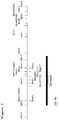
- pTE4 Small plasmids, pTE4, are used in order to reduce the impact of plasmid size on transient expression assays, and each plasmid contains a chimeric gus gene construct and a chimeric ribonuclease gene construct.
- pTE4 is shown in Fig. 2, and its complete sequence is shown in SEQ ID no. 3.
- pTE4 is a pUC18 derived plasmid containing two chimaeric genes cloned in the polylinker. One of these genes is the pnos-gus-3'nos gene which consists of a pnos promoter fragment (De Picker et al (1982) J.Mol.Appl.Genet.
- the other chimeric gene is a CaMV 35S-barnase-3'ocs gene construct which consists of a CaMV 35S promoter fragment (EP 359 617), the barnase coding region and the 3' untranslated end of octopine synthase (Ingelbrecht et al (1989) The Plant Cell 1 :671).
- Plasmid pMc5BS contains the barstar gene under the control of the tac promoter and is constructed by cloning the EcoRI-HindIII fragment of pMT416 (Hartley, supra ) in pMc5-8 (DSM 4566).
- the plasmids pTE4, pCV9 and pCV10 are linearized in two different ways: 1) by cleavage of a unique site within the coding region of the ribonuclease-encoding DNA (SmaI in pTE4, BamHI in pCV9 and BstEII in pCV10), and 2) by cleavage of a unique site outside of the chimeric gene constructs (PvuI in all cases).
- Linearized plasmid DNA is electroporated in mesophyll protoplasts prepared from leaves of SR1, and GUS activities are measured as described by Denecke et al, supra .
- the differences in toxic effects among the three ribonuclease-encoding genes may be due to differences in efficiency of transcription/translation of the respective genes and/or of post-translational processes that have an effect on enzyme activity (e.g. proper folding and disulfide bridge formation).
- enzyme activity e.g. proper folding and disulfide bridge formation.
- the differences in enzyme activity are most likely due to differences in the efficiency of protein folding and disulfide bridge formation.
- Example 7 Construction of T-DNA vectors, each containing the R08/26 sarnase coding region or the R08/26 sarstar coding region under the control of the tapetum specific promoter, PTA29 .
- the R08/26 sarnase DNA is provided with a fragment for transcription termination and polyadenylation (3'ocs) as follows: a HindIII-EcoRI fragment from pMa5-19/sarnpgs1 is cloned in pOCS1 digested with SmaI and EcoRI, yielding pCO49.
- Plasmid pOCS1 is constructed by ligating the 0.7 kbp PvuII fragment comprising the 3' untranslated end of the octopine synthase gene of the T-DNA from Agrobacterium tumefaciens , as described by Ingelbrecht et al (1989) The Plant Cell 1 :671, in the HindII site of plasmid pUC19 (Yanisch-Perron et al (1985) Gene 33 :103).
- a chimeric PTA29-R08/26 sarnase-3'ocs gene construct is made by combining i) a NcoI (filled-in with Klenow)-EcoRI fragment of pMB3 (DSM 4470) containing the PTA29 promoter (EP 344 029), ii) a FspI-HindIII fragment of pCO49 containing the sarnase-3'ocs fragment, and iii) the large EcoRI-HindIII fragment of pMC5-8, yielding the plasmid pCO50.
- the EcoRI-HindIII fragment (filled-in with Klenow) of pCO50 containing the chimeric PTA29-barnase-3'ocs gene, is cloned between the T-DNA borders of pGSJ260 (DSM 3606) by ligation with the large BamHI (filled-in with Klenow)-StuI fragment of pGSJ260.
- T-DNA vector is constructed carrying the R08/26 sarstar DNA of Examples 3, 4 and 5 under the control of the tapetum-specific PTA29 promoter, similar to the barstar-encoding vector, pTVE74, of EP 412 911.
- the two resulting plasmid vectors are mobilized in Agrobacterium tumefaciens strain C58C1Rif(pGV2260) as described by Deblaere et al (1987) Meth. Enzymol. 153 :277, yielding the sarnase DNA-containing strain C58C1Rif(pTCO1053) and the sarstar DNA-containing strain C58C1Rif(pTCO1054).
- Example 8 Plant transformations with chimeric genes of Example 7 containing the R08/26 sarnase or sarstar coding region under the control of the TA29 promoter
- the Agrobacterium tumefaciens strains C58C1Rif (pTCO1053 and pTC01054) of Example 7 are used to transform lettuce ( Lactuca sativa ) according to the procedures described by Michelmore et al (1987) Plant Cell Reports 6 :439 and tobacco ( Nicotiana tabacum ) as described for the barnase and RNase T1 chimeric constructs in EP 344 029 and EP 412 911. The resulting transformed plants are normal except for their flowers.
- each plant containing the R08/26 sarnase DNA under the control of the TA29 tapetum-specific promoter expresses such DNA at least predominantly in its anthers and produces no normal pollen (i.e., the plant is male-sterile), and each plant containing the R08/26 sarstar DNA under the control of the TA29 promoter expresses such DNA at least predominantly in its anthers but produces normal pollen (i.e. the plant is a male-fertility restorer plant for the corresponding male-sterile plant of this Example).
- fertile seed-bearing plants are obtained.
- this invention is not limited to the transformation of any specific eucaryotic organism(s) or plant(s).
- the invention relates to any eucaryotic organism, particularly a plant, the nuclear genome of which can be transformed with the RNase DNA, preferably the sarnase DNA, under the control of the first promoter or with the RNase-inhibitor DNA, preferably the sarstar DNA, under the control of the second promoter.
- this invention relates to plants such as corn, oilseed rape, wheat, rice, sunflower, sugarbeet, tomato, lettuce, peppers, sorghum, soybean, pea, alfalfa, grasses, clover, carrot, cabbages, leek, onion, tobacco, petunia, cacao and citrus trees.
- this invention is not limited to the specific plasmids and vectors described in the foregoing Examples, but rather encompasses any plasmids and vectors containing the RNase DNA or RNase-inhibitor DNA.
- this invention is not limited to the specific first and second promoters described in the foregoing Examples, i.e., the PTA29 promoter, but rather encompasses any DNA sequence encoding a first promoter capable of directing expression of a RNase DNA substantially selectively in cells of a specific organ and/or tissue of a eucaryotic organism, preferably a plant, particularly in the plant's flowers, seeds or embryos, or encoding a second promoter capable of directing expression of a RNase-inhibitor DNA at least in the cells of the organism where the RNase DNA is to be expressed.
- this invention is not limited to the specific RNase and RNase-inhibitor DNAs described in the foregoing Examples but rather encompasses any equivalent DNA sequences encoding respectively: a RNase that would significantly disturb adversely the metabolism, functioning and/or development of eucaryotic cells, preferably plant cells, in which the equivalent RNase DNA is expressed under the control of the first promoter; and a RNase-inhibitor that, in a cell in which the equivalent RNase-inhibitor DNA is expressed under the control of the second promoter, would neutralize, block, offset, overcome or otherwise prevent the activity of the RNase encoded by the equivalent RNase DNA.
- sarnase DNA and sarstar DNA sequences other than those present naturally in S .
- aureofaciens strains and encoding natural sarnases and sarstars can be used in accordance with this invention.
- the natural sequences of the R08/26 sarnase and sarstar DNAs of this invention can be modified by: 1) replacing some codons with others that code either for the same amino acids or for other amino acids; and/or 2) deleting or adding some codons -- provided that such modifications do not substantially alter the properties, particularly the respective ribonuclease and ribonuclease-inhibiting properties, of the encoded R08/26 sarnases and sarstars.
- the mature R08/26 sarnase of SEQ ID no. 1 can have its N-terminal end modified (e.g., by a methionine) to have proper expression of the sarnase within a eucaryotic organism.
- this invention is not limited to the specific marker DNAs described in the foregoing Examples but rather encompasses any marker DNA encoding an RNA, protein or polypeptide that confers on at least a specific tissue or specific cells of the eucaryotic organism, particularly a plant, in which the marker DNA is expressed, a distinctive trait compared to such a specific tissue or specific cells in which the marker DNA is not expressed.
Landscapes
- Health & Medical Sciences (AREA)
- Life Sciences & Earth Sciences (AREA)
- Chemical & Material Sciences (AREA)
- Genetics & Genomics (AREA)
- Organic Chemistry (AREA)
- Engineering & Computer Science (AREA)
- Zoology (AREA)
- Wood Science & Technology (AREA)
- Bioinformatics & Cheminformatics (AREA)
- Biotechnology (AREA)
- General Health & Medical Sciences (AREA)
- Biochemistry (AREA)
- General Engineering & Computer Science (AREA)
- Molecular Biology (AREA)
- Biomedical Technology (AREA)
- Medicinal Chemistry (AREA)
- Microbiology (AREA)
- Biophysics (AREA)
- Physics & Mathematics (AREA)
- Plant Pathology (AREA)
- Proteomics, Peptides & Aminoacids (AREA)
- Gastroenterology & Hepatology (AREA)
- Tropical Medicine & Parasitology (AREA)
- Virology (AREA)
- Micro-Organisms Or Cultivation Processes Thereof (AREA)
Priority Applications (2)
| Application Number | Priority Date | Filing Date | Title |
|---|---|---|---|
| EP91402767A EP0537399A1 (fr) | 1991-10-16 | 1991-10-16 | Nouvelle ribonucléase et son inhibiteur |
| PCT/EP1992/002420 WO1993008291A1 (fr) | 1991-10-16 | 1992-10-15 | Nouvelle ribonuclease et son inhibiteur |
Applications Claiming Priority (1)
| Application Number | Priority Date | Filing Date | Title |
|---|---|---|---|
| EP91402767A EP0537399A1 (fr) | 1991-10-16 | 1991-10-16 | Nouvelle ribonucléase et son inhibiteur |
Publications (1)
| Publication Number | Publication Date |
|---|---|
| EP0537399A1 true EP0537399A1 (fr) | 1993-04-21 |
Family
ID=8208625
Family Applications (1)
| Application Number | Title | Priority Date | Filing Date |
|---|---|---|---|
| EP91402767A Withdrawn EP0537399A1 (fr) | 1991-10-16 | 1991-10-16 | Nouvelle ribonucléase et son inhibiteur |
Country Status (2)
| Country | Link |
|---|---|
| EP (1) | EP0537399A1 (fr) |
| WO (1) | WO1993008291A1 (fr) |
Cited By (7)
| Publication number | Priority date | Publication date | Assignee | Title |
|---|---|---|---|---|
| TR28111A (tr) * | 1993-09-23 | 1996-02-29 | Yissum Res Dev Co | Bitkilerde polenin biyolojik yönden kontrolu icin bir metod. |
| WO1999053018A3 (fr) * | 1998-04-14 | 1999-12-23 | Cobra Therapeutics Ltd | Purification de composants cellulaires sensiblement exempts d'arn |
| US6025546A (en) * | 1995-02-21 | 2000-02-15 | Plant Genetic System, N.V. | Method to obtain male sterile plants |
| WO1998046792A3 (fr) * | 1997-04-16 | 2000-08-24 | Maff | Selection de porc basee sur un marqueur genetique |
| US6521458B1 (en) * | 1998-05-22 | 2003-02-18 | Dna Plant Technology Corporation | Compositions and methods for improved plant transformation |
| US6780632B1 (en) | 1998-04-14 | 2004-08-24 | Cobra Biologics Limited | Purification of cellular components that are substantially RNA free |
| WO2012036241A1 (fr) * | 2010-09-16 | 2012-03-22 | 独立行政法人海洋研究開発機構 | Nouvelle nucléase sécrétée de façon extracellulaire |
Citations (3)
| Publication number | Priority date | Publication date | Assignee | Title |
|---|---|---|---|---|
| EP0344029A1 (fr) * | 1988-04-28 | 1989-11-29 | Plant Genetic Systems, N.V. | Plantes avec des cellules d'étamine modifiées |
| EP0412006A1 (fr) * | 1989-08-04 | 1991-02-06 | Plant Genetic Systems, N.V. | Plantes à fleurs, semences ou embryons modifiés |
| EP0412911A1 (fr) * | 1989-08-10 | 1991-02-13 | Plant Genetic Systems, N.V. | Plantes à fleurs modifiées |
-
1991
- 1991-10-16 EP EP91402767A patent/EP0537399A1/fr not_active Withdrawn
-
1992
- 1992-10-15 WO PCT/EP1992/002420 patent/WO1993008291A1/fr not_active Ceased
Patent Citations (3)
| Publication number | Priority date | Publication date | Assignee | Title |
|---|---|---|---|---|
| EP0344029A1 (fr) * | 1988-04-28 | 1989-11-29 | Plant Genetic Systems, N.V. | Plantes avec des cellules d'étamine modifiées |
| EP0412006A1 (fr) * | 1989-08-04 | 1991-02-06 | Plant Genetic Systems, N.V. | Plantes à fleurs, semences ou embryons modifiés |
| EP0412911A1 (fr) * | 1989-08-10 | 1991-02-13 | Plant Genetic Systems, N.V. | Plantes à fleurs modifiées |
Non-Patent Citations (3)
| Title |
|---|
| CHEMICAL ABSTRACTS, vol. 100, 1984, Columbus, Ohio, US; abstract no. 152940, MUCHA, J.,ET AL.: 'Ribonuclease inhibitor from Streptomyces aureofaciens. I. Purification and properties' page 227 ; * |
| FEBS LETTERS. vol. 209, no. 2, December 1986, AMSTERDAM NL pages 335 - 339; SHLYAPNIKOV, S. V., ET AL.: 'Amino acid sequence determination of guanyl-specific ribonuclease Sa from Streptomyces aureofaciens' * |
| TRENDS IN BIOCHEMICAL SCIENCES vol. 14, no. 11, November 1989, pages 450 - 454; HARTLEY, R.W.: 'Barnase and barstar: two small proteins to fold and fit together' * |
Cited By (11)
| Publication number | Priority date | Publication date | Assignee | Title |
|---|---|---|---|---|
| TR28111A (tr) * | 1993-09-23 | 1996-02-29 | Yissum Res Dev Co | Bitkilerde polenin biyolojik yönden kontrolu icin bir metod. |
| US6025546A (en) * | 1995-02-21 | 2000-02-15 | Plant Genetic System, N.V. | Method to obtain male sterile plants |
| US6344602B1 (en) | 1995-02-21 | 2002-02-05 | Aventis Cropscience N.V. | Method to obtain male sterile plants |
| WO1998046792A3 (fr) * | 1997-04-16 | 2000-08-24 | Maff | Selection de porc basee sur un marqueur genetique |
| WO1999053018A3 (fr) * | 1998-04-14 | 1999-12-23 | Cobra Therapeutics Ltd | Purification de composants cellulaires sensiblement exempts d'arn |
| AU755520B2 (en) * | 1998-04-14 | 2002-12-12 | Cobra Therapeutics Limited | Purification of cellular components that are substantially RNA free |
| US6780632B1 (en) | 1998-04-14 | 2004-08-24 | Cobra Biologics Limited | Purification of cellular components that are substantially RNA free |
| US6521458B1 (en) * | 1998-05-22 | 2003-02-18 | Dna Plant Technology Corporation | Compositions and methods for improved plant transformation |
| WO2012036241A1 (fr) * | 2010-09-16 | 2012-03-22 | 独立行政法人海洋研究開発機構 | Nouvelle nucléase sécrétée de façon extracellulaire |
| CN103108950A (zh) * | 2010-09-16 | 2013-05-15 | 独立行政法人海洋研究开发机构 | 新的细胞外分泌型核酸酶 |
| CN103108950B (zh) * | 2010-09-16 | 2015-04-01 | 独立行政法人海洋研究开发机构 | 新的细胞外分泌型核酸酶 |
Also Published As
| Publication number | Publication date |
|---|---|
| WO1993008291A1 (fr) | 1993-04-29 |
Similar Documents
| Publication | Publication Date | Title |
|---|---|---|
| US5589610A (en) | Stamen-specific promoters from corn | |
| EP0573443B1 (fr) | Promoteurs specifiques de l'etamine obtenus a partir du riz | |
| US7345222B1 (en) | Use of DNA sequences for male sterility in transgenic plants | |
| EP1090999B1 (fr) | Plantes à fleurs modifiées | |
| US6344598B1 (en) | Plants with modified stamen cells | |
| AU621195B2 (en) | Hybrid seed production | |
| US5689041A (en) | Plants modified with barstar for fertility restoration | |
| US5767374A (en) | Plants with modified flowers seeds or embryos | |
| EP0412006B1 (fr) | Plantes à fleurs, semences ou embryons modifiés | |
| EP0977877B1 (fr) | Ameliorations concernant la specificite de l'expression genetique | |
| AU6248298A (en) | Two component plant cell lethality methods and compositions | |
| EP0537399A1 (fr) | Nouvelle ribonucléase et son inhibiteur | |
| US6852909B2 (en) | Process for producing female-sterile plants | |
| AU4933399A (en) | Mutant barnase gene and transgenic plant transformed by said gene | |
| CA2373071C (fr) | Promoteurs specifiques du tapetum | |
| CA2103572C (fr) | Promoteurs pour la culture d'antheres de mais | |
| AU625509C (en) | Plants with modified flowers | |
| HK1014738B (en) | Plants with modified flowers | |
| HK1025792B (en) | Improvements relating to the specificity of gene expression | |
| HK1008051B (en) | Plants with modified stamen cells |
Legal Events
| Date | Code | Title | Description |
|---|---|---|---|
| PUAI | Public reference made under article 153(3) epc to a published international application that has entered the european phase |
Free format text: ORIGINAL CODE: 0009012 |
|
| AK | Designated contracting states |
Kind code of ref document: A1 Designated state(s): AT BE CH DE DK ES FR GB GR IT LI LU NL SE |
|
| STAA | Information on the status of an ep patent application or granted ep patent |
Free format text: STATUS: THE APPLICATION IS DEEMED TO BE WITHDRAWN |
|
| 18D | Application deemed to be withdrawn |
Effective date: 19931022 |