EP0540432B1 - Bestimmung der Verdorbenheit von Durumgetreides - Google Patents
Bestimmung der Verdorbenheit von Durumgetreides Download PDFInfo
- Publication number
- EP0540432B1 EP0540432B1 EP92420370A EP92420370A EP0540432B1 EP 0540432 B1 EP0540432 B1 EP 0540432B1 EP 92420370 A EP92420370 A EP 92420370A EP 92420370 A EP92420370 A EP 92420370A EP 0540432 B1 EP0540432 B1 EP 0540432B1
- Authority
- EP
- European Patent Office
- Prior art keywords
- friabilin
- monoclonal antibody
- sample
- specific
- durum
- Prior art date
- Legal status (The legal status is an assumption and is not a legal conclusion. Google has not performed a legal analysis and makes no representation as to the accuracy of the status listed.)
- Expired - Lifetime
Links
Images



Classifications
-
- G—PHYSICS
- G01—MEASURING; TESTING
- G01N—INVESTIGATING OR ANALYSING MATERIALS BY DETERMINING THEIR CHEMICAL OR PHYSICAL PROPERTIES
- G01N33/00—Investigating or analysing materials by specific methods not covered by groups G01N1/00 - G01N31/00
- G01N33/48—Biological material, e.g. blood, urine; Haemocytometers
- G01N33/50—Chemical analysis of biological material, e.g. blood, urine; Testing involving biospecific ligand binding methods; Immunological testing
- G01N33/53—Immunoassay; Biospecific binding assay; Materials therefor
- G01N33/569—Immunoassay; Biospecific binding assay; Materials therefor for microorganisms, e.g. protozoa, bacteria, viruses
- G01N33/56961—Plant cells or fungi
-
- C—CHEMISTRY; METALLURGY
- C07—ORGANIC CHEMISTRY
- C07K—PEPTIDES
- C07K16/00—Immunoglobulins [IG], e.g. monoclonal or polyclonal antibodies
- C07K16/16—Immunoglobulins [IG], e.g. monoclonal or polyclonal antibodies against material from plants
-
- G—PHYSICS
- G01—MEASURING; TESTING
- G01N—INVESTIGATING OR ANALYSING MATERIALS BY DETERMINING THEIR CHEMICAL OR PHYSICAL PROPERTIES
- G01N33/00—Investigating or analysing materials by specific methods not covered by groups G01N1/00 - G01N31/00
- G01N33/48—Biological material, e.g. blood, urine; Haemocytometers
- G01N33/50—Chemical analysis of biological material, e.g. blood, urine; Testing involving biospecific ligand binding methods; Immunological testing
- G01N33/68—Chemical analysis of biological material, e.g. blood, urine; Testing involving biospecific ligand binding methods; Immunological testing involving proteins, peptides or amino acids
Definitions
- the present invention relates to the determination of non-durum grain in samples of durum wheat or durum-wheat containing products by immunological detection of a protein of recognised characteristics termed friabilin.
- wheat is a major human food source. Many cultivars of wheat are known and their properties determine the uses to which the milled wheat flour is put. Wheats are generally categorised as either hard or soft. Soft wheats have a protein content of about 8 to 10% and are used for the production of cakes, biscuits and crackers. Hard wheat has a protein content of about 10 to 18% and is used primarily for bread making. In addition, durum wheat with a protein content of 10 to 16% is used for the production of pasta and semolina. Hard and soft wheat account for the vast majority of all wheat grown. Durum wheat is produced in relatively small quantities and is correspondingly valuable.
- durum wheat flour The quality of pasta produced from durum wheat flour is dependent on the quality of the flour. During growth, storage and transportation, accidental adulteration with non-durum wheats may occur. In addition, because of the high price it commands, it is common to find durum wheat adulterated with other types of wheat, or even other grains for profit. It is therefore desirable to be able to establish the durum wheat content of a sample of flour, in order to be able to assess its pasta-making properties.
- Protein constitutes about 0.2% of wheat starch granules.
- the starch granule-associated proteins may be characterised by polyacrylamide gel electrophoresis in the presence of sodium dodecyl sulphate and 2-mercaptoethanol (SDS-PAGE).
- SDS-PAGE sodium dodecyl sulphate and 2-mercaptoethanol
- surface protein and "integral protein” relate to the temperature at which the proteins are extracted by water from the starch granules, the lower molecular weight surface proteins being extracted at 20°C, with the integral proteins requiring higher temperatures of 50°C and 100°C.
- the amount of friabilin of relative molecular weight 14700 shows considerable variability between wheat varieties.
- the 14700 polypeptide band is strong in all soft wheats, but relatively weak in hard wheats.
- the 14700 band is non-due to the lack of the corresponding gene in the durum wheat genome.
- a method of the screening samples of wheat for friabilin by gel electrophoresis is described in B. D. Sulaiman and W. R. Morrison, Journal of Cereal Science 12 (1990) pages 53-61.
- Friabilin has been partially sequenced and the aminoterminal sequence of 36 aminoacids, one third of the molecule, has been determined to be
- the present invention seeks to provide an assay for non-durum grain in durum wheat samples (including flour and prepared products) by detection of any friabilin content (which would be due to adulteration by non-durum grain).
- the present invention relates to the use of a friabilin-specific monoclonal antibody for the detection of any friabilin content in a durum wheat sample by immunological reaction between the friabilin protein antigen and the antibody.
- one aspect of the present invention provides a method of assessing the quality of a grain sample containing durum wheat and possibly other non-durum grain to determine the content of said other non-durum grain, which comprises:
- the friabilin-specific antibody is an antibody which will bind to native or denatured friabilin protein with sufficient specificity to provide a useful assay.
- the antibody in particular will bind to heat-denatured friabilin and can thus be used on heat-treated grain or flour samples, for example a heat-denatured farinaceous food product. However the antibody will not bind to friabilin in which the disulphide bonds have been broken.
- the friabilin-specific monoclonal antibody is made by conventional techniques. Typically, a mammal, such as a mouse, is immunised with friabilin or a friabilin-carrier protein conjugate, usually in the presence of adjuvant. Immunisation may be repeated until adequate antibody levels are provided. Antibody-producing spleen cells from the mammal are then fused with a substantially immortal cell line to prepare a hybridoma from which monoclonal antibodies may be isolated.
- the antibody will generally be labelled in order to facilitate estimation of the immunological complex, for example by means of an enzyme label (commonly horseradish peroxidase or alkaline phosphatase), a radiolabel, a fluorescence label, or any other labelling system known in the art.
- an enzyme label commonly horseradish peroxidase or alkaline phosphatase
- a radiolabel commonly horseradish peroxidase or alkaline phosphatase
- fluorescence label or any other labelling system known in the art.
- the immunoassay is conveniently conducted as an enzyme linked immunoassay (ELISA), wherein antibody conjugated to an enzyme (such as horseradish peroxidase or alkaline phosphatase) is reacted with the antigenic friabilin to produce a complex.
- ELISA enzyme linked immunoassay
- the complex is estimated by adding a substrate for the enzyme, such as 3,3′,5,5′-tetramethylbenzidine, which is degraded to produce a coloured product.
- the coloured product generated is determined spectrophotometrically.
- the complex can be estimated by reaction with a second monoclonal antibody which is specific to the first antibody.
- the second antibody may be for example an anti-mouse IgG monoclonal antibody .
- the second antibody may be labelled with a suitable tag, such as an enzyme, a radiolabel, a fluorescence label, colloidal gold or any other appropriate labelling system known in the art.
- a plastic substrate for example in the form of a rod or strip (e.g. a dipstick), may be provided with a surface coating which binds proteins from the wheat sample. This is then incubated with labelled antibody and the amount of complex estimated. If an enzyme labelled conjugate is used, the dipstick is further incubated with a substrate which produces a colour reaction, such that the degree of colour indicates the amount of friabilin present.
- the surface coating comprises nitrocellulose. It has been found that a nitrocellulose coating of thickness from 0.3 to 0.6 micromoters gives particularly good results in terms of colour clarity and sharpness.
- the invention provides a method for assessing the quality of a grain sample containing durum wheat and possibly other non-durum grain to determine the content of said other non-durum grain, which comprises:
- precipitating substrates include diaminobenzidine or preferably 4-chloro-1-naphthol.
- the amount of friabilin present can also be determined by means of latex agglutination assay, wherein the monoclonal antibody is coupled to latex particles. Reaction with the friabilin antigen leads to agglutination of the latex particles. Similarly, cell agglutination assays can be conducted, wherein the antibody is coupled to sheep or human erythrocytes.
- the invention also provides a friabilin-specific monoclonal antibody, and the antibody coupled to an enzyme label which allows quantitative assessment of the friabilin-antibody completed.
- the invention provides a kit for carrying out an ELISA determination of friabilin content in a durum wheat sample, which comprises an enzyme linked friabilin-specific monoclonal antibody.
- the invention provides a kit for determining friabilin content in a durum wheat sample, which comprises a plastic substrate having a surface coating which binds to proteins in the sample, and an enzyme linked friabilin-specific monoclonal antibody.
- the invention provides a second antibody, usually labelled, raised against the monoclonal antibody.
- TWEEN 20 is a trade mark (polyoxyethylenesorbitan monolaurate).
- mice were immunised with a conjugate consisting of friabilin conjugated to keyhole limpet haemocyanin (KLH) by means of 1-ethyl-3-(3-dimethylaminopropyl) carbodiimide hydrochloride (EDC).
- KLH keyhole limpet haemocyanin
- EDC 1-ethyl-3-(3-dimethylaminopropyl) carbodiimide hydrochloride
- mice A group of 50 mice (NZB/BALB/c F1 hybrid females, 6-8 weeks old) were immunised with the conjugate (equivalent to 10 micrograms of friabilin) with Freunds Complete Adjuvant for the first injection, followed by subsequent injections of conjugate (5 micrograms friabilin) at four weekly intervals for a year. Ten mice were sacrificed and at the end of the year, one mouse showed antibody activity as determined by an ELISA test using friabilin-bovine serum albumen. This mouse is spleen cells were fused with myeloma cells by the general procedure referred to above. The monoclonal antibody produced was referred to as F7F.
- the F7F monoclonal antibody was coupled to horseradish peroxidase (HRP) by means of a two-step sodium periodate procedure [Boorsma D.M. and Streefkerk J.G. (1979) J. Immunol. Methods, Vol. 30, 245] to produce the F7F-HRP conjugate.
- HRP horseradish peroxidase
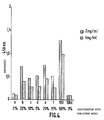
- Figures 1 to 5 show results of the direct ELISA method carried out on various flour and pasta samples.
- Sample 108 is believed to be 15% non-durum adulterated.
- the content of friabilin as a percentage of total flour protein was estimated to be less than 0.2% of total protein.
- the degree of colour produced was found to be proportional to the amount of non-durum adulteration and could be read visually (Corresponding ELISA tests on the semolina standards also showed a linear response).
Landscapes
- Life Sciences & Earth Sciences (AREA)
- Health & Medical Sciences (AREA)
- Chemical & Material Sciences (AREA)
- Engineering & Computer Science (AREA)
- Immunology (AREA)
- Molecular Biology (AREA)
- Urology & Nephrology (AREA)
- Biomedical Technology (AREA)
- Hematology (AREA)
- Biochemistry (AREA)
- Microbiology (AREA)
- Cell Biology (AREA)
- Medicinal Chemistry (AREA)
- General Health & Medical Sciences (AREA)
- Physics & Mathematics (AREA)
- Pathology (AREA)
- Food Science & Technology (AREA)
- Organic Chemistry (AREA)
- Proteomics, Peptides & Aminoacids (AREA)
- Analytical Chemistry (AREA)
- Biotechnology (AREA)
- Botany (AREA)
- General Physics & Mathematics (AREA)
- Genetics & Genomics (AREA)
- Biophysics (AREA)
- Mycology (AREA)
- Tropical Medicine & Parasitology (AREA)
- Virology (AREA)
- Immobilizing And Processing Of Enzymes And Microorganisms (AREA)
- Analysing Materials By The Use Of Radiation (AREA)
- Adjustment And Processing Of Grains (AREA)
- Peptides Or Proteins (AREA)
- Investigating Materials By The Use Of Optical Means Adapted For Particular Applications (AREA)
- Road Paving Structures (AREA)
- Preparation Of Compounds By Using Micro-Organisms (AREA)
- Measuring Or Testing Involving Enzymes Or Micro-Organisms (AREA)
- Macromonomer-Based Addition Polymer (AREA)
- Investigating Or Analysing Biological Materials (AREA)
Claims (20)
- Verwendung eines friabilinspezifischen monoklonalen Antikörpers zum Nachweis eines Gehalts an Friabilin in einer Durumweizenprobe durch immunologische Reaktion zwischen dem Friabilin-Protein-Antigen und dem Antikörper.
- Verfahren zur Beurteilung der Qualität einer Getreideprobe, die Durumweizen und möglicherweise anderes, nicht aus Durumweizen bestehendes Getreide enthält, um den Gehalt an dem anderen, nicht aus Durumweizen bestehenden Getreide zu bestimmen, das folgende Schritte umfaßt:- Bereitstellung eines für das Friabilin-Protein spezifischen monoklonalen Antikörpers,- Mssung des Friabilin-Gehalts der Probe mit einem Immunoassay unter Verwendung des monoklonalen Antikörpers und- Ableitung des Gehalts an dem in der Probe enthaltenen anderen, nicht aus Durumweizen bestehenden Getreide aus dem Friabilin-Gehalt der Probe.
- Verfahren nach Anspruch 2, wobei der monoklonale Antikörper für ein Friabilin-Protein mit einem Molekulargewicht von etwa 14700 spezifisch ist.
- Verfahren nach Anspruch 2 oder 3, wobei die Getreideprobe eine Mehlprobe ist.
- Verfahren nach Anspruch 3 oder 4, wobei die Getreideprobe ein hitzedenaturiertes mehlhaltiges Nahrungsmittelprodukt ist.
- Verfahren nach einem der Ansprüche 2 bis 5, bei dem der monoklonale Antikörper enzymmarkiert ist und der Immunoassay als ELISA-Test durchgeführt wird.
- Verfahren nach Anspruch 6, wobei der Enzymmarker Meerrettichperoxidase ist.
- Verfahren nach einem der Ansprüche 2 bis 7, bei dem ein Extrakt der Getreideprobe auf ein Kunststoffsubstrat aufgebracht wird, das mit einem proteinbindenden Material beschichtet ist, und mit einem zweiten enzymmarkierten monoklonalen Antikörper inkubiert wird, der für den ersten Antikörper spezifisch ist.
- Verfahren zur Beurteilung der Qualität einer Getreideprobe, die Durumweizen und möglicherweise anderes, nicht aus Durumweizen bestehendes Getreide enthält, um den Gehalt an dem anderen, nicht aus Durumweizen bestehenden Getreide zu bestimmen, das folgende Schritte umfaßt:- Bindung der Weizenproteine in der Probe an einer Affinitätssäule,- Behandlung der Säule mit nichtspezifischen Proteinen, um sämtliche verbleibenden reaktiven Gruppen am Affinitätssubstrat zu blockieren,- Behandlung des Affinitätssubstrats mit einem markierten monoklonalen Antikörper, der für das Friabilin-Protein spezifisch ist, und- Erfassung des Vorliegens des resultierenden Friabilin-Antikörper-Konjugats unter Verwendung eines Ausfällsubstrats.
- Verfahren nach Anspruch 8, bei dem der monoklonale Antikörper für ein Friabilin-Protein mit einem Molekulargewicht von etwa 14700 spezifisch ist.
- Verfahren nach Anspruch 9 oder 10, wobei das Ausfällsubstrat 4-Chlor-1-naphthol ist.
- Friabilinspezifischer monoklonaler Antikörper.
- Monoklonaler Antikörper nach Anspruch 12, der spezifisch für ein Friabilin-Protein mit einem Molekulargewicht von etwa 14700 ist.
- Enzymgebundener friabilinspezifischer monoklonaler Antikörper.
- Kit zur Durchführung einer ELISA-Bestimmung des Friabilin-Gehalts in einer Durumweizenprobe, der einen enzymgebundenen friabilinspezifischen monoklonalen Antikörper enthält.
- Kit nach Anspruch 15, bei dem der monoklonale Antikörper für ein Friabilin-Protein mit einem Molekulargewicht von etwa 14700 spezifisch ist.
- Kit nach Anspruch 15 oder 16, der ein Kunststoffsubstrat mit einer Oberflächenbeschichtung, die an Proteine in der Probe bindet, und einen enzymgebundenen friabilinspezifischen monoklonalen Antikörper enthält.
- Kit nach Anspruch 17, bei dem das Kunststoffsubstrat in Form eines Stäbchens oder Streifens vorliegt.
- Kit nach Anspruch 17 oder 18, bei dem die Oberflächenbeschichtung aus Nitrocellulose besteht.
- Kit nach Anspruch 19, bei dem die Nitrocellulose-Beschichtung 0,3 bis 0,6 »m dick ist.
Applications Claiming Priority (2)
| Application Number | Priority Date | Filing Date | Title |
|---|---|---|---|
| GB919122775A GB9122775D0 (en) | 1991-10-26 | 1991-10-26 | Improvements relating to plank support arrangements |
| GB9122775 | 1991-10-26 |
Publications (2)
| Publication Number | Publication Date |
|---|---|
| EP0540432A1 EP0540432A1 (de) | 1993-05-05 |
| EP0540432B1 true EP0540432B1 (de) | 1995-06-28 |
Family
ID=10703599
Family Applications (1)
| Application Number | Title | Priority Date | Filing Date |
|---|---|---|---|
| EP92420370A Expired - Lifetime EP0540432B1 (de) | 1991-10-26 | 1992-10-22 | Bestimmung der Verdorbenheit von Durumgetreides |
Country Status (4)
| Country | Link |
|---|---|
| EP (1) | EP0540432B1 (de) |
| AT (1) | ATE124538T1 (de) |
| DE (1) | DE69203206T2 (de) |
| GB (2) | GB9122775D0 (de) |
Families Citing this family (3)
| Publication number | Priority date | Publication date | Assignee | Title |
|---|---|---|---|---|
| GB2282620B (en) * | 1993-09-02 | 1997-02-05 | Cook Peter Int Plc | A barrier system |
| GB9622256D0 (en) * | 1996-10-25 | 1996-12-18 | Melba Prod | Barrier posts and assemblies |
| GB2319551A (en) * | 1996-11-25 | 1998-05-27 | Peter Cook | Safety barriers |
Family Cites Families (3)
| Publication number | Priority date | Publication date | Assignee | Title |
|---|---|---|---|---|
| GB1524381A (en) * | 1976-05-04 | 1978-09-13 | Swintex | Support for a barrier |
| GB2263122B (en) * | 1992-01-10 | 1995-07-05 | Cook Peter Int Plc | A post assembly and a sleeve for such an assembly |
| GB2264319B (en) * | 1992-02-14 | 1995-10-18 | Melba Prod | Improvements in or relating to posts and barriers |
-
1991
- 1991-10-26 GB GB919122775A patent/GB9122775D0/en active Pending
-
1992
- 1992-10-22 AT AT92420370T patent/ATE124538T1/de not_active IP Right Cessation
- 1992-10-22 DE DE69203206T patent/DE69203206T2/de not_active Expired - Lifetime
- 1992-10-22 EP EP92420370A patent/EP0540432B1/de not_active Expired - Lifetime
- 1992-10-23 GB GB9222296A patent/GB2261243B/en not_active Expired - Fee Related
Also Published As
| Publication number | Publication date |
|---|---|
| ATE124538T1 (de) | 1995-07-15 |
| GB2261243B (en) | 1995-04-12 |
| GB9222296D0 (en) | 1992-12-09 |
| DE69203206T2 (de) | 1995-11-09 |
| GB9122775D0 (en) | 1991-12-11 |
| DE69203206D1 (de) | 1995-08-03 |
| GB2261243A (en) | 1993-05-12 |
| EP0540432A1 (de) | 1993-05-05 |
Similar Documents
| Publication | Publication Date | Title |
|---|---|---|
| van der Linden et al. | Induction of immune responses and molecular cloning of the heavy chain antibody repertoire of Lama glama | |
| KR20070002044A (ko) | 알레르겐의 검출방법 | |
| Verity et al. | Development of a field enzyme‐linked immunosorbent assay (ELISA) for detection of α‐amylase in preharvest‐sprouted wheat | |
| EP0540432B1 (de) | Bestimmung der Verdorbenheit von Durumgetreides | |
| US4959310A (en) | Monoclonal antibodies to soybean kunitz trypsin inhibitor and immunoassay methods | |
| Lindsay et al. | Immunocytochemical localization of gluten proteins uncovers structural organization of glutenin macropolymer | |
| Sharma et al. | Characterization of Antibodies for Grain‐Specific Gluten Detection | |
| Mills et al. | Characterization of a panel of monoclonal anti-gliadin antibodies | |
| AU649891B2 (en) | Determination of adulteration of durum wheat | |
| Skerritt et al. | Homologies between grain storage proteins of different cereal species. 1. Monoclonal antibody reaction with total protein extracts | |
| EP1137935B1 (de) | Nachweis von vor der ernte stattfindender keimung in getreidekörnern | |
| De Fijter et al. | Immunoglobulin A subclass measurement in serum and saliva: sensitivity of detection of dimeric IgA2 in ELISA depends on the antibody used | |
| EP0435925A1 (de) | Hochaffine monoklonale antikörper gegen bowman-birk-inhibitor und immunoassay-methoden | |
| US5177024A (en) | Determining cereal quality | |
| Mills et al. | Production of monoclonal antibodies to gluten proteins and their use in developing tests for gluten quality | |
| Dewey et al. | Monoclonal antibodies that differentiate between gum arabic, gum seyal and combretum gum | |
| Hill et al. | Monoclonal antibody based two‐site enzyme immunoassays for wheat gluten proteins. 1. Kinetic characteristics and comparison with other Elisa formats | |
| NO173104B (no) | Monoklonalt antistoff til selektiv immunologisk bestemmelse av intakt prokollagenpeptid (type iii) og prokollagen (type iii), en hybridoma cellelinje som produserer dette antistoff samt et preparat inneholdende antistoffet | |
| Skerritt et al. | Monoclonal antibody based two‐site enzyme immunoassays for wheat gluten proteins. 2. Specificity analysis | |
| CN117417452B (zh) | 一种抗抗人干扰素α受体1(IFNAR1)单克隆抗体的单克隆抗体、包含其的试剂盒及其检测方法 | |
| US20160108107A1 (en) | Deamidated anti-gluten antibody and uses thereof | |
| Zawistowski et al. | Production of monoclonal antibodies against high Mr avenin polypeptides | |
| AU699363B2 (en) | Method for determining the lysine content of seeds | |
| Partridge et al. | Simple ELISA detection of a new polymorphic Ha locus encoded protein | |
| AU757926B2 (en) | Detection of preharvest sprouting in cereal grains |
Legal Events
| Date | Code | Title | Description |
|---|---|---|---|
| PUAI | Public reference made under article 153(3) epc to a published international application that has entered the european phase |
Free format text: ORIGINAL CODE: 0009012 |
|
| 17P | Request for examination filed |
Effective date: 19921028 |
|
| AK | Designated contracting states |
Kind code of ref document: A1 Designated state(s): AT BE CH DE DK ES FR GB GR IE IT LI LU NL PT SE |
|
| 17Q | First examination report despatched |
Effective date: 19940224 |
|
| RAP1 | Party data changed (applicant data changed or rights of an application transferred) |
Owner name: RHONE-POULENC DIAGNOSTICS LIMITED |
|
| GRAA | (expected) grant |
Free format text: ORIGINAL CODE: 0009210 |
|
| ITF | It: translation for a ep patent filed | ||
| AK | Designated contracting states |
Kind code of ref document: B1 Designated state(s): AT BE CH DE DK ES FR GB GR IE IT LI LU NL PT SE |
|
| PG25 | Lapsed in a contracting state [announced via postgrant information from national office to epo] |
Ref country code: NL Free format text: LAPSE BECAUSE OF FAILURE TO SUBMIT A TRANSLATION OF THE DESCRIPTION OR TO PAY THE FEE WITHIN THE PRESCRIBED TIME-LIMIT Effective date: 19950628 Ref country code: LI Effective date: 19950628 Ref country code: GR Free format text: LAPSE BECAUSE OF FAILURE TO SUBMIT A TRANSLATION OF THE DESCRIPTION OR TO PAY THE FEE WITHIN THE PRESCRIBED TIME-LIMIT Effective date: 19950628 Ref country code: ES Free format text: THE PATENT HAS BEEN ANNULLED BY A DECISION OF A NATIONAL AUTHORITY Effective date: 19950628 Ref country code: DK Effective date: 19950628 Ref country code: CH Effective date: 19950628 Ref country code: BE Effective date: 19950628 Ref country code: AT Effective date: 19950628 |
|
| REF | Corresponds to: |
Ref document number: 124538 Country of ref document: AT Date of ref document: 19950715 Kind code of ref document: T |
|
| ET | Fr: translation filed | ||
| REG | Reference to a national code |
Ref country code: IE Ref legal event code: FG4D Free format text: 64329 |
|
| REF | Corresponds to: |
Ref document number: 69203206 Country of ref document: DE Date of ref document: 19950803 |
|
| PG25 | Lapsed in a contracting state [announced via postgrant information from national office to epo] |
Ref country code: SE Effective date: 19950928 Ref country code: PT Effective date: 19950928 |
|
| REG | Reference to a national code |
Ref country code: CH Ref legal event code: PL |
|
| PG25 | Lapsed in a contracting state [announced via postgrant information from national office to epo] |
Ref country code: LU Free format text: LAPSE BECAUSE OF NON-PAYMENT OF DUE FEES Effective date: 19951031 Ref country code: IE Free format text: LAPSE BECAUSE OF NON-PAYMENT OF DUE FEES Effective date: 19951031 |
|
| NLV1 | Nl: lapsed or annulled due to failure to fulfill the requirements of art. 29p and 29m of the patents act | ||
| PLBE | No opposition filed within time limit |
Free format text: ORIGINAL CODE: 0009261 |
|
| 26N | No opposition filed | ||
| REG | Reference to a national code |
Ref country code: GB Ref legal event code: IF02 |
|
| PGFP | Annual fee paid to national office [announced via postgrant information from national office to epo] |
Ref country code: DE Payment date: 20101020 Year of fee payment: 19 |
|
| PGFP | Annual fee paid to national office [announced via postgrant information from national office to epo] |
Ref country code: GB Payment date: 20101020 Year of fee payment: 19 |
|
| PGFP | Annual fee paid to national office [announced via postgrant information from national office to epo] |
Ref country code: IT Payment date: 20110926 Year of fee payment: 20 |
|
| PGFP | Annual fee paid to national office [announced via postgrant information from national office to epo] |
Ref country code: FR Payment date: 20111103 Year of fee payment: 20 |
|
| REG | Reference to a national code |
Ref country code: DE Ref legal event code: R071 Ref document number: 69203206 Country of ref document: DE |
|
| REG | Reference to a national code |
Ref country code: DE Ref legal event code: R071 Ref document number: 69203206 Country of ref document: DE |
|
| REG | Reference to a national code |
Ref country code: GB Ref legal event code: PE20 Expiry date: 20121021 |
|
| PG25 | Lapsed in a contracting state [announced via postgrant information from national office to epo] |
Ref country code: GB Free format text: LAPSE BECAUSE OF EXPIRATION OF PROTECTION Effective date: 20121021 |