EP0541341A1 - Fensterscheiben - Google Patents
Fensterscheiben Download PDFInfo
- Publication number
- EP0541341A1 EP0541341A1 EP92310077A EP92310077A EP0541341A1 EP 0541341 A1 EP0541341 A1 EP 0541341A1 EP 92310077 A EP92310077 A EP 92310077A EP 92310077 A EP92310077 A EP 92310077A EP 0541341 A1 EP0541341 A1 EP 0541341A1
- Authority
- EP
- European Patent Office
- Prior art keywords
- layer
- window according
- thermoset polyurethane
- polyurethane
- glass
- Prior art date
- Legal status (The legal status is an assumption and is not a legal conclusion. Google has not performed a legal analysis and makes no representation as to the accuracy of the status listed.)
- Granted
Links
Images

Classifications
-
- B—PERFORMING OPERATIONS; TRANSPORTING
- B32—LAYERED PRODUCTS
- B32B—LAYERED PRODUCTS, i.e. PRODUCTS BUILT-UP OF STRATA OF FLAT OR NON-FLAT, e.g. CELLULAR OR HONEYCOMB, FORM
- B32B17/00—Layered products essentially comprising sheet glass, or glass, slag, or like fibres
- B32B17/06—Layered products essentially comprising sheet glass, or glass, slag, or like fibres comprising glass as the main or only constituent of a layer, next to another layer of a specific material
- B32B17/10—Layered products essentially comprising sheet glass, or glass, slag, or like fibres comprising glass as the main or only constituent of a layer, next to another layer of a specific material of synthetic resin
- B32B17/10005—Layered products essentially comprising sheet glass, or glass, slag, or like fibres comprising glass as the main or only constituent of a layer, next to another layer of a specific material of synthetic resin laminated safety glass or glazing
- B32B17/1055—Layered products essentially comprising sheet glass, or glass, slag, or like fibres comprising glass as the main or only constituent of a layer, next to another layer of a specific material of synthetic resin laminated safety glass or glazing characterized by the resin layer, i.e. interlayer
- B32B17/10559—Shape of the cross-section
- B32B17/10568—Shape of the cross-section varying in thickness
-
- B—PERFORMING OPERATIONS; TRANSPORTING
- B32—LAYERED PRODUCTS
- B32B—LAYERED PRODUCTS, i.e. PRODUCTS BUILT-UP OF STRATA OF FLAT OR NON-FLAT, e.g. CELLULAR OR HONEYCOMB, FORM
- B32B17/00—Layered products essentially comprising sheet glass, or glass, slag, or like fibres
- B32B17/06—Layered products essentially comprising sheet glass, or glass, slag, or like fibres comprising glass as the main or only constituent of a layer, next to another layer of a specific material
- B32B17/10—Layered products essentially comprising sheet glass, or glass, slag, or like fibres comprising glass as the main or only constituent of a layer, next to another layer of a specific material of synthetic resin
- B32B17/10005—Layered products essentially comprising sheet glass, or glass, slag, or like fibres comprising glass as the main or only constituent of a layer, next to another layer of a specific material of synthetic resin laminated safety glass or glazing
- B32B17/10009—Layered products essentially comprising sheet glass, or glass, slag, or like fibres comprising glass as the main or only constituent of a layer, next to another layer of a specific material of synthetic resin laminated safety glass or glazing characterized by the number, the constitution or treatment of glass sheets
- B32B17/10018—Layered products essentially comprising sheet glass, or glass, slag, or like fibres comprising glass as the main or only constituent of a layer, next to another layer of a specific material of synthetic resin laminated safety glass or glazing characterized by the number, the constitution or treatment of glass sheets comprising only one glass sheet
-
- B—PERFORMING OPERATIONS; TRANSPORTING
- B32—LAYERED PRODUCTS
- B32B—LAYERED PRODUCTS, i.e. PRODUCTS BUILT-UP OF STRATA OF FLAT OR NON-FLAT, e.g. CELLULAR OR HONEYCOMB, FORM
- B32B27/00—Layered products comprising a layer of synthetic resin
- B32B27/40—Layered products comprising a layer of synthetic resin comprising polyurethanes
-
- Y—GENERAL TAGGING OF NEW TECHNOLOGICAL DEVELOPMENTS; GENERAL TAGGING OF CROSS-SECTIONAL TECHNOLOGIES SPANNING OVER SEVERAL SECTIONS OF THE IPC; TECHNICAL SUBJECTS COVERED BY FORMER USPC CROSS-REFERENCE ART COLLECTIONS [XRACs] AND DIGESTS
- Y10—TECHNICAL SUBJECTS COVERED BY FORMER USPC
- Y10T—TECHNICAL SUBJECTS COVERED BY FORMER US CLASSIFICATION
- Y10T428/00—Stock material or miscellaneous articles
- Y10T428/26—Web or sheet containing structurally defined element or component, the element or component having a specified physical dimension
-
- Y—GENERAL TAGGING OF NEW TECHNOLOGICAL DEVELOPMENTS; GENERAL TAGGING OF CROSS-SECTIONAL TECHNOLOGIES SPANNING OVER SEVERAL SECTIONS OF THE IPC; TECHNICAL SUBJECTS COVERED BY FORMER USPC CROSS-REFERENCE ART COLLECTIONS [XRACs] AND DIGESTS
- Y10—TECHNICAL SUBJECTS COVERED BY FORMER USPC
- Y10T—TECHNICAL SUBJECTS COVERED BY FORMER US CLASSIFICATION
- Y10T428/00—Stock material or miscellaneous articles
- Y10T428/28—Web or sheet containing structurally defined element or component and having an adhesive outermost layer
- Y10T428/2813—Heat or solvent activated or sealable
- Y10T428/2817—Heat sealable
- Y10T428/2826—Synthetic resin or polymer
-
- Y—GENERAL TAGGING OF NEW TECHNOLOGICAL DEVELOPMENTS; GENERAL TAGGING OF CROSS-SECTIONAL TECHNOLOGIES SPANNING OVER SEVERAL SECTIONS OF THE IPC; TECHNICAL SUBJECTS COVERED BY FORMER USPC CROSS-REFERENCE ART COLLECTIONS [XRACs] AND DIGESTS
- Y10—TECHNICAL SUBJECTS COVERED BY FORMER USPC
- Y10T—TECHNICAL SUBJECTS COVERED BY FORMER US CLASSIFICATION
- Y10T428/00—Stock material or miscellaneous articles
- Y10T428/31504—Composite [nonstructural laminate]
- Y10T428/31551—Of polyamidoester [polyurethane, polyisocyanate, polycarbamate, etc.]
- Y10T428/31554—Next to second layer of polyamidoester
-
- Y—GENERAL TAGGING OF NEW TECHNOLOGICAL DEVELOPMENTS; GENERAL TAGGING OF CROSS-SECTIONAL TECHNOLOGIES SPANNING OVER SEVERAL SECTIONS OF THE IPC; TECHNICAL SUBJECTS COVERED BY FORMER USPC CROSS-REFERENCE ART COLLECTIONS [XRACs] AND DIGESTS
- Y10—TECHNICAL SUBJECTS COVERED BY FORMER USPC
- Y10T—TECHNICAL SUBJECTS COVERED BY FORMER US CLASSIFICATION
- Y10T428/00—Stock material or miscellaneous articles
- Y10T428/31504—Composite [nonstructural laminate]
- Y10T428/31551—Of polyamidoester [polyurethane, polyisocyanate, polycarbamate, etc.]
- Y10T428/31598—Next to silicon-containing [silicone, cement, etc.] layer
- Y10T428/31601—Quartz or glass
Definitions
- the invention relates to windows for conveyances of all kinds including aircraft, ships and land vehicles, and is especially applicable to windows for use in conveyances having military application.
- the present invention aims to overcome, or at least alleviate, the above disadvantages and is based on a completely different approach to the problem.
- the present inventors have realised that the Reststrahlen Band reflections can be suppressed by bonding a layer onto the outer glass surface which layer has a low reflection and high absorption at these wavelength bands, and found that certain polyurethane layers have these properties as well as the desirable near infra red transmittance, good optical quality and, surprisingly, high durability including abrasion resistance.
- thermoset polyurethane layer on the outer face of an outer glass ply of a window for a conveyance.
- the invention also provides a window in or for a conveyance comprising an outer glass ply with a layer of thermoset polyurethane over the outer face of the glass.
- thermoset polyurethane layer may comprise a single layer or a plurality of superposed layer portions, typically two layer portions.
- thermoset polyurethane layer may be bonded to the outer face of the glass by a thermoplastic bonding layer.
- thermoset polyurethane is used because such polyurethanes provide the required abrasion resistance being self-healing.
- the hardness of the polyurethane, and time taken to self-heal, will depend on the degree of cross-linking and both will generally increase with a reduction in the molecular weight between branch points of the polymer.
- the inner layer can be relatively hard so as to provide good impact protection of the underlying thermoplastic bonding layer and the outer layer can be relatively soft so as to provide good self-healing properties.
- the polymers used in the practice of the present invention will usually have a molecular weight between branch points in the range 500 to 2500.
- the invention may employ harder and/or softer polymers depending upon the properties required of the window.
- the preferred harder polyers which may be employed as a single layer or as an inner layer portion have a molecular weight between branch points in the range 500 to 1500, especially 600 to 900 and the preferred softer polymers which may be employed as a single layer or as an outer layer portion have a molecular weight between branch points in the range 1200 to 2500, especially 1200 to 1800.
- Polymers having a Shore hardness of at least 70A, and generally up to 90D, are generally preferred.
- the preferred harder polymers can have a Shore hardness in the range 78D to 90D and the preferred softer polymers can have a Shore hardness in the range 70A to 90A.
- the harder polymers give better optical properties than softer polymers, while suffering, however, from an increased self-healing time at ambient UK temperatures.
- thermoset polyurethanes for use in the practice of the present invention are prepared from a cycloaliphatic diisocyanate, a polycaprolactone diol and a polycaptrolactone triol.
- the cycloaliphatic diisocyanate is preferably 4,4' methylene-bis-(cyclohexylisocyanate), commercially available under the trade mark DESMODUR W.
- the polycarprolactone diol preferably has an average molecular weight in the range about 500 to about 700 to produce a polyurethane with the required resilience.
- the polycaprolactone triol preferably has a molecular weight in the range about 250 to about 400 in order to provide the desired cross-link density.
- thermoset polymers may be produced by "one-shot” reaction systems, although it is preferred to produce an isocyanate rich prepolymer by reacting a diisocyanate with half the total amount of diol, and then react that prepolymer with the triol and the remaining diol. This route is preferred, as it takes advantage of the greater miscibility of the diol (than the triol) with the isocyanate, and reduces the risk of optical aberrations in the finished product.
- thermoset polyurethane preferably has a low heat distortion temperature, measured in accordance with ASTM 648, of less than 60°C, and preferably less than 50°C.
- a low heat distortion temperature measured in accordance with ASTM 648, of less than 60°C, and preferably less than 50°C.
- the preferred harder thermoset polyurethanes exhibit similar surface hardness to those of conventional rigid plastics, such as polycarbonates and acrylics. In addition, they have a greater resistance to scratching. Moreover, if they are scratched, the damage will, provided they have not been cut, self-heal after several days at normal UK ambient temperatures, and such healing can, if necessary, be accelerated by heating to 35°C to 40°C when the recovery time will be substantially reduced, in some cases to seconds.
- the preferred softer thermoset polyurethanes have faster self-healing than the harder thermoset polyurethanes, and typically the softer polyurethanes can self-heal in less than a few minutes, even in a few seconds, at normal UK ambient temperatures.
- thermoset polyurethane layer may be bonded to the outer glass face by a thermoplastic polymer interlayer, preferably of polyurethane; such an interlayer would usually have a thickness in the range from 0.125 to 1.5 mm, preferably 0.25 to 0.76 mm.
- thermoset polyurethane layer will normally have a thickness of at least 0.5 mm to provide resistance to deformation of a underlying thermoplastic bonding layer (such as the thermoplastic layer referred to above) as a result of impact of airborne particles on the thermoset polyurethane layer.
- a preferred harder thermoset polyurethane layer is employed, the layer preferably has a thickness in the range 0.75 to 1.25 mm.
- the thickness is preferably from 1.25 to 2 mm in order to minimize damage through the thermoset layer into the thermoplastic layer below.
- the outer softer layer preferably has a thickness of from 0.15 to 0.4 mm, more preferably 0.25 mm
- the inner harder layer preferably has a thickness of from 0.5 to 1.25 mm, more preferably 1 mm. Layer thicknesses of the polyurethane layer of greater than 2 mm lead to poorer optics and higher costs with no significant compensating advantages.
- thermoset polymers have inherently good resistance to oxidation and UV degradation for external liners, it may be prudent to include protective additives such as octadecyl 3,5-di-tert-butyl-4-hydroxyhydrocinnamate, commercially available as IRGANOX 1076 from Ciba-Geigy and 2(2'-hydroxy-3',5'-di-tert-amyl phenyl) benzotriazole, commercial available as TINUVIN 328 from Ciba-Geigy at approximate concentrations of 0.5% by weight based on the overall weight of the thermoset polyurethane material.
- protective additives such as octadecyl 3,5-di-tert-butyl-4-hydroxyhydrocinnamate, commercially available as IRGANOX 1076 from Ciba-Geigy and 2(2'-hydroxy-3',5'-di-tert-amyl phenyl) benzotriazole, commercial available as
- the invention provides for the suppression of Reststrahlen Band reflections from windows, especially windows for military conveyances.
- the term "conveyance” is used in this specification and claims in a general sense to include not only land vehicles, but also ships and aircraft, especially helicopters.
- the detection of Reststrahlen Band reflections can take place over only a limited range, so that the present invention is more applicable to slower moving conveyances than most fixed wing aircraft, especially conveyances with a maximum speed below 300 knots; it is especially applicable to windows of helicopter and ground vehicles, for example trucks, tractor units, troop carriers and tanks.
- thermoset polyurethane to suppress Reststrahlen Band reflections in accordance with the invention is not limited to such "bilayer" windows, but extends generally to conveyance windows with an outer glass ply.
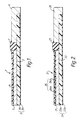
- a windscreen for a helicopter in accordance with a first embodiment of the present invention comprises an outer float glass ply 2 and a composite inner plastics ply 3 comprising, in the particular case illustrated, an energy absorbing plastics interlayer 3a of, for example, thermoplastic polyurethane or polyvinyl butyral, and an inner layer of rigid thermoset polyurethane 3b.
- the outer glass ply 2 is of chemically toughened glass having a thickness in the range 2 to 4 mm, for example 3 mm
- the interlayer 3a is of a thermoplastic polyurethane having a thickness in the range 1.5 to 4 mm, for example 2.5 mm
- the thermoset polyurethane inner layer 3b has a thickness in the range 0.5 to 2.5 mm, for example 1 mm.
- This thermoset polyurethane interlayer is preferably composed of the hard, highly cross-linked polyurethane recommended earlier in this specification for use on the outer glass layer and having a molecular weight between branch points in the range 500 to 1000.
- the outer glass ply 2 carries, on its outer surface, a thermoset polyurethane 4 having a thickness in the range 0.5 to 2 mm, for example about 1.25 mm for a harder thermoset polyurethane or about 1.25 mm for a softer thermoset polyurethane, bonded to the glass by a thermoplastic polyurethane interlayer 5 having a thickness in the range 0.125 to 1.5 mm, more preferably, 0.25 to 0.76 mm, the most preferred thickness being about 0.76 mm.
- the windscreen additionally comprises a composite edge attachment 6 for glazing the windscreen and a nib seal 7 for protecting the edge of the laminate from ingress of water.
- a windscreen comprising a bilayer construction carrying a thermoset polyurethane layer may be referred to as a "trilayer" windscreen.
- a windscreen for a helicopter generally designated 21 which comprises an outer float glass ply 22 and a composite inner plastics ply 23, comprising interlayers 23a and 23b, the ply 23 having the same structure as that of the embodiment of Figure 1.
- the outer glass ply carries, on its outer surface, a thermoset polyurethane layer 24 having an inner layer portion 24a of a relatively hard thermoset polyurethane and an outer layer portion 24b of a relatively soft thermoset polyurethane.
- the relatively soft thermoset polyurethane has a molecular weight between branch points in the preferred range 1200 to 1800, typically around 1400.
- the use of the combination of an outer soft thermoset polyurethane layer applied to a hard thermoset polyurethane layer as employed in the embodiment of Figure 1 provides improved self-healing properties of the composite thermoset polyurethane layer.
- the relatively soft polyurethane layer recovers more quickly than the relatively hard polyurethane layer. This provides improved self-healing over the use of a single hard polyurethane layer because although the hard layer is self-healing, it may take a long time for scratches to heal and optical performance to recover.
- the inner polyurethane layer 24a is typically 1 mm thick and the outer polyurethane layer portion is typically 0.25 mm thick.
- thermoset polyurethane layer 24 is bonded to the glass by a thermoplastic polyurethane interlayer 25 which is the same as that employed in the embodiment of Figure 1.
- the windscreen additionally comprises a composite edge attachment 26 and a nib seal 27 similar to those employed in the embodiment of Figure 1.
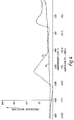
- the parking zone 33 is defined either by a locally hardened area of the soft polyurethane thermoset layer in the vicinity of the wiper parking position or by replacing the thermoset polyurethane layer in the relevant areas 33 of the windscreen 31 with an epoxy resin layer of the same thickness as the polyurethane layer, the epoxy resin layer optionally being reinforced, for example by reinforcing fibres.
- thermoset polyurethane ply suitable for use as the outer layer 4 (and also as the inner layer 3b) of the windscreen shown in Figure 1 was prepared by the following procedure.
- the reaction mixture from the dispenser was cast between parallel spaced glass plattens 1.25 mm (1 mm for inner layer 3b) apart in known manner and cured to form a solid rigid thermoset pane having the following properties: Shore hardness at 23°C : 79D Heat distortion temperature at 118kg (264 lbs) loading (ASTM 648) : 38°C Taber abrasion. Change in haze after 100 cycles (ASTM D1044) at 23°C : ⁇ 3% at 50°C : ⁇ 1% Sheen scratch test. Time to recover with 1000g loading on stylus (British Standard 3900E2) at 23°C : 48 hours at 50°C : ⁇ 60 seconds and an average molecular weight between branch points of 874.
- thermoset polyurethane pane was bonded to the outer face of a 3 mm float glass pane using a thermoplastic polyurethane interlayer 0.5 mm thick by heating under pressure in known manner to simulate the outer face of a windshield as described with reference to Figure 1 of the drawings.
- thermoset polyurethane has a high transmission in the visible region of the spectrum and in the near infra-red region from 700 to 1000 nm being effectively non-absorbing in these regions and having a refractive index close to that of the glass, so that the effect of bonding the thermoset polyurethane to the outer face of the glass on the transmission of the window in the above regions will generally be negligible (of the order of 1% or less).
- thermoset ply suitable for use as the outer layer 4 of the windscreen shown in Figure 1 was prepared in a similar manner to that disclosed in Example 1.
- the cross-link density of the thermoset polyurethane was reduced to around a molecular weight between branch points of about 1400.
- 0.933 equivalents of DESMODUR W were reacted with 0.5 equivalents of CAPA 200 and 0.433 equivalents of TONE 0301.
- the reaction mixture was cast between parallel spaced glass plattens 1.25 mm apart in a similar manner to that of Example 1 and cured to form a solid rigid thermoset pane having the following properties: Shore hardness at 23°C : 90A Heat distortion temperature at 118 kg (264 lbs) loading (ASTM 648) : 10°C Taber abrasion. Change in haze after 100 cycles (ASTM D1044) at 23°C : ⁇ 1% haze Sheen scratch test. Time to recover with 1000g loading on stylus (B.S. 3900E2) at 23°C : ⁇ 5 seconds
- thermoset polyurethane material With the softer thermoset polyurethane material, a greater thickness of material, particularly 1.25 to 2 mm, than the harder thermoset polyurethane is required to minimize damage through the thermoset layer being formed in the thermoplastic layer below.
- thermoset polyurethane layer was formed in a manner similar to that disclosed with reference to Examples 1 and 2.
- a pane of the harder thermoset polyurethane material disclosed in Example 1 and having a thickness of 1 mm was coated with a 0.25 mm layer of the softer thermoset polyurethane material disclosed in Example 2.
- thermoset polyurethane bonded to the outer surface of the glass have been tested for wiper blade resistance, rain erosion, sand erosion, accelerated weathering, thermal cycling and humidity, and in many cases the results obtained, indicating that the structure can be expected to be durable in service, were superior to the results obtained with a known bilayer windscreen having an uncoated outer glass face.
- Another advantage of the use of an outer layer of thermoset polyurethane on the outer surface of the windscreen when compared to the known bilayer windscreen is that the windscreen has improved rain-shedding properties because when rain falls on the windscreen it has a greater tendency to run off the outer surface of the windscreen as a result of the reduced contact angle between water and the polyurethane material.
- windows in accordance with present inventions may have a conductive heating film, for example gold or, mole preferably, a transparent semiconductor metal oxide such as indium tin oxide, on the outer glass for demisting and de-icing purposes.
- a conductive heating film for example gold or, mole preferably, a transparent semiconductor metal oxide such as indium tin oxide
- Such films are generally deposited on the outer glass ply and will usually be on the inner facing surface of that ply; such films may also be used to heat the outer polyurethane layer sufficiently above ambient temperature to promote rapid heating of even highly cross linked (molecular weight between branch points in the range 500 to 1500) thermoset polyurethane layers.
- outer glass ply is used in the present specification and claims to refer to a glass ply which, but for the use of a thermoset polyurethane layer to suppress Reststrahlen Band reflections in accordance with the invention, would form the outer ply (and, indeed, possibly the only ply) of a window for a conveyance; thus the user of the term “outer” is not to be taken as implying that the window necessarily comprises any other (inner) glass ply.
Landscapes
- Laminated Bodies (AREA)
- Surface Treatment Of Glass (AREA)
- Joining Of Glass To Other Materials (AREA)
Applications Claiming Priority (2)
| Application Number | Priority Date | Filing Date | Title |
|---|---|---|---|
| GB919123643A GB9123643D0 (en) | 1991-11-07 | 1991-11-07 | Windows |
| GB9123643 | 1991-11-07 |
Publications (2)
| Publication Number | Publication Date |
|---|---|
| EP0541341A1 true EP0541341A1 (de) | 1993-05-12 |
| EP0541341B1 EP0541341B1 (de) | 1998-02-04 |
Family
ID=10704223
Family Applications (1)
| Application Number | Title | Priority Date | Filing Date |
|---|---|---|---|
| EP92310077A Expired - Lifetime EP0541341B1 (de) | 1991-11-07 | 1992-11-03 | Verwendung einer hitzevernetzten Polyurethanschicht zur Reflexionsunterdrückung des Reststrahlenbands bei 8-12 Mikrometers |
Country Status (4)
| Country | Link |
|---|---|
| US (1) | US5376443A (de) |
| EP (1) | EP0541341B1 (de) |
| DE (1) | DE69224348T2 (de) |
| GB (1) | GB9123643D0 (de) |
Families Citing this family (15)
| Publication number | Priority date | Publication date | Assignee | Title |
|---|---|---|---|---|
| GB9108672D0 (en) * | 1991-04-23 | 1991-06-12 | Triplex Aircraft And Special P | Lightweight glazings |
| US6276741B1 (en) * | 1996-05-07 | 2001-08-21 | Edgeguard, Inc. | Method and means for protecting a windshield from cracks |
| US5879044A (en) * | 1997-05-28 | 1999-03-09 | Stufano; Thomas J. | Apparatus and method for protecting a window or vehicle windshield |
| US6969029B2 (en) * | 2004-02-23 | 2005-11-29 | The Boeing Company | Methods and systems for removing material from aircraft flight surfaces |
| CA2595837A1 (en) * | 2004-12-08 | 2006-08-10 | Armordynamics, Inc. | Methods and apparatus for providing ballistic protection |
| US8104396B2 (en) | 2005-12-08 | 2012-01-31 | Armordynamics, Inc. | Reactive armor system and method |
| US9441918B1 (en) | 2004-12-08 | 2016-09-13 | Armor Dynamics, Inc. | Armor system |
| US8857311B2 (en) | 2004-12-08 | 2014-10-14 | Armordynamics, Inc. | Apparatus for providing protection from ballistic rounds, projectiles, fragments and explosives |
| WO2008045097A1 (en) * | 2006-10-09 | 2008-04-17 | A. Schulman Invision, Inc. | Window coating |
| JP4969268B2 (ja) * | 2007-02-19 | 2012-07-04 | 三菱重工業株式会社 | 航空機用窓材およびその製造方法 |
| BR112013005159A2 (pt) * | 2010-09-02 | 2016-04-26 | 3M Innovative Properties Co | filmes protetores multicamada resistentes à erosão |
| US20140037964A1 (en) * | 2012-08-02 | 2014-02-06 | Haipeng Zheng | Optical Article Containing A Self-Healing Coating And Improved Initial Haze |
| US9964663B2 (en) * | 2014-08-26 | 2018-05-08 | The United States Of America, As Represented By The Secretary Of The Navy | Extended infrared imaging system |
| ITMI20150574A1 (it) * | 2015-04-21 | 2016-10-21 | F Lli Citterio Spa | Struttura con tessuto traspirante per la realizzazione di protezioni balistiche e antitaglio |
| WO2022003544A1 (en) * | 2020-07-02 | 2022-01-06 | 3M Innovative Properties Company | Safety window film including polyurethane |
Citations (6)
| Publication number | Priority date | Publication date | Assignee | Title |
|---|---|---|---|---|
| BE856398A (fr) * | 1976-07-02 | 1978-01-02 | Saint Gobain | Feuille en matiere plastique pour vitrage feuillete |
| EP0153496A2 (de) * | 1984-01-27 | 1985-09-04 | Asahi Glass Company Ltd. | Sicherheitsverbundglas |
| FR2568515A1 (fr) * | 1984-07-31 | 1986-02-07 | Holden Europ Sa | Complexe multicouche destine a etre rendu solidaire d'une couche adhesive de polyolefine modifiee, destine notamment a la fabrication d'emballage |
| EP0229326A1 (de) * | 1985-12-19 | 1987-07-22 | Ppg Industries, Inc. | Flugzeugwindschutz |
| EP0304898A2 (de) * | 1987-08-25 | 1989-03-01 | Asahi Glass Company Ltd. | Verfahren zur Pressbindung von laminierten Schichtstoffen |
| EP0344045A1 (de) * | 1988-05-20 | 1989-11-29 | Saint-Gobain Vitrage International | Durchsichtige, kratz- und abriebfeste Dunstbeständigkeit und energieabsorbierende Eigenschaften aufweisende Polyurethanschicht, Verfahren zu deren Herstellung sowie diese benutzendes laminiertes Glas |
Family Cites Families (3)
| Publication number | Priority date | Publication date | Assignee | Title |
|---|---|---|---|---|
| FR2496089A1 (fr) * | 1980-12-11 | 1982-06-18 | Saint Gobain Vitrage | Vitrage feuillete de securite |
| US4652494A (en) * | 1983-07-11 | 1987-03-24 | Saint-Gobain Vitrage | Bilayer laminate and preformed sheet for use therein |
| US4824926A (en) * | 1987-12-16 | 1989-04-25 | Ppg Industries, Inc. | Bilayer windshield with an abrasion and solvent resistant polyurethane protective coating |
-
1991
- 1991-11-07 GB GB919123643A patent/GB9123643D0/en active Pending
-
1992
- 1992-11-03 DE DE69224348T patent/DE69224348T2/de not_active Expired - Lifetime
- 1992-11-03 EP EP92310077A patent/EP0541341B1/de not_active Expired - Lifetime
- 1992-11-06 US US07/972,632 patent/US5376443A/en not_active Expired - Lifetime
Patent Citations (6)
| Publication number | Priority date | Publication date | Assignee | Title |
|---|---|---|---|---|
| BE856398A (fr) * | 1976-07-02 | 1978-01-02 | Saint Gobain | Feuille en matiere plastique pour vitrage feuillete |
| EP0153496A2 (de) * | 1984-01-27 | 1985-09-04 | Asahi Glass Company Ltd. | Sicherheitsverbundglas |
| FR2568515A1 (fr) * | 1984-07-31 | 1986-02-07 | Holden Europ Sa | Complexe multicouche destine a etre rendu solidaire d'une couche adhesive de polyolefine modifiee, destine notamment a la fabrication d'emballage |
| EP0229326A1 (de) * | 1985-12-19 | 1987-07-22 | Ppg Industries, Inc. | Flugzeugwindschutz |
| EP0304898A2 (de) * | 1987-08-25 | 1989-03-01 | Asahi Glass Company Ltd. | Verfahren zur Pressbindung von laminierten Schichtstoffen |
| EP0344045A1 (de) * | 1988-05-20 | 1989-11-29 | Saint-Gobain Vitrage International | Durchsichtige, kratz- und abriebfeste Dunstbeständigkeit und energieabsorbierende Eigenschaften aufweisende Polyurethanschicht, Verfahren zu deren Herstellung sowie diese benutzendes laminiertes Glas |
Also Published As
| Publication number | Publication date |
|---|---|
| GB9123643D0 (en) | 1992-07-22 |
| EP0541341B1 (de) | 1998-02-04 |
| DE69224348T2 (de) | 1998-07-02 |
| US5376443A (en) | 1994-12-27 |
| DE69224348D1 (de) | 1998-03-12 |
Similar Documents
| Publication | Publication Date | Title |
|---|---|---|
| EP0541341B1 (de) | Verwendung einer hitzevernetzten Polyurethanschicht zur Reflexionsunterdrückung des Reststrahlenbands bei 8-12 Mikrometers | |
| US5061568A (en) | Solar screening assembly | |
| US5766755A (en) | Laminated safety pane for aircraft | |
| EP0277228B1 (de) | Solarbauteil aus glas und verfahren zu seiner herstellung | |
| JP4279362B2 (ja) | 安全ガラス | |
| US9694653B2 (en) | Transparent laminated glass and use thereof | |
| JP3076288B2 (ja) | 改良された航空機用透明材料 | |
| US4109055A (en) | Laminated windshield with improved innerlayer | |
| EP0320871B1 (de) | Zweischichtige Schutzscheibe mit einer kratzfesten und lösungsmittelfesten Polyurethanschutzschicht | |
| EP3385238A1 (de) | Verbundglas für fahrzeuge | |
| US20150185382A1 (en) | Composite film having superior optical and solar performance | |
| US20130344317A1 (en) | Safety glass panel | |
| US4923757A (en) | Bilayer windshield with an abrasion and solvent resistant polyurethane protective coating | |
| EP0636471B1 (de) | Verfahren zur Herstellung eineS VerbundglasES | |
| US6110327A (en) | Primer for promoting adhesion of electroconductive metal oxide to plastic substrates | |
| US5561951A (en) | Lightweight glazings | |
| US20230382086A1 (en) | High strength glazing | |
| US20250222682A1 (en) | Composite pane | |
| JP2005089245A (ja) | 合わせガラス | |
| MXPA00001220A (es) | Encristalado de hojas de comportamiento elevado en relacion con las pruebas de aplastamiento |
Legal Events
| Date | Code | Title | Description |
|---|---|---|---|
| PUAI | Public reference made under article 153(3) epc to a published international application that has entered the european phase |
Free format text: ORIGINAL CODE: 0009012 |
|
| AK | Designated contracting states |
Kind code of ref document: A1 Designated state(s): DE FR GB IT |
|
| 17P | Request for examination filed |
Effective date: 19930709 |
|
| 17Q | First examination report despatched |
Effective date: 19961108 |
|
| GRAG | Despatch of communication of intention to grant |
Free format text: ORIGINAL CODE: EPIDOS AGRA |
|
| GRAG | Despatch of communication of intention to grant |
Free format text: ORIGINAL CODE: EPIDOS AGRA |
|
| GRAG | Despatch of communication of intention to grant |
Free format text: ORIGINAL CODE: EPIDOS AGRA |
|
| GRAH | Despatch of communication of intention to grant a patent |
Free format text: ORIGINAL CODE: EPIDOS IGRA |
|
| GRAH | Despatch of communication of intention to grant a patent |
Free format text: ORIGINAL CODE: EPIDOS IGRA |
|
| GRAA | (expected) grant |
Free format text: ORIGINAL CODE: 0009210 |
|
| AK | Designated contracting states |
Kind code of ref document: B1 Designated state(s): DE FR GB IT |
|
| REF | Corresponds to: |
Ref document number: 69224348 Country of ref document: DE Date of ref document: 19980312 |
|
| ET | Fr: translation filed | ||
| ITF | It: translation for a ep patent filed | ||
| PLBE | No opposition filed within time limit |
Free format text: ORIGINAL CODE: 0009261 |
|
| 26N | No opposition filed | ||
| REG | Reference to a national code |
Ref country code: GB Ref legal event code: IF02 |
|
| REG | Reference to a national code |
Ref country code: GB Ref legal event code: 732E |
|
| REG | Reference to a national code |
Ref country code: FR Ref legal event code: TP Ref country code: FR Ref legal event code: CD |
|
| PGFP | Annual fee paid to national office [announced via postgrant information from national office to epo] |
Ref country code: DE Payment date: 20101027 Year of fee payment: 19 |
|
| PGFP | Annual fee paid to national office [announced via postgrant information from national office to epo] |
Ref country code: IT Payment date: 20101111 Year of fee payment: 19 Ref country code: GB Payment date: 20101103 Year of fee payment: 19 |
|
| PGFP | Annual fee paid to national office [announced via postgrant information from national office to epo] |
Ref country code: FR Payment date: 20111118 Year of fee payment: 20 |
|
| REG | Reference to a national code |
Ref country code: DE Ref legal event code: R071 Ref document number: 69224348 Country of ref document: DE |
|
| REG | Reference to a national code |
Ref country code: DE Ref legal event code: R071 Ref document number: 69224348 Country of ref document: DE |
|
| REG | Reference to a national code |
Ref country code: GB Ref legal event code: PE20 Expiry date: 20121102 |
|
| PG25 | Lapsed in a contracting state [announced via postgrant information from national office to epo] |
Ref country code: GB Free format text: LAPSE BECAUSE OF EXPIRATION OF PROTECTION Effective date: 20121102 |