EP0548448B1 - Stabilisiertes Substrat für kontrollierte Freigabe mit von einer wässerigen Dispersion eines hydrophobischen Polymers abgeleitete Beschichtung - Google Patents
Stabilisiertes Substrat für kontrollierte Freigabe mit von einer wässerigen Dispersion eines hydrophobischen Polymers abgeleitete Beschichtung Download PDFInfo
- Publication number
- EP0548448B1 EP0548448B1 EP92106519A EP92106519A EP0548448B1 EP 0548448 B1 EP0548448 B1 EP 0548448B1 EP 92106519 A EP92106519 A EP 92106519A EP 92106519 A EP92106519 A EP 92106519A EP 0548448 B1 EP0548448 B1 EP 0548448B1
- Authority
- EP
- European Patent Office
- Prior art keywords
- therapeutically active
- active agent
- controlled release
- ethylcellulose
- dosage form
- Prior art date
- Legal status (The legal status is an assumption and is not a legal conclusion. Google has not performed a legal analysis and makes no representation as to the accuracy of the status listed.)
- Expired - Lifetime
Links
Images

Classifications
-
- A—HUMAN NECESSITIES
- A61—MEDICAL OR VETERINARY SCIENCE; HYGIENE
- A61K—PREPARATIONS FOR MEDICAL, DENTAL OR TOILETRY PURPOSES
- A61K9/00—Medicinal preparations characterised by special physical form
- A61K9/20—Pills, tablets, discs, rods
- A61K9/28—Dragees; Coated pills or tablets, e.g. with film or compression coating
-
- A—HUMAN NECESSITIES
- A61—MEDICAL OR VETERINARY SCIENCE; HYGIENE
- A61K—PREPARATIONS FOR MEDICAL, DENTAL OR TOILETRY PURPOSES
- A61K31/00—Medicinal preparations containing organic active ingredients
- A61K31/33—Heterocyclic compounds
- A61K31/395—Heterocyclic compounds having nitrogen as a ring hetero atom, e.g. guanethidine or rifamycins
- A61K31/495—Heterocyclic compounds having nitrogen as a ring hetero atom, e.g. guanethidine or rifamycins having six-membered rings with two or more nitrogen atoms as the only ring heteroatoms, e.g. piperazine or tetrazines
- A61K31/505—Pyrimidines; Hydrogenated pyrimidines, e.g. trimethoprim
- A61K31/519—Pyrimidines; Hydrogenated pyrimidines, e.g. trimethoprim ortho- or peri-condensed with heterocyclic rings
- A61K31/52—Purines, e.g. adenine
- A61K31/522—Purines, e.g. adenine having oxo groups directly attached to the heterocyclic ring, e.g. hypoxanthine, guanine, acyclovir
-
- A—HUMAN NECESSITIES
- A61—MEDICAL OR VETERINARY SCIENCE; HYGIENE
- A61K—PREPARATIONS FOR MEDICAL, DENTAL OR TOILETRY PURPOSES
- A61K9/00—Medicinal preparations characterised by special physical form
- A61K9/20—Pills, tablets, discs, rods
- A61K9/28—Dragees; Coated pills or tablets, e.g. with film or compression coating
- A61K9/2806—Coating materials
- A61K9/2833—Organic macromolecular compounds
- A61K9/286—Polysaccharides, e.g. gums; Cyclodextrin
- A61K9/2866—Cellulose; Cellulose derivatives, e.g. hydroxypropyl methylcellulose
-
- A—HUMAN NECESSITIES
- A61—MEDICAL OR VETERINARY SCIENCE; HYGIENE
- A61K—PREPARATIONS FOR MEDICAL, DENTAL OR TOILETRY PURPOSES
- A61K9/00—Medicinal preparations characterised by special physical form
- A61K9/48—Preparations in capsules, e.g. of gelatin, of chocolate
- A61K9/50—Microcapsules having a gas, liquid or semi-solid filling; Solid microparticles or pellets surrounded by a distinct coating layer, e.g. coated microspheres, coated drug crystals
- A61K9/5073—Microcapsules having a gas, liquid or semi-solid filling; Solid microparticles or pellets surrounded by a distinct coating layer, e.g. coated microspheres, coated drug crystals having two or more different coatings optionally including drug-containing subcoatings
- A61K9/5078—Microcapsules having a gas, liquid or semi-solid filling; Solid microparticles or pellets surrounded by a distinct coating layer, e.g. coated microspheres, coated drug crystals having two or more different coatings optionally including drug-containing subcoatings with drug-free core
Definitions
- Controlled release formulations known in the art include specially coated beads or pellets, coated tablets and ion exchange resins, wherein the slow release of the active drug is brought about through selective breakdown of, or permeation through, the coating of the preparation or through formulation with a special matrix to affect the release of the drug.
- the stability of a pharmaceutical dosage form is related to maintaining its physical, chemical, microbiological, therapeutic, pharmaceutical, and toxicological properties when stored, i.e., in a particular container and environment. Stability study requirements are covered, e.g., in the Good Manufacturing Practices (GMPs), the U.S.P., as well as in New Drug Applications (NDAs) and Investigational New Drug Applications (INDs).
- GMPs Good Manufacturing Practices
- NDAs New Drug Applications
- INDs Investigational New Drug Applications
- sustained release dosage formulations often present special problems with regard to their physical stability during storage.
- waxes which have been used in such formulations are known to undergo physical alterations on prolonged standing, thus precautions are taken to stabilize them at the time of manufacture or to prevent the change from occurring.
- Fats and waxy materials when used in purified states are known to crystallize in unstable forms, causing unpredictable variations in availability rates during stability testing at the time of manufacture and during later storage.
- the moisture content of the product can also influence the stability of the product. Changes in the porosity and/or hydration level of a polymeric film, such as the ethyl celluloses, can alter the rate of water permeation and drug availability. Also, binders such as acacia are known to become less soluble when exposed to moisture and heat. Such problems have been handled by controls in the processing method and proper packaging of the product.
- Hydrophobic polymers such as certain cellulose derivatives, zein, acrylic resins, waxes, higher aliphatic alcohols, and polylactic and polyglycolic acids have been used in the prior art to develop controlled release dosage forms.
- Methods of using these polymers to develop controlled release dosage forms such as tablets, capsules, suppositories, spheroids, beads or microspheres are to overcoat the individual dosage units with these hydrophobic polymers. It is known in the prior art that these hydrophobic coatings can be applied either from a solution, suspension or dry. Since most of these polymers have a low solubility in water, they are usually applied by dissolving the polymer in an organic solvent and spraying the solution onto the individual drug forms (such as beads or tablets) and evaporating off the solvent.
- Aqueous dispersions of hydrophobic polymers have been used in the prior art to coat pharmaceutical dosage forms for aesthetic reasons such as film coating tablets or beads or for taste-masking. However, these dosage forms are used for immediate release administration of the active drug contained in the dosage form.
- organic solvents in the preparation of polymer coatings is considered problematic as the formulations have inherent problems with regard to flammability, carcinogenicity, and safety in general. In addition, the use of organic solvents is disfavored due to environmental concerns.
- a second sample consisted of phenylpropanolamine spheronized with microcrystalline cellulose in a 70:30 ratio, then coated with 15% ethyl cellulose applied from an aqueous dispersion. Samples from each batch were stored for up to four weeks under conditions of room temperature/ambient humidity; room temperature/high humidity (75% RH); 37°C/ambient humidity; and 37°C/high humidity. The data for the dissolution profiles indicated that the lag time and percent drug released at 8 hours were unstable at all conditions other than room temperature/ambient humidity conditions.
- Aqueous polymeric dispersions have been used to produce stable controlled release dosage forms, but this has only been possible by other methods such as incorporation of the same into the matrix of the dosage form, rather than via the use of a coating of the aqueous polymeric dispersion to obtain retardant properties.
- a solid dosage form which has a controlled release overcoat derived from an aqueous dispersion of a hydrophobic polymer which provides a substantially stable release pattern of a therapeutically active agent(s) contained therein.
- the present invention further relates to the surprising discovery that when the coated formulation is exposed to certain elevated or stressed" conditions of temperature and humidity for a certain amount of time, a desired endpoint may be attained whereat the release rate of the therapeutically active agent does not substantially change upon ageing under a wide range of temperature and/or humidity conditions.
- This surprising discovery makes it possible to use aqueous dispersions of hydrophobic polymers for coating pharmaceutical dosage forms to produce stable controlled release pharmaceutical products.
- the present invention is also related to a solid dosage form obtainable according to the method as described herein comprising a core comprising a therapeutically active agent and an overcoating derived from an aqueous dispersion of ethylcellulose in an amount sufficient to obtain a controlled release of the therapeutically active agent when the dosage form is exposed to aqueous solutions, e.g. gastric fluid.
- the solid dosage form is cured after the overcoating is applied such that the release of the therapeutically active agent is substantially unaffected by exposure to elevated temperature and/or humidity.
- the present invention is also related to a stabilized controlled release solid dosage form obtainable according to the method as described herein for oral administration, comprising a plurality of inert pharmaceutically acceptable beads coated with a therapeutically active agent, and an ethylcellulose overcoat of a suitable thickness to obtain a controlled release of said therapeutically active agent when the solid dosage form is exposed to aqueous solutions, the ethylcellulose overcoat being derived from an aqueous dispersion of ethylcellulose with an effective amount of a suitable plasticizing agent.
- the ethylcellulose coated beads are cured under stress conditions, i.e.
- the present invention is further related to a stabilized solid controlled dosage form obtainable according to the method as described therein comprising a therapeutically active agent overcoated with an aqueous dispersion of ethylcellulose.
- the present invention is also related to a method for obtaining a stabilized controlled release formulation comprising a substrate coated with an aqueous dispersion of a hydrophobic polymer, comprising preparing an aqueous dispersion of ethylcellulose, preparing a substrate comprising a therapeutically active agent, overcoating the substrate with a sufficient amount of the aqueous dispersion of ethylcellulose to obtain a predetermined controlled release of the therapeutically active agent when the coated particles are exposed to aqueous solutions, and curing the coated substrate under stressed conditions by subjecting said coated particles to a temperature greater than the glass transition temperature of the aqueous dispersion of ethylcellulose and at a greater than ambient relative humidity and continuing the curing until an endpoint is reached at which the coated substrate attains a changed dissolution profile which is substantially unaffected by exposure to storage conditions of elevated temperature and/or humidity.
- the method further includes the step of determining the endpoint for a particular formulation by exposing the formulation to various stages of the above-mentioned curing and obtaining dissolution profiles for the formulation until the dissolution profiles of the formulation are substantially stabilized. The formulation is then modified, if necessary, to obtain a desired dissolution profile of the therapeutically active agent based on the end point.
- Ethylcellulose which is a cellulose ether that is formed by the reaction of ethyl chloride with alkaline cellulose, is completely insoluble in water and gastrointestinal juices, and therefore to date has been considered not to be suitable by itself for tablet coating. It has, however, been commonly used in combination with hydroxypropyl methylcellulose and other film-formers to toughen or influence the dissolution rate of the film. Due to the solubility characteristics of ethylcellulose, this polymer has been mainly applied to the above-mentioned formulations from organic solutions. Many polymers have been investigated for use in film-coating.
- film-coats are prepared by deposition of one or more film-forming polymers resulting in coats that usually represent no more than about 2-5% by weight of the final coated product.
- the film-coating has been used in conjunction with the preparation of tablets, pills, capsules, granules, and powders.
- the characteristics of the polymer used in the film-coating is governed by the structure, size and properties of its macromolecules.
- Common film-formers used in pharmaceuticals as nonenteric materials include hydroxypropyl methylcellulose, methyl hydroxyethylcellulose, hydroxypropylcellulose, sodium carboxymethylcellulose, ethylcellulose, and others.
- the substrate comprising the therapeutically active agent In order to obtain a controlled release formulation, it is usually necessary to overcoat the substrate comprising the therapeutically active agent with a sufficient amount of the aqueous dispersion of ethylcellulose to obtain a weight gain level from about 5 to about 15 percent, although the overcoat may be lesser or greater depending upon the physical properties of the therapeutically active agent and the desired release rate, the inclusion of plasticizer in the aqueous dispersion of ethylcellulose and the manner of incorporation of the same, for example.
- An example of a suitable controlled release formulation pursuant to the present invention will provide a dissolution rate in vitro of the dosage form, when measured by the USP Paddle Method at 100 rpm in 900 ml aqueous buffer (pH between 1.6 and 7.2) at 37° C, is between 12.5 and 42.5% (by wt) therapeutically active agent released after 1 hour, between 25 and 55% (by wt) released after 2 hours, between 45 and 75% (by wt) released after 4 hours and between 55 and 85% (by wt) released after 6 hours.
- This example is, of course, not intended to be limiting in any manner whatsoever.
- aqueous dispersions of hydrophobic polymers used as coatings in the present invention may be used in conjunction with tablets, spheroids (or beads), microspheres, seeds, pellets, ion-exchange resin beads, and other multi-particulate systems in order to obtain a desired controlled release of the therapeutically active agent.
- Granules, spheroids, or pellets, etc., prepared in accordance with the present invention can be presented in a capsule or in any other suitable dosage form.
- ethylcellulose has a relatively high glass transition temperature and does not form flexible films under normal coating conditions, it is necessary to plasticize the ethylcellulose before using the same as a coating material.
- Aquacoat® One commercially-available aqueous dispersion of ethylcellulose is Aquacoat® (FMC Corp., Philadelphia, Pennsylvania, U.S.A.). Aquacoat® is prepared by dissolving the ethylcellulose in a water-immiscible organic solvent and then emulsifying the same in water in the presence of a surfactant and a stabilizer. After homogenization to generate submicron droplets, the organic solvent is evaporated under vacuum to form a pseudolatex. The plasticizer is not incorporated in the pseudolatex during the manufacturing phase. Thus, prior to using the same as a coating, it is necessary to intimately mix the Aquacoat® with a suitable plasticizer prior to use.
- FMC states that Aquacoat® will undergo a rise in viscosity upon prolonged exposure to temperatures below 15°C or above 35°C, and that viscosity can be reduced to less than 100 cps by applying shear (e.g., propeller type mixer).
- shear e.g., propeller type mixer
- FMC further states that a continuous film may be formed through a process known as gradual coalescence wherein the individual latex particles coalesce to form a continuous film of plasticized ethylcellulose polymer. After this period, the properties are said to remain constant. Higher coating temperatures, or a high temperature "curing" step is said by FMC to accelerate the process. If the coalescence process is not complete, FMC states that variability in release rates will result.
- aqueous dispersion of ethylcellulose is commercially available as Surelease® (Colorcon, Inc., West Point, Pennsylvania, U.S.A.). This product is prepared by incorporating plasticizer into the dispersion during the manufacturing process. A hot melt of a polymer, plasticizer (dibutyl sebacate), and stabilizer (oleic acid) is prepared as a homogeneous mixture, which is then diluted with an alkaline solution to obtain an aqueous dispersion which can be applied directly onto substrates.
- Surelease® Colorcon, Inc., West Point, Pennsylvania, U.S.A.
- the coating formulations of the present invention should be capable of producing a strong, continuous film that is smooth and elegant, capable of supporting pigments and other coating additives, non-toxic, inert, and tack-free.
- the aqueous dispersion of ethylcellulose used in the present invention include an effective amount of a suitable plasticizing agent, as it has been found that the use of a plasticizer will further improve the physical properties of the film.
- a suitable plasticizing agent as it has been found that the use of a plasticizer will further improve the physical properties of the film.
- the plasticization of the ethylcellulose may be accomplished either by so-called “internal plasticization” and "external plasticization.”
- Internal plasticization usually pertains directly to molecular modifications of the polymer during its manufacture, e.g., by copolymerization, such as altering and/or substituting functional groups, controlling the number of side chains, or controlling the length of the polymer. Such techniques are usually not performed by the formulator of the coating solution.
- External plasticization involves the addition of a material to a film solution so that the requisite changes in film properties of the dry film can be achieved.
- the suitability of a plasticizer depends on its affinity or solvating power for the polymer and its effectiveness at interfering with polymer-polymer attachments. Such activity imparts the desired flexibility by relieving molecular rigidity.
- the amount of plasticizer included in a coating solution is based on the concentration of the film-former, e.g., most often from about 1 to about 50 percent by weight of the film-former. Concentration of the plasticizer, however, can only be properly determined after careful experimentation with the particular coating solution and method of application.
- Tg glass transition temperature
- the glass transition temperature is related to the temperature or temperature range where there is a fundamental change in the physical properties of the polymer. This change does not reflect a change in state, but rather a change in the macromolecular mobility of the polymer.
- the polymer chain mobility is severely restricted.
- the polymer will behave as a glass, being hard, non-pliable and rather brittle, properties which could be somewhat restrictive in film coating since the coated dosage form may be subjected to a certain amount of external stress.
- suitable plasticizers include the ability of the plasticizer to act as a good "swelling agent" for the ethylcellulose, and the insolubility of the plasticizer in water.
- plasticizers examples include water insoluble plasticizers such as dibutyl sebacate, diethyl phthalate, triethyl citrate, tibutyl citrate, and triacetin, although it is possible that other water-insoluble plasticizers (such as acetylated monoglycerides, phthalate esters, castor oil, etc.) may be used.
- Triethyl citrate is an especially preferred plasticizer for the aqueous dispersions of ethyl cellulose of the present invention.
- the stabilized controlled release formulations of the present invention slowly release the therapeutically active agent, e.g., when ingested and exposed to gastric fluids, and then to intestinal fluids.
- the controlled release profile of the formulations of the invention can be altered, for example, by varying the amount of overcoating with the aqueous dispersion of ethylcellulose, altering the manner in which the plasticizer is added to the aqueous dispersion of ethylcellulose, by varying the amount of plasticizer relative to ethylcellulose, by the inclusion of additional ingredients or excipients, by altering the method of manufacture, etc.
- the therapeutically active agents can be used in conjunction with the present invention.
- the therapeutically active agents e.g. pharmaceutical agents
- the therapeutically active agents include both water soluble and water insoluble drugs.
- therapeutically active agents include antihistamines (e.g., dimenhydrinate, diphenhydramine, chlorpheniramine and dexchlorpheniramine maleate), analgesics (e.g., aspirin, codeine, morphine, dihydromorphone, oxycodone, etc.), anti-inflammatory agents (e.g., naproxyn, diclofenac, indomethacin, ibuprofen, acetaminophen, aspirin, sulindac), gastro-intestinals and anti-emetics (e.g., metoclopramide), anti-epileptics (e.g., phenytoin, meprobamate and nitrezepam), vasodilators (e.g.
- anti-spasmodics e.g. atropine, scopolamine
- hormones e.g., insulin, leparin
- diuretics e.g., eltacrymic acid, bendrofluazide
- anti-hypotensives e.g., propranolol, clonidine
- bronchodilators e.g., albuterol
- anti-inflammatory steroids e.g., hydrocortisone, triamcinolone, prednisone
- antibiotics e.g., tetracycline
- antihemorrhoidals hypnotics, psychotropics, antidiarrheals, mucolytics, sedatives, decongestants, laxatives, antacids, vitamins, stimulants (including appetite suppressants such as phenylpropanolamine).
- appetite suppressants such as phenylpropanolamine
- the therapeutically active agent comprises hydromorphone, oxycodone, dihydrocodeine, codeine, dihydromorphine, morphine, buprenorphine, salts of any of the foregoing, and mixtures of any of the foregoing, and the like.
- aqueous dispersion of ethylcellulose When the aqueous dispersion of ethylcellulose is used to coat inert pharmaceutical beads such as nu pariel 18/20 beads, a plurality of the resultant stabilized solid controlled release beads may thereafter be placed in a gelatin capsule in an amount sufficient to provide an effective controlled release dose when ingested and contacted by gastric fluid.
- beads coated with a therapeutically active agent are prepared, e.g. by dissolving the therapeutically active agent in water and then spraying the solution onto a substrate, for example, nu pariel 18/20 beads, using a Wurster insert.
- additional ingredients are also added prior to coating the beads in order to assist the hydromorphone binding to the beads, and/or to color the solution, etc.
- a product which includes hydroxypropyl methylcellulose, etc. with or without colorant may be added to the solution and the solution mixed (e.g., for about 1 hour) prior to application of the same onto the beads.
- the resultant coated substrate, in this example beads may then be optionally overcoated with a barrier agent, to separate the therapeutically active agent from the ethylcellulose coating.
- a barrier agent is one which comprises hydroxypropyl methylcellulose.
- any film-former known in the art may be used. It is preferred that the barrier agent does not affect the dissolution rate of the final product.
- the hydromorphone, HPMC protected (optional) beads may then be overcoated with an aqueous dispersion of ethylcellulose.
- the aqueous dispersion of ethylcellulose preferably further includes an effective amount of plasticizer, e.g. triethyl citrate.
- plasticizer e.g. triethyl citrate.
- Pre-formulated aqueous dispersions of ethylcellulose such as Aquacoat® or Surelease®, may be used. If Surelease® is used, it is not necessary to separately add a plasticizer.
- the coating solutions of the present invention preferably contain, in addition to the film-former, plasticizer, and solvent system (i.e., water), a colorant to provide elegance and product distinction.
- Color may be added to the solution of the therapeutically active agent instead, or in addition to the aqueous dispersion of ethylcellulose.
- color be added to Aquacoat® via the use of alcohol or propylene glycol based color dispersions, milled aluminum lakes and opacifiers such as titanium dioxide by adding color with shear to water soluble polymer solution and then using low shear to the plasticized Aquacoat®.
- any suitable method of providing color to the formulations of the present invention may be used.
- the plasticized aqueous dispersion of ethylcellulose may be applied onto the substrate comprising the therapeutically active agent by spraying using any suitable spray equipment known in the art.
- a further overcoat of a film-former such as Opadry®, is optionally applied to the beads. This overcoat is provided, if at all, in order to substantially reduce agglomeration of the beads.
- the coated beads are cured in order to obtain a stabilized release rate of the therapeutically active agent.
- Curing is traditionally carried out, if at all, via a forced-air oven at 60°C for anywhere from 2-24 hours. This standard curing does not stabilize the dissolution profile of the formulation, as will be demonstrated by the examples set forth herein.
- the curing step pursuant to the present invention is accomplished by subjecting the coated beads to "stressed conditions" by subjecting said coated substrate to a temperature greater than the glass transition temperature of the aqueous dispersion of ethylcellulose and at a greater than ambient relative humidity and continuing the curing until an endpoint is reached at which the coated beads attain a changed dissolution profile which is substantially unaffected by further exposure to storage conditions of elevated temperature and/or humidity.
- the cured products of the present invention provide a release rate of the therapeutically active agent which is substantially unaffected during storage by elevations in temperature and humidity.
- the stabilized product is obtained by subjecting the coated substrate to oven curing at elevated temperature/humidity levels for the required time period, the optimum values for temperature, humidity and time for the particular formulation being determined experimentally.
- the stabilized product is obtained via an oven curing conducted at a temperature of about 60°C and a relative humidity from about 60% to about 100% for a time period from about 48 to about 72 hours.
- a temperature of about 60°C and a relative humidity from about 60% to about 100% for a time period from about 48 to about 72 hours.
- a relative humidity from about 60% to about 100% for a time period from about 48 to about 72 hours.
- necessary curing conditions may be changed somewhat, and may in fact be broader than the above-mentioned temperature, humidity and time ranges, depending upon the particular formulation, in order to obtain a stabilized product.
- the tablet core e.g. the substrate
- the active agent may comprise the active agent along with any pharmaceutically accepted inert pharmaceutical filler (diluent) material, including but not limited to sucrose, dextrose, lactose, microcrystalline cellulose, xylitol, fructose, sorbitol, mixtures thereof and the like.
- an effective amount of any generally accepted pharmaceutical lubricant, including the calcium or magnesium soaps may be added to the above-mentioned ingredients of the excipient prior to compression of the tablet core ingredients.
- magnesium stearate in an amount of about 0.5-3% by weight of the solid dosage form.
- Tablets overcoated with a sufficient amount of aqueous dispersions of ethylcellulose to achieve a controlled release formulation pursuant to the present may be prepared and cured in similar fashion as explained above with regard to the preparation of beads.
- necessary curing conditions with regard to the particular elevated temperature, elevated humidity and time ranges necessary to obtain a stabilized product will depend upon the particular formulation.
- Hydromorphone beads were prepared by dissolving hydromorphone HC1 in water, adding Opadry® Y-5-1442, light pink (a product commercially available from Coloron, West Point, Pennsylvania, which contains hydroxypropyl methylcellulose, hydroxypropyl cellulose, titanium dioxide, polyethylene glycol and D&C Red No. 30 Aluminum Lake), 20% w/w, and mixing for about 1 hour, and then spraying onto nu pariel 18/20 beads using a Wurster insert. The resultant coated beads were then overcoated with Opadry® Y-5-1442 light pink (15% w/w).
- the resultant preparation had the formula set forth in Table 1 below: Ingredient Percent Amt/Unit Hydromorphone HC1 4.75% 4 mg Nu Pariel 18/20 87.9% 74 mg Opadry® Lt. Pink Y-5-1442 2.4% 2 mg Opadry® "(overcoat) 5.0% 4.2mq 100.0% 84.2mg
- hydromorphone, HPMC protected beads were then overcoated with 15% w/w Aquacoat® (including triethyl citrate), and then overcoated with Opadry® Light Pink 5% w/w after curing (see Table 2).
- the beads cured at high humidity were dried in a fluid bed before the final overcoat.
- Composition After Coating Ingredient Percent Hydromorphone beads 80.57% Aquacoat® ECD 30 12.06% Triethyl citrate 2.39% Opadry® Lt. Pink 4.98% Y-5-1442 (Overcoat) 100.0%
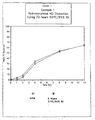
- Example 1 the coated beads were placed in a 30 cc amber glass vial and cured in an oven for 72 hours at 60.C/85% relative humidity.
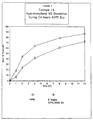
- Comparative Example 1A the coated beads were cured for 24 hours at 60°C under dry conditions.
- Comparative Example 1B the coated beads were cured for 72 hours at 60.C under dry conditions.
- Comparative Example 1C the coated beads were cured for 24 hours at 60°C at 85% relative humidity.
- the relative humidity in a water-filled desiccator in a 60°C oven was determined as follows. First, about 500 grams of purified water is poured into a plastic desiccator and the metal guard inserted. A hygrometer/temperature indicator is placed on top of the guard and the desiccator covered and placed in the oven for 24 hours. After 24 hours the relative humidity in the desiccator was 85% while the temperature was still 60°C. On placing the hygrometer alone in the 60°C oven for 24 hours, the relative humidity was 9% at 60°C.
- the dissolution tests were carried out via the USP Basket Method, 37°C, 100 RPM, first hour 700 ml gastric fluid at pH 1.2, then changed to 900 ml at 7.5. In each instance, the dissolution was conducted by placing an open capsule containing the specified amount of cured beads (8mg hydromorphone HCl, 209mg beads ⁇ 10%) into a vessel.
- Example 1 did not change under these accelerated conditions, except that changes were seen with respect to the extreme conditions of 60°C/85% RH.
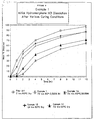
- the results for Example 1 are set forth in Tables 3-8 below,: ROOM TEMPERATURE Time(wks) Hydromorphone HC1 (Amount) Dissolution 1 2 3 8 12 18 24 Initial 8.14 mg 0 4.6 29.5 52.6 64.7 76.6 82.8 1 7.95mg 0 5.1 30.3 55.0 67.4 79.8 88.9 4 7.80 mg 1.3 8.2 33.5 57.4 70.0 82.8 90.9 8 7.78 mg 0.7 6.0 30.5 54.0 66.4 78.0 88.2 37°C DRY Time(wks) Hydromorphone HC1 (Amount) Dissolution 1 2 3 8 12 18 24 Initial 8.14 mg 0 4.6 29.5 52.6 64.7 76.6 82.8 1 7.96 mg 0 6.0 30.8 55.3 68.0 81.6 89.7 4 7.91 mg 2 8.1 33.2 56.6 70.2 82.0 91.3
- Comparative Examples 1A, 1B and 1C continued to slow down (e.g., cure) at all accelerated conditions.
- the results are set forth in Tables 9, 10 and 11, respectively.
- Comparative Example 1A Conditions/Time Hydromorphone HC1 (Amount) Dissolution 1 2 3 8 12 18 24 Initial 9.03 mg 17.8 43.6 63.6 78.8 86.7 94.7 94.2 Room Temp.
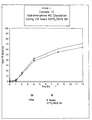
- Example 2 hydromorphone HCl beads were prepared in accordance with Example 1 in order to determine if the stabilized initial dissolution achieved after curing at 60°C/85%RH could instead be achieved by a longer drying period without humidity.
- a further overcoat of Opadry® Y-5-1442 light pink is applied to the beads.
- the coated product had the composition set forth in Table 12 below: Composition After Coating Ingredient Percent Amt/Unit Hydromorphone beads 80.57% 84.2mg Aquacoat® ECD 30 12.06% 12.6mg Triethyl citrate 2.39% 2.5mg Opadry® Lt. Pink (Overcoat) 4.98% 5.2mg 100.0% 99.3mg
- the Aquacoat® coated hydromorphone HCl beads were then cured in a 60°C dry oven, and stored at 60°dry heat.
- the cured beads were placed in open gelatin capsules containing the specified 35 amount of cured beads (about 8mg hydromorphone HCl), and dissolution studies were then conducted in the manner set forth in Example 1 on three samples at the following time points: initial, 1 day, 2 days, 7 days, and 21 days in order to determine the stability of the dissolution profile. Dissolution studies were conducted as detailed above on the three samples.
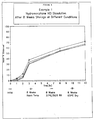
- Example 3 another attempt to stabilize Aquacoat® coated hydromorphone HC1 beads using the premise that high temperature is not enough to insure complete coalescence of the ethylcellulose film. Normal time of mixing (and bonding) plasticizer and Aquacoat® is recommended by FMC to be 30 minutes. In Example 3, the contact time of the plasticizer (triethyl citrate) with the ethylcellulose polymer dispersion (Aquacoat®) was increased to 24 hours.
- the coated beads were prepared in accordance with Example 1 and then placed in a 30 cc amber glass vial and cured in a 60°C dry oven. Dissolution studies were then conducted on three samples at the following time points: 1 day, 2 days, 7 days and 11 days.
- Hydromorphone beads were prepared by dissolving hydromorphone HC1 in water, adding Opadry®, and mixing for about 1 hour, and then spraying onto nu pariel 18/20 beads using a Wurster insert. The resultant coated beads were then overcoated with Opadry® Y-5-1442 light pink (15% w/w). The beads were then overcoated with a aqueous dispersion of Aquacoat® to a 15% weight gain according to Table 15 below: Ingredient Percent (wt) Amt/Unit Hydromorphone beads 84.7 80 mg Aquacoat® CD 30 12.7 12 mg Citroflex® 2A (Triethylcitrate) 2.5 2.4 mg 99.9 94.4 mg
- the beads were cured in a fluid bed for about 2 hours at 60 °C, as suggested in the literature and as recommended by FMC, since it is above the Tg for Aquacoat® plasticized with triethyl citrate at 20% level of solids.
- Examples 5-7 were manufactured at different levels of Aquacoat® load.
- hydromorphone beads were made according to Example 1. Thereafter, overcoatings of 5% w/w, 10% w/w, and 15% w/w were applied to Examples 5-7 respectively, according to the formulas set forth in Tables 18-20: Composition of Ex. 5 After Coating Ingredient Percent Amt/Unit Hydromorphone beads 84.2% 84.2mg Aquacoat® ECD 30 4.7% 4.2mg Triethyl citrate 0.9% 0.84mg 100% 89.24mg Composition of Ex. 6 After Coating Ingredient Percent Amt/Unit Hydromorphone beads 89.3% 84.2mg Aquacoat® ECD 30 8.9% 8.4mg Triethyl citrate 1.8% 1.7mg 100% 94.3mg Composition of Ex. 7 After Coating Ingredient Percent Amt/Unit Hydromorphone beads 84.8% 84.2mg Aquacoat® ECD 30 12.7% 12.6mg Triethyl citrate 0.9% 2.5mg 100% 99.3mg
- Example 8 Hydromorphone beads overcoated with 10% of the Aquacoat® are prepared in accordance with Example 6.
- the hydromorphone beads of Example 8 have the following formula set forth in Table 24 below: Ingredient Percent Amt/Unit Hydromorphone beads 89.3% 84.2 mg Aquacoat® ECD 30 8.9% 8.4 mg Triethyl citrate 1.8% 1.7 mg 100% 94.3 mg
- Example 6 To test the effectiveness of curing at a lower relative humidity compared to Example 6, the above beads were cured for 72 hours at 60°C at 60% relative humidity (rather than 85%RH). Similar initial results were obtained for Example 8 as compared to Example 6, thus indicating that the curing step can also be completed at a lower relative humidity.
- the results are set forth in Table 25 below: Dissolution (Time) - 10% Aquacoat® Example 1 hr 2 hr 4 hr 8 hr 12 hrs 18 hrs 24 hrs Ex. 8 7.5 27.9 48.5 68.1 76.2 90.3 88.9 Ex. 6 1.1 18.9 45.0 65.0 76.0 85.8 91.5
- Hydromorphone HC1 beads were prepared made by spraying a suspension of Hydromorphone HCl and Opadry® Y-5-1442 light pink (20%w/w) onto nu-pariel 18/20 beads, in accordance with the method set forth in Example 1. These beads were then further coated with Opadry® Y-5-1442 light pink (15% w/w). These beads were then further coated with the Surelease® at a level of 10% weight gain.
- the formula of the coated bead is set forth in Table 26: Ingredient mg/dose Percent Hydromorphone HC1 4.0 mg 4.32% NuPariel beads 18/20 74.0 mg 79.91% Opadry light pink 6.2 mg 6.70% Surelease 8.4 mg 9.07% 92.6 mg 100%
- Example 9 was cured at 60°C/85% RH for 3 days (72 hours), and then dried in a fluid bed dryer for 30 minutes at 60°C to dry off the excess moisture. These beads were then overcoated with 5% Opadry light pink. Example 10 was left uncured.
- Example 9 Time Initial 3 Months at 37° C/80% RH 1 4.7 6.5 4 42.3 56.0 8 64.9 75.0 12 77.2 83.19
- Example 10 Time Initial 3 Months at 37° C/80% RH 1 1.6 4.5 4 12.0 61.9 8 47.8 79.0 12 66.7 87.7
- a suspension of morphine sulphate and HPMC (Opadry® Clear Y-5-7095) was applied onto 18/20 mesh Nu-pariel beads in a fluid bed granulator with a Wurster column insert, at 60°C.
- a HPMC purple color suspension (Opadry® lavender YS-1-4729) was then applied as an overcoat at the same temperature.
- the beads were then overcoated to a 5% weight gain with Aquacoat® and triethyl citrate as a plasticizer at 60°C inlet.
- the beads were then cured in an oven at 60°C/100% relative humidity for three days.
- the beads were then dried in the fluid bed granulator at 60°C, and an overcoat of HPMC with a purple color was then applied using the Wurster column.
- EXAMPLE 12 A second experiment was conducted with morphine as described in Example 11; however, the retardant Aquacoat® layer was applied to a 15% weight gain to develop a slower releasing morphine product.
- the final formulation is set forth in Table 31:
- Example 13 the applicability of another medicament, theophylline, having very different physical properties compared to hydromorphone is demonstrated.
- Theophylline hydrous and colloidal silicon dioxide were first mixed together in a high shear mixer, then sieved using a Jet sieve to enhance flowability. Using a fluid bed granulator equipped with a rotor processor, sugar spheres were layered with the theophylline/colloidal silicon dioxide mixture using a PVP (C-30) solution. Layering was continued until an approximately 78% load was obtained.
- the formula of the 400mg theophylline beads when filled into capsules is set forth in Table 33 as follows: Mg/unit capsules Theophylline hydrous (equivalent to 400 mg anhydrous theophylline) 440.0 Colloidal silicon dioxide 0.4 Sugar spheres 30/35 mesh 110.0 PVP (C-30) 13.5 563.9
- Example 14 was prepared in order to attempt to improve the dissolution profile of the formulation via incorporation of this new curing step, and the coating was altered in order to increase the dissolution rate to 100% theophylline dissolved in 12 hours.
- Example 14 was prepared as follows. Theophylline powder layered beads were made as described in Example 13 and were then overcoated with a plasticized Aquacoat® ECD 30 retardant, which, and for this example, included 10% HPMC (hydroxypropyl methyl cellulose). This was done so that the release of theophylline would be faster than Example 13. The inclusion of HPMC to speed up dissolution is known in the prior art. The retardant layer was also coated to a 6% weight gain in the Wurster column of the fluid bed granulator.
- HPMC hydroxypropyl methyl cellulose
- hydrophobic polymer ethylcellulose
- other hydrophobic polymers such as other cellulose derivatives
- Such other hydrophobic polymers are considered to be within the scope of the appended claims.
Landscapes
- Health & Medical Sciences (AREA)
- Engineering & Computer Science (AREA)
- Bioinformatics & Cheminformatics (AREA)
- Chemical & Material Sciences (AREA)
- Medicinal Chemistry (AREA)
- Pharmacology & Pharmacy (AREA)
- Epidemiology (AREA)
- Life Sciences & Earth Sciences (AREA)
- Animal Behavior & Ethology (AREA)
- General Health & Medical Sciences (AREA)
- Public Health (AREA)
- Veterinary Medicine (AREA)
- Medicinal Preparation (AREA)
- Paints Or Removers (AREA)
- Pharmaceuticals Containing Other Organic And Inorganic Compounds (AREA)
- Medicines That Contain Protein Lipid Enzymes And Other Medicines (AREA)
- Adhesive Tapes (AREA)
- Coating Of Shaped Articles Made Of Macromolecular Substances (AREA)
- Compositions Of Macromolecular Compounds (AREA)
- Agricultural Chemicals And Associated Chemicals (AREA)
- Laminated Bodies (AREA)
- Polyurethanes Or Polyureas (AREA)
- Processes Of Treating Macromolecular Substances (AREA)
- Colloid Chemistry (AREA)
- Polymers With Sulfur, Phosphorus Or Metals In The Main Chain (AREA)
Claims (23)
- Verfahren zur Herstellung einer stabilisierten Formulierung mit kontrollierter Freisetzung, umfassend ein Substrat, das mit einer wässrigen Dispersion von Ethylcellulose beschichtet ist, umfassend:die Herstellung eines festen Substrats, welches ein therapeutisch wirksames Mittel umfasst,das Beschichten des Substrats mit einer ausreichenden Menge einer wässrigen Dispersion von plastifizierter Ethylcellulose, um eine vorherbestimmte kontrollierte Freisetzung des therapeutisch wirksamen Mittels zu erhalten, wenn das beschichtete Substrat wässrigen Lösungen wie Magenflüssigkeit ausgesetzt ist, indem das beschichtete Substrat einer Temperatur ausgesetzt wird, die größer ist als die Glasübergangstemperatur der wässrigen Dispersion von Ethylcellulose, und bei einer relativen Feuchtigkeit, die größer ist als die der relativen Umgebung, und das Aushärten bis zum Erreichen eines Endpunkts fortgeführt wird, bei dem das Substrat ein verändertes Löslichkeitsprofil erlangt, welches durch weiteres Aussetzen an Lagerbedingungen mit erhöhter Temperatur und/oder Feuchtigkeit im wesentlichen nicht beeinflusst wird.
- Verfahren nach Anspruch 1, ferner umfassend die Bestimmung des Endpunkts für die Formulierung, durch Aussetzen der Formulierung, die ungehärtet oder im wesentlichen nicht gehärtet ist, an Belastungsbedingungen bei der Lagerung und Ermittlung der Löslichkeitsprofile für die Formulierung, bis die Löslichkeitsprofile der Formulierung im wesentlichen stabilisiert sind.
- Verfahren nach Anspruch 1 oder 2, ferner umfassend die Modifizierung der Formulierung, um ein gewünschtes Löslichkeitsprofil des therapeutisch wirksamen Mittels in Bezug auf das Endpunkt zu erhalten.
- Verfahren nach einem der Ansprüche 1 bis 3, ferner umfassend die Herstellung des Substrats zur oralen Verabreichung durch Beschichten der Oberfläche von pharmazeutisch verträglichen Partikeln mit dem therapeutisch wirksamen Mittel, und Herstellung einer oralen Arzneimittelform durch Einbringung einer ausreichenden Menge an gehärteten, beschichteten Partikeln in eine Kapsel.
- Verfahren nach einem der Ansprüche 1 bis 4, ferner umfassend die Herstellung des Substrats zur oralen Verabreichung durch Einbringung des therapeutisch wirksamen Mittels in eine Tablette.
- Verfahren nach einem der Ansprüche 1 bis 5, ferner umfassend das Beschichten des das therapeutisch wirksame Mittel umfassenden Substrats mit einem Sperrschichtmittel vor der Beschichtung mit der wässrigen Dispersion von Ethylcellulose.
- Verfahren nach einem der Ansprüche 1 bis 6, wobei das Sperrschichtmittel Hydroxypropylcellulose umfasst.
- Verfahren nach einem der Ansprüche 1 bis 7, wobei die beschichteten Partikel bei einer relativen Feuchtigkeit von etwa 60% bis etwa 100% und bei einer erhöhten Temperatur oberhalb der Glasübergangstemperatur der Beschichtung für etwa 48 bis etwa 72 Stunden gehärtet werden, bis der Endpunkt erreicht wird.
- Verfahren nach einem der Ansprüche 1 bis 8, wobei das therapeutisch wirksame Mittel ausgewählt wird aus der Gruppe, bestehend aus Antihistaminen, Analgetika, entzündungshemmenden Mitteln, Magen-Darm-Mitteln, Antiemetika, Antiepileptika, Vasodilatoren, Hustenmitteln, Expektoranzien, Antiasthmatika, Spasmolytika, Hormonen, Diuretika, Antihypertonika, Bronchodilatoren, entzündungshemmenden Steroiden, Antibiotika, Antihämorrhoidenmitteln, Hypnotika, Psychopharmaka, Antidiarrhöika, schleimlösenden Mitteln, Sedativa, abschwellenden Mitteln, Laxantia, säurebindenden Mitteln, Vitaminen und Stimulanzien.
- Verfahren nach einem der Ansprüche 1 bis 9, wobei das therapeutisch wirksame Mittel ausgewählt wird aus der Gruppe, bestehend aus Hydromorphon, Oxycodon, Dihydrocodein, Codein, Dihydromorphin, Morphin, Buprenorphin, Salzen einer der vorstehenden Mittel, sowie Mischungen einer der vorstehenden Mittel.
- Verfahren nach einem der Ansprüche 1 bis 10, wobei das therapeutisch wirksame Mittel Theophyllin ist.
- Verfahren zur Herstellung einer festen, stabilisierten Arzneimittelform mit kontrollierter Freisetzung, die gemäß dem Verfahren nach einem der Ansprüche 1 bis 11 erhältlich ist, umfassend ein Substrat, welches ein therapeutisch wirksames Mittel umfasst, wobei das Substrat mit einer wässrigen Dispersion von plastifizierter Ethylcellulose beschichtet wird.
- Verfahren zur Herstellung der festen, stabilisierten Arzneimittelform mit kontrollierter Freisetzung nach Anspruch 12, wobei das therapeutisch wirksame Mittel mit der wässrigen Dispersion von Ethylcellulose bis zu einem Gewichtszunahmegrad von etwa 5 bis etwa 15 Prozent beschichtet wird.
- Verfahren zur Herstellung der festen, stabilisierten Arzneimittelform mit kontrollierter Freisetzung nach Anspruch 13, ferner umfassend ein inertes, pharmazeutisch verträgliches Partikel, auf das das therapeutisch wirksame Mittel beschichtet wird.
- Verfahren zur Herstellung der festen, stabilisierten Arzneimittelform mit kontrollierter Freisetzung nach Anspruch 14, wobei eine Vielzahl der beschichteten, gehärteten Partikel in eine Kapsel in einer Menge eingebracht werden, die ausreichend ist, um eine wirksame kontrollierte Freisetzungsdosis bei Kontakt mit einer wässrigen Lösung bereitzustellen.
- Verfahren zur Herstellung der festen, stabilisierten Arzneimittelform mit kontrollierter Freisetzung nach Anspruch 12, wobei das therapeutisch wirksame Mittel aus der Gruppe nach einem der Ansprüche 9 bis 11 ausgewählt wird.
- Verfahren zur Herstellung einer festen, stabilisierten Arzneimittelform mit kontrollierter Freisetzung zur oralen Verabreichung, die gemäß dem Verfahren nach einem der Ansprüche 1 bis 11 erhältlich ist, umfassend eine Vielzahl von geeigneten inerten, pharmazeutisch verträglichen Partikeln, die mit einem therapeutisch wirksamen Mittel beschichtet werden, und eine Ethylcellulosebeschichtung von einer Dicke, die geeignet ist, um eine kontrollierte Freisetzung des therapeutisch wirksamen Mittels zu erlangen, wenn die feste Arzneimittelform wässrigen Lösungen ausgesetzt ist, wobei die Ethylcellulosebeschichtung von einer wässrigen Dispersion von Ethylcellulose mit einer wirksamen Menge eines geeigneten plastifizierenden Mittels abgeleitet wird.
- Verfahren zur Herstellung der festen, stabilisierten Arzneimittelform mit kontrollierter Freisetzung nach Anspruch 17, die bei einer Temperatur oberhalb der Glasübergangstemperatur der plastifizierten Ethylcellullosebeschichtung und bei einer relativen Feuchtigkeit von etwa 60 bis etwa 100 Prozent für etwa 48 bis etwa 72 Stunden ausgehärtet wird.
- Verfahren zur Herstellung der festen, stabilisierten Arzneimittelform mit kontrollierter Freisetzung nach Anspruch 17, wobei eine Vielzahl der beschichteten, gehärteten Partikel in eine Kapsel in einer Menge eingebracht wird, die ausreichend ist, um eine wirksame kontrollierte Freisetzungsdosis bei Kontakt mit einer wässrigen Lösung bereitzustellen.
- Verfahren zur Herstellung der festen, stabilisierten Arzneimittelform mit kontrollierter Freisetzung nach Anspruch 17, wobei das therapeutisch wirksame Mittel aus der Gruppe nach einem der Ansprüche 9 bis 11 ausgewählt wird.
- Verfahren zur Herstellung einer festen Arzneimittelform mit kontrollierter Freisetzung, die gemäß dem Verfahren nach einem der Ansprüche 1 bis 11 erhältlich ist, umfassend einen Kern, der ein therapeutisch wirksames Mittel umfasst, und eine Beschichtung, die von einer wässrigen Dispersion von Ethylcellulose abgeleitet ist, in einer Menge, die ausreichend ist, um eine kontrollierte Freisetzung des therapeutisch wirksamen Mittels zu erhalten, wein die Arzneimittelform wässrigen Lösungen ausgesetzt ist, wobei die feste Arzneimittelform gehärtet wird, nachdem die Beschichtung aufgetragen worden ist, so dass die Freisetzung des therapeutisch wirksamen Mittels durch Aussetzung an erhöhte Temperaturen und/oder Feuchtigkeit im wesentlichen nicht beeinflusst wird.
- Verfahren zur Herstellung einer festen, stabilisierten Arzneimittelform mit kontrollierter Freisetzung, die gemäß dem Verfahren nach einem der Ansprüche 1 bis 11 erhältlich ist, umfassend ein Substrat, welches ein therapeutisch wirksames Mittel umfasst, wobei das Substrat mit einer Beschichtung zur kontrollierten Freisetzung beschichtet wird, die aus einer wässrigen Ethylcellulosedispersion abgeleitet ist, welche stabilisiert worden ist durch Härten bei einer Temperatur und bei relativen Feuchtigkeit, welche gegenüber Umgebungsbedingungen zu einem geeigneten Grad erhöht sind, für eine Zeitdauer, die notwendig ist, um ein Endprodukt zu erhalten, welches eine in vitro-Freisetzung des therapeutisch wirksamen Mittels aufweist, die durch Aussetzung an Lagerbedingungen mit erhöhter Temperatur und/oder erhöhter relativer Feuchtigkeit im wesentlichen nicht beeinflusst wird.
Applications Claiming Priority (2)
| Application Number | Priority Date | Filing Date | Title |
|---|---|---|---|
| US07/814,111 US5273760A (en) | 1991-12-24 | 1991-12-24 | Stabilized controlled release substrate having a coating derived from an aqueous dispersion of hydrophobic polymer |
| US814111 | 1991-12-24 |
Publications (2)
| Publication Number | Publication Date |
|---|---|
| EP0548448A1 EP0548448A1 (de) | 1993-06-30 |
| EP0548448B1 true EP0548448B1 (de) | 2000-09-06 |
Family
ID=25214195
Family Applications (1)
| Application Number | Title | Priority Date | Filing Date |
|---|---|---|---|
| EP92106519A Expired - Lifetime EP0548448B1 (de) | 1991-12-24 | 1992-04-15 | Stabilisiertes Substrat für kontrollierte Freigabe mit von einer wässerigen Dispersion eines hydrophobischen Polymers abgeleitete Beschichtung |
Country Status (23)
| Country | Link |
|---|---|
| US (1) | US5273760A (de) |
| EP (1) | EP0548448B1 (de) |
| JP (1) | JP3061474B2 (de) |
| KR (1) | KR100252188B1 (de) |
| AT (1) | ATE196079T1 (de) |
| AU (1) | AU652871B2 (de) |
| BR (1) | BR9202982A (de) |
| CA (1) | CA2061824C (de) |
| DE (1) | DE69231415T2 (de) |
| DK (1) | DK0548448T3 (de) |
| EG (1) | EG20083A (de) |
| ES (1) | ES2152221T3 (de) |
| FI (1) | FI921548L (de) |
| GR (1) | GR3034951T3 (de) |
| IE (1) | IE920795A1 (de) |
| IL (1) | IL101080A (de) |
| MX (1) | MX9200932A (de) |
| NO (1) | NO312577B1 (de) |
| NZ (1) | NZ241660A (de) |
| PT (1) | PT548448E (de) |
| SG (1) | SG44703A1 (de) |
| YU (1) | YU48345B (de) |
| ZA (1) | ZA921366B (de) |
Cited By (9)
| Publication number | Priority date | Publication date | Assignee | Title |
|---|---|---|---|---|
| US6143322A (en) | 1993-07-01 | 2000-11-07 | Purdue Pharma L.P. | Method of treating humans with opioid formulations having extended controlled release |
| US6733783B2 (en) | 2000-10-30 | 2004-05-11 | Euro-Celtique S.A. | Controlled release hydrocodone formulations |
| US7718192B2 (en) | 2000-02-08 | 2010-05-18 | Purdue Pharma L.P. | Tamper-resistant oral opioid agonist formulations |
| US7833548B2 (en) | 2002-06-18 | 2010-11-16 | Surmodics, Inc. | Bioactive agent release coating and controlled humidity method |
| US7914818B2 (en) | 2001-08-06 | 2011-03-29 | Purdue Pharma L.P. | Opioid agonist formulations with releasable and sequestered antagonist |
| US7943173B2 (en) | 2001-07-18 | 2011-05-17 | Purdue Pharma L.P. | Pharmaceutical combinations of oxycodone and naloxone |
| US8465774B2 (en) | 2001-08-06 | 2013-06-18 | Purdue Pharma L.P. | Sequestered antagonist formulations |
| US8975273B2 (en) | 1999-10-29 | 2015-03-10 | Purdue Pharma L.P. | Controlled release hydrocodone formulations |
| US9149436B2 (en) | 2003-04-21 | 2015-10-06 | Purdue Pharma L.P. | Pharmaceutical product comprising a sequestered agent |
Families Citing this family (174)
| Publication number | Priority date | Publication date | Assignee | Title |
|---|---|---|---|---|
| US5266331A (en) † | 1991-11-27 | 1993-11-30 | Euroceltique, S.A. | Controlled release oxycodone compositions |
| GB2284760B (en) * | 1993-11-23 | 1998-06-24 | Euro Celtique Sa | A method of preparing pharmaceutical compositions by melt pelletisation |
| US5472712A (en) * | 1991-12-24 | 1995-12-05 | Euroceltique, S.A. | Controlled-release formulations coated with aqueous dispersions of ethylcellulose |
| US5968551A (en) * | 1991-12-24 | 1999-10-19 | Purdue Pharma L.P. | Orally administrable opioid formulations having extended duration of effect |
| US5478577A (en) * | 1993-11-23 | 1995-12-26 | Euroceltique, S.A. | Method of treating pain by administering 24 hour oral opioid formulations exhibiting rapid rate of initial rise of plasma drug level |
| US5958459A (en) * | 1991-12-24 | 1999-09-28 | Purdue Pharma L.P. | Opioid formulations having extended controlled released |
| US5681585A (en) * | 1991-12-24 | 1997-10-28 | Euro-Celtique, S.A. | Stabilized controlled release substrate having a coating derived from an aqueous dispersion of hydrophobic polymer |
| US5580578A (en) * | 1992-01-27 | 1996-12-03 | Euro-Celtique, S.A. | Controlled release formulations coated with aqueous dispersions of acrylic polymers |
| DE69311394T2 (de) * | 1992-02-20 | 1997-10-30 | Euro Celtique Sa | Arzneimittel verzögerter Wirkstoffabgabe |
| US5626872A (en) * | 1992-06-16 | 1997-05-06 | Roemmers S.A.I.C.F. | Pharmaceutical soft capsules containing lysine clonixinate and a process for their preparation |
| DE4226753A1 (de) * | 1992-08-13 | 1994-02-17 | Basf Ag | Wirkstoffe enthaltende Zubereitungen in Form fester Teilchen |
| JPH0687684A (ja) * | 1992-08-13 | 1994-03-29 | Chisso Corp | 被覆粒状肥料 |
| SE9301057L (sv) † | 1993-03-30 | 1994-10-01 | Pharmacia Ab | Beredning med kontrollerad frisättning |
| NZ260408A (en) * | 1993-05-10 | 1996-05-28 | Euro Celtique Sa | Controlled release preparation comprising tramadol |
| US7740881B1 (en) | 1993-07-01 | 2010-06-22 | Purdue Pharma Lp | Method of treating humans with opioid formulations having extended controlled release |
| US5879705A (en) * | 1993-07-27 | 1999-03-09 | Euro-Celtique S.A. | Sustained release compositions of morphine and a method of preparing pharmaceutical compositions |
| US5662933A (en) * | 1993-09-09 | 1997-09-02 | Edward Mendell Co., Inc. | Controlled release formulation (albuterol) |
| US6726930B1 (en) * | 1993-09-09 | 2004-04-27 | Penwest Pharmaceuticals Co. | Sustained release heterodisperse hydrogel systems for insoluble drugs |
| US5773025A (en) | 1993-09-09 | 1998-06-30 | Edward Mendell Co., Inc. | Sustained release heterodisperse hydrogel systems--amorphous drugs |
| US5455046A (en) * | 1993-09-09 | 1995-10-03 | Edward Mendell Co., Inc. | Sustained release heterodisperse hydrogel systems for insoluble drugs |
| EP1442745A1 (de) * | 1993-10-07 | 2004-08-04 | Euro-Celtique | Oral anzuwendende opioidhaltige Zusammensetzungen mit verlängerter Wirkung |
| US5500227A (en) * | 1993-11-23 | 1996-03-19 | Euro-Celtique, S.A. | Immediate release tablet cores of insoluble drugs having sustained-release coating |
| US5891471A (en) * | 1993-11-23 | 1999-04-06 | Euro-Celtique, S.A. | Pharmaceutical multiparticulates |
| US6210714B1 (en) | 1993-11-23 | 2001-04-03 | Euro-Celtique S.A. | Immediate release tablet cores of acetaminophen having sustained-release coating |
| KR100354702B1 (ko) * | 1993-11-23 | 2002-12-28 | 유로-셀티크 소시에떼 아노뉨 | 약학조성물의제조방법및서방형조성물 |
| US5843480A (en) * | 1994-03-14 | 1998-12-01 | Euro-Celtique, S.A. | Controlled release diamorphine formulation |
| US5914131A (en) * | 1994-07-07 | 1999-06-22 | Alza Corporation | Hydromorphone therapy |
| GB9422154D0 (en) | 1994-11-03 | 1994-12-21 | Euro Celtique Sa | Pharmaceutical compositions and method of producing the same |
| US20020006438A1 (en) * | 1998-09-25 | 2002-01-17 | Benjamin Oshlack | Sustained release hydromorphone formulations exhibiting bimodal characteristics |
| US5871776A (en) * | 1995-01-31 | 1999-02-16 | Mehta; Atul M. | Controlled-release nifedipine |
| US5945125A (en) * | 1995-02-28 | 1999-08-31 | Temple University | Controlled release tablet |
| US5637319A (en) * | 1995-03-01 | 1997-06-10 | Takada; Kanji | Controlled-release preparations |
| GB9519363D0 (en) | 1995-09-22 | 1995-11-22 | Euro Celtique Sa | Pharmaceutical formulation |
| AUPN603895A0 (en) | 1995-10-19 | 1995-11-09 | University Of Queensland, The | Production of analgesic synergy by co-administration of sub-analgesic doses of two strong opioids |
| US5783212A (en) * | 1996-02-02 | 1998-07-21 | Temple University--of the Commonwealth System of Higher Education | Controlled release drug delivery system |
| US6245351B1 (en) | 1996-03-07 | 2001-06-12 | Takeda Chemical Industries, Ltd. | Controlled-release composition |
| JP3148256B2 (ja) | 1996-07-08 | 2001-03-19 | エドワード メンデル カンパニー.,インコーポレーテッド | 高用量難溶性薬物用持続放出マトリックス |
| US5891474A (en) * | 1997-01-29 | 1999-04-06 | Poli Industria Chimica, S.P.A. | Time-specific controlled release dosage formulations and method of preparing same |
| US6306438B1 (en) | 1997-07-02 | 2001-10-23 | Euro-Celtique, S.A. | Stabilized sustained release tramadol formulations |
| RS49982B (sr) * | 1997-09-17 | 2008-09-29 | Euro-Celtique S.A., | Sinergistička analgetička kombinacija analgetičkog opijata i inhibitora ciklooksigenaze-2 |
| US6056977A (en) | 1997-10-15 | 2000-05-02 | Edward Mendell Co., Inc. | Once-a-day controlled release sulfonylurea formulation |
| US6066339A (en) * | 1997-10-17 | 2000-05-23 | Elan Corporation, Plc | Oral morphine multiparticulate formulation |
| US20060141036A1 (en) * | 1997-12-12 | 2006-06-29 | Andrx Labs Llc | HMG-CoA reductase inhibitor extended release formulation |
| US20040029962A1 (en) * | 1997-12-12 | 2004-02-12 | Chih-Ming Chen | HMG-COA reductase inhibitor extended release formulation |
| US6375957B1 (en) | 1997-12-22 | 2002-04-23 | Euro-Celtique, S.A. | Opioid agonist/opioid antagonist/acetaminophen combinations |
| TR200001942T2 (tr) | 1997-12-22 | 2000-11-21 | Euro-Celtique, S.A. | Opioid agonist/antagonist kombinasyonlar |
| US6245357B1 (en) * | 1998-03-06 | 2001-06-12 | Alza Corporation | Extended release dosage form |
| US8524277B2 (en) * | 1998-03-06 | 2013-09-03 | Alza Corporation | Extended release dosage form |
| US20020188037A1 (en) * | 1999-04-15 | 2002-12-12 | Chudzik Stephen J. | Method and system for providing bioactive agent release coating |
| US6126967A (en) * | 1998-09-03 | 2000-10-03 | Ascent Pediatrics | Extended release acetaminophen particles |
| US6806294B2 (en) | 1998-10-15 | 2004-10-19 | Euro-Celtique S.A. | Opioid analgesic |
| US6419960B1 (en) | 1998-12-17 | 2002-07-16 | Euro-Celtique S.A. | Controlled release formulations having rapid onset and rapid decline of effective plasma drug concentrations |
| US6673367B1 (en) | 1998-12-17 | 2004-01-06 | Euro-Celtique, S.A. | Controlled/modified release oral methylphenidate formulations |
| DE19901686A1 (de) | 1999-01-18 | 2000-07-20 | Gruenenthal Gmbh | Retardierte Tramadolzubereitungen mit einem lagerstabilen Freisetzungsprofil und Verfahren zu deren Herstellung |
| US6800329B2 (en) * | 1999-02-12 | 2004-10-05 | Lts Lohmann Therapie-Systeme Ag | Method for producing film-type dosage |
| IN191239B (de) | 1999-06-11 | 2003-10-11 | Ranbaxy Lab Ltd | |
| US6555139B2 (en) | 1999-06-28 | 2003-04-29 | Wockhardt Europe Limited | Preparation of micron-size pharmaceutical particles by microfluidization |
| US20070032853A1 (en) | 2002-03-27 | 2007-02-08 | Hossainy Syed F | 40-O-(2-hydroxy)ethyl-rapamycin coated stent |
| HK1042427A1 (zh) * | 1999-09-30 | 2002-08-16 | Penwest Pharmaceuticals Co. | 用於高溶度药物的持续释放基质方法 |
| US10179130B2 (en) | 1999-10-29 | 2019-01-15 | Purdue Pharma L.P. | Controlled release hydrocodone formulations |
| CA2400578C (en) | 2000-02-08 | 2007-01-02 | Euro-Celtique, S.A. | Controlled-release compositions containing opioid agonist and antagonist |
| US6716449B2 (en) | 2000-02-08 | 2004-04-06 | Euro-Celtique S.A. | Controlled-release compositions containing opioid agonist and antagonist |
| US6635277B2 (en) | 2000-04-12 | 2003-10-21 | Wockhardt Limited | Composition for pulsatile delivery of diltiazem and process of manufacture |
| US20110104214A1 (en) | 2004-04-15 | 2011-05-05 | Purdue Pharma L.P. | Once-a-day oxycodone formulations |
| UA81224C2 (uk) | 2001-05-02 | 2007-12-25 | Euro Celtic S A | Дозована форма оксикодону та її застосування |
| EP1387673B1 (de) | 2001-05-11 | 2010-12-29 | Endo Pharmaceuticals Inc. | Opioid enthaltende arzneiform gegen missbrauch |
| US7052706B2 (en) * | 2001-06-08 | 2006-05-30 | Nostrum Pharmaceuticals, Inc. | Control release formulation containing a hydrophobic material as the sustained release agent |
| US20030044458A1 (en) | 2001-08-06 | 2003-03-06 | Curtis Wright | Oral dosage form comprising a therapeutic agent and an adverse-effect agent |
| US20030068375A1 (en) | 2001-08-06 | 2003-04-10 | Curtis Wright | Pharmaceutical formulation containing gelling agent |
| US20030099711A1 (en) * | 2001-08-29 | 2003-05-29 | David Meadows | Sustained release preparations |
| KR100540035B1 (ko) * | 2002-02-01 | 2005-12-29 | 주식회사 태평양 | 다단계 경구 약물 방출 제어 시스템 |
| US20090088443A1 (en) * | 2002-02-15 | 2009-04-02 | Julius Remenar | Novel crystalline forms of conazoles and methods of making and using the same |
| US7927613B2 (en) * | 2002-02-15 | 2011-04-19 | University Of South Florida | Pharmaceutical co-crystal compositions |
| US7790905B2 (en) | 2002-02-15 | 2010-09-07 | Mcneil-Ppc, Inc. | Pharmaceutical propylene glycol solvate compositions |
| IL163846A0 (en) | 2002-03-01 | 2005-12-18 | Univ South Florida | Multiple-component solid phases containing at least one active pharmaceutical ingredient |
| LT2425821T (lt) | 2002-04-05 | 2017-07-25 | Euro-Celtique S.A. | Farmacinis preparatas, turintis oksikodono ir naloksono |
| IL165383A0 (en) | 2002-06-21 | 2006-01-15 | Transform Pharmaceuticals Inc | Pharmaceutical compositions with improved dissolution |
| CA2495564A1 (en) | 2002-08-15 | 2005-01-27 | Euro-Celtique S.A. | Pharmaceutical compositions |
| US20060052432A1 (en) * | 2002-09-20 | 2006-03-09 | Julius Remenar | Pharmaceutical compositions with improved dissolution |
| SI1551372T1 (en) | 2002-09-20 | 2018-08-31 | Alpharma Pharmaceuticals Llc | SUBVENCATION DATA AND RELATED CONSTRUCTIONS AND PROCEDURES |
| US8487002B2 (en) | 2002-10-25 | 2013-07-16 | Paladin Labs Inc. | Controlled-release compositions |
| TWI319713B (en) | 2002-10-25 | 2010-01-21 | Sustained-release tramadol formulations with 24-hour efficacy | |
| WO2004047752A2 (en) * | 2002-11-26 | 2004-06-10 | Transform Pharmaceuticals, Inc. | Pharmaceutical formulations of celcoxib |
| US20040110781A1 (en) * | 2002-12-05 | 2004-06-10 | Harmon Troy M. | Pharmaceutical compositions containing indistinguishable drug components |
| EP2218448B1 (de) | 2002-12-13 | 2015-09-23 | Durect Corporation | Orale Darreichungsform mit flüssigen hochviskose Trägersystemen |
| EP2339328A3 (de) | 2002-12-30 | 2011-07-13 | Transform Pharmaceuticals, Inc. | Pharmazeutische kokristallisierte Celecoxib-Zusammensetzungen |
| US8183290B2 (en) | 2002-12-30 | 2012-05-22 | Mcneil-Ppc, Inc. | Pharmaceutically acceptable propylene glycol solvate of naproxen |
| US20040202717A1 (en) | 2003-04-08 | 2004-10-14 | Mehta Atul M. | Abuse-resistant oral dosage forms and method of use thereof |
| SI1663229T1 (sl) | 2003-09-25 | 2010-08-31 | Euro Celtique Sa | Farmacevtske kombinacije hidrokodona in naltreksona |
| KR20060092255A (ko) | 2003-09-26 | 2006-08-22 | 알자 코포레이션 | 고도의 약물적재를 제공하는 약물코팅제 및 그의 제조방법 |
| NZ546183A (en) * | 2003-09-26 | 2011-04-29 | Alza Corp | Controlled release formulations exhibiting an ascending rate of release |
| US20050084540A1 (en) * | 2003-10-17 | 2005-04-21 | Indranil Nandi | Taste masking antibiotic composition |
| US8709476B2 (en) | 2003-11-04 | 2014-04-29 | Supernus Pharmaceuticals, Inc. | Compositions of quaternary ammonium compounds containing bioavailability enhancers |
| DE602004030931D1 (de) * | 2003-11-04 | 2011-02-17 | Supernus Pharmaceuticals Inc | |
| PT1691811E (pt) | 2003-12-11 | 2014-10-30 | Sunovion Pharmaceuticals Inc | Combinação de um sedativo e de um modulador de neurotransmissores e métodos para melhorar a qualidade do sono e tratamento da depressão |
| TWI365880B (en) * | 2004-03-30 | 2012-06-11 | Euro Celtique Sa | Process for preparing oxycodone hydrochloride having less than 25 ppm 14-hydroxycodeinone and oxycodone hydrochloride composition,pharmaceutical dosage form,sustained release oeal dosage form and pharmaceutically acceptable package having less than 25 pp |
| EP1604667A1 (de) | 2004-06-08 | 2005-12-14 | Euro-Celtique S.A. | Opioide zur Behandlung des Restless Leg Syndroms |
| EP1604666A1 (de) | 2004-06-08 | 2005-12-14 | Euro-Celtique S.A. | Opioide zur Behandlung der chronischen obstruktiven Lungenkrankheit |
| ES2653568T3 (es) | 2004-06-12 | 2018-02-07 | Collegium Pharmaceutical, Inc. | Formulaciones de fármacos para la prevención del abuso |
| JP4997109B2 (ja) | 2004-09-01 | 2012-08-08 | ユーロ−セルティーク エス.エイ. | 用量比例的な定常状態caveおよび定常状態auc、ならびに、用量比例よりも小さい単回投与cmaxを有するオピオイド投薬形態物 |
| US8541026B2 (en) | 2004-09-24 | 2013-09-24 | Abbvie Inc. | Sustained release formulations of opioid and nonopioid analgesics |
| KR100905511B1 (ko) * | 2005-01-28 | 2009-07-01 | 유로-셀띠끄 소시에떼 아노님 | 알코올 저항성 제형 |
| EP1695700A1 (de) * | 2005-02-28 | 2006-08-30 | Euro-Celtique S.A. | Darreichungsform enthaltend Oxycodon und Naloxon |
| EP1702558A1 (de) | 2005-02-28 | 2006-09-20 | Euro-Celtique S.A. | Verfahren und Vorrichtung zur Darmtätigkeitserfassung |
| SI1931346T1 (sl) | 2005-09-09 | 2012-10-30 | Angelini Labopharm Llc | Trazodonski sestavek za dajanje enkrat dnevno |
| ES2620293T3 (es) | 2005-09-09 | 2017-06-28 | Paladin Labs Inc. | Composición de liberación sostenida de fármacos |
| EP1813276A1 (de) * | 2006-01-27 | 2007-08-01 | Euro-Celtique S.A. | Manipulationssichere Dosierformen |
| US7829148B2 (en) * | 2006-02-07 | 2010-11-09 | Fmc Corporation | Coating process to produce controlled release coatings |
| ATE536867T1 (de) * | 2006-03-16 | 2011-12-15 | Tris Pharma Inc | Modifizierte freisetzungsformulierungen mit arznei-ion-austausch-harzkomplexen |
| EP1839649A1 (de) * | 2006-03-31 | 2007-10-03 | LEK Pharmaceuticals D.D. | Beschichtete Formulierung von Tolterodine |
| US20080069891A1 (en) | 2006-09-15 | 2008-03-20 | Cima Labs, Inc. | Abuse resistant drug formulation |
| SI2484346T1 (sl) | 2006-06-19 | 2017-05-31 | Alpharma Pharmaceuticals Llc | Farmacevtski sestavki |
| SA07280459B1 (ar) | 2006-08-25 | 2011-07-20 | بيورديو فارما إل. بي. | أشكال جرعة صيدلانية للتناول عن طريق الفم مقاومة للعبث تشتمل على مسكن شبه أفيوني |
| US8445018B2 (en) | 2006-09-15 | 2013-05-21 | Cima Labs Inc. | Abuse resistant drug formulation |
| GB0624880D0 (en) * | 2006-12-14 | 2007-01-24 | Johnson Matthey Plc | Improved method for making analgesics |
| CN105534936B (zh) * | 2007-08-13 | 2020-07-31 | Ohemo 生命科学股份有限公司 | 抗滥用药物、使用方法和制备方法 |
| EP2057984B1 (de) * | 2007-11-09 | 2010-01-20 | Acino Pharma AG | Retardtabletten mit Hydromorphon |
| EP2067471B1 (de) | 2007-12-06 | 2018-02-14 | Durect Corporation | Orale arzneimitteldosierformen |
| US8623418B2 (en) | 2007-12-17 | 2014-01-07 | Alpharma Pharmaceuticals Llc | Pharmaceutical composition |
| BRPI0919249B1 (pt) | 2008-09-25 | 2017-12-19 | Isp Investments Inc. | Coating composition, method for coating solids and coated product |
| US20100260844A1 (en) | 2008-11-03 | 2010-10-14 | Scicinski Jan J | Oral pharmaceutical dosage forms |
| PL2405915T3 (pl) | 2009-03-10 | 2019-05-31 | Euro Celtique Sa | Kompozycje farmaceutyczne o natychmiastowym uwalnianiu zawierające oksykodon i nalokson |
| US10668060B2 (en) | 2009-12-10 | 2020-06-02 | Collegium Pharmaceutical, Inc. | Tamper-resistant pharmaceutical compositions of opioids and other drugs |
| EP2544667B1 (de) * | 2010-03-09 | 2018-11-14 | Alkermes Pharma Ireland Limited | Alkoholresistente enterale pharmazeutische zusammensetzungen |
| EP2568977A1 (de) | 2010-05-11 | 2013-03-20 | Cima Labs Inc. | Alkoholresistente metoprololhaltige orale retard-dosierformen |
| US8623409B1 (en) | 2010-10-20 | 2014-01-07 | Tris Pharma Inc. | Clonidine formulation |
| ES2444591T3 (es) | 2010-10-28 | 2014-02-25 | Acino Pharma Ag | Medicamento con el principio activo hidromorfona con estabilidad al almacenamiento mejorada |
| EP2651399A2 (de) | 2010-12-13 | 2013-10-23 | Purdue Pharma LP | Retard-darreichungsformen |
| PL2826467T3 (pl) | 2010-12-22 | 2018-01-31 | Purdue Pharma Lp | Zamknięte, zabezpieczone przed manipulowaniem formy dozowania o kontrolowanym uwalnianiu |
| PH12013501345A1 (en) | 2010-12-23 | 2022-10-24 | Purdue Pharma Lp | Tamper resistant solid oral dosage forms |
| EP2606880A1 (de) * | 2011-12-23 | 2013-06-26 | LEK Pharmaceuticals d.d. | Beschichtungsverfahren mit wässriger Latexbeschichtung |
| ES2716570T3 (es) | 2012-04-17 | 2019-06-13 | Purdue Pharma Lp | Sistemas y procedimientos para tratar o prevenir una respuesta farmacodinámica adversa inducida por opioides |
| JP6397813B2 (ja) | 2012-05-02 | 2018-09-26 | キャプシュゲル・ベルジウム・エヌ・ヴィ | ヒドロキシプロピルメチルセルロースアセテートスクシネート(hpmcas)の水性分散液 |
| NZ628695A (en) | 2012-07-16 | 2016-02-26 | Rhodes Technologies | Process for improved opioid synthesis |
| EA028092B1 (ru) | 2012-07-16 | 2017-10-31 | Родс Текнолоджис | Способ усовершенствованного синтеза опиоидов |
| PE20151301A1 (es) | 2013-02-05 | 2015-09-16 | Purdue Pharma Lp | Formulaciones farmaceuticas resistentes a la manipulacion indebida |
| US10751287B2 (en) | 2013-03-15 | 2020-08-25 | Purdue Pharma L.P. | Tamper resistant pharmaceutical formulations |
| KR101847947B1 (ko) | 2013-03-15 | 2018-05-28 | 옵코 아이피 홀딩스 Ⅱ 인코포레이티드 | 안정화되고 변형된 비타민 d 방출 제형 |
| CA2905131A1 (en) | 2013-03-15 | 2014-09-18 | Durect Corporation | Compositions with a rheological modifier to reduce dissolution variability |
| KR20160034352A (ko) | 2013-07-23 | 2016-03-29 | 유로-셀티큐 에스.에이. | 장내 세균총이상을 초래하고/하거나 장내 박테리아 전위에 대한 위험을 증가시키는 질환과 통증으로 인해 고통받고 있는 환자에서 통증을 치료하는데 사용하기 위한 옥시코돈과 날록손의 조합물 |
| EP3027622B8 (de) | 2013-08-02 | 2019-06-12 | Johnson Matthey Public Limited Company | Verfahren zur herstellung von oxymorphon |
| EP3065720A1 (de) | 2013-11-04 | 2016-09-14 | Capsugel Belgium NV | Verfahren und systeme zur verbesserten bioverfügbarkeit von aktiven pharmazeutischen inhaltsstoffen mit esomeprazol |
| MX379406B (es) | 2014-01-15 | 2025-03-11 | Rhodes Tech | Proceso para la síntesis mejorada de oximorfona. |
| AU2015207733A1 (en) | 2014-01-15 | 2016-07-14 | Rhodes Technologies | Process for improved oxycodone synthesis |
| EP3116483B1 (de) * | 2014-03-11 | 2021-04-21 | DuPont Nutrition USA, Inc. | Zusammensetzung mit gesteuerter freisetzung und verfahren |
| US9062063B1 (en) | 2014-03-21 | 2015-06-23 | Johnson Matthey Public Limited Company | Forms of oxymorphone hydrochloride |
| EP2937096B1 (de) | 2014-04-23 | 2019-08-21 | Julius-Maximilians-Universität Würzburg | Aus RS1 abgeleitete Peptide, die Glukoseabsorption nach einer glukosereichen Mahlzeit herunterregulieren und die Insulinsensitivität steigern |
| US20180104197A9 (en) | 2014-05-01 | 2018-04-19 | Sun Pharmaceutical Industries Limited | Extended release liquid compositions of metformin |
| CA2947528C (en) | 2014-05-01 | 2023-09-05 | Sun Pharmaceutical Industries Limited | Extended release suspension compositions |
| US10258583B2 (en) | 2014-05-01 | 2019-04-16 | Sun Pharmaceutical Industries Limited | Extended release liquid compositions of guanfacine |
| RU2016147008A (ru) * | 2014-05-01 | 2018-06-04 | Сан Фармасьютикал Индастриз Лимитед | Жидкие композиции метформина с пролонгированным высвобождением |
| US9962336B2 (en) | 2014-05-01 | 2018-05-08 | Sun Pharmaceutical Industries Limited | Extended release suspension compositions |
| US20170065589A1 (en) | 2014-05-06 | 2017-03-09 | Anthony G. Visco | Methods of treating or preventing preterm labor |
| BR112017001968A2 (pt) | 2014-07-30 | 2017-11-21 | Sun Pharmaceutical Ind Ltd | embalagem de duas câmaras para uma composição farmacêutica líquida oral de múltiplas doses |
| US9849124B2 (en) | 2014-10-17 | 2017-12-26 | Purdue Pharma L.P. | Systems and methods for treating an opioid-induced adverse pharmacodynamic response |
| CA3018328A1 (en) | 2014-10-31 | 2016-04-30 | Purdue Pharma | Methods and compositions particularly for treatment of attention deficit disorder |
| MA41124A (fr) * | 2014-12-05 | 2017-10-10 | Sun Pharmaceutical Ind Ltd | Compositions en suspension à libération prolongée à rétention gastrique |
| US9918979B2 (en) | 2015-01-29 | 2018-03-20 | Johnson Matthey Public Limited Company | Process of preparing low ABUK oxymorphone hydrochloride |
| ES2925951T3 (es) | 2015-07-22 | 2022-10-20 | John Hsu | Composición que comprende un agente terapéutico y un estimulante respiratorio y métodos para su uso |
| US11590228B1 (en) | 2015-09-08 | 2023-02-28 | Tris Pharma, Inc | Extended release amphetamine compositions |
| US9943513B1 (en) | 2015-10-07 | 2018-04-17 | Banner Life Sciences Llc | Opioid abuse deterrent dosage forms |
| US10369078B2 (en) | 2016-05-02 | 2019-08-06 | Sun Pharmaceutical Industries Limited | Dual-chamber pack for pharmaceutical compositions |
| US10238803B2 (en) | 2016-05-02 | 2019-03-26 | Sun Pharmaceutical Industries Limited | Drug delivery device for pharmaceutical compositions |
| US10335405B1 (en) | 2016-05-04 | 2019-07-02 | Patheon Softgels, Inc. | Non-burst releasing pharmaceutical composition |
| US9737530B1 (en) | 2016-06-23 | 2017-08-22 | Collegium Pharmaceutical, Inc. | Process of making stable abuse-deterrent oral formulations |
| CN109475505A (zh) | 2016-07-06 | 2019-03-15 | 度瑞公司 | 具有药物组成物、屏障层及药物层的口服剂型 |
| US10335375B2 (en) | 2017-05-30 | 2019-07-02 | Patheon Softgels, Inc. | Anti-overingestion abuse deterrent compositions |
| JP2020526500A (ja) | 2017-06-30 | 2020-08-31 | パーデュー、ファーマ、リミテッド、パートナーシップ | 治療方法及びその剤形 |
| US12458592B1 (en) | 2017-09-24 | 2025-11-04 | Tris Pharma, Inc. | Extended release amphetamine tablets |
| US11590081B1 (en) | 2017-09-24 | 2023-02-28 | Tris Pharma, Inc | Extended release amphetamine tablets |
| US12161754B2 (en) | 2017-12-20 | 2024-12-10 | Purdue Pharma L.P. | Abuse deterrent morphine sulfate dosage forms |
| CN108836948B (zh) * | 2018-06-11 | 2024-04-12 | 宁波西敦医药包衣科技有限公司 | 一种利用包衣技术实现营养素可控制释放的产品 |
| US10722473B2 (en) | 2018-11-19 | 2020-07-28 | Purdue Pharma L.P. | Methods and compositions particularly for treatment of attention deficit disorder |
| US11918689B1 (en) | 2020-07-28 | 2024-03-05 | Tris Pharma Inc | Liquid clonidine extended release composition |
Family Cites Families (7)
| Publication number | Priority date | Publication date | Assignee | Title |
|---|---|---|---|---|
| JPS60166608A (ja) * | 1984-02-08 | 1985-08-29 | Japan Atom Energy Res Inst | サンドイツチ構造をもつ徐放性複合体およびその製造方法 |
| US4600645A (en) * | 1985-01-31 | 1986-07-15 | Warner-Lambert Company | Process for treating dosage forms |
| GB2170104A (en) * | 1985-01-30 | 1986-07-30 | Warner Lambert Co | Coated pharmaceutical dosage forms |
| GB8519310D0 (en) * | 1985-07-31 | 1985-09-04 | Zyma Sa | Granular active substances |
| US5068110A (en) * | 1987-09-29 | 1991-11-26 | Warner-Lambert Company | Stabilization of enteric coated dosage form |
| US5019397A (en) * | 1988-04-21 | 1991-05-28 | Alza Corporation | Aqueous emulsion for pharmaceutical dosage form |
| US5042842A (en) * | 1990-06-26 | 1991-08-27 | Avery International Corporation | High security label |
-
1991
- 1991-12-24 US US07/814,111 patent/US5273760A/en not_active Expired - Lifetime
-
1992
- 1992-02-19 NZ NZ241660A patent/NZ241660A/xx not_active IP Right Cessation
- 1992-02-25 ZA ZA921366A patent/ZA921366B/xx unknown
- 1992-02-25 CA CA002061824A patent/CA2061824C/en not_active Expired - Lifetime
- 1992-02-27 IL IL10108092A patent/IL101080A/en not_active IP Right Cessation
- 1992-03-04 MX MX9200932A patent/MX9200932A/es unknown
- 1992-03-12 IE IE079592A patent/IE920795A1/en not_active IP Right Cessation
- 1992-03-30 JP JP4071808A patent/JP3061474B2/ja not_active Expired - Fee Related
- 1992-04-08 FI FI921548A patent/FI921548L/fi not_active Application Discontinuation
- 1992-04-15 EP EP92106519A patent/EP0548448B1/de not_active Expired - Lifetime
- 1992-04-15 PT PT92106519T patent/PT548448E/pt unknown
- 1992-04-15 ES ES92106519T patent/ES2152221T3/es not_active Expired - Lifetime
- 1992-04-15 DK DK92106519T patent/DK0548448T3/da active
- 1992-04-15 DE DE69231415T patent/DE69231415T2/de not_active Expired - Lifetime
- 1992-04-15 AT AT92106519T patent/ATE196079T1/de active
- 1992-04-15 SG SG1996005933A patent/SG44703A1/en unknown
- 1992-04-22 YU YU42792A patent/YU48345B/sh unknown
- 1992-06-15 KR KR1019920010356A patent/KR100252188B1/ko not_active Expired - Fee Related
- 1992-07-31 BR BR929202982A patent/BR9202982A/pt not_active IP Right Cessation
- 1992-12-08 AU AU30024/92A patent/AU652871B2/en not_active Revoked
- 1992-12-23 NO NO19925016A patent/NO312577B1/no not_active IP Right Cessation
- 1992-12-23 EG EG80192A patent/EG20083A/xx active
-
2000
- 2000-11-30 GR GR20000402654T patent/GR3034951T3/el not_active IP Right Cessation
Cited By (25)
| Publication number | Priority date | Publication date | Assignee | Title |
|---|---|---|---|---|
| US6143322A (en) | 1993-07-01 | 2000-11-07 | Purdue Pharma L.P. | Method of treating humans with opioid formulations having extended controlled release |
| US9320717B2 (en) | 1999-10-29 | 2016-04-26 | Purdue Pharma L.P. | Controlled release hydrocodone formulations |
| US9278074B2 (en) | 1999-10-29 | 2016-03-08 | Purdue Pharma L.P. | Controlled release hydrocodone formulations |
| US9056107B1 (en) | 1999-10-29 | 2015-06-16 | Purdue Pharma L.P. | Controlled release hydrocodone formulations |
| US8980291B2 (en) | 1999-10-29 | 2015-03-17 | Purdue Pharma L.P. | Controlled release hydrocodone formulations |
| US8975273B2 (en) | 1999-10-29 | 2015-03-10 | Purdue Pharma L.P. | Controlled release hydrocodone formulations |
| US8586088B2 (en) | 2000-02-08 | 2013-11-19 | Purdue Pharma L.P. | Tamper-resistant oral opioid agonist formulations |
| US7842309B2 (en) | 2000-02-08 | 2010-11-30 | Purdue Pharma L.P. | Tamper-resistant oral opioid agonist formulations |
| US8236351B2 (en) | 2000-02-08 | 2012-08-07 | Purdue Pharma L.P. | Tamper-resistant oral opioid agonist formulations |
| US8357399B2 (en) | 2000-02-08 | 2013-01-22 | Purdue Pharma L.P. | Tamper-resistant oral opioid agonist formulations |
| US9456989B2 (en) | 2000-02-08 | 2016-10-04 | Purdue Pharma L.P. | Tamper-resistant oral opioid agonist formulations |
| US7718192B2 (en) | 2000-02-08 | 2010-05-18 | Purdue Pharma L.P. | Tamper-resistant oral opioid agonist formulations |
| US9278073B2 (en) | 2000-02-08 | 2016-03-08 | Purdue Pharma L.P. | Tamper-resistant oral opioid agonist formulations |
| US8936812B2 (en) | 2000-02-08 | 2015-01-20 | Purdue Pharma L.P. | Tamper-resistant oral opioid agonist formulations |
| US6733783B2 (en) | 2000-10-30 | 2004-05-11 | Euro-Celtique S.A. | Controlled release hydrocodone formulations |
| US7943173B2 (en) | 2001-07-18 | 2011-05-17 | Purdue Pharma L.P. | Pharmaceutical combinations of oxycodone and naloxone |
| US8518443B2 (en) | 2001-08-06 | 2013-08-27 | Purdue Pharma, L.P. | Opioid agonist formulations with releasable and sequestered antagonist |
| US7914818B2 (en) | 2001-08-06 | 2011-03-29 | Purdue Pharma L.P. | Opioid agonist formulations with releasable and sequestered antagonist |
| US8815287B2 (en) | 2001-08-06 | 2014-08-26 | Purdue Pharma L.P. | Opiod agonist formulations with releasable and sequestered antagonist |
| US8758825B2 (en) | 2001-08-06 | 2014-06-24 | Purdue Pharma L.P. | Sequestered antagonist formulations |
| US8231901B2 (en) | 2001-08-06 | 2012-07-31 | Purdue Pharma L.P. | Opioid agonist formulations with releasable and sequestered antagonist |
| US8465774B2 (en) | 2001-08-06 | 2013-06-18 | Purdue Pharma L.P. | Sequestered antagonist formulations |
| US7833548B2 (en) | 2002-06-18 | 2010-11-16 | Surmodics, Inc. | Bioactive agent release coating and controlled humidity method |
| US9149436B2 (en) | 2003-04-21 | 2015-10-06 | Purdue Pharma L.P. | Pharmaceutical product comprising a sequestered agent |
| US10092519B2 (en) | 2003-04-21 | 2018-10-09 | Purdue Pharma L.P. | Pharmaceutical products |
Also Published As
| Publication number | Publication date |
|---|---|
| EG20083A (en) | 1997-05-31 |
| SG44703A1 (en) | 1997-12-19 |
| AU3002492A (en) | 1993-07-01 |
| ATE196079T1 (de) | 2000-09-15 |
| KR930012006A (ko) | 1993-07-20 |
| ZA921366B (en) | 1992-12-30 |
| AU652871B2 (en) | 1994-09-08 |
| ES2152221T3 (es) | 2001-02-01 |
| GR3034951T3 (en) | 2001-02-28 |
| NO925016D0 (no) | 1992-12-23 |
| BR9202982A (pt) | 1993-06-29 |
| CA2061824A1 (en) | 1993-06-25 |
| MX9200932A (es) | 1993-06-01 |
| KR100252188B1 (ko) | 2000-05-01 |
| NO312577B1 (no) | 2002-06-03 |
| PT548448E (pt) | 2001-03-30 |
| IE920795A1 (en) | 1993-06-30 |
| DK0548448T3 (da) | 2001-01-22 |
| DE69231415D1 (de) | 2000-10-12 |
| JP3061474B2 (ja) | 2000-07-10 |
| EP0548448A1 (de) | 1993-06-30 |
| FI921548A7 (fi) | 1993-06-25 |
| JPH07165609A (ja) | 1995-06-27 |
| DE69231415T2 (de) | 2001-03-29 |
| FI921548A0 (fi) | 1992-04-08 |
| YU48345B (sh) | 1998-07-10 |
| IL101080A0 (en) | 1992-11-15 |
| IL101080A (en) | 1996-12-05 |
| NO925016L (no) | 1993-06-25 |
| US5273760A (en) | 1993-12-28 |
| YU42792A (sh) | 1994-09-09 |
| CA2061824C (en) | 1999-04-06 |
| FI921548L (fi) | 1993-06-25 |
| HK1005686A1 (en) | 1999-01-22 |
| NZ241660A (en) | 1993-05-26 |
Similar Documents
| Publication | Publication Date | Title |
|---|---|---|
| US5273760A (en) | Stabilized controlled release substrate having a coating derived from an aqueous dispersion of hydrophobic polymer | |
| US6316031B1 (en) | Stabilized controlled release substrate having a coating derived from an aqueous dispersion of hydrophobic polymer | |
| IE83354B1 (en) | Stabilized controlled release substrate having a coating derived from an aqueous dispersion of hydrophobic polymer | |
| EP0553392B1 (de) | Stabilisierte Formulierungen mit kontrollierter Abgabe mit einem Acrylpolymerüberzug | |
| AU680491B2 (en) | Controlled release formulations coated with aqueous dispersions of ethyl cellulose | |
| US6210714B1 (en) | Immediate release tablet cores of acetaminophen having sustained-release coating | |
| US5500227A (en) | Immediate release tablet cores of insoluble drugs having sustained-release coating | |
| US7829148B2 (en) | Coating process to produce controlled release coatings | |
| HK1005686B (en) | Stabilized controlled release substrate having a coating derived from an aqueous dispersion of hydrophobic polymer | |
| HK1005687C (en) | Stabilized controlled release formulations having acrylic polymer coating | |
| HK1005687B (en) | Stabilized controlled release formulations having acrylic polymer coating | |
| HK1091137B (en) | Extended release coated minitablets of venlafaxine hydrochloride |
Legal Events
| Date | Code | Title | Description |
|---|---|---|---|
| PUAI | Public reference made under article 153(3) epc to a published international application that has entered the european phase |
Free format text: ORIGINAL CODE: 0009012 |
|
| AK | Designated contracting states |
Kind code of ref document: A1 Designated state(s): AT BE CH DE DK ES FR GB GR IT LI LU NL PT SE |
|
| 17P | Request for examination filed |
Effective date: 19931218 |
|
| 17Q | First examination report despatched |
Effective date: 19950731 |
|
| GRAG | Despatch of communication of intention to grant |
Free format text: ORIGINAL CODE: EPIDOS AGRA |
|
| GRAG | Despatch of communication of intention to grant |
Free format text: ORIGINAL CODE: EPIDOS AGRA |
|
| GRAH | Despatch of communication of intention to grant a patent |
Free format text: ORIGINAL CODE: EPIDOS IGRA |
|
| GRAG | Despatch of communication of intention to grant |
Free format text: ORIGINAL CODE: EPIDOS AGRA |
|
| GRAH | Despatch of communication of intention to grant a patent |
Free format text: ORIGINAL CODE: EPIDOS IGRA |
|
| GRAH | Despatch of communication of intention to grant a patent |
Free format text: ORIGINAL CODE: EPIDOS IGRA |
|
| GRAA | (expected) grant |
Free format text: ORIGINAL CODE: 0009210 |
|
| AK | Designated contracting states |
Kind code of ref document: B1 Designated state(s): AT BE CH DE DK ES FR GB GR IT LI LU NL PT SE |
|
| REF | Corresponds to: |
Ref document number: 196079 Country of ref document: AT Date of ref document: 20000915 Kind code of ref document: T |
|
| REG | Reference to a national code |
Ref country code: CH Ref legal event code: EP |
|
| REF | Corresponds to: |
Ref document number: 69231415 Country of ref document: DE Date of ref document: 20001012 |
|
| ITF | It: translation for a ep patent filed | ||
| ET | Fr: translation filed | ||
| REG | Reference to a national code |
Ref country code: DK Ref legal event code: T3 |
|
| REG | Reference to a national code |
Ref country code: CH Ref legal event code: NV Representative=s name: BOVARD AG PATENTANWAELTE |
|
| REG | Reference to a national code |
Ref country code: ES Ref legal event code: FG2A Ref document number: 2152221 Country of ref document: ES Kind code of ref document: T3 |
|
| REG | Reference to a national code |
Ref country code: PT Ref legal event code: SC4A Free format text: AVAILABILITY OF NATIONAL TRANSLATION Effective date: 20001204 |
|
| PLBQ | Unpublished change to opponent data |
Free format text: ORIGINAL CODE: EPIDOS OPPO |
|
| PLBI | Opposition filed |
Free format text: ORIGINAL CODE: 0009260 |
|
| PLBF | Reply of patent proprietor to notice(s) of opposition |
Free format text: ORIGINAL CODE: EPIDOS OBSO |
|
| 26 | Opposition filed |
Opponent name: GRUENENTHAL GMBH Effective date: 20010606 Opponent name: LABORATOIRES DES PRODUITS ETHIQUES ETHYPHARM Effective date: 20010606 |
|
| NLR1 | Nl: opposition has been filed with the epo |
Opponent name: GRUENENTHAL GMBH Opponent name: LABORATOIRES DES PRODUITS ETHIQUES ETHYPHARM |
|
| PLBF | Reply of patent proprietor to notice(s) of opposition |
Free format text: ORIGINAL CODE: EPIDOS OBSO |
|
| REG | Reference to a national code |
Ref country code: GB Ref legal event code: IF02 |
|
| PLBF | Reply of patent proprietor to notice(s) of opposition |
Free format text: ORIGINAL CODE: EPIDOS OBSO |
|
| PGFP | Annual fee paid to national office [announced via postgrant information from national office to epo] |
Ref country code: GR Payment date: 20050421 Year of fee payment: 14 |
|
| PLCK | Communication despatched that opposition was rejected |
Free format text: ORIGINAL CODE: EPIDOSNREJ1 |
|
| APBP | Date of receipt of notice of appeal recorded |
Free format text: ORIGINAL CODE: EPIDOSNNOA2O |
|
| APAH | Appeal reference modified |
Free format text: ORIGINAL CODE: EPIDOSCREFNO |
|
| APBP | Date of receipt of notice of appeal recorded |
Free format text: ORIGINAL CODE: EPIDOSNNOA2O |
|
| APAH | Appeal reference modified |
Free format text: ORIGINAL CODE: EPIDOSCREFNO |
|
| APBQ | Date of receipt of statement of grounds of appeal recorded |
Free format text: ORIGINAL CODE: EPIDOSNNOA3O |
|
| APBQ | Date of receipt of statement of grounds of appeal recorded |
Free format text: ORIGINAL CODE: EPIDOSNNOA3O |
|
| PGFP | Annual fee paid to national office [announced via postgrant information from national office to epo] |
Ref country code: SE Payment date: 20060404 Year of fee payment: 15 |
|
| PGFP | Annual fee paid to national office [announced via postgrant information from national office to epo] |
Ref country code: PT Payment date: 20060523 Year of fee payment: 15 |
|
| PLBP | Opposition withdrawn |
Free format text: ORIGINAL CODE: 0009264 |
|
| RAP2 | Party data changed (patent owner data changed or rights of a patent transferred) |
Owner name: MUNDIPHARMA PHARMACEUTICALS BV Owner name: NAPP PHARMACEUTICAL HOLDINGS LIMITED Owner name: MUNDIPHARMA PHARMACEUTICALS SL Owner name: MUNDIPHARMA FARMACEUTICA LDA Owner name: MUNDIPHARMA AB Owner name: MUNDIPHARMA LABORATORIES GMBH Owner name: MUNDIPHARMA GMBH Owner name: MUNDIPHARMA GESMBH Owner name: MUNDIPHARMA PHARMACEUTICALS S.R.L. Owner name: MUNDIPHARMA CVA Owner name: PURDUE PHARMA L.P. Owner name: NORPHARMA A/S |
|
| APBU | Appeal procedure closed |
Free format text: ORIGINAL CODE: EPIDOSNNOA9O |
|
| NLS | Nl: assignments of ep-patents |
Owner name: MUNDIPHARMA PHARMACEUTICALS B.V. Effective date: 20070330 Owner name: PURDUE PHARMA L.P. Effective date: 20070330 |
|
| PLBN | Opposition rejected |
Free format text: ORIGINAL CODE: 0009273 |
|
| STAA | Information on the status of an ep patent application or granted ep patent |
Free format text: STATUS: OPPOSITION REJECTED |
|
| NLT2 | Nl: modifications (of names), taken from the european patent patent bulletin |
Owner name: MUNDIPHARMA PHARMACEUTICALS BV Effective date: 20070502 |
|
| 27O | Opposition rejected |
Effective date: 20070412 |
|
| NLR2 | Nl: decision of opposition |
Effective date: 20070412 |
|
| REG | Reference to a national code |
Ref country code: PT Ref legal event code: MM4A Free format text: LAPSE DUE TO NON-PAYMENT OF FEES Effective date: 20071015 |
|
| PG25 | Lapsed in a contracting state [announced via postgrant information from national office to epo] |
Ref country code: PT Free format text: LAPSE BECAUSE OF NON-PAYMENT OF DUE FEES Effective date: 20071015 |
|
| REG | Reference to a national code |
Ref country code: GB Ref legal event code: 732E |
|
| PG25 | Lapsed in a contracting state [announced via postgrant information from national office to epo] |
Ref country code: SE Free format text: LAPSE BECAUSE OF NON-PAYMENT OF DUE FEES Effective date: 20070416 |
|
| PGFP | Annual fee paid to national office [announced via postgrant information from national office to epo] |
Ref country code: IT Payment date: 20080419 Year of fee payment: 17 |
|
| PG25 | Lapsed in a contracting state [announced via postgrant information from national office to epo] |
Ref country code: GR Free format text: LAPSE BECAUSE OF NON-PAYMENT OF DUE FEES Effective date: 20061102 |
|
| PLAB | Opposition data, opponent's data or that of the opponent's representative modified |
Free format text: ORIGINAL CODE: 0009299OPPO |
|
| PLAB | Opposition data, opponent's data or that of the opponent's representative modified |
Free format text: ORIGINAL CODE: 0009299OPPO |
|
| REG | Reference to a national code |
Ref country code: CH Ref legal event code: PFA Owner name: EURO-CELTIQUE S.A. Free format text: EURO-CELTIQUE S.A.#122, BOULEVARD DE LA PETRUSSE#2330 LUXEMBOURG (LU) -TRANSFER TO- EURO-CELTIQUE S.A.#122, BOULEVARD DE LA PETRUSSE#2330 LUXEMBOURG (LU) |
|
| PG25 | Lapsed in a contracting state [announced via postgrant information from national office to epo] |
Ref country code: IT Free format text: LAPSE BECAUSE OF NON-PAYMENT OF DUE FEES Effective date: 20090415 |
|
| PGFP | Annual fee paid to national office [announced via postgrant information from national office to epo] |
Ref country code: DK Payment date: 20110324 Year of fee payment: 20 |
|
| PGFP | Annual fee paid to national office [announced via postgrant information from national office to epo] |
Ref country code: CH Payment date: 20110328 Year of fee payment: 20 Ref country code: LU Payment date: 20110419 Year of fee payment: 20 Ref country code: FR Payment date: 20110404 Year of fee payment: 20 |
|
| PGFP | Annual fee paid to national office [announced via postgrant information from national office to epo] |
Ref country code: GB Payment date: 20110328 Year of fee payment: 20 Ref country code: DE Payment date: 20110429 Year of fee payment: 20 Ref country code: ES Payment date: 20110425 Year of fee payment: 20 |
|
| PGFP | Annual fee paid to national office [announced via postgrant information from national office to epo] |
Ref country code: NL Payment date: 20110420 Year of fee payment: 20 Ref country code: BE Payment date: 20110509 Year of fee payment: 20 Ref country code: AT Payment date: 20110324 Year of fee payment: 20 |
|
| REG | Reference to a national code |
Ref country code: DE Ref legal event code: R071 Ref document number: 69231415 Country of ref document: DE |
|
| REG | Reference to a national code |
Ref country code: DE Ref legal event code: R071 Ref document number: 69231415 Country of ref document: DE |
|
| REG | Reference to a national code |
Ref country code: NL Ref legal event code: V4 Effective date: 20120415 |
|
| BE20 | Be: patent expired |
Owner name: MUNDIPHARMA CVA Effective date: 20120415 |
|
| REG | Reference to a national code |
Ref country code: DK Ref legal event code: EUP Ref country code: CH Ref legal event code: PL |
|
| REG | Reference to a national code |
Ref country code: GB Ref legal event code: PE20 Expiry date: 20120414 |
|
| PG25 | Lapsed in a contracting state [announced via postgrant information from national office to epo] |
Ref country code: DE Free format text: LAPSE BECAUSE OF EXPIRATION OF PROTECTION Effective date: 20120416 |
|
| PG25 | Lapsed in a contracting state [announced via postgrant information from national office to epo] |
Ref country code: GB Free format text: LAPSE BECAUSE OF EXPIRATION OF PROTECTION Effective date: 20120414 |
|
| REG | Reference to a national code |
Ref country code: AT Ref legal event code: MK07 Ref document number: 196079 Country of ref document: AT Kind code of ref document: T Effective date: 20120415 |
|
| REG | Reference to a national code |
Ref country code: ES Ref legal event code: FD2A Effective date: 20130717 |
|
| PG25 | Lapsed in a contracting state [announced via postgrant information from national office to epo] |
Ref country code: ES Free format text: LAPSE BECAUSE OF EXPIRATION OF PROTECTION Effective date: 20120416 |