EP0553100B1 - Synergistische amin/amid- und ester/alkohol-reibungsverminderungsmittelmischung zur innenverbrennungsmotorkraftstoffsparungsverbesserung - Google Patents
Synergistische amin/amid- und ester/alkohol-reibungsverminderungsmittelmischung zur innenverbrennungsmotorkraftstoffsparungsverbesserung Download PDFInfo
- Publication number
- EP0553100B1 EP0553100B1 EP91914651A EP91914651A EP0553100B1 EP 0553100 B1 EP0553100 B1 EP 0553100B1 EP 91914651 A EP91914651 A EP 91914651A EP 91914651 A EP91914651 A EP 91914651A EP 0553100 B1 EP0553100 B1 EP 0553100B1
- Authority
- EP
- European Patent Office
- Prior art keywords
- friction modifier
- alcohol
- amine
- acid
- ester
- Prior art date
- Legal status (The legal status is an assumption and is not a legal conclusion. Google has not performed a legal analysis and makes no representation as to the accuracy of the status listed.)
- Expired - Lifetime
Links
- 239000000203 mixture Substances 0.000 title claims abstract description 108
- 150000001412 amines Chemical class 0.000 title claims abstract description 46
- 150000002148 esters Chemical class 0.000 title claims abstract description 36
- 239000000446 fuel Substances 0.000 title claims abstract description 35
- 150000001408 amides Chemical class 0.000 title claims abstract description 32
- LFQSCWFLJHTTHZ-UHFFFAOYSA-N Ethanol Chemical compound CCO LFQSCWFLJHTTHZ-UHFFFAOYSA-N 0.000 title claims abstract description 31
- 238000002485 combustion reaction Methods 0.000 title claims abstract description 13
- 239000003795 chemical substances by application Substances 0.000 title abstract description 10
- 239000010687 lubricating oil Substances 0.000 claims abstract description 32
- 239000003607 modifier Substances 0.000 claims description 76
- 239000003921 oil Substances 0.000 claims description 40
- PEDCQBHIVMGVHV-UHFFFAOYSA-N Glycerine Chemical compound OCC(O)CO PEDCQBHIVMGVHV-UHFFFAOYSA-N 0.000 claims description 38
- 239000000654 additive Substances 0.000 claims description 38
- 239000002253 acid Substances 0.000 claims description 36
- 125000004432 carbon atom Chemical group C* 0.000 claims description 30
- 229920000768 polyamine Polymers 0.000 claims description 23
- 239000010705 motor oil Substances 0.000 claims description 16
- ZQPPMHVWECSIRJ-KTKRTIGZSA-N oleic acid Chemical compound CCCCCCCC\C=C/CCCCCCCC(O)=O ZQPPMHVWECSIRJ-KTKRTIGZSA-N 0.000 claims description 15
- 150000005846 sugar alcohols Polymers 0.000 claims description 14
- WRIDQFICGBMAFQ-UHFFFAOYSA-N (E)-8-Octadecenoic acid Natural products CCCCCCCCCC=CCCCCCCC(O)=O WRIDQFICGBMAFQ-UHFFFAOYSA-N 0.000 claims description 13
- LQJBNNIYVWPHFW-UHFFFAOYSA-N 20:1omega9c fatty acid Natural products CCCCCCCCCCC=CCCCCCCCC(O)=O LQJBNNIYVWPHFW-UHFFFAOYSA-N 0.000 claims description 13
- QSBYPNXLFMSGKH-UHFFFAOYSA-N 9-Heptadecensaeure Natural products CCCCCCCC=CCCCCCCCC(O)=O QSBYPNXLFMSGKH-UHFFFAOYSA-N 0.000 claims description 13
- 239000005642 Oleic acid Substances 0.000 claims description 13
- ZQPPMHVWECSIRJ-UHFFFAOYSA-N Oleic acid Natural products CCCCCCCCC=CCCCCCCCC(O)=O ZQPPMHVWECSIRJ-UHFFFAOYSA-N 0.000 claims description 13
- QXJSBBXBKPUZAA-UHFFFAOYSA-N isooleic acid Natural products CCCCCCCC=CCCCCCCCCC(O)=O QXJSBBXBKPUZAA-UHFFFAOYSA-N 0.000 claims description 13
- 229920006395 saturated elastomer Polymers 0.000 claims description 13
- 238000000034 method Methods 0.000 claims description 11
- 230000001050 lubricating effect Effects 0.000 claims description 10
- 125000004433 nitrogen atom Chemical group N* 0.000 claims description 9
- 150000007933 aliphatic carboxylic acids Chemical class 0.000 claims description 8
- 125000002887 hydroxy group Chemical group [H]O* 0.000 claims description 8
- XDOFQFKRPWOURC-UHFFFAOYSA-N 16-methylheptadecanoic acid Chemical compound CC(C)CCCCCCCCCCCCCCC(O)=O XDOFQFKRPWOURC-UHFFFAOYSA-N 0.000 claims description 6
- 230000006872 improvement Effects 0.000 claims description 6
- WBHHMMIMDMUBKC-XLNAKTSKSA-N ricinelaidic acid Chemical compound CCCCCC[C@@H](O)C\C=C\CCCCCCCC(O)=O WBHHMMIMDMUBKC-XLNAKTSKSA-N 0.000 claims description 6
- 229960003656 ricinoleic acid Drugs 0.000 claims description 6
- FEUQNCSVHBHROZ-UHFFFAOYSA-N ricinoleic acid Natural products CCCCCCC(O[Si](C)(C)C)CC=CCCCCCCCC(=O)OC FEUQNCSVHBHROZ-UHFFFAOYSA-N 0.000 claims description 6
- FBPFZTCFMRRESA-FSIIMWSLSA-N D-Glucitol Natural products OC[C@H](O)[C@H](O)[C@@H](O)[C@H](O)CO FBPFZTCFMRRESA-FSIIMWSLSA-N 0.000 claims description 5
- FBPFZTCFMRRESA-JGWLITMVSA-N D-glucitol Chemical compound OC[C@H](O)[C@@H](O)[C@H](O)[C@H](O)CO FBPFZTCFMRRESA-JGWLITMVSA-N 0.000 claims description 5
- 239000004386 Erythritol Substances 0.000 claims description 5
- UNXHWFMMPAWVPI-UHFFFAOYSA-N Erythritol Natural products OCC(O)C(O)CO UNXHWFMMPAWVPI-UHFFFAOYSA-N 0.000 claims description 5
- 125000001931 aliphatic group Chemical group 0.000 claims description 5
- 150000001414 amino alcohols Chemical class 0.000 claims description 5
- UNXHWFMMPAWVPI-ZXZARUISSA-N erythritol Chemical compound OC[C@H](O)[C@H](O)CO UNXHWFMMPAWVPI-ZXZARUISSA-N 0.000 claims description 5
- 235000019414 erythritol Nutrition 0.000 claims description 5
- 229940009714 erythritol Drugs 0.000 claims description 5
- 239000000600 sorbitol Substances 0.000 claims description 5
- FAGUFWYHJQFNRV-UHFFFAOYSA-N tetraethylenepentamine Chemical compound NCCNCCNCCNCCN FAGUFWYHJQFNRV-UHFFFAOYSA-N 0.000 claims description 5
- LENZDBCJOHFCAS-UHFFFAOYSA-N tris Chemical compound OCC(N)(CO)CO LENZDBCJOHFCAS-UHFFFAOYSA-N 0.000 claims description 5
- RPNUMPOLZDHAAY-UHFFFAOYSA-N Diethylenetriamine Chemical compound NCCNCCN RPNUMPOLZDHAAY-UHFFFAOYSA-N 0.000 claims description 4
- PIICEJLVQHRZGT-UHFFFAOYSA-N Ethylenediamine Chemical group NCCN PIICEJLVQHRZGT-UHFFFAOYSA-N 0.000 claims description 4
- 125000000217 alkyl group Chemical group 0.000 claims description 4
- 125000002768 hydroxyalkyl group Chemical group 0.000 claims description 4
- WXZMFSXDPGVJKK-UHFFFAOYSA-N pentaerythritol Chemical compound OCC(CO)(CO)CO WXZMFSXDPGVJKK-UHFFFAOYSA-N 0.000 claims description 4
- KIDHWZJUCRJVML-UHFFFAOYSA-N putrescine Chemical compound NCCCCN KIDHWZJUCRJVML-UHFFFAOYSA-N 0.000 claims description 4
- XFNJVJPLKCPIBV-UHFFFAOYSA-N trimethylenediamine Chemical compound NCCCN XFNJVJPLKCPIBV-UHFFFAOYSA-N 0.000 claims description 4
- OYHQOLUKZRVURQ-NTGFUMLPSA-N (9Z,12Z)-9,10,12,13-tetratritiooctadeca-9,12-dienoic acid Chemical compound C(CCCCCCC\C(=C(/C\C(=C(/CCCCC)\[3H])\[3H])\[3H])\[3H])(=O)O OYHQOLUKZRVURQ-NTGFUMLPSA-N 0.000 claims description 3
- VILCJCGEZXAXTO-UHFFFAOYSA-N 2,2,2-tetramine Chemical compound NCCNCCNCCN VILCJCGEZXAXTO-UHFFFAOYSA-N 0.000 claims description 3
- FBPFZTCFMRRESA-KVTDHHQDSA-N D-Mannitol Chemical compound OC[C@@H](O)[C@@H](O)[C@H](O)[C@H](O)CO FBPFZTCFMRRESA-KVTDHHQDSA-N 0.000 claims description 3
- 229930195725 Mannitol Natural products 0.000 claims description 3
- BVKZGUZCCUSVTD-UHFFFAOYSA-N carbonic acid Chemical compound OC(O)=O BVKZGUZCCUSVTD-UHFFFAOYSA-N 0.000 claims description 3
- DZZRNEZNZCRBOT-UHFFFAOYSA-N hexane-1,2,4-triol Chemical compound CCC(O)CC(O)CO DZZRNEZNZCRBOT-UHFFFAOYSA-N 0.000 claims description 3
- 239000001257 hydrogen Substances 0.000 claims description 3
- 229910052739 hydrogen Inorganic materials 0.000 claims description 3
- 239000000594 mannitol Substances 0.000 claims description 3
- 235000010355 mannitol Nutrition 0.000 claims description 3
- URKBBEIOEBOBIY-UHFFFAOYSA-N pentane-1,1,1,2-tetrol Chemical compound CCCC(O)C(O)(O)O URKBBEIOEBOBIY-UHFFFAOYSA-N 0.000 claims description 3
- 230000008569 process Effects 0.000 claims description 3
- 229960001124 trientine Drugs 0.000 claims description 3
- 239000005700 Putrescine Substances 0.000 claims description 2
- IUNMPGNGSSIWFP-UHFFFAOYSA-N dimethylaminopropylamine Chemical compound CN(C)CCCN IUNMPGNGSSIWFP-UHFFFAOYSA-N 0.000 claims description 2
- NAQMVNRVTILPCV-UHFFFAOYSA-N hexane-1,6-diamine Chemical compound NCCCCCCN NAQMVNRVTILPCV-UHFFFAOYSA-N 0.000 claims description 2
- XMMDVXFQGOEOKH-UHFFFAOYSA-N n'-dodecylpropane-1,3-diamine Chemical compound CCCCCCCCCCCCNCCCN XMMDVXFQGOEOKH-UHFFFAOYSA-N 0.000 claims description 2
- 125000002924 primary amino group Chemical group [H]N([H])* 0.000 claims description 2
- AOHJOMMDDJHIJH-UHFFFAOYSA-N propylenediamine Chemical compound CC(N)CN AOHJOMMDDJHIJH-UHFFFAOYSA-N 0.000 claims description 2
- 125000000467 secondary amino group Chemical group [H]N([*:1])[*:2] 0.000 claims description 2
- 125000001424 substituent group Chemical group 0.000 claims description 2
- DNIAPMSPPWPWGF-GSVOUGTGSA-N (R)-(-)-Propylene glycol Chemical compound C[C@@H](O)CO DNIAPMSPPWPWGF-GSVOUGTGSA-N 0.000 claims 1
- 125000004435 hydrogen atom Chemical class [H]* 0.000 claims 1
- 230000002195 synergetic effect Effects 0.000 abstract description 8
- -1 2-ethylhexyl Chemical group 0.000 description 43
- 235000019198 oils Nutrition 0.000 description 39
- 238000009472 formulation Methods 0.000 description 33
- 239000002199 base oil Substances 0.000 description 17
- 238000012360 testing method Methods 0.000 description 17
- 235000011187 glycerol Nutrition 0.000 description 14
- 235000014113 dietary fatty acids Nutrition 0.000 description 13
- 239000000194 fatty acid Substances 0.000 description 13
- 229930195729 fatty acid Natural products 0.000 description 13
- 150000007513 acids Chemical class 0.000 description 11
- 238000006243 chemical reaction Methods 0.000 description 11
- 239000003112 inhibitor Substances 0.000 description 10
- 229920005862 polyol Polymers 0.000 description 10
- 230000000996 additive effect Effects 0.000 description 9
- 230000000052 comparative effect Effects 0.000 description 9
- 239000012141 concentrate Substances 0.000 description 9
- 150000003077 polyols Chemical class 0.000 description 9
- 239000002904 solvent Substances 0.000 description 9
- 150000001298 alcohols Chemical class 0.000 description 8
- 239000002585 base Substances 0.000 description 8
- LYCAIKOWRPUZTN-UHFFFAOYSA-N ethylene glycol Natural products OCCO LYCAIKOWRPUZTN-UHFFFAOYSA-N 0.000 description 8
- 229930195733 hydrocarbon Natural products 0.000 description 8
- 150000002430 hydrocarbons Chemical class 0.000 description 8
- 238000007254 oxidation reaction Methods 0.000 description 7
- 239000000314 lubricant Substances 0.000 description 6
- 229910052751 metal Inorganic materials 0.000 description 6
- 239000002184 metal Chemical class 0.000 description 6
- 230000003647 oxidation Effects 0.000 description 6
- 230000009467 reduction Effects 0.000 description 6
- 239000003981 vehicle Substances 0.000 description 6
- 239000004034 viscosity adjusting agent Substances 0.000 description 6
- 239000004215 Carbon black (E152) Substances 0.000 description 5
- HCHKCACWOHOZIP-UHFFFAOYSA-N Zinc Chemical compound [Zn] HCHKCACWOHOZIP-UHFFFAOYSA-N 0.000 description 5
- 150000001875 compounds Chemical class 0.000 description 5
- 229920001577 copolymer Polymers 0.000 description 5
- 239000002270 dispersing agent Substances 0.000 description 5
- 230000000694 effects Effects 0.000 description 5
- 150000004665 fatty acids Chemical class 0.000 description 5
- 239000000463 material Substances 0.000 description 5
- 238000010998 test method Methods 0.000 description 5
- 229910052725 zinc Inorganic materials 0.000 description 5
- 239000011701 zinc Substances 0.000 description 5
- PPBRXRYQALVLMV-UHFFFAOYSA-N Styrene Chemical compound C=CC1=CC=CC=C1 PPBRXRYQALVLMV-UHFFFAOYSA-N 0.000 description 4
- 125000002947 alkylene group Chemical group 0.000 description 4
- 230000007797 corrosion Effects 0.000 description 4
- 238000005260 corrosion Methods 0.000 description 4
- POULHZVOKOAJMA-UHFFFAOYSA-N dodecanoic acid Chemical compound CCCCCCCCCCCC(O)=O POULHZVOKOAJMA-UHFFFAOYSA-N 0.000 description 4
- 238000010348 incorporation Methods 0.000 description 4
- WWZKQHOCKIZLMA-UHFFFAOYSA-N octanoic acid Chemical compound CCCCCCCC(O)=O WWZKQHOCKIZLMA-UHFFFAOYSA-N 0.000 description 4
- 239000000047 product Substances 0.000 description 4
- OAICVXFJPJFONN-UHFFFAOYSA-N Phosphorus Chemical compound [P] OAICVXFJPJFONN-UHFFFAOYSA-N 0.000 description 3
- 229920003171 Poly (ethylene oxide) Polymers 0.000 description 3
- DNIAPMSPPWPWGF-UHFFFAOYSA-N Propylene glycol Chemical compound CC(O)CO DNIAPMSPPWPWGF-UHFFFAOYSA-N 0.000 description 3
- 229910000831 Steel Inorganic materials 0.000 description 3
- YXFVVABEGXRONW-UHFFFAOYSA-N Toluene Chemical compound CC1=CC=CC=C1 YXFVVABEGXRONW-UHFFFAOYSA-N 0.000 description 3
- 230000005540 biological transmission Effects 0.000 description 3
- MTHSVFCYNBDYFN-UHFFFAOYSA-N diethylene glycol Chemical compound OCCOCCO MTHSVFCYNBDYFN-UHFFFAOYSA-N 0.000 description 3
- 239000012530 fluid Substances 0.000 description 3
- 238000010438 heat treatment Methods 0.000 description 3
- WGCNASOHLSPBMP-UHFFFAOYSA-N hydroxyacetaldehyde Natural products OCC=O WGCNASOHLSPBMP-UHFFFAOYSA-N 0.000 description 3
- 238000004519 manufacturing process Methods 0.000 description 3
- 238000002156 mixing Methods 0.000 description 3
- 229910052698 phosphorus Inorganic materials 0.000 description 3
- 239000011574 phosphorus Substances 0.000 description 3
- 229920001451 polypropylene glycol Polymers 0.000 description 3
- 230000001603 reducing effect Effects 0.000 description 3
- 150000003839 salts Chemical class 0.000 description 3
- 239000010959 steel Substances 0.000 description 3
- 239000000126 substance Substances 0.000 description 3
- VACHUYIREGFMSP-UHFFFAOYSA-N (+)-threo-9,10-Dihydroxy-octadecansaeure Natural products CCCCCCCCC(O)C(O)CCCCCCCC(O)=O VACHUYIREGFMSP-UHFFFAOYSA-N 0.000 description 2
- CIRMGZKUSBCWRL-LHLOQNFPSA-N (e)-10-[2-(7-carboxyheptyl)-5,6-dihexylcyclohex-3-en-1-yl]dec-9-enoic acid Chemical compound CCCCCCC1C=CC(CCCCCCCC(O)=O)C(\C=C\CCCCCCCC(O)=O)C1CCCCCC CIRMGZKUSBCWRL-LHLOQNFPSA-N 0.000 description 2
- CJJXHKDWGQADHB-DPMBMXLASA-N (z,12r)-12-hydroxyoctadec-9-enoic acid;propane-1,2,3-triol Chemical compound OCC(O)CO.CCCCCC[C@@H](O)C\C=C/CCCCCCCC(O)=O CJJXHKDWGQADHB-DPMBMXLASA-N 0.000 description 2
- ARXKVVRQIIOZGF-UHFFFAOYSA-N 1,2,4-butanetriol Chemical compound OCCC(O)CO ARXKVVRQIIOZGF-UHFFFAOYSA-N 0.000 description 2
- JPFGKGZYCXLEGQ-UHFFFAOYSA-N 1-(4-methoxyphenyl)-5-methylpyrazole-4-carboxylic acid Chemical compound C1=CC(OC)=CC=C1N1C(C)=C(C(O)=O)C=N1 JPFGKGZYCXLEGQ-UHFFFAOYSA-N 0.000 description 2
- TXBCBTDQIULDIA-UHFFFAOYSA-N 2-[[3-hydroxy-2,2-bis(hydroxymethyl)propoxy]methyl]-2-(hydroxymethyl)propane-1,3-diol Chemical compound OCC(CO)(CO)COCC(CO)(CO)CO TXBCBTDQIULDIA-UHFFFAOYSA-N 0.000 description 2
- PTJWCLYPVFJWMP-UHFFFAOYSA-N 2-[[3-hydroxy-2-[[3-hydroxy-2,2-bis(hydroxymethyl)propoxy]methyl]-2-(hydroxymethyl)propoxy]methyl]-2-(hydroxymethyl)propane-1,3-diol Chemical compound OCC(CO)(CO)COCC(CO)(CO)COCC(CO)(CO)CO PTJWCLYPVFJWMP-UHFFFAOYSA-N 0.000 description 2
- VACHUYIREGFMSP-SJORKVTESA-N 9,10-Dihydroxystearic acid Natural products CCCCCCCC[C@@H](O)[C@@H](O)CCCCCCCC(O)=O VACHUYIREGFMSP-SJORKVTESA-N 0.000 description 2
- 229910000851 Alloy steel Inorganic materials 0.000 description 2
- QGZKDVFQNNGYKY-UHFFFAOYSA-N Ammonia Chemical compound N QGZKDVFQNNGYKY-UHFFFAOYSA-N 0.000 description 2
- IJGRMHOSHXDMSA-UHFFFAOYSA-N Atomic nitrogen Chemical compound N#N IJGRMHOSHXDMSA-UHFFFAOYSA-N 0.000 description 2
- FERIUCNNQQJTOY-UHFFFAOYSA-N Butyric acid Chemical compound CCCC(O)=O FERIUCNNQQJTOY-UHFFFAOYSA-N 0.000 description 2
- CURLTUGMZLYLDI-UHFFFAOYSA-N Carbon dioxide Chemical compound O=C=O CURLTUGMZLYLDI-UHFFFAOYSA-N 0.000 description 2
- RGHNJXZEOKUKBD-SQOUGZDYSA-N D-gluconic acid Chemical compound OC[C@@H](O)[C@@H](O)[C@H](O)[C@@H](O)C(O)=O RGHNJXZEOKUKBD-SQOUGZDYSA-N 0.000 description 2
- MNQZXJOMYWMBOU-VKHMYHEASA-N D-glyceraldehyde Chemical compound OC[C@@H](O)C=O MNQZXJOMYWMBOU-VKHMYHEASA-N 0.000 description 2
- 239000005977 Ethylene Substances 0.000 description 2
- WQZGKKKJIJFFOK-GASJEMHNSA-N Glucose Natural products OC[C@H]1OC(O)[C@H](O)[C@@H](O)[C@@H]1O WQZGKKKJIJFFOK-GASJEMHNSA-N 0.000 description 2
- DHMQDGOQFOQNFH-UHFFFAOYSA-N Glycine Chemical compound NCC(O)=O DHMQDGOQFOQNFH-UHFFFAOYSA-N 0.000 description 2
- UFHFLCQGNIYNRP-UHFFFAOYSA-N Hydrogen Chemical compound [H][H] UFHFLCQGNIYNRP-UHFFFAOYSA-N 0.000 description 2
- UFWIBTONFRDIAS-UHFFFAOYSA-N Naphthalene Chemical compound C1=CC=CC2=CC=CC=C21 UFWIBTONFRDIAS-UHFFFAOYSA-N 0.000 description 2
- ISWSIDIOOBJBQZ-UHFFFAOYSA-N Phenol Chemical compound OC1=CC=CC=C1 ISWSIDIOOBJBQZ-UHFFFAOYSA-N 0.000 description 2
- 229920002367 Polyisobutene Polymers 0.000 description 2
- 235000021355 Stearic acid Nutrition 0.000 description 2
- NINIDFKCEFEMDL-UHFFFAOYSA-N Sulfur Chemical compound [S] NINIDFKCEFEMDL-UHFFFAOYSA-N 0.000 description 2
- RAHZWNYVWXNFOC-UHFFFAOYSA-N Sulphur dioxide Chemical compound O=S=O RAHZWNYVWXNFOC-UHFFFAOYSA-N 0.000 description 2
- WYURNTSHIVDZCO-UHFFFAOYSA-N Tetrahydrofuran Chemical compound C1CCOC1 WYURNTSHIVDZCO-UHFFFAOYSA-N 0.000 description 2
- 239000004480 active ingredient Substances 0.000 description 2
- XXROGKLTLUQVRX-UHFFFAOYSA-N allyl alcohol Chemical compound OCC=C XXROGKLTLUQVRX-UHFFFAOYSA-N 0.000 description 2
- OBETXYAYXDNJHR-UHFFFAOYSA-N alpha-ethylcaproic acid Natural products CCCCC(CC)C(O)=O OBETXYAYXDNJHR-UHFFFAOYSA-N 0.000 description 2
- VSCWAEJMTAWNJL-UHFFFAOYSA-K aluminium trichloride Chemical compound Cl[Al](Cl)Cl VSCWAEJMTAWNJL-UHFFFAOYSA-K 0.000 description 2
- 239000002518 antifoaming agent Substances 0.000 description 2
- 239000012298 atmosphere Substances 0.000 description 2
- WQZGKKKJIJFFOK-VFUOTHLCSA-N beta-D-glucose Chemical compound OC[C@H]1O[C@@H](O)[C@H](O)[C@@H](O)[C@@H]1O WQZGKKKJIJFFOK-VFUOTHLCSA-N 0.000 description 2
- WERYXYBDKMZEQL-UHFFFAOYSA-N butane-1,4-diol Chemical compound OCCCCO WERYXYBDKMZEQL-UHFFFAOYSA-N 0.000 description 2
- 150000001732 carboxylic acid derivatives Chemical class 0.000 description 2
- 150000001735 carboxylic acids Chemical class 0.000 description 2
- 239000007795 chemical reaction product Substances 0.000 description 2
- PFURGBBHAOXLIO-UHFFFAOYSA-N cyclohexane-1,2-diol Chemical compound OC1CCCCC1O PFURGBBHAOXLIO-UHFFFAOYSA-N 0.000 description 2
- GHVNFZFCNZKVNT-UHFFFAOYSA-N decanoic acid Chemical compound CCCCCCCCCC(O)=O GHVNFZFCNZKVNT-UHFFFAOYSA-N 0.000 description 2
- 230000000994 depressogenic effect Effects 0.000 description 2
- 150000004985 diamines Chemical class 0.000 description 2
- 150000001991 dicarboxylic acids Chemical class 0.000 description 2
- 238000004090 dissolution Methods 0.000 description 2
- 238000004821 distillation Methods 0.000 description 2
- UKMSUNONTOPOIO-UHFFFAOYSA-N docosanoic acid Chemical compound CCCCCCCCCCCCCCCCCCCCCC(O)=O UKMSUNONTOPOIO-UHFFFAOYSA-N 0.000 description 2
- 239000013020 final formulation Substances 0.000 description 2
- HYBBIBNJHNGZAN-UHFFFAOYSA-N furfural Chemical compound O=CC1=CC=CO1 HYBBIBNJHNGZAN-UHFFFAOYSA-N 0.000 description 2
- 239000008103 glucose Substances 0.000 description 2
- IPCSVZSSVZVIGE-UHFFFAOYSA-N hexadecanoic acid Chemical compound CCCCCCCCCCCCCCCC(O)=O IPCSVZSSVZVIGE-UHFFFAOYSA-N 0.000 description 2
- FUZZWVXGSFPDMH-UHFFFAOYSA-N hexanoic acid Chemical compound CCCCCC(O)=O FUZZWVXGSFPDMH-UHFFFAOYSA-N 0.000 description 2
- 238000005461 lubrication Methods 0.000 description 2
- 239000010688 mineral lubricating oil Substances 0.000 description 2
- 239000002480 mineral oil Substances 0.000 description 2
- LQNUZADURLCDLV-UHFFFAOYSA-N nitrobenzene Chemical compound [O-][N+](=O)C1=CC=CC=C1 LQNUZADURLCDLV-UHFFFAOYSA-N 0.000 description 2
- FBUKVWPVBMHYJY-UHFFFAOYSA-N nonanoic acid Chemical compound CCCCCCCCC(O)=O FBUKVWPVBMHYJY-UHFFFAOYSA-N 0.000 description 2
- QIQXTHQIDYTFRH-UHFFFAOYSA-N octadecanoic acid Chemical compound CCCCCCCCCCCCCCCCCC(O)=O QIQXTHQIDYTFRH-UHFFFAOYSA-N 0.000 description 2
- OQCDKBAXFALNLD-UHFFFAOYSA-N octadecanoic acid Natural products CCCCCCCC(C)CCCCCCCCC(O)=O OQCDKBAXFALNLD-UHFFFAOYSA-N 0.000 description 2
- 229960002446 octanoic acid Drugs 0.000 description 2
- 229940049964 oleate Drugs 0.000 description 2
- 150000003014 phosphoric acid esters Chemical class 0.000 description 2
- IVDFJHOHABJVEH-UHFFFAOYSA-N pinacol Chemical compound CC(C)(O)C(C)(C)O IVDFJHOHABJVEH-UHFFFAOYSA-N 0.000 description 2
- 150000004885 piperazines Chemical class 0.000 description 2
- 229920000151 polyglycol Polymers 0.000 description 2
- 239000010695 polyglycol Substances 0.000 description 2
- 229920000642 polymer Polymers 0.000 description 2
- 229920000193 polymethacrylate Polymers 0.000 description 2
- YPFDHNVEDLHUCE-UHFFFAOYSA-N propane-1,3-diol Chemical compound OCCCO YPFDHNVEDLHUCE-UHFFFAOYSA-N 0.000 description 2
- 239000011541 reaction mixture Substances 0.000 description 2
- 238000012216 screening Methods 0.000 description 2
- 239000010802 sludge Substances 0.000 description 2
- 239000000243 solution Substances 0.000 description 2
- 239000008117 stearic acid Substances 0.000 description 2
- 229910052717 sulfur Inorganic materials 0.000 description 2
- 239000011593 sulfur Substances 0.000 description 2
- 239000003784 tall oil Substances 0.000 description 2
- XLYOFNOQVPJJNP-UHFFFAOYSA-N water Substances O XLYOFNOQVPJJNP-UHFFFAOYSA-N 0.000 description 2
- PUPZLCDOIYMWBV-UHFFFAOYSA-N (+/-)-1,3-Butanediol Chemical compound CC(O)CCO PUPZLCDOIYMWBV-UHFFFAOYSA-N 0.000 description 1
- OBETXYAYXDNJHR-SSDOTTSWSA-M (2r)-2-ethylhexanoate Chemical compound CCCC[C@@H](CC)C([O-])=O OBETXYAYXDNJHR-SSDOTTSWSA-M 0.000 description 1
- AAWZDTNXLSGCEK-LNVDRNJUSA-N (3r,5r)-1,3,4,5-tetrahydroxycyclohexane-1-carboxylic acid Chemical compound O[C@@H]1CC(O)(C(O)=O)C[C@@H](O)C1O AAWZDTNXLSGCEK-LNVDRNJUSA-N 0.000 description 1
- YAXKTBLXMTYWDQ-UHFFFAOYSA-N 1,2,3-butanetriol Chemical compound CC(O)C(O)CO YAXKTBLXMTYWDQ-UHFFFAOYSA-N 0.000 description 1
- WSLDOOZREJYCGB-UHFFFAOYSA-N 1,2-Dichloroethane Chemical compound ClCCCl WSLDOOZREJYCGB-UHFFFAOYSA-N 0.000 description 1
- 229940083957 1,2-butanediol Drugs 0.000 description 1
- KNKRKFALVUDBJE-UHFFFAOYSA-N 1,2-dichloropropane Chemical compound CC(Cl)CCl KNKRKFALVUDBJE-UHFFFAOYSA-N 0.000 description 1
- RZRNAYUHWVFMIP-KTKRTIGZSA-N 1-oleoylglycerol Chemical compound CCCCCCCC\C=C/CCCCCCCC(=O)OCC(O)CO RZRNAYUHWVFMIP-KTKRTIGZSA-N 0.000 description 1
- XYHKNCXZYYTLRG-UHFFFAOYSA-N 1h-imidazole-2-carbaldehyde Chemical compound O=CC1=NC=CN1 XYHKNCXZYYTLRG-UHFFFAOYSA-N 0.000 description 1
- ICVIFRMLTBUBGF-UHFFFAOYSA-N 2,2,6,6-tetrakis(hydroxymethyl)cyclohexan-1-ol Chemical compound OCC1(CO)CCCC(CO)(CO)C1O ICVIFRMLTBUBGF-UHFFFAOYSA-N 0.000 description 1
- WAMHDKQIQKMQOT-UHFFFAOYSA-N 2,4,4-trimethylpentan-2-ylsulfanylbenzene Chemical compound CC(C)(C)CC(C)(C)SC1=CC=CC=C1 WAMHDKQIQKMQOT-UHFFFAOYSA-N 0.000 description 1
- GFIWSSUBVYLTRF-UHFFFAOYSA-N 2-[2-(2-hydroxyethylamino)ethylamino]ethanol Chemical compound OCCNCCNCCO GFIWSSUBVYLTRF-UHFFFAOYSA-N 0.000 description 1
- LCZVSXRMYJUNFX-UHFFFAOYSA-N 2-[2-(2-hydroxypropoxy)propoxy]propan-1-ol Chemical compound CC(O)COC(C)COC(C)CO LCZVSXRMYJUNFX-UHFFFAOYSA-N 0.000 description 1
- LBZZJNPUANNABV-UHFFFAOYSA-N 2-[4-(2-hydroxyethyl)phenyl]ethanol Chemical compound OCCC1=CC=C(CCO)C=C1 LBZZJNPUANNABV-UHFFFAOYSA-N 0.000 description 1
- IOAOAKDONABGPZ-UHFFFAOYSA-N 2-amino-2-ethylpropane-1,3-diol Chemical compound CCC(N)(CO)CO IOAOAKDONABGPZ-UHFFFAOYSA-N 0.000 description 1
- UXFQFBNBSPQBJW-UHFFFAOYSA-N 2-amino-2-methylpropane-1,3-diol Chemical compound OCC(N)(C)CO UXFQFBNBSPQBJW-UHFFFAOYSA-N 0.000 description 1
- AUNNFDVZPRQXLG-UHFFFAOYSA-N 2-nitrobutane-1,4-diol Chemical compound OCCC(CO)[N+]([O-])=O AUNNFDVZPRQXLG-UHFFFAOYSA-N 0.000 description 1
- KSJKFYTZUCKVFT-UHFFFAOYSA-N 2-pentadecyl-4,5-dihydro-1h-imidazole Chemical compound CCCCCCCCCCCCCCCC1=NCCN1 KSJKFYTZUCKVFT-UHFFFAOYSA-N 0.000 description 1
- GWYFCOCPABKNJV-UHFFFAOYSA-M 3-Methylbutanoic acid Natural products CC(C)CC([O-])=O GWYFCOCPABKNJV-UHFFFAOYSA-M 0.000 description 1
- NHIRIMBKJDSLBY-UHFFFAOYSA-N 3-[bis(3-hydroxypropyl)amino]propan-1-ol Chemical compound OCCCN(CCCO)CCCO NHIRIMBKJDSLBY-UHFFFAOYSA-N 0.000 description 1
- SSZWWUDQMAHNAQ-UHFFFAOYSA-N 3-chloropropane-1,2-diol Chemical compound OCC(O)CCl SSZWWUDQMAHNAQ-UHFFFAOYSA-N 0.000 description 1
- UIKUBYKUYUSRSM-UHFFFAOYSA-N 3-morpholinopropylamine Chemical compound NCCCN1CCOCC1 UIKUBYKUYUSRSM-UHFFFAOYSA-N 0.000 description 1
- AWQSAIIDOMEEOD-UHFFFAOYSA-N 5,5-Dimethyl-4-(3-oxobutyl)dihydro-2(3H)-furanone Chemical compound CC(=O)CCC1CC(=O)OC1(C)C AWQSAIIDOMEEOD-UHFFFAOYSA-N 0.000 description 1
- 238000012935 Averaging Methods 0.000 description 1
- 235000021357 Behenic acid Nutrition 0.000 description 1
- ZNSMNVMLTJELDZ-UHFFFAOYSA-N Bis(2-chloroethyl)ether Chemical compound ClCCOCCCl ZNSMNVMLTJELDZ-UHFFFAOYSA-N 0.000 description 1
- DPUOLQHDNGRHBS-UHFFFAOYSA-N Brassidinsaeure Natural products CCCCCCCCC=CCCCCCCCCCCCC(O)=O DPUOLQHDNGRHBS-UHFFFAOYSA-N 0.000 description 1
- 125000006539 C12 alkyl group Chemical group [H]C([H])([H])C([H])([H])C([H])([H])C([H])([H])C([H])([H])C([H])([H])C([H])([H])C([H])([H])C([H])([H])C([H])([H])C([H])([H])C([H])([H])* 0.000 description 1
- 125000000041 C6-C10 aryl group Chemical group 0.000 description 1
- 239000005632 Capric acid (CAS 334-48-5) Substances 0.000 description 1
- 239000005635 Caprylic acid (CAS 124-07-2) Substances 0.000 description 1
- OKTJSMMVPCPJKN-UHFFFAOYSA-N Carbon Chemical group [C] OKTJSMMVPCPJKN-UHFFFAOYSA-N 0.000 description 1
- 229910000669 Chrome steel Inorganic materials 0.000 description 1
- AAWZDTNXLSGCEK-UHFFFAOYSA-N Cordycepinsaeure Natural products OC1CC(O)(C(O)=O)CC(O)C1O AAWZDTNXLSGCEK-UHFFFAOYSA-N 0.000 description 1
- 239000009261 D 400 Substances 0.000 description 1
- HEBKCHPVOIAQTA-QWWZWVQMSA-N D-arabinitol Chemical compound OC[C@@H](O)C(O)[C@H](O)CO HEBKCHPVOIAQTA-QWWZWVQMSA-N 0.000 description 1
- RGHNJXZEOKUKBD-UHFFFAOYSA-N D-gluconic acid Natural products OCC(O)C(O)C(O)C(O)C(O)=O RGHNJXZEOKUKBD-UHFFFAOYSA-N 0.000 description 1
- SHZGCJCMOBCMKK-UHFFFAOYSA-N D-mannomethylose Natural products CC1OC(O)C(O)C(O)C1O SHZGCJCMOBCMKK-UHFFFAOYSA-N 0.000 description 1
- WQZGKKKJIJFFOK-QTVWNMPRSA-N D-mannopyranose Chemical compound OC[C@H]1OC(O)[C@@H](O)[C@@H](O)[C@@H]1O WQZGKKKJIJFFOK-QTVWNMPRSA-N 0.000 description 1
- OEKPKBBXXDGXNB-IBISWUOJSA-N Digitalose Natural products CO[C@H]1[C@@H](O)[C@@H](C)O[C@@H](O)[C@@H]1O OEKPKBBXXDGXNB-IBISWUOJSA-N 0.000 description 1
- LCGLNKUTAGEVQW-UHFFFAOYSA-N Dimethyl ether Chemical compound COC LCGLNKUTAGEVQW-UHFFFAOYSA-N 0.000 description 1
- URXZXNYJPAJJOQ-UHFFFAOYSA-N Erucic acid Natural products CCCCCCC=CCCCCCCCCCCCC(O)=O URXZXNYJPAJJOQ-UHFFFAOYSA-N 0.000 description 1
- VGGSQFUCUMXWEO-UHFFFAOYSA-N Ethene Chemical compound C=C VGGSQFUCUMXWEO-UHFFFAOYSA-N 0.000 description 1
- 239000004471 Glycine Substances 0.000 description 1
- SHZGCJCMOBCMKK-JFNONXLTSA-N L-rhamnopyranose Chemical compound C[C@@H]1OC(O)[C@H](O)[C@H](O)[C@H]1O SHZGCJCMOBCMKK-JFNONXLTSA-N 0.000 description 1
- PNNNRSAQSRJVSB-UHFFFAOYSA-N L-rhamnose Natural products CC(O)C(O)C(O)C(O)C=O PNNNRSAQSRJVSB-UHFFFAOYSA-N 0.000 description 1
- 239000005639 Lauric acid Substances 0.000 description 1
- FYYHWMGAXLPEAU-UHFFFAOYSA-N Magnesium Chemical compound [Mg] FYYHWMGAXLPEAU-UHFFFAOYSA-N 0.000 description 1
- XQVWYOYUZDUNRW-UHFFFAOYSA-N N-Phenyl-1-naphthylamine Chemical compound C=1C=CC2=CC=CC=C2C=1NC1=CC=CC=C1 XQVWYOYUZDUNRW-UHFFFAOYSA-N 0.000 description 1
- 235000021314 Palmitic acid Nutrition 0.000 description 1
- 239000005643 Pelargonic acid Substances 0.000 description 1
- 229920002873 Polyethylenimine Polymers 0.000 description 1
- AAWZDTNXLSGCEK-ZHQZDSKASA-N Quinic acid Natural products O[C@H]1CC(O)(C(O)=O)C[C@H](O)C1O AAWZDTNXLSGCEK-ZHQZDSKASA-N 0.000 description 1
- UCKMPCXJQFINFW-UHFFFAOYSA-N Sulphide Chemical compound [S-2] UCKMPCXJQFINFW-UHFFFAOYSA-N 0.000 description 1
- UWHCKJMYHZGTIT-UHFFFAOYSA-N Tetraethylene glycol, Natural products OCCOCCOCCOCCO UWHCKJMYHZGTIT-UHFFFAOYSA-N 0.000 description 1
- QQVGEJLUEOSDBB-KTKRTIGZSA-N [3-hydroxy-2,2-bis(hydroxymethyl)propyl] (z)-octadec-9-enoate Chemical compound CCCCCCCC\C=C/CCCCCCCC(=O)OCC(CO)(CO)CO QQVGEJLUEOSDBB-KTKRTIGZSA-N 0.000 description 1
- OXIKYYJDTWKERT-UHFFFAOYSA-N [4-(aminomethyl)cyclohexyl]methanamine Chemical compound NCC1CCC(CN)CC1 OXIKYYJDTWKERT-UHFFFAOYSA-N 0.000 description 1
- NIXOWILDQLNWCW-UHFFFAOYSA-N acrylic acid group Chemical group C(C=C)(=O)O NIXOWILDQLNWCW-UHFFFAOYSA-N 0.000 description 1
- 239000003513 alkali Substances 0.000 description 1
- 229910052784 alkaline earth metal Inorganic materials 0.000 description 1
- 229910001860 alkaline earth metal hydroxide Inorganic materials 0.000 description 1
- 229910000287 alkaline earth metal oxide Inorganic materials 0.000 description 1
- 125000003545 alkoxy group Chemical group 0.000 description 1
- 150000004996 alkyl benzenes Chemical class 0.000 description 1
- 125000005907 alkyl ester group Chemical group 0.000 description 1
- WQZGKKKJIJFFOK-PHYPRBDBSA-N alpha-D-galactose Chemical compound OC[C@H]1O[C@H](O)[C@H](O)[C@@H](O)[C@H]1O WQZGKKKJIJFFOK-PHYPRBDBSA-N 0.000 description 1
- 125000003368 amide group Chemical group 0.000 description 1
- IMUDHTPIFIBORV-UHFFFAOYSA-N aminoethylpiperazine Chemical compound NCCN1CCNCC1 IMUDHTPIFIBORV-UHFFFAOYSA-N 0.000 description 1
- 229910021529 ammonia Inorganic materials 0.000 description 1
- 150000008064 anhydrides Chemical class 0.000 description 1
- 239000007866 anti-wear additive Substances 0.000 description 1
- 238000013459 approach Methods 0.000 description 1
- PYMYPHUHKUWMLA-WDCZJNDASA-N arabinose Chemical compound OC[C@@H](O)[C@@H](O)[C@H](O)C=O PYMYPHUHKUWMLA-WDCZJNDASA-N 0.000 description 1
- PYMYPHUHKUWMLA-UHFFFAOYSA-N arabinose Natural products OCC(O)C(O)C(O)C=O PYMYPHUHKUWMLA-UHFFFAOYSA-N 0.000 description 1
- 229910052788 barium Inorganic materials 0.000 description 1
- DSAJWYNOEDNPEQ-UHFFFAOYSA-N barium atom Chemical compound [Ba] DSAJWYNOEDNPEQ-UHFFFAOYSA-N 0.000 description 1
- 229940116226 behenic acid Drugs 0.000 description 1
- 230000008901 benefit Effects 0.000 description 1
- SRBFZHDQGSBBOR-UHFFFAOYSA-N beta-D-Pyranose-Lyxose Natural products OC1COC(O)C(O)C1O SRBFZHDQGSBBOR-UHFFFAOYSA-N 0.000 description 1
- GWYFCOCPABKNJV-UHFFFAOYSA-N beta-methyl-butyric acid Natural products CC(C)CC(O)=O GWYFCOCPABKNJV-UHFFFAOYSA-N 0.000 description 1
- 230000015572 biosynthetic process Effects 0.000 description 1
- BMRWNKZVCUKKSR-UHFFFAOYSA-N butane-1,2-diol Chemical compound CCC(O)CO BMRWNKZVCUKKSR-UHFFFAOYSA-N 0.000 description 1
- OSMZVRQRVPLKTN-UHFFFAOYSA-N calcium;1-nonyl-7-thiabicyclo[4.1.0]hepta-2,4-dien-6-ol Chemical compound [Ca].C1=CC=CC2(CCCCCCCCC)C1(O)S2 OSMZVRQRVPLKTN-UHFFFAOYSA-N 0.000 description 1
- 150000001720 carbohydrates Chemical class 0.000 description 1
- 235000014633 carbohydrates Nutrition 0.000 description 1
- 239000001569 carbon dioxide Substances 0.000 description 1
- 229910002092 carbon dioxide Inorganic materials 0.000 description 1
- 150000001733 carboxylic acid esters Chemical class 0.000 description 1
- 230000015556 catabolic process Effects 0.000 description 1
- 239000003518 caustics Substances 0.000 description 1
- 230000008859 change Effects 0.000 description 1
- 239000003638 chemical reducing agent Substances 0.000 description 1
- PMMYEEVYMWASQN-IMJSIDKUSA-N cis-4-Hydroxy-L-proline Chemical compound O[C@@H]1CN[C@H](C(O)=O)C1 PMMYEEVYMWASQN-IMJSIDKUSA-N 0.000 description 1
- 239000004927 clay Substances 0.000 description 1
- 239000003240 coconut oil Substances 0.000 description 1
- 235000019864 coconut oil Nutrition 0.000 description 1
- 239000000470 constituent Substances 0.000 description 1
- 238000007796 conventional method Methods 0.000 description 1
- MLUCVPSAIODCQM-NSCUHMNNSA-N crotonaldehyde Chemical compound C\C=C\C=O MLUCVPSAIODCQM-NSCUHMNNSA-N 0.000 description 1
- MLUCVPSAIODCQM-UHFFFAOYSA-N crotonaldehyde Natural products CC=CC=O MLUCVPSAIODCQM-UHFFFAOYSA-N 0.000 description 1
- 239000004148 curcumin Substances 0.000 description 1
- 238000006210 cyclodehydration reaction Methods 0.000 description 1
- FOTKYAAJKYLFFN-UHFFFAOYSA-N decane-1,10-diol Chemical compound OCCCCCCCCCCO FOTKYAAJKYLFFN-UHFFFAOYSA-N 0.000 description 1
- 238000006731 degradation reaction Methods 0.000 description 1
- 230000008021 deposition Effects 0.000 description 1
- 238000000151 deposition Methods 0.000 description 1
- 239000003599 detergent Substances 0.000 description 1
- 230000006866 deterioration Effects 0.000 description 1
- 238000011161 development Methods 0.000 description 1
- 230000018109 developmental process Effects 0.000 description 1
- ZBCBWPMODOFKDW-UHFFFAOYSA-N diethanolamine Chemical compound OCCNCCO ZBCBWPMODOFKDW-UHFFFAOYSA-N 0.000 description 1
- MPQBLCRFUYGBHE-JRTVQGFMSA-N digitalose Chemical compound O=C[C@H](O)[C@@H](OC)[C@@H](O)[C@@H](C)O MPQBLCRFUYGBHE-JRTVQGFMSA-N 0.000 description 1
- 239000003085 diluting agent Substances 0.000 description 1
- 239000000539 dimer Substances 0.000 description 1
- 239000004205 dimethyl polysiloxane Substances 0.000 description 1
- 235000013870 dimethyl polysiloxane Nutrition 0.000 description 1
- 230000003467 diminishing effect Effects 0.000 description 1
- NAGJZTKCGNOGPW-UHFFFAOYSA-K dioxido-sulfanylidene-sulfido-$l^{5}-phosphane Chemical compound [O-]P([O-])([S-])=S NAGJZTKCGNOGPW-UHFFFAOYSA-K 0.000 description 1
- SZXQTJUDPRGNJN-UHFFFAOYSA-N dipropylene glycol Chemical compound OCCCOCCCO SZXQTJUDPRGNJN-UHFFFAOYSA-N 0.000 description 1
- 239000006185 dispersion Substances 0.000 description 1
- VUXNZDYAHSFXBM-UHFFFAOYSA-N docos-13-ynoic acid Chemical compound CCCCCCCCC#CCCCCCCCCCCCC(O)=O VUXNZDYAHSFXBM-UHFFFAOYSA-N 0.000 description 1
- DPUOLQHDNGRHBS-KTKRTIGZSA-N erucic acid Chemical compound CCCCCCCC\C=C/CCCCCCCCCCCC(O)=O DPUOLQHDNGRHBS-KTKRTIGZSA-N 0.000 description 1
- 125000001033 ether group Chemical group 0.000 description 1
- 125000004494 ethyl ester group Chemical group 0.000 description 1
- 125000000816 ethylene group Chemical group [H]C([H])([*:1])C([H])([H])[*:2] 0.000 description 1
- 230000001747 exhibiting effect Effects 0.000 description 1
- 239000003925 fat Chemical class 0.000 description 1
- 235000019197 fats Nutrition 0.000 description 1
- 238000005189 flocculation Methods 0.000 description 1
- 230000016615 flocculation Effects 0.000 description 1
- 239000006260 foam Substances 0.000 description 1
- 239000002803 fossil fuel Substances 0.000 description 1
- 125000000524 functional group Chemical group 0.000 description 1
- 229930182830 galactose Natural products 0.000 description 1
- 238000005227 gel permeation chromatography Methods 0.000 description 1
- 239000000174 gluconic acid Substances 0.000 description 1
- 235000012208 gluconic acid Nutrition 0.000 description 1
- UPWGQKDVAURUGE-UHFFFAOYSA-N glycerine monooleate Natural products CCCCCCCCC=CCCCCCCCC(=O)OC(CO)CO UPWGQKDVAURUGE-UHFFFAOYSA-N 0.000 description 1
- 150000002314 glycerols Chemical class 0.000 description 1
- SXCBDZAEHILGLM-UHFFFAOYSA-N heptane-1,7-diol Chemical compound OCCCCCCCO SXCBDZAEHILGLM-UHFFFAOYSA-N 0.000 description 1
- XVEOUOTUJBYHNL-UHFFFAOYSA-N heptane-2,4-diol Chemical compound CCCC(O)CC(C)O XVEOUOTUJBYHNL-UHFFFAOYSA-N 0.000 description 1
- 150000002391 heterocyclic compounds Chemical class 0.000 description 1
- XYXCXCJKZRDVPU-UHFFFAOYSA-N hexane-1,2,3-triol Chemical compound CCCC(O)C(O)CO XYXCXCJKZRDVPU-UHFFFAOYSA-N 0.000 description 1
- UFAPLAOEQMMKJA-UHFFFAOYSA-N hexane-1,2,5-triol Chemical compound CC(O)CCC(O)CO UFAPLAOEQMMKJA-UHFFFAOYSA-N 0.000 description 1
- QPNQLFAXFXPMSV-UHFFFAOYSA-N hexane-2,3,4-triol Chemical compound CCC(O)C(O)C(C)O QPNQLFAXFXPMSV-UHFFFAOYSA-N 0.000 description 1
- QCIYAEYRVFUFAP-UHFFFAOYSA-N hexane-2,3-diol Chemical compound CCCC(O)C(C)O QCIYAEYRVFUFAP-UHFFFAOYSA-N 0.000 description 1
- 125000001183 hydrocarbyl group Chemical group 0.000 description 1
- XLYOFNOQVPJJNP-UHFFFAOYSA-M hydroxide Chemical compound [OH-] XLYOFNOQVPJJNP-UHFFFAOYSA-M 0.000 description 1
- 150000001261 hydroxy acids Chemical class 0.000 description 1
- 150000002462 imidazolines Chemical class 0.000 description 1
- 125000002636 imidazolinyl group Chemical group 0.000 description 1
- 230000002452 interceptive effect Effects 0.000 description 1
- 239000000543 intermediate Substances 0.000 description 1
- JEIPFZHSYJVQDO-UHFFFAOYSA-N iron(III) oxide Inorganic materials O=[Fe]O[Fe]=O JEIPFZHSYJVQDO-UHFFFAOYSA-N 0.000 description 1
- 150000002678 macrocyclic compounds Chemical class 0.000 description 1
- 229910052749 magnesium Inorganic materials 0.000 description 1
- 239000011777 magnesium Substances 0.000 description 1
- 238000012423 maintenance Methods 0.000 description 1
- 239000012528 membrane Substances 0.000 description 1
- HEBKCHPVOIAQTA-UHFFFAOYSA-N meso ribitol Natural products OCC(O)C(O)C(O)CO HEBKCHPVOIAQTA-UHFFFAOYSA-N 0.000 description 1
- 235000010446 mineral oil Nutrition 0.000 description 1
- 238000012986 modification Methods 0.000 description 1
- 230000004048 modification Effects 0.000 description 1
- 150000002762 monocarboxylic acid derivatives Chemical class 0.000 description 1
- MKQLBNJQQZRQJU-UHFFFAOYSA-N morpholin-4-amine Chemical class NN1CCOCC1 MKQLBNJQQZRQJU-UHFFFAOYSA-N 0.000 description 1
- 150000002780 morpholines Chemical class 0.000 description 1
- PTRSTXBRQVXIEW-UHFFFAOYSA-N n,n-dioctylaniline Chemical compound CCCCCCCCN(CCCCCCCC)C1=CC=CC=C1 PTRSTXBRQVXIEW-UHFFFAOYSA-N 0.000 description 1
- WQEPLUUGTLDZJY-UHFFFAOYSA-N n-Pentadecanoic acid Natural products CCCCCCCCCCCCCCC(O)=O WQEPLUUGTLDZJY-UHFFFAOYSA-N 0.000 description 1
- 238000006386 neutralization reaction Methods 0.000 description 1
- 125000002560 nitrile group Chemical group 0.000 description 1
- 229910052757 nitrogen Inorganic materials 0.000 description 1
- QJGQUHMNIGDVPM-UHFFFAOYSA-N nitrogen group Chemical group [N] QJGQUHMNIGDVPM-UHFFFAOYSA-N 0.000 description 1
- 229960002969 oleic acid Drugs 0.000 description 1
- 235000021313 oleic acid Nutrition 0.000 description 1
- 150000002895 organic esters Chemical class 0.000 description 1
- 238000002103 osmometry Methods 0.000 description 1
- 235000019865 palm kernel oil Nutrition 0.000 description 1
- 239000003346 palm kernel oil Substances 0.000 description 1
- 239000003208 petroleum Substances 0.000 description 1
- 150000002989 phenols Chemical class 0.000 description 1
- 235000011007 phosphoric acid Nutrition 0.000 description 1
- 150000003016 phosphoric acids Chemical class 0.000 description 1
- 229920000435 poly(dimethylsiloxane) Polymers 0.000 description 1
- 229920000333 poly(propyleneimine) Polymers 0.000 description 1
- 229920001515 polyalkylene glycol Polymers 0.000 description 1
- 229920013639 polyalphaolefin Polymers 0.000 description 1
- 229920000728 polyester Polymers 0.000 description 1
- 229920005652 polyisobutylene succinic anhydride Polymers 0.000 description 1
- 238000006116 polymerization reaction Methods 0.000 description 1
- 229920000098 polyolefin Polymers 0.000 description 1
- 229920001296 polysiloxane Polymers 0.000 description 1
- 238000001556 precipitation Methods 0.000 description 1
- 238000002360 preparation method Methods 0.000 description 1
- 150000003141 primary amines Chemical class 0.000 description 1
- 125000006308 propyl amino group Chemical group 0.000 description 1
- QQONPFPTGQHPMA-UHFFFAOYSA-N propylene Natural products CC=C QQONPFPTGQHPMA-UHFFFAOYSA-N 0.000 description 1
- 229960004063 propylene glycol Drugs 0.000 description 1
- 125000004805 propylene group Chemical group [H]C([H])([H])C([H])([*:1])C([H])([H])[*:2] 0.000 description 1
- 239000000376 reactant Substances 0.000 description 1
- 238000011160 research Methods 0.000 description 1
- 230000000452 restraining effect Effects 0.000 description 1
- 229930195734 saturated hydrocarbon Natural products 0.000 description 1
- 150000003335 secondary amines Chemical class 0.000 description 1
- 229920002545 silicone oil Polymers 0.000 description 1
- 238000000638 solvent extraction Methods 0.000 description 1
- 235000011044 succinic acid Nutrition 0.000 description 1
- 150000003900 succinic acid esters Chemical class 0.000 description 1
- 150000003444 succinic acids Chemical class 0.000 description 1
- KZNICNPSHKQLFF-UHFFFAOYSA-N succinimide Chemical class O=C1CCC(=O)N1 KZNICNPSHKQLFF-UHFFFAOYSA-N 0.000 description 1
- BDHFUVZGWQCTTF-UHFFFAOYSA-M sulfonate Chemical compound [O-]S(=O)=O BDHFUVZGWQCTTF-UHFFFAOYSA-M 0.000 description 1
- 239000000725 suspension Substances 0.000 description 1
- 239000003760 tallow Substances 0.000 description 1
- 150000003505 terpenes Chemical class 0.000 description 1
- 235000007586 terpenes Nutrition 0.000 description 1
- TUNFSRHWOTWDNC-HKGQFRNVSA-N tetradecanoic acid Chemical compound CCCCCCCCCCCCC[14C](O)=O TUNFSRHWOTWDNC-HKGQFRNVSA-N 0.000 description 1
- YLQBMQCUIZJEEH-UHFFFAOYSA-N tetrahydrofuran Natural products C=1C=COC=1 YLQBMQCUIZJEEH-UHFFFAOYSA-N 0.000 description 1
- 150000007970 thio esters Chemical class 0.000 description 1
- 150000003573 thiols Chemical class 0.000 description 1
- 231100000331 toxic Toxicity 0.000 description 1
- 230000002588 toxic effect Effects 0.000 description 1
- 238000012546 transfer Methods 0.000 description 1
- ZIBGPFATKBEMQZ-UHFFFAOYSA-N triethylene glycol Chemical compound OCCOCCOCCO ZIBGPFATKBEMQZ-UHFFFAOYSA-N 0.000 description 1
- 229920002554 vinyl polymer Polymers 0.000 description 1
Images
Classifications
-
- C—CHEMISTRY; METALLURGY
- C10—PETROLEUM, GAS OR COKE INDUSTRIES; TECHNICAL GASES CONTAINING CARBON MONOXIDE; FUELS; LUBRICANTS; PEAT
- C10M—LUBRICATING COMPOSITIONS; USE OF CHEMICAL SUBSTANCES EITHER ALONE OR AS LUBRICATING INGREDIENTS IN A LUBRICATING COMPOSITION
- C10M133/00—Lubricating compositions characterised by the additive being an organic non-macromolecular compound containing nitrogen
- C10M133/02—Lubricating compositions characterised by the additive being an organic non-macromolecular compound containing nitrogen having a carbon chain of less than 30 atoms
-
- C—CHEMISTRY; METALLURGY
- C10—PETROLEUM, GAS OR COKE INDUSTRIES; TECHNICAL GASES CONTAINING CARBON MONOXIDE; FUELS; LUBRICANTS; PEAT
- C10M—LUBRICATING COMPOSITIONS; USE OF CHEMICAL SUBSTANCES EITHER ALONE OR AS LUBRICATING INGREDIENTS IN A LUBRICATING COMPOSITION
- C10M129/00—Lubricating compositions characterised by the additive being an organic non-macromolecular compound containing oxygen
- C10M129/02—Lubricating compositions characterised by the additive being an organic non-macromolecular compound containing oxygen having a carbon chain of less than 30 atoms
- C10M129/68—Esters
- C10M129/76—Esters containing free hydroxy or carboxyl groups
-
- C—CHEMISTRY; METALLURGY
- C10—PETROLEUM, GAS OR COKE INDUSTRIES; TECHNICAL GASES CONTAINING CARBON MONOXIDE; FUELS; LUBRICANTS; PEAT
- C10M—LUBRICATING COMPOSITIONS; USE OF CHEMICAL SUBSTANCES EITHER ALONE OR AS LUBRICATING INGREDIENTS IN A LUBRICATING COMPOSITION
- C10M133/00—Lubricating compositions characterised by the additive being an organic non-macromolecular compound containing nitrogen
- C10M133/02—Lubricating compositions characterised by the additive being an organic non-macromolecular compound containing nitrogen having a carbon chain of less than 30 atoms
- C10M133/04—Amines, e.g. polyalkylene polyamines; Quaternary amines
- C10M133/06—Amines, e.g. polyalkylene polyamines; Quaternary amines having amino groups bound to acyclic or cycloaliphatic carbon atoms
- C10M133/08—Amines, e.g. polyalkylene polyamines; Quaternary amines having amino groups bound to acyclic or cycloaliphatic carbon atoms containing hydroxy groups
-
- C—CHEMISTRY; METALLURGY
- C10—PETROLEUM, GAS OR COKE INDUSTRIES; TECHNICAL GASES CONTAINING CARBON MONOXIDE; FUELS; LUBRICANTS; PEAT
- C10M—LUBRICATING COMPOSITIONS; USE OF CHEMICAL SUBSTANCES EITHER ALONE OR AS LUBRICATING INGREDIENTS IN A LUBRICATING COMPOSITION
- C10M133/00—Lubricating compositions characterised by the additive being an organic non-macromolecular compound containing nitrogen
- C10M133/02—Lubricating compositions characterised by the additive being an organic non-macromolecular compound containing nitrogen having a carbon chain of less than 30 atoms
- C10M133/16—Amides; Imides
-
- C—CHEMISTRY; METALLURGY
- C10—PETROLEUM, GAS OR COKE INDUSTRIES; TECHNICAL GASES CONTAINING CARBON MONOXIDE; FUELS; LUBRICANTS; PEAT
- C10M—LUBRICATING COMPOSITIONS; USE OF CHEMICAL SUBSTANCES EITHER ALONE OR AS LUBRICATING INGREDIENTS IN A LUBRICATING COMPOSITION
- C10M141/00—Lubricating compositions characterised by the additive being a mixture of two or more compounds covered by more than one of the main groups C10M125/00 - C10M139/00, each of these compounds being essential
- C10M141/06—Lubricating compositions characterised by the additive being a mixture of two or more compounds covered by more than one of the main groups C10M125/00 - C10M139/00, each of these compounds being essential at least one of them being an organic nitrogen-containing compound
-
- C—CHEMISTRY; METALLURGY
- C10—PETROLEUM, GAS OR COKE INDUSTRIES; TECHNICAL GASES CONTAINING CARBON MONOXIDE; FUELS; LUBRICANTS; PEAT
- C10M—LUBRICATING COMPOSITIONS; USE OF CHEMICAL SUBSTANCES EITHER ALONE OR AS LUBRICATING INGREDIENTS IN A LUBRICATING COMPOSITION
- C10M2205/00—Organic macromolecular hydrocarbon compounds or fractions, whether or not modified by oxidation as ingredients in lubricant compositions
- C10M2205/02—Organic macromolecular hydrocarbon compounds or fractions, whether or not modified by oxidation as ingredients in lubricant compositions containing acyclic monomers
- C10M2205/026—Butene
-
- C—CHEMISTRY; METALLURGY
- C10—PETROLEUM, GAS OR COKE INDUSTRIES; TECHNICAL GASES CONTAINING CARBON MONOXIDE; FUELS; LUBRICANTS; PEAT
- C10M—LUBRICATING COMPOSITIONS; USE OF CHEMICAL SUBSTANCES EITHER ALONE OR AS LUBRICATING INGREDIENTS IN A LUBRICATING COMPOSITION
- C10M2207/00—Organic non-macromolecular hydrocarbon compounds containing hydrogen, carbon and oxygen as ingredients in lubricant compositions
- C10M2207/28—Esters
- C10M2207/287—Partial esters
- C10M2207/288—Partial esters containing free carboxyl groups
-
- C—CHEMISTRY; METALLURGY
- C10—PETROLEUM, GAS OR COKE INDUSTRIES; TECHNICAL GASES CONTAINING CARBON MONOXIDE; FUELS; LUBRICANTS; PEAT
- C10M—LUBRICATING COMPOSITIONS; USE OF CHEMICAL SUBSTANCES EITHER ALONE OR AS LUBRICATING INGREDIENTS IN A LUBRICATING COMPOSITION
- C10M2207/00—Organic non-macromolecular hydrocarbon compounds containing hydrogen, carbon and oxygen as ingredients in lubricant compositions
- C10M2207/28—Esters
- C10M2207/287—Partial esters
- C10M2207/289—Partial esters containing free hydroxy groups
-
- C—CHEMISTRY; METALLURGY
- C10—PETROLEUM, GAS OR COKE INDUSTRIES; TECHNICAL GASES CONTAINING CARBON MONOXIDE; FUELS; LUBRICANTS; PEAT
- C10M—LUBRICATING COMPOSITIONS; USE OF CHEMICAL SUBSTANCES EITHER ALONE OR AS LUBRICATING INGREDIENTS IN A LUBRICATING COMPOSITION
- C10M2209/00—Organic macromolecular compounds containing oxygen as ingredients in lubricant compositions
- C10M2209/02—Macromolecular compounds obtained by reactions only involving carbon-to-carbon unsaturated bonds
- C10M2209/08—Macromolecular compounds obtained by reactions only involving carbon-to-carbon unsaturated bonds containing monomers having an unsaturated radical bound to a carboxyl radical, e.g. acrylate type
- C10M2209/084—Acrylate; Methacrylate
-
- C—CHEMISTRY; METALLURGY
- C10—PETROLEUM, GAS OR COKE INDUSTRIES; TECHNICAL GASES CONTAINING CARBON MONOXIDE; FUELS; LUBRICANTS; PEAT
- C10M—LUBRICATING COMPOSITIONS; USE OF CHEMICAL SUBSTANCES EITHER ALONE OR AS LUBRICATING INGREDIENTS IN A LUBRICATING COMPOSITION
- C10M2209/00—Organic macromolecular compounds containing oxygen as ingredients in lubricant compositions
- C10M2209/02—Macromolecular compounds obtained by reactions only involving carbon-to-carbon unsaturated bonds
- C10M2209/08—Macromolecular compounds obtained by reactions only involving carbon-to-carbon unsaturated bonds containing monomers having an unsaturated radical bound to a carboxyl radical, e.g. acrylate type
- C10M2209/086—Macromolecular compounds obtained by reactions only involving carbon-to-carbon unsaturated bonds containing monomers having an unsaturated radical bound to a carboxyl radical, e.g. acrylate type polycarboxylic, e.g. maleic acid
-
- C—CHEMISTRY; METALLURGY
- C10—PETROLEUM, GAS OR COKE INDUSTRIES; TECHNICAL GASES CONTAINING CARBON MONOXIDE; FUELS; LUBRICANTS; PEAT
- C10M—LUBRICATING COMPOSITIONS; USE OF CHEMICAL SUBSTANCES EITHER ALONE OR AS LUBRICATING INGREDIENTS IN A LUBRICATING COMPOSITION
- C10M2215/00—Organic non-macromolecular compounds containing nitrogen as ingredients in lubricant Compositions
- C10M2215/02—Amines, e.g. polyalkylene polyamines; Quaternary amines
- C10M2215/04—Amines, e.g. polyalkylene polyamines; Quaternary amines having amino groups bound to acyclic or cycloaliphatic carbon atoms
- C10M2215/042—Amines, e.g. polyalkylene polyamines; Quaternary amines having amino groups bound to acyclic or cycloaliphatic carbon atoms containing hydroxy groups; Alkoxylated derivatives thereof
-
- C—CHEMISTRY; METALLURGY
- C10—PETROLEUM, GAS OR COKE INDUSTRIES; TECHNICAL GASES CONTAINING CARBON MONOXIDE; FUELS; LUBRICANTS; PEAT
- C10M—LUBRICATING COMPOSITIONS; USE OF CHEMICAL SUBSTANCES EITHER ALONE OR AS LUBRICATING INGREDIENTS IN A LUBRICATING COMPOSITION
- C10M2215/00—Organic non-macromolecular compounds containing nitrogen as ingredients in lubricant Compositions
- C10M2215/02—Amines, e.g. polyalkylene polyamines; Quaternary amines
- C10M2215/06—Amines, e.g. polyalkylene polyamines; Quaternary amines having amino groups bound to carbon atoms of six-membered aromatic rings
- C10M2215/064—Di- and triaryl amines
- C10M2215/065—Phenyl-Naphthyl amines
-
- C—CHEMISTRY; METALLURGY
- C10—PETROLEUM, GAS OR COKE INDUSTRIES; TECHNICAL GASES CONTAINING CARBON MONOXIDE; FUELS; LUBRICANTS; PEAT
- C10M—LUBRICATING COMPOSITIONS; USE OF CHEMICAL SUBSTANCES EITHER ALONE OR AS LUBRICATING INGREDIENTS IN A LUBRICATING COMPOSITION
- C10M2215/00—Organic non-macromolecular compounds containing nitrogen as ingredients in lubricant Compositions
- C10M2215/08—Amides [having hydrocarbon substituents containing less than thirty carbon atoms]
- C10M2215/082—Amides [having hydrocarbon substituents containing less than thirty carbon atoms] containing hydroxyl groups; Alkoxylated derivatives
-
- C—CHEMISTRY; METALLURGY
- C10—PETROLEUM, GAS OR COKE INDUSTRIES; TECHNICAL GASES CONTAINING CARBON MONOXIDE; FUELS; LUBRICANTS; PEAT
- C10M—LUBRICATING COMPOSITIONS; USE OF CHEMICAL SUBSTANCES EITHER ALONE OR AS LUBRICATING INGREDIENTS IN A LUBRICATING COMPOSITION
- C10M2215/00—Organic non-macromolecular compounds containing nitrogen as ingredients in lubricant Compositions
- C10M2215/086—Imides [having hydrocarbon substituents containing less than thirty carbon atoms]
-
- C—CHEMISTRY; METALLURGY
- C10—PETROLEUM, GAS OR COKE INDUSTRIES; TECHNICAL GASES CONTAINING CARBON MONOXIDE; FUELS; LUBRICANTS; PEAT
- C10M—LUBRICATING COMPOSITIONS; USE OF CHEMICAL SUBSTANCES EITHER ALONE OR AS LUBRICATING INGREDIENTS IN A LUBRICATING COMPOSITION
- C10M2215/00—Organic non-macromolecular compounds containing nitrogen as ingredients in lubricant Compositions
- C10M2215/12—Partial amides of polycarboxylic acids
- C10M2215/122—Phtalamic acid
-
- C—CHEMISTRY; METALLURGY
- C10—PETROLEUM, GAS OR COKE INDUSTRIES; TECHNICAL GASES CONTAINING CARBON MONOXIDE; FUELS; LUBRICANTS; PEAT
- C10M—LUBRICATING COMPOSITIONS; USE OF CHEMICAL SUBSTANCES EITHER ALONE OR AS LUBRICATING INGREDIENTS IN A LUBRICATING COMPOSITION
- C10M2215/00—Organic non-macromolecular compounds containing nitrogen as ingredients in lubricant Compositions
- C10M2215/22—Heterocyclic nitrogen compounds
- C10M2215/221—Six-membered rings containing nitrogen and carbon only
-
- C—CHEMISTRY; METALLURGY
- C10—PETROLEUM, GAS OR COKE INDUSTRIES; TECHNICAL GASES CONTAINING CARBON MONOXIDE; FUELS; LUBRICANTS; PEAT
- C10M—LUBRICATING COMPOSITIONS; USE OF CHEMICAL SUBSTANCES EITHER ALONE OR AS LUBRICATING INGREDIENTS IN A LUBRICATING COMPOSITION
- C10M2215/00—Organic non-macromolecular compounds containing nitrogen as ingredients in lubricant Compositions
- C10M2215/22—Heterocyclic nitrogen compounds
- C10M2215/225—Heterocyclic nitrogen compounds the rings containing both nitrogen and oxygen
- C10M2215/226—Morpholines
-
- C—CHEMISTRY; METALLURGY
- C10—PETROLEUM, GAS OR COKE INDUSTRIES; TECHNICAL GASES CONTAINING CARBON MONOXIDE; FUELS; LUBRICANTS; PEAT
- C10M—LUBRICATING COMPOSITIONS; USE OF CHEMICAL SUBSTANCES EITHER ALONE OR AS LUBRICATING INGREDIENTS IN A LUBRICATING COMPOSITION
- C10M2215/00—Organic non-macromolecular compounds containing nitrogen as ingredients in lubricant Compositions
- C10M2215/24—Organic non-macromolecular compounds containing nitrogen as ingredients in lubricant Compositions having hydrocarbon substituents containing thirty or more carbon atoms, e.g. nitrogen derivatives of substituted succinic acid
- C10M2215/26—Amines
-
- C—CHEMISTRY; METALLURGY
- C10—PETROLEUM, GAS OR COKE INDUSTRIES; TECHNICAL GASES CONTAINING CARBON MONOXIDE; FUELS; LUBRICANTS; PEAT
- C10M—LUBRICATING COMPOSITIONS; USE OF CHEMICAL SUBSTANCES EITHER ALONE OR AS LUBRICATING INGREDIENTS IN A LUBRICATING COMPOSITION
- C10M2215/00—Organic non-macromolecular compounds containing nitrogen as ingredients in lubricant Compositions
- C10M2215/24—Organic non-macromolecular compounds containing nitrogen as ingredients in lubricant Compositions having hydrocarbon substituents containing thirty or more carbon atoms, e.g. nitrogen derivatives of substituted succinic acid
- C10M2215/28—Amides; Imides
-
- C—CHEMISTRY; METALLURGY
- C10—PETROLEUM, GAS OR COKE INDUSTRIES; TECHNICAL GASES CONTAINING CARBON MONOXIDE; FUELS; LUBRICANTS; PEAT
- C10M—LUBRICATING COMPOSITIONS; USE OF CHEMICAL SUBSTANCES EITHER ALONE OR AS LUBRICATING INGREDIENTS IN A LUBRICATING COMPOSITION
- C10M2215/00—Organic non-macromolecular compounds containing nitrogen as ingredients in lubricant Compositions
- C10M2215/24—Organic non-macromolecular compounds containing nitrogen as ingredients in lubricant Compositions having hydrocarbon substituents containing thirty or more carbon atoms, e.g. nitrogen derivatives of substituted succinic acid
- C10M2215/30—Heterocyclic compounds
-
- C—CHEMISTRY; METALLURGY
- C10—PETROLEUM, GAS OR COKE INDUSTRIES; TECHNICAL GASES CONTAINING CARBON MONOXIDE; FUELS; LUBRICANTS; PEAT
- C10M—LUBRICATING COMPOSITIONS; USE OF CHEMICAL SUBSTANCES EITHER ALONE OR AS LUBRICATING INGREDIENTS IN A LUBRICATING COMPOSITION
- C10M2217/00—Organic macromolecular compounds containing nitrogen as ingredients in lubricant compositions
- C10M2217/04—Macromolecular compounds from nitrogen-containing monomers obtained otherwise than by reactions only involving carbon-to-carbon unsaturated bonds
- C10M2217/046—Polyamines, i.e. macromoleculars obtained by condensation of more than eleven amine monomers
-
- C—CHEMISTRY; METALLURGY
- C10—PETROLEUM, GAS OR COKE INDUSTRIES; TECHNICAL GASES CONTAINING CARBON MONOXIDE; FUELS; LUBRICANTS; PEAT
- C10M—LUBRICATING COMPOSITIONS; USE OF CHEMICAL SUBSTANCES EITHER ALONE OR AS LUBRICATING INGREDIENTS IN A LUBRICATING COMPOSITION
- C10M2217/00—Organic macromolecular compounds containing nitrogen as ingredients in lubricant compositions
- C10M2217/06—Macromolecular compounds obtained by functionalisation op polymers with a nitrogen containing compound
-
- C—CHEMISTRY; METALLURGY
- C10—PETROLEUM, GAS OR COKE INDUSTRIES; TECHNICAL GASES CONTAINING CARBON MONOXIDE; FUELS; LUBRICANTS; PEAT
- C10M—LUBRICATING COMPOSITIONS; USE OF CHEMICAL SUBSTANCES EITHER ALONE OR AS LUBRICATING INGREDIENTS IN A LUBRICATING COMPOSITION
- C10M2219/00—Organic non-macromolecular compounds containing sulfur, selenium or tellurium as ingredients in lubricant compositions
- C10M2219/02—Sulfur-containing compounds obtained by sulfurisation with sulfur or sulfur-containing compounds
-
- C—CHEMISTRY; METALLURGY
- C10—PETROLEUM, GAS OR COKE INDUSTRIES; TECHNICAL GASES CONTAINING CARBON MONOXIDE; FUELS; LUBRICANTS; PEAT
- C10M—LUBRICATING COMPOSITIONS; USE OF CHEMICAL SUBSTANCES EITHER ALONE OR AS LUBRICATING INGREDIENTS IN A LUBRICATING COMPOSITION
- C10M2219/00—Organic non-macromolecular compounds containing sulfur, selenium or tellurium as ingredients in lubricant compositions
- C10M2219/04—Organic non-macromolecular compounds containing sulfur, selenium or tellurium as ingredients in lubricant compositions containing sulfur-to-oxygen bonds, i.e. sulfones, sulfoxides
- C10M2219/044—Sulfonic acids, Derivatives thereof, e.g. neutral salts
-
- C—CHEMISTRY; METALLURGY
- C10—PETROLEUM, GAS OR COKE INDUSTRIES; TECHNICAL GASES CONTAINING CARBON MONOXIDE; FUELS; LUBRICANTS; PEAT
- C10M—LUBRICATING COMPOSITIONS; USE OF CHEMICAL SUBSTANCES EITHER ALONE OR AS LUBRICATING INGREDIENTS IN A LUBRICATING COMPOSITION
- C10M2219/00—Organic non-macromolecular compounds containing sulfur, selenium or tellurium as ingredients in lubricant compositions
- C10M2219/08—Thiols; Sulfides; Polysulfides; Mercaptals
- C10M2219/082—Thiols; Sulfides; Polysulfides; Mercaptals containing sulfur atoms bound to acyclic or cycloaliphatic carbon atoms
- C10M2219/084—Thiols; Sulfides; Polysulfides; Mercaptals containing sulfur atoms bound to acyclic or cycloaliphatic carbon atoms containing hydroxy groups; Derivatives thereof
-
- C—CHEMISTRY; METALLURGY
- C10—PETROLEUM, GAS OR COKE INDUSTRIES; TECHNICAL GASES CONTAINING CARBON MONOXIDE; FUELS; LUBRICANTS; PEAT
- C10M—LUBRICATING COMPOSITIONS; USE OF CHEMICAL SUBSTANCES EITHER ALONE OR AS LUBRICATING INGREDIENTS IN A LUBRICATING COMPOSITION
- C10M2219/00—Organic non-macromolecular compounds containing sulfur, selenium or tellurium as ingredients in lubricant compositions
- C10M2219/08—Thiols; Sulfides; Polysulfides; Mercaptals
- C10M2219/082—Thiols; Sulfides; Polysulfides; Mercaptals containing sulfur atoms bound to acyclic or cycloaliphatic carbon atoms
- C10M2219/087—Thiols; Sulfides; Polysulfides; Mercaptals containing sulfur atoms bound to acyclic or cycloaliphatic carbon atoms containing hydroxy groups; Derivatives thereof, e.g. sulfurised phenols
- C10M2219/088—Neutral salts
-
- C—CHEMISTRY; METALLURGY
- C10—PETROLEUM, GAS OR COKE INDUSTRIES; TECHNICAL GASES CONTAINING CARBON MONOXIDE; FUELS; LUBRICANTS; PEAT
- C10M—LUBRICATING COMPOSITIONS; USE OF CHEMICAL SUBSTANCES EITHER ALONE OR AS LUBRICATING INGREDIENTS IN A LUBRICATING COMPOSITION
- C10M2219/00—Organic non-macromolecular compounds containing sulfur, selenium or tellurium as ingredients in lubricant compositions
- C10M2219/08—Thiols; Sulfides; Polysulfides; Mercaptals
- C10M2219/082—Thiols; Sulfides; Polysulfides; Mercaptals containing sulfur atoms bound to acyclic or cycloaliphatic carbon atoms
- C10M2219/087—Thiols; Sulfides; Polysulfides; Mercaptals containing sulfur atoms bound to acyclic or cycloaliphatic carbon atoms containing hydroxy groups; Derivatives thereof, e.g. sulfurised phenols
- C10M2219/089—Overbased salts
-
- C—CHEMISTRY; METALLURGY
- C10—PETROLEUM, GAS OR COKE INDUSTRIES; TECHNICAL GASES CONTAINING CARBON MONOXIDE; FUELS; LUBRICANTS; PEAT
- C10M—LUBRICATING COMPOSITIONS; USE OF CHEMICAL SUBSTANCES EITHER ALONE OR AS LUBRICATING INGREDIENTS IN A LUBRICATING COMPOSITION
- C10M2223/00—Organic non-macromolecular compounds containing phosphorus as ingredients in lubricant compositions
- C10M2223/02—Organic non-macromolecular compounds containing phosphorus as ingredients in lubricant compositions having no phosphorus-to-carbon bonds
- C10M2223/04—Phosphate esters
- C10M2223/045—Metal containing thio derivatives
-
- C—CHEMISTRY; METALLURGY
- C10—PETROLEUM, GAS OR COKE INDUSTRIES; TECHNICAL GASES CONTAINING CARBON MONOXIDE; FUELS; LUBRICANTS; PEAT
- C10M—LUBRICATING COMPOSITIONS; USE OF CHEMICAL SUBSTANCES EITHER ALONE OR AS LUBRICATING INGREDIENTS IN A LUBRICATING COMPOSITION
- C10M2223/00—Organic non-macromolecular compounds containing phosphorus as ingredients in lubricant compositions
- C10M2223/06—Organic non-macromolecular compounds containing phosphorus as ingredients in lubricant compositions having phosphorus-to-carbon bonds
- C10M2223/065—Organic non-macromolecular compounds containing phosphorus as ingredients in lubricant compositions having phosphorus-to-carbon bonds containing sulfur
-
- C—CHEMISTRY; METALLURGY
- C10—PETROLEUM, GAS OR COKE INDUSTRIES; TECHNICAL GASES CONTAINING CARBON MONOXIDE; FUELS; LUBRICANTS; PEAT
- C10M—LUBRICATING COMPOSITIONS; USE OF CHEMICAL SUBSTANCES EITHER ALONE OR AS LUBRICATING INGREDIENTS IN A LUBRICATING COMPOSITION
- C10M2223/00—Organic non-macromolecular compounds containing phosphorus as ingredients in lubricant compositions
- C10M2223/12—Organic non-macromolecular compounds containing phosphorus as ingredients in lubricant compositions obtained by phosphorisation of organic compounds, e.g. with PxSy, PxSyHal or PxOy
- C10M2223/121—Organic non-macromolecular compounds containing phosphorus as ingredients in lubricant compositions obtained by phosphorisation of organic compounds, e.g. with PxSy, PxSyHal or PxOy of alcohols or phenols
-
- C—CHEMISTRY; METALLURGY
- C10—PETROLEUM, GAS OR COKE INDUSTRIES; TECHNICAL GASES CONTAINING CARBON MONOXIDE; FUELS; LUBRICANTS; PEAT
- C10M—LUBRICATING COMPOSITIONS; USE OF CHEMICAL SUBSTANCES EITHER ALONE OR AS LUBRICATING INGREDIENTS IN A LUBRICATING COMPOSITION
- C10M2225/00—Organic macromolecular compounds containing phosphorus as ingredients in lubricant compositions
- C10M2225/04—Organic macromolecular compounds containing phosphorus as ingredients in lubricant compositions obtained by phosphorisation of macromolecualr compounds not containing phosphorus in the monomers
- C10M2225/041—Hydrocarbon polymers
-
- C—CHEMISTRY; METALLURGY
- C10—PETROLEUM, GAS OR COKE INDUSTRIES; TECHNICAL GASES CONTAINING CARBON MONOXIDE; FUELS; LUBRICANTS; PEAT
- C10N—INDEXING SCHEME ASSOCIATED WITH SUBCLASS C10M RELATING TO LUBRICATING COMPOSITIONS
- C10N2010/00—Metal present as such or in compounds
- C10N2010/04—Groups 2 or 12
-
- C—CHEMISTRY; METALLURGY
- C10—PETROLEUM, GAS OR COKE INDUSTRIES; TECHNICAL GASES CONTAINING CARBON MONOXIDE; FUELS; LUBRICANTS; PEAT
- C10N—INDEXING SCHEME ASSOCIATED WITH SUBCLASS C10M RELATING TO LUBRICATING COMPOSITIONS
- C10N2010/00—Metal present as such or in compounds
- C10N2010/12—Groups 6 or 16
-
- C—CHEMISTRY; METALLURGY
- C10—PETROLEUM, GAS OR COKE INDUSTRIES; TECHNICAL GASES CONTAINING CARBON MONOXIDE; FUELS; LUBRICANTS; PEAT
- C10N—INDEXING SCHEME ASSOCIATED WITH SUBCLASS C10M RELATING TO LUBRICATING COMPOSITIONS
- C10N2040/00—Specified use or application for which the lubricating composition is intended
- C10N2040/25—Internal-combustion engines
- C10N2040/251—Alcohol-fuelled engines
-
- C—CHEMISTRY; METALLURGY
- C10—PETROLEUM, GAS OR COKE INDUSTRIES; TECHNICAL GASES CONTAINING CARBON MONOXIDE; FUELS; LUBRICANTS; PEAT
- C10N—INDEXING SCHEME ASSOCIATED WITH SUBCLASS C10M RELATING TO LUBRICATING COMPOSITIONS
- C10N2040/00—Specified use or application for which the lubricating composition is intended
- C10N2040/25—Internal-combustion engines
- C10N2040/252—Diesel engines
- C10N2040/253—Small diesel engines
-
- C—CHEMISTRY; METALLURGY
- C10—PETROLEUM, GAS OR COKE INDUSTRIES; TECHNICAL GASES CONTAINING CARBON MONOXIDE; FUELS; LUBRICANTS; PEAT
- C10N—INDEXING SCHEME ASSOCIATED WITH SUBCLASS C10M RELATING TO LUBRICATING COMPOSITIONS
- C10N2040/00—Specified use or application for which the lubricating composition is intended
- C10N2040/25—Internal-combustion engines
- C10N2040/255—Gasoline engines
- C10N2040/28—Rotary engines
-
- C—CHEMISTRY; METALLURGY
- C10—PETROLEUM, GAS OR COKE INDUSTRIES; TECHNICAL GASES CONTAINING CARBON MONOXIDE; FUELS; LUBRICANTS; PEAT
- C10N—INDEXING SCHEME ASSOCIATED WITH SUBCLASS C10M RELATING TO LUBRICATING COMPOSITIONS
- C10N2070/00—Specific manufacturing methods for lubricant compositions
- C10N2070/02—Concentrating of additives
Definitions
- This invention relates to a method for improving the fuel economy of an internal combustion engine, and to a synergistic blend of friction modifiers which may be added to the crankcase lubricating oil of an internal combustion engine for accomplishing such result.
- the synergistic blend of friction modifiers comprises the combination of (a) an amine/amide friction modifier formed, for example, by reacting a carboxylic acid, such as oleic acid and/or isostearic acid with an amine, such as diethylene triamine or tetraethylene pentamine, and (b) an ester/alcohol friction modifier such as glycerine monooleate and/or glycerine monoricinoleate.
- the enhanced friction reduction achieved by the use of the synergistic blend of friction modifiers allows the formulation of engine lubricants which meet Tier II fuel economy.
- a lubricating oil composition consisting essentially of a hydrocarbon oil of lubricating viscosity, from 15 to 25 millimoles per kilogram of zinc 0,0-di(2-ethylhexyl) phosphorodithioate, and from 0.25 to 2 wt. % of pentaerythritol monooleate.
- U.S. patent 4,512,903 discloses lubricating compositions which contain other friction reducing compounds, namely, amides prepared from mono- or polyhydroxy-substituted aliphatic monocarboxylic acids and primary or secondary amines.
- FR 2444706 and GB 2097813 describe lubricating oil compositions exhibiting improved fuel economy which contain glycerol esters of fatty acids.
- a lubricating oil composition comprising a base oil and a friction modifier in an automatic transmission or a continuously variable transmission, or as a lubricating oil for use in parts including wet clutches or a wet brake of an agricultural tractor is described in European Application 286,996.
- the friction modifying compounds used in the lubricating oil compositions of that European application are said to include such friction modifiers as phosphoric acid esters, phosphorus acid esters, amine salts of phosphoric acid esters, amine salts of phosphorus acid esters, sorbitan fatty acid esters, pentaerythritol fatty acid esters, glycerine fatty acid esters, trimethylolpropane fatty acid esters, glycol fatty acid esters, carboxylic acids, carboxylic acid amides, carboxylic acid esters, metal salts of carboxylic acids, fats and oils, higher alcohols and sulfur-containing compounds.
- the numerous disclosed friction modifiers can be used alone or in combination with one another.
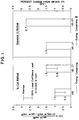
- Figure 1 is a graphical representation of percent change in efficiency obtained using an Energy Conserving oil or an Energy Conserving II oil as compared to using a reference HR oil.
- a blend of friction modifier additives in a crankcase lubricating oil to improve the fuel economy of an internal combustion engine comprising at least one amine/amide friction modifier and at least one ester/alcohol friction modifier, said blend having a weight ratio of amine/amide:ester/alcohol of from 1:10 to 10:1, said amide/amine friction modifier having been prepared by reacting at least one linear or branched, saturated or unsaturated aliphatic carboxylic acid having from 6 to 36 total carbon atoms with at least one polyamine having from 2 to 20 nitrogen atoms, and said ester/alcohol friction modifier having been prepared by reacting at least one linear or branched, saturated or unsaturated aliphatic carboxylic acid having from 6 to 36 total carbon atoms with at least one polyhydric alcohol.
- the invention also provides a process for improving the fuel economy of a vehicle powered by an internal combustion engine using a crankcase lubricating oil comprising from 0.01 to 2.0 wt. % of the amine/amide in combination with from 0.01 to 2.0 wt. % of the ester/alcohol.
- It further provides a blend of friction modifier additives comprising at least one amine/amide friction modifier and at least one ester/alcohol friction modifier, said blend having a weight ratio of amine/amide:ester/alcohol of from 1:10 to 10:1, said amide/amine friction modifier having been prepared by reacting at least one linear or branched, saturated or unsaturated aliphatic carboxylic acid having from 6 to 36 total carbon atoms with at least one polyamine having from 2 to 20 nitrogen atoms, and said ester/alcohol friction modifier having been prepared by reacting at least one linear or branched, saturated or unsaturated aliphatic hydroxy carboxylic acid having from 6 to 36 total carbon atoms with at least one polyhydric alcohol.
- the synergistic blend of friction modifying agents used in accordance with the invention comprises (A) an amine/amide friction modifier and (B) an ester/alcohol friction modifier.
- the amine/amide friction modifier can be prepared by reacting an acid or a mixture of acids with a polyamine or mixture thereof.
- the acids which are suitable for reaction with the polyamine include fatty acids having from 6 to 36 total carbon atoms, typically from 7 to 24 carbon atoms, and preferably from 14 to 20 carbon atoms.
- the acids may be linear or branched, and may be saturated or unsaturated. Dimer cards such as linoleic acid dimer are also useful.
- Non-limiting examples of suitable acids for reaction with the polyamine include: butyric acid, isovaleric acid, caproic acid, heptanoic acid, 2-ethyl hexanoic acid, caprylic acid, pelargonic acid, capric acid, lauric acid, myristic acid, palmitic acid, eicosoic acid, stearic acid, isostearic acid, oleic acid, linoleic acid, ricinoleic acid, behenic acid, erucic acid, behenolic acid, linoleic acid dimer, coconut oil fatty acid, palm kernel oil fatty acid, tall oil fatty acid, and the like, and mixtures thereof.
- the preferred acid or mixture of acids should have an average from 7 to 24, and more preferably from 14 to 20, total carbon atoms.
- hydroxy fatty acids such as ricinoleic acid
- ricinoleic acid has been found to be particularly preferred. While the reasons for the exceptional performance characteristics that have been achieved when using a hydroxy fatty acid in preparing the amine/amide and ester/alcohol friction modifiers of the present invention is not completely understood, it is believed that by virtue of one or more hydroxy groups along the carbon chain of the hydroxy fatty acid portion of the friction modifier, there is better cohesion between adjacent molecules of the friction modifiers and, thus, more effective boundary lubrication.
- the amines which are useful for reaction with the above acids to form the amine/amide friction modifiers include polyamines or mixtures of polyamines.
- the polyamines will have from 2 to 60, and preferably from 3 to 10, total carbon atoms in the molecule.
- the useful amines generally will contain from 2 to 20 total nitrogen atoms, typically from 2 to 14, and preferably from 2 to 12 nitrogen atoms per molecule.
- These amines may be hydrocarbyl amines or may be hydrocarbyl amines including other non-interfering groups, e.g., alkoxy groups, amide groups, nitrile groups, imidazoline groups, and the like.
- Preferred amines are aliphatic saturated amines, including those of the general formula: wherein R and R' are independently selected from the group consisting of hydrogen; C1 to C25 straight or branched chain alkyl radicals; C1 to C12 alkoxy C2 to C6 alkylene radicals; and C1 to C12 alkylamino C2 to C6 alkylene radicals; each s is the same or a different number of from 2 to 6, preferably 2 to 3; and t is a number of from 0 to 10, preferably 2 to 7. If t-0, then at least one of R or R' must be H such that there are at least two of either primary or secondary amino groups.
- Non-limiting examples of suitable amine compounds include: 1,2-diaminoethane; 1,3-diaminopropane; 1, 4-diaminobutane; 1, 6-diaminohexane; polyethylene amines such as diethylene triamine; triethylene tetramine; tetraethylene pentamine; polypropylene amines such as 1,2-propylene diamine; di-(1,2-propylene) triamine; di-(1,3-propylene) triamine; N,N-dimethyl-1,3-diamino-propane; N,N-di-(2-aminoethyl) ethylene diamine; N-dodecyl-1,3-propane diamine; di- ,and tri-tallow amines; amino morpholines such as N-(3-aminopropyl) morpholine; etc.
- amine compounds include: alicyclic diamines such as 1,4-di(aminomethyl) cyclohexane, and heterocyclic compounds such as morpholines, imidazolines, and N-aminolakyl piperazines of the general formula: wherein G is independently selected from the group consisting of hydrogen and omega-(non-tertiary)aminoalkylene radicals of from 1 to 3 carbon atoms, and p is a number of from 1 to 4.
- G is independently selected from the group consisting of hydrogen and omega-(non-tertiary)aminoalkylene radicals of from 1 to 3 carbon atoms
- p is a number of from 1 to 4.
- Non-limiting examples of such amines include 2-pentadecyl imidazoline; N-(2-aminoethyl) piperazine; etc.
- one process for preparing alkylene amines involves the reaction of an alkylene dihalide (such as ethylene dichloride or propylene dichloride) with ammonia, which results in a complex mixture of alkylene amines wherein pairs of nitrogens are joined by alkylene groups, forming such compounds as diethylene triamine, triethylenetetramine, tetraethylene pentamine and isomeric piperazines.
- alkylene dihalide such as ethylene dichloride or propylene dichloride
- ammonia such as ethylene triamine, triethylenetetramine, tetraethylene pentamine and isomeric piperazines.
- a low cost mixture of poly(ethyleneamines) compounds averaging about 5 to 7 nitrogen atoms per molecule are available commercially under trade names such as "Polyamine H", “Polyamine 400", “Dow Polyamine E-100", etc.
- Useful amines also include polyoxalkylene polyamines such as those of the formulas: NH2 - alkylene -(O-alkylene) m NH2 (III) where m has a value of 3 to 70 and preferably 10 to 35; and R ⁇ alkylene( ⁇ O-alkylene) ⁇ n -NH2] a (IV) where n has a value of 1 to 40 with the proviso that the sum of all the n's is from 3 to 70 and preferably from 6 to 35, R is a polyvalent saturated hydrocarbon radical of up to ten carbon atoms, and a is a number from 3 to 6.
- the alkylene groups in either formula III or IV may be straight or branched chain containing 2 to 7, and preferably 2 to 4 carbon atoms.
- the above polyoxyalkylene polyamines may have average molecular weights ranging from 200 to 4,000 and preferably from 400 to 2,000.
- the preferred polyoxyalkylene polyamines include the polyoxyethylene and polyoxypropylene diamines and the polyoxypropylene triamines having average molecular weight ranging from 200 to 2,000.
- the polyoxyalkylene polyamines are commercially available and may be obtained, for example, from the Jefferson Chemical Company, Inc. under the trade name "Jeffamines D-230, D-400, D-1000, D-2000, T-403", etc.
- Still other useful amines are those which can be generalized by the formula NH2-Z-NH2 (V) where Z may be -CH2CH2CH2-(CH2CH2CH2NH) n CH2CH2CH2 where n is 1-6, or -(CH2CH2CH2NH) m CH2(CH2) p (NH-CH2CH2CH2) m' -, where m and m' are each at least 1 and m + m' is 2-5, p is 1-4 and a is a number from 1-20.
- Further amines include polyamino propyl amines having C-substituents such as C12-C20 alkyl, C6-C10 aryl, hydroxyl, thiol, cyano, ethoxy, polyoxyethylene and polyoxypropylene having a degree of polymerization of 2-10 and other compatible non-reactive functional groups, but N-substituted polyamines are not suitable reactants in preparing macrocyclic compounds in a cyclodehydration reaction, i.e. the nitrogen atoms must be either -NH or -NH2.
- Z is -CH2CH2CH2-, -(CH2CH2CH2NH) n CH2CH2CH2- where n is 1-3, or -(CH2CH2CH2NH) m (CH2CH2)(NHCH2CH2CH2) m' -, where m and m' are as described above.
- the amine is readily reacted with the acid material, e.g. oleic acid by heating an oil solution containing 10 to 95 wt. % of acid material to 160 to 200°C., preferably 180 to 190°C., generally for 2 to 6, e.g. 3 to 5 hours until the desired amount of water is removed.
- acid material e.g. oleic acid
- the amine may used in any amount effective to form an amide from the acid material, generally the amine and acid are contacted in an acid amine equivalent ratio of from 1:10 to 1:1, preferably from 1:4 to 2:3.
- the ester/alcohol friction modifiers may be prepared by reacting an acid or mixture of acids with a polyol or mixture thereof.
- the acids suitable for use include those acids described hereinabove.
- the polyols contemplated for use in this invention include aliphatic polyhydric alcohols containing up to 100 carbon atoms and 2 to 10 hydroxyl groups. These alcohols can be quite diverse in structure and chemical composition, for example, they can be substituted or unsubstituted, hindered or unhindered, branched chain or straight chain, etc. as desired.
- Typical alcohols are alkylene glycols such as ethylene glycol, propylene glycol, trimethylene glycol, butylene glycol, and polyglycol such as diethylene glycol, triethylene glycol, tetraethylene glycol, dipropylene glycol, tripropylene glycol, dibutylene glycol, tributylene glycol, and other alkylene glycols and polyalkylene glycols in which the alkylene radical contains from two to about eight carbon atoms.
- alkylene glycols such as ethylene glycol, propylene glycol, trimethylene glycol, butylene glycol
- polyglycol such as diethylene glycol, triethylene glycol, tetraethylene glycol, dipropylene glycol, tripropylene glycol, dibutylene glycol, tributylene glycol, and other alkylene glycols and polyalkylene glycols in which the alkylene radical contains from two to about eight carbon atoms.
- polyhydric alcohols include glycerol, monomethyl ether of glycerol, pentaerythritol, dipentaerythritol, tripentaery-thritol, 9, 10-dihydroxystearic acid, the ethyl ester of 9,10-dihydroxystearic acid, 3-chloro-1, 2-propanediol, 1,2 butanediol, 1,4-butanediol, 2,3-hexanediol, pinacol, tetrahydroxy pentane, erythritol, arabitol, sorbitol, mannitol, 1,2-cyclohexanediol, 1,4-cyclohexanediol, 1,4-(2-hydroxyethyl)-cyclohexane, 1, 4-dihydroxy-2-nitro-butane, 1,4-di-(2-hydroxyethyl)-benzene, the carbohydrates such as
- alkane polyols which contain ether groups such as polyethylene oxide repeating units, as well as those polyhydric alcohols containing at least three hydroxyl groups, at least one of which has been esterified with a mono-carboxylic acid having from eight to 30 carbon atoms such as octanoic acid, oleic acid, stearic acid, linoleic acid, dodecanoic acid, or tall oil acid.
- Examples of such partially esterified polyhydric alcohols are the mono-oleate of sorbitol, the mono-oleate of glycerol, the mono-stearate of glycerol, the di-stearate of sorbitol, and the didodecanoate of erythritol.
- alcohols which may be used in the invention are containing nitrogen or sulfur such as the thiobisethanols and amino-alcohols.
- Useful amino alcohol compounds include 2,2-disubstituted-2-amino-1-alkanols having from two to three hydroxyl groups and containing a total of 4 to 8 carbon atoms.
- This amino alcohol can be represented by the formula: wherein X is an alkyl or hydroxyalkyl group with the alkyl groups having from 1 to 3 carbon atoms wherein at least one, and preferably both, of the X substituents is a hydroxyalkyl group of the structure (CH2) n OH, n being 1 to 3.
- amino alcohols examples include: 2-amino-2-methyl-1,3 propanediol; 2-amino-2-ethyl-1,3-propanediol; and 2-amino-2-(hydroxymethyl)-1,3-propanediol, the latter also being known as THAM, or tris (hydroxymethyl) amino methane.
- THAM is particularly preferred because of its effectiveness, availability and low costs.
- a preferred class of ester intermediates are those prepared from aliphatic alcohols containing up to 20 carbon atoms, and especially those containing three to 15 carbon atoms.
- This class of alcohols includes glycerol, erythritol, pentaerythritol, dipentaerythritol, tripentaerythritol, gluconic acid, glyceraldehyde, glucose, arabinose, 1,7-heptanediol, 2, 4-heptanediol, 1,2,3-hexanetriol, 1,2,4-hexanetriol, 1,2,5-hexanetriol, 2,3,4-hexanetriol, 1,2,3-butanetriol, 1,2,4-butanetriol, quinic acid, 2,2,6,6-tetrakis (hydroxymethyl)-cyclohexanol, 1, 10-decanediol, digitalose, and the like.
- An especially preferred class of polyhydric alcohols for preparing the ester/alcohol friction reducing agents used in the present invention are the polyhydric alkanols containing 3 to 15, especially 3 to 6 carbon atoms and having at least 3 hydroxyl groups.
- Such alcohols are exemplified in the above specifically identified alcohols and are represented by glycerol, erythritol, pentaerythritol, mannitol, sorbitol, 1,2,4-hexanetriol, and tetrahydroxy pentane and the like.
- the polyol component is readily reacted with the acid component, e.g. ricinoleic acid or oleic acid, by heating a mixture of the polyol and acid in a reaction vessel in the absence of a solvent at a temperature of 130°C to 180°C, typically 140°C to 160°C, and preferably 145°C to 150°C, for a sufficient period of time to effect reaction, typically from 4 to 6 hours.
- a solvent for the acid, polyol and/or the resulting ester/alcohol product may be employed to control viscosity and/or the reaction rates.
- the acids that are suitable for reaction with the polyol component to prepare the ester/alcohol products that are usable in the present invention are the same acids that have been described above in connection with the amine/amide friction modifiers.
- the acid e.g. oleic and or more preferably, a hydroxy acid such as ricinoleic acid
- a polyol e.g., glycerol
- the ratio of acid to polyol may vary.
- the mole ratio of acid to polyol may vary from 3:1 to 1:1.
- the amine/amide and ester/alcohol friction modifier blend of the present invention when added to an oil of lubricating viscosity, have been found to impart exceptionally good friction reduction properties, as measured in terms of fuel economy of internal combustion engines having had their crankcases lubricated with such oil compositions.
- synergistic blends of friction modifiers contemplated by this invention are used by incorporation and dissolution into an oleaginous material such as internal engine crankcase lubricating oil formulations which employ a base oil in which the various additives are dissolved or dispersed.
- Base oils suitable for use in preparing lubricating compositions of the present invention include those conventionally employed as crankcase lubricating oils for spark-ignited and compression-ignited internal combustion engines, such as automobile and truck engines, marine and railroad diesel engines, and the like. Such base oils may be natural or synthetic although the natural base oils will derive a greater benefit.
- synergistic blend of additives of the present invention suitably may be incorporated into synthetic base oils such as alkyl esters of dicarboxylic acids, polyglycols and alcohols, polyalphaolefins, alkyl benzenes, organic esters of phosphoric acids, polysilicone oils, etc.
- Natural base oils include mineral lubricating oils which may vary widely as to their crude source, e.g., whether paraffinic, naphthenic, mixed, paraffinic-naphthenic, and the like; as well as to their formation, e.g., distillation range, straight run or cracked, hydrofined, solvent extracted and the like.
- the natural lubricating oil base stocks which can be used in the compositions of this invention may be straight mineral lubricating oil or distillates derived from paraffinic, naphthenic, asphaltic, or mixed base crudes, or, if desired, various blends oils may be employed as well as residuals, particularly those from which asphaltic constituents have been removed.
- the oils may be refined by conventional methods using acid, alkali, and/or clay or other agents such as aluminum chloride, or they may be extracted oils produced, for example, by solvent extraction with solvents of the type of phenol, sulfur dioxide, furfural, dichlorodiethyl ether, nitrobenzene and crotonaldehyde.
- the lubricating oil base stock conveniently has a viscosity of typically 2.5 to 12, and preferably 2.5 to 9 mm S ⁇ 1 (cs.) at 100°C.
- the herein contemplated blend of friction modifying agents can be employed in a lubricating oil composition which comprises lubricating oil, typically in a major amount, i.e., greater than 50 wt.%, and the blend of friction modifiers, typically in a minor amount, i.e., less than 50 wt.%, which is effective to impart unexpectedly enhanced friction reduction properties, relative to the absence of the subject friction modifying additives.
- Additional conventional additives selected to meet the particular requirements of a selected type of lubricating oil composition can be included as desired.
- the friction modifying additives of this invention are oil-soluble, dissolvable in oil with the aid of a suitable solvent, or are stably dispersible in oils.
- Oil-soluble, dissolvable, or stably dispersible as that terminology is used herein does not necessarily indicate that the materials are soluble, dissolvable, miscible, or capable of being suspended in oil in all proportions. It does mean, however, that the friction modifying additives, for instance, are soluble or stably dispersible in oil to an extent sufficient to exert their intended effect in the environment in which the oil is employed.
- the additional incorporation of other additives may also permit incorporation of higher levels of a particular friction modifier, if desired.
- any effective amount of the amine/amide and ester/alcohol friction modifier additives can be incorporated into the lubricating oil composition, it is contemplated that such effective amount be sufficient to provide said lube composition with an amount of the amine/amide friction modifier additive of typically from 0.01 to 2, and preferably from 0.2 to 0.5 wt.%, based on the weight of said composition, and with an amount of ester/alcohol friction modifier additive typically from 0.01 to 2, and preferably from 0.2 to 0.5 wt.%. It is also contemplated that the weight ratio of the amine/amide friction modifier to the ester/alcohol friction modifier typically will be from 1:10 to 10:1, and preferably from 1:2 to 2:1.
- the friction modifier additives of the present invention can be incorporated into the lubricating oil in any convenient way. Thus, they can be added directly to the oil by dispersing, or dissolving the same in the oil at the desired level of concentration typically with the aid of a suitable solvent such as toluene, or tetrahydrofuran. Such blending can occur at room temperature or elevated temperatures.
- the friction modifier additives may be blended with a suitable oil-soluble solvent and base oil to form a concentrate, and then blending the concentrate with lubricating oil base stock to obtain the final formulation. Concentrates will typically contain from 20 to 80 wt.%, and preferably 20 to 60 wt.%, by weight of the blended friction modifier additives, and typically from 80 to 20%, preferably from 60 to 20% by weight base oil, based on the concentrate weight.
- the lubricating oil base stock for the friction modifier additive blend of the present invention typically is adapted to perform a selected function by the incorporation of additives therein to form lubricating oil compositions (i.e., formulations).
- Representative additives typically present in such formulations include dispersants, viscosity modifiers, corrosion inhibitors, oxidation inhibitors, other friction modifiers, anti-foaming agents, anti-wear agents, pour point depressants and the like.
- Viscosity modifiers impart high and low temperature operability to the lubricating oil and permit it to remain shear stable at elevated temperatures and also exhibit acceptable viscosity or fluidity at low temperatures.
- Viscosity modifiers are generally high molecular weight hydrocarbon polymers including polyesters.
- the viscosity modifiers may also be derivatized to include other properties or functions, such as the addition of dispersancy properties.
- oil soluble viscosity modifying polymers will generally have number average molecular weights of from 103 to 106, preferably 104 to 106, e.g., 20,000 to 250,000, as determined by gel permeation chromatography or membrane osmometry.
- suitable viscosity modifiers are any of the types known to the art including polyisobutylene, copolymers of ethylene and propylene, polymethacrylates, methacrylate copolymers, copolymers of an unsaturated dicarboxylic acid and vinyl compound and interpolymers of styrene and acrylic esters.
- Corrosion inhibitors also known as anti-corrosive agents, reduce the degradation of the metallic parts contacted by the lubricating oil composition.
- corrosion inhibitors are zinc dialkyldithiophosphate, phosphosulfurized hydrocarbons and the products obtained by reaction of a phosphosulfurized hydrocarbon with an alkaline earth metal oxide or hydroxide, preferably in the presence of an alkylated phenol or of an alkylphenol thioester, and also preferably in the presence of carbon dioxide.
- Phosphosulfurized hydrocarbons are prepared by reacting a suitable hydrocarbon such as a terpene, a heavy petroleum fraction of a C2 to C6 olefin polymer such as polyisobutylene, with from 5 to 30 wt.% of a sulfide of phosphorus for 1/2 to 15 hours, at a temperature in the range of 65° (18.3°C) to 320°F (160°C).
- Neutralization of the phosphosulfurized hydrocarbon may be effected in the manner taught in U.S. Patent No. 1,969,324.
- Oxidation inhibitors reduce the tendency of mineral oils to deteriorate in service which deterioration is evidenced by the products of oxidation such as sludge and varnish-like deposits on the metal surfaces.
- oxidation inhibitors include alkaline earth metal salts of alkylphenolthioethers having preferably C5 to C12 alkyl side chains, e.g., calcium nonylphenol sulfide, barium t-octylphenyl sulfide, dioctylphenylamine, phenylalphanaphthylamine, phosphosulfurized or sulfurized hydrocarbons, etc.
- Suitable additional friction modifiers which may be added to the lubricating oil formulations are well known in the art.
- the most preferred friction modifiers to be used in combination with the blend of amide/amine and ester/alcohol friction modifier of the present invention are succinate esters, or metal salts thereof, of hydrocarbyl substituted succinic acids or anhydrides and thiobis alkanols such as described in U. S. Patent No. 4,344,853.
- Dispersants maintain oil insolubles, resulting from oxidation during use, in suspension in the fluid thus preventing sludge flocculation and precipitation or deposition on metal parts.
- Suitable dispersants include high molecular weight polyalkenyl succinimides, e.g., the reaction product of oil-soluble polyisobutylene succinic anhydride with ethylene amines such as tetraethylene pentamine and borated salts thereof.
- Pour point depressants lower the temperature at which the fluid will flow or can be poured.
- Such depressants are well known.
- those additives which usefully optimize the low temperature fluidity of the fluid are C8-C18 dialkylfumarate vinyl acetate copolymers, polymethacrylates, and wax naphthalene.
- Foam control can be provided by an antifoamant of the polysiloxane type, e.g., silicone oil and polydimethyl siloxane.
- Anti-wear agents reduce wear of metal parts.
- Representatives of conventional anti-wear agents are zinc dialkyldithiophosphate, zinc diaryldithiosphate and magnesium sulfonate.
- compositions when containing these conventional additives are typically blended into the base oil in amounts which are effective to provide their normal attendant function.
- Representative effective amounts of such additives are illustrated as follows: Additive Vol % Wt % Viscosity Modifier 0.01 1-4 Corrosion Inhibitor 0.01-1 0.01-1.5 Oxidation inhibitor 0.01-1 0.01-1.5 Dispersant 0.1 -7 0.1 -8 Pour Point Depressant 0.01-1 0.01-1.5 Detergents/Rust Inhibitors 0.01-2.5 0.01-3 Anti-Foaming Agents 0.001-0.1 0.001-0.15 Anti-Wear Agents 0.001-1 0.001-1.5 Friction Modifiers 0.01-3 0.01 -1.5 Lubricating Base Oil Balance Balance Balance
- additive concentrates comprising concentrated solutions or dispersions of the friction modifier blend (in concentrate amounts hereinabove described), together with one or more of said other additives (said concentrate when constituting an additive mixture being referred to herein as an additive-package) whereby several additives can be added simultaneously to the base oil to form the lubricating oil composition. Dissolution of the additive concentrate into the lubricating oil may be facilitated by solvents and by mixing accompanied with mild heating, but this is not essential.
- the concentrate or additive-package will typically be formulated to contain the blend of friction modifier additives and optional additional additives in proper amounts to provide the desired concentration in the final formulation when the additive-package is combined with a predetermined amount of base lubricant.
- the blend of friction modifier additives of the present invention can be added to small amounts of base oil or other compatible solvents along with other desirable additives to form additive-packages containing active ingredients in collective amounts of typically from 2.5 to 90%, and preferably from 5 to 75%, and most preferably from 8 to 50% by weight additives in the appropriate proportions with the remainder being base oil.
- the final formulations may employ typically 10 wt.% of the additive-package with the remainder being base oil.
- weight percents expressed herein are based on active ingredient (A.I.) content of the additive, and/or upon the total weight of any additive-package, or formulation which will be the sum of the A.I. weight of each additive plus the weight of total oil or diluent.
- active ingredient A.I.
- reaction product comprised an oleic acid-TEPA friction modifying agent and was found to have a total acid number (TAN) of about 6.0.
- BOC ball-on cylinder
- the BOC device consists basically of a rotating chrome steel cylinder to which is held a stationary steel ball at a fixed normal load.
- the cylinder is partly immersed in the test oil which distributes over the surface of the cylinder.
- the restraining force on the steel ball is measured by a linear variable differential transformer (LVDT) and recorded on a strip-chart.
- LVDT linear variable differential transformer
- the base oil formulation used in the ball-on cylinder tests was an SG/Tier 1 10W30 crankcase lubricating oil formulation containing only a refined base mineral oil, a dispersant, viscosity index improver, a pour point depressant and a zinc dialkyldithiophosphate anti-wear additive.
- This base formulation there was added either no friction modifier (control), 0.1 wt. % of Loxiol G11 (a glycerine monoricinoleate friction modifier marketed by Henkel Corporation; Comparative Formulation 1), 0.2 wt.% of a glycerine mono- and dioleate friction modifier (Comparative Formulation 2), 0.2 wt.
- % of the oleic acid/TEPA friction modifier of EXAMPLE 1 comparative Formulation 3
- a blend of 0.2 wt.% of glycerine mono-and dioleate and 0.2 wt.% of the oleic acid/TEPA of EXAMPLE 1 (Formulation 4), a blend of 0.1 wt.% of Loxiol G11, 0.2 Wt.% glycerine mono- and dioleate and 0.2 wt. % of oleic acid/TEPA (Formulation 5), a blend of 0.1 wt.% Loxiol G11 and 0.2 wt.
- the Sequence VI test procedure (SAE JI 423 May 1988) is used for evaluating engine oils and for identifying energy conserving engine oils for passenger cars, vans, and light duty (8500 lbs GVN or less) trucks.
- the recommended practice (JI 423) involves a classification for engine oils that have energy-conserving characteristics under certain operating conditions and are categorized as "Energy Conserving" (tier I) or "Energy Conserving II” (tier II).
- Energy conserveing (tier I) and Energy conserveing II (tier II) engine oils are lubricants that demonstrate reduced fuel consumption when compared to specified ASTM reference oils using a procedure which is described in ASTM Research Report No. RR:PD02:1204, "Fuel Efficient Engine Oil Dynamometer Test Development Activities, Final Report, Part II, August 1985.”
- EFEI [0.65 Stage 150 + 0.35 Stage 275 - 0.61 1.38
- the equation is used to transfer the data obtained in two stages of an older procedure, known as the five-car procedure (published as D-2 Proposal P101 in Volume 05.03 of the 1986 ASTM Book of Standards), which is an alternative method only for use in evaluating engine oils that meet the Energy Conserving (tier I) category.
- the candidate oil must meet the performance limits of the classification published as a proposal in Volume 05.03 of the ASTM Book of Standards (D-2 Proposal P102) and shown graphically in Fig. 1 herein.
- the five-car average fuel consumption with the candidate oil must be less than that with reference oil HR by at least 1% and the minimum lower 95% confidence level (LCL95) must be at least 0.3%.
- the average fuel consumption with the candidate oil must be at least 1.5% less than that with reference oil with a minimum LCL95.
- EFEI Equivalent Fuel Economy improvement
- D-2 Proposal P102 The Equivalent Fuel Economy improvement (EFEI) from the Sequence VI test must meet the limits of the aforementioned classification D-2 Proposal P102, with the exception of the LCL95 requirement which applies to only the five-car procedure.
- EFEI Equivalent Fuel Economy Improvement
- the actual fuel economy obtained by individual vehicle operators using engine oils which are labeled "ENERGY CONSERVING” or “ENERGY CONSERVING II” may differ because of many factors including type of vehicle and engine, engine manufacturing variables, mechanical condition and the fuel economy of passenger cars, vans and light-duty trucks by an EFEI of 2.7% or greater over a standard reference oil in a standard test procedures.
- the actual fuel economy obtained by individual vehicle operators using engine oils which are labeled "ENERGY CONSERVING” or “ENERGY CONSERVING II” may differ because of many factors including type of vehicle and engine, engine manufacturing variables, mechanical condition and maintenance of the engine, oil previously used, operating conditions, and driving habits.
Landscapes
- Chemical & Material Sciences (AREA)
- Chemical Kinetics & Catalysis (AREA)
- General Chemical & Material Sciences (AREA)
- Oil, Petroleum & Natural Gas (AREA)
- Organic Chemistry (AREA)
- Lubricants (AREA)
- Liquid Carbonaceous Fuels (AREA)
Claims (15)
- Verwendung von einer Mischung aus Reibungsmodifizierungsadditiven in einem Kurbelwannenschmieröl zur Verbesserung der Treibstoffersparnis eines Verbrennungsmotors, wobei die Mischung mindestens ein Amin/Amid-Reibungsmodifizierungsmittel und mindestens ein Ester/Alkohol-Reibungsmodifizierungsmittel umfaßt, wobei die Mischung ein Gewichtsverhältnis von Amin/Amid:Ester/Alkohol von 1:10 bis 10:1 hat, das Amid/Amin-Reibungsmodifizierungsmittel durch Umsetzung von mindestens einer linearen oder verzweigten, gesättigten oder ungesättigten aliphatischen Carbonsäure mit insgesamt 6 bis 36 Kohlenstoffatomen mit mindestens einem Polyamin mit 2 bis 20 Stickstoffatomen hergestellt ist und das Ester/Alkohol-Reibungsmodifizierungsmittel durch Umsetzung von mindestens einer linearen oder verzweigten, gesättigten oder ungesättigten aliphatischen Carbonsäure mit insgesamt 6 bis 36 Kohlenstoffatomen mit mindestens einem mehrwertigen Alkohol hergestellt ist.
- Verwendung nach Anspruch 1, bei der jedes der Amid/Amin-Reibungsmodifizierungsmittel und der Ester/Alkohol-Reibungsmodifizierungsmittel aus mindestens einer Säure, die insgesamt 7 bis 24 Kohlenstoffatome enthält, hergestellt ist.
- Verwendung nach Anspruch 2, bei dem die Säure ausgewählt ist aus Isostearinsäure, Ölsäure, Linolsäure, Ricinolsäure und Mischungen daraus.
- Verwendung nach einem der Ansprüche 1 bis 3, bei der das Polyamin ein aliphatisches gesättigtes Amin mit der Formel

- Verwendung nach Anspruch 4, bei der das Polyamin ausgewählt ist aus 1,2-Diaminoethan, 1,3-Diaminopropan, 1,4-Diaminobutan, 1,6-Diaminohexan, Diethylentriamin, Triethylentetramin, Tetraethylenpentamin, 1,2-Propylendiamin, Di(1,2-propylen)triamin, Di(1,3-propylen)triamin, N,N-Dimethyl-1,3-diaminopropan, N,N-Di(2-aminoethyl)ethylendiamin und N-Dodecyl-1,3-propandiamin.
- Verwendung nach einem der Ansprüche 1 bis 5, bei der der mehrwertige Alkohol ein aliphatischer Alkohol ist, der 3 bis 15 Kohlenstoffatome und mindestens 3 Hydroxylgruppen enthält.
- Verwendung nach Anspruch 6, bei der der mehrwertige Alkohol ein Mitglied ausgewählt aus der Gruppe bestehend aus Glycerin, Erythrit, Pentaerythrit, Mannit, Sorbit, 1,2,4-Hexantriol und Tetrahydroxypentan ist.
- Verwendung nach einem der Ansprüche 1 bis 5, bei der der mehrwertige Alkohol ein 2,2-disubstituiertes 2-Amino-1-alkanol mit der Formel

- Verwendung nach Anspruch 8, bei der der Aminoalkohol Tris-(hydroxymethyl)aminomethan umfaßt.
- Mischung aus Reibungsmodifizierungsadditiven, die mindestens ein Amin/Amid-Reibungsmodifizierungsmittel und mindestens ein Ester/Alkohol-Reibungsmodifizierungsmittel umfaßt, wobei die Mischung ein Gewichtsverhältnis von Amin/Amid:Ester/Alkohol von 1:10 bis 10:1 hat, das Amid/Amin-Reibungsmodifizierungsmittel durch Umsetzung von mindestens einer linearen oder verzweigten, gesättigten oder ungesättigten aliphatischen Carbonsäure mit insgesamt 6 bis 36 Kohlenstoffatomen mit mindestens einem Polyamin mit 2 bis 20 Stickstoffatomen hergestellt ist und das Ester/Alkohol-Reibungsmodifizierungsmittel durch Umsetzung von mindestens einer linearen oder verzweigten, gesättigten oder ungesättigten aliphatischen Hydroxycarbonsäure mit insgesamt 6 bis 36 Kohlenstoffatomen mit mindestens einem mehrwertigen Alkohol hergestellt ist.
- Mischung nach Anspruch 10, bei der die Hydroxycarbonsäure, aus der das Ester/Alkohol-Reibungsmodifizierungsmittel hergestellt ist, Ricinolsäure ist.
- Mischung nach Anspruch 10 oder Anspruch 11, bei der das Polyamin und/oder der mehrwertige Alkohol gemäß einem der Ansprüche 4 bis 9 ist bzw. sind.
- Verfahren zur Verbesserung der Treibstoffersparnis eines mit einem Verbrennungsmotor mit einer Kurbelwanne angetriebenen Fahrzeugs, bei dem der Kurbelwanne eine Motorschmierölzusammensetzung beigefügt wird, die eine größere Menge eines Öls von Schmierviskosität, 0,01 bis 2 Gew.%, bezogen auf das Gesamtgewicht der Zusammensetzung, eines Amin/Amid-Reibungsmodifizierungsmittels und 0,01 bis 2 Gew.% eines Ester/Alkohol-Reibungsmodifizierungsmittels umfaßt, wobei das Amid/Amin-Reibungsmodifizierungsmittel durch Umsetzung von mindestens einer linearen oder verzweigten, gesättigten oder ungesättigten aliphatischen Carbonsäure mit insgesamt 6 bis 36 Kohlenstoffatomen mit mindestens einem Polyamin mit 2 bis 20 Stickstoffatomen hergestellt ist und das Ester/Alkohol-Reibungsmodifizierungsmittel durch Umsetzung von mindestens einer linearen oder verzweigten, gesättigten oder ungesättigten aliphatischen Carbonsäure mit insgesamt 6 bis 36 Kohlenstoffatomen mit mindestens einem mehrwertigen Alkohol hergestellt ist.
- Verfahren nach Anspruch 13, bei dem die Kurbelwannenmotorschmierölzusammensetzung eine Äquivalente Treibstoffersparnisverbesserung (EFEI, Equivalent Fuel Economy Improvement) von mindestens 2,7 liefert.
- Verwendung nach einem der Ansprüche 1 bis 9, bei der das Kurbelwannenmotorschmieröl eine Äquivalente Treibstoffersparnisverbesserung (EFEI, Equivalent Fuel Economy Improvement) von mindestens 2,7 liefert.
Applications Claiming Priority (3)
| Application Number | Priority Date | Filing Date | Title |
|---|---|---|---|
| US56083990A | 1990-07-31 | 1990-07-31 | |
| US560839 | 1990-07-31 | ||
| PCT/US1991/005392 WO1992002602A1 (en) | 1990-07-31 | 1991-07-30 | Synergystic blend of amine/amide and ester/alcohol friction modifying agents for improved fuel economy of an internal combustion engine |
Publications (2)
| Publication Number | Publication Date |
|---|---|
| EP0553100A1 EP0553100A1 (de) | 1993-08-04 |
| EP0553100B1 true EP0553100B1 (de) | 1996-01-24 |
Family
ID=24239571
Family Applications (1)
| Application Number | Title | Priority Date | Filing Date |
|---|---|---|---|
| EP91914651A Expired - Lifetime EP0553100B1 (de) | 1990-07-31 | 1991-07-30 | Synergistische amin/amid- und ester/alkohol-reibungsverminderungsmittelmischung zur innenverbrennungsmotorkraftstoffsparungsverbesserung |
Country Status (5)
| Country | Link |
|---|---|
| EP (1) | EP0553100B1 (de) |
| JP (1) | JP2777750B2 (de) |
| CA (1) | CA2086757C (de) |
| DE (1) | DE69116697T2 (de) |
| WO (1) | WO1992002602A1 (de) |
Cited By (2)
| Publication number | Priority date | Publication date | Assignee | Title |
|---|---|---|---|---|
| SG131759A1 (en) * | 2002-05-22 | 2007-05-28 | Chevron Oronite Co | Lubricating compositions for friction material interfaces |
| CN100485232C (zh) * | 2003-08-08 | 2009-05-06 | 日产自动车株式会社 | 滑动件及其生产方法 |
Families Citing this family (33)
| Publication number | Priority date | Publication date | Assignee | Title |
|---|---|---|---|---|
| CA2132523C (en) * | 1992-04-15 | 1999-08-03 | Ricardo Alfredo Bloch | Lubricant compositions containing alkoxylated amine and sulfurized hydrocarbyl phenol friction modifiers |
| WO1993021288A1 (en) * | 1992-04-15 | 1993-10-28 | Exxon Chemical Patents Inc. | Lubricant composition containing mixed friction modifiers |
| US5520831A (en) * | 1993-12-20 | 1996-05-28 | Exxon Chemical Patents Inc. | Increasing the friction durability of power transmission fluids through the use of oil soluble competing additives |
| JP3555844B2 (ja) | 1999-04-09 | 2004-08-18 | 三宅 正二郎 | 摺動部材およびその製造方法 |
| GB2359092A (en) * | 2000-02-14 | 2001-08-15 | Exxonmobil Res & Eng Co | Lubricating oils having improved fuel economy retention properties |
| US6589302B1 (en) | 2000-05-09 | 2003-07-08 | Texaco Inc. | Friction modifier for poor lubricity fuels |
| US6739238B2 (en) | 2000-11-20 | 2004-05-25 | Nissan Motor Co., Ltd. | Sliding structure for a reciprocating internal combustion engine and a reciprocating internal combustion engine using the sliding structure |
| JP2003184883A (ja) | 2001-12-20 | 2003-07-03 | Nissan Motor Co Ltd | 軸受摺動部材 |
| JP3555891B2 (ja) * | 2002-02-22 | 2004-08-18 | 新日本石油株式会社 | 低摩擦摺動材料及びこれに用いる潤滑油組成物 |
| JP2004138128A (ja) | 2002-10-16 | 2004-05-13 | Nissan Motor Co Ltd | 自動車エンジン用摺動部材 |
| US6969198B2 (en) | 2002-11-06 | 2005-11-29 | Nissan Motor Co., Ltd. | Low-friction sliding mechanism |
| JP3891433B2 (ja) | 2003-04-15 | 2007-03-14 | 日産自動車株式会社 | 燃料噴射弁 |
| EP1479946B1 (de) | 2003-05-23 | 2012-12-19 | Nissan Motor Co., Ltd. | Kolben für eine Brennkraftmaschine |
| JP2004360649A (ja) * | 2003-06-06 | 2004-12-24 | Nissan Motor Co Ltd | エンジン用ピストンピン |
| JP4824407B2 (ja) * | 2003-08-06 | 2011-11-30 | Jx日鉱日石エネルギー株式会社 | Dlc接触面を有するシステム、該システムの潤滑方法及び該システム用潤滑油 |
| EP1661971A4 (de) * | 2003-08-06 | 2008-12-03 | Nippon Oil Corp | System mit dlc-kontaktflächen, verfahren zum schmieren des systems und schmieröl für das system |
| KR101003865B1 (ko) * | 2003-08-06 | 2010-12-30 | 닛산 지도우샤 가부시키가이샤 | 저마찰 접동 기구, 저마찰제 조성물 및 마찰 감소 방법 |
| JP4973971B2 (ja) * | 2003-08-08 | 2012-07-11 | 日産自動車株式会社 | 摺動部材 |
| JP2005054617A (ja) | 2003-08-08 | 2005-03-03 | Nissan Motor Co Ltd | 動弁機構 |
| JP4117553B2 (ja) | 2003-08-13 | 2008-07-16 | 日産自動車株式会社 | チェーン駆動装置 |
| JP2005090738A (ja) * | 2003-08-13 | 2005-04-07 | Nissan Motor Co Ltd | 転がり軸受 |
| DE602004008547T2 (de) | 2003-08-13 | 2008-05-21 | Nissan Motor Co., Ltd., Yokohama | Struktur zur Verbindung von einem Kolben mit einer Kurbelwelle |
| JP4539205B2 (ja) | 2003-08-21 | 2010-09-08 | 日産自動車株式会社 | 冷媒圧縮機 |
| US7771821B2 (en) * | 2003-08-21 | 2010-08-10 | Nissan Motor Co., Ltd. | Low-friction sliding member and low-friction sliding mechanism using same |
| EP1508611B1 (de) | 2003-08-22 | 2019-04-17 | Nissan Motor Co., Ltd. | Getriebe enthaltend eine getriebeölzusammensetzung |
| US7550415B2 (en) | 2004-12-10 | 2009-06-23 | Shell Oil Company | Lubricating oil composition |
| US20060183652A1 (en) * | 2004-12-10 | 2006-08-17 | Takashi Fujitsu | Lubricating oil composition |
| WO2007096361A1 (en) | 2006-02-21 | 2007-08-30 | Shell Internationale Research Maatschappij B.V. | Lubricating oil composition |
| JP5167140B2 (ja) * | 2006-10-17 | 2013-03-21 | 出光興産株式会社 | 潤滑油組成物 |
| JP5203590B2 (ja) * | 2006-10-27 | 2013-06-05 | 出光興産株式会社 | 潤滑油組成物 |
| EP2441818A1 (de) * | 2010-10-12 | 2012-04-18 | Shell Internationale Research Maatschappij B.V. | Schmiermittelzusammensetzung |
| JP6907461B2 (ja) * | 2016-02-29 | 2021-07-21 | 出光興産株式会社 | 潤滑油組成物、潤滑方法、及び変速機 |
| RU2675632C1 (ru) * | 2017-11-22 | 2018-12-21 | Игорь Васильевич Мухортов | Противоизносная композиция к смазочным материалам |
Family Cites Families (9)
| Publication number | Priority date | Publication date | Assignee | Title |
|---|---|---|---|---|
| FR1390948A (fr) * | 1962-09-28 | 1965-03-05 | Shell Int Research | Préparation d'additifs pour lubrifiants et lubrifiants contenant ces additifs |
| US4208293A (en) * | 1978-11-13 | 1980-06-17 | Ethyl Corporation | Improved crankcase lubricant composition |
| US4201684A (en) * | 1978-11-13 | 1980-05-06 | Ethyl Corporation | Lubricant composition of improved friction reducing properties |
| CA1157846A (en) * | 1978-12-18 | 1983-11-29 | Thomas V. Liston | Fuel economy |
| GB2097813B (en) * | 1981-05-06 | 1985-09-25 | Exxon Research Engineering Co | Glycerol esters in lubricating oils as fuel economy additives |
| US4724091A (en) * | 1983-03-31 | 1988-02-09 | The Lubrizol Corporation | Alkyl phenol and amino phenol compositions and two-cycle engine oils and fuels containing same |
| EP0305538B1 (de) * | 1987-03-02 | 1992-12-23 | Idemitsu Kosan Company Limited | Schmierölzusammensetzung |
| CA1325420C (en) * | 1988-03-31 | 1993-12-21 | Armgard Kohler Everett | Lubricating oil composition |
| US4960530A (en) * | 1988-03-31 | 1990-10-02 | Ethyl Petroleum Additives, Inc. | Lubricating oil composition |
-
1991
- 1991-07-30 CA CA002086757A patent/CA2086757C/en not_active Expired - Lifetime
- 1991-07-30 DE DE69116697T patent/DE69116697T2/de not_active Expired - Fee Related
- 1991-07-30 WO PCT/US1991/005392 patent/WO1992002602A1/en not_active Ceased
- 1991-07-30 JP JP3514276A patent/JP2777750B2/ja not_active Expired - Lifetime
- 1991-07-30 EP EP91914651A patent/EP0553100B1/de not_active Expired - Lifetime
Cited By (2)
| Publication number | Priority date | Publication date | Assignee | Title |
|---|---|---|---|---|
| SG131759A1 (en) * | 2002-05-22 | 2007-05-28 | Chevron Oronite Co | Lubricating compositions for friction material interfaces |
| CN100485232C (zh) * | 2003-08-08 | 2009-05-06 | 日产自动车株式会社 | 滑动件及其生产方法 |
Also Published As
| Publication number | Publication date |
|---|---|
| WO1992002602A1 (en) | 1992-02-20 |
| CA2086757C (en) | 2000-03-28 |
| CA2086757A1 (en) | 1992-02-01 |
| EP0553100A1 (de) | 1993-08-04 |
| JPH05509125A (ja) | 1993-12-16 |
| JP2777750B2 (ja) | 1998-07-23 |
| DE69116697T2 (de) | 1996-05-30 |
| DE69116697D1 (de) | 1996-03-07 |
Similar Documents
| Publication | Publication Date | Title |
|---|---|---|
| CA2086757C (en) | Synergystic blend of amine/amide and ester/alcohol friction modifying agents for improved fuel economy of an internal combustion engine | |
| US5282990A (en) | Synergistic blend of amine/amide and ester/alcohol friction modifying agents for improved fuel economy of an internal combustion engine | |
| EP0856042B1 (de) | Automatische getriebe mit getriebeflussigkeit mit verbesserter reibungdauerhaftigkeit | |
| EP0439885B1 (de) | Öllösliche Dispergieradditive, die mit monoepoxy-monoungesättigten Verbindungen modifiziert sind | |
| EP0673991B1 (de) | Aschefreies Schmiermittel | |
| US5334329A (en) | Lubricant and functional fluid compositions exhibiting improved demulsibility | |
| US4158633A (en) | Lubricating oil | |
| EP1015531B1 (de) | Kraftübertragungsflüssigkeiten mit verbessertem reibungs-anlaufverhalten | |
| US20090005277A1 (en) | Lubricating Oils Having Improved Friction Stability | |
| US4866141A (en) | Lactone modified, esterfied or aminated additives useful in oleaginous compositions and compositions containing same | |
| US4293432A (en) | Lubricating oil composition | |
| US4866142A (en) | Lactone modified polymeric amines useful as oil soluble dispersant additives | |
| US4866140A (en) | Lactone modified adducts or reactants and oleaginous compositions containing same | |
| US4228020A (en) | Lubricating oil composition | |
| US4906394A (en) | Lactone modified mono-or dicarboxylic acid based adduct dispersant compositions | |
| US4828742A (en) | Lactone-modified, mannich base dispersant additives useful in oleaginous compositions | |
| CA1174660A (en) | Glycerol esters as fuel economy additives | |
| US8623797B2 (en) | Boron-containing lubricating oils having improved friction stability | |
| US4356097A (en) | Alkylphosphonate lubricating oil | |
| US4954277A (en) | Lactone modified, esterified or aminated additives useful in oleaginous compositions and compositions containing same | |
| US4954276A (en) | Lactone modified adducts or reactants and oleaginous compositions containing same | |
| US5273668A (en) | Oil soluble dispersant additives modified with bis-keto/thioketo compounds | |
| US5032320A (en) | Lactone modified mono- or dicarboxylic acid based adduct dispersant compositions | |
| US5158696A (en) | Oil soluble dispersant additives modified with bis-keto/thioketo compounds | |
| US4913830A (en) | Lactone-modified, mannich base dispersant additives useful in oleaginous compositions |
Legal Events
| Date | Code | Title | Description |
|---|---|---|---|
| PUAI | Public reference made under article 153(3) epc to a published international application that has entered the european phase |
Free format text: ORIGINAL CODE: 0009012 |
|
| 17P | Request for examination filed |
Effective date: 19930301 |
|
| AK | Designated contracting states |
Kind code of ref document: A1 Designated state(s): BE DE FR GB IT NL |
|
| 17Q | First examination report despatched |
Effective date: 19931207 |
|
| ITF | It: translation for a ep patent filed | ||
| GRAA | (expected) grant |
Free format text: ORIGINAL CODE: 0009210 |
|
| AK | Designated contracting states |
Kind code of ref document: B1 Designated state(s): BE DE FR GB IT NL |
|
| REF | Corresponds to: |
Ref document number: 69116697 Country of ref document: DE Date of ref document: 19960307 |
|
| ET | Fr: translation filed | ||
| PLBE | No opposition filed within time limit |
Free format text: ORIGINAL CODE: 0009261 |
|
| STAA | Information on the status of an ep patent application or granted ep patent |
Free format text: STATUS: NO OPPOSITION FILED WITHIN TIME LIMIT |
|
| 26N | No opposition filed | ||
| REG | Reference to a national code |
Ref country code: GB Ref legal event code: IF02 |
|
| PGFP | Annual fee paid to national office [announced via postgrant information from national office to epo] |
Ref country code: NL Payment date: 20060616 Year of fee payment: 16 |
|
| PGFP | Annual fee paid to national office [announced via postgrant information from national office to epo] |
Ref country code: BE Payment date: 20060726 Year of fee payment: 16 |
|
| PGFP | Annual fee paid to national office [announced via postgrant information from national office to epo] |
Ref country code: IT Payment date: 20060731 Year of fee payment: 16 Ref country code: DE Payment date: 20060731 Year of fee payment: 16 |
|
| BERE | Be: lapsed |
Owner name: *EXXON CHEMICAL PATENTS INC. Effective date: 20070731 |
|
| NLV4 | Nl: lapsed or anulled due to non-payment of the annual fee |
Effective date: 20080201 |
|
| PG25 | Lapsed in a contracting state [announced via postgrant information from national office to epo] |
Ref country code: NL Free format text: LAPSE BECAUSE OF NON-PAYMENT OF DUE FEES Effective date: 20080201 Ref country code: DE Free format text: LAPSE BECAUSE OF NON-PAYMENT OF DUE FEES Effective date: 20080201 |
|
| PG25 | Lapsed in a contracting state [announced via postgrant information from national office to epo] |
Ref country code: BE Free format text: LAPSE BECAUSE OF NON-PAYMENT OF DUE FEES Effective date: 20070731 |
|
| PG25 | Lapsed in a contracting state [announced via postgrant information from national office to epo] |
Ref country code: IT Free format text: LAPSE BECAUSE OF NON-PAYMENT OF DUE FEES Effective date: 20070730 |
|
| PGFP | Annual fee paid to national office [announced via postgrant information from national office to epo] |
Ref country code: GB Payment date: 20100616 Year of fee payment: 20 Ref country code: FR Payment date: 20100813 Year of fee payment: 20 |
|
| REG | Reference to a national code |
Ref country code: GB Ref legal event code: PE20 Expiry date: 20110729 |
|
| PG25 | Lapsed in a contracting state [announced via postgrant information from national office to epo] |
Ref country code: GB Free format text: LAPSE BECAUSE OF EXPIRATION OF PROTECTION Effective date: 20110729 |