EP0557645A2 - Wählnummerumsetzer - Google Patents
Wählnummerumsetzer Download PDFInfo
- Publication number
- EP0557645A2 EP0557645A2 EP92309706A EP92309706A EP0557645A2 EP 0557645 A2 EP0557645 A2 EP 0557645A2 EP 92309706 A EP92309706 A EP 92309706A EP 92309706 A EP92309706 A EP 92309706A EP 0557645 A2 EP0557645 A2 EP 0557645A2
- Authority
- EP
- European Patent Office
- Prior art keywords
- symbol sequence
- feature
- switching system
- network
- received
- Prior art date
- Legal status (The legal status is an assumption and is not a legal conclusion. Google has not performed a legal analysis and makes no representation as to the accuracy of the status listed.)
- Withdrawn
Links
Images






Classifications
-
- H—ELECTRICITY
- H04—ELECTRIC COMMUNICATION TECHNIQUE
- H04Q—SELECTING
- H04Q3/00—Selecting arrangements
- H04Q3/58—Arrangements providing connection between main exchange and sub-exchange or satellite
- H04Q3/62—Arrangements providing connection between main exchange and sub-exchange or satellite for connecting to private branch exchanges
- H04Q3/622—Circuit arrangements therefor
-
- H—ELECTRICITY
- H04—ELECTRIC COMMUNICATION TECHNIQUE
- H04Q—SELECTING
- H04Q3/00—Selecting arrangements
- H04Q3/42—Circuit arrangements for indirect selecting controlled by common circuits, e.g. register controller, marker
- H04Q3/47—Circuit arrangements for indirect selecting controlled by common circuits, e.g. register controller, marker using translators
Definitions
- This invention relates generally to telephone and telephone-like communications systems including integrated services systems, and relates particularly to telephony call-processing arrangements.
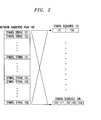
- a feature on a switching system is invoked from outside of the switching system by using a network numbering plan symbol-sequence (e.g., telephone number) that has been aliased in the switching system to stand for (e.g., has been defined to be an equivalent of) a feature access code of a feature within the switching system.
- a feature is invoked on a destination switching system having an internal numbering plan in a telecommunications network having a network numbering plan, in the following manner.
- the received symbol sequence is interpreted to be an equivalent of a feature access code of a feature of the destination switching system, irrespective of whether that feature actually has or does not have a feature access code in the internal numbering plan of the destination switching system.
- the received symbol sequence is interpreted to he an equivalent of the feature's feature access code of the internal numbering plan of the destination switching system, even though the received symbol sequence and the feature access code are not one and the same symbol sequence, and do not even belong to the same numbering plan.
- the like feature is invoked in the destination switching system as would be invoked by an internal numbering plan feature access code corresponding to that feature, for example, upon receipt of the feature access code from a user who is directly served by the destination switching system.
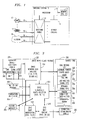
- Switching system 10 is a stored-program controlled system, such as the AT&T Definity® G2 PBX. It comprises a conventional switching fabric 13, a processor 11 for controlling the operation of fabric 13, and a memory 12 for storing programs for execution and data for use by processor 11 in performing its control functions. It further comprises conventional service circuits 14 -- such as dialed-digit collection registers, outpulsing circuits, tone generators, etc. -- also operating under control of processor 11 and connected to fabric 13 for use in setting up call connections and providing call features and other telecommunications services to user terminals 17.
- conventional service circuits 14 such as dialed-digit collection registers, outpulsing circuits, tone generators, etc. -- also operating under control of processor 11 and connected to fabric 13 for use in setting up call connections and providing call features and other telecommunications services to user terminals 17.
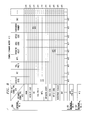
- FIG. 3 Contents of memory 12 that are relevant to this discussion are shown in FIG. 3. Most of the programs and data structures held by memory 12 are conventional. These include an outpulsed signal-collection program module 201, a connection-establishment program module 202, a time-of-day program 203, translations and status 204 for, e.g., trunks 16, lines 15, and terminals 17, feature program modules 205, and a scratchpad memory portion 250 for holding call records 271 of individual calls.
- an outpulsed signal-collection program module 201 includes a connection-establishment program module 202, a time-of-day program 203, translations and status 204 for, e.g., trunks 16, lines 15, and terminals 17, feature program modules 205, and a scratchpad memory portion 250 for holding call records 271 of individual calls.
- WWC world-class-routing
- WWC world-class-routing
- World-class routing 200 receives, as its input, symbol-representing signals that have been outpulsed at a terminal 17 or at the other end of a trunk 16 and collected by a conventional outpulsed signal-collection module 201.
- Network digit analysis 210 may also show that the dialed number may need to be modified and then re-analyzed; for this purpose, network digit analysis 210 depends upon digit modification 230 to perform the requisite modifications.
- the result of the analysis is a resultant dialed number, an index (VNI) for an endpoint or feature that the caller is trying to reach, and permissions information for the call.
- Network digit analysis 210 supplies these to generalized route selection 220.
- Digit sending 240 uses the digit sending index to retrieve further information on call-establishment signaling characteristics, and then uses the full complement of the received information to define the control signals which are to be outpulsed. It makes use of digit modification 230 to convert the resultant dialed number into an outpulsed number for outpulsing. Digit sending 240 then causes connection-establishment program 202 to establish a requisite connection having the requisite characteristics over the selected trunk.
- network digit analysis 210 merely converts the dial-access code or its absence into a network number which identifies to network digit analysis 210 the network which the user is attempting to use. But more commonly, this conversion may be done by a separate internal dial plan program (not shown) that may be used to interface outpulsed signal-collection program module 201 to network digit analysis 210. Every network may use a different numbering plan each having its own grammar and syntax, and hence the network number identifies to network digit analysis 210 the numbering plan that should initially be used in analyzing the dialed number.
- Restart analysis 333 holds information that interfaces, or relates, different numbering plans to each other. It holds a digit modification index (DMI) that specifies how the dialed digits of the string should be modified. Digit modification 230 does the actual modifying, and DMI serves as a pointer to a digit modification table entry (see FIG. 14) that specifies the digit modification to be performed. Restart analysis 333 also identifies the network of re-analysis, i.e., the network number whose network tree 320 is to be used to re-analyze the string following its modification. Restart analysis 333 further specifies whether the modified string is or is not to be re-analyzed; the former is the normal condition.
- DMI digit modification index
- Freeze VNI option 338 indicates if this string is the route-determining/feature-determining string of the dialed number. If so, the VNls of any other strings that follow this string in the dialed number will be discarded. This will be true even if freeze VNI option 338 of any of these following strings is set. It is also a part of the expression of the string's influence call feature or route selection.
- identical strings may be defined in a plurality of network trees 320. Furthermore, the identical string may have the same definition or different definitions in a plurality of trees 320.
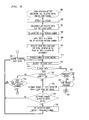
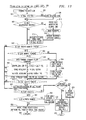
- String-identification function 340 identifies a string based on the dialed digits, string length, and string context (the identity, string type, of any preceding strings). It is used to recognize (e.g., identify and validate) all strings of a dialed call-control symbol sequence. It is initially invoked for a call at step 500 in response to receipt of collected digits from program 201. Function 340 accesses call record 271 (see FIG. 3) of the call to obtain stored information about the call, at step 502. Upon initial invocation of function 340 for a call, that call's record 271 is empty. NO dialed digits have previously been received and stored for the call, so step 504 is a null step, and function 340 proceeds to step 506.
- function 340 stores the previously-received dialed digits in dialed digits entry 253 of call record 271 for future use after the requisite number of digits has been collected and returned by module 201, at step 590. Function 340 then returns, at step 592.
- function 340 checks whether candidates-remain flag 259 of call record 271 is set, at step 568. If not, function 340 proceeds to FIG. 12; if so, function 340 sets contents of number-of-digits-needed entry 258 of call record 271 to zero, at step 570, and then returns to step 536 of FIG. 9.
- Digit modification 230 comprises a data structure shown in FIG. 14 and a function shown in FIG. 15.
- the data structure is a table 1000 of entries 1001 which are accessed by a received DMI 1020. Each entry comprises three fields 1010-1012.
- Delete digits range field 1010 specifies the range of digits, if any, in terms of digit positions within the received string, which is to be deleted from the string.
- Insert digits range field 1011 specifies the range of digits, if any, in terms of digit positions within the received string, which are to be inserted, and insert digits field 1001 specifies the actual digits that are to be inserted.
- a digit modification function 342 Upon its invocation, at step 1100 of FIG. 15, a digit modification function 342 uses DMI 1020 which it received as part of its invocation to find and access a particular entry 1001 of table 1000, at step 1102. It then performs the modifications specified by the accessed entry 1001 on the string which it received as part of its invocation, at steps 1104 and 1106. Function 342 then returns the modified received string to whoever requested the modification, at step 1108, and exits, at step 1110.
- step 932 If retained string type entry 256 of call record 271 is empty, this string is the first string to be received for the call, and so combining is always disallowed, as there is nothing to combine with. If the response obtained at step 932 is negative, function 341 proceeds to step 934. If the response obtained at step 932 is affirmative, function 341 combines any VNI stored in VNI field 254 of call record 271 with contents of VNI entry 334 of received leaf 312 in the manner specified by combine VNI entry 339, at step 940. Function 341 then stores the resultant VNI in VNI field 254 of call record 271, at step 942, discarding in the process the previous contents of VNI field 254.
- function 341 checks, at step 970, whether continue collection entry 335 of received leaf 312 indicates that the just-received string is to be followed by another string in the dialed number. If so, the job of network digit analysis is not yet done, and function 341 re-invokes outpulsed signal-collection module 201 to prompt it to collect more digits, at step 974.
- step 976 If entry 335 indicates that the just-received string is not to be followed by another string in the dialed number, the job of network digit analysis 210 is done, and function 341 invokes generalized route selection 220, at step 972, and passes it the modified dialed number now stored in dialed digits entry 253 and the call VNI entry 254 of call record 271. Following step 974 or 972, function 341 exits, at step 976.
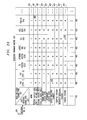
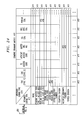
- FRL 1330 is conventional and is obtained by GRS 220 either as a trailing digit to a dialed number from an incoming call trunk 16 or from translations 204 (see FIG. 3) that are associated with the originating station 17 or the trunk group of the incoming call trunk 16.
- Tenant partition 1232 is the same as discussed in conjunction with FIG. 16.
- Bearer capability 1331 is also conventional and is obtained by GRS 220 either from ISDN messaging that accompanies an incoming call on a trunk 16, or as a default value from translations 204 of either incoming trunk 16 or originating station 17.
- Toll permission 1332 is likewise conventional and is obtained by GRS 220 from translations 204 of originating station 17 or the incoming call trunk 16.
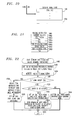
- Digit sending 240 is shown in FIGS. 20-22. It comprises a sending table 1700 of FIG. 20 and a digit sending function 344 of FIG. 22.
- Sending table 1700 has a plurality of sending entries 1701 each one of which is a set of digit-sending information.
- Sending entries 1701 are indexed by DSls 1406.
- An illustrative sending entry 1701 is shown in FIG. 21. It comprises a plurality of fields 1801-1808.
- Sending number 1801 specifies the number that should be sent out instead of the received resultant dialed number; when sending number 1801 is null, the received resultant dialed number is sent.
- additional parameters can be included in the GRS matrices which cause the VNI to be converted into a routing pattern number.
- additional parameters can be included in the GRS routing pattern tables and be associated with preferences to aid in the final preference selection.
- additional string types and grammar rules for string type relationships can be defined.
- a plurality of permissible string lengths may be defined for a given string type, and the use of alphanumeric and other characters within strings may be allowed in addition to digits.
- exception trees' contents may be incorporated into the main network syntax trees.
Landscapes
- Engineering & Computer Science (AREA)
- Computer Networks & Wireless Communication (AREA)
- Physics & Mathematics (AREA)
- Astronomy & Astrophysics (AREA)
- General Physics & Mathematics (AREA)
- Exchange Systems With Centralized Control (AREA)
- Machine Translation (AREA)
Applications Claiming Priority (2)
| Application Number | Priority Date | Filing Date | Title |
|---|---|---|---|
| US07/841,313 US5404395A (en) | 1992-02-24 | 1992-02-24 | External-to-internal numbering plan aliasing |
| US841313 | 1992-02-24 |
Publications (2)
| Publication Number | Publication Date |
|---|---|
| EP0557645A2 true EP0557645A2 (de) | 1993-09-01 |
| EP0557645A3 EP0557645A3 (en) | 1994-08-10 |
Family
ID=25284552
Family Applications (1)
| Application Number | Title | Priority Date | Filing Date |
|---|---|---|---|
| EP19920309706 Withdrawn EP0557645A3 (en) | 1992-02-24 | 1992-10-23 | Call number translator |
Country Status (4)
| Country | Link |
|---|---|
| US (1) | US5404395A (de) |
| EP (1) | EP0557645A3 (de) |
| JP (1) | JPH06291852A (de) |
| CA (1) | CA2076885C (de) |
Cited By (3)
| Publication number | Priority date | Publication date | Assignee | Title |
|---|---|---|---|---|
| EP0557643A3 (en) * | 1992-02-24 | 1994-08-10 | At & T Corp | Mnemonic and synonymic addressing in a telecommunications system |
| WO1998019472A3 (de) * | 1996-10-28 | 1998-07-09 | Siemens Ag | Verfahren und einrichtung zum verbinden von teilnehmern eines telekommunikationsnetzwerkes in einer vermittlungsstelle |
| WO2000033587A1 (en) * | 1998-12-01 | 2000-06-08 | Alcatel Usa Sourcing, L.P. | Call number translator |
Families Citing this family (18)
| Publication number | Priority date | Publication date | Assignee | Title |
|---|---|---|---|---|
| US5539810A (en) | 1992-01-27 | 1996-07-23 | Highwaymaster Communications, Inc. | Data messaging in a communications network |
| DE4210407C1 (de) * | 1992-03-30 | 1993-09-30 | Siemens Ag | Verfahren zur Rufnummernsignalisierung in einem Fernmeldenetz |
| US5583926A (en) * | 1994-12-30 | 1996-12-10 | Stentor Resource Centre Inc. | Method and apparatus for routing a call to a number corresponding to a virtual public dial plan or to an existing dial plan |
| US5768358A (en) * | 1994-12-30 | 1998-06-16 | Stentor Resource Centre Inc. | Method and apparatus for routing a call to a number corresponding to a virtual public dial plan or to an existing dial plan |
| CA2147776C (en) * | 1995-04-25 | 1997-09-02 | George W. Turner | Number translation services matrix |
| US6748071B2 (en) * | 2001-07-18 | 2004-06-08 | Avaya Technology Corp. | Method and apparatus for treating externally-originated calls as coming from internal switch extensions |
| US6751309B2 (en) * | 2001-07-18 | 2004-06-15 | Avaya Technology Corp. | Method and apparatus for extending calls to internal switch extensions out to external network endpoints |
| US7552222B2 (en) * | 2001-10-18 | 2009-06-23 | Bea Systems, Inc. | Single system user identity |
| US7319692B2 (en) * | 2003-02-21 | 2008-01-15 | Avaya Technology Corp. | Subscriber mobility in telephony systems |
| US7120243B2 (en) * | 2003-03-11 | 2006-10-10 | Avaya Technology Corp. | Switch buttons activated from an external network |
| JP4119307B2 (ja) * | 2003-05-30 | 2008-07-16 | 株式会社東芝 | 通信システムを利用した制御プログラム提供方法、通信システムのセンタ装置、通信システムのユーザ装置、及びユーザ装置で使用される制御プログラム |
| US7412044B2 (en) * | 2003-07-14 | 2008-08-12 | Avaya Technology Corp. | Instant messaging to and from PBX stations |
| US7072678B2 (en) * | 2003-11-20 | 2006-07-04 | Tekelec | Methods and systems for triggerless mobile group dialing |
| US7408925B1 (en) | 2004-03-31 | 2008-08-05 | Avaya Technology Corp. | Originator based directing and origination call processing features for external devices |
| ATE343303T1 (de) * | 2004-05-11 | 2006-11-15 | Cit Alcatel | Netzelement und verfahren zur abbildung von adressinformationen |
| US7983148B1 (en) | 2004-07-12 | 2011-07-19 | Avaya Inc. | Disaster recovery via alternative terminals and partitioned networks |
| JP5249952B2 (ja) | 2007-02-22 | 2013-07-31 | テレフオンアクチーボラゲット エル エム エリクソン(パブル) | Ipマルチメディアサブシステムサービスへのグループアクセス |
| US9219677B2 (en) | 2009-01-16 | 2015-12-22 | Tekelec Global, Inc. | Methods, systems, and computer readable media for centralized routing and call instance code management for bearer independent call control (BICC) signaling messages |
Family Cites Families (30)
| Publication number | Priority date | Publication date | Assignee | Title |
|---|---|---|---|---|
| US4314342A (en) * | 1971-04-16 | 1982-02-02 | Texas Instruments Incorporated | Unsafe machines without safe positions |
| US4706212A (en) * | 1971-08-31 | 1987-11-10 | Toma Peter P | Method using a programmed digital computer system for translation between natural languages |
| US4256926A (en) * | 1976-10-21 | 1981-03-17 | Wescom Switching, Inc. | Microprocessor control complex for a telecommunication switching system |
| US4259549A (en) * | 1976-10-21 | 1981-03-31 | Wescom Switching, Inc. | Dialed number to function translator for telecommunications switching system control complex |
| US4348554A (en) * | 1980-03-21 | 1982-09-07 | Bell Telephone Laboratories, Incorporated | Method of providing virtual private network telephone service |
| US4442321A (en) * | 1981-06-08 | 1984-04-10 | Rockwell International Corporation | Transparent dialing between interconnected telecommunication switching systems |
| US4415773A (en) * | 1981-10-29 | 1983-11-15 | Western Electric Company, Inc. | Methods of establishing a switching connection within a switching system |
| US4488004A (en) * | 1982-03-30 | 1984-12-11 | At&T Bell Laboratories | Providing feature transparency between a plurality of PBXs |
| US4577066A (en) * | 1983-08-03 | 1986-03-18 | At&T Bell Laboratories | Telephone interexchange call routing |
| US4600812A (en) * | 1984-11-23 | 1986-07-15 | At&T Information Systems Inc. | Communication system having abbreviated dialing access |
| US4695977A (en) * | 1985-12-23 | 1987-09-22 | American Telephone And Telegraph Company And At&T Bell Laboratories | Control of real-time systems utilizing a nonprocedural language |
| US4754479A (en) * | 1986-09-17 | 1988-06-28 | American Telephone And Telegraph Company | Station number portability |
| US4797915A (en) * | 1986-10-09 | 1989-01-10 | American Telephone And Telegraph Company | Communication system having automatic call route selection |
| US4899373A (en) * | 1986-11-28 | 1990-02-06 | American Telephone And Telegraph Company At&T Bell Laboratories | Method and apparatus for providing personalized telephone subscriber features at remote locations |
| US4791665A (en) * | 1987-01-30 | 1988-12-13 | American Telephone And Telegraph Company, At&T Information Systems | Inter-exchange carrier access selection feature for a PBX user |
| US5021943A (en) * | 1988-08-01 | 1991-06-04 | Motorola, Inc. | Content independent rule based options negotiations method |
| JPH0666832B2 (ja) * | 1988-12-12 | 1994-08-24 | 富士通株式会社 | サブアドレスダイヤルイン制御方式 |
| US5017917A (en) * | 1988-12-30 | 1991-05-21 | At&T Bell Laboratories | Restriction of communication service accessibility among subscriber communities |
| US5033079A (en) * | 1989-05-30 | 1991-07-16 | At&T Bell Laboratories | Establishment of facsimile calls |
| US4987587A (en) * | 1989-07-26 | 1991-01-22 | International Business Machines Corporation | Method and apparatus for providing 800 number service |
| US5086460A (en) * | 1990-04-02 | 1992-02-04 | At&T Bell Laboratories | Communications system ingress and egress arrangement |
| JPH07105972B2 (ja) * | 1990-11-29 | 1995-11-13 | 松下電器産業株式会社 | Pbxのダイレクトダイヤルイン処理装置 |
| US5311586A (en) * | 1991-10-31 | 1994-05-10 | At&T Bell Laboratories | Dynamic routing-administration |
| US5235630A (en) * | 1991-04-17 | 1993-08-10 | Telident, Incorporated | Emergency call station identification system and method |
| US5289535A (en) * | 1991-10-31 | 1994-02-22 | At&T Bell Laboratories | Context-dependent call-feature selection |
| US5311584A (en) * | 1991-10-31 | 1994-05-10 | At&T Bell Laboratories | Telecommunications call-processing arrangement |
| US5343517A (en) * | 1991-10-31 | 1994-08-30 | At&T Bell Laboratories | Use-code based call-treatment selection |
| US5329582A (en) * | 1991-10-31 | 1994-07-12 | At&T Bell Laboratories | Dynamic tone-administration |
| US5333188A (en) * | 1991-10-31 | 1994-07-26 | At&T Bell Laboratories | Dialed number recognition arrangement |
| US5412714A (en) * | 1992-02-24 | 1995-05-02 | At&T Corp. | Mnemonic and synonymic addressing in a telecommunications system |
-
1992
- 1992-02-24 US US07/841,313 patent/US5404395A/en not_active Expired - Lifetime
- 1992-08-26 CA CA002076885A patent/CA2076885C/en not_active Expired - Fee Related
- 1992-10-23 EP EP19920309706 patent/EP0557645A3/en not_active Withdrawn
- 1992-10-30 JP JP4314325A patent/JPH06291852A/ja active Pending
Cited By (5)
| Publication number | Priority date | Publication date | Assignee | Title |
|---|---|---|---|---|
| EP0557643A3 (en) * | 1992-02-24 | 1994-08-10 | At & T Corp | Mnemonic and synonymic addressing in a telecommunications system |
| EP0557647A3 (en) * | 1992-02-24 | 1994-08-10 | At & T Corp | Mnemonic and synonymic addressing in a telecommunications system |
| WO1998019472A3 (de) * | 1996-10-28 | 1998-07-09 | Siemens Ag | Verfahren und einrichtung zum verbinden von teilnehmern eines telekommunikationsnetzwerkes in einer vermittlungsstelle |
| US6594353B1 (en) | 1996-10-28 | 2003-07-15 | Siemens Aktiengesellschaft | Method and system for connecting subscribers of a telecommunication network in a switching center |
| WO2000033587A1 (en) * | 1998-12-01 | 2000-06-08 | Alcatel Usa Sourcing, L.P. | Call number translator |
Also Published As
| Publication number | Publication date |
|---|---|
| US5404395A (en) | 1995-04-04 |
| CA2076885C (en) | 1997-04-08 |
| EP0557645A3 (en) | 1994-08-10 |
| JPH06291852A (ja) | 1994-10-18 |
| CA2076885A1 (en) | 1993-08-25 |
Similar Documents
| Publication | Publication Date | Title |
|---|---|---|
| US5311586A (en) | Dynamic routing-administration | |
| US5343517A (en) | Use-code based call-treatment selection | |
| US5333188A (en) | Dialed number recognition arrangement | |
| US5404395A (en) | External-to-internal numbering plan aliasing | |
| US5485512A (en) | Mnemonic and synonymic addressing in a telecommunications system | |
| US5311584A (en) | Telecommunications call-processing arrangement | |
| US5289535A (en) | Context-dependent call-feature selection | |
| US5321743A (en) | Shared-tenant services arrangement providing numbering-plan independence and cross-plan access to tenant groups | |
| US5329582A (en) | Dynamic tone-administration | |
| US5299261A (en) | Arrangement for effecting segmentation of a dialed number |
Legal Events
| Date | Code | Title | Description |
|---|---|---|---|
| PUAI | Public reference made under article 153(3) epc to a published international application that has entered the european phase |
Free format text: ORIGINAL CODE: 0009012 |
|
| AK | Designated contracting states |
Kind code of ref document: A2 Designated state(s): DE ES FR GB IT |
|
| RAP3 | Party data changed (applicant data changed or rights of an application transferred) |
Owner name: AT&T CORP. |
|
| PUAL | Search report despatched |
Free format text: ORIGINAL CODE: 0009013 |
|
| AK | Designated contracting states |
Kind code of ref document: A3 Designated state(s): DE ES FR GB IT |
|
| 17P | Request for examination filed |
Effective date: 19950126 |
|
| 17Q | First examination report despatched |
Effective date: 20000314 |
|
| GRAH | Despatch of communication of intention to grant a patent |
Free format text: ORIGINAL CODE: EPIDOS IGRA |
|
| 18D | Application deemed to be withdrawn |
Effective date: 20030207 |