EP0558568B1 - Verfahren zum behandeln einer organischen substanz - Google Patents
Verfahren zum behandeln einer organischen substanz Download PDFInfo
- Publication number
- EP0558568B1 EP0558568B1 EP91920260A EP91920260A EP0558568B1 EP 0558568 B1 EP0558568 B1 EP 0558568B1 EP 91920260 A EP91920260 A EP 91920260A EP 91920260 A EP91920260 A EP 91920260A EP 0558568 B1 EP0558568 B1 EP 0558568B1
- Authority
- EP
- European Patent Office
- Prior art keywords
- biomass
- fraction
- precipitated
- urea
- nitrogen
- Prior art date
- Legal status (The legal status is an assumption and is not a legal conclusion. Google has not performed a legal analysis and makes no representation as to the accuracy of the status listed.)
- Expired - Lifetime
Links
- 239000000126 substance Substances 0.000 title claims abstract description 28
- 238000000034 method Methods 0.000 title claims description 33
- 229910052698 phosphorus Inorganic materials 0.000 claims abstract description 35
- 239000002028 Biomass Substances 0.000 claims abstract description 34
- IJGRMHOSHXDMSA-UHFFFAOYSA-N Atomic nitrogen Chemical compound N#N IJGRMHOSHXDMSA-UHFFFAOYSA-N 0.000 claims abstract description 30
- 210000003608 fece Anatomy 0.000 claims abstract description 29
- 239000010871 livestock manure Substances 0.000 claims abstract description 29
- 229910052757 nitrogen Inorganic materials 0.000 claims abstract description 27
- XSQUKJJJFZCRTK-UHFFFAOYSA-N Urea Chemical compound NC(N)=O XSQUKJJJFZCRTK-UHFFFAOYSA-N 0.000 claims abstract description 26
- 239000004202 carbamide Substances 0.000 claims abstract description 25
- 239000007788 liquid Substances 0.000 claims abstract description 24
- 229910052700 potassium Inorganic materials 0.000 claims abstract description 24
- 239000000835 fiber Substances 0.000 claims abstract description 20
- 239000011574 phosphorus Substances 0.000 claims abstract description 20
- 238000001556 precipitation Methods 0.000 claims abstract description 20
- OAICVXFJPJFONN-UHFFFAOYSA-N Phosphorus Chemical compound [P] OAICVXFJPJFONN-UHFFFAOYSA-N 0.000 claims abstract description 19
- ZLMJMSJWJFRBEC-UHFFFAOYSA-N Potassium Chemical compound [K] ZLMJMSJWJFRBEC-UHFFFAOYSA-N 0.000 claims abstract description 14
- 239000003795 chemical substances by application Substances 0.000 claims abstract description 14
- 239000011591 potassium Substances 0.000 claims abstract description 14
- 239000002351 wastewater Substances 0.000 claims abstract description 14
- 239000003337 fertilizer Substances 0.000 claims abstract description 11
- 229910021645 metal ion Inorganic materials 0.000 claims abstract description 11
- 238000000926 separation method Methods 0.000 claims abstract description 10
- 239000002002 slurry Substances 0.000 claims abstract description 6
- 238000007872 degassing Methods 0.000 claims abstract description 4
- 150000007522 mineralic acids Chemical class 0.000 claims abstract 3
- 150000007524 organic acids Chemical class 0.000 claims abstract 3
- 229910017464 nitrogen compound Inorganic materials 0.000 claims abstract 2
- 150000002830 nitrogen compounds Chemical class 0.000 claims abstract 2
- 150000003018 phosphorus compounds Chemical class 0.000 claims abstract 2
- QGZKDVFQNNGYKY-UHFFFAOYSA-O Ammonium Chemical compound [NH4+] QGZKDVFQNNGYKY-UHFFFAOYSA-O 0.000 claims description 18
- MUBZPKHOEPUJKR-UHFFFAOYSA-N Oxalic acid Chemical compound OC(=O)C(O)=O MUBZPKHOEPUJKR-UHFFFAOYSA-N 0.000 claims description 15
- 239000002244 precipitate Substances 0.000 claims description 13
- 239000002253 acid Substances 0.000 claims description 9
- NBIIXXVUZAFLBC-UHFFFAOYSA-K phosphate Chemical compound [O-]P([O-])([O-])=O NBIIXXVUZAFLBC-UHFFFAOYSA-K 0.000 claims description 9
- 238000006243 chemical reaction Methods 0.000 claims description 8
- 230000001376 precipitating effect Effects 0.000 claims description 8
- 239000000463 material Substances 0.000 claims description 7
- GRYLNZFGIOXLOG-UHFFFAOYSA-N Nitric acid Chemical compound O[N+]([O-])=O GRYLNZFGIOXLOG-UHFFFAOYSA-N 0.000 claims description 6
- 229910019142 PO4 Inorganic materials 0.000 claims description 6
- 239000000203 mixture Substances 0.000 claims description 6
- 229910017604 nitric acid Inorganic materials 0.000 claims description 6
- 238000011282 treatment Methods 0.000 claims description 6
- 235000006408 oxalic acid Nutrition 0.000 claims description 5
- 239000010452 phosphate Substances 0.000 claims description 5
- 238000002203 pretreatment Methods 0.000 claims description 4
- PWHULOQIROXLJO-UHFFFAOYSA-N Manganese Chemical compound [Mn] PWHULOQIROXLJO-UHFFFAOYSA-N 0.000 claims description 3
- 239000011572 manganese Substances 0.000 claims description 3
- 229910052748 manganese Inorganic materials 0.000 claims description 3
- 229910001414 potassium ion Inorganic materials 0.000 claims description 3
- 108090000790 Enzymes Proteins 0.000 claims description 2
- 102000004190 Enzymes Human genes 0.000 claims description 2
- 238000001914 filtration Methods 0.000 claims description 2
- 244000005700 microbiome Species 0.000 claims description 2
- 150000003672 ureas Chemical class 0.000 claims description 2
- 239000012134 supernatant fraction Substances 0.000 claims 5
- 238000010979 pH adjustment Methods 0.000 claims 2
- NPYPAHLBTDXSSS-UHFFFAOYSA-N Potassium ion Chemical compound [K+] NPYPAHLBTDXSSS-UHFFFAOYSA-N 0.000 claims 1
- 239000012223 aqueous fraction Substances 0.000 abstract description 5
- 238000000354 decomposition reaction Methods 0.000 abstract description 3
- 150000001875 compounds Chemical class 0.000 abstract 1
- 230000002255 enzymatic effect Effects 0.000 abstract 1
- 238000012360 testing method Methods 0.000 description 32
- XLYOFNOQVPJJNP-UHFFFAOYSA-N water Substances O XLYOFNOQVPJJNP-UHFFFAOYSA-N 0.000 description 25
- 229910001868 water Inorganic materials 0.000 description 20
- QGZKDVFQNNGYKY-UHFFFAOYSA-N Ammonia Chemical compound N QGZKDVFQNNGYKY-UHFFFAOYSA-N 0.000 description 17
- 150000002500 ions Chemical class 0.000 description 15
- NBIIXXVUZAFLBC-UHFFFAOYSA-N Phosphoric acid Chemical compound OP(O)(O)=O NBIIXXVUZAFLBC-UHFFFAOYSA-N 0.000 description 14
- 239000000047 product Substances 0.000 description 12
- 229910000069 nitrogen hydride Inorganic materials 0.000 description 10
- BVKZGUZCCUSVTD-UHFFFAOYSA-L Carbonate Chemical compound [O-]C([O-])=O BVKZGUZCCUSVTD-UHFFFAOYSA-L 0.000 description 8
- CSNNHWWHGAXBCP-UHFFFAOYSA-L Magnesium sulfate Chemical compound [Mg+2].[O-][S+2]([O-])([O-])[O-] CSNNHWWHGAXBCP-UHFFFAOYSA-L 0.000 description 8
- 229910000147 aluminium phosphate Inorganic materials 0.000 description 6
- 239000008367 deionised water Substances 0.000 description 6
- 229910021641 deionized water Inorganic materials 0.000 description 6
- 239000000243 solution Substances 0.000 description 6
- KEAYESYHFKHZAL-UHFFFAOYSA-N Sodium Chemical compound [Na] KEAYESYHFKHZAL-UHFFFAOYSA-N 0.000 description 5
- -1 ammonium ions Chemical class 0.000 description 5
- 229910021380 Manganese Chloride Inorganic materials 0.000 description 4
- GLFNIEUTAYBVOC-UHFFFAOYSA-L Manganese chloride Chemical compound Cl[Mn]Cl GLFNIEUTAYBVOC-UHFFFAOYSA-L 0.000 description 4
- CDBYLPFSWZWCQE-UHFFFAOYSA-L Sodium Carbonate Chemical compound [Na+].[Na+].[O-]C([O-])=O CDBYLPFSWZWCQE-UHFFFAOYSA-L 0.000 description 4
- 229910052943 magnesium sulfate Inorganic materials 0.000 description 4
- 239000011565 manganese chloride Substances 0.000 description 4
- 235000002867 manganese chloride Nutrition 0.000 description 4
- 229940099607 manganese chloride Drugs 0.000 description 4
- SQQMAOCOWKFBNP-UHFFFAOYSA-L manganese(II) sulfate Chemical compound [Mn+2].[O-]S([O-])(=O)=O SQQMAOCOWKFBNP-UHFFFAOYSA-L 0.000 description 4
- 235000015097 nutrients Nutrition 0.000 description 4
- 238000004458 analytical method Methods 0.000 description 3
- 230000015572 biosynthetic process Effects 0.000 description 3
- 238000010586 diagram Methods 0.000 description 3
- 239000007791 liquid phase Substances 0.000 description 3
- 235000019341 magnesium sulphate Nutrition 0.000 description 3
- 229940099596 manganese sulfate Drugs 0.000 description 3
- 239000011702 manganese sulphate Substances 0.000 description 3
- 235000007079 manganese sulphate Nutrition 0.000 description 3
- 239000003895 organic fertilizer Substances 0.000 description 3
- 150000003839 salts Chemical class 0.000 description 3
- 238000003892 spreading Methods 0.000 description 3
- 229910021529 ammonia Inorganic materials 0.000 description 2
- 238000006065 biodegradation reaction Methods 0.000 description 2
- 230000000694 effects Effects 0.000 description 2
- 230000004941 influx Effects 0.000 description 2
- 238000004519 manufacturing process Methods 0.000 description 2
- 229910052751 metal Inorganic materials 0.000 description 2
- 239000002184 metal Substances 0.000 description 2
- 235000017550 sodium carbonate Nutrition 0.000 description 2
- 229940001593 sodium carbonate Drugs 0.000 description 2
- 229910000029 sodium carbonate Inorganic materials 0.000 description 2
- 239000001488 sodium phosphate Substances 0.000 description 2
- 238000003860 storage Methods 0.000 description 2
- RYFMWSXOAZQYPI-UHFFFAOYSA-K trisodium phosphate Chemical compound [Na+].[Na+].[Na+].[O-]P([O-])([O-])=O RYFMWSXOAZQYPI-UHFFFAOYSA-K 0.000 description 2
- 229910000406 trisodium phosphate Inorganic materials 0.000 description 2
- 235000019801 trisodium phosphate Nutrition 0.000 description 2
- 238000005406 washing Methods 0.000 description 2
- 241000894006 Bacteria Species 0.000 description 1
- FYYHWMGAXLPEAU-UHFFFAOYSA-N Magnesium Chemical compound [Mg] FYYHWMGAXLPEAU-UHFFFAOYSA-N 0.000 description 1
- NBIIXXVUZAFLBC-UHFFFAOYSA-L Phosphate ion(2-) Chemical compound OP([O-])([O-])=O NBIIXXVUZAFLBC-UHFFFAOYSA-L 0.000 description 1
- QAOWNCQODCNURD-UHFFFAOYSA-L Sulfate Chemical compound [O-]S([O-])(=O)=O QAOWNCQODCNURD-UHFFFAOYSA-L 0.000 description 1
- 108010046334 Urease Proteins 0.000 description 1
- HCHKCACWOHOZIP-UHFFFAOYSA-N Zinc Chemical compound [Zn] HCHKCACWOHOZIP-UHFFFAOYSA-N 0.000 description 1
- 238000007605 air drying Methods 0.000 description 1
- 239000012670 alkaline solution Substances 0.000 description 1
- 238000004176 ammonification Methods 0.000 description 1
- 150000001450 anions Chemical class 0.000 description 1
- 238000001311 chemical methods and process Methods 0.000 description 1
- 238000009264 composting Methods 0.000 description 1
- 239000012141 concentrate Substances 0.000 description 1
- 230000007613 environmental effect Effects 0.000 description 1
- 238000006911 enzymatic reaction Methods 0.000 description 1
- 238000013213 extrapolation Methods 0.000 description 1
- 238000009313 farming Methods 0.000 description 1
- 230000004720 fertilization Effects 0.000 description 1
- 230000003311 flocculating effect Effects 0.000 description 1
- 238000005189 flocculation Methods 0.000 description 1
- 230000016615 flocculation Effects 0.000 description 1
- 239000007789 gas Substances 0.000 description 1
- 229910052500 inorganic mineral Inorganic materials 0.000 description 1
- 239000011777 magnesium Substances 0.000 description 1
- 229910052749 magnesium Inorganic materials 0.000 description 1
- 229910001425 magnesium ion Inorganic materials 0.000 description 1
- 229910000357 manganese(II) sulfate Inorganic materials 0.000 description 1
- 238000005259 measurement Methods 0.000 description 1
- 230000004060 metabolic process Effects 0.000 description 1
- 150000002739 metals Chemical class 0.000 description 1
- 235000010755 mineral Nutrition 0.000 description 1
- 239000011707 mineral Substances 0.000 description 1
- 238000002156 mixing Methods 0.000 description 1
- 125000000896 monocarboxylic acid group Chemical group 0.000 description 1
- 238000000746 purification Methods 0.000 description 1
- 230000003134 recirculating effect Effects 0.000 description 1
- 239000008234 soft water Substances 0.000 description 1
- 239000002689 soil Substances 0.000 description 1
- 239000007787 solid Substances 0.000 description 1
- 239000011343 solid material Substances 0.000 description 1
- 229910021653 sulphate ion Inorganic materials 0.000 description 1
- 238000012546 transfer Methods 0.000 description 1
- 238000013519 translation Methods 0.000 description 1
- 229910009112 xH2O Inorganic materials 0.000 description 1
- 239000011701 zinc Substances 0.000 description 1
- 229910052725 zinc Inorganic materials 0.000 description 1
Images

Classifications
-
- C—CHEMISTRY; METALLURGY
- C02—TREATMENT OF WATER, WASTE WATER, SEWAGE, OR SLUDGE
- C02F—TREATMENT OF WATER, WASTE WATER, SEWAGE, OR SLUDGE
- C02F9/00—Multistage treatment of water, waste water or sewage
-
- C—CHEMISTRY; METALLURGY
- C02—TREATMENT OF WATER, WASTE WATER, SEWAGE, OR SLUDGE
- C02F—TREATMENT OF WATER, WASTE WATER, SEWAGE, OR SLUDGE
- C02F1/00—Treatment of water, waste water, or sewage
- C02F1/52—Treatment of water, waste water, or sewage by flocculation or precipitation of suspended impurities
- C02F1/5236—Treatment of water, waste water, or sewage by flocculation or precipitation of suspended impurities using inorganic agents
-
- C—CHEMISTRY; METALLURGY
- C02—TREATMENT OF WATER, WASTE WATER, SEWAGE, OR SLUDGE
- C02F—TREATMENT OF WATER, WASTE WATER, SEWAGE, OR SLUDGE
- C02F3/00—Biological treatment of water, waste water, or sewage
- C02F3/34—Biological treatment of water, waste water, or sewage characterised by the microorganisms used
- C02F3/342—Biological treatment of water, waste water, or sewage characterised by the microorganisms used characterised by the enzymes used
-
- C—CHEMISTRY; METALLURGY
- C05—FERTILISERS; MANUFACTURE THEREOF
- C05F—ORGANIC FERTILISERS NOT COVERED BY SUBCLASSES C05B, C05C, e.g. FERTILISERS FROM WASTE OR REFUSE
- C05F3/00—Fertilisers from human or animal excrements, e.g. manure
-
- C—CHEMISTRY; METALLURGY
- C02—TREATMENT OF WATER, WASTE WATER, SEWAGE, OR SLUDGE
- C02F—TREATMENT OF WATER, WASTE WATER, SEWAGE, OR SLUDGE
- C02F2103/00—Nature of the water, waste water, sewage or sludge to be treated
- C02F2103/20—Nature of the water, waste water, sewage or sludge to be treated from animal husbandry
-
- Y—GENERAL TAGGING OF NEW TECHNOLOGICAL DEVELOPMENTS; GENERAL TAGGING OF CROSS-SECTIONAL TECHNOLOGIES SPANNING OVER SEVERAL SECTIONS OF THE IPC; TECHNICAL SUBJECTS COVERED BY FORMER USPC CROSS-REFERENCE ART COLLECTIONS [XRACs] AND DIGESTS
- Y02—TECHNOLOGIES OR APPLICATIONS FOR MITIGATION OR ADAPTATION AGAINST CLIMATE CHANGE
- Y02A—TECHNOLOGIES FOR ADAPTATION TO CLIMATE CHANGE
- Y02A40/00—Adaptation technologies in agriculture, forestry, livestock or agroalimentary production
- Y02A40/10—Adaptation technologies in agriculture, forestry, livestock or agroalimentary production in agriculture
- Y02A40/20—Fertilizers of biological origin, e.g. guano or fertilizers made from animal corpses
-
- Y—GENERAL TAGGING OF NEW TECHNOLOGICAL DEVELOPMENTS; GENERAL TAGGING OF CROSS-SECTIONAL TECHNOLOGIES SPANNING OVER SEVERAL SECTIONS OF THE IPC; TECHNICAL SUBJECTS COVERED BY FORMER USPC CROSS-REFERENCE ART COLLECTIONS [XRACs] AND DIGESTS
- Y02—TECHNOLOGIES OR APPLICATIONS FOR MITIGATION OR ADAPTATION AGAINST CLIMATE CHANGE
- Y02P—CLIMATE CHANGE MITIGATION TECHNOLOGIES IN THE PRODUCTION OR PROCESSING OF GOODS
- Y02P20/00—Technologies relating to chemical industry
- Y02P20/141—Feedstock
- Y02P20/145—Feedstock the feedstock being materials of biological origin
Definitions
- the present invention relates to a method of treating a biomass in the form of domestic animal manure, slurry, organically loaded effluent waste water and the like, or mixtures thereof, and comprising a chemical treatment of the biomass.
- a biomass is chemically treated in connection with the separation of the biomass.
- the chemical treatments are ordinarily used in connection with an adjustment of the pH-value of the liquid manure, e.g. in connection with biogas manufacture.
- EP patent application No. 0,335,280, DE No. 3,833,039 and SE No. 464520 all describe methods of separating phosphorus and nitrogen from effluent waste water. Separation of potassium, calsium or metal ions which may be contained in the waste water is not disclosed.
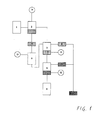
- Tank 1 is intended to receive the fresh biomass. In case of domestic animal manure, the tank 1 receives the liquid manure in a quantity corresponding to one day's production as it is desired to treat the liquid manure as fast as possible in order to limit the decomposition of urease to urea which may result in ammonification.
- tank 2 the fiber fraction is separated by adding a flocculation agent 14.
- the total fibre fraction 5 is discharged and transferred to tank 9 in which chemicals 13 are added to adjust the pH-value. Subsequently bacteria and enzymes are added to decompose the fibres and hence to liberate/extract nitrogen, phosphorus and potassium bound in the non-transformed fibre material.
- solid material is decomposed, e.g. lignocellulose, which facilitates a subsequent removal of N, P and K.
- N, P and K do not exist in the form of ions but are bound in the lignocellulose due to an incomplete biodegradation.
- the pretreated fibre fraction is transferred from tank 9 to tank 3 in which it is mixed with the liquid fraction from tank 2 (from which the fibre fraction was previously separated).
- the urea complex, ammonium and phosphate are caused to precipitate in the acid to slightly alkaline solution.
- the selection of the added chemicals 11 depends on how the soil and plants will react on the precipitated fertilizer type.
- an urea complex may be produced in which only urea is precipitated and (depending on the pH-value) ammonium ions may furthermore be precipitated from ammonia. Furthermore, phosphorus is precipitated.
- the nitrogen and phosphorus fractions as well as the urea complex are filtered off in a filter 4, and the liquid phase is transferred from tank 3 to tank 6 and the pH-value is adjusted so as to be approximately between 7.0 and 7.5.
- metal ions and sulphate and phosphorus ions (potassium ions) are precipitated as a double salt which is filtered off in a filter 7.
- the substances from the filters 4 and 7 may be mixed to form an organic fertilizer containing N, P and K.
- the liquid fraction is then transferred to a tank 8 and will consist of water which may be discharged directly into the external environment without violating public limit values for nitrogen and phosphorus content. The water will also be purified of potassium.
- the method according to the present invention may comprise another pre-treatment stage than the one shown in the process chart, as the pre-treatment prior to the transfer to tank 3 e.g. may consist of degasification or biogas formation so that the supply to tank 3 comprises degasified domestic animal manure.
- the supply to tank 3 comprises degasified domestic animal manure.
- urea complex will not be precipitated in tank 3, as the urea content of the manure is decomposed during the biogas formation.
- the liquid phase from tank 3 can be discharged directly to the recipient without removal of potassium.
- finansial consideration will decide whether the potassium fraction is removed from the effluent waste water before the latter is led out into the external environment.
- Substances are formed which are sparingly soluble in an acid solution and these substances can thus be separated by means of the filter 4 (if a chemical reaction is also carried out to separate potassium, the separation will be carried out in the filter 7).
- the substances formed are non-hygroscopic, which means that they are free-flowing.
- N,P and K do not exist in the form of ions but are bound in the lignocellulose due to an incomplete biodegradation. It will be seen that the quantity of non-transferred materials is of almost the same size in tank 9 as in the discharge water from tank 8.
- the liquid phase is optionally transferred to tank 6 in which an adjustment of pH is effected to precipitate the potassium content of the liquid.
- An analysis of the influx and the outflow from tank 6 shows the following: NH 3 P 2 O 5 K 2 O kg/m 3 kg/m 3 kg/m 3 Slurry from animal husbandry 4.25 1.55 5.83 Influx to tank 6 0.46 0.17 5.83 Outflow from tank 8 0.46 0.17 0.48
- the water flowing into tank 8 corresponds to the water discharged into the external environment.
- N,P and K are reduced by approximately 90% compared to the liquid manure charged into the process.
- the practical tests conducted have produced residual concentrations of nitrogen and phosphorus which are below the normally accepted limits for contents of effluent waste water discharged to a recipient.
- the water fraction in tank 8 can be led directly out into the external environment, and the N,P and K fractions can be collected in a tank 10 and used as a fertilizer.
- the basic chemical reaction is based on the formation of sparingly soluble substances which can be caught in a filter.
- the basic chemical reactions forming part of the method according to the invention are based on a division of the nitrogen of the manure into four main categories:
- the phosphorus in the slurry is divided into two main categories:
- Category 1 is small, and phosphorus will constitute a total of approximately 1/4 of the nitrogen content. This is a challenge to simultaneous precipitation.
- Reactive agent oxalic acid dissolved in soft water to pH 2.
- Each of these tests states an average of 5-15 individual tests and was carried out at pH-values of from 5.9, 2.77 and 3.45, respectively.
- the residual concentrations after precipitation of oxalic acid were not satisfactory, even though the molecular size of the urea complex indicates an advantageous flocculating ability which will be of significance when using slurry as a medium.
- Reactive agent nitric acid 70%..
- the above main group of tests states an average of 5-20 individual tests at the pH 2 stated.
- Tests on simultaneous precipitation of phosphorus and ammonium with metals show high experimental yields. It has been found that the optimum process conditions have to be reached within a very narrow interval. Tests with a pH-value of about 8 have shown a remarkably efficient ammonium removal for manganese. Furthemore, manganese is preferred to magnesium due to the efficiency and a lower pH-value.
- Fig. 2 illustrates a plant substantially like the one shown in Fig. 1, but in which a heat exchanger is inserted at the treatment stage treating the liquid fraction.
- This is associated with problems as there is a risk that a precipitate may be formed and the heat exchanger consequently may be blocked.
- This problem is solved by the present embodiment as two chemical process steps are carried out, one process step before and one process step after the heat exchanger, the first step i.a. ensuring that no precipitate is formed in the heat exchanger.
- Fresh manure is added to tank 1 and subsequently the fresh manure is transferred to a fibre separation step 2 in which the fibres present in the manure are separated from the fresh manure.
- the separated fibre amount 5 is passed to a composting plant 9 of a known type.
- the separation of fibres may optionally be omitted.
- the liquid fraction of the manure is passed to a pre-mixer 15 after the concentration of the following ions has been measured at point 16: ammonium ions, phosphate ions, carbonate ions and potassium ions.
- ammonium ions phosphate ions
- carbonate ions ions and potassium ions.
- acid and (alkaline ions) inserted during translation, translator's remark
- phosphate ions, H + and X n- are added.
- the added acid ions, H + are preferably derived from phosphorus acid
- the added base ions, X n- may be a phosphate-containing anion.
- the carbonate ion present in the liquid fraction is bound to the base ion and water and forms CO 2 which is liberated in the form of gas.
- the acidity sufficiently low, which means a pH-value of from 5 or less, preferably 3.5.
- the liquid fraction is then passed through the heat exchanger 17 in which the temperature of the fraction is adjusted to between 40 and 50°C, preferably 45°C.
- the liquid fraction is passed to a after-mixer 18, in which adjustment of the acidity is repeated, but at this stage the purpose of the adjustment is to form fertilizing substances which can be precipitated.
- various metal ions, M 2+ / a and M 2+ / b, and alkaline ions, B m- are added.
- the metal ions are preferably Mn-ions and Mg-ions, whereas the alkaline ions preferably are CO 2- 3- ions.
- other ions may also be used, but the addition of the above mentioned ions will result in the highest fertilizer value of the precipitates formed.
- the amount of the added ions is adjusted so that the pH-value is increased to between 7 and 9, preferably 8.2 and so that the substances which consequently may be precipitated are substances which can be used for fertilization or which are not sparingly soluble or in any other way damaging to the environment.
- pH must be in the range of between 8.5 and 9.1 in order have a minimum amount of ammonium ions.
- the liquid fraction is made alkaline in the after-mixer 18 with a pH of about 8.2 measured at point 20, optionally by recirculating the fraction in the mixer, it is passed to a separator 21.
- the temperature is reduced to between 10 and 12°C and a separation of fertilizing substances is thus effected and the substances are precipitated.
- the liquid fraction which remains after the separation is very pure and can be discharged directly as effluent waste water 22 or to another recipient 23.
- a degasification of CO 2 is effected provided the alkaline ions supplied to the after-mixer 18 are CO 2- / 3-ions.
- the precipitated fertilizing substances 24 are dried in a centrifuge and the liquid extracted is passed to a recipient 23.
- the dried nutrients 26 are mixed in a solid-matter mixer 27 with the fibre fraction 5 which was separated in 2 and composted in 9.
- An air drying may optionally be effected after the mixing at point 28.
- the described method results in a organic fertilizer mass 29 which is enriched with the nutrients 24 which are separated from the fresh manure as part of the method according to the invention.
- the precipitate has the following composition: NH 4 MnPO 4 ,H 2 O.
- the test is conducted by initially taking out a small sample of the liquid fraction to determine NH 4 and subsequently by separating the precipitate by filtration at vacuum and by washing with ion-exchanged water. The precipitate is dried at 80°C for 48 hours before determining the NH 4 content in NH 4 MnPO 4 ,H 2 O.
Landscapes
- Life Sciences & Earth Sciences (AREA)
- Chemical & Material Sciences (AREA)
- Organic Chemistry (AREA)
- Water Supply & Treatment (AREA)
- Microbiology (AREA)
- Hydrology & Water Resources (AREA)
- Engineering & Computer Science (AREA)
- Environmental & Geological Engineering (AREA)
- Biodiversity & Conservation Biology (AREA)
- Inorganic Chemistry (AREA)
- Organic Low-Molecular-Weight Compounds And Preparation Thereof (AREA)
- Fertilizers (AREA)
- Treatment Of Sludge (AREA)
- Removal Of Specific Substances (AREA)
- Processing Of Solid Wastes (AREA)
- Saccharide Compounds (AREA)
Claims (10)
- Verfahren zur Behandlung einer Biomasse in Form von Haustiermist, einer Aufschlämmung, organisch belastetem abfließendem Schmutzwasser oder Gemischen davon, umfassend eine chemische Behandlung der Biomasse, mechanisches und/oder chemisches Vorbehandeln einer frischen Biomasse, Messen von NH4 +, PO4 3-, CO3 -2 und K+, Präzipitieren des Stickstoff- und Phosphoranteils der vorbehandelten Biomasse durch Zusetzen von wenigstens Mangan in einem stöchiometrischen Verhältnis, welches dem NH4MnPO4-Präzipitat entspricht, das dazu gebracht wird, mit den in der Biomasse vorhandenen Stickstoffverbindungen und Phosphorverbindungen zu reagieren, Präzipitieren eines jeglichen Harnstoffanteils zusammen mit dem Stickstoff-, Phosphor- und optionalem Kaliumanteil der Biomasse und anschließendes Trennen der Biomasse in eine Überstandsfraktion und eine Düngerfraktion.
- Verfahren gemäß Anspruch 1, dadurch gekennzeichnet, daß die zu behandelnde Biomasse eine faserhaltige Biomasse ist und daß die Vorbehandlung der unbehandelten Biomasse die Schritte des Präzipitierens einer Faserfraktion, des Abtrennens der Faserfraktion von der flüssigen Fraktion, des Einstellens des pH-Wertes der Faserfraktion, des Abbauens der Faserfraktion durch Zusetzen von Mikroorganismen und/oder Enzymen, um den in den Fasern gebundenen Stickstoff freizusetzen, des erneuten Mischens der biologisch abgebauten Faserfraktion mit der flüssigen Fraktion und des Einstellens des pH-Wertes der so behandelten Biomasse vor Zugeben eines Präzipitationsmittels in Form von Metallionen umfaßt.
- Verfahren gemäß Anspruch 2, dadurch gekennzeichnet, daß Harnstoff präzipitiert wird, wobei eine komplexbildende anorganische oder organische Säure als ein Präzipitationsmittel verwendet wird, und daß Harnstoff zusammen mit den Ammonium- und Phosphationen gefällt wird.
- Verfahren gemäß irgendeinem der vorstehenden Ansprüche, dadurch gekennzeichnet, daß die Präzipitierungsreaktionen bei einem pH-Wert zwischen 3,5 und 10 und bei einer Temperatur zwischen 10°C und 100°C durchgeführt werden.
- Verfahren gemäß Anspruch 1, dadurch gekennzeichnet, daß die Vorbehandlung der unbehandelten Biomasse aus einer Entgasung und einer anschließenden mechanischen Filtration, einer Einstellung des pH-Wertes der Biomasse und einer Zugabe der Präzipitierungsmittel in Form von Metallionen und einer Einstellung des Anteils von Phosphationen besteht.
- Verfahren gemäß Anspruch 4, dadurch gekennzeichnet, daß die pH-Einstellung der Biomasse in zwei Schritten bewerkstelligt wird, indem eine anfängliche Einstellung auf einen pH-Wert von 3-5, vorzugsweise 3,5, bewirkt wird, gefolgt von einem Vorwärmen der Biomasse auf eine Temperatur im Bereich von 40-55°C, und indem eine zweite pH-Einstellung durch Einstellen des pH-Wertes auf 8-9,5, vorzugsweise etwa 8,2, bewirkt wird, gefolgt von der Präzipitation.
- Verfahren gemäß Anspruch 5, dadurch gekennzeichnet, daß die Trennung in eine Überstandsfraktion und eine Düngerfraktion durch Präzipitation bewerkstelligt wird, und daß das präzipitierte Material weiter durch Zentrifugieren getrennt wird, und daß das präzipitierte Material anschließend wahlfrei mit der Faserfraktion, welche mechanisch abfiltriert wird, gemischt wird.
- Verfahren gemäß Anspruch 1 oder 2, dadurch gekennzeichnet, daß der Anteil von Ammonium und Phosphat in der Biomasse in einem ersten Schritt präzipitiert wird, daß der Kaliumionenanteil in der Biomasse in einem zweiten Schritt präzipitiert wird, daß die resultierenden Gemische aus den zwei Präzipitationsschritten jeweils in eine Präzipitatfraktion und eine Überstandsfraktion aufgetrennt werden, daß die zwei Präzipitate vereinigt werden und daß die zwei Überstandsfraktionen vereinigt und direkt in ein Auffangbehältnis abgeführt werden.
- Verfahren gemäß Anspruch 1, dadurch gekennzeichnet, daß der Harnstoffanteil der vorbehandelten Biomasse präzipitiert wird durch Zugeben einer organischen oder anorganischen Säure, vorzugsweise Oxalsäure, Salpetersäure oder Phosphorsäure, in Verbindung mit Metallionen, welche mit dem Harnstoff der Biomasse reagiert, wodurch Harnstoffkomplexe gebildet werden, die anschließend aus der Überstandsfraktion der Biomasse abgetrennt und zusammen mit dem Präzipitat, das Ammonium und Phosphat enthält, abgeführt werden.
- Verfahren gemäß irgendeinem der Ansprüche 1-7 und 9, dadurch gekennzeichnet, daß das Ammonium, Phosphat, Kalium und Harnstoff gleichzeitig präzipitiert werden.
Applications Claiming Priority (4)
| Application Number | Priority Date | Filing Date | Title |
|---|---|---|---|
| DK2788/90 | 1990-11-20 | ||
| DK278890 | 1990-11-20 | ||
| DK278890A DK278890D0 (da) | 1990-11-20 | 1990-11-20 | Fremgangsmaade til behandling af en biomasse |
| PCT/DK1991/000347 WO1992008674A1 (en) | 1990-11-20 | 1991-11-20 | A method for treating an organic substance |
Publications (2)
| Publication Number | Publication Date |
|---|---|
| EP0558568A1 EP0558568A1 (de) | 1993-09-08 |
| EP0558568B1 true EP0558568B1 (de) | 1999-02-24 |
Family
ID=8115785
Family Applications (1)
| Application Number | Title | Priority Date | Filing Date |
|---|---|---|---|
| EP91920260A Expired - Lifetime EP0558568B1 (de) | 1990-11-20 | 1991-11-20 | Verfahren zum behandeln einer organischen substanz |
Country Status (7)
| Country | Link |
|---|---|
| EP (1) | EP0558568B1 (de) |
| AT (1) | ATE176893T1 (de) |
| DE (1) | DE69130925T2 (de) |
| DK (2) | DK278890D0 (de) |
| ES (1) | ES2131509T3 (de) |
| NO (1) | NO306018B1 (de) |
| WO (1) | WO1992008674A1 (de) |
Families Citing this family (3)
| Publication number | Priority date | Publication date | Assignee | Title |
|---|---|---|---|---|
| DE19803112A1 (de) | 1997-03-14 | 1998-09-17 | Merck Patent Gmbh | Elektrooptische Flüssigkristallanzeige |
| CN101862642B (zh) * | 2010-06-24 | 2012-04-25 | 山东大学 | 农业秸秆两性螯合吸附剂的制备方法及应用 |
| DE102014005065B4 (de) * | 2014-04-05 | 2017-01-05 | Agri V Raiffeisen eG | Verfahren zur Behandlung von landwirtschaftlicher Gülle |
Family Cites Families (5)
| Publication number | Priority date | Publication date | Assignee | Title |
|---|---|---|---|---|
| IT1023585B (it) * | 1974-09-30 | 1978-05-30 | Reogiane Officine Meccaniche | Processo di estrazione di sali fertilizzanti e concentrati di sostanz organiche ad alto conte nuto nutritivo da acque di scarico industriali |
| DE3810720A1 (de) * | 1988-03-30 | 1989-10-26 | Schulze Rettmer Rainer | Verfahren zur reinigung, insbes. zur kontinuierlichen reinigung, von abwasser mit hohem gehalt an ammonium-ionen |
| SE464520B (sv) * | 1988-06-03 | 1991-05-06 | Hallberg Rolf O | Foerfarande foer avlaegsnande av fosfor och kvaeve ur avloppsvatten |
| DE3833039A1 (de) * | 1988-09-29 | 1990-04-05 | Werner Maier | Verfahren und vorrichtung zur reinigung phosphat- und stickstoffhaltigen abwassers |
| DE3834543A1 (de) * | 1988-10-11 | 1990-04-12 | Passavant Werke | Verfahren zur entsorgung von einen hohen gehalt an ammoniumstickstoff aufweisenden abwaessern |
-
1990
- 1990-11-20 DK DK278890A patent/DK278890D0/da not_active Application Discontinuation
-
1991
- 1991-11-20 ES ES91920260T patent/ES2131509T3/es not_active Expired - Lifetime
- 1991-11-20 WO PCT/DK1991/000347 patent/WO1992008674A1/en not_active Ceased
- 1991-11-20 DK DK91920260T patent/DK0558568T3/da active
- 1991-11-20 AT AT91920260T patent/ATE176893T1/de not_active IP Right Cessation
- 1991-11-20 EP EP91920260A patent/EP0558568B1/de not_active Expired - Lifetime
- 1991-11-20 DE DE69130925T patent/DE69130925T2/de not_active Expired - Fee Related
-
1993
- 1993-05-21 NO NO931856A patent/NO306018B1/no unknown
Also Published As
| Publication number | Publication date |
|---|---|
| DK278890D0 (da) | 1990-11-20 |
| NO306018B1 (no) | 1999-09-06 |
| ES2131509T3 (es) | 1999-08-01 |
| WO1992008674A1 (en) | 1992-05-29 |
| DE69130925D1 (de) | 1999-04-01 |
| ATE176893T1 (de) | 1999-03-15 |
| NO931856L (no) | 1993-06-14 |
| DK0558568T3 (da) | 1999-09-27 |
| NO931856D0 (no) | 1993-05-21 |
| EP0558568A1 (de) | 1993-09-08 |
| DE69130925T2 (de) | 1999-09-23 |
Similar Documents
| Publication | Publication Date | Title |
|---|---|---|
| CN100412013C (zh) | 污泥的处理方法及处理装置 | |
| US20090193863A1 (en) | Process for Removing and Recovering Phosphorus from Animal Waste | |
| WO1993023349A1 (en) | Method for processing a liquid nitrogen rich organic waste product, thereby obtained fertilizer solution and use thereof | |
| US20130023417A1 (en) | Urea formaldehyde polymer additive for odor control of unmanipulated manure | |
| DE3810720A1 (de) | Verfahren zur reinigung, insbes. zur kontinuierlichen reinigung, von abwasser mit hohem gehalt an ammonium-ionen | |
| CN104797545B (zh) | 提高有机残留物中磷回收的方法 | |
| CN100445217C (zh) | 用磷酸铵镁沉淀污泥处理垃圾焚烧飞灰的方法 | |
| CN100393636C (zh) | 一种处理高浓度含磷废水的方法 | |
| DE3833039A1 (de) | Verfahren und vorrichtung zur reinigung phosphat- und stickstoffhaltigen abwassers | |
| CN101628835A (zh) | 一种利用味精废液制备绿化用营养基质添加剂的方法 | |
| JP3805963B2 (ja) | 生物由来有機性廃棄物の処理方法およびその装置 | |
| CN101898841A (zh) | 与动物粪便厌氧发酵配套的复合营养物回收和沼气净化系统 | |
| Vidlarova et al. | Contribution to the study of ammonia removal from digestate by struvite precipitation | |
| WO1992008674A1 (en) | A method for treating an organic substance | |
| Karpati et al. | New process for physico-chemical pretreatment of dairy effluents with agricultural use of sludge produced | |
| WO2007023170A1 (de) | Vorrichtung und verfahren zur abwasserbehandlung | |
| CA2381623C (en) | Method of waste treatment | |
| DE102018109991B4 (de) | Verfahren zur Behandlung flüssiger Abfälle und Vorrichtung zur Durchführung des Verfahrens | |
| Ezziddine et al. | Nutrients recovery from aquaculture waste for use as fertilizer in soilless growth systems | |
| BE1015801A6 (nl) | Werkwijze voor het zuiveren van afvalwater. | |
| CN115448775A (zh) | 一种利用污泥制备肥料的装置 | |
| RU2821571C1 (ru) | Способ производства органо-минерального удобрения из сточных вод свинокомплекса | |
| JP2004099426A (ja) | 有機性廃棄物を利用した有機肥料の製造法 | |
| RU2775771C1 (ru) | Способ извлечения магний-аммоний-фосфата из сточных вод | |
| RU2103348C1 (ru) | Способ получения раствора калийаммонийфосфата |
Legal Events
| Date | Code | Title | Description |
|---|---|---|---|
| PUAI | Public reference made under article 153(3) epc to a published international application that has entered the european phase |
Free format text: ORIGINAL CODE: 0009012 |
|
| 17P | Request for examination filed |
Effective date: 19930519 |
|
| AK | Designated contracting states |
Kind code of ref document: A1 Designated state(s): AT BE CH DE DK ES FR GB GR IT LI LU NL SE |
|
| 17Q | First examination report despatched |
Effective date: 19931021 |
|
| GRAG | Despatch of communication of intention to grant |
Free format text: ORIGINAL CODE: EPIDOS AGRA |
|
| GRAG | Despatch of communication of intention to grant |
Free format text: ORIGINAL CODE: EPIDOS AGRA |
|
| GRAH | Despatch of communication of intention to grant a patent |
Free format text: ORIGINAL CODE: EPIDOS IGRA |
|
| GRAH | Despatch of communication of intention to grant a patent |
Free format text: ORIGINAL CODE: EPIDOS IGRA |
|
| GRAA | (expected) grant |
Free format text: ORIGINAL CODE: 0009210 |
|
| AK | Designated contracting states |
Kind code of ref document: B1 Designated state(s): AT BE CH DE DK ES FR GB GR IT LI LU NL SE |
|
| PG25 | Lapsed in a contracting state [announced via postgrant information from national office to epo] |
Ref country code: GR Free format text: LAPSE BECAUSE OF NON-PAYMENT OF DUE FEES Effective date: 19990224 |
|
| REF | Corresponds to: |
Ref document number: 176893 Country of ref document: AT Date of ref document: 19990315 Kind code of ref document: T |
|
| REG | Reference to a national code |
Ref country code: CH Ref legal event code: EP |
|
| REF | Corresponds to: |
Ref document number: 69130925 Country of ref document: DE Date of ref document: 19990401 |
|
| ITF | It: translation for a ep patent filed | ||
| ET | Fr: translation filed | ||
| REG | Reference to a national code |
Ref country code: CH Ref legal event code: NV Representative=s name: PATENTANWALTSBUERO EDER AG |
|
| REG | Reference to a national code |
Ref country code: ES Ref legal event code: FG2A Ref document number: 2131509 Country of ref document: ES Kind code of ref document: T3 |
|
| REG | Reference to a national code |
Ref country code: DK Ref legal event code: T3 |
|
| PLBE | No opposition filed within time limit |
Free format text: ORIGINAL CODE: 0009261 |
|
| STAA | Information on the status of an ep patent application or granted ep patent |
Free format text: STATUS: NO OPPOSITION FILED WITHIN TIME LIMIT |
|
| 26N | No opposition filed | ||
| REG | Reference to a national code |
Ref country code: GB Ref legal event code: IF02 |
|
| PGFP | Annual fee paid to national office [announced via postgrant information from national office to epo] |
Ref country code: FR Payment date: 20050825 Year of fee payment: 15 |
|
| PGFP | Annual fee paid to national office [announced via postgrant information from national office to epo] |
Ref country code: NL Payment date: 20051106 Year of fee payment: 15 |
|
| PGFP | Annual fee paid to national office [announced via postgrant information from national office to epo] |
Ref country code: SE Payment date: 20051107 Year of fee payment: 15 |
|
| PGFP | Annual fee paid to national office [announced via postgrant information from national office to epo] |
Ref country code: AT Payment date: 20051111 Year of fee payment: 15 |
|
| PGFP | Annual fee paid to national office [announced via postgrant information from national office to epo] |
Ref country code: DK Payment date: 20051115 Year of fee payment: 15 |
|
| PGFP | Annual fee paid to national office [announced via postgrant information from national office to epo] |
Ref country code: GB Payment date: 20051116 Year of fee payment: 15 |
|
| PGFP | Annual fee paid to national office [announced via postgrant information from national office to epo] |
Ref country code: DE Payment date: 20051117 Year of fee payment: 15 |
|
| PGFP | Annual fee paid to national office [announced via postgrant information from national office to epo] |
Ref country code: CH Payment date: 20051129 Year of fee payment: 15 |
|
| PGFP | Annual fee paid to national office [announced via postgrant information from national office to epo] |
Ref country code: LU Payment date: 20051213 Year of fee payment: 15 |
|
| PGFP | Annual fee paid to national office [announced via postgrant information from national office to epo] |
Ref country code: ES Payment date: 20051219 Year of fee payment: 15 |
|
| PGFP | Annual fee paid to national office [announced via postgrant information from national office to epo] |
Ref country code: BE Payment date: 20060120 Year of fee payment: 15 |
|
| PG25 | Lapsed in a contracting state [announced via postgrant information from national office to epo] |
Ref country code: AT Free format text: LAPSE BECAUSE OF NON-PAYMENT OF DUE FEES Effective date: 20061120 |
|
| PG25 | Lapsed in a contracting state [announced via postgrant information from national office to epo] |
Ref country code: SE Free format text: LAPSE BECAUSE OF NON-PAYMENT OF DUE FEES Effective date: 20061121 |
|
| PG25 | Lapsed in a contracting state [announced via postgrant information from national office to epo] |
Ref country code: DK Free format text: LAPSE BECAUSE OF NON-PAYMENT OF DUE FEES Effective date: 20061130 Ref country code: LI Free format text: LAPSE BECAUSE OF NON-PAYMENT OF DUE FEES Effective date: 20061130 Ref country code: CH Free format text: LAPSE BECAUSE OF NON-PAYMENT OF DUE FEES Effective date: 20061130 Ref country code: BE Free format text: LAPSE BECAUSE OF NON-PAYMENT OF DUE FEES Effective date: 20061130 |
|
| PGFP | Annual fee paid to national office [announced via postgrant information from national office to epo] |
Ref country code: IT Payment date: 20061130 Year of fee payment: 16 |
|
| PG25 | Lapsed in a contracting state [announced via postgrant information from national office to epo] |
Ref country code: NL Free format text: LAPSE BECAUSE OF NON-PAYMENT OF DUE FEES Effective date: 20070601 Ref country code: DE Free format text: LAPSE BECAUSE OF NON-PAYMENT OF DUE FEES Effective date: 20070601 |
|
| REG | Reference to a national code |
Ref country code: DK Ref legal event code: EBP |
|
| REG | Reference to a national code |
Ref country code: CH Ref legal event code: PL |
|
| EUG | Se: european patent has lapsed | ||
| GBPC | Gb: european patent ceased through non-payment of renewal fee |
Effective date: 20061120 |
|
| NLV4 | Nl: lapsed or anulled due to non-payment of the annual fee |
Effective date: 20070601 |
|
| REG | Reference to a national code |
Ref country code: FR Ref legal event code: ST Effective date: 20070731 |
|
| PG25 | Lapsed in a contracting state [announced via postgrant information from national office to epo] |
Ref country code: GB Free format text: LAPSE BECAUSE OF NON-PAYMENT OF DUE FEES Effective date: 20061120 |
|
| BERE | Be: lapsed |
Owner name: *VESTERAGER NIELS OLE Effective date: 20061130 |
|
| REG | Reference to a national code |
Ref country code: ES Ref legal event code: FD2A Effective date: 20061121 |
|
| PG25 | Lapsed in a contracting state [announced via postgrant information from national office to epo] |
Ref country code: FR Free format text: LAPSE BECAUSE OF NON-PAYMENT OF DUE FEES Effective date: 20061130 Ref country code: ES Free format text: LAPSE BECAUSE OF NON-PAYMENT OF DUE FEES Effective date: 20061121 |
|
| PG25 | Lapsed in a contracting state [announced via postgrant information from national office to epo] |
Ref country code: LU Free format text: LAPSE BECAUSE OF NON-PAYMENT OF DUE FEES Effective date: 20061120 |
|
| PG25 | Lapsed in a contracting state [announced via postgrant information from national office to epo] |
Ref country code: IT Free format text: LAPSE BECAUSE OF NON-PAYMENT OF DUE FEES Effective date: 20071120 |