EP0559257A1 - Un matériau d'enregistrement thermique - Google Patents
Un matériau d'enregistrement thermique Download PDFInfo
- Publication number
- EP0559257A1 EP0559257A1 EP93200355A EP93200355A EP0559257A1 EP 0559257 A1 EP0559257 A1 EP 0559257A1 EP 93200355 A EP93200355 A EP 93200355A EP 93200355 A EP93200355 A EP 93200355A EP 0559257 A1 EP0559257 A1 EP 0559257A1
- Authority
- EP
- European Patent Office
- Prior art keywords
- layer
- recording material
- heat
- image
- heat recording
- Prior art date
- Legal status (The legal status is an assumption and is not a legal conclusion. Google has not performed a legal analysis and makes no representation as to the accuracy of the status listed.)
- Granted
Links
Images
Classifications
-
- B—PERFORMING OPERATIONS; TRANSPORTING
- B41—PRINTING; LINING MACHINES; TYPEWRITERS; STAMPS
- B41M—PRINTING, DUPLICATING, MARKING, OR COPYING PROCESSES; COLOUR PRINTING
- B41M5/00—Duplicating or marking methods; Sheet materials for use therein
- B41M5/26—Thermography ; Marking by high energetic means, e.g. laser otherwise than by burning, and characterised by the material used
- B41M5/40—Thermography ; Marking by high energetic means, e.g. laser otherwise than by burning, and characterised by the material used characterised by the base backcoat, intermediate, or covering layers, e.g. for thermal transfer dye-donor or dye-receiver sheets; Heat, radiation filtering or absorbing means or layers; combined with other image registration layers or compositions; Special originals for reproduction by thermography
- B41M5/46—Thermography ; Marking by high energetic means, e.g. laser otherwise than by burning, and characterised by the material used characterised by the base backcoat, intermediate, or covering layers, e.g. for thermal transfer dye-donor or dye-receiver sheets; Heat, radiation filtering or absorbing means or layers; combined with other image registration layers or compositions; Special originals for reproduction by thermography characterised by the light-to-heat converting means; characterised by the heat or radiation filtering or absorbing means or layers
-
- B—PERFORMING OPERATIONS; TRANSPORTING
- B41—PRINTING; LINING MACHINES; TYPEWRITERS; STAMPS
- B41M—PRINTING, DUPLICATING, MARKING, OR COPYING PROCESSES; COLOUR PRINTING
- B41M5/00—Duplicating or marking methods; Sheet materials for use therein
- B41M5/26—Thermography ; Marking by high energetic means, e.g. laser otherwise than by burning, and characterised by the material used
- B41M5/36—Thermography ; Marking by high energetic means, e.g. laser otherwise than by burning, and characterised by the material used using a polymeric layer, which may be particulate and which is deformed or structurally changed with modification of its' properties, e.g. of its' optical hydrophobic-hydrophilic, solubility or permeability properties
- B41M5/368—Thermography ; Marking by high energetic means, e.g. laser otherwise than by burning, and characterised by the material used using a polymeric layer, which may be particulate and which is deformed or structurally changed with modification of its' properties, e.g. of its' optical hydrophobic-hydrophilic, solubility or permeability properties involving the creation of a soluble/insoluble or hydrophilic/hydrophobic permeability pattern; Peel development
-
- B—PERFORMING OPERATIONS; TRANSPORTING
- B41—PRINTING; LINING MACHINES; TYPEWRITERS; STAMPS
- B41M—PRINTING, DUPLICATING, MARKING, OR COPYING PROCESSES; COLOUR PRINTING
- B41M5/00—Duplicating or marking methods; Sheet materials for use therein
- B41M5/26—Thermography ; Marking by high energetic means, e.g. laser otherwise than by burning, and characterised by the material used
- B41M5/382—Contact thermal transfer or sublimation processes
- B41M5/38207—Contact thermal transfer or sublimation processes characterised by aspects not provided for in groups B41M5/385 - B41M5/395
- B41M5/38214—Structural details, e.g. multilayer systems
-
- G—PHYSICS
- G03—PHOTOGRAPHY; CINEMATOGRAPHY; ANALOGOUS TECHNIQUES USING WAVES OTHER THAN OPTICAL WAVES; ELECTROGRAPHY; HOLOGRAPHY
- G03F—PHOTOMECHANICAL PRODUCTION OF TEXTURED OR PATTERNED SURFACES, e.g. FOR PRINTING, FOR PROCESSING OF SEMICONDUCTOR DEVICES; MATERIALS THEREFOR; ORIGINALS THEREFOR; APPARATUS SPECIALLY ADAPTED THEREFOR
- G03F7/00—Photomechanical, e.g. photolithographic, production of textured or patterned surfaces, e.g. printing surfaces; Materials therefor, e.g. comprising photoresists; Apparatus specially adapted therefor
- G03F7/004—Photosensitive materials
- G03F7/09—Photosensitive materials characterised by structural details, e.g. supports, auxiliary layers
- G03F7/11—Photosensitive materials characterised by structural details, e.g. supports, auxiliary layers having cover layers or intermediate layers, e.g. subbing layers
-
- G—PHYSICS
- G03—PHOTOGRAPHY; CINEMATOGRAPHY; ANALOGOUS TECHNIQUES USING WAVES OTHER THAN OPTICAL WAVES; ELECTROGRAPHY; HOLOGRAPHY
- G03F—PHOTOMECHANICAL PRODUCTION OF TEXTURED OR PATTERNED SURFACES, e.g. FOR PRINTING, FOR PROCESSING OF SEMICONDUCTOR DEVICES; MATERIALS THEREFOR; ORIGINALS THEREFOR; APPARATUS SPECIALLY ADAPTED THEREFOR
- G03F7/00—Photomechanical, e.g. photolithographic, production of textured or patterned surfaces, e.g. printing surfaces; Materials therefor, e.g. comprising photoresists; Apparatus specially adapted therefor
- G03F7/26—Processing photosensitive materials; Apparatus therefor
- G03F7/34—Imagewise removal by selective transfer, e.g. peeling away
-
- Y—GENERAL TAGGING OF NEW TECHNOLOGICAL DEVELOPMENTS; GENERAL TAGGING OF CROSS-SECTIONAL TECHNOLOGIES SPANNING OVER SEVERAL SECTIONS OF THE IPC; TECHNICAL SUBJECTS COVERED BY FORMER USPC CROSS-REFERENCE ART COLLECTIONS [XRACs] AND DIGESTS
- Y10—TECHNICAL SUBJECTS COVERED BY FORMER USPC
- Y10S—TECHNICAL SUBJECTS COVERED BY FORMER USPC CROSS-REFERENCE ART COLLECTIONS [XRACs] AND DIGESTS
- Y10S430/00—Radiation imagery chemistry: process, composition, or product thereof
- Y10S430/146—Laser beam
-
- Y—GENERAL TAGGING OF NEW TECHNOLOGICAL DEVELOPMENTS; GENERAL TAGGING OF CROSS-SECTIONAL TECHNOLOGIES SPANNING OVER SEVERAL SECTIONS OF THE IPC; TECHNICAL SUBJECTS COVERED BY FORMER USPC CROSS-REFERENCE ART COLLECTIONS [XRACs] AND DIGESTS
- Y10—TECHNICAL SUBJECTS COVERED BY FORMER USPC
- Y10S—TECHNICAL SUBJECTS COVERED BY FORMER USPC CROSS-REFERENCE ART COLLECTIONS [XRACs] AND DIGESTS
- Y10S430/00—Radiation imagery chemistry: process, composition, or product thereof
- Y10S430/165—Thermal imaging composition
Definitions
- the present invention relates to a method for obtaining images using an imaging element that can be developed using only dry development steps and to an imaging element for use in such a method. More particularly it relates to a heat mode recording material.
- dry imaging element an imaging element that can be developed using only dry development steps (hereinafter called dry imaging element) without the need of processing liquids as for example in silver halide photographic materials.
- dry imaging element Two major classes of dry imaging elements can be distinguished by the method used for exposing them.
- an image is formed in a photosensitive layer using exposure to actinic radiation.
- the photosensitive layer comprises a photopolymerizable composition.
- the use of photopolymerizable compositions for the production of images by information-wise exposure thereof to actinic radiation is well known.
- Several methods for forming images using photopolymerizable compositions are known. All these methods are based on the principle of introducing a differentiation in properties between the exposed and non-exposed parts of the photopolymerizable composition e.g. a difference in solubility, adhesion, conductivity, refractive index, tackiness, permeability, diffusibility of incorporated substances e.g. dyes etc..
- the thus produced differences may be subsequently employed in a developing step to produce a visible image and/or master for printing e.g. a lithographic or electrostatic printing master.
- the diffusibility of a dye is impeded in the photo-exposed parts of the photopolymerizable composition so that during an overall thermal heating subsequent to photo-exposure dye substances in the non-exposed areas will be able to diffuse to a receptor material.
- the photopolymerizable composition is made impermeable in the exposed parts for a sublimable dye or dye-pigment present in a layer contiguous to the layer comprising the photopolymerizable composition.
- the adhesion of the photopolymerizable composition is modified upon image-wise exposure. After image-wise exposure the non-exposed parts will stick or adhere, during a step of overall heating, to a receiving sheet thus allowing the transfer of the non-exposed parts to the receiving sheet.
- dry imaging elements are known that can be image-wise exposed using an image-wise distribution of heat. These types of dry imaging elements also called heat recording materials offer the advantage in addition to an ecological advantage that they do not need to be handled in a dark room nor any other protection from ambient light is needed.
- a disadvantage of heat mode recording materials is their low sensitivity requiring powerful exposure means. This disadvantage is probably one of the major reasons why heat mode recording materials have not found wide acceptance up till recently despite their potential advantages. Since powerful exposure means especially lasers are becoming more readily available it may be expected that said disadvantage will no longer impair the wide spreading of heat mode recording materials.
- Heat mode recording materials are disclosed in e.g. US-P-4,123,309, US-P-4,123,578, US-P-4,157,412, US-P-4,547,456 and PCT application WO 88/04237.
- the latter application discloses a web having an image forming surface and a porous layer of an image forming substance.
- the element further comprises a heat sensitive substance.
- the image forming surface is liquefied at the exposed parts thereby penetrating the porous layer and improving its adherence to the web while at the non-exposed parts liquefying of the image forming surface does not take place and as a consequence the adherence of the porous layer to the web remains poor.
- the porous layer can then be removed in the non-exposed areas using a stripping tape or by simply rubbing. Since the thus obtained image may be easily scratched and is very poor wear resistant it is necessary to laminate a protecting layer to the image which is inconvenient and makes such a heat recording material less attractive.
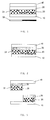
- a heat recording material comprising on a support a porous layer of an image forming substance, a substance capable of converting radiation into heat, a thermoplastic layer containing a photocurable composition and a stripping layer.
- a method for obtaining an image with a heat recording material comprising on a support a porous layer of an image forming substance, a substance capable of converting radiation into heat, a thermoplastic layer containing a photocurable composition and a stripping layer comprising the steps of:
- the image remaining on the support 10 is covered by the cured layer 30 so that the image is very wear and scratch resistant.
- the scratch resistance and wear resistance may then be further improved by overall exposure of the image to heat and/or actinic radiation.
- Image-wise exposure according to the invention is preferably carried out using a laser having a sufficient energy output for softening the interface between the support of the heat recording material and the porous layer and simultaneously to cause penetration of the thermoplastic layer 30 into the porous layer.
- a laser having a sufficient energy output for softening the interface between the support of the heat recording material and the porous layer and simultaneously to cause penetration of the thermoplastic layer 30 into the porous layer.
- Especially preferred lasers are semiconductor diode lasers and YAG-lasers e.g. Nd-YAG lasers.
- the laser may have a power output between 40 and 7500 mW and preferably operates in the infrared part of the spectrum.
- Overall exposure of the photocurable composition contained in thermoplastic layer of the heat recording material according to the invention is preferably carried out using UV-radiation or the short wavelength part of the visible region of the spectrum i.e. between 400nm and 500nm.
- Other radiation may also be used in accordance with the present invention provided that the photocurable composition is appropriately sensitized for the wavelength of the radiation used.
- Suitable light sources for the overall exposure in accordance with the invention are e.g. high or medium pressure halogen mercury vapour lamps, e.g. of 1000 W, Xenon lamps etc..
- the overall exposure is preferably carried out after the image-wise exposure to heat.
- Supports of the heat recording material according to the present invention should be transparent to the radiation used for image-wise exposing the heat recording material to heat.
- Preferably used supports in connection with the present invention are e.g. polyester film e.g. polyethylene terephthalate, polyethylene, polypropylene, copolymers of styrene and acrylonitrile, polyvinyl chloride, polycarbonate and polyvinylidene chloride.
- the transparent support may also be colored provided the support remains transparent to the radiation used for image-wise exposure.
- a blue colored polyester film support can be used in accordance with the present invention.
- the thickness of said support may be varied widely but is preferably between 10 ⁇ m and 300 ⁇ m most preferably between 50 ⁇ m and 200 ⁇ m.
- the image forming substances used in accordance with the present invention are preferably pigments.
- Suitable pigments for use in accordance with the invention are e.g. TiO2, SiO2, colloidal carbon, phthalocynaine pigments and other dye pigments, graphite, phosphor particles, ceramics, clays, metal powder such as aluminium, copper, magnetic iron and bronze, etc. or mixtures thereof.
- a preferred pigment used is colloidal carbon since it is capable of converting e.g. infrared radiation into heat.
- the porous layer according to the invention also contains SiO2 particles to strengthen said layer.
- the image forming substance itself is not capable of converting the radiation into heat an additional substance capable of converting radiation to heat is required.
- Said substance is preferably present in the porous layer but may also be present at least partially in a neighbouring layer e.g. in the support, a layer between the support and the porous layer or the thermoplastic layer.
- the substance capable of converting radiation to heat are preferably infrared absorbing substances such as e.g. infrared dyes. infrared pigments, carbon black etc.. Suitable infrared dyes are disclosed in e.g.
- Suitable infrared absorbing pigments are e.g. HEUCODOR metal oxide pigments available from Heubach Langelsheim.
- the thermoplastic layer of the heat recording material according to the present invention contains a photocurable composition.
- a photocurable composition Preferably used photocurable compositions are photopolymerizable compositions.
- the photopolymerizable composition preferably contains urethane type monomers as disclosed in EP-A-91200468.6 and DE-A-4129284.7 filed 3.9.91. These type of monomers offer the advantage that they show a rapid polymerization and solidify even at low conversions of less than 10%. Examples of urethane type monomers are:
- monomers suitable for use in the photopolymerizable composition used in accordance with the present invention are e.g. the monomers disclosed in DEOS no. 4,005,231, 3,516,256, 3,516,257 and 3,632,657, unsaturated esters of polyols, particularly such esters of the alpha-methylene carboxylic acids, e.g.
- unsaturated amides particularly those of the alphamethylene carboxylic acids, and especially those of alpha-omega
- the photopolymerizable composition may also comprise polymers and/or oligomers comprising 2 or more polymerizable functions e.g. acrylated epoxies, polyester acrylates, urethane acrylates etc.. It will be clear that these monomers and/or polymers and/or oligomers can be used in admixture.
- the photopolymerizable composition preferably also comprises at least one photoinitiator.
- photoinitiators are polymerization initiators activatable by actinic light and thermally inactive at and below 185°C.
- examples of such initiators include the substituted or unsubstituted polynuclear quinones which are compounds having two intracyclic carbonyl groups attached to intracyclic carbon atoms in a conjugated six-membered carbocyclic ring, there being at least one aromatic carbocyclic ring fused to the ring containing the carbonyl groups.
- Such initiators include 9-10-anthraquinone, 1-chloroanthraquinone, 2-chloroanthraquinone.
- 2-methylanthraquinone 2-tert-butylanthraquinone, octamethylanthraquinone, 1,4-naphtoquinone, 9,10-phenanthrenequinone.
- the photointiators which are also useful are described in Plambeck U.S.
- Patent 2,760,863 and include vicinal ketaldonyl compounds, such as diacetyl, benzil, etc. alpha-ketaldonyl alcohols, such as benzoin, pivalon, etc. acyloin ethers e.g. benzoin methyl and ethyl ethers, etc.: alpha-hydrocarbon substituted aromatic acyloins, including methylbenzoin, alpha-allylbenzoin, and alpha-phenylbenzoin. Still further photoinitiators useful in accordance with the present invention are those disclosed in "Photoreactive Polymers" by Arnost Reiser, "Organic photochemical imaging systems" by G.A.
- the weight ratio of photoinitiator to the polymerizable compound(s) in the photopolymerizable composition is preferably between 1:1 and 1:10.
- the photopolymerizable composition may comprise one or more monomers that can be cationically polymerized.
- the photopolymerizable composition may comprise an epoxy monomer and a cationic photoinitiator.
- Cationic photopolymerization offers the advantage over radical polymerization that the former is not susceptible to inhibition by oxygen.
- Suitable cationic photopolymerizable compositions that can be used in carrying out the method of the present invention can be chosen from the many existing organic photoreactive compositions such as those described in "Photoreactive Polymers” by Arnost Reiser, John Wiley & Sons, New York., in a paper entitled "UV curing of epoxides by cationic polymerization” published by William R.
- thermal polymerization inhibitors may also be added to the photopolymerizable composition.
- Inhibitors for use in accordance with the present invention are p-methoxyphenol, hydroquinone, alkyl and acyl-substituted hydroquinones and quinones, tert-butylcatechol, pyrogallol, copper resinate, naphtylamines, beta-naphthol, cuprous chloride, 2,6-di-tert-butyl p-cresol, photothiazine, pyridine, nitrobenzene and dinitrobenzene, p-toluquinone and chloranil.
- the thermoplastic layer comprises a thermoplastic polymer.
- the thermoplastic layer is preferably solid at temperatures below 40°C and softens or melts at temperatures between 40°C and 250°C.
- thermoplastic polymers for use in accordance with the present invention include :
- non-thermoplastic polymeric compounds to give certain desirable characteristics, e.g. to adjust the adhesion to the stripping layer or other neighbouring layers used in accordance with the present invention, wear properties, chemical inertness, etc.
- Suitable non-thermoplastic polymeric compounds include polyvinyl alcohol, polyvinyl pyrrolidone, cellulose, anhydrous gelatin, phenolic resins and melamine-formaldehyde resins, etc.
- the thermoplastic layer can also contain immiscible polymeric or non-polymeric organic or inorganic fillers or reinforcing agents which are essentially transparent at the wave-lengths used for the exposure of the photopolymeric material, e.g. the organophilic silicas, bentonites, silica, powdered glass, colloidal carbon, as well as various types of dyes and pigments in amounts varying with the desired properties of the thermoplastic layer.
- the fillers are useful in improving the strength of the composition, reducing tack and in addition, as coloring agents.
- Agents to improve the wetting and/or adjust the adhesion of the thermoplastic layer may be added.
- Suitable agents are e.g. silicones, silicon containing polymers e.g. a poly(dimethylsiloxane)-polyether copolymer, poly(dimethylsiloxane)-polyester, silicon containing surfactants, fluor containing copolymers and fluor containing surfactants etc..
- thermographic compounds Various dyes, thermographic compounds, UV-absorbers, anti-oxidants and color forming components can be added to the photopolymerizable composition to give a variety of results after the thermal transfer.
- additive materials preferably should not absorb excessive amounts of light at the exposure wavelength or inhibit the polymerization reaction.
- the stripping layer suitable for use in accordance with the present invention should be transparent to the radiation used for curing the photocurable composition contained in the thermoplastic layer.
- stripping layers that can be used in connection with the present invention are e.g. polyester film, polystyrene film, polypropylene film, polyethylene film, polycarbonate, polyvinylchloride, copolymers of styrene and acrylonitrile etc.. Preference is given to polyethylene terephthalate film as a stripping layer.
- the thickness of the stripping layer may be varied widely but is preferably between 3 ⁇ m and 60 ⁇ m.
- the stripping layer may be provided with one or more prime coatings to adjust the adhesion of the stripping layer to the neighbouring layers.
- the heat recording material may contain additional layers.
- a subbing layer between the support and the thermoplastic layer containing the photocurable composition.
- Said subbing layer preferably comprises a polymer containing polymerizable ethylenically unsaturated groups.
- polymers containing polymerizable ethylenically unsaturated groups for use in said base layer are polymers comprising vinyl groups, allyl groups. (meth)acrylate groups, butadiene groups, isoprene groups etc.. e.g. acrylated epoxies, polyester acrylates, urethane acrylates etc..
- Further additives may be added to said subbing layer as disclosed in EP-A-91201824.9. It is however important with respect to the present invention that the subbing layer is sufficiently transparent to the radiation used for exposure of the photocurable composition contained in the thermoplastic layer.
- the barrier layer should be impermeable at ambient temperature to avoid penetration of the photopolymerizable composition from the thermoplastic layer into the porous layer while the barrier layer should be permeable at the temperature generated in the heat recording material during image-wise exposure to heat.
- 'permeable' is to be understood that the photopolymerizable composition and optionally other constituents of the thermoplastic layer can diffuse through the barrier layer or that the photopolymerizable composition together with the barrier layer penetrates into the porous layer.
- barrier layers in accordance with the present invention are layers comprising a hydrophilic polymer having a softening or melting temperature above ambient temperature but below the temperature generated during image-wise exposure of the heat recording material to heat.
- hydrophilic polymers in connection with the present invention are gelatin, polyvinyl pyrrolidone or polyvinylalcohol
- the thickness of the barrier layer is between 0.05g/m2 and 0.8g/m2 and more preferably between 0.1g/m2 and 0.4g/m2.
- a stripping layer of polyester film having a thickness of 5 ⁇ m was applied in the order given the following 3 layers using gravure printing:
- Both elements were subsequently laminated to each other in a LPP 650 laminator (commercially available from DORNED) at a temperature of 70°C a rate of 0.6m/min.
- heat recording materials prepared and image-wise exposed as in example 1 were overall exposed in a Dupliphot apparatus respectively through the stripping layer and through the support of the heat recording material. After peeling off the stripping layer an image of good quality and high wear resistance was obtained with the heat recording material exposed through the stripping layer while the other heat recording material yielded an image of poor quality and low wear resistance.
Landscapes
- Physics & Mathematics (AREA)
- Optics & Photonics (AREA)
- General Physics & Mathematics (AREA)
- Engineering & Computer Science (AREA)
- Architecture (AREA)
- Structural Engineering (AREA)
- Photosensitive Polymer And Photoresist Processing (AREA)
- Heat Sensitive Colour Forming Recording (AREA)
Applications Claiming Priority (2)
| Application Number | Priority Date | Filing Date | Title |
|---|---|---|---|
| EP92200592 | 1992-02-29 | ||
| EP92200592 | 1992-02-29 |
Publications (2)
| Publication Number | Publication Date |
|---|---|
| EP0559257A1 true EP0559257A1 (fr) | 1993-09-08 |
| EP0559257B1 EP0559257B1 (fr) | 1996-07-03 |
Family
ID=8210459
Family Applications (1)
| Application Number | Title | Priority Date | Filing Date |
|---|---|---|---|
| EP93200355A Expired - Lifetime EP0559257B1 (fr) | 1992-02-29 | 1993-02-10 | Un matériau d'enregistrement thermique |
Country Status (4)
| Country | Link |
|---|---|
| US (1) | US5340693A (fr) |
| EP (1) | EP0559257B1 (fr) |
| JP (1) | JPH0672023A (fr) |
| DE (1) | DE69303395T2 (fr) |
Cited By (4)
| Publication number | Priority date | Publication date | Assignee | Title |
|---|---|---|---|---|
| BE1007854A3 (nl) * | 1993-12-03 | 1995-11-07 | Agfa Gevaert Nv | Toestel voor het vervaardigen van een beeldelement. |
| US6138567A (en) * | 1997-02-13 | 2000-10-31 | Kodak Polychrome Graphics Llc | Method of preparing a planographic printing member with a radiation sensitive member |
| US6245477B1 (en) | 1999-08-02 | 2001-06-12 | Kodak Polychrome Graphics Llc | Imagable compositions and printing forms |
| US6410208B1 (en) * | 2001-04-18 | 2002-06-25 | Gary Ganghui Teng | Lithographic printing plates having a thermo-deactivatable photosensitive layer |
Families Citing this family (10)
| Publication number | Priority date | Publication date | Assignee | Title |
|---|---|---|---|---|
| EP0601236B1 (fr) * | 1992-12-08 | 1997-04-09 | Agfa-Gevaert N.V. | Elemént d'enregistrement thermosensible |
| DE69512321T2 (de) * | 1994-06-16 | 2000-05-11 | Kodak Polychrome Graphics Llc, Norwalk | Lithographische Druckplatten mit einer oleophilen bilderzeugenden Schicht |
| US5819661A (en) * | 1995-01-23 | 1998-10-13 | Presstek, Inc. | Method and apparatus for laser imaging of lithographic printing members by thermal non-ablative transfer |
| EP0790137A1 (fr) * | 1996-02-16 | 1997-08-20 | Agfa-Gevaert N.V. | Méthode pour former une image par la chaleur |
| DE69833046T2 (de) * | 1997-03-11 | 2006-08-03 | Agfa-Gevaert | Verfahren zur Herstellung einer lithographischen Druckplatte |
| US6022667A (en) * | 1997-05-27 | 2000-02-08 | Agfa-Gevaert, N.V. | Heat sensitive imaging element and a method for producing lithographic plates therewith |
| US6153352A (en) | 1997-12-10 | 2000-11-28 | Fuji Photo Film Co., Ltd. | Planographic printing plate precursor and a method for producing a planographic printing plate |
| US6558787B1 (en) | 1999-12-27 | 2003-05-06 | Kodak Polychrome Graphics Llc | Relation to manufacture of masks and electronic parts |
| US6740464B2 (en) * | 2000-01-14 | 2004-05-25 | Fuji Photo Film Co., Ltd. | Lithographic printing plate precursor |
| JP7129174B2 (ja) * | 2018-02-26 | 2022-09-01 | 株式会社クラレ | 感光性樹脂組成物及びその製造方法、並びにその用途 |
Citations (3)
| Publication number | Priority date | Publication date | Assignee | Title |
|---|---|---|---|---|
| EP0230992A2 (fr) * | 1986-01-29 | 1987-08-05 | Lexmark International, Inc. | Elément pour transfert et procédé pour imprimer une image par radiation en utilisant le dit élément |
| WO1988004237A1 (fr) * | 1986-12-09 | 1988-06-16 | Polaroid Corporation | Milieu de formation d'image thermique |
| EP0502562A1 (fr) * | 1991-03-05 | 1992-09-09 | Agfa-Gevaert N.V. | Méthode pour la production d'images |
Family Cites Families (5)
| Publication number | Priority date | Publication date | Assignee | Title |
|---|---|---|---|---|
| JPS5818290A (ja) * | 1981-07-28 | 1983-02-02 | Dainippon Printing Co Ltd | 画像形成材料並びにこれを用いた画像形成方法及び平版印刷版の製造法 |
| GB2213950B (en) * | 1987-09-17 | 1991-11-27 | Toyo Ink Mfg Co | A method of image formation and an image-forming material |
| EP0330504B1 (fr) * | 1988-02-26 | 1996-05-22 | Canon Kabushiki Kaisha | Materiel photosensible et procédé pour la formation de l'image |
| JPH01235693A (ja) * | 1988-03-16 | 1989-09-20 | Brother Ind Ltd | 感光感熱記録媒体及び画像記録方法 |
| JPH03178475A (ja) * | 1989-09-28 | 1991-08-02 | Fuji Photo Film Co Ltd | 画像形成方法 |
-
1993
- 1993-02-10 DE DE69303395T patent/DE69303395T2/de not_active Expired - Fee Related
- 1993-02-10 EP EP93200355A patent/EP0559257B1/fr not_active Expired - Lifetime
- 1993-02-18 US US08/019,636 patent/US5340693A/en not_active Expired - Fee Related
- 1993-02-26 JP JP5062603A patent/JPH0672023A/ja active Pending
Patent Citations (3)
| Publication number | Priority date | Publication date | Assignee | Title |
|---|---|---|---|---|
| EP0230992A2 (fr) * | 1986-01-29 | 1987-08-05 | Lexmark International, Inc. | Elément pour transfert et procédé pour imprimer une image par radiation en utilisant le dit élément |
| WO1988004237A1 (fr) * | 1986-12-09 | 1988-06-16 | Polaroid Corporation | Milieu de formation d'image thermique |
| EP0502562A1 (fr) * | 1991-03-05 | 1992-09-09 | Agfa-Gevaert N.V. | Méthode pour la production d'images |
Cited By (4)
| Publication number | Priority date | Publication date | Assignee | Title |
|---|---|---|---|---|
| BE1007854A3 (nl) * | 1993-12-03 | 1995-11-07 | Agfa Gevaert Nv | Toestel voor het vervaardigen van een beeldelement. |
| US6138567A (en) * | 1997-02-13 | 2000-10-31 | Kodak Polychrome Graphics Llc | Method of preparing a planographic printing member with a radiation sensitive member |
| US6245477B1 (en) | 1999-08-02 | 2001-06-12 | Kodak Polychrome Graphics Llc | Imagable compositions and printing forms |
| US6410208B1 (en) * | 2001-04-18 | 2002-06-25 | Gary Ganghui Teng | Lithographic printing plates having a thermo-deactivatable photosensitive layer |
Also Published As
| Publication number | Publication date |
|---|---|
| JPH0672023A (ja) | 1994-03-15 |
| EP0559257B1 (fr) | 1996-07-03 |
| US5340693A (en) | 1994-08-23 |
| DE69303395T2 (de) | 1997-02-13 |
| DE69303395D1 (de) | 1996-08-08 |
Similar Documents
| Publication | Publication Date | Title |
|---|---|---|
| EP0680626B1 (fr) | Composition photopolymerisable a haute sensibilite et procede d'obtention d'images avec celle-ci | |
| EP0559257B1 (fr) | Un matériau d'enregistrement thermique | |
| CN101135853B (zh) | 引发剂体系,包含其的红外敏感的组合物和印刷版前体,和提供图像的方法 | |
| JP4223226B2 (ja) | フレキソ印刷版用光重合性エレメントおよびそのエレメントから前記版を調製する方法 | |
| US5395737A (en) | Heat- and photo-sensitive imaging element and method for making images therewith | |
| EP0502562B1 (fr) | Méthode pour la production d'images | |
| US5429907A (en) | Method for making an imaging element and for obtaining an image therefrom | |
| EP0522616B1 (fr) | Méthode pour la production d'images au moyen d'une composition photopolymérisable | |
| EP0559248B1 (fr) | Elément d'enregistrement d'images, contenant comme élément photosensible une composition photopolymérisable | |
| US5395730A (en) | Image formation by thermal transfer | |
| US5776655A (en) | Peel-developable lithographic printing plate | |
| CA1288629C (fr) | Compose photopolymerisable et materiau d'enregistrement photopolymerisable contenant ce compose | |
| EP0538997A1 (fr) | Sensibilisateur aminocétone pour compositions de photopolymères solubles en milieu aqueux | |
| EP0609241B1 (fr) | Procede de production d'images utilisant une composition photopolymerisable | |
| EP0587213B1 (fr) | Image crée par transfert thermique | |
| EP0608579B1 (fr) | Elément formateur d'image sensible à la chaleur et à la lumière | |
| EP0653682A1 (fr) | Elément d'enregistrement d'images, contenant une composition photopolymérisable et méthode pour la production d'images au moyen de cet élément | |
| US5882839A (en) | Type of photosensitive element and a process of forming a metal image with it | |
| US5882840A (en) | Photosensitive element comprising an image forming layer and a photopolymerisable layer | |
| JPH02166450A (ja) | 感光・感熱性組成物、それを用いた記録材料及び画像形成方法 |
Legal Events
| Date | Code | Title | Description |
|---|---|---|---|
| PUAI | Public reference made under article 153(3) epc to a published international application that has entered the european phase |
Free format text: ORIGINAL CODE: 0009012 |
|
| AK | Designated contracting states |
Kind code of ref document: A1 Designated state(s): BE DE FR GB NL |
|
| 17P | Request for examination filed |
Effective date: 19940119 |
|
| 17Q | First examination report despatched |
Effective date: 19941228 |
|
| GRAA | (expected) grant |
Free format text: ORIGINAL CODE: 0009210 |
|
| AK | Designated contracting states |
Kind code of ref document: B1 Designated state(s): BE DE FR GB NL |
|
| REF | Corresponds to: |
Ref document number: 69303395 Country of ref document: DE Date of ref document: 19960808 |
|
| ET | Fr: translation filed | ||
| PG25 | Lapsed in a contracting state [announced via postgrant information from national office to epo] |
Ref country code: BE Effective date: 19970228 |
|
| PGFP | Annual fee paid to national office [announced via postgrant information from national office to epo] |
Ref country code: NL Payment date: 19970228 Year of fee payment: 5 |
|
| REG | Reference to a national code |
Ref country code: GB Ref legal event code: 746 Effective date: 19970207 |
|
| PLBE | No opposition filed within time limit |
Free format text: ORIGINAL CODE: 0009261 |
|
| STAA | Information on the status of an ep patent application or granted ep patent |
Free format text: STATUS: NO OPPOSITION FILED WITHIN TIME LIMIT |
|
| REG | Reference to a national code |
Ref country code: FR Ref legal event code: D6 |
|
| 26N | No opposition filed | ||
| BERE | Be: lapsed |
Owner name: AGFA-GEVAERT N.V. Effective date: 19970228 |
|
| PG25 | Lapsed in a contracting state [announced via postgrant information from national office to epo] |
Ref country code: NL Free format text: LAPSE BECAUSE OF NON-PAYMENT OF DUE FEES Effective date: 19980901 |
|
| NLV4 | Nl: lapsed or anulled due to non-payment of the annual fee |
Effective date: 19980901 |
|
| PGFP | Annual fee paid to national office [announced via postgrant information from national office to epo] |
Ref country code: FR Payment date: 20010112 Year of fee payment: 9 |
|
| PGFP | Annual fee paid to national office [announced via postgrant information from national office to epo] |
Ref country code: DE Payment date: 20010117 Year of fee payment: 9 |
|
| REG | Reference to a national code |
Ref country code: GB Ref legal event code: IF02 |
|
| PG25 | Lapsed in a contracting state [announced via postgrant information from national office to epo] |
Ref country code: DE Free format text: LAPSE BECAUSE OF NON-PAYMENT OF DUE FEES Effective date: 20020903 |
|
| PG25 | Lapsed in a contracting state [announced via postgrant information from national office to epo] |
Ref country code: FR Free format text: LAPSE BECAUSE OF NON-PAYMENT OF DUE FEES Effective date: 20021031 |
|
| REG | Reference to a national code |
Ref country code: FR Ref legal event code: ST |
|
| PGFP | Annual fee paid to national office [announced via postgrant information from national office to epo] |
Ref country code: GB Payment date: 20021216 Year of fee payment: 11 |
|
| PG25 | Lapsed in a contracting state [announced via postgrant information from national office to epo] |
Ref country code: GB Free format text: LAPSE BECAUSE OF NON-PAYMENT OF DUE FEES Effective date: 20040210 |
|
| GBPC | Gb: european patent ceased through non-payment of renewal fee |
Effective date: 20040210 |