EP0562822B1 - Verfahren und Verwaltung einer sowohl dauerhafte als auch zeitweilige Daten enthaltenden Datenstruktur - Google Patents
Verfahren und Verwaltung einer sowohl dauerhafte als auch zeitweilige Daten enthaltenden Datenstruktur Download PDFInfo
- Publication number
- EP0562822B1 EP0562822B1 EP93302196A EP93302196A EP0562822B1 EP 0562822 B1 EP0562822 B1 EP 0562822B1 EP 93302196 A EP93302196 A EP 93302196A EP 93302196 A EP93302196 A EP 93302196A EP 0562822 B1 EP0562822 B1 EP 0562822B1
- Authority
- EP
- European Patent Office
- Prior art keywords
- data
- inherent
- shared
- vaporizable
- pointer
- Prior art date
- Legal status (The legal status is an assumption and is not a legal conclusion. Google has not performed a legal analysis and makes no representation as to the accuracy of the status listed.)
- Expired - Lifetime
Links
Images






Classifications
-
- G—PHYSICS
- G06—COMPUTING OR CALCULATING; COUNTING
- G06F—ELECTRIC DIGITAL DATA PROCESSING
- G06F9/00—Arrangements for program control, e.g. control units
- G06F9/06—Arrangements for program control, e.g. control units using stored programs, i.e. using an internal store of processing equipment to receive or retain programs
- G06F9/46—Multiprogramming arrangements
- G06F9/52—Program synchronisation; Mutual exclusion, e.g. by means of semaphores
Definitions
- the present invention relates to a method and apparatus for sharing data without any conflict in executing applications in which persistent data present in a data base and transient data, each of which exists only during execution of a certain application and disappears when the application is finished, are entangled intricately, such as in multimedia data processing.
- data base applications contain both objects (to be referred to as persistent objects hereinafter) which are present in a data base, shared by a plurality of applications, and used continuously, and transient objects (to be referred to as vaporizable objects hereinafter) each of which exists during execution of a certain application and disappears with the application process.
- the "object” includes conventional record data or the tuple of an associative data base and indicates a general data structure that can be processed as a group of data having a single meaning.
- An application making use of a data base generally contains both persistent objects and vaporizable objects.
- an application of this type particularly a situation in which a persistent object points to a vaporizable object by using a link or the like takes place.
- the persistent data structure including the vaporizable object suffers a loss of data, losing its meaning as a whole.
- communication information such as a resource identifier including font information and color information used to display the sketch data, with respect to a window server, is a vaporizable object. Since these color information and font information disappear when the application is finished, the meaning as the sketch data is lost.
- persistent objects to be stored in a computer by using a data base system are stored by describing only relationships with data to be stored in that data base without describing relationships with vaporizable objects. That is, an explicit or implicit reference relationship of data stored in the data base is closed in the data base in this sense, and this keeps the consistency of the data base. To keep this consistency, in a typical associative data base system, storage of the relationships between persistent objects and vaporizable objects is inhibited.
- an application requiring description of the relationship between a persistent object and a vaporizable object requires processing of copying a persistent object in a memory space of the application and describing the relationship between the persistent object copied and a vaporizable object.
- application programmers describe this procedure.
- sketch data to be displayed in a window contains communication information (such as a resource identifier including font information and color information) used to communicate with a window server for actually displaying the data.
- communication information such as a resource identifier including font information and color information
- a connection to the window server is established for each individual application process. Therefore, the communication information of one application process with respect to the window server is different from another, and in this sense, the communication information is a vaporizable object.
- the sketch data therefore, has a vaporizable object as its attribute.
- This system is to manage the sketch data in the window by using a data base, and so this part of the processing corresponds to a persistent object.
- the following procedure is conventionally used to avoid mixing of persistent objects and vaporizable objects.
- an objective of the present invention to mitigate one or more of the above conventional drawbacks and to provide a data management method capable of easily processing a data structure containing both persistent data and transient data without any conflict.
- the disclosed embodiments of the present invention provide a data management method capable of reducing the load of programming on programmers who program application software for processing a data structure containing both persistent data and transient data.
- the disclosed embodiments of the present invention provide a data management method capable of easily ensuring the consistency of data in a data structure containing both data shared by a plurality of applications and data inherent in each individual application.
- the present invention there is provided a data management method of managing shared data which is shared by a plurality of processes and data inherent in a process which exists during execution of one particular process and disappears when the process is finished, characterised in that the steps performed by each process comprise:
- the present invention provides a data management apparatus for managing shared data which is shared by a plurality of processes and data inherent in a process which exists during execution of one particular process and disappears when the process is finished, the apparatus comprising:
- a transient object which is linked from a persistent object and disappears when a process is finished will be called a "vaporizable object”
- the link pointing to the vaporizable object from the persistent object will be called a "vaporizable pointer.”
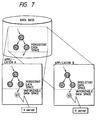
- persistent data shared in this system is mapped in each application and used in a memory space similar to that for vaporizable data inherent in the application.
- the persistent data to be shared is mapped in units of objects (groups of significant data) already described above. Mapping is controlled such that the relationship between objects is kept consistent in each individual application.
- the present invention solves the problem of disappearance of vaporizable data occurring when certain persistent data points to the vaporizable data.
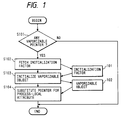
- Fig. 1 is a flow chart showing processing of referring to an to object containing a vaporizable object according to this embodiment.
- Fig. 2 is a block diagram showing the arrangement of a system according to this embodiment.
- an input apparatus 1 is, e.g., a keyboard or a mouse through which a user of this sketch tool enters commands or data into the sketch tool.
- a CPU 2 of a processor performs the processing of this embodiment on the basis of the input commands from the input apparatus 1.
- the CPU 2 executes procedures stored in a memory to be described later.
- An output apparatus 3 is, e.g., a printer or a CRT display for printing out or displaying processing results from the CPU 2 or messages from the sketch tool.
- a data base system 4 for storing and managing sketch data is, e.g., an object oriented data base and also stores initialization factors to be described later.
- a memory 5 is used as a main memory for temporarily storing data of vaporizable objects to be processed in this embodiment, programs of control procedures shown in Figs. 1, 3, and 4, processing programs, persistent objects developed from the data base system 4, data required for processing, and programs of the X window.
- This memory can be constituted by a plurality of separate memories. Information stored in the memory includes those loaded from another memory.
- a computer bus 6 connects the input apparatus 1, the CPU 2, the output apparatus 3, the data base system 4, and the main memory 5 to each other and transmits data, addresses, and control information.
- This processing is roughly divided into two processing activities: reference to a vaporizable object, and updating of it.
- the initialized resource identifier such as font information and color information
- the vaporizable object is distinguished from the persistent object by using the attribute having no influence on the data base 4. This allows each persistent object to make reference to a vaporizable object in the same fashion as reference in the process, during execution of a plurality of sketch tools.
- the vaporizable object initialization processing is performed in the course of sketch data reference processing.
- step S101 the CPU 2 fetches sketch data stored in the data base system 4 into a storage area defined by the sketch tool and checks from schema information of the sketch data whether the data contains a vaporizable pointer.
- a vaporizable pointer is used to point to font information and color information added to the sketch data. If the sketch data does not contain any vaporizable pointer in step S101, the CPU 2 immediately terminates the processing; if the data contains a vaporizable pointer in step S101, the flow advances to step S102, and the CPU 2 fetches an initialization factor 101 defined in the data base system 4 to create a vaporizable object.
- the initialization factor 101 consists of a font name list for font information and numerical expression of the illuminance of each of RGB for color information.
- step S103 the CPU 2 initializes a vaporizable object 102 on the basis of the fetched initialization factor 101.
- this initialization processing is to obtain a resource identifier for each of font information and color information by communicating with a window server using the library of the X window system, that is present in the main memory 5.
- step S104 to store the initialized vaporizable object 102 into a predetermined area of the main memory 5, the CPU 2 substitutes the pointer for the vaporizable object 102 into the process-local attribute in this sketch data.
- the persistent object containing this process-local attribute is shared by a plurality of processes in the data base system 4.
- the process-local attribute has no influence on the data base system 4 and can therefore have a value inherent in each individual application process.
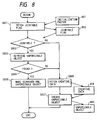
- step S801 the CPU 2 fetches a jointable flag 802 of a vaporizable object from an initialization factor 801.
- step S802 the CPU 2 checks jointability on the basis of the jointable flag 802.
- step S802 If the jointable flag 802 indicates "jointable" in step S802, the CPU 2 retrieves a vaporizable object having the same value as the initialization factor 801 from vaporizable objects of this application in step S803.
- step S804 the CPU 2 checks whether a corresponding vaporizable object is found. If the corresponding vaporizable object is found in step S804, the flow advances to step S805, and the CPU 2 makes the searched one a vaporizable object 803 and ends the processing.
- step S802 If the jointable flag 802 indicates "unjointable" in step S802 or no vaporizable object is found in step S804, the flow advances to step S806 to create a vaporizable object.
- step S806 the CPU 2 fetches creative data 804 required to create a vaporizable object from the initialization factor.
- step S807 the CPU 2 transfers the creative data 804 to a vaporizable object creating procedure, and creates a vaporizable object 803.
- a persistent object directly points to a vaporizable object by using a process-local attribute. Therefore, no special processing is required to identify a vaporizable object.
- the processing of updating a sketch object containing a vaporizable object is divided into two processing activities: updating processing in the sketch tool, and updating processing for shared sketch data in the data base. The procedures of these two processing activities will be described below.
- the sketch tool updates the attribute value of sketch data fetched into the process.
- step S302 If the attribute is a process-local attribute in step S302, the CPU 2 immediately terminates the processing.
- the CPU 2 obtains an initialization factor 402 concerning the value of a new vaporizable object 401.
- the initialization factor includes a font name list for font information and numerical expression of the illuminance of each of RGB for color information.
- centralized management can be easily performed for initialization factors by performing initialization activities simultaneously.
- the second embodiment exemplifies a system in which an original scene (corresponding to a vaporizable object; this scene will be referred to as a vaporizable scene hereinafter) of a user is fetched into a portion of a scene (corresponding to a persistent object; this scene will be referred to as a persistent scene hereinafter) of a video library such as film stock service shared by a plurality of users.
- a video library such as film stock service shared by a plurality of users.
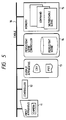
- Fig. 5 is a block diagram showing the arrangement of the system according to this embodiment.
- an input apparatus 11 is, e.g., a keyboard or a switch panel through which a user of the video library enters commands. If necessary, the input apparatus 11 includes a camera for acquiring vaporizable scenes to be stored in a memory 15.
- a controller 12 performs the processing of this embodiment by executing control procedures stored in the memory 15 (to be described later) on the basis of commands entered from the input apparatus 11.
- An output apparatus 13 is, e.g., a printer or a CRT display for printing out or displaying messages from the video library or processed video data.
- a persistent scene controller 14 is, e.g., a laser disc player or a video player for driving recording media which store both persistent scenes and initialization factors.
- the memory 15 temporarily stores vaporizable scenes to be processed in this embodiment, a program of a control procedure shown in Fig. 6, and commands to the controller 12.
- the data stored in the memory 15 may be divisionally stored in separate memories.
- a video cable 16 is a bus for connecting the above constituent elements to each other.
- This embodiment also uses the process-local attribute explained in the above first embodiment in order to distinguish between a vaporizable scene and a persistent scene shared by users.
- This process-local attribute is effective in the reproduction processing being executed and has no influence on persistent scenes shared by users.
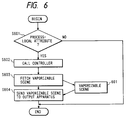
- step S602 If it is determined in step S601 that a process-local attribute is embedded, the controller 12 is called to fetch a vaporizable scene 601 that a vaporizable pointer corresponding to the process-local attribute points to.
- the controller 12 dynamically fetches a local vaporizable scene 601 of this reproduction processing from the input apparatus as needed. Alternatively, the controller 12 synthesizes a vaporizable scene from the existing persistent scene or the vaporizable scene 601.
- the controller 12 sends the fetched vaporizable scene 601 to the output apparatus 13 and replaces the vaporizable pointer of the persistent scene with this vaporizable scene 601.
- a vaporizable pointer i.e., a vaporizable scene is dynamically initialized and fetched during reproduction of a persistent scene.
- vaporizable scenes can also be initialized beforehand so that only reference to the vaporizable scenes need be performed during reproduction of persistent scenes, thereby improving the real-time performance of video scene reproduction.
- management of video information has been described by taking a video library as an example.
- the embodiment can also be applied to a general application in which video information needs to be shared by a plurality of users and a plurality of applications.
- this embodiment is readily applicable to management of multimedia information required to be shared as well as video information.
- This embodiment like the first embodiment, exemplifies a system in which data base management is performed for sketch information in a sketch tool application of an X window system.
- the arrangement of the system is the same as that of the first embodiment shown in Fig. 2.
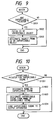
- Fig. 9 is a flow chart showing processing of referring to an object containing a vaporizable pointer of this embodiment.
- processing is roughly divided into two processing activities: processing of referring to a vaporizable object, and processing of updating it.
- step S901 a CPU 2 checks whether sketch data in a data base contains a vaporizable pointer.
- a vaporizable pointer is used to point to font information and color information added to the sketch data. If it is determined in step S901 that no vaporizable pointer is contained, the CPU 2 immediately terminates the processing.
- step S901 If it is determined in step S901 that a vaporizable pointer is contained, the flow advances to step S902, and the CPU 2 fetches the identifier of a vaporizable object pointed to by the vaporizable pointer.
- the identifier consists of a name on a font name list for font information and numerical expression of the illuminance of each of RGB for color information.
- step S903 the CPU 2 designates a vaporizable object from the identifier fetched.
- a pointer corresponding to the vaporizable object designated in step S903 is the result of this reference processing. Since each individual process has its own vaporizable pointer, the reference result can have a value inherent in each process.
- the vaporizable object updating processing will be described below.
- the identifier of the vaporizable object is changed, for example, when the value of the vaporizable pointer is changed, the identifier of a vaporizable object in the persistent data is updated.
- the fourth embodiment like the second embodiment mentioned earlier, exemplifies a system in which an original vaporizable scene of a user is fetched into a portion of a persistent scene of a video library such as film stock service shared by a plurality of users.
- the arrangement of the system is the same as that of the second embodiment shown in Fig. 5.
- step S1001 while a persistent scene shared by users is being reproduced, a controller 12 checks whether the persistent scene has a vaporizable pointer for a vaporizable scene.
- step S1001 If the persistent scene has a vaporizable pointer for a vaporizable scene in step S1001, the flow advances to step S1002, and the controller 12 designates the identifier of the vaporizable scene.
- step S1003 the controller 12 designates the vaporizable scene in accordance with the identifier from input scenes from an input apparatus 11, existing persistent scenes in a persistent scene controller 14, and existing vaporizable scenes in a memory 15.
- step S1004 the controller 12 sends the designated vaporizable scene to an output apparatus 13, replacing the vaporizable pointer of the persistent scene with the vaporizable scene.
- vaporizable pointers may be read in advance in order to display video scenes in real time.
- This embodiment illustrates the processing in which a vaporizable object, i.e., a vaporizable scene is dynamically fetched during reproduction of a persistent scene.
- a vaporizable object i.e., a vaporizable scene
- management of video information has been described by taking a video library as an example.
- the embodiment is also applicable to a general application in which video information needs to be shared by a plurality of users and a plurality of applications.
- this embodiment can be applied to management of multimedia information required to be shared as well as video information.
- the present invention automates management of temporary data which disappears when the application process is finished.
- the present invention can provide the following advantages in situations where data are shared parallel to each other at the same time in an "application in which both persistent objects and vaporizable objects are entangled intricately," such as in a multimedia data base.
- the fifth embodiment of the present invention exemplifies data management for sketch information in a sketch application using a window system.
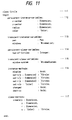
- Fig. 11 is a view showing the definitions of a circle among sketch primitives processed in the sketch application.
- a class definition 111 describes the attribute and the behavior of a circle and consists of description from "begin” to "end".
- a class representing a circle will be referred to as Circle, and a given instance in Circle will be referred to as aCircle, hereinafter.
- a definition 112 describes the persistent instance attributes of Circle and is constituted by instances x-center, y-center, and radius of Dimension class representing the coordinates and the length, and reference color to the persistent instance of Color class representing color information. All of the persistent instance attributes of a persistent object are persistent objects. Note that although the reference to an instance of the class Color is represented by ⁇ Color, color can also be regarded as an instance of ⁇ Color class and hence will be so handled.
- a definition 113 describes the vaporizable instance attributes of Circle and consists of instance pen of Pen class representing a sketch attribute and reference windows to WindowList representing windows in which aCircle is sketched. Similar to the persistent instance attributes 112, the vaporizable instance attributes give a data structure of class. However, the vaporizable instance attribute is a vaporizable object formed for each application referring to a persistent object containing the vaporizable instance attribute, whereas the persistent instance attribute is a persistent object formed for each individual instance.
- a definition 114 describes the persistent class attributes of Circle.
- the class attribute has a value common to all instances, whereas the persistent or vaporizable instance attribute has a value inherent in each instance.
- instance num-of-Circles of Integer class representing the number of all instances of Circle is defined.
- a definition 115 describes the vaporizable class attributes of Circle. Similar to the vaporizable instance attribute, the vaporizable class attribute has a value common to instances belonging to a predetermined class in each application. In this embodiment, window-system as an instance of ⁇ WindowSystem class representing reference to control information of the window system exists only while the application is operating and is a vaporizable object common to all instances of Circle class.
- a definition 116 represents declaration of instance methods of Circle, which defines a series of messages that aCircle accepts and the class of an instance representing a value sent back from the method itself, which is defined separately. If no value is sent back, this class is represented by Void.
- the instance methods 116 include display method of displaying aCircle; set-x method of changing the X coordinate of aCircle into instance x of Dimension class and sending back reference to aCircle that has been changed; set-y, set-r, and set-c methods of changing the Y coordinate, the radius, and the color of aCircle, like the set-x method; changed method of informing the change in aCircle; and destroy method of destroying aCircle.
- a definition 117 describes class methods of Circle.
- the class methods have no effect on a particular instance but are used in creation of instances or initialization of class attributes.
- create methods are defined; after instances of Circle are created and their instance attributes are set in accordance with arguments x , y , r , and c , create methods send back references to the instances created.
- persistent attributes and vaporizable attributes shown in Fig. 11 can be obtained by two types of methods: one is a method of designating instance variables as a group, as in this embodiment; the other is a method of designating each instance variable in a form in which it modifies a class, like "transient Dimension". These two methods are equivalent in meaning. This embodiment will be described in accordance with the definitions shown in Fig. 11.
- Fig. 12 is a flow chart showing a procedure of initializing the class attributes of class Circle.
- the class attributes of class Circle include the persistent class attribute num-of-Circles and the vaporizable class attribute window-system.
- a CPU 2 retrieves the persistent class attribute num-of-Circles from a data base system 4. If failure of retrieval is determined in step S1202, the CPU 2 determines that class Circle has not been used from any application, and the flow advances to step S1203.
- step S1203 the CPU 2 forms a persistent object num-of-Circles and initializes the value to 0.
- step S1204 the CPU 2 initializes the vaporizable class attribute window-system by referring to window-system control information obtained as the result of initialization of the window system according to a known method.
- the above processing is performed once when an application uses class Circle for the first time.
- Fig. 13 is a flow chart showing a procedure of creating instance aCircle of class Circle, which is executed by the CPU 2 of a processor.
- instances of class Circle are created by the create method.
- the CPU 2 initializes the persistent instance attributes x-center, y-center, and radius by using the arguments (step S1301).
- the CPU 2 forms vaporizable objects pen and windows representing the vaporizable instance attributes (step S1302).
- these vaporizable objects are formed in a virtual space of the application.
- the vaporizable objects can also be formed in the data base.
- the CPU 2 forms a vaporizable instance attribute conversion table to be described later with reference to Figs. 14 to 16 (step S1303), registers the vaporizable objects to the instance attribute conversion table (step S1304), and ends the processing.
- Figs. 14 to 16 are views each showing the vaporizable instance attribute conversion table described above.
- Methods of forming the conversion table are classified into three types: a method of forming a table for each instance, a method of forming a table for each class, and a method of forming a single global table.
- the two latter types are further classified into a method of placing the conversion table in the data base 4 and a method of placing the conversion table in a virtual space of an application in a storage area of the main memory 5. Each method will be explained below.
- Fig. 14 is a view showing the method of forming a conversion table for each instance in the data base.
- the conversion table is constituted as a dictionary having an application identifier as a key and reference to a vaporizable object as a value.
- the application identifier is provided by an operating system and is, e.g., a set of a host identifier and a process identifier.
- Fig. 15 is a view showing the method of forming a conversion table for each class or a global conversion table in the data base.
- the conversion table is constituted as a dictionary having an application identifier and an object identifier as keys and reference to a vaporizable object as a value.
- the application identifier is identical to that of Fig. 14.
- the object identifier is assigned as a number not recurring in the same class, in the conversion table for each class, and as a number not recurring in the data base, in the global conversion table, for each vaporizable instance attribute represented as a vaporizable object. Since an application generally uses a plurality of instances of a given class, a plurality of vaporizable instance attributes are generally present in the same class.
- the object identifier is necessary to distinguish between these attributes.
- the object identifier may be either an identifier given by the data base system or a number or the like obtained independently of the data base system, e.g., a number obtained by a number generating mechanism for generating a number in accordance with a known method each time it is requested.
- Fig. 16 is a view showing the method of forming the conversion table for each class or the global conversion table in a virtual space of an application.
- This conversion table is constituted as a dictionary having an object identifier as a key and reference to a vaporizable object as a value. Since the conversion table itself is information inherent in an application, no identification of an application need be performed in the data base. This makes the use of an application identifier unnecessary unlike the table shown in Fig. 15. When no application identifier is used, on the contrary, whether information about reference to the same object from another application can be obtained depends on a data base system being used. If the data base system does not provide the reference information, a conversion table is formed by omitting the column of reference to vaporizable object from the conversion table shown in Fig. 15. This can provide an equivalent function.
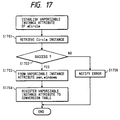
- Fig. 17 is a flow chart showing a procedure in which an application retrieves aCircle already formed to establish vaporizable instance attributes inherent in the application. This procedure is executed by the CPU of a processor. First, the CPU retrieves Circle object stored in the data base (step S1701). The CPU then checks whether the retrieval is successful (step S1702). If success is determined in step S1702, the CPU forms vaporizable instance attributes (step S1703) and registers the vaporizable instance attributes formed to a conversion table (step S1704). If success is not determined in step S1702, the CPU notifies the error (step S1705) and ends the processing.
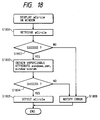
- Fig. 18 is a flow chart showing a procedure of displaying aCircle in a window.
- the CPU retrieves instance aCircle (step S1801). If success of the retrieval is determined, the CPU obtains vaporizable attributes windows, pen, and window-system (steps S1802 and S1803). The details of this processing will be described later with reference to Fig. 19. If success of the obtaining is determined, the CPU depicts aCircle by using the obtained vaporizable attributes (steps S1804 and S1805). In the above processing, if some error occurs in step S1802 or S1804, the CPU notifies the error and ends the processing (step S1806).
- Fig. 19 is a flow chart showing the procedure of fetching vaporizable attributes executed in step S1803 of Fig. 18.
- a vaporizable class attribute is realized as a global variable used in known programming languages and is so handled in the present invention.
- a vaporizable instance attribute is registered and referred to by using any of the conversion tables shown in Figs. 14 to 16. In the following description, a procedure of fetching the vaporizable instance attribute pen by using the conversion table shown in Fig. 14 will be explained.
- the CPU fetches the conversion table to which the vaporizable attribute pen is registered (step S1901). This fetching is performed by using a known data base retrieving method if the conversion table is of the type placed in the data base shown in Fig. 14 or 15, and is performed directly from a memory space of an application if the conversion table is of the type placed in a virtual space of an application shown in Fig. 16. If success of the fetching of this conversion table is determined, the CPU fetches an item for the vaporizable attribute pen from the conversion table (steps S1902 and S1903). If success of this fetching of the item is determined, the CPU fetches vaporizable object pen from the item (steps S1904 and S1905). If some error occurs in step S1902 or S1904 of the above processing, the CPU notifies the error (step S1906) and ends the processing.
- Fig. 20 is a flow chart showing a procedure in which when an object (to be referred to as a semi-persistent object hereinafter) having both a persistent portion and a vaporizable portion is changed, applications sharing the persistent portion of the semi-persistent object are informed of this change in the persistent portion.
- notification of change in aCircle is performed by changed method.
- the CPU forms a list of application identifiers making reference to the persistent portion of the semi-persistent object aCircle (step S2001). This list can be formed from the conversion table shown in Fig. 14 or 15. If it is possible to form the list by using the function of the data base system, the list may be so formed.
- step S2002 the CPU checks whether the list formed in step S2001 is blank (step S2002). If the list is blank in step S2002, the CPU determines that no other application makes reference to aCircle and therefore immediately terminates the processing. If the list is not blank in step S2002, the CPU fetches an application identifier from the list (step S2003). In addition, the CPU checks by using a known process-to-process communication function provided by an operating system or the like whether communication to an application corresponding to the application identifier fetched is allowed (step S2004). If the communication is allowed in step S2004, the CPU informs the application of the change (step S2005). After repeatedly executing the above processing until the list becomes blank, the CPU ends the processing. Note that the application which has received the information of change redisplays aCircle in accordance with, e.g., the procedure shown in Fig. 18.
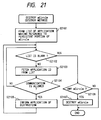
- Fig. 21 is a flow chart showing a procedure in which when a semi-persistent object is to be destroyed, applications sharing a persistent portion of the semi-persistent object are informed of this destruction.
- Two types of informing methods of destruction are possible: one is informing after destruction, and the other is informing before destruction.
- the former informing method is performed in accordance with the procedure shown in Fig. 20.
- processing similar to that shown in Fig. 20 is executed before destruction (steps S2101 to S2105).
- the CPU checks whether an object of interest is destroyed beforehand by another application and already erased from the data base during execution of informing destruction (step S2106).
- the CPU destroys the object (step S2107) and ends the processing.
- a given application which has received the information may issue change information according to the method shown in Fig. 20 so that the processing in Fig. 20 is performed in association with the processing shown in Fig. 21. This makes it possible to perform the destruction processing cooperatively between a plurality of applications. This combination with the processing shown in Fig. 20 can realize any given cooperative processing as well as the destruction processing.
- the present invention realizes a data structure containing both persistent data shared by a plurality of applications and vaporizable data each inherent in a particular application, and provides a function of informing applications of change or destruction of the data structure. Consequently, the present invention can provide the following advantages when data are shared parallel to each other at the same time in an application in which persistent objects and vaporizable objects are processed in a complicated relationship to each other, as in a multimedia data base.
Landscapes
- Engineering & Computer Science (AREA)
- Software Systems (AREA)
- Theoretical Computer Science (AREA)
- Physics & Mathematics (AREA)
- General Engineering & Computer Science (AREA)
- General Physics & Mathematics (AREA)
- Information Retrieval, Db Structures And Fs Structures Therefor (AREA)
Claims (27)
- Datenverwaltungsverfahren zur Verwaltung von gemeinsam genutzten Daten, die von einer Vielzahl von Prozessen gemeinsam genutzt werden, und von prozesseigenen Daten, die während der Ausführung eines besonderen Prozesses vorhanden sind und verschwinden, wenn der Prozess beendet ist, gekennzeichnet durch die durch jeden Prozess durchgeführten Schritte:Speichern eigener Daten jedes Prozesses, die für den Prozess in Bezug auf gemeinsam genutzte Daten in einer Datenbank erforderlich sind, in einem Speicher,Speichern eines Zeigers auf die eigenen Daten jedes Prozesses mit einem Attribut des Prozesses in der Datenbank oder dem Speicher mit Bezug auf die gemeinsam genutzten Daten,Überprüfen, ob ein Zeiger mit dem Attribut des Prozesses in der Datenbank oder dem Speicher mit Bezug auf die gemeinsam genutzten Daten gespeichert ist, wenn ein Prozess jeweils auf die gemeinsam genutzten Daten Bezug nimmt, undBestimmen der für den Prozess in Bezug auf die gemeinsam genutzten Daten erforderlichen eigenen Daten, wenn der Zeiger mit dem prozesseigenen Attribut zu speichern ist, indem die eigenen Daten aus dem Speicher abgerufen werden, auf die der Zeiger zeigt.
- Verfahren nach Anspruch 1, wobei die gemeinsam genutzten Daten Graphikinformationen sind, und die prozesseigenen Daten eine Quellenidentifikation von Farbinformationen zum Skizzieren der Graphikinformationen darstellen.
- Verfahren nach Anspruch 1, wobei die gemeinsam genutzten Daten Zeicheninformationen sind, und die prozesseigenen Daten eine Quellenidentifikation von Fontinformationen zum Erhalten einer sichtbaren Ausgabe der Zeicheninformationen darstellen.
- Verfahren nach Anspruch 1, wobei die gemeinsam genutzten Daten erste Bewegungs-Bildinformationen sind, und die prozesseigenen Daten zweite Bewegungs-Bildinformationen sind, die an einem gewissen Punkt in die ersten Bewegungs-Bildinformationen einzufügen sind.
- Verfahren nach einem der vorhergehenden Ansprüche, wobei der Schritt zur Speicherung des Zeigers ein Speichern des Zeigers auf die prozesseigenen Daten in den gemeinsam genutzten Daten beinhaltet.
- Verfahren nach einem der Ansprüche 1 bis 4, wobei der Schritt zur Speicherung der eigenen Daten die Schritte umfasst:Überprüfen, ob für den Prozess prozesseigene Daten in Bezug auf die gemeinsam genutzten Daten erforderlich sind, wenn ein Prozess jeweils die gemeinsam genutzten Daten von der Datenbank in den Speicher abgerufen hat,Bestimmen der prozesseigenen Daten, wenn sie als erforderlich beurteilt werden, undSpeichern der bestimmten prozesseigenen Daten in dem Speicher.
- Verfahren nach Anspruch 6, wobei die bestimmten prozesseigenen Daten neu erzeugt werden, und die erzeugten prozesseigenen Daten in dem Speicher gespeichert werden.
- Verfahren nach Anspruch 6, wobei die bestimmten prozesseigenen Daten in vorhandenen Daten in dem Speicher gesucht werden, und, wenn entsprechende Daten vorhanden sind, die entsprechenden Daten in dem Speicher gespeichert und gemeinsam genutzt werden.
- Verfahren nach Anspruch 6, 7 oder 8, wobei im Schritt zur Speicherung des Zeigers der Zeiger auf die prozesseigenen Daten in einer Registriertabelle für alle gemeinsam genutzten Daten in Übereinstimmung mit einer Identifikation jedes Prozesses als prozesseigenem Attribut gespeichert wird.
- Verfahren nach Anspruch 9, wobei die Registriertabellen in der Datenbank gespeichert werden.
- Verfahren nach Anspruch 9 oder 10, ferner mit den Schritten:Bestimmten anderer Prozesse, die auf die gemeinsam genutzten Daten durch Bezugnahme auf die Registriertabelle Bezug nehmen, wenn ein gewisser Prozess gemeinsam genutzte Daten ändert, undInformieren der bestimmten Prozesse, die auf die gemeinsam genutzten Daten Bezug nehmen, über die Änderung in den gemeinsam genutzten Daten.
- Verfahren nach einem der Ansprüche 6 bis 9, wobei in dem Schritt zur Speicherung des Zeigers eine Identifikation der eigenen Daten jedes Prozesses in einer Registriertabelle in Übereinstimmung mit dem Zeiger auf die prozesseigenen Daten gespeichert wird.
- Verfahren nach Anspruch 12, wobei die Registriertabelle in dem Speicher gespeichert wird.
- Datenverwaltungsvorrichtung zur Verwaltung von gemeinsam genutzten Daten, die von einer Vielzahl von Prozessen gemeinsam genutzt werden, und von prozesseigenen Daten, die während der Ausführung eines besonderen Prozesses vorhanden sind und verschwinden, wenn der Prozess beendet ist, wobei die Vorrichtungeine Speichereinrichtung zur Speicherung einer Datenbank und eine Verarbeitungseinrichtung zur Implementierung der Vielzahl der Prozesse umfasst, dadurch gekennzeichnet, dass die Verarbeitungseinrichtung eingerichtet ist zur Implementierung jedes Prozesses zumSpeichern eigener Daten jedes Prozesses, die für den Prozess in Bezug auf gemeinsam genutzte Daten in der Datenbank erforderlich sind, in der Speichereinrichtung,Speichern eines Zeigers auf die eigenen Daten jedes Prozesses mit einem Attribut des Prozesses in der Datenbank in der Speichereinrichtung mit Bezug auf die gemeinsam genutzten Daten,Überprüfen, ob ein Zeiger mit dem Attribut des Prozesses in der Datenbank in der Speichereinrichtung mit Bezug auf die gemeinsam genutzten Daten gespeichert ist, wenn ein Prozess jeweils auf die gemeinsam genutzten Daten Bezug nimmt, undBestimmen von für die Verarbeitung in Bezug auf die gemeinsam genutzten Daten erforderlichen eigenen Daten, wenn der Zeiger mit dem prozesseigenen Attribut zu speichern ist, indem die eigenen Daten aus der Speichereinrichtung abgerufen werden, auf die der Zeiger zeigt.
- Vorrichtung nach Anspruch 14, wobei die Speichereinrichtung zur Speicherung der gemeinsam genutzten Daten als Graphikinformationen eingerichtet ist, und die prozesseigenen Daten als Quelle zur Identifikation von Farbinformationen zum Skizzieren der Graphikinformationen gespeichert werden.
- Vorrichtung nach Anspruch 14, wobei die Speichereinrichtung zur Speicherung der gemeinsam genutzten Daten als Zeicheninformationen eingerichtet ist, und die prozesseigenen Daten eine Quellenidentifikation von Fontinformationen zum Erhalten einer sichtbaren Ausgabe der Zeicheninformationen aufweisen.
- Vorrichtung nach Anspruch 14, wobei die Speichereinrichtung zur Speicherung gemeinsam genutzter Daten als erste Bewegungs-Bildinformationen und der prozesseigenen Daten als zweite Bewegungs-Bildinformationen eingerichtet ist, die an einem zweiten Punkt in die ersten Bewegungs-Seiteninformationen einzufügen sind.
- Vorrichtung nach einem der Ansprüche 14 bis 17, wobei die Verarbeitungseinrichtung zur Implementierung jedes Prozesses zur Speicherung eines Zeigers auf prozesseigene Daten in den gemeinsam genutzten Daten eingerichtet ist.
- Vorrichtung nach einem der Ansprüche 14 bis 17, wobei die Verarbeitungseinrichtung eingerichtet ist zur Implementierung jedes Prozesses zur Speicherung eigener Daten durch Überprüfen, ob für den Prozess prozesseigene Daten in Bezug auf die gemeinsam genutzten Daten erforderlich sind, wenn ein Prozess jeweils die gemeinsam genutzten Daten von der Datenbank in einen Speicher abgerufen hat, indem die prozesseigenen Daten bestimmt werden, wenn sie als erforderlich beurteilt werden, und indem die bestimmten prozesseigenen Daten in der Speichereinrichtung gespeichert werden.
- Vorrichtung nach Anspruch 19, wobei die Verarbeitungseinrichtung zur Implementierung jedes Prozesses zur Bestimmung prozesseigener Daten, die neu erzeugt werden, und zur Speicherung der erzeugten prozesseigenen Daten in der Speichereinrichtung eingerichtet ist.
- Vorrichtung nach Anspruch 19, wobei die Verarbeitungseinrichtung zur Implementierung jedes Prozesses zum Suchen der bestimmten prozesseigenen Daten in vorhandenen Daten in der Speichereinrichtung und, wenn entsprechende Daten vorhanden sind, zur Speicherung und gemeinsamen Nutzung der entsprechenden Daten in der Speichereinrichtung eingerichtet ist.
- Vorrichtung nach Anspruch 19, 20 oder 21, wobei die Verarbeitungseinrichtung zur Implementierung jedes Prozesses zur Speicherung eines Zeigers auf die prozesseigenen Daten in einer Registriertabelle für alle gemeinsam genutzten Daten in Übereinstimmung mit einer Identifikation jedes Prozesses als prozesseigenem Attribut eingerichtet ist.
- Vorrichtung nach Anspruch 22, wobei die Speichereinrichtung zur Speicherung der Registriertabellen in der Datenbank eingerichtet ist.
- Vorrichtung nach Anspruch 22 oder 23, wobei die Verarbeitungseinrichtung zum Bestimmten anderer Prozesse, die auf die gemeinsam genutzten Daten durch Bezugnahme auf die Registriertabelle Bezug nehmen, wenn ein gemeinsam genutzter Prozess gemeinsam genutzte Daten ändert, und zum Informieren der bestimmten Prozesse, die auf die gemeinsam genutzten Daten Bezug nehmen, über die Änderung in den gemeinsam genutzten Daten eingerichtet ist.
- Vorrichtung nach einem der Ansprüche 19 bis 22, wobei die Verarbeitungseinrichtung zur Implementierung jedes Prozesses zur Speicherung einer Identifikation der prozesseigenen Daten in einer Registriertabelle in Übereinstimmung mit dem Zeiger auf die prozesseigenen Daten eingerichtet ist.
- Vorrichtung nach Anspruch 25, wobei die Speichereinrichtung zur Speicherung der Registriertabelle eingerichtet ist.
- Speichermedium zur Speicherung in einem Prozessor implementierbarer Anweisungen zur Steuerung eines Prozessors zur Ausführung eines Verfahrens nach einem der Ansprüche 1 bis 13.
Applications Claiming Priority (6)
| Application Number | Priority Date | Filing Date | Title |
|---|---|---|---|
| JP66036/92 | 1992-03-24 | ||
| JP06603692A JP3630696B2 (ja) | 1992-03-24 | 1992-03-24 | データ管理システム及びその方法 |
| JP6603692 | 1992-03-24 | ||
| JP6604292 | 1992-03-24 | ||
| JP06604292A JP3630697B2 (ja) | 1992-03-24 | 1992-03-24 | データ管理システム及びその方法 |
| JP66042/92 | 1993-03-01 |
Publications (3)
| Publication Number | Publication Date |
|---|---|
| EP0562822A2 EP0562822A2 (de) | 1993-09-29 |
| EP0562822A3 EP0562822A3 (en) | 1994-05-11 |
| EP0562822B1 true EP0562822B1 (de) | 2000-06-07 |
Family
ID=26407211
Family Applications (1)
| Application Number | Title | Priority Date | Filing Date |
|---|---|---|---|
| EP93302196A Expired - Lifetime EP0562822B1 (de) | 1992-03-24 | 1993-03-23 | Verfahren und Verwaltung einer sowohl dauerhafte als auch zeitweilige Daten enthaltenden Datenstruktur |
Country Status (3)
| Country | Link |
|---|---|
| US (1) | US5504895A (de) |
| EP (1) | EP0562822B1 (de) |
| DE (1) | DE69328800D1 (de) |
Families Citing this family (25)
| Publication number | Priority date | Publication date | Assignee | Title |
|---|---|---|---|---|
| JPH08153076A (ja) * | 1994-11-30 | 1996-06-11 | Canon Inc | 協調作業支援方法及びその装置 |
| DE69628073D1 (de) * | 1995-03-22 | 2003-06-18 | Sun Microsystems Inc | Vorrichtung und Verfahren zur Verwaltung von Objektsammlungen |
| US6009266A (en) * | 1995-03-22 | 1999-12-28 | Sun Microsystems, Inc. | Methods, apparatus and data structures for managing objects |
| US5727203A (en) * | 1995-03-31 | 1998-03-10 | Sun Microsystems, Inc. | Methods and apparatus for managing a database in a distributed object operating environment using persistent and transient cache |
| US5692183A (en) * | 1995-03-31 | 1997-11-25 | Sun Microsystems, Inc. | Methods and apparatus for providing transparent persistence in a distributed object operating environment |
| US5864864A (en) * | 1995-09-27 | 1999-01-26 | Sun Microsystems, Inc. | Method and apparatus for providing transparent persistent data support to foreign data types |
| EP0825506B1 (de) * | 1996-08-20 | 2013-03-06 | Invensys Systems, Inc. | Verfahren und Gerät zur Fernprozesssteuerung |
| US6687761B1 (en) * | 1997-02-20 | 2004-02-03 | Invensys Systems, Inc. | Process control methods and apparatus with distributed object management |
| US6032153A (en) * | 1997-11-13 | 2000-02-29 | Electric Data Systems Corporation | Method and system for maintaining persistence in a shared object system |
| US7089530B1 (en) * | 1999-05-17 | 2006-08-08 | Invensys Systems, Inc. | Process control configuration system with connection validation and configuration |
| WO2000070531A2 (en) | 1999-05-17 | 2000-11-23 | The Foxboro Company | Methods and apparatus for control configuration |
| US6788980B1 (en) | 1999-06-11 | 2004-09-07 | Invensys Systems, Inc. | Methods and apparatus for control using control devices that provide a virtual machine environment and that communicate via an IP network |
| JP2002140221A (ja) * | 2000-11-02 | 2002-05-17 | Canon Inc | 情報処理装置、情報処理方法、及び、記憶媒体 |
| JP2002140193A (ja) * | 2000-11-02 | 2002-05-17 | Canon Inc | 情報処理装置及びその方法、コンピュータ可読メモリ |
| US20020053000A1 (en) * | 2000-11-02 | 2002-05-02 | Masanori Wakai | Information processing apparatus and method, and computer readable memory |
| US7426048B2 (en) * | 2002-01-21 | 2008-09-16 | Canon Kabushiki Kaisha | Image forming apparatus, controlling method, and control program |
| US7117203B2 (en) * | 2003-12-03 | 2006-10-03 | International Business Machines Corporation | Content addressable data storage and compression for semi-persistent computer memory for a database management system |
| US7133963B2 (en) * | 2003-12-03 | 2006-11-07 | International Business Machines Corporation | Content addressable data storage and compression for semi-persistent computer memory |
| US7761923B2 (en) | 2004-03-01 | 2010-07-20 | Invensys Systems, Inc. | Process control methods and apparatus for intrusion detection, protection and network hardening |
| WO2007123753A2 (en) * | 2006-03-30 | 2007-11-01 | Invensys Systems, Inc. | Digital data processing apparatus and methods for improving plant performance |
| US7783990B2 (en) | 2006-05-05 | 2010-08-24 | Microsoft Corporation | Association of display elements |
| EP2304536A4 (de) | 2008-06-20 | 2012-08-15 | Invensys Sys Inc | Systeme und verfahren zur immersiven interaktion mit tatsächlichen und/oder simulierten einrichtungen zur prozess-, umwelt- und industriesteuerung |
| US8127060B2 (en) | 2009-05-29 | 2012-02-28 | Invensys Systems, Inc | Methods and apparatus for control configuration with control objects that are fieldbus protocol-aware |
| US8463964B2 (en) | 2009-05-29 | 2013-06-11 | Invensys Systems, Inc. | Methods and apparatus for control configuration with enhanced change-tracking |
| US9424439B2 (en) * | 2011-09-12 | 2016-08-23 | Microsoft Technology Licensing, Llc | Secure data synchronization |
Family Cites Families (10)
| Publication number | Priority date | Publication date | Assignee | Title |
|---|---|---|---|---|
| US4511964A (en) * | 1982-11-12 | 1985-04-16 | Hewlett-Packard Company | Dynamic physical memory mapping and management of independent programming environments |
| US4814971A (en) * | 1985-09-11 | 1989-03-21 | Texas Instruments Incorporated | Virtual memory recovery system using persistent roots for selective garbage collection and sibling page timestamping for defining checkpoint state |
| US4989134A (en) * | 1987-03-20 | 1991-01-29 | Hewlett-Packard Company | Method and apparatus for enhancing data storage efficiency |
| US5136712A (en) * | 1989-06-29 | 1992-08-04 | Digital Equipment Corporation | Temporary object handling system and method in an object based computer operating system |
| US5057996A (en) * | 1989-06-29 | 1991-10-15 | Digital Equipment Corporation | Waitable object creation system and method in an object based computer operating system |
| US5129083A (en) * | 1989-06-29 | 1992-07-07 | Digital Equipment Corporation | Conditional object creating system having different object pointers for accessing a set of data structure objects |
| JPH0833862B2 (ja) * | 1989-10-23 | 1996-03-29 | インターナシヨナル・ビジネス・マシーンズ・コーポレーシヨン | オブジエクト指向コンピユータ・システム |
| US5297279A (en) * | 1990-05-30 | 1994-03-22 | Texas Instruments Incorporated | System and method for database management supporting object-oriented programming |
| US5295256A (en) * | 1990-12-14 | 1994-03-15 | Racal-Datacom, Inc. | Automatic storage of persistent objects in a relational schema |
| US5386525A (en) * | 1991-10-29 | 1995-01-31 | Pacific Bell | System for providing application programs with direct addressability into a shared dataspace |
-
1993
- 1993-03-23 DE DE69328800T patent/DE69328800D1/de not_active Expired - Lifetime
- 1993-03-23 US US08/035,572 patent/US5504895A/en not_active Expired - Lifetime
- 1993-03-23 EP EP93302196A patent/EP0562822B1/de not_active Expired - Lifetime
Also Published As
| Publication number | Publication date |
|---|---|
| EP0562822A3 (en) | 1994-05-11 |
| EP0562822A2 (de) | 1993-09-29 |
| US5504895A (en) | 1996-04-02 |
| DE69328800D1 (de) | 2000-07-13 |
Similar Documents
| Publication | Publication Date | Title |
|---|---|---|
| US5504895A (en) | Method of managing data structure containing both persistent data and transient data | |
| US5917730A (en) | Computer implemented object oriented visualization system and method | |
| US6564246B1 (en) | Shared and independent views of shared workspace for real-time collaboration | |
| US9047099B2 (en) | Method and system for synchronous operation of linked command objects | |
| US6005560A (en) | Multi-media project management and control system | |
| US5107443A (en) | Private regions within a shared workspace | |
| US5883639A (en) | Visual software engineering system and method for developing visual prototypes and for connecting user code to them | |
| US7098921B2 (en) | Method, system and computer program product for efficiently utilizing limited resources in a graphics device | |
| US7127509B2 (en) | System and method for synchronizing objects between two devices | |
| EP0757313A1 (de) | Vorrichtung zum Hinzufügen von Attributen an einem Objekt während der Laufzeit in einer objektorientierten Rechnerumgebung | |
| US7665014B2 (en) | Method and apparatus for generating forms using form types | |
| US4648046A (en) | Editing and reflecting color display attributes of non-active profiles | |
| US7490301B2 (en) | Computer readable recording medium storing program for managing CAD data | |
| US5802531A (en) | Method and system for embedding parts of documents and synchronizing multiple views thereof | |
| US6212533B1 (en) | Hyper-media document management system having navigation mechanism | |
| JP3942877B2 (ja) | Cadデータを管理するためのプログラムを記録したコンピュータ読み取り可能な記録媒体およびcadデータを管理するためのプログラム | |
| US6392662B1 (en) | Draw order preservation in a computer-implemented graphics system | |
| US5617548A (en) | Method of interacting with computer graphics | |
| JP3630697B2 (ja) | データ管理システム及びその方法 | |
| Engelbart et al. | Study for the development of human intellect augmentation techniques | |
| US6266808B1 (en) | Computer program product for enabling the construction of dialogs for commands and templates | |
| US7185313B1 (en) | Method and system for designing and implementing shapes in a software module | |
| JP2000181863A (ja) | 排他制御を行うクライアントサーバシステム | |
| JP3630696B2 (ja) | データ管理システム及びその方法 | |
| HU210893B (en) | Method for transmitting information in information processing systems and such information processing system |
Legal Events
| Date | Code | Title | Description |
|---|---|---|---|
| PUAI | Public reference made under article 153(3) epc to a published international application that has entered the european phase |
Free format text: ORIGINAL CODE: 0009012 |
|
| AK | Designated contracting states |
Kind code of ref document: A2 Designated state(s): DE FR GB IT |
|
| PUAL | Search report despatched |
Free format text: ORIGINAL CODE: 0009013 |
|
| AK | Designated contracting states |
Kind code of ref document: A3 Designated state(s): DE FR GB IT |
|
| 17P | Request for examination filed |
Effective date: 19940923 |
|
| 17Q | First examination report despatched |
Effective date: 19960610 |
|
| GRAG | Despatch of communication of intention to grant |
Free format text: ORIGINAL CODE: EPIDOS AGRA |
|
| GRAG | Despatch of communication of intention to grant |
Free format text: ORIGINAL CODE: EPIDOS AGRA |
|
| GRAG | Despatch of communication of intention to grant |
Free format text: ORIGINAL CODE: EPIDOS AGRA |
|
| GRAH | Despatch of communication of intention to grant a patent |
Free format text: ORIGINAL CODE: EPIDOS IGRA |
|
| GRAH | Despatch of communication of intention to grant a patent |
Free format text: ORIGINAL CODE: EPIDOS IGRA |
|
| GRAA | (expected) grant |
Free format text: ORIGINAL CODE: 0009210 |
|
| AK | Designated contracting states |
Kind code of ref document: B1 Designated state(s): DE FR GB IT |
|
| PG25 | Lapsed in a contracting state [announced via postgrant information from national office to epo] |
Ref country code: IT Free format text: LAPSE BECAUSE OF FAILURE TO SUBMIT A TRANSLATION OF THE DESCRIPTION OR TO PAY THE FEE WITHIN THE PRESCRIBED TIME-LIMIT;WARNING: LAPSES OF ITALIAN PATENTS WITH EFFECTIVE DATE BEFORE 2007 MAY HAVE OCCURRED AT ANY TIME BEFORE 2007. THE CORRECT EFFECTIVE DATE MAY BE DIFFERENT FROM THE ONE RECORDED. Effective date: 20000607 |
|
| REF | Corresponds to: |
Ref document number: 69328800 Country of ref document: DE Date of ref document: 20000713 |
|
| ET | Fr: translation filed | ||
| PG25 | Lapsed in a contracting state [announced via postgrant information from national office to epo] |
Ref country code: DE Free format text: LAPSE BECAUSE OF FAILURE TO SUBMIT A TRANSLATION OF THE DESCRIPTION OR TO PAY THE FEE WITHIN THE PRESCRIBED TIME-LIMIT Effective date: 20000908 |
|
| PLBE | No opposition filed within time limit |
Free format text: ORIGINAL CODE: 0009261 |
|
| STAA | Information on the status of an ep patent application or granted ep patent |
Free format text: STATUS: NO OPPOSITION FILED WITHIN TIME LIMIT |
|
| 26N | No opposition filed | ||
| REG | Reference to a national code |
Ref country code: GB Ref legal event code: IF02 |
|
| PGFP | Annual fee paid to national office [announced via postgrant information from national office to epo] |
Ref country code: FR Payment date: 20090325 Year of fee payment: 17 |
|
| REG | Reference to a national code |
Ref country code: FR Ref legal event code: ST Effective date: 20101130 |
|
| PG25 | Lapsed in a contracting state [announced via postgrant information from national office to epo] |
Ref country code: FR Free format text: LAPSE BECAUSE OF NON-PAYMENT OF DUE FEES Effective date: 20100331 |
|
| PGFP | Annual fee paid to national office [announced via postgrant information from national office to epo] |
Ref country code: GB Payment date: 20110311 Year of fee payment: 19 |
|
| GBPC | Gb: european patent ceased through non-payment of renewal fee |
Effective date: 20120323 |
|
| PG25 | Lapsed in a contracting state [announced via postgrant information from national office to epo] |
Ref country code: GB Free format text: LAPSE BECAUSE OF NON-PAYMENT OF DUE FEES Effective date: 20120323 |