EP0568717A1 - Méthode pour identifier les appels d'un programme sous test par d'autres programmes - Google Patents
Méthode pour identifier les appels d'un programme sous test par d'autres programmes Download PDFInfo
- Publication number
- EP0568717A1 EP0568717A1 EP92107705A EP92107705A EP0568717A1 EP 0568717 A1 EP0568717 A1 EP 0568717A1 EP 92107705 A EP92107705 A EP 92107705A EP 92107705 A EP92107705 A EP 92107705A EP 0568717 A1 EP0568717 A1 EP 0568717A1
- Authority
- EP
- European Patent Office
- Prior art keywords
- program
- target
- tracing
- routine
- program module
- Prior art date
- Legal status (The legal status is an assumption and is not a legal conclusion. Google has not performed a legal analysis and makes no representation as to the accuracy of the status listed.)
- Withdrawn
Links
Images


Classifications
-
- G—PHYSICS
- G06—COMPUTING OR CALCULATING; COUNTING
- G06F—ELECTRIC DIGITAL DATA PROCESSING
- G06F11/00—Error detection; Error correction; Monitoring
- G06F11/36—Prevention of errors by analysis, debugging or testing of software
- G06F11/362—Debugging of software
- G06F11/3636—Debugging of software by tracing the execution of the program
-
- G—PHYSICS
- G06—COMPUTING OR CALCULATING; COUNTING
- G06F—ELECTRIC DIGITAL DATA PROCESSING
- G06F11/00—Error detection; Error correction; Monitoring
- G06F11/36—Prevention of errors by analysis, debugging or testing of software
- G06F11/362—Debugging of software
- G06F11/3624—Debugging of software by performing operations on the source code, e.g. via a compiler
Definitions
- the invention relates generally to computer program-controlled step-by-step logging of the execution of a program. Such logging is called tracing in English; a term that has already been partially clarified.
- the tracing according to the invention relates to a target program which is called by other programs.
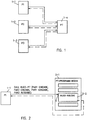
- Fig. 1 the cooperation of the programs P1 (1-1), P2 (1-2) and P3 (1-3) with a target program PT (1-4) is shown schematically.
- the programs P1, P2 and P3 have knowledge of certain target routines in the target program PT: z. B. under what name, for example "HUGO", a target routine can be called by the programs P1, P2 or P3, what this routine does, what input information to this routine and what output information after execution of this routine to the requesting program P1, P2 or P3 is delivered.
- a target routine can be called by the programs P1, P2 or P3, what this routine does, what input information to this routine and what output information after execution of this routine to the requesting program P1, P2 or P3 is delivered.
- the request is indicated by solid arrows and the feedback by dashed arrows.
- This call means that the routine "HUGO” 2-2 located at address S is executed in the program module PT 2-1.
- input information from P1 which is to be processed by the target routine "HUGO” is optionally supplied in the fields symbolically designated as "Par 1 input", "Par 2 input”.
- tracing instructions which are required for recording the access and the input or output information, are part of the target program PT according to the prior art.
- tracing instructions which are required for recording the access and the input or output information.
- tracing instructions increase the size of the program module, which can has a negative impact on the loading time by the operating system. The latter becomes particularly critical if the operating system is able to temporarily outsource certain program modules that are not currently needed in the event of a lack of memory and then reload them when referencing.
- additional queries are provided in the target routine as to whether tracing should take place or not.
- the essence of the tracing according to the invention lies in the creation of a so-called "shadow program module” (tracing program module), which, in terms of addressing, is represented like the actual target program.
- tracing program module a so-called "shadow program module”
- it must be ensured that the tracing program module (and not the target program) is accessed when it is called. This can e.g. B. be ensured by a target search via a search path in which the tracing program module is located in front of the actual target program.
- the start address S of the target routine "HUGO" (3-7) must also be available in the target program (3-6).
- tracing instructions 3-5 are provided in the tracing program module for any output data to be supplied by the "HUGO” target routine.
- the values of "Par 1 output” and “Par 2 output” are recorded here.
- the target program PT was freed from the tracing instructions according to the task - these instructions are now in the PT program module shadow (tracing program module).
- Link denotes a process in which program modules translated independently into machine language are linked to one another, whereby the address linking of the modules to one another is guaranteed. A distinction is made between static and dynamic link processes.
- Program module A (4-1) is intended to satisfy the call Call X (X is a routine in program module 4-3) can be statically "linked” with program module C (4-3).
- Program modules A and C are assigned in a predetermined, contiguous address space 4-4, in which the program consisting of these two "linked" program modules is then executed.
- Operating systems such as B. the IBM operating system OS / 2, which supports dynamic link processes, allow a simple and advantageous implementation of the inventive method.
- the program module to be traced is available here as a dynamically linkable module. If the program module is required, it must be accessible for such modules via the search path of the operating system. If tracing is to be activated with regard to the "target program module”, then an associated tracing program module is in the search path (also dynamically linkable) to be placed so that the operating system finds it first.
- the tracing program module and the target program have the same name and the same entry points for the routines contained.
- the tracing program module in the search path must be excluded.
- the mentioned operating system offers this possibility.
- the code of the target routine is not behind the entry point for the routine in the tracing program module; here the entry-point-specific tracing of the input and output parameters as well as the direct call of the target routine takes place.
- the target address of the target routine is made available in the tracing program module via the operating system OS / 2, so that it does not have to be determined via the search path. This last-described operating system service is used when a dynamic link module is called during the runtime of a program and not when the program is started in order to address routines in it.
- the IBM OS / 2 operating system also offers the option of pre-loading program modules ready for execution before calling them and of addressing them later (without using the search path) when calling up such a module. This option is used for the tracing program module.
- the tracing program module 3-1 can also provide further instructions for changing the recorded inputs or Output data included.
- z. B. made special use to test reactions of the target routine to changed data specifications.
Landscapes
- Engineering & Computer Science (AREA)
- Theoretical Computer Science (AREA)
- Computer Hardware Design (AREA)
- Quality & Reliability (AREA)
- Physics & Mathematics (AREA)
- General Engineering & Computer Science (AREA)
- General Physics & Mathematics (AREA)
- Debugging And Monitoring (AREA)
Priority Applications (2)
| Application Number | Priority Date | Filing Date | Title |
|---|---|---|---|
| EP92107705A EP0568717A1 (fr) | 1992-05-07 | 1992-05-07 | Méthode pour identifier les appels d'un programme sous test par d'autres programmes |
| JP5062064A JPH06131212A (ja) | 1992-05-07 | 1993-03-22 | 他のプログラムによるターゲットプログラムの呼び出しに関してターゲットプログラムの実行を追跡するコンピュータ制御方法 |
Applications Claiming Priority (1)
| Application Number | Priority Date | Filing Date | Title |
|---|---|---|---|
| EP92107705A EP0568717A1 (fr) | 1992-05-07 | 1992-05-07 | Méthode pour identifier les appels d'un programme sous test par d'autres programmes |
Publications (1)
| Publication Number | Publication Date |
|---|---|
| EP0568717A1 true EP0568717A1 (fr) | 1993-11-10 |
Family
ID=8209598
Family Applications (1)
| Application Number | Title | Priority Date | Filing Date |
|---|---|---|---|
| EP92107705A Withdrawn EP0568717A1 (fr) | 1992-05-07 | 1992-05-07 | Méthode pour identifier les appels d'un programme sous test par d'autres programmes |
Country Status (2)
| Country | Link |
|---|---|
| EP (1) | EP0568717A1 (fr) |
| JP (1) | JPH06131212A (fr) |
Cited By (2)
| Publication number | Priority date | Publication date | Assignee | Title |
|---|---|---|---|---|
| EP0654735A1 (fr) * | 1993-11-19 | 1995-05-24 | AT&T Corp. | Appareil et méthodes pour l'analyse d'un système de processus |
| GB2380022A (en) * | 2001-06-29 | 2003-03-26 | Hewlett Packard Co | Auditing system call events with system call wrappers |
Families Citing this family (1)
| Publication number | Priority date | Publication date | Assignee | Title |
|---|---|---|---|---|
| CN100403688C (zh) * | 2005-04-04 | 2008-07-16 | 华为技术有限公司 | 一种业务数据包跟踪实现方法 |
Family Cites Families (2)
| Publication number | Priority date | Publication date | Assignee | Title |
|---|---|---|---|---|
| JPH0715661B2 (ja) * | 1987-04-02 | 1995-02-22 | 日本電気株式会社 | メツセ−ジテキスト組み立て編集制御方式 |
| JPH02294825A (ja) * | 1989-05-10 | 1990-12-05 | Hokuriku Nippon Denki Software Kk | メッセージ出力プログラム作成支援ツール |
-
1992
- 1992-05-07 EP EP92107705A patent/EP0568717A1/fr not_active Withdrawn
-
1993
- 1993-03-22 JP JP5062064A patent/JPH06131212A/ja active Pending
Non-Patent Citations (3)
| Title |
|---|
| BYTE Bd. 13, Nr. 4, April 1988, ST PETERBOROUGH US Seiten 273 - 280 GORDON LETWIN 'Dynamic Linking in OS/2' * |
| CHARLES PETZOLD 'Programming the OS/2 Presentation Manager' 1989 , MICROSOFT PRESS , REDMOND, WASHINGTON * |
| IBM TECHNICAL DISCLOSURE BULLETIN. Bd. 30, Nr. 6, November 1987, NEW YORK US Seiten 296 - 297 'Performance Trace Facility' * |
Cited By (2)
| Publication number | Priority date | Publication date | Assignee | Title |
|---|---|---|---|---|
| EP0654735A1 (fr) * | 1993-11-19 | 1995-05-24 | AT&T Corp. | Appareil et méthodes pour l'analyse d'un système de processus |
| GB2380022A (en) * | 2001-06-29 | 2003-03-26 | Hewlett Packard Co | Auditing system call events with system call wrappers |
Also Published As
| Publication number | Publication date |
|---|---|
| JPH06131212A (ja) | 1994-05-13 |
Similar Documents
| Publication | Publication Date | Title |
|---|---|---|
| EP1330685B1 (fr) | Procede et dispositif de controle destines a la mise en service de systemes commandes au moyen d'une logique de programme | |
| EP0674784B1 (fr) | Procede permettant de tester au moins une classe d'un programme oriente objet sur un ordinateur | |
| DE4220698C2 (de) | Verfahren zum Betreiben einer Datenverarbeitungsanlage | |
| EP1034475A1 (fr) | Procede pour tester les composants de systeme d'un programme oriente objets | |
| DE102016006202A1 (de) | Numerische Steuervorrichtung zum Verwalten von Bearbeitungsdaten und Bearbeitungsergebnissen | |
| DE69427193T2 (de) | Verfahrensauswahl mit mehreren eingangspunkten | |
| EP1731999B1 (fr) | Mechanisme d'enregistrement des fichiers dans un environnement de traitement par lots | |
| EP0664905B1 (fr) | Procede de mise en oeuvre des tests effectue sur des objets d'un programme oriente objet, exploitables en parallele sur un ordinateur | |
| EP0568717A1 (fr) | Méthode pour identifier les appels d'un programme sous test par d'autres programmes | |
| DE19901879A1 (de) | Verfahren zum Tracen von Daten | |
| WO2000054188A2 (fr) | Procede permettant de recuperer automatiquement des donnees techniques contenues dans des installations | |
| EP0537302B1 (fr) | Procede de traitement d'un programme d'utilisateur sur un systeme informatique parallele | |
| EP0708941B1 (fr) | Procede permettant de tester un programme oriente objet | |
| EP1235123A2 (fr) | Méchanisme rapporté pour un système de commande basé sur un champ de données de type | |
| DE19637883B4 (de) | Datenverarbeitungsanlage zur Ausführung großer Programmsysteme | |
| EP1044409B1 (fr) | Procede de deroulement de programme et procede pour l'extension d'un systeme de composantes de programme | |
| DE29622133U1 (de) | Automatisierungsgerät | |
| DE102005030354B4 (de) | Verfahren zum Erzeugen von ausführbarem Code | |
| EP0996888B1 (fr) | Procede et installation de traitement de donnees pour tester la portabilite d'un programme assembleur | |
| DE112022005183T5 (de) | Programmierbares Steuerungssystem, Entwicklungsunterstützungsgerät, Speicherallokationsverfahren und Programm | |
| DE19828611C2 (de) | Datenverarbeitungsvorrichtung und zugehöriges Verfahren | |
| DE102023201494A1 (de) | Verfahren und Vorrichtung zur Visualisierung von Debug-Daten eines komplexen Datenverarbeitungsnetzwerks | |
| EP0691007B1 (fr) | Bibliotheques rentrantes | |
| DE102005003667B4 (de) | Emulator und Verfahren zur Behandlung asynchroner Unterbrechungen bei einer Emulation | |
| EP1248197A2 (fr) | Méthode pour émuler une unité à commande par programme |
Legal Events
| Date | Code | Title | Description |
|---|---|---|---|
| PUAI | Public reference made under article 153(3) epc to a published international application that has entered the european phase |
Free format text: ORIGINAL CODE: 0009012 |
|
| AK | Designated contracting states |
Kind code of ref document: A1 Designated state(s): DE FR GB |
|
| 17P | Request for examination filed |
Effective date: 19940324 |
|
| STAA | Information on the status of an ep patent application or granted ep patent |
Free format text: STATUS: THE APPLICATION HAS BEEN WITHDRAWN |
|
| 18W | Application withdrawn |
Withdrawal date: 19960716 |