EP0571475B1 - Sg(beta)-1,4-GALACTANASE ET SEQUENCE D'ADN - Google Patents
Sg(beta)-1,4-GALACTANASE ET SEQUENCE D'ADN Download PDFInfo
- Publication number
- EP0571475B1 EP0571475B1 EP92904937A EP92904937A EP0571475B1 EP 0571475 B1 EP0571475 B1 EP 0571475B1 EP 92904937 A EP92904937 A EP 92904937A EP 92904937 A EP92904937 A EP 92904937A EP 0571475 B1 EP0571475 B1 EP 0571475B1
- Authority
- EP
- European Patent Office
- Prior art keywords
- galactanase
- aspergillus
- dna sequence
- transformed host
- degradation
- Prior art date
- Legal status (The legal status is an assumption and is not a legal conclusion. Google has not performed a legal analysis and makes no representation as to the accuracy of the status listed.)
- Expired - Lifetime
Links
- 108091028043 Nucleic acid sequence Proteins 0.000 title claims description 20
- 108010076955 arabinogalactan endo-1,4-beta-galactosidase Proteins 0.000 claims abstract description 88
- 238000002360 preparation method Methods 0.000 claims abstract description 37
- 210000002421 cell wall Anatomy 0.000 claims abstract description 20
- 239000013598 vector Substances 0.000 claims abstract description 18
- 108010059820 Polygalacturonase Proteins 0.000 claims abstract description 16
- 230000015556 catabolic process Effects 0.000 claims abstract description 16
- 238000006731 degradation reaction Methods 0.000 claims abstract description 16
- 108010093305 exopolygalacturonase Proteins 0.000 claims abstract description 16
- 238000012986 modification Methods 0.000 claims abstract description 15
- 230000004048 modification Effects 0.000 claims abstract description 15
- 241000228215 Aspergillus aculeatus Species 0.000 claims abstract description 13
- 108020004511 Recombinant DNA Proteins 0.000 claims abstract description 11
- 125000003275 alpha amino acid group Chemical group 0.000 claims abstract 3
- 102000004190 Enzymes Human genes 0.000 claims description 37
- 108090000790 Enzymes Proteins 0.000 claims description 37
- 230000000694 effects Effects 0.000 claims description 31
- 108020004414 DNA Proteins 0.000 claims description 29
- 240000006439 Aspergillus oryzae Species 0.000 claims description 13
- 108090000623 proteins and genes Proteins 0.000 claims description 13
- 108010076504 Protein Sorting Signals Proteins 0.000 claims description 12
- 239000003795 chemical substances by application Substances 0.000 claims description 12
- 238000004519 manufacturing process Methods 0.000 claims description 12
- 235000002247 Aspergillus oryzae Nutrition 0.000 claims description 11
- 241000228245 Aspergillus niger Species 0.000 claims description 9
- 241000588724 Escherichia coli Species 0.000 claims description 6
- 244000005700 microbiome Species 0.000 claims description 6
- 241000228212 Aspergillus Species 0.000 claims description 5
- 108091026890 Coding region Proteins 0.000 claims description 5
- 241001513093 Aspergillus awamori Species 0.000 claims description 4
- 229920001184 polypeptide Polymers 0.000 claims description 3
- 108090000765 processed proteins & peptides Proteins 0.000 claims description 3
- 102000004196 processed proteins & peptides Human genes 0.000 claims description 3
- 241000194110 Bacillus sp. (in: Bacteria) Species 0.000 claims description 2
- 230000002068 genetic effect Effects 0.000 claims description 2
- 238000010369 molecular cloning Methods 0.000 claims description 2
- 230000002103 transcriptional effect Effects 0.000 claims description 2
- 229940088598 enzyme Drugs 0.000 description 32
- 229920001817 Agar Polymers 0.000 description 26
- 239000008272 agar Substances 0.000 description 26
- 229920001277 pectin Polymers 0.000 description 23
- 239000001814 pectin Substances 0.000 description 22
- 235000010987 pectin Nutrition 0.000 description 22
- 239000000203 mixture Substances 0.000 description 20
- 239000000243 solution Substances 0.000 description 19
- XLYOFNOQVPJJNP-UHFFFAOYSA-N water Chemical compound O XLYOFNOQVPJJNP-UHFFFAOYSA-N 0.000 description 19
- 241000196324 Embryophyta Species 0.000 description 16
- 238000000034 method Methods 0.000 description 16
- 101710152845 Arabinogalactan endo-beta-1,4-galactanase Proteins 0.000 description 15
- 101710147028 Endo-beta-1,4-galactanase Proteins 0.000 description 15
- LFQSCWFLJHTTHZ-UHFFFAOYSA-N Ethanol Chemical compound CCO LFQSCWFLJHTTHZ-UHFFFAOYSA-N 0.000 description 15
- 240000004808 Saccharomyces cerevisiae Species 0.000 description 15
- 239000013612 plasmid Substances 0.000 description 14
- HEMHJVSKTPXQMS-UHFFFAOYSA-M Sodium hydroxide Chemical compound [OH-].[Na+] HEMHJVSKTPXQMS-UHFFFAOYSA-M 0.000 description 12
- 150000001413 amino acids Chemical group 0.000 description 12
- 239000000725 suspension Substances 0.000 description 12
- 238000000605 extraction Methods 0.000 description 11
- 239000012634 fragment Substances 0.000 description 11
- 239000000758 substrate Substances 0.000 description 11
- IJGRMHOSHXDMSA-UHFFFAOYSA-N Atomic nitrogen Chemical compound N#N IJGRMHOSHXDMSA-UHFFFAOYSA-N 0.000 description 10
- 238000000855 fermentation Methods 0.000 description 9
- 230000004151 fermentation Effects 0.000 description 9
- 239000000499 gel Substances 0.000 description 9
- 239000008188 pellet Substances 0.000 description 9
- 210000001938 protoplast Anatomy 0.000 description 9
- CSNNHWWHGAXBCP-UHFFFAOYSA-L Magnesium sulfate Chemical compound [Mg+2].[O-][S+2]([O-])([O-])[O-] CSNNHWWHGAXBCP-UHFFFAOYSA-L 0.000 description 8
- 238000011534 incubation Methods 0.000 description 8
- VLEIUWBSEKKKFX-UHFFFAOYSA-N 2-amino-2-(hydroxymethyl)propane-1,3-diol;2-[2-[bis(carboxymethyl)amino]ethyl-(carboxymethyl)amino]acetic acid Chemical compound OCC(N)(CO)CO.OC(=O)CN(CC(O)=O)CCN(CC(O)=O)CC(O)=O VLEIUWBSEKKKFX-UHFFFAOYSA-N 0.000 description 7
- 229920002472 Starch Polymers 0.000 description 7
- 210000004027 cell Anatomy 0.000 description 7
- 239000000706 filtrate Substances 0.000 description 7
- 239000008107 starch Substances 0.000 description 7
- 235000019698 starch Nutrition 0.000 description 7
- 239000000126 substance Substances 0.000 description 7
- KCXVZYZYPLLWCC-UHFFFAOYSA-N EDTA Chemical compound OC(=O)CN(CC(O)=O)CCN(CC(O)=O)CC(O)=O KCXVZYZYPLLWCC-UHFFFAOYSA-N 0.000 description 6
- WQZGKKKJIJFFOK-GASJEMHNSA-N Glucose Natural products OC[C@H]1OC(O)[C@H](O)[C@@H](O)[C@@H]1O WQZGKKKJIJFFOK-GASJEMHNSA-N 0.000 description 6
- PEDCQBHIVMGVHV-UHFFFAOYSA-N Glycerine Chemical compound OCC(O)CO PEDCQBHIVMGVHV-UHFFFAOYSA-N 0.000 description 6
- 235000010469 Glycine max Nutrition 0.000 description 6
- OKKJLVBELUTLKV-UHFFFAOYSA-N Methanol Chemical compound OC OKKJLVBELUTLKV-UHFFFAOYSA-N 0.000 description 6
- FAPWRFPIFSIZLT-UHFFFAOYSA-M Sodium chloride Chemical compound [Na+].[Cl-] FAPWRFPIFSIZLT-UHFFFAOYSA-M 0.000 description 6
- 238000013019 agitation Methods 0.000 description 6
- 235000010633 broth Nutrition 0.000 description 6
- 238000010276 construction Methods 0.000 description 6
- 238000001914 filtration Methods 0.000 description 6
- 239000008103 glucose Substances 0.000 description 6
- FBPFZTCFMRRESA-FSIIMWSLSA-N D-Glucitol Natural products OC[C@H](O)[C@H](O)[C@@H](O)[C@H](O)CO FBPFZTCFMRRESA-FSIIMWSLSA-N 0.000 description 5
- NBIIXXVUZAFLBC-UHFFFAOYSA-N Phosphoric acid Chemical compound OP(O)(O)=O NBIIXXVUZAFLBC-UHFFFAOYSA-N 0.000 description 5
- 239000002253 acid Substances 0.000 description 5
- 238000005273 aeration Methods 0.000 description 5
- 239000000872 buffer Substances 0.000 description 5
- 229910052757 nitrogen Inorganic materials 0.000 description 5
- 238000000746 purification Methods 0.000 description 5
- 239000000600 sorbitol Substances 0.000 description 5
- 239000006228 supernatant Substances 0.000 description 5
- VTYYLEPIZMXCLO-UHFFFAOYSA-L Calcium carbonate Chemical compound [Ca+2].[O-]C([O-])=O VTYYLEPIZMXCLO-UHFFFAOYSA-L 0.000 description 4
- 239000007836 KH2PO4 Substances 0.000 description 4
- 244000061456 Solanum tuberosum Species 0.000 description 4
- 235000002595 Solanum tuberosum Nutrition 0.000 description 4
- DTQVDTLACAAQTR-UHFFFAOYSA-N Trifluoroacetic acid Chemical compound OC(=O)C(F)(F)F DTQVDTLACAAQTR-UHFFFAOYSA-N 0.000 description 4
- 108700015934 Triose-phosphate isomerases Proteins 0.000 description 4
- ISAKRJDGNUQOIC-UHFFFAOYSA-N Uracil Chemical compound O=C1C=CNC(=O)N1 ISAKRJDGNUQOIC-UHFFFAOYSA-N 0.000 description 4
- AIYUHDOJVYHVIT-UHFFFAOYSA-M caesium chloride Chemical compound [Cl-].[Cs+] AIYUHDOJVYHVIT-UHFFFAOYSA-M 0.000 description 4
- 238000006243 chemical reaction Methods 0.000 description 4
- 239000002299 complementary DNA Substances 0.000 description 4
- IQFVPQOLBLOTPF-HKXUKFGYSA-L congo red Chemical compound [Na+].[Na+].C1=CC=CC2=C(N)C(/N=N/C3=CC=C(C=C3)C3=CC=C(C=C3)/N=N/C3=C(C4=CC=CC=C4C(=C3)S([O-])(=O)=O)N)=CC(S([O-])(=O)=O)=C21 IQFVPQOLBLOTPF-HKXUKFGYSA-L 0.000 description 4
- 230000002255 enzymatic effect Effects 0.000 description 4
- 235000013305 food Nutrition 0.000 description 4
- 229910052943 magnesium sulfate Inorganic materials 0.000 description 4
- 235000019341 magnesium sulphate Nutrition 0.000 description 4
- 239000000463 material Substances 0.000 description 4
- 229910000402 monopotassium phosphate Inorganic materials 0.000 description 4
- 235000019796 monopotassium phosphate Nutrition 0.000 description 4
- GNSKLFRGEWLPPA-UHFFFAOYSA-M potassium dihydrogen phosphate Chemical compound [K+].OP(O)([O-])=O GNSKLFRGEWLPPA-UHFFFAOYSA-M 0.000 description 4
- 102000004169 proteins and genes Human genes 0.000 description 4
- 239000000523 sample Substances 0.000 description 4
- 238000012360 testing method Methods 0.000 description 4
- 108091032973 (ribonucleotides)n+m Proteins 0.000 description 3
- QKNYBSVHEMOAJP-UHFFFAOYSA-N 2-amino-2-(hydroxymethyl)propane-1,3-diol;hydron;chloride Chemical compound Cl.OCC(N)(CO)CO QKNYBSVHEMOAJP-UHFFFAOYSA-N 0.000 description 3
- VYPSYNLAJGMNEJ-UHFFFAOYSA-N Silicium dioxide Chemical compound O=[Si]=O VYPSYNLAJGMNEJ-UHFFFAOYSA-N 0.000 description 3
- 102100033598 Triosephosphate isomerase Human genes 0.000 description 3
- 150000007513 acids Chemical class 0.000 description 3
- 239000011543 agarose gel Substances 0.000 description 3
- KRKNYBCHXYNGOX-UHFFFAOYSA-N citric acid Chemical compound OC(=O)CC(O)(C(O)=O)CC(O)=O KRKNYBCHXYNGOX-UHFFFAOYSA-N 0.000 description 3
- 230000000593 degrading effect Effects 0.000 description 3
- 239000012153 distilled water Substances 0.000 description 3
- 108010002430 hemicellulase Proteins 0.000 description 3
- 238000011081 inoculation Methods 0.000 description 3
- 238000002955 isolation Methods 0.000 description 3
- 239000007788 liquid Substances 0.000 description 3
- 235000011007 phosphoric acid Nutrition 0.000 description 3
- 229920001983 poloxamer Polymers 0.000 description 3
- 239000011780 sodium chloride Substances 0.000 description 3
- 230000002195 synergetic effect Effects 0.000 description 3
- 239000008399 tap water Substances 0.000 description 3
- 235000020679 tap water Nutrition 0.000 description 3
- 230000009466 transformation Effects 0.000 description 3
- SATHPVQTSSUFFW-UHFFFAOYSA-N 4-[6-[(3,5-dihydroxy-4-methoxyoxan-2-yl)oxymethyl]-3,5-dihydroxy-4-methoxyoxan-2-yl]oxy-2-(hydroxymethyl)-6-methyloxane-3,5-diol Chemical compound OC1C(OC)C(O)COC1OCC1C(O)C(OC)C(O)C(OC2C(C(CO)OC(C)C2O)O)O1 SATHPVQTSSUFFW-UHFFFAOYSA-N 0.000 description 2
- DLFVBJFMPXGRIB-UHFFFAOYSA-N Acetamide Chemical compound CC(N)=O DLFVBJFMPXGRIB-UHFFFAOYSA-N 0.000 description 2
- 229920000189 Arabinogalactan Polymers 0.000 description 2
- 239000001904 Arabinogalactan Substances 0.000 description 2
- 241000894006 Bacteria Species 0.000 description 2
- UXVMQQNJUSDDNG-UHFFFAOYSA-L Calcium chloride Chemical compound [Cl-].[Cl-].[Ca+2] UXVMQQNJUSDDNG-UHFFFAOYSA-L 0.000 description 2
- 241000207199 Citrus Species 0.000 description 2
- 108010014303 DNA-directed DNA polymerase Proteins 0.000 description 2
- 102000016928 DNA-directed DNA polymerase Human genes 0.000 description 2
- KFZMGEQAYNKOFK-UHFFFAOYSA-N Isopropanol Chemical compound CC(C)O KFZMGEQAYNKOFK-UHFFFAOYSA-N 0.000 description 2
- 239000005909 Kieselgur Substances 0.000 description 2
- ROHFNLRQFUQHCH-YFKPBYRVSA-N L-leucine Chemical compound CC(C)C[C@H](N)C(O)=O ROHFNLRQFUQHCH-YFKPBYRVSA-N 0.000 description 2
- QIVBCDIJIAJPQS-VIFPVBQESA-N L-tryptophane Chemical compound C1=CC=C2C(C[C@H](N)C(O)=O)=CNC2=C1 QIVBCDIJIAJPQS-VIFPVBQESA-N 0.000 description 2
- 229910009891 LiAc Inorganic materials 0.000 description 2
- 239000005913 Maltodextrin Substances 0.000 description 2
- 229920002774 Maltodextrin Polymers 0.000 description 2
- 125000001429 N-terminal alpha-amino-acid group Chemical group 0.000 description 2
- 239000001888 Peptone Substances 0.000 description 2
- 108010080698 Peptones Proteins 0.000 description 2
- ISWSIDIOOBJBQZ-UHFFFAOYSA-N Phenol Chemical compound OC1=CC=CC=C1 ISWSIDIOOBJBQZ-UHFFFAOYSA-N 0.000 description 2
- 229920001030 Polyethylene Glycol 4000 Polymers 0.000 description 2
- CDBYLPFSWZWCQE-UHFFFAOYSA-L Sodium Carbonate Chemical compound [Na+].[Na+].[O-]C([O-])=O CDBYLPFSWZWCQE-UHFFFAOYSA-L 0.000 description 2
- PXIPVTKHYLBLMZ-UHFFFAOYSA-N Sodium azide Chemical compound [Na+].[N-]=[N+]=[N-] PXIPVTKHYLBLMZ-UHFFFAOYSA-N 0.000 description 2
- 235000019764 Soybean Meal Nutrition 0.000 description 2
- KDYFGRWQOYBRFD-UHFFFAOYSA-N Succinic acid Natural products OC(=O)CCC(O)=O KDYFGRWQOYBRFD-UHFFFAOYSA-N 0.000 description 2
- QAOWNCQODCNURD-UHFFFAOYSA-N Sulfuric acid Chemical compound OS(O)(=O)=O QAOWNCQODCNURD-UHFFFAOYSA-N 0.000 description 2
- AYFVYJQAPQTCCC-UHFFFAOYSA-N Threonine Natural products CC(O)C(N)C(O)=O AYFVYJQAPQTCCC-UHFFFAOYSA-N 0.000 description 2
- 239000004473 Threonine Substances 0.000 description 2
- QIVBCDIJIAJPQS-UHFFFAOYSA-N Tryptophan Natural products C1=CC=C2C(CC(N)C(O)=O)=CNC2=C1 QIVBCDIJIAJPQS-UHFFFAOYSA-N 0.000 description 2
- XSQUKJJJFZCRTK-UHFFFAOYSA-N Urea Chemical compound NC(N)=O XSQUKJJJFZCRTK-UHFFFAOYSA-N 0.000 description 2
- 108090000637 alpha-Amylases Proteins 0.000 description 2
- 102000004139 alpha-Amylases Human genes 0.000 description 2
- 229940024171 alpha-amylase Drugs 0.000 description 2
- 229910000147 aluminium phosphate Inorganic materials 0.000 description 2
- 229940024606 amino acid Drugs 0.000 description 2
- 239000002518 antifoaming agent Substances 0.000 description 2
- 235000019312 arabinogalactan Nutrition 0.000 description 2
- 230000001580 bacterial effect Effects 0.000 description 2
- KDYFGRWQOYBRFD-NUQCWPJISA-N butanedioic acid Chemical compound O[14C](=O)CC[14C](O)=O KDYFGRWQOYBRFD-NUQCWPJISA-N 0.000 description 2
- 238000010804 cDNA synthesis Methods 0.000 description 2
- 235000010216 calcium carbonate Nutrition 0.000 description 2
- 229910000019 calcium carbonate Inorganic materials 0.000 description 2
- 239000001110 calcium chloride Substances 0.000 description 2
- 235000011148 calcium chloride Nutrition 0.000 description 2
- 229910001628 calcium chloride Inorganic materials 0.000 description 2
- 229940041514 candida albicans extract Drugs 0.000 description 2
- 230000008618 cell wall macromolecule catabolic process Effects 0.000 description 2
- 238000005119 centrifugation Methods 0.000 description 2
- 235000020971 citrus fruits Nutrition 0.000 description 2
- 239000012141 concentrate Substances 0.000 description 2
- 238000001816 cooling Methods 0.000 description 2
- 238000001704 evaporation Methods 0.000 description 2
- 239000013604 expression vector Substances 0.000 description 2
- 229930182830 galactose Natural products 0.000 description 2
- 238000003780 insertion Methods 0.000 description 2
- 230000037431 insertion Effects 0.000 description 2
- 229940035034 maltodextrin Drugs 0.000 description 2
- 235000012054 meals Nutrition 0.000 description 2
- 108020004999 messenger RNA Proteins 0.000 description 2
- 238000002156 mixing Methods 0.000 description 2
- 235000019319 peptone Nutrition 0.000 description 2
- 229920000642 polymer Polymers 0.000 description 2
- 238000012545 processing Methods 0.000 description 2
- 239000000047 product Substances 0.000 description 2
- 108091008146 restriction endonucleases Proteins 0.000 description 2
- 150000003839 salts Chemical class 0.000 description 2
- 239000004455 soybean meal Substances 0.000 description 2
- 238000001228 spectrum Methods 0.000 description 2
- 239000007858 starting material Substances 0.000 description 2
- 235000011149 sulphuric acid Nutrition 0.000 description 2
- 108010075550 termamyl Proteins 0.000 description 2
- 229910021654 trace metal Inorganic materials 0.000 description 2
- 230000014621 translational initiation Effects 0.000 description 2
- 229960004799 tryptophan Drugs 0.000 description 2
- 229940035893 uracil Drugs 0.000 description 2
- 239000002699 waste material Substances 0.000 description 2
- 239000012138 yeast extract Substances 0.000 description 2
- OWEGMIWEEQEYGQ-UHFFFAOYSA-N 100676-05-9 Natural products OC1C(O)C(O)C(CO)OC1OCC1C(O)C(O)C(O)C(OC2C(OC(O)C(O)C2O)CO)O1 OWEGMIWEEQEYGQ-UHFFFAOYSA-N 0.000 description 1
- PYMYPHUHKUWMLA-UHFFFAOYSA-N 2,3,4,5-tetrahydroxypentanal Chemical compound OCC(O)C(O)C(O)C=O PYMYPHUHKUWMLA-UHFFFAOYSA-N 0.000 description 1
- BFSVOASYOCHEOV-UHFFFAOYSA-N 2-diethylaminoethanol Chemical compound CCN(CC)CCO BFSVOASYOCHEOV-UHFFFAOYSA-N 0.000 description 1
- GHCZTIFQWKKGSB-UHFFFAOYSA-N 2-hydroxypropane-1,2,3-tricarboxylic acid;phosphoric acid Chemical compound OP(O)(O)=O.OC(=O)CC(O)(C(O)=O)CC(O)=O GHCZTIFQWKKGSB-UHFFFAOYSA-N 0.000 description 1
- 229920000936 Agarose Polymers 0.000 description 1
- 239000004382 Amylase Substances 0.000 description 1
- 108010065511 Amylases Proteins 0.000 description 1
- 102000013142 Amylases Human genes 0.000 description 1
- 101001072762 Aspergillus aculeatus Arabinogalactan endo-beta-1,4-galactanase Proteins 0.000 description 1
- 241000351920 Aspergillus nidulans Species 0.000 description 1
- 241000219310 Beta vulgaris subsp. vulgaris Species 0.000 description 1
- 102000053602 DNA Human genes 0.000 description 1
- 238000007399 DNA isolation Methods 0.000 description 1
- 239000003298 DNA probe Substances 0.000 description 1
- 108060002716 Exonuclease Proteins 0.000 description 1
- 108010073178 Glucan 1,4-alpha-Glucosidase Proteins 0.000 description 1
- 108010033128 Glucan Endo-1,3-beta-D-Glucosidase Proteins 0.000 description 1
- 102100022624 Glucoamylase Human genes 0.000 description 1
- 244000068988 Glycine max Species 0.000 description 1
- 235000019454 L-leucine Nutrition 0.000 description 1
- 239000004395 L-leucine Substances 0.000 description 1
- GUBGYTABKSRVRQ-PICCSMPSSA-N Maltose Natural products O[C@@H]1[C@@H](O)[C@H](O)[C@@H](CO)O[C@@H]1O[C@@H]1[C@@H](CO)OC(O)[C@H](O)[C@H]1O GUBGYTABKSRVRQ-PICCSMPSSA-N 0.000 description 1
- 229910017621 MgSO4-7H2O Inorganic materials 0.000 description 1
- 229910017234 MnSO4 H2O Inorganic materials 0.000 description 1
- 229910017237 MnSO4-H2O Inorganic materials 0.000 description 1
- 229910017228 MnSO4—H2O Inorganic materials 0.000 description 1
- GRYLNZFGIOXLOG-UHFFFAOYSA-N Nitric acid Chemical compound O[N+]([O-])=O GRYLNZFGIOXLOG-UHFFFAOYSA-N 0.000 description 1
- 108091005804 Peptidases Proteins 0.000 description 1
- 239000004365 Protease Substances 0.000 description 1
- 239000006004 Quartz sand Substances 0.000 description 1
- 102100037486 Reverse transcriptase/ribonuclease H Human genes 0.000 description 1
- 102000006382 Ribonucleases Human genes 0.000 description 1
- 108010083644 Ribonucleases Proteins 0.000 description 1
- 229920002684 Sepharose Polymers 0.000 description 1
- 108091081024 Start codon Proteins 0.000 description 1
- 102000005158 Subtilisins Human genes 0.000 description 1
- 108010056079 Subtilisins Proteins 0.000 description 1
- 229930006000 Sucrose Natural products 0.000 description 1
- CZMRCDWAGMRECN-UGDNZRGBSA-N Sucrose Chemical compound O[C@H]1[C@H](O)[C@@H](CO)O[C@@]1(CO)O[C@@H]1[C@H](O)[C@@H](O)[C@H](O)[C@@H](CO)O1 CZMRCDWAGMRECN-UGDNZRGBSA-N 0.000 description 1
- 235000021536 Sugar beet Nutrition 0.000 description 1
- 108010006785 Taq Polymerase Proteins 0.000 description 1
- 102000005924 Triose-Phosphate Isomerase Human genes 0.000 description 1
- 239000006035 Tryptophane Substances 0.000 description 1
- 240000008042 Zea mays Species 0.000 description 1
- 235000005824 Zea mays ssp. parviglumis Nutrition 0.000 description 1
- 235000002017 Zea mays subsp mays Nutrition 0.000 description 1
- 230000009471 action Effects 0.000 description 1
- 101150069003 amdS gene Proteins 0.000 description 1
- BFNBIHQBYMNNAN-UHFFFAOYSA-N ammonium sulfate Chemical compound N.N.OS(O)(=O)=O BFNBIHQBYMNNAN-UHFFFAOYSA-N 0.000 description 1
- 229910052921 ammonium sulfate Inorganic materials 0.000 description 1
- 235000011130 ammonium sulphate Nutrition 0.000 description 1
- AVKUERGKIZMTKX-NJBDSQKTSA-N ampicillin Chemical compound C1([C@@H](N)C(=O)N[C@H]2[C@H]3SC([C@@H](N3C2=O)C(O)=O)(C)C)=CC=CC=C1 AVKUERGKIZMTKX-NJBDSQKTSA-N 0.000 description 1
- 229960000723 ampicillin Drugs 0.000 description 1
- 230000003321 amplification Effects 0.000 description 1
- 235000019418 amylase Nutrition 0.000 description 1
- 238000004458 analytical method Methods 0.000 description 1
- 235000015197 apple juice Nutrition 0.000 description 1
- 238000013459 approach Methods 0.000 description 1
- 125000000089 arabinosyl group Chemical group C1([C@@H](O)[C@H](O)[C@H](O)CO1)* 0.000 description 1
- 230000008901 benefit Effects 0.000 description 1
- 108010051098 beta-galactanase Proteins 0.000 description 1
- 239000012620 biological material Substances 0.000 description 1
- 238000009835 boiling Methods 0.000 description 1
- 238000010805 cDNA synthesis kit Methods 0.000 description 1
- 239000004202 carbamide Substances 0.000 description 1
- 108010089934 carbohydrase Proteins 0.000 description 1
- 150000001720 carbohydrates Chemical class 0.000 description 1
- 235000014633 carbohydrates Nutrition 0.000 description 1
- 239000001913 cellulose Substances 0.000 description 1
- 229920002678 cellulose Polymers 0.000 description 1
- 238000012512 characterization method Methods 0.000 description 1
- 238000004587 chromatography analysis Methods 0.000 description 1
- 229940040387 citrus pectin Drugs 0.000 description 1
- 239000009194 citrus pectin Substances 0.000 description 1
- 238000003776 cleavage reaction Methods 0.000 description 1
- 229910000366 copper(II) sulfate Inorganic materials 0.000 description 1
- 239000007799 cork Substances 0.000 description 1
- 235000005822 corn Nutrition 0.000 description 1
- 238000005260 corrosion Methods 0.000 description 1
- 230000007797 corrosion Effects 0.000 description 1
- 230000003247 decreasing effect Effects 0.000 description 1
- 230000007812 deficiency Effects 0.000 description 1
- 230000001419 dependent effect Effects 0.000 description 1
- 238000001514 detection method Methods 0.000 description 1
- 238000011026 diafiltration Methods 0.000 description 1
- 229940079919 digestives enzyme preparation Drugs 0.000 description 1
- 238000009826 distribution Methods 0.000 description 1
- 235000013399 edible fruits Nutrition 0.000 description 1
- 238000005516 engineering process Methods 0.000 description 1
- 230000007613 environmental effect Effects 0.000 description 1
- 238000006911 enzymatic reaction Methods 0.000 description 1
- 241001233957 eudicotyledons Species 0.000 description 1
- 230000008020 evaporation Effects 0.000 description 1
- 102000013165 exonuclease Human genes 0.000 description 1
- 239000013613 expression plasmid Substances 0.000 description 1
- 239000000284 extract Substances 0.000 description 1
- 238000011049 filling Methods 0.000 description 1
- 239000012065 filter cake Substances 0.000 description 1
- 235000013312 flour Nutrition 0.000 description 1
- 238000004108 freeze drying Methods 0.000 description 1
- 235000015203 fruit juice Nutrition 0.000 description 1
- 235000019990 fruit wine Nutrition 0.000 description 1
- 235000012055 fruits and vegetables Nutrition 0.000 description 1
- 238000001879 gelation Methods 0.000 description 1
- 238000010353 genetic engineering Methods 0.000 description 1
- 239000011521 glass Substances 0.000 description 1
- 150000004676 glycans Chemical class 0.000 description 1
- ZJYYHGLJYGJLLN-UHFFFAOYSA-N guanidinium thiocyanate Chemical compound SC#N.NC(N)=N ZJYYHGLJYGJLLN-UHFFFAOYSA-N 0.000 description 1
- 229940059442 hemicellulase Drugs 0.000 description 1
- 238000004128 high performance liquid chromatography Methods 0.000 description 1
- HNDVDQJCIGZPNO-UHFFFAOYSA-N histidine Natural products OC(=O)C(N)CC1=CN=CN1 HNDVDQJCIGZPNO-UHFFFAOYSA-N 0.000 description 1
- 239000005457 ice water Substances 0.000 description 1
- 230000000977 initiatory effect Effects 0.000 description 1
- 238000011835 investigation Methods 0.000 description 1
- 150000002500 ions Chemical group 0.000 description 1
- 229960003136 leucine Drugs 0.000 description 1
- ISPYRSDWRDQNSW-UHFFFAOYSA-L manganese(II) sulfate monohydrate Chemical compound O.[Mn+2].[O-]S([O-])(=O)=O ISPYRSDWRDQNSW-UHFFFAOYSA-L 0.000 description 1
- 239000003550 marker Substances 0.000 description 1
- 235000013372 meat Nutrition 0.000 description 1
- 235000019799 monosodium phosphate Nutrition 0.000 description 1
- 239000004570 mortar (masonry) Substances 0.000 description 1
- 229910017604 nitric acid Inorganic materials 0.000 description 1
- 238000003199 nucleic acid amplification method Methods 0.000 description 1
- 238000012261 overproduction Methods 0.000 description 1
- 125000001997 phenyl group Chemical group [H]C1=C([H])C([H])=C(*)C([H])=C1[H] 0.000 description 1
- 239000008363 phosphate buffer Substances 0.000 description 1
- 229920003023 plastic Polymers 0.000 description 1
- 229920001282 polysaccharide Polymers 0.000 description 1
- 239000005017 polysaccharide Substances 0.000 description 1
- SCVFZCLFOSHCOH-UHFFFAOYSA-M potassium acetate Chemical compound [K+].CC([O-])=O SCVFZCLFOSHCOH-UHFFFAOYSA-M 0.000 description 1
- OTYBMLCTZGSZBG-UHFFFAOYSA-L potassium sulfate Chemical compound [K+].[K+].[O-]S([O-])(=O)=O OTYBMLCTZGSZBG-UHFFFAOYSA-L 0.000 description 1
- 229910052939 potassium sulfate Inorganic materials 0.000 description 1
- 239000002244 precipitate Substances 0.000 description 1
- 238000001556 precipitation Methods 0.000 description 1
- 230000008569 process Effects 0.000 description 1
- 230000000644 propagated effect Effects 0.000 description 1
- 230000009467 reduction Effects 0.000 description 1
- 230000010076 replication Effects 0.000 description 1
- 230000007017 scission Effects 0.000 description 1
- 238000012216 screening Methods 0.000 description 1
- 238000004062 sedimentation Methods 0.000 description 1
- 238000011218 seed culture Methods 0.000 description 1
- 238000012163 sequencing technique Methods 0.000 description 1
- 210000002966 serum Anatomy 0.000 description 1
- 230000035939 shock Effects 0.000 description 1
- 235000020183 skimmed milk Nutrition 0.000 description 1
- 239000007974 sodium acetate buffer Substances 0.000 description 1
- 235000017550 sodium carbonate Nutrition 0.000 description 1
- 229910000029 sodium carbonate Inorganic materials 0.000 description 1
- AJPJDKMHJJGVTQ-UHFFFAOYSA-M sodium dihydrogen phosphate Chemical compound [Na+].OP(O)([O-])=O AJPJDKMHJJGVTQ-UHFFFAOYSA-M 0.000 description 1
- 238000002415 sodium dodecyl sulfate polyacrylamide gel electrophoresis Methods 0.000 description 1
- 229910000162 sodium phosphate Inorganic materials 0.000 description 1
- 235000012424 soybean oil Nutrition 0.000 description 1
- 239000003549 soybean oil Substances 0.000 description 1
- 238000009987 spinning Methods 0.000 description 1
- 230000006641 stabilisation Effects 0.000 description 1
- 238000010561 standard procedure Methods 0.000 description 1
- 239000005720 sucrose Substances 0.000 description 1
- 235000000346 sugar Nutrition 0.000 description 1
- 239000001117 sulphuric acid Substances 0.000 description 1
- 238000013518 transcription Methods 0.000 description 1
- 230000035897 transcription Effects 0.000 description 1
- 238000000108 ultra-filtration Methods 0.000 description 1
- 238000011144 upstream manufacturing Methods 0.000 description 1
- 239000011782 vitamin Substances 0.000 description 1
- 229940088594 vitamin Drugs 0.000 description 1
- 229930003231 vitamin Natural products 0.000 description 1
- 235000013343 vitamin Nutrition 0.000 description 1
- 238000003911 water pollution Methods 0.000 description 1
- 238000001262 western blot Methods 0.000 description 1
- 210000005253 yeast cell Anatomy 0.000 description 1
- 239000011592 zinc chloride Substances 0.000 description 1
- 235000005074 zinc chloride Nutrition 0.000 description 1
- JIAARYAFYJHUJI-UHFFFAOYSA-L zinc dichloride Chemical compound [Cl-].[Cl-].[Zn+2] JIAARYAFYJHUJI-UHFFFAOYSA-L 0.000 description 1
- DGVVWUTYPXICAM-UHFFFAOYSA-N β‐Mercaptoethanol Chemical compound OCCS DGVVWUTYPXICAM-UHFFFAOYSA-N 0.000 description 1
Images



Classifications
-
- C—CHEMISTRY; METALLURGY
- C12—BIOCHEMISTRY; BEER; SPIRITS; WINE; VINEGAR; MICROBIOLOGY; ENZYMOLOGY; MUTATION OR GENETIC ENGINEERING
- C12Y—ENZYMES
- C12Y302/00—Hydrolases acting on glycosyl compounds, i.e. glycosylases (3.2)
- C12Y302/01—Glycosidases, i.e. enzymes hydrolysing O- and S-glycosyl compounds (3.2.1)
- C12Y302/01089—Arabinogalactan endo-beta-1,4-galactanase (3.2.1.89)
-
- C—CHEMISTRY; METALLURGY
- C12—BIOCHEMISTRY; BEER; SPIRITS; WINE; VINEGAR; MICROBIOLOGY; ENZYMOLOGY; MUTATION OR GENETIC ENGINEERING
- C12N—MICROORGANISMS OR ENZYMES; COMPOSITIONS THEREOF; PROPAGATING, PRESERVING, OR MAINTAINING MICROORGANISMS; MUTATION OR GENETIC ENGINEERING; CULTURE MEDIA
- C12N15/00—Mutation or genetic engineering; DNA or RNA concerning genetic engineering, vectors, e.g. plasmids, or their isolation, preparation or purification; Use of hosts therefor
- C12N15/09—Recombinant DNA-technology
- C12N15/63—Introduction of foreign genetic material using vectors; Vectors; Use of hosts therefor; Regulation of expression
- C12N15/79—Vectors or expression systems specially adapted for eukaryotic hosts
- C12N15/80—Vectors or expression systems specially adapted for eukaryotic hosts for fungi
-
- C—CHEMISTRY; METALLURGY
- C12—BIOCHEMISTRY; BEER; SPIRITS; WINE; VINEGAR; MICROBIOLOGY; ENZYMOLOGY; MUTATION OR GENETIC ENGINEERING
- C12N—MICROORGANISMS OR ENZYMES; COMPOSITIONS THEREOF; PROPAGATING, PRESERVING, OR MAINTAINING MICROORGANISMS; MUTATION OR GENETIC ENGINEERING; CULTURE MEDIA
- C12N9/00—Enzymes; Proenzymes; Compositions thereof; Processes for preparing, activating, inhibiting, separating or purifying enzymes
- C12N9/14—Hydrolases (3)
- C12N9/24—Hydrolases (3) acting on glycosyl compounds (3.2)
- C12N9/2402—Hydrolases (3) acting on glycosyl compounds (3.2) hydrolysing O- and S- glycosyl compounds (3.2.1)
- C12N9/2468—Hydrolases (3) acting on glycosyl compounds (3.2) hydrolysing O- and S- glycosyl compounds (3.2.1) acting on beta-galactose-glycoside bonds, e.g. carrageenases (3.2.1.83; 3.2.1.157); beta-agarase (3.2.1.81)
- C12N9/2471—Beta-galactosidase (3.2.1.23), i.e. exo-(1-->4)-beta-D-galactanase
-
- Y—GENERAL TAGGING OF NEW TECHNOLOGICAL DEVELOPMENTS; GENERAL TAGGING OF CROSS-SECTIONAL TECHNOLOGIES SPANNING OVER SEVERAL SECTIONS OF THE IPC; TECHNICAL SUBJECTS COVERED BY FORMER USPC CROSS-REFERENCE ART COLLECTIONS [XRACs] AND DIGESTS
- Y10—TECHNICAL SUBJECTS COVERED BY FORMER USPC
- Y10S—TECHNICAL SUBJECTS COVERED BY FORMER USPC CROSS-REFERENCE ART COLLECTIONS [XRACs] AND DIGESTS
- Y10S435/00—Chemistry: molecular biology and microbiology
- Y10S435/8215—Microorganisms
- Y10S435/911—Microorganisms using fungi
- Y10S435/913—Aspergillus
Definitions
- the invention comprises a ⁇ -1,4-galactanase, a corresponding DNA sequence, a vector, a transformed host, a method for production of a ⁇ -1,4-galactanase, an enzyme preparation, and a use of the ⁇ -1,4-galactanase.
- the invention relates to genetic engineering and provides a partial amino acid sequence of a ⁇ -1,4-galactanase and partial DNA sequences.
- ⁇ -1,4-galactanases (EC no. 3.2.1.89) is a group of carbohydrases which degrade galactanes.
- the authorized enzyme name is 1,4- ⁇ -D-galactan galactohydrolase, but the short term ⁇ -1,4-galactanase is used in this specification with claims.
- the above indicated partial amino acid sequence can be used for construction of DNA probes which can be used for screening a genomic library for organisms expressing such enzyme, or a cDNA library, thereby obtaining DNA sequences, which can be used either for an overproduction of ⁇ -1,4-galactanase, if inserted in the microorganism species, from which the parent DNA molecule originated, or for production of ⁇ -1,4-galactanase without accompanying closely related enzymes, if inserted in a host microorganism, which in its not-transformed condition does not produce any enzymes closely related to ⁇ -1,4-galactanase.
- the DNA sequences can be established otherwise, as will appear from the following.
- the purpose of the invention is the provision of a new ⁇ -1,4-galactanase and of means and methods for production of ⁇ -1,4-galactanase in better yield and higher purity than hitherto possible, and of a use of ⁇ -1,4-galactanase either alone or in combination with other enzymes for degradation of plant cell wall tissue, more efficient than hitherto possible. Also it is the purpose of the invention to provide novel products, wherein the proportion of the ⁇ -1,4-galactanase is either increased or decreased in relation to the proportion in the original product.
- the recombinant DNA sequence obtainable according to the invention comprises a DNA sequence coding for a polypeptide having ⁇ -1,4-galactanase activity, or a DNA sequence having substantial sequence homology to such ⁇ -1,4-galactanase coding sequence.
- Crude enzyme preparations produced from Aspergillus aculeatus for purification of the ⁇ -1,4-galactanase can be produced as follows. For the sake of brevity this crude Aspergillus aculeatus preparation will be referred to in the following as A.a.e.p.
- strain Aspergillus aculeatus CBS 101.43 as a gene donor was fermented in a pilot plant scale in the following way.
- the strain CBS 101.43 was cultivated on an E-agar slant (37°C). The spores from the slant were suspended in sterilized skim-milk, and the suspension was lyophilized in vials. The contents of one lyophilized vial was transferred to the Fernbach flask. The flask was then incubated for 13 days at 30°C.
- a substrate with the following composition was prepared in a 500 litre seed fermenter: CaCO3 1.2 kg Glucose 7.2 kg Rofec (corn steep liquor dry matter) 3.6 kg Soy bean oil 1.2 kg
- Tap water was added to a total volume of around 240 litres. pH was adjusted to around 5.5 before addition of CaCO3. The substrate was sterilized in the seed fermenter for 1 hour at 121°C. Final volume before inoculation was around 300 litres.
- the Fernbach flask spore suspension was transferred to the seed fermenter.
- Seed fermentation conditions were: Fermenter type: Conventional aerated and agitated fermenter with a height/diameter ratio of around 2.3. Agitation: 300 rpm (two turbine impellers) Aeration: 300 normal litre air per minute Temperature: 30 to 31°C Time: around 28 hours
- a substrate with the following composition was prepared in a 2500 litre main fermenter: Toasted soy meal 90 kg KH2PO4 20 kg Pluronic® antifoam agent 150 ml
- Fermenter type Conventional aerated and agitated fermenter with a height/diameter ratio of around 2.7. Agitation: 250 rpm (two turbine impellers) Aeration: 1200 normal litre air per minute Temperature: 30°C Time: around 151 hours
- pectin solution was added aseptically to the main fermenter at a constant rate of around 8 litres per hour.
- the pectin solution with the following composition was prepared in a 500 litre dosing tank: Pectin genu*) 22 kg Phosphoric acid, conc. 6 kg Pluronic® antifoam agent 50 ml *) Genu pectin (citrus type NF from the Copenhagen pectin factory Ltd.)
- the culture broth was drum filtered on a vacuum drum filter (Dorr Oliver), which was precoated with Hyflo Super-Cell diatomaceous earth (filter aid).
- the filtrate was concentrated by evaporation to around 15% of the volume of the culture broth.
- the concentrate was filtered on a Seitz filter sheet (type supra 100) with 0.25% Hyflo Super-Cell as a filter aid (in the following table referred to as filtration I).
- the filtrate was precipitated with 561 g of (NH4)2SO4/l at a pH of 5.5, and 4% Hyflo Super-Cell diatomaceous earth is added as a filter aid.
- the precipitate and the filter aid are separated by filtration on a frame filter.
- the filter cake is dissolved in water, and insoluble parts are separated by filtration on a frame filter.
- the filtrate is check filtered on a Seitz filter sheet (type supra 100) with 0.25% Hyflo Super-Cell as a filter aid (in the following table referred to as filtration II).
- the filtrate is diafiltered on an ultrafiltration apparatus. After diafiltration the liquid is concentrated to a dry matter content of 12.7% (in the following table referred to as dry matter content in concentrate).
- a facultative base treatment for partial removal of the protease activity can be carried out at this stage.
- the base treatment is used it is carried out at a pH of 9.2 for 1 hours, whereafter the pH value is adjusted to 5.0.
- the liquid is check filtered and filtered for the purpose of germ reduction and the filtrate is freeze-dried on a freeze-drying equipment from Stokes.
- the pure ⁇ -1,4-galactanase is obtainable from the A.a.e.p. as shown in Table 1. All efforts to separate these 3 bands on HPLC failed. Further investigations on the N-terminals indicated that the sample is a pure enzyme fraction, and that the accompanying bands are artefacts originating from the sample preparation and working conditions.
- Table 2 shows how the enrichment factor increases as the purification proceeds.
- Table 2 Step Procedure Protein (mg) Enzyme activity (U-units) Specific activity (U/mg) Enzyme yield (%) Enrichment factor
- Initial crude enzyme 2.842 539.000 190 100 1.0 2 Phenyl Sepharose CL4B 847 440.000 519 82 2.7 4 Accell DEAE 31 330.000 10.645 61 56.1 6 Protein PAK Phenyl 5PW 8 250.000 31.250 46 164.8
- the U unit indicated in Table 2 is the ⁇ -1,4-galactanase activity unit, which is defined as follows: 1 unit is the amount of enzyme which at 30°C and in 1 minute releases 1 ⁇ mole of galactose from potato galactan, as described later.
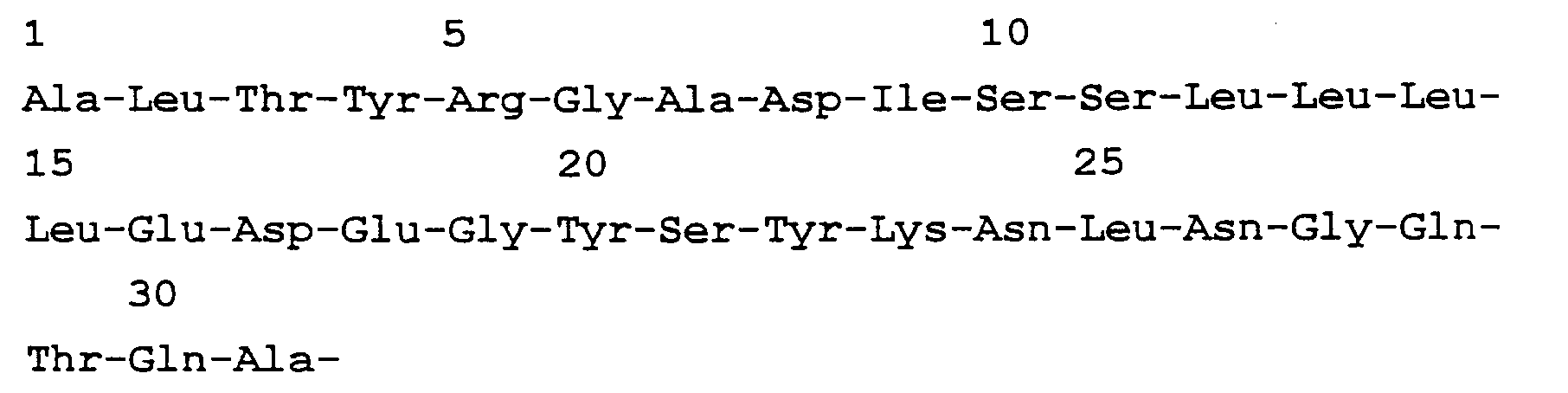
- the ⁇ -1,4-galactanase according to the invention is characterized by the fact that it exhibits the following partial amino acid sequence or a partial amino acid sequence with a homology thereto of at least 70%, preferably at least 80%, more preferably at least 90%. Ala no. 1 in the partial sequence is assumed to be the N-terminal amino acid.
- the purity of the sample is estimated to be more than 90%.
- amino acid sequences of the ⁇ -1,4-galactanase show no homology with other proteins in the UW-GCG data bank, a publicly available data bank, in relation to which UW is an abbreviation for University of Wisconsin.
- the ⁇ -1,4-galactanase is further characterized, as indicated in the following.
- Figs. 4 and 5 show the pH activity and pH stability, respectively, of the ⁇ -1,4-galactanase.
- This ⁇ -1,4-galactanase shows a relatively broad pH-spectrum with pH-optimum at pH 3.5 - 4.0
- the ⁇ -1,4-galactanase is relatively acid stable.
- the stability is good between pH 2 and 8, when treated for 1 hour at room temperature.
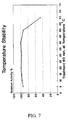
- Figs. 6 and 7 show the temperature activity dependency and the temperature stability dependency, respectively, of the ⁇ -1,4-galactanase.
- the temperature optimum of the ⁇ -1,4-galactanase is around 30°C, and the temperature activity range is relatively broad.
- the activity in the low temperature range is very remarkable: around 60% activity at 5°C around 80% activity at 10°C
- the ⁇ -1,4-galactanase activity is not remarkably influenced after a treatment of 1 hour at pH 4.5 ( ⁇ 80% of the initial activity).
- the ⁇ -1,4-galactanase is inhibited by substrate concentrations ⁇ 0.3%.
- this ⁇ -1,4-galactanase has been found useful as a plant cell wall degrading agent in combination with the fact that the homology thereof with the ⁇ -1,4-galactanase characterized in claim 1 is more than 70% justifies the scope of claim 1 in regard to the fact that the homology is more than 70%.
- a preferred embodiment of the ⁇ -1,4-galactanase according to the invention is characterized by the fact that the ⁇ -1,4-galactanase exhibits a pH-optimum of 3.0 - 5.0, an isoelectric point of 2.0 - 3.5, a molecular weight of between 30,000 and 50,000, and a temperature optimum between 10 and 50°C.
- a preferred embodiment of the ⁇ -1,4-galactanase according to the invention is characterized by the fact that the ⁇ -1,4-galactanase exhibits a pH-optimum of 3.5 - 4.0, an isoelectric point of 2.5 - 3.1, a molecular weight of between 37,000 and 45,000, and a temperature optimum between 25 and 40°C.
- the invention comprises a recombinant DNA sequence, which is characterized by encoding for the ⁇ -1,4-galactanase according to the invention.
- the invention comprises a vector which is characterized by the fact that it comprises the recombinant DNA sequence according to the invention.
- a preferred embodiment of the vector according to the invention is characterized by the fact that the promoter is the Aspergillus oryzae takaamylase promoter. This vector is deposited at DSM on February 3, 1992 (deposit no. DSM 6901).
- a preferred embodiment of the vector according to the invention is characterized by the fact that the vector is pHD438.
- the invention comprises a transformed host which is characterized by the fact that it contains the vector according to the invention.
- a preferred embodiment of the transformed host according to the invention is characterized by the fact that the transformed host is an Aspergillus strain. Hereby a good production capacity of the ⁇ -1,4-galactanase is obtained.
- a preferred embodiment of the transformed host according to the invention is characterized by the fact that the transformed host is a strain belonging to the species Aspergillus aculeatus , Aspergillus niger , Aspergillus oryzae or Aspergillus awamori .
- the transformed host is a strain belonging to the species Aspergillus aculeatus , Aspergillus niger , Aspergillus oryzae or Aspergillus awamori .
- a preferred embodiment of the transformed host according to the invention is characterized by the fact that the transformed host is a microorganism, which in its non-transformed condition does not produce ⁇ -1,4-galactanase or only produces ⁇ -1,4-galactanase in insignificant amounts.
- the transformed host is a microorganism, which in its non-transformed condition does not produce ⁇ -1,4-galactanase or only produces ⁇ -1,4-galactanase in insignificant amounts.
- a preferred embodiment of the transformed host according to the invention is characterized by the fact that the transformed host is Bacillus sp. , E. coli or S. cerevisiae .
- the invention comprises a method for production of a ⁇ -1,4-galactanase by use of a transformed host according to the invention.
- the ⁇ -1,4-galactanase can be obtained in high yield.
- the invention comprises the ⁇ -1,4-galactanase, when produced by the method according to the invention.
- the ⁇ -1,4-galactanase can be obtained in high yield.
- the invention comprises an enzyme preparation which is characterized by the fact that it contains a pectinase preparation usable for degradation or modification of plant cell walls enriched with the ⁇ -1,4-galactanase according to the invention. In this manner a boosting of the cell wall degrading ability of the pectinase preparation can be obtained.
- the invention comprises an enzyme preparation which is characterized by the fact that it contains a pectinase preparation usable for degradation or modification of plant cell walls enriched with the ⁇ -1,4-galactanase according to the invention with an enrichment factor of at least 1.1.
- a preferred embodiment of the enzyme preparation according to the invention is characterized by the fact that the pectinase preparation is producible by means of a microorganism belonging to the genus Aspergillus . Such preparation is able to provide an extraordinary good total liquefaction power and thus a marked viscosity decrease of apple mash and similar biological materials. This will be documented in a later part of the specification in case the pectinase preparation is A.a.e.p.
- a preferred embodiment of the enzyme preparation according to the invention is characterized by the fact that the pectinase preparation is producible by means of Aspergillus niger , Aspergillus aculeatus , Aspergillus awamori or Aspergillus oryzae .
- a preferred embodiment of the enzyme preparation according to the invention is characterized by the fact that the ⁇ -1,4-galactanase is the ⁇ -1,4-galactanase produced by means of the method according to the invention.
- the production costs of this preparation are relatively low.
- the invention comprises a use of the ⁇ -1,4-galactanase according to the invention as an agent for degradation or modification of galactanes.
- a preferred embodiment of the use of the ⁇ -1,4-galactanase according to the invention is a use as an agent for degradation or modification of plant cell walls.
- degradation of plant cell walls is the most preferred use of the ⁇ -1,4-galactanase according to the invention, due to the high plant cell wall degradation activity.
- the invention comprises a use of the enzyme preparation according to the invention as an agent for degradation or modification of galactanes.
- a preferred embodiment of the use of the enzyme preparation according to the invention is a use as an agent for degradation or modification of plant cell walls. At present, degradation of plant cell walls is the most preferred use of the enzyme preparation according to the invention, due to the high plant cell wall degradation activity.
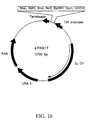
- Fig. 10 is a map of plasmid pYHD17, wherein "TPI promoter” indicates the S. cerevisiae triose phosphate isomerase promoter, “Terminator” indicates the transcription terminator, “Amp” indicates the gene mediating ampicillin resistance, “2 ⁇ ori” indicates the yeast plasmid 2 ⁇ origin of replication, and “URA3” indicates a gene encoding a selection marker complementing a uracil deficiency in the host strain.
- TPI promoter indicates the S. cerevisiae triose phosphate isomerase promoter
- Terminal indicates the transcription terminator
- Amp indicates the gene mediating ampicillin resistance
- 2 ⁇ ori indicates the yeast plasmid 2 ⁇ origin of replication
- UUA3 indicates a gene encoding a selection marker complementing a uracil deficiency in the host strain.
- the commercially available plasmid pYES II (Invitrogen) was cut with SpeI, filled in with Klenow DNA polymerase + dNTP and cut with ClaI.
- the DNA was size fractionated on an agarose gel, and a fragment of about 2000 bp was purified by electroelution.
- the same plasmid was cut with ClaI/PvuII, and a fragment of about 3400 bp was purified by electroelution.
- the two fragments were ligated to a blunt-ended SphI/EcoRI fragment containing the yeast TPI promoter. This fragment was isolated from a plasmid in which the TPI promoter from S. cerevisiae (cf. T. Albers and G. Kawasaki, J. Mol.
- mRNA was isolated from Aspergillus aculeatus CBS 101.43 grown in a soya-rich fermentation medium with agitation to ensure sufficient aeration.
- RNA was isolated from approximately 7 g of mycelium. The mycelium was frozen in liquid nitrogen and ground in a mortar with 1 g of quartz sand to a consistency of flour. The RNA was extracted with guanidinium thiocyanate and centrifuged through CsCl essentially as described in Sambrook et al., 1989, op. cit .. Poly A RNA was isolated from total RNA by chromatography on oligo dT cellulose.
- cDNA synthesis was carried out by means of a cDNA synthesis kit from Invitrogen according to the manufacturer's specifications.
- the DNA was adapted to the expression vectors by addition of a BstxI linker (Invitrogen) and size fractionated on an agarose gel. Only DNA larger than 5-600 bp was used in the library construction.
- the adapted cDNA was ligated into an appropriate vector cut with BstxI.
- test ligations in order to determine the size of the library
- the library was plated onto 50 agar plates. To each plate containing from approximately 500 to 5000 individual clones (dependent on the library size) was added 3 ml medium.
- the bacteria were scraped off, 1 ml glycerol was added, and stored at -80°C as 50 pools. The remaining 2 ml were used for DNA isolation. If the amount of DNA was insufficient to give the required number of yeast transformants (see below), large scale DNA was prepared from 500ml medium (TB) inoculated with 50 ⁇ l -80°C bacterial stock propagated over night.
- TB medium
- DNA from one or more pools was transformed into yeast as described below. To ensure that all the bacterial clones were tested in yeast a number of yeast transformants 5 x larger than the number of bacteria clones in the original pools was set as a limit.
- the yeast strain used was yNG231. (MAT alpha, leu2, ura3-52, his4-539, pep4-delta 1, cir+).
- One colony was grown at 30°C overnight in 10 ml YPD (this culture can be stored for several days at 5°C).
- carrier DNA sterile salmon-sperm DNA 10 mg/ml
- carrier DNA 250 ⁇ g carrier DNA (sterile salmon-sperm DNA 10 mg/ml) was added and aliquots of 100 ⁇ l were prepared.
- the DNA to be transformed (approx. 5 ⁇ g) was added to the 100 ⁇ l aliquot, mixed gently, and incubated for 30 minutes at 30°C.
- the transformation mixture was subjected to heat shock for 5 minutes at 42°C, spun briefly in a micro centrifuge, resuspended in 100-200 ⁇ l H2O, and plated on SC plates without uracil, followed by incubation for three days at 30°C.
- YPD Yeast et al., Methods in Yeast Genetics, Cold Spring Harbor Laboratory, 1981
- the mycelium is harvested by filtration through miracloth and washed with 200 ml of 0.6 M MgSO4.
- the suspension is cooled on ice and 1 ml of buffer containing 120 mg of Novozym® 234, batch 1687 is added.
- Protoplasts are spread on the appropriate plates.
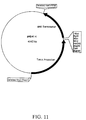
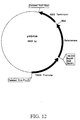
- the vector pHD414 (fig. 11) is a derivative of the plasmid p775 (described in EP 238 023). In contrast to this plasmid, pHD 414 has a string of unique restriction sites between the promoter and the terminator. The plasmid was constructed by removal of an approximately 200 bp long fragment (containing undesirable RE sites) at the 3'end of the terminator, and subsequent removal of an approximately 250 bp long fragment at the 5'end of the promoter, also containing undesirable sites.
- the 200 bp region was removed by cleavage with NarI (positioned in the pUC vector) and XbaI (just 3' to the terminator), subsequent filling in the generated ends with Klenow DNA polymerase +dNTP, purification of the vector fragment on gel and religation of the vector fragment.
- This plasmid was called pHD413.
- pHD413 was cut with StuI (positioned in the 5'end of the promoter) and PvuII (in the pUC vector), fractionated on gel and religated, resulting in pHD414.
- Fig. 11 is a map of plasmid pHD414, wherein "AMG Terminator” indicates the A. niger glucoamylase terminator, and "TAKA Promoter" indicates the A. oryzae TAKA amylase promoter.
- ⁇ -1,4-galactan can be obtained from potato fibres by means of the following procedure: Fresh waste material from a starch factory is used as a starting material (very low starch content, dry matter substance (DMS) around 17%).
- DMS dry matter substance
- the residual soluble starch Prior to extraction of galactan, the residual soluble starch has to be removed by an ⁇ -amylase treatment (Termamyl® 120 L).
- the potato fibres are diluted with water (1 part of fibres : 3 parts of water), the pH adjusted to pH 6.5 with NaOH, and the mixture is heated to 65°C.
- the ⁇ -amylase (0.2% Termamyl® 120 L based on DMS) is added and the residual starch is broken down with a treatment time of less than 2 hours.
- arabinogalactan (MW around 40,000 Daltons) is then treated with 0.05 M trifluoro acetic acid at 100°C for 1 hour in order to remove the arabinose side chains from the galactan.
- the reaction is stopped by cooling the solution and evaporating the trifluoro acetic acid. Finally the solution is diafiltered to a sugar free state and freeze dried.
- the resulting ⁇ -1,4-galactan exhibits a molecular weight around 13,000 Daltons.
- Arabino galactan is produced with soy remanence as a starting material. In principle the same method is used as the method published by Labavitch et al. in J.Biol.Chem. 251, p. 5904-5910 (1976).
- YPD 10 g yeast extract, 20 g peptone, H2O to 810 ml. Autoclaved, 90 ml 20% glucose (sterile filtered) added.
- YPG-agar 25 g/L Bactoagar, 15 g/L glucose, 5 g/L K2PO4, 0.5 g/L MgSO4-7H2O, pH adjusted to 5.0.
- 10 x Basal salt 66.8 g yeast nitrogen base, 100 g succinic acid, 60 g NaOH, H2O ad 1000 ml, sterile filtered.
- SC-URA 90 ml 10 x Basal salt, 22.5 ml 20% casamino acids, 9 ml 1% tryptophane, H2O ad 806 ml, autoclaved, 3.6 ml 5% threonine and 90 ml 20% glucose added.
- SC-H agar 7.5 g/l yeast nitrogen base without amino acids, 11.3 g/l succinic acid, 6.8 g/l NaOH, 5.6 g/l casamino acids without vitamins, 0.1 g/l tryptophan and 20 g/l agar (Bacto). Autoclaved for 20 min. at 121°C.
- YNB-1 broth Composition as YNB-1 agar, but without the agar.
- Soy galactan overlayer gel 1% agarose, 0,1% galactan in 0,1 M citrate-phosphate buffer, pH 4.5. The gel was boiled and then cooled to 55°C before the overlayer was poured onto agar plates.
- FG-4-Agar 35 g/L agar, 30 g/L Soy bean meal, 15 g/L maltodextrin (Glucidex 6), 5 g/L Bacto pepton, pH 7.
- Autoclaved 40 min at 121°C FG-4 medium 30 g/L Soy bean meal, 15 g/L maltodextrin (Glucidex 6), 5 g/L Bacto pepton.
- Autoclaved 40 min at 121°C. MDU-2 medium 45 g/L maltose, 1 g/L MgSO4 - 7 H2O, 1 g/L NaCl, 2g/L K2SO4, 12 g/L KH2PO4, 0.1 ml/L Pluronic 61 L, 0.5 ml/L Trace metal solution. pH 5.0.
- DNA was isolated from 20 individual clones from the library and subjected to analysis for cDNA insertion.
- the insertion frequency was found to be >90 % and the average insert size was approximately 1400bp.
- DNA from the Aspergillus aculeatus library was transformed into yeast, and plates containing 20-30,000 colonies were obtained from each pool. The colonies were scraped off and stored in glycerol at -80°C.
- Yeast cells from the library were spread onto YNB agar to a total of about 250,000 colonies. The number of colonies per plate varied from 50 to 500. After 4 or 5 days of growth, the agar plates were replica plated onto two sets of SCH agar plates. These plates were then incubated for 2-4 days at 30°C before the two sets of agar plates were overlayered with a ⁇ -1,4-galactan overlayer gel for detection of galactanase activity, the ⁇ -1,4-galactan being produced as indicated above. After incubation overnight at 40°C, enzyme reactions were visualised with Congo Red. First 10-15 ml 0,5 M tris-borate buffer pH 8.4 was poured onto the plates and removed after approx. 30 min.
- a galactanase positive yeast isolate was identified and confirmed positive.
- the isolate was inoculated into 20 ml YNB-1 broth in a 50 ml glass test tube. The tube was shaken for 2 days at 30°C. The cells were harvested by centrifugation for 10 min. at 3000 rpm.
- the cells were resuspended in 1 ml 0.9 M sorbitol, 0.1 M EDTA, pH 7.5. The pellet was transferred to an Eppendorf tube, and spun for 30 seconds at full speed. The cells were resuspended in 0.4 ml 0.9 M sorbitol, 0.1 M EDTA, 14 mM ⁇ -mercaptoethanol. 100 ⁇ l 2 mg/ml Zymolase was added, and the suspension was incubated at 37°C for 30 minutes and spun for 30 seconds. The pellet (spheroplasts) was resuspended in 0.4 ml TE.
- the supernatant was transferred to a fresh tube. 2.5 ⁇ l 10 mg/ml RNase was added, followed by incubation at 37°C for 30 minutes and addition of 500 ⁇ l isopropanol with gentle mixing. The mixture was spun for 30 seconds, and the supernatant was removed. The pellet was rinsed with cold 96% EtOH and dried at room temperature. The DNA was dissolved in 50 ⁇ l water to a final concentration of approximately 100 ⁇ l/ml.
- the DNA was transformed into E.coli by standard procedures. Two E. coli colonies were isolated and analysed with the restriction enzymes HindIII and XbaI which excised the DNA insert.
- the underlined sequence is homologous to the 5'end of the gene, and indicate the processing site of the signal peptide.
- the plasmid pHD438 was transformed into Aspergillus oryzae as described above.
- Each of 18 transformants were inoculated in the center of a Petri dish with FG-4 agar. After 5 days of incubation at 30°C 4 mm diameter plugs were removed from the center of the colonies by a cork borer. The plugs were imbedded in galactan overlayer gel, and incubated overnight at 40°C. The galactanase activity was visualized by Congo Red as described above. Some of the transformants had clearing zones at 30 mm and thereby demonstrates higher galactanase activity than the Aspergillus oryzae background which generated clearing zones of 14 mm. This demonstrates efficient expression of ⁇ -1,4-galactanase in Aspergillus oryzae . The 8 transformants with the highest galactanase activity were selected and inoculated and maintained on YPG-agar.
- Each of the 8 selected transformants were inoculated from YPG-agar slants on 500 ml shake flask with FG-4 and MDU-2 media. After 4 days of fermentation with sufficient agitation to ensure good aeration, the culture broths were centrifuged for 10 minutes at 2000 g and the supernatants were analyzed.
- a volume of 15 ⁇ l of each supernatant was applied to 4 mm diameter holes punched out in a galactanase overlayer gel (25 ml in a 13 cm diameter Petri dish).
- the galactanase activity was visualized by Congo Red after 20 hours of incubation.
- the ⁇ -1,4-galactanase according to the invention can be used as a plant cell wall degrading enzyme, thus including the applications shown on page 35 of GB 2115820A.
- ⁇ -1,4-galactanase according to the invention is used together with any pectinase preparation a synergistic effect or boosting effect can be demonstrated, especially in regard to TLP (total liquefaction power) on apple mash.
- the pectinase preparation is the A.a.e.p., which is a pectinase preparation with special properties, vide GB 2115820A, a remarkable high synergistic effect or boosting effect can be demonstrated, especially in regard to TLP on apple mash.
- MOU-equal basis MOU-equal basis
- TLP of Pectinex AP-18 0
- TLP of Pectinex Ultra SP-L 100
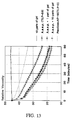
- Table 3 shows the TLP figures obtained by the galactanase alone and in combination with the A.a.e.p.
- Fig. 13 Both Table 3 and Fig. 13 show the marked synergism of the ⁇ -1,4-galactanase and the A.a.e.p.
- galactanase alone shows at higher dosages no effect at all on the viscosity. In lower dosages even an increase in viscosity can be observed.
- a very significant synergistic effect can be observed.
- An increase of about 30% (260%) of the galactanase units alone in the A.a.e.p. results in a TLP-increase of 60% (100%). This proves, that the ⁇ -1,4-galactanase is a key activity for the liquefaction process of plant cell walls.
- Pectins have gelation and stabilisation properties, which make them useful for the food industry. They are commercially extracted from waste materials of the food industry, e.g. citrus peels, apple pomace or sugar-beet pulp.
- pectins Most often the extraction with acids (sulphuric acid or nitric acid) is used for the production of pectins. At a pH around 2 and at an elevated temperature the pectins are extracted from plant material and precipitated with alcohol after precipitation.
- acids sulphuric acid or nitric acid
- Industrial apple pomace for the pectin production was used to compare the amount of pectin extractable either by chemicals or ⁇ -1,4-galactanase.
- the obtained AIS is dried at 60°C for one hours.
- the amount of obtained pectin is calculated by determination of the amount of AIS in % obtained from the dry matter substance from the pomace and subtracting the amount of starch in the AIS.
- the AIS is obtained in the way described above.
- pectin With the chemical extraction 17.5% pectin was obtained whereas with the enzymatic extraction between 11 and 14.5% were obtained, depending upon the amount of ⁇ -1,4-galactanase used.
Landscapes
- Health & Medical Sciences (AREA)
- Life Sciences & Earth Sciences (AREA)
- Genetics & Genomics (AREA)
- Chemical & Material Sciences (AREA)
- Organic Chemistry (AREA)
- Engineering & Computer Science (AREA)
- Bioinformatics & Cheminformatics (AREA)
- Zoology (AREA)
- Wood Science & Technology (AREA)
- General Engineering & Computer Science (AREA)
- Biomedical Technology (AREA)
- Biochemistry (AREA)
- General Health & Medical Sciences (AREA)
- Biotechnology (AREA)
- Microbiology (AREA)
- Molecular Biology (AREA)
- Biophysics (AREA)
- Physics & Mathematics (AREA)
- Plant Pathology (AREA)
- Mycology (AREA)
- Medicinal Chemistry (AREA)
- Enzymes And Modification Thereof (AREA)
- Micro-Organisms Or Cultivation Processes Thereof (AREA)
- Saccharide Compounds (AREA)
Claims (23)
- β-1,4-galactanase ayant le séquence d'acides aminées partielle suivante :ou une séquence d'acides aminés partielle ayant une homologie avec celle-ci d'au moins 70%, de préférence d'au moins 80%, de manière plus préférée d'au moins 90%.
- β-1,4-galactanase selon la revendication 1, dans laquelle la β-1,4-galactanase présente un optimum de pH situé entre 3,0 et 5,0, un point isoélectrique situé entre 2,0 et 3,5, un poids moléculaire situé entre 30 000 et 50 000, et un optimum de température situé entre 10 et 50°C.
- β-1,4-galactanase selon la revendication 2, dans laquelle la β-1,4-galactanase présente un optimum de pH situé entre 3,5 et 4,0, un point isoélectrique situé entre 2,5 et 3,1, un poids moléculaire situé entre 37 000 et 45 000, et un optimum de température situé entre 25 et 40°C.
- Séquence d'ADN recombinant, caractérisée en ce qu'elle code pour la β-1,4-galactanase selon les revendications 1 à 3.
- Séquence d'ADN recombinant selon la revendication 4, comprenant au moins une des séquences d'ADN partielle suivantes :

- Séquence d'ADN recombinant selon les revendications 4 ou 5, comprenant une séquence d'ADN sélectionnée parmia) pHD 438, l'insert d'ADN de la β-1,4-galactanase d'Aspergillus aculeatus, n° de référence du dépôt DSM 6901.b) une séquence d'ADN qui s'hybride à la région codant pour l'ADN de la β-1,4-galactanase mature constituée de l'insert d'ADN de a) et qui comporte un gène structural pour un polypeptide ayant une activité β-1,4-galactanase, et de manière optionnelle un promoteur, une région codant pour un peptide signal ou un peptide de tête et/ou un agent de terminaison transcriptionnelle.c) une séquence d'ADN ayant une homologie suffisante pour s'hybrider à l'une des séquences indiquées dans la revendication 3 dans des conditions relatives à la stringence (SSC 1,0 x, SDS 0,1%, 65°C), référence étant faite à T. Maniatis et al., Molecular cloning, A laboratory Manual, Cold Spring Harbor, 1982, oud) une séquence d'ADN qui code pour une β-1,4-galactanase mature ou pour un peptide signal ou pour un peptide de tête de celle-ci et qui est dégénérée en terme de code génétique en considérant une séquence d'ADN de a), b) ou c).
- Vecteur comprenant la séquence d'ADN recombinant selon les revendications 4 à 6.
- Vecteur selon la revendication 7, dans lequel le promoteur est le promoteur de la takaamylase d'Aspergillus oryzae.
- Vecteur selon la revendication 8, qui est pHD438, n° de référence du dépôt DSM 6901.
- Hôte transformé contenant le vecteur selon les revendications 7 à 9.
- Hôte transformé selon la revendication 10, dans lequel l'hôte transformé est une souche d'Aspergillus.
- Hôte transformé selon la revendication 11, dans lequel l'hôte transformé est une souche appartenant aux espèces Aspergillus aculeatus, Aspergillus niger, Aspergillus oryzae ou Aspergillus awamori.
- Hôte transformé selon la revendication 10, dans lequel l'hôte transformé est un micro-organisme, qui dans sa condition non-transformée ne produit pas de β-1,4-galactanase ou produit seulement des quantités peu importantes de la β-1,4-galactanase.
- Hôte transformé selon la revendication 13, dans lequel l'hôte transformé est Bacillus sp., E. coli ou S. cerevisiae.
- Procédé de production d'une β-1,4-galactanase par l'utilisation d'un hôte transformé selon les revendications 10 à 14.
- Préparation enzymatique caractérisée en ce qu'elle contient une préparation de pectinase pouvant être utilisée pour la dégradation ou la modification de parois cellulaires de plantes enrichies avec la β-1,4-galactanase selon les revendications 1 à 3.
- Préparation enzymatique selon la revendication 16, caractérisée en ce qu'elle contient une préparation de pectinase pouvant être utilisée pour la dégradation ou la modification de parois cellulaires de plantes enrichies avec la β-1,4-galactanase selon les revendications 1 à 3 avec un facteur d'enrichissement d'au moins 1,1.
- Préparation enzymatique selon la revendication 16, dans laquelle la préparation de pectinase peut être produite à l'aide d'un micro-organisme appartenant au genre Aspergillus.
- Préparation enzymatique selon la revendication 18, dans laquelle la préparation de pectinase est produite à l'aide d'Aspergillus niger, d'Aspergillus aculeatus, d'Aspergillus awamori ou d'Aspergillus oryzae.
- Utilisation de la β-1,4-galactanase selon les revendications 1 à 3, en tant qu'agent de dégradation ou de modification des galactanes.
- Utilisation selon la revendication 20, en tant qu'agent de dégradation ou de modification des parois cellulaires de plantes.
- Utilisation de la préparation enzymatique selon les revendications 16 à 19, en tant qu'agent de dégradation ou de modification des galactanes.
- Utilisation selon la revendication 22, en tant qu'agent de dégradation ou de modifications des parois cellulaires de plantes.
Priority Applications (1)
| Application Number | Priority Date | Filing Date | Title |
|---|---|---|---|
| EP92904937A EP0571475B1 (fr) | 1991-02-06 | 1992-02-06 | Sg(beta)-1,4-GALACTANASE ET SEQUENCE D'ADN |
Applications Claiming Priority (4)
| Application Number | Priority Date | Filing Date | Title |
|---|---|---|---|
| EP91610007 | 1991-02-06 | ||
| EP91610007A EP0498137A1 (fr) | 1991-02-06 | 1991-02-06 | Systèmes d'expression |
| EP92904937A EP0571475B1 (fr) | 1991-02-06 | 1992-02-06 | Sg(beta)-1,4-GALACTANASE ET SEQUENCE D'ADN |
| PCT/DK1992/000037 WO1992013945A1 (fr) | 1991-02-06 | 1992-02-06 | β-1,4-GALACTANASE ET SEQUENCE D'ADN |
Publications (2)
| Publication Number | Publication Date |
|---|---|
| EP0571475A1 EP0571475A1 (fr) | 1993-12-01 |
| EP0571475B1 true EP0571475B1 (fr) | 1995-11-22 |
Family
ID=8208762
Family Applications (2)
| Application Number | Title | Priority Date | Filing Date |
|---|---|---|---|
| EP91610007A Withdrawn EP0498137A1 (fr) | 1991-02-06 | 1991-02-06 | Systèmes d'expression |
| EP92904937A Expired - Lifetime EP0571475B1 (fr) | 1991-02-06 | 1992-02-06 | Sg(beta)-1,4-GALACTANASE ET SEQUENCE D'ADN |
Family Applications Before (1)
| Application Number | Title | Priority Date | Filing Date |
|---|---|---|---|
| EP91610007A Withdrawn EP0498137A1 (fr) | 1991-02-06 | 1991-02-06 | Systèmes d'expression |
Country Status (12)
| Country | Link |
|---|---|
| US (1) | US5474922A (fr) |
| EP (2) | EP0498137A1 (fr) |
| JP (1) | JP3240002B2 (fr) |
| AT (1) | ATE130630T1 (fr) |
| AU (1) | AU649789B2 (fr) |
| CA (1) | CA2100775A1 (fr) |
| DE (1) | DE69206258T2 (fr) |
| DK (1) | DK0571475T3 (fr) |
| ES (1) | ES2080486T3 (fr) |
| GR (1) | GR3018913T3 (fr) |
| NZ (1) | NZ241560A (fr) |
| WO (1) | WO1992013945A1 (fr) |
Families Citing this family (9)
| Publication number | Priority date | Publication date | Assignee | Title |
|---|---|---|---|---|
| DE69432543T2 (de) * | 1993-07-23 | 2003-12-24 | Dsm N.V., Te Heerlen | Selektionmarker-genfreie rekombinante Stämme: Verfahren zur ihrer Herstellung und die Verwendung dieser Stämme |
| GB9320930D0 (en) * | 1993-10-12 | 1993-12-01 | Zeneca Ltd | Modified fruit |
| GB9403423D0 (en) * | 1994-02-23 | 1994-04-13 | Unilever Plc | Novel exo-(1-4)- beta-D galactanase |
| ATE224149T1 (de) * | 1994-06-15 | 2002-10-15 | Novozymes As | Verfahren zur herstellung von stabilen trüben extrakten |
| WO1997016982A1 (fr) * | 1995-11-06 | 1997-05-15 | Novo Nordisk A/S | Additifs destines aux aliments pour animaux |
| DE69736975T2 (de) * | 1996-03-01 | 2007-09-20 | Novozymes A/S | Enzym mit galaktanaseaktivität |
| AU713323B2 (en) * | 1996-03-01 | 1999-11-25 | Novozymes A/S | An enzyme with galactanase activity |
| US6331426B1 (en) | 1999-02-11 | 2001-12-18 | Novozymes A/S | Bacterial galactanases and use thereof |
| CN112961852B (zh) * | 2019-12-12 | 2023-11-21 | 青岛蔚蓝生物集团有限公司 | 一种启动子及其在棘孢曲霉基因自克隆表达中的应用 |
Family Cites Families (9)
| Publication number | Priority date | Publication date | Assignee | Title |
|---|---|---|---|---|
| FR2302336A1 (fr) * | 1975-02-26 | 1976-09-24 | Baxter Laboratories Inc | Procede pour la fabrication d'un melange d'enzymes |
| SE461659B (sv) * | 1981-12-22 | 1990-03-12 | Novo Industri As | Foerfarande foer framstaellning av enzymet sps-as med foermaaga att soenderdela hoegmolekylaer kolhydrat |
| NL8204925A (nl) * | 1981-12-22 | 1983-07-18 | Novo Industri As | Verbeteringen in en met betrekking tot een middel voor het ontleden van plantaardige remanentie, in het bijzonder sojaremanentie, een werkwijze ter bereiding van een gezuiverd plantaardig proteineprodukt alsmede het gezuiverde plantaardige proteineprodukt. |
| US4478854A (en) * | 1982-05-06 | 1984-10-23 | Novo Industri A/S | Method of treating plant polysaccharides |
| DE3529221A1 (de) * | 1985-08-20 | 1987-02-26 | I Centar Biotechnologija | Verfahren zur gewinnung eines pektolytischen enzympraeparats |
| FR2588886B1 (fr) * | 1985-10-18 | 1988-06-24 | Comite Eco Agric Prod Chanvre | Procede de traitement biochimique de plantes fibreuses liberiennes ou cellulosiques et assimilees |
| JPH01296995A (ja) * | 1988-05-21 | 1989-11-30 | Osaka Organic Chem Ind Ltd | 糖転移反応生成物の製造法 |
| JPH02308798A (ja) * | 1989-03-24 | 1990-12-21 | Osaka Organic Chem Ind Ltd | 糖転移反応生成物の製造法 |
| JPH02268685A (ja) * | 1989-04-07 | 1990-11-02 | Tax Adm Agency | 新規遺伝子、ベクター、それを用いた形質転換体及びその利用 |
-
1991
- 1991-02-06 EP EP91610007A patent/EP0498137A1/fr not_active Withdrawn
-
1992
- 1992-02-06 CA CA002100775A patent/CA2100775A1/fr not_active Abandoned
- 1992-02-06 AU AU12467/92A patent/AU649789B2/en not_active Ceased
- 1992-02-06 WO PCT/DK1992/000037 patent/WO1992013945A1/fr not_active Ceased
- 1992-02-06 US US08/090,036 patent/US5474922A/en not_active Expired - Fee Related
- 1992-02-06 EP EP92904937A patent/EP0571475B1/fr not_active Expired - Lifetime
- 1992-02-06 AT AT92904937T patent/ATE130630T1/de not_active IP Right Cessation
- 1992-02-06 DK DK92904937.7T patent/DK0571475T3/da active
- 1992-02-06 JP JP50487492A patent/JP3240002B2/ja not_active Expired - Fee Related
- 1992-02-06 ES ES92904937T patent/ES2080486T3/es not_active Expired - Lifetime
- 1992-02-06 DE DE69206258T patent/DE69206258T2/de not_active Expired - Fee Related
- 1992-02-07 NZ NZ241560A patent/NZ241560A/xx unknown
-
1996
- 1996-02-07 GR GR960400319T patent/GR3018913T3/el unknown
Non-Patent Citations (1)
| Title |
|---|
| PATENT ABSTRACTS OF JAPAN, Vol. 80, No. 43, Abstract of JP 80-40238, publ 1980-10-16 (TOKYO SPINNING KK) * |
Also Published As
| Publication number | Publication date |
|---|---|
| US5474922A (en) | 1995-12-12 |
| AU1246792A (en) | 1992-09-07 |
| GR3018913T3 (en) | 1996-05-31 |
| CA2100775A1 (fr) | 1992-08-07 |
| JP3240002B2 (ja) | 2001-12-17 |
| JPH06505154A (ja) | 1994-06-16 |
| NZ241560A (en) | 1993-09-27 |
| EP0571475A1 (fr) | 1993-12-01 |
| ATE130630T1 (de) | 1995-12-15 |
| DE69206258D1 (de) | 1996-01-04 |
| AU649789B2 (en) | 1994-06-02 |
| DE69206258T2 (de) | 1996-03-28 |
| ES2080486T3 (es) | 1996-02-01 |
| WO1992013945A1 (fr) | 1992-08-20 |
| DK0571475T3 (da) | 1996-03-04 |
| EP0498137A1 (fr) | 1992-08-12 |
Similar Documents
| Publication | Publication Date | Title |
|---|---|---|
| EP0635053B1 (fr) | Rhamnogalacturonan acetylesterase (RGAE) d'Aspergillus aculeatus | |
| EP0696319B1 (fr) | Enzyme presentant l'activite de methylesterase de pectine | |
| US5538884A (en) | Rhamnogalacturonase, corresponding DNA sequence, rhamnogalacturonase containing enzyme preparation and use of the enzyme preparation | |
| US5550045A (en) | Cloning and expression of DNA encoding a ripening form of a polypeptide having rhamnogalcturonase activity | |
| EP0571475B1 (fr) | Sg(beta)-1,4-GALACTANASE ET SEQUENCE D'ADN | |
| EP0632828B1 (fr) | ENDO-beta-1,4-GLUCANASE ET SEQUENCE D'ADN | |
| US6159718A (en) | Enzyme with polygalacturonase activity | |
| DE69728863T2 (de) | Enzym mit pektin-esterase-aktivität | |
| EP0570075A2 (fr) | Clonage et expression d'ADN codante pour une forme mûrissante d'une polypeptide ayant l'activité de rhamnogalacturonase | |
| US6001627A (en) | Rhamnogalacturonase, corresponding DNA sequence, rhamnogalacturonase containing enzyme preparation and use of the enzyme preparation | |
| EP1067180A1 (fr) | Rhamnogalacturonase de Aspergillus japonicus et Irpex lacteus et son utilisation | |
| EP0687297A1 (fr) | Enzyme presentant une activite d'arabinanase | |
| AU731347B2 (en) | Rhamnogalacturonase, corresponding DNA sequence, rhamnogalacturonase containing enzyme preparation and use of the enzyme preparation |
Legal Events
| Date | Code | Title | Description |
|---|---|---|---|
| PUAI | Public reference made under article 153(3) epc to a published international application that has entered the european phase |
Free format text: ORIGINAL CODE: 0009012 |
|
| 17P | Request for examination filed |
Effective date: 19930625 |
|
| AK | Designated contracting states |
Kind code of ref document: A1 Designated state(s): AT BE CH DE DK ES FR GB GR IT LI LU NL SE |
|
| 17Q | First examination report despatched |
Effective date: 19950216 |
|
| GRAA | (expected) grant |
Free format text: ORIGINAL CODE: 0009210 |
|
| AK | Designated contracting states |
Kind code of ref document: B1 Designated state(s): AT BE CH DE DK ES FR GB GR IT LI LU NL SE |
|
| REF | Corresponds to: |
Ref document number: 130630 Country of ref document: AT Date of ref document: 19951215 Kind code of ref document: T |
|
| REF | Corresponds to: |
Ref document number: 69206258 Country of ref document: DE Date of ref document: 19960104 |
|
| REG | Reference to a national code |
Ref country code: ES Ref legal event code: FG2A Ref document number: 2080486 Country of ref document: ES Kind code of ref document: T3 |
|
| ITF | It: translation for a ep patent filed | ||
| REG | Reference to a national code |
Ref country code: CH Ref legal event code: NV Representative=s name: R. A. EGLI & CO. PATENTANWAELTE |
|
| REG | Reference to a national code |
Ref country code: DK Ref legal event code: T3 |
|
| ET | Fr: translation filed | ||
| REG | Reference to a national code |
Ref country code: GR Ref legal event code: FG4A Free format text: 3018913 |
|
| PLBI | Opposition filed |
Free format text: ORIGINAL CODE: 0009260 |
|
| PLBQ | Unpublished change to opponent data |
Free format text: ORIGINAL CODE: EPIDOS OPPO |
|
| PLBF | Reply of patent proprietor to notice(s) of opposition |
Free format text: ORIGINAL CODE: EPIDOS OBSO |
|
| 26 | Opposition filed |
Opponent name: GIST-BROCADES NV Effective date: 19960822 |
|
| NLR1 | Nl: opposition has been filed with the epo |
Opponent name: GIST-BROCADES NV |
|
| PLBF | Reply of patent proprietor to notice(s) of opposition |
Free format text: ORIGINAL CODE: EPIDOS OBSO |
|
| PLBF | Reply of patent proprietor to notice(s) of opposition |
Free format text: ORIGINAL CODE: EPIDOS OBSO |
|
| PLBF | Reply of patent proprietor to notice(s) of opposition |
Free format text: ORIGINAL CODE: EPIDOS OBSO |
|
| PLBO | Opposition rejected |
Free format text: ORIGINAL CODE: EPIDOS REJO |
|
| PLBN | Opposition rejected |
Free format text: ORIGINAL CODE: 0009273 |
|
| STAA | Information on the status of an ep patent application or granted ep patent |
Free format text: STATUS: OPPOSITION REJECTED |
|
| 27O | Opposition rejected |
Effective date: 19990220 |
|
| NLR2 | Nl: decision of opposition | ||
| PGFP | Annual fee paid to national office [announced via postgrant information from national office to epo] |
Ref country code: ES Payment date: 20010131 Year of fee payment: 10 |
|
| PGFP | Annual fee paid to national office [announced via postgrant information from national office to epo] |
Ref country code: SE Payment date: 20010206 Year of fee payment: 10 |
|
| PGFP | Annual fee paid to national office [announced via postgrant information from national office to epo] |
Ref country code: AT Payment date: 20010213 Year of fee payment: 10 Ref country code: LU Payment date: 20010213 Year of fee payment: 10 Ref country code: CH Payment date: 20010213 Year of fee payment: 10 |
|
| PGFP | Annual fee paid to national office [announced via postgrant information from national office to epo] |
Ref country code: DK Payment date: 20010226 Year of fee payment: 10 |
|
| PGFP | Annual fee paid to national office [announced via postgrant information from national office to epo] |
Ref country code: GR Payment date: 20010228 Year of fee payment: 10 |
|
| REG | Reference to a national code |
Ref country code: CH Ref legal event code: PUE Owner name: NOVO NORDISK A/S TRANSFER- NOVOZYMES A/S |
|
| REG | Reference to a national code |
Ref country code: FR Ref legal event code: TP |
|
| REG | Reference to a national code |
Ref country code: GB Ref legal event code: 732E |
|
| NLS | Nl: assignments of ep-patents |
Owner name: NOVOZYMES A/S |
|
| REG | Reference to a national code |
Ref country code: GB Ref legal event code: IF02 |
|
| PG25 | Lapsed in a contracting state [announced via postgrant information from national office to epo] |
Ref country code: LU Free format text: LAPSE BECAUSE OF NON-PAYMENT OF DUE FEES Effective date: 20020206 Ref country code: AT Free format text: LAPSE BECAUSE OF NON-PAYMENT OF DUE FEES Effective date: 20020206 |
|
| PG25 | Lapsed in a contracting state [announced via postgrant information from national office to epo] |
Ref country code: SE Free format text: LAPSE BECAUSE OF NON-PAYMENT OF DUE FEES Effective date: 20020207 Ref country code: ES Free format text: LAPSE BECAUSE OF NON-PAYMENT OF DUE FEES Effective date: 20020207 |
|
| PG25 | Lapsed in a contracting state [announced via postgrant information from national office to epo] |
Ref country code: LI Free format text: LAPSE BECAUSE OF NON-PAYMENT OF DUE FEES Effective date: 20020228 Ref country code: DK Free format text: LAPSE BECAUSE OF NON-PAYMENT OF DUE FEES Effective date: 20020228 Ref country code: CH Free format text: LAPSE BECAUSE OF NON-PAYMENT OF DUE FEES Effective date: 20020228 |
|
| PGFP | Annual fee paid to national office [announced via postgrant information from national office to epo] |
Ref country code: BE Payment date: 20020418 Year of fee payment: 11 |
|
| PG25 | Lapsed in a contracting state [announced via postgrant information from national office to epo] |
Ref country code: GR Free format text: LAPSE BECAUSE OF NON-PAYMENT OF DUE FEES Effective date: 20020909 |
|
| EUG | Se: european patent has lapsed |
Ref document number: 92904937.7 |
|
| REG | Reference to a national code |
Ref country code: DK Ref legal event code: EBP |
|
| REG | Reference to a national code |
Ref country code: CH Ref legal event code: PL |
|
| PG25 | Lapsed in a contracting state [announced via postgrant information from national office to epo] |
Ref country code: BE Free format text: LAPSE BECAUSE OF NON-PAYMENT OF DUE FEES Effective date: 20030228 |
|
| REG | Reference to a national code |
Ref country code: ES Ref legal event code: FD2A Effective date: 20031122 |
|
| PG25 | Lapsed in a contracting state [announced via postgrant information from national office to epo] |
Ref country code: IT Free format text: LAPSE BECAUSE OF NON-PAYMENT OF DUE FEES;WARNING: LAPSES OF ITALIAN PATENTS WITH EFFECTIVE DATE BEFORE 2007 MAY HAVE OCCURRED AT ANY TIME BEFORE 2007. THE CORRECT EFFECTIVE DATE MAY BE DIFFERENT FROM THE ONE RECORDED. Effective date: 20050206 |
|
| PGFP | Annual fee paid to national office [announced via postgrant information from national office to epo] |
Ref country code: GB Payment date: 20070131 Year of fee payment: 16 |
|
| PGFP | Annual fee paid to national office [announced via postgrant information from national office to epo] |
Ref country code: DE Payment date: 20070201 Year of fee payment: 16 |
|
| PGFP | Annual fee paid to national office [announced via postgrant information from national office to epo] |
Ref country code: NL Payment date: 20070204 Year of fee payment: 16 |
|
| PGFP | Annual fee paid to national office [announced via postgrant information from national office to epo] |
Ref country code: FR Payment date: 20070208 Year of fee payment: 16 |
|
| GBPC | Gb: european patent ceased through non-payment of renewal fee |
Effective date: 20080206 |
|
| NLV4 | Nl: lapsed or anulled due to non-payment of the annual fee |
Effective date: 20080901 |
|
| PG25 | Lapsed in a contracting state [announced via postgrant information from national office to epo] |
Ref country code: NL Free format text: LAPSE BECAUSE OF NON-PAYMENT OF DUE FEES Effective date: 20080901 |
|
| REG | Reference to a national code |
Ref country code: FR Ref legal event code: ST Effective date: 20081031 |
|
| PG25 | Lapsed in a contracting state [announced via postgrant information from national office to epo] |
Ref country code: DE Free format text: LAPSE BECAUSE OF NON-PAYMENT OF DUE FEES Effective date: 20080902 |
|
| PG25 | Lapsed in a contracting state [announced via postgrant information from national office to epo] |
Ref country code: FR Free format text: LAPSE BECAUSE OF NON-PAYMENT OF DUE FEES Effective date: 20080229 |
|
| PG25 | Lapsed in a contracting state [announced via postgrant information from national office to epo] |
Ref country code: GB Free format text: LAPSE BECAUSE OF NON-PAYMENT OF DUE FEES Effective date: 20080206 |