EP0571945A2 - Catalyst for copolymerizing ethylene with alpha-olefin and process for producing ethylene-alpha-olefin copolymer using the catalyst - Google Patents
Catalyst for copolymerizing ethylene with alpha-olefin and process for producing ethylene-alpha-olefin copolymer using the catalyst Download PDFInfo
- Publication number
- EP0571945A2 EP0571945A2 EP19930108417 EP93108417A EP0571945A2 EP 0571945 A2 EP0571945 A2 EP 0571945A2 EP 19930108417 EP19930108417 EP 19930108417 EP 93108417 A EP93108417 A EP 93108417A EP 0571945 A2 EP0571945 A2 EP 0571945A2
- Authority
- EP
- European Patent Office
- Prior art keywords
- titanium
- compound
- compounds
- denotes
- dichloride
- Prior art date
- Legal status (The legal status is an assumption and is not a legal conclusion. Google has not performed a legal analysis and makes no representation as to the accuracy of the status listed.)
- Granted
Links
Images



Classifications
-
- C—CHEMISTRY; METALLURGY
- C08—ORGANIC MACROMOLECULAR COMPOUNDS; THEIR PREPARATION OR CHEMICAL WORKING-UP; COMPOSITIONS BASED THEREON
- C08F—MACROMOLECULAR COMPOUNDS OBTAINED BY REACTIONS ONLY INVOLVING CARBON-TO-CARBON UNSATURATED BONDS
- C08F210/00—Copolymers of unsaturated aliphatic hydrocarbons having only one carbon-to-carbon double bond
- C08F210/02—Ethene
-
- C—CHEMISTRY; METALLURGY
- C08—ORGANIC MACROMOLECULAR COMPOUNDS; THEIR PREPARATION OR CHEMICAL WORKING-UP; COMPOSITIONS BASED THEREON
- C08F—MACROMOLECULAR COMPOUNDS OBTAINED BY REACTIONS ONLY INVOLVING CARBON-TO-CARBON UNSATURATED BONDS
- C08F210/00—Copolymers of unsaturated aliphatic hydrocarbons having only one carbon-to-carbon double bond
- C08F210/16—Copolymers of ethene with alpha-alkenes, e.g. EP rubbers
-
- C—CHEMISTRY; METALLURGY
- C08—ORGANIC MACROMOLECULAR COMPOUNDS; THEIR PREPARATION OR CHEMICAL WORKING-UP; COMPOSITIONS BASED THEREON
- C08F—MACROMOLECULAR COMPOUNDS OBTAINED BY REACTIONS ONLY INVOLVING CARBON-TO-CARBON UNSATURATED BONDS
- C08F4/00—Polymerisation catalysts
- C08F4/42—Metals; Metal hydrides; Metallo-organic compounds; Use thereof as catalyst precursors
- C08F4/44—Metals; Metal hydrides; Metallo-organic compounds; Use thereof as catalyst precursors selected from light metals, zinc, cadmium, mercury, copper, silver, gold, boron, gallium, indium, thallium, rare earths or actinides
- C08F4/60—Metals; Metal hydrides; Metallo-organic compounds; Use thereof as catalyst precursors selected from light metals, zinc, cadmium, mercury, copper, silver, gold, boron, gallium, indium, thallium, rare earths or actinides together with refractory metals, iron group metals, platinum group metals, manganese, rhenium technetium or compounds thereof
- C08F4/62—Refractory metals or compounds thereof
- C08F4/64—Titanium, zirconium, hafnium or compounds thereof
- C08F4/65—Pretreating the metal or compound covered by group C08F4/64 before the final contacting with the metal or compound covered by group C08F4/44
- C08F4/652—Pretreating with metals or metal-containing compounds
Definitions
- the present invention relates to a novel Ziegler catalyst and to a process for producing ethylene- ⁇ -olefin copolymers using the catalyst.
- a catalyst comprising a novel catalyst component and an organoaluminum compound and to a process for producing ethylene- ⁇ -olefin copolymers using the catalyst.
- a novel catalyst and to a process for producing ethylene- ⁇ -olefin copolymers which have a narrow composition distribution, have a high molecular weight, and are excellent in weather resistance, color development, transparency, corrosiveness and mechanical properties by using the catalyst.
- Olefin copolymers are in a vast variety of uses, including film, laminates, electric wire covering, injection molded articles, and special molded articles. It is generally known that, to obtain products which are excellent in transparency, impact resistance and anti-blocking property in these uses, polymers which have narrow molecular weight distribution and composition distribution are preferably used. In the case of copolymers, particularly, as the content of copolymerized ⁇ -olefin increases, the influences of molecular weight distribution and composition distribution exerted on the properties of the copolymer become greater. Accordingly, olefin copolymers which have narrow molecular weight distribution and composition distribution are eagerly waited for.
- catalysts comprising a transition metal compound, such as titanium tetrachloride, supported on a carrier, such as a magnesium compound
- a transition metal compound such as titanium tetrachloride
- a carrier such as a magnesium compound
- solid catalytic systems obtained by reducing a titanium compound with an organomagnesium compound, which include a solid catalyst component comprising a Grignard reagent and titanium tetrachloride or an alkoxy-containing titanium halide (see for example JP-A-46-4391, JP-B-47-40959 and JP-B-50-30102), and a solid catalyst component obtained by reacting a Grignard reagent and an alkoxy-containing titanium halide and treating the reaction product with titanium tetrachloride (see for example JP-B-57-24361 and JP-A-56-115302).
- These catalysts however, all give copolymers which have a wide composition
- a method for obtaining olefin copolymers having narrow molecular weight distribution and composition distribution which uses a catalyst formed from a vanadium-containing catalyst component and an organoaluminum compound catalyst component.
- This catalyst gives ethylene- ⁇ -olefin copolymers having a narrow composition distribution, has a low polymerisation activity at high temperatures and hence a low productivity and, further, raises the problems of color development, low weather resistance, and corrosiveness due to residual vanadium and chlorine, so that the copolymer must be thoroughly de-ashed to avoid these problems.
- the resulting copolymer has a low molecular weight and hence has properties rather unsatisfactory for practical use. Further, the catalytic system is not satisfactory as to the copolymerizability of ⁇ -olefins and hence requires the presence of a larger amount of expensive ⁇ -olefin in the polymerization system; this is economically disadvantageous.
- the present inventors previously proposed a process for producing, in copolymerization of ethylene with an ⁇ -olefin, a copolymer having a narrow composition distribution by using a catalytic system comprising a titanium compound represented by the formula (R1R2N) 4-(m+n) TiX m Y n , wherein R1 and R2 are each a saturated hydrocarbon group having 8-30 carbon atoms, X is a halogen, Y is an alkoxy group, and m and n are respectively numbers defined by the equations 1 ⁇ m ⁇ 3 and 0 ⁇ n ⁇ 2, provided that (m+n) is defined by the equation 1 ⁇ (m+n) ⁇ 3 , and an organoaluminum compound (JP-A-2-77412).
- a catalytic system comprising a titanium compound represented by the formula (R1R2N) 4-(m+n) TiX m Y n , wherein R1 and R2 are each a saturated
- the object of the present invention is to provide a novel catalytic system and to provide a process for producing ethylene- ⁇ -olefin copolymers by using the catalytic system with a high yield of polymer per unit weight of transition metal which copolymers have a narrow composition distribution and a high molecular weight and are excellent in weather resistance, color development, transparency, corrosiveness, and mechanical properties.
- a catalyst for copolymerising ethylene with an ⁇ -olefin which comprises the reaction product (A) of a titanium compound (A1) having at least one titanium-nitrogen bond with an organometallic compound (A2) having at least one element selected from the groups IA, IIA, IIB, IIIA and IVA of the periodic table and an organo-aluminum compound (B), and a process for producing ethylene- ⁇ -olefin copolymers which uses the catalyst.
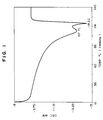
- Fig. 1 is a diagram showing the melting behavior of the copolymer obtained in Example 1 determined with a differential scanning calorimeter (hereinafter abbreviated as DSC).
- DSC differential scanning calorimeter
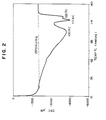
- Fig. 2 is a diagram showing the melting behavior of the copolymer obtained in Example 3 determined with a DSC.
- Fig. 3 is a diagram showing the melting behavior of the copolymer obtained in Comparative Example 1 determined with a DSC.
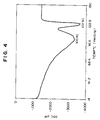
- Fig. 4 is a diagram showing the melting behavior of the copolymer obtained in Example 7 determined with a DSC.
- Fig. 5 is a diagram showing the melting behavior of the copolymer obtained in Example 8 determined with a DSC.
- Fig. 6 is a diagram showing the melting behavior of the copolymer obtained in Example 9 determined with a DSC.
- Fig. 7 is a diagram showing the melting behavior of the copolymer obtained in Example 10 determined with a DSC.
- Fig. 8 is a diagram showing the melting behavior of the copolymer obtained in Comparative Example 4 determined with a DSC.
- Fig. 9 is a flow chart to help understanding the present invention.
- the flow chart merely represents a typical example of the embodiments of the present invention, and the present invention is in no way limited thereto.
- the titanium compound (A1) used in the present invention is a compound which has at least one titanium-nitrogen bond. It may be, for example, a titanium compound represented by the formula (R1R2N) 4-(m+n) TiX m Y n , wherein R1 and R2 are each a hydrocarbon group having 1-30 carbon atoms and may be the same or different, X is a halogen, Y is an alkoxy group, m is a number defined by the equation 0 ⁇ m ⁇ 3, and n is a number defined by the equation 0 ⁇ n ⁇ 3, provided that (m+n) is defined by the equation 0 ⁇ (m+n) ⁇ 3 .
- the halogen denoted by X in the above formula may be chlorine, bromine, or iodine, but is preferably chlorine from the viewpoint of catalytic activity.
- the group Y in the formula may be, for example, an alkoxy group having 1-20 carbon atoms, such as methoxy, ethoxy, propoxy, butoxy, or 2-ethylhexyloxy, but it is not particularly limited from the viewpoint of the property of the catalyst obtained.
- titanium compounds include dimethylaminotitanium trichloride, bis(dimethylamino)titanium dichloride, tris(dimethylamino)titanium chloride, tetrakis(dimethylamino)titanium, diethylaminotitanium trichloride, bis(diethylamino)titanium dichloride, tris(diethylamino)titanium chloride, tetrakis(diethylamino)titanium, diisopropylaminotitanium trichloride, bis(diisopropylamino)titanium dichloride, tris(diisopropylamino)titanium chloride, tetrakis(diisopropylamino)titanium, dipropylaminotitanium trichloride, bis(dipropylamino)titanium dichloride, tris(di
- titanium compounds those wherein R1 and R2 are each an aliphatic hydrocarbon group are preferred because they yield copolymers having a narrow composition distribution.
- Specific examples of such compounds include dimethylaminotitanium trichloride, bis(dimethylamino)titanium dichloride, tris(dimethylamino)titanium chloride, tetrakis(dimethylamino)titanium, diethylaminotitanium trichloride, bis(diethylamino)titanium dichloride, tris(diethylamino)titanium chloride, tetrakis(diethylamino)titanium, diisopropylaminotitanium trichloride, bis(diisopropylamino)titanium dichloride, tris(diisopropylamino)titanium chloride, tetrakis(diisopropylamino)tit
- R1 and R2 are each an aliphatic hydrocarbon group, particularly those wherein the number of carbon atoms is 8-30 are preferred. Further, even when the number of carbon atoms is less than 8, those compounds wherein m is 0 or 2 are more preferred because they give copolymers having a narrower composition distribution.
- Such compounds include bis(dimethylamino)titanium dichloride, tetrakis(dimethylamino)titanium, bis(diethylamino)titanium dichloride, tetrakis(diethylamino)titanium, bis(diisopropylamino)titanium dichloride, tetrakis(diisopropylamino)titanium, bis(dipropylamino)titanium dichloride, tetrakis(dipropylamino)titanium, bis(diisobutylamino)titanium dichloride, tetrakis(diisobutylamino)titanium, bis(di-tert-butylamino)titanium dichloride, tetrakis(di-tert-butylamino)titanium, bis(dibutylamino)t
- titanium compounds those wherein m in the formula is 1 are particularly preferred because they give the highest catalytic activity.
- examples of such compounds include tris(dioctylamino)titanium chloride, tris(didecylamino)titanium chloride, tris(dioctadecylamino)titanium chloride, hexyloxybis(dioctylamino)titanium chloride, 2-ethylhexyloxybis(dioctylamino)titanium chloride, decyloxybis(dioctylamino)titanium chloride, hexyloxybis(didecylamino)titanium chloride, 2-ethylhexyloxybis(didecylamino)titanium chloride, decyloxybis(didecylamino)titanium chloride, hexyloxybis(didec
- organometallic compound (A2) is an organoaluminum compound
- organoaluminum compound among such titanium compounds those wherein m in the formula is smaller are more preferred because they yield copolymers having still narrower composition distribution.
- examples of such compounds include tetrakis(dimethylamino)titanium, tetrakis(diethylamino)titanium, tetrakis(dipropylamino)titanium, tetrakis(diisopropylamino)titanium, tetrakis(diisobutylamino)titanium, tetrakis(di-tert-butylamino)titanium, tetrakis(dibutylamino)titanium, tetrakis(dihexylamino)titanium, tetrakis(dioctylamino)titanium,
- Such titanium compounds (A1) may be synthesized, for example, by using the methods described in JP-B-41-5397; JP-B-42-11646; H. Burger et al., J. of Organomet. Chem., 108 (1976), 69-84; H. Burger et al., J. of Organomet. Chem., 20 (1969), 129-139; and H. Burger, Z. Anorg. Allg. Chem., 365, 243-254 (1991).
- the titanium compounds may be synthesized, according to the aforesaid methods, for example, by reacting (i) a secondary amine represented by the formula R11R12NH, wherein R11 and R12 each denote a hydrocarbon group haaving 1-30 carbon atoms and may be the same or different, with (ii) an alkylalkali metal represented by the formula R13M, wherein R13 denotes a hydrocarbon group having 1-30 carbon atoms and M denotes an alkali metal such as Li and K, and then reacting the resulting alkali metal amide with a titanium tetrahalide represented by the formula TiX4, wherein X denotes a halogen, such as chlorine, bromine, or iodine, preferably chlorine.
- a secondary amine represented by the formula R11R12NH wherein R11 and R12 each denote a hydrocarbon group haaving 1-30 carbon atoms and may be the same or different
- R13M an alkylalkali metal represented
- two or more alkali metal amides may be used simultaneously in combination.
- the organometallic compound (A2) used for the synthesis of the reaction product (A) in the present invention is an organometallic compound having at least one element selected from the groups IA, IIA, IIB, IIIA and IVA of the periodic table. It is preferably an organometallic compound having at least one element selected from Li, Na, K, Be, Mg, Ca, Zn, Cd, B, Al, Ga, In and Sn.
- Such organometallic compound may be, for example, a known organolithium compound, organosodium compound, organopotassium compound, organoberyllium compound, organomagnesium compound, organocalcium compound, organozinc compound, organocadmium compound, organoboron compound, organoaluminum compound, organogallium compound, organoindium compound, and organotin compound. It is preferably an organolithium compound, organoberyllium compound, organomagnesium compound, organozinc compound, organopotassium compound, organoaluminum compound or organoindium compound. More preferably, it is an organomagnesium compound, organolithium compound, or organoaluminum compound.
- the organomagnesium compound used in the present invention may be any type of organomagnesium compound which contains a magnesium-carbon bond.
- organomagnesium compound (A2) include organomagnesium compounds represented by the formula R3R4Mg, wherein R3 and R4 each denote a hydrocarbon group having 1-20 carbon atoms, the formula R5MgZ1, wherein R5 denotes a hydrocarbon group having 1-20 carbon atoms, and Z1 denotes a hydrogen atom or alkoxy group, and the formula R6MgX, wherein R6 denotes a hydrocarbon group having 1-20 carbon atoms and X denotes a halogen.
- R3, R4, R5 and R6 may be the same or different and each denote an alkyl group, aryl group, aralkyl group or alkenyl group each having 1-20 carbon atoms, e.g., methyl, ethyl, propyl, isopropyl, butyl, sec-butyl, tert-butyl, amyl, isoamyl, hexyl, octyl, 2-ethylhexyl, phenyl, benzyl, vinyl, 1-propenyl and 2-propenyl.
- alkyl group e.g., methyl, ethyl, propyl, isopropyl, butyl, sec-butyl, tert-butyl, amyl, isoamyl, hexyl, octyl, 2-ethylhexyl, phenyl, benzyl, vinyl, 1-propenyl and 2-propen
- the compounds represented by the formula R3R4Mg include dimethylmagnesium, diethylmagnesium, dipropylmagnesium, diisopropylmagnesium, dibutylmagnesium, diisobutylmagnesium, di-sec-butylmagnesium, di-tert-butylmagnesium, diamylmagnesium, dineopentylmagnesium, dihexylmagnesium, dicyclohexylmagnesium, diphenylmagnesium, dibenzylmagnesium, divinylmagnesium, di-2-propenylmagnesium, di-2-butenylmagnesium, bis(trimethylsilylmethyl)magnesium, methylethylmagnesium, methylpropylmagnesium, methylisopropylmagnesium, methylbutylmagnesium, methylisobutylmagnesium, methyl-sec-butylmagnesium, methyl-tert-buty
- Examples of the compounds represented by the formula R5MgZ1 include ethylmagnesium hydride, propylmagnesium hydride, isopropylmagnesium hydride, butylmagnesium hydride, sec-butylmagnesium hydride, tert-butylmagnesium hydride, phenylmagnesium hydride, ethylmagnesium methoxide, ethylmagnesium ethoxide, ethylmagnesium propoxide, ethylmagnesium butoxide, ethylmagnesium phenoxide, propylmagnesium methoxide, propylmagnesium ethoxide, propylmagnesium propoxide, propylmagnesium butoxide, propylmagnesium phenoxide, isopropylmagnesium methoxide, isopropylmagnesium ethoxide, isopropylmagnesium propoxide, is
- Examples of the compound represented by the formula R6MgX include methylmagnesium chloride, ethylmagnesium chloride, ethylmagnesium bromide, ethylmagnesium iodide, propylmagnesium chloride, propylmagnesium bromide, butylmagnesium chloride, butylmagnesium bromide, sec-butylmagnesium chloride, sec-butylmagnesium bromide, tert-butylmagnesium chloride, tert-butylmagnesium bromide, amylmagnesium chloride, isoamylmagnesium chloride, vinylmagnesium bromide, vinylmagnesium chloride, 1-propenylmagnesium bromide, 1-propenylmagnesium chloride, 2-propenylmagnesium bromide, 2-propenylmagnesium chloride, phenylmagnesium chloride, phenylmagnesium bromide, benzylmag
- the organomagnesium compounds are preferably those which are represented by the formula R3R4Mg. Among them, those wherein R3 and R4 are each an aliphatic hydrocarbon group are more preferred.
- organomagnesium compounds include dimethylmagnesium, diethylmagnesium, dipropylmagnesium, diisopropylmagnesium, dibutylmagnesium, diisobutylmagnesium, di-sec-butylmagnesium, di-tert-butylmagnesium, diamylmagnesium, dineopentylmagnesium, dihexylmagnesium, dicyclohexylmagnesium, methylethylmagnesium, methylpropylmagnesium, methylisopropylmagnesium, methylbutylmagnesium, methylisobutylmagnesium, methyl-sec-butylmagnesium, methyl-tert-butylmagnesium, methylamylmagnesium, methylneopentylmagnesium, methylhexylmagnesium, methylcyclohexylmagnesium, ethylpropylmagnesium, eth
- organomagnesium compounds hydrocarbon soluble complexes of the organomagnesium compounds with organometallic compounds may be used.
- the organometallic compounds may be, for example, organic compounds of Li, Be, B, Al or Zn. Further, the present invention is not limited to the aforesaid compounds.
- the organolithium compounds used in the present invention may be any type of organolithium compounds containing a lithium-carbon bond which are represented by the formula R9Li, wherein R9 denotes a hydrocarbon group having 1-20 carbon atoms.
- organolithium compounds include methyllithium, ethyllithium, n-propyllithium, isopropyllithium, n-butyllithium, sec-butyllithium, tert-butyllithium, isobutyllithium, phenyllithium, aryllithium, cyclohexyllithium, and n-hexyllithium.
- Preferred among them are methyllithium, ethyllithium, n-propyllithium, n-butyllithium, sec-butyllithium and n-hexyllithium.
- the organoberyllium compound may be, for example, diethylberyllium and dipropylberyllium.
- the organozinc compound may be, for example, diethylzinc, dibutylzinc and diphenylzinc.
- the organocadmium compound may be, for example, diethylcadmium, dibutylcadmium and diphenylcadmium.
- the organoboron compound may be, for example, triethylborane, tributylborane, and triphenylborane.
- organoaluminum compounds used in the present invention may be those known in the art.
- Such organoaluminum compounds are, for example, organoaluminum compounds represented by the formula R7 a AlZ2 3-a , or chain-like or cyclic aluminoxanes having a structure represented by the formula-[Al(R8)-O] l -.
- R7 and R8 are each a hydrocarbon group having 1-20 carbon atoms, preferably 1-10 carbon atoms
- Z2 denotes a hydrogen atom and/or an alkoxy group
- a is a number defined by the equation 0 ⁇ a ⁇ 3
- l is an integer of 1 or more, preferably 2-30.
- organoaluminum compound represented by the formula R7 a AlZ2 3-a include trialkylaluminums, such as trimethylaluminum, triethylaluminum, tripropylaluminum, triisobutylaluminum, trihexylaluminum, trioctylaluminum, and tridecylaluminum, dialkylaluminum hydrides, such as dimethylaluminum hydride, diethylaluminum hydride, dipropylaluminum hydride, diisobutylaluminum hydride, dihexylaluminum hydride, dioctylaluminum hydride, and didecylaluminum hydride; alkoxyalkylaluminum hydrides, such as methoxymethylaluminum hydride, methoxyethylaluminum hydride, methoxyisobutylaluminum hydride, ethoxyhexy
- trialkylaluminums which are compounds of the above formula wherein a is 3, for exmaple, trimethylaluminum, triethylaluminum, tripropylaluminum, triisobutylaluminum, trihexylaluminum, trioctylaluminum, and tridecylaluminum.
- a is 3, for exmaple, trimethylaluminum, triethylaluminum, tripropylaluminum, triisobutylaluminum, trihexylaluminum, trioctylaluminum, and tridecylaluminum.
- the present invention is not limited to the above compounds.
- aluminoxanes represented by the formula -[Al(R8)-O] l - include tetramethyldialuminoxane, tetraethyldialuminoxane, tetrabutyldialuminoxane, tetrahexyldialuminoxane, methylaluminoxane, ethylaluminoxane, butylaluminoxane, and hexylaluminoxane.
- the present invention is not limited to the above compounds.
- the organogallium compounds may be, for example, diethylgallium, dibutylgallium, and diphenyl gallium.
- the organoindium compounds may be, for example, diethylindium, dibutylindium, and diphenylindium.
- the organotin compounds may be, for example, tetraethyltin, tetrabutyltin, and tetraphenyltin.
- the organoaluminum compounds (B) used as one component of the catalyst in the present invention may be those known in the art.
- the organoaluminum compounds (B) may be, for example, organoaluminum compounds (B1) represented by the formula R10 a AlZ3 3-a , and chain-like or cyclic aluminoxanes (B2) having the structure shown by the formula -[A l (R11)-O] l -.
- Preferred among the organoaluminum compounds (B) are organoaluminum compounds (B1) represented by the formula R10 a AlZ3 3-a .
- R10 and R11 are each a hydrocarbon group having 1-20 carbon atoms, preferably 1-10 carbon atoms
- Z3 denotes a hydrogen atom and/or an alkoxy group
- a is a number defined by the equation 0 ⁇ a ⁇ 3
- l is an integer of 1 or more, preferably 2-30.
- organoaluminum compounds (B1) represented by the formula R10 a AlZ3 3-a include trialkylaluminums, such as trimethylaluminum, triethylaluminum, triproipylaluminum, triisobutylaluminum, trihexylaluminum, trioctylaluminum, and tridecylaluminum, dialkylaluminum hydrides, such as dimethylaluminum hydride, diethylaluminum hydride, dipropylaluminum hydride, diisobutylaluminum hydride, dihexylaluminum hydride, dioctylaluminum hydride, and didecylaluminum hydride, alkoxyaluminum hydrides, such as methoxymethylaluminum hydride, methoxyethylaluminum hydride, methoxyisobutylaluminum hydride, ethoxy
- trialkylaluminums which are compounds of the formula wherein a is 3, such as trimethylaluminum, triethylaluminum, tripropylaluminum, triisobutylaluminum, trihexylaluminum, and the like.
- a is 3, such as trimethylaluminum, triethylaluminum, tripropylaluminum, triisobutylaluminum, trihexylaluminum, and the like.
- the present invention is not limited to the above-mentioned compounds.
- aluminoxanes (B2) represented by the formula -[Al(R11)-O] l - include tetramethyldialuminoxane, tetraethyldialuminoxane, tetrabutyldialuminoxane, tetrahexyldialuminoxane, methylaluminoxane, ethylaluminoxane, butylaluminoxane and hexylaluminoxane.
- the present invention is not limited to the above-mentioned compounds.
- the component (B) may be used in a wide range such as usually 0.01-10,000 moles relative to 1 mole of titanium atom of the component (A), but it is preferably used in the range of 0.05-500 moles, more preferably 0.1-50 moles, relative to 1 mole of titanium atom.
- reaction product (A) in the present invention is described below.
- the reaction product (A), namely one of the catalyst components in the present invention, can be prepared by reacting a titanium compound (A1) with an organometallic compound (A2).
- A1 an organometallic compound
- the reaction product thus obtained contains a solid
- the reaction product is used in the form of slurry, or the solid is removed by filtration and the resulting liquid alone is used for polymerization.
- the use of the solid alone is not preferable because the solid formed has a very low catalytic activity as compared with the liquid component and further gives copolymers having a wide composition distribution.
- the reaction of the titanium compound (A1) with the organometallic compound (A2) may be effected either by adding the organometallic compound (A2) to the titanium compound (A1) or by adding the titanium compound (A1) to the organometallic compound (A2).
- the reaction temperature is usually in the range of -50 to 230°C, preferably 0 to 200°C.
- the reaction time is not particularly restricted, but usually 1 minutes to 2 hours.
- the amount of the organometallic compound (A2) used is, in terms of the atomic ratio of the metal in the organometallic compound (A2) to the titanium in the titanium compound (A1), in the range of usually 0.01-100, preferalby 0.05-50, more preferably 0.1-10.
- the catalyst components and the catalyst according to the present invention are used for producing ethylene- ⁇ -olefin copolymers.
- Said copolymers herein refer to copolymers formed from ethylene and one or more ⁇ -olefin.
- ⁇ -olefins having 3-30 carbon atoms, such as propylene, butene-1, pentene-1, hexene-1, 4-methylpentene-1, octene-1, decene-1, octadecene-1, and eicosene-1.
- dienes may also be copolymerized in order to improve the vulcanizability of the copolymer.
- specific examples of such dienes include 1,3-butadiene, dicyclopentadiene, tricyclopentadiene, 5-methyl-2,5-norbornadiene, 5-methylene-2-norbornene, 5-ethyldiene-2-norbornene, 5-isopropenyl-2-norbornene, 5-(2'-butenyl)-2-norbornene, 1,5,9-cyclododecatriene, 6-methyl-4,7,8,9-tetrahydroindene, trans-1,2-divinylcyclobutane, 1,4-hexadiene, 4-methyl-1,4-hexadiene, 1,3-hexadiene, 1,6-octadiene, and 6-methyl-1,5-heptadiene.
- the present invention is not to be limited to the above compounds.
- the copolymer obtained according to the present invention can have a density in the range of 0.85-0.95 g/cm3, but preferably has a density in the range of 0.88-0.95 g/cm3, more preferably 0.90-0.95 g/cm3.
- the method for feeding the respective catalyst components to the polymerization vessel is subject to no particular restriction except that they should be fed in an inert gas, such as nitrogen or argon, and in the absence of moisture.
- the catalyst components (A) and (B) may be either fed each individually or fed after having been made to contact with each other in advance.
- the polymerization temperature may be usually in the range of -30 to 300°C, but is preferably 0 to 280°C, more preferably 20 to 250°C.
- the polymerization pressure is not particularly restricted, but preferably about 3-1500 atm from the viewpoint of industrial practicality and economical efficiency.
- the polymerization can be conducted either continuously or batchwise. It may be slurry or solution polymerization which use an inert hydrocarbon solvent, such as propane, butane, pentane, hexane, and octane, or liquid phase or gas phase polymerization which use no solvent.
- an inert hydrocarbon solvent such as propane, butane, pentane, hexane, and octane
- liquid phase or gas phase polymerization which use no solvent.
- a chain transfer agent such as hydrogen, may be added to the polymerization system in order to control the molecular weight of the copolymer of the present invention.
- a catalyst having a high catalytic activity per unit weight of transistion metal is obtained, whereby productivity can be improved and further the production of ethylene- ⁇ -olefin copolymers having a high molecular weight and narrow composition distribution becomes possible; thus, ethylene- ⁇ -olefin copolymers excellent in weather resistance, color development, transparency, corrosiveness, and mechanical properties can be provided.
- the ⁇ -olefin content was determined from the characteristic absorptions of ethylene and ⁇ -olefin measured by using an infrared spectrophotometer (JASCO-302, mfd. by NIPPON BUNKO KOGYO CO.).
- the intrinsic viscosity [ ⁇ ] was determined by using an Ubbeelohde's viscometer in tetralin solution at 135°C.
- an average melting point ⁇ Tm ⁇ defined by the following equation was determined by using a differential scanning colorimeter (DSC).
- DSC differential scanning colorimeter
- a 300-ml flask equipped with a stirrer, dropping funnel and thermometer was purged with argon gas, and 18.1 ml (60 mmols) of dioctylamine and 150 ml of hexane were charged therein.
- reaction product (A) (hereinafter called "component (A)").
- component (A) catalyst concentration: 0.077 mmol Ti/ml).
- a reaction product was synthesized in the same manner as in the synthesis of the reaction product (A) of Example 1(1) except that dihexylmagnesium (abbreviated as DHM) made by Tosoh-Akzo Co.) was used in place of BEM, and then ethylene was polymerized in the same manner as in Example 1 except that the reaction product obtained above was used in place of the reaction product (A) of Example 1.
- DHM dihexylmagnesium
- Ethylene was polymerized in the same manner as in Example 3 except that 0.16 mmol of a titanium compound (A1) represented by the composition formula [(C8H17)2N]3TiCl was used in the polymerization in place of the component (A).
- the results are shown in Table 1. The results of polymerization showed that the catalytic activity was low and the polymer obtained had a wide composition distribution (see Fig. 3).
- a 300-ml flask equipped with a stirrer, dropping funnel and thermometer was purged with argon gas, and then 6.3 ml (60 mmols) of diethylamine and 150 ml of hexane were charged therein.
- Example 1(2) Polymerization was conducted in the same manner as in Example 1(2) except that 0.063 mmol of the component (A) synthesized in (1) above was used as the reaction product (A) and 0.1 mmol of triisobutylaluminum (abbreviated as TIBA) was used as the organoaluminum compound (B).
- TIBA triisobutylaluminum
- Table 1 A polymer having a narrow composition distribution was obtained as in Example 1.
- Example 1 Polymerization was conducted in the same manner as in Example 1 except that 0.1 mmol of trihexylaluminum (abbreviated as THA) was added as the organoaluminum compond in place of TEA used in ethylene polymerization of Example 1(2).
- THA trihexylaluminum
- Table 1 A polymer having also a narrow composition distribution was obtained as in Example 1.
- a reaction product was prepared in the same manner as in Example 3 except that MAGALA 7.5E (a trade name, composition formula: 7.5(n-C4H9)2Mg ⁇ (C2H5)Al, mfd. by Tosoh-Akzo Co.) was used in place of BEM used in the synthesis of the reaction product (A) of Example 3(1), and then ethylene was polymerized in the same manner as in Example 3 except that the reaction product prepared above was used. The results are shown in Table 1. The polymerization yielded a polymer having a narrow composition distribution as in Example 3.
- MAGALA 7.5E a trade name, composition formula: 7.5(n-C4H9)2Mg ⁇ (C2H5)Al, mfd. by Tosoh-Akzo Co.
- a reaction product (A) was synthesized in the same manner as in Example 1 except that 12.0 ml of a 1.67 mol/l hexane solution of n-butyllithium was used in place of BEM diluted with heptane used in the synthesis of the reaction product (A) of Example 1(1), to obtain 20 mmols of the reaction product (A) (catalyst concentration: 0.087 mmolTi/ml).
- Copolymerization of ethylene with butene-1 was conducted in the same manner as in Example 7 except that 20 mmols of sec-butyllithium was used in place of n-BuLi in the synthesis of the component (A), and the component (A) thus obtained was used in the copolymerization. As result, 21.0 g of a copolymer was obtained (activity: 53,900). The results thus obtained are shown in Table 2 and Fig. 5.
- a 300-ml flask equipped with a stirrer, dropping funnel and thermometer was purged with argon gas, and 18.1 ml (60 mmols) of dioctylamine and 150 ml of hexane were charged therein.
- Example 9 Polymerization was conducted in the same manner as in Example 9 except that 47 mmols of diethylaluminum chloride (abbreviated as DEAC) was used as the organo-metallic compound in place of TEA used in the reaction of a titanium compound (A1) with an organometallic compound (A2) in the synthesis of a reaction product (A) of Example 9(1) and that no TEA was added in the polymerization of ethylene of (2) above.
- DEAC diethylaluminum chloride
- Example 9 Polymerization was conducted in the same manner as in Example 9 except that 0.5 mmol of trihexylaluminum (THA) was used as the organoaluminum compound (B) in place of TEA used in the ethylene polymerization of Example 9(2).
- TAA trihexylaluminum
- B organoaluminum compound
- Table 3 A polymer having also a narrow composition distribution was obtained as in Example 9.
- a 300-ml flask equipped with a stirrer, dropping funnel and thermometer was purged with argon gas, and 6.3 ml (60 mmols) of diethylamine and 150 ml of hexane were charged therein.
- reaction product (A) (catalyst concentration: 0.063 molTi/ml.)
- Example 9 Polymerization was conducted in the same manner as in Example 9(2) except that 0.32 mmol of the component (A) systhesized in (1) above was used as the reaction product (A). The results are shown in Table 3. A polymer having a narrow composition distribution was obtained as in Example 9.
- Example 12 Polymerization was conducted in the same manner as in Example 12 except that, in the polymerization of ethylene of Example 12(2), 1.1 mmols of TEA was used and 0.32 mmol of a titanium compound [(C2H5)2N]4Ti synthesized in the same manner as in Example 12(1) was used in place of the component (A).
- the results of polymerization are shown in Table 3. The catalytic activity was low as compared with that in Example 12.
- a reaction product (A) was synthesized in the same manner as in Example 9 except that triisobutylaluminum (TIBA) was used in place of TEA in the synthesis of the reaction product (A) of Example 9(1) and then polymerization was conducted in the same manner as in Example 9 except that the reaction product (A) synthesized above was used.
- TIBA triisobutylaluminum
- Table 3 A polymer having a narrow composition distribution was obtained as in Example 9.
- a reaction product (A) was synthesized in the same manner as in Example 9 except that methylaluminoxane (abbreviated as MAO) (mfd. by Tosoh-Akzo Co.) was used in place of TEA in the synthesis of the reaction product (A) of Example 9(1), and then polymerization was conducted in the same manner as in Exmaple 9 except that the reaction product synthesized above was used.
- MAO methylaluminoxane
- Table 3 A polymer having a narrow composition distribution was obtained as in Example 9.
- Polymerization was conducted in the same manner as in Example 9 except that 1 g of 1,3-butadiene was further added in the polymerization of Exmaple 9(2). The results are shown in Table 3.
- the polymer obtained showed an iodine value of 21.2.
- the iodine value was obtained from the characteristic absorption of diene determined by using an infrared spectrophotometer (JASCO-302, mfd. by NIPPON BUNKO KOGYO CO.).
Landscapes
- Chemical & Material Sciences (AREA)
- Health & Medical Sciences (AREA)
- Chemical Kinetics & Catalysis (AREA)
- Medicinal Chemistry (AREA)
- Polymers & Plastics (AREA)
- Organic Chemistry (AREA)
- Engineering & Computer Science (AREA)
- Materials Engineering (AREA)
- Transition And Organic Metals Composition Catalysts For Addition Polymerization (AREA)
Abstract
Description
- The present invention relates to a novel Ziegler catalyst and to a process for producing ethylene-α-olefin copolymers using the catalyst. In more particular, it relates to a catalyst comprising a novel catalyst component and an organoaluminum compound and to a process for producing ethylene-α-olefin copolymers using the catalyst. In still more particular, it relates to a novel catalyst and to a process for producing ethylene-α-olefin copolymers which have a narrow composition distribution, have a high molecular weight, and are excellent in weather resistance, color development, transparency, corrosiveness and mechanical properties by using the catalyst.
- Olefin copolymers are in a vast variety of uses, including film, laminates, electric wire covering, injection molded articles, and special molded articles. It is generally known that, to obtain products which are excellent in transparency, impact resistance and anti-blocking property in these uses, polymers which have narrow molecular weight distribution and composition distribution are preferably used. In the case of copolymers, particularly, as the content of copolymerized α-olefin increases, the influences of molecular weight distribution and composition distribution exerted on the properties of the copolymer become greater. Accordingly, olefin copolymers which have narrow molecular weight distribution and composition distribution are eagerly waited for.
- Among the methods for producing olefin copolymers, there are widely known a group of methods which use so-called Ziegler-natta catalysts, which comprise a compound of a transistion metal of the groups IV to VI of the periodic table and an organometallic compound of the groups I to III.
- As to Ziegler-type solid catalysts, there have been proposed catalysts comprising a transition metal compound, such as titanium tetrachloride, supported on a carrier, such as a magnesium compound (see for example Belgian Patent Application No. 759601, JP-B-47-46269 and JP-B-47-26383), and solid catalytic systems obtained by reducing a titanium compound with an organomagnesium compound, which include a solid catalyst component comprising a Grignard reagent and titanium tetrachloride or an alkoxy-containing titanium halide (see for example JP-A-46-4391, JP-B-47-40959 and JP-B-50-30102), and a solid catalyst component obtained by reacting a Grignard reagent and an alkoxy-containing titanium halide and treating the reaction product with titanium tetrachloride (see for example JP-B-57-24361 and JP-A-56-115302). These catalysts, however, all give copolymers which have a wide composition distribution and are unsatisfactory in transparency and mechanical properties.
- On the other hand, a method is known for obtaining olefin copolymers having narrow molecular weight distribution and composition distribution which uses a catalyst formed from a vanadium-containing catalyst component and an organoaluminum compound catalyst component. This catalyst, however, though it gives ethylene-α-olefin copolymers having a narrow composition distribution, has a low polymerisation activity at high temperatures and hence a low productivity and, further, raises the problems of color development, low weather resistance, and corrosiveness due to residual vanadium and chlorine, so that the copolymer must be thoroughly de-ashed to avoid these problems.
- In order to solve such problems, several methods have been thus far proposed which use a catalytic system comprising a titanium compound or zirconium compound and an aluminum compound. Recently, in particular, a method has been proposed which uses a catalytic system comprising a titanium compound or zirconium compound and an aluminoxane (JP-T2-1-503788, JP-A-62-121708).
- However, when the above-mentioned catalytic system is used in high temperature solution polymerization, the resulting copolymer has a low molecular weight and hence has properties rather unsatisfactory for practical use. Further, the catalytic system is not satisfactory as to the copolymerizability of α-olefins and hence requires the presence of a larger amount of expensive α-olefin in the polymerization system; this is economically disadvantageous.
- As to the method of polymerising or copolymerizing olefins using a catalytic system comprising a compound having a titanium-nitrogen bond and an organoaluminum compound, there have been proposed a method which uses a catalytic system comprising a solid component formed by supporting a titanium amide compound on a magnesium halide and an organoaluminum compound (EP-0320169, IT-867243), one which uses a catalytic system comprising a diphenylamide compound of titanium and an organoaluminum compound (EP-0104374, JP-B-42-11646), one which uses a catalytic system comprising an titanium amide compound having an aryl substituent and an organoaluminum compound (JP-B-42-22691) and, further, one which uses a catalytic system comprising a titanium amide compound having a lower alkyl group, such as dimethylamidotitanium trichloride, and an organoaluminum compound [J. of Polym. Sci., Part A-1, 241, 6 (1968)].
- However, the catalytic systems disclosed in the above literatures do not give satisfactory results when used for copolymerization of ethylene with an α-olefin. That is, the methods disclosed in EP-0320169 and IT-867243 give ethylene-α-olefin copolymers having a wide composition distribution, while the methods disclosed in EP-0104374, JP-B-42-11646, JP-B-42-22691 and J. of Polym. Sci. Part A-1, 241, 6 (1968) are not satisfactory in the activity and copolymerizability of the catalyst and the width of composition distribution of the copolymer obtained.
- To solve the problems described above, the present inventors previously proposed a process for producing, in copolymerization of ethylene with an α-olefin, a copolymer having a narrow composition distribution by using a catalytic system comprising a titanium compound represented by the formula (R¹R²N)4-(m+n)TiXmYn, wherein R¹ and R² are each a saturated hydrocarbon group having 8-30 carbon atoms, X is a halogen, Y is an alkoxy group, and m and n are respectively numbers defined by the equations 1 ≦ m ≦ 3 and 0 ≦ n ≦ 2, provided that (m+n) is defined by the equation

- The above process, however, is not fully satisfactory in the activity of the catalyst, though it gives copolymers having substantially improved composition distribution.
- In view of the above situation, the object of the present invention is to provide a novel catalytic system and to provide a process for producing ethylene-α-olefin copolymers by using the catalytic system with a high yield of polymer per unit weight of transition metal which copolymers have a narrow composition distribution and a high molecular weight and are excellent in weather resistance, color development, transparency, corrosiveness, and mechanical properties.
- These objects have been achieved by providing a catalyst for copolymerising ethylene with an α-olefin which comprises the reaction product (A) of a titanium compound (A1) having at least one titanium-nitrogen bond with an organometallic compound (A2) having at least one element selected from the groups IA, IIA, IIB, IIIA and IVA of the periodic table and an organo-aluminum compound (B), and a process for producing ethylene-α-olefin copolymers which uses the catalyst.
- Fig. 1 is a diagram showing the melting behavior of the copolymer obtained in Example 1 determined with a differential scanning calorimeter (hereinafter abbreviated as DSC).
- Fig. 2 is a diagram showing the melting behavior of the copolymer obtained in Example 3 determined with a DSC.
- Fig. 3 is a diagram showing the melting behavior of the copolymer obtained in Comparative Example 1 determined with a DSC.
- Fig. 4 is a diagram showing the melting behavior of the copolymer obtained in Example 7 determined with a DSC.
- Fig. 5 is a diagram showing the melting behavior of the copolymer obtained in Example 8 determined with a DSC.
- Fig. 6 is a diagram showing the melting behavior of the copolymer obtained in Example 9 determined with a DSC.
- Fig. 7 is a diagram showing the melting behavior of the copolymer obtained in Example 10 determined with a DSC.
- Fig. 8 is a diagram showing the melting behavior of the copolymer obtained in Comparative Example 4 determined with a DSC.
- Fig. 9 is a flow chart to help understanding the present invention. The flow chart merely represents a typical example of the embodiments of the present invention, and the present invention is in no way limited thereto.
- The present invention will now be described in detail below.
- The titanium compound (A1) used in the present invention is a compound which has at least one titanium-nitrogen bond. It may be, for example, a titanium compound represented by the formula (R¹R²N)4-(m+n)TiXmYn, wherein R¹ and R² are each a hydrocarbon group having 1-30 carbon atoms and may be the same or different, X is a halogen, Y is an alkoxy group, m is a number defined by the equation 0 ≦ m ≦ 3, and n is a number defined by the equation 0 ≦ n ≦ 3, provided that (m+n) is defined by the equation

- The halogen denoted by X in the above formula may be chlorine, bromine, or iodine, but is preferably chlorine from the viewpoint of catalytic activity. The group Y in the formula may be, for example, an alkoxy group having 1-20 carbon atoms, such as methoxy, ethoxy, propoxy, butoxy, or 2-ethylhexyloxy, but it is not particularly limited from the viewpoint of the property of the catalyst obtained.
- When (m+n) in the formula is greater than 3, free TiCl₄ comes to exist. This unfavorably results in a wide composition distribution of the copolymer obtained.
- Specific examples of such titanium compounds include dimethylaminotitanium trichloride, bis(dimethylamino)titanium dichloride, tris(dimethylamino)titanium chloride, tetrakis(dimethylamino)titanium, diethylaminotitanium trichloride, bis(diethylamino)titanium dichloride, tris(diethylamino)titanium chloride, tetrakis(diethylamino)titanium, diisopropylaminotitanium trichloride, bis(diisopropylamino)titanium dichloride, tris(diisopropylamino)titanium chloride, tetrakis(diisopropylamino)titanium, dipropylaminotitanium trichloride, bis(dipropylamino)titanium dichloride, tris(dipropylamino)titanium chloride, tetrakis(dipropylamino)titanium, diisobutylaminotitanium trichloride, bis(diisobutylamino)titanium dichloride, tris(diisobutylamino)titanium chloride, tetrakis(diisobutylamino)titanium, di-tert-butylaminotitanium trichloride, bis(di-tert-butylamino)titanium dichloride, tris(di-tert-butylamino)titanium chloride, tetrakis(di-tert-butylamino)titanium, dibutylaminotitanium trichloride, bis(dibutylamino)titanium dichloride, tris(dibutylamino)titanium chloride, tetrakis(dibutylamino)titanium, dihexylaminotitanium trichloride, bis(dihexylamino)titanium dichloride, tris(dihexylamino)titanium chloride, tetrakis(dihexylamino)titanium, dioctylaminotitanium trichloride, bis(dioctylamino)titanium dichloride, tris(dioctylamino)titanium chloride, tetrakis(dioctylamino)titanium, didecylaminotitanium trichloride, bis(didecylamino)titanium dichloride, tris(didecylamino)titanium chloride, tetrakis(didecylamino)titanium, dioctadecylaminotitanium trichloride, bis(dioctadecylamino)titanium dichloride, tris(dioctadecylamino)titanium chloride, tetrakis(dioctadecylamino)titanium, diphenylaminotitanium trichloride, bis(diphenylamino)titanium dichloride, tris(diphenylamino)titanium chloride, tetrakis(diphenylamino)titanium, ethoxy(dimethylamino)titanium dichloride, ethoxy(diethylamino)titanium dichloride, ethoxy(dipropylamino)titanium dichloride, ethoxy(diisopropylamino)titanium dichloride, ethoxy(diisobutylamino)titanium dichloride, ethoxy(di-tert-butylamino)titanium dichloride, ethoxy(dibutylamino)titanium dichloride, ethoxy(dihexylamino)titanium dichloride, ethoxy(dioctylamino)titanium dichloride, ethoxy(diphenylamino)titanium dichloride, propoxy(dimethylamino)titanium dichloride, propoxy(diethylamino)titanium dichloride, propoxy(dipropylamino)titanium dichloride, propoxy(diisopropylamino)titanium dichloride, propoxy(diisobutylamino)titanium dichloride, propoxy(di-tert-butylamino)titanium dichloride, propoxy(dibutylamino)titanium dichloride, propoxy(dihexylamino)titanium dichloride, propoxy(dioctylamino)titanium dichloride, propoxy(diphenylamino)titanium dichloride, butoxy(dimethylamino)titanium dichloride, butoxy(diethylamino)titanium dichloride, butoxy(dipropylamino)titanium dichloride, butoxy(diisopropylamino)titanium dichloride, butoxy(diisobutylamino)titanium dichloride, butoxy(di-tert-butylamino)titanium dichloride, butoxy(dibutylamino)titanium dichloride, butoxy(dihexylamino)titanium dichloride, butoxy(dioctylamino)titanium dichloride, butoxy(diphenylamino)titanium dichloride, hexyloxy-(dioctylamino) titanium dichloride, 2-ethylhexyloxy(dioctylamino)titanium dichloride, decyloxy(dioctylamino)titanium dichloride, ethoxy(didecylamino)titanium dichloride, hexyloxy(didecylamino)titanium dichloride, 2-ethylhexyloxy(didecylamino)titanium dichloride, decyloxy(didecylamino)titanium dichloride, ethoxy(dioctadecylamino)titanium dichloride, 2-ethylhexyloxy(dioctadecylamino)titanium dichloride, decyloxy(dioctadecylamino)titanium dichloride hexyloxybis(dioctylamino)titanium chloride, 2-ethylhexyloxy bis(dioctylamino)titanium chloride, decyloxybis(dioctylamino)titanium chloride, hexyloxybis(didecylamino)titanium chloride, 2-ethylhexyloxybis(didecylamino)titanium chloride, decyloxybis(didecylamino)titanium chloride, hexyloxybis(dioctadecylamino)titanium chloride, 2-ethylhexyloxybis(dioctadecylamino)titanium chloride, decyloxybis(dioctadecylamino)titanium chloride, methoxytris(dimethylamino)titanium, ethoxytris(dimethylamino)titanium, butoxytris(dimethylamino)titanium, hexyloxytris(dimethylamino)titanium, 2-ethylhexyloxytris(di-methylamino)titanium, decyloxytris(dimethylamino)titanium, methoxytris(diethylamino)titanium, ethoxytris(diethylamino)titanium, butoxytris(diethylamino)titanium, hexyloxytris(diethylamino)titanium, 2-ethylhexyloxytris(diethylamino)titanium, decyloxytris(diethylamino)titanium, methoxytris(dipropylamino)titanium, ethoxytris(dipropylamino)titanium, butoxytris(dipropylamino)titanium, hexyloxytris(dipropylamino)titanium, 2-ethylhexyloxytris(dipropylamino)titanium, decyloxytris(dipropylamino)titanium, methoxytris(dibutylamino)titanium, ethoxytris(dibutylamino)titanium, butoxytris(dibutylamino)titanium, hexyloxytris(dibutylamino)titanium, 2-ethylhexyloxytris(dibutylamino)titanium, decyloxytris(dibutylamino)titanium, methoxytris(dihexylamino)titanium, ethoxytris(dihexylamino)titanium, butoxytris(dihexylamino)titanium, hexyloxytris(dihexylamino)titanium, 2-ethylhexyloxytris(dihexylamino)titanium, decyloxytris(dihexylamino)titanium, methoxytris(diphenylamino)titanium, ethoxytris(diphenylamino)titanium, butoxytris(diphenylamino)titanium, hexyloxytris(diphenylamino)titanium, 2-ethylhexyloxytris(diphenylamino)titanium, decyloxytris(diphenylamino)titanium, methoxytris(dioctylamino)titanium, ethoxytris(dioctylamino)titanium, butoxytris(dioctylamino)titanium, hexyloxytris(dioctylamino)titanium, 2-ethylhexyloxytris(dioctylamino)titanium, decyloxytris(dioctylamino)titanium, methoxytris(didecylamino)titanium, ethoxytris(didecylamino)titanium, butoxytris(didecylamino)titanium, hexyloxytris(didecylamino)titanium, 2-ethylhexyloxytris(didecylamino)titanium, decyloxytris(didecylamino)titanium, methoxytris(dioctadecylamino)titanium, ethoxytris(dioctadecylamino)titanium, butoxytris(dioctadecylamino)titanium, hexyloxytris(dioctadecylamino)titanium, 2-ethylhexyloxytris(dioctadecylamino)titanium, and decyloxytris(dioctadecylamino)titanium.
- Among such titanium compounds, those wherein R¹ and R² are each an aliphatic hydrocarbon group are preferred because they yield copolymers having a narrow composition distribution. Specific examples of such compounds include dimethylaminotitanium trichloride, bis(dimethylamino)titanium dichloride, tris(dimethylamino)titanium chloride, tetrakis(dimethylamino)titanium, diethylaminotitanium trichloride, bis(diethylamino)titanium dichloride, tris(diethylamino)titanium chloride, tetrakis(diethylamino)titanium, diisopropylaminotitanium trichloride, bis(diisopropylamino)titanium dichloride, tris(diisopropylamino)titanium chloride, tetrakis(diisopropylamino)titanium, dipropylaminotitanium trichloride, bis(dipropylamino)titanium dichloride, tris(dipropylamino)titanium chloride, tetrakis(dipropylamino)titanium, diisobutylaminotitanium trichloride, bis(diisobutylamino)titanium dichloride, tris(diisobutylamino)titanium chloride, tetrakis(diisobutylamino)titanium, di-tert-butylaminotitanium trichloride, bis(di-tert-butylamino)titanium dichloride, tris(di-tert-butylamino)titanium chloride, tetrakis(di-tert-butylamino)titanium, dibutylaminotitanium trichloride, bis(dibutylamino)titanium dichloride, tris(dibutylamino)titanium chloride, tetrakis(dibutylamino)titanium, dihexylaminotitanium trichloride, bis(dihexylamino)titnaium dichloride, tris(dihexylamino)titanium chloride, tetrakis(dihexylamino)titanium, dioctylaminotitanium trichloride, bis(dioctylamino)titanium dichloride, tris(dioctylamino)titanium chloride, tetrakis(dioctylamino)titanium, didecylaminotitanium trichloride, bis(didecylamino)titanbium dichloride, tris(didecylamino)titanium chloride, tetrakis(didecylamino)titanium, dioctadecylaminotitanium trichloride, bis(dioctadecylamino)titanium dichloride, tris(dioctadecylamino)titanium chloride, tetrakis(dioctadecylamino)titanium, ethoxy(dimethylamino)titanium dichloride, ethoxy(diethylamino)titanium dichloride, ethoxy(dipropylamino)titanium dichloride, ethoxy(diisopropylamino)titanium dichloride, ethoxy(diisobutylamino)titanium dichloride, ethoxy(di-tert-butylamino)titanium dichloride, ethoxy(dibutylamino)titanium dichloride, ethoxy(dihexylamino)titanium dichloride, ethoxy(dioctylamino)titanium dichloride, propoxy(dimethylamino)titanium dichloride, propoxy(diethylamino)titanium dichloride, propoxy(dipropylamino)titanium dichloride, propoxy(diisopropylamino)titanium dichloride, propoxy(diisobutylamino)titanium dichloride, propoxy(di-tert-butylamino)titanium dichloride, propoxy(dibutylamino)titanium dichloride, propoxy(dihexylamino)titanium dichloride, porpoxy(dioctylamino)titanium dichloride, butoxy(dimethylamino)titanium dichloride, butoxy(diethylamino)titanium dichloride, butoxy(dipropylamino)titanium dichloride, butoxy(diisopropylamino)titanium dichloride, butoxy(diisobutylamino)titanium dichloride, butoxy(di-tert-butylamino)titanium dichloride, butoxy(dibutylamino)titanium dichloride, butoxy(dihexylamino)titanium dichloride, butoxy(dioctylamino)titanium dichloride, hexyloxy(dioctylamino)titanium dichloride, 2-ethylhexyloxy(dioctylamino)titanium dichloride, decyloxy(dioctylamino)titanium dichloride, ethoxy(didecylamino)titanium dichloride, hexyloxy(didecylamino)titanium dichloride, 2-ethylhexyloxy(didecylamino)titanium dichloride, decyloxy(didecylamino)titanium dichloride, ethoxy(dioctadecylamino)titanium dichloride, 2-ethylhexyloxy(dioctadecylamino)titanium dichloride, decyloxy(dioctadecylamino)titanium dichloride, hexyloxybis(dioctylamino)titanium chloride, 2-ethylhexyloxybis(dioctaylamino)titanium cyloride, decyloxybis(dioctylamino)titanium chloride, hexyloxybis(didecylamino)titanium chloride, 2-ethylhexyloxybis(didecylamino)titanium chloride, decyloxybis(didecylamino)titanium chloride, hexyloxybis(dioctadecylamino)titanium chloride, 2-ethylhexyloxybis(dioctadecylamino)titanium chloride, decyloxybis(dioctadecylamino)titanium chloride, methoxytris(dimethylamino)titanium, ethoxytris(dimethylamino)titanium, butoxytris(dimethylamino)titanium, hexyloxytris(dimethylamino)titanium, 2-ethylhexyloxytris(dimethylamino)titanium, decyloxytris(dimethylamino)titanium, methoxytris(diethylamino)titanium, ethoxytris(diethylamino)titanium, butoxytris(diethylamino)titanium, hexyloxytris(diethylamino)titanium, 2-ethylhexyloxytris(diethylamino)titanium, decyloxytris(diethylamino)titanium, methoxytris(dipropylamino)titanium, ethoxytris(dipropylamino)titanium, butoxytris(dipropylamino)titanium, hexyloxytris(dipropylamino)titanium, 2-ethylhexyloxytris(dipropylamino)titanium, decyloxytris(dipropylamino)titanium, methoxytris(dibutylamino)titanium, ethoxytris(dibutylamino)titnaium, butoxytris(dibutylamino)titanium, hexyloxytris(dibutylamino)titanium, 2-ethylhexyloxytris(di-butylamino)titanium, decyloxytris(dibutylamino)titanium, methoxytris(dihexylamino)titanium, ethoxytris(dihexylamino)titanium, butoxytris(dihexylamino)titanium, hexyloxytris(dihexylamino)titanium, 2-ethylhexyloxytris(dihexylamino)titanium, decyloxytris(dihexylamino)titanium, methoxytris(dioctylamino)titanium, ethoxytris(dioctylamino)titanium, butoxytris(dioctylamino)titanium, hexyloxytris(dioctylamino)titanium, 2-ethylhexyloxytris(dioctylamino)titanium, decyloxytris(dioctylamino)titanium, methoxytris(didecylamino)titnaium, ethoxytris(didecylamino)titanium, butoxytris(didecylamino)titanium, hexyloxytris(didecylamino)titanium, 2-ethylhexyloxytris(didecylamino)titanium, decyloxytris(didecylamino)titnaium, methoxytris(dioctadecylamino)titnaium, ethoxytris(dioctadecylamino)titanium, butoxytris(dioctadecylamino)titnaium, hexyloxytris(dioctadecylamino)titanium, 2-ethylhexyloxytris(dioctadecylamino)titanium, and decyloxytris(dioctadecylamino)titanium.
- Among such titanium compounds, when R¹ and R² are each an aliphatic hydrocarbon group, particularly those wherein the number of carbon atoms is 8-30 are preferred. Further, even when the number of carbon atoms is less than 8, those compounds wherein m is 0 or 2 are more preferred because they give copolymers having a narrower composition distribution. Specific examples of such compounds include bis(dimethylamino)titanium dichloride, tetrakis(dimethylamino)titanium, bis(diethylamino)titanium dichloride, tetrakis(diethylamino)titanium, bis(diisopropylamino)titanium dichloride, tetrakis(diisopropylamino)titanium, bis(dipropylamino)titanium dichloride, tetrakis(dipropylamino)titanium, bis(diisobutylamino)titanium dichloride, tetrakis(diisobutylamino)titanium, bis(di-tert-butylamino)titanium dichloride, tetrakis(di-tert-butylamino)titanium, bis(dibutylamino)titanium dichloride, tetrakis(dibutylamino)titanium, bis(dihexylamino)titanium dichloride, tetrakis(dihexylamino)titanium, dioctylaminotitanium trichloride, bis(dioctylamino)titanium dichloride, tris(dioctylamino)titanium chloride, tetrakis(dioctylamino)titanium, didecylaminotitanium trichloride, bis(didecylamino)titanium dichloride, tris(didecylamino)titanium chloride, tetrakis(didecylamino)titanium, dioctadecylaminotitanium trichloride, bis(dioctadecylamino)titanium dichloride, tris(dioctadecylamino)titanium chloride, tetrakis(dioctadecylamino)titanium, ethoxy(dimethylamino)titanium dichloride, ethoxy(diethylamino)titaniuum dichloride, ethoxy(dipropylamino)titanium dichloride, ethoxy(diisopropylamino)titanium dichloride, ethoxy(diisobutylamino)titanium dichloride, ethoxy(di-tert-butylamino)titanium dichloride, ethoxy(dibutylamino)titanium dichloride, ethoxy(dihexylamino)titanium dichloride, ethoxy(dioctaylamino)titanium dichloride, propoxy(dimethylamino)titanium dichloride, propoxy(diethylamino)titanium dichloride, propoxy(dipropylamino)titanium dichloride, propoxy(diisopropylamino)titanium dichloride, propoxy(diisobutylamino)titanium dichloride, propoxy(di-tert-butylamino)titanium dichloride, propoxy(dibutylamino)titanium dichloride, propoxy(dihexylamino)titanim dichloride, propoxy(dioctylamino)titanium dichloride, butoxy(dimethylamino)titanium dichloride, butoxy(diethylamino)titanium dichloride, butoxy(dipropylamino)titanium dichloride, butoxy(diisopropylamino)titanium dichloride, butoxy(diisobutylamino)titanium dichloride, butoxy(di-tert-butylamino)titanium dichloride, butoxy(dibutylamino)titanium dichloride, butoxy(dihexylamino)titanium dichloride, butoxy(dioctylamino)titanium dichloride, hexyloxy(dioctylamino)titanium dichloride, 2-ethylhexyloxy(dioctylamino)titanium dichloride, decyloxy(dioctylamino)titanium dichloride, ethoxy(didecylamino)titanium dichloride, hexyloxy(didecylamino)titanium dichloride, 2-ethylhexyloxy(didecylamino)titanium dichloride, decyloxy(didecylamino)titanium dichloride, ethoxy(dioctadecylamino)titanium dichloride, 2-ethylhexyloxy(dioctadecylamino)titnaium dichloride, decyloxy(dioctadecylamino)titanium dichloride, hexyloxybis(dioctylamino)titanium chloride, 2-ethylhexyloxybis(dioctylamino)titanium chloride, decyloxybis(dioctylamino)titanium chloride, hexyloxybis(didecylamino)titanium chloride, 2-ethylhexyloxybis(didecylamino)titanium chloride, decyloxybis(didecylamino)titanium chloride, hexyloxybis(dioctadecylamino)titanium chloride, 2-ethylhexyloxybis(dioctadecylamino)titanium chloride, decyloxybis(dioctadecylamino)titanium chloride, methoxytris(dimethylamino)titanium ethoxytris(dimethylamino)titanium, butoxytris(dimethylamino)titanium, hexyloxytris(dimethylamino)titanium 2-ethylhexyloxytris(dimethylamino)titanium, decyloxytris(dimethylamino)titanium, methoxytris(diethylamino)titanium, ethoxytris(diethylamino)titanium, butoxytris(diethylamino)titanium, hexyloxytris(diethylamino)titanium, 2-ethylhexyloxytris(diethylamino)titanium, decyloxytris(diethylamino)titanium, methoxytris(dipropylamino)titanium, ethoxytris(dipropylamino)titanium, butoxytris(dipropylamino)titanium, hexyloxytris(dipropylamino)titanium 2-ethylhexyloxytris(dipropylamino)titanium decyloxytris(dipropylamino)titanium, methoxytris(dibutylamino)titanium, ethoxytris(dibutylamino)titanium, butoxytris(dibutylamino)titanium, hexyloxytris(dibutylamino)titanium, 2-ethylhexyloxytris(dibutylamino)titanium, decyloxytris(dibutylamino)titanium, methoxytris(dihexylamino)titanium, ethoxytris(dihexylamino)titanium, butoxytris(dihexylamino)titanium, hexyloxytris(dihexylamino)titanium, 2-ethylhexyloxytris(dihexylamino)titanium, decyloxytris(dihexylamino)titanium, methoxytris(dioctylamino)titanium, ethoxytris(dioctylamino)titanium, butoxytris(dioctylamino)titanium, hexyloxytris(dioctylamino)titanium, 2-ethylhexyloxytris(dioctylamino)titanium, decyloxytris(dioctylamino)titanium, methoxytris(didecylamino)titanium, ethoxytris(didecylamino)titanium, butoxytris(didecylamino)titanium, hexyloxytris(didecylamino)titanium, 2-ethylhexyloxytris(didecylamino)titanium, decyloxytris(didecylamino)titanium, methoxytris(dioctadecylamino)titanium, ethoxytris(dioctadecylamino)titanium, butoxytris(dioctadecylamino)titanium, hexyloxytris(dioctadecylamino)titanium, 2-ethylhexyloxytris(dioctadecylamino)titanium, and decyloxytris(dioctadecylamino )titanium.
- Among such titanium compounds, those wherein m in the formula is 1 are particularly preferred because they give the highest catalytic activity. Examples of such compounds include tris(dioctylamino)titanium chloride, tris(didecylamino)titanium chloride, tris(dioctadecylamino)titanium chloride, hexyloxybis(dioctylamino)titanium chloride, 2-ethylhexyloxybis(dioctylamino)titanium chloride, decyloxybis(dioctylamino)titanium chloride, hexyloxybis(didecylamino)titanium chloride, 2-ethylhexyloxybis(didecylamino)titanium chloride, decyloxybis(didecylamino)titanium chloride, hexyloxybis(octadecylamino)titanium chloride, 2-ethylhexyloxybis(octadecylamino)titanium chloride, and decyloxybis(octadecylamino)titanium chloride.
- When the organometallic compound (A2) is an organoaluminum compound, among such titanium compounds those wherein m in the formula is smaller are more preferred because they yield copolymers having still narrower composition distribution. Examples of such compounds include tetrakis(dimethylamino)titanium, tetrakis(diethylamino)titanium, tetrakis(dipropylamino)titanium, tetrakis(diisopropylamino)titanium, tetrakis(diisobutylamino)titanium, tetrakis(di-tert-butylamino)titanium, tetrakis(dibutylamino)titanium, tetrakis(dihexylamino)titanium, tetrakis(dioctylamino)titanium, tetrakis(didecylamino)titanium, tetrakis(dioctadecyl)titanium, methoxytris(dimethylamino)titanium, ethoxytris(dimethylamino)titanium, butoxytris(dimethylamino)titanium, hexyloxytris(dimethylamino)titanium, 2-ethylhexyloxytris(dimethylamino)titanium, decyloxytris(dimethylamino)titanium, methoxytris(diethylamino)titanium, ethoxytris(diethylamino)titanium, butoxytris(diethylamino)titanium, hexyloxytris(diethylamino)titanium, 2-ethylhexyloxytris(diethylamino)titanium, decyloxytris(diethylamino)titanium, methoxytris(dipropylamino)titanium, ethoxytris(dipropylamino)titanium, butoxytris(dipropylamino)titanium, hexyloxytris(dipropylamino)titanium, 2-ethylhexyloxytris(dipropylamino)titanium, decyloxytris(dipropylamino)titanium, methoxytris(dibutylamino)titanium, ethoxytris(dibutylamino)titanium, butoxytris(dibutylamino)titanium, hexyloxytris(dibutylamino)titanium, 2-ethylhexyloxytris(dibutylamino)titanium, decyloxytris(dibutylamino)titanium, methoxytris(dihexylamino)titanium, ethoxytris(dihexylamino)titanium, butoxytris(dihexylamino)titanium, hexyloxytris(dihexylamino)titanium, 2-ethylhexyloxytris(dihexylamino)titanium, decyloxytris(dihexylamino)titanium, methoxytris(dioctylamino)titanium, ethoxytris(dioctylamino)titnaium, butoxytris(dioctylamino)titnaium, hexyloxytris(dioctylamino)titnaium, 2-ethylhexyloxytris(dioctylamino)titanium, decyloxytris(dioctylamino)titanium, methoxytris(didecylamino)titanium, ethoxytris(didecylamino)titanium, butoxytris(didecylamino)titanium, hexyloxytris(didecylamino)titanium, 2-ethylhexyloxytris(didecylamino)titanium, decyloxytris(didecylamino)titanium, methoxytris(dioctadecylamino)titanium, ethoxytris(dioctadecylamino)titanium, butoxytris(dioctadecylamino)titanium, hexyloxytris(dioctadecylamino)titanium, 2-ethylhexyloxytris(dioctadecylamino)titanium, and decyloxytris(dioctadecylamino)titanium.
- Such titanium compounds (A1) may be synthesized, for example, by using the methods described in JP-B-41-5397; JP-B-42-11646; H. Burger et al., J. of Organomet. Chem., 108 (1976), 69-84; H. Burger et al., J. of Organomet. Chem., 20 (1969), 129-139; and H. Burger, Z. Anorg. Allg. Chem., 365, 243-254 (1991).
- The titanium compounds may be synthesized, according to the aforesaid methods, for example, by reacting (i) a secondary amine represented by the formula R¹¹R¹²NH, wherein R¹¹ and R¹² each denote a hydrocarbon group haaving 1-30 carbon atoms and may be the same or different, with (ii) an alkylalkali metal represented by the formula R¹³M, wherein R¹³ denotes a hydrocarbon group having 1-30 carbon atoms and M denotes an alkali metal such as Li and K, and then reacting the resulting alkali metal amide with a titanium tetrahalide represented by the formula TiX₄, wherein X denotes a halogen, such as chlorine, bromine, or iodine, preferably chlorine.
- In the above synthesis, two or more alkali metal amides may be used simultaneously in combination.
- The organometallic compound (A2) used for the synthesis of the reaction product (A) in the present invention is an organometallic compound having at least one element selected from the groups IA, IIA, IIB, IIIA and IVA of the periodic table. It is preferably an organometallic compound having at least one element selected from Li, Na, K, Be, Mg, Ca, Zn, Cd, B, Al, Ga, In and Sn. Such organometallic compound may be, for example, a known organolithium compound, organosodium compound, organopotassium compound, organoberyllium compound, organomagnesium compound, organocalcium compound, organozinc compound, organocadmium compound, organoboron compound, organoaluminum compound, organogallium compound, organoindium compound, and organotin compound. It is preferably an organolithium compound, organoberyllium compound, organomagnesium compound, organozinc compound, organopotassium compound, organoaluminum compound or organoindium compound. More preferably, it is an organomagnesium compound, organolithium compound, or organoaluminum compound.
- The organomagnesium compound used in the present invention may be any type of organomagnesium compound which contains a magnesium-carbon bond. Examples of the organomagnesium compound (A2) include organomagnesium compounds represented by the formula R³R⁴Mg, wherein R³ and R⁴ each denote a hydrocarbon group having 1-20 carbon atoms, the formula R⁵MgZ¹, wherein R⁵ denotes a hydrocarbon group having 1-20 carbon atoms, and Z¹ denotes a hydrogen atom or alkoxy group, and the formula R⁶MgX, wherein R⁶ denotes a hydrocarbon group having 1-20 carbon atoms and X denotes a halogen. In the above formulas, R³, R⁴, R⁵ and R⁶ may be the same or different and each denote an alkyl group, aryl group, aralkyl group or alkenyl group each having 1-20 carbon atoms, e.g., methyl, ethyl, propyl, isopropyl, butyl, sec-butyl, tert-butyl, amyl, isoamyl, hexyl, octyl, 2-ethylhexyl, phenyl, benzyl, vinyl, 1-propenyl and 2-propenyl.
- Specific examples of the compounds represented by the formula R³R⁴Mg include dimethylmagnesium, diethylmagnesium, dipropylmagnesium, diisopropylmagnesium, dibutylmagnesium, diisobutylmagnesium, di-sec-butylmagnesium, di-tert-butylmagnesium, diamylmagnesium, dineopentylmagnesium, dihexylmagnesium, dicyclohexylmagnesium, diphenylmagnesium, dibenzylmagnesium, divinylmagnesium, di-2-propenylmagnesium, di-2-butenylmagnesium, bis(trimethylsilylmethyl)magnesium, methylethylmagnesium, methylpropylmagnesium, methylisopropylmagnesium, methylbutylmagnesium, methylisobutylmagnesium, methyl-sec-butylmagnesium, methyl-tert-butylmagnesium, methylamylmagnesium, methylneopentylmagnesium, methylhexylmagnesium, methylcyclohexylmagnesium, methylphenylmagnesium, methylbenzylmagnesium, methylvinylmagnesium, methyl-2-propenylmagnesium, methyl-2-butenylmagnesium, methyl(trimethylsilylmethyl)magnesium, ethylpropylmagnesium, ethylisopropylmagnesium, ethylbutylmagnesium, ethylisobutylmagnesium, ethyl-sec-butylmagnesium, ethyl-tert-butylmagnesium, ethylamylmagnesium, ethylneopentylmagnesium, ethylhexylmagnesium, ethylcyclohexylmagnesium, ethylphenylmagnesium, ethylbenzylmagnesium, ethylvinylmagnesium, ethyl-2-propenylmagnesium, ethyl-2-butenylmagnesium, ethyl(trimethylsilylmethyl)magnesium, propylisopropylmagnesium, propylbutylmagnesium, propylisobutylmagnesium, propyl-sec-butylmagnesium, propyl-tert-butylmagnesium, propylamylmagnesium, propylneopentylmagnesium, propylhexylmagnesium, propylcyclohexylmagnesium, propylphenylmagnesium, propylbenzylmagnesium, propylvinylmagnesium, propyl-2-propenylmagnesium, propyl-2-butenylmagnesium, propyl(trimethylsilylmethyl)magnesium, isopropylbutylmagnesium, isopropylisobutylmagnesium, isopropyl-sec-butylmagnesium, isopropyl-tert-butylmagnesium, isopropylamylmagnesium, isopropylneopentylmagnezium, isopropylhexylmagnesium, isopropylcyclohexylmagnesium, isopropylphenylmagnesium, isopropylbenzylmagnesium, isopropylvinylmagnesium, isopropyl-2-propenylmagnesium, isopropyl-2-butenylmagnesium, isopropyl(trimethylsilylmethyl)magnesium, butylisobutylmagnesium, butyl-sec-butylmagnesium, butyl-tert-butylmagnesium, butylamylmagnesium, butylneopentylmagnesium, butylhexylmagnesium, butylcyclohexylmagnesium, butylphenylmagnesium, butylbenzylmagnesium, butylvinylmagnesium, butyl-2-propenylmagnesium, butyl-2-butenylmagnesium, butyl(trimethylsilylmethyl)magnesium, isobutyl-sec-butylmagnesium, isobutyl-tert-butylmagnesium, isobutylamylmagnesium, isobutylneopentylmagnesium, isobutylhexylmagnesium, isobutylcyclohexylmagnesium, isobutylphenylmagnesium, isobutylbenzylmagnesium, isobutylvinylmagnesium, isobutyl-2-propenylmagnesium, isobutyl-2-butenylmagnesium, isobutyl(trimethylsilylmethyl)magnesium, sec-butyl-tert-butylmagnesium, sec-butylamylmagnesium, sec-butylneopentylmagnesium, sec-butylhexylmagnesium, sec-butylcyclohexylmagnesium, sec-butylphenylmagnesium, sec-butylbenzylmagnesium, sec-butylvinylmagnesium, sec-butyl-2-propenylmagnesium, sec-butyl-2-butenylmagnesium, sec-butyl(trimethylsilylmethyl)magnesium, tert-butylamylmagnesium, tert-butylneopentylmagnesium, tert-butylhexylmagnesium, tert-butylcyclohexylmagnesium, tert-butylphenylmagnesium, tert-butylbenzylmagnesium, tert-butylvinylmagnesium, tert-butyl-2-propenylmagnesium, tert-butyl-2-butenylmagnesium, tert-butyl(trimethylsilylmethyl)magnesium, amylneopentylmagnesium, amylhexylmagnesium, amylcyclohexylmagnesium, amylphenylmagnesium, amylbenzylmagnesium, amylvinylmagnesium, amyl-2-propenylmagnesium, amyl-2-butenylmagnesium, amyl(trimethylsilylmethyl)magnesium, neopentylhexylmagnesium, neopentylcyclohexylmagnesium, neopentylphenylmagnesium, neopentylbenzylmagnesium, neopentylvinylmagnesium, neopentyl-2-propenylmagnesium, neopentyl-2-butenylmagnesium, neopentyl(trimethylsilylmethyl)magnesium, hexylcyclohexylmagnesium, hexylphenylmagnesium, hexylbenzylmagnesium, hexylvinylmagnesium, hexyl-2-propenylmagnesium, hexyl-2-butenylmagnesium, hexyl(trimethylsilylmethyl)magnesium, cyclohexylphenylmagnesium, cyclohexylbenzylmagnesium, cyclohexylvinylmagnesium, cyclohexyl-2-propenylmalgnesium, cyclohexyl-2-butenylmagnesium, cyclohexyl(trimethylsilylmethyl)magnesium, phenylbenzylmagnesium, phenylvinylmagnesium, phenyl-2-propenylmagnesium, phenyl-2-butenylmagnesium, phenyl(trimethylsilylmethyl)magnesium, benzylvinylmagnesium, benzyl-2-propenylmagnesium, benzyl-2-butenylmagnesium, benzyl(trimethylsilylmethyl)magnesium, vinyl-2-propenylmagnesium, vinyl-2-butenylmagnesium, and vinyl (trimethylsilylmthyl )magnesium.
- Examples of the compounds represented by the formula R⁵MgZ¹ include ethylmagnesium hydride, propylmagnesium hydride, isopropylmagnesium hydride, butylmagnesium hydride, sec-butylmagnesium hydride, tert-butylmagnesium hydride, phenylmagnesium hydride, ethylmagnesium methoxide, ethylmagnesium ethoxide, ethylmagnesium propoxide, ethylmagnesium butoxide, ethylmagnesium phenoxide, propylmagnesium methoxide, propylmagnesium ethoxide, propylmagnesium propoxide, propylmagnesium butoxide, propylmagnesium phenoxide, isopropylmagnesium methoxide, isopropylmagnesium ethoxide, isopropylmagnesium propoxide, isopropylmagnesium butoxide, isopropylmagnesium phenoxide, butylmagnesium methoxide, butylmagnesium ethoxide, butylmagnesium propoxide, butylmagnesium butoxide, butylmagnesium phenoxide, sec-butylmagnesium methoxide, sec-butylmagnesium ethoxide, sec-butylmagnesium propoxide, sec-butylmagnesium butoxide, sec-butylmagnesium phenoxide, tert-butylmagnesium methoxide, tert-butylmagnesium ethoxide, tert-butylmagnesium propoxide, tert-butylmagnesium butoxide, tert-butylmagnesium phenoxide, phenylmagnesium methoxide, phenylmagnesium ethoxide, phenylmagnesium propoxide, phenylmagnesium butoxide and phenylmagnesium phenoxide.
- Examples of the compound represented by the formula R⁶MgX include methylmagnesium chloride, ethylmagnesium chloride, ethylmagnesium bromide, ethylmagnesium iodide, propylmagnesium chloride, propylmagnesium bromide, butylmagnesium chloride, butylmagnesium bromide, sec-butylmagnesium chloride, sec-butylmagnesium bromide, tert-butylmagnesium chloride, tert-butylmagnesium bromide, amylmagnesium chloride, isoamylmagnesium chloride, vinylmagnesium bromide, vinylmagnesium chloride, 1-propenylmagnesium bromide, 1-propenylmagnesium chloride, 2-propenylmagnesium bromide, 2-propenylmagnesium chloride, phenylmagnesium chloride, phenylmagnesium bromide, benzylmagnesium chloride, and benzylmagnesium bromide.
- From the viewpoint of the composition distribution of the copolymer formed, the organomagnesium compounds are preferably those which are represented by the formula R³R⁴Mg. Among them, those wherein R³ and R⁴ are each an aliphatic hydrocarbon group are more preferred. Specific examples of such organomagnesium compounds include dimethylmagnesium, diethylmagnesium, dipropylmagnesium, diisopropylmagnesium, dibutylmagnesium, diisobutylmagnesium, di-sec-butylmagnesium, di-tert-butylmagnesium, diamylmagnesium, dineopentylmagnesium, dihexylmagnesium, dicyclohexylmagnesium, methylethylmagnesium, methylpropylmagnesium, methylisopropylmagnesium, methylbutylmagnesium, methylisobutylmagnesium, methyl-sec-butylmagnesium, methyl-tert-butylmagnesium, methylamylmagnesium, methylneopentylmagnesium, methylhexylmagnesium, methylcyclohexylmagnesium, ethylpropylmagnesium, ethylisopropylmagnesium, ethylbutylmagnesium, ethylisobutylmagnesium, ethyl-sec-butylmagnesium, ethyl-tert-butylmagnesium, ethylamylmagnesium, ethylneopentylmagnesium, ethylhexylmagnesium, ethylcyclohexylmagnesium, proipylisopropylmagnesium, propylbutylmagnesium, propylisobutylmagnesium, propyl-sec-butylmagnesium, propyl-tert-butylmagnesium, propylamylmagnesium, propylneopentylmagnesium, propylhexylmagnesium, propylcyclohexylmagnesium, isopropylbutylmagnesium, isopropylisobutylmagnesium, isopropyl-sec-butylmagnesium, isopropyl-tert-butylmagnesium, isopropylamylmagnesium, isopropylneopentylmagnesium, isopropylhexylmagnesium, isopropylcyclohexylmagnesium, butylisobutylmagnesium, butyl-sec-butylmagnesium, butyl-tert-butylmagnesium, butylamylmagnesium, butylneopentylmagnesium, butylhexylmagnesium, butylcyclohexylmagnesium, isobutyl-sec-butylmagnesium, isobutyl-tert-butylmagnesium, isobutylamylmagnesium, isobutylneopentylmagnesium, isobutylhexylmagnesium, isobutylcyclohexylmagnesium, sec-butyl-tert-butylmagnesium, sec-butylamylmagnesium, sec-butylneopentylmagnesium, sec-butylhexylmagnesium, sec-butylcyclohexylmagnesium, tert-butylamylmagnesium, tert-butylneopentylmagnesium, tert-butylhexylmagnesium, tert-butylcyclohexylmagnesium, amylneopentylmagnesium, amylhexylmagnesium, amylcyclohexylmagnesium, neopentylhexylmagnesium, neopentylcyclohexylmagnesium, and hexylcyclohexylmagnesium.
- In place of the aforesaid organomagnesium compounds, hydrocarbon soluble complexes of the organomagnesium compounds with organometallic compounds may be used. The organometallic compounds may be, for example, organic compounds of Li, Be, B, Al or Zn. Further, the present invention is not limited to the aforesaid compounds.
- The organolithium compounds used in the present invention may be any type of organolithium compounds containing a lithium-carbon bond which are represented by the formula R⁹Li, wherein R⁹ denotes a hydrocarbon group having 1-20 carbon atoms.
- Specific examples of such organolithium compounds include methyllithium, ethyllithium, n-propyllithium, isopropyllithium, n-butyllithium, sec-butyllithium, tert-butyllithium, isobutyllithium, phenyllithium, aryllithium, cyclohexyllithium, and n-hexyllithium. Preferred among them are methyllithium, ethyllithium, n-propyllithium, n-butyllithium, sec-butyllithium and n-hexyllithium.
- The organoberyllium compound may be, for example, diethylberyllium and dipropylberyllium.
- The organozinc compound may be, for example, diethylzinc, dibutylzinc and diphenylzinc.
- The organocadmium compound may be, for example, diethylcadmium, dibutylcadmium and diphenylcadmium.
- The organoboron compound may be, for example, triethylborane, tributylborane, and triphenylborane.
- The organoaluminum compounds used in the present invention may be those known in the art. Such organoaluminum compounds are, for example, organoaluminum compounds represented by the formula R⁷aAlZ²3-a, or chain-like or cyclic aluminoxanes having a structure represented by the formula-[Al(R⁸)-O]ℓ-.
- In the above formulas, R⁷ and R⁸ are each a hydrocarbon group having 1-20 carbon atoms, preferably 1-10 carbon atoms, Z² denotes a hydrogen atom and/or an alkoxy group, a is a number defined by the equation 0 < a ≦ 3, and ℓ is an integer of 1 or more, preferably 2-30.
- Specific examples of the organoaluminum compound represented by the formula R⁷aAlZ²3-a include trialkylaluminums, such as trimethylaluminum, triethylaluminum, tripropylaluminum, triisobutylaluminum, trihexylaluminum, trioctylaluminum, and tridecylaluminum, dialkylaluminum hydrides, such as dimethylaluminum hydride, diethylaluminum hydride, dipropylaluminum hydride, diisobutylaluminum hydride, dihexylaluminum hydride, dioctylaluminum hydride, and didecylaluminum hydride; alkoxyalkylaluminum hydrides, such as methoxymethylaluminum hydride, methoxyethylaluminum hydride, methoxyisobutylaluminum hydride, ethoxyhexylaluminum hydride, ethoxyoctylaluminum hydride, and ethoxydecylaluminum hydride; and alkylaluminum alkoxides, such as dimethylaluminum methoxide, methylaluminum dimethoxide, diethylaluminum methoxide, ethylaluminum dimethoxide, diisobutylaluminum methoxide, isobutylaluminum dimethoxide, dihexylaluminum methoxide, hexylaluminum dimethoxide, dimethylaluminum ethoxide, methylaluminum diethoxide, diethylaluminum ethoxide, ethylaluminum diethoxide, diisobutylaluminum ethoxide, and isobutylaluminum diethoxide.
- Among these compounds, preferred from the viewpoint of catalytic activity are trialkylaluminums, which are compounds of the above formula wherein a is 3, for exmaple, trimethylaluminum, triethylaluminum, tripropylaluminum, triisobutylaluminum, trihexylaluminum, trioctylaluminum, and tridecylaluminum. However, the present invention is not limited to the above compounds.
- Specific examples of aluminoxanes represented by the formula -[Al(R⁸)-O]ℓ- include tetramethyldialuminoxane, tetraethyldialuminoxane, tetrabutyldialuminoxane, tetrahexyldialuminoxane, methylaluminoxane, ethylaluminoxane, butylaluminoxane, and hexylaluminoxane. The present invention, however, is not limited to the above compounds.
- The organogallium compounds may be, for example, diethylgallium, dibutylgallium, and diphenyl gallium.
- The organoindium compounds may be, for example, diethylindium, dibutylindium, and diphenylindium.
- The organotin compounds may be, for example, tetraethyltin, tetrabutyltin, and tetraphenyltin.
- The organoaluminum compounds (B) used as one component of the catalyst in the present invention may be those known in the art. The organoaluminum compounds (B) may be, for example, organoaluminum compounds (B1) represented by the formula R¹⁰aAlZ³3-a, and chain-like or cyclic aluminoxanes (B2) having the structure shown by the formula -[Aℓ(R¹¹)-O]ℓ-. Preferred among the organoaluminum compounds (B) are organoaluminum compounds (B1) represented by the formula R¹⁰aAlZ³3-a. In the above formulas, R¹⁰ and R¹¹ are each a hydrocarbon group having 1-20 carbon atoms, preferably 1-10 carbon atoms, Z³ denotes a hydrogen atom and/or an alkoxy group, a is a number defined by the equation 0 < a ≦ 3, and ℓ is an integer of 1 or more, preferably 2-30.
- Specific examples of the organoaluminum compounds (B1) represented by the formula R¹⁰aAlZ³3-a include trialkylaluminums, such as trimethylaluminum, triethylaluminum, triproipylaluminum, triisobutylaluminum, trihexylaluminum, trioctylaluminum, and tridecylaluminum, dialkylaluminum hydrides, such as dimethylaluminum hydride, diethylaluminum hydride, dipropylaluminum hydride, diisobutylaluminum hydride, dihexylaluminum hydride, dioctylaluminum hydride, and didecylaluminum hydride, alkoxyaluminum hydrides, such as methoxymethylaluminum hydride, methoxyethylaluminum hydride, methoxyisobutylaluminum hydride, ethoxyhexylaluminum hydride, ethoxyoctylaluminum hydride, and ethoxydecylaluminum hydride, and alkylaluminum alkoxides, such as dimethylaluminum methoxide, methylaluminum dimethoxide, diethylaluminum methoxide, ethylaluminum dimethoxide, diisobutylaluminum methoxide, isobutylaluminum dimethoxide, dihexylaluminum methoxide, hexylaluminum dimethoxide, dimethylaluminum ethoxide, methylaluminum diethoxide, diethylaluminum ethoxide, ethylaluminum diethoxide, diisobutylaluminum ethoxide, and isobutylaluminum diethoxide.
- Preferred of such compounds from the viewpoint of catalytic activity are trialkylaluminums, which are compounds of the formula wherein a is 3, such as trimethylaluminum, triethylaluminum, tripropylaluminum, triisobutylaluminum, trihexylaluminum, and the like. However, the present invention is not limited to the above-mentioned compounds.
- Specific examples of aluminoxanes (B2) represented by the formula -[Aℓ(R¹¹)-O]ℓ- include tetramethyldialuminoxane, tetraethyldialuminoxane, tetrabutyldialuminoxane, tetrahexyldialuminoxane, methylaluminoxane, ethylaluminoxane, butylaluminoxane and hexylaluminoxane. The present invention, however, is not limited to the above-mentioned compounds.
- The component (B) may be used in a wide range such as usually 0.01-10,000 moles relative to 1 mole of titanium atom of the component (A), but it is preferably used in the range of 0.05-500 moles, more preferably 0.1-50 moles, relative to 1 mole of titanium atom.
- Next, the synthesis of the reaction product (A) in the present invention is described below.
- The reaction product (A), namely one of the catalyst components in the present invention, can be prepared by reacting a titanium compound (A1) with an organometallic compound (A2). When the reaction product thus obtained contains a solid, it is preferable that the reaction product is used in the form of slurry, or the solid is removed by filtration and the resulting liquid alone is used for polymerization. The use of the solid alone is not preferable because the solid formed has a very low catalytic activity as compared with the liquid component and further gives copolymers having a wide composition distribution.
- The reaction of the titanium compound (A1) with the organometallic compound (A2) may be effected either by adding the organometallic compound (A2) to the titanium compound (A1) or by adding the titanium compound (A1) to the organometallic compound (A2).
- The reaction temperature is usually in the range of -50 to 230°C, preferably 0 to 200°C. The reaction time is not particularly restricted, but usually 1 minutes to 2 hours.
- The amount of the organometallic compound (A2) used is, in terms of the atomic ratio of the metal in the organometallic compound (A2) to the titanium in the titanium compound (A1), in the range of usually 0.01-100, preferalby 0.05-50, more preferably 0.1-10.
- The catalyst components and the catalyst according to the present invention are used for producing ethylene-α-olefin copolymers. Said copolymers herein refer to copolymers formed from ethylene and one or more α-olefin.
- Specific examples of the α-olefin include α-olefins having 3-30 carbon atoms, such as propylene, butene-1, pentene-1, hexene-1, 4-methylpentene-1, octene-1, decene-1, octadecene-1, and eicosene-1.
- Further, dienes may also be copolymerized in order to improve the vulcanizability of the copolymer. Specific examples of such dienes include 1,3-butadiene, dicyclopentadiene, tricyclopentadiene, 5-methyl-2,5-norbornadiene, 5-methylene-2-norbornene, 5-ethyldiene-2-norbornene, 5-isopropenyl-2-norbornene, 5-(2'-butenyl)-2-norbornene, 1,5,9-cyclododecatriene, 6-methyl-4,7,8,9-tetrahydroindene, trans-1,2-divinylcyclobutane, 1,4-hexadiene, 4-methyl-1,4-hexadiene, 1,3-hexadiene, 1,6-octadiene, and 6-methyl-1,5-heptadiene. The present invention, however, is not to be limited to the above compounds.
- The copolymer obtained according to the present invention can have a density in the range of 0.85-0.95 g/cm³, but preferably has a density in the range of 0.88-0.95 g/cm³, more preferably 0.90-0.95 g/cm³.
- An example of the process for producing ethylene-α-olefin copolymers using the catalyst components or the catalyst according to the present invention is described below.
- The method for feeding the respective catalyst components to the polymerization vessel is subject to no particular restriction except that they should be fed in an inert gas, such as nitrogen or argon, and in the absence of moisture. The catalyst components (A) and (B) may be either fed each individually or fed after having been made to contact with each other in advance.
- The polymerization temperature may be usually in the range of -30 to 300°C, but is preferably 0 to 280°C, more preferably 20 to 250°C.
- The polymerization pressure is not particularly restricted, but preferably about 3-1500 atm from the viewpoint of industrial practicality and economical efficiency.
- The polymerization can be conducted either continuously or batchwise. It may be slurry or solution polymerization which use an inert hydrocarbon solvent, such as propane, butane, pentane, hexane, and octane, or liquid phase or gas phase polymerization which use no solvent.
- Further, a chain transfer agent, such as hydrogen, may be added to the polymerization system in order to control the molecular weight of the copolymer of the present invention.
- According to the present invention, a catalyst having a high catalytic activity per unit weight of transistion metal is obtained, whereby productivity can be improved and further the production of ethylene-α-olefin copolymers having a high molecular weight and narrow composition distribution becomes possible; thus, ethylene-α-olefin copolymers excellent in weather resistance, color development, transparency, corrosiveness, and mechanical properties can be provided.
- The present invention will be described further in detail below with reference to Examples and
- The polymer properties described in Examples were determined by the following methods.
- The α-olefin content was determined from the characteristic absorptions of ethylene and α-olefin measured by using an infrared spectrophotometer (JASCO-302, mfd. by NIPPON BUNKO KOGYO CO.).
- The intrinsic viscosity [η] was determined by using an Ubbeelohde's viscometer in tetralin solution at 135°C.
- As the measure for representing composition distribution, an average melting point 〈Tm〉 defined by the following equation was determined by using a differential scanning colorimeter (DSC). The smaller 〈Tm〉 value indicates the narrower composition distribution.

wherein 50°C < ti < 120°C, and Hi denotes the melting energy (w/g) at temperature ti. - A 300-ml flask equipped with a stirrer, dropping funnel and thermometer was purged with argon gas, and 18.1 ml (60 mmols) of dioctylamine and 150 ml of hexane were charged therein.
- Then, 38.7 ml (60 mmols) of n-butyllithium diluted with hexane was added dropwise from the dropping funnel over a period of 30 minutes with stirring while keeping the temperature of the solution in the flask at 5°C. After completion of the addition, the reaction was further conducted at 5°C for 2 hours and at 30°C for 2 hours.
- Then, 2.2 ml (20 mmols) of TiCl₄ diluted with hexane was added dropwise from the dropping funnel to the liquid mixture obtained by the above reaction over a period of 30 minutes while keeping the temperature of the liquid mixture at 5°C. After completion of the addition, the reaction was further continued at 5°C for 1 hour and at 30°C for 2 hours, to obtain 20 mmols (as 100% yield) of a titanium compound (A-1) represented by the composition formula [(C₈H₁₇)₂N]₃TiCl.
- To the reaction product obtained above was added 30 ml (19.8 mmols) of butylethylmagnesium (hereinafter abbreviated as BEM) (mfd. by Tosoh-Akzo Co.) diluted with heptane, and the resulting mixture was allowed to react for 1 hour while keeping the temperature at 30°C, to obtain 20 mmols of a reaction product (A) (hereinafter called "component (A)"). (catalyst concentration: 0.077 mmol Ti/ml).
- An autoclave of 400-ml inner volume equipped with a stirrer and a thermometer was dried under vacuum and purged with argon gas. Then, 100 ml of toluene as a solvent and 800 mmols of hexene-1 as an α-olefin were charged therein, and the reactor was heated up to 180°C. Thereafter, ethylene was fed into the reactor while adjusting the ethylene pressure to 25 kg/cm². After the reaction system had become stable, 0.1 mmol of triethylaluminum (hereinafter abbreviated as TEA) was fed as the orgnaoaluminum compound (B) and succeedingly 0.063 mmol of the component (A) synthesized in (1) above was fed into the reactor. Then polymerization was conducted for 2 minutes while controlling the temperature at 180°C. As the result of the polymerization, 47,000 g of copolymer was obtained per 1 mol of transition metal (activity: 47,000 g-coplymer/mol. M). The results are shown in Table 1. The melting behavior of the copolymer obtained was determined with a DSC and the resulting diagram is shown in Fig. 1. In Fig. 1, the numbers on the abscissa indicate the temperature (°C) and those on the ordinate indicate the melting energy (mW). In Fig. 1, as the melting peak is recognized at the lower temperature side, the composition distribution tends to be the narrower. The composition distribution of the copolymer obtained was shown to be very narrow.
- A reaction product was synthesized in the same manner as in the synthesis of the reaction product (A) of Example 1(1) except that dihexylmagnesium (abbreviated as DHM) made by Tosoh-Akzo Co.) was used in place of BEM, and then ethylene was polymerized in the same manner as in Example 1 except that the reaction product obtained above was used in place of the reaction product (A) of Example 1. The results are shown in Table 1. A polymer having a narrow composition distribution was obtained as in Example 1.
- An autoclave of 400-ml inner volume equipped with a stirrer and a thermometer was dried under vacuum and purged with argon gas. Then, 82 g of butane as a solvent and 321 mmols of butene-1 as an α-olefin were charged therein, and the reactor was heated up to 70°C. Thereafter, hydrogen and ethylene were fed into the reactor while adjusting the hydrogen pressure to 1.0 kg/cm² and the ethylene pressure to 6.0 kg/cm². After the reaction system had become stable, 0.25 mmol of TEA was fed as the organoaluminum compound (B), and succeedingly 0.16 mmol of the component (A) synthesized in Example 1(1) was fed into the reactor. Then, polymerization was conducted for 60 minutes while controlling the temperature at 70°C. The results are shown in Table 1. A polymer having a narrow composition distribution was obtained as in Example 1 (see Fig. 2).
- Ethylene was polymerized in the same manner as in Example 3 except that 0.16 mmol of a titanium compound (A1) represented by the composition formula [(C₈H₁₇)₂N]₃TiCl was used in the polymerization in place of the component (A). The results are shown in Table 1. The results of polymerization showed that the catalytic activity was low and the polymer obtained had a wide composition distribution (see Fig. 3).
- A 300-ml flask equipped with a stirrer, dropping funnel and thermometer was purged with argon gas, and then 6.3 ml (60 mmols) of diethylamine and 150 ml of hexane were charged therein.
- Then, 38.7 ml (60 mmols) of n-butyllithium diluted with hexane was added dropwise from the dropping funnel over a period of 30 minutes while keeping the temperature of the solution in the flask at 5°C. After completion of the addition, the reaction was further conducted at 5°C for 2 hours and at 30°C for 2 hours.
- Subsequently, 3.3 ml (30 mmols) of TiCl₄ diluted with hexane was added dropwise from the dropping funnel to the liquid mixture obtained by the above reaction over a period of 30 minutes while keeping the temperature at 5°C. After completion of the addition, the reaction was further conducted at 5°C for 1 hour and at 30°C for 2 hours, to obtain 30 mmols (as 100% yield) of a titanium compound (A1) represented by the composition formula [(C₂H₅)₂N]₂TiCl₂.
- To the reaction product obtained above was added 45.5 ml (30 mmols) of butylethylmagnesium (BEM) (mfd. by Tosoh-Akzo Co.) diluted with heptane, and the resulting mixture was allowed to react for 1 hour while keeping the temperature at 30°C, to obtain 21.2 mmols of a reaction product (A) (catalyst concentration 0.112 mmol Ti/ml).
- Polymerization was conducted in the same manner as in Example 1(2) except that 0.063 mmol of the component (A) synthesized in (1) above was used as the reaction product (A) and 0.1 mmol of triisobutylaluminum (abbreviated as TIBA) was used as the organoaluminum compound (B). The results are shown in Table 1. A polymer having a narrow composition distribution was obtained as in Example 1.
- Polymerization was conducted in the same manner as in Example 4 except that 0.063 mmol of a titanium compound represented by the composition formula [(C₂H₅)₂N]₂TiCl₂ was added in place of the component (A) used in ethylene polymerization of Example 4(2). The results are shown in Table 1. The result of polymerization showed a very low activity of the catalyst.
- Polymerization was conducted in the same manner as in Example 1 except that 0.1 mmol of trihexylaluminum (abbreviated as THA) was added as the organoaluminum compond in place of TEA used in ethylene polymerization of Example 1(2). The results of polymerization are shown in Table 1. A polymer having also a narrow composition distribution was obtained as in Example 1.
- A reaction product was prepared in the same manner as in Example 3 except that MAGALA 7.5E (a trade name, composition formula: 7.5(n-C₄H₉)₂Mg·(C₂H₅)Al, mfd. by Tosoh-Akzo Co.) was used in place of BEM used in the synthesis of the reaction product (A) of Example 3(1), and then ethylene was polymerized in the same manner as in Example 3 except that the reaction product prepared above was used. The results are shown in Table 1. The polymerization yielded a polymer having a narrow composition distribution as in Example 3.

- A reaction product (A) was synthesized in the same manner as in Example 1 except that 12.0 ml of a 1.67 mol/ℓ hexane solution of n-butyllithium was used in place of BEM diluted with heptane used in the synthesis of the reaction product (A) of Example 1(1), to obtain 20 mmols of the reaction product (A) (catalyst concentration: 0.087 mmolTi/ml).
- An autoclave of 3000-ml inner volume equipped with a stirrer and a thermometer was dried under vacuum and purged with argon gas. Then, hydrogen to a pressure of 300 mmHg, 765 g of butane as a solvent and 140 g of butene-1 as an α-olefin were charged into the reactor, and the reactor was heated up to 70°C. Thereafter, ethylene was fed to the reactor while adjusting the ethylene pressure to 6 kg/cm². After the reaction system had become stable, 1.6 mmols of triethylaluminum (TEA) was fed as the organoaluminum compound (B), succeedingly 0.39 mmol of the component (A) synthesized in (1) above was fed into the reactor, and polymerization was conducted for 2 hours while controlling the temperature at 70°C. As the result of the polymerization, 30.0 g of a copolymer was obtained (activity: 76,900 g-coplymer/mol·Ti·hr). The results are shown in Table 2. The melt index of the copolymer obtained was determined according to JIS K-6760 at 190°C. The melting behavior of the copolymer was determined with a DSC and the resulting diagram is shown in Fig. 4. In Fig. 4, the numbers on the abscissa indicate the temperature (°C), and those on the ordinate indicate the melting energy. In Fig. 4, as the melting peak is recognized at the lower temperature side, the composition distribution tends to be the narrower. The composition distribution of the copolymer obtained was shown to be very narrow.
- Copolymerization of ethylene with butene-1 was conducted in the same manner as in Example 7 except that 20 mmols of sec-butyllithium was used in place of n-BuLi in the synthesis of the component (A), and the component (A) thus obtained was used in the copolymerization. As result, 21.0 g of a copolymer was obtained (activity: 53,900). The results thus obtained are shown in Table 2 and Fig. 5.

- A 300-ml flask equipped with a stirrer, dropping funnel and thermometer was purged with argon gas, and 18.1 ml (60 mmols) of dioctylamine and 150 ml of hexane were charged therein.
- Then, 38.7 ml (60 mmols) of n-butyllithium diluted with hexane was added dropwise from the dropping funnel over a period of 30 minutes while keeping the temperature of the solution in the flask at 5°C. After completion of the addition, the reaciton was further conducted at 5°C for 2 hours and at 30°C for 2 hours.
- Then, 1.65 ml (15 mmols) of TiCl₄ diluted with hexane was added dropwise from the dropping funnel to the liquid mixture obtained in the above reaction over a period of 30 minutes while keeping the temperature of the liquid mixture at 5°C. After completion of the addition, the reaction was further conducted at 5°C for 1 hour and at 30°C for 2 hours, to obtain 15 mmols (as 100% yield) of a titanium compound (A1) represented by the composition formula [(C₈H₁₇)₂N]₄Ti.
- To the titanium compound obtained above was added 30 ml (30 mmols) of triethylaluminum (A2) diluted with hexane, and the resulting mixture was allowed to react for 1 hour while keeping the temeprature at 30°C to obtain 10.5 mmols of a reaction product (A) (catalyst concentration: 0.062 mmol Ti/ml).
- An autoclave of 400-ml inner volume equipped with a stirrer and a thermometer was dried under vacuum and purged with argon gas. Then, 100 ml of toluene as a solvent and 800 mmols of hexene-1 as an α-olefin were charged therein, and the reactor was heated up to 180°C. Thereafter, ethylene was fed into the reactor while adjusting the ethylene pressure to 25 kg/cm². After the reaction system had become stable, 0.5 mmol of triethylaluminum (TEA) was fed as the organoaluminum compound (D), and succeedingly 0.32 mmol of the component (A) synthesized in (1) above was fed into the reactor. Then, polymerization was conducted for 2 minutes while controlling the temperature at 180°C. As the result of the polymerization, 8750 g of a copolymer was obtained per 1 mol of transition metal (activity: 8750 g-coplymer/mol·M). The results are shown in Table 3. The melting behavior of the copolymer obtained was determined with a DSC and the resulting diagram is shown in Fig. 6. In Fig. 6, the numbers on the abscissa indicate the temperature (°C) and those on the ordinate indicate the melting energy (µW). In Fig. 6, as the melting peak is recognized at the lower temperature side, the composition distribution tends to be the narrower. The 〈Tm〉 determined from Fig. 6 was 98.1°, revealing that the copolymer obtained had a very narrow composition distribution.
- Polymerization was conducted in the same manner as in Example 9 except that 47 mmols of diethylaluminum chloride (abbreviated as DEAC) was used as the organo-metallic compound in place of TEA used in the reaction of a titanium compound (A1) with an organometallic compound (A2) in the synthesis of a reaction product (A) of Example 9(1) and that no TEA was added in the polymerization of ethylene of (2) above. The results are shown in Table 3. The catalytic activity was very low as compared with that in Example 9.
- An autoclave of 400-ml inner volume equipped with a stirrer and a thermometer was dried under vacuum and purged with argon gas. Then, 75 g of butane as a solvent and 446 mmols of butene-1 as an α-olefin were charged therein, and the reactor was heated up to 70°C. Then, hydrogen and ethylene were fed into the reactor while adjusting the hydrogen pressure to 0.5 kg/cm² and the ethylene pressure to 6.0 kg/cm². After the reaction system had become stable, 0.5 mmol of TEA was fed as the organoaluminum compound (B) and succeedingly 0.32 mmol of the component (A) synthesized in Example 9(1) was fed into the reactor. Then, polymerization was conducted for 60 minutes while controlling the temperature at 70°C. The results are shown in Table 3. A polymer having a narrow composition distribution was obtained as in Example 9 (see Fig. 7).
- Polymerization was conducted in the same manner as in Example 10 except that, in the ethylene polymerization of Example 9(2), 0.25 mmol of triethylaluminum (TEA) was used as the organoaluminum compound (B) and 0.16 mmol of a titanium compound represented by the composition formula [C₈H₁₇)₂N]₃TiCl was used in place of the component (A). The results thus obtained are shown in Table 3. As the result of polymerization, the catalytic activity was lower and the composition distribution of the resulting polymer was wider than in Example 10 (see Fig. 8).
- Polymerization was conducted in the same manner as in Example 9 except that 0.5 mmol of trihexylaluminum (THA) was used as the organoaluminum compound (B) in place of TEA used in the ethylene polymerization of Example 9(2). The results of polymerization are shown in Table 3. A polymer having also a narrow composition distribution was obtained as in Example 9.
- A 300-ml flask equipped with a stirrer, dropping funnel and thermometer was purged with argon gas, and 6.3 ml (60 mmols) of diethylamine and 150 ml of hexane were charged therein.
- Then, 38.7 ml (60 mmols) of n-butyllithium diluted with hexane was added dropwise from the dropping funnel over a period of 30 minutes while keeping the temperature of the solution in the flask at 5°C. After completion of the addition, the reaction was further conducted at 5°C for 2 hours and at 30°C for 2 hours.
- Then, 1.65 ml (15 mmols) of TiCl₄ diluted with hexane was added dropwise from the dropping funnel to the liquid mixture obtained in the above reaction over a period of 30 minutes while keeping the temperature at 5°C. After completion of the addition, the reaction was further conducted at 5°C for 1 hour and at 30°C for 2 hours to obtain 15 mmols (as 100% yield) of a titanium compound (A1) represented by the composition formula [(C₂H₅)₂N]₄Ti.
- To the reaction mixture obtained above was added 30 ml (30 mmols) of triethylaluminum diluted with hexane, and the resulting mixture was allowed to react for 1 hour while keeping the temperature at 30°C, to obtain 11.0 mmols of a reaction product (A) (catalyst concentration: 0.063 molTi/ml.)
- Polymerization was conducted in the same manner as in Example 9(2) except that 0.32 mmol of the component (A) systhesized in (1) above was used as the reaction product (A). The results are shown in Table 3. A polymer having a narrow composition distribution was obtained as in Example 9.
- Polymerization was conducted in the same manner as in Example 12 except that, in the polymerization of ethylene of Example 12(2), 1.1 mmols of TEA was used and 0.32 mmol of a titanium compound [(C₂H₅)₂N]₄Ti synthesized in the same manner as in Example 12(1) was used in place of the component (A). The results of polymerization are shown in Table 3. The catalytic activity was low as compared with that in Example 12.
- A reaction product (A) was synthesized in the same manner as in Example 9 except that triisobutylaluminum (TIBA) was used in place of TEA in the synthesis of the reaction product (A) of Example 9(1) and then polymerization was conducted in the same manner as in Example 9 except that the reaction product (A) synthesized above was used. The results are shown in Table 3. A polymer having a narrow composition distribution was obtained as in Example 9.
- A reaction product (A) was synthesized in the same manner as in Example 9 except that methylaluminoxane (abbreviated as MAO) (mfd. by Tosoh-Akzo Co.) was used in place of TEA in the synthesis of the reaction product (A) of Example 9(1), and then polymerization was conducted in the same manner as in Exmaple 9 except that the reaction product synthesized above was used. The results are shown in Table 3. A polymer having a narrow composition distribution was obtained as in Example 9.
- Polymerization was conducted in the same manner as in Example 9 except that 1 g of 1,3-butadiene was further added in the polymerization of Exmaple 9(2). The results are shown in Table 3. The polymer obtained showed an iodine value of 21.2. The iodine value was obtained from the characteristic absorption of diene determined by using an infrared spectrophotometer (JASCO-302, mfd. by NIPPON BUNKO KOGYO CO.).

Claims (12)
- A catalyst for copolymerizing ethylene with an α-olefin comprising a reaction product (A) of a titanium compound (A1) having at least one titanium-nitrogen bond with an organometallic compound (A2) having at least one element selected from the groups IA, IIA, IIB, IIIA and IVA of the periodic table and an organoaluminum compound (B).
- The catalyst according to claim 1 wherein the titanium compound (A1) having at least one titanium-nitrogen bond is one which is represented by the formula (R¹R²N)4-(m+n)TiXmYn, wherein R¹ and R² each denote a hydrocarbon group having 1-30 carbon atoms and may be the same or different, X denotes a halogen, Y denotes an alkoxy group, and m and n are numbers respectively defined by the equations 0 ≦ m ≦ 3 and 0 ≦ n < 3, provided that (m+n) is defined by the equation

- The catalyst according to claim 1, wherein the element selected from the groups IA, IIA, IIB, IIIA and IVA of the periodic table is Li, Na, K, Be, Mg, Ca, Zn, Cd, B, Al, Ga, In or Sn.
- The catalyst according to claim 1, wherein the organometallic compound (A2) is at least one organo-metallic compound selected from the group consisting of organolithium compounds, organosodium compounds, organopotassium compounds, organoberyllium compounds, organomagnesium compounds, organocalcium compounds, organozinc compounds, organocadmium compounds, organoboron compounds, organoaluminum compounds, organogallium compounds, organogallium compounds, organoindium compounds, and organotin compounds.
- The catalyst according to claim 4, wherein the organometallic compound (A2) is an organomagnesium compound.
- The catalyst according to claim 5, wherein the organomagnesium compound is at least one organomagnesium compound selected from the group consisting of compounds represented by the following formulas:(1) R³R⁴Mg, wherein R³ and R⁴ each denote a hydrocarbon group having 1-20 carbon atoms and may be the same or different,(2) R⁵MgZ¹, wherein R⁵ denotes a hydrocarbon group having 1-20 carbon atoms and Z¹ denotes a hydrogen atom or an alkoxy group,(3) R⁶MgX, wherein R⁶ denotes a hydrocarbon group having 1-20 carbon atoms and X denotes a halogen.
- The catalyst according to claim 4, wherein the organometallic compound (A2) is an organolithium compound.
- The catalyst according to claim 7, wherein the organolithium compound is an organolithium compound represented by the formula R⁹Li, wherein R⁹ denotes a hydrocarbon group having 1-20 carbon atoms.
- The catalyst according to claim 4, wherein the organometallic compound (A2) is an organoaluminum compound.
- The catalyst according to claim 9, wherein the organoaluminum compound is an organoaluminum compound represented by the formula R⁷aAlZ²3-a, wherein R⁷ denotes a hydrocarbon group having 1-20 carbon atoms, Z² denotes a hydrogen atom and/or an alkoxy group, and a denotes a number defined by the equation 0 < a ≦ 3, or a chain-like or cyclic aluminoxane having a structure represented by the formula -[Al(R⁸)-O-]ℓ-, wherein R⁸ denotes a hydrocarbon group having 1-20 carbon atoms and ℓ denotes an integer of 1 or more.
- The catalyst according to claim 1, wherein the organoaluminum compound (B) is an organoaluminum compound (B1) represented by the formula R¹⁰aAlZ³3-a, wherein R¹⁰ denotes a hydrocarbon group having 1-20 carbon atoms, Z³ denotes a hydrogen atom and/or an alkoxy group, and a denotes a number defined by the equation 0 < a ≦ 3.
- Use of a catalyst according to anyone of claims 1 to 11 for producing ethylene-α-olefin copolymers.
Applications Claiming Priority (6)
| Application Number | Priority Date | Filing Date | Title |
|---|---|---|---|
| JP138152/92 | 1992-05-29 | ||
| JP13815392A JP3248239B2 (en) | 1992-05-29 | 1992-05-29 | Catalyst for ethylene-α-olefin copolymerization and method for producing ethylene-α-olefin copolymer using the catalyst |
| JP138153/92 | 1992-05-29 | ||
| JP13815292A JP3211372B2 (en) | 1992-05-29 | 1992-05-29 | Catalyst for ethylene-α-olefin copolymerization and method for producing ethylene-α-olefin copolymer using the catalyst |
| JP318125/92 | 1992-11-27 | ||
| JP4318125A JPH06157632A (en) | 1992-11-27 | 1992-11-27 | Ethylene-α-olefin copolymerization catalyst and method for producing ethylene-α-olefin copolymer using the catalyst |
Publications (3)
| Publication Number | Publication Date |
|---|---|
| EP0571945A2 true EP0571945A2 (en) | 1993-12-01 |
| EP0571945A3 EP0571945A3 (en) | 1994-09-07 |
| EP0571945B1 EP0571945B1 (en) | 1998-02-04 |
Family
ID=27317611
Family Applications (1)
| Application Number | Title | Priority Date | Filing Date |
|---|---|---|---|
| EP93108417A Expired - Lifetime EP0571945B1 (en) | 1992-05-29 | 1993-05-25 | Catalyst for copolymerizing ethylene with alpha-olefin and process for producing ethylene-alpha-olefin copolymer using the catalyst |
Country Status (7)
| Country | Link |
|---|---|
| EP (1) | EP0571945B1 (en) |
| KR (1) | KR100262421B1 (en) |
| CN (1) | CN1079478A (en) |
| CA (1) | CA2096051C (en) |
| DE (1) | DE69316789T2 (en) |
| SG (1) | SG47391A1 (en) |
| TW (1) | TW279872B (en) |
Cited By (2)
| Publication number | Priority date | Publication date | Assignee | Title |
|---|---|---|---|---|
| FR2695393A1 (en) * | 1992-09-10 | 1994-03-11 | Sumitomo Chemical Co | Ethylene] (co)polymerisation at high temp. and pressure - using Ziegler type catalyst contg. amino-titanium component, giving prod. with high transparency |
| US8776620B2 (en) | 2007-09-13 | 2014-07-15 | Lancaster University Business Enterprises Limited | Fluid sampling device |
Families Citing this family (2)
| Publication number | Priority date | Publication date | Assignee | Title |
|---|---|---|---|---|
| CN104974278B (en) * | 2014-04-11 | 2017-09-29 | 中国石油化工股份有限公司 | It is a kind of for the catalytic component of ethylene polymerization, preparation method and catalyst |
| CA2868640C (en) * | 2014-10-21 | 2021-10-26 | Nova Chemicals Corporation | Solution polymerization process |
Family Cites Families (3)
| Publication number | Priority date | Publication date | Assignee | Title |
|---|---|---|---|---|
| US3394156A (en) * | 1960-03-07 | 1968-07-23 | Monsanto Co | Titanium amide borohydrides and chlorides |
| US4042610A (en) * | 1975-09-22 | 1977-08-16 | E. I. Du Pont De Nemours And Company | Process for preparing hydrocarbyl and silahydrocarbyl transition metal dihydrocarbylamides |
| JPS5821407A (en) * | 1981-07-30 | 1983-02-08 | Sumitomo Chem Co Ltd | Production of ethylene polymer |
-
1993
- 1993-05-10 TW TW082103632A patent/TW279872B/zh active
- 1993-05-12 CA CA002096051A patent/CA2096051C/en not_active Expired - Fee Related
- 1993-05-25 DE DE69316789T patent/DE69316789T2/en not_active Expired - Fee Related
- 1993-05-25 EP EP93108417A patent/EP0571945B1/en not_active Expired - Lifetime
- 1993-05-25 SG SG1996000501A patent/SG47391A1/en unknown
- 1993-05-27 KR KR1019930009379A patent/KR100262421B1/en not_active Expired - Fee Related
- 1993-05-29 CN CN93106217A patent/CN1079478A/en active Pending
Cited By (3)
| Publication number | Priority date | Publication date | Assignee | Title |
|---|---|---|---|---|
| FR2695393A1 (en) * | 1992-09-10 | 1994-03-11 | Sumitomo Chemical Co | Ethylene] (co)polymerisation at high temp. and pressure - using Ziegler type catalyst contg. amino-titanium component, giving prod. with high transparency |
| US5508364A (en) * | 1992-09-10 | 1996-04-16 | Sumitomo Chemical Company, Limited | Process for polymerizing ethylene at high temperature under high pressure |
| US8776620B2 (en) | 2007-09-13 | 2014-07-15 | Lancaster University Business Enterprises Limited | Fluid sampling device |
Also Published As
| Publication number | Publication date |
|---|---|
| TW279872B (en) | 1996-07-01 |
| EP0571945B1 (en) | 1998-02-04 |
| EP0571945A3 (en) | 1994-09-07 |
| SG47391A1 (en) | 1998-04-17 |
| CA2096051C (en) | 2002-09-03 |
| KR100262421B1 (en) | 2000-08-01 |
| DE69316789T2 (en) | 1998-06-25 |
| CN1079478A (en) | 1993-12-15 |
| DE69316789D1 (en) | 1998-03-12 |
| CA2096051A1 (en) | 1993-11-30 |
| KR930023385A (en) | 1993-12-18 |
Similar Documents
| Publication | Publication Date | Title |
|---|---|---|
| US5134104A (en) | Liquid catalyst component, catalyst system containing said component and process for producing ethylene-α-olefin copolymer using said catalyst system | |
| Stevens | Constrained geometry and other single site metallocene polyolefin catalysts: a revolution in olefin polymerization | |
| US5902866A (en) | Azaborolinyl metal complexes as olefin polymerization catalysts | |
| EP0349886B1 (en) | Liquid catalyst component, catalyst system containing said component and process for producing ethylene-alpha-olefin copolymer using said catalyst system | |
| EP0509233B1 (en) | Process for producing ethylene-alpha-olefin copolymers | |
| EP0395075B1 (en) | Liquid catalyst component, catalyst system containing the same, and process for producing ethylene-alpha-olefin copolymers using the catalyst system | |
| EP0571945A2 (en) | Catalyst for copolymerizing ethylene with alpha-olefin and process for producing ethylene-alpha-olefin copolymer using the catalyst | |
| US5508364A (en) | Process for polymerizing ethylene at high temperature under high pressure | |
| JP3473144B2 (en) | Olefin polymerization catalyst and method for producing ethylene-α-olefin copolymer | |
| JP3248239B2 (en) | Catalyst for ethylene-α-olefin copolymerization and method for producing ethylene-α-olefin copolymer using the catalyst | |
| JP3211372B2 (en) | Catalyst for ethylene-α-olefin copolymerization and method for producing ethylene-α-olefin copolymer using the catalyst | |
| JP3435756B2 (en) | Catalyst component for olefin (co) polymerization, catalyst comprising the catalyst component, and process for producing olefin (co) polymer using the catalyst | |
| JPH08176224A (en) | Method for producing ethylene-α-olefin copolymer | |
| JPS61207405A (en) | Polymerization of ethylene | |
| JPH06157632A (en) | Ethylene-α-olefin copolymerization catalyst and method for producing ethylene-α-olefin copolymer using the catalyst | |
| CN121949624A (en) | A metallocene catalyst, its preparation method and application | |
| JPH06157634A (en) | Ethylene-alpha-olefin copolymerization catalyst and production of ethylene-alpha-olefin copolymer using the same | |
| JPH06157633A (en) | Ethylene-alpha-olefin copolymerization catalyst and production of ethylene-alpha-olefin copolymer using the same | |
| JPH0455205B2 (en) | ||
| KR19990066001A (en) | Catalyst for olefin polymerization and polymerization method of olefin using the same | |
| JPS58198504A (en) | Catalyst component for olefin polymerization | |
| JPH0662715B2 (en) | Liquid catalyst component, polymerization catalyst comprising the component, and method for producing ethylene-α-olefin copolymer using the same | |
| JPH06199939A (en) | Olefin polymerization catalyst and production of ethylene-alpha-olefin copolymer using the catalyst | |
| JPH0673127A (en) | Catalyst for olefin polymerization, its preparation and production of ethylene/alpha-olefin copolymer using the same | |
| JPH0739450B2 (en) | Liquid catalyst component, polymerization catalyst comprising the component, and method for producing ethylene-α-olefin copolymer using the same |
Legal Events
| Date | Code | Title | Description |
|---|---|---|---|
| PUAI | Public reference made under article 153(3) epc to a published international application that has entered the european phase |
Free format text: ORIGINAL CODE: 0009012 |
|
| AK | Designated contracting states |
Kind code of ref document: A2 Designated state(s): BE DE FR GB IT NL |
|
| RIN1 | Information on inventor provided before grant (corrected) |
Inventor name: KATAYAMA, HIROAKI Inventor name: JOHOJI, HIROFUMI Inventor name: SHIRAISHI, HIROYUKI Inventor name: SASAKI, TOSHIO |
|
| 17P | Request for examination filed |
Effective date: 19940504 |
|
| PUAL | Search report despatched |
Free format text: ORIGINAL CODE: 0009013 |
|
| AK | Designated contracting states |
Kind code of ref document: A3 Designated state(s): BE DE FR GB IT NL |
|
| 17Q | First examination report despatched |
Effective date: 19950622 |
|
| GRAG | Despatch of communication of intention to grant |
Free format text: ORIGINAL CODE: EPIDOS AGRA |
|
| GRAG | Despatch of communication of intention to grant |
Free format text: ORIGINAL CODE: EPIDOS AGRA |
|
| GRAG | Despatch of communication of intention to grant |
Free format text: ORIGINAL CODE: EPIDOS AGRA |
|
| GRAH | Despatch of communication of intention to grant a patent |
Free format text: ORIGINAL CODE: EPIDOS IGRA |
|
| GRAH | Despatch of communication of intention to grant a patent |
Free format text: ORIGINAL CODE: EPIDOS IGRA |
|
| GRAA | (expected) grant |
Free format text: ORIGINAL CODE: 0009210 |
|
| ITF | It: translation for a ep patent filed | ||
| AK | Designated contracting states |
Kind code of ref document: B1 Designated state(s): BE DE FR GB IT NL |
|
| REF | Corresponds to: |
Ref document number: 69316789 Country of ref document: DE Date of ref document: 19980312 |
|
| ET | Fr: translation filed | ||
| PLBE | No opposition filed within time limit |
Free format text: ORIGINAL CODE: 0009261 |
|
| 26N | No opposition filed | ||
| PGFP | Annual fee paid to national office [announced via postgrant information from national office to epo] |
Ref country code: FR Payment date: 19990511 Year of fee payment: 7 |
|
| PGFP | Annual fee paid to national office [announced via postgrant information from national office to epo] |
Ref country code: GB Payment date: 19990519 Year of fee payment: 7 |
|
| PGFP | Annual fee paid to national office [announced via postgrant information from national office to epo] |
Ref country code: NL Payment date: 19990531 Year of fee payment: 7 |
|
| PGFP | Annual fee paid to national office [announced via postgrant information from national office to epo] |
Ref country code: BE Payment date: 19990728 Year of fee payment: 7 |
|
| PG25 | Lapsed in a contracting state [announced via postgrant information from national office to epo] |
Ref country code: GB Free format text: LAPSE BECAUSE OF NON-PAYMENT OF DUE FEES Effective date: 20000525 |
|
| PG25 | Lapsed in a contracting state [announced via postgrant information from national office to epo] |
Ref country code: BE Free format text: LAPSE BECAUSE OF NON-PAYMENT OF DUE FEES Effective date: 20000531 |
|
| BERE | Be: lapsed |
Owner name: SUMITOMO CHEMICAL CY LTD Effective date: 20000531 |
|
| PG25 | Lapsed in a contracting state [announced via postgrant information from national office to epo] |
Ref country code: NL Free format text: LAPSE BECAUSE OF NON-PAYMENT OF DUE FEES Effective date: 20001201 |
|
| GBPC | Gb: european patent ceased through non-payment of renewal fee |
Effective date: 20000525 |
|
| PG25 | Lapsed in a contracting state [announced via postgrant information from national office to epo] |
Ref country code: FR Free format text: LAPSE BECAUSE OF NON-PAYMENT OF DUE FEES Effective date: 20010131 |
|
| NLV4 | Nl: lapsed or anulled due to non-payment of the annual fee |
Effective date: 20001201 |
|
| REG | Reference to a national code |
Ref country code: FR Ref legal event code: ST |
|
| PGFP | Annual fee paid to national office [announced via postgrant information from national office to epo] |
Ref country code: DE Payment date: 20020529 Year of fee payment: 10 |
|
| PG25 | Lapsed in a contracting state [announced via postgrant information from national office to epo] |
Ref country code: DE Free format text: LAPSE BECAUSE OF NON-PAYMENT OF DUE FEES Effective date: 20031202 |
|
| PG25 | Lapsed in a contracting state [announced via postgrant information from national office to epo] |
Ref country code: IT Free format text: LAPSE BECAUSE OF NON-PAYMENT OF DUE FEES;WARNING: LAPSES OF ITALIAN PATENTS WITH EFFECTIVE DATE BEFORE 2007 MAY HAVE OCCURRED AT ANY TIME BEFORE 2007. THE CORRECT EFFECTIVE DATE MAY BE DIFFERENT FROM THE ONE RECORDED. Effective date: 20050525 |